It’s a rule that decides which “smart” cars are allowed to be sold in the U.S. if they use certain communication technology. The concern here is that some of that technology could be tied to China, so the government restricts it for security reasons.
This means the government believes some technology could pose risks to the country. In this case, it’s tied to concerns about connected-car systems and who controls the underlying tech.
A hybrid car uses two ways to move: a gas engine and an electric motor powered by a battery. The episode says hybrids are growing quickly in the U.S. market.
A powertrain is what actually makes the car move and how that power gets to the wheels. The episode is talking about which type of drivetrain is becoming more popular—especially hybrids versus gas-only cars.
This just means cars that run only on gas, with no electric assist from a hybrid system. The episode says their market share is dropping as hybrids grow.
This is a redesigned GMC full-size pickup truck for 2027. The big changes are a more upscale look and feel, plus new V8 engine choices (5.7 and 6.6 liters).
A V8 is an engine with eight cylinders arranged in a V shape. In trucks, it’s often chosen because it can pull strongly and feel smooth when accelerating.
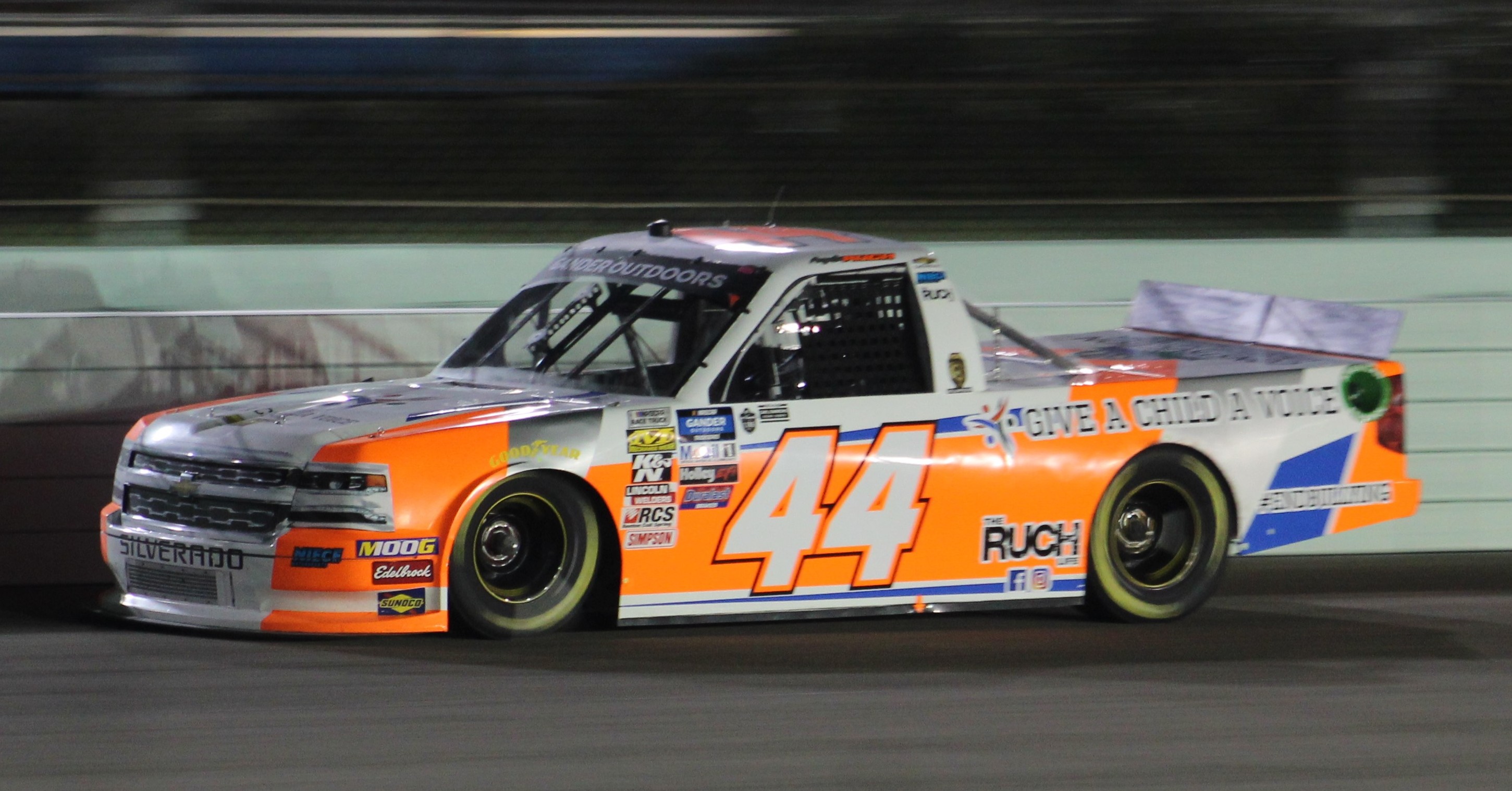
The Chevrolet Silverado is a large pickup truck. People use it for towing, hauling cargo, and general truck jobs. It’s often discussed because it’s one of GM’s biggest-selling trucks in the U.S.
Ford is being discussed as a brand that improved its car quality. The episode connects that improvement to fewer problems in a quality survey and a contrast with past recall issues.
A recall is when a car company has to fix a problem in cars already sold. It usually involves bringing the vehicle in so the company can correct the issue safely.
This means the brand is in the mainstream, high-volume part of the market. The study can rank brands overall, and also rank the best brand among the regular, everyday car makers.
J.D. Power’s initial quality study is a survey that looks at how many problems brand-new cars have soon after people start driving them. It’s used to compare which brands are getting things right early.
Genesis is mentioned as the brand that finished right behind the top winner in a new-car quality survey. It suggests Genesis had very few early problems compared to most brands.
IQS is a kind of car-quality score based on what owners think soon after buying a new vehicle. Here, they’re saying the results are based on the first ~90 days, so it reflects what’s happening on newer cars.
A lagging indicator is a metric that tends to change after the underlying problem has already existed. Ford’s argument here is that recall counts reflect issues that showed up on older vehicles, so they don’t immediately reflect improvements made to the newest models.
A “recall number” is how many cars are being pulled back because of a problem the manufacturer says needs fixing. If the numbers go down, it usually means fewer new problems are being discovered or manufacturers are fixing issues better.
Infotainment is the car’s main screen system for things like music, maps, and connecting your phone. If it’s confusing to use, it can be distracting—especially while you’re driving.
Touchscreens are the big displays in the dashboard that you tap to control music, navigation, and settings. The concern is that you may have to dig through menus while driving, which takes your attention off the road.
“Layers deep” describes how many nested menus or steps you must go through to reach a function on the touchscreen. More layers typically mean slower operation and more distraction, especially when driving.
LIVE
This podcast is brought to you by Reynolds and Reynolds.
There are three waves of AI transforming our industry.
Explore what they are, where AI technology is headed,
and what these emerging innovations mean
for automotive retailers at rayray.com
slash ai-waves for more info.
Welcome to Daily Drive for Thursday, June 25th, 2026.
I'm Jake Nier in Detroit, in for Kellan Walker.
Today on the show, unless something changes,
whole star will soon be out of the US market.
Hybrids are quietly taking over,
and analysts say they're only getting started.
And Ford makes a quality comeback,
at least when it comes to one important metric.
Plus, automotive news Asia editor Hans Grimel
joins us from Tokyo to talk about the chaos
at Nissan shareholder meeting this week.
Another motion out of the blue to vote on re-appointing
Carlos Ghosn as a director to the company,
kind of outlandish requests and ideas
that just kind of really tried to blow
Ivan Espinosa off his message.
Let's run through all the news you need to know
to keep up in the auto industry.
The Trump administration is forcing Polestar
out of the US market, starting with model year 2027.
It denied the Swedish EV maker authorization
under the connected vehicle rule,
which restricts cars with Chinese link technology
over national security concerns.
The rule was adopted under President Biden
and kept in place under Trump.
Polestar is majority owned by China's Geely,
and only 6% of its first quarter sales
came from the US anyway.
CEO Michael Loscheller says Europe
is now the company's primary growth engine.
Ford and other automakers are scrambling
to secure their own authorizations under the same rule.
Hybrids are quietly taking over big portions
of the US auto market.
Cox Automotive says hybrid vehicles hit a record
14.1% share in the first quarter,
up from 11.9% a year earlier.
That makes them the fastest growing powertrain
on the market.
Alex Partners forecasts that share will climb
to 34% by 2030, as gasoline only vehicles fall
from nearly three quarters of the market to just half.
The shift is being driven by higher fuel prices,
the end of federal EV tax credits,
and a growing lineup now spanning 49 nameplates
across 12 brands.
And GMC is revealing the redesigned 2027 Sierra 1500
and it's going all in on luxury.
The overhauled pickup gets a sculpted exterior,
a revamped interior, and new 5.7 and 6.6 liter V8 engines.
It goes on sale late this year.
The timing matters, the Sierra and Silverado together
accounted for nearly a third of GM's US sales in 2025,
making this redesign critical as GM absorbs
tariff costs and electrification investments.
GMC declined to share pricing or performance figures
saying more details are coming.
And those are today's headlines.
You can find more details on all of those stories
at autonews.com.
Ford has pulled off a major quality comeback,
at least for one metric,
after setting an industry record for recalls
and ranking just below average last year,
Ford surged to become the top mass market brand
in the 2026 JD Power initial quality study.
Porsche took the overall top spot followed by Genesis.
Ford's COO, Kumar Galhotra credited years of changes,
including more rigorous testing,
350 plus new technical specialists hired since 2023,
a new software quality team,
and a supplier accountability program
led by supply chain chief, Liz Dorr,
with Turning the Tide.
Here with me to talk more about it is Michael Martinez,
who covers Ford as well as the UAW for us
at Automotive News.
Mike, welcome back to Daily Drive.
Hey, Jake.
All right, Mike, so make this make sense for me.
Ford ranked 23rd in the study just three years ago,
set a record for recalls last year,
and now it's the top mass market brand.
How do we square that?
Well, IQS obviously is measuring reliability
after 90 days of ownership
once somebody gets a brand new vehicle.
And Ford's making the argument that recalls
are a lagging indicator,
that many of these recalls happen on older models
that are at least one or two or three years old,
and they're saying they put all these new processes in place
on their newest models,
the stuff coming out today and beyond,
and that as the sort of group of vehicles
that are on the road today ages
and the older ones phase out,
you're gonna see those recall numbers start to drop
because of everything they've put in place.
But obviously the recall numbers are horrible,
but what Ford has been able to do on IQS
is pretty impressive.
Yeah, one of the things that seems to be hurting Ford here,
at least I assume is hurting everybody, right?
And that's infotainment.
So is this a Ford specific thing
or is this an industry-wide issue?
It's an issue that is plaguing the industry
and has been for as long as I've been covering this stuff,
year in and year out,
people complain about the touchscreens,
they complain about the infotainment systems.
They're not all intuitive,
even a decade on for when they were first introduced
or at least introduced in their latest iterations.
Touchscreens can be difficult to navigate,
particularly while you're driving.
If you have to go 234 layers deep
to find the control or the function that you really want,
the study found that 46% of owners
who complained about distracted driving problems
said those problems were a result of fiddling
with an infotainment screen.
So the study is making the case that simpler is better,
that the less automakers sort of pile into these screens,
the more intuitive they make them to use,
the better off their scores are gonna be.
Well, Mike, you and I will be on this week's
weekend drive edition of the show
along with our own Larry Veliquette
and we will talk some more about this as well.
There's some interesting nuggets in your reporting.
So if you're listening to this,
make sure that you check out weekend drive
available Saturday morning.
Michael Martinez, great as always
to have you here on Daily Drive.
Can't wait, Jake, we'll talk to you tomorrow.
Coming up, Automotive News Asia editor, Hans Grimole
joins me to talk about a very messy shareholders meeting
for Nissan this week.
That's next on Daily Drive.
Three waves of AI are transforming our industry
as we know it today.
Here from AJ McGowan,
Vice President of Research and Development
at Reynolds and Reynolds
on all three waves of AI and automotive
where we're heading
and what the latest cutting edge innovations mean
for automotive retailers.
So I want you to picture what it would be like
on that same Tuesday morning that we talked about earlier
with a full agenic infrastructure in place.
Your service manager wouldn't start the day
by reading reports.
Ray hands them three ROs that need attention
and tells them why.
Your sales manager wouldn't spot check calls.
Ray already routed the ones that mattered.
The GM doesn't reconstruct yesterday.
Ray reconstructed it overnight and gave them a summary.
And your controller doesn't have to pull
the deal level analysis every Friday.
Ray runs it on Thursday and flags anything
that's worth a conversation.
Decisions can get made earlier in the day
with better information by fewer people.
And that's what the agenic wave actually feels like
in your store.
It feels and sounds a little bit like science fiction,
but at the end of the day, it's not.
It's just a faster Tuesday.
If you're interested in exploring how AI
can improve operations at your dealership,
visit rayray.com slash ai-waves.
That's r-e-y, r-e-y.com slash ai-waves.
Welcome back to Daily Drive.
I'm Jake Nier.
Nissan's annual shareholder meeting this week
was unlike any you'd typically see at a major automaker.
CEO Yvonne Espinoza offended off a no confidence vote,
a motion to remove him as meeting chair,
a shareholder proposal to reinstate fugitive
former chairman Carlos Ghosn to the board,
and a rare rebuke of a company-backed director nominee.
This is all while Espinoza is trying to make the case
that his turnaround plan is working.
Automotive news Asia editor Hans Grimel covered it all
from Tokyo, I spoke with him earlier this week.
Hans Grimel joining Daily Drive from Tokyo.
Hans, always great to have you on with us.
Thank you, Jake.
Great to be here.
Bring our listeners back up to speed.
What was the mood like and what was the reaction
to this sort of shareholder?
Is revolt the right word, Hans?
Well, I don't know if it was a complete revolt,
but there were a lot of angry voices in the crowd
at annual shareholders meeting with Nissan.
Shareholders there have been in disarray
and kind of a disgruntled bunch for several years now.
It really started in 2018 with the arrest
and ouster of Carlos Ghosn, the former chairman there.
And Nissan has had a rough couple of years ever since,
or several years actually,
since almost seven years now, since the arrest.
The stock price is down about 66%
since right before Ghosn's arrest.
The earnings are down.
It's got a net loss this year.
It's struggling to sustain sales.
Sales have slipped several years of the last several years
that has trouble getting volume back
on the upward trajectory.
So there was a lot to complain about
and they weren't shy in letting the management know about it.
I wanted to ask you about this vote against Moto Nagai.
This seems like a pretty direct rebuke of Nissan's board.
Proxy advisors were flagging independence concerns
related to him.
How significant is it that Renault,
Nissan's own alliance partner,
reportedly abstained from that vote?
Well, it's unusual, that is for sure.
Under the old arrangement that Nissan and Renault
had when they were close alliance partners,
it was agreed that Renault would always back
the candidates offered up by Nissan for the board.
Then they rewrote the rules.
In 2023, two companies went their separate ways
and dialed down their cross-shareholdings
and branched off from each other.
And now Renault doesn't have that obligation
to automatically back any candidate that Nissan puts forward.
So you saw them here exercising their...
Renault, that is, exercising their influence
or their independence.
And they're the only clout they really have over Nissan
by abstaining from that key vote here.
It's unusual because Renault now used to have over 40%
of holding in Nissan and nominal control over the company.
Now it only has 17% and its voting rights
are limited to 15%.
And it has no members represented on the board anymore.
So this is the only really that Renault
can kind of exercise some kind of influence over the board.
So that's one aspect that we're kind of seeing here.
Another is just a general concern about in modern day
governments or corporate governance circles
about corporate independence of the board
or having a real truly outside external independent director.
And the reason there were some doubts about this
is because Moto Nagai comes from,
he was a top senior executive at the Mizuho banking group.
And that is one of Nissan's top institutional banks.
So it's not seen as being completely independent of Nissan.
In fact, it's seen as being kind of in the same camp.
That's a client of Nissan's.
So that's raised concerns among international proxy groups
who are advising to vote against Moto Nagai.
And does losing that seat change anything structurally
for how the company governs itself going forward?
Do you think?
Well, it eliminates a little bit of influence
from the Mizuho group.
And that's significant here
because there's another new director
who was appointed to the board or recommended for the board
who also comes from the Mizuho group.
So there would have been,
had all the directors been voted in by shareholders,
there would have been two people there
from Mizuho on the board.
So it kind of restores the balance that used to be there
without completely eliminating Mizuho.
It restores a little bit of balance that was there.
But still, there were questions about having
even one of the Mizuho representatives there at all.
I might add another question mark looming over Nagai
or a couple more where that he was a statutory auditor
during the, of Nissan's during the Carlos Gones scandal.
And some people criticize him or accuse him
of being in the camp that was kind of plotting against Gone
and orchestrating his removal.
And then he is also seen as being kind of a pro Honda
Nissan merger director because he comes from Mizuho,
which was a financial institution that was supportive
of the idea of merging Honda and Nissan.
That was a merger that came together and let's see,
it must have been 2024, December, 2024.
And then it blew up spectacularly in February of 2025,
less than two months after the thing was took off.
Anyhow, so he was, even though he was on the director
on the board at Nissan, he was supporting that idea
is the thought and there was maybe some questions about that.
Perhaps Renault didn't like the idea so much
of combining with Honda.
So it didn't necessarily support the idea
of having too many defenders on the board.
Before I let you go, Hans, I do wanna ask
that this was my initial reaction to your story here
that the midterm plan is still months away
and Yvonne Espinoza's Renaison recovery plan,
turnaround plan hasn't really had much of a chance
to show any real results.
So for one thing, investors are already upset.
How much does that plan and how well did Yvonne Espinoza do
in sort of addressing these concerns during the meeting?
Well, I think he laid out the accomplishments
that he's made so far in slashing fixed costs
and variable costs and things like closing factories
and reducing headcount and kind of rebooting
the product pipeline, if you will.
He's really taken a lot of measures
in just a short period of time,
basically one year in office now.
He's taken a lot of measures that previous CEOs
just wouldn't take, they were too severe or too hard
and he bit the bullet and he did it.
So he was not shy about talking about those successes.
And then he was also very clear about explaining
his roadmap going forward and his vision
for finishing out the midterm plan, revival plan,
but then also taking next steps,
what to do beyond that is just shifting
into the growth phase as he called it.
This year, this fiscal year goes through the spring
of March of 2027.
He's predicting at least that global sales
will increase again for about almost 5% to 3.3 million.
Now that's very low when we think about Nissan historically,
but Nissan sales have contracted for seven
of the last eight fiscal years.
So it's imperative that he gets that volume
going in the positive direction
and he thinks he can turn it around this year.
So that's one thing that he was trying to
impress upon the shareholders there.
Any other big takeaways for you personally
covering this week, is there anything
to look out for in the future?
Normally in the past, some Japanese companies
and car makers, their shareholder meetings
have been a bit bombastic and lots of fireworks.
That's kind of a tradition, it goes back decades,
but in recent times, especially in the auto sector,
the affairs are pretty scripted, pretty boring,
dry and well-behaved affairs.
If we compare Nissan with Toyota,
Toyota was like a love fest last week
when they had theirs, very dry, very softball questions.
Everybody was happy.
The new CEO, Kent Takone, was choking up on stage,
talking about his sense of responsibility
and the crowd was eating it up.
And it was a dramatically different picture at Nissan
with people shouting and interrupting and screaming
and Yvonne Espinosa having to act as diplomatic as possible
and repeatedly answer the same question
and take field motions to remove him
as the chairman of the meeting.
And then of course, another motion out of the blue
to vote on re-appointing Carlos Ghosn
as a director to the company,
kind of outlandish requests and ideas
that just kind of really tried to blow Yvonne Espinosa
off his message, but he really stuck to it.
It was tough at times,
but he got things back on track very diplomatically
and he was able to finish off with his message
of growth and future-oriented strategy.
So in the end, I think it was a success for him.
Hans Grimel joining us from Tokyo.
Thank you so much, Hans.
Really appreciate it.
It's always great to have you here on the show.
Thank you, Jake.
That's Daily Drive for today.
I'm Jake Nier in for Kellan Walker.
Thanks to Automotive News journalists, Michael Martinez,
Vince Bond Jr. and John Irwin
for their reporting for today's podcast.
You can get the latest news on Nissan, Polestar,
the hybrid surge and everything happening
in the auto industry at AutoNews.com.
Come back tomorrow for a conversation
with Cox Automotive chief economist Jeremy Robb.
On his mid-year outlook for the auto market,
including what a potential rate hike,
the Middle East conflict and USMCA renegotiations
mean for dealers in the second half of 2026.
Consumers have had to use a lot of their extra money
to go and spend on higher gasoline and things like that.
But even in the face of that,
we've seen resiliency in the auto market from sales trends.
We'd love to hear from you.
Let us know what you think of the show
and the topics we covered today.
Send us an email at dailydrive at autonews.com
or leave us a voicemail at 313-444-2774.
And if you enjoy the podcast,
remember to like, leave a review
and subscribe so you never miss an episode.
About this episode
A regulatory push is sidelining Polestar in the U.S., as the connected-vehicle authorization rule targets Chinese-linked technology over national security concerns. The hosts pivot to market momentum, noting hybrids are taking bigger slices of U.S. sales. Ford’s quality gains are weighed against its recall-heavy year, with debate over what IQS measures and why recalls can lag. Nissan’s annual shareholder meeting in Tokyo turns chaotic—featuring a no-confidence fight, a Carlos Ghosn reinstatement motion, and board independence disputes.