
Polestar forced out of U.S. market; Nissan’s shareholder chaos
About this episode
A regulatory push is sidelining Polestar in the U.S., as the connected-vehicle authorization rule targets Chinese-linked technology over national security concerns. The hosts pivot to market momentum, noting hybrids are taking bigger slices of U.S. sales. Ford’s quality gains are weighed against its recall-heavy year, with debate over what IQS measures and why recalls can lag. Nissan’s annual shareholder meeting in Tokyo turns chaotic—featuring a no-confidence fight, a Carlos Ghosn reinstatement motion, and board independence disputes.
The Trump administration forces Polestar out of the U.S. market, starting with the 2027 model year. Ford pulls off a stunning quality comeback, at least for one metric. Plus, Automotive News Asia Editor Hans Greimel breaks down the discontent at Nissan’s annual shareholder meeting — from a no-confidence vote against the CEO to a motion to reinstate Carlos Ghosn.
connected vehicle rule
"It denied the Swedish EV maker authorization [84.7s] under the connected vehicle rule, [87.4s] which restricts cars with Chinese link technology"
It’s a rule that decides which “smart” cars are allowed to be sold in the U.S. if they use certain communication technology. The concern here is that some of that technology could be tied to China, so the government restricts it for security reasons.
The “connected vehicle rule” is a government policy that limits which cars can be sold if they use certain connected/telemetry technologies. In this episode, it’s described as restricting cars with Chinese-linked technology due to national security concerns.
national security concerns
"[87.4s] which restricts cars with Chinese link technology [90.1s] over national security concerns. [93.0s] The rule was adopted under President Biden"
This means the government believes some technology could pose risks to the country. In this case, it’s tied to concerns about connected-car systems and who controls the underlying tech.
“National security concerns” here refers to the idea that certain vehicle connectivity technologies could create risks for the country. That’s why the connected vehicle rule is framed as restricting Chinese-linked tech.
hybrids
"Hybrids are quietly taking over big portions [121.9s] of the US auto market. [123.9s] Cox Automotive says hybrid vehicles hit a record"
A hybrid car uses two ways to move: a gas engine and an electric motor powered by a battery. The episode says hybrids are growing quickly in the U.S. market.
“Hybrids” are vehicles that use more than one energy source—typically an internal-combustion engine plus an electric motor/battery. The episode frames hybrids as taking increasing share of the U.S. market.
powertrain
"That makes them the fastest growing powertrain [136.6s] on the market. [138.0s] Alex Partners forecasts that share will climb"
A powertrain is what actually makes the car move and how that power gets to the wheels. The episode is talking about which type of drivetrain is becoming more popular—especially hybrids versus gas-only cars.
A “powertrain” is the set of components that generate and deliver motion—like the engine/motor and the transmission system. The episode uses it to compare how fast different vehicle types (hybrids vs gasoline-only) are growing in market share.
gasoline only vehicles
"Alex Partners forecasts that share will climb [140.7s] to 34% by 2030, as gasoline only vehicles fall [146.0s] from nearly three quarters of the market to just half."
This just means cars that run only on gas, with no electric assist from a hybrid system. The episode says their market share is dropping as hybrids grow.
“Gasoline only vehicles” are cars that rely solely on a gasoline internal-combustion engine, without a hybrid electric system. The episode contrasts them with hybrids to explain why gasoline-only share is shrinking.

2027 Sierra 1500
"And GMC is revealing the redesigned 2027 Sierra 1500 [167.2s] and it's going all in on luxury. [170.2s] The overhauled pickup gets a sculpted exterior, [173.4s] a revamped interior, and new 5.7 and 6.6 liter V8 engines."
This is a redesigned GMC full-size pickup truck for 2027. The big changes are a more upscale look and feel, plus new V8 engine choices (5.7 and 6.6 liters).
The GMC Sierra 1500 is a full-size pickup, and this 2027 redesign is notable because it’s moving upmarket with a luxury-focused exterior and interior refresh. The segment also gets new V8 options, including 5.7- and 6.6-liter engines, which is a big deal for buyers who want traditional power in a modernized truck.
V8 engines
"The overhauled pickup gets a sculpted exterior, [173.4s] a revamped interior, and new 5.7 and 6.6 liter V8 engines. [179.8s] It goes on sale late this year."
A V8 is an engine with eight cylinders arranged in a V shape. In trucks, it’s often chosen because it can pull strongly and feel smooth when accelerating.
A V8 engine is an internal-combustion engine with eight cylinders arranged in a “V” shape. The layout is popular in trucks because it can deliver strong low-end torque and smooth power delivery, especially with larger displacement versions like 5.7 and 6.6 liters.
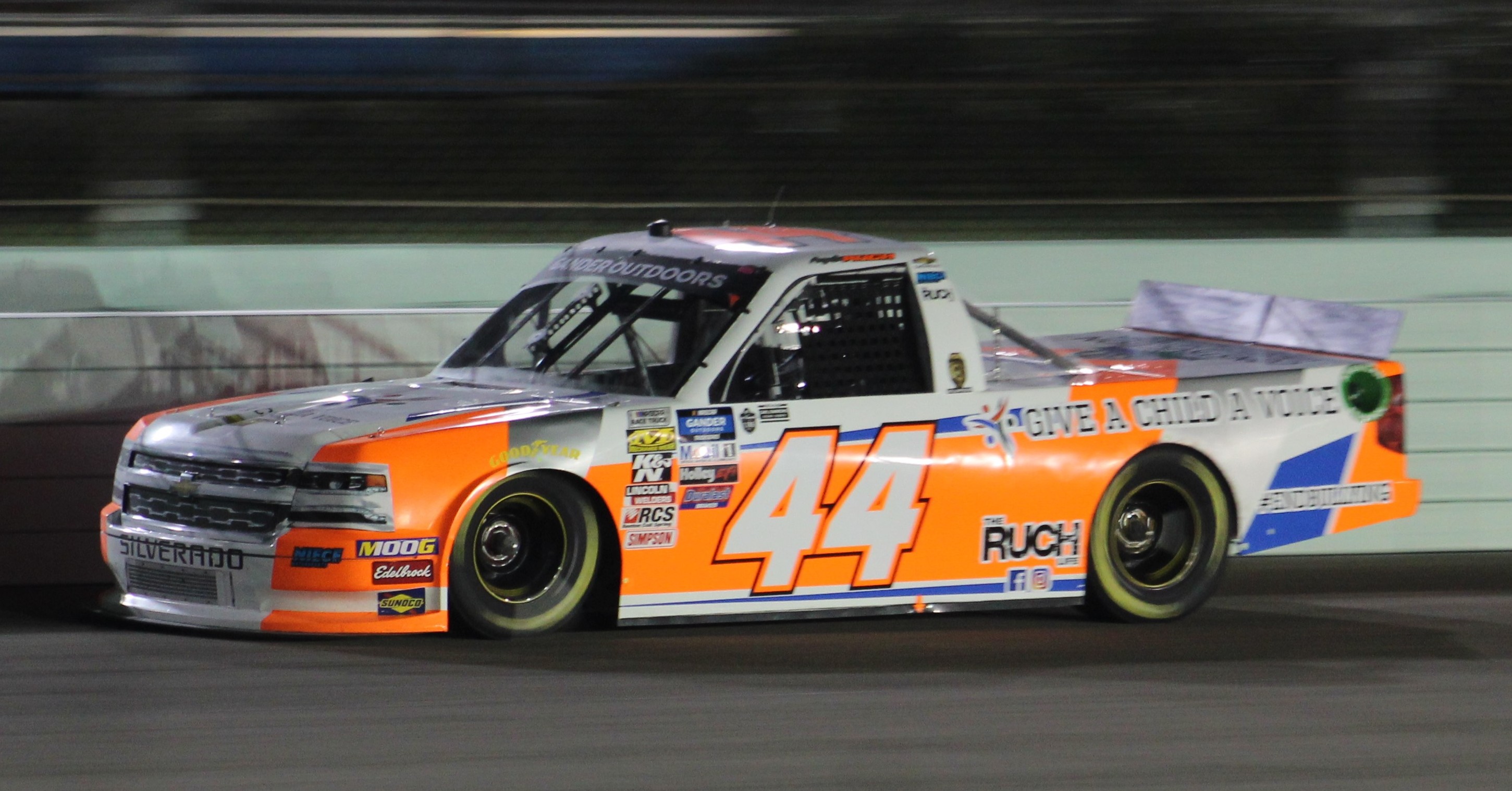
Chevrolet Silverado
"...ate this year. The timing matters, the Sierra and Silverado together accounted for nearly a third of GM's US ..."
The Chevrolet Silverado is a large pickup truck. People use it for towing, hauling cargo, and general truck jobs. It’s often discussed because it’s one of GM’s biggest-selling trucks in the U.S.
The Chevrolet Silverado is a full-size pickup truck built for heavy-duty work and everyday hauling. It’s a major volume model for GM in the U.S., so it often comes up in sales and market-share discussions. In a podcast context, it’s likely mentioned to highlight how important trucks like the Silverado are to GM’s overall performance.
Ford
"Ford has pulled off a major quality comeback, [210.0s] at least for one metric, [213.2s] after setting an industry record for recalls"
Ford is being discussed as a brand that improved its car quality. The episode connects that improvement to fewer problems in a quality survey and a contrast with past recall issues.
Ford is the focus of the “quality comeback” claim, tied to recall history and performance in the 2026 J.D. Power Initial Quality Study. The hosts use Ford’s turnaround narrative to show how quality metrics can shift over time.
industry record for recalls
"Ford has pulled off a major quality comeback, [213.2s] at least for one metric, [215.7s] and ranking just below average last year, [220.8s] Ford surged to become the top mass market brand"
A recall is when a car company has to fix a problem in cars already sold. It usually involves bringing the vehicle in so the company can correct the issue safely.
A recall is when a manufacturer asks owners to bring vehicles in for a fix because of a safety or compliance problem. Saying Ford set an “industry record for recalls” frames the scale of past quality issues, which makes the later “quality comeback” claim more meaningful.
mass market brand
"Ford surged to become the top mass market brand [224.0s] in the 2026 JD Power initial quality study."
This means the brand is in the mainstream, high-volume part of the market. The study can rank brands overall, and also rank the best brand among the regular, everyday car makers.
“Mass market brand” is a J.D. Power category that groups higher-volume, mainstream automakers rather than luxury-only brands. In the segment, Ford is described as the top brand within that category, which is why the hosts separately mention Porsche as the overall winner.
JD Power initial quality study
"Ford surged to become the top mass market brand [224.0s] in the 2026 JD Power initial quality study. [228.4s] Porsche took the overall top spot followed by Genesis."
J.D. Power’s initial quality study is a survey that looks at how many problems brand-new cars have soon after people start driving them. It’s used to compare which brands are getting things right early.
The J.D. Power Initial Quality Study measures how many problems new vehicles experience early in ownership, typically based on owner-reported issues. It’s often used as a benchmark for “how good the car is right out of the gate,” which is why the hosts cite it when discussing Ford’s quality improvement and the overall winners.
Porsche
"Ford surged to become the top mass market brand [224.0s] in the 2026 JD Power initial quality study. [228.4s] Porsche took the overall top spot followed by Genesis."
Porsche is mentioned as the overall winner in a quality survey for new cars. In that study, it’s the brand with the best early results.
Porsche is cited as taking the overall top spot in the 2026 J.D. Power Initial Quality Study, meaning it had the fewest early-life problems among the brands measured. That’s notable because it contrasts with Ford’s “quality comeback” narrative and shows where the study’s top result landed.
Genesis
"Ford surged to become the top mass market brand [224.0s] in the 2026 JD Power initial quality study. [228.4s] Porsche took the overall top spot followed by Genesis."
Genesis is mentioned as the brand that finished right behind the top winner in a new-car quality survey. It suggests Genesis had very few early problems compared to most brands.
Genesis is named as the runner-up in the 2026 J.D. Power Initial Quality Study, placing it near the top for early ownership quality. In this context, it helps frame the quality landscape beyond just mass-market brands.
IQS
"Well, IQS obviously is measuring reliability after 90 days of ownership once somebody gets a brand new vehicle."
IQS is a kind of car-quality score based on what owners think soon after buying a new vehicle. Here, they’re saying the results are based on the first ~90 days, so it reflects what’s happening on newer cars.
IQS typically refers to an initial quality study that scores how satisfied owners are with their vehicles early in ownership. In this segment, it’s used to argue Ford’s reliability is improving because the measurement is taken after about 90 days of ownership.
lagging indicator
"And Ford's making the argument that recalls are a lagging indicator, that many of these recalls happen on older models..."
A lagging indicator is a metric that tends to change after the underlying problem has already existed. Ford’s argument here is that recall counts reflect issues that showed up on older vehicles, so they don’t immediately reflect improvements made to the newest models.
recall numbers
"you're gonna see those recall numbers start to drop [313.2s] because of everything they've put in place."
A “recall number” is how many cars are being pulled back because of a problem the manufacturer says needs fixing. If the numbers go down, it usually means fewer new problems are being discovered or manufacturers are fixing issues better.
“Recall numbers” refers to how many vehicles or how many recall campaigns are reported for safety or compliance problems. In practice, lower recall numbers can indicate fewer issues being found or better fixes over time, while high numbers suggest ongoing quality or defect challenges.
infotainment
"And that's infotainment. [331.6s] So is this a Ford specific thing"
Infotainment is the car’s main screen system for things like music, maps, and connecting your phone. If it’s confusing to use, it can be distracting—especially while you’re driving.
Infotainment is the in-car system that combines media (audio/video) with navigation, phone integration, and vehicle settings. It’s often controlled by touchscreens, and usability problems can make it harder to operate while driving.
touchscreens
"people complain about the touchscreens, [347.3s] they complain about the infotainment systems. [349.7s] They're not all intuitive,"
Touchscreens are the big displays in the dashboard that you tap to control music, navigation, and settings. The concern is that you may have to dig through menus while driving, which takes your attention off the road.
In modern cars, touchscreens are the primary interface for infotainment and many vehicle functions. The issue being discussed is that they can require multiple taps and menu navigation, which is harder and potentially distracting while driving.
layers deep
"Touchscreens can be difficult to navigate, [361.6s] particularly while you're driving. [363.0s] If you have to go 234 layers deep"
“Layers deep” describes how many nested menus or steps you must go through to reach a function on the touchscreen. More layers typically mean slower operation and more distraction, especially when driving.
Request an Explanation
Heard something you'd like explained? We'll add it to this episode.
Sign in to request explanations for terms you heard.
Want to learn more?
Browse our glossary for plain-English explanations of automotive terms, jargon, and concepts.
Help improve this episode
See something that's not quite right? Our annotations are AI-generated and can sometimes miss the mark. Click the flag icon on any annotation to suggest a correction.