Porsche 911 Track Instructor: Teaching HPDE & Living the Air-Cooled Dream
To All The Cars I've Loved Before: Classic Car Restoration, JDM, and Automotive History
Porsche 911 Track Instructor: Teaching HPDE & Living the Air-Cooled DreamTo All The Cars I've Loved Before: Classic Car Restoration, JDM, and Automotive History · Sep 30, 2025
The Renault Latitude is a car that is designed to be comfortable and has a lot of space inside. It wasn't very popular, so not many people know about it compared to other cars.
The Porsche Club is a group for people who love Porsche cars. They hold events where members can drive their cars on tracks and meet other Porsche fans.
Summit Point is a racetrack in West Virginia where people can drive their cars fast and learn how to race. It's a popular place for car clubs to hold events.
VIR stands for Virginia International Raceway, a racetrack in Virginia where many car races and driving events take place. It's a great spot for learning to drive fast.
Watkins Glen is a famous racetrack in New York where many car races happen. It's a place where both professional and amateur drivers can race their cars.
Tire pressure is how much air is inside your car's tires. Keeping it at the right level is important for safe driving and helps your tires last longer.
The Chevrolet Corvette is a fast and stylish sports car that many people love. It's known for being powerful and fun to drive, making it a popular choice among car enthusiasts.
Volkswagen, or VW, is a car company from Germany that makes many different types of cars, including small cars and larger ones. They are well-known for their reliable vehicles.
Hyundai is a car brand from South Korea that makes a variety of cars. They are known for being affordable and reliable, making them a good choice for many people.
Car
MG TC
The MG TC is a small sports car from the 1950s that is fun to drive. It's known for being light and nimble, which makes it enjoyable on the road.
Car
Citroën Traction Avant
The Citroën Traction Avant is a classic car that was made from the 1930s to the 1950s. It was special because it had front-wheel drive, which was new at the time, and a strong all-steel body.
The Honda CR-V is a type of car called an SUV, which is bigger than a regular car and has more space inside. It's known for being dependable and good on gas, making it a great option for people who need room for passengers or cargo.
Car
Barclay B95
The Barclay B95 is a special British car that has three wheels instead of four. It's made from lightweight materials, which helps it be cheaper to drive and maintain.
Car
Robin Reliant
The Reliant Robin is a famous British car with three wheels. It's known for its funny shape and has appeared in many TV shows and movies.
Front-wheel drive means that the front wheels of the car are the ones that get power from the engine. This helps the car grip the road better and is often used in many cars today.
The crankcase is a part of the engine that holds the crankshaft, which is important for the engine's movement. It also holds oil to keep everything running smoothly.
Con rods are parts in an engine that connect the pistons to the crankshaft. They help turn the up-and-down movement of the pistons into the spinning motion needed to power the car.
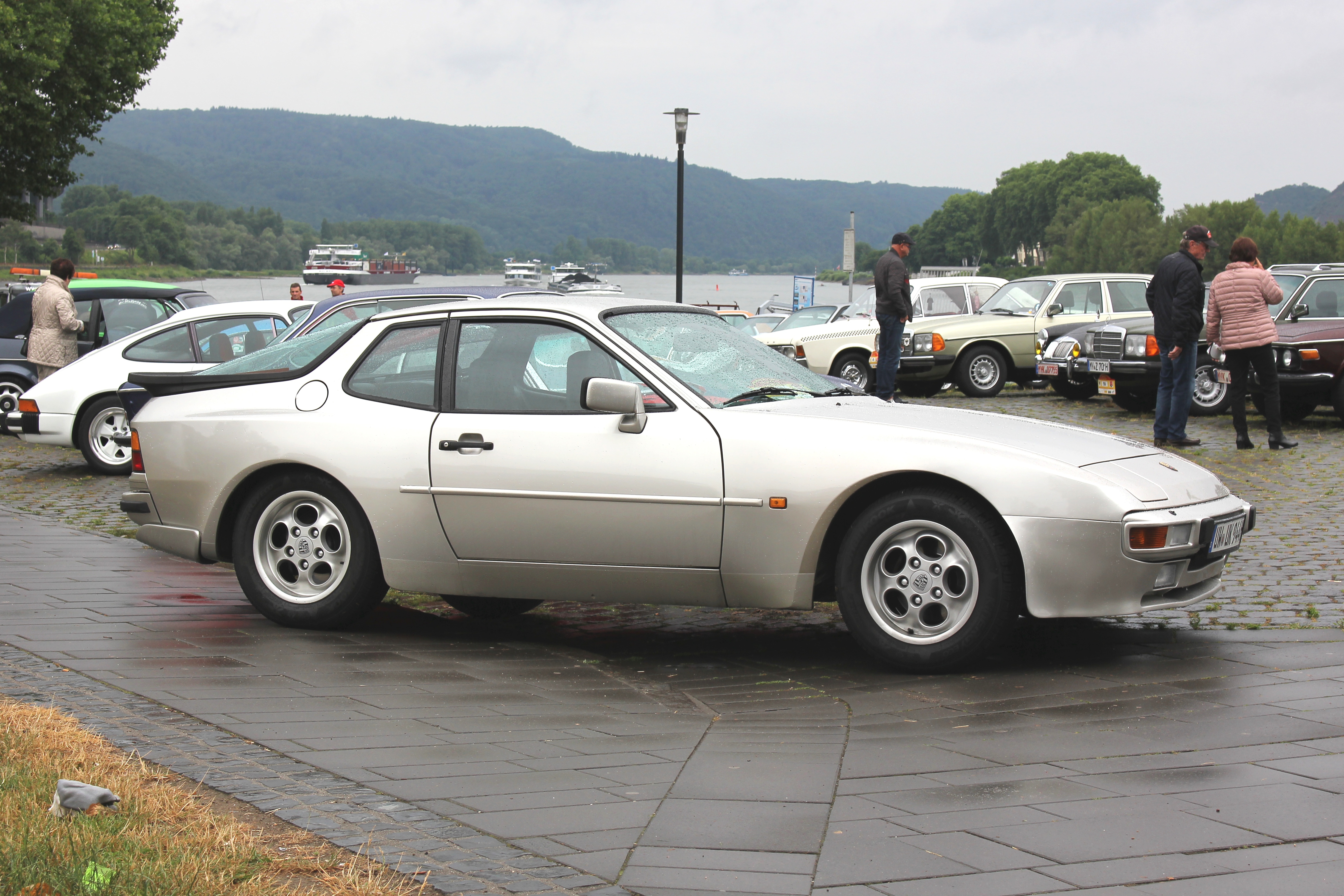
The Porsche 944 is a sports car made by Porsche that was popular in the 1980s and early 1990s. It is known for being fun to drive and having good handling.
Formula One is a top-level car racing series where specially designed cars compete in races called Grands Prix. It's known for its speed and advanced technology.
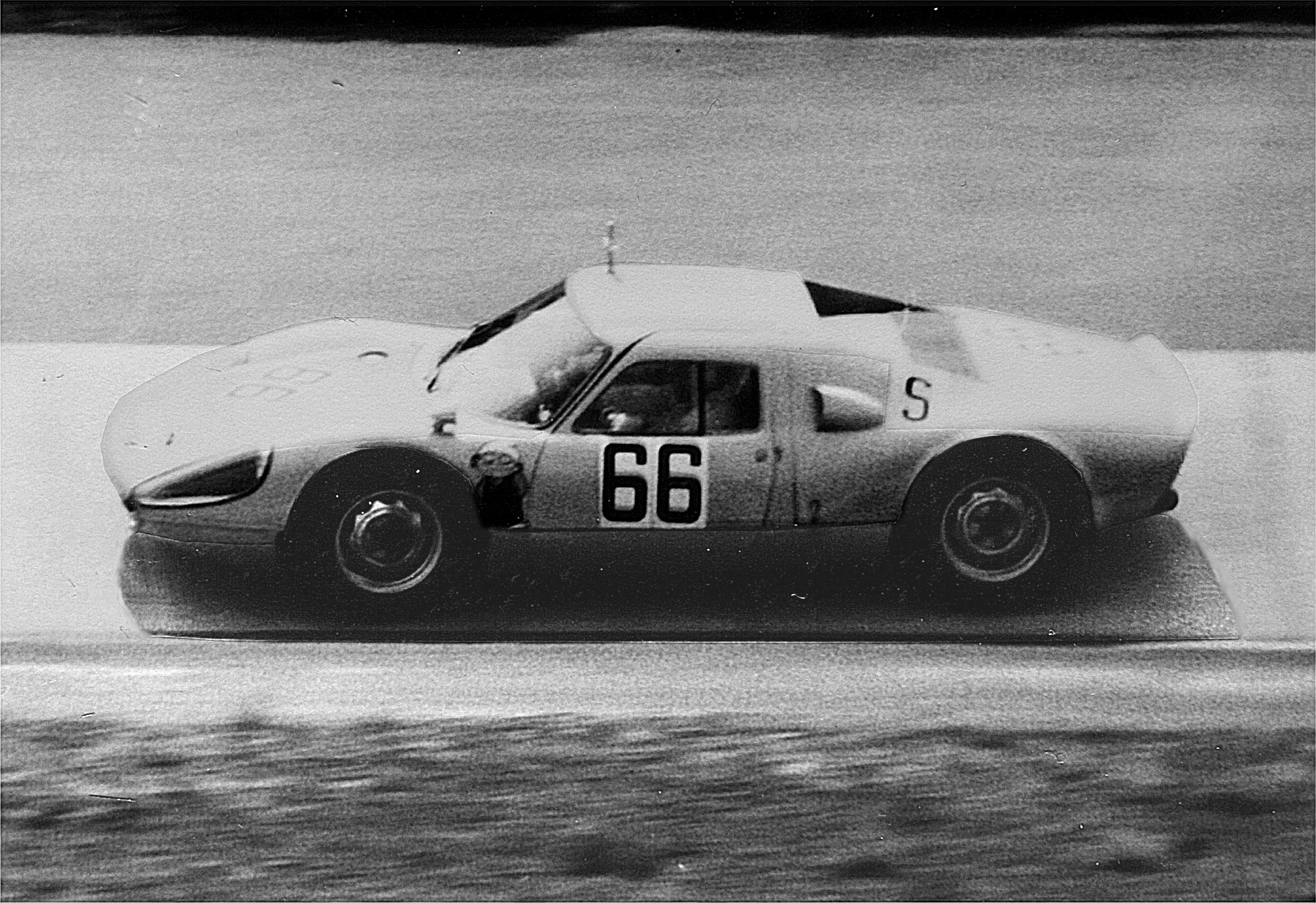
The Porsche 904 Carrera is a classic sports car from the 1960s. It's known for being light and fast, and it was built for racing, making it a favorite among car enthusiasts.
The Chevrolet Camaro is a sporty car that looks cool and goes really fast. It's part of a group of cars called muscle cars, which are known for their strong engines and fun driving experience.
The Porsche 356 is an old sports car that was made a long time ago and is loved by many car fans. It helped start the Porsche brand and is known for its beautiful design and great performance.
LIVE
Welcome back to all the cars I've loved before your authoritative podcast on automotive nostalgia.
Where our guests are unique, each auto has an era and every car tells a story.
So you know, it's time to plug in, get a little grease under the nails and slip on that favorite
car theme t-shirt, hat, or jacket.
And my favorite part of the show before we get Doug and our guest in here is two,
one of my favorite parts. Let's welcome back our listeners from all over this short track we call
Earth. So over the past week, we know by the magic of our podcast platform engineering analytics,
who's listening and where they come from. So welcome back to listeners from countries such as
Switzerland, Italy, Sweden. And Doug, this I'm so excited with this. We had an entrant from a
country we've never had before. Welcome to our listeners in the country of Seychelles,
which is an island republic in the western Indian Ocean, comprising about 115 islands with lush tropical
vegetation, beautiful beaches and a wide variety of marine life situated between latitudes,
four and 11, I think, minutes in longitudes of 46 and 56 east. The major islands are located
about 1000 miles east, east of Kenya, about 700 miles northeast of Madagascar. So that will give
you an idea of the general region. The capital of Victoria is situated on the island of, I don't
know if I'm saying that's right, but Mahay or Mahay. So Doug, have you heard of the nation of Seychelles?
I have not. And if not, you've heard about it now. And if you're listening and you want me
to do any commercials for the office of tourism, I'm here, you can underwrite the show, feel free,
reach out. We also want to welcome back our listeners in the cities of Augusta, Georgia,
a little closer to home, Wake Forest, North Carolina, Minneapolis, Minnesota, and Hamilton,
Ontario. Welcome. And I know we have repeat listeners and all those. So it's just wonderful
to have you back. Feel free to drop us a line, let us know how things are going in your neck of
the woods. And let's speaking of, let's bring in our co-host, co-host with almost, he's got
all the options. And, you know, he came in last place for the Piston Cup five years running.
So you got to love the consistency. He's Doug. Welcome. How you doing, partner? What's the weather?
I'm doing great. Great to be back here with you as always. Indeed, indeed. So what's, what's
happened in your world? I see for the first time in a long time, I think you need to get more
another car theme t-shirt. You're actually wearing something with a collar, which is kind of amazing
and inspiring. I didn't know you owned a shirt with a collar. It's usually a Mazda t-shirt,
where we've got one of our friends sends us a T-Tom Young t-shirt, Frischer Brothers t-shirt.
What's with the collar? Had to go to work today. It's been one of those days. I know it's yesterday
too. I had to leave the house. We'll just say that. You know, in Florida, where I am,
I'm not too far from the water, but what you're wearing would be considered a tuxedo. It doesn't
get a whole lot more formal than what you're wearing. So collar in Florida. I've seen you in
a tuxedo t-shirt. I know. Maybe I need one of those. Never. Yeah. That's about as dressed up as I like
to get, especially when it's humid. Weather's turning here, which is wonderful. But hey, you know,
what can do about the humidity? Not a whole lot. So hey, if you like what you're hearing,
please follow and tell a friend, tell a family member, coworker, a friend, tell an enemy,
because you know what we do? The show brings people together all over the world. Check us out
at carsloved.com. Again, carsloved.com. We also have a link tree, and Doug hasn't memorized. It is
L-I-N-K-T-R-D-E slash carsloved. Yeah, we like to think of that as our digital
switchboard. You can get to all of our social media presences, websites, where we are, podcasts,
podcasts, yeah. And while you're there, while you're there, please leave a review.
Let us know what you think, and we'll read you. We like to read them out on the air,
the especially fun ones. So thanks for everybody who's left a review, and please do leave a review
if you make it to our space. All right. So with no further ado, I'm going to toss it back over
to Doug, and I want to know how today's very fun guest ended up in your virtual garage. Well,
we seem to have this wonderful thing in Maryland, especially on the eastern shore. There are
more car lovers than I ever would have imagined. So my newly rediscovered friend from high school,
James McCrae, who's passed several people over to us, has passed this nice gentleman,
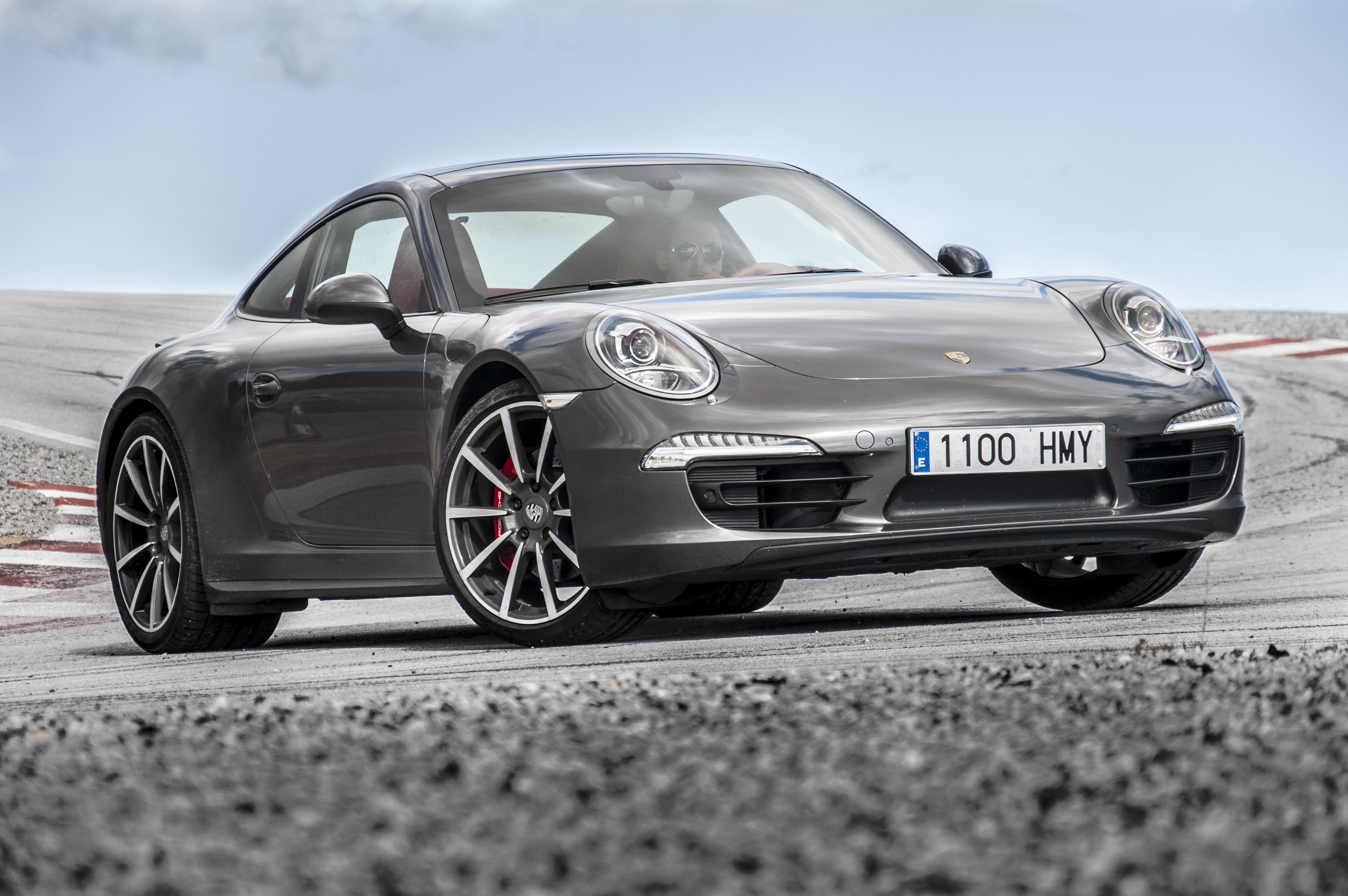
Dirk Decker over, who is a Porsche file to say the least. He's heavily involved in the Porsche
club, high performance driving events, which is really an educational, very safety oriented event.
I've actually went to one about 15 years ago in my 911. And let's just say it rained all day,
and it was not fun for me. But I know the instructors and Dirk might have been one of them.
They were serious 100% of the time. Well, fantastic. Dirk, welcome to our show. So pleased to have
you. Oh, thank you. So, yeah, so Dirk, actually, you teach racing. Is that fair to say?
Yes, it's a basis of racing. We start off with under controlled circumstances. And
as people develop, it's a initiation into racing world. What we do is the educational part of it,
where we teach from car handling, high performance handling, a lot of safety issues. And we've
controlled to a degree that passing is with signals only. And we do pass in corners with
advanced groups, but only with a signal. So you're not competing for a corner. There's no
efficient timing. You can time yourself, but you're not, it's not,
and start from race, end of race. It's 20 minutes, 30 minutes, whatever, and you just...
That might be one of the coolest hobbies that we've had on here. So, I mean, that is pretty
well. And I want to ask you, what kind of student was Doug when he was there with you?
I don't recall him.
Speaks volumes. Didn't mean to put you on the spot. I was hoping you would malign him in front of
our listeners. That was really what we was going for.
What I will say is, I heard somebody say, hey, do you see that, see that Blast 9-11,
the guy spun it around like, I don't know, how many times in the rain? I'm like, that was me.
He's like, oh, okay. But not on purpose. He wasn't trying to make a statement. I do remember
when you were there. You said it was harder than it looks. And, Dirk, you probably get that a lot.
Oh, yeah. Well, I started instructing back in 1998 with a Porsche Club. And the Potomac region is
my region, Northern Virginia, Central Maryland, and so on. And Summit Point is our home track.
We do go to Watkins Glen. We go to VIR. We used to go to Mid-Ohio. I've been up with Porsche
clubs up to Canada a couple of times, to Mossport and Mont Blanc. I mean, to Lime Rock.
And I haven't done some of the Southern tracks, unfortunately. But it's very controlled. And
since 1998, we do maybe most of our events, three-day events, Friday, Saturday and Sunday.
And through time, I don't know how many thousand students. Oh, wow.
So, no, there have been a lot. And I've also done some instructing for some other groups.
Occasionally, I got before Friday at the track for Summit Point group and other groups. How do you
BMW and so on? Oh, I see. So when you say track, is there a track laid out? Do you sort of
commandeer a huge parking lot or these sort of driving events with that?
These is like Watkins Glen. I'm going to in two weeks' time. These are professional or certainly
SCCA type amateur, but run professionally. Now, they are laid out usually mile and a half to three
miles long, something like that. 10 to 20 corners, depending. And in terms of barricades and gravel
pits and tar walls. And no, a very structured event with no fire, ambulance, everything else
available, just in case. This is not like Florida, Christian. This is serious.
There are actual rules and laws. Yeah, man. Dirt is on top of it, that I can tell for sure.
I was chief instructor for a while, so. And now I'm safety chair and look after safety aspects and
so on. And I remember they were pretty serious about that. Number one thing, tire pressure and
making sure the bolts, lug nuts were tight was the first thing. Battery is tight. We do a
fire attack two weeks or so beforehand on a lift and at a dealer or a shop. And then every day
out the track, we'd have a quick look through brake pads and lug nuts and any leaks, brake
fluids, things like that. So we're a quick check over just to make sure. Yep, no, all about safety.
And I did want to ask two things. So how often do you have to change tires or buy new tires for
your car? I used to get through about two sets a year. Okay, eight tires.
No, no, they are consumables. Yep, they do. They do wear out and they're fun. And
do you do you tow your cars to the track? I know we're going to talk about your cars,
but I noticed you do have a Cayenne, which could be used for towing. Yeah, yeah. I used to tow my
914. Okay. And my 911. Originally, I had the little trailer I pulled behind it with tires and
a big toolbox, a little two wheel arbor freight trailer hooked up the back of it by 911. And I
drive it up to Watkins Glen or Mid Ohio or wherever. But 914.6 was not a streetcar.
So then I had a trailer and I had an old Durango that I pulled it with. Yep, yep. Yeah, it's a
big commitment beyond tires, right? Yeah, toolbox, extra wheels, extra parts. Yeah. And then if you're
ever have 110 octane fuel. Okay. Now, sadly, something around 15, 16 bucks a gallon. Oh,
wow. So it can get pretty high. And you get through about four gallons a session.
Oh, wow. That's on pump gas or on whatever kind of gas, about four gallons a half hour session.
Approximates.
So you're definitely burning a few brake pads and rotors and other. I see. Yeah. Yeah. I'm just
kind of looking at the Watkins Glen schedule here. So was that kind of an open track when y'all have
the events there? Oh, no, we have our event is actually, Mother's Day weekend, three days. Friday,
Saturday, Sunday, we usually drive up on Thursday evenings. And we rent the whole track, including
with bagging, corner workers, the emergency personnel, everything else and control. And we
supply of a grid, checking people as they go on to track and so on. And we supply the instructors.
And no, it is a Porsche club, but we have Corvettes, we have Alfa Romeo, sometimes we have
Yep. Yep. I think, I think when I went, somebody came with his girlfriend and they had a rented
Hyundai and they let her drive on the track in the rented Hyundai. Yeah, as long as it's tax,
as long as it's going to be checked. Yeah, just Hyundai sedan is what it was. No SUVs allowed.
This looks like so much fun. Let me brainstorm how I can get out of work and join you up there.
But boy, that sounds interesting. All right. Now, while I'm doing that, I'm going to hand you over
to Doug here, who's going to put you in his old time machine, take you 88 miles an hour and we'll
flash back dirt to where it all started for you. So what was your first car? And if we could go even
a little further back, could we talk about your mom a little bit? Because she had a really neat car.
Yeah. Yeah. She had a MGTC, I think it would have been maybe a TD back in 1950s. I remember it,
I was four years old, five years old or something like that. I remember, I do remember driving around
in that little thing around in Hong Kong it was. Oh boy. Yeah. Then they had a Citroen
Light 15 Avant traction. And I'd like to drive on that basically when I was about 11 years old
in parking lots and on back roads around Hong Kong. So I was driving from a young age.
I see that. Yeah. That resonates with me right now. My youngest of my three teenage sons
is just about to get his learner's permit. So we're going to be doing the same thing. We're
parking lots to take dad's old beat up SUV, not every day driver, but one that he can tear up and
just sort of knock into light poles and that sort of thing. Yeah. But sorry, Doug, go ahead.
No. I think that's a lot of fun. And yeah, I can't. Yeah. Good luck. Good luck with that,
Christian. Well, you've got two kids into cars and they haven't died. So we're in good shape.
Well, I can put in a plug for the Tarak Street Survival that we are a lot of the clubs,
so Corvette Club, BMW Club, other foundations for it. And we rent a big parking lot or something
like that and set up the cones and do exercises for you have to have a driver's license permit
and some road experience and teach slalom, braking exercises, skid pad. I mean,
a lot of safety issues and it's an excellent program for kids. I can highly recommend it.
Kidnapping. Thank you. Can they bring their own car?
Yes, you bring your own car. They will allow for that. They will allow SUVs, pick up trucks.
They want you to drive whatever you normally drive. Okay, wonderful. Whatever your parents
let you drive. Yep. No, I'm thinking about my daughter who's almost 18, has been driving a year.
She's got a CRV, but she just drives around. She hasn't driven in bad weather. She probably
fingers crossed hasn't had any emergencies. I love that, though. So let's get some of
that information if we can from Dirk and maybe put those links on the show notes because I'd
like to learn more and I'm sure our audience would like to learn more, especially for the
young driver. Yeah, we will. Absolutely. So Christian wanted to hear about your mom's car
and I want to hear about your first car, which is yet another car I had not heard of.
I'd be surprised if you had. It's a British car, a Barclay B95 was mine. It's a little
fiberglass with aluminum subframe. They made three-wheelers in the UK at that time and still,
I don't know, three-wheelers come under most cycle license taxation. So it's a lot cheaper. So a lot
of three-wheelers, Robin Reliant, you might have seen on various programs. And there's a little
three-wheeler with not mine, but the ones they started with, with a three-cylinder,
two-stroke motor, 400 cc or so. And mine was a four-wheel version front-wheel drive with a
Royal Enfield 650, 700 cc motor. Front-wheel drive did have a reverse gear in it, regular gear shifts,
great sliding gear shifts, four forward, one reverse, and probably weighed not much more,
800 pounds, fully up with fuel to engine and everything. Yeah, these were little, these were
little. And as we were talking during the pre-show here, yeah, and so founded in the mid 50s, 56,
I think, and then only lasted for a few years, four or five years, and then kind of went bankrupt,
but they're such sharp-looking little cars. Yeah, they're great old cars. They are tiny. I mean,
it was two seats. I believe they did make a four-seat, but I never saw one of those.
Mine had a removable hardtop. I didn't have a rag top for it. Front-wheel drive,
Redo running gear, I believe, and it was just a little blast to drive. It was very economical,
as far as... Oh, so how did you acquire this car? I think there's a maybe interesting story,
maybe infamous story. Well, my girlfriend at the time in Scotland had her brother
had this thing in pieces in the shed. It's completely stripped out just the body and then
all the bits and pieces. And I met him and saw it, and I saw it, and I said, no. So he sold it to me
for something like, I know, at that time, 15 pounds sterling, which was probably about, I know, 50
bucks, something like that, in pieces. Shipped it down to where I was working on a farm as
studying agriculture, as working on a farm down near Edinburgh. And he was working in Edinburgh,
probably. So he helped me, they actually did most of the work, put it all back together again.
And I drove it for a year or two, had some problems with the engines, tended to lose
cranks, lose con rods and put them up the side of a crankcase. So eventually I sold it. And I
believe I found some pictures online of a later owner when it was in pretty poor state.
And then another picture when it was fully restored. And it's the same one because the
registration is the same. The registration always stayed with the car. So I don't know if there are
no, I don't have any pictures I can show you immediately. But that's how you were able to
find the car so easily, right? Just remembering those numbers, right? Yeah. The license tag was
WSP 11. Easily remembered. Right. And it stays with the car forever. Even if you lose the plate,
we'll get you a replacement plate for it. Gotcha. And is that unique to the United Kingdom?
I don't know, honestly. I believe it is. Now, if you have a custom plate, no, a vanity plate,
then you can keep that. But normally the plate, the license registration goes with the car.
And no, it actually tells you the license for the letters WSP, I don't know which town it came
from. Oh, wow. It will have its own coded numbers. So that was the DMV in the town?
Equivalent. The locality. I think that's so interesting because the plates here, every plate
I've ever had that was an vanity plate, it's just this kind of random meaningless string of numbers.
So to build a little bit of intelligence into the number that you're seeing, I think is really,
really clever. Yeah. Yep. So that was my first, I had a couple of other, not very
Mars oxfords and various other, you know, mini Koopas and so on and then MG Midget was my next
sports car, which was, it handled well, but didn't have my 1100 cc motor for solar. Yeah.
Well, MGB, the MGB was a new car, my first new car. Okay. And that lasted till I came over here and
then a couple of run arounds and eventually a Porsche 944.
Yeah. And that was 1986, did you say? 1983, I came over. 1986, I got this second hand
Porsche 944. Okay. Nice. And that's what really got you into Porsches. Yeah. Yeah.
But you were already, if I remember from the pre-show, you were already into racing
from a early age, right? Yes. I'm very lucky as a boarding school in England,
two miles from Silverstone racetrack, which at that time hosted most of the Formula One,
a lot of motorcycle races and sedan, tin tops, sports car races. And very interesting, my friend
of mine at school, his uncle had been a Formula One Lotus driver for a short time, I don't think
for long. He was a motorsport, one of his editors, one of motorsport magazines. And he would take
the two of us up to Silverstone for the Grand Prix and got to meet a gentleman called Raymond
Baxter, who was a TV commentator. And he took a, took us under his wing and took me into a driver's
meetings. I met Jim Clarke many times, talked to Jim Clarke, Graham Hill, Joe Bonnier, Sifat,
Rodriguez, all the drivers of the 60s. Jackie Stewart, I just briefly met. So a lot of the,
no, and I actually was introduced into a driver's meeting. He brought me into a driver's meeting
and I was standing around talking to him. So I met, I had to go to all the motorcycle,
I was very big into motorcycles, go to all the motorcycle races, I'd hear them from school.
On Saturdays, I could hear them two miles away. And I'd hear that, and ears would pick up,
and I'd bicycle or hitch a ride, two miles to the track, skip in through the fence and
to all the sports car races. And I got really interested in a 904, Porsche 904 Carrera,
which come as fairly new most days, I think. And up against the Camaros and this V8s, it was a
beautiful old car. And that really attracted me to it.
Yeah, if I can hop in here, Doug. So when you were coming up learning how to drive,
you were obviously driving from a very early age, you said 11, getting a hold of things.
How was learning to drive then different from what you see nowadays, kids learning how to drive?
Do you think the way you did it, being able to sort of noodle around a little bit earlier,
was better? Do you think there's more kind of a formal education now?
Very difficult, because I got all my licenses. In the UK, you had to be 17 to get a car license.
Most people, more than 50% failed their driver's license first time.
Oh, wow.
It was a very strict, you know, they took you out in town to park you, take you on hills.
In town?
And park you on hills, red lights on the hill. You'd have to do a correct sequence
with a handbrake. And these were all stick shifts. If you passed your test in a automatic,
which was rare in those days, you were restricted to automatics.
Oh, wow.
You passed your test in the stick shifts.
That's interesting.
You could drive anything. So it was difficult to get your license.
And I'd be driving on farms. I'd lived in a country and helped farmers out driving tractors
and stuff. So it was, apart from learning the Highway Code and the legal aspects,
which was, it was very, very simple for me to get a license.
Gotcha. Yeah, we've had interviewed people. I want to say just recently, and their first
cars were really tractors, because they grew up like you did on a farm. And they were always
helping their parents out or running little errands here or there. It was a wonderful way to
learn. Yeah. Go ahead, Doug.
Yeah. Yeah. No, that was a crewman cash. So I'm curious, and this is just about your
portions that you own today. You have an 88, 911 Targa, and you have a 71, 914, 6,
being the flat six engine that uses a race car.
What, and we're, I'm a big fan of air cooled Porsches. Of course, they're so expensive now
to buy. Everybody wants one. What is the best thing about owning an air cooled Porsche? And
what is the worst thing about owning one?
Worst thing is very expensive. So if you damage it, it's, it's got to hurt more than it would.
No, when I bought mine back in, I bought my 88 car Targa in 1998, I think I was 10 years old.
And no, it was okay. No, I'd race it. I'd take it on the racetrack. No problem.
Um, nowadays, some of those cars are up in the $100,000. Yes.
So, no, it's, that's kind of a disadvantage in the way because it's a rarity, but it's,
it's, it puts a price on your wallet. They are very reliable. They handle beautifully.
They are different handling. It's advisable to learn how to handle them with a rear engine
and weights all the way back. The advantage with that is when you come out of a corner
and you accelerate the waste transfer to the back, put some weight on the rear wheels
and gives you better acceleration, wears out the rear tires a lot quicker
because of the weight 60 or more percent on the back. And you go through about two set of
rears or two sets of rears once at a front with tires normally. Parts are expensive, generally.
Brake pads and so on, the consumables are fatty, but anything more serious can get
difficult to find some of these older cars. And it's, what, 30 some years old.
So, no, bits do wear out.
Yep. Yep. But yeah, they're collector's items and I don't know when it, when it happened, but
the even, even the water 996 when it came out, nobody liked it. And now I think it was
Magnus Walker somehow said, Hey, it's not a bad car. And then the prices on those started going up.
Yep. They are very capable. I mean, you know, when it first came out, everyone,
no, all of us, well, when the old 356s gave way to 911s, all the die-hards were, oh, no,
we can't do that. And then when, you know, the air cools in 97 died out, we were to the 996s,
and then we said, no, no, no, they're the Cayennes and everyone's. But no, the water cooled ones
are very, very capable. The suspension's way more advanced. All the system's more advanced,
a lot heavier. I don't think there is much fun to drive. I think the old air cool ones are more,
you're more involved, you're more connected. My 911 target doesn't have power steering,
doesn't have ABS, doesn't have anything like that. It's just very basic. And you can feel
everything you're in it, you're involved with it much more than the newer cars. And there are no
artificial nannies to help you out of trouble. You're on your own.
Right. And I know it's not, they're not super popular, they didn't make a ton of them, but the
914, so 914 being a mid-engine car, right? Would you consider that superior on the track?
In some ways, handling, it's neutral. It does have a tendency because it'll spin like a top.
But usually, it'll stay on the track. Where they spin, they spin around the center. And
with the 911, if that spins, it'll do a wide, much wider circuit, possibly go off track or maybe hit
something. So 914s are much more predictable, much more finicky. The edge that when things go
sideways, they go sideways. Very much, much more quickly than it would in a, you know.
And again, it's more involvement being more tied into the car. I think that's where I get my
particular, you know, the same when I was flying and so I was, you know, involved.
Yep. Yep. Not on cruise control, so to speak.
So I did want to ask you something new. What is, this is a new question we started asking our
guests, pardon me, and listeners too, if they'd like to be asked on the show,
what was the most dangerous car you've owned or been in?
I would have to say my ex-father-in-law's Vartburg.
Yep.
Three-cylinder, two-stroke, brakes were marginal, optional, you might call them.
It was a fun little car and it was actually surprisingly
peppy for what it was. I think it would maybe walk 1200 cc, 1000 cc, I'm not sure.
They're pretty small. There's no station wagon type thing, but he drove, he bought it new from
East Germany back in the, I guess, later 60s and actually took it back to East Germany to get
its service at the factory in East Germany. So that was one of my, you know, drove that a few
times, not when I was worried about damaging it. I was scared of my father-in-law or ex-father.
It was just a question that I'm not sure if he's going to stop going down the hill.
But he loved the car and, you know, this is not the first time I've heard of a warper.
Christian, who did we have on the show that grew up in East Germany and it was his first car,
and I think he owns one, he lives on the Eastern Shore.
Chris, Chris, from season one or early season two, and it didn't click until Dirk was talking
about it just now. Yeah, he has one or two and he just loved their, their gracelessness
and their boxy shape. I think he's got, I think he still has a couple, I think.
Yeah, it looks a little bit like the Saab 99, I think it was the, the boxy Saab
out of the Ford three cylinder motor in it. But yeah, and then some of the Spit,
Triumph Spitfires I drove were a little iffy on the handling.
Hmm, yeah. It goes really, you know,
well, once I'd be, apart from maybe on certain race cars, on track with students have been a bit
exciting. Can imagine, can imagine. What do you think about that, Doug?
Tall back to the, to the Iron Curtain. What do you think? Well, you know, it'd be cool to have a
warper come to a high performance driving event. Oh, we have to make that happen. Have to just
putt around. Yeah. It would putt her around. Yeah. Berkeley and a Warburg for, for supremacy on
the race track. We need to do that. Yeah, for sure. Maybe. I love it. Yeah. Well, as we go ahead.
Yeah. Did you have something, Derek or Doug? Did you want to? Oh, I just had MG Midget and MGB.
Yeah. And then got into a Porsche. You've kind of, you've kind of owned it all.
Yeah. Yeah. Yeah. He's been around the track, so to speak. Yeah. I love it. Well,
yeah, as we guide the podcast gently to the off ramp here, Dirk, I got to ask you one question on
the way out. You mentioned that when you were younger men, my job was just on the floor when
you were talking about how, you know, you met people around the racetrack and were exposed to
these luminaries, these really think internationally famous drivers. And it made me think you mentioned
the name Jackie Stewart. And I think I read a book about him when I was younger. I just thought he
was the coolest thing. He was obviously very successful in many different racing disciplines,
but became an ABC Sports Commentator. He was knighted, by the way. So he's Sir Jackie Stewart.
He was, he would call the races on ABC's Wild World of Sports for those, I was little,
but I remember that. I saw that. But he became a celebrity here in a way. He did commercials for
Ford and for Heineken. So I have to ask you last question. What was he like in person?
Do you remember? Was he gracious? Was he kind? I didn't really spend much time with him.
He was, I spent more time with Jim Clark. Yeah, yeah. And Graham Hill talking to them,
spending time with them than I did with Jackie Stewart. Jackie Stewart, they all seemed generally
very quiet. A lot of humility. They didn't seem, they'd be fun. They'd be, you know,
standing around drinking beer and smoking cigarettes. And they seemed a lot of camaraderie.
Yeah, he seemed intense. And I would think that it's really a life or death sport when you're
going that fast. And I just see the intensity coming off, coming off of these people in this
discipline. But yeah, what a neat memory. What a neat memory. Thank you for sharing. Yeah.
Well, Dirk, it was great to meet you. We appreciate your taking some time out of your day.
I'd love to have you back. You can just tell stories for days. We could be going here all night,
but you know, Doug will keep you here. But I know you got to go eat dinner here at some point.
Talk about my air-cooled flying engines. Yeah, I'd love to have you back after, you know,
maybe later in the summer after Watkins Glen and kind of tell us a little bit about what
happened. And that's a big name and replay. Yeah, that would be great. So again, Dirk,
we had a great time. Thank you for making the time. It was fantastic meeting you.
Thank you very much. Great meeting you guys. Indeed. You have just heard the high-reving,
low-mileage, late-modeled herd around the world authoritative podcast on automotive
nostalgia. He's Doug. Reach him at Doug at CarsLove.com. I'm Christian. Reach me at Christian
at CarsLove.com. And this was Dirk, one of the coolest guys you'll ever meet, and he will be back.
So please follow and tell a friend. If you like what you've heard, leave a review.
We're also at CarsLove.com, and check out our link, tree, at L-I-N-K-T-R-E-E slash Cars Loved.
He never misses a mark. I am sure we'll see you at the next local car show,
showroom, race, trip, or concourse, as always. We appreciate you're taking a laugh with us,
and we'll see you next time.
About this episode
Dirk Decker, a passionate Porsche enthusiast and high-performance driving instructor, shares his journey through the world of motorsports. From his early experiences driving unique cars like the Barclay B95 to instructing at prestigious tracks like Watkins Glen, Dirk emphasizes the importance of safety and education in high-performance driving events. The conversation dives into the nuances of owning air-cooled Porsches, the thrill of racing, and the camaraderie among car lovers. Listeners will appreciate Dirk's insights into the challenges and joys of track driving, as well as his nostalgic stories from his automotive past.
What happens when a kid rebuilds a rare British Berkeley B.95 for £15 and grows up in the shadow of Silverstone Circuit?
Dirk Dekker's childhood was unlike most—living near the legendary Silverstone meant rubbing shoulders with F1 royalty. But the story of how a teenage Dirk actually met Jim Clark? That's something you need to hear in his own words.
From that £15 Berkeley to becoming a Porsche 911 track instructor at Watkins Glen, Dirk's automotive journey spans continents, careers, and some of the most iconic racetracks in the world.
In this episode, Dirk reveals: - The truth about rebuilding a rare 1958 Berkeley B.95 as a teenager - What Jim Clark, Jackie Stewart, and Graham Hill were really like in person - How growing up at Silverstone shapes your relationship with cars forever - The unexpected path from helicopter pilot to professional driving instructor - Why teaching at Watkins Glen for over 25 years never gets old - What it takes to master the Porsche 911 on track
But there's one story Dirk tells about meeting his heroes that might make you rethink everything about the "good old days" of racing. Listen to find out what happened when legend met reality.
⭐ Love the show? Leave us a 5-star review on Apple Podcasts!
*** Your Favorite Automotive Podcast - Now Arriving Weekly!!! ***
Listen on your favorite platform and visit https://carsloved.com for full episodes, our automotive blog, Guest Road Trip Playlist and our new CAR-ousel of Memories photo archive.
Don't Forget to Rate & Review to keep the engines of automotive storytelling—and personal restoration—running strong.