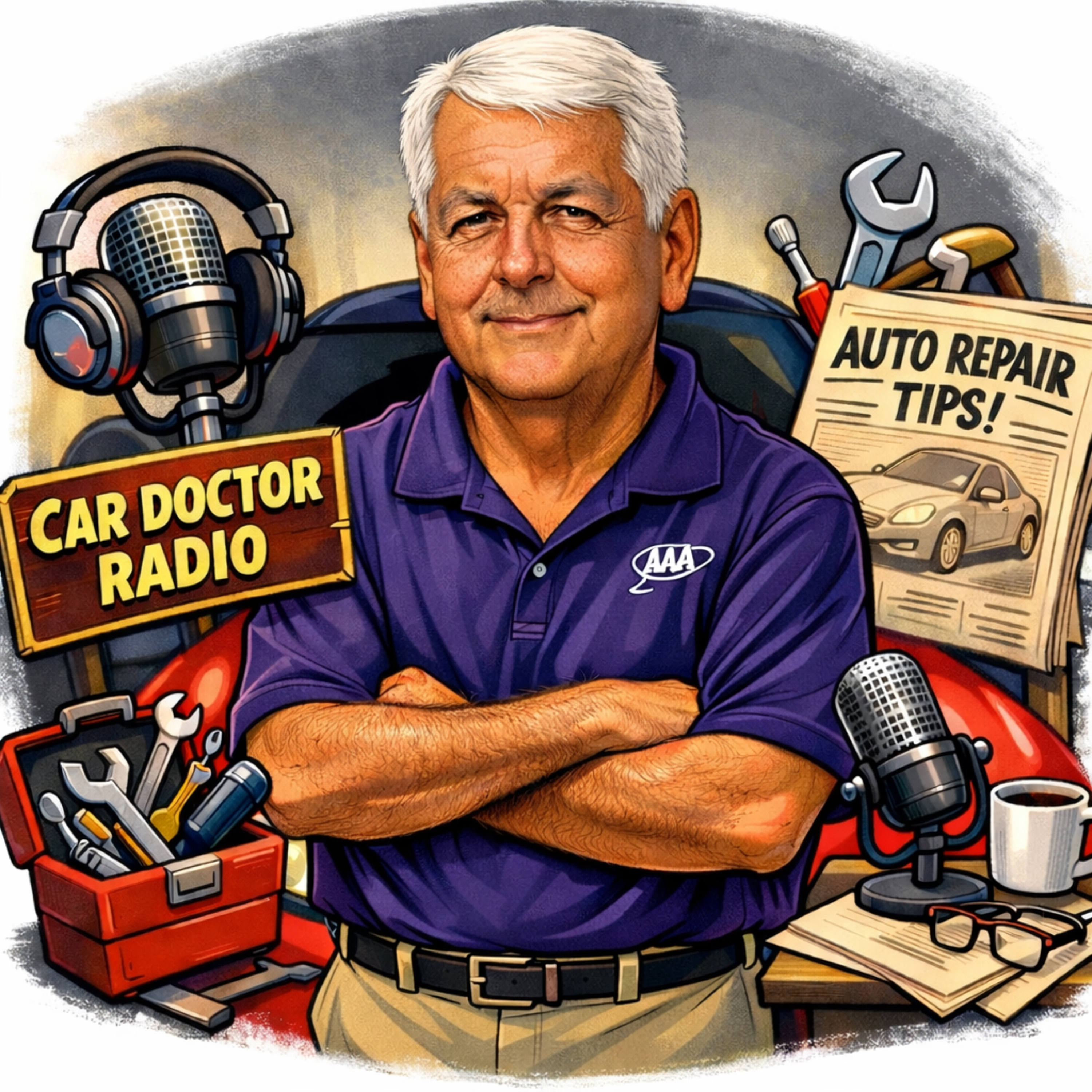
John Paul, the car doctor, discusses the importance of preventing rust on vehicles, especially in snowy regions where road treatments can be corrosive. Joined by Ken Lemoine, they delve into Wax Oil, a unique undercoating that effectively protects metal from moisture and rust. The conversation highlights the benefits of using Wax Oil, including its long-lasting properties compared to other products, and its growing adoption by municipalities to extend vehicle lifespans and reduce costs. Real-life examples illustrate the effectiveness of this method in preserving vehicles over time.
"... to another edition of the car doctor program on 959 W-A-T-D. My name is John Paul, the car doctor her..."
The Porsche 959 is a very fast and fancy sports car from the late 1980s that was ahead of its time with special technology. It's rare and many car enthusiasts really want to own one.
The Porsche 959 is a high-performance sports car that was produced in the late 1980s and is known for its advanced technology and all-wheel-drive system. It is significant as one of the first supercars and remains a sought-after collector's item.
"We're putting all kinds of brine on the roads. It used to be we put just sand on the road."
Brine is a salty liquid that cities spread on roads in winter to stop ice from forming. It helps keep the roads safer for driving.
Brine is a mixture of salt and water used to treat roads in winter. It lowers the freezing point of water, helping to prevent ice formation and improve traction for vehicles.
"Then we put a sand salt mix and now we put all kinds of different chemicals on the road that work great to keep the temperature of the melted snow and water so it doesn't freeze at 32."
Road salt is what cities put on the roads in winter to help melt snow and ice. While it makes driving safer, it can also cause rust on cars if they aren't protected.
Road salt is commonly used in winter to melt ice and snow on roadways, improving safety for drivers. However, it can be corrosive to vehicles, leading to rust and other damage if not properly managed.
"But I first want to talk to Ken about a product that he told me about a bunch of years ago called Wax Oil. And it's an undercoating body cavity spray."
Undercoating is a spray that protects the bottom of your car from rust and damage. It's especially useful in winter when roads are treated with salt and chemicals that can harm your car.
Undercoating is a protective layer applied to the underside of a vehicle to prevent rust and corrosion, especially in areas exposed to road salt and chemicals. It helps extend the lifespan of the vehicle's body and frame by shielding it from moisture and harmful substances.
"salt and other ice melt products could kind of work their way into and stay there and cause rust. And if, you know, you live in the New England States..."
Rust is a type of damage that happens to metal when it gets wet and reacts with air. It can make cars weak and cause parts to break down.
Rust is a type of corrosion that occurs when iron or its alloys react with oxygen and moisture. It can significantly damage a vehicle's structure and components if not addressed.
"the product that you introduced me to Wax Oil is a way to try to stay on top of that, right?"
Wax Oil is a product you can put on your car to help keep it from getting rusty. It acts like a shield against water and salt.
Wax Oil is a protective coating used to prevent rust and corrosion on vehicles. It creates a barrier that helps protect metal surfaces from moisture and salt.
"I was underneath a perspective purchase of a Volkswagen bus. And this was about 2003 and the bus was about a 1966."
The Volkswagen Bus is a famous old van that many people loved in the 1960s. The 1966 model is one of the earlier versions, known for being roomy and having a cool design.
The Volkswagen Bus, also known as the Type 2, is a classic vehicle that was popular in the 1960s and is known for its spacious interior and unique design. The 1966 model is part of the early generation of these iconic buses.
"And he says, well, the first owner told me he had an undercoat job done on it when it was relatively new. And I said, who did it? This is unbelievable."
An undercoat job is a treatment done to the bottom of a car to help protect it from rust. It's like putting on a shield to keep the car safe from water and salt damage.
An undercoat job involves applying a protective layer to a vehicle's undercarriage to prevent rust and corrosion. This is especially important in regions where vehicles are exposed to salt and moisture.
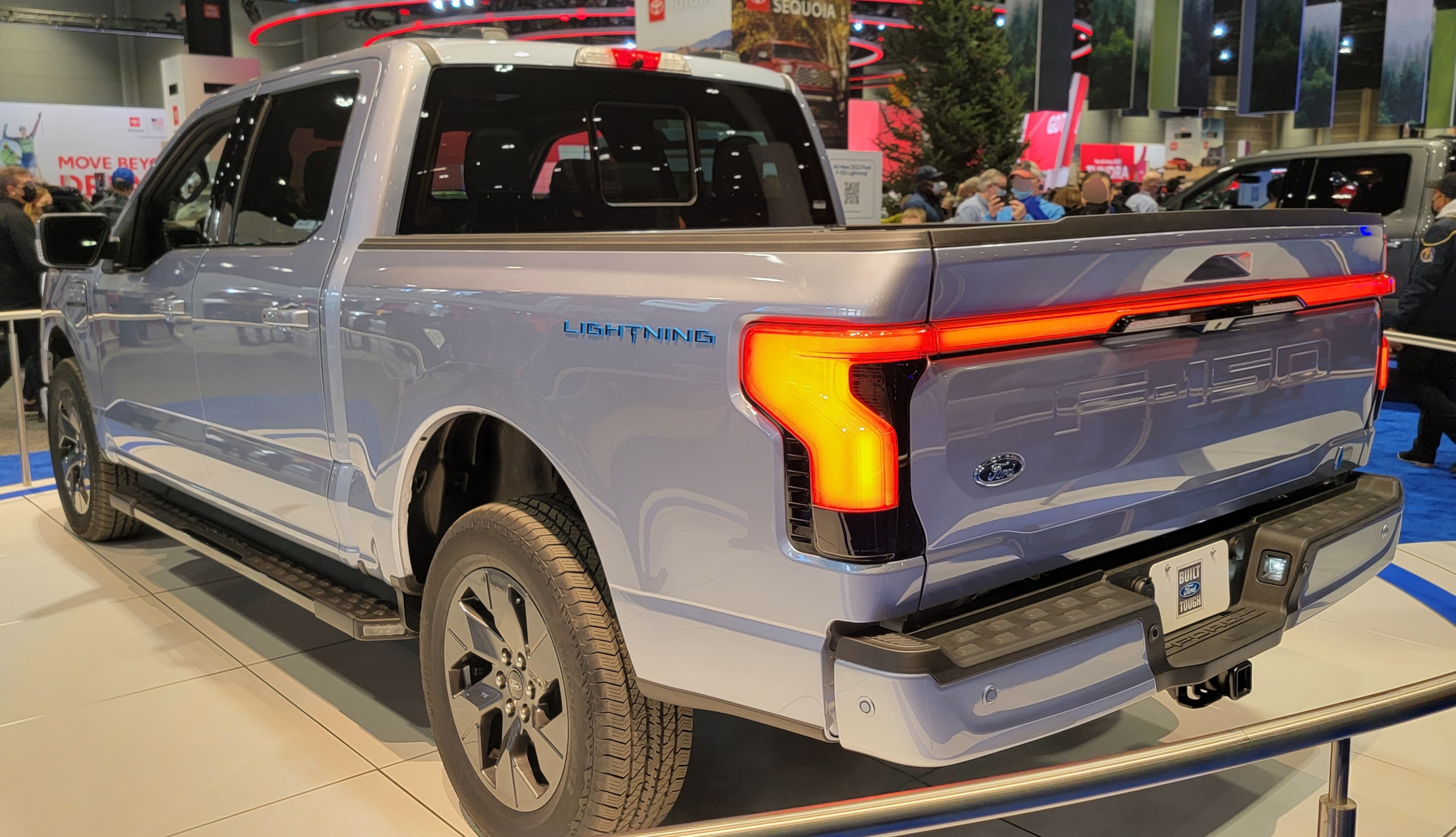
"If I start an ad that said, you know, at a 2017 F-150, 90,000 miles, no rust, I mean, I'd be on that phone in a second."
The 2017 Ford F-150 is a tough truck that many people use for work or towing. It has different engine choices and is designed to handle a lot of different tasks.
The 2017 Ford F-150 is a full-size pickup truck known for its durability and versatility. It features a range of engine options and advanced technology, making it popular among both work and recreational users.
"So, the other side of it is that we use a product called Cavity Wax and we spray it in almost like an aerosol. It's aerated and we spray it at 90 PSI."
Cavity Wax is a special spray that helps protect the inside parts of a car from rust and damage. It's important because these areas can get wet and cause problems if not treated.
Cavity Wax is a protective coating used to prevent rust and corrosion in the hidden areas of a vehicle's structure, such as inside frame rails and body panels. It is typically applied in an aerosol form to ensure it reaches difficult-to-access areas.
"...if Toyota had done this to their tundra in Tacomas, they wouldn't have been replacing frames because the moisture gets into the inside of that frame rail."
The Toyota Tacoma is a smaller truck made by Toyota. It’s known for being tough and good for off-roading, but some models can have rust problems on the frame.
The Toyota Tacoma is a mid-size pickup truck that is popular for its off-road capabilities and reliability. Like the Tundra, it has faced issues with frame rust, which can be addressed with protective measures.
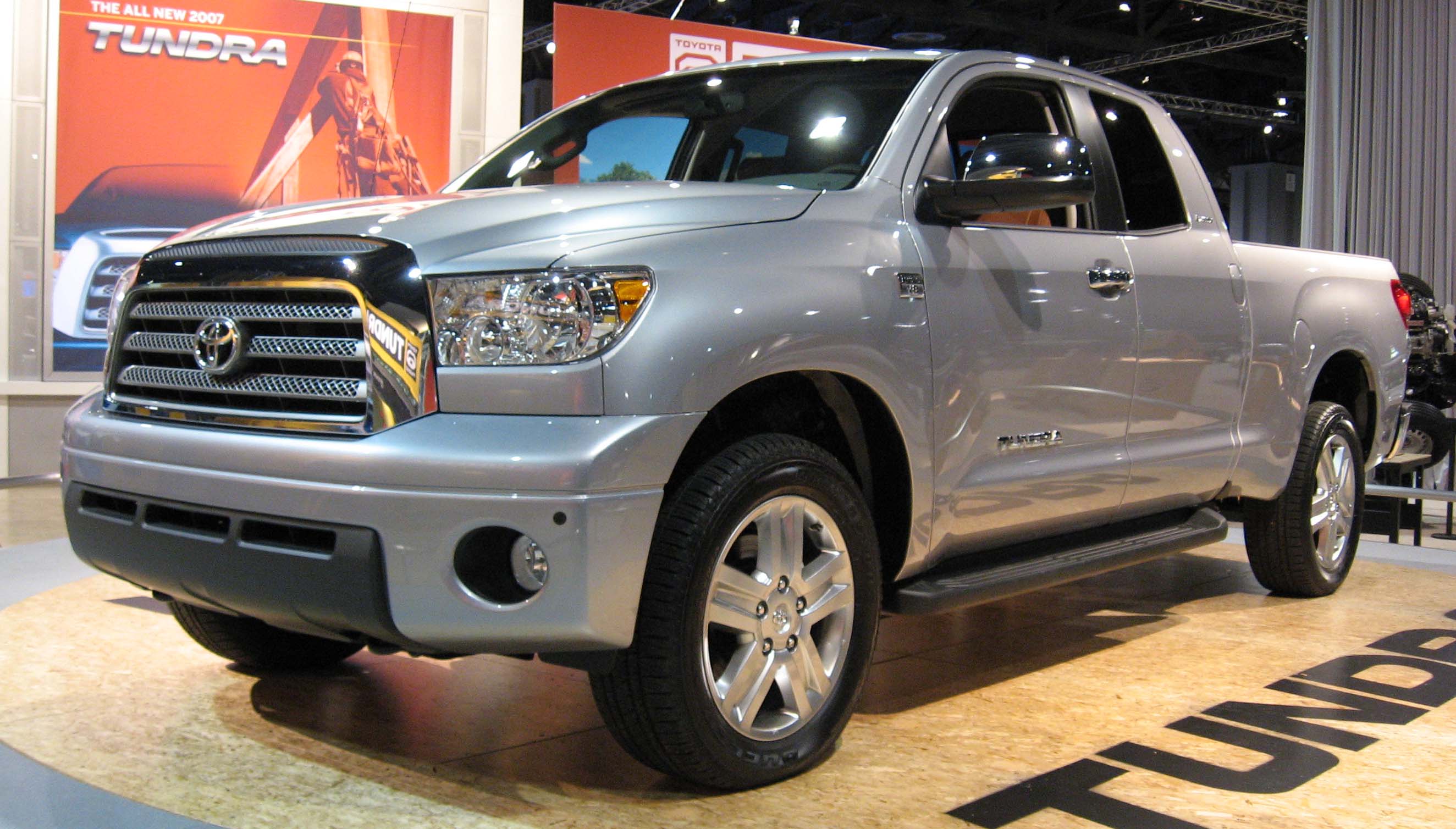
"...if Toyota had done this to their tundra in Tacomas, they wouldn't have been replacing frames because the moisture gets into the inside of that frame rail."
The Toyota Tundra is a big truck made by Toyota. Some models have had problems with rust on the frame, which can be fixed by using protective sprays.
The Toyota Tundra is a full-size pickup truck known for its durability and capability. It has been subject to issues related to frame rust, which can be mitigated by proper protective treatments like Cavity Wax.
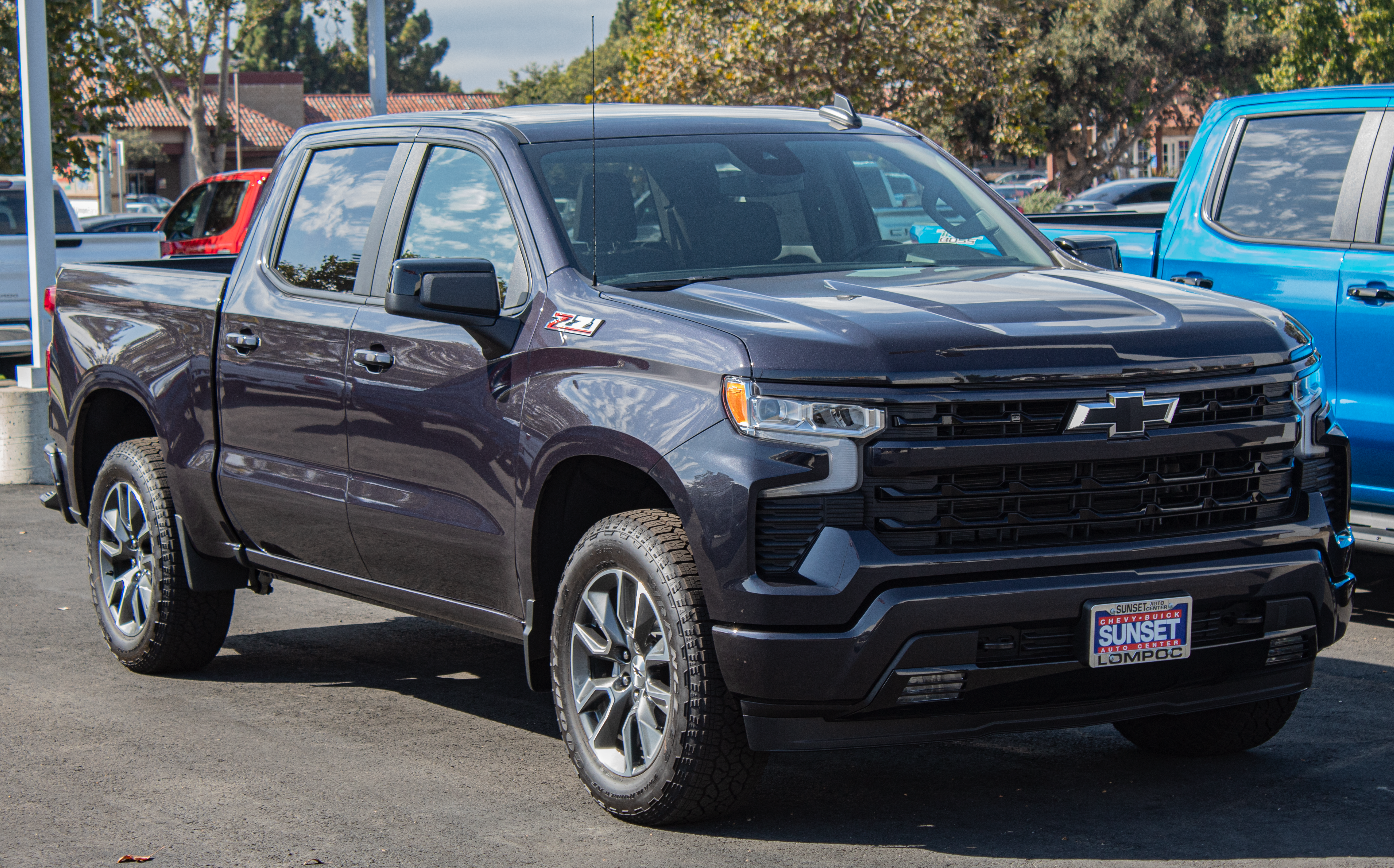
"I've seen the late model GMs, the Silverados, etc. General Motors is putting on some sort of an industrial coating."
The Chevrolet Silverado is a big truck that many people use for work and hauling things. It's known for being strong and reliable.
The Chevrolet Silverado is a full-size pickup truck known for its durability and performance. It is popular for both work and personal use, often praised for its towing capacity and range of features.
"I've seen the late model GMs, the Silverados, etc. General Motors is putting on some sort of an industrial coating."
General Motors is a big American company that makes cars and trucks. You might know their brands like Chevrolet and GMC.
General Motors, often abbreviated as GM, is an American multinational corporation that designs, manufactures, markets, and distributes vehicles and vehicle parts. It is known for producing popular brands such as Chevrolet, GMC, Buick, and Cadillac.
"...So ball joints and boots on the racks, et cetera, will start to crack and rot. I've seen plow trucks that the complaint that the plow truck driver had..."
Ball joints are parts of a car's suspension that help the wheels move up and down while turning. They are important for keeping the car stable and steering properly.
Ball joints are crucial components in a vehicle's suspension system, allowing for smooth movement and articulation of the wheels. They connect the steering knuckles to the control arms, enabling the wheels to pivot while maintaining stability.
"We'll pick a Toyota Camry or something like that. You're spending a do-it-yourself kit for about $125 to $150."
The Toyota Camry is a well-known car that many people use for everyday driving. It's reliable and good on gas, which makes it a favorite for families.
The Toyota Camry is a popular mid-sized sedan known for its reliability and comfort. It's often chosen for its practicality and fuel efficiency, making it a common choice among families and commuters.
"You can do all your cavities and undercoats. And that'll take you all the way up small SUVs like a Highlander."
The Toyota Highlander is a larger vehicle than the Camry, designed for families who need more room. It's an SUV, which means it can carry more people and luggage.
The Toyota Highlander is a midsize SUV that offers a spacious interior and a comfortable ride. It's known for its versatility and family-friendly features, making it a popular choice for those needing more space than a sedan.
The RAV4 is a type of SUV made by Toyota. It's a popular choice for people who need a reliable car that can handle different types of weather and roads.
The Toyota RAV4 is a compact SUV known for its reliability, practicality, and versatility. It's popular among families and individuals looking for a dependable vehicle.
"Using the Toyota equivalent, you get up to a forerunner or something like that."
The Toyota 4Runner is a tough SUV that can handle rough terrains. It's great for people who like to go off-roading or need a vehicle that can take a beating.
The Toyota 4Runner is a rugged SUV known for its off-road capabilities and durability. It's built on a truck chassis, making it suitable for both on-road and off-road adventures, appealing to outdoor enthusiasts.
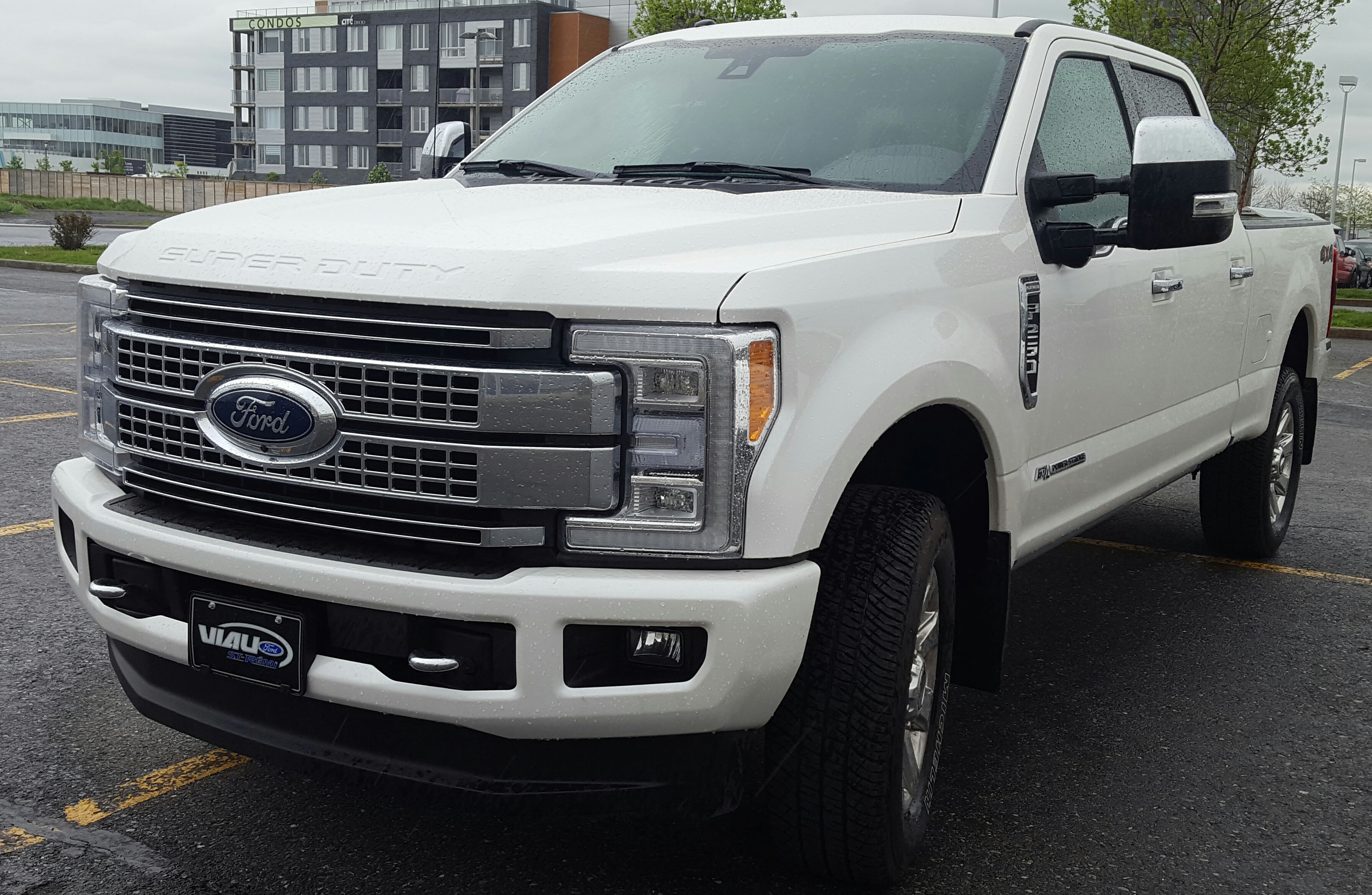
"And an F-250 crew cab with a long bed on it, you could be looking at the better part of $300."
The Ford F-250 is a strong and durable truck that can carry heavy loads. It's commonly used for work and can also be great for outdoor activities.
The Ford F-250 is a heavy-duty pickup truck known for its towing capacity and ruggedness. It's often used for both work and recreational purposes, making it a popular choice among truck enthusiasts and contractors.
"...the latest car manufacturing as predatory engineering in car making because the idea of the cars are eventually going to rust away..."
Predatory engineering means making things in a way that they won't last long, so you'll have to buy new ones sooner. In cars, this can mean that they rust or break down faster than they should.
Predatory engineering refers to design practices that prioritize short-term profits over long-term durability and reliability, often leading to products that fail or degrade quickly. In the context of car manufacturing, it suggests that vehicles are intentionally designed to have a limited lifespan, encouraging consumers to buy replacements sooner.
"So changing gears, the Bay State Motor Festival was the outgrowth of an eight-year restoration that I did on a vehicle that was built in Framingham..."
The Bay State Motor Festival is a car show where people display and celebrate classic cars. It's a place for car lovers to come together and see beautifully restored vehicles.
The Bay State Motor Festival is an automotive event that celebrates classic cars and their restoration. It often features vehicles that have been meticulously restored by enthusiasts and showcases the history of automotive manufacturing in the region.
"...the Bay State Motor Festival was the outgrowth of an eight-year restoration that I did on a vehicle..."
Restoration means fixing up an old car to make it look and work like it did when it was new. This can include repairing the engine, body, and interior.
Restoration in the automotive context refers to the process of returning a vehicle to its original condition or improving it to a desired state. This often involves extensive work on the body, engine, and interior.
"...the first GM dealership in the country, which is still in business today."
A GM dealership is a place where you can buy cars made by General Motors, like Chevrolet and Cadillac. They also help with car repairs and selling parts.
A GM dealership is a retail establishment that sells vehicles manufactured by General Motors. They provide sales, service, and parts for GM vehicles.
"The transmission control valve is affected and effective vehicles may fail."
The transmission control valve is a part of the car's transmission that helps control how the gears shift. If it doesn't work right, the car might have trouble changing gears.
The transmission control valve is a component in an automatic transmission that regulates the flow of transmission fluid, which is essential for shifting gears smoothly. If it malfunctions, it can lead to issues such as gear slipping or failure to engage.
"Apparently the 10-speed automatic transmission, which was designed to replace the 7-speed wonky one that they had, isn't doing as well as they hoped."
A 10-speed automatic transmission is a system in a car that helps it change gears automatically. It has ten different settings to help the car run better and save fuel.
A 10-speed automatic transmission is a type of gearbox that allows for ten different gear ratios, providing smoother acceleration and improved fuel efficiency compared to transmissions with fewer gears. It is designed to optimize engine performance across a wider range of speeds.
"...dillac Escalade or Chevy Tahoe or Suburban or GMC Yukon or Yukon XL with this 10-speed, you'll be gettin..."
The GMC Yukon is a large SUV that can carry many passengers and is good for both everyday driving and outdoor adventures. It's similar to other big SUVs from the same company, making it a popular choice for families.
The GMC Yukon is a full-size SUV that offers a blend of rugged capability and upscale features, making it suitable for both family use and off-road adventures. It is often discussed alongside its corporate siblings, the Chevrolet Tahoe and Cadillac Escalade, for its similar attributes.
"...ou own a 2022 Cadillac Escalade or Chevy Tahoe or Suburban or GMC Yukon or Yukon XL with this 10-speed, you..."
The Chevy Suburban is a very large SUV that can fit a lot of people and their luggage. It's been around for a long time and is known for being a good choice for families or businesses that need a lot of space.
The Chevrolet Suburban is one of the largest SUVs on the market, offering extensive cargo space and seating for up to nine passengers. It's significant for its long history and reputation as a reliable family vehicle and is often used for both personal and commercial purposes.
"...s a software fix. And if you own a 2022 Cadillac Escalade or Chevy Tahoe or Suburban or GMC Yukon or Yukon ..."
The Cadillac Escalade is a big, fancy SUV that is very luxurious and has a lot of high-tech features. It's often seen as a status symbol and is popular among people who want a comfortable ride.
The Cadillac Escalade is a full-size luxury SUV that is known for its opulent features, powerful performance, and status symbol appeal. It's frequently discussed for its high-end technology and comfort, as well as its presence in popular culture.
"... And if you own a 2022 Cadillac Escalade or Chevy Tahoe or Suburban or GMC Yukon or Yukon XL with this 10..."
The Chevy Tahoe is a big SUV that can carry a lot of people and stuff. It's popular because it's strong and can handle different types of driving, making it a good choice for families or anyone needing extra space.
The Chevrolet Tahoe is a full-size SUV known for its spacious interior, strong towing capacity, and robust performance. It is often discussed for its popularity among families and as a versatile vehicle for both daily driving and off-road adventures.
"...cent recalls. Half a million ram trucks, 800,000 Jeep Grand Cherokees, 84,000 Hyundai's and Kia's, BMW's, Vol..."
The Jeep Grand Cherokee is a popular SUV that can handle tough roads and also feels nice inside. People talk about it a lot, especially when there are issues or recalls that affect many of these vehicles.
The Jeep Grand Cherokee is a mid-size SUV that combines off-road capability with luxury features, making it a popular choice for those who want both adventure and comfort. It's often discussed in the context of recalls and reliability due to its widespread use.
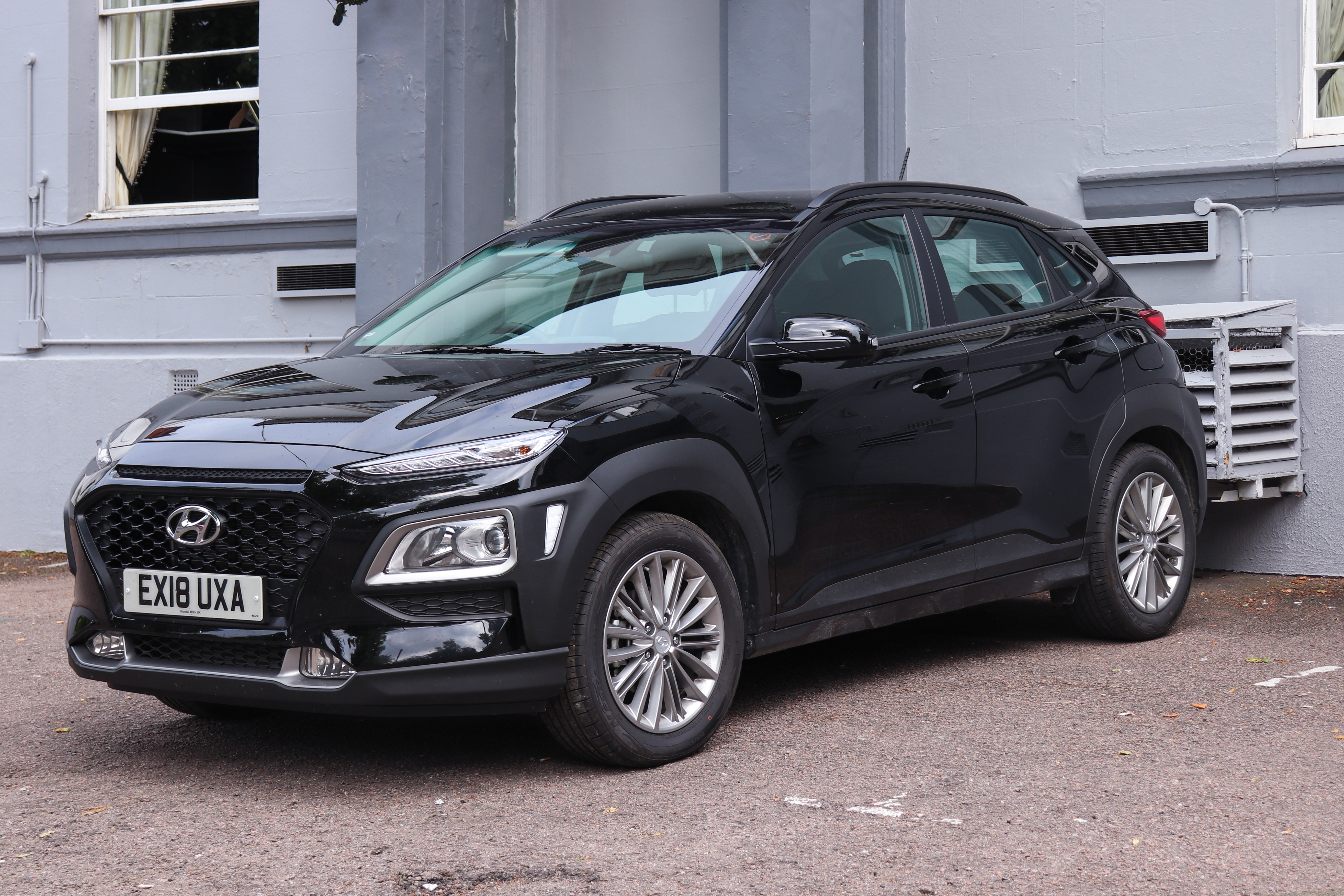
"Well, you're like, well, I own a Hyundai or Kia. Do I need to be worried? Well, the 2025, 26 Tucson hybrids, plug-in hybrids, Kona's, Ionix. And you're like, but how do I know if it's mine?"
The Hyundai Kona is a small SUV that looks good and is practical for everyday use. It's popular because it offers a lot of features for a reasonable price.
The Hyundai Kona is a subcompact SUV that stands out for its stylish design, practicality, and value. It's often discussed for its features and affordability in the growing SUV market.
"...ive vehicles include model year 2024 to 2026 Jeep Wagoneer S, model year 2026 Cherokee, model year 2025, 202..."
The Jeep Wagoneer is a big SUV that has a classic look but comes with modern comforts and technology. It's known for being able to handle tough terrains while also being nice to drive.
The Jeep Wagoneer is a full-size SUV that combines classic styling with modern technology and luxury features. It is significant as a revival of a historic model and is often discussed for its capabilities and upscale offerings.
"A bunch of emails came in this morning. My Altima has 110,000 miles on it. I think I was supposed ..."
The Nissan Altima is a comfortable car that's not too big and gets good gas mileage. It's a popular choice for people who want a reliable car for everyday use.
The Nissan Altima is a mid-size sedan known for its comfortable ride, fuel efficiency, and advanced safety features. It is often discussed for its reliability and value as a daily driver.
"...d there around. But this person has a 225 Toyota Corolla, but they don't like the horn. The horn's wimpy ..."
The Toyota Corolla is a small car that is very reliable and doesn't use much gas. It's popular because it's affordable and easy to take care of, making it a great choice for many drivers.
The Toyota Corolla is a compact car known for its reliability, fuel efficiency, and affordability. It is one of the best-selling cars worldwide and is often discussed for its value and low maintenance costs.
Select text to request an explanation
W-A-T-D presents John Paul, the car doctor, All Things Automotive.
Have questions? Call or text 7-8-1-837-4900.
Now, here's John Paul, the car doctor.
And good Sunday morning everyone and welcome to another edition of the car doctor program on
959 W-A-T-D. My name is John Paul, the car doctor here to help you with your car problems on this day
before a blizzard again. It seems to be kind of typical.
And no one used to believe me when I always said, you know, February is the snowiest month
because now, now, now, now, it is. It always has been. People forget.
You know, we talk a lot about the weather and how it relates to cars and what happens when they
plow the roads, sand the roads, salt the roads.
We're putting all kinds of brine on the roads. It used to be we put just sand on the road.
Then we put a sand salt mix and now we put all kinds of different chemicals on the road
that work great to keep the temperature of the melted snow and water so it doesn't freeze at 32.
It might freeze at zero or something so it makes the road safer.
But a lot of these materials are very tough on cars.
And with us is Ken Lemoine. He wears a lot of hats.
But I first want to talk to Ken about a product that he told me about a bunch of years ago called Wax Oil.
And it's an undercoating body cavity spray.
Ken, good morning and welcome back to the car doctor program.
Yes, good morning, John. Good to see you and hear you again.
Well, it's, it's that time of year where there's a lot of stuff that gets put down on the roads to keep the road safe.
But this stuff isn't good for cars. And I remember a few years back I was with one of the AAA engineers
and we were walking the, I think it was the Detroit Auto Show.
And we were looking at different cars and the nooks and crannies that salt and other ice melt products
could kind of work their way into and stay there and cause rust.
And if, you know, you live in the New England States or, or, you know, upper state New York rust is a real critical issue.
But the product that you introduced me to Wax Oil is a way to try to stay on top of that, right?
It really is. I mean, if you've got a new vehicle today, you're going to spend upwards of 50,000 to as much as maybe $100,000.
And it's an insane circumstance to spend that kind of money and not protect your vehicle.
Rust is essentially moisture and oxygen attacking metal.
So if we prevent the moisture from getting to the metal, the chemical action can't occur.
There's company there based out of Switzerland and then now about 65 years old, as you mentioned the name of it's called Wax Oil.
And I stumbled across it about 20 some odd years ago.
I was underneath a perspective purchase of a Volkswagen bus.
And this was about 2003 and the bus was about a 1966.
And my friend was looking to buy this bus.
So I'm underneath the bus and there's no rust on this 37 year old bus.
So I haul her out to the guy that owned it and his second owner bought it, brought it over from Germany.
And I said, how come there's no rust under here?
And he says, well, the first owner told me he had an undercoat job done on it when it was relatively new.
And I said, who did it? This is unbelievable.
He goes, I don't know. He says the stickers on the back of the bus, maybe one of them is the company.
And in Europe, every place they go, they collect a sticker and they put it on their vehicle.
So you go, you know, you see an older vehicle in Europe and there's like a dozen stickers for Austria and all these other different places.
And one of them was this little circle that said, well, actually.
So I looked it up and in Europe, it's common to have this service done when the vehicle is newer in the first couple of years before rust really gets a chance to take hold.
And today, Europe, about 50% of the vehicles sold in Europe have this done in the first two years.
Now, we don't really know it here in the United States by comparison.
But there have been a number of companies that have sprung up in the last seven to 10 years to hopefully resolve this rust issue.
But most of them have a product that's made out of lanolin and oil and solvents in some kind of a blend.
And unfortunately, those products don't bond to the metal.
What this company Wax Oil has done is that they make a wax formulation that is propelled onto the surface by mineral spirits.
So mineral spirits, we use it to clean our spray guns and things like that.
The mineral spirits, as you spray it, the mineral spirits starts to evaporate.
As it does, it pulls the moisture from the wax formulation and chemically bonds the wax formulation to the metal.
And like I said, if you can't get moisture to the metal, the chemical action that we know as rust doesn't occur.
So this material will lock the moisture out, and actually what it does is it pulls the moisture from any of the surface material that the metal has on it,
which would include calcium chloride and some of these other materials, so that it'll just lock the moisture out.
A good example of seeing how moisture attacks metal, as you're going down the interstate, you've got three lanes in each direction.
The far right-hand lane, when you go under an overpass, the beam will see more rust in the right lane than in the middle lane than in the left lane.
The reason for that is that the tractor trailers are spewing moisture and particulates into that beam 24-7 and never sleeps.
So if it's a sunny day, it's still getting moisture, so it's getting more than the one in the middle of that in the one in the left.
So we see that in the United States, we see that very commonly that these bridge beams are rusting just because of the traffic that's going underneath them.
In Europe, they use wax oil, they coat the bridge beams, and they check it every five years after the first 25 years.
So they have found a way to be able to cure the problem.
So since we've last talked, I think that we now have in eastern Massachusetts, we have about 100 DPWs and DOT Massachusetts are now actively using this product.
What they have found is using calcium chloride and in some instances magnesium chloride.
The magnesium chloride is 20 times as corrosive as road salt and the calcium chloride is 10 times as corrosive.
So their trucks are getting eaten away because they're the ones spreading this material and it's directly contacting the metals.
We have gone in and we've done demonstrations at the dealer level, at the DPW level rather,
and they figured out that if they can coat the vehicle before it's rusted, they can take a 10-year life on that vehicle and go out to 15 years or even higher, maybe 18 to 20 years.
I've seen vehicles with only 40, 45,000 miles on them that the DPWs use for plowing and sanding that are just completely rusted out.
And when you've got a $100,000 vehicle in 10 years that's worth zero, it's costing you $10,000 a year just to have that vehicle in your garage.
Now if you can keep it for 15 years, now it's costing you $6,600 a year to keep that in your garage.
So they're saving $3,400 a year per vehicle just because they undercoated it.
Well, for a couple of hundred dollars for the materials and a couple of hours worth of work, it's a no-brainer and these DPWs have figured this out.
As an example, Cambridge with 159 vehicles, not including police and fire, they estimate they're going to save close to a half a million dollars a year in depreciation expense alone.
So for those of us as consumers, your vehicle is going to be worth 25 or 30% more five years out because it's not rusted.
I mean, I can't imagine going to see a vehicle that's seven or eight years old at this point that's in Massachusetts all year that doesn't have rust underneath it.
If I start an ad that said, you know, at a 2017 F-150, 90,000 miles, no rust, I mean, I'd be on that phone in a second.
Yeah, no, it really does make sense.
And you pointed out that Wax Oil, very popular in Europe.
I remember talking to a company a few years back and they restored old Land Rovers and, you know, they did, you know, quarter of a million dollar restorations and they completely said,
no, no, absolutely we use Wax Oil.
When we bring everything down to bare metal, we prime it and then use the Wax Oil on it and then go from there.
I think some people, you mentioned, you know, landland-based products and petroleum-based products.
There are a variety of them out there, but most of those require some sort of reapplication, right?
That's right.
You know, the Wax formulation, if you have high abrasion area in the wheel well or, you know, if it's a spreader with a sand and the salt and the calcium chloride are being spread,
eventually the abrasion is going to start to wear some of the Wax Oil off and we instruct the DPWs at the end of the season.
Just take a look underneath your vehicle and see if there's any areas that show anywhere.
But now we've got vehicles five and six years out that have nowhere on them and they're out there working every day.
So, I mean, I've seen a 40-year-old Toyota pickup truck that a guy called us up and he said,
I need a can, a spray can, to touch up my 28, 1980, tidalux.
And we said, 1980.
When did you have it done?
He said 1980.
Wow.
The vehicle was somewhat years old and it finally started to wear in the wheel well.
So, it's something that is as close to permanent as it gets.
But the bulk of those materials that are out there, if they do not say something to the effect of Wax formulation,
you really got to look very carefully because most all others, and I'm going to say,
better than nine out of ten are not products that are as close to permanent as this is.
So, you are going to have to put that product on every year or every two or three years in order to be able to get reasonable protection on your vehicle.
So, the other side of it is that we use a product called Cavity Wax and we spray it in almost like an aerosol.
It's aerated and we spray it at 90 PSI.
It gets to the inside of the frame rails, the subbed rails, the tubular control arms, the inside of the hood, the tailgate assemblies, et cetera,
so that you're coating it from the inside.
And if Toyota had done this to their tundra in Tacomas, they wouldn't have been replacing frames because the moisture gets into the inside of that frame rail.
It doesn't escape and the air going by it is not there to be able to pull the moisture away.
So, the chemical act we know is rust is continuing all of the time and they never truly dry out.
And that's why we don't necessarily encourage pressure washing at the DPWs because if they don't blow the water out, a lot of the water gets stuck on the inside of the frame and they rust them.
And one of the things that actually just came up I think last week in a conversation with the listener was some vehicles that all seem to rust out in the same spot kind of thing.
And the cavity wax you have, you know, sometimes, you know, you look at cars and all the drain holes have clogged up for whatever reason.
But the cavity wax because it's sort of an aerosol, you don't really have to worry about that, right?
No, you don't. I mean, the material, it's microscopic in its size. So, it actually cuts through and it will start to cling to the metal as the evaporation of the wax formulation occurs.
It actually evaporates the moisture that is on the metal at that point in time.
Have I sprayed a wet surface and seen water dripping off of it as I spray?
So, it's equally as important that they spray on the inside as they do on the outside.
Yeah.
You know, some people might think, well, why can't I just go and, you know, go get the Flex Seal rubber spray that I see the guy, you know, sprays it on a screen door and turns it into a boat.
You know, it's probably a good product for that.
But you don't want to put that kind of rubberized coating on there because it's going to seal in the moisture, right?
Exactly right. And the moisture never gets a chance to escape. And the actual evaporation, that's the key to this thing, bonding as well as it does.
I've seen the late model GMs, the Silverados, etc. General Motors is putting on some sort of an industrial coating.
It really wasn't designed for, you know, permanence, if you will.
I see it start to flake off after about three or four years.
And they refer to it as a semi-permanent kind of a thing.
After about three or four years, it starts to flake.
And there have been times where we're spraying a brand new vehicle, a new GM vehicle.
And if we spray it a little too heavy, it doesn't get a chance to evaporate through and bond.
It'll actually blister that material, so we'll scrape it off and respray again.
But the manufacturers don't want to take the time to, you know, rust prevent the vehicle.
So there are a couple of Toyota dealerships.
I know there's a few in Cape Cod that preemptively do it before they even put the sticker on the vehicle.
They call it the Environmental Protection Package, and they'll warrant the vehicle over the first ten years.
And they suggest that you just come in for an annual inspection.
But they've been doing that on the Cape now for four years.
And I know that I think Dan Verz and a couple of others have started to do it.
That the dealers here in the United States are starting to catch on to this.
We've got a half a dozen of them up in Maine.
And now the Maine Turnpike Authority and Rhode Island's DOT, and like I said, Mass DOT,
the Worcester Airport now is starting to do it for all of their vehicles.
And I know the mask world tests with them.
So they're starting to understand that, you know, if you can increase the life of your vehicle because it's not rusting,
you can repair it.
And that's the other side of it, is after seven or eight years, these vehicles aren't worth anything.
You can't take them apart without a torch.
As you well know, I've been a caraholic for antique and sport vehicles for the better part of 50 years since I was a little kid.
And I do this to my classic vehicles.
Once I know that a vehicle may be out there and possibly be out there in the bad weather,
I'll coach the vehicle to make sure that it's properly protected.
Yeah, no, it really makes sense.
And it can be, you know, ideally you go someplace that's a wax oil dealer and have the product put on,
but you can also buy it in spray cans and kind of DIY it too, right?
Do it yourself, yep.
You need to get the vehicle high enough to be able to get under it, obviously.
You can't just reach underneath.
Right.
And doing it thoroughly is really a great idea because this is not toxic to any of the rubber,
which by the way, those lanolin solvent blends are toxic to the rubber.
It'll cause the rubber to crack over the course of time.
So ball joints and boots on the racks, et cetera, will start to crack and rot.
I've seen plow trucks that the complaint that the plow truck driver had,
and this was in May of a couple of springs ago, he said,
when I lower the plow, it sounds like the front of the truck is coming apart.
What happened is he had been spraying with a lanolin solvent blend,
and I won't mention the manufacturer,
but what had happened is that the sway bar bushings had rotted
from the continual application of this material
and it caused the sway bar to hit the frame
when they unloaded the front end by dropping the plow.
And this is something that is, like I said, it's toxic to the vehicles
and you continually respray it.
It's just going to rot out that rubber.
But this is not toxic to rubber or to any of your electrical connections.
It'll actually insulate them so that you won't have that issue.
So anything that spins or gets hot, I stay away from.
So I don't do the belly pans and transmissions.
I don't do the rotors and the drive shafts.
Pretty much everything else is fair game.
And this material actually will wipe off.
The wax oil will wipe off using regular vegetable oil.
You can just take it right off when it's wet
so that you don't have to worry about getting any overspray.
Don't wear your best clothes when you're doing it though.
No.
In Europe, the guys that sell wax oil in Europe,
they wear a white shirt just to prove how good they can do the job.
And I can appreciate how a BMW dealership in Germany or Switzerland
is not going to get anything on the floor.
Everything that's done professionally,
we pretty much all use SATA guns that are built in Italy and Germany.
And I can spray a caliper bolt and not get it on the caliper.
I mean, you've got that level of detailed capability
with the professional equipment.
And the person using it.
I'm sure you could do a lot better job than me.
I know everything's different,
but what is the average cost to do an average car
that's just a year or two old that doesn't require any real additional prep?
Yeah, a good mid-sized car.
We'll pick a Toyota Camry or something like that.
You're spending a do-it-yourself kit for about $125 to $150.
You can really do a nice job.
You can do all your cavities and undercoats.
And that'll take you all the way up small SUVs like a Highlander
or something like that or a RAV4.
Using the Toyota equivalent,
you get up to a forerunner or something like that.
Maybe we're looking at this now, this is retail, do-it-yourself kits.
And an F-250 crew cab with a long bed on it,
you could be looking at the better part of $300.
Now, that F-250 long bed crew cab is going to cost you $65,000 to $70,000.
So, spending $300 and a couple hours to make sure
that you're going to get your investment back by another 25 or 30%,
not have to worry about fixing the vehicle
because it's not going to be rusted when you try and repair it.
No, it really makes sense.
And I have somebody who writes to me pretty regularly
and she describes the latest car manufacturing
as predatory engineering in car making
because the idea of the cars are eventually going to rust away
and she replaces a lot of car parts with stainless,
which is for a car company is impossible to do,
but as a do-it-yourself or you could do stainless lots of things.
But something like wax oil is going to give you
that longer shelf life for your vehicle.
And if you have somebody do it in a shop,
a local garage that maybe does this sort of work,
do you have a guess at what it would cost
to have it professionally installed?
Yeah, that Camry would probably be $499.
Oh, okay.
Maybe $599 and that four-runner would probably be $899
or maybe as much as $1,000.
If they got a cleaning and needle scale it and sand it down
and there's maybe a lot of prep work involved,
if it's a new vehicle, a lot of times it's less expensive
than if it's a vehicle that's four or five years old
because they don't have much prep.
That's a good point and I don't want to keep you too long
because the idea of being able to hold on to a car longer
and in better condition I think should appeal to everybody.
But if you have a car that has some surface rust,
maybe even some flaky rust on it,
can you just sort of wire brush that off
and then wax oil over what you see?
You don't have to get it down to bare metal, do you?
No, you're not going for a full restoration.
The rule of thumb is if the metal is structurally solid,
just get the loose material off as best you can.
Maybe hit it lightly with a blowgun
just to take care of any residual materials that are on there.
If you can get a car wash and then a day or two later
with the undercar wash and then do it,
you're going to get rid of most of the loose material
and you'll be fine.
So as long as it's structurally, you'll be fine.
And one of the other hats you wear among the many
is the Bay State Motor Festival
and that was a runaway hit last year
and there's going to be another one this year, right?
We are.
To cap off the wax oil,
waxoil-usa.com will show you how to do the services
and there are local art stores that have it,
Fisher among them and some of the Napa stores
down in the South Eastern Massachusetts has it
as well as some of the stores up in Maine, New Hampshire,
Eastern Mass and online on Amazon and eBay,
the product is also available.
So changing gears, the Bay State Motor Festival
was the outgrowth of an eight-year restoration
that I did on a vehicle that was built in Framingham
in 1924 by Richard Long as in Long Motors,
the first GM dealership in the country,
which is still in business today.
They built 2,500 cars in Framingham between 1922 and 1925
and this was the only sedan that was left is one roadster
that's been in a family since new and the sedan
and I don't know if you've ever done a huge puzzle
without a picture, but that's what this vehicle was.
I can't even do a huge puzzle with a picture, so yeah.
So over the last eight years,
I've incorporated the skills of a number
of really truly expert restoration folks
and we've done a tremendous amount of research
to try and figure out how one of one,
what is appropriate correct for that particular vehicle
and we've got to the point where it's now running and driving
and we've done a full restoration on it.
The car is called a Bay State and they're from Framingham.
The model is a model one and you can look up
BayStateMotorFestival.com
and you'll see pictures of the vehicle
and the 200 and some other odd vehicles that happen to show up.
The ear of the car, we wanted to honor Massachusetts
as the genesis of the automobile in America.
Back in 1893, Stevens Durier Company
built vehicles out in the Holyoke Springfield area
and they were recognized by the Antique Auto Club of America
as the first production manufacturer of automobiles in America.
So we've had vehicles like the Stevens Durier
and the Metz M-E-T-Z car built in Walfam
and the Orient as an Orient buckboard, Stanley Steemers,
Grout vehicles made in orange,
the Marsh motorcycle from Brockton,
a Cameron car from Brockton,
the Rolls Royces that were built in Springfield, Massachusetts,
Indian motorcycles.
We had a whole range of those kinds of vehicles
along with General Motors vehicles
that were built in the Framingham plant between 46 and 89.
We did not have an axle, which they made them in Somerville,
Assembly Square, was named after the assembly plant that Ford had.
So we're looking for one of those for next year.
You couldn't get the one out of the hotel?
It's possible.
Because that was a regular listener, Peter,
who used to own that car.
I guess the question is, was it made in the plant
or a lot of them were made in the other Ford locations
and that was one of the fire eyes.
I don't know, we'll have to get a hold of Peter
and see what he has to say.
But this year, is there a date already set up for this year?
Yes, we're doing it on Father's Day.
So I expect that all the fathers will be there
because the mothers, I can't tell them what they can't go to a car show on Father's Day.
That's right, yes.
It's in Cushing Memorial Park, which is a 67-acre lawn.
So if you want to bring your vehicle,
something that you love to a vehicle show to a motor festival,
be it a motorcycle, a car, a truck, et cetera,
you're going to park in a lawn.
You're not going to park on tar.
The special display this year will be made in New England.
And we're trying to extract one of the two remaining scheme cars,
SK, ENE, that were made in Lewiston, Maine.
The folks at Seal Cove, up in Maine,
are hoping to bring one of those down.
If not, they also, I believe, have a Corbin,
which was built in New Britain, Connecticut.
And some of my many collector friends have Corbin and Pope Hartford
and Locomobiles built in Bridge Court.
The Cameron cars were built in Pawtucket.
Alco trucks also built in Providence.
So, you know, we're hoping that Dave Smith and Factory 5
will be able to come and bring some of the Factory 5 vehicles,
which are still being made in Wareham.
But we are actively pursuing those vehicles that were made
in other states in New England,
as well as the ones that were made in Massachusetts.
No, I think this really gives people the opportunity
to see cars that maybe they've heard of and never seen before,
or maybe they've never even heard of them before.
But the idea that New England is so rich in car history,
and I think, you know, a lot of people,
and you mentioned my old hometown of Brockton,
you know, when I was a kid Brockton was known as the shoe capital.
But no one really thought about it as an automotive manufacturer.
I mean, they, you know, did baseball uniforms and made shoes.
And didn't think much more of it other than that.
But the idea that there was, you know,
two or three different car manufacturers,
you know, granted small scale, and motorcycle builders
in the same place that, you know, later became known as the shoe capital.
I think really, really is a great bit of history to learn.
There really is. I mean, there were a hundred and sixty-two manufacturers
of cars, motorcycles, and trucks in Massachusetts before the Second World War.
There were seven million vehicles that had been made in Massachusetts,
and 4.7 million were made in Framingham.
So we are very rich in our automotive and vehicle manufacturing history.
And we have, I think, three and possibly four museums
that are planning to attend with displays,
as well as, I believe, three history centers,
Amesbury being in Merivac,
where they were the world leaders in carriage building between 1880 and 1910.
It's a great opportunity for people to go, you know, see some things,
meet some people.
If you're thinking about getting into the old car hobby,
no better way than to talk to somebody who's kind of worked their way through it.
You know, if there's a car that you've always kind of lusted after and said,
oh, let's see what it would really take.
No better way than talk to somebody who's already done it.
And that's what I love about car shows in general.
Going back, waxloyal-usa.com is where you find out more information about wax oil.
And if you want to find more information about the festival,
where can people learn about that?
It's at the Bay State Motor Festival, alloneword.com.
We are instituting a series of podcasts in support of it.
And what we'll be doing is we'll be focusing on all facets of the automotive enthusiast hobby,
as well as the industry itself, be it the vice president of sales of various manufacturers,
to the owners of dealerships, to restorers, curators of museums,
the specialists that deal with various vehicles, be it, you know,
Mercedes are doing old car restorations, et cetera, interior specialists,
people that work with aluminum and are sculpture specialists,
woodworkers that work with wood on older vehicles, et cetera.
We'll be doing a series of interviews, and you'll be able to look those up
on the Bay State Motor Festival site, as well.
There we go.
Ken, always a pleasure talking to you.
Thanks for taking some time out of your Sunday morning before another snowstorm.
Very good.
And, Sean, if you want to run a contest, I will support a kit, a do-it-yourself kit,
to do that camry to the lucky winner.
All right.
We'll put that together and we'll stay in touch with that.
Excellent.
All right.
Thank you, Ken.
You'll see you on Father's Day.
All right.
All right.
You take care of yourself and stay safe out there during the snow.
We need to take a break, pay some bills.
You're listening to the Car Doctor program on 959WATD.
We're running way behind.
We'll blame it on the snow.
We'll be right back.
Get a special membership offer today at aaa.com slash join.
That's aaa.com slash join.
Yeah, I can't wait to get to know you.
Hey, this is Kylie Evans.
Tune in to Twilight Showcase Radio, hosted by Sandy Stride and Keith James on 959WATD
and also at 959WATD.com.
Search for Twilight Showcase on Facebook and visit twilightshowcase.org.
Twilight Showcase tonight from 8 to 10 on 959WATD.
Honored with a Lifetime Achievement Award from the National Highway Traffic Safety Administration.
He's John Paul, the Car Doctor on 959WATD.
And welcome back to the Car Doctor program on 959WATD.
A bunch of different recalls.
GM is recalling more than 43,000 Cadillac GMC and Chevrolet full-size SUVs over an issue with transmission control valves.
Apparently the 10-speed automatic transmission, which was designed to replace the 7-speed wonky one that they had,
isn't doing as well as they hoped.
The transmission control valve is affected and effective vehicles may fail.
And here's where it gets interesting and lock up the rear wheels.
That could be fun.
As a fix, the dealers will install a new transmission control valve software.
So it's a software fix.
And if you own a 2022 Cadillac Escalade or Chevy Tahoe or Suburban or GMC Yukon or Yukon XL with this 10-speed,
you'll be getting a recall notice in the mail about it.
So you might want to kind of pay attention to that.
And Nissan, who has enough problems going on, has some recalls.
The gears and the electric throttle body assembly and some of the turbocharged 1.5-liter three-cylinder engines may break and cause the vehicle to lose power.
This expands a recall from July, same kind of thing.
So if it's a rogue 2023 to 2025 rogue and yours wasn't affected by that recall,
you might want to pay attention to your mail coming in and see if you're getting a recall notice.
Also, it makes good sense.
I mean, I'm looking at a list of fairly recent recalls.
Half a million ram trucks, 800,000 Jeep Grand Cherokees, 84,000 Hyundai's and Kia's, BMW's, Volkswagen's.
So cars get recalled all the time.
And this is just in the last month and a half or so.
So go to, you know, whatever your favorite app store is, if you have Google Play Store, I guess they still call it that,
or the Apple Store, go to that and download the NITSA app, the NHTSA app.
And it might be called Safer Car, but either way, download the app and then you can put your specific vehicle in.
And with the vehicle identification number, or in some cases, you can just put the license plate in and somehow it tracks you
and knows what your vehicle identification number is.
And then if your car gets a recall, you can look on the app to see.
And if you read about a recall, like for instance, 84,000 Hyundai's and Kia's are recalled from interim panel display.
Well, you're like, well, I own a Hyundai or Kia. Do I need to be worried?
Well, the 2025, 26 Tucson hybrids, plug-in hybrids, Kona's, Ionix.
And you're like, but how do I know if it's mine?
Well, with the app, it actually has the vehicle identification number.
So it will tell you whether it's up to your vehicle or not.
Your vehicle may have been made earlier or later and didn't get involved in the recall because there was something that, you know,
something changed in the manufacturing process that didn't affect the recall.
So, you know, like there's a, what's the big one here?
568,000 Hyundai Palisades recall for airbag issue.
This was the end of January, beginning of February.
It's been the first major recall of the year for them.
It has to do with the three-row Palisade.
And it is for five-year run, 2020 to 2025, the side curtain airbags and third-row occupants may deploy improperly in a crash
and could injure the people that are in the third row.
So, but you're like, well, how do I know if my car is in there?
Well, if you download the NHTSA app, well, you'll know because you'll put your car in there.
Same thing with, you know, there was a big Ram truck, there was a half a million of those.
Recall for kind of a weird thing.
It was recalled because there was 456,000 vehicles over an issue with trailer lights and trailer brakes.
And it says here, effective vehicles include model year 2024 to 2026 Jeep Wagoneer S, model year 2026 Cherokee, model year 2025, 2026 Ram,
all series it looks like.
The trailer tow module and the effective vehicles may have been improperly designed causing the trailer lights and trailer brakes to fail.
Trailer brake lights and turn signals that fail to illuminate, reduce visibility of the drivers, you know, it happens if you don't have lights.
So, as a fix, the dealers will replace the trailer tow module for free and that should take care of it.
If you own one of those vehicles, you'll be notified sometime next month.
So they're working on getting all the materials and everything together.
So, you know, there's one of those things that, you know, sometimes you'll read about the recall and you're like, well, my car is being recalled, but there's no parts available.
And you're like, oh, now what do I do?
So, yeah.
So, yeah, but just being aware and kind of being on top of it, you know, even, you know, there's 150,000 Priuses that are being recalled because of water could enter an electric door switch on the rear doors on certain vehicles and cause the switch to activate.
If this happens, it says while the rear doors were unlocked and it says the rear doors can open while driving.
I like the way it says it and increase the risk of injury.
Well, yeah, if the doors open while driving and you fall out, well, keep your seatbelt on.
That's what you should do.
But anyway, you can find out more information, go to Toyota.com and look up recalls.
But again, the NHTSA site will tell you pretty much everything you need to need to know.
And also you can find sometimes technical service bulletins, a few other things that you'll find of interest in that NHTSA site.
So I'm a big proponent in using that.
That's one of the things I'll look at sometimes when somebody writes to me and says, well, you know, I have a car that's, you know, affected by this and this.
Well, I'll look on their site as well as, you know, all data and Mitchell and motors and every place else that I can get access to to be able to look things up.
I never heard what happened last week.
We were supposed to talk to somebody that had a company that had technical service information fairly reasonable.
It was like under $30.
The person never called in.
I emailed the PR company and the PR person said, I don't know what happened.
They stopped doing business with us.
So I don't know.
Maybe just as well.
We didn't talk about it.
And maybe there was something kind of flaky about it.
Who knows, but never heard back.
Don't know.
We don't know what happened.
Why don't we take another break?
And when we come back, if you'd like to join a 781-837-4900, 781-837-4900 is the call in number.
Give us a call and we'll talk to you when we come back.
Join.
That's aaa.com slash join.
Make an appointment Sunday morning at 11 for John Paul, the car doctor on 959-WATD.
Now back to the car doctor.
And welcome back.
A bunch of emails came in this morning.
My Altima has 110,000 miles on it.
I think I was supposed to change the coolant, transaxle, fluid, and spark plugs as part of schedule maintenance.
I cannot find any official guide to verify what needs to be done.
Do I need to perform these maintenance items?
Where do I find a guide?
Well, you can look at the owner's manual.
You can look up.
I do a lot of looking in owner's manuals.
And most of them are all online now.
So that's the first place I always look.
And at 105,000 miles, they're absolutely correct.
The coolant should be replaced, the spark plugs need replacement.
And the transmission fluid should have been changed at 60,000 miles.
Because it's a CVT style transmission.
I heard back from the person this morning, they said they went to their local mechanic who they like.
And he said he wouldn't replace the CVT fluid.
He said it could cause the transmission to slip.
If you change the fluid, not sure what my next option might be.
Well, that's always a question.
What do you, you know, is it possible on a car with 100,000 miles on it?
If you change the fluid that you could have some problems.
So this was my response.
First off, maybe they didn't have the tools necessary to do it because you do have to use a scan tool to make sure the fluid's up to the correct temperature.
And then you, it's one of these pump in, pump out systems like Toyota uses.
Not hard to do, just you do need, it's not like removing a transmission pin.
So kind of as a general rule, if the fluid appears brown, but still is somewhat translucent and doesn't smell burnt, like burnt toast.
It's probably a good candidate for service, even at 100,000 miles.
If the fluid's dark black, it indicates that it's overheating and there's wear.
In this condition, it might be too late to save the transmission.
And it is possible that changing a fluid could wash away some of the more stuff that's inside there and things could go wrong.
But on the other hand, leaving that burnt old fluid in there is telling you that it's probably at the end of life.
Anyway, what is sort of a scary thing is I was when I answered that.
I answered this question, I was just poking around the inner webs and I put in what's the life expectancy of a Nissan CVT transmission.
And this came from a Nissan dealer and it said a properly maintained Nissan CVT transmission can last between 100,000 and 150,000 miles.
Huh? That sounds awfully short to me.
Because I know as an example, I was at a GM factory where they do testing of engines and transmissions.
And they had a transmission assembly spinning around upside down and backwards.
It looked like it was on a Tilt-A-World Carnival ride.
And I said, what's the equivalent length that you test these transmissions to?
And they said, we test them to 175,000 miles.
So we want to know that the transmissions can go at least 175,000 miles.
The idea that the dealer said you probably might only get 100,000 to 150,000?
Yeah.
And so, you know, do you leave well enough alone? Do you change it?
I think it was mine. I would probably change it.
So, you know, something there.
This was one of my favorite ones this morning.
A guy says he reads my advice in the Kingston Freeman up in Kingston, New York.
That's one of the papers that carries my column.
And my column's a lot like the Providence Journal column usually publishes online on Friday for some reason, but it's in the paper on Sundays.
There's some smaller papers that are related to the Boston Herald, for instance,
and the Kingston Freeman is one of them, the Saratogi, and they're up there.
They're in New York.
And then today, the Hartford Current carry the column, which they don't always do.
That's a little bit hit or miss.
So we see some here and there around.
But this person has a 225 Toyota Corolla, but they don't like the horn.
The horn's wimpy and he wants to know is there anything they can do?
Yeah, you can go, you have to do it online.
You can buy a Japanese horn kit, which is two horns,
and they actually come with the wiring to hook them together.
So it makes it nice and easy.
You just need to find another hole to mount the other horn.
You'll have nice loud horns.
You do that for like $75.
Maybe you'll have, you'll have a car that doesn't sound like it has a wimpy horn.
Let's talk to everybody.
Rick, he either calls in from New York or West Palm Beach,
and I think he's in West Palm Beach this morning.
Rick.
Yes, sir.
Good morning.
Thank you.
Thank you, JP.
Hey, I just was curious because I haven't really heard.
Did you know that through our governor that we were reimbursed 20% in our auto insurance
from last year?
I did not hear that.
Well, yes, sir.
And our governor, do you mean our governor in Florida or our governor in New York?
My governor in Florida.
Well, I didn't get any money back on my insurance.
I have a car registered here.
Well, I have to tell you, I had heard about that it was going to happen,
and from the big insurance companies.
Yep.
And then I see an email, and I got almost 20% back.
Well, I'm going to have to check with Progressive, which is where I have my car registered.
That's well, only because you mentioned it.
That's who I have, and they put it right back on my credit card.
Nice.
I'm going to have to check that out.
So, I mean, I've been in contact with you for years and years,
and we never really get into the insurance issue.
Well, because insurance gives me a headache.
I know, but it's like being married can't live without it.
Yeah, I suppose.
Yeah, you're right.
But, yeah, I'm going to have to check that out,
because now I have two cars insured here,
and I'll have to see what Progressive has to say about all this.
Like I said, it had been spoken about months ago,
and I was kind of waiting, waiting.
I thought maybe it wouldn't happen until maybe 26,
but nope, they gave me back 20%.
Now, I have not heard from anybody else down here, though.
You would think, someone would say, hey, guess what?
I just got, you know, the amount back.
Yeah, you would say, hey, drinks are on me.
I just got money back from my insurance company.
Also, you know, I was with someone the other day,
some young fellow that moved from Illinois,
and he told me, and I think the kid was like 26,
and he's telling me he has to take a written test
to transfer his license from there to Florida.
I think that's only if you have let your license expire
in the other state.
Oh, okay.
Yeah, I think that, because I, for no other reason
than health insurance, I became a Florida resident this year,
and I did it because the health plan was kind of in the weeds,
but the health plan I had, they discontinued it in Massachusetts,
so I couldn't get insurance that would work in Florida
and Massachusetts, so I'm like, I got to look at something else,
so I became a Florida resident, and I went down,
and like all things in Florida, it only costs money,
so you go and do it.
Hey, that music means we got to get going,
but Rick, always a pleasure hearing from you,
and thanks for the tip.
Until next week, make sure you wear your seatbelt,
drive safely, be good to your car,
and if you do see an emergency vehicle by the side of the road,
slow down or move over.
It saves lives.
Talk to you all next week.
Bye-bye.
Request an explanation for:
20 cars
Scroll for more
20 cars featured
Request an Explanation
Heard something you'd like explained? We'll add it to this episode.
Sign in to request explanations for terms you heard.
Want to learn more?
Browse our glossary for plain-English explanations of automotive terms, jargon, and concepts.
See something that's not quite right? Our annotations are AI-generated and can sometimes miss the mark.
Click the flag icon on any annotation to suggest a correction.