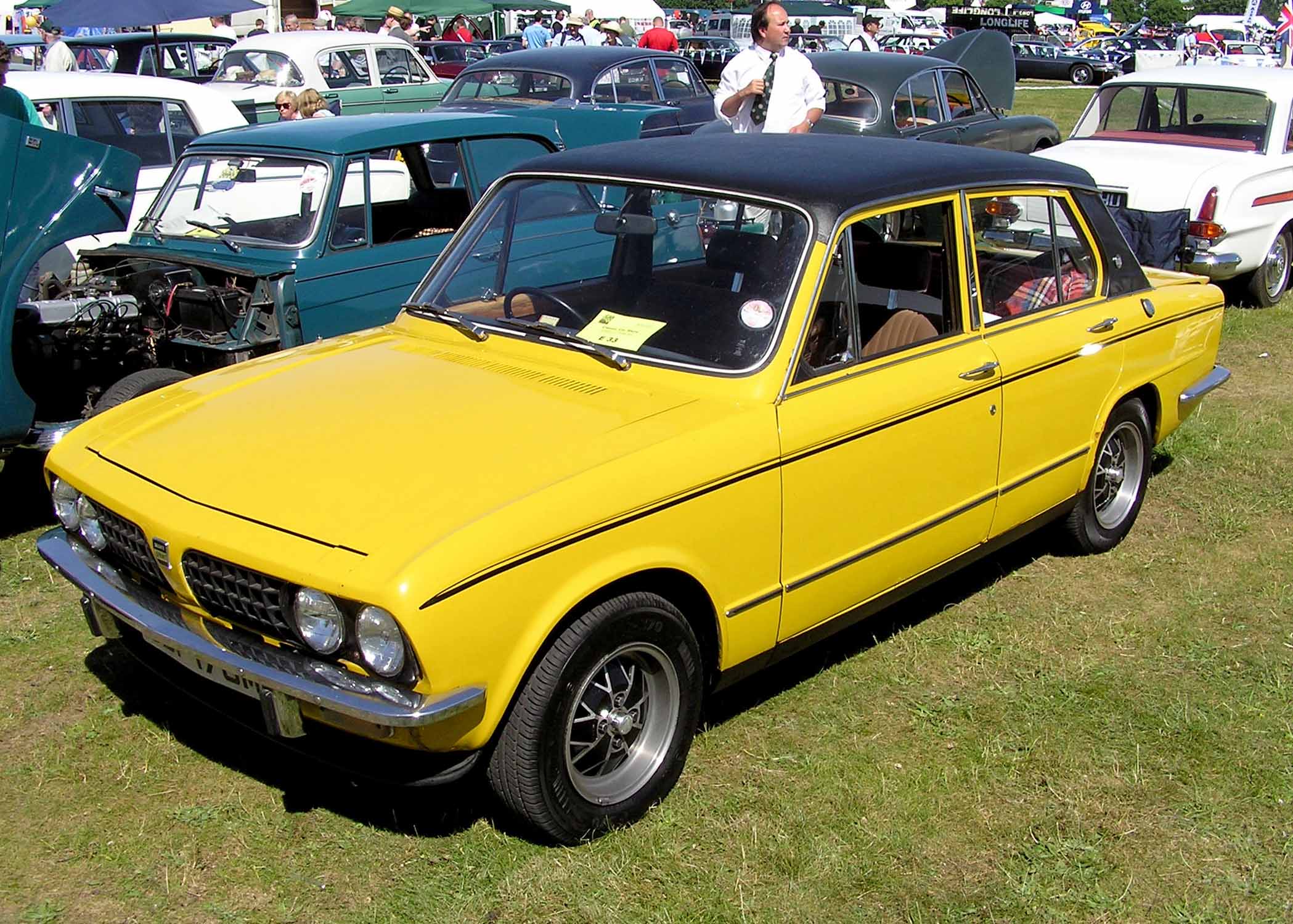
The Morris Marina is an older family car made in Britain. Different versions (spec levels) can feel different to drive and own. The podcast talks about it because people debate which version is the most enjoyable.
The Audi A8 is a top-of-the-line luxury car from Audi. Here, they’re pointing out that the current Prime Minister is often shown in an expensive, high-status car.
The Humber Hawk was a British car made around the early post-war years. They’re saying Atley’s family traded the Hillman for a Humber Hawk for the early 1950s, including around election time.
A police escort is when police cars and officers accompany someone important for safety and traffic control. In this story, they couldn’t match how fast the car was going.
Violet Atley is the woman shown driving in the old photo. The hosts mention she was known as a bold or fast driver, which is why the passenger looks scared.
Person
Clem
“Clem” is Clement Atlee, the Prime Minister being talked about. In the photo, he’s sitting in the passenger seat while Violet Atley is driving.
Car
Daimler DE36 limo
This is a British official limo called the Daimler DE36. The big deal is that it has a straight-eight engine, meaning eight cylinders in a single line, which makes the engine bay look very long and unusual.
The Rolls-Royce Phantom is a very high-end luxury car. It’s designed to be comfortable and impressive, often used for formal or ceremonial events. The podcast mentions it because it’s suited to that kind of role.
Concept
ceremonial stuff
“Ceremonial” here means official events where the car is part of the show. The host is basically saying one car was for everyday use and another was for formal occasions.
A straight-eight means the engine has eight cylinders lined up in one row. It’s unusual today, but it was a classic way to build a smooth, powerful engine in older luxury cars.
The engine bay is the space under the hood where the engine lives. The host is using it to show you what the straight-eight looks like when you can see it.
A hearse is a special car used to transport a coffin. The hosts are saying the vehicle they’re looking at looks like one because of its shape and bodywork.
Independent heat means the driver and passenger can have different heating settings. It’s a comfort feature that was especially common in older luxury cars with chauffeurs.
Brake horsepower is a way to measure how much power an engine makes. It’s measured at the engine itself, not after the power goes through the drivetrain.
Top speed is the highest speed the car can reach. It’s a simple number, but it doesn’t tell you everything about how the car drives.
Car
Humber Paulman
The Humber Paulman is a British car model from the mid-1900s. The hosts mention it because it was used by politicians and because they think it looks especially ugly.
Anton Eden is mentioned as one of the politicians who used the Humber Paulman. The point is to show which cars were used by different leaders over time.
The Rover P5 is an older, classic luxury-style saloon car. It was made to feel comfortable and important, like a top-of-the-range family car. The podcast brings it up as a more exciting classic compared with other choices.
“Graceful exit” means making leaving the car look smooth and impressive. The hosts are saying the car choice mattered because it helped politicians look good for photos.
Downing Street is where the UK Prime Minister works and lives. The hosts mention it because politicians’ car arrivals there are meant to be seen by photographers.
Harold Wilson is mentioned as the first leader in that period to use the Rover. The hosts even joke about the car having a big ashtray, to show how the car matched the lifestyle of the time.
The Rover P5 is an older Rover sedan that was built to feel smooth and respectable. It’s especially known here for having a straight-six engine and a classic “official” look that fits government use.
This means the engine has six cylinders in a single line (an inline-six) and it’s about 3.0 liters total. Inline-sixes are often known for running smoothly, which helps explain the car’s “proper” feel.
A V8 is an engine with eight cylinders arranged in a V shape. In simple terms, it usually means more power and a smoother, stronger feel than smaller engines—part of why the P5B worked well as a government car.
“Government cars” are the cars used for official duties and public events. The host is saying that, in that Rover P5B period, the cars looked more appealing while still staying classy and not flashy.
“Saloon” just means a sedan—typically a four-door car with a separate trunk. The host is saying the car being discussed is the sedan version, not the coupe version.
The Daewoo Statesman is an older large sedan, meaning it’s a bigger family car. The podcast mentions it as a car some people find less flashy but still enjoyable. It’s brought up because it’s a particular kind of classic choice.
An “armoured” car is built with extra protection to help keep occupants safe if someone attacks it. Here, it’s mentioned because the prime minister needed a car designed for security, not just comfort.
They mention Daimler’s “Double Six” versions of the XJ, which were the more upscale, top-spec versions. In the story, that’s important because it’s about choosing a car that looks and feels appropriately high-status for a prime minister.
An “oxygen system” is there to help the people inside breathe if there’s a harmful gas outside. It’s basically a safety feature for chemical or gas attacks.
“Gas attacks” means releasing harmful chemicals into the air. The car’s protective systems are described as being designed to keep occupants safe in that kind of emergency.
Right-hand drive means the steering wheel is on the right side of the car. That’s typical in the UK, where cars drive on the left, so it can feel more natural if you’re used to that setup.
“4.2 litre” is the engine size, and “automatic” means you don’t have to shift gears yourself. It usually makes the car feel smooth and easy to drive, especially in traffic.
Concept
class barriers
The host is talking about social status—who a car “belongs to” in people’s minds. They’re saying this Jaguar was used by both high-profile official figures and well-known TV/celebrity characters, so it crossed those stereotypes.
The Jaguar XJ-S is a Jaguar sports car made for comfortable long drives. It’s designed to feel luxurious while still being sporty. The podcast brings it up because it has been used in high-profile ways.
The Daimler Double Six is a more upmarket version of the Jaguar XJ family. The host is saying the Daimler versions tend to be roomier in the back, and that the Double Six looks particularly classy.
The Jaguar XJ-40 is a Jaguar luxury car from the late 1980s into the early 1990s. The hosts are talking about it as the kind of car used for official, chauffeur-driven duties, and they mention its distinctive styling.
Car
Daimler Majestic
The Daimler Majestic is a posh, long-wheelbase Jaguar-based car that was often used as an official vehicle. The long wheelbase gives more room in the back for a driver and passengers.
This phrase is about security upgrades for an official car. “Armour” is extra protection, and “oxygen” suggests the car can supply breathable air if the cabin environment becomes unsafe.
“Long wheelbase” means the car’s body is stretched so there’s more room between the wheels. That usually gives passengers in the back more space and a smoother ride.
Rectangular headlights are headlamps with a boxy shape. The host is pointing out that this Jaguar generation looks more angular because of that lighting design.
Term
double headlights
“Double headlights” means there are two headlight units instead of one. The host is saying the older look is gone and the newer design is different.
Term
screen line
A “screen line” is a line or crease in the car’s body that helps define its shape. The host is using it to describe the car’s look from that era.
Car
Police Rover 827s
A Rover 827 is a British-era family/executive car. In this story, it’s mentioned as the kind of car used by police during the motorcade/chase.
Car
Montego
The Montego is a Rover saloon from the late 1980s/early 1990s. The hosts use it as an example of a less glamorous official car assignment.
The Rover 416 is a smaller British saloon from the Rover 400 lineup. Here it’s mentioned as the kind of car a junior minister might get instead of the more prestigious options.
The Jaguar X-308 is a newer Jaguar XJ-era sedan compared with the older XJ-40. In the conversation, it’s treated as the start of a more modern, updated official-car era.
This describes how the car is built. A unibody means the body and frame are one piece, and using aluminum helps keep the car lighter, which can make it drive better.
Alloy wheels are wheels made from metal alloys instead of steel. They’re commonly used because they can look better and sometimes help the car feel a bit more responsive.
The Jaguar I-PACE is an electric SUV, which means it runs on electricity instead of petrol. Because it’s electric, you need to charge it, and the podcast mentions charging stops. It’s a modern type of classic car people talk about.
Car
XJ12
The Jaguar XJ12 is a luxury Jaguar with a V12 engine. It’s the more powerful, more “top-of-the-line” version of the XJ family.
The Range Rover is a luxury SUV from Land Rover. People often associate it with official or high-status driving, which is why it comes up in the image debate.
Gloucestershire is a county in southwest England, used here to locate where the hosts met up with other car people. It frames the segment as a real-world classic-car event rather than studio talk.
Prescott Hill is a famous hill-climb area in England where car events happen. It’s the kind of place where classic-car fans go to see and talk about cars.
“Coffee and chrome” is a fun way to describe hanging out at a car meet, looking at shiny cars, and chatting with other enthusiasts. It’s more about the vibe and the cars than technical work.
The Porsche 928 is a Porsche grand touring car—built for long-distance driving. It’s known for having a V8 engine up front and a more unusual style compared with the 911.
A post-purchase check is a quick inspection after you buy a car. The idea is to find any problems early, so you’re not stuck with surprises later.
Car
Citroen Diane
The Citroën Diane is a classic French car. It’s not a super common model, so people who like it tend to enjoy it because it feels unique and interesting compared with more familiar classics.
A two-cylinder engine is an engine with two working cylinders. It’s a simpler setup than most modern engines, and in small classic cars it can be part of the charm.
“Panto” means a British Christmas-time stage show for families. In this joke, they’re basically saying the car feels like it belongs in that kind of silly, festive setting.
They’re discussing a real-life parking situation—trying to park the car in a supermarket parking lot. The point is that the car is long and narrow, so it’s not as easy as it sounds.
The Ford Transit Custom is a small van made by Ford. It’s meant for carrying people or goods, and it’s sized so it can fit in tighter spaces than bigger vans. The podcast mentions it because it’s practical for parking and everyday use.
The Willys MB is a military Jeep from World War II. It was made to be tough and useful in difficult conditions. The podcast mentions it because it’s a famous, historically important classic.
The Jeep Wrangler is a tough SUV made for off-road driving. It’s designed to handle rough roads and trails better than many regular cars. The podcast mentions it as part of a set of classic, recognizable vehicles.
The Renault 4 CV is a small older car made by Renault. It’s from an early period of post-war motoring and is considered a classic. The podcast mentions it as part of a set of notable classic cars.
Term
research period
A “research period” just means the time you spend looking into cars before you buy one. You’re comparing different models and figuring out what you really want.
Term
speed research
“Speed research” means you’re checking how quick a car is and how it drives, not just how it looks. People do this by reading reviews and specs.
“CVs” is unclear from this snippet—people use “CV” in a few different car ways. It might mean two specific car models the host was watching, but it could also mean a car part abbreviation.
Car
two CV
The “two CV” is a classic Citroën that was designed to be simple and easy to drive. It’s fun for short drives, but it’s not very fast, so it can feel limiting if you need to do longer or faster trips.
Concept
only classic
They’re basically asking whether you could use a classic car as your one and only car. Some classics are fun, but they can be inconvenient or slow enough that they don’t work well for everyday life.
They’re using the rear-view mirror to show what’s happening behind you. Even if you feel like you’re just cruising, the cars lined up behind you show you’re not going fast enough.
The Jaguar XJS is a classic Jaguar coupe/GT that’s famous for its old-school styling and cruising comfort. Here, they’re suggesting it because it has that flashy, retro look from the 1970s and 1980s.
The Mercedes-Benz SL (R129) is a classic Mercedes roadster generation. They mention it has an electric roof, meaning the top can go up and down automatically, but the other person doesn’t want something that feels too modern.
Chrome bumpers are bumpers with a shiny metal coating. They’re mostly about the look, and the speaker is saying they only want cars that have that classic style.
British Leyland was a big British car company/group that made a lot of cars in the 60s and 70s. Saying something is “British Leyland” is basically saying it’s from that era and has that era’s typical character.
Car
triumphs
“Triumphs” means cars made by Triumph, a classic British car brand. The point being made is that these older cars could be fixed up, but young people aren’t buying them.
Halfords is a store in the UK that sells car parts and tools. The host is basically saying you can get the basic tools needed to work on those older cars.
A “spanner set” is a set of hand wrenches. It’s the kind of basic tool you’d use to loosen or tighten bolts on a car.
LIVE
Yeah, I might just get a bit of paper just in case I have some incredibly great ideas
of what we're recording and I could scribble them down.
It's going to be a very small piece of paper then.
Pack of a postage stamp. Hold on.
The Tire Kickers Classic Car Chat with Max and Matt.
Welcome to episode 58 of The Tire Kickers. Fresh from rolling around the countryside in my new
roller, we're back in the studio and ready to talk classic cars.
Yes, coming up in this episode, Prime Ministers and their motors.
Rovers, Daimlers, Jags. But which PM had the best wheels?
And why do our dear leaders now drive Audi's?
The Tire Kickers.
Also, is it time to see the light? With almost every car sporting daytime running lights,
do our classics now need them to avoid getting hit by dopey drivers?
And after cars in pop videos, we investigate which celebs came a cropper in their motors.
A slightly morbid top 10 coming up.
All that plus your thoughts on young drivers, old rollers and which one of us should be in Panto.
It's all to come in episode 58 of The Tire Kickers.
Oh no, it isn't.
The Tire Kickers podcast in partnership with Footman James.
So you may have noticed in the UK, we're going to get yet another new leader pretty soon,
probably our third this week. Now, Max and I don't do politics on this podcast because,
you know, when it comes down to it, talking about what, what say,
Morris Marina spec levels brings more joy than doing that.
But we are going to sell a little bit close to the wind for this next one.
We're going to talk about a subject related to politics.
Yes, with that revolving door at 10 Downing Street,
at least we do get a good look at what cars our leaders are tooling around in.
Which got me thinking, which Prime Minister since the Second World War has had the best company car?
You know what, Max? I notice our current leader is tooling around in an Audi A8,
which is a bit of a shame. We were once proud car making nation.
I mean, it wasn't that long ago that the PMs used to get driven around in British made cars.
And also, you've got to remember actually, maybe not so much of a big deal now,
but it used to be quite a big deal what they drove, you know, a few years ago, didn't it?
Yeah, it was a massive political deal because you didn't really want to look flash as a PM,
but equally, you don't want to look on your uppers turning up in a marina.
Plus, rolling in and out of Downing Street is always that clip on the news.
And what car you're in, I think, tells a story.
Yeah, so it's been quite visible what cars PMs have been driving,
but I think we've forgotten over the years. So let's wind it back in time to see what the PMs
did drive. Now, Max, do you remember the war?
What, the First World War?
Not a Crimea, the ball one. That's when you went to school.
Yeah, let's start just after the Second World War because our first post-war PM was Clement Atley.
Now, he was Prime Minister between 45 and 51.
Now, let's look at his transport on tours around the UK.
It was actually his family car, the Hillman 14, driven by his wife.
Now, by 1951, they'd actually chopped that car in for a Humber Hawk, possibly a Mark 4,
which was also used in the 1951 election campaign.
And actually, Max, on election stop, one of the local papers noticed in Huddersfield,
they noticed that Mrs. Atley was driving the Humber, which was gunning it so fast,
that the police escorts were struggling to keep up.
They said she was driving it with a considerable dash.
She was known to be a very fast driver.
Now, there's actually some historical debates about whether Atley was driven to Buckingham Palace
by Mrs. Atley in 1945 to become Prime Minister in actually the family Hillman.
But here's a photograph of them campaigning in it.
And you can see the Hillman, you can see Violet Atley at the wheel,
and tucked down in the passenger seat is Clem, looking pretty scared, to be honest,
because she did have a fearsome reputation as a driver.
But I do like the kind of naivety of the British leader being driven around by his wife.
It's quite sweet, really, isn't it?
Yeah, this old photo, yeah, as Max described it.
I mean, Mr. Atley, Clem and Atley, it looks like one of those shots of a husband and wife
had just had a row, basically, because he's looking a little bit meek,
and she's gunning it out the window to get the car moving.
That's what you call tight-lipped her face, isn't it?
Well, yeah.
She's tight-lipped.
But yeah, I mean, this is, I'm obviously going right back.
You think now, PMs are driven by their staff, which we'll get into later.
But back in those days, it was just a needs muster, I suppose, after the war.
You know, the Prime Minister needed to move around.
There wasn't a lot of fanfare.
There wasn't a lot of money after the war either.
So it was just a case of like, well, are you okay to drive, I guess?
Take the family car, because the government didn't provide you one.
Normally, because, to be honest, Prime Minister's up until Clem Atley.
They usually had a lot of money, so they had their own cars.
He didn't, so he was reduced to using the family car.
And I think that's why Violet was driving it.
So it's a very unusual, very quaint kind of British thing.
Well, those were Roots Group's cars, but they got binned by Churchill
when he came back as the boss in 1951 Max.
Now, he had what we call like a government car, a Daimler DE36 limo.
That was for day-to-day work and Rolls-Royce phantom four for the ceremonial stuff.
Now, the Daimler, the DE, was a bit of a bruiser.
It had a straight eight in it, and it proved also to be a really good ex-boy.
It was sold to governments and royalty all around the world, wasn't it?
Yeah, there's a great photograph of it here.
I just want to take you to one of these photographs.
It's up on your screen now.
You can actually see the car, and it's a pretty standard.
It's a bit pre-war looking car.
It's quite nice. It's all right.
But if you look at the engine bay, it's the straight eight.
Now, when was the last time you saw a straight eight?
Eight cylinders in a row.
It's massive.
Yeah, exactly. It's huge.
Now, one of the bonnet was so big, and you could see all eight spark plugs along there.
So, the straight eight was quite an interesting engine for that, but it didn't last very long.
Just looking at these pictures, I mean, it's a little bit funereal.
It does look like an old-school hearse, this, doesn't it?
I mean, it doesn't look very showbiz.
I think that's because it is a hearse, because they built various bodies on top of these chassis.
And the only DE 36 I could find for sale in the world, I think is this hearse.
So, yeah, I mean, from the back, it's probably not as Churchill would have been in it,
but from the front, that was what the DE 36 looked like.
And basically, it was a shut-in.
You could build a body on it, but it's still quite an imposing car,
but a little bit boring and a little bit gray, isn't it?
So, yeah, this is the dead ringer of the car that Churchill would have had.
Yeah, see what I've done there?
I did, yeah.
Why don't you write that down in your piece of paper?
So, anyway, Churchill created the government car service in 1952,
and then the Prime Minister, the Foreign Secretary, and the Home Secretary
were given full-time cars and drivers, and, going back to Roots, Humber Paulmans.
Now, they had a push-button radio, well, independent heat for the chauffeur and passenger,
and for Churchill, an extra-large ashtray for his cigars.
4-litre engine, 80 brake horsepower, top speed is 73 miles an hour, but absolutely pig-ugly.
If you have a look at the Humber Paulman, it's a really, really ugly-looking car,
and that's up on your screen now.
Oh, that's a bit nice.
Yeah, that's a car that only his mother would love.
Are we going to put pictures of these cars up?
Because, you know, we get complaints if we talk about a lot of photos, and don't share them.
Yeah, we'll put these pictures up, because you'll need to see the Humber Paulman
just to realise how actually ugly they are.
But during the Second World War, car production stopped
because people were making other things, you know, planes and tanks.
So, car production basically ground to a halt, and so did designs.
So, it's a kind of pre-war design, this, isn't it, but very, very ugly car.
Now, they were used pretty much all the time.
They were used by Anton Eden, 55 to 57, Harold McMillan, 57 to 63,
and then Alec Douglas Holmes, 63 to 64.
But then, we're into the 60s, and things started to change.
The big old Humber God, Bift, for something much more exciting, the Rover P5,
and then later the V8 P5B.
Now, the reason for the Rover, Rolls or Bentley's were probably still too flashed by then.
I mean, Jags were too sporty, and in Mark II form, probably far too small as well.
Remember, it's all about the graceful exit.
You know, it's the rolling up into Downing Street and getting out of it
and being seen and being in front of the flash bulbs.
Harold Wilson in 64 to 70 was the first to enjoy the Rover,
apparently with another extra large ashtray for his Pipe Max.
That seems to be people smoking in the back of these cars,
seems to be a feature, doesn't it?
Well, I mean, the Rover was a fantastic car.
The same model was used for Heath, 1970 to 74,
and then Wilson again, and he came back 74 to 76.
Although, because of industrial action, there were so many strikes.
His Rover was delayed for a while, and he had to use a five-year-old van den Plaer
princess.
Then Callahan, 76 to 79, used the same model.
So in the late 60s and 70s, the Rover P5,
the first one with the Rover, three-litre straight six,
and then the V8 P5B was the car that did sterling government service.
Now, this is the time, I think, that government cars became interesting.
Because if you look at one now, here's one for sale at 14995 in Bordeaux,
Redder, a 1969 P5B Saloon, not the Coupe.
I think they're really good-looking cars.
I think they're very statesman-like, aren't they?
I mean, now, with our modern eyes, they're kind of a little bit of a frumpy classic,
but I think they're quite statesman cars, aren't they?
They're when Rovers were Rovers.
Yeah, and I think it's a very good design because it looks slightly sporty.
It had a hint of sporty because it was the 1960s,
but it still looks formal and you could turn up outside various government events in it
and not look to flash.
So, it did walk that tightrope of government cars,
and I think that P5B, for me, was probably the best one since the Second World War.
You've glossed over a little bit there,
which is actually the most interesting bit you've said so far,
which is saying something.
The fact that Wilson had to use a five-year-old Vande Plare Princess,
it was like, I'm not going in that.
I'm afraid you are because there's nothing else.
Tough because his Rovers, because by this time,
the Rovers were being specially built because they were armoured,
and there was very strikes going on,
which meant that they couldn't get the P5B for Wilson at that time,
so you had to tool around in that princess,
but it's the 1970s, isn't it?
That's right.
Yeah, driving around in Rovers well past their production life,
that was a bit embarrassing for a lot of PMs.
So, after the Rover, there was nothing stately and classy enough
for a PM until the Jag XJ Series 3 body shape.
Now, they're very etched in most sort of modern memories,
although later, they were actually,
Daimler, the double six versions of the XJ.
Now, by now, cars were specifically and specially designed
for prime ministerial transport and work,
and Mrs. Thatcher wanted back to Britain.
That was a big fly the flag thing, so pick the Jag slash Daimler.
Now, her car got armoured to withstand three rifle bullets
fired at 10 metres and also had an oxygen system
to protect against gas attacks.
Now, if you want to play 80s PM,
there are actually plenty of Series 3s kicking around on the market.
I found this one, Max.
I'll throw this up on your screen.
This is on a kind of well-known classic car website.
So, 1983, one right-hand drive, automatic 4.2 litre,
27,500 miles, 1983 in black.
Would you want something like that?
Would the prime ministerial connection make that exciting enough?
Well, you can play both Mrs. Thatcher and Arthur Daley
at the same time, can't you?
Because this is a car that kind of straddled those class barriers
because Series 3 XJs were used by both Thatcher and Arthur.
So, it's interesting, isn't it?
Because they were very popular, these cars.
And I think they looked about right.
If these pulled up outside number 10,
you were quite impressed by them.
The only thing about them is they didn't have much leg room in the back,
but people tend to use the slightly longer wheelbase Daimler versions.
Yeah, if you've ever got in the back of an XJ,
I mean, it's not really, it's quite snug, isn't it?
And also, if you put a load of armour plating in it as well,
it makes it even smaller and heavier.
So, they're not that big, but the Daimlers were quite nice.
And the Daimler Double 6s, they did look decent.
You could turn up to an event in a Daimler
and look like you were the prime minister and not Arthur Daley.
Thatcher did like her Jags,
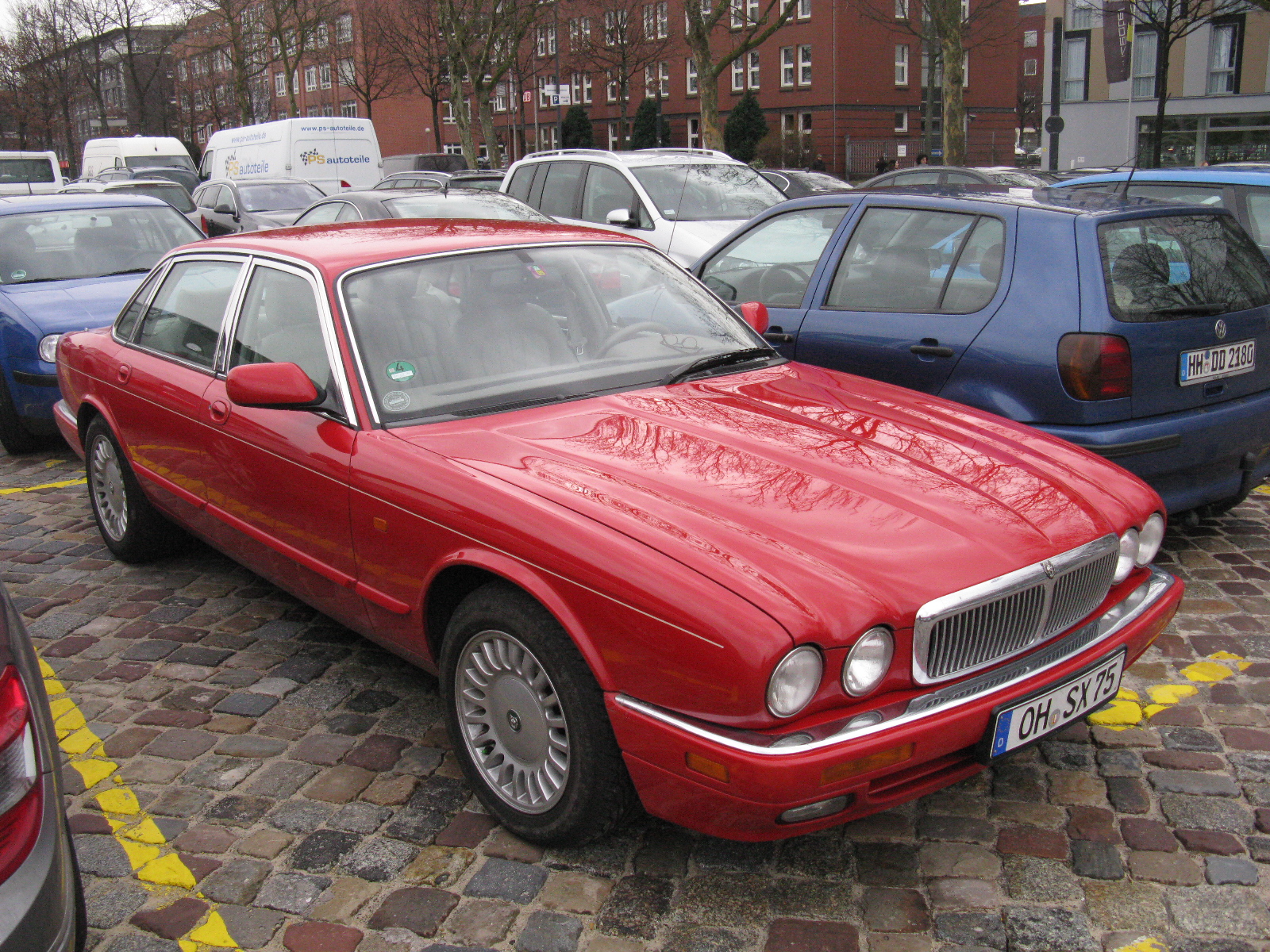
and then after the Series 3 kept the faith with the XJ-40,
square a design, again with armour and oxygen,
but badged as a Daimler Majestic, the long wheelbase one.
Now, when Thatcher was driven out of number 10 for the last time,
YouTube clips suggest it was an XJ-40 registration F496PYT
that whistled after the palace.
It had those funny oversized wing mirrors
that ruined the look of the XJ-40.
But then to be honest, it was never a very pretty car.
And if you want to look at like a prime minister,
this is probably the cheapest option to go for.
It's on your screen now.
They always remind me of John Major, these Jags.
The XJ-40 was pretty boring, wasn't it?
Yeah, they've gone a bit grey, and they've got squared off.
They've got rectangular headlights going on by this point.
The deal sort of double headlights have gone.
They've got a screen line for the 90s, as we know.
And the 90s is not my favourite decade for cars.
And although it still looked regal, and this is a very memorable,
I think, you know, if you were, you know, our age in the 90s,
you remember that as being the car that was on all the shots of Downing Street,
pulling into the palace and all that sort of stuff.
But I think in time, I think I prefer the double headlights the previous version.
Yeah, and actually the next version is a bit better.
The XJ-40 was a bit of kind of like a forgotten design, wasn't it?
Interestingly, on the videos I was looking at John Major resigning,
the chase cars were Police Rover 827s.
Well, they look quite nice, those Rover 827s.
Do you remember them? They were quite sleek.
They were also issued to cabinet ministers at the time.
But if you were a junior cabinet minister, you could end up in a Rover 416 or a Montego.
Oh, shame, the shame.
He'd want to get promoted quickly, wouldn't he?
Yeah, you would. You wouldn't go to the greasy property to get shot at that Montego.
You mentioned John Major.
Well, he continued the Jag and Daimler theme with the XJ-40s,
and then went to give his resignation to the Queen in a Jag.
We think it was a Jag with a plate H674XUC.
As we've talked about, they were pretty dull looking cars.
Things changed when the wind changed.
The politics changed in 97.
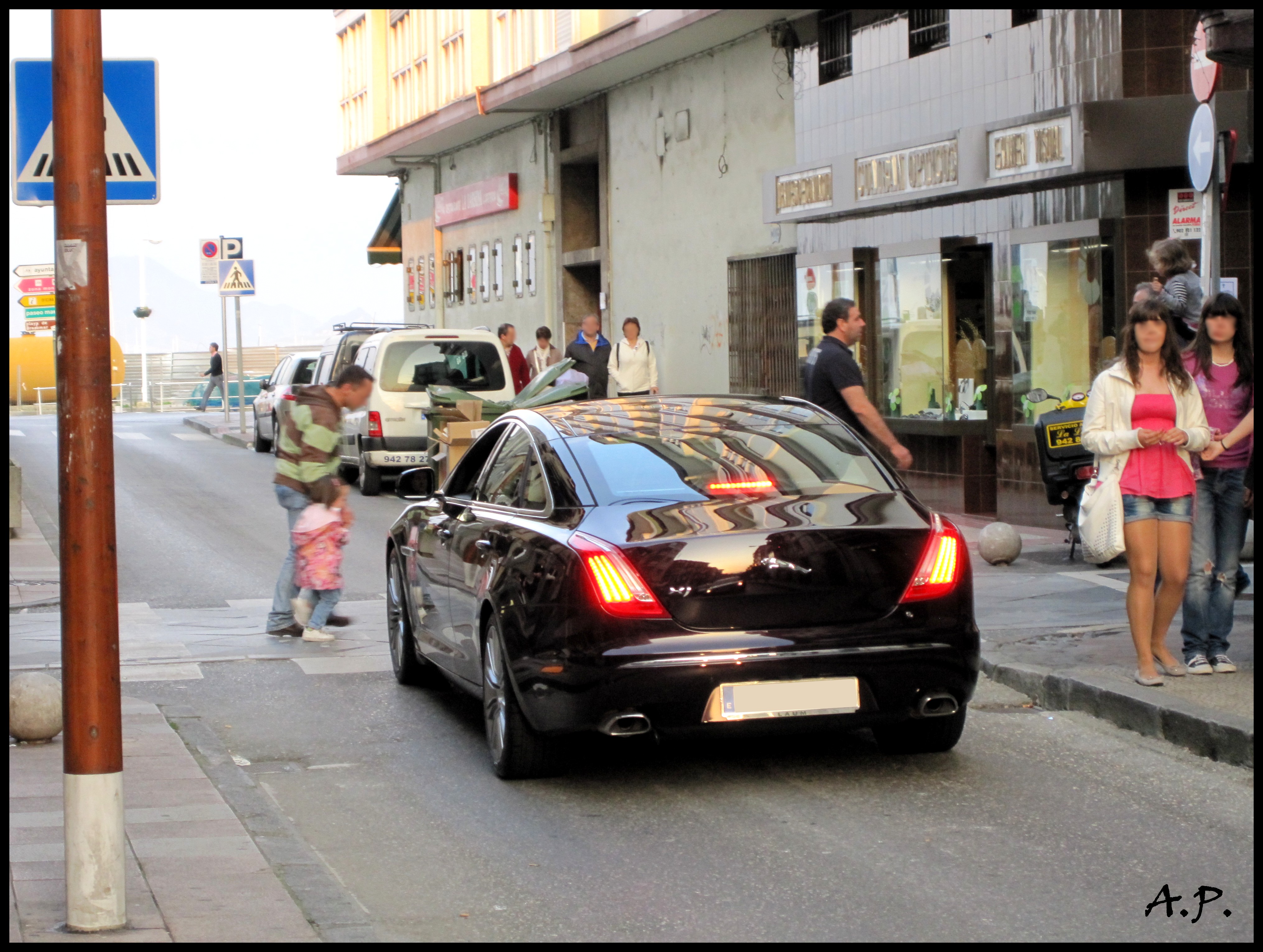
Long came grinning Tony Blair with an X-308 Jaguar.
Well, what was an X-308?
Well, that was the one they started to be a bit more modern.
And the X-308, then the X-350 is a much more pretty and elegant car.
Now, when Blair goes to the palace to resign,
we're just going to fast forward through his 10 years,
it's in PF 53 GFV.
So a 2003 registered car would have been the later X-350.
Now, these were aluminium-bodied unibody cars
with the cat's air suspension, which was that big step forward for Jag.
They handle really nicely and also great value at the moment,
if you want to be a Blairite.
Here's a super V8 long wheelbase sovereign for sale.
And this is a cracking looking car.
Look at this. It's on your screen now.
Black alloy wheels just looks really sinister.
They got this design exactly right.
And I think because it was built with aluminium,
it was actually quite a light car and they do handle really well these.
Even now, these are great Jags to drive around in.
Yeah, it sort of pulled back the retro look
and morphed it in with a modern feel, hasn't it?
Again, still 4.2-litre engine, supercharged though, super V8, this one.
And I agree with you.
I think this one's got a little bit more...
It looks more of a sleeper, doesn't it?
Which is exactly what it is.
More legroom in the back as well.
It's just being brought up to date,
whereas the previous versions
kind of felt a bit of a hangover from the 70s, didn't they?
They were very, very small inside.
I really think this could have been...
Was it Pete Prime Ministero car after the P5B?
I don't know. Discuss.
Possibly.
Now, we're only at the end of the late 2000s.
We've had about a million Prime Ministers since then.
So we have to speed this up
because some people might be nodding off at the back.
Let's go.
What? No chance.
So in our history chronology,
Gordon Brown and David Cameron,
they kept using those 350s and 358s
until the new shape of the Jag XJ
arrived in around 2010.
The shapely X351 designed by Ian Callum.
Now, the 351 had a special armoured version
called the Sentinel,
which soon started rolling up Downey Street.
And the Sentinel Max featured Kevlar
to B7 ballistic prevention
and could also withstand 15 kilograms of TNT.
Pretty impressive, that, isn't it?
All in a Jag.
But all that armour doubled the V8's 0-60 time
from 5 seconds to 10.
But I think it still looks great.
I've kind of always been sitting on the fence
with that design of Ian Callum's
because it looks good from the front,
but I think from the rear three-quarters view,
those rear wheels look a bit lost.
I don't know what you think,
but it's a fine-looking Jag,
and it's sinister enough when seen in a rearview mirror.
Here is a last of the line 2019 X351 for sale again in black.
And wow, this does look mean, doesn't it, from the front?
As long as you look at it from the front
and not the side and the back,
I think they're great-looking cars.
And also, it was a great-looking prime ministerial car.
People would sweep up the gates of Downey Street
and sweep away from it again.
Plus, quite a modern car, nice driving car again.
And I think, you know, those kind of ex-jaguers,
they really did a good job for the government and Britain
in looking quite stylish.
I'm not a biggest fan of Jags,
but I think they suit the brief for this quite well.
I think they're quite good prime ministerial cars,
and I think, you know, do they make one now that would be good enough?
What, Jag?
Yeah.
No, because they subbed the XJs more as the pittings.
So that's why they don't really make it.
Well, they drive an old iPace, couldn't they?
Recharging up every 10 minutes.
Good luck with that.
But I think it's a real shame,
because we've lost that kind of advert,
that global advert for British cars pulling up outside
the kind of British headquarters of the prime minister,
because now you've got this Audi driving around,
which just looks bizarre.
You know, why is the British prime minister in an Audi?
Bearing in mind, we still make cars.
You know, the Royal family is still tooled around in those Range Rovers,
because they make the Sentinel Range Rover,
the armoured version of that.
So why can't the prime minister be in a Range Rover?
Or why can't kind of some of our car industry get together
and make a special prime ministerial car?
You know, a prime ministerial Lotus,
a prime ministerial Bentley,
a prime ministerial Rolls Royce,
what would be so wrong with that?
I guess they always overthink these things,
in terms of what it looks like.
Or do they?
Has it just become the bean counters now?
Is Audi giving them a better deal than somebody else?
I mean, that's sometimes what it comes down to,
isn't it? The dullness of procurement.
But I think, you know,
the whole point of talking about these prime ministerial cars,
they are attached to an era.
I don't have a problem with our prime minister getting out of a Rolls.
I don't think that looks ostentatious.
It's one of our best products we make.
One of the best cars we make in the UK.
The point of looking back at all the history of these cars is,
they kind of represented the era.
So you've got the P5B, the Rover P5,
in that kind of swinging 60s, 1970s,
that was the car of the moment.
That was a serious car,
made by a serious car company,
and it was one of the best cars in the world.
Then you got to the kind of 1980s,
you got the Jag XJ6 and XJ12, the Series 3.
Again, that was a really good car.
You know, that was a world leading car.
Then in the kind of 90s and 2000s,
you got the Jaguar XJ.
So it's a continuation of how British cars
were seen on a world stage.
And now we've got an Audi.
I don't know who bought an Audi,
but Thatcher in kind of memoirs
and in the talk of the government car service,
actually there was huge debates
about what car she should drive,
because they thought about the image they were projecting.
Whereas now you're projecting the image of,
well, it's an Audi.
Okay, it might come off the shelf armoured
and it might be cheaper.
But what's wrong with the Range Rover?
I think I'm going to write to the next prime minister,
whoever that is, and say, Matt and I have got an idea.
If you want to go around looking cool from the 70s,
you can be driven around in a stag,
or if you want to look prime ministerial,
I'll volunteer my Silver Shadow to drive up and down 10 Downing Street.
It might leave a little trail of oil
and it may not get to your big government meeting.
But you will look like you're in a British car
as a British prime minister.
You crack on with that.
Let us know how you get on.
Episode 58 of the tire kickers.
And yes, it's been a while since we sat in these chairs
and Max reeled off alert of stats about cars like Rain Man.
What have we been doing since we last did this, Max?
We went outside into the sunshine
and did coffee and chrome up in Gloucestershire,
Prescott Hill, in fact, at the Footman James meet.
Now, there was lots and lots of great cars there.
We had a fantastic day out,
met lots of people driving some weird stuff,
some interesting stuff.
Hello to all the drivers we met, by the way.
And thank you for coming on our podcast.
I think that's about two episodes ago, isn't it?
If you want to spool back and listen to that.
Yeah, that's right. Yeah, you can go and find out.
We also got to meet Gary Mavis and Harry Metcalf
from Harry's Garage and see their cars too.
What did they bring? A Fiat and a Porsche, wasn't it?
A Fiat and a Porsche.
You didn't say Fiat, though, to Harry's face, though, did you?
I think I might have done.
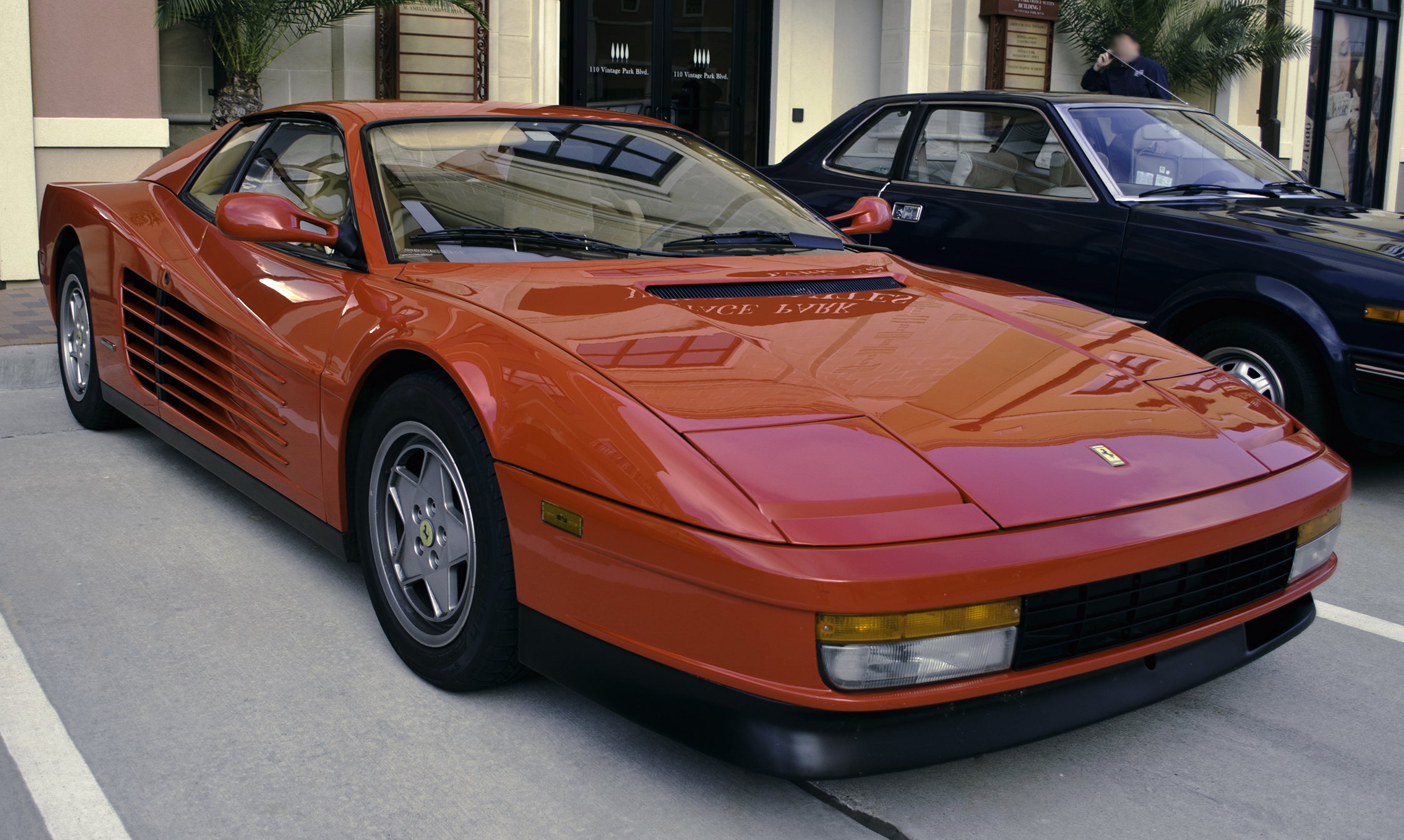
Or Harry, your Ferrari Testarossa is a Fiat.
I did call it a Fiat in front of him, actually.
Did you? I probably didn't hear you then.
Yeah, what did you have?
A Testarossa, wasn't it? And a 928, wasn't it?
Yeah, so Gary had a Porsche 928,
which he's selling in the next couple of weeks, actually.
And then it was a manual one. It's a very nice one.
And then Harry had his Testarossa,
which he took to the Sahara.
And he took around Scotland, actually.
So it's nice to see both of them.
I've met Harry a couple of times, and he is lovely.
And I've never met Gary.
And Gary was really interesting,
because he knows a lot about Rolls Royces.
And I took my Silver Shadow there three days after buying it.
And Gary was on it like a rocket
and basically taking it apart and going through it.
So it withstood Gary's deep, deep, deep post-purchase check,
which was nice, because I was a bit nervous.
He might have said, oh, this is a fiesta welded in two.
Yeah. It was really nice to meet both of them.
I've not met either of them before,
and I've not met Harry before.
And just talking to Harry,
the thing that came across was how passionate
is it just about cars, any kind of cars.
He's getting excited about Citroen Diane that was there.
Because you think Harry's got a massive great car collection,
pretty much put his hands on whatever he wants.
He's still getting excited about the like a tin can, basically,
with a two-cylinder engine in it,
which is great, which is what we like about cars.
It's the fact it's not a snobby thing.
We're not living in that kind of concourse world, really.
He dips into that.
But it's nice to see that he's got a real kind of common touch
and real kind of feel for cars, just all sorts of cars,
which is great to see.
Well, remember, he's got a Silver Shadow.
So that is the mark of good taste.
Apparently so.
Yeah, we're back at the next coffee in Chrome, actually,
in September, Max.
So it's back at Prescott.
There's also another one in October,
the British Motor Museum near Birmingham.
So if you want to sign up and come with us,
just Google Coffee and Chrome.
It'll take you to the Footman James page
and you can sign up there.
I might try and get my stag up to the Prescott meet.
I'll try and do that.
It's funny, all right, I've been running around loads.
What are you going to take?
Because you've obviously got to sign
a massive collection of cars now.
A massive collection of two.
Well, it's a choice of two, isn't it?
So I can either take the Roller or the Merck.
I think if you're going to turn up in the stag,
I'll turn up in the Merck.
Because that's the kind of, I don't know,
it's the Germany versus Britain kind of match, isn't it?
So that would be nice to see those together.
Yeah, okay.
Yeah, and if you've not heard or seen,
obviously, Max has bought his Rolls-Royce.
It is a really nice Silver Shadow.
Have I ever mentioned that?
I can't remember.
If I mentioned it, I just kind of kept that quiet to myself.
Quite a lot.
I might have to get like a Rolls-Royce
swear box that you have put a pound in.
Do you have the money to run it to be honest?
I was going to say, I'll go towards the petrol bill.
Yeah, we have done a special episode on that as well.
Scroll back and have a listen to that,
because Max wouldn't tell me exactly what he'd bought
and brought it up as a surprise and I had to guess.
And I thought I was right on the money, but I got it wrong.
But it is a really, really nice car.
A Caribbean blue.
Lots of love for it online, actually, Max.
Some genuinely warm comments from people who really like the car.
More than you, actually, I think.
Must be fair to say.
Well, I'm still in that early stage of getting used to it,
and I'm kind of like poking around it, thinking,
is that right, should that be there?
So, as I did on the episode, I took it to a kind of an expert,
and he's had a good look at it and suggested a few things it needs doing.
So, I'm going to get that done in the next couple of weeks, I think.
But yeah, I've got some really nice comments on mine,
and you don't often say that, do you?
Because more comments online are people taking them back.
Although, there were some.
Shall we talk about the nice comments?
No. Let's go to the ones where they were sarcastic,
which is the ones that you've written up,
which is clear you're enjoying this a bit too much, isn't it?
That's more fun, isn't it, than people just going,
wow, that's beautiful.
This is Alan74, it says to you, congrats on the car.
But he asks, when are you doing Panto this year?
I don't see why Silver Shadow is Panto.
Why is the Silver Shadow seen as a Panto cat?
Oh, no, I don't.
He actually goes on to say,
it would look great parked at the end of the pier.
I don't know why that's funny.
I'm not finding that funny at all.
Well, I'm getting you a fur coat for Christmas.
Mark1MGVGT carries on, so it's a lovely car max.
But they're looking forward to the video of you
trying to park it in Morrison's car park.
It's not that big.
It's not that big a car, you know.
It's quite long, but it's quite narrow.
So it's only a kind of Ford transit size,
so you can squeeze those into a car park.
What I do, though, is like all of us
with a classic car is drive as far away as possible,
so nobody can possibly open a door and ding it.
Yeah, you know you've got a classic car
if you're parking in that bay right in the very corner.
Away from the trolley park
and away from any other sort of kids
coming out of cars banging doors and stuff.
One more comment as well that made me smile.
Steve Clicky Clark picks up on the fact
that it took you two years to find this car.
Very dryly says, well, it's good not to rush into these things.
Two years, two years of test drive.
But you had about 300 test drives in you.
I took my time, but that's part of the fun.
What's the point of rushing this?
We're looking around classic cars.
You've got to enjoy the process.
That's what I think is one of the most interesting things
about classic cars is picking the right one,
doing the research, picking it, and actually taking your time.
Yeah, lots of love for it, though, online.
I mean, it is actually getting more interesting
than us just talking, so maybe just put shots of that up.
Pictures of a roller.
Shut up.
Oh, God, if only.
Lots of you were getting involved over on Facebook, too.
Thank you for all the comments, likes, and ideas.
Lots of positive comments,
but I guess, Matt, you've been looking out
for the sarcastic ones.
What makes you think that?
Oh, you're right.
John Layden made me laugh on Facebook recently.
I don't think you saw this one.
He picked up on your recent moaning
that you hadn't seen in classics
on your recent road trip through France.
Now, he says, if your eyesight is that bad,
no wonder it took you two years to find a roller to buy.
I'm still disappointed with France.
I still think France should be giving us better classic cars,
giving their fantastic history of making them.
Right, well, here we go.
He lives in France, and he says he just popped out
one afternoon this week,
and he spotted three classic cars,
including a Renault 4 and a Willys Jeep.
Now, he says...
Well, hang on, that's two.
Well, yeah, but he's got another one,
which I didn't know what it was.
But he said, if your eyesight is so bad,
perhaps he suggests fitting a prescription windscreen
to your car.
What? My eyesight may be bad.
My eyesight may be bad, but at least I can count.
He did list three.
I couldn't know what his third one was.
Lots more banter on our feet.
Do get involved, and here's how to do that.
You can get in touch with Max and Matt via our socials.
We're at the TireKickers UK on Instagram,
and the TireKickers on Facebook.
Right, what else have we been up to, Max,
since we last sat down here and spoke?
Well, I burnt my head driving my stag,
which is like a schoolboy error.
You know, Elise, when you drive a classic car,
you do pick up a nice sort of farmer's tan,
don't you, over the summer?
But I just come back off holiday to Spain,
where I've been sort of very conscientiously
putting on factor 30,
and since I got in the car and drove 45 minutes to a car meet,
I ended up looking like a giant beetroot.
Now, I was a bit annoyed,
because I did look like a sort of Brit in Benidorm
after just going to this car meet.
The problem with age is your hair is thinning,
and your hair isn't quite as thick as it used to be,
so you do get kind of embarrassing burns
on the top of your head in a convertible,
that you only notice when you kind of like
put your hand through your hair, and it really hurts.
Yeah, two things you do need is some sort of baseball cap or a hat,
and then you need the factor 30 in your car,
so you can actually just sort of put it on.
Stag's still going all right, then?
It didn't overheat you overheated, but it stayed cool.
Stag's been going really well.
You know, I mean, considering how sort of nervous
I was about getting one,
I've been really pleased with the car since August last year.
I've done about 3,000 miles in it, Max.
Oh, that's good.
And I had it sat for about three weeks
while I was on holiday for a week,
and then you remember the weather was a bit rubbish
about a month, six weeks ago.
And I turned it over and it started first time.
It ran superb.
It was sitting in traffic, didn't get hot.
We did an overnight trip away with it,
and down into the South Downs,
which are great roads to drive.
I mean, if you've got a car
and you can get to the South Downs
in the South of England
and book into a hotel overnight,
some of those roads are fantastic,
you know, and you can hit the coast
and come back again.
But that was great.
You know, I don't know how long I'm going to keep it,
but it's been super, super usable.
I've been surprised how usable it has been.
What stops up?
What do you mean how long you're going to keep it?
You think you're selling it?
Well, yeah, I'm only going to keep it.
I said I was only going to keep it for a couple of years.
I've had it for a year.
I'll probably keep it for another year,
and then I'll get something else.
What about your research period?
When do you start the research period for the next car?
Well, this is where you and I differ.
Yeah, that's not enough.
Well, I'll wait till I've got the money
burning a hole in the pocket,
and then I'll do some speed research,
like I always do.
But what are you thinking about after the stack?
Maybe a coupé that's got a sunroof
that I can roll the windows down.
So maybe like the Mercedes-Benz 1.2.3 coupé,
the C1.2.3, or the older one.
But then they're a bit,
I was kind of thinking,
are they a bit boring?
Is a roof a bit boring?
This will make your eyes roll.
I found myself down a rabbit hole
on two CVs the other day.
And did you?
Yeah, I started watching,
I watched a bloke rescue one in France
out of a barn to start up and drive it home.
And then I sort of now want to drive one.
Have you driven a two CV?
I have, and I love them for short periods,
but I'm not sure you'd want one
as your only classic,
because it's quite limiting
as to where you can go, isn't it?
I'll fancy a go-in one.
If one of our listeners has got one
and would let us come and have a little drive of it
and maybe make an episode on it,
that'd be fun, wouldn't it?
Because you can't barrel them round.
I've been in one while it's barreling
round and round about.
And they all look great fun.
Yeah, but they are really, really, really slow.
It doesn't feel like you're going slowly in it,
but when you look in the rear view mirror
and see a line of cars behind you,
you realise it's not a quick car.
Given that you've got a PhD in car and classic,
what car would you recommend for me as my next car?
Well, I've always thought an XJS would be great for you,
because it's got that kind of slightly flash,
slightly sort of 1970s, 80s wide-boy look to it.
So I think that's almost perfect for you.
What are you saying?
Well, there we are, I've said it, wide-boy.
And again, I've thought kind of 90s murks.
I know you've got this allergy to driving a 1990s car,
but a 90s murk R129 has just got you written all over it
with an electric roof and a VA.
It'd be fantastic.
No, I'm not feeling that.
It's too modern.
You know, my rule, it's got to have chrome bumpers.
You know, that's my rule.
So, you know, the cut-off, when's that going to be?
Late 80s, isn't it, really?
How about a Triumph Dolomite?
I know you're a bit sniffy about Triumph Interiors,
but that is a great looking, great handling saloon car.
Yeah, it is.
It is, but I think I've sort of done the Triumph bit now.
I'd quite like a car where it doesn't look like
it's just been built in a hurry.
That'd be quite nice.
If I had room, I'd keep the stack and have something else.
But, you know, it is a revolving door.
I've got to, if I do sell it, I've got to get something else.
And it needs to be something usable.
Okay, well, there's a couple of episodes.
I have to put a bit of thought into that,
then, what your next car would be.
Because I've always thought you'd suit a next JS
because it's big enough for you.
I like him.
I do like him.
What about the XJC Coupe, the 70s one?
You used to like those, didn't you?
I do, although I sat in one recently
and I kind of didn't like it.
So maybe it was a duff one.
Because we sat in that one at the NEC and that was all right.
And I quite like that.
But I don't know if it's more British Leyland, isn't it?
Oh, maybe not something else.
If you go for an early one, it's kind of like
pre-British Leyland, but no, maybe no.
I could go Wildcard and go for like an Alpha 105 Coupe or something.
Why would you do that?
Well, just why not?
Breakdown all the time.
Yeah, one to think about, about.
While we're talking about listeners, actually, Max,
we should give a special mention to 350 Mun Rowe,
who follows us on Instagram.
He's a long-time listener of the show.
He's based over in Australia.
He's been going through a bit of a rough time lately.
So just to say we're thinking of you
and thank you for being there from the start for us.
But despite all that he's been through recently,
he's still talking cars, Max.
In fact, he dropped us a line to chip in
on the why are young people not into classic cars debate
that we were having last time?
Now, he reckons part of the reason.
And he says, Dan in Oz, this is what he sees.
He says, most old cars here are just too expensive
or just not desirable to young people.
He says, he sees loads of fixable moggies, voxels, and triumphs
just sort of lying around because no one's interested.
That's a real shame.
I know you don't like moggies,
but it's a shame to see old cars that are so fixable.
I mean, moggies, you could just get a spanner set from Halfords
and sort them out, couldn't you?
It's a shame.
Or maybe take them apart and kill them.
Take them apart.
But the thing about Australia is that the old cars are expensive.
So I think that's probably what puts people off
because it's very expensive to buy classic cars
as we found in Australia when we did that episode about it.
That's true.
Yeah, any more in the post bag?
Yes, listener Graham Turner has been in touch to say,
I enjoyed your feature on classics in pop videos.
What about classics where famous people have croaked?
Okay, slightly more, but I guess there is a list, is there?
Well, I mean, obviously, first one up,
it's got to be James Dean in that Porsche 550 Spyder, I suppose.
I'm guessing that's the most famous dead celebrity in a classic car?
Yeah, it is.
Yeah, I mean, that's the one that most people know, isn't it?
I mean, if you think about just like in the UK,
I suppose death in a car thing,
and Mark Boland was probably one of the most famous ones in the 70s, wasn't it?
He was a passenger in a Mini 1275 GT.
I think it drove into a tree, didn't it, in London,
and his partner Gloria Jones is driving that.
So that was big, big news in the UK, wasn't it?
Yeah, then there was Princess Grace.
Remember, she suffered a stroke in a Rover P6,
and also earlier, going back to the 50s,
there's a famous one where racing driver Mike Hawthorne
died in a road accident near Guildford in a Jag 3.4 Mark I.
Now, he wasn't wearing a seatbelt,
because that was the period when Formula One drivers
thought it would be safer to be thrown clear of the accident.
Blimey.
Not always the greatest idea.
Paul Walker from Fast and Furious,
he died as a passenger in a Carrera GT.
That was fairly recently, wasn't it?
Yeah, that was 2010, 2011, 15, 16 years ago.
Then there was going back to an early one.
Jane Mansfield was a passenger in a 1966 Buick Electra
when it crashed into a tractor.
That was a beautiful Carrera Buick Electra.
Yeah, Jackson Pollock died in a 1950 Oldsmobile 88 convertible
while drunk.
You can see why America started freaking out
about convertibles, and you had that NATO era, didn't you?
I mean, they were going to ban them at one stage, weren't they?
Yeah, but I think Jackson Pollock was drunk all the time, wasn't he?
So possibly it would have been cheaper to ban Jackson Pollock
from drinking rather than the Oldsmobile.
Well, yeah, so these are not quite top 10 of people
who came a cropper in their cars.
If there's any we've missed, let us know.
I mean, it's a bit morbid, but it's just quite a curious thing
to kind of run through.
Get in touch on our socials or send us an email.
Send your ideas, comments and corrections
to theTireKickersUK at gmail.com.
So Max, the horn on my stag, it doesn't work properly anymore.
Well, that's because it's British Leyland.
What did you expect?
Well, no, it's not actually that.
It was working fine, but I had to blast it so hard recently
that it now just sort of whimpers.
Were you worried that people weren't seeing you enough
and you thought, right, I've got to attract some attention
to my bright red face?
You're not too far from the mark, to be honest,
because I was coming up a dual carriageway.
I think it was back from that meet where I burnt my face,
and a dozy driver pulled right out in front of me at the roundabout.
In fact, it was daylight, visible.
I could see the driver there.
I was coming up on the carriageway.
There wasn't much traffic, and the car was there,
and you know when you can see a car,
you start seeing the wheels roll,
and you think, you know, I'm coming onto the roundabout.
I can see it's going to do something.
And sure enough, it just literally drifted out in front of me
from a stop and just slowly drifted out.
I think it was a relatively new driver,
but I had to bang on the horn, and I think I know why.
I think it's because we're now, when you drive around,
we're all looking for light, aren't we?
We're not actually looking for cars.
Daytime running lights are now so common
that actually, when you think about when you look down the road,
it's the lights you're seeing.
It's not actually the cars that you're sort of visualizing first.
And for me and my small, brown, classic car,
you know, no lights on is maybe a bit invisible.
And I think for a new driver, perhaps,
who's just like, learned to drive the next class
a couple of years, 23 years,
you know, they've only ever seen daytime running lights.
And suddenly a car comes on with no daytime running lights,
and it's almost, are we a bit invisible?
So here's my question.
Do we need to start driving our classics
with some sort of lights on?
Well, it's a good point, isn't it?
Because the DRLs, the daytime running lights,
the point of them was to be visible.
And actually, if you see a line of traffic
and three cars have got the lights on
and the fourth one hasn't, you're looking at the three lights
because your eye is drawn to the light, isn't it?
That's what's sticking out to you.
And that's what the point of DRLs is.
So, yes, I do see that.
I mean, I've had the same thing a couple of times in the Merc,
which is a relatively big red car.
And you'd think people would see it,
but people do tend to pull out in front of you.
Now, whether they presume because it's an old car,
it's going to be slow, or whether they just don't see it,
I'm not sure.
But I have started driving around with my side lights on
because I do think people do miss it.
And there's been three or four times, actually,
when people have just pulled out and you're thinking,
well, what more do I need to do in a bright red car?
But I think people in a queue of cars behind me
are focusing on those lights.
Yeah, I think you're true.
And I've done, tend to do the same thing now.
I've found that, you know, in summer, when you're driving,
you hit sort of like a wooded sort of part of the countryside.
I rather put my headlights on the side lights on
just so you can see it because sometimes you're coming around
blind bends if you're in the countryside.
We're all looking for the lights now.
So I found myself doing that,
which just feels like an unnatural thing to do in an old car.
But I mean, I was going to ask you for being in a bright car helps,
but it sounds like it doesn't really make a lot of difference.
No, I just think, I think people are looking beyond us.
I think, and this is what motorbikes always use to find,
which is why motorbikes have the lights on,
is that people are just looking through you if you like.
And I suppose you remember in the kind of like 80s,
Volvo's had the headlights on all the time
and everybody took the mick out of them
because you always had your headlights on.
But actually that was a really big safety thing
because the research was showing that people noticed you
with your headlights on.
So maybe we should, the trouble with, you know,
classic car headlights, is they're a bit rubbish, aren't they?
So they're not even that bright.
So compared to a kind of modern LED or a Zenon DRL,
the classic car lights are just a bit average.
But I suppose it helps.
And again, you know, the other thing about classic cars is
our brakes aren't as good as yours.
So you might pull out in front of us,
but we can't brake as quickly as you can.
So I think that's another thing that we have to be aware of
is that people don't see us
and they don't realise that we can't stop.
Also, the other thing,
I think the pace of driving has changed with EVs
as we've talked about.
People are a bit more go-karty with them.
Go stop, go stop, go stop.
And whereas you would have a bit of grace,
you know, in terms of, in the old days,
because cars would have to take a bit of a run-up
to get out of that roundabout.
I suppose it doesn't stop someone pulling out on you,
but you could kind of read the road a little bit more,
whereas people are a bit more jerky driving
and there's more cars on the road as well, driving jerkily.
I think it's sort of self-preservation.
I think we do need to stick our lights on a bit more.
It's a good idea, isn't it?
Because it's not going to hurt you
in any way, shape or form to have your lights on.
And it might just be that extra thing
that people would notice you coming.
It does make you look a bit like the Sweeney.
They always used to drive around London
with Ford Granada's with the lights on.
So I'm not quite sure it kind of adds to the look,
but you know, if it makes you stick out a bit.
As if, to be honest, I would think in classic cars,
you stick out enough because people would notice
the shape is a bit different.
But you know, if you can't be seen, what's wrong with that?
Stick the lights on.
The next question it leads onto is one that will horrify you.
Should we put LED DRLs on our classic cars?
Absolutely not.
I'm horrified.
I'm horrified at the idea.
No, because I think all of those add-on lights
always look really, really rubbish.
So I think that would be a bad idea.
And you can see them sometimes.
People put them behind the grille
or they tuck them underneath the bumper
or they stick them at the back
and you just think, no, they look awful.
I just think you've got to be mindful of it,
especially I'm doing it more this summer.
Since that car pulled out of me,
and I think it's blown one of my horn,
sorry, and needs a whack with a mallet,
apparently, according to the internet.
That's how it's going to fix it.
But being a stag, guess what?
It's inaccessible unless you take the front grille off.
But that leads to another problem.
If you are angry in a classic car and you blow your horn,
it never sounds angry because you lean on your horn
and it goes beep.
That's right.
Classic car horns never sound angry.
Mine was good.
The stag one was, yeah, it's a two-tone horn.
It's only a one-tone horn at the moment.
But I'd like those big air horns
that you can get with an Italian manufacturer,
isn't it?
I have always found classic car horns to be a bit weedy
and don't really project the anger
that you're feeling at that moment.
Yeah, I don't really want to be switching my lights on and off,
but I think it is a little bit preferable
than being wheeled into A&E with stag in Boston.
My face is my head smashing on the steering wheel.
I think it's a little bit more preferable to that.
But I have become more conscious of it.
I think if the next time you're out in your classic car
and you're driving in the summer
and you go into sort of a wooded bit or a shaded bit,
just have a look at the cars without DRLs on it.
And I think you do struggle to see them sometimes.
So if you're driving your classic,
I think it's a little bit of self-preservation.
But I agree with you.
I wouldn't go down the line of an aftermarket stuff on it
or LEDs or stuff.
Just stick your side lights on or your headlights on.
The only problem with that, though, Max, as we know,
when you get out of a classic car,
you don't remember you've left your lights on.
Ah, well, the Mercedes has a buzzer,
which is one of those things
that when I got out of it first, after leaving the lights on,
I thought, what on earth is going on?
It's buzzing.
It's one of the early things that Merck put on the SLs.
But yeah, the roller doesn't.
So I just have to come back with a flat battery.
Yeah, a flat battery.
Well, there's a saying and a phrase that you used to hear
at every wedding, didn't you, and disco?
Oh, yeah.
You know, we're the driver of a Ford Fiesta.
You've left your lights on, registration.
Oh, God, I have, haven't I?
But switch them off.
What do you think about these lights and DRLs?
Do you think we need to do it or do we need to stand firm
and not put them on because they weren't fitted to the cars?
Or is it just a case of actually, you know,
it makes sense to do it and perhaps it's better
than being carted off in an ambulance?
I don't know.
It's a bit of a pain to switch the lights on or off,
but I think the driving psychology has changed.
And as we've talked about, I think as a driver now,
you are looking lights first, car second.
So that's it.
Remember to write to your MP and demand.
The next Prime Minister must be driven around in a Rover P5B.
Or a Sinclair C5.
Now, next time, what does your classic say about you?
Why do we pick certain cars?
And what are we trying to say?
Plus, how much is too much is an expensive classic car
less fun because you're too worried about driving it.
That's all coming up in the next financially aware episode
of The Tire Kickers.
So see you then.
Bye.
Bye.
The Tire Kickers podcast in partnership with Footman James.
Great.
And I'm trying to press record now.
Can you imagine going through all that again?
I couldn't go through all those government cars again.
About this episode
Max and Matt kick off episode 58 of The Tyre Kickers by ranking which UK prime ministers had the best wheels, using their visible company cars as a political snapshot. They start with Clement Attlee’s family Hillman driven by Violet, then move to Churchill’s Daimler DE36 and Rolls-Royce Phantom for ceremony. The discussion highlights the evolution into purpose-built, sometimes armoured cars—especially the Rover P5B era and later Thatcher’s Jaguar/Daimler XJ—plus the practical realities of strikes, delays, and “don’t look too flash” optics. They also tee up segments on daytime running lights and celebrity car mishaps.
We're changing our Prime Minister (yet again) but the bigger question is - what have been the best PM cars? And what the hell is the current one driving? We run through the list. Plus, do we need to drive our classics with the lights on to avoid getting hit by dopey drivers? And which one of us does a listener think should be doing panto? We chat those and many more things through in Episode 58. Oh, yes we do! Hit play and enjoy!