
Prime Minister Motors
About this episode
Max and Matt kick off episode 58 of The Tyre Kickers by ranking which UK prime ministers had the best wheels, using their visible company cars as a political snapshot. They start with Clement Attlee’s family Hillman driven by Violet, then move to Churchill’s Daimler DE36 and Rolls-Royce Phantom for ceremony. The discussion highlights the evolution into purpose-built, sometimes armoured cars—especially the Rover P5B era and later Thatcher’s Jaguar/Daimler XJ—plus the practical realities of strikes, delays, and “don’t look too flash” optics. They also tee up segments on daytime running lights and celebrity car mishaps.
We're changing our Prime Minister (yet again) but the bigger question is - what have been the best PM cars? And what the hell is the current one driving? We run through the list. Plus, do we need to drive our classics with the lights on to avoid getting hit by dopey drivers? And which one of us does a listener think should be doing panto? We chat those and many more things through in Episode 58. Oh, yes we do! Hit play and enjoy!
Follow us on Instagram: @thetyrekickersuk
Facebook: The Tyre Kickers
Finalist - Independent Podcast Awards 2024 & 2025

Marina Morris Marina
"...t comes down to it, talking about what, what say, Morris Marina spec levels brings more joy than doing that. But ..."
The Morris Marina is an older family car made in Britain. Different versions (spec levels) can feel different to drive and own. The podcast talks about it because people debate which version is the most enjoyable.
The Morris Marina is a British-built family car that’s often remembered as a practical, mid-range vehicle from its era. In the podcast, it’s discussed in terms of “spec levels” and which version brings more joy, suggesting different trims can change the ownership experience. It’s a classic because it represents a specific period of everyday British motoring.

Audi A8
"You know what, Max? I notice our current leader is tooling around in an Audi A8, [114.7s] which is a bit of a shame."
The Audi A8 is a top-of-the-line luxury car from Audi. Here, they’re pointing out that the current Prime Minister is often shown in an expensive, high-status car.
The Audi A8 is Audi’s flagship luxury sedan, known for a high-end interior and a smooth, comfortable ride. In this segment, it’s used as an example of what a modern UK Prime Minister is seen driving from Downing Street.

Hawk Humber Hawk
"Now, by 1951, they'd actually chopped that car in for a Humber Hawk, possibly a Mark 4, [182.9s] which was also used in the 1951 election campaign."
The Humber Hawk was a British car made around the early post-war years. They’re saying Atley’s family traded the Hillman for a Humber Hawk for the early 1950s, including around election time.
The Humber Hawk is a British car from the Humber marque, produced in the post-war period as a step up from smaller family models. The hosts connect it to Clement Atley’s switch by 1951 and even mention a possible Mark 4, tying the car choice to the political era and campaigning.
police escorts
"that the police escorts were struggling to keep up. [197.9s] They said she was driving it with a considerable dash. [200.6s] She was known to be a very fast driver."
A police escort is when police cars and officers accompany someone important for safety and traffic control. In this story, they couldn’t match how fast the car was going.
Police escorts are vehicles and officers assigned to accompany a VIP to help manage traffic, security, and route control. Here, the hosts say the escorts were struggling to keep up with the car’s pace.
Violet Atley
"And you can see the Hillman, you can see Violet Atley at the wheel, [218.2s] and tucked down in the passenger seat is Clem, looking pretty scared, to be honest, [222.7s] because she did have a fearsome reputation as a driver."
Violet Atley is the woman shown driving in the old photo. The hosts mention she was known as a bold or fast driver, which is why the passenger looks scared.
Violet Atley is identified here as the driver in the historical Hillman photo. The hosts use her driving reputation to frame why the passenger (Clem) looks nervous.
Clem
"and tucked down in the passenger seat is Clem, looking pretty scared, to be honest, [222.7s] because she did have a fearsome reputation as a driver. [225.8s] But I do like the kind of naivety of the British leader being driven around by his wife."
“Clem” is Clement Atlee, the Prime Minister being talked about. In the photo, he’s sitting in the passenger seat while Violet Atley is driving.
“Clem” refers to Clement Atlee, the UK Prime Minister discussed in the segment. The hosts describe him as the passenger in the Hillman photo, contrasting his demeanor with his wife’s aggressive driving.
Daimler DE36 limo
"Now, he had what we call like a government car, a Daimler DE36 limo. [296.8s] That was for day-to-day work and Rolls-Royce phantom four for the ceremonial stuff."
This is a British official limo called the Daimler DE36. The big deal is that it has a straight-eight engine, meaning eight cylinders in a single line, which makes the engine bay look very long and unusual.
The Daimler DE36 is a British “government car” limo associated with official use. It’s notable here because it uses a straight-eight engine layout, which is rare in modern cars and gives it a distinctive, long engine-bay look.

Rolls-Royce Phantom
"...imo. That was for day-to-day work and Rolls-Royce phantom four for the ceremonial stuff. Now, the Daimler, ..."
The Rolls-Royce Phantom is a very high-end luxury car. It’s designed to be comfortable and impressive, often used for formal or ceremonial events. The podcast mentions it because it’s suited to that kind of role.
The Rolls-Royce Phantom is a flagship luxury car built for the highest level of comfort and ceremonial presence. In the podcast, it’s contrasted with a “day-to-day” Rolls-Royce and linked to ceremonial use, which is exactly where the Phantom is most associated. It comes up in classic discussions because it’s a symbol of prestige and formal occasions.
ceremonial stuff
"That was for day-to-day work and Rolls-Royce phantom four for the ceremonial stuff. [301.2s] Now, the Daimler, the DE, was a bit of a bruiser."
“Ceremonial” here means official events where the car is part of the show. The host is basically saying one car was for everyday use and another was for formal occasions.
“Ceremonial” use refers to cars chosen for formal, public-facing events where presentation matters as much as driving. The segment contrasts this with a separate “day-to-day” government car, implying different priorities like comfort, stature, and chauffeur operation.
straight eight
"It had a straight eight in it, and it proved also to be a really good ex-boy. [307.4s] It was sold to governments and royalty all around the world, wasn't it? ... But if you look at the engine bay, it's the straight eight. [329.0s] Eight cylinders in a row."
A straight-eight means the engine has eight cylinders lined up in one row. It’s unusual today, but it was a classic way to build a smooth, powerful engine in older luxury cars.
A straight-eight is an inline engine with eight cylinders arranged in a single row. Because it’s long and smooth, it was common in certain pre-war and post-war luxury cars, but it’s extremely rare today.
engine bay
"But if you look at the engine bay, it's the straight eight. [326.5s] Now, when was the last time you saw a straight eight?"
The engine bay is the space under the hood where the engine lives. The host is using it to show you what the straight-eight looks like when you can see it.
The engine bay is the compartment under the hood where the engine and major components are mounted. In this segment, it’s used to point out the visible layout of the straight-eight.
hearse
"It does look like an old-school hearse, this, doesn't it? I mean, it doesn't look very showbiz."
A hearse is a special car used to transport a coffin. The hosts are saying the vehicle they’re looking at looks like one because of its shape and bodywork.
A hearse is a purpose-built vehicle used to transport a coffin or body, typically with a distinctive rear compartment and formal styling. In this segment, the hosts are describing how the car’s bodywork resembles a hearse because different coachbuilders built bodies on the same chassis.
push-button radio
"Now, they had a push-button radio, well, independent heat for the chauffeur and passenger, and for Churchill, an extra-large ashtray for his cigars."
A push-button radio is a radio where you press buttons to pick stations. It was a convenience feature in older cars.
A push-button radio is a car radio controlled by preset buttons rather than tuning knobs. In period cars, this often meant easier station selection for the driver or chauffeur.
independent heat
"Now, they had a push-button radio, well, independent heat for the chauffeur and passenger, and for Churchill, an extra-large ashtray for his cigars."
Independent heat means the driver and passenger can have different heating settings. It’s a comfort feature that was especially common in older luxury cars with chauffeurs.
Independent heat means separate heating controls or systems for different occupants—here, the chauffeur and the passenger. That lets each side set their own temperature, which was a common luxury feature in chauffeur-driven cars.
brake horsepower
"4-litre engine, 80 brake horsepower, top speed is 73 miles an hour, but absolutely pig-ugly."
Brake horsepower is a way to measure how much power an engine makes. It’s measured at the engine itself, not after the power goes through the drivetrain.
Brake horsepower (bhp) is a measure of engine power measured at the engine output (often on a test stand) rather than at the wheels. It’s a traditional unit used in the UK for rating engines, especially in older specifications.
top speed
"4-litre engine, 80 brake horsepower, top speed is 73 miles an hour, but absolutely pig-ugly."
Top speed is the highest speed the car can reach. It’s a simple number, but it doesn’t tell you everything about how the car drives.
Top speed is the maximum speed a vehicle can achieve under ideal conditions. It’s a common headline spec, but it doesn’t fully describe real-world performance like acceleration or drivability.
Humber Paulman
"Yeah, we'll put these pictures up, because you'll need to see the Humber Paulman just to realise how actually ugly they are."
The Humber Paulman is a British car model from the mid-1900s. The hosts mention it because it was used by politicians and because they think it looks especially ugly.
The Humber Paulman is a British car model associated with government use in the mid-20th century. In this segment, it’s used as an example of a wartime-era design that the hosts describe as visually unattractive.
Anton Eden
"Now, they were used pretty much all the time. They were used by Anton Eden, 55 to 57, Harold McMillan, 57 to 63,"
Anton Eden is mentioned as one of the politicians who used the Humber Paulman. The point is to show which cars were used by different leaders over time.
Anton Eden is referenced as a political figure who used the Humber Paulman during 1955–1957. The mention is part of the segment’s theme: which cars different UK leaders were seen in.
Harold McMillan
"They were used by Anton Eden, 55 to 57, Harold McMillan, 57 to 63, and then Alec Douglas Holmes, 63 to 64."
Harold McMillan is mentioned as another politician who used these official cars. The hosts are using names to show how the car choices changed by era.
Harold McMillan is mentioned as a UK political leader who used the same government cars in the late 1950s into the early 1960s. In this segment, his name helps anchor the timeline of which models were in service.
Alec Douglas Holmes
"and then Alec Douglas Holmes, 63 to 64. But then, we're into the 60s, and things started to change."
Alec Douglas Holmes is mentioned as part of the list of leaders who used the cars. It’s mainly there to place the car in a specific time period.
Alec Douglas Holmes is referenced as a political figure associated with the same government-car usage timeline (1963–1964). The segment uses these names to connect specific cars to specific leadership periods.

P5 Rover P5
"... God, Bift, for something much more exciting, the Rover P5, and then later the V8 P5B."
The Rover P5 is an older, classic luxury-style saloon car. It was made to feel comfortable and important, like a top-of-the-range family car. The podcast brings it up as a more exciting classic compared with other choices.
The Rover P5 is a classic British saloon, known for its traditional luxury and status as a flagship model in its time. The podcast mentions it as “something much more exciting,” then follows with the later V8 P5B, which shows how the P5 line evolved. It’s discussed because it’s a notable part of Rover’s classic history.
graceful exit
"Remember, it's all about the graceful exit. You know, it's the rolling up into Downing Street and getting out of it and being seen and being in front of the flash bulbs."
“Graceful exit” means making leaving the car look smooth and impressive. The hosts are saying the car choice mattered because it helped politicians look good for photos.
“Graceful exit” here refers to the political ritual of arriving and leaving in a way that looks dignified and photogenic. The hosts connect it to the choice of a stately car and the visibility to flashbulbs when the prime minister steps out.
Downing Street
"You know, it's the rolling up into Downing Street and getting out of it and being seen and being in front of the flash bulbs."
Downing Street is where the UK Prime Minister works and lives. The hosts mention it because politicians’ car arrivals there are meant to be seen by photographers.
Downing Street is the official residence and workplace area of the UK Prime Minister, so it’s a key location for ceremonial arrivals. The hosts use it to describe how government cars are staged for visibility to photographers.
Harold Wilson
"So, it's a kind of pre-war design, this, isn't it, but very, very ugly car. Now, they were used pretty much all the time... Harold Wilson in 64 to 70 was the first to enjoy the Rover, apparently with another extra large ashtray for his Pipe Max."
Harold Wilson is mentioned as the first leader in that period to use the Rover. The hosts even joke about the car having a big ashtray, to show how the car matched the lifestyle of the time.
Harold Wilson is cited as the first to enjoy the Rover during 1964–1970, reinforcing the Rover P5’s role as the era’s prominent government car. The hosts add a humorous detail about an extra large ashtray, emphasizing how these cars were tailored to VIP habits.
Rover P5
"So in the late 60s and 70s, the Rover P5, [515.1s] the first one with the Rover, three-litre straight six,"
The Rover P5 is an older Rover sedan that was built to feel smooth and respectable. It’s especially known here for having a straight-six engine and a classic “official” look that fits government use.
The Rover P5 is a classic British executive saloon from Rover, known for its straight-six engine and stately, government-friendly styling. In this segment, the host specifically calls out the early P5 with a three-litre straight six as the first Rover model used in that “government car” context.
three-litre straight six
"the first one with the Rover, three-litre straight six, [517.4s] and then the V8 P5B"
This means the engine has six cylinders in a single line (an inline-six) and it’s about 3.0 liters total. Inline-sixes are often known for running smoothly, which helps explain the car’s “proper” feel.
“Three-litre straight six” describes an inline-six engine with a total displacement of about 3.0 liters. In the Rover P5 context here, it’s the early engine choice that contributes to smooth, refined power delivery—part of why these cars fit a formal, official role.
V8
"and then the V8 P5B was the car that did sterling government service."
A V8 is an engine with eight cylinders arranged in a V shape. In simple terms, it usually means more power and a smoother, stronger feel than smaller engines—part of why the P5B worked well as a government car.
A V8 is an engine configuration with eight cylinders arranged in a “V” shape. The segment uses it to distinguish the P5B’s character from the earlier straight-six P5, implying a more powerful, more effortless drive while keeping the same executive styling.
government cars
"Now, this is the time, I think, that government cars became interesting. [525.9s] Because if you look at one now, here's one for sale..."
“Government cars” are the cars used for official duties and public events. The host is saying that, in that Rover P5B period, the cars looked more appealing while still staying classy and not flashy.
“Government cars” refers to vehicles used by public officials and state functions, where priorities often include comfort, discretion, reliability, and a dignified appearance. The host argues that the Rover P5B era is when these cars became more interesting—balancing formality with a hint of sportiness.
Saloon
"a 1969 P5B Saloon, not the Coupe."
“Saloon” just means a sedan—typically a four-door car with a separate trunk. The host is saying the car being discussed is the sedan version, not the coupe version.
“Saloon” is a British term for a sedan-style body: a closed four-door car with a separate trunk area. Here it’s used to clarify that the example for sale is the Rover P5B saloon, not the coupe, which would have a different roofline and seating/packaging.

Daewoo Statesman
"...it of a frumpy classic, but I think they're quite statesman cars, aren't they? They're when Rovers were Rover..."
The Daewoo Statesman is an older large sedan, meaning it’s a bigger family car. The podcast mentions it as a car some people find less flashy but still enjoyable. It’s brought up because it’s a particular kind of classic choice.
The Daewoo Statesman is a large, older sedan associated with the era when Daewoo produced more traditional, family-sized cars. The podcast calls it “frumpy” but also suggests it can be enjoyable, implying that comfort and specification matter. It’s discussed as a classic because it’s a distinctive, less-common choice compared with more famous classics.
armoured
"the Rovers were being specially built because they were armoured, [591.4s] and there was very strikes going on,"
An “armoured” car is built with extra protection to help keep occupants safe if someone attacks it. Here, it’s mentioned because the prime minister needed a car designed for security, not just comfort.
An “armoured” vehicle has added ballistic protection—typically thicker panels and reinforced structure—so it can better withstand attacks. In this segment, the speaker emphasizes that the prime minister’s cars were armored because of security threats.
Daimler, the double six versions of the XJ
"although later, they were actually, [616.8s] Daimler, the double six versions of the XJ."
They mention Daimler’s “Double Six” versions of the XJ, which were the more upscale, top-spec versions. In the story, that’s important because it’s about choosing a car that looks and feels appropriately high-status for a prime minister.
The speaker is describing Daimler’s “Double Six” versions based on the XJ platform. These were higher-end, more prestigious variants, and in this segment they’re used to explain why the government fleet leaned on Jaguar/Daimler styling and status.
oxygen system
"and also had an oxygen system [639.8s] to protect against gas attacks."
An “oxygen system” is there to help the people inside breathe if there’s a harmful gas outside. It’s basically a safety feature for chemical or gas attacks.
An “oxygen system” in an armored government car is a protective setup intended to help occupants survive gas attacks. The idea is to supply breathable air (often via sealed cabin and filtered or supplied oxygen) when the outside environment is contaminated.
gas attacks
"and also had an oxygen system [639.8s] to protect against gas attacks. [642.3s] Now, if you want to play 80s PM,"
“Gas attacks” means releasing harmful chemicals into the air. The car’s protective systems are described as being designed to keep occupants safe in that kind of emergency.
“Gas attacks” refers to the use of toxic agents to contaminate air and harm people. The segment links this threat to specialized protective equipment (like the oxygen system) in the prime minister’s armored car.
right-hand drive
"So, 1983, one right-hand drive, automatic 4.2 litre, 27,500 miles, 1983 in black."
Right-hand drive means the steering wheel is on the right side of the car. That’s typical in the UK, where cars drive on the left, so it can feel more natural if you’re used to that setup.
Right-hand drive (RHD) means the steering wheel is on the right side of the car, which is common in the UK and other countries that drive on the left. The host mentions it because it affects drivability, familiarity, and availability when shopping for classic cars.
automatic 4.2 litre
"So, 1983, one right-hand drive, automatic 4.2 litre, 27,500 miles, 1983 in black."
“4.2 litre” is the engine size, and “automatic” means you don’t have to shift gears yourself. It usually makes the car feel smooth and easy to drive, especially in traffic.
“4.2 litre” refers to engine displacement—how much air/fuel the engine can move per cycle—while “automatic” describes a transmission that shifts gears without the driver using a clutch. Together, they characterize the car as a classic, torque-friendly cruiser rather than a manual-focused sports setup.
class barriers
"Because this is a car that kind of straddled those class barriers because Series 3 XJs were used by both Thatcher and Arthur."
The host is talking about social status—who a car “belongs to” in people’s minds. They’re saying this Jaguar was used by both high-profile official figures and well-known TV/celebrity characters, so it crossed those stereotypes.
“Class barriers” here is a social concept: the idea that certain cars were associated with different social classes or roles. The host argues that Series 3 XJs were used in both official/political contexts and in popular culture, so they “straddled” those boundaries.

Jaguar Xjs
"...f straddled those class barriers because Series 3 XJs were used by both Thatcher and Arthur. So, it's i..."
The Jaguar XJ-S is a Jaguar sports car made for comfortable long drives. It’s designed to feel luxurious while still being sporty. The podcast brings it up because it has been used in high-profile ways.
The Jaguar XJ-S is a grand touring sports car from Jaguar, known for its long-distance comfort and distinctive styling. The podcast mentions it alongside other Jaguar models and notes its use by notable public figures, which adds to its historical interest. It’s often discussed because it sits at the intersection of luxury and performance.
Daimler Double 6s
"but people tend to use the slightly longer wheelbase Daimler versions. ... And the Daimler Double 6s, they did look decent."
The Daimler Double Six is a more upmarket version of the Jaguar XJ family. The host is saying the Daimler versions tend to be roomier in the back, and that the Double Six looks particularly classy.
The Daimler Double Six is a Jaguar-era luxury saloon/flagship variant built on the XJ platform, typically associated with a more upscale feel and (often) a longer wheelbase. In this segment, the host contrasts the standard XJ’s cramped rear seat space with the longer-wheelbase Daimler versions, then notes that the Double Sixs look especially good.
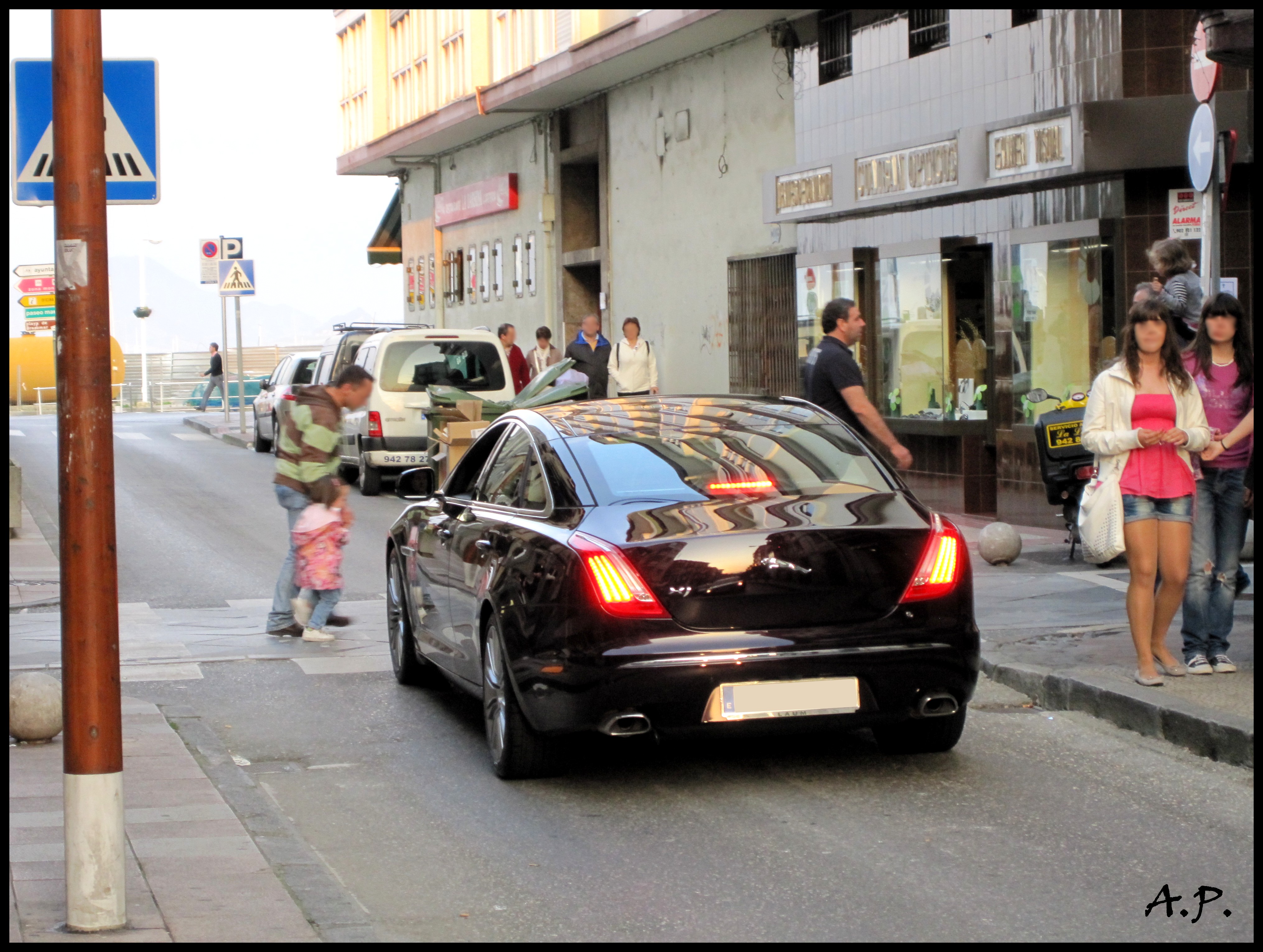
XJ-40
"Thatcher did like her Jags, and then after the Series 3 kept the faith with the XJ-40, square a design, again with armour and oxygen, but badged as a Daimler Majestic, the long wheelbase one."
The Jaguar XJ-40 is a Jaguar luxury car from the late 1980s into the early 1990s. The hosts are talking about it as the kind of car used for official, chauffeur-driven duties, and they mention its distinctive styling.
The Jaguar XJ-40 is the late-1980s/early-1990s generation of the Jaguar XJ luxury saloon, known for its more angular, 1990s-influenced styling. In this segment it’s tied to UK government use, including a specific XJ-40 registration and details like the oversized wing mirrors.

Daimler Majestic
"square a design, again with armour and oxygen, but badged as a Daimler Majestic, the long wheelbase one."
The Daimler Majestic is a posh, long-wheelbase Jaguar-based car that was often used as an official vehicle. The long wheelbase gives more room in the back for a driver and passengers.
The Daimler Majestic is a luxury saloon built on the Jaguar XJ platform, commonly associated with official and government use in the UK. In this segment it’s specifically described as the long-wheelbase version, which matters because the extra rear space is ideal for a chauffeur-driven, state-car layout.
armour and oxygen
"square a design, again with armour and oxygen, but badged as a Daimler Majestic, the long wheelbase one."
This phrase is about security upgrades for an official car. “Armour” is extra protection, and “oxygen” suggests the car can supply breathable air if the cabin environment becomes unsafe.
“Armour and oxygen” refers to special protective and life-support modifications used in some state or security vehicles. Armour adds ballistic protection, while an oxygen supply is used to help occupants survive in situations where the cabin air could be compromised.
long wheelbase
"but badged as a Daimler Majestic, the long wheelbase one."
“Long wheelbase” means the car’s body is stretched so there’s more room between the wheels. That usually gives passengers in the back more space and a smoother ride.
A long wheelbase means the distance between the front and rear axles is extended compared with a standard version. That extra length usually improves rear-seat space and ride comfort, which is why long-wheelbase variants are common for chauffeur-driven or official cars.
oversized wing mirrors
"It had those funny oversized wing mirrors that ruined the look of the XJ-40."
Oversized wing mirrors are bigger side mirrors than usual. The idea is better visibility, and here the host says they make the car look worse.
Oversized wing mirrors are larger-than-normal side mirrors mounted on the front fenders (“wings”). They’re often used on official or safety-focused cars to improve visibility for the driver and reduce blind spots, and in this segment they’re criticized as visually ruining the XJ-40’s look.
rectangular headlights
"they've gone a bit grey, and they've got squared off. They've got rectangular headlights going on by this point."
Rectangular headlights are headlamps with a boxy shape. The host is pointing out that this Jaguar generation looks more angular because of that lighting design.
Rectangular headlights describe a headlamp shape used on certain late-1980s/1990s designs, as opposed to round or more traditional lamp housings. The host uses this as a styling cue to explain how the XJ-40 looks more “squared off” compared with earlier Jaguars.
double headlights
"The deal sort of double headlights have gone."
“Double headlights” means there are two headlight units instead of one. The host is saying the older look is gone and the newer design is different.
“Double headlights” refers to a design where two headlamp units are used per side (or in a paired arrangement) rather than a single lamp. The host contrasts this with the later XJ-40’s lighting layout as part of the car’s evolution in styling.
screen line
"They've got a screen line for the 90s, as we know."
A “screen line” is a line or crease in the car’s body that helps define its shape. The host is using it to describe the car’s look from that era.
A “screen line” is a bodywork styling crease that runs along the side of the car, visually tying the front and rear together. Here it’s used as a design detail to describe the XJ-40’s late-90s/90s-era silhouette.
Police Rover 827s
"Interestingly, on the videos I was looking at John Major resigning, [793.0s] the chase cars were Police Rover 827s. [795.5s] Well, they look quite nice, those Rover 827s."
A Rover 827 is a British-era family/executive car. In this story, it’s mentioned as the kind of car used by police during the motorcade/chase.
The Rover 827 is a UK executive car from the Rover 800-series era, and it’s being referenced here as the “chase car” used in John Major’s resignation-era videos. The key enthusiast angle is that these were used in official motorcade roles, not just as private cars.

Montego
"But if you were a junior cabinet minister, you could end up in a Rover 416 or a Montego. [807.6s] Oh, shame, the shame."
The Montego is a Rover saloon from the late 1980s/early 1990s. The hosts use it as an example of a less glamorous official car assignment.
The Rover Montego is a mid-size saloon from Rover’s late-1980s/early-1990s period, intended to compete in the family/executive market. In this segment, it’s mentioned alongside the Rover 416 as a “lower” option for junior cabinet ministers.

416 Rover 416
"But if you were a junior cabinet minister, you could end up in a Rover 416 or a Montego. [807.6s] Oh, shame, the shame."
The Rover 416 is a smaller British saloon from the Rover 400 lineup. Here it’s mentioned as the kind of car a junior minister might get instead of the more prestigious options.
The Rover 416 is part of Rover’s 400-series, positioned as a smaller executive/upper-compact saloon compared with larger Rover models. In the segment, it’s used to illustrate that junior cabinet ministers could end up in a more modest Rover than the top-tier cars.
X-308 Jaguar
"Long came grinning Tony Blair with an X-308 Jaguar. [841.4s] Well, what was an X-308?"
The Jaguar X-308 is a newer Jaguar XJ-era sedan compared with the older XJ-40. In the conversation, it’s treated as the start of a more modern, updated official-car era.
The Jaguar X-308 is a later-generation Jaguar XJ saloon that the hosts describe as more modern than the earlier XJ-40. It’s being used as a turning point in the segment—when the official car choices shift toward a newer, more contemporary look.
aluminium-bodied unibody cars
"Now, these were aluminium-bodied unibody cars with the cat's air suspension, which was that big step forward for Jag."
This describes how the car is built. A unibody means the body and frame are one piece, and using aluminum helps keep the car lighter, which can make it drive better.
“Aluminium-bodied unibody” means the car’s body structure is one integrated unit (unibody) and it uses aluminum for weight savings. Less mass generally helps handling and makes the car feel more responsive.
air suspension
"Now, these were aluminium-bodied unibody cars with the cat's air suspension, which was that big step forward for Jag."
Air suspension uses air bags instead of regular coil springs. It can smooth out the ride and even change the ride height depending on conditions.
Air suspension uses air-filled springs instead of steel coils. It can automatically adjust ride height and soften bumps, which is why it’s often associated with a more comfortable, controlled luxury ride.
black alloy wheels
"Black alloy wheels just looks really sinister. They got this design exactly right."
Alloy wheels are wheels made from metal alloys instead of steel. They’re commonly used because they can look better and sometimes help the car feel a bit more responsive.
Alloy wheels are wheels made from metal alloys (commonly aluminum) rather than steel. They’re often lighter and can improve appearance and, in some cases, wheel responsiveness.
supercharged V8
"Again, still 4.2-litre engine, supercharged though, super V8, this one."
A supercharged V8 is a V8 engine with a device that pushes extra air in. More air usually means more power, especially when you press the accelerator.
A supercharged V8 is an engine with eight cylinders where a supercharger forces more air into the intake. That typically boosts power and torque compared with the same engine without forced induction.
Ian Callum
"The shapely X351 designed by Ian Callum."
Ian Callum is a designer at Jaguar. The hosts are saying he was responsible for designing the look of this XJ generation.
Ian Callum is a Jaguar design executive credited with shaping the look of multiple Jaguar models. In this segment, he’s specifically tied to the design of the X351 Jaguar XJ.
Kevlar
"...the Sentinel Max featured Kevlar to B7 ballistic prevention..."
Kevlar is a tough protective material used in body armor. The idea is that it helps stop or slow down bullets and other threats.
Kevlar is an aramid fiber used in ballistic armor because it can absorb and resist penetration from certain projectiles. In the segment, it’s mentioned as part of the Sentinel Max’s protective package.
B7 ballistic prevention
"...to B7 ballistic prevention and could also withstand 15 kilograms of TNT."
B7 is a label for a level of bullet-stopping protection. The hosts are saying the armor is built to meet that kind of standard.
“B7” is a ballistic protection rating level used to describe what kinds of threats the armor is designed to stop. Here, it’s used to claim the Sentinel Max’s armor can meet a specific standard of bullet resistance.
15 kilograms of TNT
"...and could also withstand 15 kilograms of TNT."
TNT is a type of explosive used as a benchmark for blast testing. The number is meant to show how strong the protection is against a big explosion.
TNT is a standard explosive used as a reference when describing blast resistance. Saying the vehicle can withstand “15 kilograms of TNT” is a way of quantifying the claimed level of protection against explosive threats.
V8's 0-60 time
"“But all that armour doubled the V8's 0-60 time from 5 seconds to 10.”"
“0-60” is how long it takes a car to go from standing still to 60 mph. A “V8” is an engine with eight cylinders arranged in a V shape.
“0-60” is the elapsed time for a car to accelerate from 0 mph to 60 mph. The “V8” indicates the engine is a V8 configuration, and the speaker is saying the added armor made that acceleration slower.
armour doubled
"“All in a Jag.” “But all that armour doubled the V8's 0-60 time”"
“Armour” here means extra protective plating added to the car. That extra weight makes it slower to accelerate.
Armour in this context refers to vehicle body armor used for protection, which adds significant weight. Extra weight can slow acceleration, which is why the speaker links it to a worse 0-60 time.

Jaguar Ipace
"...hey don't really make it. Well, they drive an old iPace, couldn't they? Recharging up every 10 minutes."
The Jaguar I-PACE is an electric SUV, which means it runs on electricity instead of petrol. Because it’s electric, you need to charge it, and the podcast mentions charging stops. It’s a modern type of classic car people talk about.
The Jaguar I-PACE is an all-electric SUV from Jaguar, designed for everyday driving with electric power. The podcast references it in the context of recharging frequently, which highlights one of the key ownership realities of electric cars. It’s discussed because it represents a modern classic direction—electric performance and practicality.
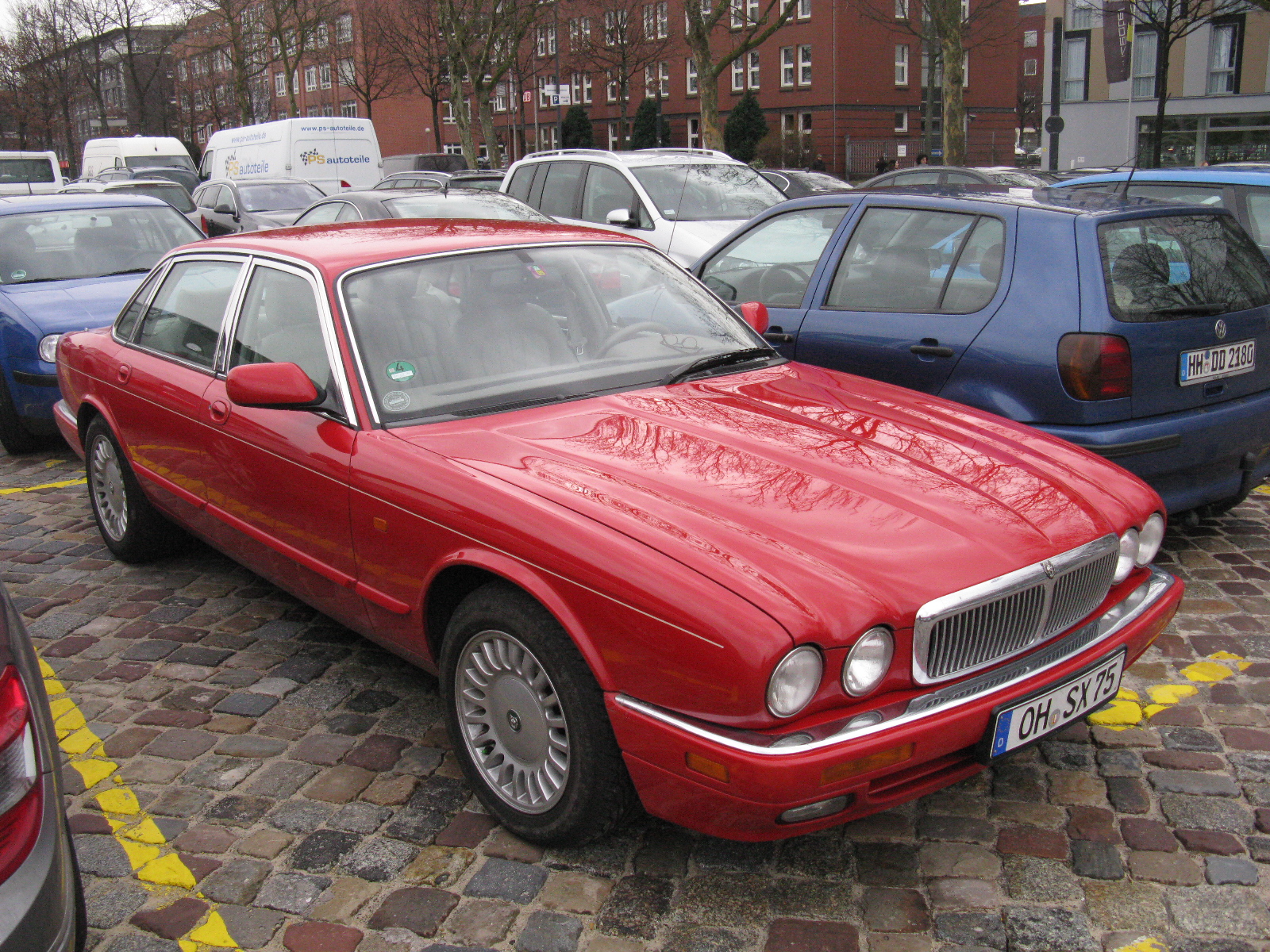
XJ12
"Then you got the kind of 1980s, you got the Jag XJ6 and XJ12, the Series 3."
The Jaguar XJ12 is a luxury Jaguar with a V12 engine. It’s the more powerful, more “top-of-the-line” version of the XJ family.
The Jaguar XJ12 is the XJ line’s V12-powered luxury variant, built to deliver a more dramatic, higher-end feel than the smaller engines. Mentioning it alongside the XJ6 highlights the range of Jaguar’s “executive” cars in that 1980s period.

Jaguar XJ6
"Then you got the kind of 1980s, you got the Jag XJ6 and XJ12, the Series 3."
The Jaguar XJ6 is a big, comfortable British luxury car. It’s part of Jaguar’s XJ family, and it’s remembered as a classy, long-distance cruiser.
The Jaguar XJ6 is a classic British luxury sedan from Jaguar’s XJ line, known for its smooth, comfortable ride and traditional grand-touring character. In the 1980s context, it represents the era when Jaguar was still competing as a “world stage” luxury brand.
Jaguar XJ
"Then in the kind of 90s and 2000s, you got the Jaguar XJ."
The Jaguar XJ is Jaguar’s main luxury sedan line. It’s been around for a long time, and different generations were sold through the 1990s and 2000s.
The Jaguar XJ is the long-running flagship luxury sedan from Jaguar, spanning multiple decades and generations. The host’s “90s and 2000s” framing treats it as the continuation of Jaguar’s British luxury presence into later eras.

Range Rover
"Okay, it might come off the shelf armoured and it might be cheaper. But what's wrong with the Range Rover?"
The Range Rover is a luxury SUV from Land Rover. People often associate it with official or high-status driving, which is why it comes up in the image debate.
The Range Rover is Land Rover’s flagship luxury SUV, known for its upscale interior and “official” presence. The host contrasts it with an Audi to argue about what kind of image feels most “prime ministerial.”
Gloucestershire
"We went outside into the sunshine and did coffee and chrome up in Gloucestershire,"
Gloucestershire is a county in southwest England, used here to locate where the hosts met up with other car people. It frames the segment as a real-world classic-car event rather than studio talk.
Prescott Hill
"and did coffee and chrome up in Gloucestershire, Prescott Hill, in fact, at the Footman James meet."
Prescott Hill is a famous hill-climb area in England where car events happen. It’s the kind of place where classic-car fans go to see and talk about cars.
Prescott Hill refers to the Prescott Hill Climb area in Gloucestershire, a well-known venue for motorsport and car events. It’s a classic-car-friendly location where enthusiasts gather and show cars.
coffee and chrome
"We went outside into the sunshine and did coffee and chrome up in Gloucestershire,"
“Coffee and chrome” is a fun way to describe hanging out at a car meet, looking at shiny cars, and chatting with other enthusiasts. It’s more about the vibe and the cars than technical work.
“Coffee and chrome” is a classic-car hobby phrase meaning casual socializing while admiring cars—often at meets or events. It emphasizes the community and the visual/enthusiast side of the hobby, not racing or wrenching.
Footman James
"Prescott Hill, in fact, at the Footman James meet. Now, there was lots and lots of great cars there."
Footman James is a UK company that focuses on classic cars, including insurance. Their name here signals the meet is part of the classic-car scene.
Footman James is a UK classic-car insurance and collector-car specialist brand. When the hosts say “the Footman James meet,” they’re referring to an event associated with that classic-car community.
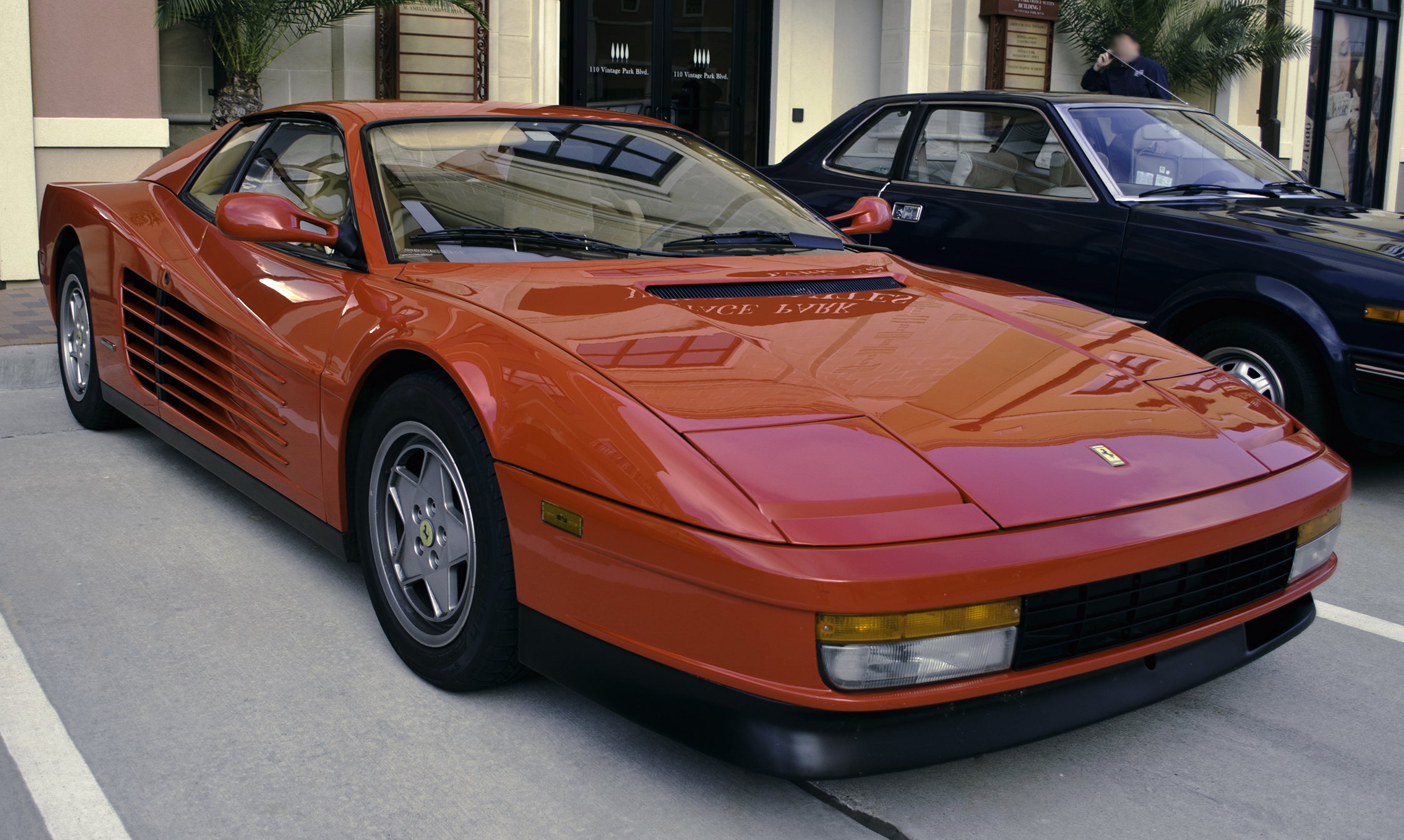
Ferrari Testarossa
"Or Harry, your Ferrari Testarossa is a Fiat. [1248.1s] I did call it a Fiat in front of him, actually. [1253.0s] A Testarossa, wasn't it? And a 928, wasn't it?"
The Ferrari Testarossa is a classic Ferrari supercar from the 1980s. It’s known for its mid-engine design and its very recognizable styling.
The Ferrari Testarossa is a famous 1980s/early-1990s supercar known for its mid-engine layout and distinctive side “cheese-grater” intake styling. It’s also remembered for being a high-visibility, pop-culture icon of the era.

Porsche 928
"Yeah, so Gary had a Porsche 928, [1257.3s] which he's selling in the next couple of weeks, actually."
The Porsche 928 is a Porsche grand touring car—built for long-distance driving. It’s known for having a V8 engine up front and a more unusual style compared with the 911.
The Porsche 928 is a grand touring (GT) Porsche from the late 1970s through the early 1990s, known for its front-engine layout and V8 power. It’s a bit of a “what if” in Porsche history because it wasn’t the classic 911 formula, but it became a cult favorite.
post-purchase check
"So it withstood Gary's deep, deep, deep post-purchase check, [1285.4s] which was nice, because I was a bit nervous."
A post-purchase check is a quick inspection after you buy a car. The idea is to find any problems early, so you’re not stuck with surprises later.
A post-purchase check is an inspection done right after buying a car to catch issues early—before they become expensive problems. Enthusiasts often do this to confirm the car’s condition matches what they were told.

Citroen Diane
"He's getting excited about Citroen Diane that was there. Because you think Harry's got a massive great car collection,"
The Citroën Diane is a classic French car. It’s not a super common model, so people who like it tend to enjoy it because it feels unique and interesting compared with more familiar classics.
The Citroën Diane is a classic French car best known for its distinctive, rounded styling and unusual place in Citroën’s lineup. It’s a niche model that often shows up in classic-car circles because it’s memorable and different from the usual mainstream classics.
two-cylinder engine
"He's still getting excited about the like a tin can, basically, with a two-cylinder engine in it, which is great, which is what we like about cars."
A two-cylinder engine is an engine with two working cylinders. It’s a simpler setup than most modern engines, and in small classic cars it can be part of the charm.
A two-cylinder engine uses two pistons/cylinders to produce power. Compared with four- or six-cylinder engines, it’s often lighter and simpler, and it can feel more characterful in older small cars.
British Motor Museum
"There's also another one in October, the British Motor Museum near Birmingham. So if you want to sign up and come with us,"
This is a car museum near Birmingham in the UK. It’s a place where people go to see classic cars and learn about motoring history.
The British Motor Museum is a UK museum focused on cars and motoring history, and it’s located near Birmingham. It’s the kind of venue where classic-car events and themed visits are often held.
Prescott meet
"I might try and get my stag up to the Prescott meet. I'll try and do that. It's funny, all right, I've been running around loads."
This is a classic-car get-together in the Prescott area. The idea is to bring your car and meet other enthusiasts.
“Prescott meet” refers to a classic-car gathering held at or near Prescott, a well-known UK motoring area. These meets are typically used for socializing, showing cars, and sometimes doing short drives or displays.

Merck
"So I can either take the Roller or the Merck. I think if you're going to turn up in the stag, I'll turn up in the Merck."
“Merck” is slang for a Mercedes-Benz. They’re joking about bringing either a Mercedes or a Rolls-Royce to the event.
“Merck” is a nickname for a Mercedes-Benz. Here, the speaker is contrasting it against the “Roller” (Rolls-Royce) as a playful “Germany versus Britain” matchup for which car to bring.

Rolls-Royce Silver Shadow
"Yeah, okay. Yeah, and if you've not heard or seen, obviously, Max has bought his Rolls-Royce. It is a really nice Silver Shadow. Have I ever mentioned that?"
This is a famous old Rolls-Royce model. People like it because it’s a very comfortable, classy luxury car with a smooth, refined feel.
The Rolls-Royce Silver Shadow is a classic British luxury car known for its smooth ride and the modernized engineering Rolls introduced in the 1960s. It’s especially recognizable by its long, elegant body and the “Shadow” name tied to that era’s comfort-focused design.
Panto
"But he asks, when are you doing Panto this year? I don't see why Silver Shadow is Panto. Why is the Silver Shadow seen as a Panto cat?"
“Panto” means a British Christmas-time stage show for families. In this joke, they’re basically saying the car feels like it belongs in that kind of silly, festive setting.
“Panto” is short for pantomime, a British family stage show typically performed around Christmas and New Year. The speaker is using it as a humorous label for the vibe or “look” of the car rather than making a literal claim about the vehicle.
parking in Morrison's car park
"But they're looking forward to the video of you trying to park it in Morrison's car park. It's not that big."
They’re discussing a real-life parking situation—trying to park the car in a supermarket parking lot. The point is that the car is long and narrow, so it’s not as easy as it sounds.
The hosts are talking about a specific parking scenario: trying to park the car in a Morrison’s (a UK supermarket) car park. This is relevant because it highlights real-world maneuvering challenges for a long, narrow classic luxury car.

Ford Transit
"...ng, but it's quite narrow. So it's only a kind of Ford transit size, so you can squeeze those into a car park."
The Ford Transit Custom is a small van made by Ford. It’s meant for carrying people or goods, and it’s sized so it can fit in tighter spaces than bigger vans. The podcast mentions it because it’s practical for parking and everyday use.
The Ford Transit Custom is a compact panel van and people-mover platform used for work and transport. The podcast highlights its size, noting it’s “only a kind of Ford transit size” and can be squeezed into a car park. It’s discussed because it’s a practical classic-adjacent vehicle: common, useful, and easy to understand.

Willys Jeep
"...d three classic cars, including a Renault 4 and a Willys Jeep. Now, he says..."
The Willys MB is a military Jeep from World War II. It was made to be tough and useful in difficult conditions. The podcast mentions it because it’s a famous, historically important classic.
The Willys MB is a WWII-era military Jeep built by Willys. It’s significant in classic-car conversations because it’s historically important and widely recognized as part of the war’s vehicle fleet. The podcast includes it when talking about classic cars like the Renault 4 and other notable models.

Jeep Willys
"...d three classic cars, including a Renault 4 and a Willys Jeep. Now, he says..."
The Jeep Wrangler is a tough SUV made for off-road driving. It’s designed to handle rough roads and trails better than many regular cars. The podcast mentions it as part of a set of classic, recognizable vehicles.
The Jeep Wrangler is a rugged, off-road-focused SUV built around a simple, durable design philosophy. In the podcast context, it’s mentioned alongside other classic cars, including a Willys Jeep, which ties it to the broader Jeep legacy. It’s often discussed because it’s both practical and strongly associated with off-road culture.

Renault 4
"and he spotted three classic cars, including a Renault 4 and a Willys Jeep. Now, he says..."
The Renault 4 CV is a small older car made by Renault. It’s from an early period of post-war motoring and is considered a classic. The podcast mentions it as part of a set of notable classic cars.
The Renault 4 CV is a small, early post-war French car that became an important part of Renault’s history. It’s mentioned in the podcast as one of the classic cars in a group that reflects personal taste and era. It’s often discussed because it’s a recognizable, historically significant compact.
research period
"What about your research period? [1735.4s] When do you start the research period for the next car?"
A “research period” just means the time you spend looking into cars before you buy one. You’re comparing different models and figuring out what you really want.
In car shopping, a “research period” is the time you spend comparing options—models, trims, common issues, and prices—before buying. Enthusiasts often use it to narrow down what they want and avoid impulse buys.
speed research
"and then I'll do some speed research, [1743.6s] like I always do."
“Speed research” means you’re checking how quick a car is and how it drives, not just how it looks. People do this by reading reviews and specs.
“Speed research” here likely means looking up performance-related info—like acceleration, top speed, and handling—before choosing a car. It’s a shorthand for focusing on how fast and how well a car drives.
sunroof
"Maybe a coupé that's got a sunroof [1749.1s] that I can roll the windows down."
A sunroof is a panel in the roof that can open. It lets in more light and air so the car feels more open when you want it to.
A sunroof is a glass or metal panel in the roof that can open to let in air and light. In practice, it changes the cabin feel—especially in mild weather—because you get more airflow and a more open sensation.
CVs
"I found myself down a rabbit hole [1760.0s] on two CVs the other day. [1763.1s] And did you?"
“CVs” is unclear from this snippet—people use “CV” in a few different car ways. It might mean two specific car models the host was watching, but it could also mean a car part abbreviation.
“CVs” is almost certainly shorthand for “Cayman/Boxster” or “Cabriolet/Convertible” in this context, but the transcript says “two CVs,” which is ambiguous without more surrounding audio. In car talk, “CV” can also be used as an abbreviation for “constant velocity” joints, but that would be a parts discussion rather than “down a rabbit hole on two CVs.”

two CV
"Have you driven a two CV? [1773.5s] I have, and I love them for short periods, [1775.4s] but I'm not sure you'd want one"
The “two CV” is a classic Citroën that was designed to be simple and easy to drive. It’s fun for short drives, but it’s not very fast, so it can feel limiting if you need to do longer or faster trips.
The Citroën 2CV (often called a “two CV”) is a famously simple, lightweight French classic built for basic, affordable motoring. It’s known for its quirky design and very relaxed, low-speed driving character—great for short trips, but not ideal as a single car if you want to go everywhere quickly.
only classic
"but I'm not sure you'd want one [1776.5s] as your only classic, [1777.4s] because it's quite limiting"
They’re basically asking whether you could use a classic car as your one and only car. Some classics are fun, but they can be inconvenient or slow enough that they don’t work well for everyday life.
The hosts are talking about using a classic car as your single daily driver. With cars like the Citroën 2CV, that can be limiting because the driving experience and practical range of where you can comfortably go are constrained compared with modern cars.
rear view mirror
"but when you look in the rear view mirror [1799.6s] and see a line of cars behind you, [1801.0s] you realise it's not a quick car."
They’re using the rear-view mirror to show what’s happening behind you. Even if you feel like you’re just cruising, the cars lined up behind you show you’re not going fast enough.
The rear-view mirror is used here as a practical “reality check” for speed. The idea is that even if the car feels like it’s moving slowly, other drivers behind you can be impatient—highlighting that the car’s pace isn’t quick in real traffic.
Jaguar XJS
"Well, I've always thought an XJS would be great for you, because it's got that kind of slightly flash, slightly sort of 1970s, 80s wide-boy look to it."
The Jaguar XJS is a classic Jaguar coupe/GT that’s famous for its old-school styling and cruising comfort. Here, they’re suggesting it because it has that flashy, retro look from the 1970s and 1980s.
The Jaguar XJS is a classic British grand tourer known for its long-hood, V12-era style and comfortable cruising. In this segment, it’s being pitched for its “wide-boy” 1970s/80s look—more about the vibe and proportions than modern tech.

Mercedes-Benz R129
"I know you've got this allergy to driving a 1990s car, but a 90s murks R129 has just got you written all over it with an electric roof and a VA."
The Mercedes-Benz SL (R129) is a classic Mercedes roadster generation. They mention it has an electric roof, meaning the top can go up and down automatically, but the other person doesn’t want something that feels too modern.
The Mercedes-Benz SL (R129) is a late-1990s-era roadster platform known for its classic grand-touring character and, in many trims, a power-operated soft top (“electric roof”). In this segment, the host calls out an R129 with an electric roof and a VA, framing it as a modern-feeling option that the listener rejects as “too modern.”
chrome bumpers
"No, I'm not feeling that. It's too modern. You know, my rule, it's got to have chrome bumpers."
Chrome bumpers are bumpers with a shiny metal coating. They’re mostly about the look, and the speaker is saying they only want cars that have that classic style.
Chrome bumpers are exterior bumpers finished with a shiny chrome plating, common on many older cars. They’re often used as a visual cue for a particular era of styling, which is why the speaker treats them as a “rule” for what they want in a car.
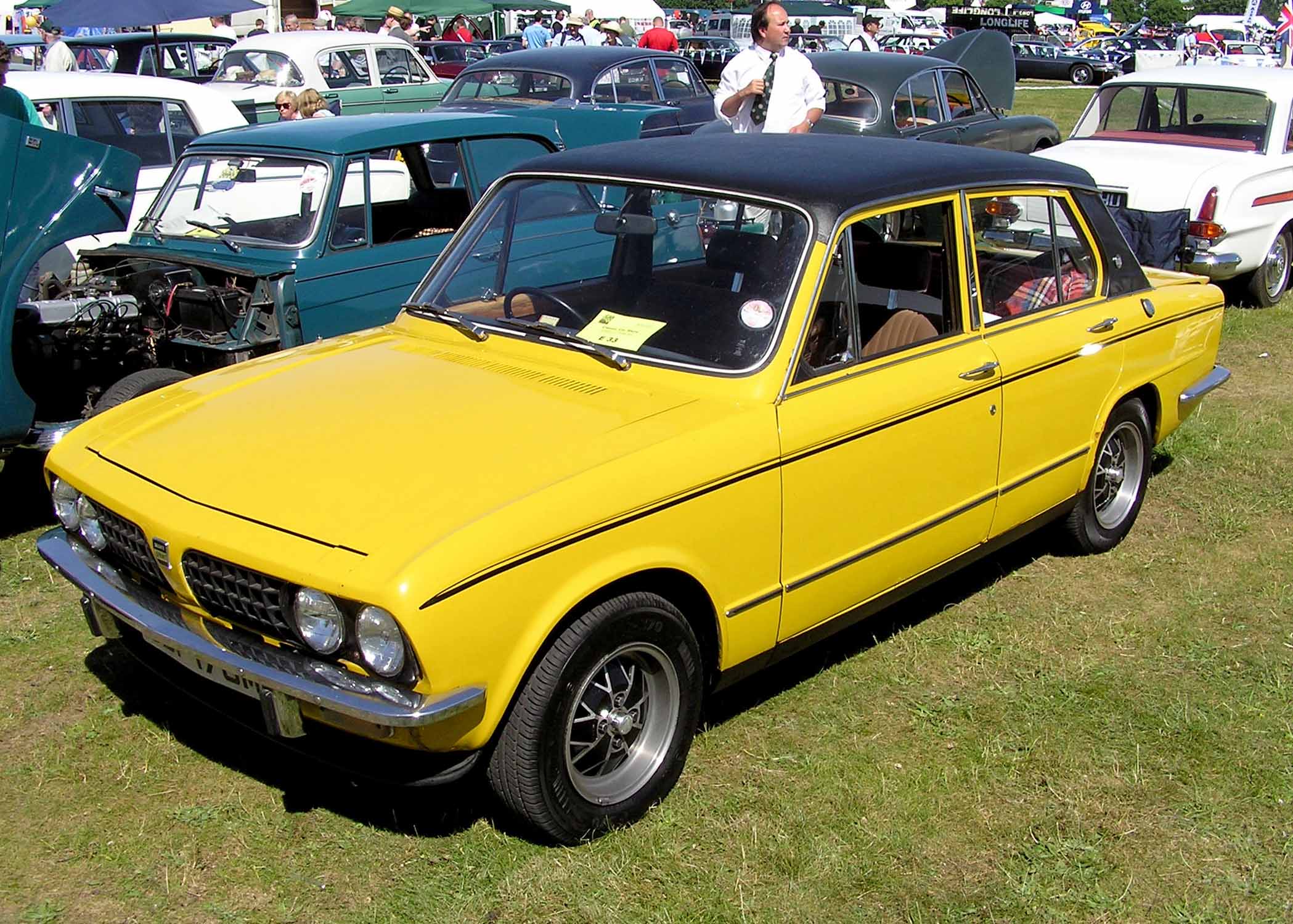
Triumph Dolomite
"How about a Triumph Dolomite? I know you're a bit sniffy about Triumph Interiors, but that is a great looking, great handling saloon car."
The Triumph Dolomite is an older British saloon car. In the conversation, they’re recommending it because it looks good and drives well for its era.
The Triumph Dolomite is a classic British compact saloon known for its sporty handling reputation and traditional styling. Here, it’s suggested as an alternative to more modern-looking cars, with the host praising it as a “great looking, great handling saloon car.”
British Leyland
"[1886.2s] But I don't know if it's more British Leyland, isn't it? [1889.4s] Oh, maybe not something else. [1890.9s] If you go for an early one, it's kind of like [1892.5s] pre-British Leyland, but no, maybe no."
British Leyland was a big British car company/group that made a lot of cars in the 60s and 70s. Saying something is “British Leyland” is basically saying it’s from that era and has that era’s typical character.
British Leyland is a major British automotive group that produced many cars in the 1960s–1970s, and its name is often used as shorthand for that era’s engineering and design approach. When someone says a car is “more British Leyland,” they’re usually pointing to that period’s typical styling, packaging, and (sometimes) perceived build quality.
triumphs
"He says, he sees loads of fixable moggies, voxels, and triumphs just sort of lying around because no one's interested."
“Triumphs” means cars made by Triumph, a classic British car brand. The point being made is that these older cars could be fixed up, but young people aren’t buying them.
“Triumphs” refers to cars made by Triumph, a British brand known for classic models like the Triumph Spitfire and other small sports cars. Here it’s being used as shorthand for older Triumph vehicles that are still repairable but not being picked up by younger enthusiasts.
Halfords
"I mean, moggies, you could just get a spanner set from Halfords"
Halfords is a store in the UK that sells car parts and tools. The host is basically saying you can get the basic tools needed to work on those older cars.
Halfords is a UK retailer known for automotive tools, parts, and accessories. Mentioning it highlights that basic tools for working on older cars are widely available.
spanner set
"I mean, moggies, you could just get a spanner set from Halfords"
A “spanner set” is a set of hand wrenches. It’s the kind of basic tool you’d use to loosen or tighten bolts on a car.
A “spanner set” is a collection of hand wrenches used to tighten or loosen nuts and bolts. It’s a basic tool kit for DIY mechanical work.
Request an Explanation
Heard something you'd like explained? We'll add it to this episode.
Sign in to request explanations for terms you heard.
Want to learn more?
Browse our glossary for plain-English explanations of automotive terms, jargon, and concepts.
Help improve this episode
See something that's not quite right? Our annotations are AI-generated and can sometimes miss the mark. Click the flag icon on any annotation to suggest a correction.
4 community members have helped improve this episode.