
Bonus Episode: Coffee and Chrome Special
About this episode
Coffee and Chrome takes over Prescott Hill Climb in Gloucestershire, with Footman James setting the tone for a classic-car meet that’s big on variety and short on hassle. The hosts spotlight arrivals like the Metro 6R4, plus a mix of modern machinery and historic racing pedigree, including Prescott Hill’s Bugatti-era roots. Along the way, they dive into build details (space-frame Metro, supercharged K20), Z-car rust/under-seal history, and restoration realities—then wrap with more car talk and a tease about rust next time.
A special bonus episode from the Footman James Coffee and Chrome event at Prescott Hill in Gloucestershire. Max and Matt get sunburnt and bumble around a field talking to the owners showing off their classic cars at the famous hill climb course. With Special Guest Star Harry Metcalfe from Harry's Garage and some hot news about the Tyrekickers podcast.
Follow us on Instagram: @thetyrekickersuk
Facebook: The Tyre Kickers
Finalist - Independent Podcast Awards 2024 & 2025
Prescott Hill Climb
"Hello and welcome to a very special edition of The Tire Kickers. We are here at Prescott Hill. This is a Footman James coffee and chrome event at Prescott Hill Climb here in Gloucestershire."
Prescott Hill Climb is a famous hill-racing venue in Gloucestershire. Cars and bikes do timed runs up a hill, so it’s a great setting for classic-car meetups.
Prescott Hill Climb is a historic motorsport venue in Gloucestershire, UK, known for cars and motorcycles running up a steep hill for timed runs. It’s the kind of place where classic-car events feel especially authentic because the venue itself is built around driving performance.
coffee and chrome
"This is a Footman James coffee and chrome event at Prescott Hill Climb here in Gloucestershire."
“Coffee and chrome” is a casual classic-car meet where people show off their polished cars and chat with the owners. It’s called that because it’s laid-back like a coffee hangout, but the cars are the main attraction.
“Coffee and chrome” is a classic-car event format where people gather to admire cars (often polished and show-ready) in a relaxed, social setting—typically with coffee and lots of owner conversations. It’s essentially the classic-car version of a casual meet-up, but with an emphasis on visible condition and presentation.
Footman James
"This is a Footman James coffee and chrome event at Prescott Hill Climb here in Gloucestershire... That's all in this special episode of The Tire Kickers from the coffee and chrome at Prescott Hill Climb. Classic car chat with Max and Matt in partnership with Footman James."
Footman James is a company that focuses on classic cars, especially insurance. They’re sponsoring the event and partnering with the podcast here.
Footman James is a UK classic-car specialist brand best known for insuring and supporting classic vehicles. In this episode, they’re sponsoring the “coffee and chrome” event and the podcast partnership, which is why their name comes up repeatedly.

Metro 6R4
"I've just seen a Metro 6R4 which has already made my day and we've only been here 20 minutes."
The Metro 6R4 is a rare, high-performance British car from the 1980s. It’s known for being a proper motorsport-style machine, not just a normal small hatchback.
The Metro 6R4 is a rally-derived hot hatch from the 1980s built around a high-performance, race-bred spirit—its “6R4” name points to the engine and competition focus. It’s a standout because it’s one of the most iconic British Group B-era performance cars, even though it’s not a common sight at modern shows.

Jaguar Etypes
"The cars are coming in and Mini's just gone past and E-Type's just gone past."
The E-Type is a Jaguar classic sports car from the 1960s. People love it for its iconic styling and because it’s one of the most famous British classic cars.
The “E-Type” refers to the Jaguar E-Type, a classic British sports car famous for its long hood, elegant bodywork, and reputation as one of the most desirable designs of its era. It’s a frequent star at classic events because it represents the classic 1960s grand-tourer look.

MG MGB
"...ey can only do so many hill climbs in a year. The MGB is that lovely burnt orange colour. They can only..."
The MG MGB is a classic two-seat sports car from Britain. It’s the kind of car people take to events like hill climbs because it’s built for driving enjoyment. In the podcast, it’s mentioned in terms of how often it can be used in those activities during the year.
The MG MGB is a classic British sports roadster, commonly associated with club events and motorsport-style hill climbs. It’s often discussed as a fun, lightweight-feeling car that enthusiasts use and maintain for regular competition days. The podcast context suggests it’s being referenced for how many hill-climb events a car like this can realistically do in a season.
Sterling Moss
"Now Prescott Hill was bought by the Bugatti owners club in 1937 and racing meets up the [157.6s] hill have been held here since 1938. Now Sterling Moss made his racing debut here in 1948 as the [163.8s] Porsche 928 is coming in that's nice."
Sterling Moss was a famous British race car driver. The hosts mention he started racing there in 1948, which shows how historic this hillclimb venue is.
Sterling Moss is a legendary British racing driver, and the segment notes that he made his racing debut at Prescott Hill in 1948. That ties the venue to major motorsport history, not just local events.

Porsche 928
"Now Sterling Moss made his racing debut here in 1948 as the [163.8s] Porsche 928 is coming in that's nice. The course climbs 200 feet and the fastest modern single [169.9s] seaters can do it in 35 seconds."
The Porsche 928 is an older Porsche grand tourer with a powerful V8 engine. In this segment it’s just being name-dropped as one of the cars showing up at the hillclimb.
The Porsche 928 is a grand tourer known for its front-engine layout and V8 power, and it’s a classic Porsche that stands out from the brand’s more typical rear-engine sports-car image. Here it’s mentioned as arriving at Prescott Hill, linking a modern classic to the hillclimb setting.
hairpin
"Oh right okay so tell me about the the bends there's some famous [175.4s] bends aren't there you drive me around the bend but tell me about the ones here. So you've got [178.4s] pardon hairpin, the S's, semi-circle, allards and a tourist bend."
A hairpin is a very sharp turn, like a U-turn shape. Cars have to slow down a lot for it, then accelerate hard out of the corner.
A hairpin is a very tight, near-180-degree corner that forces cars to slow down significantly before turning back on themselves. On a hillclimb course, hairpins are often key braking/acceleration points that strongly affect lap time.
S's
"So you've got [178.4s] pardon hairpin, the S's, semi-circle, allards and a tourist bend. Now there's no right up the hill [184.9s] as we said but there is going to be some pretty sexy cars coming in that's a TBR making it."
“S’s” are a set of corners that go back and forth, making the car change direction repeatedly. It’s tricky because you’re turning one way, then the other, without much straight-line time.
“S’s” refers to a sequence of alternating left-right (or right-left) corners that creates a weaving path through the course. These sections test balance and throttle control because the car is constantly transitioning between turns.
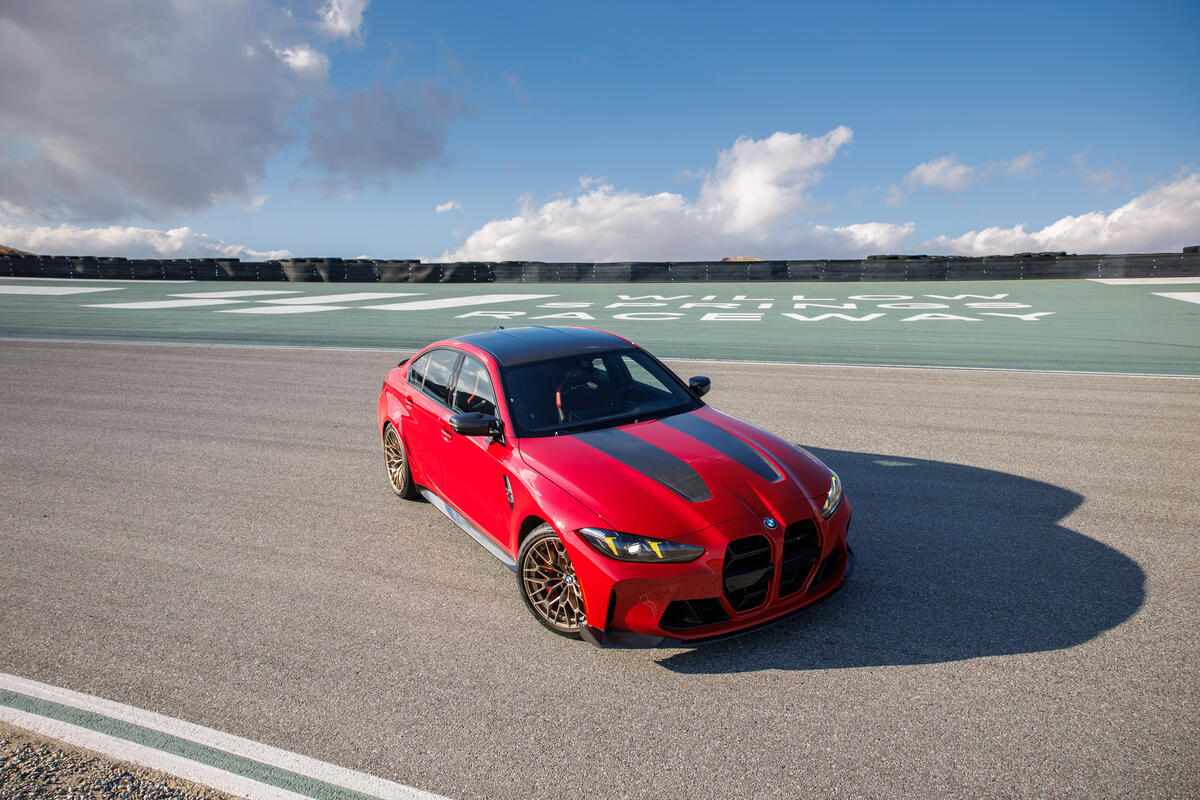
BMW M3 competition touring
"We are standing in the shade under a tree next to a brand new M3 competition touring. It's such a [233.3s] good mix of cars here because it's new and old and two cars up from that is an Allegro 2 of 1.5 [239.0s] with the go slower stripes down it."
This is a BMW M3 “Competition” model, and it’s a wagon (touring) version. The hosts are pointing it out as one of the newest cars in the lineup.
The BMW M3 competition touring is a high-performance version of the M3 that combines BMW’s M3 driving dynamics with a wagon body style. In this segment it’s highlighted as a “brand new” arrival, emphasizing the mix of modern and classic cars at Prescott Hill.
Allegro 2 of 1.5
"It's such a [233.3s] good mix of cars here because it's new and old and two cars up from that is an Allegro 2 of 1.5 [239.0s] with the go slower stripes down it."
The Austin Allegro is a classic British car. Here they mention a specific version (Allegro 2 with a 1.5 engine) as part of the mixed lineup.
The Austin Allegro was a British family car, and the segment specifically calls out an Allegro 2 with a 1.5 engine. It’s being used as an example of the event’s “new and old” variety.

TR6
"We're in field number one so right in the middle of [243.9s] thicker cars we just sort of decide to come here to see what we could see. It's a TR6 going down [248.9s] there. There's a Lotus Elan there."
The TR6 is a classic British sports car. The hosts are pointing it out as one of the cars in the lineup at the hillclimb.
The Triumph TR6 is a classic British sports car known for its long-hood styling and enthusiastic character. In this segment, it’s part of the “field number one” mix of classic cars being shown off at Prescott Hill.

Lotus Elan
"It's a TR6 going down [248.9s] there. There's a Lotus Elan there. There's an old Granada 2.8 gear."
The Lotus Elan is a classic lightweight sports car from Lotus. The hosts mention it because it’s one of the many different cars in the event.
The Lotus Elan is a lightweight British sports car famous for its agile handling and driver-focused feel. It’s name-dropped here as part of the eclectic classic-car mix at the hillclimb.

Ford Granada
"There's a Lotus Elan there. There's an old Granada 2.8 gear. A real mix of yeah some old [255.9s] triumphs, a spitfire, some E-types over there, some American stuff."
The Granada is a classic Ford. “2.8” means it has a 2.8-liter engine, and it’s mentioned as part of the mixed lineup.
The Ford Granada is a classic executive car, and “2.8” refers to the 2.8-liter engine size. Here it’s included to show the event isn’t just sports cars—there’s also more mainstream classic machinery.
Metro 6R4
"Matt I've just seen the car of my childhood dreams a Metro 6R4. This is fantastic. [271.5s] Gary's the owner he's just driven in. Gary tell me about this 6R4 it is tremendous."
The Metro 6R4 is a very special, rare performance version of the MG Metro. It’s famous with enthusiasts, and the host is excited because it’s one of those childhood-dream cars.
The Metro 6R4 is a rare, high-performance rally-derived hatchback from MG/Rover, built around a purpose-built racing engine and designed for Group B–style competition. The hosts call it the “car of my childhood dreams,” underscoring its cult status and why it’s a standout at a classic event.
space frame
"Well it's say it's not a genuine car it's one I've built. It's based on a space frame chassis which was welded into the car."
A space frame is a strong skeleton made from metal tubes. It helps the car stay stiff and stable, which is useful when someone is building a custom performance car.
A space frame is a rigid vehicle structure made from a network of tubes or members, designed to spread loads through the frame. Compared with a traditional unibody, it can make it easier to build a lightweight, custom chassis for high-power or track-focused projects.
bespoke suspension
"It's based on a space frame chassis which was welded into the car. It's all bespoke suspension it's running a under K20 supercharged with a quay five-speed sequential."
Bespoke suspension means the suspension parts are custom-made for this specific car. That can help the car handle better because the builder can set it up for how the car is built and driven.
Bespoke suspension means the suspension setup is custom-designed rather than using off-the-shelf components. That usually allows the builder to tune ride height, geometry, and handling characteristics to match the car’s weight distribution and power delivery.
supercharged
"It's all bespoke suspension it's running a under K20 supercharged with a quay five-speed sequential."
Supercharged means the engine is fitted with a device that forces extra air into it. That extra air helps the engine make more power.
Supercharged means the engine uses a forced-induction system (a supercharger) to push more air into the cylinders. More air enables more fuel to be burned, which can significantly increase power compared with the same engine without boost.
five-speed sequential
"It's all bespoke suspension it's running a under K20 supercharged with a quay five-speed sequential."
A five-speed sequential gearbox shifts through the gears in order. It usually makes shifting quicker and more controlled than a traditional pattern-style shifter.
A sequential gearbox lets you shift through gears in order (typically with a lever or paddles), rather than using an H-pattern. It’s often used in performance applications because it can make gear changes faster and more consistent under load.

Austin Rover Metro
"Can I ask a question then was this actually based on a genuine Metro did you take a Metro apart and build it? It was a 1.3L. How much of the original Metro is left?"
The Austin Rover Metro is a small British car. Here, the builder starts with a 1.3-liter Metro, but keeps only parts of the original body and then builds a much more extreme custom car around it.
The Austin Rover Metro is a small British hatchback that became a popular base for lightweight, budget-minded builds. In this segment, the host explains that the car started life as a 1.3L Metro, but most of the original shell is removed and replaced with a custom structure and drivetrain.
Group B
"I did my apprenticeship at Austin Rover and I actually started the year that they were building these for the Group B so I've got an affiliation with Austin Rover anyway I spent 22 years there."
Group B was a rally racing class known for very extreme, powerful cars. Bringing it up here is about the builder’s connection to that high-performance engineering world.
Group B was a high-profile rallying category (especially famous in the 1980s) known for powerful, lightly regulated cars. Mentioning that the builder started his apprenticeship “building these for the Group B” signals the era’s motorsport influence and the kind of engineering culture that shaped his career.
temperature gauge
"Well we're not sure if the temperature gauge is accurate because it sits above the normal all the way here. It's ... there's always that point where you just have one eye on the temperature gauge isn't it?"
The temperature gauge tells you how hot the engine is getting. If it’s reading high, you may need to slow down or stop so the car doesn’t overheat.
A temperature gauge indicates engine coolant temperature, helping drivers avoid overheating. The hosts discuss whether the gauge is accurate and emphasize that older cars often require extra attention to temperature during slow queues or warm weather.
maiden journey
"It's a British car it's probably not. It's the maiden journey of this year so having come over an hour and then we queued all the way up the hill..."
“Maiden journey” just means the first drive of the year or season. It’s often when people are a little extra careful because the car hasn’t been used in a while.
“Maiden journey” means the car’s first trip out for the season or year. The host uses it to frame why they’re being cautious—early-season driving can mean the car hasn’t been exercised much yet.

Jaguar XK140
"That's it old cars it's just take it easy and see it goes isn't it. How was your journey here in an XK140 then for an hour how far have you come?"
The Jaguar XK140 is a classic British sports car. In this part of the episode, it’s mentioned as the car someone drove to the event, and they talk about keeping an eye on the temperature gauge.
The Jaguar XK140 is a classic British sports car from the mid-20th century, known for its elegant styling and straight-six performance. Here it’s used as a real-world example of an older car being driven to an event while monitoring engine temperature.

Datsun 280Z
"Jim has just arrived in a in an orange Datsun 280Z this is a left-hand drive one but it looks like a bit like a 240 or a 260 so what's the story with this one? ... tell me about the 280Z then so what's the differences with this what do they do on this one that they didn't do on the earlier ones?"
The Datsun 280Z is a classic Japanese sports car that people love for its simple, fun driving feel. Here, they’re talking about how the 280Z is an improved version of earlier Z models, with a sturdier body and more comfortable suspension.
The Datsun 280Z is a classic Japanese sports coupe known for its long-hood, rear-wheel-drive layout and strong enthusiast following. In this segment, the host explains how the 280Z sits in a Z-car progression (240 → 280 → 280ZX) with upgrades like improved electrics, a stronger/more rigid chassis, and a more GT-oriented suspension setup.
left-hand drive
"Jim has just arrived in a in an orange Datsun 280Z this is a left-hand drive one but it looks like a bit like a 240 or a 260 so what's the story with this one? Yeah well this was imported from the states..."
Left-hand drive means the steering wheel is on the left side of the car. In places where cars drive on the left, that’s usually the more natural setup for the driver.
Left-hand drive means the steering wheel is on the left side of the car. This matters for countries like the UK and France where traffic flows on the left, so a left-hand-drive car places the driver closer to the center of the road and is typically more convenient for local driving.
under seal
"Now before I say this we are big fans of these cars but what about the dirty R word rust? ... none of them the ones that went to America so this one had much in the way of under seal and basically on the way to America they dropped some off on in the UK and they weren't under sealed at all..."
Under-seal is a rust-protection coating put on the bottom of a car. If a car wasn’t under-sealed well, it can rust more easily—especially if it spent time in places that use road salt.
Under-seal is a protective coating applied to the underside of a car to help prevent corrosion from road salt, moisture, and debris. In this segment, the host links under-seal (or lack of it) to rust risk, especially for Z-cars that were shipped to the US and later returned or ended up in the UK.
rust protected
"Yeah some people just get the car strip it down completely and get the whole thing done and then get it properly rust protected before they build it back up."
“Rust protected” means treating the car’s metal so it doesn’t corrode as quickly. When you’re restoring a classic, you often strip it down and protect the metal before putting everything back together.
“Rust protected” refers to applying corrosion-prevention measures to metal surfaces before reassembly—commonly coatings, primers, and cavity protection. In classic restoration, doing this during a full strip-down is a key step to slow future rust.
red oxide
"Yeah because this is kind of a rolling renovation if you look at the back it looks almost the same colour but that's red oxide okay so everything I'm doing at the moment is just painted in red oxide until I can get it sorted and then get the whole thing re-sprayed."
Red oxide is a rust-inhibiting primer/coating used on bare or cleaned metal. The speaker says the car is currently painted in red oxide as a temporary protective layer until it can be fully sorted and resprayed.
fuel injection
"Oh no this is fuel injection so you've got to give it because it's an old fuel injection give it time for pressure to reach the rebar."
Fuel injection is how the engine gets fuel. Instead of a carburetor, it uses a system that sprays or meters fuel, and on older setups you may need to wait a moment so fuel pressure builds up before the engine will start properly.
Fuel injection is a system that delivers fuel into the engine in a controlled way, rather than using a carburetor. The speaker notes that because it’s “old fuel injection,” you need to give it time for fuel pressure to build before starting.

Triumph Stag
"Well I'm pleased to say after a bit of looking around Max we've found one of Britain's finest examples of classic cars but we're not going to talk about that we're going to talk about this the Triumph Stag. Yeah we've had enough of that let's move on."
The Triumph Stag is a classic British car from the 1970s. It’s the kind of car people enjoy owning because it has character and it’s fun to work on and use, not just keep pristine.
The Triumph Stag is a British grand tourer from the 1970s, known for its distinctive styling and its reputation as a classic that enthusiasts love to tinker with. In this segment, the hosts frame it as a car you “look at with different eyes” once you own it—part of the appeal of classic-car ownership.
factory colour
"What colour is this what colour do you call [716.8s] this? Red. I'll just call it red. You don't know the factory colour? No I think it's factory colour [721.7s] or not I can't remember. Oh I can't remember I think you'll find it's no better than factory"
“Factory colour” is the paint color the car was built with from the factory. If it’s been repainted, it might not match that original shade.
“Factory colour” means the paint color the car was originally specified with when it left the manufacturer. Enthusiasts often care because repainting can change how the car looks and can affect originality.

Chevrolet Bel Air
"Max we just found this beautiful blue Chevy Bel Air and round the back is Rob just in the boot Rob just maybe slam [804.4s] the boot for us that's it and we'll get you to chat to us. That is a good sound of 1960s American or [809.8s] you can tell it's not British. Tell us about this car then because I don't know much about American cars. [814.1s] This is a 1960 Bel Air it was actually made parts made in Tarretown New York in"
The Chevrolet Bel Air is a famous classic American car, and the 1960 version is one of the most recognizable years. Here, they’re talking about where it was built and how it ended up in Australia.
The Chevrolet Bel Air is a classic American full-size model, and the 1960 Bel Air is especially notable for its iconic 1950s/60s styling and period-correct details. In this segment, the hosts also connect it to production history—built in the U.S. and shipped to Australia for assembly.
Tarretown New York
"Tell us about this car then because I don't know much about American cars. [814.1s] This is a 1960 Bel Air it was actually made parts made in Tarretown New York in [821.5s] early early in the production runs that was about September 1959 shipped to Australia assembled at"
They’re saying some of the car’s parts were made in New York before the car was shipped and put together in Australia. It’s basically the “where it was built” story.
Tarretown, New York is referenced as the location where parts for the 1960 Bel Air were made before the cars were shipped and assembled in Australia. Production-location details like this are often used to explain how a specific car’s build history lines up with its paperwork and originality.
LS3 engine
"[875.4s] size it's a long wheelbase transit and they go everywhere and you've put a modern LS3 engine in [880.4s] yes because the original engine and gearbox and all the interior was stolen while the car was in [886.8s] bits"
An LS3 is a modern V8 engine from GM. People swap it into older cars because it’s powerful and there are lots of parts and tuning options to make it run well.
The LS3 is a 6.2-liter V8 engine from General Motors’ LS family, known for making strong power with relatively simple aftermarket support. Swapping an LS3 into an older vehicle is a common way to modernize performance while keeping the original body.
mapped at war tech
"[907.9s] let's do something different with it so we did and it must go like stink with an LS3 it does yeah [913.5s] it was mapped at war tech September last year so it's now about 450-460 horsepower wow"
They had the car’s computer tuned by a shop called War Tech. That tuning helps the engine run correctly with the new parts, and it’s often how you get reliable power.
“Mapped” refers to tuning the engine’s electronic control unit (ECU) so fuel and ignition timing match the engine’s setup. “War Tech” is likely the tuning shop that performed the calibration, which is why the speaker can quote a horsepower figure afterward.

Ford Escort Mexico
"[935.5s] for talking to us thank you so Sean is here with a beautiful original Ford Escort Mexico this is a [941.2s] mark one escort that's right 971 we've had to put our shades on max haven't we because [946.2s] it is a very very bright color"
The Ford Escort Mexico is a special, sporty version of the classic Mk1 Ford Escort. The big deal here is that this one is said to be original and unrestored, which makes it much rarer than typical Escorts.
The Ford Escort Mexico is a classic, enthusiast-beloved variant of the Mk1 Escort, originally associated with rally success and a sporty factory spec. In this segment, the host emphasizes it’s an original, unrestored Mark 1 Mexico, which is why it’s described as extremely rare.
lime green
"[941.2s] mark one escort that's right 971 we've had to put our shades on max haven't we because [946.2s] it is a very very bright color it's a beautiful color lime green lime green or officially lemon [952.5s] green so tell me about this car"
They’re talking about the car’s paint color—lime green, which they say is officially called lemon green. On classic cars, the exact color name can matter for originality.
The speaker is describing the car’s paint color as lime green (officially lemon green). Specific factory color names are a big part of classic-car authenticity because they can indicate the original trim/paint specification.
unrestored
"[952.5s] green so tell me about this car because this is an original unrestored mark one mexico so that [958.0s] makes it super super rare yeah"
“Unrestored” means the car hasn’t been redone to look brand new. For classic cars, that can be important because it keeps more of the original condition.
“Unrestored” means the car hasn’t been professionally refinished or rebuilt back to a like-new condition. That matters for classic cars because originality can affect both historical value and how the car drives/ages compared with a fully restored example.
four speed box
"it's a four speed box so you can get it revved up and you know into the into the high rpm and it goes along nicely"
A “four speed box” just means the car has a gearbox with four gears. Because it has fewer gears, you often need to rev it a bit more to keep it feeling lively.
“Four speed box” refers to a four-speed gearbox. With fewer gears than modern cars, it typically means the engine speed (RPM) rises more quickly when you accelerate, and driving often involves keeping the engine in the higher-RPM range for responsiveness.
horse hair in the seats
"I was told it's down to the horse hair in the seats so there's something unique that's off Dagonham horses"
They’re talking about a theory for why old cars smell so distinct—because the seats may have had horsehair padding. Different materials can trap and release smells in their own way.
The hosts discuss a claimed cause of the distinctive smell of older cars: horsehair used in seat padding. Horsehair upholstery can hold odors differently than modern foams, which is why some people associate it with a “classic” interior scent.
rev counter
"I just love the Mexico had that extra rev counter and the extra engine temperature gauges didn't it? ... the six dial dash is what they call it"
A rev counter tells you how fast the engine is spinning (RPM). It helps you shift or drive so the engine is working in the range where it feels strongest.
A rev counter (tachometer) measures engine speed in RPM. On older performance cars like the Ford Escort Mexico, it helps the driver keep the engine in the power band—especially important when paired with a manual “four speed box.”
six dial dash
"the six dial dash is what they call it um you the the lower spec versions just had two clocks"
A “six dial dash” means the dashboard has six separate gauges. Here, they’re saying the Mexico had a more complete instrument setup than the cheaper versions.
“Six dial dash” describes an instrument cluster with six separate gauges/dials. In this context, it’s used to distinguish the Escort Mexico’s higher-spec dashboard from lower trims that used fewer instruments.
one owner car
"then I'll hand it down if um if my son or even grandson gets to the stage where they want to [1137.5s] take it on oh it's a keeper this car then is it yeah it's pretty much a keeper I mean I it's taken me a while to find something like this because if you can try and find a one owner car"
A “one owner car” is a car that has had only one owner for a long time. For older cars, that can be a good sign because it usually means the maintenance history is easier to trust.
A “one owner car” means the vehicle was owned by a single person from new (or at least for a long, continuous period). For classic cars, that often matters because it can correlate with consistent maintenance habits and fewer unknown ownership histories.
plugs and points and timing
"he kept every single receipt [1147.9s] he recorded every single time that he made any maintenance to it so like plugs and points and [1155.0s] timing and oils it's on its 44th oil change"
This is describing older-style engine tune-up work. It includes spark plugs, the ignition points (a mechanical part that helps make the spark), and ignition timing (when the spark happens).
“Plugs and points and timing” refers to classic ignition maintenance: spark plugs, ignition points (a mechanical contact system on older engines), and ignition timing (when the spark occurs relative to engine rotation). Keeping these properly set is part of maintaining smooth running and correct engine behavior on older cars.
44th oil change
"timing and oils it's on its 44th oil change it sounds a bit like max actually if you own this car [1159.9s] because he he writes everything down 44 oil changes fantastic oil and filter changes"
They’re saying the car has had a lot of oil changes, which usually means it was cared for. Fresh oil helps protect the engine and keeps it running well.
“44th oil change” is being used to emphasize how meticulously the car was maintained over its life. Regular oil changes are especially important on classic engines because they protect internal components from wear and help keep the engine clean.
G50 gearbox
"Mike has just pulled in in the most gorgeous guards red 1988 not portion 9 11 [1177.4s] yeah so g50 gearbox correct yeah yeah I've had it quite a long time"
A “G50 gearbox” is a particular type of manual transmission used in certain Porsche 911s. It’s the kind of detail car people look for because it helps define how the car drives and what parts/repairs are involved.
The G50 gearbox is a specific Porsche manual-transmission family used in many 911s from the late 1980s into the early 1990s. Enthusiasts often mention it because it’s associated with the classic 911 driving feel and is a known, serviceable transmission design.
whale tail
"it's a huge huge tea tray [1250.1s] spoiler best not to sit on it it's a whale tail actually it's a whale tail take trays on the on [1254.2s] the turbo oh okay well there you go"
A “whale tail” is a big rear spoiler style used on some Porsche 911s. It helps the car look iconic, and it’s also meant to improve aerodynamics.
A “whale tail” is a distinctive rear spoiler shape associated with certain Porsche 911 variants, especially turbo models. It’s both an aerodynamic add-on and a recognizable visual cue for that classic 911 look.
pure original factory
"so this is a beautiful original car isn't it because I'm not seeing anything [1263.6s] different on this and I think this is how they come the best when it's a pure original factory"
“Pure original factory” means the car is basically how it was when it came from the factory, with minimal changes. Collectors often prefer this because it keeps the car’s original character.
“Pure original factory” means the car is largely unmodified and still matches how it left the factory. For classic cars, originality is often valued because it preserves the intended look, parts, and driving characteristics.
sunroof
"[1268.0s] car it's got the sunroof factory sunroof and I'm just having a quick look inside [1271.8s] center console it's a lovely car it's had a bit of body work since I bought it it was uh it was"
A sunroof is a panel in the roof you can open so more light and air come into the car. If it’s factory-installed, it’s usually considered a nice, original feature.
A sunroof is a glass or metal panel in the roof that can open to let in light and fresh air. On classic cars, it’s often a desirable factory option because it changes the cabin feel and can affect originality and value.
body work
"[1271.8s] center console it's a lovely car it's had a bit of body work since I bought it it was uh it was [1277.5s] quite a cheap car when I bought it actually and I knew it was sound but a little bit scruffy"
“Body work” means fixing or repainting the car’s outside—like repairing dents or damage. If a car has had body work, it can mean it was previously scratched or repaired.
“Body work” refers to repairs or refinishing of the car’s exterior panels—like dents, scratches, or accident damage. In this context, the host says the car has had some body work since purchase, which matters because it can indicate prior damage and affect originality.
engine rebuild
"[1283.5s] and I bought it with 120 on it and has that had an engine rebuild yet no oh wow well certainly [1295.5s] there's there's nothing in the in the history file that says it's had anything done like that that's [1301.9s] pretty good isn't it yeah"
An engine rebuild is when the engine is taken apart and key worn parts are replaced or repaired. The host is basically asking whether the car’s engine has been “fully refreshed” before.
An engine rebuild is a major overhaul where worn internal parts are replaced or restored, often including components like bearings, pistons, and seals. The host is checking the car’s history file to see whether this kind of work has been done.
guards red
"[1312.0s] describe the red it's guards red isn't it I think it's guys and it's really I've got sunglasses on [1316.9s] and it's really a really bright vivid red yeah but the black the black on red just looks fantastic"
Guards Red is a famous Porsche red paint color. The host is saying the car’s bright red looks like that specific Porsche shade.
Guards Red is a well-known Porsche paint color—an iconic bright red associated with many classic 911s. The host is identifying the car’s vivid red as Guards Red, which helps listeners understand the authenticity and desirability of the color.
Nurburgring
"[1359.8s] that wrong it's a beauty isn't it you've got a Nurburgring sticker if you've been around the Nurburgring in it have you how was that yeah it was uh I was with a wife actually we went for a holiday [1368.9s] in in Belgium and Germany and um yeah we decided to have a few laps around the Nurburgring unfortunately [1375.2s] it was wet"
The Nürburgring is a legendary race track in Germany. People go there to test their cars and driving skills because it’s very challenging and famous.
The Nürburgring is a famous motorsport venue in Germany, best known for its Nordschleife circuit. It’s a popular benchmark for drivers and automakers because it’s long, technical, and punishing—so “laps” there are a big deal.

Opel Astra
"...oad trip to Scotland and you've been chased by an Astra max van which I think you managed to overtake you..."
The Opel Astra is a compact car made by Opel. It’s usually used for normal driving like commuting or family trips. In the podcast, it’s brought up because an Astra van was part of a road-trip story.
The Opel Astra is a compact car line from Opel, typically used as an everyday family or commuter vehicle rather than a dedicated sports car. In the podcast context, it’s mentioned as a vehicle encountered during a road trip—specifically a chase scenario involving an Astra Max van. That kind of anecdote is common when discussing how these cars show up in real-world driving stories.
speedo
"you yes yes well I have uh responsibility and people can see what the on the speedo that would have been a very good tussle"
A speedo is the speedometer—the gauge that tells you how fast the car is going. The speaker is talking about what the speedometer was showing during the drive.
A speedo (speedometer) is the instrument that shows vehicle speed. The speaker mentions “what the on the speedo” to imply they were keeping it under control while still enjoying a spirited drive.
Scotland
"and it was really good fun he knew the roads and if you get up to that sort of deserted area of Scotland oh my goodness it's extraordinary this road"
Scotland is referenced as the setting for a deserted, pothole-free road where the speaker describes a “really good tussle” without cameras. It’s used to set the scene for the kind of driving environment they enjoy.
road trips
"what is your favorite road trip to do because you go to the south of France a lot ... France is terrific because it's got a variety of areas"
They’re talking about road trips—where to drive and which routes are the most fun. The conversation is mostly about planning a scenic drive through France.
The hosts focus on favorite driving routes and how they plan road trips through France and beyond. This segment is essentially about route selection—ferries, tunnel approaches, and scenic stretches.
Oxford
"if you're coming I come from Oxford to get to the tunnel and it's it's sort of the only nice bit is the auto rigs are quieter"
Oxford is where the speaker starts from in the UK. They’re using it to explain which route segments feel better when heading toward France.
Oxford is mentioned as the speaker’s departure point when driving from the UK toward France. It frames the route planning discussion—what parts of the drive feel “nice” versus tedious.
Nice
"but the D2 that takes you down into Nice area is very very special and that's where you die through those rocks and these tunnel rocks"
Nice is a city in southern France on the coast. The speaker is saying the drive into the Nice area is especially scenic and exciting.
Nice is a city on the French Riviera, and the speaker describes driving routes that lead into the Nice area. The mention is tied to specific road scenery—tunnels and rocky sections—that make the trip memorable.

Renault 4
"yeah I know you just want desperately to see De Chevaux and Renault 4 sort of pottering around but they're rare sites really France is terrific"
The Renault 4 is a classic French car that’s known for being simple and practical. The speaker is saying they wish they saw more cars like this on French roads.
The Renault 4 is a classic French small car (often called the “R4”) that became popular for its simple, practical design and long production run. Here, the speaker is lamenting that they don’t see enough classic cars like the Renault 4 while driving in France.

Mini Classic Minis
"...there to look around I always have to look at the classic minis I don't know why I'm always drawn to classic mini..."
A classic Mini is a small car made in Britain that became very well known. People like it because it’s compact and has a recognizable look. In the podcast, it’s mentioned because the speaker always finds themselves wanting to look at classic Minis.
The “Mini Classic” refers to the classic Mini model, a small, iconic British car known for its compact size and distinctive design. It’s frequently discussed in classic-car settings because many people are drawn to how it drives and how it stands out visually. The podcast mention suggests the host is especially drawn to classic Minis when browsing at events.
transaxle Porsches
"I'm having a particular look at transaxle Porsches that we're now starting to call them I've obviously just got the 928 and there's 944 I can see over there"
A “transaxle” is a design where the gearbox and the rear differential are combined into one unit. That can help the car feel more balanced and fun to drive, which is why enthusiasts talk about it when discussing certain classic Porsches.
“Transaxle” describes a drivetrain layout where the transmission and differential are packaged together, typically near the rear axle. When the speaker says “transaxle Porsches,” they’re pointing to Porsche models like the 944/924/928-era cars that use this layout to improve balance and driving feel.

Porsche 911
"...k that is a space that is changed I think because 911 has got more and more expensive particularly the ..."
The Porsche 911 is a sports car made by Porsche. It’s famous for its performance and for being a model that has been made for a very long time. People often talk about it because it can be expensive to buy and own today.
The Porsche 911 is a long-running sports car known for its distinctive rear-engine layout and evolution over many generations. In a classic-car discussion, it often comes up because its popularity and collectability have pushed prices higher over time. That’s why it may be mentioned when talking about how certain classics have become more expensive.
originality versus resto mods
"and where do you sit on originality versus like resto mods and stuff I'll give you an example over there's an mgb a front line one absolutely beautiful"
This is the classic-car argument about whether you should keep a car exactly like it left the factory, or modify it to make it better to drive. The host is basically asking what matters more to you: being original or being upgraded.
“Originality versus resto mods” is the classic-car debate between keeping a car as factory-correct as possible (“originality”) and modifying it for improved drivability or modern features (“resto mods”). The speaker brings it up by comparing an MGB and an “original Mexico,” showing how different cars can represent different philosophies.
limited run
"there's that resto mod one that was at london concord it's 300 000 pounds but it's a limited run [1704.5s] but I I just can't see the the value at that"
A limited run means only a small number of those cars were made. Fewer cars can make them more collectible—and more expensive.
A limited run means only a small number of cars were produced, which can affect pricing and collectability. In the segment, the host uses “limited run” to explain why a restomod might command a very high price.
twin webbers
"and you you kept them until you just couldn't get an mot on them and they were twin webbers [1723.9s] cross flow so I'm I'm in the wrong era"
“Twin Webbers” means the engine uses two Weber carburetors to mix fuel and air. The host is mentioning it as part of the classic-car character from their childhood era.
“Twin Webbers” refers to having two Weber carburetors (or a twin-carb setup) feeding the engine. Carburetors like Weber are older-style fuel systems that enthusiasts associate with a particular throttle feel and sound, and the host ties it to the era they grew up in.
MOT
"and you you kept them until you just couldn't get an mot on them and they were twin webbers [1723.9s] cross flow"
In the UK, an MOT is a yearly safety/emissions test for your car. The host is saying they kept their older cars until they were no longer able to pass that test.
MOT refers to the UK’s annual vehicle inspection that checks roadworthiness and emissions compliance. The host says they kept certain cars until they “couldn’t get an MOT,” implying the cars eventually failed inspection or became too problematic to pass.
cross flow
"and they were twin webbers [1723.9s] cross flow so I'm I'm in the wrong era"
“Crossflow” is an engine design where the intake and exhaust go in different directions through the cylinder head. It’s mentioned here as part of the older engine character.
“Crossflow” describes an engine head design where the intake and exhaust ports are on opposite sides, allowing the air/fuel mixture and exhaust gases to flow across the engine. The host mentions it alongside twin Webbers as part of the classic engine layout they remember.

Mercedes-Benz SL 500
"I know thought I was a [1820.5s] Maserati by turbo spider down there but it's an SL 500 but yeah there's just you have no idea what's"
The Mercedes-Benz SL 500 is a Mercedes luxury convertible/roadster. The host is saying they thought it was a different exotic, but it turned out to be this SL model.
The Mercedes-Benz SL 500 is a luxury roadster in the SL line, known for blending comfort with a V8-powered grand-touring feel. Here it’s mentioned as the car the host ultimately realized was parked at the event after thinking it was a Maserati.

Dodge Hornet
"...like one I do like that's behind it it's a wallsy hornet fantastic do they want to spare grill for it coul..."
The Dodge Hornet is a car model made by Dodge. In the podcast, it’s mentioned because someone is looking at a specific Hornet and pointing out its front grille. That’s the main reason it’s being talked about—its appearance on the car they saw.
The Dodge Hornet is a model name associated with Dodge, and in the podcast it’s referenced as a “wallsy hornet” with a notable front grille. It’s being discussed in the context of looking at a specific car at an event, where details like the grille and overall presence are part of what makes it memorable. That’s why it comes up alongside other classic-car observations.
Request an Explanation
Heard something you'd like explained? We'll add it to this episode.
Sign in to request explanations for terms you heard.
Want to learn more?
Browse our glossary for plain-English explanations of automotive terms, jargon, and concepts.
Help improve this episode
See something that's not quite right? Our annotations are AI-generated and can sometimes miss the mark. Click the flag icon on any annotation to suggest a correction.