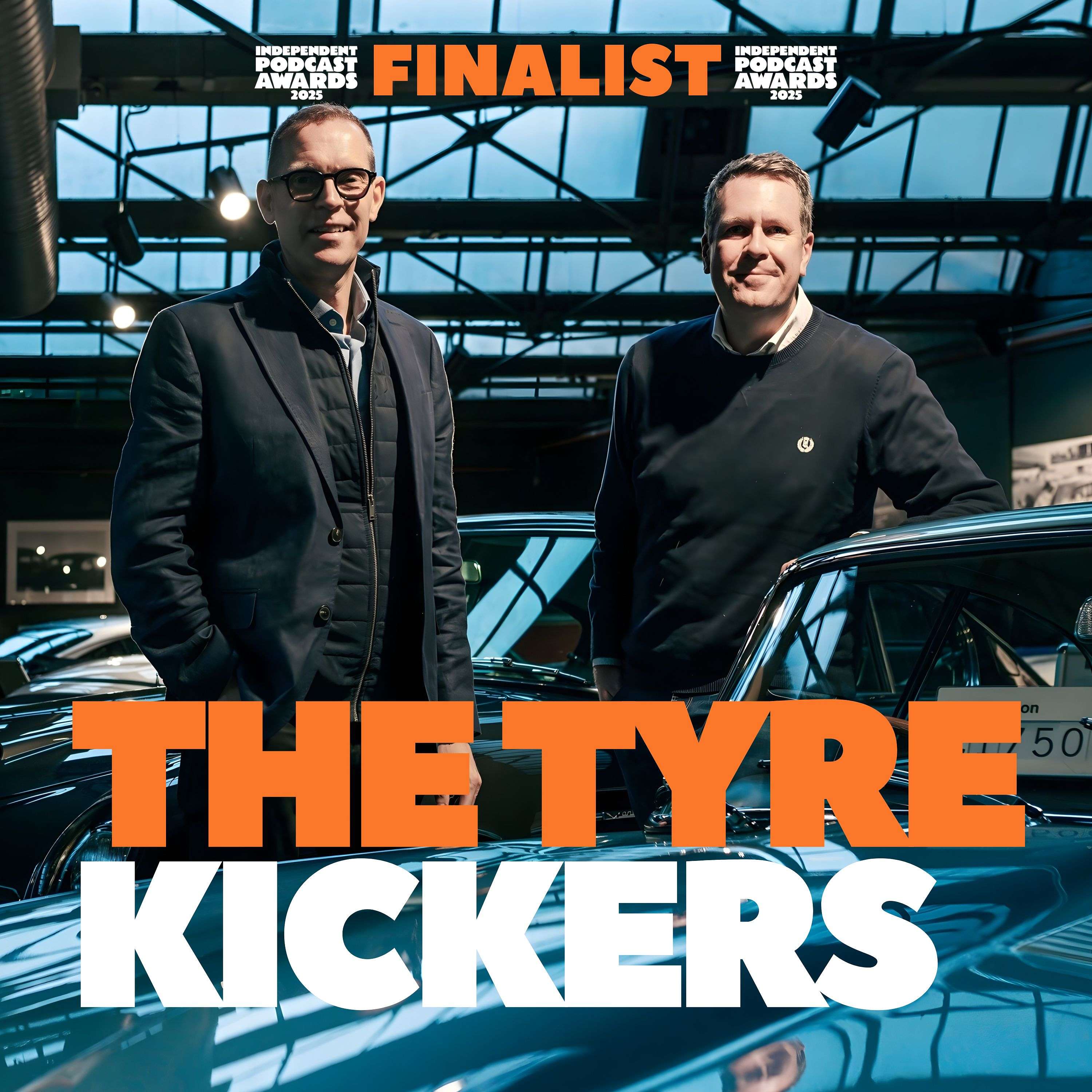
He's gone and bought one!
About this episode
Max kicks things off with “Breaking news, I've bought myself a new car.” Matt waits outside a pub near Evesham as the hosts spot arrivals—first an orange Porsche, then “Now, behind the Porsche is a Blue Rolls Royce.” The reveal turns into a deep inspection and drive: rust checks, service history spreadsheets, and talk of Shadow 2 improvements, brake wear, and steering/air-con quirks. The episode closes with a keeper verdict and a tease about what’s next in the “two year journey to buy a shadow.”
Max has bought a new classic car but hasn't told Matt what it is, so they're meeting in a beer garden so Max can do the Big Reveal. Will it be the car Max has talked about for the past two years? Matt thinks he knows the answer, so join them as they reveal all, test drive, argue over a beer and discuss servicing spreadsheets. Then Max does what you should never, ever do with a new purchase....let a specialist have a good look round. Enjoy the bonus episode!
Follow us on Instagram: @thetyrekickersuk
Facebook: The Tyre Kickers
Finalist - Independent Podcast Awards 2024 & 2025

1974 Rolls-Royce Corniche
"Rolls Royce Cornish, I think. [103.3s] 1974 Rolls Royce Cornish. [105.3s] It's the one he looked at."
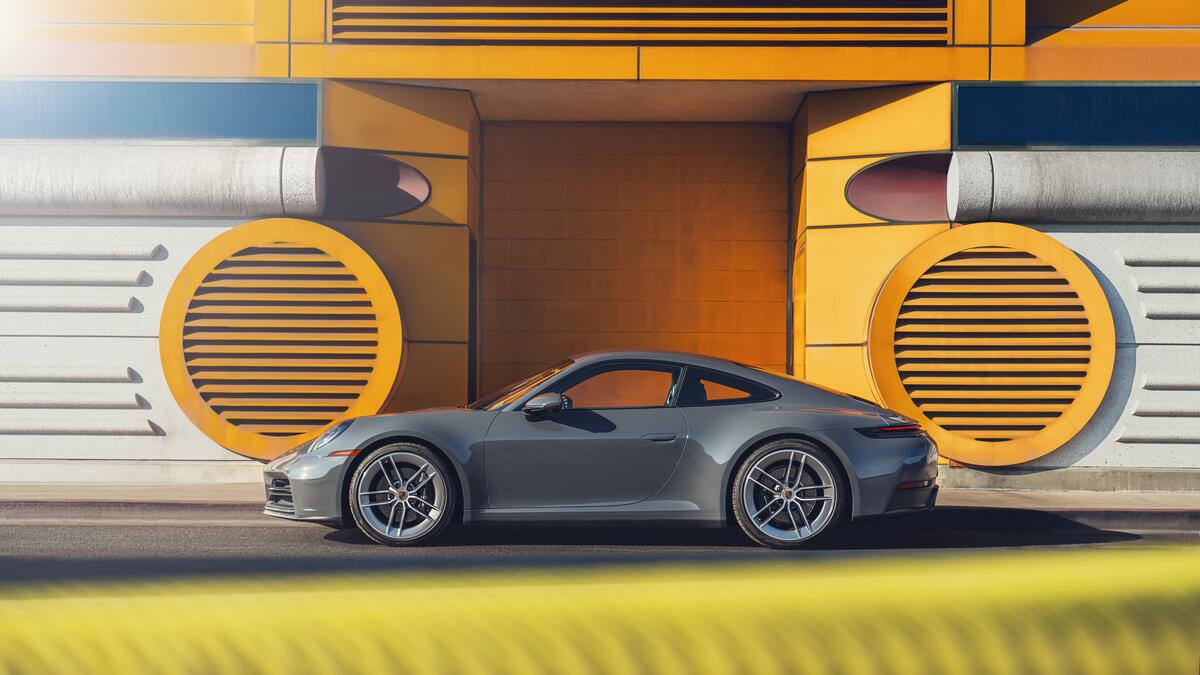
Porsche 911
"... Blue Rolls Royce. Yeah, there's an orange or red 911. But behind that, I think there's an old man in a..."
The Porsche 911 is a sports car made by Porsche. It’s famous for its recognizable look and performance-focused design. In the podcast, it’s mentioned as a specific car that stands out by color and style.
The Porsche 911 is a long-running sports car known for its distinctive shape and rear-engine layout. It’s often discussed in classic-car conversations because many generations are recognizable and have strong enthusiast followings. In the podcast context, the mention of an “orange or red 911” highlights how the 911 stands out visually among other classic vehicles.

Toyota Prius
".... Well, I ordered an Uber, but I was hoping for a Prius. This is very nice, but it's not what I expected."
The Toyota Prius is a car that uses a gas engine plus an electric motor. That helps it use less fuel than many regular cars. The podcast mentions it because the speaker wanted that specific kind of efficient car.
The Toyota Prius is a hybrid car designed to improve fuel economy by using both an engine and an electric motor. It’s frequently brought up in everyday driving stories because it’s a common choice for efficient transportation. In the podcast context, the speaker expected a Prius from an Uber but got something else, which points to its reputation as a go-to “efficient” option.
W-Edge
"It's a Rolls-Royce Silver Shad. It's a W-Edge. [234.2s] It's light blue."
“W-Edge” sounds like a special label for the exact version of the car. On older cars, these labels can mean a particular body style or build setup.
“W-Edge” appears to be a model/trim or coachbuilding descriptor tied to this Rolls-Royce. In classic-car contexts, these kinds of letter/word codes often refer to a specific body style, configuration, or build specification rather than a generic feature.
Caribbean blue
"He'll nerd out in the colour in a minute. [237.7s] Caribbean blue. [238.4s] So after two years of going on and on about this,"
“Caribbean blue” is the name of the car’s paint color. With classic cars, the exact color shade can be a big deal for originality.
“Caribbean blue” is a named paint color, which matters on classic cars because the exact shade is part of the car’s identity and authenticity. Owners often track the original color name to match documentation and period-correct finishes.

Rolls-Royce Shadow 2
"Because it's a Shadow 2. So this is one of the very, very last ones. And the Shadow 2 was a slightly better car."
This is a Rolls-Royce from the “Shadow” generation, and the Shadow 2 is the later, improved version. The speaker likes it because it looks a bit cleaner and drives better—especially the steering.
The Rolls-Royce Shadow 2 is a late-production version of the Silver Shadow family, known for being a more refined, easier-to-drive take on that classic Rolls-Royce formula. In this segment, the host highlights it as a “slightly better car” with cleaner styling and improved steering compared with earlier Silver Shadow cars.

Silver Shadow
"And actually, I like the look of the Shadow 2s, because I think they're a slightly cleaner look. There's a bit less kind of gubbins around it. It's a much better drive. And I just think, you know, there's not that many good Silver Shadows around."
The Silver Shadow is the Rolls-Royce model that came before the Shadow 2. The host is basically saying the Shadow 2 is the nicer, cleaner-looking version, and that finding a good Silver Shadow is harder.
The Silver Shadow is the earlier Rolls-Royce model line that the Shadow 2 builds on, and it’s often discussed as the baseline for the later “Shadow” improvements. Here, the host contrasts the Shadow 2 against the Silver Shadow, saying there are fewer “good Silver Shadows” around and that the Shadow 2 looks cleaner with less extra trim.
gubbins
"I like the look of the Shadow 2s, because I think they're a slightly cleaner look. There's a bit less kind of gubbins around it."
“Gubbins” just means extra bits and pieces. In this case, the speaker means the Shadow 2 has fewer extra-looking details, so it looks cleaner.
“Gubbins” is a slang term for assorted small parts or clutter—here, referring to extra visual details and trim. The host is using it to say the Shadow 2 looks cleaner because it has less of that surrounding “stuff” compared with other cars in the line.
dealers website
"It popped up on the dealers website, and I was there within two days, and then I just bought it on the spot,"
The host is describing how the car was found and purchased quickly after it appeared on a dealer’s online listing. For listeners, this is a practical “how it happened” moment: spotting a listing early can be the difference between getting a desirable classic and missing it.
V8 burble
" [617.4s] This is a setting off. [620.0s] Nice little burble to it. [621.4s] Nice little V8 burble. [623.6s] It's very smooth."
“V8 burble” is the distinctive rumbling/crackling sound a V8 makes. It usually happens when you’re just cruising or easing on/off the throttle, and it’s part of the engine’s personality.
“V8 burble” is the characteristic uneven, crackly exhaust sound many V8 engines make, especially when idling or transitioning between throttle positions. It’s often associated with a cammy exhaust note and how the engine’s fueling and ignition behave at low speeds.
three-speed auto
"and it's got a big V8 with a three-speed auto so it is a slow car."
A “three-speed auto” is an automatic gearbox with just three forward gears. It’s older technology, so the car often feels less smooth and less efficient than modern automatics with many more gears.
A “three-speed auto” is an automatic transmission with only three forward gears. Compared with modern multi-speed automatics, it typically keeps the engine in a narrower RPM range, which can make acceleration feel less refined and cruising less efficient.
de-restricted
"So we're coming into a de-restricted now. Floor it."
“De-restricted” means the car has been modified so it’s not as limited as it was from the factory. The engine can usually make more power and feel more responsive after the restrictions are removed.
“De-restricted” means removing or bypassing the factory limits that restrict how much power the engine can make. On older cars, this is often done by changing intake/exhaust restrictions or engine management so the engine can breathe and rev more freely.
kicked down
"All kicked down. It's got kicked down 50, 60."
“Kicked down” is what happens when you push the gas pedal all the way in an automatic car. The transmission drops to a lower gear so the engine can pull harder and the car accelerates more.
“Kicked down” refers to a transmission downshift triggered by flooring the accelerator. In an automatic, it forces a lower gear to deliver more engine power and acceleration, which is why the host mentions it alongside a “slow car” with a three-speed auto.

Citroen DS
"The closest thing to driving this car is a Citroen DS because you've obviously got the suspension and the powered brakes steering."
The Citroën DS is known for a suspension system that makes the ride feel smooth and “floating.” The host is saying the other car feels similar—more like gliding over the road than driving a typical modern car.
The Citroën DS is famous for its hydropneumatic suspension, which isolates the cabin from road bumps and gives a floating, cushioned ride. The host compares the feel of the V8 car to the DS because both emphasize ride comfort and powered steering/braking rather than sharp, modern handling.
camber
"It kind of follows the cambers on the road which is quite unusual. I thought it was pulling to the left"
Camber is how a road slopes sideways. If the car “follows the camber,” it means the road’s sideways slope is pulling the car’s path slightly, so it can feel like it’s drifting even when you’re not steering much.
Camber is the sideways tilt of a road surface (or a tire’s contact patch relative to vertical). When a car “follows the camber,” it means the suspension and steering geometry let the vehicle track the road’s slope rather than staying perfectly straight.
super light steering
"it's just following the camber of the roads because it's kind of strange but it's got super light steering. This is all just fingertip touch"
“Super light steering” means the wheel turns with very little effort. That’s handy for parking and city driving, but it can also make the car feel a bit twitchy if the road is uneven.
Super light steering describes a steering system that requires very little effort to turn the wheels. That can make a car feel easy to place in tight spaces, but it can also make it more sensitive to small inputs or road forces.
turning circle
"It's got a very good turning circle. It's got kind of London taxi turns."
Turning circle is how tight the car can turn—basically how much space it needs to make a U-turn or park. A “very good” turning circle means it’s easier to maneuver in tight city streets.
Turning circle is the diameter (or tightness) of the path a vehicle takes when making a full steering turn. A “very good turning circle” means the car can rotate around a smaller area, which matters a lot for parking and city maneuvering.
London taxi turns
"It's got a very good turning circle. It's got kind of London taxi turns."
“London taxi turns” is a way of saying the car can turn very sharply, like a city cab. It’s meant to describe how easy it is to maneuver in tight streets.
“London taxi turns” is a colloquial way to describe extremely tight, low-speed turning behavior—like the classic London black cabs. It points to a car that can pivot and change direction quickly in narrow city spaces.
ticking over
"Right, I'll just park it here. I'll leave it ticking over. I'll put it in part"
“Ticking over” means the engine is just idling while the car is stopped. They’re keeping it running so they can switch drivers and move again.
“Ticking over” means the engine is idling at a low speed while the car is stationary. It’s a common UK phrase for keeping the engine running smoothly between maneuvers.
Rolls-Royce Silver Shadow 2
"of a new Rolls-Royce Silver Shadow 2 [1046.9s] or Bentley T2 Motor Car."
This is a classic Rolls-Royce luxury car. The host is talking about the paperwork and service records that came with it, and how much it’s cost to maintain over the years.
The Rolls-Royce Silver Shadow 2 is a classic British luxury car known for its long-wheelbase comfort and late-1960s/1970s-era refinement. In this segment, it’s the specific car the host is discussing using customer-delivery paperwork and a long service-history trail.
service history
"Because I've had quite a few receipts with the car [1057.1s] with the service history, which is going back to..."
Service history is a paper trail of what work has been done on the car. It helps you see whether the car was maintained regularly and lets you estimate what it might cost to keep it going.
Service history is the documented record of maintenance and repairs a car has had over time. In this segment, the host uses receipts and service-history dates (going back to the late 1990s) to estimate long-term servicing costs.
receipts
"Because I've had quite a few receipts with the car [1057.1s] with the service history, which is going back to..."
Receipts are the documents showing you paid for repairs or maintenance. They’re useful because they let you verify what work was done and when.
Receipts are proof of payment for maintenance work, parts, and labor performed on the car. Here, the host relies on receipts to build a timeline of servicing costs starting around 1999.
miles
"But there's a buck. Oh, there's a buck, is it? [1085.7s] That's over 8,377 miles"
Miles tell you how much the car has been driven. Higher mileage usually means more wear, and it helps explain why maintenance costs might be higher or lower.
Miles are a measure of how far the car has been driven, typically used to gauge wear and maintenance needs. The host mentions an odometer figure (“over 8,377 miles”) as part of the cost-per-mile/usage context for the car’s upkeep.
pre-purchase inspection
"Now, the fact I didn't get it inspected [1319.3s] before I bought it [1320.8s] has been nagging away at me."
A pre-purchase inspection is when a mechanic checks a used car before you buy it. The goal is to find problems early so you’re not stuck paying to fix them right after you purchase.
A pre-purchase inspection (PPI) is a professional inspection done before you buy a used car. It helps catch hidden issues—like mechanical problems or expensive body/chassis corrosion—so you don’t end up paying for surprises after the purchase.

1974 Rolls Corniche
"Now, when I was looking at that [1329.2s] 1974 Rolls Corniche a few episodes ago, [1332.3s] I used Oscar Pinder"
The 1974 Rolls Corniche is a classic Rolls-Royce luxury car. People love it for its old-school style and comfort, but it can cost a lot to keep in good condition.
The 1974 Rolls Corniche is a classic Rolls-Royce grand tourer built on the Silver Shadow platform, famous for its long-hood, elegant coachbuilt look. It’s a sought-after collector car, but it can be expensive to own because many issues are labor-intensive to diagnose and repair.
RR&B Garages
"[1332.3s] I used Oscar Pinder [1333.6s] from specialists RR&B [1335.8s] Garages."
RR&B Garages is a specialist garage the host mentions using for a classic Rolls. Specialists are helpful because they’re more familiar with the common problems on older cars.
RR&B Garages is referenced as the specialists the host used for help with a Rolls Corniche. In classic-car circles, specialist garages are often used for inspections and repairs because they know the quirks of specific marquees and eras.
braking zone
"It's my braking zone coming up. Just get over the brow of the hill."
A “braking zone” is just the stretch of road where you start slowing down before a turn. Drivers use it as a timing cue so they brake at the right moment.
A “braking zone” is the specific area on a road or track where a driver begins braking to slow for a corner or junction. It’s a driving reference point used to time braking consistently and manage vehicle stability.
T-junction
"I'll just try it again going into this T-junction. Yeah, there's quite a... quite a rumble there."
A “T-junction” is an intersection shaped like a T. The host is talking about what the car feels like when they’re braking and turning at that kind of intersection.
A “T-junction” is an intersection where one road meets another at a right angle, forming a “T” shape. It’s relevant here because the speaker is describing braking and vibration/rumble while approaching and turning in that specific maneuver.
rear brakes
"So on the Shadow 2, because I know the rear brakes on the Shadow 1 are the expensive bit, is it the same on the later Shadow 2s?"
“Rear brakes” are the brakes on the back wheels. The host is pointing out that the back brakes are the part that usually costs the most to fix on these cars.
“Rear brakes” refers to the braking components located at the back of the car (typically pads/shoes, calipers/wheel cylinders, and related hardware). In older cars, rear brake parts can be more expensive or harder to service than front brakes, which is why the speaker calls them out specifically.
master cylinder
"as the Shadow 1s have standard master cylinder as a normal cardboard to get the feel on the brake pedal"
The “master cylinder” is the part that turns your foot pressure on the brake pedal into hydraulic pressure. That pressure is what actually makes the brakes work, and it can affect how the pedal feels.
A “master cylinder” is the hydraulic component that converts the brake pedal force into pressurized brake fluid for the rest of the braking system. The speaker notes that the Shadow 1 uses a “standard master cylinder,” implying it affects how the brake pedal feels and possibly how easily the system can be set up or serviced.
bonnet
"Pop the bonnet up and do all the inside and the engine bay things and then we'll go outside..."
“Bonnet” just means the front hood of the car. They’re talking about lifting it to look at the engine area and the underside for signs of condition.
“Bonnet” is the British term for the front hood of a car. The host is using it to describe inspecting the engine bay and underside surfaces, which is a common pre-purchase or condition-check habit on classics.
engine bay
"Pop the bonnet up and do all the inside and the engine bay things and then we'll go outside..."
The engine bay is the space under the hood where the engine lives. Looking there can reveal problems like leaks, rust, or sloppy repairs.
The engine bay is the compartment under the bonnet where the engine and related components sit. Inspecting it helps you spot issues like leaks, missing parts, corrosion, and signs of previous repairs.
radiant heat
"Yes, it was hot enough in here without the radiant heat of the engine."
Radiant heat is heat you feel from something hot without touching it—like warmth from the engine. It can make the car bay feel hotter during inspection.
Radiant heat is heat transferred by infrared radiation rather than by direct contact or airflow. The host is describing how the engine’s heat can make the inspection area uncomfortable, which matters when you’re doing a careful under-bonnet check.
Delco Rimi air compressor
"That is the old Delco Rimi air compressor so no wonder that's noisy."
This is an air compressor from Delco Rimi. It makes pressurized air for some car systems, and if it’s loud, that can mean it’s getting worn out.
A Delco Rimi air compressor is an aftermarket or period accessory that uses compressed air to run certain systems on some classic cars. In this context, the host points out it’s noisy, which can be a clue to wear or aging in the compressor unit.
ramp of truth
"Is it time now for the ramp, the ramp of truth ... because looking underneath the Rolls Royce is where you get a real sense of what it's like."
The “ramp of truth” is a way of saying you learn the real condition of a car only when it’s lifted up so you can see the bottom. That’s where hidden rust or damage is easiest to spot.
“Ramp of truth” is an enthusiast phrase for getting the car up on a ramp or lift so you can inspect the underside closely. It’s used to emphasize that the real condition—like rust, repairs, and structural wear—shows up when you can see underneath.
corrosion
"Normally I'll start by looking at corrosion, obviously these cars have quite sharp edges along the bottom ..."
Corrosion is rusting or metal breaking down over time. On older cars, it’s especially important to check the underside because problems there can be hard (and costly) to fix.
Corrosion is the gradual deterioration of metal caused by moisture, salt, and other chemicals. On classic cars, checking for corrosion under the body is a key way to spot hidden rust damage that can be expensive to repair.
rear valence
"and hence, you know, rots away but this is all nice and tidy along the rear valence section going up to the back of the wheel arches."
The rear valence is a body panel near the bottom of the back of the car. It’s the kind of area that can rust because it’s low to the ground and gets wet and dirty.
A rear valence is the trim panel at the bottom edge of the rear of a car, often covering the area between the body and the underbody. On classic cars it’s a common place to spot corrosion because it sits low and collects road grime and moisture.
Handbrake cable
"Handbrake cable I mean these are only small things the handbrake cable kind of gaiters split"
The handbrake cable is what connects the handbrake lever to the rear brakes. If it’s exposed or corroded, the handbrake can feel sticky or not work evenly.
The handbrake cable is the cable that mechanically links the handbrake lever to the rear brakes. If the cable’s protective covers (gaiters) split or the cable corrodes, the handbrake can become stiff or uneven.
gaiters
"the handbrake cable kind of gaiters split shock absorber bushes are starting to perish, they've got a bit of rusty stains"
Gaiters are protective covers that keep water and dirt away from parts like cables. If they split, the cable area can rust and start to wear out faster.
Gaiters are protective rubber or flexible covers that shield cables and moving components from water, dirt, and corrosion. When gaiters split, moisture can get in and accelerate wear and rust around the cable ends and related hardware.
shock absorber bushes
"shock absorber bushes are starting to perish, they've got a bit of rusty stains around them. There's no rot"
Shock absorber bushes are rubber mounts that help the shock absorber move smoothly. If they wear out, the suspension can feel looser and the ride/handling can get worse.
Shock absorber bushes are rubber (or elastomer) mounts that isolate the shock absorber from the body or suspension arms. When they perish, you can get more play, degraded ride control, and sometimes noise or uneven handling.
subframes
"corrosion, obviously the subframes on these are so heavy duty it's not like an old"
Subframes are strong metal frames that support parts like the suspension. If they rust badly, it can affect how the car handles and may require serious repair.
Subframes are structural support frames that the suspension and other components attach to, typically bolted or integrated into the body. Because they carry loads, their condition is a big deal on classics—rust or cracking can affect safety and alignment.
hydraulic pipes
"Again, all your pipes, you've got all this rat's nest of hydraulic pipes for all the height control"
Hydraulic pipes are tubes that move pressurized fluid to parts that need to move or adjust. If they corrode or leak, the system may not work properly.
Hydraulic pipes are fluid lines that carry pressurized hydraulic fluid to actuators. In cars with hydraulic systems, these lines can be a corrosion and leak risk, so their condition matters for reliability.
height control
"rat's nest of hydraulic pipes for all the height control for the back end and"
Height control is a system that keeps the car’s ride height consistent. On some cars it uses hydraulic parts, so the condition of the lines and components affects how well it works.
Height control refers to a suspension system that automatically adjusts ride height to keep the car level. When it’s hydraulic, the system uses fluid lines and actuators, so corrosion-free pipes and original-looking components are a good sign.
timing chain cover
"yeah, so the [1652.5s] first thing I look for these, I mean these like to [1654.6s] leak oil, at the very front you've got [1656.8s] the front of engine, so [1658.7s] that's the like timing chain [1660.9s] cover, so they like to leak which"
It’s a protective cover at the front of the engine that keeps the timing chain area sealed. If the seal/gasket fails, oil can leak out and make a mess near the front of the engine.
The timing chain cover is the housing that protects the timing chain area at the front of the engine. If it leaks, oil can escape from around the cover gasket and drip onto the front of the engine bay.
rocker covers
"it's all [1676.3s] dry up [1676.9s] till the telltale holes [1680.1s] which tells me that the rocker covers aren't [1682.0s] leaking, which I had a look under [1683.9s] the bonnet, it's been put on with"
These are the top covers on the cylinder heads. They keep oil inside; if the gasket hardens or fails, oil leaks out and you’ll see it around the top of the engine.
Rocker covers (also called valve covers) seal the top of the engine’s cylinder head where the rocker/valve mechanism sits. When their gaskets fail, oil can seep out and create wet spots or drips around the “V” of the engine.
rubber gaskets
"which I had a look under [1683.9s] the bonnet, it's been put on with [1685.6s] the new style rubber [1687.5s] gaskets rather than the cork gaskets [1689.4s] so they, you put those on and they don't leak"
Rubber gaskets are sealing parts used under engine covers to prevent oil leaks. In this context, the speaker says the car was fitted with newer-style rubber gaskets, which tend to seal better and resist the heat cycling that makes older gaskets fail.
cork gaskets
"[1685.6s] the new style rubber [1687.5s] gaskets rather than the cork gaskets [1689.4s] so they, you put those on and they don't leak [1691.9s] whereas the cork ones [1692.9s] the cork expands and contracts and they start leaking"
Cork gaskets are older-style sealing material. Because the engine gets hot and cools down, cork can change shape and eventually stop sealing well, leading to oil leaks.
Cork gaskets are made from cork-based sealing material used historically under valve/rocker covers. The speaker notes that cork expands and contracts with temperature changes, which can cause it to lose its seal and start leaking.
steering rack
"the next favourite one is the steering rack, you can see some oil around here, so the oil, the internal seal leaks"
Your steering rack is the mechanism that turns the steering wheel into the movement that actually steers the wheels. If its seals leak, you can lose fluid and the steering can get worse over time.
The steering rack is the part that converts the steering wheel’s rotation into left-right motion for the tie rods. When its internal seals leak, fluid can escape and the rack can wear internally, eventually requiring an overhaul.
internal seal
"so the oil, the internal seal leaks fills up these gaiters ... and if you can hear water inside or oil it means the internal seals are gone"
Inside the steering rack there are seals that keep the steering fluid from leaking out. If that seal fails, you can lose fluid and the steering system can start to deteriorate.
An internal seal is the internal rubber/metal sealing element that keeps steering fluid contained inside the steering rack. When it fails, fluid leaks out, which can lead to loss of power steering fluid and eventual steering rack wear.
power steering fluid
"and then you'll have no power steering fluid they don't normally tend to go bang"
Power steering fluid is the fluid that helps your car steer with less effort. If it leaks out, steering can get heavy and you may risk damaging the steering system.
Power steering fluid is the hydraulic fluid used to assist steering effort. If the steering rack leaks and you run low, the steering can become harder and the system can be damaged.
discs
"and can you see the state of the discs from here"
Here, “discs” means the brake rotors—the parts that the brake pads squeeze to stop the car. Looking at their condition helps you judge brake wear.
In this context, “discs” refers to brake discs/rotors, which are the metal discs the brake pads clamp onto to slow the car. Checking their condition is part of assessing brake wear and whether braking performance or vibration issues might be present.
run out and warps
"for run out and warps without taking the wheels off"
Runout means the disc isn’t perfectly straight as it spins, and warps means the disc surface is distorted. Both can cause the brakes to feel shaky or uneven when you stop.
“Runout” is when a brake disc doesn’t spin perfectly true, causing vibration or uneven pad contact. “Warps” refers to distortion of the disc surface, often from heat cycles, which can also lead to pulsation or inconsistent braking.
calipers
"it's got recently new calipers all round by the looks of it"
Calipers are the parts that squeeze the brake pads against the spinning brake disc to make the car slow down. If they’re “new,” it usually means someone has done brake work recently.
Brake calipers are the clamping units that squeeze brake pads against the brake discs (rotors) to slow the car. When someone says the calipers are recently new, they’re pointing to recent brake work and potential improvements in braking consistency.
anodized
"they're all anodized modern and new"
Anodized is a protective coating process that helps metal resist corrosion. If brake parts are anodized, it’s usually meant to keep them looking better and lasting longer.
Anodized refers to an electrochemical surface treatment that creates a corrosion-resistant oxide layer on aluminum or similar metals. In brake hardware context, anodizing is often used to improve durability and appearance of components like calipers.
flexi hoses
"modern and new flexi hoses so it's obviously had a certain amount"
Flexi hoses are the rubbery lines that carry brake fluid to the brakes. New hoses can mean the braking system has been serviced and is less likely to leak or feel “spongy.”
Flexi hoses are the flexible brake hydraulic lines that carry brake fluid from the master cylinder to the calipers. If they’ve been replaced, it can indicate prior hydraulic maintenance, and it can help avoid issues like leaks or degraded braking response.
hydraulic work
"flexi hoses so it's obviously had a certain amount of hydraulic work done before"
Hydraulic work means someone has serviced the brake fluid system. Since the hoses and calipers look new, it suggests the brakes were worked on before.
“Hydraulic work” here means maintenance or replacement within the brake hydraulic system—things like lines, fluid, calipers, or related components. The host is inferring that because the hoses and calipers look new, the car has likely had brake hydraulic service recently.
pads
"so the pads have the pads have got good thickness on them"
Brake pads are the replaceable parts that press against the brake disc to stop the car. “Good thickness” usually means they still have enough material left for normal braking.
Brake pads are the friction material that clamps against the disc to convert kinetic energy into heat and slow the car. The host says the pads have “good thickness,” which is a quick visual indicator that they may not need immediate replacement even though the discs show heavy wear/corrosion.
hydraulics
"but the fact that we're talking about [1794.3s] hydraulics on a shadow and that's pretty much it"
Hydraulics means the car uses pressurized fluid to help run certain functions. If something in that system gets noisy or starts acting up, it can be a sign the pump or related parts may need attention.
Hydraulics in a classic car usually means fluid-powered systems that move or assist components using pressurized fluid. On older luxury models, hydraulics commonly support comfort and convenience functions, so leaks or pump issues can show up as noise or reduced operation.
test drive
"[1799.9s] so Oscar we've done the test drive [1801.5s] you've had a look around it, you've had it up on a ramp"
A test drive is when you drive the car yourself to see how it feels and sounds. It helps you catch problems that might not be obvious just by looking at it.
A test drive is a short, real-world drive used to evaluate how a car behaves under normal conditions—steering feel, braking, noises, and overall drivability. Here, they’re using it to judge the Silver Shadow’s condition and to spot issues like noise.
air con pump
"[1835.7s] bit of a surprise, possibly a new air con pump [1838.8s] well it was a bit noisy on the test drive"
The air con pump helps the air-conditioning system move refrigerant around so it can cool the cabin. If it’s noisy or not working well, it may need replacement.
An air con pump is part of the vehicle’s air-conditioning system that helps circulate refrigerant and/or drive the system’s cooling functions. If it’s “possibly” new, the host is likely reacting to symptoms like noise or reduced A/C performance during the test drive.
Request an Explanation
Heard something you'd like explained? We'll add it to this episode.
Sign in to request explanations for terms you heard.
Want to learn more?
Browse our glossary for plain-English explanations of automotive terms, jargon, and concepts.
Help improve this episode
See something that's not quite right? Our annotations are AI-generated and can sometimes miss the mark. Click the flag icon on any annotation to suggest a correction.
1 community members have helped improve this episode.