Why Don't Kids Like Classics? - Bonus
About this episode
Younger drivers aren’t turning toward classics because they’re not seeing them often enough—so the conversation keeps coming back to exposure. The guests credit TikTok for discovering cars, learning details like engine size and interior, and then getting pulled into the scene. Hosts also point to event organizers trying to grow the “scene” for younger people, and argue classics can thrive if marketed through short-form digital content. They balance that with the appeal of a mindful, low-stress analogue drive.
It seems young people aren't really into classic cars. But is that because they don't like them - or they just don't see them enough? People under 30 don't read magazines or watch TV, so how can the scene cut through?
For this bonus episode, Matt's been to Birmingham to talk to young drivers at a special Classic Car Weekly meet-up.
See photos of the drivers and their cars on our socials and read the full write-up in Classic Car Weekly in their 8th July issue.
Thanks to Jesse Billington @ CCW.
Follow us on Instagram: @thetyrekickersuk
Facebook: The Tyre Kickers
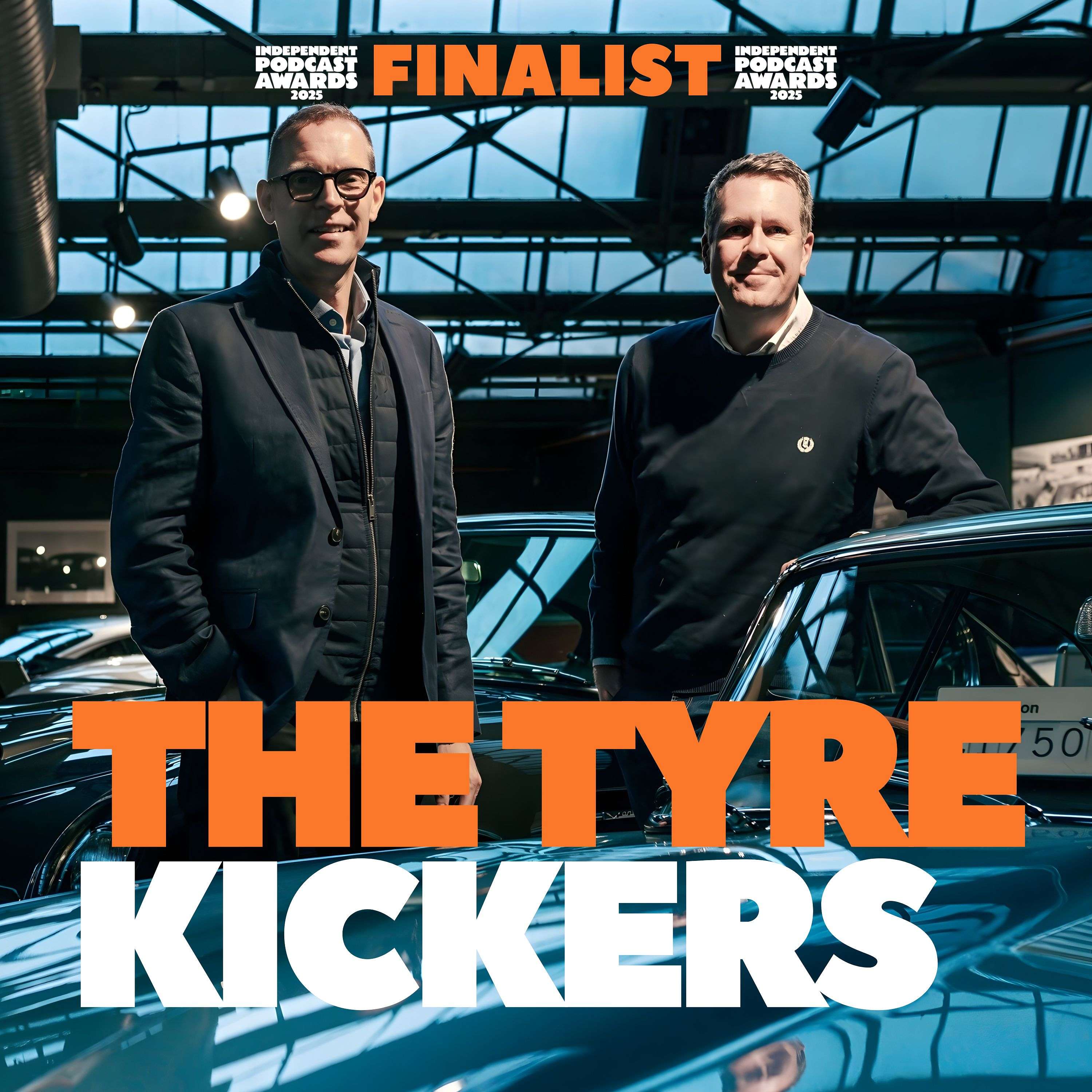
Finalist - Independent Podcast Awards 2024 & 2025
1985 Morris Mini
"So my name's Will, I'm 25 years old and my car is a 1985 Morris Mini. The Mini bug especially, I've watched the Italian job really young as a kid..."
The Morris Mini is a famous little British car. In the 1980s it was still a very recognizable, characterful design, and it’s become a classic partly because of how iconic it is.
The Morris Mini (1985) is a classic British small car best known for its compact packaging and front-wheel-drive layout. It’s also a cultural icon because the Mini’s size and character made it a standout in everything from everyday driving to movie fame.
TikTok
"You get it, you understand it, you get pleasure out of it. In an online world, in a TikTok, Instagram world, how do we get more people under the age of maybe 30 hooked on classics?"
TikTok is a social media app where people watch short videos. The speaker is saying that if classic cars show up on TikTok, younger people are more likely to notice them.
TikTok is a short-form video platform where content is discovered through feeds and algorithms rather than traditional media. In this episode, it’s used as an example of how modern attention works for younger audiences.
"In an online world, in a TikTok, Instagram world, how do we get more people under the age of maybe 30 hooked on classics?"
Instagram is a social media app where people share pictures and videos. The speaker is saying classic cars need to show up in apps like this to reach younger people.
Instagram is a social media platform centered on photos and short videos, with content surfaced via feeds. Here it’s referenced as part of the “digital world” that classic car events don’t naturally connect with.
exposure
"I think it's just exposure really. Today I didn't notice what's going on until I saw it come up on my feed..."
Here, “exposure” just means getting classic cars in front of people. The speaker’s idea is that if young people see classics online, they’re more likely to get interested in them in real life.
In this context, “exposure” means getting classic cars seen by younger people through modern channels like social media. The speaker argues that visibility—rather than changing the cars themselves—is what converts interest into participation.
660cc
"It's a Diat 2 Copent, it's the 660cc model, so it's only a little tiny engine in there,"
“660cc” is a way of describing how big the engine is. A smaller number usually means the engine is smaller and often costs less to run and insure. It doesn’t automatically mean it’s slow, but it’s usually easier on your budget.
“660cc” is engine displacement: the total volume of all the cylinders, measured in cubic centimeters. Smaller displacement engines generally make less power but can be cheaper to insure and run, which is why the speaker links it to first-car practicality.
convertible
"So to describe it, it's a red convertible, two-seater convertible, it's 2004, so it's [318.7s] over 20 years old."
A convertible is a car where the roof can open up so you can drive with more fresh air. It’s often chosen for the fun “open-top” feeling.
A convertible is a car with a roof that can be lowered or removed, typically to let in open-air driving. In the context of a small two-seater like the Copen, it’s part of the appeal for fun and style, especially for a first car.

Fiesta
"which is going to break down every two minutes, but it's not a Fiesta, so it was my nice,"
A Ford Fiesta is a small, everyday car that a lot of people buy as their first car. Here, the speaker is basically saying they didn’t want something that would be constantly breaking down.
The Ford Fiesta is a compact, mass-market hatchback that’s often used as a first car because it’s relatively affordable and common. In this segment, the speaker contrasts it with a “gateway” car that they expect to be less frustrating to own.

Toyota MR2
"...oung people who do have the Copans, they have the MR2, MR3s, the MR2s, especially who are on social med..."
The Toyota MR2 is a small sports car made to be fun to drive. It’s popular with car fans because it’s light and sporty, and many people talk about it online. In a classic-car discussion, it’s mentioned as a model that still gets attention today.
The Toyota MR2 is a compact sports car known for its small size and sporty driving feel. It’s often discussed because it became a popular choice for enthusiasts, including younger drivers, and it shows up frequently in car communities and social media. In a podcast about classic cars, it’s a good example of a model that has a dedicated following and a recognizable identity.
Request an Explanation
Heard something you'd like explained? We'll add it to this episode.
Sign in to request explanations for terms you heard.
Want to learn more?
Browse our glossary for plain-English explanations of automotive terms, jargon, and concepts.
Help improve this episode
See something that's not quite right? Our annotations are AI-generated and can sometimes miss the mark. Click the flag icon on any annotation to suggest a correction.