Delving into the nuances of vehicle appraisal, Doug Horner shares insights on how the final 1% of vehicle condition can significantly impact sales. Joined by Tyler Astorg, they discuss the importance of understanding vehicle options and trim levels, especially in luxury brands like Mercedes-Benz. The conversation highlights Doug's journey into social media, the challenges of transparency in appraisals, and the intricacies of valuing high-end vehicles accurately. Listeners will gain valuable perspectives on the automotive sales process and the role of data in making informed decisions.
In this episode of the Industry Spotlight, we dive into why used car success in 2026 is no longer just about the purchase price, but about the high-stakes ability to acquire and articulate a vehicle's complete story.
Joining host Sam D’Arc is Doug Horner of General Sales Manager at Mercedes-Benz of North Olmsted and Tyler Astorg, Vice President Sales at iPacket to discuss how precision data—specifically knowing the exact options and trim levels—serves as a dealer's ultimate superpower.
They explore the fine line between profit and peril, demonstrating how missing even the smallest detail in a vehicle's history or condition can make or break your market advantage.
By leveraging full data sets to acquire cars at the correct competitive price and sharing that transparency with consumers, top-tier dealers are proving that the final 1% of effort in vehicle presentation is what truly secures the deal.
This episode of the Car Dealership Guy Podcast is brought to you by iPacket Value.
@iPacketOfficial - Founded in 2012 in West Virginia, iPacket is the leading provider of digital vehicle presentations in the automotive industry. The company’s cloud-based solutions help automotive dealers provide shoppers with a transparent digital vehicle-purchasing experience. iPacket also offers iPacket Recon, iPacket OnTargeting and iPacket Value - the newest product to the iPacket line-up. For more information, visit @ https://hubs.li/Q040pG-X0 or follow the company on Facebook and LinkedIn.
Check out Car Dealership Guy’s stuff:
For dealers:
CDG Circles ➤ https://cdgcircles.com/
Industry job board ➤ http://jobs.dealershipguy.com
Dealership recruiting ➤ http://www.cdgrecruiting.com
Fix your dealership’s social media ➤ http://www.trynomad.co
Request to be a podcast guest ➤ http://www.cdgguest.com
For industry vendors:
Advertise with Car Dealership Guy ➤ http://www.cdgpartner.com
Industry job board ➤ http://jobs.dealershipguy.com
Request to be a podcast guest ➤ http://www.cdgguest.com
Topics:
00:17 What is Doug Horner's market advantage?
00:43 What were the NADA conference highlights?
01:39 How does social media impact sales?
05:22 What are the appraisal process insights?
11:40 What is iPacket and its benefits?
16:47 How is iPacket used in appraisals?
25:44 What are the final conclusions?
Car Dealership Guy Socials:
X ➤ x.com/GuyDealership
Instagram ➤ instagram.com/cardealershipguy/
TikTok ➤ tiktok.com/@guydealership
LinkedIn ➤ linkedin.com/company/cardealershipguy
Threads ➤ threads.net/@cardealershipguy
Facebook ➤ facebook.com/profile.php?id=100077402857683
Everything else ➤ dealershipguy.com
"I think they put the miles in with like a trip computer instead of the odometer, right?"
A trip computer is a part of the car that shows you details about your drive, like how far you've gone or how much gas you've used. You can reset it for each trip.
A trip computer is a feature in vehicles that provides information about the car's performance during a specific trip, such as distance traveled, fuel consumption, and average speed. It can be reset for each journey.
"Oh, they didn't press the button to get to the full odometer."
An odometer is a tool in cars that tells you how far the car has driven. It's important for knowing how much the car has been used.
An odometer is a device in a vehicle that measures the total distance traveled by the car. It is an important indicator of a vehicle's usage and can affect its value.
"...he has really become an artist at valuing them correctly because there's so many different options."
Options are extra features you can choose to add to a car when you buy it. They make the car more customized to your liking, like a better sound system or special seats.
In the automotive context, 'options' refer to additional features or packages that can be added to a vehicle beyond the standard equipment. These can include things like upgraded audio systems, advanced safety features, or luxury interior materials.
"What are the pitfalls folks can run into on the Benz side? Well, let's say you're praising an S-Class. You know, an S-Class can have an MSRP,"
The Mercedes-Benz S-Class is a very fancy and expensive car that many people dream of owning because it has a lot of cool features and a really nice interior. It's like the top-of-the-line model for luxury cars, but it can also be costly to maintain and fix if something goes wrong. So, while it's a great car, you need to be careful about the costs involved.
The Mercedes-Benz S-Class is a flagship luxury sedan known for its advanced technology, opulent interior, and exceptional performance. It represents the pinnacle of Mercedes-Benz engineering and design, often setting benchmarks in the luxury car segment. Discussions around the S-Class often focus on its high price point and potential pitfalls in ownership, such as maintenance costs and reliability issues.
"You know, an S-Class can have an MSRP, an S580 could have an MSRP as low as 125."
MSRP is the price that the car maker suggests the dealer should sell the car for. It's a starting point for how much you might pay for a new car, but the actual price can be higher or lower.
MSRP stands for Manufacturer's Suggested Retail Price, which is the price that the manufacturer recommends that the dealer sell the vehicle for. It serves as a guideline for pricing but can vary based on dealer pricing strategies and market demand.
A luxury line is a special version of a car that comes with extra fancy features and upgrades. For example, it might have better seats, more technology, and nicer materials inside.
The term 'luxury line' refers to a trim or package that enhances the luxury features of a vehicle, often including upgraded materials, technology, and comfort options. In the context of the S-Class, it signifies a higher level of refinement and amenities.
"it's just gonna be, oh, this is an S580, right? Now, input miles and you're off to the races,"
The Mercedes-Benz S580 is a fancy car that's part of the S-Class series. It's known for being very comfortable and having lots of high-tech features.
The Mercedes-Benz S580 is a luxury sedan that is part of the S-Class lineup, known for its advanced technology, comfort, and performance. It features a powerful engine and a range of high-end amenities, making it a top choice in the luxury car segment.
"you could either vastly under appraise or vastly over appraise a car."
Appraising a car means figuring out how much it's worth. This is important for buying or selling to make sure you get a fair deal.
To appraise a car means to evaluate its value based on various factors such as condition, mileage, and market demand. Accurate appraisals are crucial for both buyers and sellers to ensure a fair price.
"the tools commonly available in the used car office, there's many that they'll take you a certain percent of the way."
A used car office is a place where people sell and buy cars that have been owned before. They have tools to help figure out how much those cars are worth.
A used car office typically refers to a dealership or business that specializes in selling pre-owned vehicles. These offices often have tools and resources to help evaluate the condition and value of used cars.
"oh, hey, it's that white with red interior and head of display and AMG line"
The AMG line is a special package from Mercedes-Benz that makes cars look and feel sportier. It includes nicer features and a more aggressive design.
The AMG line refers to a trim level or package offered by Mercedes-Benz that includes performance and styling enhancements inspired by their high-performance AMG models. It typically features sportier design elements and upgraded features.
"Now you're sitting appraising a gold over beige with 19 inch wheels and zero options whatsoever."
19 inch wheels are the size of the wheels on a car. Bigger wheels can make a car look sportier and can help with handling, but they might make the ride feel bumpier.
19 inch wheels refer to the diameter of the wheel rims, which can affect a car's performance, handling, and aesthetics. Larger wheels can improve handling but may also result in a harsher ride.
"So if you're looking at MMR for a bunch of fancy cars that sold, you're like, wow, I gotta pay up on this thing."
MMR is a report that shows how much used cars are selling for at auctions. It's useful for figuring out what a car is worth.
MMR stands for Manheim Market Report, which is a tool used in the automotive industry to determine the value of used cars based on auction sales data. It helps dealers and buyers understand market trends and pricing for vehicles.
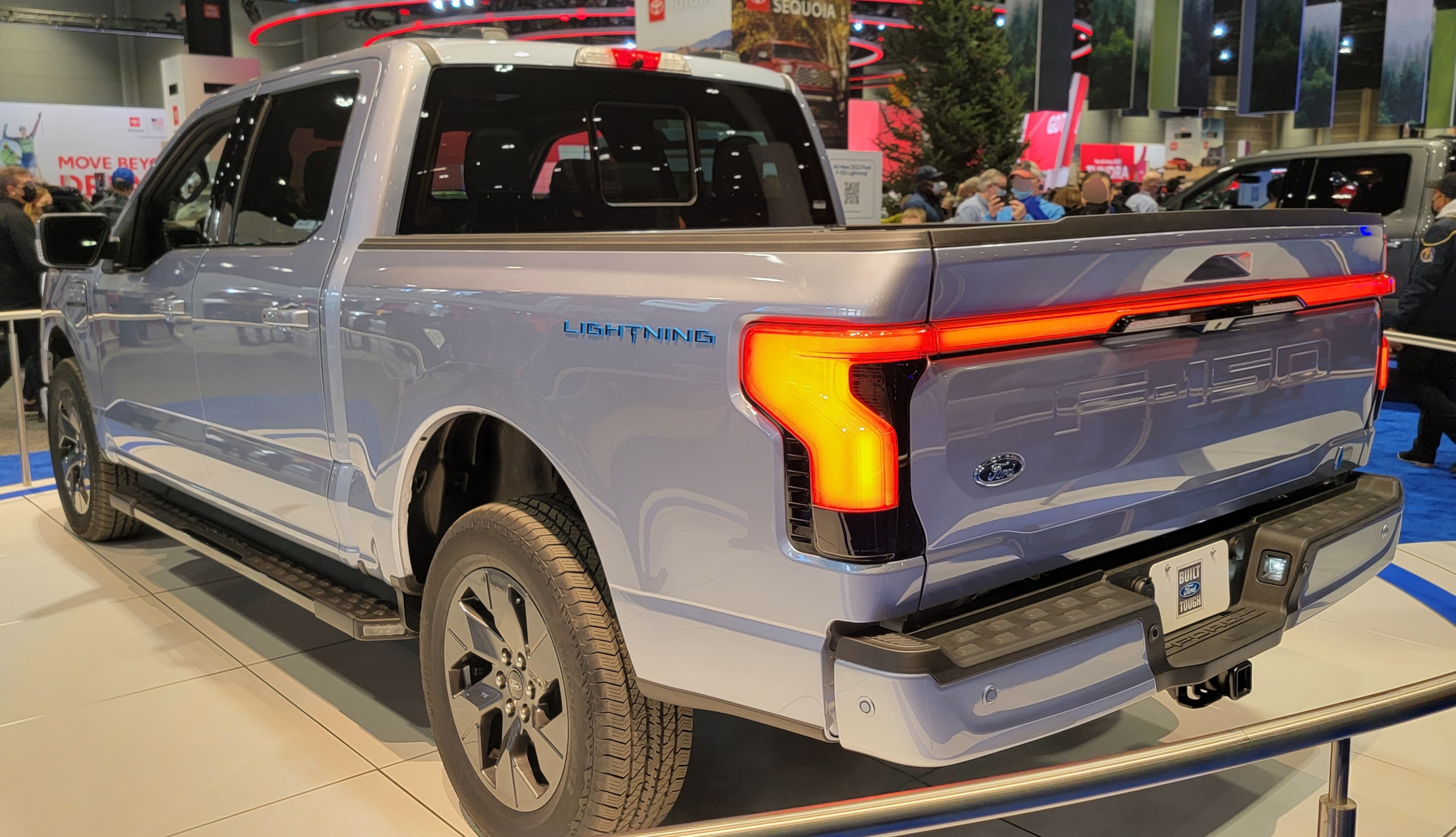
"...even a Ford F-150 with a 302A package is different than obviously if it didn't have it..."
The Ford F-150 is a big truck that many people use for work and personal use. It's strong and can carry heavy loads, making it very useful.
The Ford F-150 is a full-size pickup truck known for its strength, towing capacity, and versatility. It is popular among both consumers and businesses for its ability to handle a variety of tasks.
"...even a Ford F-150 with a 302A package is different than obviously if it didn't have it..."
The 302A package is a special set of features you can get with the Ford F-150 truck. It adds things that make the truck nicer and more comfortable to drive.
The 302A package is a specific trim level or option package available for the Ford F-150, which typically includes a variety of features and upgrades that enhance the truck's comfort, technology, and performance.
"I'll give you an example. We were appraising an Escalade V earlier today"
The Cadillac Escalade V is a fancy SUV that has a lot of power and luxury features. It's made for people who want a high-end vehicle that can also go fast.
The Cadillac Escalade V is a high-performance variant of the luxury SUV, known for its powerful engine and upscale features. It's designed to offer a blend of luxury and performance, making it a popular choice among premium SUV buyers.
"...spending $160 plus thousand dollars on a performance SUV like this doesn't care about another $10,000 worth of options, they absolutely do."
A performance SUV is a type of SUV that is designed to be fast and fun to drive. They usually have powerful engines and better handling compared to regular SUVs.
A performance SUV is a sport utility vehicle designed for enhanced performance, often featuring powerful engines, sport-tuned suspensions, and advanced handling capabilities. These vehicles are built to provide a thrilling driving experience while maintaining the utility of an SUV.
"...what determines the value of a used car is color, equipment, condition, and miles, okay? He's like, you're gonna have nightmares about that..."
When buying a used car, its value depends on things like its color, what features it has, how well it's been maintained, and how many miles it has been driven. These factors help determine how much you should pay for it.
The value of a used car is influenced by several key factors, including its color, equipment (features and options), overall condition, and mileage. These elements can significantly affect how much a buyer is willing to pay for the vehicle.
"...the common cars that we see are gonna be like BMW, Land Rovers, Cadillacs."
BMW is a car brand from Germany that makes luxury and sporty cars. They are known for their performance and quality.
BMW is a German automotive brand known for its luxury vehicles and performance-oriented cars. The brand is synonymous with sporty driving dynamics and engineering excellence.
"...the common cars that we see are gonna be like BMW, Land Rovers, Cadillacs."
Land Rover is a brand that makes luxury SUVs, which are designed to be good both on roads and off-road. They are known for their strength and comfort.
Land Rover is a British brand known for its luxury SUVs that are capable of off-road performance. They combine ruggedness with comfort and advanced technology.
"...what do I need to pay for it based on what it's likely gonna sell for? That's kind of where I pack it sort of comes in, and it's like this bolt-on to the appraisal process."
The appraisal process is when someone checks a car to see how much it's worth. This helps people know if they are paying a fair price or selling it for a good amount.
The appraisal process involves evaluating a vehicle's condition and determining its market value. This is crucial for buyers and sellers to understand what a fair price would be based on the car's condition and market demand.
"...I think that the three grand that ours is priced higher is actually maybe not enough, but I think it's pretty reasonable."
The out-the-door price is how much you actually pay for a car after adding everything like taxes and fees. It's the total cost you need to budget for.
The out-the-door price is the total amount a buyer pays for a vehicle, including the car price, taxes, registration fees, and any additional dealer fees. It represents the final cost to the consumer without any hidden charges.
"...but I think it's pretty reasonable. How often does the difference end up biting itself in the ish, right?"
Dealer fees are extra costs that car dealerships might charge when you buy a car. They can include things like paperwork or preparing the car for sale.
Dealer fees are additional charges that a dealership may add to the price of a vehicle. These can include documentation fees, preparation fees, and other costs associated with the sale of the car.
"...the difference end up biting itself in the ish, right? Like the ish is a big difference, right?"
Registration fees are what you pay to the government to make your car legal to drive on the road. It can change based on where you live and how much your car is worth.
Registration fees are charges imposed by the government to register a vehicle for legal use on public roads. This fee varies by state and can depend on the vehicle's value and type.
"...Tyler, having that data and being able to lean into that story creates trust in automotive."
Data is information that helps people understand things better. In cars, it can include prices, how well cars sell, and other important details.
In the automotive context, data refers to information collected about vehicles, sales, pricing, and market trends. This data can help consumers make informed decisions when buying or selling cars.
What is Doug Horner's market advantage?
What were the NADA conference highlights?
How does social media impact sales?
What are the appraisal process insights?
What is iPacket and its benefits?
How is iPacket used in appraisals?
What are the final conclusions?
Select text to request an explanation
Hey everybody, welcome to another episode
of the Cardulorship Guy Industry Spotlight.
I'm your host, Sam Dark.
Used car profits are made not at purchase in 2026.
They're made at the ability to acquire
and share the vehicle story, not just price.
A superpower is knowing not just the trim,
but also the options.
How Doug Horner gained a market advantage
at Mercedes-Benz North Olmsted
by acquiring more vehicles
at the correct competitive price
using a full data set of information.
Joining today's show is Doug Horner himself
and VP of Sales, I-Packet Value, Tyler Astorg.
Thanks to I-Packet for supporting today's content.
Now, let's get into it.
So Doug, welcome back to the show.
Here I am again.
I gotta tell you, Doug, it was so cool to see you at NADA.
Like, there you were and NADA was awesome
at recording right now.
It was last week.
Couple thoughts from you on NADA,
what it was like to be there with everyone.
Yeah, it was amazing.
It was my second one, but I felt a lot more comfortable
and kind of like I knew the drill.
I mean, I was all over the place saying hello to people
and meeting with vendor partners,
but I had a really great time
and the weather was significantly better than last year.
So that was a plus.
Yeah.
But yeah, it was cool to meet you and some other people
that I've gotten to know online
and finally actually meet in person, shake a hand,
right, make that connection.
Yeah, well, it was neat to see you in person real live.
What was it?
Is it odd for you?
So you're on social media, you're out there all the time.
You got recognized, presumably,
because you have a very iconic, the bow tie,
the whole thing.
What's your take on like going from a little bit
of obscurity to now pretty well known in automotive?
Like, what's that like?
It's very odd for sure.
I've started to get used to it a little bit,
but yeah, to just be walking around it.
Huge conference center and having people
just stop me repeatedly to say,
I love watching your videos.
I want a picture.
Yeah, I mean, a lot of selfies, did a lot of selfies.
It was, I mean, I'm very flattered by it though.
And flattered and humbled and just appreciative
that people enjoy it so much
and get value from it more importantly.
And it makes sense to me.
I mean, given how many people now reach out to the store
and want to do business with us,
it's clear that the reach has far exceeded my expectations,
but it's still odd to have that happen.
Well, it's interesting.
So last DDL show, we talked about how 20%,
I think you said, of your sales at your store
can be attributed to your social media activities.
And then we had Russ flip whips on Friday and he said,
look, and I didn't know this, by the way,
Doug started his social media stuff
because he was trying to get sales people involved.
And there's a reticence and there's a nervousness
from sales people to actually do that.
And Russ made a great point.
He's like, look, if a GM or a sales manager,
if they're unwilling to do it themselves,
you can't expect sales people to do it, right?
And is that kind of how you got into this?
Was that the beginning of the story?
Yeah, that is when I first started
really kicking around the idea,
I was trying to get my sales team to do it.
I mean, I have a really great and diverse staff,
but I've got some younger people on my team
that I thought, hey, if anybody's gonna try it, they might.
And it was always, oh no, I get it, I get it,
but nobody was willing to pick up the baton and run with it.
So I think I finally talked myself into it.
So you talk to Russ, you talk to folks from my group.
One thing that I've noticed about creating videos
and being out on social,
you do open yourself up to criticism.
And I'm curious at NADA,
if you saw any of that criticism coming out vocally,
like you'll get people who have an opinion
about the way you appraise a vehicle,
the way you engage and interact with a customer.
And I think it's healthy, but it is a risk.
What do you say to people who are like,
look, I don't need that shade, right?
I don't wanna be part of that conversation.
Like naturally your presence is gonna create
a little bit of conversation around,
hey, is he doing it right, Doug?
Yeah, I mean, I think that, I guess I'll back up quickly.
And I had a lot of people that asked me about,
hey, I wanna get started, do you have any advice?
And I'm a little bit nervous.
And to those people I all said,
I mean, you gotta look in the mirror and examine your process.
And are you willing to share the way that you do business?
Because if you're not doing business
in the most transparent way,
then maybe you're not ready for social media.
Maybe your store is not ready for it.
But I believe that the Rafi family
has been incredibly supportive.
They allow us to have this process
that's pretty unique to the auto industry,
where we're gonna give you our best price upfront.
And when we say that, we really mean it, right?
We're not like a store that's like, oh, best price upfront.
And then you ask for a discount
and all of a sudden we're negotiating, right?
But they've been supportive of me.
And I kinda look at it like this,
like I will defend our process to anybody, right?
I've got nothing to hide, I'm proud of it.
My motivation well before I started social media
was I wanna prove to people that buying a car
doesn't have to suck, that it can be fun and it can be easy.
So now I'm just doing that on a much larger stage.
And look, you're not gonna have everyone in your life
off of social media agree with everything that you do and say.
So that should just be expected.
But if 90% are like, hey, I like this
and 10% have a problem with it,
I think those 10% of people are gonna have a problem
with it no matter what I said.
I love that fact.
So it's interesting, I talk to a ton of people
across the auto industry.
And one of the things that I hear,
I'm just gonna say it, is you do appraisals,
you do them live on social media,
you post these clips all over the place,
people in and out of automotive can see your process,
the types of numbers you put on vehicles.
And I've heard with a Mercedes Benz background,
I've heard people say, you know what, Doug pays too much
or he doesn't quite get it right sometimes, right?
You open yourself up to that scrutiny for overpaying
or not being quite right.
You've got to be better from a tool standpoint
than the average GM, GSM appraising vehicles
because you're doing it out in public.
100%.
Which by the way is tougher in Benz.
In Benz, they're intricate, tough vehicles to appraise.
They're incredibly difficult.
And I think that not everybody understands
that you can't just appraise every vehicle
as if it's just, oh, how many miles does it have?
And that's how I determine the value.
No, that's a very, I call that like a vanity metric
on the appraisal, it's important for sure,
but there are things that are a lot more important than that.
And unless you really take the time to drill into it
and on a Mercedes Benz or really any other luxury car,
you got to take the time and you've got to go through it
to get it right.
All right, you know, on this show,
we always ask you the tough question,
what's the biggest mistake appraising a vehicle,
whether it's gone on social media or not that you've made?
Well, the biggest mistake,
this one I wasn't directly involved in,
but I should have caught it.
Somebody appraised a vehicle, it was a Tesla actually,
and they had miles in wrong.
I think they put the miles in with like a trip computer
instead of the odometer, right?
And there was a picture in there
and nobody really caught it until the end.
Oh, they didn't press the button to get to the full odometer.
That's interesting.
So it was basically the car was appraised
with 20,000 less miles on it than it actually had.
But I think we ended up being okay.
We were able to wholesale out of the vehicle,
which we would have preferred to have kept it,
but we were okay on that one.
I think with Teslas at the time,
we were still being a little bit more conservative,
just given some uncertainty there
and we'll say that kind of bailed us out of that one.
But yeah, that one, that could have been bad.
You know, it's interesting on the Tesla side,
I've seen dealers get stung by the whole
what software package does it have, right?
Does the Tesla actually come with the full driving?
Does it not?
In the Benz world, so we have a Mercedes Benz store,
we've got a great used car manager,
and he has really become an artist at valuing them correctly
because there's so many different options.
Tell us about the intricacies and some of the challenges
with Mercedes Benz in particular
in putting a good number on it,
knowing exactly what's on it or what's not on it.
What are the pitfalls folks can run into on the Benz side?
Well, let's say you're praising an S-Class.
You know, an S-Class can have an MSRP,
an S580 could have an MSRP as low as 125.
It could have an MSRP pushing well above $160,000, right?
So that is a massive spread,
all determined based on the equipment that it might have.
It could be a luxury line,
which would be sort of the base S-Class.
It could have AMG line, which makes it fancy
and look a lot cooler.
It could be executive line, which is, let's say,
my buck light, right?
It's gonna be the screens in the back
and every option you could possibly imagine.
And they absolutely play a huge role
in the resale value of that car,
but when you decode it in most appraisal tools,
it's just gonna be, oh, this is an S580, right?
Now, input miles and you're off to the races,
but if you aren't able to really pick apart
the equipment differences,
you could either vastly under appraise
or vastly over appraise a car.
And you've run into that in the past
and the tools commonly available in the used car office,
there's many that they'll take you a certain percent
of the way.
I think you mentioned that the auto is one,
but it doesn't quite get you the entire way.
Most appraisal tools will serve up
your baseline information, right?
They'll probably pull in MMR and some book values,
whatever you have set up in there might be KBB
and you might have JD Power,
you might have Gallows, other book values in there.
It's gonna give you some baseline information
that's just kind of going off of the vent in the miles,
but the really nitty gritty of it,
it requires a lot of work.
And what I learned in my early days with Accutrade
was that one of the pitfalls was something like MMR,
for example, is MMR just shows you the average of cars
that did sell at auction.
It doesn't tell you anything about ones that didn't sell.
It also doesn't tell you what options do those cars have.
It just gives you a condition grade in miles.
So usually the ones that are selling
for big money at auction are the ones that are,
oh, hey, it's that white with red interior
and head of display and AMG line
and it's like the car everybody wants, right?
Now you're sitting appraising a gold over beige
with 19 inch wheels and zero options whatsoever
and MMR can't tell the difference between those two things.
So if you're looking at MMR
for a bunch of fancy cars that sold,
you're like, wow, I gotta pay up on this thing.
And then you come to find that,
hey, that's not what the market wants to pay
for that particular car.
So you realized at some point over the past year
so you needed an additional tool
to help you dig a little deeper into the value
to more correctly appraise these vehicles.
And by the way, in the background is this fact
that many of your appraisals are online,
people are gonna watch them.
As an aside, before you go there,
do you ever get used car managers reaching out to you
and saying, well, hey, here's my opinion on how you appraise
and the tools you use.
Like, do you ever get feedback unsolicited?
And if you don't, you probably should start, right?
Right.
Occasionally, probably less than you would think, but...
Okay.
Usually it's people reaching out to me and saying,
hey, did you take that car on because I want it.
Oh, really? Okay, that's good.
All right, by creating that transparency
behind what you do, that does,
I would imagine create an extra marketplace behind it.
So that's cool.
So you reached a point where you're like,
we need to dig a little deeper
and enter a partner that you've worked with for a while
in another capacity, iPacket, they had a solution.
Welcome, Tyler, to the show.
Great to have you on The Cardiola Ship Guy.
Before we have Doug describe the new feature
that you brought that helps him in appraisals.
Will you just talk a little bit about what iPacket does
generally in the marketplace?
Absolutely, really what we're here to do
is spread transparency with documentation.
I thought it was a pretty interesting story.
My brother, who's also the founder and CEO,
mentioned to me when I first joined iPacket,
which was, hey, if you sit there and ask somebody,
maybe what this club is worth in your garage.
And another person says, well,
I think that club's worth maybe $5.
But you have somebody else say, well,
what if I told you that was Bobby Jones Club?
Is that worth more?
Well, yeah, it's worth more.
But what if I told you I had a receipt saying
that this is Bobby Jones Club?
Now it's worth infinite.
So really what we're wanting to do
is share all the documentation with receipts
so somebody can make a good decision with confidence,
a part of a way that we're all familiar with,
which is all digital.
Yeah, so the day after the Super Bowl,
as an example, if you could prove
that the football you have in your hand
is the one that Bad Bunny spiked
in a controversial halftime show,
that's worth more, right?
And part of what you're doing is
you're providing that additional layer of documentation.
Absolutely.
We did on Daily Deal Live, a dealer video competition
where we crowned, it was Cavender Auto,
the winner of the best customer video.
And in a run-up show to that,
we had a Chrysler dealer on from back east,
and they actually bring iPacket histories
into every customer video that they do.
And they've had a ton of success with that,
talking about transparency,
because without any pressure,
they're showing the customer everything
that they have in the video.
I've had this question,
I haven't been able to ask you guys yet,
so it was a great time.
In this packet that this dealer is showing
to every customer as part of this video,
what would be included in a traditional packet there, Tyler?
Yeah, so we first start,
and this is really a dealership's way of saying why buy from me.
So it could be an intro into the dealership,
it could be a minority label,
a factory minority label from the OEM.
It could be service receipts, for example,
it could be CPO information and CPO checklist.
Really, what we like to say is everything
that a consumer's looking for to make an intelligent decision
is a part of a bundle that you can share,
like I said, through your phone, through your computer.
So ironically, when we first started I-Pack at 13,
14 years ago at my family store in West Virginia,
we just have way free folders,
and we are always trying to express why our vehicle
is different, building value in our car,
not focusing directly on price,
because Doug, we were the same with you.
We've been a one low price store for 29 years.
So it wasn't one of those things
where we were negotiating on price,
rather we would focus on why our vehicle
is different than the one down the road, absolutely.
Yeah, yeah, by focusing on value,
it then does not become a race to the bottom.
I love what Doug, what you said earlier,
you said, hey, for those that are transparent
about how they do business, do it the right way,
you can put it on social media,
you can create a packet and show it to the consumer,
and it will create that value.
So Tyler, Doug presumably came to you a while back
and said, look, are there additional tools
that I packet could give me to help appraise vehicles
that are more intricate like Mercedes-Benz
to land on the exact price that I wanna come to.
What makes Mercedes-Benz and other OEMs
such a challenge sometimes to appraise,
and the vehicle so intricate sometimes,
which makes it a little bit difficult,
when what information do you provide in that process
that makes it more transparent
and gives the appropriate information?
Absolutely, and coming from retail,
I mean, I've really been on the I packet side of things
for the past six, seven months now,
but I used I packet value in the very beginning stages
over, it's been about a year and a half at our store
as our pre-in director.
So it's not really subject to Mercedes-Benz,
although that's certainly one of them
with all these different options and packages
that you can get on on brand new,
but even a Ford F-150 with a 302A package
is different than obviously if it didn't have it.
So nowadays you can easily see year make model trim mileage,
but oftentimes what we forget about is,
hey, one vehicle could be totally different
than the other based upon its options and equipment,
which is really hidden, if you will,
if you're looking at a competitive set.
When Doug reached out and kind of was bringing up
that just based upon discussions,
because I am a fan of Doug,
I'm one of those dealers who used to watch Doug,
and every vehicle can be different.
So what we've done is allow our data
to go to use for our dealers inside the portal,
drawing out those OEM MSRPs to draw better conclusions
and highlight key options.
So you're doing it by getting the original sticker,
which has all the data on it.
And then Doug,
how do you pull this up during your appraisal process?
Where does this plug in?
Yeah, so I do it as like a side by side
to my normal appraisal process.
So while I'm appraising the vehicle,
I will then also put it into the iPad at value tool
so that it can show me,
okay, what was the original window on this car
and how does that stack up to the competitive set
that you're looking at?
So on the appraisal side,
you're really only seeing,
hey, this is just where all the listings are.
Here's their listing price.
And it might average it out or give you a median,
but you would have to literally click through one by one
onto every car and pull window stickers on every one of them
to figure out what level of equipment does it really have,
whereas iPad is doing that and putting it in a nice list
and you can click into each window if you want.
So it's just very efficient.
I'll give you an example.
We were appraising an Escalade V earlier today
and it had a really, really high window.
And when we put it in the iPad at tool,
we could see that,
okay, this has got about $10,000 more options
than the majority of them that are out there for sale.
So if you don't think that somebody
that's gonna be spending $160 plus thousand dollars
on a performance SUV like this
doesn't care about another $10,000 worth of options,
they absolutely do.
And if that isn't reflected into your selling price,
then you're probably gonna leave money on the table
and you may never acquire the car
if you don't accurately put that into the appraisal value.
So we're kind of like reverse engineering it
back into our appraisal number.
Interesting, Tyler, is that a best practice
you're seeing across the country?
What I love before you answer that,
Doug has made a reputation for himself in the market
in social media by telling a story.
And he represents everything that he does
by sharing a story.
It's not, again, the race to the bottom to the cheapest.
It's the narrative.
And it seems to me what you're talking about, Tyler,
allows Doug to dig into that story deeper
and be so specific with the consumer,
with the buyer, with his store.
It's a continuation of the storytelling
that ends up selling the value, Tyler.
It's exactly right.
And what we're finding right a part of our I-Packets
is one of the top documents that clients view
is the OEM MSRP that can be found
in our I-Packet every day.
We include a lot of documentation,
but the OEM MSRP is certainly a place
that consumers spend a ton of time looking into.
So when we brought that to life,
really for the dealer base,
we like to be a blind spot system, if you will,
a part of a process that they do every day.
Certainly not trying to take over anybody's appraisal
or pricing tool, but adding that blind spot with OEM data,
I think that ultimately speaking,
we're all busy throughout the stores.
And like Doug said, hypothetically speaking,
could you pull every single sticker
within the entire competitive set?
Yes, but maybe, but matter of fact,
a general manager that I work with,
he would do it in a spreadsheet
and it would take him a ton of time,
really making sure that he's accurately priced
to the market, not based upon just the average price point,
but my car is different.
So this is just a quick way
that somebody can plug in an event, generate a value,
and ultimately speaking, get a live competitive set
within MSRP dimension to every vehicle
within the competitive set with a click of a button.
So efficient.
So hey, Doug, what has changed most in your day-to-day process
from a timing standpoint,
pre versus post having this data
and information readily available?
I feel like I can go much quicker
in the kind of final stages of an appraisal.
I mean, the first part of it,
and this is what you see a lot if you watch my videos,
is I'm gonna be doing fact finding with my salesperson,
right, get a little bit of understanding
of the history of the car and its condition
from a tires breaks, just cosmetic standpoint.
That part of it isn't really where I pack it comes in.
That's really in the appraisal tool,
but that final piece is what equipment does it have
and how desirable is it really
when you compare it against its peers
or its comparable inventory out there for sale.
And what used to be a pretty manual process,
or you always hear people talk about
like their gut in car sales.
I'll tell you what the gut is, Sam,
is it the right color and does it have nice options?
That's what gut is, okay?
Right, the data is how many miles and what year is it?
So this part, and so I think that people
that have been doing this a long time,
they can probably look at a car
and their gut can tell them that, yeah,
that's got a really nice window on it originally,
so it's probably gonna be worth more or worth less,
but I would prefer to just have a data point
that can be sent out to me instantly,
and so that's what this does.
And yeah, I mean, it's funny to me
because Ziggler, is that Hoffman Estates?
Is that your store?
It is, yes.
Yes, yep.
Is Tom May still there?
Oh yeah, he's still there.
He's an assassin a long time used car manager.
Don't throw any shade, Doug, don't throw any shade.
Oh no, I'm not going to, this is funny.
So Tom May was one of my very first managers
ever in the business.
Okay.
Back in 2010 when I started,
and he used to joke, he probably wasn't joking,
but he would really drill this into my head
that what determines the value of a used car
is color, equipment, condition, and miles, okay?
He's like, you're gonna have nightmares about that,
and I still do.
I wake up in the middle of the night
just repeating color, equipment, condition, and miles,
but people tend to start their search with color
when they're looking for a used car,
but really the most important thing is number two,
which is equipment.
What options does it have?
And I pack it tells me that instantly,
and it's not just so much what does it have,
but what does that compare?
How does that compare to everything else
that's out there for sale?
So to get that information immediately
has been hugely helpful, and it lets me know
it's okay to pay up on this car,
or it might tell me this is one that you're gonna have
to be a little bit more cautious with.
Yeah, and that probably also helps
not only for the bends you bring in,
but you also trading in vehicles that are off-brand
that you're not as familiar with, right?
And gives you a little bit more transparency
behind the off-brand.
Talk about the confidence data like that
helps give you on off-unit.
Like that Tesla is an example, I guess.
Yeah, so I mean, if you think about
what we're appraising most frequently,
I think the common cars that we see
are gonna be like BMW, Land Rovers, Cadillacs.
These are very, very commonly gonna be looked at,
and those are cars that now I can instantly plug in,
and do I know the packaging on those cars relatively well?
I do, but not like I do in Mercedes-Benz,
and even still, to get it instantly,
it's just huge, it's a huge win for me,
and it just makes me able to go much quicker kind of in that.
Once I know what the condition of the car is,
now that final step of, all right,
what do I need to pay for it based on
what it's likely gonna sell for?
That's kind of where I pack it sort of comes in,
and it's like this bolt-on to the appraisal process
that used to be a very manual part of it.
So we've talked about speed to acquisition.
So accuracy, knowing when you can pay up,
when you should ease off,
it helps provide that data set to help you make better buys.
Talk to us a little bit about the selling side.
As your sales teams are engaged with customers
on the flip side, how do you use a tool like this
with customers, and how do you train salespeople
to engage with it to share the story of the vehicle?
Yeah, so now it's kind of like a little add-on
to that sales process where before you're sending an iPad
with all the things that we've just mentioned,
but how about an additional sheet
where I can quickly show you every car
that's in that competitive set
that the customer's probably comparing it to,
and oh, by the way, look at what the original window
on the car you're looking at
is versus all these other ones, right?
And so it's just an extra piece of the puzzle
where people will act like they don't care
about the options, but they do, right?
And whenever you've got somebody
that's trying to throw a comparable vehicle
in your face that's a lot less expensive,
what do they always do?
They find something that's similar-ish,
that the wrong color has no options.
Maybe you've got a bad car fax, whatever,
and then you pull it up and you're like,
oh, interesting, well, this car was $65,000 brand new
and mine was 80, so I think that the three grand
that ours is priced higher is actually maybe not enough,
but I think it's pretty reasonable.
How often does the difference end up
biting itself in the ish, right?
Like the ish is a big difference, right?
Tyler, having that data and being able to lean
into that story creates trust in automotive,
and trust in transparency is what drives
customer experience in 2026.
Absolutely, and at the foundation of I-Packet,
that's what it's all about, transparency and trust.
And with our data being brought to life,
what's beautiful about this as well
is the consumer-facing version of this information.
It really spells out a beautiful story
on why your price is, in fact, a good deal.
I think it's very easy to log online
and see something that says great deal on it,
but maybe it's a plain Jane vehicle,
for example, a rental car,
but what this really does is normalize optional equipment,
a part of a value that consumers can trust.
But what's great about it is we're actually
throwing in a few comps in there too.
So that way it really gives the salesperson a story
to explain to their consumer,
not, hey, we're just a good deal,
but let me show you some of our homework.
So it really automates that process,
and I think that from a sales individual standpoint,
it's incredibly powerful.
So I-Packet started in one place
and you've expanded the offering
to kind of lean into that transparency behind vehicle,
giving dealers more information.
What are you focused on next?
Like what's your next thing you're working on in 2026?
Our new enhancement I-Packet values, certainly one of them.
We have a variety of different options available with I-Packet
when it comes to the reconditioning process,
or for that matter, we call it our one targeting
or retargeting aspect of our I-Packet set every day.
I think we have a lot of projects,
and what we wanna do is really focus on what we're great at.
And I think with I-Packet value
segueing into our core product, I-Packet,
it's really a match made in heaven.
We have sales management across the nation.
Matter of fact, we pulled over 60 million stickers
in our packet system because options matter.
So now what sales management are able to do
is not only pull a sticker,
but pull a 100% perfect competitive set,
highlighting options and equipment.
It really segues perfectly into what we do every day
here at I-Packet.
So implementing the process
that Doug's shared with us today,
what are the first two or three steps to implementing this,
and what does the installation look like
or the onboarding look like
from a time and a process standpoint?
So Doug, I can hop in here
and at least explain from my vantage point
when I first started using this.
Like I mentioned prior, I came strictly from retail.
You should, by the way, because I think Doug
is in the middle of appraising a car right now, by the way.
I love it.
So hopefully, Doug, I hope this makes it
under your social media stream.
You can say, hey, look, I'm doing daily dealer live,
car dealership guy, and I'm talking to I-Packet,
and I'm successfully appraising a car at the same time.
So go ahead, Tyler, I love it.
No, hey, the way I used it is,
if I'm appraising in Mercedes-Benz,
and I'm sitting here, I'm interpreting that competitive set,
I'm doing my due diligence.
At our dealership, we had multiple people
appraise the same vehicle,
and oftentimes multiple people come up
with a retail pricing of that same vehicle,
and oftentimes they were off.
Sometimes we were spot on,
but anytime there was a large delta, I'd say, why is that?
So I started pulling a value,
and this is really just part of the beta stages of I-Packet value,
and the scenario is where there was a large delta.
I always ask myself, why?
Like, why is it?
The data's telling me something else,
and traditionally speaking, I would hop into there,
and I'd find that, hey, listen,
I'm unevenly comparing my vehicle
in the same competitive set
that might be saying, you make model miles,
but if I pulled three or four different comps within there,
it might allow me to draw a different conclusion.
So by doing that, as Doug mentioned,
I put more into vehicles
because I had more confidence in what I can get out of them,
and also from a dealership profitability standpoint,
it allowed me to find additional opportunity
within my current inventory.
It takes a lot within a dealership to ultimately speaking,
keep the doors open and keep it flourishing,
and you got to work all the angles.
It comes from every single department
and every single person a part of the team.
So again, this just really allowed us
to fine-tune our process to help the consumer,
but also help the dealership that's there to serve, so.
And one thing you said,
being able to get a little more aggressive
on the right vehicle,
everybody we talked to in the industry right now
is talking about how that's an important difference maker
between us and the national chains.
Caramax, Caravana, famously,
they pay up a little bit on the right vehicle,
but knowing what that right vehicle is,
is the difference between success and failure.
In an industry where margins are narrowing, Doug, fair?
Absolutely.
Now that's more important than ever.
One of the phrases that I keep hearing
over and over and over again and I've heard it forever
and I really don't like it,
which is the profit is in the buying.
I think that I think it's well-intended, right?
But everybody's always saying that
when it comes to an appraisal,
but when I hear that, what I hear is,
oh, I wanna pay as little as possible for a trade or a car
and then I can retail it and make all this money.
But I think the reality of it is,
is that in the Caravana and Caramax world
and dealers around us getting more and more dialed in
and competitive, the profit is in your ability to acquire.
And if you can't acquire it, then there is no,
you're not gonna, you can't resell it
and potentially make a profit.
So to acquire it, you've gotta be dialed in
with a good competitive number
that's gonna make somebody say yes.
And so we need all the help we can get
to figure out what that number is.
The profit is in the ability to acquire it
and it's in our ability to convey the narrative at sale.
100%.
So acquisition and then at sale, having the right story.
I love that, Doug, that's awesome.
Doug Hornell, General Sales Manager,
Mercedes-Benz, North Olmsted, Tyler Astorg,
Vice President of Sales, iPad.
Thank you both for being on the show
and sharing tips to winning
in today's super competitive use car marketplace
and ways to tell a better story to our consumers
and both in the buy and the sell process.
Thank you both for being on the show today.
Of course, thanks, Sam.
Yeah, thanks for having us.
Request an explanation for:
3 cars
3 cars featured
Request an Explanation
Heard something you'd like explained? We'll add it to this episode.
Sign in to request explanations for terms you heard.
Want to learn more?
Browse our glossary for plain-English explanations of automotive terms, jargon, and concepts.
See something that's not quite right? Our annotations are AI-generated and can sometimes miss the mark.
Click the flag icon on any annotation to suggest a correction.