Off-road racing refers to motorsport events where vehicles run on unpaved terrain like deserts, trails, and rough tracks. In this segment, it frames the speaker’s early involvement in racing culture and the types of events (like Baja) they were connected to.
“Suspension travel” is the distance the suspension components can move up and down. “Six inches of travel” describes a relatively limited suspension range compared with modern off-road setups, which often use more travel to better absorb big impacts.
Indianapolis Motor Speedway is a legendary race track in the United States. The speaker mentions it to explain how fast they used to go before their injury.
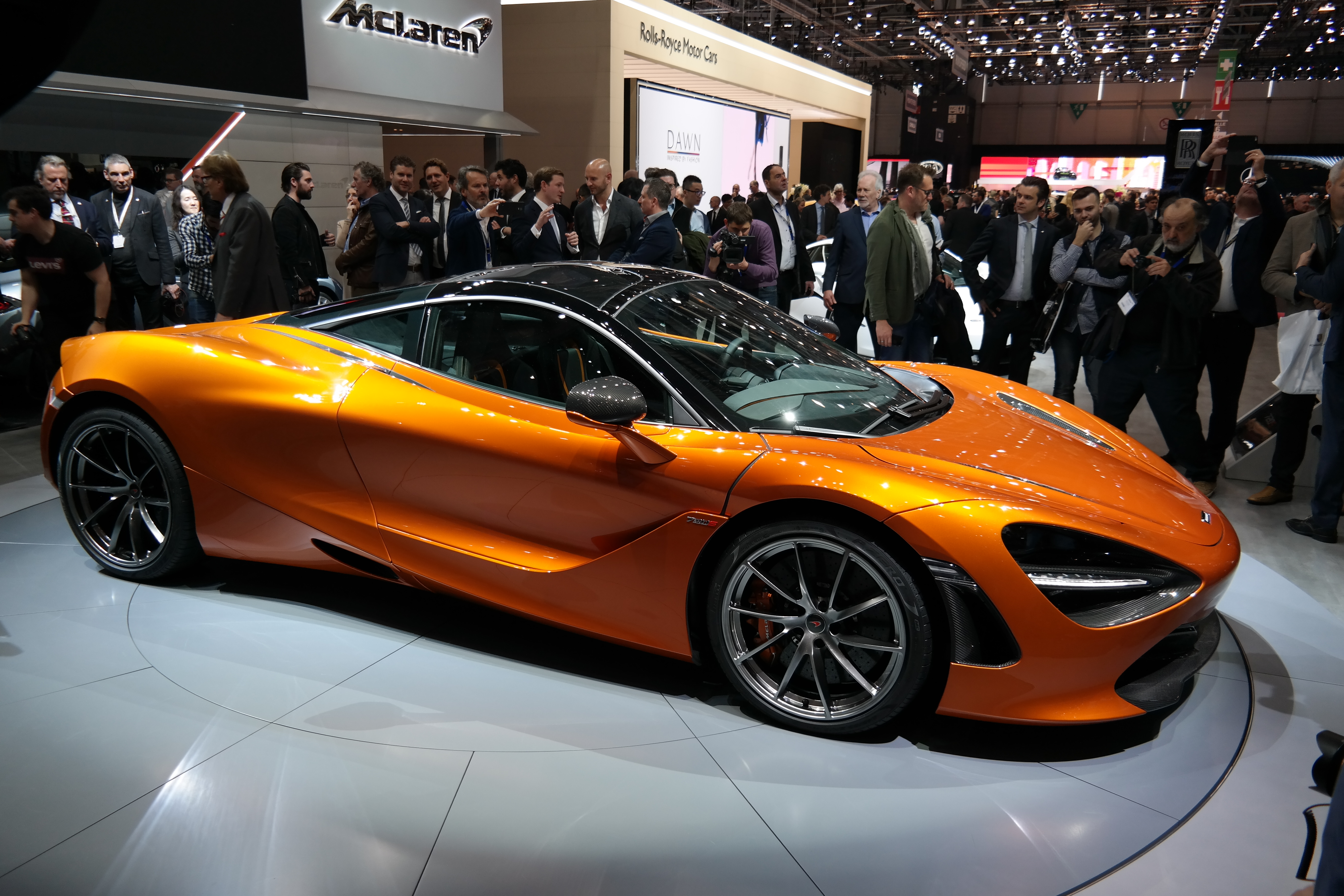
The McLaren 720S is a high-end supercar from McLaren. It’s the kind of car people buy for fast acceleration and sharp handling, and here it’s the car the speaker chose before doing a famous hill-climb event.
The Goodwood hill climb is a famous motorsport event at the Goodwood Estate in the UK where cars race up a steep hill. It’s become a bucket-list driving and viewing event because it showcases cars’ acceleration, braking, and traction in a short, intense course.
Term
gas and the brakes
“Gas and the brakes” are the accelerator and brake pedals. In this context, they’re talking about controlling those actions through a system that can be programmed. That’s important for adapting driving to different needs.
“Fully programmable” means the driving behavior can be set up by software. Instead of the car responding in only one fixed way, the system can be configured to match the driver’s needs. In this case, it helps adjust steering and control for different situations.
Steering ratio is how “quick” the car’s steering feels. If it’s higher, you have to turn the wheel more to get the wheels to turn. They change it to help the car handle tight turns and then behave differently when going fast.
Hairpins are extremely tight turns, like a sharp U-turn. They’re hard to drive smoothly because you need accurate steering. The host mentions them to explain how they tuned the car’s control behavior for tricky turns.
Concept
system that would, you know, get people with disabilities back to work
This is about using technology to help people with disabilities drive or control vehicles for work. The goal is real-world employment, not just showing off a gadget. It relies on customizing how the vehicle responds to the person’s inputs.
A forklift is a work vehicle used to lift and move heavy items, usually in warehouses. The host is saying the same kind of adapted control approach can apply to forklifts too. That matters because it’s not just about normal car driving.
Harvesters are big farm machines used to collect crops. They have lots of controls, not just driving. The host mentions them to show the technology can help with more than just cars or forklifts.
“Self balancing” means the device helps keep you steady on its own. Instead of someone having to hold you up, the system adjusts to help you stay balanced.
“Wanderer craft” is the name of a newer exoskeleton. It’s described as being able to balance itself, which helps with standing and walking.
LIVE
Hey, I'm Sam Schmidt, former IndyCar driver,
former IndyCar team owner, now founder,
and chairman of the Driven Neuro Recovery Network
with Las Vegas and Indianapolis Tours.
And former now writer, now publisher
of No Finish Line, the book.
You're listening to the J.P. Anderson show.
Thank you.
Welcome to the J.P. Emerson show, where we ride shotgun
as you tell your story.
Here's your host, J.P. Emerson.
Welcome back to the J.P. Emerson show,
provided by Red Line Synthetic Oil,
offering technical support and more than 100 quality products,
including motor oils, gear oils, assembly lubes, fuel additives,
and water wetter to the automotive, motorcycle,
marine, and industrial markets.
Visit them at redlineoil.com and buy Meekum Auctions,
the world leader of live auction action
from entry level to investment grade, classic to modern,
foreign to domestic, and wild to mild.
Meekum has it all for every budget
and every individual taste.
Visit them at meekum.com.
Imagine a man built for speed, a racer chasing glory
at 200 miles an hour, whose entire world changed
in a heartbeat.
Most stories would end there.
Sam Schmidt's story exploded in something far greater,
from a life-shattering crash to driving again,
only the movement of his head from building championship
teams to pioneering technology that rewrites what's possible.
Sam's turned tragedy into legacy and innovation,
courage, and purpose.
His new memoir, No Finish Line, captures the epic journey,
and today, he's going to bring it to you firsthand.
It's my pleasure to welcome Mr. Sam Schmidt.
How you doing, Sam?
Ed, sir, thank you for having us.
Absolutely, absolutely.
So before we begin, I need to share with you,
I was speaking with a very good mutual friend of ours,
and I mentioned that Sam was joining the show.
And he wanted to send his congratulations
on your book and Best Wishes.
And he also wanted to say he hopes
to connect with you again very soon.
I know you guys have enjoyed some time together.
He is one of my closest friends and extremely,
extremely great guy.
Mr. Ken Lee and Felter sends his best wishes to you.
There you go.
The master of speed.
Yeah, that's right.
It's probably the first time in years
I haven't seen him at the SEMA show,
but our paths just didn't cross.
But yeah, great individual, great industry leader,
and technology leader, and speed demon,
and also lover of a fine classic automobile.
So yeah, it's been great to get to know Ken.
Yeah, absolutely.
I think we put some of his equipment
on RZ06 back in the day.
Yeah, he told me a funny story.
He said, I don't know if I should say this or not,
but he said, Sam and I were talking
about building a car for him.
He said he was wanting to drive.
He said, I was a little concerned,
and Sam made a comment to me, and he said,
Ken, what's the worst that can happen to me?
I break my neck.
I don't know how you follow that story up, Sam.
It's kind of a running joke with the family.
It's like with my dad's paralysis, my paralysis,
everything else, what more could happen, right?
And I've been on a ventilator and all that stuff.
So yeah, fear is, I wouldn't say fear is not existing,
but it's sort of minimized, you know?
Yeah, absolutely.
So before we begin, tell us a little bit about yourself, Sam,
for anyone who maybe isn't into racing,
because we do cover racing in classic cars and the like.
Tell us a little bit about yourself
so people can get to know you just a little bit better.
Yeah, I mean, I'm proud of the fact
that I was born in Lincoln, Nebraska,
even though the Cornhuskers haven't had
much of a football team for the better of our 20 years now.
But my dad grew up on a farm outside of Lincoln
and mom grew up in Beatrice and they met at a young age.
And then my dad was also, again, growing up in your farm,
he'd become a jack of all trades.
And so he was known as a pretty good fabricator,
was a drag racer and race super modifies in that area.
And at that time, there was a prolific sprint car builder
by the name of Don Brown,
who got a contract at the time, 1965,
to build three cars, specialty sprint cars for Greg Weld,
Weld Racing, Joe Saldana, Saldana Racing Products,
and just another car.
And so he was calling everybody and everybody saying,
I need help to get these cars done in three months.
So my dad loaded up the car, loaded us up
at a very young age and took us to California
knowing that it probably never be back
because California has its positives
for racing in high performance standpoint.
So he went out there and of course the money ran out
and so he had to get a real job at a Chevy line mechanic.
And then he started his own automotive dismantling facilities,
specializing in Chevrolet.
So, but at a very young age, he started racing off-road,
all of, you know, Parnelli Jones, Vicki Thompson,
really got engaged with that at a time
when I think men were men, you know,
six inches of travel, Baja 500, Baja 1,000,
you know, no recognition like they have nowadays.
And, you know, he put me on a motorcycle when I was five.
So I didn't really think of it.
You know, we worked on the cars at night,
the motorcycles at night,
and either I was racing every weekend
or he was racing every weekend.
And that's, you know, what racers do.
I didn't think that was weird or abnormal,
but, you know, that's that.
And so we're up in that environment,
grew up around the recycling facility and,
but my hero was Rick Mears.
Rick came from Bakersville, California,
grew up in the desert, raised superbies
and then got picked up by Roger Penske,
fast forward wins 4,500s.
And that to me was the North Star,
like how could I figure out how to do that?
You know, being from the same area and all that kind of stuff.
So we worked, worked
and was fortunate to make it.
Race to 500, my coach for the month
was a guy named Gary Bettenhausen
and, you know, well-known driver
and many different types of cars.
And help me get through it.
Anyway, we participated in 97, 98, 99,
actually had to lead the race in 99.
And then the career just all came to a high point
when I sat on pole at the race in Vegas in September
and then ultimately won the race.
And so life's great, you know,
been married seven years,
I had a six-month-old, two-and-a-half-year-old.
I, you know, just living my dream is the best way to put it.
And then as happens many times in life,
get thrown a curveball
and mine was in the form of a testing in January 2000
for the upcoming season.
I hit the wall at Walt Disney World Speedway,
completely blew apart C-234,
not breathing and for upwards of four minutes,
they, you know, got me, you know,
they sort of bagged me with the oxygen
and put me in a helicopter and flew me to the emergency,
you know, level one trauma.
It wasn't good, you know, my wife jumps out of red eye,
the neurosurgeon who is not,
neurosurgeons are not known for the bedside manner,
you know, she flew all night.
And the only thing he'd say was,
well, he made it to the night,
if he makes it to the week,
they'll be on a ventilator the rest of his life.
And we don't expect that to be very long.
So just fine when you're seeing home.
And that was 26 years ago.
So, you know, it's, again, here we are.
And I think athletes have a little different mindset
and we just put our head down and try to figure out,
and number one, how do we recover from this?
And, you know, how do we not live up to that prognosis
and get a different opinion?
And so within about three weeks,
they had me transferred to Barnes-Dewis Hospital
in St. Louis where there was a cutting-edge doctor
that had been working with Christopher Reeve
and experimenting a lot of things.
But his basic message to my parents was,
we are gonna work his butt off
and try and get him off the ventilator.
And then if we can't, we'll deal with it and move on.
So, you know, six weeks after my accident,
they had me off the ventilator and starting rehabilitation.
So, the moral history is, you know,
if you don't like the prognosis from a doctor,
get another doctor and keep going
until you find the right one.
So, that's how it all started at the time,
I think at 35 years old and, you know,
your life gets blown up, your family's life gets blown up
and you gotta figure it out.
So...
I don't know if you don't, one of two things.
The Speedway is no longer there,
whether you know that or not.
That has been dismayed, I've actually been there.
The other thing I'm curious about is,
what moment in your early life made you believe
that racing was gonna be your destiny?
What sparked that?
I was being competitive and again,
I think kids maybe migrate towards
what their parents' interest is and my dad's was racing.
And so, you know, we spend all that time together as a family
and it's a great family sport, as you know, when you're young.
And it's full immersion, you know,
it's what you work for all week long
and you a lot of times invest everything you make all week
into the weekend racer and you go out and do it.
So, I was really competitive
didn't matter if it was racing or football, basketball, baseball.
You wanted to win and, you know, it's perseverance
and my last name wasn't and ready or answer.
And, you know, there was no logic to it at all,
so to speak, but I knew how to work hard
and my dad, you know, didn't ever let me not work hard.
And so, yeah, he just, whatever it takes, you know,
to get to that pinnacle and that was our attitude,
that was our mentality.
You know what I'm saying, when you were discussing
how things started, the incident itself, the will,
it's a perfect segue to your book that's literally just come out.
I mean, weeks ago, I know we had talked about it internally,
which is no finish line and talk about living to that very title.
I mean, that sums you up to a T.
Tell me about that book and what inspired you to a
to write it and also to inspire people,
whether they're facing an event like yours or something else to,
like you said, you know, if you don't like what's being told to you,
go find something else and do it.
Tell me about that.
I mean, frankly, I've been wanting to write one for a while.
I'm glad that the opportunity and the bandwidth really didn't come about
until when it did because there's so much happened in the last 13 years
between the Arrow project and the race team
and ultimately selling the race team in 2024.
That's what gave me the time to do it.
So I like to focus,
come up with a plan, do it and be done with a move on,
not like beleaguered or something for years and years.
So we put together a little team.
We did our evaluation on, you know, there's so many different ways to write a book
and it's like learning a new industry all over again.
And like it is the epitome of the last 26 years,
I overnight couldn't do anything for myself.
And so the key for the last 20 years has been finding the right people,
putting them in the right places, giving them the resources, let them do their job.
And wow, guess what?
It could be a hell of a lot more successful that way than if you only do it yourself
and and don't think anybody can, you know, can help you.
And so by personal team, I've got a race team, the foundation team.
The book is a thank you to them for all that years of commitment and effort.
And that was number one, number two, my family, kind of legacy.
Grandkids, great grandkids, et cetera.
I want them to know where, how all of this happened with their father in with me.
Getting my parents on tape in the interview process.
There's two ladies, two still going strong.
My wife, my kids, everybody.
There's a lot of reasons for doing it.
I just knew that if I didn't focus on it, get it done, it would never get done.
So we we did that 2025 and then, you know,
found a publisher and did all the stuff you have to do with that.
And then pictures and it's just, you know, it's a process.
So I was happy to get it launched in May and very good perception.
I mean, we made the USA Today bestseller list.
And it sold way more copies than I thought it would.
So hopefully, I guess somebody likes it, you know, but.
But it is this story of overwhelming some pretty steep odds.
I mean, not just me.
I mean, my dad was paralyzed racing in Mexico when I was 10.
They said he never walked or talked again, both of which he does fine.
Got the use of his leg back, his voice back, never got his arm back.
But he did two years of outpatient therapy, five days a week, two hours a day,
just grind, grind, grind, grind to prove those doctors wrong.
And so I didn't know what kind of example that would be for me 25 years later.
But but it was a living example.
And so my mom's been through a couple of different types of cancer
come out the other end and in clear on that, you know, so it's resiliency through and through.
I didn't.
And one of the things I say is that in the books,
I had a lot of epiphanies when we were writing the book.
One of them was that I didn't.
It wasn't my family's reign to race at any 500.
That was my dream.
And so one of my I don't live with any regrets other than the fact that I hated
that I put them through what they had to go through with me because of my dream.
And so they will tell you, you know, we'd rather have a year than not have a year.
We enjoyed the dream just as much as you did.
We have enjoyed you being a team owner, you know, for 25, 26 years.
All of these things, that's what they'll tell you.
But it's like I just, you know.
Yeah, it by the same token, I am meeting.
I've met hundreds of thousands of people that have been paralyzed, not living their dream, right?
99.9% of the populations that is paralyzed or suffocated at ease.
It was something silly, you know, pool or drive, you know, shooting or driving
act, the driving accident, something, you know, that I might be a little bitter about it.
That was me.
I have the good fortune to have been paralyzed living my dream.
And so that's kind of the founding element.
When this happens, it takes you two to two and a half hours to get up every day.
So you have to decide pretty quick, what am I passionate about enough
to make that worthwhile each and every day?
And for me, that was an easy, you know, let's go back to racing.
I was naive.
I did not know the resources and the challenges that it would take to own
first in the guys team and then ultimately in the car team.
But, you know, but we just figured it out and step by step and day by day.
And it, you know, again, being competitive, it's not the same as winning as a driver,
but it's pretty close second when you when you realize everything that goes into it.
And again, putting the right people in the right places,
earning the wrenches, drivers, you name it.
And then you accomplish the goal of winning.
It's it's it's very sweet because it is so much work.
And it is it has to be the perfect storm to win at this level.
It's so competitive.
So pretty proud of what we've, you know, accomplished
for sending me likes and then in any car and and.
Yeah, so I don't even know if I answered your question, but.
Now, yeah, I mean, that's great.
That's great, Sam.
I mean, I think for for folks that that may be listening or just
hearing a bit of your story or the background for the very first time,
it really puts into perspective what we're what we're truly capable of.
You know, like you mentioned, you know, the competitiveness
or the athleticism or or or anything.
But I was certainly no doctor.
And I can't recall what they say, the percentage of our brain that we truly
utilize, but there's so much more to who we are.
And and when we realize that there's other parts of our of our brain
that we can use, we we really excel at other things that perhaps
we may not have had we stayed on the same path.
And it's I think it's important to realize that.
I will come straight out and say, look, I didn't start the team for anybody else.
And I didn't, you know, drive and begin being in all of that program.
I haven't done anything for the last 26 years that was about motivating
or inspiring other people.
But as time moves on and I see how much that has played an influence
in a lot of people taking a chance and working hard and getting back into life
after their tragedy, it is an extra layer of motivation on the backside.
Like I did everything I did, you know, for my goals, my aspirations
to show my kids, you know, to be an example.
But you don't have to give up.
You can truly do anything you put your mind to.
I mean, well, the book goes into more details.
But I mean, heck, we've we've scuba dived the sharks.
We've raised otter balloon, we've raised the sailboat.
We've jumped out of an airplane skydiving.
We've just done all of this stuff, which, by the way,
are readily available programs for anybody with a disability.
I didn't do them because they were special for me.
These are things you have to plan.
You have to figure out how to do it.
And there are people that will help you do it, you know.
So it's more of an example of what what is out there
for people with disabilities.
And so, you know, we hunt them out.
We we we think about it a lot.
We schedule it, we do it in a lot of planning and preparation.
That the whole spontaneity goes out the window when something like this happens
because, you know, flights and everything else are
a little more difficult nowadays.
But but, you know, if you have a system you plan for it,
better minimize the the injuries along the way.
And then, you know, if you're to me, I believe,
strongly in everything I'm raising and also paying it forward.
And that is, you know, that's a specific situation where
the the the Corvette program and Aeroelectronics and
semi-autonomous mobility or SAM, none of that would have happened.
If I had not, you know, been aggressive at visiting hospitals
and talking to people and being out there.
And and that's one thing I do another.
So, yeah, just one example.
Well, what what was the the turning point for you when you realized
I my racing career isn't over.
Perhaps the way I went about racing is is not
something that's likely to occur again.
But my career isn't over.
What what was the turning point and what was that like for you?
Do you mean as far as getting in a team ownership or as far as driving and racing again?
Well, you know what now that you mentioned both.
Yeah, let's do both because well, I'm going to let you tell that story.
Yeah, I mean, back to originally a year into my accident.
You know, keep in mind I've been married seven years and most of those seven years
I spent on the road 150 to 200 days a year.
And so when you build your relationship around that and all of a sudden
you're sent home from rehabilitation with six or seven people coming
and going all day long and you're there, there.
It doesn't take long for your wife to say, hey, you need to find something to do
because you're driving me nuts because you're here so much.
So that that's when you got to make a really an informed.
I don't know so much informed a strategic decision, like, what am I going to do?
And I decided to, you know, to start the team.
And, you know, you start bringing up the phone lines and calling everybody
you know, and one of doing something with Davey Hamilton in 2001
a year after my accident and the series was very supportive.
The Motorsports community has always been there for us and for our foundation,
which is, you know, it's one thing I say is you try to the entire
Motorsports community tries to beat the crap out of each other on Sunday.
And we'll do anything for that.
But if it tries to, it happens.
We all lock arms and figure out a solution, whatever it takes to help our own.
And so that's that's been a pretty cool part of it.
But then farther down the road, when it, you know, became evident,
we were driving the Corvette and becoming faster and faster
and developing the technology to where it was really intuitive.
Yeah.
Then my competitive juices got flowing in.
And that's when I met Ken and all that.
And we had a 06 at the time that they had a lot of parts for.
So we bumped out to about 800 horsepower, I think.
And we went to 12 on that.
But we also got introduced to the Optima Challenge, which, you know,
is a disciplines of road racing and
solo type driving and also what they call their speed stop.
So points faced, not head to head.
So we did a few of those events in the Corvette and involved the arrow team
and the whole deal.
And so, yeah, it's it's racing again, you know.
And I absolutely, for the first 15 years of my paralysis,
a thought I'd never drive again, because, frankly,
probably could have figured it out on my own.
But I'd been 235 miles an hour at the Indianapolis Motor Speedway.
So I didn't want to drive just to drive or to be on the freeway
or, you know, be on a city street.
I get too much work done when I'm on the road.
So let's let's leave that, you know, for that.
But if I could get drive again and have a high performance
situation, then, you know, that's what I'm going to do.
So that's that's where we went with that.
And and, you know, arrows that on an amazing partner
for 13 years, not only developing the cars and going fast,
but a partner of the team as well.
You know, again, for I've seen the videos of of yourself in the car.
And before we lead into this, again, for for maybe for the listeners
who don't know, you mentioned it briefly.
You are able to drive again.
Using, well, again, I'm going to let you share that information.
But it and guys, we're going to talk about that in a little bit.
We're we're not talking about moving a car.
We're talking about high speed going around the track.
I actually heard a funny story about I won't mention the racer's name
trying to drive something with the same controls that you're using
and and maybe losing a little bit control there at the end the track.
So tell us about how you're able to to manipulate and drive a car currently
and and the exact car that you are driving and and how fast you're going.
I mean, bottom line is Arrow is a technology company.
I've never heard of them before.
And at that time, they've been around for 75 years, but
you know, 35 billion in sales, 52 countries,
really the world's largest distributor of technology products.
But again, they wanted to be able to quickly show in a 60 second
video snip what they're capable of as a company.
So that's how this all started.
They had already code named it internally, semi autonomous mobility.
The acronym is Sam.
Long before they ever got introduced to me or knew about being.
So what a many serendipity type moments.
But like anything in technology, it started out pretty pretty rude, pretty raw.
We I mean, they did everything in seven months
from concept to driving at the Speedway.
But in the middle was getting on a simulator and crash
a lot of cars a couple of times and then putting it on, you know,
the car and go to the Speedway.
And it was all we could do to do 50 miles an hour steering wheel shaking.
There were all kinds of noise in the system.
And that was about a month before we were supposed to drive it.
And our goal was 107 hundred miles an hour.
At that time, the four engineers said there's no way in hell.
It's not going to happen.
And the CEO of Arrow said it must happen.
I don't care if you guys got to work 24 seven.
So we moved the car over to our shop in Minneapolis and they worked on it, you know,
24 seven for 20 to 30 days.
And kind of like a lot of things happen in racing, right?
You got a deadline, you got to do it.
It's not pretty, but you make it happen.
And so sure enough, that first in 2013, 2014,
had Indianapolis during qualifying time trial.
We we wound up going 107 miles an hour and
they got like 300 million impressions.
It was a great day.
I kind of thought maybe that might be it.
But they said, oh, no, what do I do?
And I said, well, let's go faster.
You know, so that began a series of developments.
And just like, you know, being a driver again, in the sense of
I'm working with their engineering team, we're going out, we're testing it.
You know, we're going faster and faster and coming up with
better control, better technology.
They don't actually create technology, but they they find existing technology
that had not been used that way before.
So we use like infrared cameras, which have now developed to
AI facial recognition cameras.
And the the the gas and break completely evolved
from what from what it was at the beginning, which is very tough to use.
And now it's a straw that I blow into to go and start to stop.
It's very now it's very intuitive, very instantaneous.
And we have a lot of fun with it.
But through that process, we we race up by speak.
We got our driver's license.
We went 150.
But then in the CO6, we did 212.
We came back.
But so we went through a sting ray than a 06 than a C8 in 2020,
which handled amazingly well, but was a little underpowered.
So I talked to me in the 2022 buying a McLaren 720S.
And so.
And of course, we got the association with McLaren.
That didn't hurt.
I talked to him and to go and do the Goodwood hill climb,
which was always a bucket listing for me that I wanted to do.
And we have to do that twice.
What's with the or at once with the McLaren?
So ultimately one of going to 13 with with a bone stock McLaren.
And then we, you know, we do a lot in the in between all this.
We do a lot of trade shows.
We exhibitions, we go to like place like thermal and they fly in their customers.
And we do driving programs.
And like you said, Wednesday, the customers get to try and drive the car if they can.
I'm raced with my hero, you know, Mario Andretti,
who I never had the opportunity to race with because the sort of age difference.
But, you know, race him on the road course.
So just all of these bucket list items,
whatever I threw at the guys and gals, they made it happen.
And it's just been a dream, you know, now for 13 years.
And we're still doing it, you know, as part of the program. So.
I've got to ask you the same.
So you're literally you are driving on an indie track
with with essentially with with head movement and blowing in and sucking in from a straw.
How, how, how humorous is it to you to know that you're capable of doing that?
And we have people that can't parallel park.
Yeah, well, I mean, you're seeing the autonomous vehicle movement and
arrow supplies a lot of technology in in those cars as far as cameras and
wiring and other other components.
So this was a bit of a proof of concept when it started 13 years ago.
But to your point, yeah, it's, you know,
they they overprepare because they do sell to the military.
There's there's levels of redundancy.
I always have, you know, somebody else in the car that can take over
if I have any kind of an event or something or lose control, you know,
so that they're they're safe in what they do.
But at two points, I turned my head to turn and and then the gas and the brakes
in the mouth, but it's also fully programmable.
So like we we we jacked up the steering ratio really high when we were
by speak trying to make hairpins.
And then when we went fast, you know, we just dummy up the steering
so that it it doesn't turn very well.
And going fast in a straight line is actually one of the easier things
we've done with the car.
But again, I give it to them, their initiative.
All they really want to do in the project is to develop a system
that would, you know, get people with disabilities back to work.
You know, driving forklifts or driving
harvesters or, you know, controlling anything through the types of controls we have.
So they've also partnered with, you know, incredible companies like NVIDIA
and Lenovo and, you know, they bring in, you know, suppliers
and and get them engaged with it as well.
So it's really it's really a comprehensive marketing platform to them
through and through.
But it is altruistic at the same time.
And I think it's and they've been rewarded because of it.
You know, I think there's stocks to 40 or something crazy.
And and so I, you know, again, it's it's pretty unique when I asked the CEO,
like, you know, you've got probably a million dollars in this before our first drive.
How are you going to make that back?
Like there's not a lot, a lot of high level
quality you could sell systems to and get your money back.
And he's going to chuckle and say, you don't understand,
we didn't do this, you know, to to sell driving systems for quads.
We did it so that anybody that wants this technology to help people with
disabilities will give it to them for free.
There's no patent on any.
So do you ever see that in in a for profit, publicly traded company?
I don't. And so from that point on, I was all in, you know,
tell me where you need me to go, tell me what you need to do.
I will tell your company and being an ambassador for your company for nothing
for the rest of my life because of the because of that sort of top level down.
You know, thought on life.
Yeah, yeah.
You know, again, we we spoke with
a handful of people when we shared that that
we were going to be speaking with you.
And of course, the first thing most people did was chuckle.
They kind of laughed.
They're like, oh, you're in for this.
He's got some great stories.
What is the most Sam Schmidt thing you have ever done?
And I and I'll ask about skydiving with duct tape because I know you you brought it up.
But you have to tell me about these stories because, you know,
they're they're so they're so hard to fathom.
Yeah, I mean, that was my kids.
I think jokingly, the 2021 we were coming on Father's Day
and, you know, like we try to always try and things to do together.
And they're like, hey, why don't we go skydiving?
I and I think they jokingly said it thinking I would never do it.
I'm like, sure, let's do it, you know.
So again, like anything, you got to find the right people to get involved with.
We used Go Jump out of Las Vegas and and we got everybody bowled into that thing.
And including some of the trainers at Driven Neural.
But my wife was right there and we had to figure out how to, you know,
the the I wasn't worried about anything except for landing.
Because, you know, breaking bones or something is not sure something I could
afford to do time wise.
And so she said, well, we'll just tape your chest, your knees to your chest
and make it all part of the harness and get them up off the ground.
And and yeah.
So my arms, my knees, all these limbs, I don't have any control over.
We just duct taped the hell out of them in an effort to keep them out of the sand
and got a, you know, 225 pound guy to strap to and, you know, way we went.
So it was an incredible experience.
But again, the idea is one thing, executing is completely different.
It takes a lot of people in time and logistics and this thought about every
situation, but probably, you know, the best, the best day of my life in the last
26 years has been dancing with my daughter at her wedding and then my wife
and then everybody, and that was all made again, made possible by Arrow and
their desire to help me accomplish something I've wanted to do on my life as
a father, you know, so it was a nine month process to create the machinery to
get my body in shape to do it.
And it was it was worth every day of hard, hard work there.
So yeah, that's if you can dream it, you can do it.
That's right.
And I I've actually seen those pictures as well.
Now this is an I believe it's an exoskeleton that you were fit it with.
Correct.
Yeah, but I'll I'll like, so it's generally for paraplegics that have
upper body control.
And so we had to adapt it, modify it, change the software, and I basically
could initiate the step by leaning forward and then stand up to stand up.
But I definitely needed, again, that layer of protection by having somebody
behind me to balance me.
And now there's now six years later, and there's actually an exo
that is self balancing out there called the wanderer craft.
But but it wasn't around, you know, when we started the project and Arrow,
you know, Arrow again made it happen.
Yeah, yeah.
So let me let me go in a little bit of a different direction here.
So that's again, because so many people just shared with myself that you're in
for a real treat here.
So let me let me dig into this just a little bit.
So if you were designing a helmet right now for your racing and also for
your that reflects your personality, what would be on that helmet?
Oh, boy, that's a good question because they are really personalized.
You know, there'd have to be.
I think there'd have to be something patriotic because I truly believe in my heart.
This is the greatest country in the world, and we certainly have our challenges
and our conflicts and, you know, in fighting and whatnot.
But, you know, none of what I have done my entire life would have been remotely
possible in 90 countries out there.
So I happily value our men and women that have protected this freedom for now
250 years.
So that would have to be a part of it.
I think our faith as a family has always been one thing that has gotten us
through all of this.
So there would be, you know, something related to that.
I think I don't know whether I'd have little footprints of my kids or
sick figures or something representing my family, because when things, you know,
when I wasn't sleeping, when I was staring at the ceiling, when I was
spiking temperatures and freezing and just dealing with things that
were really negative and, you know, why me and
just some of those nights, you know, that were really tough.
It was really my family.
My six month old and two and a half year old thinking about them,
thinking about their future that, you know, kind of got me through it.
So I think there'd have to be an element of that.
And then my parents, well, they they're the shining example, you know,
together 62 years, many of which were not easy.
But my dad's accident, my mom's cancer, just the bumps of marriage, you know.
So, man, I, it'd be a lot of family.
It'd be a lot of, you know, a lot of stuff thrown in.
Less what it used to be.
I mean, like I was, I had anything, you know, driving is super Sam
because of Christopher Reeve and Superman series.
And so I had a, I had a Superman S blasting out of the back of my helmet
when I designed my helmets back in the day.
And ironically, it was Christopher Reeve that, you know, started this whole movement.
I mean, I believed to this day of Christopher Reeve had not been
realized five years before me, I would not be allowed today because
the person that he rallied to do spinal cord injury research became
my doctor and got me off the ventilator, you know.
So there's all these connective issues amongst at all that are organic.
And I have given up a long time ago thinking that I had anything
to do with strategic planning.
It just, it happens and happens for a reason.
So yeah, that's it.
OK, so what is one thing that you enjoy doing today that has absolutely
nothing to do with racing or technology?
You know, everybody needs that, that, that place to go to, to find a little me time.
What does that for you?
Oh, it's definitely been a transition.
I mean, I was prior to my accident, a egocentral egocentral
self-centered, you know, got to win elbows up type of person.
I did not delegate well all of these things.
And overnight, ability to do anything for myself was taken away.
So, you know, I realized that I can be a lot more successful
on a broader eye of things than than I was before because of needing other people.
And then the big evolution lately, frankly, is
that winning, I came up with the terminology during writing the book that it says
racing is my passion.
Well, I'll reveal will be, but the driven neuro center and what we're creating
there is my purpose and with so much more meaning than, you know, being a winning
race car driver could ever have.
And so much more opportunity to help a lot of people overcome their disability
because I got six months of rehabilitation.
Now you're looking to get four or five weeks and it's not enough
and it's blowing up families and we have to change this problem in America.
So I'm getting in a mess amount of fulfillment.
Being people come through the door that really have been cast out of society.
You know, not given a hope of going back to work and properly
rehabilitating them mentally and physically, creating the community
and getting it back to work.
I mean, that's really a joyful thing.
But as far as unwinding, you know, for me, there's really not a better place
than Hawaii. We like the big island.
We like the temperature there.
And so that's kind of my wife said, I'll never be able to unwind
or not start thinking about work and I stopped racing.
But there I can.
I can absolutely switch it off and, you know, just look at the surf.
Yeah, yeah.
If I'm not sure whether your book would be a place for this or whether
let's say, you know, a movie was being created about you.
What would be in those blooper reels?
There's got to be stuff that you didn't share that that would be in those blooper reels.
Well, I I shared a lot.
We had a lot of stories that there was just too many to tell.
But, you know, a lot of them we did tell
as as self deprecating as they can be.
There was one time in Kentucky Speedway where
because the late night race that it was,
nobody wanted to go home to Indianapolis at night.
So it wanted to be in a huge driver owner lot party.
And I may have had, you know,
one too many red solo cups with a something and I was driving back to my motor home.
My assistant had long since gone to bed and said, you know,
call me when you get back to the motor home.
And I actually drove into a black tractor trailer
because I didn't see it and, you know, intoxication didn't help.
But what happens is I drive my chair by pushing back on my headrest.
So you can imagine when I I'm cruising along, I'm pushing on my headrest.
I run this trailer and all it does is start pushing my head against my headrest.
So I was trying to fight gravity in hitting this thing.
But I must have hit my head probably 10 times before I figured out
a wiggle out the side of the headrest and.
It can pose enough to get the thing backed off of the transporter.
So the next morning I wake up, of course, maybe a little hungover,
but mostly with a huge black eye, you know, like
that I've got to try and explain to my wife.
But so there's a bunch of those types of things.
I've had a lot of fun over the years with Tony Stewart
because they would always have a winter practice with NASCAR
at Las Vegas Motor Speedway, which is my home of 30 years.
So I'd go out and, you know, he'd, you know, I'd park in front of his car
so we couldn't get out of practice.
He would grab a roll of duct tape and set tape my middle fingers up in the air.
You know, like I'm flipping everybody off as if I could do it,
but it was Tony doing it.
You know, there's story after of those kinds of things
that are that are light in the moment and.
You know, make you feel less.
I wouldn't say depressed because I, you know, I yeah, there's always been hard
times and why me, but for the most part,
maintain a pretty positive attitude because of all the other reasons we mentioned before.
But I think it was either, you know, funny stories that weren't in there.
I mean, I've I've flipped my.
I used to have a step on the back of my chair.
My kids get right on and when my when my daughter leaned back,
it would pop a wheeling my wheelchair and I was wheeling across the paddock in Kansas
and see my I turned right.
And we all know as oval racers, you don't turn right.
But in this case, it it pitched her off and flipped the chair over.
I hit my head on the asphalt, knocked me out.
You don't want to go in and field care center to Kansas.
Kansas Motor Speedway for a non racing related accident.
You know, but so some of there's a lot of this in the book.
There's a lot of we just didn't have enough space for.
But you got to live life.
You know, you got it doesn't matter what your situation is.
Day by day, there's been too many instances lately.
You know, whether it be Alex Sonardi or Ricky Treadway or or recently Dennis
Rybold, I mean, life's too short.
And even in my situation, I mean, I I'm now 62 years old.
And I'm telling you face to face, I do not want to live
on 85 or 90 because I just don't want to do another 20 years in a chair.
But at the same time, I am now enjoying the fruits of grandparented
and following my granddaughter royally and paying back my daughter for that.
And so, yeah, I mean, life is good.
Yeah, yeah.
What's the most meaningful
reaction or or or message or conversation that you've had since the books release
that that really just sticks with you as of now?
I don't know that it's any one person, but we've had many, many people
have done a lot of signings at Driven Neuro and other places where there's
people with disabilities and and they've reminded me that, you know,
even though I worked five hours a day for 567 years to at least
get back to you, so my arms like my kids, that was my goal.
It never happened.
And I was not happy about that.
But they they remind me constantly that
the inability to move my arms
allows me to go to most of the people because, you know, they usually
realize from the waist down or they have some arm movement, et cetera.
I can look anybody in the face and say, unless you're on a ventilator,
you're not on your stuff for me.
So you have no excuse.
You know, you it's right there in black and white.
This is what I've done in the last 26 years.
If you're not pursuing your dreams and making things happen,
it's just because you're lazy.
And, you know, I tell people that or when, you know, again, they've
they've told me that from the book, you know, it's like a wake up call.
I don't get a lot of pushback from the person in the chair.
It's funny. They all push back from their loved ones who said, you know,
how can you say that?
It's just it's just reality.
It's me being real.
They have to make a decision really early on the process
if they want to do the work, you know, and if they want to be a productive
member of society because it's not easy and we can't do the word for you.
We can give you the tools.
We can give you the equipment.
We can give people to support you and technology support you,
but you have got to want to do the work.
And so, you know, people recognizing that and and getting that on the book
and and talking about how that's motivated them to do something.
A Robert Wiccan story, etc.
is is an amazing example of what you can do to put your mind to it.
And so I think that's in the biggest sort of silver lining
from it all is more people, you know, getting motivated
and and getting on with it.
What what does the phrase no finish line mean to you besides
the books title? What what does that stir within you?
Yeah, I mean, I wish I could take credit for it.
We struggled.
I mean, everything we were coming back to was
driven related and is that there's a lot of drive in what we do
and and personal motivation.
But actually, the publisher that read the book and came up with the word
no finish line because there is no finish line to this.
I mean, we we will keep working hard to improve the situation
and help others until we can't till we're under under the ground.
And even then, we're trying to set it up to where it advances,
you know, several years beyond me.
So there's no finish line in in your day to day.
Striving to be better as a person.
And there's no finish line in what we're doing at Driven Neuro.
So it just means again.
Got to get up every day.
I've got to, you know, put my head down and I got to got to get it done
because there's there's so much more writing on it than just my life.
Yeah, yeah.
So Sam, it sum up your journey in just a single word.
What would that word be?
One word.
Bumpy, obviously.
I don't think anybody's ever asked me that, but.
Yeah, Driven is pretty apropos from a very young age,
whether it was business racing after accident.
It's I've always been internally driven.
But yeah, I would like to make a certain difference in that.
In all the things my mother said.
She likes to joke that.
Driving a wheelchair with my head is the first thing I ever throw with my head.
My entire life.
But I think it all points to the same.
I mean, where there's passion, where there's driven, whether it's.
Motivated, competitive.
I think it all lines up pretty well with everything we do.
Yeah, yeah, yeah.
I mean, and that's OK, too.
I mean, it's so difficult to to put to put things into a single word.
Yeah, and and and, you know, not to not to to hijack the question.
Just in watching you think and and and pretty much wrestle with, OK,
well, you know, this is going to live forever.
What's what can I say?
And the one where they kept popping into my mind was life.
You know, that's that's things happen to everybody.
And it's what you do with them that defines your life.
So, you know, not not for me to answer for you.
But that's that's what I was thinking.
And I've ever thought that before.
Now, I mean, you know, this is a situation I wouldn't wish on anybody ever.
But again, we have a great family.
We have our faith.
We have, you know, the most first community
is as bad as the situation is.
We've had a pretty good I certainly would not have wanted to
wanted to end January 6th of 2000 after the life I've had for 26 years.
Yeah, yeah.
Well, Sam, I we've certainly covered
a whole lot of of things, much more than just racing.
You know, of course, which is which is very important for people to understand
that, you know, whether you like racing or mechanics or whatever, you know,
race team, there are people behind each one of them.
And each one of them has their own story.
And I thought it was so important to to in some small way help you share your.
So we do appreciate you taking the time to to join us and do so.
Yeah, I certainly hope that at a track sometime,
you know, we'll get to brush past you and and say hello
and and maybe share some more stories.
If if there's and if there's anyone listening, how can they connect with you?
How can they find you on the web?
What's the best way to get in contact?
What how can they do that?
Yeah, I mean, first and foremost, the book is available any anywhere you buy your
books, audible, audible, audio books, Amazon,
Ernst and Noble, you name it.
That's that's how you get the book.
You can also get it through Sam Schmidt dot com.
And then Sam Schmidt dot com can can stare you towards the foundation
or towards driven Euro and get, you know,
probably more information about me than you ever want to read.
But but yeah, Sam Schmidt dot com is an easy one.
And then, of course, the book is wherever you buy books or audio books.
Yeah. And again, just like a race team,
there's so many people that that play a vital role behind the scenes.
Certainly when you'd like to give a shout out to
you know, same thanks, anything of the sort, because I know it's certainly
there are there are many people that are that are doing great things.
Yeah, I mean, I think I went to bring a license in the book
to to mention or tell stories about, you know, the leading one.
But my my my travel assistant started out as my PTA from the agency
when I got back from the hospital.
And and she's still with me, you know, 26 year later.
A morning CNA, which is a job that has a lot of turnover
and is a very difficult situation for most people with disabilities.
But she's been with me 25 years, although it took me about
14, 15 morning nurses to find her.
And then once I got her, you know, we didn't let go.
Obviously, my wife, you know, 33 years total,
26 of which were a chair.
My parents have been amazing examples.
They often got the people that.
That remembers and their prayers on a regular basis.
And so it's again, I readily admit and shout from the rooftops
that I couldn't have done anything the last 26 years without lots of people.
And and it's been great, you know, being a part of all that.
Yeah, yeah.
Well, Sam, again, I appreciate you taking the time to join us to share
some incredible things again.
My my best wishes, I'm saying them on behalf of Ken,
who who really wanted to drop in and say hello.
I'm sure that would have been a grand time.
But I do appreciate you doing this.
And we certainly hope to catch up with you again really soon.
EJP, appreciate that. Absolutely.
Thanks for riding along with us.
Remember to rate and recommend us on Apple podcasts,
overcast or wherever you listen to your favorite podcast.
To share your story, visit JPEmerson.com
and be sure to invite your friends to come along for the ride.
About this episode
Sam Schmidt’s story unfolds from a crash that “completely blew apart C-234” to a recovery built on persistence, second opinions, and rehabilitation. Racing becomes more than winning—he describes “there's no finish line in in your day to day” and turns setbacks into purpose through the driven neuro center and mission-driven mobility work. Along the way, he credits family resilience, medical breakthroughs, and a competitive mindset that keeps him returning to racing and building technology—without quitting.
Former IndyCar driver and team owner Sam Schmidt, who defied paralysis to tandem skydive and test-drive semi-autonomous cars using only head movements. Twenty-six years after a life-altering 200-mph crash, Sam shares his perspective in No Finish Line: A Racer's Journey of Passion, Perseverance, and Purpose, his powerful new autobiography, highlighting his journey of resilience and advocacy for spinal cord injury research.