
"Quitting isn't a strategy." How Sam Schmidt turned an overwhelming obstacle into a life of purpose.
About this episode
Sam Schmidt’s story unfolds from a crash that “completely blew apart C-234” to a recovery built on persistence, second opinions, and rehabilitation. Racing becomes more than winning—he describes “there's no finish line in in your day to day” and turns setbacks into purpose through the driven neuro center and mission-driven mobility work. Along the way, he credits family resilience, medical breakthroughs, and a competitive mindset that keeps him returning to racing and building technology—without quitting.
Former IndyCar driver and team owner Sam Schmidt, who defied paralysis to tandem skydive and test-drive semi-autonomous cars using only head movements. Twenty-six years after a life-altering 200-mph crash, Sam shares his perspective in No Finish Line: A Racer's Journey of Passion, Perseverance, and Purpose, his powerful new autobiography, highlighting his journey of resilience and advocacy for spinal cord injury research.
Connect with Sam Schmidt here:
Website: www.SamSchmidt.com
Instagram: https://www.instagram.com/sam.schmidt_/
Where to Buy the Book (No Finish Line)
· Amazon: Purchase the physical copy or download the audiobook version via Amazon.
· Barnes & Noble: Pre-order or buy the digital and print versions through Barnes & Noble.
· Simon & Schuster: Order directly from his official publisher landing page at Simon & Schuster.
· Target: Grab the hardcover edition online at Target.
· Audible: Listen to the audiobook version narrated by his son, Spencer, on Audible.
Connect with Red Line Oil:
Connect with Mecum Auctions:
Connect with JP Emerson: www.jpemerson.com
Olivia “Liv” Harper, PR, Marketing, & Distribution Executive: www.jpemerson.com
Joe Saldana
"[301.8s] Weld Racing, Joe Saldana, Saldana Racing Products, [307.4s] and just another car."
Joe Saldana is a well-known off-road race driver. The host brings him up to connect the story to the real racing community.
Joe Saldana is a prominent off-road racing figure associated with the Saldana racing name. In this segment, he’s referenced as part of the broader off-road racing world the speaker grew up around.
Weld Racing
"[301.8s] Weld Racing, Joe Saldana, Saldana Racing Products, [307.4s] and just another car."
Weld Racing makes wheels for race cars. Mentioning it here is a clue that the story is about serious off-road racing gear, not just casual driving.
Weld Racing is a well-known motorsports wheel manufacturer, best known for aftermarket racing wheels. When it’s mentioned alongside Joe Saldana and other racing names, it signals the off-road racing parts culture and equipment used for competition.
Saldana Racing Products
"[301.8s] Weld Racing, Joe Saldana, Saldana Racing Products, [307.4s] and just another car."
This is a racing brand/company tied to Joe Saldana. The host mentions it to show how the racing world around them was connected to parts and support.
Saldana Racing Products is a racing-focused supplier/brand associated with Joe Saldana. In the context of this story, it’s part of the off-road racing ecosystem around building and supporting race cars.
off-road
"[339.8s] specializing in Chevrolet. [341.1s] So, but at a very young age, he started racing off-road, [345.3s] all of, you know, Parnelli Jones, Vicki Thompson,"
Off-road racing refers to motorsport events where vehicles run on unpaved terrain like deserts, trails, and rough tracks. In this segment, it frames the speaker’s early involvement in racing culture and the types of events (like Baja) they were connected to.
six inches of travel
"[352.2s] really got engaged with that at a time [352.2s] when I think men were men, you know, [354.5s] six inches of travel, Baja 500, Baja 1,000, [358.9s] you know, no recognition like they have nowadays."
“Suspension travel” is the distance the suspension components can move up and down. “Six inches of travel” describes a relatively limited suspension range compared with modern off-road setups, which often use more travel to better absorb big impacts.
Baja 500
"[352.2s] when I think men were men, you know, [354.5s] six inches of travel, Baja 500, Baja 1,000, [358.9s] you know, no recognition like they have nowadays."
Baja 500 is a major off-road race in the Baja California desert. It’s the kind of tough, long-distance event that shows how serious the racing was.
The Baja 500 is a famous off-road race in Baja California, known for long-distance desert running and extreme terrain. Mentioning it highlights the kind of high-risk, endurance-style off-road racing the speaker’s family was involved in.
Baja 1,000
"[352.2s] when I think men were men, you know, [354.5s] six inches of travel, Baja 500, Baja 1,000, [358.9s] you know, no recognition like they have nowadays."
Baja 1,000 is a huge off-road desert race in Baja California. The host mentions it to show how demanding the racing schedule and terrain were.
The Baja 1,000 (often called the Baja 1000) is an even longer, legendary off-road desert race in Baja California. Pairing it with the Baja 500 emphasizes the endurance and difficulty of the off-road racing era being described.

Corvette
"So we did a few of those events in the Corvette and involved the arrow team [1435.2s] and the whole deal."
A Corvette is a high-performance sports car from Chevrolet. Here it’s being used for racing events, meaning it’s set up for going fast on a track.
The Chevrolet Corvette is a performance sports car known for its strong engine options and track-capable dynamics. In this segment, it’s mentioned as the platform for racing events, implying a purpose-built or track-prepped setup rather than a casual street drive.
Indianapolis Motor Speedway
"But I'd been 235 miles an hour at the Indianapolis Motor Speedway. [1455.1s] So I didn't want to drive just to drive or to be on the freeway"
Indianapolis Motor Speedway is a legendary race track in the United States. The speaker mentions it to explain how fast they used to go before their injury.
Indianapolis Motor Speedway (IMS) is a famous motorsports venue in the U.S., best known for hosting the Indianapolis 500. It’s referenced here to contextualize how fast the speaker previously went—235 miles per hour—before their paralysis.
high performance
"But if I could get drive again and have a high performance [1474.9s] situation, then, you know, that's what I'm going to do."
“High performance” means driving in a way where speed and handling are the point—like on a track—rather than normal everyday driving.
“High performance” here means a driving context where the car and environment are set up for speed and dynamic control, not everyday commuting. The speaker is contrasting normal road driving with track-style driving where performance matters.
high speed going around the track
"We're we're not talking about moving a car. [1525.0s] We're talking about high speed going around the track."
They’re talking about driving fast on a race track, not just getting behind the wheel for normal errands.
This segment sets up the episode’s focus on track driving as a meaningful goal. The host clarifies they’re not talking about normal driving, but about high-speed laps around a circuit.
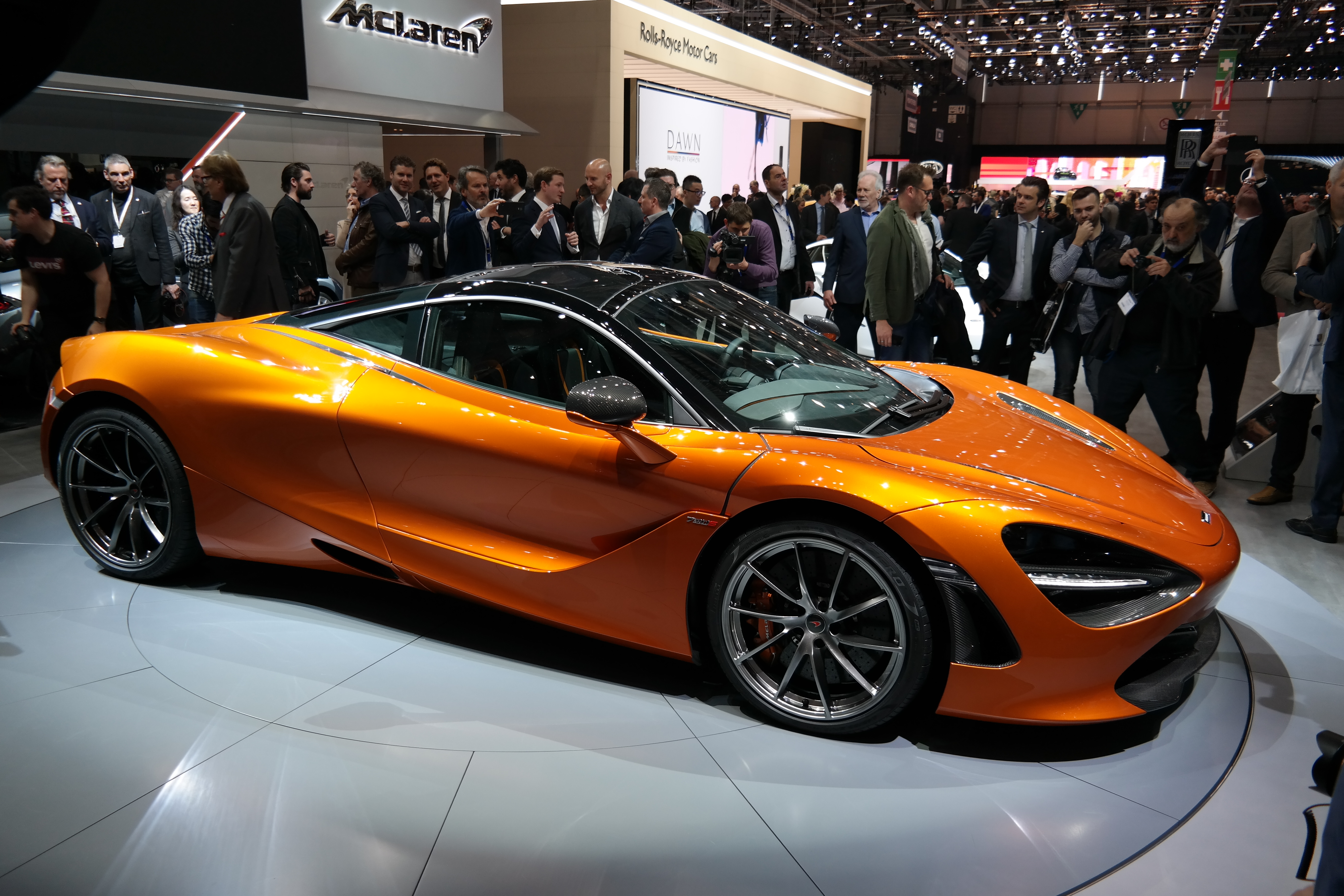
McLaren 720S
"So I talked to me in the 2022 buying a McLaren 720S. [1757.5s] And so. [1759.4s] And of course, we got the association with McLaren."
The McLaren 720S is a high-end supercar from McLaren. It’s the kind of car people buy for fast acceleration and sharp handling, and here it’s the car the speaker chose before doing a famous hill-climb event.
The McLaren 720S is a modern supercar known for its lightweight carbon-fiber construction and very responsive mid-engine layout. In this segment, it’s used as the speaker’s next step after earlier cars felt underpowered, and it becomes the platform for doing major driving experiences like the Goodwood hill climb.
Goodwood hill climb
"I talked to him and to go and do the Goodwood hill climb, [1766.6s] which was always a bucket listing for me that I wanted to do. [1769.5s] And we have to do that twice."
The Goodwood hill climb is a famous motorsport event at the Goodwood Estate in the UK where cars race up a steep hill. It’s become a bucket-list driving and viewing event because it showcases cars’ acceleration, braking, and traction in a short, intense course.
gas and the brakes
"But at two points, I turned my head to turn and and then the gas and the brakes [1897.4s] in the mouth, but it's also fully programmable."
“Gas and the brakes” are the accelerator and brake pedals. In this context, they’re talking about controlling those actions through a system that can be programmed. That’s important for adapting driving to different needs.
“Gas and the brakes” refer to the accelerator and braking inputs, which in many modern systems can be electronically controlled. The host is describing a setup where these inputs can be used as part of a programmable control system. That matters because it enables assistive driving or alternative control methods.
fully programmable
"in the mouth, but it's also fully programmable. [1900.6s] So like we we we jacked up the steering ratio really high..."
“Fully programmable” means the driving behavior can be set up by software. Instead of the car responding in only one fixed way, the system can be configured to match the driver’s needs. In this case, it helps adjust steering and control for different situations.
“Fully programmable” indicates the vehicle’s control behavior can be configured by software rather than being fixed. That typically means the system can map inputs (like head movement or other controls) to driving actions. Here, it’s used to tailor steering and driving behavior for different tasks and speeds.
steering ratio
"So like we we we jacked up the steering ratio really high when we were [1904.7s] by speak trying to make hairpins."
Steering ratio is how “quick” the car’s steering feels. If it’s higher, you have to turn the wheel more to get the wheels to turn. They change it to help the car handle tight turns and then behave differently when going fast.
Steering ratio is how much the steering wheel turns compared to how much the wheels turn. A higher steering ratio means the car turns more slowly for a given wheel input, which can help with tight maneuvers like hairpins. In this project, they adjust it to change how the vehicle behaves at different speeds.
hairpins
"So like we we we jacked up the steering ratio really high when we were [1904.7s] by speak trying to make hairpins."
Hairpins are extremely tight turns, like a sharp U-turn. They’re hard to drive smoothly because you need accurate steering. The host mentions them to explain how they tuned the car’s control behavior for tricky turns.
Hairpins are very tight, near-180-degree turns that require precise low-speed control and steering response. Because they’re so tight, steering feel and control mapping (like steering ratio) become especially important. The host uses hairpins as a benchmark for how the system handles demanding maneuvers.
system that would, you know, get people with disabilities back to work
"All they really want to do in the project is to develop a system [1927.1s] that would, you know, get people with disabilities back to work."
This is about using technology to help people with disabilities drive or control vehicles for work. The goal is real-world employment, not just showing off a gadget. It relies on customizing how the vehicle responds to the person’s inputs.
This describes an assistive driving/control concept: using adapted vehicle control systems so people with disabilities can operate work vehicles. The host frames it as a practical pathway to employment, not just a tech demo. It’s tied to customizing how inputs are interpreted and how the vehicle responds.
driving forklifts
"get people with disabilities back to work. [1931.3s] You know, driving forklifts or driving harvesters..."
A forklift is a work vehicle used to lift and move heavy items, usually in warehouses. The host is saying the same kind of adapted control approach can apply to forklifts too. That matters because it’s not just about normal car driving.
Forklifts are industrial lift trucks used for moving and stacking materials in warehouses and yards. Mentioning “driving forklifts” signals that the control system isn’t limited to passenger cars—it’s meant for other vehicle types with different controls. That broadens the engineering and safety requirements.
harvesters
"driving forklifts or driving [1933.2s] harvesters or, you know, controlling anything through the types of controls we have."
Harvesters are big farm machines used to collect crops. They have lots of controls, not just driving. The host mentions them to show the technology can help with more than just cars or forklifts.
Harvesters are agricultural machines used to cut and collect crops. They often have complex controls beyond simple steering and throttle, so adapting input methods can be more challenging. The host includes them to show the system can control different kinds of work equipment.
exoskeleton
"Now this is an I believe it's an exoskeleton that you were fit it with. Correct. Yeah, but I'll I'll like, so it's generally for paraplegics that have upper body control."
An exoskeleton is like a robotic brace you wear. It helps support your body and can assist with standing and walking movements.
An exoskeleton is a wearable robotic frame that supports or assists a person’s movements. In this context, it’s used to help someone stand and initiate steps by controlling how the body loads the device.
self balancing
"And now there's now six years later, and there's actually an exo that is self balancing out there called the wanderer craft."
“Self balancing” means the device helps keep you steady on its own. Instead of someone having to hold you up, the system adjusts to help you stay balanced.
“Self balancing” describes an exoskeleton control system that automatically compensates for the user’s shifting center of mass to keep them upright. That reduces the need for a person behind the user to manually stabilize them during standing and stepping.
Wanderer craft
"And now there's now six years later, and there's actually an exo that is self balancing out there called the wanderer craft."
“Wanderer craft” is the name of a newer exoskeleton. It’s described as being able to balance itself, which helps with standing and walking.
“Wanderer craft” is the name given here to a self-balancing exoskeleton system. The speaker contrasts it with an earlier project timeline when that kind of self-balancing capability wasn’t available.
Request an Explanation
Heard something you'd like explained? We'll add it to this episode.
Sign in to request explanations for terms you heard.
Want to learn more?
Browse our glossary for plain-English explanations of automotive terms, jargon, and concepts.
Help improve this episode
See something that's not quite right? Our annotations are AI-generated and can sometimes miss the mark. Click the flag icon on any annotation to suggest a correction.