
Where Passion Meets Preservation: Inside Madelyn Marconi’s Fight for the Sport of Drag Racing
About this episode
Madelyn Marconi talks about what keeps drag racing in her heart: the community, the track, and the stories that surround it. After rumors in 2021 threatened her home track—Palm Beach International Raceway, formerly Moroso Motorsports Park—she helped mobilize local action, including encouraging people to attend county public hearings. She pairs grassroots advocacy with motorsports writing, aiming to protect both racetracks and personal histories for the next generation, while sharing personal track memories and family influences.
Madelyn Marconi grew up on the dragstrip and has become one of the most passionate voices fighting to preserve the sport’s history and its hometown tracks. From her writing in Drag Illustrated to her grassroots battle to save Palm Beach International Raceway, she’s turned personal passion into national advocacy. Today, she opens up about the mission that drives her and the legacy she’s determined to protect.
Connect with Madelyn here: [email protected]
Website: https://www.dragzine.com/
Facebook https://www.facebook.com/madelyn.marconi
Instagram https://www.instagram.com/madelynmarconi
Connect with Red Line Oil:
Connect with Mecum Auctions:
Connect with JP Emerson: https://www.jpemerson.com/
Olivia “Liv” Harper, PR, Marketing, & Distribution Executive: https://www.jpemerson.com/
wrecked vehicles
"[2172.5s] So before I even turned 16, but it was with, you know, a partnership with my dad. [2178.5s] My dad would buy and sell wrecked vehicles. That was, he's been a bodyman by trade for 30, probably 40 years now. [2186.7s] But that was something he did. He had his dealer's license."
A “wrecked vehicle” is a car that got damaged in an accident. The guest is saying her dad worked with damaged cars—buying them, fixing them up, and then selling or using them.
“Wrecked vehicles” means cars that have been in crashes or otherwise damaged. In the context of the episode, the guest’s dad buys and sells these cars and then repairs them, which is why her first car could be both previously damaged and later driven.
bodyman
"[2178.5s] My dad would buy and sell wrecked vehicles. That was, he's been a bodyman by trade for 30, probably 40 years now. [2186.7s] But that was something he did. He had his dealer's license. So when it came time for me to kind of select a car, look at a car to purchase ahead of my 16th birthday,"
A bodyman is the person who fixes the outside of a car after it’s been damaged. They do the kind of repairs that make the car look right again and fit together properly.
A bodyman is a technician who repairs a car’s body after damage—things like metalwork, panel alignment, and refinishing. The guest credits her dad’s long bodywork career as the reason a wrecked car could be brought back and customized.
deck lid
"[2226.0s] But I would say, I think the craziest part about that car is that it was wrecked once upon a time and, you know, my dad brought it back to life. [2236.0s] He put a deck lid on the back. The trunk, it was hitting the back. A deck lid. He put a actually pretty big wing on it."
A deck lid is the big hinged door that opens to access the trunk. The guest is saying her dad replaced that rear panel after the car was damaged.
A deck lid is the hinged panel that covers the trunk area on many cars. Here, the guest says her dad “put a deck lid on the back,” meaning he replaced damaged rear bodywork to restore the car’s rear end.
wing
"[2236.0s] He put a deck lid on the back. The trunk, it was hitting the back. A deck lid. He put a actually pretty big wing on it."
A “wing” here means a spoiler mounted on the back of the car. It’s often added for style, and sometimes to help the car stick to the road at speed.
In car talk, a “wing” usually refers to an aftermarket spoiler that mounts to the trunk or deck lid. The guest mentions a “pretty big wing,” which suggests the car was visually and aerodynamically modified after the repairs.
cruise control
"It did not have cruise control, which was tough when, you know, we're traveling, you know, back and forth, whatever, going on a little trip or whatever. But that is actually, I did race that car a few times at PVIR."
Cruise control is a feature that lets the car maintain a steady speed without you pressing the gas pedal. If a car doesn’t have it, you have to do more manual speed control, especially on highway drives.
Cruise control is a driver-assist feature that holds a set speed automatically. Without it, you typically have to keep adjusting the accelerator on long stretches, which can be tiring during road trips. In the segment, it’s called out as a drawback for travel.
PVIR
"But that is actually, I did race that car a few times at PVIR. So that was kind of fun too."
PVIR is the name of a place where she went racing. She says she raced her car there a few times, which helps explain her experience with the sport. The episode doesn’t fully explain what PVIR stands for in this excerpt.
PVIR refers to a racing venue where she says she raced the Pontiac G6 a few times. For drag-racing fans, the track name matters because it signals the kind of events and surfaces the car was tested on. The transcript doesn’t spell out the full venue name here.

Pontiac G6
"But yeah, no, it was a cool car and, you know, Pontiac G6, they don't even make them anymore. They're going to be like a thing of the past."
The Pontiac G6 is a mid-size car made by Pontiac. In the episode, it’s the car she drove when she was getting started. She also points out it didn’t have cruise control, so long drives were more tiring.
The Pontiac G6 is a mid-size sedan from Pontiac (General Motors). In this segment, it’s used as a personal “first car” story—something she drove to get started and keep her moving. The host also notes it lacks cruise control, which matters for long trips.
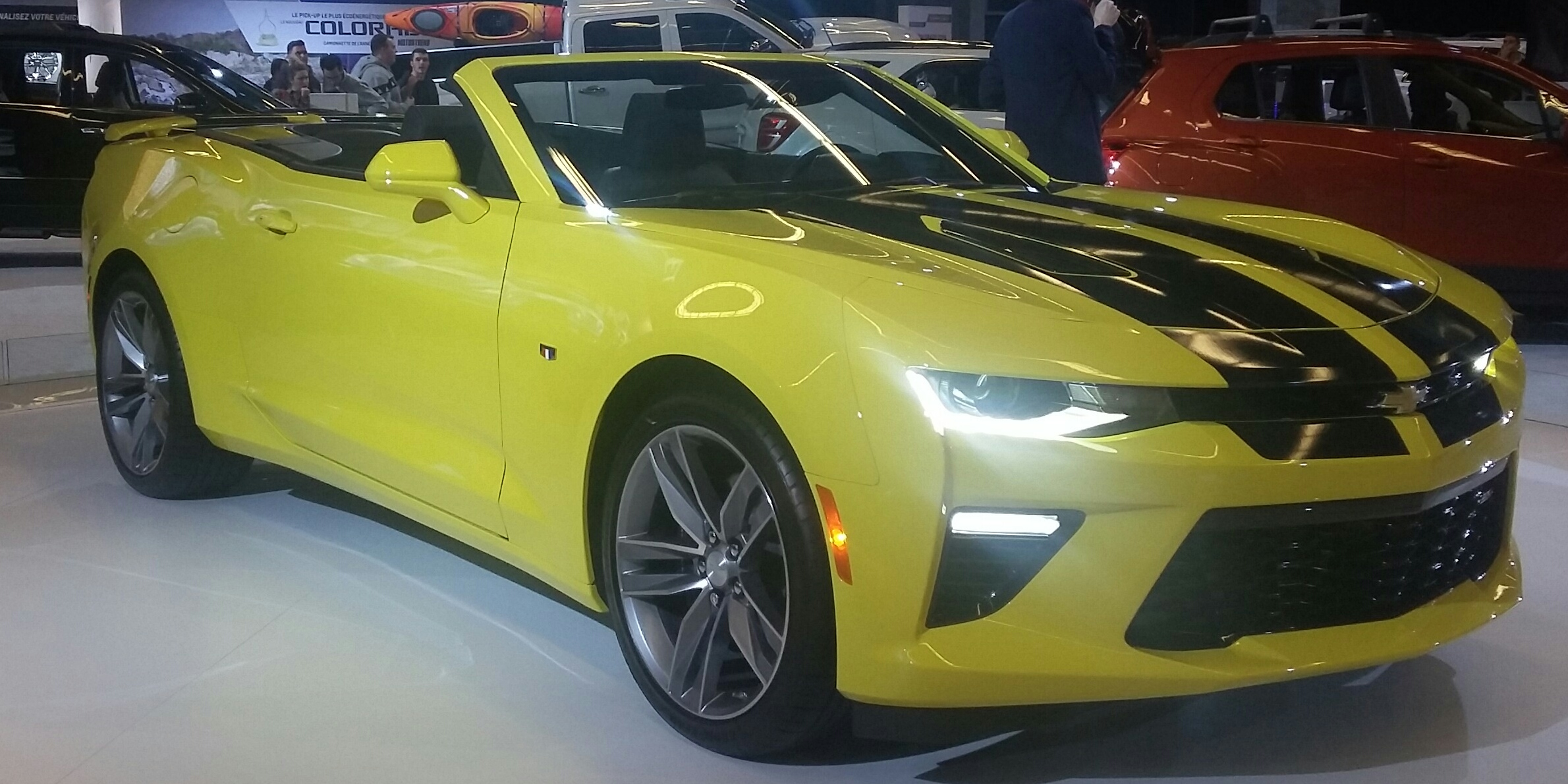
1969 Chevrolet Camaro
"I would have to say, I would probably say a 1969 Chevrolet Camaro, like all original, but like restored obviously to its, you know, former beauty, nothing too off the out of, you know, line from the 69 era. But just a 1969 Chevrolet Camaro is honestly my favorite car"
The 1969 Chevrolet Camaro is a famous classic muscle car from the late 1960s. In this episode, she says it’s her dream car—an original 1969 Camaro restored so it looks like it did back then. She also mentions her dad owned one, which makes it extra meaningful to her.
The 1969 Chevrolet Camaro is a classic American muscle car known for its iconic late-60s styling and strong enthusiast following. Here, it’s her “dream car” choice, specifically an all-original 1969 Camaro restored to factory-era beauty. She also connects it to her dad’s Camaro, reinforcing its personal and cultural significance.
Mopar
"I'm a Chevy girl, so it has to be, whatever it is, it has to be a Chevy. I can hear half of our audience cheering because she said, you're a Chevy girl. I can hear the Mopar people silently turning down their, their show right now."
Mopar is a nickname car fans use for Chrysler’s performance brands like Dodge and Plymouth. She mentions it to joke about different fan groups—Chevy fans versus Mopar fans.
Mopar is a motorsports and enthusiast shorthand for Chrysler’s performance brand lineup (Dodge, Plymouth, and Chrysler). In the segment, she contrasts “Chevy girl” with “Mopar people,” highlighting brand loyalty culture among car fans. The term is used as a community identity rather than a specific car part.
Moroso Motorsports Park
"So what is your favorite track? Moroso Motorsports Park. Okay. Right. Ding."
Moroso Motorsports Park is a famous drag racing track in Florida. Drag racers like it because it’s set up for fast, straight runs where the cars can launch and accelerate hard.
Moroso Motorsports Park is a drag-racing venue in Florida known for hosting NHRA-style events and other quarter-mile racing. It’s a common “home track” reference for drag racers because the facility is built around straight-line acceleration and consistent track prep.

Ford Mustang
"Because we do have a Cobra in the garage. Maybe it could be called Mustang Madeline. Okay. Okay. Hey, it's your movie. That's okay. That's all right. Yeah. That works. That works."
“Mustang Madeline” is a fun made-up name, but it’s based on the Ford Mustang. The Mustang is a popular car in drag racing, so it makes sense as a character idea.
“Mustang Madeline” is a playful name for an animated race car, but it clearly points to the Ford Mustang as the inspiration. The Mustang is one of the most common American muscle-car platforms in drag racing culture, so it fits the context of a “cars movie” cameo.
Request an Explanation
Heard something you'd like explained? We'll add it to this episode.
Sign in to request explanations for terms you heard.
Want to learn more?
Browse our glossary for plain-English explanations of automotive terms, jargon, and concepts.
Help improve this episode
See something that's not quite right? Our annotations are AI-generated and can sometimes miss the mark. Click the flag icon on any annotation to suggest a correction.