A “wrecked vehicle” is a car that got damaged in an accident. The guest is saying her dad worked with damaged cars—buying them, fixing them up, and then selling or using them.
A bodyman is the person who fixes the outside of a car after it’s been damaged. They do the kind of repairs that make the car look right again and fit together properly.
Cruise control is a feature that lets the car maintain a steady speed without you pressing the gas pedal. If a car doesn’t have it, you have to do more manual speed control, especially on highway drives.
Place
PVIR
PVIR is the name of a place where she went racing. She says she raced her car there a few times, which helps explain her experience with the sport. The episode doesn’t fully explain what PVIR stands for in this excerpt.
The Pontiac G6 is a mid-size car made by Pontiac. In the episode, it’s the car she drove when she was getting started. She also points out it didn’t have cruise control, so long drives were more tiring.
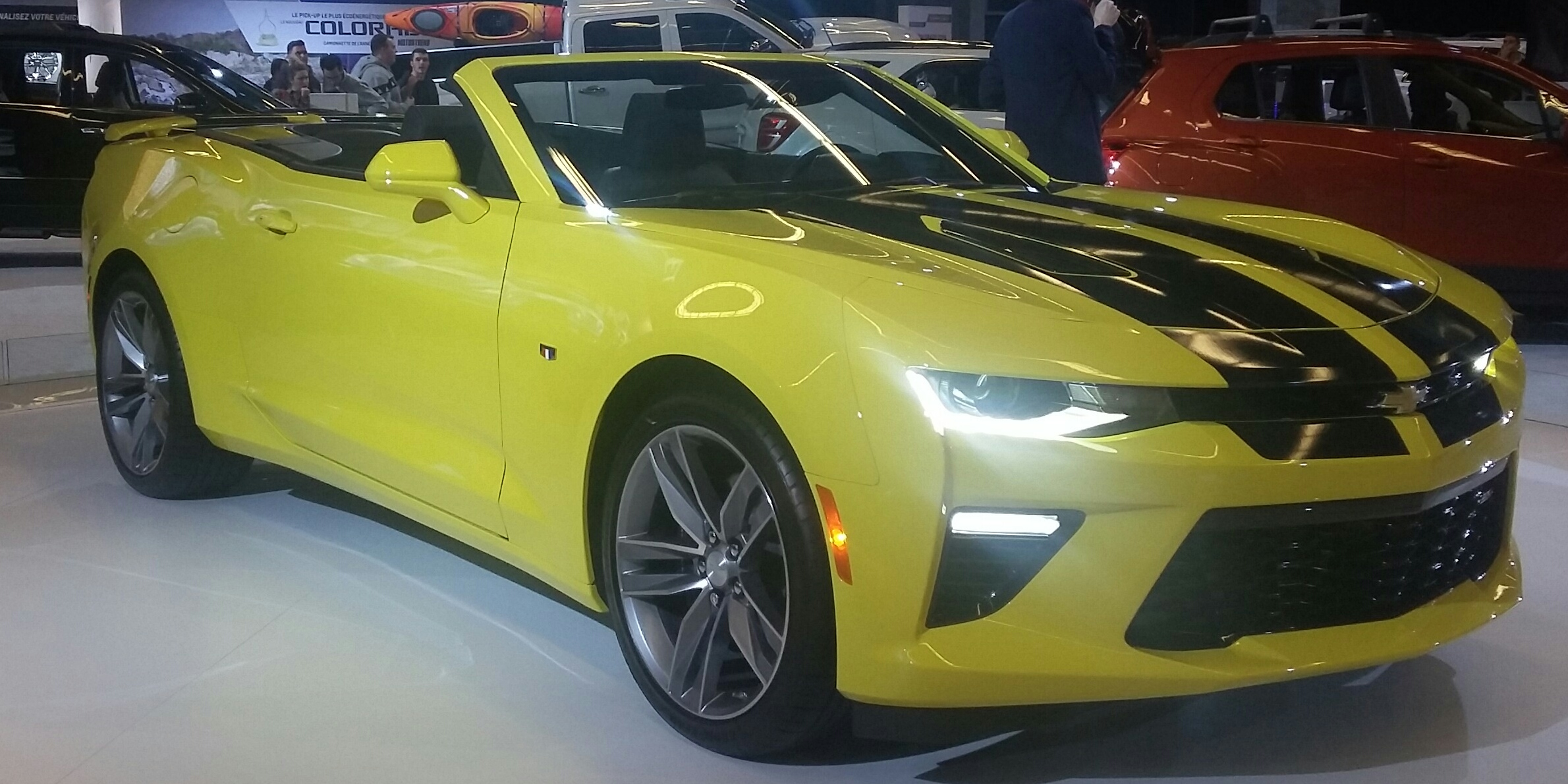
The 1969 Chevrolet Camaro is a famous classic muscle car from the late 1960s. In this episode, she says it’s her dream car—an original 1969 Camaro restored so it looks like it did back then. She also mentions her dad owned one, which makes it extra meaningful to her.
Mopar is a nickname car fans use for Chrysler’s performance brands like Dodge and Plymouth. She mentions it to joke about different fan groups—Chevy fans versus Mopar fans.
Moroso Motorsports Park is a famous drag racing track in Florida. Drag racers like it because it’s set up for fast, straight runs where the cars can launch and accelerate hard.
“Mustang Madeline” is a fun made-up name, but it’s based on the Ford Mustang. The Mustang is a popular car in drag racing, so it makes sense as a character idea.
LIVE
My name is Madeline Marconi and you're listening to the JP Emerson Show.
Welcome to the JP Emerson Show, where we ride shotgun as you tell your story.
Here's your host, JP Emerson.
Welcome back to the JP Emerson Show, provided by Redline Synthetic Oil, offering technical support and more than 100 quality products including motor oils, gear oils, assembly lubes, fuel additives and water wetter to the automotive, motorcycle, marine and industrial markets.
Visit them at redlineoil.com and buy Mecom Auctions, the world leader of live auction action from entry level to investment grade, classic to modern, foreign to domestic and wild to mild.
Mecom has it all for every budget and every individual taste.
Visit them at Mecom.com.
Our guest today is a lifelong Florida native who, thanks to her dad, who raised her at the track, began a love for drag racing before she can even walk.
What began as a brief stint in junior dragsters quickly evolved into a passion for storytelling, advocacy and preserving the sport she loves.
Today she can be found writing within the pages of Drag Illustrated and IHRA Drag Review Magazine, working closely with PRI and SEVA on right to race legislation and advocating for the community that shaped her.
Her journey through the closure of her home track not only strengthened her voice in motorsports, but deepened her faith and resilience.
It's my pleasure to welcome Madeline Marconi. How you doing, Madeline?
I'm doing great, JP. Thank you so much for having me. It's an honor to be on your show.
Absolutely. Well, we're very happy to have you. First off, I'm going to throw this out. This wasn't even one of my lead in questions, but 30 for 30. Good grief. I mean, what was that like for you?
It was honestly, it came as a major surprise. I was contacted by Craig over at Drag Illustrated for an interview and, you know, having written for the magazine for a little while as well, I was like, really, me?
Like, that just doesn't even make sense, but it was a true honor that, you know, Drag Illustrated recognized my efforts and everything that I kind of did outside of driving.
I've never really been a driver in drag racing, except for when I was much, much younger. But I think that just is a testament to Drag Illustrated's, you know, forward thinking as far as looking at the young generation and seeing what impacts they are having on the industry as a whole.
And that's not just for drivers, but also for people, you know, crewing, photography, media, as well as, you know, now motorsports advocacy, which continues to kind of get bigger and bigger over time. So it was just a true honor to be to be recognized for 30 under 30.
Absolutely. Absolutely. It's such a cool thing that they do as well. So for folks who may not know, I know we jumped really right into that question, which wasn't scripted whatsoever. But tell us a little bit about yourself for anyone who may not know who you are and what you do or just coming into this and saying,
you know, okay, who's on today? Tell us about yourself.
My name is Madeline Marconi and I am from Palm Beach County, Florida, born and raised there. I grew up going to the racetrack with my dad and fell in love at a very early age with the sport of drag racing. It's just something that they say, you know, fights you and you either get bitten and fall in love or you can take it or leave it.
But I definitely took it and I love everything about just the sport in general. Of course, the cars, you know, the engines, the horsepower, but I think most importantly, I love the community aspect about the sport of drag racing.
It truly is a family sport and it's not necessarily blood relatives. It's more of just the people that you see on the weekends after a hard week of work and you get to kind of blow off steam and chat with them and talk sometimes even talk through, you know, life challenges,
which I just found to be really, really cool, especially at a young age and that a lot of my great friends and I'm still friends with today from the racetrack.
But so that love for drag racing really transferred into preservation efforts when in 2021 there were rumors going around that our home track of Palm Beach International Raceway formerly and most notably known as Moroso Motorsports Park
here in Jupiter, Florida was closing down. I was actually sitting on the back deck of my now husband's trailer and we noticed some survey tags on the trees, the beautiful pine trees that line that whole racetrack.
And so, you know, I started digging in and seeing what was happening and ended up finding a contract for a redevelopment. So, from there, it just really, I always say it happened so fast, it was just kind of adrenaline taking over, but really just use my voice and
encourage other people in our community to do the same and go down to the county government public hearings that they held for the racetrack once we learned that it truly was being rezoned.
And just really helped everyone get involved and, you know, show up and perform their civic duties and that is, you know, speaking up for something that they want to preserve and that was the racetrack.
So really from there it just kind of snowballed and there was some highs and lows and it was a lot of effort and energy and a lot of emotion that went into it because that place is literally like a second home to me.
But again, it just kind of all came full circle because the community that we all shared at the racetrack for so many years, decades, we showed up to preserve, to try and preserve the racetrack that we loved.
So it was very cool experience and, you know, I think at this point it kind of helped inspire some other people to do the same. There were other racetracks. There was a time like a period post COVID where racetracks were really on the, you know, decrease, we'll say, but they just seemed like the land values became way too high and a lot of them were doomed for redevelopment.
Atlanta Dragway was one, Heartland Motorsports Park was another, Atco Raceway was another. So really just, you know, kind of my efforts down here in Palm Beach County kind of snowballed and a lot of people got involved as well too.
So, and it's cool too that now some of those racetracks are coming back, but really just fell in love with the sport at an early age and worked hard to try to save what we have. And then now I'm kind of sitting in a spot where I want to write for Drag Illustrated and IHRA and just continue the sport and the preservation of the sport in the only ways that I really can at this point.
So that's kind of where I'm at now.
Yeah. Yeah. I think it's great. Like you said, the property values of the tracks are, we see it all over the country, not just in racetracks. We see it in farmland. We see it in real estate. You know, I'm, you know, myself being in Florida, you know, such as yourself as well.
You know, we do see the family owned, particularly like the farms where they're going away for redevelopment and you look at the racetracks. You know, if you don't think it can hit close to home, it certainly can. So it's happening everywhere.
And certainly for individuals like yourself who are speaking up and making it known, you know, that whole community is, it's threatened. I don't know how other, how, what other way to say it.
It's certainly threatened and it has to feel good. I know, you know, the Palm Beach Raceway is still fighting on that, correct? Yeah.
Yeah. It has to feel good to know that you're making a difference for something that you love and other people love and you have the, you have the pulpit to do it, especially writing for Drag Illustrated.
Yeah, I think with that too, it's just something that happened natural. Like I have a background in government and it was simply just myself kind of going down to the meetings and telling everybody that, you know, you can get involved, you can raise your voice and there is a chance that, you know, they will listen.
So it did kind of stem from just me showing up and just doing what I knew from my government experience. And then again, just kind of, I don't know if inspires the word, but just, you know, helping encourage other people to do the same.
Because when you do show up and no matter what it is that you're fighting for, you can and absolutely will make a difference, whether you realize it or not.
Right, right. I see a lot of parallels. I guess first is how did you begin your writing? How did you get with Drag Illustrated and any other publications knowing that, for instance, you were in racing as a junior, but how did that evolve into what you're doing now and what's it like writing for them?
Yeah, writing for Drag Illustrated, I mean, the premier motorsports drag racing magazine is truly an honor. Every time I speak with Nate over there at Drag Illustrated, I'm just always honored that he is thinking of me and, you know, to contribute.
So I don't take that lightly by any means. But really, my goal in writing for Drag Illustrated and now IHRA is to really just continue to tell the stories that stem from drag racing and racing in general, because there's so many.
And it's not always the big figures, you know, the NHRA top fuel drivers or, you know, the biggest names in racing. A lot of the times, some of the coolest stories are from just the sportsmen like grassroots level racing.
They each have their own, you know, entry into the sport and reason why they do it. And that's something that I've really helped try to highlight. So I've kind of really tried to look out.
Social media, of course, plays a big role into, you know, interesting things that pop up on my feed just because of who I'm friends with or what I'm seeing. And, you know, try to come up with a story or, you know, reach out to them to highlight what they're doing.
And again, you know, sportsmen, grassroots level racing, that's, you know, what I enjoy most, but I'm also, I've also had the privilege to interview people like Alexis DeGioria and Keith Haney.
So I mean, I am very grateful for every interview that I have. But again, my goal in just writing is to continue to work towards bettering the sport of drag racing. And if writing is part of that, which I think it is because that drag illustrated, of course, is a wonderful magazine.
And now with IHRA drag review coming back. It's just the only way that I know how to kind of fit in at this point, and just continue to promote the sport that I love so much that is drag racing.
What is it that you do? I don't want to use the word actually, because I'm sure you fill your days quite well, but what are you doing during the day? Let's say when you're not at the racetrack. What is drag illustrated or your writing or whatever it is, your advocacy part of your day to day? Or is it a, I'll call it like a secondary?
I guess basically, what do you do for a living? I guess maybe that's the best way to put it is in plain English.
Absolutely. So really everything that I've done from this point, from the preservation efforts with PBIR have been volunteer. Like it's just been truly from, you know, passion with drag illustrated. I am now a established like freelance writer.
But my day to day I actually work a full time job. So a lot of this extra curricular activities occur after hours after my eight to five and on the weekends as well and my husband can attest to lots of laptop in front of me, you know, at the dinner table and, you know, in between the weekends.
But I work in special education law. We actually for a publishing company, a local publishing company in Palm Beach Gardens. And I really enjoy my job. We actually also coordinate a national conference. So a lot of event planning goes into that as well.
So I do have an editorial background as far as writing in my regular day to day life, but I most enjoy obviously writing about drag racing and motor sports and all the wonderful people in that community. But I'm very grateful for both.
Sure. Sure. Sure. Again, I see a lot of parallels. I know if I can interject, you know, my writing I wrote for the magazines up until COVID decided we don't need anybody anymore.
You know, literally in one day I lost 22 titles when they all just went away. So, so hence, here we are. But yeah, I definitely see it, you know, you can say, you know, it's, it's a, we're going to call it your, your fun job, I guess.
But, you know, some people, some people go play golf or go play tennis or, you know, go out with friends, you know, it's an enjoyable thing that you happen to get paid for. So I wouldn't really, I would call it a passion is more the way I see it.
So, and like I said before, we went, we went live here. It's, it's, I've seen some of your stuff. I've, I've, I've read all kinds of information about you and it's really fascinating for someone like yourself in the automotive space and the racing space.
You know, because you mentioned that it's very much family oriented that you see all kinds of people you see everyone from the professional drivers to the grassroots kids that are racing a go cart.
There's an entire ecosystem around the track and being able to document that is it takes a special talent.
Thank you. I very much appreciate that. And I, I agree to the fact that, you know, there's so many different like facets of drag racing. And again, just so many unique stories. I feel like it's self sustaining on its own because it's community built on, you know, just amazing people with incredible
stories who've a lot of the times built their, you know, love for drag racing from the ground up have worked very hard to be able to enjoy the sport of drag racing which we all know is, you know, expensive, especially, you know, in modern time but it's just, I find so much
just like gratitude and listening to people and you know the other day I was even on the phone with somebody who was speaking about their son who had passed away and that's the whole reason that he races the in the IHRA is to honor his son and that's the sole reason he does it and it just keeps him going.
And it's those type of stories that we were sharing tears on the phone, never met this guy a day in my life. But it's those stories that are just inspiring to me and just one of the reasons that I just want to continue to tell them.
Yeah. Yeah. So we've gotten briefly into the professional side of Madeline. Tell me about your family's influence in racing. What was what was the little kid Madeline like running around the track? As you mentioned, you were in junior racing.
We've been all around that we know how hectic it can be but also how focused it could be. What was it like for you? Tell me about your experience in that and also growing up at the track because I know you mentioned your father played a huge part in that. So tell me about that dynamic.
My dad definitely played a massive role in my love for drag racing. I was brought to the track. Gosh, probably before I was born but you know definitely after I was born and in a stroller for sure there's pictures of us there.
But really just if my dad jokes that it was kind of like our concrete playground. It's just my dad would bring us. My mom would be completely okay with it because we knew it was a safe place as ironic as that sounds.
You know, filled with just wonderful people and people who would keep an eye on us, you know, when my dad would go up to race too. So just really getting the chance to have those memories at Morosa Motorsports Park and then eventually PBIR.
It's just super special and to be able to share them with my dad and my sister. She really came to the racetrack often and we would spend our Saturday nights at the racetrack with our dad.
You know, a lot of our friends would be out partying at high school parties getting into some trouble but the place that we wanted to be was at the track with our dad so just super grateful for those memories over time.
And then also, you know, it kind of morphed into a little bit of junior drag racing. Got to have some fun there. Can't say I'm a driver. I think it's the pressure. I'm just not 100% confident in my ability.
I'd love to take a stab at it again one day maybe but I fell in love with Morse towards my late teen years. Kind of like photography and videography regarding like drag racing.
So from an early age I picked up an old Nikon camera and I would go to races, even traveling with my dad. We went to Huntsville Dragway and I have some pictures from there and I would just snap away.
We also had an old camcorder video recorder and I would bring that and I would just kind of film. So it's funny we're in the process of getting those old videos converted over so I'm excited to see what that looks like now.
But yeah, and then, you know, I did have a major love for media in motorsports. So the videography eventually evolved into creating little videos again just, you know, of our community and putting some cool music to it and trying to edit it and make it cool.
And, you know, got a lot of awesome feedback at the time where motorsports media like it wasn't what it is today. Now it's out of control. I feel like I'm way behind on the times when I see some of the videos that come up and I'm just overly impressed all the time.
But yeah, just, it kind of fell into, you know, that role of just, you know, creating videos, capturing memories just because I wanted to hang on to them. And then now looking back I'm just super grateful because we can, you know, rewatch them and see our track when it was the most lively and that's something I'm really grateful for too.
But also to my family has even grown from the race track, which is another reason why I thought so hard to protect that I met my husband at the track so, you know, we were, we'd always seen each other growing up it was just a simple wave here and there.
He always raced from juniors and he still races or just racing this past weekend. But I eventually met him and, you know, we've been together for nine years married for three. And I'm just again, I owe that race track so much because of my family, all of the memories.
Now my professional life has even stemmed from it. And just, you know, it's been a really cool journey along the way and I just, I miss it very much but I'm just incredibly grateful for it as well.
Yeah, yeah. Now, I know you mentioned you'd like to take a stab at it again. What class or what would you like to take a stab at? Take me through that.
Well, I always joke with my husband. I'm like, Hey, you know, now that we're married, maybe I can take a ride and you're, he drives basically a super crump dragster like a bracket, bracket car.
But he goes for eighties and I'm like, Oh, maybe I will. But I am getting a little older. So now I'm like, Yeah, I don't know if I need to. I kind of like my where I'm at right now. I feel like I'm contributing enough.
But if I did, I would definitely go to Frank Holly's Drag Racing School. Absolutely. Absolutely. Yeah. Yeah. I joked about that. That would be a good Christmas present too. Absolutely.
Absolutely. Frank and his wife do a great job. It's a nice easy drive in Florida to get there. So yeah, I'm going to give a shout out to them because they do do a tremendous job.
As you know, you know, life at the track life in motorsports, it's, it's not the easiest, you know, there's a lot of things you're going through. I know you mentioned that you yourself have gone through some tough times, some tough chapters, etc.
What's something that you learned about yourself through those times, specifically what you learned about who you are at the racetrack as a person, how you see things. How has that shaped you?
Absolutely. Yeah. You know, life is filled with highs and lows and everything in between. But, you know, sometimes those lows can can really get you down. And I always felt like the racetrack was a place where I could go and just kind of be with people and, you know, even just that simple wave would be, you know, everything on a day that you're not feeling 100%.
So just in general, like, again, I go back to the community and the type of people who basically like have your back, like some of the people that we've seen, or I still see at the racetrack have, you know, been around for, for years and it's really just been
something to lean on. And I will say, though, when the racetrack was, you know, doomed her redevelopment or so we thought, it definitely ignited something inside of me that I never knew that I had. But I think, again, it was just purely, you know, adrenaline and just, you know, passion for, for preserving what we have and using using the resources that I knew at the time.
But again, it all stemmed back to the fact that what we had at the racetrack at that specific racetrack was something so special.
And it's truly priceless. So, you know, when we, we learned that there was this massive price for the racetrack, it was just, it didn't compute to me, it didn't make sense, because, you know, that community and that family friendly atmosphere, it literally can't be bought, you just have to do it, you just have to be there and you have to be present with people to understand it.
So, again, it's just, I sometimes I look back and I'm like, wow, how did all of that happen, you know, a lot of things occurred.
As you know, the hearings were going on, I was getting married, I was planning a wedding, but it was just pure adrenaline and I think it was just instinctual to, to try to protect that racetrack and, and what it was and it really wasn't just for me.
Like it wasn't for me, it was for the young kid coming up who, you know, doesn't know what they want to do and, you know, coming out of high school and, and isn't sure what to do but maybe falls in love with a trade that they saw, you know, at the racetrack or they were speaking to somebody with at the racetrack about, or even just the automotive industry in general.
So, I know that that's something that at an early age, you know, when I was going through highs and lows, that, you know, I always had drag racing and that racetrack to lean on, and that was really, really crucial for me.
So I think the instinctual need to protect it really stemmed from my experience myself, and just wanting to make sure that that is something that could be in place for the next generation of, you know, young kids moving up and, and trying to figure out how to, to even navigate life because life can be tough sometimes so it's just, yeah, that's kind of where it went.
You know, I get, I get, certainly I get that, that take for instance the track. The track is there's a plus and a minus and certainly you understand, especially as someone who may be an owner of a track, it's, it's a financial draw unless you're making tons of money, you know, the time comes where someone, you know, maybe they want to retire or do something else.
So you understand that they're looking for a change and, and I don't know this, you know, the story of what the asking price was or anything, but certainly you can understand that everything changes.
I think that, and if I can speak for you just for a moment, your draw was the Cathedral of the track symbolized what was going on in your life that all that was good in your life while you have all these outside presence going on.
And that's, that's what you wanted to protect. Certainly the track itself, but the memories and things that, that you can tangibly go back to, you can go back to the track anytime you want as long as it's there.
But, you know, if it's a shopping mall or a bunch of apartments one day, then it loses its luster. And I think that's what drives people to be so passionate about things, whether it's racing or the track or whatever it is to, to like you said, you know, to go advocate to do it on your own nickel, because it's that important to you.
And I see the parallel between, again, I'm going to reference your own writing, you can see the passion in the writing, because that's what's coming through you, not just, they're not just words. And I think that's why people care so much about pretty much anything because it's personal to them.
Absolutely. I agree. And there's a sense of maybe authenticity too. And I say that lightly, because I don't want to, you know, toot my own horn in that sense, but I just believe it so much that I'm just trying to like spread West bucks as this all the time, but the gospel of drag racing.
And I'm just trying to do, he does it way better than I do, but just again, trying to spread the message and, you know, show that, you know, history is important, you know, we look at a bunch of monuments all over our state, even our cities and our country and race tracks have a lot of history.
There's been some huge names at the, at our racetrack and just in general. And, you know, it can't just be written over, we have to protect and preserve history. And that's one of the main, main reasons to that.
But I, you know, just want to protect and preserve drag racing and whether that's racetracks or people's stories, I think each facility or each person, they have stories to tell. And it's very important, especially nowadays.
Sure. Sure.
If you allow me to pull you out of this funky side at the moment, put a little more smile on your face.
You have to tell me about your dogs. I see them all the time. I see their pictures. I've seen videos. I've seen all kinds of things. Tell me about your love of animals because you convey that as well.
And folks, I know you can't see Madeline right now, but she's got a huge smile on her face as soon as I mentioned her dogs. So go ahead, Madeline.
Absolutely. My dogs. Oh my gosh, I have a small farm of animals, I would say. I have three dogs. They're each rescue dogs. They each came from, two came from a kill shelter, a pound, local pound.
And then one came from a rescue up in Ocala, Florida. But they just, they ground me as the best way to describe them. You know, it can be very chaotic having three dogs, that's for sure.
But it can also be very calming and they're just there for me in a way that, you know, I feel like no one else can, you know, obviously except for my husband, but he loves them just as much, but they're just great companions and animals have just always been just so loving and generous to me.
Over the years, I've always grown up with dogs and my family. So when I was old enough to have my own place, I ended up with three. So, you know, three is a lot sometimes but I love them each dearly and they're just, they're just very
generous with their love and they just give me exactly what I need when I need it. And they keep us too on a very structured routine. And that's something that I really crave, especially because the days and weeks can get super busy. So they're always there and they never, you know, let me
miss treat time when it's time for treats and, you know, going out and walks and all that stuff. So they give me a lot of chaos, they give me a lot of calmness, but they also give me a lot of structure too. So I need them just as much as they need me. So it's a good relationship we have.
If I can go in a different direction now, we've hit a little bit on things that aren't great, things that are great with your dogs to the, again, I don't call them the younger generation, the next generation, specifically people that are looking to you. And this is more of a deeper type question.
And they look at you and say, I want to do something like that, whether it's advocating for a track or something that's important to them or physically being at a track and doing what you're doing, whether it's journaling or running or, you know, we do read up on you so we know what you're interested in. But they see you as a role model. Do you consider yourself a role model? And if so, what makes a good role model in your eyes?
Yeah, I would say, you know, I always try to lead by example. And that's something that I feel like my mom has taught me over time. But, you know, as cliche as it sounds, you know, getting to do what you love every day, they always say that's the best thing you can ever do, like as far as a career path.
And, you know, I wouldn't say my writing and, you know, advocacy is a full blown career. But it is something that I truly, truly love and I'm truly passionate about. And although, you know, it doesn't cover things financially, I do have a day job. It is something that I love. And if that inspires somebody else to, to, you know, use their voice and, you know, show up at a public hearing over anything that they're, you know, wanting,
you know, their voice to be heard at, I feel like that's a job well done at the end of the day. But again, not entirely sure if I see myself as a role model exactly. I've just always been, you know, just me and just trying to be authentic and, and, you know, do the things that I love to do and if that inspires someone along the way, then that's an even, even better,
you know, pay, pay out than, you know, financial, financial. So that's, yeah.
I didn't want to interrupt you, but you realize you just described a role model when you were speaking about yourself. That's exactly what people are looking for. They want, they want the passion, they want something they can, they can see themselves doing and, and that's what happened.
And then of course that does start at home. So I'll shout out your mom and dad, of course, for that. But, you know, we do ask that question, not very often, but from time to time when, when sometimes whoever our guests may be doesn't quite see themselves that way.
So I think it's a great way to remind them that, you know, you may not see it yourself, but many other people do and it's important to recognize that.
Well, thank you. I very much appreciate that. And I do find sometimes it's hard for me to talk about myself, like put it into words, but, you know, the dialogue that we're having, you're, you're good at that. So thank you.
You're very welcome.
So let's step into a little bit of fun now. So again, I'll lighten the mood a little.
Your first car was, it was a Pontiac. Was that correct?
It was.
Yes. A G6.
A G6. Okay. I'm not laughing at the car, but yeah, you have to tell me, did it have a name? Did it have a personality? Did it have any memorable quirks?
What is the one thing that, that you remember about that car, whether you'll ever tell us, you'll tell your parents or tell your friends?
There's everyone has a story about that car that you think I can laugh about this myself, but I don't know that I've ever shared that publicly.
So I'm going to put you on the spot. Anything special about that car? Any names, any nicknames, personality? What was it?
Yeah. So I would just say, I think the most unique aspect of that car is that I had it bought and paid for before I even got my driver's license.
So before I even turned 16, but it was with, you know, a partnership with my dad.
My dad would buy and sell wrecked vehicles. That was, he's been a bodyman by trade for 30, probably 40 years now.
But that was something he did. He had his dealer's license. So when it came time for me to kind of select a car, look at a car to purchase ahead of my 16th birthday,
that was the car that was in my budget at the time from an early age, my parents, you know, instilled work ethic into my sister and I.
And we had to work for our car. So, you know, I worked at the local market and Italian market down the street, walked to work, made money, and I had it bought and paid for.
By the time I was 16, and again, just super grateful to even have a car at 16.
But I would say, I think the craziest part about that car is that it was wrecked once upon a time and, you know, my dad brought it back to life.
He put a deck lid on the back. The trunk, it was hitting the back. A deck lid. He put a actually pretty big wing on it.
That was just one of his custom jobs. So it looked cool. It was a cool car. It had leather. It had everything.
It did not have cruise control, which was tough when, you know, we're traveling, you know, back and forth, whatever, going on a little trip or whatever.
But that is actually, I did race that car a few times at PVIR. So that was kind of fun too.
But yeah, no, it was a cool car and, you know, Pontiac G6, they don't even make them anymore.
They're going to be like a thing of the past. But, you know, that was the car that got me started and got me out on the road and it did its job and I'm just super grateful for it.
So we move from the illustrious Pontiac G6 to let's open your mind a little dream car. Let's say money is no object.
What would you put in your garage right now?
I would have to say, I would probably say a 1969 Chevrolet Camaro, like all original, but like restored obviously to its, you know, former beauty, nothing too off the out of, you know, line from the 69 era.
But just a 1969 Chevrolet Camaro is honestly my favorite car and it's funny because my dad had one and I'm still upset that he sold it.
And I'm totally kidding, but he's, you know, it was just an iconic car that he actually restored completely.
So it's just, it's always been one of my favorite cars in 1969 Camaro and just, you know, a fun car that you can take out on the weekends.
That's always fun. We have a Cobra, my husband and I, so we take that out every now and then, but I could, I could picture a 69 Camaro sitting right next to it.
I'm a Chevy girl, so it has to be, whatever it is, it has to be a Chevy.
I can hear half of our audience cheering because she said, you're a Chevy girl. I can hear the Mopar people silently turning down their, their show right now.
But hey, you know what? It's a great car. I mean, I was born and raised, Ford blue. I like them all. It doesn't matter to me.
That's just what I was raised on. I could work on them. So, so yeah, I enjoy them, but I love all of them.
And certainly a Camaro is certainly up there.
If again, I'm going to dig deep into more of a deeper question.
So we're really going to get your mind going here.
If you could take a road trip anywhere, let's say you're in that carpet, maybe you want to choose another one.
Where would you go to? Who would be your passenger and what would you listen to?
There's, you know, there's many answers to that question. I'm trying to think which one I should go with.
Passenger would probably, well, I shouldn't say probably should edit that out.
Passenger would be my husband, just because he's also my best friend and we just have so much fun together.
But I think we'd be headed out west and see some of the, you know, national parks out there, the Redwood forests.
Bryce Canyon is supposed to be really pretty too.
But, you know, as crazy and, you know, it might not make sense at all, but as, you know, much as I love drag racing and motor sports, which, which can be deemed, you know, anti environmental.
I do love the environment and just being in the presence of such beautiful landmarks, you know, like the Grand Canyon out west.
That's something that is truly on my bucket list and I'd love to go out there and witness that.
So it's in the works for the next, you know, couple of years, but I would definitely go out there.
If a 69 Camaro could make it, as long as I'm there conditioning and a radio, I would, you know, we'd be, or we'd just be talking the whole time, which could get old.
But yeah, I would just travel out west and see some sites because there's a lot of beauty in our country.
So I'd love to go see it.
I totally get what you say about, you know, air conditioning and, you know, radio, et cetera.
I 1 million percent understand of a 69 anything could make it out there because, you know, they're highly temperamental and not just a Camaro, but any brand.
So yeah, I know exactly what you mean.
But hey, it's nice to dream anyway.
If we move to this, we have a little bit of fun here.
And I can see you thinking again, guys, I'm sitting across from Madeline and I can see her thinking as she's thinking about these answers.
Tell me about your internal monologue.
Let's say a big advocacy campaign comes up or a deadline for an article.
What is your internal monologue and how does it differ between this is something I'm passionate about and this is something that's due.
I would say, you know, a lot of my efforts at public hearings and drag illustrated writing just in general.
I kind of consider myself a perfectionist in the sense that I want to make sure that things are correct.
Like I like to be very thorough with my work and sometimes I will, you know, run myself on an on empty on E to make sure that it is correct.
Because, you know, whether it's telling somebody's story, I want to make sure it's told the right way and that all the details are correct.
Or if it's, you know, going to a public hearing, I want to make sure that I'm correct and that, you know, what it is that I'm saying.
So just I would say an internal monologue that I have with myself is, you know, just do the right thing and make sure that that right thing is factually correct and accurate so that, you know, I can go up there with confidence.
And also, you know, write up a magazine article with confidence that, you know, you're telling the story right, and you're honoring the person, you know, who you're writing about.
And just being thorough in that aspect is something that I truly strive for, whether it's writing, whether it's public hearings, whether it's, you know, SEMA, working with SEMA and advocating for motor sports and, you know, in whatever aspect that is.
But I just, I always like to be very thorough with my work.
Yeah. Yeah. Yeah. And it comes through too.
Thank you.
Now that I have your brain working over time, I'm going to let you put it in neutral a little bit here. We're going to get to know a little bit of the dirt now.
These are some rapid fire questions. Not much time to think that we're going to get, get to the meat of it. So I think I know this first one already. So what is your favorite track?
Moroso Motorsports Park.
Okay. Right. Ding. I had that one right. Okay.
If there was a product that they were going to discontinue, maybe it's something you use all the time, maybe it's something you need, would you buy it and stockpile it? Would you advocate for them not to discontinue it?
What would you do and what would that product be?
Definitely the latter. I would definitely advocate to make sure that it isn't stopped and continues to be produced. That's just the, I feel like who I am at this point. I can't unsee things that have occurred.
So I have to continue to try to preserve things that I want slash need. But I guess that product would probably be...
Just because I really lean on the running a lot, like sport of running, I would say running shoes were discontinued. That's something I would truly fight for because you can't run without them. You literally can't. So that's something that just me being me, I would definitely advocate to protect.
Okay. Okay. Last song you sang out loud.
Probably the beginning by Stephen Wilson, Jr.
Okay. All right. Now, here's one. It's going to make you think a little bit. You've been given the opportunity for a cameo in a cars movie.
What would your animated race car, what would its name be and what kind of car would it be?
Because we do have a Cobra in the garage. Maybe it could be called Mustang Madeline.
Okay. Okay. Hey, it's your movie. That's okay. That's all right.
Yeah. That works. That works.
Okay. All right. So we might get you in trouble with these, but who's the funniest person in your circle?
Definitely hands down without a doubt. My husband, his humor kills me like constantly.
Okay. All right. So who thinks they're the funniest, but they really not?
Maybe my mom.
Okay. She might get mad over that one. Maybe I'll change it.
She is funny. We have honestly a lot of our whole family is plenty. Wait, I might have to redo that one.
Oh, no. That's not going to happen. So, no.
Yeah. We'll roll with it. So forgive me.
Okay. Tell me your worst cooking disaster.
Oh, wow. There's been a few. You know, my go-to meals I'm okay at, but cooking is not really my thing.
Definitely set oil on fire because it got too hot on the oven, on the stove top actually.
So set olive oil on fire. So basically an oil fire, which is the worst type of fire to have, but it ended okay.
I put it in the sink and did not put water on it. You're not supposed to do that.
My brother-in-law is a firefighter and he, you know, when I told him after the fact, he was like, at least you didn't do that,
but put it in the sink and then got some baking soda and put it on top of it and it fared well.
Yeah. That was a big, big mistake.
Good. That was like a public service announcement brought to you by Madeleine.
There you go.
Give me one word that describes you.
I would say driven. Driven.
Okay. I can see that.
If we're on the subject of having fun and family and looking at things,
there has to be a favorite road trip that you enjoyed either with your family, with your husband.
What was it about that road trip that really makes you look back and say this was the best time and where was it?
I mean, we don't really take as many road trips lately except for, you know, to and from racetracks,
whether it's Braidington on the West Coast near you or Orlando.
But I would say one of the best trips was probably going up to Rockingham Dragway with my dad.
And it was back when ADRL was a series and we went up there for just, you know,
an ADRL race and we got to go Thursday, Friday, Saturday and then come home Sunday.
But that was just a really fun trip. We actually ended up taking my grandma's car.
She had a vehicle saver and so that thing was like a boat.
So we were just, you know, at the time my sister and I were just old enough.
I think my sister could drive and we took, you know, my grandmother's car up there for whatever reason.
I'm not sure why, but it was just a fun road trip with our dad that we got to experience
and drive from, you know, South Florida to North Carolina.
And just, I feel like we had really good conversations.
We were just chatting and then after the race, of course, just chatting about everything.
And it was just definitely a memorable road trip for me for sure.
I'm picturing the little saver. I know exactly what it looks like.
So I don't know why. what color it was.
I'm kind of picturing a dark color, maybe brown or something with, you know.
You're exactly right. That's what it was.
There you go.
Guys, I did not know that. That was a 100% guess and I don't know why I thought of that.
But anyway, so Madeline, what is next for you?
What are you looking forward to most this year in the coming months?
What is next for you?
That I'm currently on is one that I am, it's very fulfilling for me.
So really just continuing on the path that I'm on.
Obviously, there's always the desire for our racetrack to be reopened,
which there's been conversations, some rumors going around that potentially, you know,
somebody might pick it up and buy it. I know there's a lot of interest.
So if that ever came back, I would, you know, just be over the moon and just work even harder
to protect it when it reopens.
But aside from that, of course, really just, you know, continuing to tell stories about,
you know, people in the sport of drag racing and continuing to spread the gospel of drag racing
and Westbuck, you know, says all the time.
So just really doing that, but also on a personal level too, you know,
would love to maybe start a family in the next couple of years,
because, you know, one thing I've thought of recently is that, you know,
if I had so much love to give to the sport of drag racing, how would that look, you know,
in potentially a family in the next, you know, couple of years or maybe sooner.
And then just also, you know, try to raise hopefully God willing children to kind of follow
in the same footsteps and the fact that like you can use your voice.
You can, you know, be who you want to be your most authentic self and, you know,
still achieve great things, whatever that is, it doesn't have to be racing.
It could be anything, but really just, you know, hope to inspire again that young generation,
whether it's my kids or, you know, kids that I see at the racetrack or just in my community,
just, you know, inspire people to, you know, use your voice, stand up for what you believe in,
do what you love, whatever that may be, and just always try to be the best person
and the best version of you that you can't be.
And I, that's kind of, I'm hoping what's on my bingo card for the next couple of years.
Absolutely. Now, where can people find you on socials, on the web?
If they, if they want to connect with you, they have an interesting story
or anything that they want to share with you, what's the best way to do that?
Yeah, so I am on Facebook.
My name is actually, I got married, so it's Madeline Zarin, and that is Z-A-R-O-N.
So feel free to give me a friend request on Facebook.
I'd love to connect.
I'm also on Instagram too.
I should probably align me, but my Instagram is at Madeline Marconi.
So you can connect with me there.
And then also just if anyone feels like connecting or talking about anything at all,
I do have an email address too.
But my email address is Madeline underscore Marconi at Yahoo.com.
And that's been my email address for many years.
I should update it, but I haven't yet.
But yeah, if you want to reach out, I'd love to chat with anyone and everyone.
Yeah, absolutely, absolutely.
Madeline, I appreciate you taking the time to speak with us.
I was looking forward to this one because like I said, I read a bunch of your stuff,
so I knew it was going to be a lot of fun.
Hopefully we weren't too heavy there at the beginning, but hopefully, I guess we went straight down the track after that.
So hopefully that went well.
I do appreciate you taking the time to speak with us.
I'm sure I will see you at the track because we are out and about quite a bit.
So whether it's in the state of Florida or somewhere else.
And I'm going to push your husband and get her the Camaro, man, come on.
And you can do it.
Oh boy.
I do appreciate you joining us and we will talk again really soon.
Awesome.
JP, it's truly an honor.
I mean, to be on your show is just incredible and you really have good dialogue, great dialogue,
and you care about people's stories and that's very admirable.
Just from my end, you know, looking at what you do.
So I just thank you so much for your time and wanting to even tell my story because, you know,
I feel like people get sick of it over time, but I appreciate you so much.
Thank you.
It's all good.
It's all good.
Okay, we will talk again really soon.
Okay, sounds good.
Thanks.
.
About this episode
Madelyn Marconi talks about what keeps drag racing in her heart: the community, the track, and the stories that surround it. After rumors in 2021 threatened her home track—Palm Beach International Raceway, formerly Moroso Motorsports Park—she helped mobilize local action, including encouraging people to attend county public hearings. She pairs grassroots advocacy with motorsports writing, aiming to protect both racetracks and personal histories for the next generation, while sharing personal track memories and family influences.
Madelyn Marconi grew up on the dragstrip and has become one of the most passionate voices fighting to preserve the sport’s history and its hometown tracks. From her writing in Drag Illustrated to her grassroots battle to save Palm Beach International Raceway, she’s turned personal passion into national advocacy. Today, she opens up about the mission that drives her and the legacy she’s determined to protect.