
Recalls And Real-World Car Values
About this episode
The hosts kick off with a recall rundown—misassembled airbag sensors, wheel-stud separation, fuel-tank leak risk, instrument panel display failures, and seatbelts that may not restrain occupants—then pivot to how real-world prices shake out. They run a “Hemmings sold car roundup,” guessing auction results from photos and descriptions, starting with a 1948 Studebaker Commander. Classic-car value keeps coming up: stock originality, hard-to-source parts, and details like 6-volt vs 12-volt systems, plus more sale outcomes across the lineup.
A wheel stud that “may separate,” airbags that are “misassembled,” and fuel tanks that can leak after a crash. That’s not clickbait, that’s our recall list. We kick things off with straight talk on the latest automotive recalls, including 2026 Hyundai models, the Tesla Cybertruck, Volkswagen Taos, Land Rover Defender, Audi Q5 seat belt concerns, and even instrument panel display failures tied to the Dodge Charger EV and Jeep Wagoneer S. If you like your car news useful, fast, and a little skeptical, you’re in the right place.
Then we switch gears into one of our favorite games: the Hemmings Sold Car Roundup. We throw a photo up, you guess the sold price, and we all argue about what the market is thinking. From two vintage Studebaker Commanders and a surprisingly strong AMC AMX to a rough-and-ready Plymouth Suburban with racing vibes, the numbers tell a story about rarity, originality, and the hidden tax of “good luck finding parts.”
The nostalgia hits hard with an ’85 Camaro chat (yes, T-tops and leaks come up), a massive ’76 Cadillac Eldorado Convertible reality check, and a 1964 Shelby Cobra that lives in serious collector territory. And if you’ve ever looked under the hood of a questionable project car, you’ll appreciate the rough 1978 Pontiac Firebird moment, complete with a shop rag doing air-filter duty.
We wrap with Jeff’s Car Culture and a question that takes us back in time: where did the full-page car ad go? We dig into vintage magazine renderings, old-school newspaper dealership price sheets, and how car buying and automotive advertising changed once everything moved online. If you enjoy automotive recalls, classic car auction prices, and car culture history, subscribe, share this with a car friend, and leave us a review so more listeners can find the show.
Be sure to subscribe for more In Wheel Time Car Talk!
The Lupe' Tortilla RestaurantsLupe Tortilla in Katy, Texas
Gulf Coast Auto Shield
Paint protection, tint, and more!
Disclaimer: This post contains affiliate links. If you make a purchase, I may receive a commission at no extra cost to you.
---- -----
Want more In Wheel Time car talk any time?
In Wheel Time is now available on Audacy!
Just go to Audacy.com/InWheelTime where ever you are.
----- -----
Be sure to subscribe on your favorite podcast provider for the next episode of In Wheel Time Podcast and check out our live multiplatform broadcast every Saturday, 10a - 12nCT simulcasting on Audacy, YouTube, Facebook, Twitter, Twitch and InWheelTime.com.
In Wheel Time Podcast can be heard on you mobile device from providers such as:
Apple Podcasts, Amazon Music Podcast, Spotify, SiriusXM Podcast, iHeartRadio podcast, TuneIn + Alexa, Podcast Addict, Castro, Castbox, YouTube Podcast and more on your mobile device.
Follow InWheelTime.com for the latest updates!
Twitter: https://twitter.com/InWheelTime
Instagram: https://www.instagram.com/inwheeltime/
https://www.youtube.com/inwheeltime
https://www.Facebook.com/InWheelTime
For more information about In Wheel Time Podcast, email us at
[email protected]
airbag sensors
"Okay,Igotsomerecalls,okay,asIalwaysdo. Misassembledairbagsensors. I mean,whatdoesthatmean?"
Airbag sensors are the car’s crash detectors. They help the car decide when to deploy the airbags to protect you.
Airbag sensors are the electronic inputs that detect a crash and help the car decide when (and how) to deploy the airbags. If the sensors are misassembled or incorrect, the system may not trigger properly—or could behave dangerously during a crash.

Hyundai Elantra
"UhHyundai,Elantra,Alantrain,Tucson,TucsonHybrid,Tucsonpluginhybrid,allfromthe2026modelyear. Wow. It'sbeingrecalled."
The Hyundai Elantra is a common compact car. Here, the hosts mention it because a recall is tied to the airbag system not being assembled correctly.
The Hyundai Elantra is a mainstream compact sedan that’s widely sold, so recall issues can affect a lot of owners. In this segment, it’s mentioned as part of a 2026-model-year recall related to misassembled airbag sensors.

Hyundai Tucson
"UhHyundai,Elantra,Alantrain,Tucson,TucsonHybrid,Tucsonpluginhybrid,allfromthe2026modelyear. Wow. It'sbeingrecalled."
The Hyundai Tucson is a common SUV. The hosts mention it because the recall is about the airbag sensors being put together incorrectly.
The Hyundai Tucson is a popular compact SUV, so recall coverage matters for a large owner base. The segment groups it with other 2026 Hyundai models in a recall tied to misassembled airbag sensors.
wheel stud may separate
"Wow. It'sbeingrecalled. Wheelstudmayseparate. Darnit."
A wheel stud is what the wheel bolts onto. If it fails and separates, the wheel can come loose, which is dangerous.
A wheel stud is the threaded bolt that holds the wheel to the hub. If a wheel stud separates, the wheel can loosen or detach, which is a severe safety risk—especially while driving.

Tesla Cybertruck 2024 to 2026
"Wheelstudmayseparate. Darnit. TeslaCybertruck2024to2026. Howdoesastudseparate?"
The Tesla Cybertruck is Tesla’s electric truck. Here, it’s mentioned because the recall is about a wheel-stud problem that could make a wheel come loose.
The Tesla Cybertruck is an all-electric, angular pickup/SUV-style vehicle that’s known for its unique design and mass-market attention. In this segment, it’s specifically tied to a recall involving wheel-stud separation risk.

Dodge Charger EV
"Fueltankmayleak,LandRoverDefender,2026. Instrumentpaneldisplayfailure,DodgeChargerEV,JeepWagoneerS24to25. Uhseatbeltsmaynotrestrainoccupants,thenwhatgoodarethey?"
The Dodge Charger EV is an electric Charger. The hosts mention a recall where the instrument panel display can fail, meaning important driving info may not show correctly.
The Dodge Charger EV is an electric take on the Charger nameplate. The segment mentions an “instrument panel display failure” recall, which can affect how drivers see key information.

Jeep Wagoneer S 2024 to 2025
"Instrumentpaneldisplayfailure,DodgeChargerEV,JeepWagoneerS24to25. Fueltankmayleak,LandRoverDefender,2026. Uhseatbeltsmaynotrestrainoccupants,thenwhatgoodarethey?"
The Jeep Wagoneer S is a Jeep SUV. The hosts mention it because the instrument panel display can fail, so the driver may lose key information.
The Jeep Wagoneer S is a newer Wagoneer-family SUV variant. In this segment, it’s grouped with the Dodge Charger EV under a recall for instrument panel display failure.

Land Rover Defender 2026
"Instrumentpaneldisplayfailure,DodgeChargerEV,JeepWagoneerS24to25. Fueltankmayleak,LandRoverDefender,2026. Uhseatbeltsmaynotrestrainoccupants,thenwhatgoodarethey?"
The Land Rover Defender is a rugged SUV. Here, it’s mentioned because a 2026 recall says the fuel tank could leak after a crash.
The Land Rover Defender is a rugged SUV model with a strong enthusiast following. The segment claims a 2026-model-year recall where the fuel tank may leak after a crash, which is a major safety issue.
seatbelts may not restrain occupants
"Fueltankmayleak,LandRoverDefender,2026. Uhseatbeltsmaynotrestrainoccupants,thenwhatgoodarethey?"
Seatbelts are supposed to hold you in place during a crash. If they may not restrain occupants, that means they might not protect people the way they should.
Seatbelts are designed to restrain occupants during a crash so people don’t keep moving forward. If a recall says seatbelts may not restrain occupants, it implies the restraint system may not perform as intended, increasing injury risk.
real-world car values
"It'stimenowforHeming'ssoldcarroundup. [236.8s] Wepickafewoutoftheweeklylistthattheysupply,andwesaywedescribewhatthecaris. [247.0s] Marsshowsusthepictureofthecar,andthenyouguessthepriceofwhatthatcarsoldfor."
They’re talking about what cars truly sell for, not just guesses or asking prices. The hosts look at photos/descriptions and try to predict the final sale price.
“Real-world car values” refers to what cars actually sell for in the market, rather than what they’re listed for or what a guidebook estimates. This segment describes using a weekly list of cars they’re supplied, then estimating the sale price based on the description and photos.

Studebaker Commander
"Whilewe'reinthemoodforStudebakers,let'sdoanotherone,shallwe? [353.8s] Herenowisa1941StudebakerCommander. [359.2s] Okay. [359.9s] Itisait'sgotsuicidedoorsonit. [362.9s] Soandthatwasstock,I'msure,fromthefactory. [365.1s] Becausethislookslikeacompletelystockcar."
This is a classic Studebaker from the early 1940s. The hosts are talking about it as an original, factory-style car, which is important when people estimate what it’s worth.
The Studebaker Commander is a classic Studebaker model from the early 1940s, and this one is specifically discussed as a 1941 car. In the segment, the hosts focus on how it appears “completely stock,” which matters for judging originality and real-world value.
suicide doors
"Okay. [359.9s] Itisait'sgotsuicidedoorsonit. [362.9s] Soandthatwasstock,I'msure,fromthefactory."
“Suicide doors” are doors that open like older rear-hinged designs. They’re called that because, historically, they can be less safe than the doors most modern cars use.
“Suicide doors” are hinged at the rear edge and typically latch when the door is closed, rather than using the safer front-hinged layout most cars use. The term is often associated with older cars because the rear-hinged design can be more dangerous if a latch fails.
stock car
"Soandthatwasstock,I'msure,fromthefactory. [365.1s] Becausethislookslikeacompletelystockcar. [367.5s] 1941StudebakerCommanderprobablyhasgotaspinelesssix-cylinderinit,wouldbemyguess."
A “stock car” means it’s basically the way it came from the factory. Collectors usually care because original cars are often worth more than heavily modified ones.
A “stock car” is one that’s largely in factory configuration, without major modifications. In collector-car talk, originality (how much it matches how it left the factory) often affects both desirability and value.
six-cylinder
"1941StudebakerCommanderprobablyhasgotaspinelesssix-cylinderinit,wouldbemyguess. [375.1s] Anduhwhatdoyouthinkthatlookslikeit?"
A “six-cylinder” engine has six working cylinders inside the engine. The hosts are guessing this car has that kind of engine based on what they think it is.
A “six-cylinder” engine has six cylinders, which typically allows smoother power delivery than fewer-cylinder layouts. The hosts are speculating about the engine type in the 1941 Studebaker Commander based on the car’s appearance and era.

1968 AMC AMX
"Next up is a 1968 AMC AMX. ... So a 68 AMC AMX. They didn't build that many of them. That's kind of a hint at what this car sold for."
The 1968 AMC AMX is a classic muscle car made by AMC. The big takeaway here is that there weren’t many of them, so the price can be higher than you’d expect for a car that looks “smaller” than some rivals.
The 1968 AMC AMX is a classic American muscle car from American Motors (AMC) known for its compact size and strong performance options. In this segment, the hosts discuss how AMC built relatively few of them, and how that scarcity influences real-world collector pricing.

Ford Mustang
"they put what was their high performance motor in it to compete with the Mustang and the Camaros and that's sort of stuff."
The Ford Mustang is a famous American muscle car. In this conversation, it’s mentioned as the “target” car the AMC AMX was meant to go up against.
The Ford Mustang is one of the best-known American muscle cars, and it’s used here as the benchmark the 1968 AMC AMX was trying to compete with. The comparison matters because it frames how performance-focused these cars were and why buyers cared about power and competition.
high-performance motor
"they took the backseat out of it, and they put what was their high performance motor in it to compete with the Mustang and the Camaros"
A “high-performance motor” just means a stronger engine than the basic one. They’re saying AMC put a better engine in the AMX to make it compete with the other muscle cars.
A “high-performance motor” means an engine tuned or selected for stronger output—typically more power and sometimes more aggressive tuning than a standard version. In this segment, it’s the key idea behind why the AMC AMX was built to compete with Mustang and Camaro buyers.

Chevrolet Nova
"It's a big it's a big's bigger than a Nova."
The Chevrolet Nova is mentioned as a size reference point while discussing how big the 1968 AMC AMX feels in person. This kind of comparison is common in muscle-car conversations because packaging and overall dimensions affect how the car looks and drives.

Chevrolet Chevelle
"It's like a Chevelles size. Yes."
The Chevrolet Chevelle is another classic muscle car. They’re comparing the AMX’s size to it so you can get a better mental picture.
The Chevrolet Chevelle is used here as another benchmark for the AMX’s physical size—“like a Chevelle size.” In muscle-car culture, these comparisons help listeners understand proportions relative to other popular platforms from the same era.
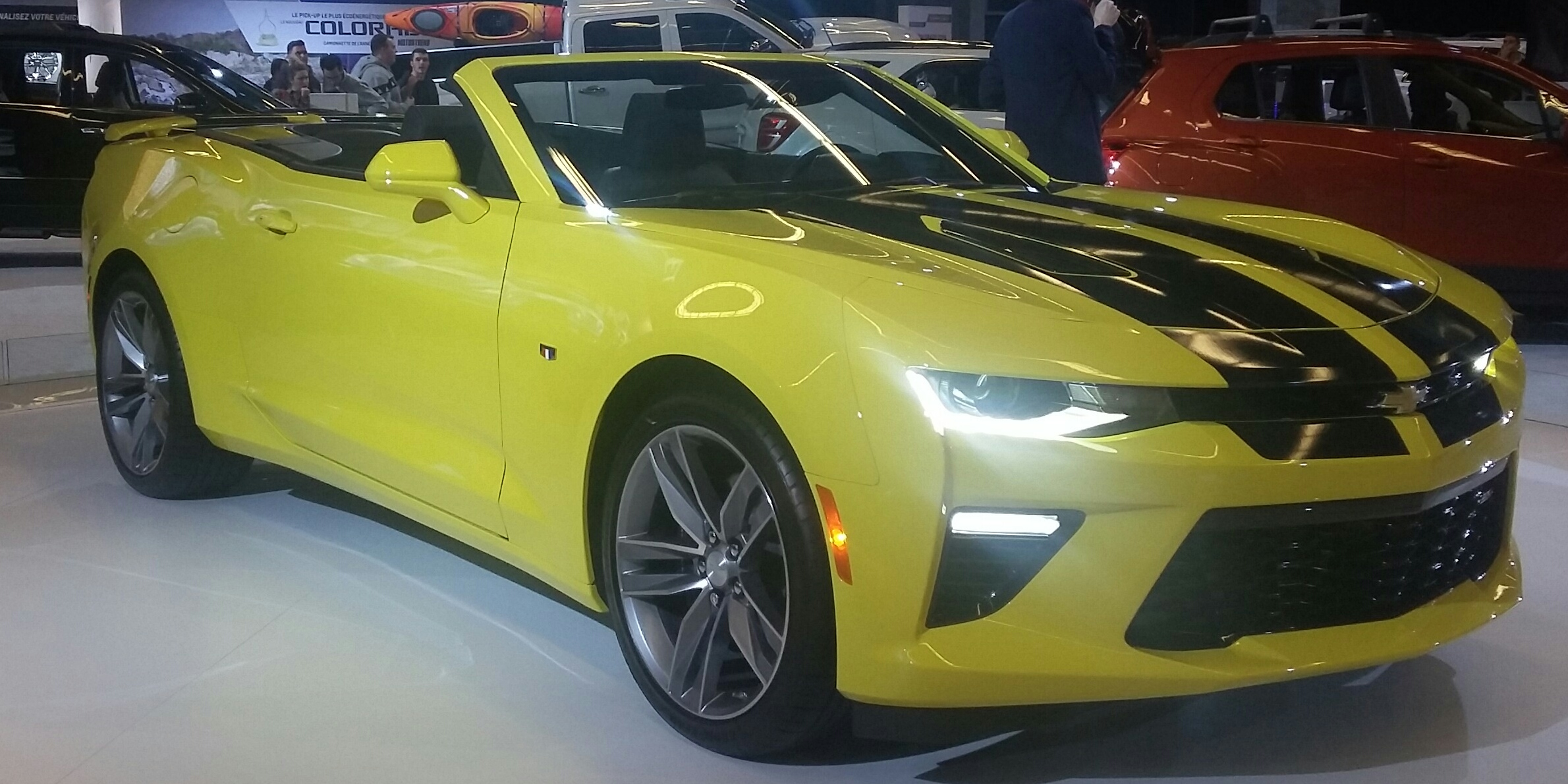
1985 Chevrolet Camaro
"Thisisa1985ChevroletCamaro. ... Sohowmuchdoyouthinkthatthis85ChevyCamarowentfor?"
The 1985 Chevrolet Camaro is a classic car from the 1980s. Here, they’re talking about a specific example and how added accessories can change what someone might pay for it.
The 1985 Chevrolet Camaro is a classic American coupe from the mid-1980s, and it’s often discussed today as a collectible because of its styling and parts availability. In this segment, the hosts talk about how small modifications—like headlight covers—can affect how people value a specific car.
headlight covers
"IdecidedthatIwantedtoputsomeheadlightcoversonit. ... theywereclearplastic,andIhadtodrilltwoholesatthefrontofthelowerpartofit"
Headlight covers are add-on pieces that go over your headlights. They can be for looks or protection, and here they’re described as something you physically install and secure.
Headlight covers are aftermarket pieces installed over the headlamp lenses, often for styling or to protect the lights. In this segment, the speaker describes drilling holes, using plastic snap-in pieces, and folding them back—details that show these covers are a physical modification, not just a removable accessory.
horsepower
"Sohowmuchdoyouthinkthatthis85ChevyCamarowentfor? Ithadnohorsepower,I'lltellyou."
Horsepower is a number that tells you how strong the engine is. Here, they’re basically saying this Camaro didn’t have much engine power.
Horsepower is a measurement of engine power—how much work the engine can do over time. The speaker uses “no horsepower” as a shorthand for a low-output setup, implying that the car’s performance (and possibly its desirability) is limited compared with higher-power variants.
T-tops
"DoesithaveT-tops? Uhapparentlyitlookslikeit. Itkindoflookslikeit. Yes,itdid. Yeah,ithasTtops. Umiftheydon'tleak,thenthat'sagoodthing. Buttheyallleak."
T-tops are removable roof panels that let you take the top off in sections. The hosts are saying they can leak water if the seals aren’t perfect.
T-tops are a removable roof panel design where the roof is split into sections, typically with two removable panels and a center support shaped like a “T.” They’re popular for open-air driving, but they can be prone to leaks if the seals and fitment aren’t right.

1976 Cadillac Eldorado Convertible
"This is, ladies and gentlemen, a 1976 Cadillac ElDoradoConvertible. I'mtearingup. Areyou? Yeah. Thislooksuhactuallystock. Andrememberthosepaintedwheelcovers?"
This is a 1976 Cadillac Eldorado Convertible, a classic American luxury car. The hosts are talking about how it looks close to original (“stock”) and pointing out some period details like the wheel covers.
The 1976 Cadillac Eldorado Convertible is a classic American personal-luxury car from Cadillac, known for its big, comfortable cruiser feel and full-size styling. In this segment, the hosts focus on the convertible version and how it presents “stock” (factory-like) with period-correct details like painted wheel covers.
Cadillac Riviera
"Ohno,thatyou'rethinkingoftheRiviera. Okay. Yeah."
The Cadillac Riviera is another classic Cadillac model, and in this conversation it’s used as a comparison point for styling details. The host suggests the other car they’re thinking of is the Riviera, implying the headlight-cover feature may be associated with that model instead.

a 64 Shelby Cobra
"Allright,nextup,we'regonnagototheotherendofthespectrumandtoa64ShelbyCobra. Now,basedontheprice,I'mjustgonnasaytoyouthatthisissomesortofanoriginal,uh,unrestored."
The Shelby Cobra is a famous classic sports car from the 1960s, built to be fast and dramatic. Here, they’re talking about a 1964 example and how its condition—like being unrestored—affects what it might be worth.
The Shelby Cobra (often associated with the 1964 model year) is a classic American roadster built around a powerful V8 and known for its raw, lightweight feel. In this segment, the hosts discuss a specific 1964 Shelby Cobra as an investment/price example, including whether it’s unrestored and what that means for collector value.
injectors
"Thosearethoseareininjectors,aren'tthey? Yeah,they'rethey'relikeawesomeness."
Injectors are parts that deliver fuel to the engine. They help control how much fuel gets used, which affects how the car runs and how strong it feels.
Fuel injectors are components that spray fuel into the engine in a controlled way, typically timed to the engine’s operating conditions. On performance cars, injector setup can be a key part of how the engine makes power and how it’s tuned.
Roush
"Well,Roush,it'saRoushmotor,butthatthatwasnotthatwasnotstockin64likethat. Georgeisat119.999."
Roush is a company that makes performance upgrades for certain cars, especially Ford models. If a car is described as “Roush,” it usually means it has recognizable aftermarket performance parts, not just stock equipment.
Roush is an aftermarket performance brand best known for upgrading Ford Mustangs and other Ford-based cars. When someone says it’s a “Roush motor” or “Roush,” they’re usually talking about factory-style performance parts and tuning sold through Roush rather than a one-off home build.
factory street car
"Itsoldforyoutothinkthisisafactorystreetcar. No. No,it'saracecar."
A “factory street car” means it was made to be driven normally on the road, not set up for racing. The hosts are saying this one isn’t really that—it’s more race-oriented.
A “factory street car” is a car that’s essentially as delivered from the manufacturer for normal road use, not built up for track/racing. In this segment, the hosts push back on that idea because the car is described as a race-focused setup rather than stock street configuration.
open headers
"No,it'saracecar. It'sgotopenheadersonit. Right."
“Open headers” usually means the exhaust is modified so it’s louder than stock. People do it for a more aggressive sound and sometimes for performance changes too.
“Open headers” means the exhaust headers are left without the usual exhaust system components (like mufflers/cats), so the engine sounds louder and more raw. It’s a common racing or enthusiast modification because it changes exhaust flow and dramatically affects sound and backpressure.
modified for racing
"Ithadahood. It'sbeenmodifiedforracing. Yeah."
“Modified for racing” means the car has been changed to perform better or be more appropriate for track driving. Here, that matters because it affects what the car is really worth compared with a stock version.
“Modified for racing” means the car has been changed from its original configuration to better suit track use—often including changes to bodywork, exhaust, and other systems. In this segment, the hosts connect the modifications to why the car’s value/identity shouldn’t be treated as stock.

1978 Pontiac Firebird
"Andourlastoneupthismorningisthisone,a1978PontiacFirebird. AndIpickedthisoutbecauseitlooksalittlerough. Alittle? Itlooksrough."
The 1978 Pontiac Firebird is a classic muscle car from the late 1970s. Here, the hosts are talking about what it’s worth based on its condition—specifically that it looks rough.
The 1978 Pontiac Firebird is a late-1970s American muscle car that’s often discussed today for how it looks and how it can be modified or restored. In this segment, it’s being evaluated as a real-world value/condition example, with the hosts noting it “looks rough.”
honeycomb wheels
" [979.0s] Ohmygosh. [980.0s] Thewheel,thehoneycombwheelsareprobablyuhagoodthingifthey'renotscuffedup. [984.2s] Well,butthey'renotstock."
Honeycomb wheels are wheels with a hexagon pattern like a beehive. The hosts are saying they’re probably a good thing as long as they aren’t damaged or scuffed.
Honeycomb wheels are aftermarket or factory wheels with a repeating hexagonal “cell” pattern. The hosts are using them as a visual/condition check—specifically whether they’re scuffed—because wheel damage can affect both appearance and resale value.
hood scoop
"[1000.7s] Whatever. [1001.2s] Imean,therearemorepicturesofitwiththeuhthereversedhoodscoopthatgoesthroughthehood. [1006.48s] "
A hood scoop is an opening on the hood that either helps bring in air or just changes the look. They’re pointing out a hood scoop style that’s “reversed,” meaning it’s not the usual direction or setup.
A hood scoop is an intake-shaped opening on the hood that can route air toward the engine or add a performance look. The hosts specifically mention a “reversed hood scoop,” which suggests the scoop’s orientation or style differs from the typical layout, affecting authenticity and how the modification is interpreted.
drag coefficient
"That'sforthecoefficient. [1427.8s] Thedragcoefficient. [1429.6s] That'sright."
The drag coefficient is a way to measure how much the air “pushes back” against a car. A lower number usually means the car cuts through the air more easily.
The drag coefficient is a number that describes how easily air resists a vehicle’s motion. Lower drag coefficient generally means less aerodynamic drag, which can improve fuel economy and high-speed efficiency.
recycler (buying tires from a re-claimer)
"Unlessyoutheycameinonawreckerandyouhadnochoice. [1611.3s] Collisionshoporsomethingelse."
They’re talking about buying tires from a salvage yard instead of a dealership. A salvage yard sells used parts taken off wrecked cars.
The speaker is describing a situation where you might buy tires from a wreck/parts source instead of a dealership. In car terms, a “recycler” (often a salvage yard) sells used parts pulled from damaged vehicles, which can be a workaround when you need something quickly or cheaply.
automated car wash scratches
"Getridofthoseterribleautomatedcarwashscratches. [1647.2s] GulfCoastAutoShieldisyourSavethePaintCompany."
They mean the kind of marks you can get from a machine car wash. The brushes or moving parts can rub on the paint and leave scratches or swirl marks.
“Automated car wash scratches” refers to paint and clear-coat damage caused by brushes, rollers, or abrasive contact during machine washing. It’s a common concern because repeated contact can create fine swirls or visible scuffs, especially on softer paint finishes.
Gulf Coast Auto Shield
"GulfCoastAutoShieldisyourSavethePaintCompany. [1650.2s] JohnGrayandhisteamofdetailingexpertscanhelpyourcarsfinishwithoutafullrepaint. [1655.1s] Searchingforrealexpertsinwindowtentorwindshieldprotection,GulfCoastAutoShield."
Gulf Coast Auto Shield is a company being advertised for protecting your car’s paint and glass. They’re claiming you can protect your car without repainting it.
Gulf Coast Auto Shield is being promoted as a paint-protection provider. The pitch ties the brand to services like windshield/window protection and protecting a car’s finish without a full repaint.
window tint
"Searchingforrealexpertsinwindowtentorwindshieldprotection,GulfCoastAutoShield. [1660.1s] Dashcams,radardetectors,GulfCoastAutoShield."
Window tint is a thin film put on your car’s windows. It helps cut down glare and heat and can protect what’s inside the car.
Window tint is a film applied to side windows (and sometimes windshields) to reduce glare and heat and to add privacy. Depending on the product, it can also help protect interior materials from UV exposure.
windshield protection
"Searchingforrealexpertsinwindowtentorwindshieldprotection,GulfCoastAutoShield. [1660.1s] Dashcams,radardetectors,GulfCoastAutoShield."
Windshield protection is something you add to your windshield to help it stay clearer and cleaner. It can also help with rain and glare.
Windshield protection typically means applying a protective coating or film to help repel water, reduce glare, and make the glass easier to clean. Some products also aim to reduce minor damage from road grime and environmental exposure.
dashcams
"[1660.1s] Dashcams,radardetectors,GulfCoastAutoShield. [1663.5s] Gotanewcar?"
A dashcam is a small camera that records what’s happening on the road. It can help if there’s an accident or dispute.
A dashcam is a camera mounted inside the car that records video while you drive. Enthusiasts and everyday drivers use them to capture incidents, provide evidence after crashes, and document road conditions.
radar detectors
"[1660.1s] Dashcams,radardetectors,GulfCoastAutoShield. [1663.5s] Gotanewcar?"
A radar detector is a device that warns you if it senses police speed-detection signals. It’s meant to help you slow down before you get a ticket.
Radar detectors are devices that listen for radio signals used by police speed-measurement systems. They alert the driver when they detect those signals, which can help drivers avoid speeding tickets (though legality and rules vary by location).
Request an Explanation
Heard something you'd like explained? We'll add it to this episode.
Sign in to request explanations for terms you heard.
Want to learn more?
Browse our glossary for plain-English explanations of automotive terms, jargon, and concepts.
Help improve this episode
See something that's not quite right? Our annotations are AI-generated and can sometimes miss the mark. Click the flag icon on any annotation to suggest a correction.