Recharging Round Britain Day 2 - 14 July 2026
About this episode
Day 2 of the Recharging Round Britain EV trip kicks off from Bodmin Moor, with the hosts aiming to see whether it’s harder or easier than 10 years ago—especially around charger availability. They route via southwest England, stop at Folkestone Services to charge overnight, and then tackle major roads toward tomorrow. Along the way they compare charging speeds, verify the car’s WLTP range, and use drive modes to manage efficiency. GridServe sponsor details wrap the segment, including GridServe Plus discounts.
Today, Tuesday July 2026, we continued with Day 2 of Recharging Round Britain, where we try as closely as we can to recreate the route we undertook nearly a decade ago. Hear how we got on today as we travelled from Bodmin, via Falmouth, Exeter, Southampton, Cobham Services eventually to our hotel in Folkestone.
CHARGING SPONSORThanks to our charging sponsor, GRIDSERVE, They have an EV charging network that spans almost the whole of the UK.
While you can just turn up and pay with a debit card or their app, you can also get 25% off charging rates at all 200 of their locations with GRIDSERVE Plus.
GRIDSERVE Plus costs just £7.99/month and can be cancelled at any time, much like many gym memberships, and as well as the discounted charging, there are many other seasonal membership benefits such as EV heathchecks while you charge, pet portraits, and similar.
Many people take out Gridserve Plus for a month at a time to cover a holiday or seasonal travel.
There's more information at gridserve.com/membership/
VEHICLE SPONSORThank you to Hyundai, who once again have loaned us an electric vehicle enabling us to travel around as much of Britain as we can in six days. This time, we are using an Inster 02. To find out more on the Inster, you can listen to Alan’s time with one during the UK launch of the car, by clicking this link here.
To see more about the car, from Hyundai themselves, click this link here.
If you like what we do, on this show, and think it is worth a £1.00, please consider supporting us via Patreon. Here is the link to that CLICK HERE TO SUPPORT THE PODCAST
BMW M3
"And then we came up. We ended up coming up the M3, around the bottom of the M25 along the M20, beca..."
The BMW M3 is a fast version of a regular BMW 3 Series, made for sporty driving. It’s designed to handle well and accelerate strongly, not just to look good. The podcast brings it up as one of the performance cars you could choose on that route.
The BMW M3 is a high-performance sports sedan from BMW’s M division, built for quick acceleration, sharp handling, and everyday usability. It’s often discussed in motoring news because it represents the “serious” end of the performance-sedan market and is a benchmark for driving feel on real roads. In the podcast context, it’s mentioned as a specific performance option during a route discussion.
charging points
"In terms of every time we made it easily to the charging points, we were able to charge."
Charging points are the places where you plug an electric car in to charge it. Some chargers are faster than others, so the car may charge quicker at one spot than another.
“Charging points” are the specific locations and outlets at a public charging site where an EV can plug in to recharge. They can differ in power output, which affects how fast the battery charges.

Dodge Charger
"... choice of we could have gone straight to another charger, which is a kill of the walk."
The Dodge Charger is a bigger car that’s built to feel powerful when you drive it. People often choose it when they want strong acceleration and a sporty feel. In the podcast, it’s mentioned as a possible option instead of going somewhere else.
The Dodge Charger is a large, performance-oriented sedan/coupe-style car known for strong engine options and a muscular driving character. It comes up in news and route discussions because it’s a popular choice for people who want power and presence in a practical body. In the podcast context, it’s referenced as an alternative “charger” option during the conversation.
connected
"it shows what's happening and whether you're still connected and these kind of things."
When they say “connected,” they mean the car is properly talking to the charger. If that link isn’t right, the charger may stop or refuse to keep charging.
In EV charging, being “connected” typically means the car and charger have an active communication link so the charger can control charging and the session can be monitored. If the connection drops or the charger session is interrupted, charging can stop.
WLTP
"out this morning to the car and it was showing 220 miles exactly of range, which is the WLTP."
WLTP is a standard test used to estimate how far a car can go on a full charge. It’s a lab-based number, so your real range can be different depending on driving conditions.
WLTP (Worldwide Harmonized Light Vehicles Test Procedure) is the standardized testing method used to estimate an EV’s range and fuel economy. When the host says the car shows “220 miles exactly of range” and calls it “the WLTP,” they’re referencing that lab-test-based estimate rather than real-world driving.
kilowatts
"We just left it on us, a little seven kilowatt job and it was all done by the morning."
Kilowatts (kW) are how powerful the charger is. More kW usually means faster charging, but the car also has limits on how fast it can accept power.
Kilowatt (kW) is the unit of power used to rate EV chargers. Higher kW generally means the charger can transfer more energy per unit time, which usually shortens charging sessions (though the car’s battery and onboard charging limits still matter).
seven kilowatt
"We just left it on us, a little seven kilowatt job and it was all done by the morning."
Kilowatts (kW) tell you how strong the charger is. A “seven kilowatt” charger charges more slowly than the really fast ones, so you usually need more time to fill up.
“Kilowatt” (kW) is a measure of power, and in EV charging it describes how quickly the charger can deliver energy to the battery. A “seven kilowatt” charger is relatively modest compared with fast-charging setups, so it typically takes longer to refill the battery.
Exeter
"We charged in Exeter. Yes. That was our first of the day."
Exeter is a place in England where they stopped to charge. It’s an example of how EV trips are planned around where charging is available.
Exeter is a city in Devon, England, mentioned here as one of the stops where the hosts charged their EV. For listeners, it highlights how route planning for charging often depends on specific towns and charging locations.
Southampton
"We charged, we did the little mini charge at Southampton. Yes."
Southampton is where they stopped to charge. They mention it was slower than expected, which shows how charging speed can vary by location.
Southampton is a city on England’s south coast, referenced as a charging stop. The hosts note the charging there was slower, which is a common real-world factor when choosing where to top up.
Cobham
"Stopped at Cobham, briefly. That was quick. For a little while, that was a super quick charge."
Cobham is another stop they used for charging. They say it was a very quick charge, meaning the charger worked fast enough for a short stop.
Cobham is mentioned as a brief stop for charging, with the hosts saying it was “super quick.” That implies the charger at that location delivered power fast enough to make a short top-up effective.
Folkestone
"And we're at Folkestone and we're charging right now. As we speak, I have a funny feeling. I think it's finished."
Folkestone is where they’re charging at the moment. It shows EV trips are typically planned as several shorter charging stops rather than one long session.
Folkestone is a town in Kent, England, where the hosts say they are charging “right now.” It’s part of their day’s charging route, illustrating how EV travel is broken into multiple charging sessions.
drive modes
"It's definitely nippy. Yeah, there's several drive modes. And if you, like yesterday, there was one car on one particular patch of road"
Drive modes are buttons in the car that change how it behaves. For example, they can make the car feel more relaxed or more responsive when you press the accelerator.
Drive modes are selectable settings that change how an electric car responds to your inputs. Common differences include throttle mapping, steering feel, and how aggressively the car uses power and regenerative braking.
sport
"So we put it in sport. It was on a truck, actually. And it was, no, it was just a cash guy."
“Sport” is a setting that makes the car feel more eager. It usually gives you faster response when you press the accelerator.
“Sport” is a drive mode that typically prioritizes quicker acceleration and sharper throttle response. In an EV, it often also changes how power is delivered and may reduce efficiency-focused limits compared with normal or eco modes.
range
"I think you've pressed eco and gone, oh, look, there's more range, and then put it straight back in normal. So we basically just left it, and pretty much what an owner would do."
“Range” is how far the EV can go before it needs charging again. Driving harder or faster usually reduces it, while Eco mode can help increase it.
In EV talk, “range” means how far the car can drive on a single charge. It’s strongly affected by driving style, speed, weather, and how often you use power-hungry modes like Sport versus Eco.
eco
"I think you've pressed eco and gone, oh, look, there's more range, and then put it straight back in normal. So we basically just left it, and pretty much what an owner would do."
“Eco” is a setting meant to help the car go farther on a charge. It typically makes the car less “grabby” and encourages gentler energy use.
“Eco” is a drive mode designed to improve efficiency and extend range. It usually softens throttle response and may adjust power limits and regenerative braking to use less energy.
M 25
"We've covered everything, from little Cornish lanes to getting stuck on the M25, and then the M20, which is a delight at the moment. They're all ready for operation stack, so there's something for us all to look forward to."
The M25 is a big highway that circles around London. It’s the kind of road where traffic and speed can affect how far an EV can go.
The M25 is a major motorway in southeast England that loops around London. It’s often used in road-trip routes and can be a good real-world test of how an EV handles traffic and stop-and-go conditions.
M20
"We've covered everything, from little Cornish lanes to getting stuck on the M25, and then the M20, which is a delight at the moment. They're all ready for operation stack, so there's something for us all to look forward to."
The M20 is a highway in southeast England that heads toward the Channel ports. It’s the kind of route you’d take when traveling toward places like Folkestone.
The M20 is a motorway in southeast England connecting London with the Channel ports. It’s a common route for trips toward Folkestone and cross-Channel travel, so it’s relevant to EV planning and charging stops.
operation stack
"We've covered everything, from little Cornish lanes to getting stuck on the M25, and then the M20, which is a delight at the moment. They're all ready for operation stack, so there's something for us all to look forward to."
“Operation Stack” is when authorities create a temporary queue system on the motorway to manage lots of cars heading to the ferry. It can mean long waits, which matters for EV planning.
“Operation Stack” is a UK traffic management plan used when Channel ferry demand or port capacity is constrained. It temporarily holds vehicles in a designated motorway queue area to manage flow to the ports.
Dartford Crossing
"Tomorrow then. Tomorrow, tomorrow. Folkstone, where we are now, over through the Dartford Crossing,"
The Dartford Crossing is a major route over the Thames near London. It’s often busy, so it can affect how efficiently an EV uses energy in traffic.
The Dartford Crossing is a key crossing over the River Thames near London, connecting the M25 routes. It’s a common bottleneck area, so it can be a real-world stress test for traffic efficiency and EV range estimates.
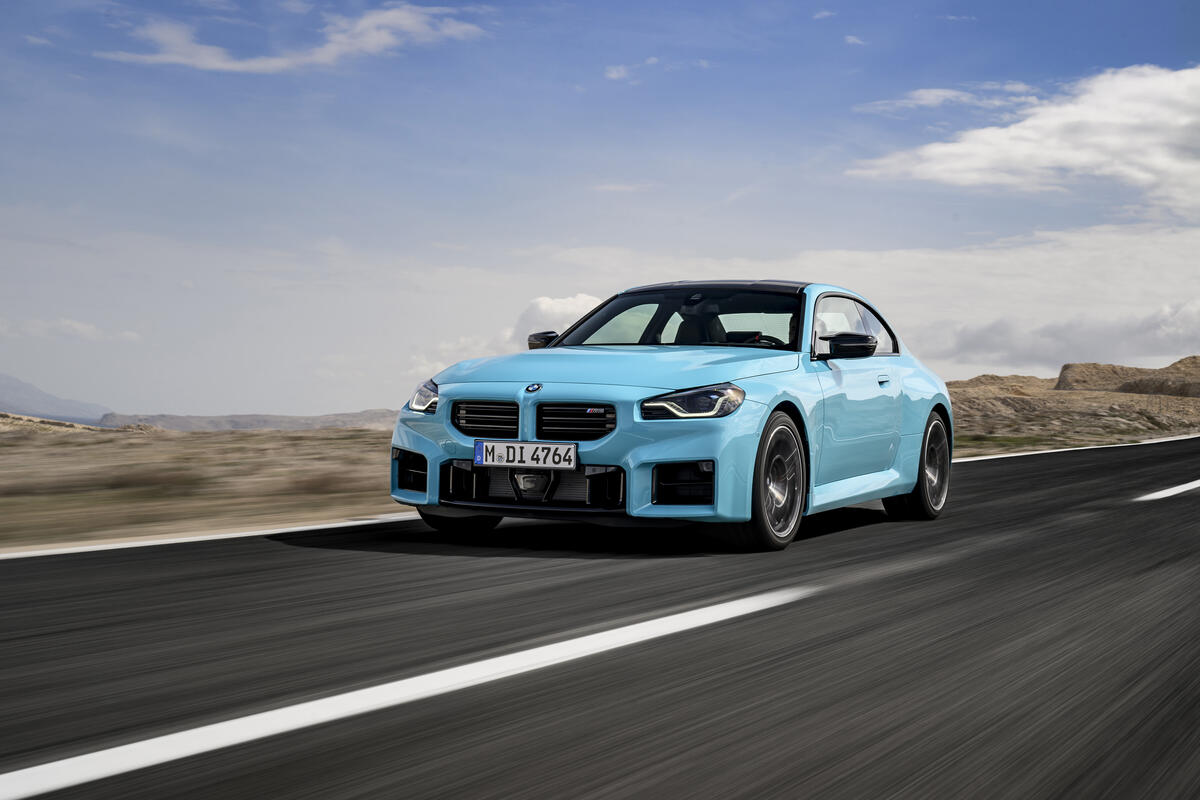
BMW M2
"Yeah. A sensible person would go here, M20, M2, M25, M11, M1, and that would be it, and you..."
The BMW M2 is a smaller, sportier BMW that’s meant for fun driving. It’s designed to be quick and handle well, especially on roads with curves. The podcast mentions it as one of the sensible choices in a list of BMW models.
The BMW M2 is a compact, track-focused performance car from BMW’s M division, positioned as a smaller, more agile alternative to larger M models. It’s frequently discussed because it offers a sporty driving experience in a more compact package, which can make it feel especially responsive on winding roads. In the podcast context, it’s listed as part of a route/selection sequence of BMW models.
GridServe
"As far as new news, just before we sign off, thanks very much to our charging sponsor, GridServe. They have an EV charging network that spans almost the whole of the UK,"
GridServe is a company that runs electric-vehicle charging stations in the UK. They’re sponsoring the show and offering a membership that can make charging cheaper.
GridServe is a company that operates an EV charging network in the UK. In this episode, they’re mentioned as the charging sponsor and as providing both pay-as-you-go charging and a membership option.
EV charging network
"They have an EV charging network that spans almost the whole of the UK, and while you can just turn up and pay with a debit card or their app,"
An EV charging network is a group of electric car charging stations in different places. It usually comes with an app or membership so you can locate chargers and pay for them.
An EV charging network is a coordinated set of charging stations that drivers can use across a region. The key idea is that the stations are managed under a common service (often an app or membership) so you can find and pay for chargers more easily.
EV health checks
"and as well as the discounted charging, there are many other seasonal membership benefits, such as EV health checks whilst you charge, pet portraits, and similar."
EV health checks are service add-ons offered during charging that assess the condition of an electric vehicle. While the exact scope isn’t detailed here, the term generally refers to quick diagnostic checks aimed at identifying potential issues before they become problems.
Request an Explanation
Heard something you'd like explained? We'll add it to this episode.
Sign in to request explanations for terms you heard.
Want to learn more?
Browse our glossary for plain-English explanations of automotive terms, jargon, and concepts.
Help improve this episode
See something that's not quite right? Our annotations are AI-generated and can sometimes miss the mark. Click the flag icon on any annotation to suggest a correction.