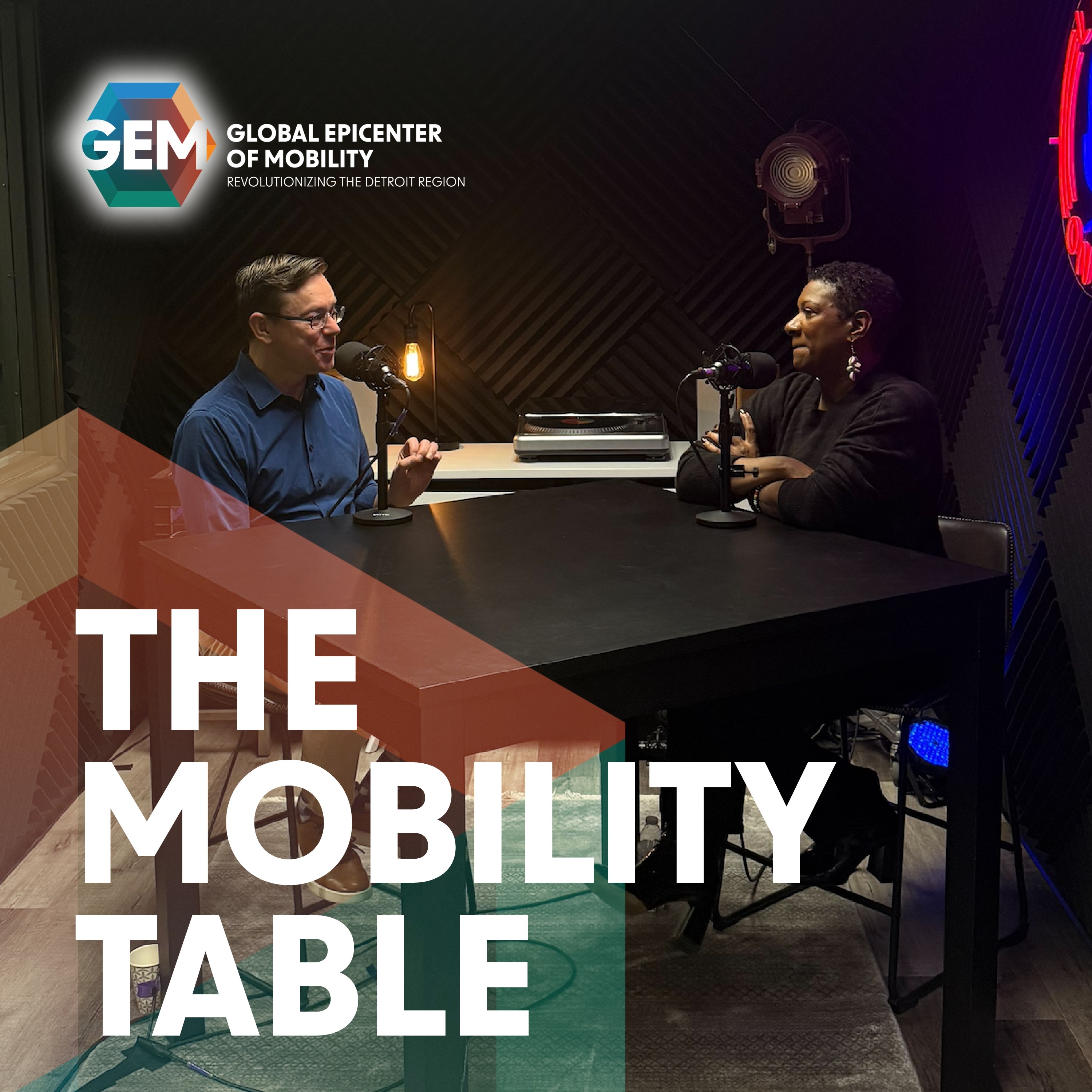
Redefining Mobility and Driving Innovation with Michigan Economic Development Corporation Chief Mobility Officer Justine Johnson
About this episode
Exploring the evolving landscape of mobility, Janine Gantt and Bernard Swicky discuss the transformation of Detroit from a traditional automotive hub to a broader mobility ecosystem. They emphasize the importance of adapting to new technologies, including drones and electrification, while highlighting the need for collaboration among various sectors. The episode features insights from Justine Johnson, Michigan's Chief Mobility Officer, who shares her vision for integrating clean transportation and innovative solutions to ensure Detroit remains a leader in the mobility revolution.
Justine Johnson joined Jeannine and Bernard at The Mobility Table to discuss the definition of mobility and the ways innovation is inspired, driven, and achieved within the Detroit region and the state of Michigan.
Justine is the Chief Mobility Officer at the Michigan Economic Development Corporation (MEDC), where she leads state-wide electrification efforts. She has more than 10 years of experience in external affairs, strategy, government, and community relations, having worked for organizations including Ford Motor Company, the New York City Economic Development Corporation, and the California Mobility Center.
electrification
"...especially in this advanced mobility ecosystem. And I think electrification EVs are a really important part of that. Like Michigan has really seen that as something that we need to focus in on..."
Electrification means using electricity instead of gas or diesel for vehicles. This includes electric cars and hybrids that use both electricity and fuel, helping to reduce pollution.
Electrification refers to the process of replacing technologies that use fossil fuels with those that use electricity. In the automotive context, it typically involves the development and adoption of electric vehicles (EVs) and hybrid vehicles, which are seen as crucial for reducing emissions and promoting sustainable transportation.
advanced mobility ecosystem
"...to take the assets that we currently have, retool them, rethink about them, reposition them so that they're ready for this new emerging opportunity, especially in this advanced mobility ecosystem..."
The advanced mobility ecosystem is a network of new technologies and ideas that help improve how we get around. This includes electric cars, self-driving cars, and smart roads that work together to make travel easier and cleaner.
The advanced mobility ecosystem refers to the interconnected systems and technologies that enable modern transportation solutions, including electric vehicles, autonomous driving, and smart infrastructure. It encompasses various stakeholders, including manufacturers, tech companies, and government agencies working together to innovate in transportation.
EVs
"...I think electrification EVs are a really important part of that. Like Michigan has really seen that as something that we need to focus in on..."
EVs stands for electric vehicles, which are cars that run on electricity instead of gasoline. They are becoming more popular because they are better for the environment.
EVs, or electric vehicles, are cars that are powered entirely or partially by electricity. They are part of the growing trend towards sustainable transportation and are designed to reduce reliance on fossil fuels.

Ford Model T
"...ichigan, right? You think about the legacy of the Model T in 1909 and literally have a prototype that in 1..."
The Ford Model T is a very old car that was first made over a hundred years ago. It was important because it was one of the first cars that regular people could afford, changing how people traveled and worked. Even today, it is seen as a big deal in car history.
The Ford Model T, introduced in 1908, is often regarded as the first affordable automobile, revolutionizing transportation and manufacturing with its assembly line production. It made car ownership accessible to the average American, significantly impacting society and the economy. The Model T's legacy continues to influence automotive design and manufacturing practices today.
mass production
"...In 1909, you're seeing mass production of this vehicle."
Mass production means making a lot of the same product quickly and cheaply, like how cars were made on assembly lines. It helps make things affordable for more people.
Mass production refers to the manufacturing of large quantities of standardized products, often using assembly lines. This method significantly reduces costs and increases efficiency, making products more accessible to the public.
legacy automakers
"...this nice, perfect ecosystem for innovation to thrive. And whether that's coming from the legacy automakers or suppliers..."
Legacy automakers are older car companies that have been making cars for a long time. They are now trying to make new types of cars, like electric ones, to keep up with changes in the market.
Legacy automakers refer to traditional car manufacturers that have been in the industry for many years and have established brands and production methods. These companies are often transitioning to new technologies, such as electric vehicles, to stay competitive.
EV battery innovation
"...they have an EV battery center. And so they're all focused on battery innovation. This is literally a space it is. I go into walls like that. I'm like, wow, this is not just a research lab. This is going to define how we are going to power vehicles of the future..."
EV battery innovation means making better batteries for electric cars. These improvements help cars go farther on a single charge and charge faster, making electric cars more appealing to drivers.
EV battery innovation refers to advancements in battery technology specifically designed for electric vehicles. This includes improvements in energy density, charging speed, and overall efficiency, which are crucial for the performance and adoption of electric vehicles.
University of Michigan
"...I was just at the University of Michigan. They have an EV battery center. And so they're all focused on battery innovation..."
The University of Michigan is a well-known school that does a lot of research, especially in cars and technology. They help create new ideas for electric vehicles and batteries.
The University of Michigan is a prominent research university known for its engineering programs, particularly in automotive technology and electric vehicle research. It plays a significant role in developing new technologies for the automotive industry.

Lucid Air
"... or pieces or components could be moved over the air? And how does that start to reduce truck traffic..."
The Lucid Air is a fancy electric car that runs on batteries instead of gas. It's known for being able to go really far on a single charge and has a lot of cool tech features. This car is important because it shows how electric cars can be both luxurious and environmentally friendly.
The Lucid Air is a luxury electric sedan that has gained attention for its impressive range, performance, and advanced technology features. It represents a significant step forward in the electric vehicle market, competing with established brands like Tesla. The Lucid Air is notable for its focus on sustainability and innovation in the automotive industry.
Request an Explanation
Heard something you'd like explained? We'll add it to this episode.
Sign in to request explanations for terms you heard.
Want to learn more?
Browse our glossary for plain-English explanations of automotive terms, jargon, and concepts.
Help improve this episode
See something that's not quite right? Our annotations are AI-generated and can sometimes miss the mark. Click the flag icon on any annotation to suggest a correction.