The 1967 Shelby is the classic version of a famous American performance car. In this episode, they’re using it as the “look and vibe” that the Revoligy GT500 is based on.
This means the car may look like a 1967, but it doesn’t actually use original 1967 parts. So it’s more of a modern build that’s inspired by the classic, not a true original from that year.
“Driver monitoring” means a car uses sensors or a camera to watch the driver. The “bill” part suggests new rules that could require this technology in cars.
A “replica” is a car that’s built to look like another famous car. It might not be made with the exact same parts or the same engineering as the original.
A “recreation” is typically a build that aims to recreate the original car more faithfully than a replica, often with closer attention to the original parts, layout, and specification. In enthusiast discussions, the terms can overlap, but “recreation” usually implies a higher fidelity to the original.
Concept
unshitboxing vehicles
They’re talking about “unfixing” the annoying stuff. Basically, it means taking a car that would normally be rattly or problematic and rebuilding it so it feels solid and works right.
Term
modern engineering
“Modern engineering” here means using up-to-date manufacturing methods, materials, and design practices to improve how a car behaves and how reliably it holds up. It’s contrasted with the “60 years ago” complaints—so the point is fewer rattles and fewer mechanical problems.
A “dead” brake pedal is when you press the pedal and it moves, but the car doesn’t slow down right away. You have to press farther before the brakes really start working.
Heel-toe is a technique for downshifting smoothly while you’re braking. You use your foot placement to brake and “rev” the engine at the same time so the car doesn’t jerk.
Brake pressure is what actually makes the brakes clamp the pads onto the rotors. Until you reach enough brake pressure, pressing the pedal doesn’t slow the car much.
“Big travel” means the brake pedal has to be pushed a lot before the brakes really start working. That can make it harder to coordinate your footwork for smooth downshifts.
Steering ratio is basically how “fast” the car responds when you turn the wheel. If it’s different from stock, the steering can feel more precise and less loose.
Side scoops are openings on the side of a car. They can either help move air for cooling, or they can just be there for looks—this segment is calling them mostly for looks.
The Ford GT40 is a famous race car from the 1960s. They’re talking about how the GT40 won at Le Mans and had side scoops that were part of its racing design.
“Non-functional” here means the part isn’t really doing anything useful. They’re saying the scoops look cool, but they don’t actually help the car the way real air scoops should.
“Cooling the diff” means keeping the rear gear box (differential) from overheating. When it gets too hot, it can wear faster and lose efficiency.
Car
GT500
The GT500 is a supercharged, high-performance Mustang from Ford. It’s the “big power” version, and the hosts are saying it was more of a fast street car than a dedicated track toy.
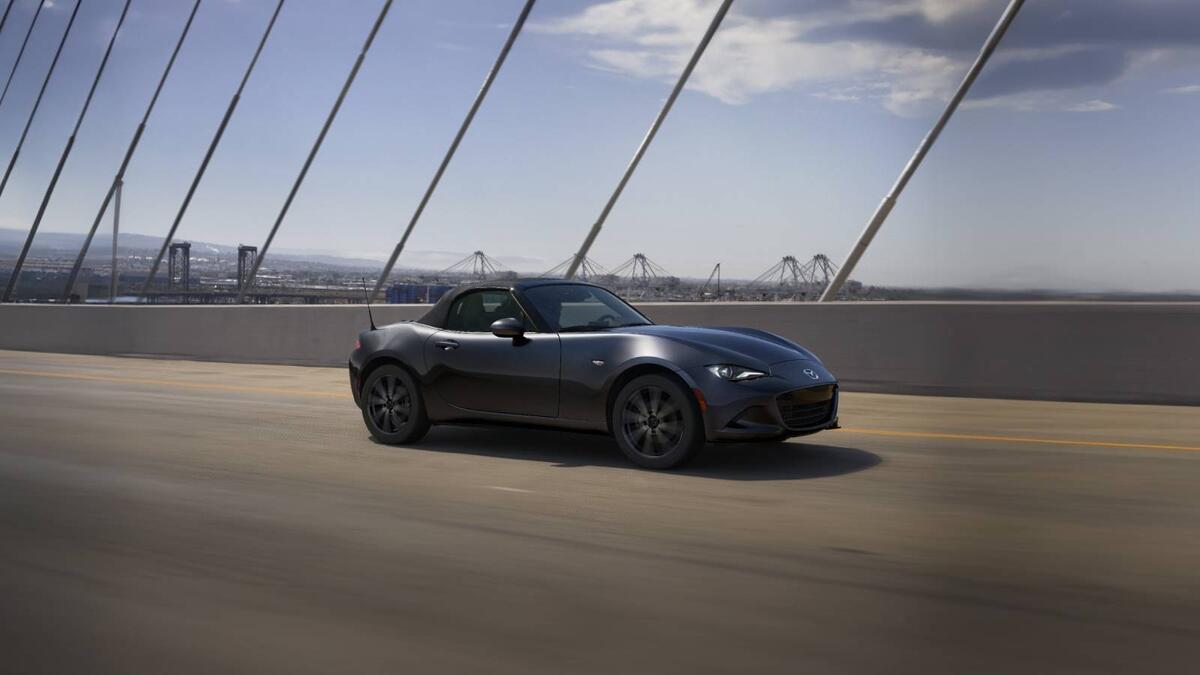
The Mazda Miata is a small two-seat convertible. It’s made to be fun to drive, especially on twisty roads, without needing a lot of power. People like it because it feels light and nimble.
Term
Canyon track car
This is basically a “winding-road” car—something you drive hard on twisty roads. The hosts are saying the GT500 wasn’t that kind of car, while the GT350 was.
Car
GT350
The GT350 is a Mustang variant that’s more about driving feel and track-style performance. The hosts are saying it was meant to be the more aggressive, track-capable one.
A diff cooler is an add-on that helps keep the rear differential oil from getting too hot. That can help the car work better and last longer when you drive it hard.
Concept
Classic cock cars
They’re using slang to describe classic muscle cars that were designed to look loud and get attention. The point is the styling—graphics and scoops—was part of the appeal.
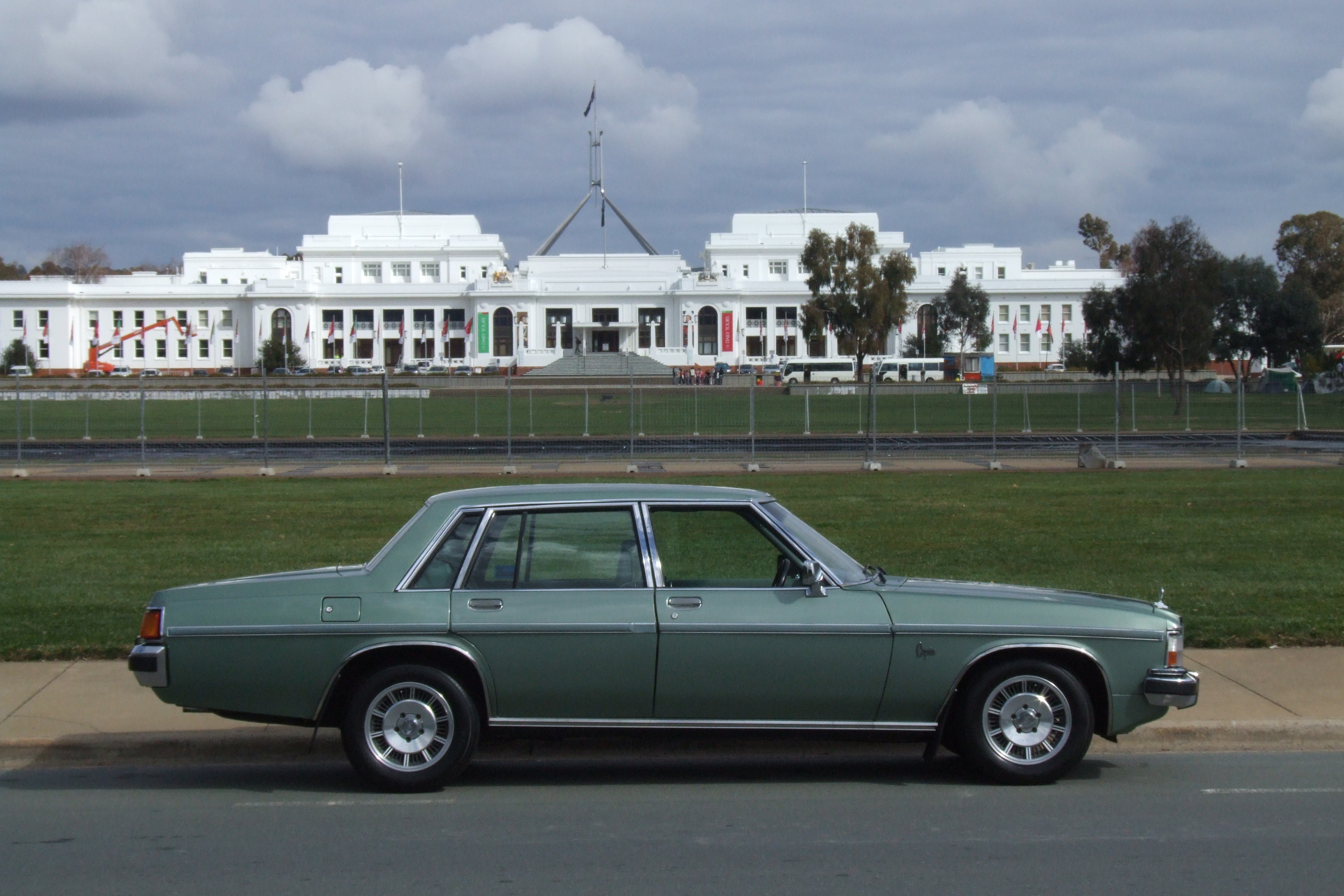
The Holden Caprice is a large, comfortable sedan. In the podcast, it’s being talked about as a customized car with a dark, aggressive style. The point is that it can be made to look like a race-inspired street car.
Revology is a company that makes classic-looking cars with modern performance parts. The host also says he has a financial connection to them, so listeners should factor that into the opinion.
Press cars are cars that a company gives to reviewers so they can test them and make videos or articles. They’re usually kept in good condition for the media.
A supercharger is a device that forces extra air into the engine, which can make it produce more power. It’s basically “boost” for the engine.
Term
NA
“NA” means naturally aspirated—no turbo or supercharger. The engine relies on normal airflow instead of forced boost.
Car
Boss 429
The Ford Boss 429 is a famous, high-powered muscle-car engine package from the classic era. The host is saying you can build something that looks like a 1960s car but uses very serious performance hardware.
The center console is the area between the front seats where you find controls and storage. In this case, the hosts are talking about the materials and switch placement.
Brushed aluminum is a metal surface with a textured, streaked look. It’s often used inside cars to make things feel more upscale, but it can show marks over time.
HVAC controls are the buttons and knobs you use to control the car’s heating and air conditioning. They help you keep the cabin comfortable and clear the windshield.
Term
slide action
“Slide action” here refers to the physical movement feel of a dashboard or center-console mechanism. In enthusiast terms, it often points to how smoothly and precisely a component moves, which can signal build quality.
Gauges are the displays behind the steering wheel that show things like your speed and other car info. When they look and feel well designed, the whole dashboard feels higher quality.
RestoMod means taking an older car and keeping its classic look, but upgrading the important mechanical parts. People do it so the car drives better and feels more modern while still looking cool.
Pro touring is about turning an older car into something that drives and handles more like a modern performance car. It usually means upgrading the suspension and steering so it corners and stops better.
A subframe is like a strong mounting frame inside the car that holds parts such as the suspension and steering. Swapping or adding one can make it easier to install better, more modern handling components.
The steering rack is the part that connects your steering wheel to the front wheels. Changing it can make the car steer more precisely and feel better.
An Art Morrison chassis is a custom-built frame made for restomod-style projects. It helps builders fit modern suspension and steering more cleanly so the car drives better.
Suspension is what connects the wheels to the car and helps the tires stay in contact with the road. It affects how the car rides and how it behaves when you turn or hit bumps.
A unibody means the car’s body and frame are built as one strong structure. Because it’s stiffer, the suspension can do its job better, which can make the car feel more precise when turning.
Concept
handles
“Handling” is how the car feels when you steer—especially in turns. It’s about how well the tires grip and how predictable the car feels.
A track pack is a set of upgrades meant for driving on a racetrack. It usually improves things like braking and grip so the car can handle harder driving.
A Watts link is a way to hold the rear axle in place while the car rides over bumps. It helps the rear wheels move up and down without the axle shifting sideways as much.
A solid rear axle connects both rear wheels with one rigid piece. When one wheel hits a bump, the axle design affects how the other wheel and the whole rear end move.
“Muscle car vibe” is the overall feel people associate with older American performance cars. It’s not just speed—it’s also the rougher, louder, less-refined experience that some fans like.
The speedo is the dashboard gauge that tells you your speed. They’re saying the car feels so smooth and quiet that you might not notice how fast you’re actually going until you look at the gauge.
A track day is when people drive their cars on a race track (not public roads) to drive more aggressively. They’re saying this car doesn’t make them want to do that, though someone else might.
An open sweeper is a bend that curves gently. You usually keep more speed through it because it’s not a tight, sharp corner.
Term
eight tenths line
“Eight tenths” is a way racers talk about being near the car’s limit—about 80% of what it can do. Past that point, the car starts to feel less stable and more “on the edge.”
“Front lean” is when the front of the car tips over more than you’d like while turning. It usually means the car is working hard and you’re getting close to the limit.
The Ford Mustang GT500 is a very powerful version of the Mustang. A “blower” here means a supercharger, which forces more air into the engine for extra power.
The Shelby GT350 is a performance version of a Mustang. It’s built to feel more aggressive and sporty than a regular Mustang. The podcast is referencing a particular model year because different years can feel a bit different.
A-pillars are the vertical supports near the front of the car, by the windshield. If they’re thick, they can block your view when you’re driving or turning.
A seat bracket is the metal mounting pieces that hold the seat to the floor. The speaker thinks the way it’s mounted leaves extra space and makes the seat feel too high.
Brand
Gunther
“Gunther” here is probably a reference to Gunther Werks, a company that makes high-end Porsche-based cars. The speaker is saying expensive builds should be flawless.
Term
Singer stuff
“Singer stuff” means cars from Singer Vehicle Design, a company that builds very expensive, highly customized Porsche 911s. The speaker is saying that at that price, everything should feel right.
Brand
Sparko seat
A Sparco seat is a racing-style seat brand. It can feel different from stock seats—often more supportive, and it may sit at a different height.
Damping is how the suspension controls the car’s bounce over bumps. If it’s tuned well, the car feels stable and doesn’t keep wobbling after you hit a rough spot.
“Floaty” means the car feels a bit too soft and keeps moving after bumps. Instead of feeling tight and settled, it feels like it’s drifting or bobbing.
Cruise control is a feature that lets the car hold a chosen speed by itself. If the car doesn’t have it, you have to keep adjusting the gas pedal and brake yourself.
“Upsize” here means putting bigger wheels on the car than it came with. Bigger wheels often require different tires, which can change how the car rides and looks.
They mean putting tires with very short sidewalls on big wheels, so the tire feels stiff—like a rubber band. It can look worse and usually makes the ride rougher.
Supplemental underbody bracing is extra structural metal added under the car to stiffen the chassis. Convertibles often need more bracing than sedans because removing the fixed roof reduces body rigidity.
Super Sprint makes aftermarket exhaust parts. They had to change the metal reinforcement under the car so the exhaust could fit without hitting it.
Term
strapped the car down incorrectly
If a car is tied down wrong on a trailer, it can get stressed or bent in ways you might not notice right away. That can lead to problems later, like parts not lining up correctly.
When a car is strapped down for transport, you have to hook the straps to the proper points. Wrong attachment points can bend or damage the car while it’s being hauled.
“Cars and coffee” is a casual car meetup where people bring their cars and hang out. The hosts are using it to say some older cars are only driven for fun, not because they’re dependable every day.
“Workwear” means work clothes made to handle tough conditions. They’re talking about how rain and mud can make regular clothes uncomfortable, so you need gear that moves well and doesn’t soak through.
“True work” is a clothing brand they’re recommending. They say their work clothes are made to move better and handle rain more effectively than basic cotton blends.
The Ferrari 355 is a famous Ferrari supercar from the 1990s. Here, it’s mentioned as the kind of expensive car someone might hand over to get a very different, “crazy” result back.
Skip shifting is a driving technique where you intentionally skip one gear during upshifts (or sometimes downshift-related behavior) to reduce shift frequency and improve efficiency. In performance driving, it can also be used to manage how quickly the car gets into the right gear for corner entry.
Ayrton Senna was one of the greatest race drivers in Formula 1 history. The hosts are referencing him as an example of the kind of driving technique people copy.
A “blip” is a quick tap of the gas while you’re preparing to shift down. It helps the engine and transmission work together smoothly so the car stays stable when you brake and turn.
A downshift is when you go to a lower gear, like shifting from 5th to 2nd. Drivers do it to get the engine spinning faster so the car can respond better when they need to accelerate out of a turn.
LIVE
What up everybody, welcome to the Smoking Tire podcast.
Today's episode is brought to you as always
by Off the Record.
We love Off the Record here at the Smoking Tire
because they're looking out for us
just like they're looking out for all of you.
And how do I know they're looking out for all of you?
Because not a week goes by that I don't hear
from two or three of you folks
that Off the Record saved your bums.
What does that mean?
It means you didn't plead guilty,
you got Off the Record at offtherecord.com slash TST.
They fought the ticket for you and they won.
And everyone else out there, you can do it too.
If you get a moving violation, don't plead guilty,
get Off the Record, that's offtherecord.com slash TST.
They will fight that ticket for you
in the vast majority of times, they will win.
And then you'll be emailing me that screenshot
of the dismissal that we are all looking for.
One more time, offtherecord.com slash TST.
And on this episode of the Smoking Tire podcast,
we are driving a Revoligy GT500.
This is a 1967 Shelby that contains no parts from 1967.
Very interesting.
Plus, I have an update on the Project Mercedes,
a secret racing technique from Tommy Kendall
that I'm now practicing in my free time.
The new driver monitoring bill
and what is the difference between a replica
and a recreation that's today on the Smoking Tire.
Hi, everybody.
Shout out to the captain and this cyclist.
It's the Smoking Tire podcast on motion, on route.
A car podcast from a car.
Somebody should do a car show in a car.
Someone should do that, maybe with coffee.
Yeah.
This is a new idea.
I just saw some like AI slop Instagram thing
that was all someone sued Seinfeld
for $100 million for stealing that idea,
which may be true, but it still came from AI slop,
Instagram content.
If it's a little loud in here,
that's because we're in the Revoligy 1967 GT500.
And it's the fucking titties,
I think is an official term is,
this car is the fucking titties.
It is the Bodacious Tatas.
It is the delightful Pozangas.
I don't think I've ever heard you speak this fondly
about any car from the 60s that wasn't from Germany.
Because, yeah.
Right.
And that's because unshitboxing vehicles
is very difficult, right?
And that's why most people don't do it,
but like this company just built a whole new one from scratch.
Yeah, they use modern engineering.
Yeah.
And they heard everyone's complaints
from 60 years ago and whatever.
And then they go, all right,
how do we make it look exactly the same?
But get rid of all those rattles and problems and stuff.
And they've done an absolutely phenomenal job.
Yeah, it's fucking stellar, dude.
And there's a couple of things
that are not maybe into my eye touch,
not quite up to the, this one is $380,000 price tag,
but dynamically, nine out of 10?
Yeah, I think for what it is, it's a nine out of 10.
There's a few things, the brake pedal
being too soft at the top.
That's what I would say could make it a 10.
And that would make it a 10.
Brakes that are like super confidence inspiring.
It just feels like the beginning of the pedal
is moving but doing zero.
Right.
And then it comes into play later
and they seem to grab all right.
It's not hard to stop the car.
It's just hard to heal toe
because the spot where this pedal is dead
is the spot where you need your toe to be in order to heal.
Yeah.
Because my toe is too far down
once I get to actual brake pressure.
Oh, I got you.
You're too far down the big travel.
I've gotta come back now, you know what I mean?
But like that not withstanding,
like there's just so many things I enjoy about this
because the body still moves
like those cars in 60s chase scenes move a little bit,
but like in a much more controlled way.
Like more controlled, more predictable, more grip.
And the steering is like,
I don't know, I assume the ratio is different
from when it was stock,
but there's just virtually no slop in it.
And something about this wood rimmed,
like Nardi steering wheel just makes me so happy,
especially in the city when I can like palm wheel it a bit.
I feel cool as fuck, dude.
It makes you feel very, very cool.
And I think that's what,
that's what most of the cars used to do for me
is they made me feel tough
because it's got like a good deep growl to it all the time.
And it's, you know, it's like the bad guy's car
or whatever or in this case, it's the good guy's car.
Like usually you'd have to put up with a car
being kind of a shit box
in order to get that attitude of cool.
But like this one, like it's not, that's nice.
It's not, it's not rattly or shaky
or like it essentially rides and feels
and in most ways is kind of like a new Mustang,
but to the things I touch isn't, it's sweet.
And most of the things you see look old.
I mean, with the exception of like the stereo
and some other things we could get to,
but if you like, if you turn the stereo off
and the AC off and you're on the highway at 70,
I feel like the noise is almost as quiet
as a new Mustang, new Camaro.
You just get a little whistle off these side scoops
that do nothing, which is silly.
The side, the scoops to nowhere.
They pass through or they just a pocket
that catches air and slows you down.
It's really funny to think about the scoops to nowhere.
And we really only ever gave it much thought
for the first time, or at least I only did like today.
Like in the late 1960s, they've just won, you know,
Le Mans with the GT40s that have those trademark side scoops.
Here's this front engine car
that absolutely does not need them,
but they could capitalize on the styling familiarity
of them, how funny.
That's true.
And I think I used to talk a lot of crap
about some of the aftermarket companies
that would stick on scoops.
And I'd go, these are so dumb, they're non-functional.
I didn't realize at the time
that these cars from the 60s had non-functional scoops.
I'm curious, I wonder if the race cars,
if they cut a hole and then they would like cool the diff
or they could send cool air to the brakes.
But obviously the road cars,
like the GT500 back in the day was the 911 Turbo S.
Like it was the most expensive one.
It was kind of a gentleman's car.
Aggressive Miata behind me,
I'm going to give them a point by as soon as I,
yeah, sorry, yeah, no, go ahead, the GT500.
It was just, it was the most expensive one, it was fast,
but it wasn't a like Canyon track car.
That was the GT350's job.
Right.
So they're not going to have, you know,
diff coolers coming from the scoops,
but to your point, they want a Peacock a bit.
And it's also the 60s where you got things like the judge,
like everything that was graphics and scoops,
everything was a cartoon and trying to,
it was all Tata's trying to draw attention.
That's awesome.
Dude, that was dope.
Classic cock cars.
Murdered out Caprice with fucking NASCAR steel,
that was really cool.
That's a man of taste.
I hope it handles and drives well.
Yeah.
But so Revology, this company,
and by the way, I should say,
there's going to be a disclaimer in the video,
I financially benefit by Revology
keeping their press cars at WCCS.
They store them there.
They pay my business to store them.
And so this is a company that I do earn money from
by renting them space for their press cars, okay?
So if you think that invalidates
what I'm saying about the car,
I understand, that's fine.
I have a conflict of interest.
They'll sell you essentially the same power train
and performance package across their whole model line,
manual or automatic, NA or supercharged,
but with any body from the 1960s.
So you can have your 65 convertible or coupe,
narrow wheels, total sleeper with the blower,
all the way up to your Boss 429s and your GT 500s
and everything in between.
And the prices sort of vary from like
the middle 200s to the high 300s.
This is pretty much at the top tier of what they do.
Yeah.
But if you're listening, listen.
Oh yes, it's very, very nice.
Well also, if people are worried that,
you know, your words have been bought and paid for,
you pointed out a lot of negatives
in our video review we shot.
You actually, we did a breakaway where you point out
all the things you don't like about the interior.
I didn't do it, Matt did it.
There are a few things, these switches,
which are in my peripheral constantly,
which are the inner window switches.
Because you have on the door,
those fake window cranks that I love, which are cool.
But then there's a redundant switch on the dash
and that redundant switch is like straight up Radio Shack.
It's Radio Shack and it's right, you know,
in front of the shifter and, you know,
but like what we have for people listening,
the whole center console is brushed aluminum.
So it's very bright and it's very obvious
when suddenly there's two black rectangles
that look like they come off a boat.
And that's what rolls the window down.
So that looks terrible.
And then above it, we have a doubled in stereo
that doesn't look good.
Look, the graphics are gold,
but it's also slightly at an angle.
Like it's not mounted, it's not squared off
with the rest of the dash.
That's not great.
And it's just, there's like four things
that in this car are surprising,
like surprisingly cheap feeling or looking
when so many other things look and feel expensive.
Like the HVAC controls are awesome.
Like it feels like metal.
The slide action is really nice.
The gauges are beautiful.
The metal work here on the dash is awesome.
And then, you know, you go to put the window down.
The top half, the top of the dash is fabulous.
The bottom of the center console, not so much.
But the driving is awesome.
Yes.
It's like, it really is how I would prefer
all muscle cars drove.
If all muscle cars drove like this,
I'd like muscle cars.
I think this is what a lot of the RestoMod
pro touring community was after.
But they were trying to do it, you know,
the first step was-
It was the old car.
Well, yeah, because that's what you had.
So the first step was subframes, right?
And that would allow you to get different suspension
or steering racks.
That's the car.
There it goes.
Somebody had a bad day.
Someone had a bad morning.
This was messy.
Yeah, around here.
Yeah, go on.
And then, you know, the next step
was like an Art Morrison chassis.
You get a full chassis in there,
and that's gonna allow you to have
a much more rigid platform.
The suspension you put on will benefit more.
But this is obviously the nth degree.
You have a whole new unibody, you know,
engineered as perfectly as you can.
And I think it really speaks.
It really comes through in your hands
in the way it handles, the way it corners.
Like, it's really, it's great.
What does this guy do?
Moving out of the way for us.
Like a kind gentleman.
Everybody loves this car.
Yeah.
Everybody thumbs up.
Did you see the guy going the other way
on the big bagger bike?
Yeah, I do.
He gave me a fucking hell yeah, brother.
Everybody loves this thing.
I parked it outside.
Blue bottle.
Got myself a shakerado yesterday afternoon.
Dude, every man stopped and took a picture.
Yeah.
And across every age demo.
At first glance, I mean, not even at first glance.
At most glances, this looks like
to the untrained eye, just a beautifully restored 67.
Yep.
Like it, because it's not like Resto modded.
It doesn't have like extra louvers or extra anything
or reshape this.
Like it looks like you think it's supposed to look
like you're expecting, but then underneath.
It's hell yeah.
It kind of, it drives like a new GT.
Yeah.
You know, with like a track pack.
But then when you get out,
the proportions are still right
and the size is still correct for the old car.
And we saw a car up at Good Vibes this morning
where they tried to take an old shaped body
and put it on a new car.
And he had to stretch all the proportions
because you're taking a car that was made 60 years ago
when everything was, when those cars were smaller,
you can't do that.
The proportions will not translate.
You can't just scale up.
That was brutal, dude.
Yeah.
It just completely changed the shape of the car.
So this is accurate because it's the right size.
Yeah.
All the proportions are right.
And because it's not fully a new GT underneath.
It's a new GT as far back as the gearbox.
The rear end is a solid rear axle with a Watts link.
So it's not like overly modernized.
It still kind of drives like a muscle car,
just a much more refined one.
Yeah.
I think we get about 85%
of what the muscle car vibe is.
And the other 15 of that comes from things
that most people see as negatives.
Right.
You know, if you're a muscle car fan,
which I am, I grew up with one in high school,
you know, imperfections, rattles, smells, the sound,
all that stuff, like you kind of come to like that.
But only because it's the price you have to pay.
Yeah.
And so this doesn't have all those things.
And it's a little quieter in here.
And I think you lose a little bit of the violence,
the romantic violence that old cars have.
But the benefit is, I would drive this across the country.
Yeah.
I mean, and you-
I would daily it.
Yeah.
Are you suggesting this is not violence?
Oh my God, that's so fast, dude.
It's very fast.
It's so fast.
This is faster than any old thing I've ever driven.
Because the power just gets down,
is it's put down to the wheels and you look at the speedo.
And again, speaking of the refinement,
it's so quiet and smooth in here,
that when I looked down at the speedo earlier,
I was like, oh, I'm going that fast?
Like that's what German cars do.
It's not a 10 tenths car, right?
I'm not inspired to take it like to a track day per se.
Although somebody might.
I'm not inspired to do that.
But like, do this open sweeper life,
the drive to Palm Springs life,
the rip it up PCH to for car week life,
I am seriously about, you know?
I think it shines at that.
I think there's too much metal under the hood
to handle really good for a track day.
Like when we were going up to good vibes,
I think I hit like the eight tenths line
and then you start to see the lean in the front,
in the corners.
It's just a lot of weight.
If I was going to get one of these,
I'd probably just get the NA engine,
save some weight.
It's still going to be really fast.
It's going to sound almost the same.
And what's funny is in this car,
you don't really hear the blower wine,
but when outside of the car,
you hear a ton of it.
Folks taking a quick break
because support is coming in from Aura Frames.
They are the perfect Mother's Day gift to capture
the chaos you put your mom through
and the memories that come along with it.
Listen, I had to put my mom through a lot.
I did a few things.
I did some stuff with cars
that were funny then that aren't so funny now.
I paintballed my neighbor's house
because I tried to slingshot paintballs
onto the roof of their house and missed.
And now we all laugh about it.
And actually there's a photo
that my mom has of the paintballed wall.
And it's one of my favorite photos actually.
And my mom has the Aura Frame.
I got it for her when we first started working
with Aura Frames and I am regularly sending photos
of Hannah and I's travels to her now
not to mention my sister got her the Aura Frame.
She's the one with the kids.
So they've got two Aura Frames,
one for me and Hannah having fun as adults with no kids
and then another one that's all kids from my sister.
They're keeping those moments alive.
All we gotta do is drop those photos in the online folder.
They go straight to mom's Aura Frame.
And these things come with free unlimited storage.
So you can add as many photos and videos as you want.
You can preload the photos before they ship
and it comes in a gift box perfect for mom
with no price tag for mother's day.
Aura Frames are named number one by Wirecutter
and you can save on the gifts mom's love
by visiting Aura Frames.com.
That's A-U-R-A Frames.com.
Use promo code Tire for $25
off the best-selling Carver Mat Frame.
Code T-I-R-E, support the show by mentioning us
at checkout with Code Tire for $25 off the best-selling
Carver Mat at Aura Frames.com.
Support is also coming in this week from Hymns,
you know, Hymns hair specifically,
because that thinning when it starts doesn't stop.
It's relentless, I know, because I have been there.
It's not just your hair that takes a hit.
It can change how you feel day in and day out.
That bald on top look, it is not good.
Hymns makes it simple to take control of hair regrowth
with personalized hair care that fits your life.
You know, when the moment when you catch the reflection
and you notice the hairline is either creeping back or up
or someone shows you a mirror from behind
in the first time in a while, you get that bald spot?
Dude, Hymns is here.
You can go the other way, right?
You can commit to the razor like I did
and that's a lifetime commitment.
Because trust me, you go that way, you're not coming back.
Aerodynamic for life.
But if you're trying to save your hair,
my hair was beyond saving, I'll be honest.
If you're trying to save your hair, it doesn't fix itself.
retreatment for you with flexible subscription options,
access to 24 seven provider support
and once a day treatment options
that fit your daily routine.
So think of Hymns as your digital treatments front door
that gets you back to your old self.
For simple online access to personalized
and affordable healthcare for hair loss,
ED, weight loss and more, visit hymns.com slash tire.
That's hymns.com slash tire for your free online visit.
Hymns.com slash tire.
Featured products include compounded drug products,
which the FDA does not approve or verify for safety,
effectiveness or quality, prescription required.
See website for full details, restrictions
and important safety information.
Individual results may vary based on studies
of topical and oral minoxidil and finasteride.
The, this car, the 500 comes with the blower standard.
You get the GT 350 is the NA version of it,
but you also lose the funky side scoops,
which is good, I would say that's a net positive.
I think my favorite body style that I've seen so far
is the 70 Boss 302, which has the updated interior
and the highback seats.
Yeah.
I prefer that, just preference,
but also I saw a Shelby GT 350, 66 that was
absolutely delectable and those have a slightly different
interior to this one as well, but the door slam
on these things is like a modern car
and I absolutely love that.
And the effort is barely more than driving a modern car
and I love that, but it's just like, yeah,
it drives kind of like a new GT, but like raw.
Yes.
It's not, it's not, it's not,
it doesn't have all the sound insulation.
You hear a little more of what's going on.
We see more, I mean, like the A pillars are small,
like the GTs are huge these days.
So this, I think this is like, if you close your eyes,
you get a lot of new GT, but when you open them,
obviously you get 67 GT 500 and the size of that.
Would you, at this stop sign, por favor,
please double check that the hood is latched properly.
I'm looking at it and it just.
Is it wiggling?
It's not wiggling, but it, it doesn't look like
it's quite lined up and you just take it.
Is yours through your shirt?
Yeah.
Sorry.
I got it.
Okay.
Sorry.
Sorry.
Yeah.
Good opportunity to have a sip of water.
That's good.
Yeah.
All right, cool.
Okay.
All right.
It is latched.
Okay.
It, okay.
There's just, I guess, slight, very slight hood misalignment,
but in a way that, if it, like,
that looks like it could have been, you know,
that I didn't want to find out the hard way.
Yeah, of course.
So anyway.
Jump on the highway.
I love the, I love the gauge, the whole gauge cluster.
I absolutely am a vibing with.
Yeah.
I love the amount of space, the leg room,
the fact this rear seat folds down
and you have a huge hatchback.
You could put like a drum kit back there.
There's speakers between, there's the wall, right?
Yeah.
So if you didn't have the speakers, you could.
The only other negative is like,
I think these seats, they just don't work for me.
Like they sit too high up, but they're manual sliders.
So it's almost like they took an electric seat
and they used the stock bracket that came with it,
but then they used a manual slider
because it just seems like there's
a ton of dead space under it.
And so I'm just sitting a lot higher than I'd like to be.
You know, I don't know if that's where like,
this thing is, you know, 380.
It's not 700 a million.
And that's why if you compare it to cars,
that are that expensive.
Singer stuff, Gunther, like,
everything should be perfect
because it costs all the money in the world.
But I think, I don't know, a Sparko seat
with a little better shape mounted lower,
I don't know, what's that, $2,000?
Like if you're spending 380, all right, charge me 385.
And just give me a different low back seat
that has a better contour for it.
I agree.
I don't, I don't, I think this seat isn't great.
And I would like one with a little more
side bolstering or something.
I mean, you can make it look right.
And still have a little bit more support.
Yeah.
But in the important bits, the dynamics,
the tightness, the quality.
Yep.
I mean, it's like a 95 out of a 100.
I agree.
It's, it's a, it's,
Yeah.
It's a brake pedal feel away from being a 99, you know.
But whoever did the damping, bravo.
Yeah, the suspension is great.
And then on the highway, it's good too.
Like it's soaked stuff up pretty well,
but it's not too floaty.
I wanna go do 2,000 miles in this fucking,
like I'm gonna ask them for to take one
on a road and track trip.
I think it'd be kick ass.
I don't think there's cruise control.
There wouldn't be, right?
Probably not.
No, probably not.
I love this corner.
Load up the front end and whee.
And actually a lot of times when you upsize
the stock wheels, they don't look very good.
But I think this wheel going from a 15 to a 17,
it still looks pretty good.
Yeah, it does.
It feels the well, well enough.
But, but again, it's like the body didn't grow too much.
Yeah.
So I think that helps.
And it's still enough.
There's enough sidewall.
I think when you get into 18s or beyond on old cars,
when you start rubber band tiring it,
then it doesn't look very good.
Yeah, 18s are no good at all.
That's why we're doing 17s on the Benzito.
Oh, I have an update from Matt Quick
down there in Quick Classics at Nashville.
Few things of interest he found upon
in further inspection of the Benzito.
One, probably could have guessed it,
but all bushings are shot.
No.
No.
Shocker.
Weird.
Shocker, all bushings are shot.
And two, he forgot that the Mercedes convertibles
have some supplemental underbody bracing
versus the sedans.
And so he has to take off the bracing
and make a new bracing that will clear
the super sprint exhaust.
So that's a thing.
He said an NBD, no problem, can do,
but that was a surprise.
And then the one that was actually a surprise
is that at some point, I don't know whether it was
this time, last time, or another time,
somebody strapped the car down incorrectly
onto, can we turn the fan down?
Strapped the car down on a truck wrong
and fucking tore out part of the unibody somehow.
Whoa.
And so he said, it's like not a huge deal.
You just like weld it back together
and either he can do it or Sean can do it.
But like, that's a thing.
Wow, that's why, you know,
jacking at the right place is important,
anchoring at the right place is important.
Strapping cars down on trailers and transporters.
See, I just got a hell yeah, brother,
from the guy on that bike too.
I mean, everybody likes that.
Everybody loves this stuff.
That's what's fun about, even if you're driving
an old car that costs no money,
it's just people, they have a great response to it.
They look cool, I don't know, movies, whatever it is,
but it tends to make people feel good.
All you need is like, you know, a little glug glug glug.
Yeah.
And you feel kind of awesome.
No, and this is all of that vibe,
but with like, you know, confidence through
all of the things where you would not have confidence.
Right.
In an old car.
Yeah, you know, a lot of the old ones,
you drive to cars and coffee and that's it,
because you're worried something's gonna break.
Yeah.
Or it's uncomfortable, and this has none of those
considerations.
Yeah.
It was hot.
Plus, if you're in certain parts of the country,
mud, rain, and whatever else the weather decides
to throw at you, that's why you need workwear
that can keep up with the changing conditions
and true work has you covered,
because most workwear is made from cotton blends,
which can restrict your movement and get soaked
after just a few raindrops.
True work uses advanced performance fabrics
to build products designed specifically
for work on the job site.
Springtime is the perfect season for the T2 work pant,
which keeps you comfortable over a wide range of conditions.
And these pants have a four-way stretch
for bending, kneeling, and climbing,
a water-resistant finish to shed rain,
and nine intelligent pockets to keep tools
just where you need them.
They've been tested and validated for over 10 years
by RealTrade Pros working in RealTrade job site conditions,
with over 15,000 five-star reviews,
experience the difference for yourself.
Like I said, this morning, cold first thing.
Then rain, then wind, then hot.
And when I have the good gear,
it is easy to get through the day,
because as I start, I need to be warm in the morning,
and then with pretty much the same gear,
I need it to breathe in the afternoon.
These T2 work pants are different.
They're for people like me who hold themselves
to a higher standard with that four-way stretch,
water resistance, and pockets everywhere
where the trade pros said they needed them.
Now, the work doesn't stop just because the weather changes.
Upgrade to the T2 work pant and stay comfortable.
No matter what the day brings,
get 15% off your first order at truework.com with Code Tire.
That's T-R-U-E-W-E-R-K.com Code Tire.
Truework, built like it matters because it does.
Guys, taking a break from the action
because support is coming in fast,
like Jim Farley, the CEO of Ford,
who's now got a podcast.
And you're always asking me what I'm listening to
when not recording this show.
And right now, it's this,
the new season of Drive with Jim Farley.
In it, the Ford CEO talks to some of his favorite people
about what they're driving and what drives them to succeed.
Like Formula One driver Daniel Ricardo.
Listen, there is a well-worn trope about racing drivers
not being interesting to listen to.
But if there is one that is interesting to listen to,
it is Daniel Ricardo.
I think this guy's takes on stuff and life are great.
And look, Jim is a racing driver also.
I personally raced against him like two months ago.
And for me, a CEO that drives race cars on the weekends
is about the pinnacle of CEOdom
when it comes to car companies.
So the two of them together
obviously have a lot of things to discuss
on Drive with Jim Farley,
which you can get on your podcast app.
Very easy to find, Drive with Jim Farley, check it out.
Zach has researched and the embargo thing is such
that our Evoluto video will come out tomorrow
if you're listening to this normal release day.
So go watch that on YouTube, please.
It's a thing where you give them a Ferrari 355
and $770,000 and you get back a crazy thing.
Yeah. A real crazy thing.
One of the most beautiful cars ever made
and then they've changed it perfectly.
Oh yeah. Yeah, yeah.
So worth watching.
How about, can we talk for a second?
When Zach and I were in the car with Tommy Kendall
going back to the airport from the race
and Tommy was talking about his skip shifting technique.
Yeah. That was very interesting.
So conventional wisdom and Ayrton Senna
is that as you're downshifting to go into a corner,
you go vroom, vroom, vroom, vroom, five, four, three, two,
right?
And Tommy did an experiment in like the 90s
where he tried to break to make it for the corner
without doing the blips.
Just breaking enough to make the corner
and then breaking while doing the blips
and realize that he was losing valuable time
by doing the blips.
Like he could break 50 meters later for the corner
if he wasn't doing three downshifts,
which in an IMSA or a Trans Am race is very big deal.
And so instead what he would just do
is just slam on the brakes from fifth or whatever.
And then right as he turned into the apex,
give it one small blip because by now
you're going much slower and just shove it in second
and skip straight from five to two.
And that would save him 50 meters of breaking.
That's fucking crazy.
It really highlights for me how precise
the racing drivers have to be at that level.
I mean, at any level, if you want to be the best
or win like 50 meters, 50 meters at 100 miles an hour
is a millisecond.
You're covering so much ground.
So it almost, to me at times it goes,
oh, what's the big difference?
But like the difference is who's getting to that corner
first, you know, who's getting out of that corner first
and that adds up and you win the race.
But it makes a lot of sense because the,
I like getting rid of the mental bandwidth required.
You know, when you downshift, you're going,
all right, is my ankle in the right angle to break.
And then I have to rev.
So I have to tilt my foot to get that rev ride
without moving my big toe or changing the pressure
on that break.
And now I have to do that three times approaching
this corner at very high speed,
also monitoring my mirrors.
There's just so much thought that has to go into
what is my ankle doing right now?
And is it doing these different funky moves?
Or you can just go, it's going to break like it's automatic.
And then when I get to that turn, then I just go to two.
And oh my God, it just makes so much sense.
Oh, it's like, it's, you learn,
it's like the difference between going from intermediate
to advanced and advanced to expert, you know,
to go to it from intermediate to advanced
is to nail those four downshifts in a row,
every lap and have that as part of your race craft
to go to expert is to question if you need them.
Right.
You know, and then integrate that into your strategy
and then not tell anybody for 30 years
until you're riding in a car with them to the airport.
Yeah.
And only then.
It kept it a secret, which makes sense.
And it was, I mean, it worked out obviously
because he won how many Trans Am Championships?
A bunch.
You know, a bunch of them.
And then Tato are, you know, young phenom on the team.
When we're talking about downshifting for corners
in the BMW, which is paddle shifted, ZF-8.
Yeah, you can't skip in that one.
No, you can't skip.
But he was saying, you know, most corners you downshift,
he would downshift at kind of a slow pace
because the downshifting isn't helping him decelerate.
He's doing all the deceleration with brakes.
Yeah.
But he said, but if you find yourself in a position
where you need more brake,
meaning if you press the brake pedal harder,
you know you're gonna lock up,
but you need to slow down more
because you're gonna go off or something,
then he would downshift more quickly
because he can still use the engine to slow the car,
but it won't lock the fronts up.
So then you're using shifting as a technique to decelerate,
but only in certain situations.
So I wonder if Senna was he using the engine
to slow the car because he's braking so late.
Probably.
Or is it just a tradition thing?
And you know, it took 10 more years for Tommy
to go, wait, why are we doing this?
He could have easily been either.
I would be not the least bit shocked
if Senna knew something that I didn't know.
But I do it his way.
So the result is the same.
I've been doing it sequentially for my whole life.
So this car on this open sweeper road,
I mean, it just doesn't get better.
It really doesn't.
You know, these have a lot of the fizz.
There's a lot of the wonderful and tangible fizz
from old stuff, especially old noisy stuff.
Person who went, imagine that, but not junk.
You know, that's crazy.
Yes.
So much torque.
So much torque.
600 pound feet, right?
Yeah.
700 horsepower.
And doesn't really seem like it until you look down
as you go past 80 with your foot matted.
And it's definitely substantially lighter than a new GT.
Yeah.
So what even the power it has,
it's using more effectively
than it would have otherwise to a point.
Yeah.
Wow.
Gear ratios are like perfect too.
Yeah, they are, wow.
So nice.
So what do we have to do to get you
into this Mustang today, Matt?
Finance me.
Zero down, baby.
We can do that.
Yeah, right.
We can get you.
I really want to, I want to ship one to Portland
for the road to track event.
That would be so sick.
I'm going to call that as soon as we get back.
I bet you they'll say no.
I really wish Sarah and I had bought that GT350 recreation
or replica rather.
I bet you still can.
One of those, those always come up.
They do.
They just got more expensive.
And that was a true good one, but we'll find it.
We'll find it again when the timing's right.
Yeah.
What else is happening in cars that needs discussing?
Oh, Taycan is going in for an actual mechanical service
this week.
It's getting three recalls addressed.
Whoa.
All software.
Where did my water bottle end up by the way?
I have some.
You see it?
Oh, there it is.
Three software recalls.
One for the 12 volt battery.
And two for other things I actually don't even know.
I only learned about them because I got a notice for one
and scheduled the appointment.
And they're like, oh, you have three.
Oh, great.
And then when I go over,
when I pull the Taycan into my driveway,
notably not WCCS because the angles are so good,
but when I pull the Taycan into my driveway
or other articulated entrances,
the suspension, which is the air suspension in that car,
it's a little creaky.
It just goes, er, er, er.
And I talked to our homie at Porsche and he said,
it's possible that the bushings are a little dry.
They need some grease.
They need to be greased.
And that's a thing that happens
in the air suspension cars over time.
And so, especially because the EVs,
you don't get the, you know,
you're not taking it in as often
for all changes and whatever.
It doesn't get inspected as often.
So you just complain about it,
that your suspension is creaky
and they will lube it up for you.
Right.
So, okay, no problem there.
But like, that's an actual,
that's the first bit of actual warranty work.
That's pretty good.
That car, man, when you pull up like the painted fenders,
it's such a good looking car.
Hell yeah.
It is such a wise choice.
And it's just like,
in a great camera car vehicle, oh my God,
chasing you in the Alvoluto,
I have an instant torque.
I can get up on your ass really easily.
It's super smooth, but then it's quiet.
So if we wanted to do, you know,
outside exhaust audio, it's not interrupting.
And with the super low front cowl,
I can see very clearly how close I am.
So close in fact,
I may have gotten you a cracked windshield.
Yeah, there's a little rock chip.
Little rock chip in the window.
It's okay.
Maybe it won't get worse for a while.
Throw that glue on it, whatever they do.
I don't care enough to deal with it right now,
but I just noticed that driving home
after I dropped you off yesterday,
I was like, huh, that wasn't there before.
Should we talk about, have you seen the news
about the bill they want to put forward?
Cars from 2027 onward have to have
very intense driver monitoring.
Yeah, I saw that.
Was it, is that that all the cars
would have it implemented in 2027?
I thought the bill was written in that
it was mandated that they study how to implement,
which is not it being implemented.
That is, yeah, I think what I saw is that
it tells automakers that they have two to three years
where they need to study how to do it.
And the goal is to have a system
where that has infrared cameras that monitor the driver
and can tell if you are sleepy or inebriated.
So basically every car would have its own
breathalyzer of sorts, but it would,
instead read your physical cues, possibly your eyes,
and then it would determine whether or not
it should let you drive.
So the big concern people have is,
will it not turn on in case of an emergency?
Because these things, maybe it'll be perfect
out of the gate, probably not.
So if it misreads either someone's body language
or as someone else pointed out,
like if you are in a state of huge fear for some reason,
your pupils will dilate a lot.
So it might seem to a person or a camera
that you are on a substance, would the car not turn on?
So those are things the OEMs need to be prepared for
and sure they will.
Is it designed to be an interlock type device
where you get in the car and it has to analyze you
before determining if it will turn the car on?
I believe so.
I think with a driver monitoring system,
it has to watch you drive for a little bit.
And by then the car is already on
and it may just give you like warnings to pull over
or stuff like that.
I find it difficult to believe that this country
would accept a car that won't,
that refuses to be started or driven
under suspicion of tiredness or inebriation.
All right, so this was a 2021 law
that was part of the infrastructure thing,
but it's going forward.
This mandates that all new passenger vehicles
have to be equipped with advanced drunk
and impaired driving prevention technology
by the 2026 or 27 model years.
Now 2026, so obviously they're gonna kick that can
down the road.
The systems will use passive sensors and AI
to monitor driver behavior.
And if impairment is detected,
prevent the car from operating.
So yeah, maybe to your point,
if it feels like you are driving poorly,
it will come to a stop or steer you to the right
and come to a stop.
I mean, that is, it's a funny thing
because like no legislator wants to be like,
come out as like pro or anti-anti-drug driving, right?
Because people die from driving and, you know,
nobody, you want to say driving is a privilege, not a right.
And okay, they want to revoke that privilege,
you know, if you're drunk, okay, but.
Well, what's funny is that, and this is from motor one,
NHTSA says that no technology is capable
of doing this accurately.
Of detecting impaired driving.
And automakers are supportive of the idea,
but you know, the technology's not there.
So yeah, determining the difference
between someone who's like,
you know, just leaning on the door
because that's how they sit versus they're drunk.
Like, what car do we just have
that warned us constantly about being tired?
Driving for five minutes and it would say,
hey, you need to take a break.
Volvo?
I think it was the Volvo or the Hyundai.
It was just overactive.
Yeah, oh, the Hyundai Santa Fe?
Yeah.
It thought you were tired all the time.
Hyundai Santa Fe kept telling me I was tired,
which it didn't know shit, I was high as fuck.
No, okay.
No, but like the Volvo, we've had Volvos
and it would do it after about 20 minutes
if I leaned a certain way or it didn't move my head.
But it would wait 20 minutes,
but the Santa Fe would do it on a five minute drive.
Yeah, so the technology is just,
it's too sensitive or not sensitive enough.
And certainly not like,
it's not a legal, you know,
you're not convicted of something,
you know what I mean?
You haven't been,
it's not the same as having an interlock
and where you literally can't start the car.
I bet it's just a very, very annoying driver monitoring system
that fucking chimes at you and shit, like.
Yeah, Nitz's report says that no technology is available
that comes close to achieving the necessary accuracy.
And so they're concerned, of course,
as we all are about the false positives,
like I spoke about,
if it thinks you're inebriated
and it does something weird or stops or won't turn on,
and then you're stuck there for,
it could park you in a dangerous position,
it could park you in the middle of an intersection,
I don't know, it depends on what it actually does.
It strands you at the bar you're trying to leave?
Right, yeah, trying to get home to fuck.
You know, and if you own a coupe,
not enough room in there, not really.
So, da, da, da, da.
Now, yeah, so it keeps getting delayed.
Obviously, and a bunch of people sent me that,
that link over the last couple of weeks,
obviously I'm against something like that in general,
because I like to drive shit-faced all the time.
Okay, those are not funny anymore.
No, I agree with NIT
so that that is not good technology right now.
Yeah, and then it would have to be,
I mean, honestly, if they wanted to do that,
they should just make everyone
install a breathalyzer in the car.
That would only work for alcohol,
but that's probably the largest contributing factor
to accidents, and that technology does exist.
Yeah.
So everyone would have like a little straw,
but for a recent nanny's day.
A friend of mine had that straw in the car.
Not great, that's a tough look.
Yeah, not a good look.
Were you blowing this tube?
A judge says I have to have it.
I mean, it's a great line from a real virtue.
And also, there's a real scammy industry,
you know, behind those things.
You know, it's almost like a,
it's a third party service
that does it on behalf of the court or whatever.
And if you get like a false positive or something,
or have to have it reset or something,
they charge you all this money for all this shit,
but your car is stuck without it.
Like, it's a pretty scammy industry.
Do you have some questions?
Yes, I'm gonna pull up the Patreon.
We have 40 minutes left on this drive.
If you want to ask us questions
for these and other podcasts,
patreon.com slash the smoking tire podcast,
is where to do it.
It's where you get access to exclusive merch and collabs,
extra podcasting, ad free podcasting,
live stream podcasting, getting it early,
and on, and on, and on,
and supporting people you like,
people you would like to be able to have homes and offices.
There is wind noise at this speed.
I can say that about this car.
And what are we doing, 80 allegedly?
Duffel Shuffle Retirement Club says,
with the boomer generation slowly passing away,
do we think their car collections
will come up for sale for prices
that entry level enthusiasts can afford,
or will they go to auction collectors
that will just add it to their investment profile?
There are rumors that we're about to experience
a crash in the values of certain types of collector cars,
mainly like pre-war and like 50 stuff,
because like 85% of it all is owned by guys
that are in their like 80s.
And in not necessarily a majority,
but many cases their offspring aren't interested
in the collections or can't afford to pay the taxes on it
and are selling it and are interested
in selling all collections.
And so I don't know about like boomers
who own stuff in the 90s that's like desirable
already by people of our generation,
but certainly it may be time
if you ever wanted a fucking car from the 20s
that was anything but like a Rolls-Royce,
you're probably a good time to buy.
Yeah, I think it's always just gonna be supply and demand.
So if a bunch of, let's just say a lot of people
that have cars like this, original 60s cars,
if they age out of them
and suddenly there's a glut of those for sale,
big collections, there's only so many of those.
And there's way more muscle cars that were sold
than there are collectors that have big collections.
So I think you'll definitely see prices come down
on stuff as supply goes up.
It's just a matter of like, what can the market absorb?
Or what do they want?
Oh my God.
Which reminds me, before you get to the next one,
we had a three minute version of this discussion
on the side of the road, but there are no 1967 Shelby parts
in this car at all.
Is this car a fake?
Oh, right.
It's a fake car.
I think it uses that creative term continuation.
You know, the Jaguar did it with the VIN thing,
like it has been rebuilt.
So I don't think it's a fake,
but I think they've continued to develop it and build it.
So it lands somewhere in the gray area for me.
I, it's hard for me to consider it a replica,
even though it is, like the word they use is recreation.
So it kind of is.
What would you consider a singer or a fake?
A singer does start with a donor 911, right?
It actually does.
This does not.
It's true.
You know, super performance Cobras and GT40s
do not start with donors.
Those are definitely replicas for me.
Yeah, but how is this different from those?
I mean, I'm not sure it is.
Right, that's a good question.
Is this the most accurate replica?
Because it's licensed by Shelby, you know,
and it looks exactly the same way.
A lot of the super performance or other companies,
they have to tweak things very slightly
to get around that, you know, the copyright.
I think it's also an interesting question
because a super performance,
and they make a high quality product is why I'm using them.
I mean it to be complimentary or anything.
A super performance Cobra is gonna be about 20%
or 10% of the cost of a real Cobra, right?
This car is probably double.
150% of the cost of a real GT500.
Yeah, at least.
You know, so it's a replica, but it's more.
You know, it's an improvement on in many ways.
So continuation, I guess, is right.
But it's not entirely, it's not genuine.
It's not genuine.
Because also if it was genuine, it would feel worse.
Yeah.
You know, when you close the door, it would be like,
I got, got, got, got, got.
Like it's better because it's not genuine.
It's better, but it's not remade the exact way it was before.
I think the differences are more notable.
From an old Shelby to this,
versus an original Cobra to a replica Cobra,
there's, there's a much bigger perception
of improvement in quality in this.
Yeah.
From an original Shelby versus a kit Cobra.
Well, cause the, cause Cobras were so simple.
Yeah.
And there's, and the replicas are so simple,
but these were made trying to manufacture real doors
and cards and make them kind of comfortable.
And it's like, it's just a more complicated build,
more pressed metal involved.
I mean, the Cobra was a race car.
Yeah.
It's not that hard to replicate a 60s race car.
That's true.
But this was a manufactured mass produced vehicle
that's trying to be everyone's everyday car.
I think that's a lot harder.
Yeah, totally.
But you asked a good question.
Like I think, let us know in the comments
that you think it's a replica of continuation or,
is continuation just the like, you know,
whitewashed, greenwashed word for replica.
You know, when it gets to a certain level of quality,
it's like supercar, hypercar.
Do we just want a new word?
Because this goes above and beyond what, you know,
the other versions are.
Well, in my limited experience driving it around
and talking to people about it, they don't,
they're not poo pooing it the same way they would
if it was a replica Cobra because it's better.
You know, so, yeah.
Let's go back to the people.
Sig's inside said, I took Zach's advice last episode
and broke up with my girlfriend to go camping with my dog.
Holy shit.
Do we put forks up or down in the dishwasher?
I alternate so that they get washed evenly.
I was told, I saw a video that was like,
you should just half and half, mix it all up.
That way, if they're all upright,
they lay against each other and they might come out dirty.
Some dishwashers have the individual slots.
Mine does not have that.
I have a mass grave of silverware.
Jaycat says, recently a bunch of the prototype V10 Ford engines
were listed on Marketplace.
What engines could have been better with more or less cylinders?
What engines?
Well, most V6s will be better as V8s.
Or V12s.
Or, yeah.
Most V10s, I think, will be better as V12s.
Yeah, I mean, Aston Martin proves that the Ford V6
is actually better as a V12.
Yeah, very true.
Three cylinders sound cool,
but I think they're a little less balanced
than a four-banger, right?
That's hard.
Like, you know, inline sixes are smooth,
inline five sound rad.
Inline five sound weird.
I like them, but they're weird.
They're weird, but I like them.
But I don't really like the way V10s sound for the most part.
I know they're, I hear it and I go, yes, it's fast
and it's kind of angry and different,
but it's not like a CD I want to play or a Spotify.
Not my favorite.
A CD!
Sunny Kofak says, what are our proudest moments
in regards to our careers?
I mean, when I got to quit waiting tables
to go work on a TV show about cars,
like that was huge because it showed that my plan
of not having a plan to move here and do that worked,
even though the show vaporized six months later.
Sure.
I would say, road and track, print, mast head.
Like being on, like my name is printed in the magazine,
because that was the magazine I read, like growing up.
What is your favorite podcast appropriate story
from a road and track road trip?
I mean, I don't, are there any like, all right, fine.
So.
What was his name?
At Performance Car of the Year,
we drive all the cars on the track
and everyone's just lapping whatever car is available
and there's like two or three cars allowed on track
at a time and everyone does five laps and then comes in
and then we go on the road and on the road
we drive the cars, we have a driving order
and then a car order and you just go through that order
and so every driver change,
I was driving behind a very talented writer
called John Parley Huffman.
He would drive the car and then I would get in it afterwards
and every, every car, okay.
But he has some like, let's just call it
gastric things happening and he would absolutely blow up
every single car with farts.
No.
Every car.
And so for, I have the best job,
you know, there's literally the best job in the world, right?
Driving the best sports cars on sale today,
back to back with other drivers who you like
and who have interesting things to say about all the cars,
race tracks, beautiful driving roads.
It's the best, that's literally the best work week imaginable.
Imagine that, except every car has been thoroughly hot box
with farts for like 30 minutes before you get in it.
Wow.
Are you still having a good day or no?
At that point.
You are, but every time you're laughing
and you're just like rolling the windows down.
Wow, you've never told me that story.
Truly.
I kept that one under my hat.
Geez.
You're like, hey John, let's try the convertibles.
Let's focus on convertibles.
Pretty good.
Pretty good.
Solid exit, well there.
I'd be on the radio, it was like,
Parley put the windows down.
Prime that shit.
Ro, ro, ro, your Bob Ockman says,
Porsche sold their stake in Bugatti to private equity.
What do we think that'll do to Veyron and Chiron values?
That's not morbid, but Uli Kunkles Alibon,
you know, there was a shooting in Austin a month ago
and a bunch of emergency responders were blocked by Waymos.
I saw them.
So Waymos are gonna go,
Waymo officials are gonna testify for city officials.
Oh, it's not really a question.
Did you see that?
I didn't know that.
I mean, this is something like.
I did see that.
They need to program something in.
An emergency access.
It's a problem they're obviously like they know about,
but yeah, it needs to like pull away
to the side of the road.
It seems like right now they do a deer move
where they just freeze.
They like somehow detect the blue and red lights
and the car just stops, but like it needs to get the fuck out.
They're very timid in a lot of situations
and they could cause traffic jams.
I mean, it's terrible if they block traffic
and first responder can't get somewhere
if someone is hurt or dies.
Fire trucks should be able to just push them.
I mean, assuming there's no one in the Waymo, just.
Yeah.
There needs to be like,
don't ambulances have like things
that change traffic light colors?
Didn't they at one point?
I think that was a rumor.
I feel like in high school,
we thought they had the magic switch
and I don't know if they ever did have a magic switch.
Turns out 50 Cent had it the whole time.
That's right.
Well, he's the magic stick.
Yeah.
That's different.
It's very different.
All right, elderly woman behind says,
I have an E3 318 IS four-banger
that I've spent too much money on the engine
and now the oil analysis is not looking good.
Should I send that four-banger in to have it rebuilt
or just swap to a six-cylinder?
Swap to a six-cylinder.
Yeah, it's a weekend car and a track car.
Dude, the inline six is so good.
It'll change your fucking life, dude.
Yeah.
More torque.
Having actual power.
Yeah.
Yeah, I would do that.
I mean, unless you want to get a K24,
that's the only other thing I would say to get.
Yeah.
But probably an inline six.
But hopefully the only six is cheaper.
Then you're in the game.
Yeah, it's got a way bigger aftermarket support
and you can probably just put a stock one in there
and make as much power as your built engine.
Right.
My leaky valve gasket.
Nissan Z, Nismo's and automatic Mustang dark horses
are getting to the high 40s into 50 grand.
I was not aware you could get a dark horse in automatic.
I wasn't either.
I've just learned that.
But okay, go on.
Is that worth the buy at that price
despite lacking the manual?
A Nissan Nismo Z at 40K?
47.
If it's otherwise a nice car, fuck yeah, dude.
That's a great car.
The automatic's not that bad.
The paddle shifters are responsive.
Like it does what it's told for the most part.
You know, the normal non-sport mode automatic tuning
isn't all that special.
But that car handles and steers and rides beautifully.
And as we know from the race car last week,
for me that's what matters most.
And I will be focusing less on like,
you know, the downshift speed of a paddle shift
is automatic.
Like it's important to compare it to its peers
with dual clutches and stuff.
But when you're actually driving fast,
it just doesn't matter as much.
You know, you're breaking,
there's transmission at plenty of time to downshift
while I was decelerating.
It matters more when you're driving at two-thirds speed.
Yes.
When you need it to be like smooth and shit.
That's true.
When you're actually like threshold breaking
and downshifting, it does not matter as much.
Kendrick Lamarck for Supra.
That's a good name.
That's very good.
My friend is looking for an older small sports car
for spirited Canyon drives around LA.
They suggested an Austin Healey 3000.
What other cars should they add to the list?
The budget is a hundred grand.
Oh wow.
And you're looking at Austin Healey's
instead of Cayman, GT.
It's not an old car.
Oh right, older, small sports car.
Oh, with the Jag XK 120.
Yeah, XK E.
Oh, maybe a 120 or an E.
An XK E.
A hundred K will get you a great XK E-type.
You can get a hundred K will get you an air-cooled 911
Carrera or an SC.
I think the question you have to this process to ask
is how much maintenance do you want to do?
Yeah.
How about an MGB?
Of course it will require less.
MGB's are good.
A classic Mini could be really fun.
That'd be so fun.
A Suzuki Cappuccino or a Honda Beat.
C2 Corvette.
Sounds great.
Looks great.
Yeah, classic Vette.
Bergenomics are all right.
I mean, a hundred grand, that gets you so much car.
Yeah, it does.
356, can you get?
No.
Not a good one, not one you'd want.
912.
Certainly a 912.
You could get a pretty spicy 912, they're just slow.
They are slow.
I'd much rather have a 911 SC than the best 912.
That's probably the good answer.
A hundred grand, that's quite a lot of money.
I mean, I feel like you can choose
between the Artie Gatsby, Austin Healy type thing
or you could go more performance Porsche.
Or a R32 Skyline.
Oh, do that.
That's old.
It's 30 years old.
Post-menstrual sample says,
what are things to avoid when building
a Canyon Backroads car that might make it
too uncomfortable or aggressive?
I was thinking of putting fixed buckets in my 997.2.
Would that be in poor taste?
Would it be in poor taste to only swap out the driver's seat?
Oh, that is, yeah, that's too, so that's okay.
That's the thing that when poor people do it,
it's trashy, but when rich people do it, it's classy.
Which is unfair.
Like, yeah, like if you get a Sparko bucket
and put that in your driver's seat, it's trashy.
But when Jensen Button has Singer built him a car
with a bucket on the driver's side
and a regular comfort seat on the passenger side,
that's baller.
And what's unfair is that they're both using
the same thought.
They're like, I drive this fast, most believe by myself.
Here's how I want to sit,
but I don't want to force that upon my passenger.
So I think it makes total sense.
The science is sound.
Yeah.
That's why both rich and poor people do it.
It's just the image is interestingly the opposite.
Yeah.
Yeah, I say do it.
Oh, mods to avoid for a Canyon car?
Making it too stiff, that's the easiest thing.
Yeah, too stiff and too loud
are usually your culprits.
Oh, okay, now I am become SEO death.
That's funny.
We've talked about how low YouTube numbers,
sorry, we've talked about how track videos
hurt YouTube numbers.
Are we going to change our content
now that we have track access?
I think we just, we always have to have a road component.
You know, like the M2 video, we talk about it on the road
and how does it do there?
Cause it's where most people are going to drive it.
But as Harris continues to demonstrate
or catch Paul or the throttle house guys,
like if you have track driving,
that's a little bit sideways, people like that too.
Yeah, it is important to have both.
I think we need to like use, you know,
the road drive to really hook people in
because that's what most people want to see.
But like, fuck yeah, I've got a race track,
I want to use it.
We might have covered this.
Marshall P says, does having the dual overhead cam
coyote engine take away from the X factor
of a vintage muscle car and muscle car engine?
I think a little bit, but if you have the windows down,
there's enough noise out the back.
It makes up for most of it.
Like I don't really, I have friends
that really love the way carbs sound,
the way their intake sounds.
Most cars I've been in are so loud
and the exhaust that I can't even notice the carb anyway,
so I don't really care.
But it is just, it's a little bit quieter everywhere
in this car than it is in old stuff.
So you lose a little, but it's worth it.
It doesn't bother me.
I don't have a nostalgia for a carbureted 428 Cobra Jet.
I don't really, that's what was in this, right?
What? Wouldn't this have had a 428 Cobra Jet in it?
I think so, the 429 came in the Mach 1.
Yeah, that was 70, yeah.
Yeah, this would have been a 428, I think.
So I don't have any nostalgia for that engine in particular.
So a fucking loud ass V8 with a blower on it
works just fine for me.
Yeah.
Yeah, I don't have any contextual issues with that at all.
And honestly, like if you put a big cam in this,
what?
Where the muted, the mute is coming from the NVH,
like the sound deadening.
So it's not like the engine's character
is too departed from the original ones.
It's also like everything else about the car.
Yeah.
Fully loaded diaper says, why do left-hand drive
enthusiast cars sell for significantly more than right
hand drive examples in the US?
These buyers are typically enthusiasts
who value uniqueness.
I would expect those buyers to be drawn to the novelty
of a right-hand drive car.
I understand the thought process,
but the fact is if a car is available with left-hand drive,
it will sell, it'll appeal to a larger market of people.
There are plenty of enthusiasts that outright
refuse to drive on the wrong side of the car.
There are plenty more that would only do it
if the experience of that specific car, like a Skyline,
made it worth it and there was no other alternative.
There are some people that might prefer the right-hand drive
just to be weird, but the truth is,
driving on the right side of the car in a country
that's set up for driving on the left side of the car
is more of an inconvenience than, in my opinion,
the novelty is worth most of the time.
Yeah, yeah, I agree.
Like my wife's right-hand drive cars,
I like them despite them being right-hand drive,
not necessarily because they're right-hand drive
and Skylines are so awesome that if I got a drive
on that side, so be it.
But if there's a car like an NSX or another JDM car
that's available in both ways,
I'm just gonna go left-hand drive.
Yeah, you're used to it.
The Rosa set up for it.
Drivers, tolls, all that stuff.
You have pedal box.
Sabah Redbar Serr says,
how far is too far with homage watches?
Like is the Orient Ray too close to the Submariner?
Is the Cassioke Mod too close to a Royal Oak?
I would say no to either of those questions.
The Orient, in general, has their own identity
for the most part, but there are a lot of other
fairly cheap watches from typically Asia
that are like outright knockoffs of GMTs and subs and stuff.
That just have a different name on the brand and not Rolex.
And I'm on these forums and there's a lot of people
that are certain they'll never be able to afford a real one.
Or they're very bitter about what a real one costs
and that they can't get one.
So they'll buy the fake one or they're scared
someone's gonna rob them, which is sort of silly,
but all right, Leif, come on.
But I don't like homage watches.
I think that at almost every price point possible,
there is a cool watch that has its own character
and you shouldn't buy the cheap knockoff versions
of the real thing.
Panamera Bread says,
do we think normal average buyers would notice
that the Nissan Z has a quote, old platform?
No, not really.
Chicago White Sox, as said on Doug's podcast,
Ford loses $800 per Shelby to Shelby,
which is about $30 million, according to the total number
of GT350s and 500s versus the Dark Horse.
Do we think the $800 was worth it for the Shelby name?
Yes.
Do you?
Yeah, I was actually shocked it was that low.
I mean, $800 for a $75,000 car.
It's such a-
For the licensing fee for the name?
Yeah, it's such a small percentage of the cost.
Like I was actually surprised it wasn't more money.
So I don't know if they're pitching that many pennies.
It's weird.
And will they drop the cars priced by $800?
Probably not.
11 minutes, sir.
All right.
For show.
Here's a little yump.
Let's see how the rear suspension looks here.
Man, for a solid axle, it sticks pretty good, huh?
Whatever they've done to that, it's nice.
It's a 8.8 with a 373 for those Ford nerds out there.
For show, Motor Company is planning to do their first
track day in mid Ohio.
Do you have any advice for that track?
And also, do we know anything about getting insurance
to cover the damage deductibles?
Yes, you absolutely can get track day insurance.
I don't know the name of any specific brokers,
but it is a thing that people do get and can get.
It's usually, depending on the car,
a few hundred to a couple thousand a day.
Mid Ohio, what a fucking place.
What an amazing place to drive a car.
Just like, it's one of those old classic tracks
that's really built into the natural landscape of the place.
Very undulating, very, very challenging track.
One of the only tracks that I think is truly hard.
And God help you if it rains.
I don't think I've ever been more scared of driving
than on mid-O at the wet.
It was terrifying, no grip whatsoever.
But also, just what an exciting place to do a track day
or to race a car.
Such a fun fucking track.
You've never been in mid Ohio?
No.
It's so far in the fucking middle of nowhere.
Land of many pavements, right?
Is it a lot of surfaces?
A lot of surfaces, yeah.
It's an amazing track that's so far from anywhere
you'd want to stay or have a meal that I just forget it.
So true of most tracks.
There are exceptions, but Chacoal, Fun Place,
nothing there.
Road America and Road Atlanta, both near all.
Road America was half an hour from the town.
It's not half an hour from Elkhart Lake.
It was half an hour from the town we stayed.
That's true.
Koji Koji, at what point does big motor
into tiny car swap become too much for the chassis
to handle and it pretty much becomes a drift car?
Different for every car, right?
Every chassis has its own limit and then it's own,
and then the choices that LEM's made.
So I've driven Lamborghinis and R8s
that handle 1,000 horsepower twin turbos, no problem.
We've driven stuff that has come with 50 to 100% more power.
than it would have left the factory with,
and depending on what else has been done,
it's maybe not a problem.
Right.
But you know, so it is different for every car.
I mean, that flying Miata ND with the LS3 in it,
I don't know about what would happen
if you were trying to drive it full throttle all the time,
but it had so much torque in such a lightweight chassis
that like even short shifting at 4,500 at half throttle,
you're like flying in something like that.
So the bigger the motor in the smaller the car,
like the less hard you have to push it.
Yeah.
You know, you can be kind of lazy about everything.
And if you try to really push it, then it gets to be messy.
I think it also, it depends on if the new motor messes
with the weight balance at all.
Right.
And if you can keep the weight, you know, where it was
or actually make it more, optimize it more,
then the car will maybe even feel more stable.
But if the engine's suddenly very heavy and huge
and adds way more weight over the nose,
then you just kind of get drift car city.
Johnny E. V. Giriman, have we noticed
there's no zero six X in the Corvette lineup?
Would there be any benefit to that gap being filled?
I don't think there would be.
I don't really think there would be.
No one wants an all wheel drive,
enthusiast-oriented track car.
Like, nobody wants that.
Even the ZR1X is really for drag racing.
You know, it doesn't.
It makes it incrementally faster, I think,
around the Nurburgring.
But like, the steering is just better
when you just have the rear wheel drive ones.
It's not that much faster around the Nurburgring
to a regular driver, they're the same speed.
You know, they're so fast already.
I'd rather have the pure steering that
comes with the rear drive.
That's the first guy to straight box me out.
This guy in the Camry with his tech bro blazer hanging
from there.
And you were going in the carpool lane, you dipshit.
And he's by himself.
Fully box me out, solo in the carpool lane.
Can you notice these nuts?
Has a Gen 1 valentine trying to dial it in?
What settings do we use?
I would always turn off X-band and K-band.
Run only laser and KA, and it will save you so much grief.
And then, sorry, Canyon, I don't recognize your comment
about your seating position.
If you don't want to manually turn off X and K-band,
advanced logic mode filters out most
of the urban extra bullshit radar.
That's true.
Quadrifoglio face, what's more fun in the sun?
Fresh summer tires or worn winter tires?
Fresh summer tires.
I don't want to be losing traction
on worn winter tires on public roads.
And last one, Wheat City Night Court.
Does it ever strike you funny how much cool shit is named
after what is probably the shittiest beach town in all
of Florida?
I'm sorry, what?
I think it's a dig at Daytona.
Oh, Daytona?
Listen, Daytona's only bad if you weren't
at lollipops in the late cause.
If you were, Daytona was a wonderful town.
It's all I have to say.
I've only been to the track, and then the indoor-outdoor mall
that surrounds the track, it's a food court
that just surrounds a racetrack.
Yeah, Daytona's a pretty shitty place.
I've never been to the beach or anything like that.
I drove on the beach.
Can't you drive on the beach there?
Yeah, I did that once.
That was a thing.
It was, I mean, look, we go to Daytona
for one reason, the racetrack, and anything else is,
while you're there, make your own fun, you know?
Right.
All right then.
Well, that's perfect timing, because we're
about to get off the highway and be back at the office.
So thank you all, particularly those patrons,
for taking good care of the two of us,
keeping the ship floating down the ocean.
Thank you to everyone else for participating in this.
I like doing the occasional show in a car.
It's good.
It's good to be doing that.
I like it.
Gets us out of the old studio, and it's
a good use of otherwise unpaid transit time.
There's so much of it.
These are good blinkers.
These metal blinkers, I like them.
The steering wheel, the blinkers, this cockpit.
Revologies.
All right.
Check out that video coming on YouTube very soon.
Don't forget, we're giving away a 911 Turbo S.
Details on entering are in the podcast notes, right, Zach?
Yep.
And that ends August 20th.
Get your entries in now.
See you guys next time.
Bye.
About this episode
The hosts spend much of the show on a Revology 1967 Shelby GT500 recreation, admiring how convincingly it keeps the original proportions while driving like a modern muscle car. They also dig into the gray area between replica and continuation, compare collector-car economics, and debate a new law that would require cars to detect impaired drivers. Along the way, they touch on Taycan recalls, track-day insurance, engine swaps, and a few practical setup and racing technique lessons.
Matt Farah and Zack Klapman drive the Revology 1967 GT500 and ponder the difference between "replica" and "recreation"; the gov. has mandated your car spies on you; Mercedes project update; and Patreon questions include:
Will fun cars get cheaper as people die?
Favorite "appropriate" story from a Road & Track trip.
How to avoid ruining your canyon car
Rich man / poor man: seat setup edition
Does the Coyote engine "ruin" an old car?
Why LHD cars are worth more than RHD
More fun: Fresh summer tires or worn winter tires?
Engines that would be improved with more or fewer cylinders
VW's sale of Bugatti's effect on car values
Rebuild my BMW inline-4 or swap it for a 6?
Mustang Dark Horse auto: a buy at $50k?
Do only journos care about the Nissan Z chassis
Ford ditching the Shelby name
Proudest work moment
Forks up or down?
And more!
Recorded May 1, 2026
Show Notes
Aura Frames
Exclusive $25-off Carver Mat at https://on.auraframes.com/TIRE. Promo Code TIRE
HimsFor simple, online access to personalized and affordable care for Hair Loss, ED, Weight Loss, and more, visit https://hims.com/TIRE.
TrueWerk
Upgrade to the T2 WerkPant and stay comfortable no matter what the day brings. Get 15% off your first order at https://TRUEWERK.com with code tire.
Drive Podcast
Listen to Drive with Jim Farley Season 4 at https://lnk.to/drivewithjimfarleyPS!thesmokingtire
Enter to WIN our AMAZING 2025 Porsche 911 Turbo S!! https://www.dreamgiveaway.com/tickets/porsche?promo=SMOKINGTIRE
Promo Code Offer: Get 4X bonus tickets with any donation of $25 or more. With every donation you are helping benefit some wonderful veterans' and children's charities.
Podcast Promo Code: SMOKINGTIRE
Your generous donation to Dream Giveaway goes directly to New Beginning Children's Homes, a 501(c)(3) organization (Federal ID# 27-5011514). Thanks to your donations, unrestricted grants are awarded to charities such as Mothers Against Drunk Driving (MADD), Honor Flight of West Central Florida, 4Kids, National Guard Educational Foundation, Victory Junction, Building Homes For Heroes, and Healing4Heroes
To read more about Dream Giveaway and the charities our giveaways help benefit. https://www.dreamgiveaway.com/about.
Want your question answered? Want to watch the live stream, get ad-free podcasts, or exclusive podcasts? Join our Patreon: https://www.patreon.com/thesmokingtirepodcast
Use Off The Record! and ALWAYS fight your tickets! Enter code TST10 for a 10% discount on your first case on the Off The Record app, or go to http://www.offtherecord.com/TST.
Watch our car reviews: https://www.youtube.com/thesmokingtire