Replica or Recreation?; THAT New Car Law; GT500 Review
About this episode
The hosts spend much of the show on a Revology 1967 Shelby GT500 recreation, admiring how convincingly it keeps the original proportions while driving like a modern muscle car. They also dig into the gray area between replica and continuation, compare collector-car economics, and debate a new law that would require cars to detect impaired drivers. Along the way, they touch on Taycan recalls, track-day insurance, engine swaps, and a few practical setup and racing technique lessons.
Matt Farah and Zack Klapman drive the Revology 1967 GT500 and ponder the difference between "replica" and "recreation"; the gov. has mandated your car spies on you; Mercedes project update; and Patreon questions include:
- Will fun cars get cheaper as people die?
- Favorite "appropriate" story from a Road & Track trip.
- How to avoid ruining your canyon car
- Rich man / poor man: seat setup edition
- Does the Coyote engine "ruin" an old car?
- Why LHD cars are worth more than RHD
- More fun: Fresh summer tires or worn winter tires?
- Engines that would be improved with more or fewer cylinders
- VW's sale of Bugatti's effect on car values
- Rebuild my BMW inline-4 or swap it for a 6?
- Mustang Dark Horse auto: a buy at $50k?
- Do only journos care about the Nissan Z chassis
- Ford ditching the Shelby name
- Proudest work moment
- Forks up or down?
And more!
Recorded May 1, 2026
Show Notes
Aura Frames
Exclusive $25-off Carver Mat at https://on.auraframes.com/TIRE. Promo Code TIRE
HimsFor simple, online access to personalized and affordable care for Hair Loss, ED, Weight Loss, and more, visit https://hims.com/TIRE.
TrueWerk
Upgrade to the T2 WerkPant and stay comfortable no matter what the day brings. Get 15% off your first order at https://TRUEWERK.com with code tire.
Drive Podcast
Listen to Drive with Jim Farley Season 4 at https://lnk.to/drivewithjimfarleyPS!thesmokingtire
Enter to WIN our AMAZING 2025 Porsche 911 Turbo S!! https://www.dreamgiveaway.com/tickets/porsche?promo=SMOKINGTIRE
Promo Code Offer: Get 4X bonus tickets with any donation of $25 or more. With every donation you are helping benefit some wonderful veterans' and children's charities.
Podcast Promo Code: SMOKINGTIRE
Your generous donation to Dream Giveaway goes directly to New Beginning Children's Homes, a 501(c)(3) organization (Federal ID# 27-5011514). Thanks to your donations, unrestricted grants are awarded to charities such as Mothers Against Drunk Driving (MADD), Honor Flight of West Central Florida, 4Kids, National Guard Educational Foundation, Victory Junction, Building Homes For Heroes, and Healing4Heroes
To read more about Dream Giveaway and the charities our giveaways help benefit. https://www.dreamgiveaway.com/about.
Want your question answered? Want to watch the live stream, get ad-free podcasts, or exclusive podcasts? Join our Patreon: https://www.patreon.com/thesmokingtirepodcast
Use Off The Record! and ALWAYS fight your tickets! Enter code TST10 for a 10% discount on your first case on the Off The Record app, or go to http://www.offtherecord.com/TST.
Watch our car reviews: https://www.youtube.com/thesmokingtire
Tweet at us!
https://www.Twitter.com/thesmokingtire
https://www.Twitter.com/zackklapman
Instagram:
https://www.Instagram.com/thesmokingtire
https://www.Instagram.com/therealzackklapman
Shelby GT500
"This is a 1967 Shelby that contains no parts from 1967."
The 1967 Shelby is the classic version of a famous American performance car. In this episode, they’re using it as the “look and vibe” that the Revoligy GT500 is based on.
The 1967 Shelby GT500 is a legendary muscle car era, known for its classic styling and performance-focused engineering. Here, the hosts use “1967 Shelby” to set the reference point for what the Revoligy GT500 is recreating.
contains no parts from 1967
"we are driving a Revoligy GT500. This is a 1967 Shelby that contains no parts from 1967."
This means the car may look like a 1967, but it doesn’t actually use original 1967 parts. So it’s more of a modern build that’s inspired by the classic, not a true original from that year.
“Contains no parts from 1967” describes a recreation/restoration approach where the car’s appearance and identity are based on the original, but the components are not period-correct. For enthusiasts, that affects authenticity, originality, and how the car will feel and perform compared to a true 1967-spec example.
driver monitoring bill
"Plus, I have an update on the Project Mercedes, a secret racing technique from Tommy Kendall that I'm now practicing in my free time. The new driver monitoring bill and what is the difference between a replica and a recreation that's today on the Smoking Tire."
“Driver monitoring” means a car uses sensors or a camera to watch the driver. The “bill” part suggests new rules that could require this technology in cars.
A “driver monitoring” system uses cameras and sensors to watch the driver’s attention and behavior (like eye gaze, head position, or drowsiness). The “bill” reference suggests legislation that could require these systems in new vehicles.
replica
"The new driver monitoring bill and what is the difference between a replica and a recreation that's today on the Smoking Tire."
A “replica” is a car that’s built to look like another famous car. It might not be made with the exact same parts or the same engineering as the original.
In car culture, a “replica” is a build meant to look like a specific car, but it may use different parts or a different base platform than the original. The key difference is that it’s often not a true reproduction down to the original engineering and components.
recreation
"The new driver monitoring bill and what is the difference between a replica and a recreation that's today on the Smoking Tire."
A “recreation” is typically a build that aims to recreate the original car more faithfully than a replica, often with closer attention to the original parts, layout, and specification. In enthusiast discussions, the terms can overlap, but “recreation” usually implies a higher fidelity to the original.
unshitboxing vehicles
"And that's because unshitboxing vehicles is very difficult, right? And that's why most people don't do it, but like this company just built a whole new one from scratch."
They’re talking about “unfixing” the annoying stuff. Basically, it means taking a car that would normally be rattly or problematic and rebuilding it so it feels solid and works right.
“Unshitboxing” is slang for taking a car apart and rebuilding it so it’s sorted—tight, reliable, and free of the rattles and issues that often come with older designs or sloppy replicas. In this segment, it’s used to contrast typical 1960s-car problems with a company that built a new version from scratch using modern engineering.
modern engineering
"It is the delightful Pozangas. I don't think I've ever heard you speak this fondly about any car from the 60s that wasn't from Germany. Because, yeah. Right. And that's because unshitboxing vehicles is very difficult, right? And that's why most people don't do it, but like this company just built a whole new one from scratch. Yeah, they use modern engineering."
“Modern engineering” here means using up-to-date manufacturing methods, materials, and design practices to improve how a car behaves and how reliably it holds up. It’s contrasted with the “60 years ago” complaints—so the point is fewer rattles and fewer mechanical problems.
rattles
"But get rid of all those rattles and problems and stuff. And they've done an absolutely phenomenal job."
Rattles are the annoying noises you hear when something inside the car is loose. The speaker is saying this new build doesn’t have those.
“Rattles” are loose interior or trim noises—often from panels, brackets, or mounts that don’t fit tightly. Older cars (and some replicas) can develop rattles over time, so the speaker is praising the new build for eliminating them.
brake pedal
"There's a few things, the brake pedal"
The brake pedal is what you press to slow the car down. How it feels—how far it goes and how firm it is—can tell you a lot about the braking setup.
The “brake pedal” is the driver’s input for braking, and how it feels can reveal things like pedal travel, brake balance, and overall hydraulic setup. The segment ends as they start discussing it, implying it’s one of the few things they’re judging.
dead
"It just feels like the beginning of the pedal is moving but doing zero. Right. And then it comes into play later and they seem to grab all right. It's not hard to stop the car. It's just hard to heal toe because the spot where this pedal is dead is the spot where you need your toe to be in order to heal."
A “dead” brake pedal is when you press the pedal and it moves, but the car doesn’t slow down right away. You have to press farther before the brakes really start working.
They’re describing a “dead” pedal feel—where the brake pedal moves initially but doesn’t create much braking force. That usually means the system has slack, delayed pressure build-up, or a setup that requires more pedal travel before real brake pressure arrives.
heel toe
"It's not hard to stop the car. It's just hard to heal toe because the spot where this pedal is dead is the spot where you need your toe to be in order to heal. Yeah. Because my toe is too far down once I get to actual brake pressure."
Heel-toe is a technique for downshifting smoothly while you’re braking. You use your foot placement to brake and “rev” the engine at the same time so the car doesn’t jerk.
Heel-toe is a driving technique used in manual cars (and some performance automatics) to blip the throttle while braking. The driver uses the heel for the brake and the toe for the throttle so the downshift matches engine speed, helping keep the car smooth and stable under braking.
brake pressure
"Because my toe is too far down once I get to actual brake pressure. Oh, I got you. You're too far down the big travel. I've gotta come back now, you know what I mean?"
Brake pressure is what actually makes the brakes clamp the pads onto the rotors. Until you reach enough brake pressure, pressing the pedal doesn’t slow the car much.
Brake pressure is the hydraulic (or brake-fluid) pressure sent to the calipers to squeeze the pads onto the rotors. When the speaker says their toe is too far down “once I get to actual brake pressure,” they mean the pedal travel needed to reach real clamping force.
big travel
"Oh, I got you. You're too far down the big travel. I've gotta come back now, you know what I mean? But like that not withstanding,"
“Big travel” means the brake pedal has to be pushed a lot before the brakes really start working. That can make it harder to coordinate your footwork for smooth downshifts.
“Big travel” refers to how far the brake pedal moves before it produces meaningful braking force. More pedal travel can make precise heel-toe timing harder because your foot has to move farther to reach the point where the brakes actually bite.
steering ratio
"I don't know, I assume the ratio is different [292.8s] from when it was stock, [294.3s] but there's just virtually no slop in it."
Steering ratio is basically how “fast” the car responds when you turn the wheel. If it’s different from stock, the steering can feel more precise and less loose.
Steering ratio is how much the steering wheel turns compared to how much the wheels turn. A different ratio than stock can make the car feel tighter or quicker to respond, which is why the host is talking about “no slop.”
slop
"but there's just virtually no slop in it. [297.9s] And something about this wood rimmed, [301.0s] like Nardi steering wheel just makes me so happy,"
“Slop” is the looseness you feel in the steering before the car actually turns. Less slop usually means the steering feels more direct and controlled.
In steering feel, “slop” means unwanted free play—movement you get before the wheels actually respond. Less slop usually indicates tighter steering linkages and better alignment/adjustment.
Nardi steering wheel
"And something about this wood rimmed, [301.0s] like Nardi steering wheel just makes me so happy, [305.7s] especially in the city when I can like palm wheel it a bit."
Nardi makes steering wheels. A wood-rimmed one feels more old-school and “connected,” which is why the host says it makes them happy.
Nardi is an Italian brand known for aftermarket steering wheels, often used to give a classic, motorsport-inspired cockpit feel. A “wood rimmed” Nardi wheel changes the tactile experience and can make the steering feel more connected.
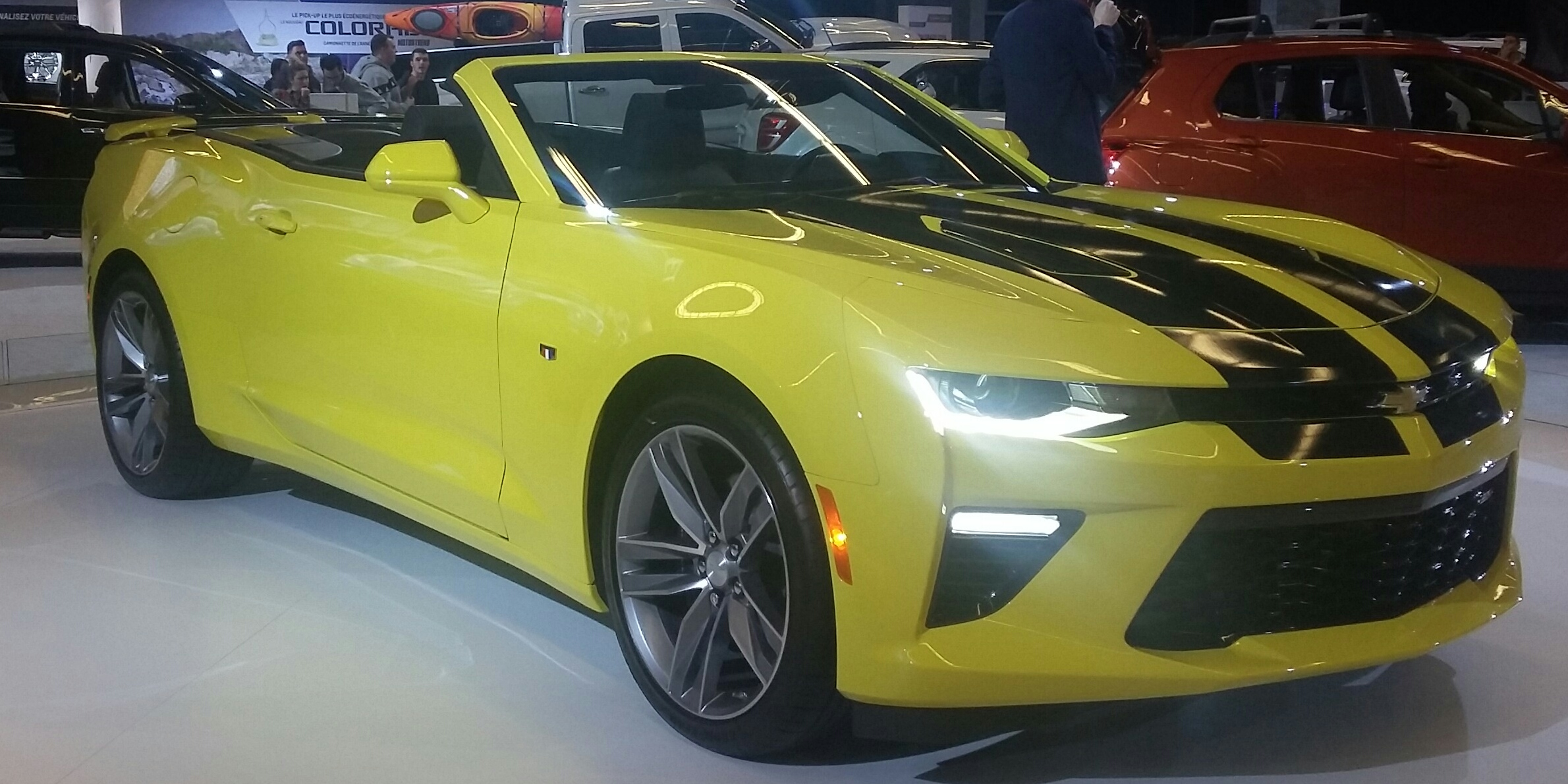
Chevrolet Camaro
"[373.3s] as a new Mustang, new Camaro. [375.6s] You just get a little whistle off these side scoops"
The Chevrolet Camaro is a well-known American sports car. They’re using it as a comparison for how quiet the car sounds on the highway.
The Chevrolet Camaro is another iconic American pony car, typically associated with V8 performance and a distinct exhaust note. The hosts mention it as a reference point for how quiet the car is when cruising at highway speed.
side scoops
"[375.6s] You just get a little whistle off these side scoops [377.7s] that do nothing, which is silly. [379.3s] The side, the scoops to nowhere."
Side scoops are openings on the side of a car. They can either help move air for cooling, or they can just be there for looks—this segment is calling them mostly for looks.
“Side scoops” are openings or aerodynamic inlets on the side of a car body. Depending on design, they may feed air to a specific component (like brakes or an engine bay) or be purely styling cues; here, the hosts argue these particular scoops are mostly non-functional.
Le Mans with the GT40s
"[396.2s] Like in the late 1960s, they've just won, you know, [402.2s] Le Mans with the GT40s that have those trademark side scoops."
The Ford GT40 is a famous race car from the 1960s. They’re talking about how the GT40 won at Le Mans and had side scoops that were part of its racing design.
The Ford GT40 is a legendary mid-1960s race car built to beat Ferrari at endurance racing. The hosts reference its Le Mans-winning history and the “trademark side scoops,” using them to explain why those scoops made sense on a race car even if they don’t on a road car.
non-functional
"[420.0s] And I think I used to talk a lot of crap [422.9s] about some of the aftermarket companies [424.5s] that would stick on scoops. [426.4s] And I'd go, these are so dumb, they're non-functional."
“Non-functional” here means the part isn’t really doing anything useful. They’re saying the scoops look cool, but they don’t actually help the car the way real air scoops should.
In aerodynamic terms, “non-functional” means a body feature doesn’t meaningfully affect airflow or cooling. The hosts are criticizing certain aftermarket or styling scoops because they create noise/drag without providing a real aerodynamic or cooling benefit.
cool the diff
"[433.5s] I'm curious, I wonder if the race cars, [435.6s] if they cut a hole and then they would like cool the diff [438.5s] or they could send cool air to the brakes."
“Cooling the diff” means keeping the rear gear box (differential) from overheating. When it gets too hot, it can wear faster and lose efficiency.
“Cooling the diff” means lowering the temperature of the differential (the gear unit that sends power to the wheels). Heat builds up during hard acceleration and cornering, so cooling can help keep oil from thinning and reduce wear.
GT500
"[440.6s] But obviously the road cars, [441.8s] like the GT500 back in the day was the 911 Turbo S. [446.3s] Like it was the most expensive one."
The GT500 is a supercharged, high-performance Mustang from Ford. It’s the “big power” version, and the hosts are saying it was more of a fast street car than a dedicated track toy.
Ford’s GT500 is the high-performance, track-capable version of the Mustang line. In this segment, it’s being contrasted with other “road cars” from the 1960s era, emphasizing its expensive, fast, more street-oriented character.
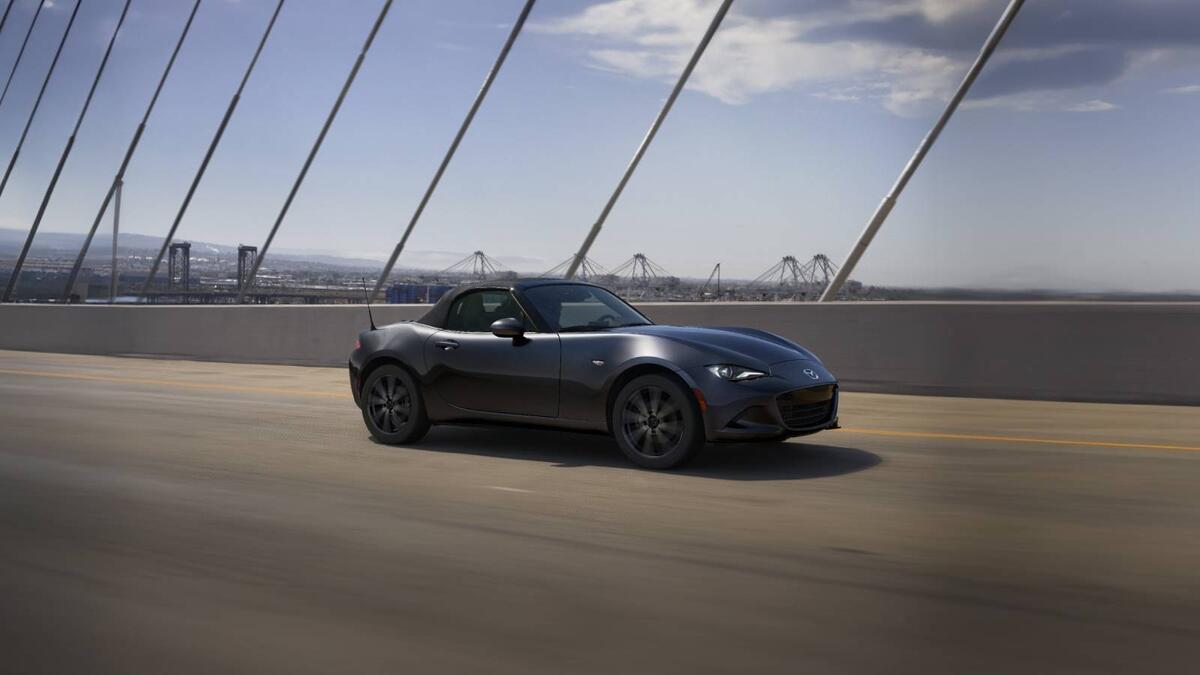
Mazda MX-5 / Miata
"It was kind of a gentleman's car. Aggressive Miata behind me, I'm going to give them a point by as ..."
The Mazda Miata is a small two-seat convertible. It’s made to be fun to drive, especially on twisty roads, without needing a lot of power. People like it because it feels light and nimble.
The Mazda MX-5 Miata is a small, lightweight roadster designed to be fun and easy to drive. It’s often described as a “gentleman’s car” because it emphasizes balance and feel rather than raw power. It comes up in conversations about driving dynamics because it’s known for being playful, responsive, and approachable.
Canyon track car
"[456.0s] It was just, it was the most expensive one, it was fast, [458.5s] but it wasn't a like Canyon track car. [462.9s] That was the GT350's job."
This is basically a “winding-road” car—something you drive hard on twisty roads. The hosts are saying the GT500 wasn’t that kind of car, while the GT350 was.
A “canyon track car” refers to a car set up for spirited driving on winding roads (canyons) rather than a dedicated race track. The hosts are contrasting street performance with a more purpose-built track-focused setup.
GT350
"[456.0s] It was just, it was the most expensive one, it was fast, [458.5s] but it wasn't a like Canyon track car. [462.9s] That was the GT350's job."
The GT350 is a Mustang variant that’s more about driving feel and track-style performance. The hosts are saying it was meant to be the more aggressive, track-capable one.
The Ford GT350 is the more track-and-handling-oriented Mustang variant, historically positioned as the “canyon/track” choice compared with the GT500. In the segment, the hosts assign the GT350 the job of being the more aggressive, track-focused car.
diff coolers
"[467.0s] So they're not going to have, you know, [468.3s] diff coolers coming from the scoops, [469.7s] but to your point, they want a Peacock a bit."
A diff cooler is an add-on that helps keep the rear differential oil from getting too hot. That can help the car work better and last longer when you drive it hard.
A differential cooler (often called a “diff cooler”) is an extra heat exchanger used to keep the differential oil from overheating. Cooler differential oil helps maintain lubrication and can improve durability and consistency during hard driving.
Classic cock cars
"[483.4s] That's awesome. [484.1s] Dude, that was dope. [486.2s] Classic cock cars."
They’re using slang to describe classic muscle cars that were designed to look loud and get attention. The point is the styling—graphics and scoops—was part of the appeal.
“Classic cock cars” is slang for classic muscle-era cars that are styled and marketed to be attention-grabbing and macho. In context, it ties to the hosts’ discussion of 1960s graphics, scoops, and “cartoon” styling meant to draw attention.
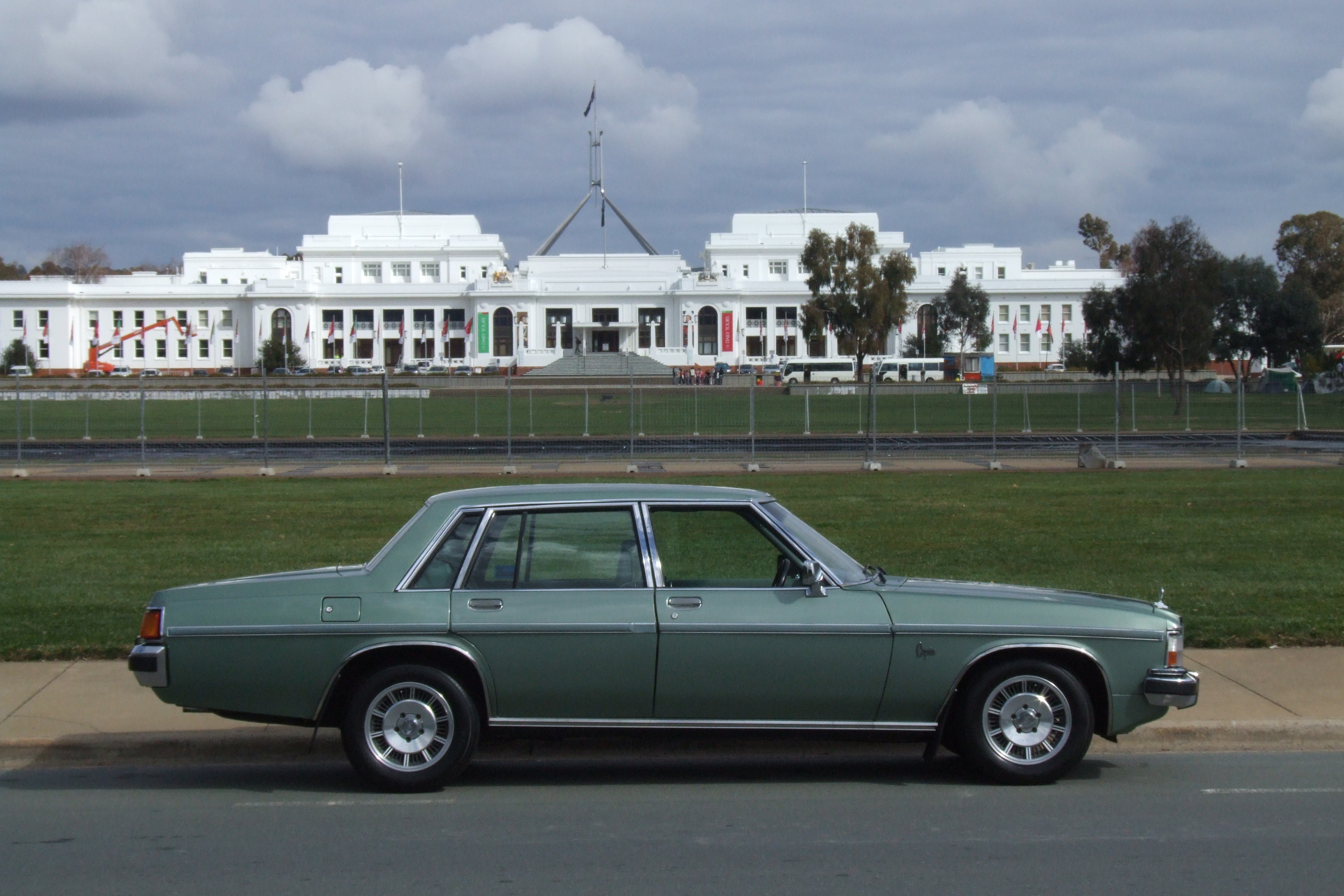
Holden Caprice
"Classic cock cars. Murdered out Caprice with fucking NASCAR steel, that was really cool."
The Holden Caprice is a large, comfortable sedan. In the podcast, it’s being talked about as a customized car with a dark, aggressive style. The point is that it can be made to look like a race-inspired street car.
The Holden Caprice is a full-size sedan from Holden, known for comfort and a more traditional, family-car layout. The podcast context describes a “murdered out” Caprice with NASCAR-style steel, emphasizing a custom, aggressive appearance. It’s discussed because it shows how a mainstream sedan can be modified into a striking, motorsport-inspired look.
murdered out
"Murdered out Caprice with fucking NASCAR steel, that was really cool."
“Murdered out” just means the car is styled to look very dark and stealthy, usually with lots of black parts and trim.
“Murdered out” is car-culture slang for a fully darkened look—typically black paint plus black wheels, trim, and other visible surfaces. It’s used to describe a stealthy, uniform appearance rather than a specific factory option.
Revology
"But so Revology, this company, and by the way, I should say, there's going to be a disclaimer in the video,"
Revology is a company that makes classic-looking cars with modern performance parts. The host also says he has a financial connection to them, so listeners should factor that into the opinion.
Revology is a company that builds and sells modernized classic-style cars, often using crate-style performance components. In this segment, the host also mentions a business relationship tied to storing their press cars at WCCS, which is relevant to how the review should be interpreted.
press cars
"I financially benefit by Revology keeping their press cars at WCCS. They store them there."
Press cars are cars that a company gives to reviewers so they can test them and make videos or articles. They’re usually kept in good condition for the media.
“Press cars” are vehicles provided to media outlets or reviewers so they can evaluate and publicize the product. They’re often loaned for events, test drives, or content creation, and may be maintained to a consistent standard.
power train
"They'll sell you essentially the same power train and performance package across their whole model line,"
A “power train” is the set of parts that work together to move the car—engine and the components that send power to the wheels.
“Power train” refers to the car’s main mechanical system that makes it move—typically the engine, transmission, driveshaft, differential, and related components. Here it’s used to describe how Revology offers similar mechanical setups across different builds.
NA
"manual or automatic, NA or supercharged, but with any body from the 1960s."
“NA” means naturally aspirated—no turbo or supercharger. The engine relies on normal airflow instead of forced boost.
“NA” means naturally aspirated, describing an engine that draws air in without a turbocharger or supercharger. In this context, it’s contrasted with “supercharged” to indicate different forced-induction setups.
supercharged
"manual or automatic, NA or supercharged, but with any body from the 1960s."
A supercharger is a device that forces extra air into the engine, which can make it produce more power. It’s basically “boost” for the engine.
A supercharged engine uses a belt-driven compressor to force more air into the cylinders, which can increase power. The host is describing Revology’s ability to offer builds with either naturally aspirated or supercharged powerplants.
Boss 429
"all the way up to your Boss 429s and your GT 500s"
The Ford Boss 429 is a famous, high-powered muscle-car engine package from the classic era. The host is saying you can build something that looks like a 1960s car but uses very serious performance hardware.
The Ford Boss 429 is a legendary high-performance variant known for its big 429 cubic-inch V8 and its role in the muscle-car era. In this segment, it’s used as an example of the top-end performance packages Revology can pair with classic 1960s-style bodies.
center console
"[624.9s] It's Radio Shack and it's right, you know, [627.7s] in front of the shifter and, you know, [630.6s] but like what we have for people listening, [632.9s] the whole center console is brushed aluminum."
The center console is the area between the front seats where you find controls and storage. In this case, the hosts are talking about the materials and switch placement.
The center console is the main control and storage area between the front seats. It often houses switches for windows, climate, drive modes, and sometimes the shifter area, so its layout strongly affects usability.
brushed aluminum
"[630.6s] but like what we have for people listening, [632.9s] the whole center console is brushed aluminum."
Brushed aluminum is a metal surface with a textured, streaked look. It’s often used inside cars to make things feel more upscale, but it can show marks over time.
Brushed aluminum is a metal finish created by running fine abrasive lines in one direction, giving a subtle texture and sheen. In interiors, it’s used for a premium look, but it can also show fingerprints and wear depending on the coating.
HVAC controls
"[668.4s] Like the HVAC controls are awesome. [670.7s] Like it feels like metal. [671.9s] The slide action is really nice."
HVAC controls are the buttons and knobs you use to control the car’s heating and air conditioning. They help you keep the cabin comfortable and clear the windshield.
HVAC controls are the dashboard controls for heating, ventilation, and air conditioning. In a car, they affect how quickly you can defog the windshield, cool the cabin, and maintain comfortable temperatures while driving.
slide action
"[671.9s] The slide action is really nice. [673.3s] The gauges are beautiful. [675.0s] The metal work here on the dash is awesome."
“Slide action” here refers to the physical movement feel of a dashboard or center-console mechanism. In enthusiast terms, it often points to how smoothly and precisely a component moves, which can signal build quality.
gauges
"[673.3s] The gauges are beautiful. [675.0s] The metal work here on the dash is awesome. [677.3s] And then, you know, you go to put the window down."
Gauges are the displays behind the steering wheel that show things like your speed and other car info. When they look and feel well designed, the whole dashboard feels higher quality.
Gauges are the instrument cluster displays that show driving information like speed and engine-related data. Their design, readability, and physical layout can strongly influence how “premium” a car feels.
RestoMod
"[703.3s] I think this is what a lot of the RestoMod [705.7s] pro touring community was after."
RestoMod means taking an older car and keeping its classic look, but upgrading the important mechanical parts. People do it so the car drives better and feels more modern while still looking cool.
RestoMod is a style of car build that keeps the look and vibe of a classic (often a muscle car) but modernizes the mechanicals. The goal is usually better drivability—handling, braking, and ride quality—while still feeling like the original car.
pro touring
"[703.3s] I think this is what a lot of the RestoMod [705.7s] pro touring community was after."
Pro touring is about turning an older car into something that drives and handles more like a modern performance car. It usually means upgrading the suspension and steering so it corners and stops better.
Pro touring is a motorsport-inspired approach to modifying classic cars for modern road-course performance. It typically emphasizes improved suspension geometry, steering feel, and braking so the car can handle like a contemporary sports car.
subframes
"[712.6s] So the first step was subframes, right? [715.2s] And that would allow you to get different suspension [716.8s] or steering racks."
A subframe is like a strong mounting frame inside the car that holds parts such as the suspension and steering. Swapping or adding one can make it easier to install better, more modern handling components.
Subframes are structural frames that mount to the main body and carry key components like suspension and steering. In a classic-car restomod, adding or replacing subframes is a common first step because it makes it easier to fit modern suspension setups and steering racks.
steering racks
"[715.2s] And that would allow you to get different suspension [716.8s] or steering racks."
The steering rack is the part that connects your steering wheel to the front wheels. Changing it can make the car steer more precisely and feel better.
A steering rack is the gear mechanism that converts the steering wheel’s rotation into left/right wheel movement. Restomods often swap steering racks to improve steering ratio, feel, and compatibility with updated suspension geometry.
Art Morrison chassis
"[726.1s] And then, you know, the next step [727.6s] was like an Art Morrison chassis. [729.4s] You get a full chassis in there,"
An Art Morrison chassis is a custom-built frame made for restomod-style projects. It helps builders fit modern suspension and steering more cleanly so the car drives better.
An Art Morrison chassis refers to a custom chassis system built by Art Morrison Enterprises, commonly used in high-end restomods and pro touring builds. A full chassis can provide modern mounting points and geometry, making it easier to package updated suspension, steering, and drivetrain components.
suspension
"[734.3s] The suspension you put on will benefit more. [737.8s] But this is obviously the nth degree. [740.2s] You have a whole new unibody, you know,"
Suspension is what connects the wheels to the car and helps the tires stay in contact with the road. It affects how the car rides and how it behaves when you turn or hit bumps.
Suspension is the system that connects the wheels to the car’s body and controls how the tires move over bumps and during cornering. When the platform is stiffer, the suspension’s tuning can show up more clearly in steering feel and cornering behavior.
unibody
"[737.8s] But this is obviously the nth degree. [740.2s] You have a whole new unibody, you know, [742.2s] engineered as perfectly as you can."
A unibody means the car’s body and frame are built as one strong structure. Because it’s stiffer, the suspension can do its job better, which can make the car feel more precise when turning.
A unibody is a car body where the frame and body structure are integrated into one shell. That construction helps the chassis be stiffer and can improve how the car handles and corners because the suspension has a more stable platform to work against.
handles
"[746.4s] It really comes through in your hands [748.9s] in the way it handles, the way it corners. [751.0s] Like, it's really, it's great."
“Handling” is how the car feels when you steer—especially in turns. It’s about how well the tires grip and how predictable the car feels.
In car talk, “handling” refers to how the vehicle responds to steering inputs and maintains grip through turns. It’s influenced by chassis stiffness, suspension design, tire choice, and alignment.
track pack
"You know, with like a track pack. But then when you get out, the proportions are still right"
A track pack is a set of upgrades meant for driving on a racetrack. It usually improves things like braking and grip so the car can handle harder driving.
A track pack is an option package that adds track-focused hardware and settings—commonly things like upgraded brakes, cooling, tires, and sometimes driver-adjustable modes. The hosts use it to explain why the car feels more like a modern performance car when driving.
solid rear axle
"[863.3s] It's a new GT as far back as the gearbox. [867.6s] The rear end is a solid rear axle with a Watts link. [871.6s] So it's not like overly modernized."
A solid rear axle connects both rear wheels with one rigid piece. When one wheel hits a bump, the axle design affects how the other wheel and the whole rear end move.
A solid rear axle (live axle) means the rear wheels are connected by a single rigid axle housing. It’s common on many muscle cars because it can be durable and gives a distinctive feel, but it can ride differently than independent rear suspension.
Watts link
"[863.3s] It's a new GT as far back as the gearbox. [867.6s] The rear end is a solid rear axle with a Watts link. [871.6s] So it's not like overly modernized."
A Watts link is a way to hold the rear axle in place while the car rides over bumps. It helps the rear wheels move up and down without the axle shifting sideways as much.
A Watts link is a suspension setup used to control how a live rear axle moves. It helps keep the axle centered while allowing vertical travel, reducing side-to-side “wandering” compared with simpler linkages.
muscle car vibe
"[871.6s] So it's not like overly modernized. [875.3s] It still kind of drives like a muscle car, [879.0s] just a much more refined one."
“Muscle car vibe” is the overall feel people associate with older American performance cars. It’s not just speed—it’s also the rougher, louder, less-refined experience that some fans like.
“Muscle car vibe” refers to the characteristic driving feel and sensory experience associated with classic American performance cars. In this segment, it’s tied to the tradeoffs like noise, rattles, and imperfect refinement that many fans actually enjoy.
speedo
"Because the power just gets down, is it's put down to the wheels and you look at the speedo. And again, speaking of the refinement, it's so quiet and smooth in here, that when I looked down at the speedo earlier, I was like, oh, I'm going that fast?"
The speedo is the dashboard gauge that tells you your speed. They’re saying the car feels so smooth and quiet that you might not notice how fast you’re actually going until you look at the gauge.
A speedometer (“speedo”) is the gauge that shows how fast the car is traveling. In this segment, they’re pointing out that the car feels so smooth and refined that you may not realize you’re going that fast until you check the speedo.
refinement
"And again, speaking of the refinement, it's so quiet and smooth in here, that when I looked down at the speedo earlier, I was like, oh, I'm going that fast?"
Refinement is how smooth and comfortable the car feels day-to-day. They mean it’s quiet and doesn’t feel rough or noisy compared with older cars.
Refinement is how “polished” a car feels—how little noise, vibration, and harshness it has during normal driving. Here, they’re contrasting the quiet, smooth cabin with the louder, more dramatic feel of older cars.
track day
"I'm not inspired to take it like to a track day per se. Although somebody might. I'm not inspired to do that."
A track day is when people drive their cars on a race track (not public roads) to drive more aggressively. They’re saying this car doesn’t make them want to do that, though someone else might.
A track day is an event where drivers take their cars to a closed circuit for performance driving. They’re saying the car doesn’t inspire them to push it that way, even though others might.
open sweeper
"But like, do this open sweeper life, the drive to Palm Springs life, the rip it up PCH to for car week life,"
An open sweeper is a bend that curves gently. You usually keep more speed through it because it’s not a tight, sharp corner.
An “open sweeper” is a corner that turns gradually rather than sharply. It usually rewards smooth steering and maintaining speed through the arc instead of braking hard and turning in aggressively.
eight tenths line
"I think I hit like the eight tenths line and then you start to see the lean in the front, in the corners."
“Eight tenths” is a way racers talk about being near the car’s limit—about 80% of what it can do. Past that point, the car starts to feel less stable and more “on the edge.”
The “eight tenths line” is a driving reference meaning you’re operating at roughly 80% of the car’s available grip and performance. When you pass it, the car starts to show more visible signs of approaching its limits (like front-end lean or reduced composure).
lean in the front
"...and then you start to see the lean in the front, in the corners. It's just a lot of weight."
“Front lean” is when the front of the car tips over more than you’d like while turning. It usually means the car is working hard and you’re getting close to the limit.
“Lean in the front” describes how the car’s front end tilts or loads during cornering. It often indicates the suspension is working hard and the car is nearing its grip limits, especially in fast corners.
NA engine
"If I was going to get one of these, I'd probably just get the NA engine, save some weight. It's still going to be really fast."
“NA” means naturally aspirated—no turbo or supercharger. It usually means a simpler setup and can help keep the car lighter.
“NA” means naturally aspirated, so the engine makes power without a turbocharger or supercharger. Naturally aspirated setups typically feel lighter and simpler, and they can reduce weight compared with forced-induction versions.
blower wine
"And what's funny is in this car, you don't really hear the blower wine, but when outside of the car, you hear a ton of it."
“Blower wine” is the whiny sound you hear from a supercharger. It can be louder outside the car than inside because the cabin dampens noise.
“Blower wine” is the high-pitched sound associated with a supercharger (the “blower”) as it spins and compresses air. The pitch can be more noticeable outside the car than inside because of cabin insulation and where the sound is generated.
GT 500
"[1250.0s] Individual results may vary based on studies [1252.1s] of topical and oral minoxidil and finasteride. [1255.7s] The, this car, the 500 comes with the blower standard. [1262.5s] You get the GT 350 is the NA version of it,"
The Ford Mustang GT500 is a very powerful version of the Mustang. A “blower” here means a supercharger, which forces more air into the engine for extra power.
The Ford Mustang GT500 is a high-performance Mustang built around a supercharged V8. In this segment, the host notes it “comes with the blower standard,” meaning the supercharger is included on the GT500.
70 Boss 302
"[1269.2s] which is good, I would say that's a net positive. [1272.6s] I think my favorite body style that I've seen so far [1277.2s] is the 70 Boss 302, which has the updated interior [1281.4s] and the highback seats."
The “Boss 302” is a famous 1970-era Ford Mustang performance model. The host is saying this particular version has a nicer, updated interior and supportive high-backed seats.
The Ford Mustang Boss 302 (from the 1970 model year) is a classic muscle car known for its track-focused heritage. The host specifically points out the “updated interior” and “highback seats,” which are key visual and comfort details on this body style.
Shelby GT350
"I prefer that, just preference, but also I saw a Shelby GT 350, 66 that was absolutely delectable and those have a slightly different"
The Shelby GT350 is a performance version of a Mustang. It’s built to feel more aggressive and sporty than a regular Mustang. The podcast is referencing a particular model year because different years can feel a bit different.
The Shelby GT350 is a high-performance variant of the Ford Mustang line, known for its track-focused character and enthusiast appeal. The podcast context mentions a specific year (’66) and describes it as “delectable,” implying differences between versions. It’s discussed because the GT350 has a strong performance heritage and collector interest.
A pillars
"We see more, I mean, like the A pillars are small, like the GTs are huge these days."
A-pillars are the vertical supports near the front of the car, by the windshield. If they’re thick, they can block your view when you’re driving or turning.
A-pillars are the structural posts at the front corners of a car’s cabin that support the windshield and roof. Their thickness and shape affect visibility—thinner A-pillars generally mean less blind spot.
hood is latched properly
"please double check that the hood is latched properly. I'm looking at it and it just."
The hood latch is what keeps the hood closed. If it isn’t latched all the way, the hood can shift or vibrate while you drive.
A hood latch is the mechanism that holds the hood closed so it can’t pop open while driving. “Latched properly” means the latch is fully engaged and aligned, which prevents the hood from loosening or vibrating.
rear seat folds down
"the fact this rear seat folds down and you have a huge hatchback. You could put like a drum kit back there."
Folding the back seats down makes more room for cargo. On a hatchback, the back door opens wide, so it’s easier to load bigger stuff.
When the rear seat folds down, it increases cargo space by turning part of the cabin into a larger flat area. In hatchbacks, this pairs with the rear hatch to make loading bulky items easier.
hatchback
"and you have a huge hatchback. You could put like a drum kit back there."
A hatchback has a back door that opens upward, and the trunk and cabin are connected. That makes it easier to load larger items.
A hatchback is a car body style where the rear door (the hatch) swings upward and the trunk area is part of the same opening. This design usually makes it easier to load taller or bulkier items compared with a traditional sedan trunk.
manual sliders
"I think these seats, they just don't work for me. Like they sit too high up, but they're manual sliders."
Manual sliders are a way to move your seat forward or backward by hand. It’s adjustable, but the speaker feels the seat ends up too high.
Manual sliders are seat rails that let you move the seat forward or backward using a hand lever, not an electric motor. The speaker is pointing out that the seat height/position feels wrong even though it’s adjustable.
electric seat
"it's almost like they took an electric seat and they used the stock bracket that came with it, but then they used a manual slider"
An electric seat adjusts itself with motors. The speaker thinks the seat was designed like an electric one, but it’s being adjusted manually instead.
An electric seat uses motors to adjust positions like fore/aft travel and sometimes height and recline. The speaker suggests the car’s seat hardware feels like it was designed around an electric setup, but is being used with manual parts.
seat bracket
"and they used the stock bracket that came with it, but then they used a manual slider because it just seems like there's a ton of dead space under it."
A seat bracket is the metal mounting pieces that hold the seat to the floor. The speaker thinks the way it’s mounted leaves extra space and makes the seat feel too high.
A seat bracket is the mounting hardware that attaches the seat to the floor rails and determines how the seat sits relative to the cabin. If the bracket/rail setup leaves extra space underneath, it can affect perceived seating height and comfort.
Gunther
"Singer stuff, Gunther, like, everything should be perfect because it costs all the money in the world."
“Gunther” here is probably a reference to Gunther Werks, a company that makes high-end Porsche-based cars. The speaker is saying expensive builds should be flawless.
“Gunther” likely refers to Gunther Werks, a brand that builds Porsche-based cars with a focus on performance and design. The speaker groups it with Singer to argue that very expensive builds should have no compromises.
Singer stuff
"Singer stuff, Gunther, like, everything should be perfect because it costs all the money in the world."
“Singer stuff” means cars from Singer Vehicle Design, a company that builds very expensive, highly customized Porsche 911s. The speaker is saying that at that price, everything should feel right.
“Singer stuff” refers to Singer Vehicle Design, a brand known for highly customized Porsche 911 restorations and recreations. The speaker uses it as a benchmark for how “perfect” the experience should be given the high cost.
Sparko seat
"But I think, I don't know, a Sparko seat"
A Sparco seat is a racing-style seat brand. It can feel different from stock seats—often more supportive, and it may sit at a different height.
A Sparco seat refers to Sparco-branded racing seats, commonly used for motorsport and track-focused builds. These seats are typically designed to hold the driver more securely and can change seating height and posture compared with stock seats.
side bolstering
"[1493.9s] I don't, I don't, I think this seat isn't great. [1497.2s] And I would like one with a little more [1499.9s] side bolstering or something. [1501.3s] I mean, you can make it look right."
Side bolstering means the seat has extra padding on the sides. It helps keep you from sliding around when you’re turning or braking hard.
Side bolstering is extra padding on the sides of a seat meant to hold you in place during cornering. More bolstering can improve lateral support so your body doesn’t slide toward the door when the car loads up in turns.
damping
"[1521.4s] It's, it's, it's, [1520.2s] Yeah. [1521.4s] It's a brake pedal feel away from being a 99, you know. [1529.6s] But whoever did the damping, bravo. [1532.4s] Yeah, the suspension is great."
Damping is how the suspension controls the car’s bounce over bumps. If it’s tuned well, the car feels stable and doesn’t keep wobbling after you hit a rough spot.
Damping is how a suspension controls spring motion—basically how quickly the shocks/struts let the car settle after bumps. Good damping reduces bouncing and keeps the tires in better contact with the road, which improves ride quality and steering feel.
floaty
"[1534.5s] And then on the highway, it's good too. [1536.0s] Like it's soaked stuff up pretty well, [1537.3s] but it's not too floaty."
“Floaty” means the car feels a bit too soft and keeps moving after bumps. Instead of feeling tight and settled, it feels like it’s drifting or bobbing.
“Floaty” describes a suspension/ride feel that’s overly soft or slow to respond, so the car keeps moving after hitting bumps. It usually means the damping and spring rates let the body oscillate too much, reducing crisp control.
cruise control
"[1545.5s] I think it'd be kick ass. [1546.9s] I don't think there's cruise control. [1549.5s] There wouldn't be, right?"
Cruise control is a feature that lets the car hold a chosen speed by itself. If the car doesn’t have it, you have to keep adjusting the gas pedal and brake yourself.
Cruise control is a driver-assist feature that automatically holds a set speed on steady roads. If a car doesn’t have it, you typically have to manage speed manually, especially on long highway stretches.
upsize
"[1553.1s] I love this corner. [1554.9s] Load up the front end and whee. [1558.5s] And actually a lot of times when you upsize [1560.9s] the stock wheels, they don't look very good."
“Upsize” here means putting bigger wheels on the car than it came with. Bigger wheels often require different tires, which can change how the car rides and looks.
In this context, “upsize” means increasing wheel size compared to stock—here, moving to larger diameter wheels. That usually changes tire sidewall height and can affect ride comfort, steering feel, and how the car looks.
sidewall
"[1575.7s] Yeah. [1576.1s] So I think that helps. [1577.1s] And it's still enough. [1578.8s] There's enough sidewall."
The sidewall is the part of the tire between the rim and the road-contact tread. A taller sidewall usually makes the ride feel less bumpy.
The tire sidewall is the rubber “wall” between the wheel rim and the tread. More sidewall (taller sidewall height) generally means a taller tire profile, which can help ride comfort and reduce the harshness that comes with very low-profile tires.
rubber band tiring it
"[1578.8s] There's enough sidewall. [1579.7s] I think when you get into 18s or beyond on old cars, [1583.3s] when you start rubber band tiring it, [1585.1s] then it doesn't look very good."
They mean putting tires with very short sidewalls on big wheels, so the tire feels stiff—like a rubber band. It can look worse and usually makes the ride rougher.
“Rubber band tiring it” is enthusiast slang for fitting very low-profile tires on larger wheels, where the tire’s sidewall becomes so thin it feels like a stretched rubber band. Visually it can look awkward on older cars, and it can also make the ride harsher and reduce tire compliance.
bushings
"One, probably could have guessed it, but all bushings are shot. No. No."
Bushings are small rubber parts that help the suspension move smoothly. If they’re worn out, the car can feel loose and start making noise.
Bushings are rubber (or rubber-like) isolators that sit between suspension components to reduce vibration and allow controlled movement. When “all bushings are shot,” the suspension can feel loose, clunk, or wear other parts faster.
supplemental underbody bracing
"he forgot that the Mercedes convertibles have some supplemental underbody bracing versus the sedans. And so he has to take off the bracing"
Supplemental underbody bracing is extra structural metal added under the car to stiffen the chassis. Convertibles often need more bracing than sedans because removing the fixed roof reduces body rigidity.
super sprint exhaust
"and make a new bracing that will clear the super sprint exhaust. So that's a thing."
Super Sprint makes aftermarket exhaust parts. They had to change the metal reinforcement under the car so the exhaust could fit without hitting it.
Super Sprint is an aftermarket exhaust brand, and “super sprint exhaust” here refers to a specific exhaust system that must physically clear the car’s underbody bracing. The host is describing fabrication work to make new bracing that doesn’t interfere with the exhaust.
strapped the car down incorrectly
"And then the one that was actually a surprise is that at some point... somebody strapped the car down incorrectly"
If a car is tied down wrong on a trailer, it can get stressed or bent in ways you might not notice right away. That can lead to problems later, like parts not lining up correctly.
Strapping a car down incorrectly during transport can shift or stress suspension and body components, potentially causing alignment issues or even damage. It’s mentioned as a “surprise,” implying it may have contributed to the problems found during inspection.
jacking at the right place
"[1676.3s] Wow, that's why, you know, [1677.5s] jacking at the right place is important, [1679.2s] anchoring at the right place is important."
When you lift a car, you have to use the correct lifting points. If you jack it in the wrong spot, you can damage the body or the car’s structure.
Jacking at the right place means lifting the car only at the factory-designated lift points. Using the wrong spot can bend sheet metal, damage structural areas, or even crack components.
anchoring at the right place
"[1677.5s] jacking at the right place is important, [1679.2s] anchoring at the right place is important. [1680.3s] Strapping cars down on trailers and transporters."
When a car is strapped down for transport, you have to hook the straps to the proper points. Wrong attachment points can bend or damage the car while it’s being hauled.
Anchoring at the right place refers to securing a vehicle to a trailer using the correct tie-down points. If straps or chains are attached to the wrong areas, they can deform the body or damage structural components during transport.
strapping cars down on trailers and transporters
"[1680.3s] Strapping cars down on trailers and transporters. [1683.1s] See, I just got a hell yeah, brother,"
Transporting a car safely means securing it so it can’t move around on the trailer. If it’s tied down poorly, the car can shift and get damaged.
Proper vehicle transport involves securing the car so it can’t shift, bounce, or rotate during loading, braking, and cornering. The key is using correct tie-down locations and enough restraint so the car’s structure isn’t stressed.
cars and coffee
"Yeah, you know, a lot of the old ones, you drive to cars and coffee and that's it, because you're worried something's gonna break."
“Cars and coffee” is a casual car meetup where people bring their cars and hang out. The hosts are using it to say some older cars are only driven for fun, not because they’re dependable every day.
“Cars and coffee” is an informal car meet where enthusiasts gather in the morning to show off their cars. In the segment, it’s used to contrast show-and-shine driving with actually using an older car as a daily driver.
workwear
"Plus, if you're in certain parts of the country, mud, rain, and whatever else the weather decides to throw at you, that's why you need workwear that can keep up with the changing conditions..."
“Workwear” means work clothes made to handle tough conditions. They’re talking about how rain and mud can make regular clothes uncomfortable, so you need gear that moves well and doesn’t soak through.
“Workwear” here refers to clothing designed for job-site use, not fashion. The hosts connect it to driving/using a car in harsh weather (mud, rain) by emphasizing materials that stay flexible and dry.
True work
"and true work has you covered, because most workwear is made from cotton blends, which can restrict your movement and get soaked after just a few raindrops."
“True work” is a clothing brand they’re recommending. They say their work clothes are made to move better and handle rain more effectively than basic cotton blends.
“True work” is the brand being promoted in the segment for job-site clothing. The hosts claim it uses performance fabrics to improve comfort and movement in wet conditions compared with typical cotton-blend work pants.
T2 work pant
"Springtime is the perfect season for the T2 work pant, which keeps you comfortable over a wide range of conditions."
The “T2 work pant” is a specific pair of work pants they’re promoting. They’re saying it’s comfortable and works across different weather conditions.
The “T2 work pant” is a specific product line being advertised as suitable for spring and a wide range of conditions. The segment frames it as comfortable and weather-capable, aligning with the earlier discussion about rain and mud.
T-R-U-E-W-E-R-K.com Code Tire
"[1848.0s] That's T-R-U-E-W-E-R-K.com Code Tire. [1853.4s] Truework, built like it matters because it does."
They mention a specific tire product from T-R-U-E-W-E-R-K.com. The point is that it’s made to be durable and useful, not just for show.
T-R-U-E-W-E-R-K.com Code Tire is mentioned as a specific tire brand/product being promoted. The hosts emphasize it as “built like it matters,” implying it’s designed for real-world use rather than just appearance.
Jim Farley
"like Jim Farley, the CEO of Ford, [1864.0s] who's now got a podcast."
Jim Farley is the top executive at Ford. The hosts mention him because he’s also into racing, not just running the company.
Jim Farley is the CEO of Ford. In this segment, he’s referenced as the kind of executive who also drives race cars, which ties into the podcast they’re discussing.
Ford
"like Jim Farley, the CEO of Ford, [1864.0s] who's now got a podcast."
Ford is a major car company. Here, the hosts talk about its CEO and how he’s into cars and racing.
Ford is the automaker whose CEO, Jim Farley, is being discussed. The segment frames Ford leadership as enthusiast-minded by connecting it to racing and a separate show about what people drive.
Daniel Ricardo
"[1880.2s] Like Formula One driver Daniel Ricardo. [1882.8s] Listen, there is a well-worn trope about racing drivers"
The host is talking about a Formula One driver as a guest. The name sounds like it may be “Daniel Ricciardo,” a famous F1 racer.
Daniel Ricardo is referenced as a Formula One driver guest. The name appears to be a transcription error for “Daniel Ricciardo,” the well-known F1 driver.
Formula One
"[1880.2s] Like Formula One driver Daniel Ricardo. [1882.8s] Listen, there is a well-worn trope about racing drivers"
Formula One is the highest level of a major kind of race car competition. The hosts mention an F1 driver as someone worth listening to.
Formula One (F1) is the top level of international open-wheel racing. The segment uses an F1 driver as an example of an interesting guest for the Jim Farley podcast.
Ferrari 355
"It's a thing where you give them a Ferrari 355 [1945.0s] and $770,000 and you get back a crazy thing."
The Ferrari 355 is a famous Ferrari supercar from the 1990s. Here, it’s mentioned as the kind of expensive car someone might hand over to get a very different, “crazy” result back.
The Ferrari 355 is a mid-engine V8 supercar from Ferrari, known for its high-revving engine and classic 1990s-era styling. In this segment, it’s used as an example of a valuable donor car in a “give them X and get back Y” kind of transformation.
skip shifting
"When Zach and I were in the car with Tommy Kendall [1971.2s] going back to the airport from the race [1975.8s] and Tommy was talking about his skip shifting technique."
Skip shifting is a driving technique where you intentionally skip one gear during upshifts (or sometimes downshift-related behavior) to reduce shift frequency and improve efficiency. In performance driving, it can also be used to manage how quickly the car gets into the right gear for corner entry.
Ayrton Senna
"So conventional wisdom and Ayrton Senna [1988.2s] is that as you're downshifting to go into a corner,"
Ayrton Senna was one of the greatest race drivers in Formula 1 history. The hosts are referencing him as an example of the kind of driving technique people copy.
Ayrton Senna was a legendary Formula 1 driver known for his precision and racecraft. Here, his name is invoked as “conventional wisdom” for how to manage downshifts when approaching a corner.
blips
"without doing the blips. Just breaking enough to make the corner and then breaking while doing the blips ... And then right as he turned into the apex, give it one small blip because by now you're going much slower and just shove it in second"
A “blip” is a quick tap of the gas while you’re preparing to shift down. It helps the engine and transmission work together smoothly so the car stays stable when you brake and turn.
In racing driving, “blips” are quick throttle blips used to momentarily raise engine speed. That helps smooth downshifts by matching the engine’s RPM to the lower gear so the car doesn’t upset the chassis or lose traction mid-corner.
downshifts
"if he wasn't doing three downshifts, which in an IMSA or a Trans Am race is very big deal. ... just shove it in second and skip straight from five to two."
A downshift is when you go to a lower gear, like shifting from 5th to 2nd. Drivers do it to get the engine spinning faster so the car can respond better when they need to accelerate out of a turn.
A downshift is when the driver shifts from a higher gear to a lower gear, typically to increase engine RPM for acceleration out of a corner. In performance driving, the timing and smoothness of downshifts matter because they affect traction, braking stability, and how quickly the car can rotate and accelerate.
IMSA
"which in an IMSA or a Trans Am race is very big deal. ... And so instead what he would just do"
IMSA is a big American sports-car racing series. The point is that in races like IMSA, small driving mistakes—like how you downshift and brake—matter a lot.
IMSA is a major American sports-car racing organization/series. When the speaker says “in an IMSA…race,” they’re referencing a high-level road-racing environment where downshift timing and braking precision are especially important.
Trans Am
"which in an IMSA or a Trans Am race is very big deal. ... And so instead what he would just do"
Trans Am is a well-known American racing series. The speaker is saying this technique matters in serious races, not just casual track driving.
Trans Am refers to the Trans-Am racing series, a long-running American road-racing championship. Mentioning it alongside IMSA emphasizes that the driving technique being discussed (downshifts, braking, and cornering precision) is relevant in top-level American racing.
apex
"And then right as he turned into the apex, give it one small blip because by now you're going much slower and just shove it in second ... But like the difference is who's getting to that corner"
The apex is the inside “turning point” of a corner. Getting to it at the right moment helps the car turn cleanly and set up the exit.
The apex is the point on a race corner where the car is closest to the inside of the turn. Hitting the apex at the right time helps maximize cornering efficiency and sets up the best line for accelerating out.
skip straight from five to two
"and just shove it in second and skip straight from five to two. And that would save him 50 meters of breaking."
Instead of shifting step-by-step, the driver goes straight from 5th to 2nd. It can save time, but it has to be done very precisely so the car doesn’t jerk or lose grip.
“Skipping” gears means downshifting multiple steps at once (here, from 5th directly to 2nd) instead of stepping through the intermediate gear. This can reduce the time spent shifting and braking distance, but it requires very precise throttle blips and clutch/shift timing to keep the car stable and avoid upsetting traction.
50 meters of breaking
"And that would save him 50 meters of breaking. That's fucking crazy."
This is saying the driver could stop braking 50 meters sooner. In a race, that kind of distance difference can be huge because it changes the whole corner and lap time.
“50 meters of braking” refers to how much distance the car needs to slow down before the corner. In racing, small differences in braking distance can translate into major changes in lap time because they affect where you can turn in and how fast you can carry speed through the apex.
millisecond
"or win like 50 meters, 50 meters at 100 miles an hour is a millisecond. You're covering so much ground."
A millisecond is a tiny fraction of a second. At race speeds, even that small timing difference can mean you’re farther down the track or closer to the corner than your rivals.
A millisecond is one-thousandth of a second, and at racing speeds even that tiny time can cover a lot of distance. That’s why elite drivers focus on extremely precise inputs—because the car’s position and speed at the corner depend on timing at the sub-second level.
race craft
"to nail those four downshifts in a row, every lap and have that as part of your race craft"
Race craft is how a driver actually drives to be fast in a race. It’s about doing the right moves at the right time, consistently.
Race craft is the set of driving skills and techniques used to be fast and consistent in competition. It includes things like timing your braking and downshifts, managing traction, and repeating the right sequence lap after lap.
downshifting
"[2173.1s] When we're talking about downshifting for corners [2175.0s] in the BMW, which is paddle shifted, ZF-8. [2177.7s] Yeah, you can't skip in that one."
Downshifting is when the car goes to a lower gear. It can help slow the car using the engine and also prepares the car to move faster again when you exit the corner.
Downshifting is the process of selecting a lower gear to increase engine speed before or while slowing for a corner. It can help with engine braking and keeping the engine ready to accelerate out of the turn, but it doesn’t replace brake force when you need strong deceleration.
paddle shifted
"[2173.1s] When we're talking about downshifting for corners [2175.0s] in the BMW, which is paddle shifted, ZF-8. [2177.7s] Yeah, you can't skip in that one."
“Paddle shifted” means there are little shift paddles behind the steering wheel. You can tell the car when to change gears instead of letting it decide all by itself.
“Paddle shifted” means the driver uses steering-wheel paddles to command gear changes instead of relying entirely on automatic shifting. It’s often used to time downshifts more precisely for corner entry or to keep the engine in the right power band.
ZF-8
"[2173.1s] When we're talking about downshifting for corners [2175.0s] in the BMW, which is paddle shifted, ZF-8. [2177.7s] Yeah, you can't skip in that one."
“ZF-8” is shorthand for an eight-speed automatic transmission from ZF. They’re talking about how that gearbox responds when you downshift for turns.
“ZF-8” refers to an eight-speed automatic transmission family made by ZF. In this context, it’s being discussed for how it handles downshifts when you’re approaching corners and how the car’s gear selection interacts with braking.
decelerate
"[2180.2s] But he was saying, you know, most corners you downshift, [2183.6s] he would downshift at kind of a slow pace [2186.1s] because the downshifting isn't helping him decelerate. [2188.9s] He's doing all the deceleration with brakes."
Decelerating just means slowing down. They’re saying that sometimes downshifting helps, but often you still need the brakes to slow enough for the corner.
Decelerating is reducing speed, and in this discussion it’s specifically about how the driver can manage slowing down using both downshifts and brake pedal input. The point is that downshifts don’t always provide enough slowing, so the brakes do most of the work.
lock up
"you know you're gonna lock up, [2200.1s] but you need to slow down more [2201.7s] because you're gonna go off or something,"
“Lock up” means the wheels stop turning while you’re braking. That can make the car slide and makes it harder to steer.
Lock-up refers to the wheels stopping rotation during braking, usually because the tires lose traction. When that happens, the car can slide and steering control gets worse, especially at the front wheels.
engine braking
"because he can still use the engine to slow the car, [2207.9s] but it won't lock the fronts up. [2209.8s] So then you're using shifting as a technique to decelerate,"
Engine braking is when the engine helps slow the car down. Instead of relying only on the brakes, the engine’s drag slows the car as you change gears or lift off the gas.
Engine braking is slowing the car using the engine’s resistance when you lift off the throttle or downshift. In racing, it can reduce how hard you need to brake and help manage traction so the wheels don’t lock.
sequentially
"I've been doing it sequentially for my whole life. [2245.5s] So this car on this open sweeper road, [2252.3s] I mean, it just doesn't get better."
Shifting sequentially means you change gears in order, one step at a time. It’s often used in performance cars because it can make gear changes quicker and more predictable.
“Sequentially” describes shifting in order—up one gear or down one gear—rather than skipping gears. Many performance cars use sequential gearboxes (or paddle shifters that mimic sequential behavior) so downshifts can be faster and more consistent for braking and corner entry.
torque
"[2275.7s] Yes. [2279.3s] So much torque. [2281.5s] So much torque. [2283.0s] 600 pound feet, right?"
Torque is the engine’s “twisting strength.” More torque usually means the car feels punchy and accelerates hard, especially when you’re not already going fast.
Torque is the twisting force an engine makes, and it strongly affects how quickly a car accelerates from low speeds. When someone says “so much torque,” they’re usually talking about strong pull even before the engine hits its peak power.
gear ratios
"[2310.7s] Wow. [2311.3s] Gear ratios are like perfect too. [2312.7s] Yeah, they are, wow. [2314.8s] So nice."
Gear ratios are how the transmission gears the engine to the wheels. The right ratios help the car keep pulling strongly instead of feeling like it’s bogging or revving without going.
Gear ratios describe how many times the transmission multiplies engine speed to the wheels. “Perfect” gear ratios usually means the car stays in its best power/torque band across real-world speeds.
zero down
"[2321.4s] into this Mustang today, Matt? [2324.2s] Finance me. [2325.7s] Zero down, baby."
“Zero down” means you don’t pay anything upfront to start the financing. Your monthly payment might be higher, and the total cost depends on the deal terms.
“Zero down” refers to a financing deal where you pay no upfront cash at the start of the loan or lease. It can lower the initial payment, but it may increase the total cost depending on interest rate, term length, and incentives.
Porsche Taycan
"[2366.0s] Oh, Taycan is going in for an actual mechanical service [2374.8s] this week. [2376.5s] It's getting three recalls addressed."
The Porsche Taycan is Porsche’s electric car. They’re saying it’s going to be serviced for recalls, and they mention it’s all software-related this time.
The Porsche Taycan is Porsche’s all-electric performance sedan, and it’s known for its rapid acceleration and high-tech power electronics. Here it’s going in for an “actual mechanical service,” plus multiple recalls, which highlights how even EVs still need scheduled service and software updates.
recalls addressed
"[2374.8s] this week. [2376.5s] It's getting three recalls addressed. [2379.3s] Whoa."
A recall is when the manufacturer finds a problem and fixes it for free. They’re saying this time the fixes are software updates, not new hardware.
“Recalls addressed” means the car is being brought up to date with manufacturer safety or compliance fixes. The hosts specify these are “all software,” which suggests the remedy is likely an update to the car’s control systems rather than a physical part replacement.
software recalls
"[2384.8s] Three software recalls. [2387.5s] One for the 12 volt battery. [2392.6s] And two for other things I actually don't even know. [2395.6s] I only learned about them because I got a notice for one"
A software recall means the car’s computer needs an update to fix a problem. Instead of replacing big parts, the fix is usually done by updating the car’s software at the dealer.
Software recalls are manufacturer recalls that address issues fixed via updates to the vehicle’s electronic control software rather than (or in addition to) physical parts replacement. The host mentions multiple software recalls, including one related to the 12-volt battery, which can affect vehicle electronics and starting systems.
12 volt battery
"[2384.8s] Three software recalls. [2387.5s] One for the 12 volt battery. [2392.6s] And two for other things I actually don't even know. [2395.6s] I only learned about them because I got a notice for one"
The 12-volt battery runs the car’s basic electronics, like the computer and lights. Even though it’s an electric car, it still needs this smaller battery to make everything work.
The 12-volt battery powers the car’s low-voltage electronics—things like computers, lights, and control modules—even in many modern vehicles. In EVs, it still matters because it can affect the car’s ability to boot systems and communicate properly, which is why a recall can target it.
warranty work
"[2463.9s] But like, that's an actual, [2466.3s] that's the first bit of actual warranty work. [2470.6s] That's pretty good."
Warranty work is when a car problem gets fixed under the warranty you bought with the vehicle. The shop does the repair, and the warranty usually pays for it instead of you.
“Warranty work” means repairs or service performed under a car’s factory warranty, typically with the manufacturer covering the cost. In this context, the hosts are saying the suspension issue counts as the first real item they had handled through warranty.
outside exhaust audio
"[2489.4s] So if we wanted to do, you know, [2490.9s] outside exhaust audio, it's not interrupting. [2493.7s] And with the super low front cowl, [2496.1s] I can see very clearly how close I am."
“Outside exhaust audio” is the sound your exhaust makes that other people can hear. They’re saying the car is quiet enough that extra exhaust noise wouldn’t be disruptive.
“Outside exhaust audio” refers to how loud or how characterful the exhaust sounds from outside the car, not just what the driver hears. The hosts are discussing whether additional exhaust sound (or recording it) would be intrusive in a quiet cabin/camera setup.
front cowl
"[2493.7s] And with the super low front cowl, [2496.1s] I can see very clearly how close I am."
The “front cowl” is the front body shape of the car near the hood area. If it’s low, it can help the driver see how close they are when parking or creeping forward.
The “front cowl” is the bodywork area at the front of the car that shapes airflow and, in this case, affects driver visibility. A “super low front cowl” can improve how clearly the driver can judge distance to the ground or obstacles.
study how to implement
"[2542.4s] I thought the bill was written in that [2544.7s] it was mandated that they study how to implement, [2549.5s] which is not it being implemented. [2552.0s] That is, yeah, I think what I saw is that [2556.0s] it tells automakers that they have two to three years [2559.5s] where they need to study how to do it."
This sounds like a law that doesn’t instantly require the feature. Instead, it gives car companies a few years to figure out how to build and test the system so it can be required later.
The hosts are describing a regulatory approach where automakers are required to study how to roll out a new safety technology before it becomes mandatory. In practice, that means the law sets a timeline for research, system design, and compliance planning rather than immediate deployment.
infrared cameras
"where that has infrared cameras that monitor the driver [2568.5s] and can tell if you are sleepy or inebriated."
Infrared cameras are like special cameras that can “see” using heat or non-visible light. They help the car watch your face and eyes, especially when it’s dark.
Infrared cameras use light outside the visible spectrum to “see” things based on heat or thermal contrast. In driver-monitoring systems, they can track the driver’s face and eyes even in low light.
interlock type device
"[2618.9s] Is it designed to be an interlock type device [2622.4s] where you get in the car and it has to analyze you [2625.6s] before determining if it will turn the car on?"
An interlock device is a safety lockout. It won’t let the car start (or drive) until it confirms you meet certain safety conditions.
An interlock type device prevents the vehicle from operating unless a condition is met—commonly used for impairment detection. In this scenario, the car would analyze the driver before allowing the engine to start.
driver monitoring system
"[2628.3s] I believe so. [2629.1s] I think with a driver monitoring system, [2631.8s] it has to watch you drive for a little bit."
A driver monitoring system is the car’s way of watching you while you drive. It looks for signs you’re not alert and can warn you or limit driving.
A driver monitoring system (DMS) uses sensors and cameras to watch the driver’s behavior—like eye movement, head position, and alertness. If it detects drowsiness or impairment, it can warn the driver or restrict vehicle operation.
advanced drunk and impaired driving prevention technology
"This mandates that all new passenger vehicles have to be equipped with advanced drunk and impaired driving prevention technology by the 2026 or 27 model years."
These are safety features that try to figure out if the driver might be impaired (like drunk or otherwise not safe to drive). If the system thinks you’re not fit to drive, it can take control or stop the car from operating.
This refers to in-car safety systems designed to detect alcohol or other impairment and respond automatically. In this scenario, the car uses sensors and software to judge driver behavior and then can limit or stop operation if impairment is detected.
passive sensors
"The systems will use passive sensors and AI to monitor driver behavior."
Passive sensors are the car’s ways of watching and measuring things without doing anything special like emitting a signal. Think of them as always-on observation tools that help the car understand what’s happening.
Passive sensors are detection systems that monitor the environment or driver without actively “sending” a signal in the way radar or lidar does. In driver-monitoring setups, they typically rely on cameras and other always-on inputs to observe behavior.
AI
"The systems will use passive sensors and AI to monitor driver behavior."
AI is computer “smarts” that can look at the car’s sensor information and try to figure out what’s going on. In this case, it helps decide whether the driver seems impaired.
AI (artificial intelligence) here means software that analyzes sensor data to estimate whether the driver is impaired. Instead of simple thresholds, AI can look for patterns in behavior and make a probabilistic decision.
prevent the car from operating
"And if impairment is detected, prevent the car from operating."
This means if the car thinks the driver is impaired, it can stop the vehicle from being driven. The idea is to prevent unsafe driving rather than just warn the driver.
This describes an extreme fail-safe response where the car limits functionality after detecting impairment. Depending on the system design, it may immobilize the vehicle or restrict driving until conditions are met.
steer you to the right and come to a stop
"it will come to a stop or steer you to the right and come to a stop."
That’s the car stepping in to help you get to safety. Instead of only beeping or warning you, it can actively guide the car and help bring it to a stop.
This is an example of automated safety intervention where the vehicle takes control to guide the driver to a safer outcome. It implies active driver-assistance control (steering and stopping) rather than only issuing warnings.
NHTSA
"[2730.0s] Well, what's funny is that, and this is from motor one, [2733.1s] NHTSA says that no technology is capable [2735.7s] of doing this accurately. [2736.9s] Of detecting impaired driving."
NHTSA is a U.S. government agency focused on road and vehicle safety. In this discussion, they’re saying today’s tech still isn’t good enough to reliably tell when a driver is impaired.
NHTSA (the U.S. National Highway Traffic Safety Administration) is the federal agency that sets and enforces vehicle safety rules. Here, it’s cited for the claim that current technology can’t accurately detect impaired driving.
detecting impaired driving
"[2736.9s] Of detecting impaired driving. [2739.6s] And automakers are supportive of the idea, [2741.9s] but you know, the technology's not there. [2743.6s] So yeah, determining the difference"
“Detecting impaired driving” means a car trying to figure out if the driver is too impaired to drive safely. The point here is that the technology isn’t accurate enough yet.
“Detecting impaired driving” refers to using sensors and onboard computing to identify when a driver is not capable of safe driving. In this segment, the claim is that no current technology can do it accurately enough.
tired
"[2751.3s] Like, what car do we just have [2752.8s] that warned us constantly about being tired? [2756.0s] Driving for five minutes and it would say, [2757.6s] hey, you need to take a break."
Cars can sometimes detect when a driver seems tired and warn them to take a break. They’re saying one of these systems was so sensitive it felt like it was warning them too easily.
In modern cars, “tired” driver alerts use sensors (like steering behavior, lane position, and sometimes camera monitoring) to estimate driver drowsiness. The hosts mention a system that would warn them after only a few minutes, calling it overly sensitive.
Hyundai Santa Fe
"Hyundai Santa Fe kept telling me I was tired, [2769.7s] which it didn't know shit, I was high as fuck. [2772.2s] No, okay. [2773.1s] No, but like the Volvo, we've had Volvos"
The Hyundai Santa Fe is a family SUV. Here, its “watch the driver” technology thinks you look tired and starts warning you, even if the driver feels fine.
The Hyundai Santa Fe is a midsize SUV, and in this segment it’s being used to discuss driver-monitoring behavior. The car’s system is interpreting the driver as “tired” based on face/eye/head cues, then alerting the driver quickly.
false positives
"[2812.5s] Yeah, Nitz's report says that no technology is available [2816.0s] that comes close to achieving the necessary accuracy. [2819.5s] And so they're concerned, of course, [2821.2s] as we all are about the false positives, [2822.8s] like I spoke about,"
A false positive is a “false alarm.” In this context, the car thinks you’re tired or not paying attention when you really are.
A false positive is when a system flags a problem even though there isn’t one. In driver monitoring, that could mean the car thinks you’re tired or inattentive when you’re actually fine, leading to annoying or distracting alerts.
breathalyzer
"[2873.1s] Yeah, and then it would have to be, [2877.4s] I mean, honestly, if they wanted to do that, [2878.8s] they should just make everyone [2880.2s] install a breathalyzer in the car. [2882.3s] That would only work for alcohol,"
A breathalyzer measures how much alcohol is in your breath. If it’s built into a car, it can stop the car from starting if you’ve been drinking too much.
A breathalyzer is a device that measures a driver’s breath alcohol level. In cars, it’s typically used as an interlock so the vehicle won’t start (or will limit functions) if the driver is above a set threshold.
third party service
"[2914.9s] you know, behind those things. [2917.9s] you know, it's almost like a, [2920.7s] it's a third party service [2922.4s] that does it on behalf of the court or whatever."
A third party service is a separate company that handles something for someone else. Here, it sounds like a company is running the process for the court, and that’s where the extra charges come from.
A third party service is an outside company that performs a task on behalf of another party—in this case, likely the court. The hosts are describing how these services can control the device and billing, even though the driver’s car is affected.
reset
"[2925.9s] And if you get like a false positive or something, [2930.8s] or have to have it reset or something, [2933.2s] they charge you all this money for all this shit,"
A “reset” usually means turning the device off and back on, or re-starting it so it works correctly again. The point in the story is that doing this can cost money and keep the car from working until it’s done.
A “reset” here likely means reinitializing or reconfiguring the monitoring device after an event (like a failed attempt or an incorrect reading). That can be part of the process that keeps the system working and determines whether the car can be started.
collector cars
"There are rumors that we're about to experience a crash in the values of certain types of collector cars, mainly like pre-war and like 50 stuff, because like 85% of it all is owned by guys that are in their like 80s."
A “collector car” is a car people buy and keep because it’s special—like rare, historic, or desirable—not just because it’s practical. The hosts are talking about whether those cars will get cheaper or stay expensive as the current owners age.
“Collector cars” are vehicles that are valued not just for transportation, but for rarity, history, and long-term desirability. In the segment, the hosts connect collector-car ownership to how those cars might change hands as older owners pass away.
auction collectors
"or will they go to auction collectors that will just add it to their investment profile? There are rumors that we're about to experience a crash in the values of certain types of collector cars..."
An “auction collector” is someone who buys cars at auctions. The hosts are suggesting these buyers may be more focused on collecting or investing than on driving the cars.
“Auction collectors” are buyers who primarily acquire cars through auction channels rather than private sales. The segment frames them as potentially treating cars like investments, which can affect how quickly prices move when supply increases.
crash in the values
"There are rumors that we're about to experience a crash in the values of certain types of collector cars, mainly like pre-war and like 50 stuff, because like 85% of it all is owned by guys that are in their like 80s."
They’re talking about prices dropping hard for certain collectible cars. It’s basically a market downturn—less demand can mean lower prices.
A “crash in the values” refers to a sharp drop in market prices for a category of cars. The hosts are speculating about how collector-car demand could weaken if fewer younger buyers want to buy into those collections.
pre-war
"There are rumors that we're about to experience a crash in the values of certain types of collector cars, mainly like pre-war and like 50 stuff, because like 85% of it all is owned by guys that are in their like 80s."
“Pre-war” means cars made before World War II. Collectors often pay a lot for them because they’re rare and historically significant.
“Pre-war” is shorthand for cars built before World War II, which often makes them especially sought after by collectors. Because they’re older and rarer, pre-war cars can be more sensitive to changes in collector demand and pricing trends.
supply and demand
"Yeah, I think it's always just gonna be supply and demand. So if a bunch of, let's just say a lot of people that have cars like this, original 60s cars,"
“Supply and demand” means prices move based on how many cars are for sale versus how many people want them. More supply than buyers usually lowers prices; scarce cars usually cost more.
“Supply and demand” is the basic market rule that pricing follows. If more cars are available than buyers want, prices tend to fall; if cars are scarce, prices tend to rise.
glut
"So if a bunch of, let's just say a lot of people that have cars like this, original 60s cars, if they age out of them and suddenly there's a glut of those for sale, big collections, there's only so many of those."
A “glut” just means too many of the same thing are being sold at the same time. If there are more cars for sale than buyers want, prices usually drop.
A “glut” means there’s an oversupply of a certain kind of car on the market. When many similar cars hit for sale at once, buyers have more choice, which often pushes prices down.
original 60s cars
"So if a bunch of, let's just say a lot of people that have cars like this, original 60s cars, if they age out of them and suddenly there's a glut of those for sale,"
“Original 60s cars” means cars from the 1960s that haven’t been changed much from how they left the factory. Collectors often pay more for cars that are more “as-built.”
“Original 60s cars” implies cars from the 1960s that are closer to factory condition rather than heavily modified or recreated. In collector circles, originality can matter because it affects desirability and value.
muscle cars
"And there's way more muscle cars that were sold than there are collectors that have big collections. So I think you'll definitely see prices come down"
“Muscle cars” are American cars known for strong engines and fast acceleration. Collectors often treat them as a distinct category, which affects how their prices move.
“Muscle cars” refers to American performance cars that were built around big engines and strong acceleration, especially popular in the 1960s and 1970s. In collector markets, the term often signals a specific style of demand and pricing.
VIN thing
"You know, the Jaguar did it with the VIN thing, [3123.8s] like it has been rebuilt."
VIN is the car’s unique ID number. The hosts are saying some cars can be legally handled in a way that makes them seem like they’re “rebuilt,” even if the build is partly new.
VIN refers to the Vehicle Identification Number, the unique code used to identify a specific vehicle. The “VIN thing” here is about how some rebuilt or continuation cars use VIN-related processes to establish legal identity, which can blur the line between a true restoration and a new build.
gray area
"So it lands somewhere in the gray area for me. [3134.5s] I, it's hard for me to consider it a replica,"
They’re saying there’s no clear yes-or-no category here. Some builds are close enough to the original that people argue about whether they’re replicas or legitimate recreations.
“Gray area” is the hosts’ way of describing the fuzzy boundary between a replica (a copy) and a recreation/continuation build (a new car made to resemble an older one). In practice, the distinction often comes down to what parts are original, what’s newly manufactured, and how the car is documented.
super performance
"A lot of the super performance or other companies, they have to tweak things very slightly to get around that, you know, the copyright."
“Super performance” sounds like the company making these replica cars. The host is saying they make a high-quality product and price it well compared to the real thing.
“Super performance” here appears to be the name of a company that builds Cobras/replicas. The host contrasts their approach—making a high-quality product—with other replica makers that may need small changes to avoid copyright issues.
copyright
"A lot of the super performance or other companies, they have to tweak things very slightly to get around that, you know, the copyright."
Copyright is a legal rule that protects creative designs. The host is saying some replica makers change small details so they don’t get in trouble for copying protected designs.
Copyright is legal protection for creative works, including certain design elements. The host says some replica builders “tweak things very slightly” to avoid copyright issues when copying the look of a licensed or protected design.
continuation
"So continuation, I guess, is right. But it's not entirely, it's not genuine."
“Continuation” usually means making new cars that are meant to follow the original model’s design after the original run ended. The host is saying this car is close, but not the real thing.
Continuation refers to building new cars using the original design intent or approved tooling/specs, often to keep a model alive after production ends. In this segment, the host suggests “continuation” might be the closest label, but argues it’s still not fully “genuine.”
Shelby Cobra
"From an old Shelby to this, versus an original Cobra to a replica Cobra, there's, there's a much bigg..."
The Shelby Cobra is a classic-style sports car with a big engine and a lightweight roadster layout. Some cars called “Cobra” are original, while others are replicas built to look and feel like the original. It comes up a lot because people care deeply about which version they’re looking at.
The Shelby Cobra is a legendary American sports car known for its powerful V8 and lightweight, roadster-style design. The podcast context contrasts an original Cobra with replicas, which is common because many Cobras on the road are recreations. It’s discussed because the Cobra has a strong collector identity and a big following.
kit Cobra
"From an original Shelby versus a kit Cobra. Well, cause the, cause Cobras were so simple. Yeah. And there's, and the replicas are so simple, but these were made trying to manufacture real doors and cards and make them kind of comfortable."
A “kit Cobra” is a Cobra-style car you build from parts, usually with more DIY involvement. The hosts are saying some kits are simpler, while other builds try to be more like a real everyday car.
A “kit Cobra” is typically a do-it-yourself or builder-supplied Cobra-style car, where the buyer assembles the vehicle from components. The hosts contrast kit-style simplicity with replicas that aim to be more like a complete, comfortable production car (with more complex bodywork and fitment).
pressed metal
"And it's like, it's just a more complicated build, more pressed metal involved. I mean, the Cobra was a race car."
“Pressed metal” means metal body parts made by stamping sheet metal into shape. They’re pointing out that the build uses more real manufacturing processes, not just simple parts.
“Pressed metal” refers to body panels and structural parts formed by stamping sheet metal in dies. The hosts mention it to emphasize that these Cobra-style builds involve more traditional, production-like metal forming than a simpler kit approach.
supercar, hypercar
"[3309.3s] You know, when it gets to a certain level of quality, [3311.9s] it's like supercar, hypercar. [3313.6s] Do we just want a new word?"
“Supercar” and “hypercar” are slang categories for extremely fast, expensive cars. People use them to roughly separate “very impressive” from “next level / rare and extreme,” even if the exact cutoff isn’t official.
“Supercar” and “hypercar” are informal tiers for very high-performance, expensive cars. In enthusiast discussions, the words often imply different levels of performance, rarity, and engineering ambition, even though there’s no single official definition.
V10
"What engines could have been better with more or less cylinders? ... Most V10s, I think, will be better as V12s."
A “V10” is an engine with 10 cylinders arranged in a V shape. The hosts are basically saying that going up to 12 cylinders might make it feel more balanced and sound better.
A “V10” is an engine with 10 cylinders arranged in a V layout (two banks of five). The hosts argue that, in general, a V10’s character could be improved by moving to a V12, highlighting how cylinder count affects balance and sound.
V6
"Yeah, I mean, Aston Martin proves that the Ford V6 is actually better as a V12."
A “V6” is a type of engine with six cylinders arranged in two banks that form a V shape. It’s mentioned here to compare how different cylinder counts can change how an engine sounds and feels.
A “V6” is an engine with six cylinders arranged in a V layout (two banks of three). The hosts use it as a comparison point for how changing cylinder count and layout (like turning a V6 into a V12) can change the engine’s smoothness and character.
V12
"Yeah, I mean, Aston Martin proves that the Ford V6 is actually better as a V12."
A “V12” is an engine with 12 cylinders, arranged in two V-shaped banks. People often associate it with a smoother, more dramatic sound compared to smaller engines.
A “V12” is an engine with 12 cylinders arranged in a V layout (two banks of six). The discussion treats V12 as a benchmark for smoothness and sound, contrasting it with V6 and V10 configurations.
cylinder balance
"Three cylinders sound cool, but I think they're a little less balanced than a four-banger, right?"
“Cylinder balance” is about how evenly the engine’s cylinders work together. If the engine is “balanced,” it usually feels smoother and can sound more pleasant.
“Cylinder balance” refers to how evenly an engine’s firing events and moving parts are distributed, which affects vibration and smoothness. The hosts connect cylinder count/layout (V6 vs V8 vs V10 vs V12, and inline layouts) to perceived balance and sound quality.
inline six
"Like, you know, inline sixes are smooth, inline five sound rad."
An “inline six” is an engine where all six cylinders are lined up in a row. The hosts mention it because it’s often known for sounding and running smoothly.
An “inline six” is an engine with six cylinders in a single straight line. The hosts call it “smooth,” reflecting a common enthusiast idea that inline-six engines often have a naturally balanced feel compared to some V configurations.
inline five
"Like, you know, inline sixes are smooth, inline five sound rad. Inline five sound weird."
An “inline five” is an engine with five cylinders in a straight line. Since it’s less common than other layouts, it can sound unusual or “weird” compared to more familiar engines.
An “inline five” is an engine with five cylinders arranged in a single line. Because five-cylinder engines are less common, the hosts describe the sound as “weird,” which is a typical reaction to their distinctive firing rhythm.
road and track
"[3461.4s] Sure. [3463.0s] I would say, road and track, print, mast head. [3468.3s] Like being on, like my name is printed in the magazine,"
“Road and track” just means driving on normal roads and also on a race track. It’s a way of saying the car gets tested in both everyday and performance situations.
“Road and track” refers to a combined focus on driving on public roads and on a closed racetrack. In car media, it often signals coverage that includes both real-world usability and track performance.
Performance Car of the Year
"[3492.2s] So. [3494.1s] What was his name? [3495.3s] At Performance Car of the Year, [3498.9s] we drive all the cars on the track [3501.1s] and everyone's just lapping whatever car is available"
“Performance Car of the Year” sounds like a car test event where they take lots of cars to a track and drive them in an organized way. Then they also drive the cars on the road to compare how they feel in real life.
“Performance Car of the Year” is presented as an event where the hosts drive multiple cars on a track. The key idea is a structured test format: cars are evaluated in a controlled lapping session before moving to road driving.
lapping
"[3498.9s] we drive all the cars on the track [3501.1s] and everyone's just lapping whatever car is available [3507.4s] and there's like two or three cars allowed on track [3509.8s] at a time and everyone does five laps and then comes in"
“Lapping” means driving around the track over and over. It’s how test days measure and compare cars in a repeatable way.
“Lapping” means completing repeated circuits of a track during a test session. When everyone is lapping the same car, it helps compare how different cars perform under similar conditions.
driving order
"[3517.6s] and then we go on the road and on the road [3521.1s] we drive the cars, we have a driving order"
“Driving order” is just the order of who drives the cars first and who drives them later. It helps keep the testing fair because conditions can change as the session goes on.
“Driving order” is the sequence in which drivers take turns behind the wheel during a test. It matters because track conditions and traffic can change over time, affecting how a car feels.
race tracks
"back to back with other drivers who you like [3581.3s] and who have interesting things to say about all the cars, [3584.8s] race tracks, beautiful driving roads."
A race track is a closed course built for fast driving and racing. It lets drivers practice the same turns and braking again and again without traffic.
The hosts are talking about driving on purpose-built race tracks rather than public roads. Race tracks are laid out with consistent layouts and safety features so drivers can explore handling and braking limits repeatedly.
hot box
"Imagine that, except every car has been thoroughly hot box [3597.6s] with farts for like 30 minutes before you get in it. [3600.5s] Wow."
“Hot box” here just means the car cabin is sealed up and gets really unpleasant before you drive it. It’s a joke about what happens inside the car before the next person takes over.
“Hot box” is slang here for a car being sealed up and filled with unpleasant fumes before someone drives it. In this context, it’s not a technical automotive term—just a vivid way to describe the cabin being “stuffy” before the next driver gets in.
private equity
"[3632.3s] Porsche sold their stake in Bugatti to private equity. [3634.7s] What do we think that'll do to Veyron and Chiron values?"
Private equity is a type of investor that buys ownership in companies. The idea here is that a new owner could change how Bugatti operates, which might influence how valuable those cars are later.
Private equity refers to investment firms that buy companies or stakes with the goal of improving them and later selling for a profit. The host is speculating how Porsche selling its stake in Bugatti to private equity could affect the brand’s future and the resale values of its cars.
Bugatti
"[3632.3s] Porsche sold their stake in Bugatti to private equity. [3634.7s] What do we think that'll do to Veyron and Chiron values?"
Bugatti makes very expensive, high-performance supercars. The hosts are talking about a change in ownership that could affect how the brand’s cars hold value.
Bugatti is a luxury supercar brand known for extremely high-end, limited-production cars. The segment discusses Porsche selling its stake in Bugatti, which is relevant because brand ownership and strategy can influence future production, scarcity, and resale values.
Bugatti Veyron
"...o private equity. What do we think that'll do to Veyron and Chiron values? That's not morbid, but Uli Ku..."
The Bugatti Veyron is a very rare, very fast supercar made by Bugatti. It’s the kind of car that’s mostly for collectors and enthusiasts because it’s so expensive and uncommon. The podcast is talking about how its value might change compared to other similar top-tier cars.
The Bugatti Veyron is an ultra-high-performance hypercar known for extreme speed and advanced engineering. The podcast context is about how values might be affected for Veyron and Chiron, which points to collector interest and market pricing. It’s discussed because it’s one of the most famous modern hypercars and has a strong resale/collectibility story.
Waymo
"...there was a shooting in Austin a month ago and a bunch of emergency responders were blocked by Waymos. [3647.4s] I saw them. [3649.6s] So Waymos are gonna go, [3650.8s] Waymo officials are gonna testify for city officials."
Waymo is a company that builds self-driving cars. The hosts mention it because it came up in a real incident involving emergency vehicles.
Waymo is Alphabet’s self-driving vehicle company. In the segment, they’re referenced in the context of emergency responders being blocked, which ties the brand to real-world autonomous-vehicle behavior and public policy.
emergency access
"[3660.8s] They need to program something in. [3663.4s] An emergency access. [3665.0s] It's a problem they're obviously like they know about,"
“Emergency access” means making sure emergency vehicles can get through quickly. The speaker is saying that if other cars don’t move out of the way, it can slow down help.
“Emergency access” refers to keeping roads clear so first responders—like ambulances, fire trucks, and police—can reach incidents quickly. The segment argues that if vehicles don’t pull over decisively, they can block access and delay lifesaving care.
pull away to the side of the road
"[3665.0s] It's a problem they're obviously like they know about, [3667.1s] but yeah, it needs to like pull away [3668.5s] to the side of the road. [3669.8s] It seems like right now they do a deer move"
They’re talking about what a car should do when it sees police or emergency lights: it should move out of the way rather than just stop. The concern is that stopping can make traffic worse.
This describes the expected “clear the lane” behavior for vehicles when emergency lights are present. The speaker contrasts it with the current behavior they perceive—stopping instead of moving aside—because stopping can create traffic and prevent responders from getting through.
deer move
"[3668.5s] to the side of the road. [3669.8s] It seems like right now they do a deer move [3672.0s] where they just freeze. [3673.5s] They like somehow detect the blue and red lights"
“Deer move” is slang for freezing or hesitating like a deer in headlights. The speaker thinks the autonomous car is reacting to emergency lights by stopping instead of moving aside.
“Deer move” is a slang description for a hesitation or sudden stop when a driver (or autonomous system) is uncertain. Here, it’s used to criticize how the vehicle reacts to emergency lights—detecting them but freezing instead of maneuvering to clear the road.
blue and red lights
"[3672.0s] where they just freeze. [3673.5s] They like somehow detect the blue and red lights [3676.8s] and the car just stops, but like it needs to get the fuck out."
Blue and red lights are what police and other emergency vehicles use to signal they need to get through. The speaker says the car may notice the lights, but it doesn’t respond in the right way.
“Blue and red lights” refers to the distinctive emergency light patterns used by police and some emergency services. The segment implies the vehicle can detect those signals, but the behavior that follows (stopping vs. clearing the lane) is the real problem.
oil analysis
"and I have an E3 318 IS four-banger that I've spent too much money on the engine and now the oil analysis is not looking good. Should I send that four-banger in to have it rebuilt or just swap to a six-cylinder?"
Oil analysis is a test where they check the used engine oil to see if the engine is wearing out or getting contaminated. If it looks “not good,” it can be a warning sign about engine health.
Oil analysis is a lab test of engine oil to check for wear metals, fuel dilution, and contamination. When results look bad, it can indicate internal engine wear or that the engine isn’t being protected well by the oil.
K24
"I mean, unless you want to get a K24, that's the only other thing I would say to get."
K24 is a Honda engine family (2.4 liters) that people often swap into other cars. It’s popular because there are lots of parts and tuning options for it.
K24 refers to Honda’s 2.4-liter K-series engine family (commonly used in swaps). It’s popular with enthusiasts because it has strong aftermarket support and can be built for higher power while staying relatively straightforward to work on.
valve gasket
"[3775.9s] My leaky valve gasket. [3779.1s] Nissan Z, Nismo's and automatic Mustang dark horses [3782.3s] are getting to the high 40s into 50 grand."
A valve gasket is a rubber seal that helps keep oil from leaking around the top of the engine. If it leaks, you may see oil around the engine and it can eventually cause mess or damage if ignored.
A valve gasket seals the interface between the engine’s cylinder head and the valve cover area to prevent oil leaks. When it “leaks,” oil can drip onto hot engine components, which is why it’s a common DIY/maintenance item to address.
Nismo
"[3775.9s] My leaky valve gasket. [3779.1s] Nissan Z, Nismo's and automatic Mustang dark horses [3782.3s] are getting to the high 40s into 50 grand."
Nismo is Nissan’s performance division. When you see Nismo on a car, it usually means it’s a more performance-focused version than the regular model.
Nismo is Nissan’s performance brand, used for higher-output trims and track-focused tuning. When the hosts mention “Nismo’s” alongside the Nissan Z, they’re referring to Nismo-badged versions that typically cost more and are aimed at enthusiasts.
Nissan Z
"[3775.9s] My leaky valve gasket. [3779.1s] Nissan Z, Nismo's and automatic Mustang dark horses [3782.3s] are getting to the high 40s into 50 grand."
The Nissan Z is a sports car from Nissan, and it’s famous for being fun to modify. Here they’re talking about how much it costs and whether it’s still worth it even if it’s not a manual.
The Nissan Z is a modern sports coupe built around a traditional inline-six layout, and it’s known for having a strong aftermarket and tuning culture. In this segment, the hosts discuss pricing for a Nissan Z variant, including how it performs even with an automatic transmission.
paddle shifters
"[3805.4s] The automatic's not that bad. [3807.0s] The paddle shifters are responsive. [3809.0s] Like it does what it's told for the most part."
Paddle shifters are the little levers behind the steering wheel. They let you tell an automatic transmission to shift gears yourself, instead of letting it choose everything.
Paddle shifters are steering-wheel controls that let you manually command gear changes in an automatic transmission. In this segment, the hosts say the paddle shifters are responsive, meaning the car reacts quickly when you request a different gear.
non-sport mode automatic tuning
"[3809.0s] Like it does what it's told for the most part. [3815.3s] You know, the normal non-sport mode automatic tuning [3819.0s] isn't all that special."
This is about how the car’s automatic transmission is programmed to behave. In non-sport mode it usually shifts more gently and feels less exciting than sport mode.
“Automatic tuning” refers to how the transmission control software decides when to shift and how aggressively it responds. “Non-sport mode” typically makes those shift/response behaviors softer and less eager than sport mode, which is why the hosts say it isn’t special.
dual clutches
"...Like it's important to compare it to its peers with dual clutches and stuff. But when you're actually driving fast, it just doesn't matter as much."
A dual-clutch transmission uses two clutch systems so gear changes can happen quicker. The car can “get ready” for the next gear before you actually ask for it.
Dual-clutch transmissions use two separate clutches—one for odd gears and one for even gears—so the next gear can be pre-selected. That design helps deliver faster, smoother shifts than many conventional automatics, especially under hard driving.
threshold breaking
"...When you're actually like threshold breaking and downshifting, it does not matter as much."
Threshold braking means braking as hard as possible without the tires starting to slide. It’s the “maximum grip” zone, so everything feels more sensitive and important.
Threshold braking is braking right at the limit of tire grip—where the car is about to lose traction (often felt as the “edge” of ABS/traction control behavior). At that point, the quality of braking and any gear changes (like downshifts) matter because the car is working hardest to stay stable.
Toyota Supra
"Kendrick Lamarck for Supra. That's a good name."
The Toyota Supra is a well-known sports car. Here it’s being mentioned as a reference for what kind of driving feel matters.
The Toyota Supra is a performance coupe best known for its strong engine and enthusiast-focused driving dynamics. In this segment it’s referenced as a comparison point for how a car should feel when driven hard.
Austin Healey 3000
"My friend is looking for an older small sports car for spirited Canyon drives around LA. They suggested an Austin Healey 3000."
The Austin Healey 3000 is a classic British sports car/roadster. People like it because it’s fun and characterful to drive, especially on winding roads.
The Austin Healey 3000 is a classic British roadster known for its inline-six engine and old-school, open-top driving feel. It’s a popular choice for enthusiasts who want a lightweight, characterful car for twisty “spirited” drives rather than modern tech.
Porsche Cayman
"...And you're looking at Austin Healey's instead of Cayman, GT. It's not an old car."
The Porsche Cayman is a sports car made by Porsche. It has its engine mounted toward the middle of the car, which helps it handle well. It’s the kind of car people talk about when they want a modern sports-car feel.
The Porsche Cayman is a mid-engine sports car from Porsche, built for handling and driver engagement. In the context given, it’s mentioned alongside other classic-style sports cars, highlighting that it’s not an “old car” even if it’s being compared visually or conceptually. It’s discussed because it represents a modern take on the classic sports-car formula.
Jaguar XK120
"Oh right, older, small sports car. Oh, with the Jag XK 120. Yeah, XK E."
The Jaguar XK120 is an older Jaguar sports car. It’s known for being a fast, classic-style road car. The podcast is grouping it with other Jaguar sports cars as part of a classic lineup.
The Jaguar XK120 is a classic Jaguar sports car known for its early performance reputation and timeless styling. In the podcast context, it’s mentioned alongside the E-Type, reinforcing the idea of classic Jaguar sports-car choices. It’s discussed because it represents an earlier era of Jaguar’s sports-car identity.
Jaguar Etype
"An XK E. A hundred K will get you a great XK E-type. You can get a hundred K will get you an air-cooled 911"
The Jaguar E-Type is a famous old sports car from Jaguar. It’s known for its looks and for being fun to drive. The podcast is pointing out that you can sometimes find one within a certain price range.
The Jaguar E-Type is a classic British sports car celebrated for its design and driving character. In the podcast context, it’s referenced as an attainable way to get an “XK E-type” experience for a certain budget. It’s discussed because it’s an iconic classic that many enthusiasts consider a worthwhile alternative to other famous classic sports cars.
MG MGB
"Of course it will require less. MGB's are good. A classic Mini could be really fun."
The MG MGB is an older British sports car. It’s known for being enjoyable and not as intimidating as some other classic cars. The podcast is basically saying it can be a fun classic to drive and own.
The MG MGB is a classic British sports car known for being relatively accessible and fun to own compared with many other classics. In the podcast context, it’s mentioned as a good classic option, similar to other small, enjoyable cars. It’s discussed because it’s a popular entry point into classic sports-car ownership.
Mini Classic Mini
"MGB's are good. A classic Mini could be really fun. That'd be so fun."
The classic Mini is a small car known for being fun and easy to drive. Because it’s compact, it can feel lively and playful. The podcast is suggesting it could be a great choice for a fun classic car.
A “Mini Classic” refers to the classic-generation Mini, a small car famous for its compact size and go-kart-like driving feel. In the podcast context, it’s mentioned as a fun alternative alongside other classic small sports cars. It’s discussed because it’s lightweight, easy to enjoy, and often a popular choice for enthusiasts who want something simple and engaging.
Suzuki Cappuccino
"That'd be so fun. A Suzuki Cappuccino or a Honda Beat. C2 Corvette."
The Suzuki Cappuccino is a small sports car made by Suzuki. It’s designed to be light and fun to drive. The podcast is recommending it as a car that would be enjoyable to own and drive.
The Suzuki Cappuccino is a small Japanese sports car known for its lightweight design and fun, nimble driving character. In the podcast context, it’s mentioned as something that would be “so fun,” alongside other small enthusiast cars. It’s discussed because it offers a playful sports-car experience without needing big power.
Chevrolet Corvette
"[3922.2s] Looks great. [3922.6s] Yeah, classic Vette. [3923.7s] Bergenomics are all right."
“Vette” is what car people call the Chevrolet Corvette. Here they’re talking about an older (“classic”) Corvette, not a specific model year.
“Vette” is enthusiast shorthand for the Chevrolet Corvette. In this context, “classic Vette” refers to an older Corvette generation rather than a specific year, and it’s being used as a style/character reference.
Porsche 356
"[3929.0s] Yeah, it does. [3930.1s] 356, can you get? [3931.3s] No. [3932.0s] Not a good one, not one you'd want."
The Porsche 356 is an early classic Porsche from the brand’s history. They’re saying that with about $100,000 you probably can’t buy a really good one.
Porsche 356 is the early, air-cooled Porsche that helped define the brand’s classic sports-car identity. The host is implying that while a “hundred grand” sounds like a lot, it won’t reliably get you a good example of a Porsche 356.
912
"[3936.6s] 912. [3937.6s] Certainly a 912. [3938.7s] You could get a pretty spicy 912, they're just slow. [3940.8s] They are slow."
The Porsche 912 is a classic Porsche model that’s related to the 911 but generally not as quick. The host is basically saying it can be fun, but it won’t feel as fast as a better 911 pick.
The Porsche 912 is the smaller, more affordable sibling of the 911 era—still a classic Porsche, but typically with less power. Here, the host says you can get a “pretty spicy” 912, but it’s still “just slow,” and they’d rather have a 911 SC.
911 SC
"[3940.8s] They are slow. [3942.6s] I'd much rather have a 911 SC than the best 912. [3947.1s] That's probably the good answer."
The Porsche 911 SC is a classic 911 variant. They’re saying that if you’re choosing between a 912 and a 911 SC, the 911 SC is the better pick for how it drives.
The Porsche 911 SC is a specific 911 variant known for its air-cooled flat-six and for being a popular “sweet spot” classic 911. The host is making a value/choice argument: for the money, they’d rather have a 911 SC than the best Porsche 912.
Nissan R32
"[3961.3s] or you could go more performance Porsche. [3965.2s] Or a R32 Skyline. [3967.8s] Oh, do that."
The Nissan Skyline R32 is a famous older Japanese performance car. They’re pointing out it’s an “old” car (around 30 years) but still a cool performance choice.
The Nissan Skyline R32 is a legendary Japanese performance car, especially known for its turbocharged heritage and motorsport reputation. The host is recommending it as an alternative purchase direction—“old” and about 30 years old—implying it’s a classic performance pick.
Canyon Backroads car
"[3973.8s] Post-menstrual sample says, [3976.3s] what are things to avoid when building [3977.8s] a Canyon Backroads car that might make it"
“Canyon backroads” means twisty roads with lots of turns. The question is about what not to do when building a car meant for driving that kind of route.
“Canyon backroads” refers to winding, elevation-changing roads where handling, braking, and throttle response matter more than straight-line speed. In this context, the host is asking what to avoid when building a car intended for that kind of spirited driving.
fixed buckets
"I was thinking of putting fixed buckets in my 997.2. Would that be in poor taste?"
“Fixed buckets” are racing-style seats that don’t move around like normal seats. They keep you held in place better, which helps when driving hard, but they can be less comfortable for everyday driving.
Fixed-back racing bucket seats are designed to hold you in place with less movement than adjustable seats. They typically use a rigid mounting and a harness-friendly shape, which can feel more supportive during aggressive driving but less comfortable for daily use.
Sparko bucket
"Like, yeah, like if you get a Sparko bucket and put that in your driver's seat, it's trashy."
Sparco makes racing seats used in motorsports. If someone says “Sparco bucket,” they mean a racing-style seat made by that company.
Sparco (spoken here as “Sparko”) is a well-known brand of motorsport seats and safety equipment. A “Sparco bucket” implies a racing-style seat from a company that’s common in track-focused builds.
Singer built him a car
"But when Jensen Button has Singer built him a car with a bucket on the driver's side"
Singer is a company that takes classic Porsche 911s and builds them into very high-end, custom cars. Here, they’re being used as an example of a “bucket seat” setup that’s seen as classy because of the overall build.
Singer is a specialty Porsche restomod builder known for highly customized 911s. In this context, “Singer built him a car” sets up the idea that the same bucket-seat concept can be viewed differently depending on who builds the car and the intent behind it.
mods to avoid
"Oh, mods to avoid for a Canyon car? Making it too stiff, that's the easiest thing."
They’re talking about car modifications that you should avoid. The idea is that some upgrades can make the ride too harsh or the car too loud, which ruins the experience.
“Mods to avoid” here means aftermarket changes that can make a car worse for its intended use. In this context, they’re talking about setup choices that hurt ride quality and make the car unpleasant or impractical.
too stiff
"Oh, mods to avoid for a Canyon car? Making it too stiff, that's the easiest thing. Yeah, too stiff and too loud are usually your culprits."
“Too stiff” means the suspension is set up very firm. On bumpy canyon roads, that can make the ride harsh and reduce how well the tires stay planted.
“Too stiff” refers to a suspension setup that’s overly firm, usually from stiffer springs and/or aggressive damping. On a canyon road, that can reduce tire contact over bumps and make the ride uncomfortable, even if handling feels sharp on smooth pavement.
too loud
"Making it too stiff, that's the easiest thing. Yeah, too stiff and too loud are usually your culprits."
“Too loud” means the car’s noise level is turned up too much, often from exhaust changes. It can get annoying quickly, especially on longer drives.
“Too loud” typically points to exhaust and intake noise levels being increased by aftermarket parts. Excessive noise can be fatiguing on long drives and can also be a practical downside if the car is meant for everyday canyon runs.
BMW M2
"You know, like the M2 video, we talk about it on the road and how does it do there? Cause it's where most people are going to drive it."
They mention an “M2 video,” meaning a BMW M2 performance car video. They’re saying road driving footage tends to attract more viewers because most people will drive their cars on the road, not just on a track.
The “M2” refers to the BMW M2, a compact performance coupe designed for driver-focused handling. In this segment, they’re using an M2 road video as an example of how content performs with viewers who will actually drive the car on public roads.
a little bit sideways
"like if you have track driving, that's a little bit sideways, people like that too. Yeah, it is important to have both."
“A little bit sideways” means the car is turning more than it’s going straight, so it’s slightly sliding through a corner. On a track, that can be controlled and looks exciting.
“A little bit sideways” describes oversteer or controlled slip angle, where the car’s front and rear aren’t pointing in the same direction. On track, that can be intentional and controlled (for example, during corner entry/exit), and it’s visually engaging for viewers.
track driving
"like if you have track driving, that's a little bit sideways, people like that too. Yeah, it is important to have both."
“Track driving” means driving on a race track instead of normal roads. They’re saying track footage is exciting because it shows more aggressive driving, but they still want road footage to hook most viewers.
“Track driving” means driving on a closed circuit where you can push harder than on public roads. In the segment, they’re contrasting track content (including cars “a little bit sideways”) with road content to appeal to different viewer interests.
dual overhead cam
"Marshall P says, does having the dual overhead cam coyote engine take away from the X factor of a vintage muscle car and muscle car engine?"
Dual overhead cam means the engine has two camshafts up in the head that control the valves. That design can change how the engine runs and even how it feels compared to older V8s.
“Dual overhead cam” (DOHC) means the engine uses two camshafts located in the cylinder head to operate the valves. It’s a specific valve-control design that can affect how the engine breathes and how it sounds compared with older pushrod-style V8s.
X factor
"Marshall P says, does having the dual overhead cam coyote engine take away from the X factor of a vintage muscle car and muscle car engine?"
“X factor” here means the special, hard-to-measure feeling people associate with classic cars. They’re asking whether newer engine designs take that away.
In car talk, “X factor” is used to mean the intangible, emotional appeal that makes a car feel special beyond specs. Here it’s applied to whether modern engine tech changes the classic muscle-car experience.
carbs
"Like I don't really, I have friends that really love the way carbs sound, the way their intake sounds."
Carbs (carburetors) are an older way of mixing fuel and air for the engine. People often like the sound they make on classic cars.
“Carbs” is short for carburetors, which mix fuel and air mechanically before it enters the engine. Carbureted engines often have a distinctive intake and throttle sound that enthusiasts associate with classic muscle cars.
carbureted
"I don't have a nostalgia for a carbureted 428 Cobra Jet."
“Carbureted” means the car uses a carburetor to feed fuel to the engine. Classic carbureted engines are known for a particular feel and sound.
“Carbureted” describes engines that use carburetors instead of fuel injection to deliver fuel. In vintage muscle cars, carburetion is part of the classic character—both in how the engine responds and in the sounds people notice.
V8
"So a fucking loud ass V8 with a blower on it [4178.0s] works just fine for me."
A V8 is an engine with eight cylinders arranged in a V shape. It’s often used in cars that want a lot of power and a big sound. Here, they’re talking about a V8 that’s also boosted by a blower.
A V8 is an engine with eight cylinders arranged in a “V” shape. It’s a common layout for performance and muscle cars because it can make strong power and sound. In this segment, it’s paired with a supercharger (“blower”) to emphasize loud, force-induction character.
NVH
"Where the muted, the mute is coming from the NVH, [4190.8s] like the sound deadening."
NVH stands for Noise, Vibration, and Harshness—how much sound and vibration the car transmits to the cabin and body. When they mention NVH and “sound deadening,” they’re talking about why a louder or more aggressive setup may still not feel totally different from the original. It’s a key concept for how modifications affect day-to-day feel.
left-hand drive
"Fully loaded diaper says, why do left-hand drive [4201.5s] enthusiast cars sell for significantly more than right"
Left-hand drive (LHD) means the driver sits on the left side of the car, which is the standard for most markets like the US. The segment discusses how LHD enthusiast cars can command higher prices than right-hand drive (RHD) examples, largely due to buyer pool and preferences. It’s a market/value topic tied to where the cars are sold and who wants them.
right-hand drive
"enthusiast cars sell for significantly more than right [4205.0s] hand drive examples in the US?"
Right-hand drive means the driver sits on the right side of the car. It’s common in some countries, but in the US most cars are left-hand drive. They’re explaining how that familiarity (or lack of it) can affect prices.
Right-hand drive (RHD) means the driver sits on the right side of the car, common in countries like the UK, Japan, and Australia. The hosts debate why RHD cars may sell for less in the US even when they’re “novel,” because many buyers prefer the familiar LHD layout. This is discussed as a pricing and enthusiast-behavior factor.
NSX
"But if there's a car like an NSX or another JDM car [4287.1s] that's available in both ways, [4289.1s] I'm just gonna go left-hand drive."
The Acura NSX is a well-known sports car. It’s used here as an example of a car you might choose in left-hand-drive if you’re used to it.
The Acura NSX is a mid-engine sports car known for its handling balance and, in later generations, its hybrid powertrain. In this segment, it’s used as an example of a JDM car that may be available in both right-hand-drive and left-hand-drive markets.
JDM
"But if there's a car like an NSX or another JDM car [4287.1s] that's available in both ways,"
JDM means “Japanese Domestic Market,” basically cars made for Japan. The hosts are using it to talk about Japanese cars that might be sold with either right- or left-hand steering.
JDM stands for Japanese Domestic Market, meaning cars built for sale in Japan (often with specs and options tailored to Japanese regulations and buyer preferences). In this segment, “JDM car” is shorthand for Japanese models that may come in different steering-wheel layouts.
Honda NSX
"...hat side, so be it. But if there's a car like an NSX or another JDM car that's available in both ways..."
The Honda NSX is a sports car made by Honda. It’s known for being a serious performance car, and people often consider it special among Japanese cars. In the podcast, it’s mentioned because there are different ways to buy or configure it.
The Honda NSX is a Japanese sports car known for its performance and engineering, and it’s often discussed as a “JDM” icon. The podcast context mentions it in terms of availability and whether it comes in different configurations, implying interest in how buyers can choose between versions. It’s brought up because it’s a respected performance car with a strong enthusiast reputation.
homage watches
"Sabah Redbar Serr says, [4299.0s] how far is too far with homage watches? [4302.9s] Like is the Orient Ray too close to the Submariner?"
An “homage” watch is one that’s inspired by a famous watch design. They’re joking about whether it’s okay to copy the style too closely.
“Homage” in watches refers to designs that closely resemble a famous model’s look, often without using the original brand’s exact design. This segment is drawing a parallel between watch “homage” and car “homage”/replica culture, asking how close is “too close.”
Porsche Panamera
"of the real thing. Panamera Bread says, do we think normal average buyers wo..."
The Porsche Panamera is a four-door car made by Porsche. It’s meant to be more practical than a two-door sports car while still driving like a performance vehicle. People discuss it when talking about who would actually buy a Porsche sedan.
The Porsche Panamera is Porsche’s four-door performance sedan, combining everyday usability with sports-car performance. The podcast context suggests a discussion about whether “normal average buyers” would want something like it, implying it’s more niche than mainstream cars. It’s brought up because it bridges the gap between practical driving and Porsche-style performance.
licensing fee for the name
"It's such a- For the licensing fee for the name? Yeah, it's such a small percentage of the cost."
A licensing fee for the name is money paid to use a famous brand name on a product. They’re saying that fee is small compared to the overall price of the car.
A licensing fee for the name means paying to use a brand identity (here, the “Shelby” name) on a product. The hosts argue that the fee is a small fraction of the car’s total cost, so it shouldn’t dramatically change the price.
solid axle
"Here's a little yump. Let's see how the rear suspension looks here. Man, for a solid axle, it sticks pretty good, huh?"
A solid axle is a rear suspension design where both rear wheels are tied together by one sturdy axle. The hosts are checking how well it holds up and how it looks under driving.
A solid axle is a rear suspension setup where the left and right wheels are connected by a single rigid axle. It can be strong and durable, and the hosts are evaluating how the suspension behaves on track-style driving.
373
"Whatever they've done to that, it's nice. It's a 8.8 with a 373 for those Ford nerds out there."
“373” is the rear-end gearing number (3.73:1). It affects how the car feels—typically more acceleration feel, but higher engine speed at highway cruising.
“373” is shorthand for a 3.73:1 rear axle gear ratio, meaning the driveshaft turns 3.73 times for each rotation of the axle. Gear ratios like 3.73 are chosen to trade off between acceleration and cruising rpm, and the hosts are calling out the spec for Ford fans.
8.8
"Whatever they've done to that, it's nice. It's a 8.8 with a 373 for those Ford nerds out there."
“8.8” is a Ford rear-end design used on many Mustangs. It’s the part that helps deliver power to the rear wheels, and the hosts are also talking about its gearing.
“8.8” refers to Ford’s 8.8-inch rear differential/axle assembly, a common Mustang rear-end used in many trims. The hosts mention it alongside the gear ratio to talk about the car’s drivetrain setup for enthusiasts.
Mid Ohio
"Mid Ohio, what a fucking place. What an amazing place to drive a car. Just like, it's one of those old classic tracks"
Mid-Ohio is a racetrack in Ohio where people go for track days and races. The hosts are saying it’s a tough, bumpy track—especially when it’s wet.
Mid-Ohio Sports Car Course (often shortened to “Mid Ohio”) is a well-known road course in Ohio used for track days and racing. The hosts highlight its undulating layout and how weather can dramatically change grip and confidence.
undulating
"Just like, it's one of those old classic tracks that's really built into the natural landscape of the place. Very undulating, very, very challenging track."
Undulating means the track goes up and down a lot. Those bumps and changes can make the car harder to control, especially when you’re pushing.
“Undulating” describes a track surface and elevation profile that rises and falls noticeably through corners and straights. That kind of changing load and weight transfer can make the car feel less predictable and harder to drive fast.
grip
"It was terrifying, no grip whatsoever. But also, just what an exciting place to do a track day"
Grip is how well your tires can stick to the track surface. In the rain, grip usually gets worse, so the car can slide more easily.
In driving terms, “grip” is how much traction the tires have with the road surface. When it rains, grip can drop sharply, which is why braking, turning, and throttle inputs feel much more dangerous.
Datsun Mido
"I don't think I've ever been more scared of driving than on mid-O at the wet. It was terrifying, no grip whatsoever."
The Datsun Mi-Do is a small, everyday car. In the podcast, the speaker says it felt unsafe on wet roads because it didn’t grip well. That means it can be harder to control when the pavement is slippery.
The Datsun Mi-Do is a compact car that’s typically discussed as a budget-friendly option rather than a performance icon. The podcast context focuses on how scary it felt on wet roads due to a lack of grip, which highlights traction and tire confidence. It’s brought up to illustrate how driving feel and safety can change dramatically in poor weather.
drift car
"Koji Koji, at what point does big motor into tiny car swap become too much for the chassis to handle and it pretty much becomes a drift car? Different for every car, right?"
A drift car is a car that’s meant to slide around corners on purpose. Instead of trying to go around as straight as possible, the driver keeps the car “rotating” so it can slide through the turn.
A drift car is set up to intentionally oversteer and slide through corners, usually with the driver controlling the slide angle. It’s less about pure grip and more about balancing traction, steering, and throttle to keep the car rotating while it moves sideways.
twin turbos
"So I've driven Lamborghinis and R8s that handle 1,000 horsepower twin turbos, no problem. We've driven stuff that has come with 50 to 100% more power."
Twin turbos are two turbochargers on the engine that help make more power. They squeeze extra air into the engine so it can burn more fuel and produce more thrust.
Twin turbos means the engine uses two turbochargers to force more air into the cylinders, increasing power. Depending on the setup, they can help reduce turbo lag and improve boost response compared with a single turbo.
full throttle
"I don't know about what would happen if you were trying to drive it full throttle all the time, but it had so much torque in such a lightweight chassis that like even short shifting at 4,500 at half throttle"
“Full throttle” just means you’re giving the engine the maximum amount of gas. On a light car with a big engine, that can overwhelm grip and make the car harder to control.
“Full throttle” means the driver is pressing the accelerator pedal all the way to the floor, commanding maximum engine power. In a lightweight car with a big engine swap, running full throttle constantly can stress traction and stability systems and can make the car feel less predictable.
short shifting
"even short shifting at 4,500 at half throttle, you're like flying in something like that."
Short shifting means you shift to the next gear sooner, before the engine gets very high in RPM. If the engine makes lots of torque, you can still drive fast without revving it out.
Short shifting means shifting gears earlier than you normally would, keeping engine RPM lower. The point here is that with a torquey engine swap, you don’t need to rev high to keep the car moving quickly.
weight balance
"it also, it depends on if the new motor messes with the weight balance at all. ... if you can keep the weight, you know, where it was or actually make it more, optimize it more, then the car will maybe even feel more stable."
Weight balance is where the car’s weight sits—more toward the front, more toward the rear, or evenly spread. Handling changes a lot depending on that distribution, especially after an engine swap.
Weight balance is how the car’s mass is distributed front-to-rear (and side-to-side), which heavily affects handling feel. The hosts argue that if the new, heavier engine swap doesn’t ruin that balance—or even improves it—then the car can feel more stable.
Nurburgring
"It makes it incrementally faster, I think, around the Nurburgring. But like, the steering is just better"
The Nürburgring is a very famous race track in Germany. People use it as a yardstick because it’s challenging and tests how a car handles in many different situations.
The Nürburgring is a famous German road course known for its long, technical layout and elevation changes. Lap times there are often used as a benchmark for how well a car performs in real driving conditions, not just on a straight drag strip.
Toyota Camry
"...irst guy to straight box me out. This guy in the Camry with his tech bro blazer hanging from there."
The Toyota Camry is a regular, everyday sedan. It’s built to be comfortable and easy to live with. In the podcast, it’s mentioned because it was involved in a driving moment, even though it’s not usually thought of as a “sports car.”
The Toyota Camry is a midsize sedan focused on comfort, practicality, and everyday reliability. In the podcast context, it’s referenced as a car in traffic that stands out due to its driver’s behavior or presence. It’s often discussed because it’s a common, mainstream vehicle that can still surprise people in real-world driving moments.
K-band
"If you don't want to manually turn off X and K-band, advanced logic mode filters out most of the urban extra bullshit radar."
K-band is a type of radar signal frequency that speed detectors listen for. Police radar can use different frequency bands, and some detectors can filter certain ones.
K-band refers to a specific radio-frequency range used by radar speed detectors and police radar. Different bands (like K, Ka, and X) can be targeted or filtered depending on the detector’s settings.
advanced logic mode
"If you don't want to manually turn off X and K-band, advanced logic mode filters out most of the urban extra bullshit radar. That's true."
Advanced logic mode is a setting on a radar detector that tries to reduce false alarms. It uses rules to decide which signals are probably real versus just background noise.
“Advanced logic mode” is a detector feature that uses filtering logic to ignore likely false radar signals. Instead of alerting to everything, it tries to focus on signals that match real radar behavior.
radar
"advanced logic mode filters out most of the urban extra bullshit radar. That's true."
Radar here means the police/traffic system that measures speed using radio waves. A radar detector warns you when it picks up those signals.
Radar in this context means radio-based speed detection, where a device measures vehicle speed using reflected radio waves. Speed detectors alert drivers when they detect radar transmissions in the relevant frequency bands.
summer tires
"Quadrifoglio face, what's more fun in the sun? Fresh summer tires or worn winter tires? Fresh summer tires."
Summer tires are built to work best when it’s warm. In cold weather they can get stiff and lose grip, which is why winter tires exist.
Summer tires are designed for warm weather, using rubber compounds and tread patterns optimized for dry and wet grip at higher temperatures. They generally perform poorly in cold conditions compared with winter tires.
winter tires
"Quadrifoglio face, what's more fun in the sun? Fresh summer tires or worn winter tires? I don't want to be losing traction on worn winter tires on public roads."
Winter tires are made for cold weather so they stay grippy when roads are icy or just very cold. They help the car stop and turn more safely than summer tires in winter.
Winter tires use softer rubber compounds and tread designs that stay grippy in cold temperatures. They’re intended to improve traction and braking on snow, ice, and cold wet roads compared with summer tires.
traction
"I don't want to be losing traction on worn winter tires on public roads."
Traction is how much grip the tires have on the road. If the tires don’t have enough grip, the car can slip—especially in bad weather or on worn tires.
Traction is the grip between a tire and the road surface, which determines how well the car can accelerate, brake, and corner. Tire condition and temperature strongly affect traction, especially when switching between summer and winter tires.
Daytona
"I think it's a dig at Daytona. Oh, Daytona? Listen, Daytona's only bad if you weren't at lollipops in the late cause."
Daytona is a Florida place that’s strongly associated with racing. The conversation is joking about how the town is viewed.
Daytona is referenced as a place tied to racing culture, specifically the Daytona area known for motorsports events. The hosts are making a joke about the town’s reputation.
blinkers
"There's so much of it. These are good blinkers."
“Blinkers” are your car’s turn signals. They blink to show other drivers you’re turning or changing lanes.
“Blinkers” is the everyday name for the vehicle’s turn signals. They flash to tell other drivers which direction you plan to go.
Request an Explanation
Heard something you'd like explained? We'll add it to this episode.
Sign in to request explanations for terms you heard.
Want to learn more?
Browse our glossary for plain-English explanations of automotive terms, jargon, and concepts.
Help improve this episode
See something that's not quite right? Our annotations are AI-generated and can sometimes miss the mark. Click the flag icon on any annotation to suggest a correction.