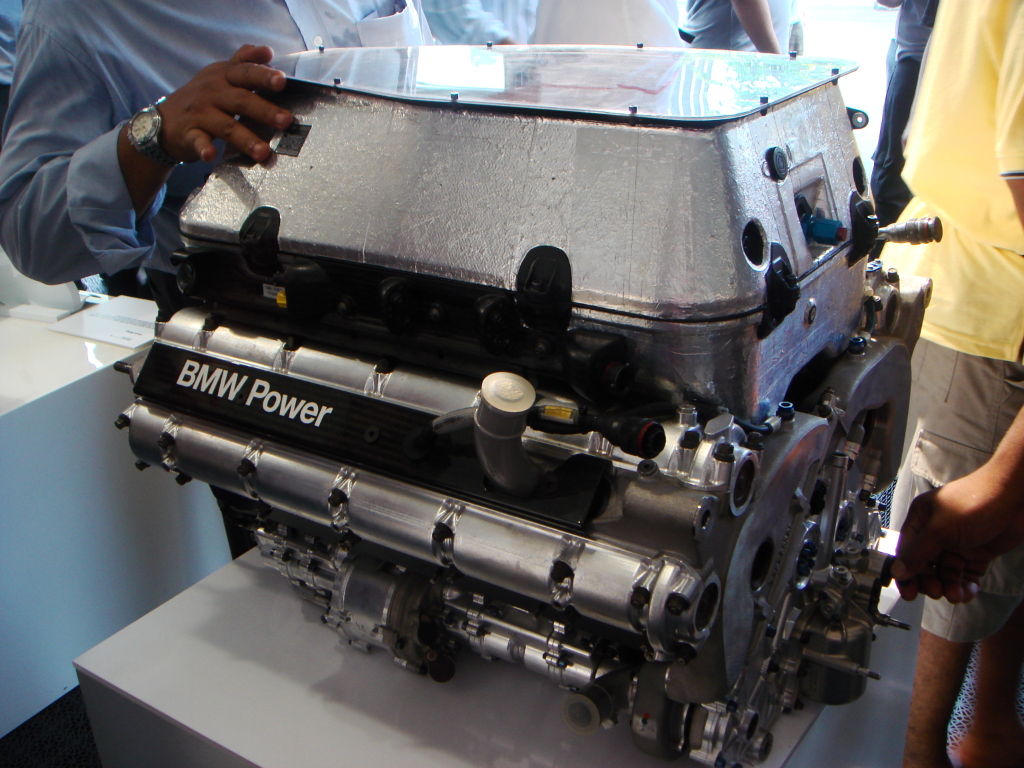
The K20 engine is a type of four-cylinder engine made by Honda that is known for being powerful and able to go really fast. It's often used in Honda cars and is popular among people who like to modify their vehicles.
The K series platform is a type of engine made by Honda that is used in different cars. It's known for being powerful and can be modified to improve performance.
Advanced Engine Research is a company that makes special engines for race cars. They focus on creating engines that are very powerful and efficient for racing.
LMP1 is a type of race car made for long-distance racing events like the 24 Hours of Le Mans. They are built to be very fast and efficient on the track.
An ECU is a computer in a car that controls how the engine works. It helps the engine run smoothly and efficiently by managing things like fuel and timing.
Formula One is a top-level car racing series where teams race specially designed cars on tracks. It's famous for its speed and the technology used in the cars.
Car
Honda K series
The Honda K series is a type of engine made by Honda. It's known for being powerful and is often used in different Honda cars and modified for racing.
LMP2 is another category of race cars used in endurance racing. They are a bit less expensive and less powerful than LMP1 cars but still very exciting to watch.
AER stands for Advanced Engine Research, a company that designs and builds high-performance engines for racing. They create unique engines from scratch for different motorsport events.
Engine development is about creating and improving car engines to make them work better and last longer. It includes figuring out how to build them and testing them to see how well they perform.
This means starting a design completely fresh without any limits from previous models. It gives engineers the freedom to create something new and unique.
This is an engine that is made in large quantities for regular cars. It's built to be reliable and affordable, which means it can't be too fancy or complicated.
This is the part of the engine that covers the top of the cylinders. It helps control the air and fuel mixture that goes into the engine and is important for how well the engine runs.
Harmonics are the natural vibrations of a system. In cars, it's important to know these vibrations to make sure parts don't shake apart or work poorly together.
Critical speed is the speed at which parts of the engine start to shake a lot. If these speeds aren't controlled, it can cause serious problems for the engine.
Resonant frequency is a specific frequency at which things can vibrate. In cars, it's important to avoid these frequencies to stop parts from shaking too much and breaking.
Car
Formula 1 engine
A Formula 1 engine is a very powerful engine used in racing cars. It's built to go really fast and work well under high speeds.
Car
Mercedes F1 engine
The Mercedes F1 engine is a powerful engine used in Formula 1 cars. It can spin very fast, up to 18,000 times per minute, which helps the car go really fast on the racetrack.
Data logging is when you collect information from a car's sensors to see how it's performing. It helps engineers understand what's happening with the car while it's running.
CAD tools are computer programs that help designers create detailed drawings of car parts. They make it easier to design things accurately and see how they will fit together.
Finite element stress analysis is a method that helps engineers see how strong a car part is and if it can handle pressure or stress. It uses computer simulations to test how parts will react to different conditions.
Computational fluid dynamics is a way to use computers to study how fluids, like air and water, move. In car design, it's used to make sure the shape of the car is efficient before building it.
Combustion analysis looks at how fuel burns in an engine to make it run better. It checks things like heat and pressure to help engineers improve engine performance.
F1 stands for Formula 1, which is a top-level car racing series. It includes fast cars that race on special tracks, and it's known for using the latest technology in car design.
Over engineering means making something more complicated or stronger than it really needs to be. In racing, this can make the car heavier and slower than it should be.
Formula 1 is a type of car racing that involves very fast cars competing in races called Grands Prix. It's known for its advanced technology and is considered the top level of motorsport.
The Lancia Lambda is an old car from the 1920s that was special because it was one of the first to be built with a strong, lightweight body. Car fans talk about it because it was very advanced for its time and is now quite rare.
The Nissan 350Z is a sporty car made in the early 2000s that has a strong engine and is fun to drive. Many car lovers like to upgrade it to make it even faster and more exciting.
The Honda CRX is a small, sporty car that was made in the 80s and 90s. People love it because it’s light and can be made faster with some upgrades, making it a fun choice for car fans.
The Ford Pinto is a small, cheap car that was made in the 1970s. It’s often talked about because it had some safety problems that made it dangerous in certain accidents.
Car
Honda That Honda
The Honda That's is a small car made in the 1980s that is known for being practical and having a lot of room inside for its size. It’s often talked about because of its unusual look and how well it works for city driving.
The Acura NSX is a fast sports car that was made starting in the 1990s. It’s known for being easy to drive on regular roads while also being really fun and powerful on a racetrack.
The Nissan Skyline is a famous sports car, especially the GT-R version, which is known for being very powerful and fast. It became popular in racing and car shows because of its cool design and great performance.
LIVE
Welcome to High Performance Academies, tuned in podcast, I'm Andre your host.
We'll be taking a break over the Christmas New Year period and we'll be back in action
mid January. That means that although there won't be any new episodes for a few weeks,
we'll be taking another look at some of our favourite episodes.
This week we're going back to episode 105 featuring Terry Radborne from Born HPP.
Terry is a specialist in all things Honda K20 which is quite handy considering these
are one of my favourite engines and I'm going to be milking Terry throughout this
particular episode for all of the secrets to building a high performing, naturally
aspirated K20 for very selfish reasons. Obviously we have a K20 in our CRX
endurance car and I'm always looking for ways to improve the performance and
why reinvent the wheel. Terry's done just about anything and everything
you could think of on the K series platform so I'm going to be benefiting from
his experience which means so are you. Now not only is Terry an expert on the K series
platform but he has a really interesting backstory, particularly how he got into
engine building and he's worked for some really big names. Specifically he's worked
for Advanced Engine Research or AER. And this is a name that a lot of you may not
be familiar with but they build bespoke engines for the likes of LMP1, Le Mans prototype
cars just to name one of the categories they're involved with. They do all of their
in house development of the engine design, development, dyno testing etc.
And are also very closely linked to life racing, the specific ECU that they use
which also now just happens to be Terry's ECU of choice. Following on from this he also
did a stint with Mercedes F1 and it's not too often we get to talk to guests that
have experience at this level. And I will add a little caveat here, I'm sure everyone
can understand that working at one of the Formula One teams comes with a bunch of
NDAs. Obviously they can't talk about everything that they were involved with
during those times and you'll notice that during this interview Terry might seem
a little bit evasive on a few of the questions that I'm going to ask him.
My guess is that's for a very good reason and he can't talk about everything.
So let's just understand that and keep that in the back of your mind while you're listening.
Now let's get into our interview. Alright welcome to the podcast Terry, thanks for
joining us. Really excited to get into this chat from a selfish standpoint
because I'm ready to pick your brains on everything Honda K series but
before we get into it, let's find out about your background as we always do.
How did you get interested in cars, motorsport and engines in the beginning?
So yeah my background is really straight out of secondary school or high school.
Thrown into the deep end I started at a company called Advanced Engine Research
in the UK. They specialised in developing blank sheet engines for Le Mans
on 24 hour LMP1 and LMP2. We actually had the privilege
to tour Advanced Engine Research's facility or AER
as they're probably more commonly known and for those who haven't
heard that name before, AER is no joke. They are working
at the absolute cutting edge of engine development
and engine performance and developing bespoke clean sheet
of paper engines for particular high level professional motorsport
applications which really why we were given a tour but unfortunately
we were allowed to film anything in the facility. It was a bit of a waste unfortunately.
An exceptional facility. How do you just walk in the door
at Advanced Engine Research and get yourself a job? Surely there's
a few dots when missing along the way. So I think my granddad had a bit of a
play with that so he owned a machine shop that machined heads for Cosworth
and I think he had some link to Mike Lancaster who's the founder of AER.
So as a lot of companies in the UK work
I sort of had a leg up I suppose but also had the
experience to go in. I probably had three or four years of
looking over my granddad's shoulder CNC machine to start with
which was obviously quite a bit of experience for a 16 year old to already have.
So it was in and hit the ground running really.
So at this stage no formal qualifications probably
given your age but you've got that experience in watching your grandfather
obviously doing this high level machine work for Cosworth.
What was the job position when you started at AER?
What are you doing there? It was effectively an apprentice but we only had a
small team of guys at AER right in the early days so this is back in
2003. We had 16 guys to design, develop, build
dyno track support and make looms and
ECUs for Le Mans so it was just a 14 hour
day was quite usual and the odd all nighter in a month
was quite normal too so it was just one of the
effectively it was my university. It was the place where I just crowned
as much information and learned as much as I could as quickly as I could
and they had all of the facility and projects on
to do that so it was just a mega place to get my grounding and my first
entry into engineering. So if I'm sort of joining all of those
dots together correctly, you're getting experience on engine
development, so the engineering behind designing and developing an engine
I'm guessing here you're also getting involved with learning about
the calibration or mapping of the engines, harness development
and we're also going to talk a bit more detail about it but actually
they developed their own ECU which ended up becoming Life Racing
so pretty much anything to do with the powertrain itself
you had a hand in that. Yeah and I think also one of the biggest
fundamentals from AER at the beginning is there was no upstairs, downstairs
sort of regime. The big core of the first guys
that were in the business, there wasn't engineers versus engine builders
it was just one big team effort so in larger companies
that I've worked in and across the globe now, engineering would be very
much split from the shop floor but in AER in the early days
we would be assembling an engine, the designer would be stood there
helping getting nuts and bolts out the rack. The guy
that was about to map it would be sat in the corner creating a base calibration
looking at the engine himself and it was just a team effort
so it was easy to pick up skills in every department
very quickly. You could be out in machine shop at one moment
and off potting a sensor at the next like
it was just a team effort effectively which I think it doesn't really
happen in big businesses as much now. No I can imagine
that would be quite a unique scenario. Yeah it was just a mega
place to learn. Alright without getting into too many specifics
and I'm assuming there's a bunch of NDAs around your time at AER
I'm interested if you can give us some high level understanding of the process
that goes into developing an engine from a clean sheet of paper
and where I'm going with this is when you are
developing an engine from a production based factory engine
a lot of the designs are really constrained, the geometry
within reason of the engine, the components are already set
likewise you're dealing with a production cylinder head which yes you can modify but
obviously there are limitations compared with this clean sheet of paper approach
where obviously there will be regulations with a racing class
but so much freedom I figure it would be very easy
to kind of lose your way if you weren't careful and weren't
really understanding what the engine needed so can you give us some insight into how that
design process actually goes? Yeah I think
being involved in a few blank sheet engines now in my career
I think the more that you do obviously the more you understand the process
and I think every time now if I was to take or be involved
in a project like that again is to go straight back to the overview
the overview to make an efficient engine is to not give away
cheap energy, like you can't give away energy for free
so that is vibration, that is energy into the
cooling system, I think really one of the big fundamentals has always been
vibration so before you even start drawing
anything in CAD is to try and understand the harmonics
and what is going to go on in the chassis that you're developing the engine for
obviously everything that I've ever done from a blank sheet of paper
I've been involved in has always been stress mounted so critical speeds
of cranks, camshafts, all of that what I sort of call 1950s
physics all needs to be put in the cooking pot at the beginning
and the big fundamentals of what you're actually going to go and try and achieve
with it but I think yeah not designing everything
in a way to keep cranks away from critical speed, camshafts
away from critical speeds and not creating vibration
on a set engine is one of the key or starting features really
of the design. When you're talking about these critical speeds and the
vibration or harmonics are you talking here about making sure that you are
not operating at a resonant frequency for the component
where those harmonics are sort of amplified and more
likely to result in a failure or am I missing the point here?
Yeah so obviously when a crank is designed in F1 and an F1 engine
idles around 5 to 6000 rpm and the crank
will be designed in a way that all the critical speed is put right down
the bottom end of the rev range so it would normally be
on most crank shafts around 3 and a half thousand rpm obviously
the Mercedes F1 engine that I ended up being involved in
towards the latter part of my career rev to 18,000 rpm
so all of the bad harmonic that you're
ever going to get from any shaft in the engine is hidden in the point
that you're never ever going to see on track or in the garage so
even to the point if you watch an F1 engine warming up in the garage
the systems engineer will have a little blipper in his hand
and it will constantly be while he hit the cars up on the stands
it will constantly be blipping the engine and the reason for that is not to do an
elaborate Walmart pits to nullify the vibration and take the vibration out of
the back of the car because you have what's called 5 orders of vibration
so the first order if the first order keeps building and building
it can spread to the second order the third order then all of a sudden
components can get stresses on that you don't actually want them to
see or experience and that they don't experience on track
because the rate of acceleration of revs is so fast
you're constantly ripping through them energies and you're not letting them energies
from one component expand into another so essentially you want
to avoid holding the engine at a steady rpm
and that's you're always moving through those frequencies
yeah you're moving through them but also fundamentally when you
design the engine from scratch you try and put everything out of the way
so when the engine is actually on track and running there isn't any
critical speed of crankshafts or any component
and a lot of that work that I've done in my career on
vibration a blank sheet engine never happens from the first design
by the time a blank sheet engine goes racing you're normally
beyond engine version D or E so you would have started
with a much bigger heavier engine with a lot more meat on castings
and heads and you'll slowly work down and we've always used
real high level vibration diagnostic tools to
watch we can watch vibration in all five orders
so effectively before as you're leading up through the development
the engine will just get smaller and smaller slight designs
depends on crank counter weights a little bit more material there
a little bit off there and obviously a lot of it is
1950s physics and design but effectively real world
real world data at 1000 hertz on vibration sensors
paints the picture I think this is one of the big bits
is through the development stages if you're
data logging correctly so much can be worked out from the quality of
data nowadays or as obviously back in the day it was all
a little bit more feel and like adjust but nowadays
the data doesn't lie as they say so talking about back in the old days
I mean if you look back in the earlier days of
engine development for the likes of Formula One we didn't have
the sort of CAD tools that we've got these days and also the
ability for final element stress analysis for example
computational fluid dynamics none of that was done on a computer
back in the day the technology wasn't there how important
are those software tools for
validating a design of a new engine before any single component
is ever actually manufactured obviously it's always going to be much
much cheaper to design and test an engine in the virtual world
before you actually get to a point of manufacturing it for real
yeah I suppose actually when you look at the price of a modern day F1 engine
it's around a million pounds in components so actually
designing spending more time in CAD land and stress analysis
world is actually the more cost effective way because you're
effectively not wrecking a million pounds worth of engine but I think
the difference between stress analysis is still in its
development stages I would say you still have to keep feeding back
real world data and everything that works in that
world at the moment doesn't necessarily work in the real world just
yet obviously one thing that stress analysis can't really do
and when you get back into the orders of vibration you could be
sat on the mul sand straight at 6000 RPM
100% load and one part just
starts to put a second order or a third order into another
and that leads on to another and the way I sort of describe it is
when you imagine a drummer playing his drum set you know you've got
your first order which is the first big bass drum and if
he kept it in that hard enough the vibration would creep and before you know
that the cymbals are playing so some of that real world
stuff can't actually be simulated just yet so
the virtual world versus the real world and then slimming the engine
down as you get to the actual race spec you have to really
you can't just rely on one tool you have to sort of do everything
in stages so yeah effectively normally in a big engine
project like that you'll start with an engine on the dyno working out
combustion analysis and that engine will pretty much look like
it's come out of the tank you know it'll be a big robust piece
the internals are very much what you're going to end up with when you go racing
and you're developing, developing but casting
thicknesses and everything's massive
to begin with and then it just gets scaled down as it goes into the car.
So you've got that thick material casting for strength and reliability
for a development engine but obviously that comes at a weight penalty
which you can't have in a race application so it's about over the
development period of the engine kind of figuring out where that fine line
is between getting the engine light enough to be competitive but
obviously still having the reliability it needs. Yeah I think
and also the other bit is we obviously spend so much time on
engine dinos we have all of our vibration analysis on engine dinos
and we are actually the engine dyno ends up
being a lot harsher than what the engine experience is in the car
especially in F1 when you go and bolt four massive bits of rubber
around the engine and the harmonics of it
you've actually ended up with four massive dampers suppressing the
vibration. Sure yeah. So sometimes in the development
stages you can actually scare yourself quite a lot and probably
we end up developing on engine dinos a lot more
effectively than what we actually need when it ends up going
racing. There's a lot more vibration that obviously a lot
gets put into developing engine plates for engine dinos
but effectively you haven't got four bits of rubber bolted around it
and you can't get rid of the things that you'll get rid of in the actual car
so sometimes we've seen in the developments that I've been involved in
in certain engines we've seen scary moments on engine
dinos and had issues with engines that actually when we put the engine
in the car just don't exist. Sure. So a lot of the time
the same vibration analysis software that we've
used on the engine dyno for the first tests actually gets
bolted straight in the car and a lot of the scary numbers that we were seeing
on the dyno have just gone by the time it goes to the car.
So the dyno testing in that respect could actually
lead you to over engineer the engine which
in essence actually proves to not be necessary in the race application.
Yeah and I think especially when we was developing
engines with closed loop not control in the early days
especially on hard mounted engine dinos
we would start to see vibrations creep in and affect
the closed loop not control that didn't actually exist in the real world
and all of a sudden you put it in the car and you've been
developing to this real tiny window to try and get the engine
to work in and then the real world. That window gets a lot wider.
Yeah which is a nice place to be I suppose generally but...
Yes it normally goes the other way so yeah when you
get some advantages on the real world on the road or the racetrack then that's actually
a pleasant surprise. Always nice to take advantage of that.
You've kind of alluded to your work already in F1 which
obviously we don't get too many guests on here who have had hands on experience
in the F1 so I want to deal with that in a moment.
In terms of the engine development for both AER
and Mercedes F1 though, I'm interested were these
engines initially being developed as maybe a single cylinder test mule
to sort of do a proof of concept at a cheaper level
rather than developing an entire four cylinder V8
whatever it might have been and then once your sort of new year on the right path
kind of scaled up to the full number of cylinders
or were you all in right from the start with the complete engine design as intended?
Yeah now exactly that time at Mercedes before I
was there though was developing a single cylinder but the big thing
with AER is we obviously had decent budget but
we didn't actually have the budget to start the single cylinder stage. I think that is
when you go through this whole process if you can start the single
cylinder stage that's really the ideal place to start to develop
piston crown design and effectively even start
creating your base map from there. You'll have an idea of how efficient the engine is going
to burn and you can get a lot of data from that but not every
engine project that I've ever been involved with we've been able to start there unfortunately
pretty much in the AER days we'd sort of have V1 and
V2 and that's sort of what I've brought into what the work we're doing
at Bourne HPP we sort of start with a V1 and you've
got some ideas there and you end up with slight tweaks
on pretty much every component and then it's normally V2 that we end up going
racing with so. Yeah okay yeah that makes sense. Now in terms
of internal combustion engines they are incredibly wasteful
most of the energy from the fuel that we're burning is sort of
going out of the engine in terms of heat and sound and only a modest
amount is actually being turned into mechanical energy. So
when we're dealing with a production engine there's not a lot of levers that we
have available that we can pull to really swing
the sort of tide in terms of gaining back some of that
efficiency. When you're dealing with an engine designed from scratch
what flexibility have you got in the design to improve the
efficiency? Basically how much of the energy of the fuel you're actually turning into
power at the crankshaft? Yeah I mean like going back to where we started
a lot of the work that I've been involved with has all been around vibration
because vibration is just wasted energy and effectively then wasted
fuel. You've had to burn that fuel to create that vibration
so I think a lot of the work that I've done is really
trying to nullify vibration and take it out of the engine entirely.
So that vibration just to break that down not only are you talking
about something that could potentially be damaging to the engine component
but as you're mentioning here it is also wasteful because some of the
energy is being used to create those vibrations. Yeah exactly that and
yeah as your order builds up and vibration across the
engine package just more and more energy starts to get
wasted so trying to design components to effectively
run at order one or two and not ever see orders
three four or five is what you want to try and achieve really
to try and make the engine as efficient as you can. How about in terms of
thermal efficiency I mean you know in the aftermarket we see things like
thermal barrier coatings for the tops of our piston crowns even
the inside of the combustion chamber as well. Yeah have you got
any input on elements of improving thermal efficiency? Yeah
there's obviously a lot of coatings that I've played with in my
career to do that from a friction loss point of view and also as
you say from a thermal point of view unfortunately I don't think I'm allowed
to talk about some of the coatings that I've seen. I think that's probably just
stepping a little bit too far. Yeah fair enough. Suffice to say
I'm guessing if I'm allowed to talk about them they're effective. Very effective.
In terms of efficiency and economy I mean economy is
something we don't really think about too much in a race application particularly
for a sprint race but you know endurance racing and particularly for a 24-hour
race economy is incredibly important and it can
mean the difference of a pit stop or more over the length of a race.
And I think in the aftermarket, enthusiast market
we're used to tuning at sort of lambda targets maybe in the range
of .80 for turbocharged engines maybe .85 through
to maybe .90 or thereabouts for naturally
aspirated engines. In the lights of the morn
as I understand it, it's pretty common to be on the other side of
Stoik with your tuning even with turbocharged applications. Am I on the
money there? Definitely. I think one of the biggest innovations in motorsport
and globally is obviously being direct injection. You've just
not got as much wasted fuel and you can effectively
have a much more cleaner burn as what we call it. You can control
the flame front a lot easier and obviously there's been
not going too in depth but there's been so much work done even on
injector angle and I think obviously piston design.
It's not just one part, it's the whole bit and I think the big fundamental
that I get back to always on engine efficiency is airflow
like the big overview on all of this is we've got direct
injection, we've got this but understanding the airflow of your engine
and not wasting or stalling air is really
how you pick up massive efficiency gains. Obviously the big bits
with like a straight 4 engine for instance is once you can understand
engine scavenging and not creating a secondary pulse in the exhaust
once you can understand pulsing. I think I've actually seen
a few of your posts where you guys have had exhaust gas pressure
sensors and you've had sensors post butterfly
so what we're doing the development stage once we've
got vibration out of the way effectively is actually map the airflow through
the engine. With some turbo applications you obviously
want to stall the air so creating a piston shape that
actually stalls the air on top of the piston for an amount of time to
actually cleanly burn all of the particles of air that you've managed to get into
the engine through the inlet valve that obviously increases efficiency
so the big overview without going too in depth and getting
myself in trouble really is airflow and once
obviously the sensors that we have at that level are a thousand
times a second measurement of airflow or higher
and the actual data that you see in the dyno cell will show
you what the airflow is doing. You've just dropped a number of
pretty technical elements into conversation there
and I just want to come back at a step so I mentioned tuning
on the lean side of Stoic which for the enthusiast market we don't
generally do and if we're talking about economy at cruise in a road
driven car, typically we look at a production car, it's going to be
sort of gently moving backwards and forwards across the Stoic air fuel
ratio 14.7 to 1, lambda 1.0 and most people think that
that's for efficiency and economy, the reality is that that makes
the catalytic converter work which gives good emissions which
for an RE production engine is really the be all and end all, if it doesn't meet
emissions requirements, all bets are off. So if we take the tuning
outside of the emissions regulations, we
can see an improvement in fuel economy by tuning
leaner than Stoic and I'm talking still here about cruise conditions.
The limitation sort of comes in at some point as we go leaner and leaner
particularly with a port injected engine, we get to a point where we can't
reliably light off the fuel air charge, basically
it just gets too difficult to reliably ignite it and we start running
into problems with misfire. So when you talked about the direct injection
here and sort of the airflow, joining again connecting these dots
if I'm getting this right, you're talking about basically managing
the sort of fuel air charge so you've got a rich enough fuel
air charge around the spark plugs so that it can be reliably ignited
even when the overall air fuel ratio is lean.
Yeah, effectively and I think obviously the big word in all of this is atomization.
It's how efficiently can you split the
fuel particles and mix them quite quickly with the air
and obviously split the particles into the air.
So many inefficient engines end up with big blobs
of fuel especially port injection engines, big blobs of fuel running down
and you would actually see with a fast lander reading you would see
your combustion waving effectively. The atomization
just isn't as pure as what you can effectively get to
with direct injection. Let's just talk about that element for a moment
then on its own because again we're getting into sort of areas here which we haven't
discussed on the podcast and I think it's sort of areas where these misconceptions
and misinformation, I think most people casually interested
in fuel injection and tuning would think that we
get this nicely atomized mist of fuel being delivered by our port fuel
injector and that goes into the combustion chamber and it burns beautifully.
The reality is somewhat different because
we've only got a modest period of time with a port injected engine
where we will be injecting fuel with the inlet valve open. Obviously the intake
valve is going to be closed for a reasonable period of the engine's operation
so with that in mind once we're sort of up in the
injector duty cycle range at some point we will be injecting fuel against
the back of a closed valve which on face value seems completely
counterintuitive. The reality is at least as I've sort of
studied it, seen it and understood it is once the engine is actually
at operating temperature the port wall is obviously hot, the back of the valve
is hot so when we're spraying the fuel and it's sitting on that port
wall on the back of the closed valve, it actually vaporizes and then
when the intake valve opens on the next intake stroke
we're actually ingesting fuel vapor as opposed to atomized
fuel, the vapor being easier to burn even compared to
finely atomized fuel. Yeah, exactly and obviously the direct injection
gets around losing fuel on the inlet valve
and like a lot of misconception I think from experience that I've
had is a lot of people back in the old days went to polish
ports and actually what a polished port does with a
port injector is you end up with as I was describing before these big
blobs of fuel and your burn's just not consistent so
when you are trying to target these much leaner lander
targets you need to make sure that your fuel delivery is exactly
the same every time and obviously that is really the fundamentals of
direct injection. Your consistency of fuel delivery
is absolutely perfect or as perfect as it's going to get and
going back to port injection there's just the delivery
just isn't the same. You end up with sometimes it's perfect and you
meet your lander target, sometimes a big blob of fuel runs down your
polished port. Obviously this is work that I've done outside of
big companies but I am a firm believer in the golf ball effect
on port injection. We've seen some real big movements
with the golf ball effect and the golf ball effect is effectively having
the dimples that you would see on the golf ball impregnated into
or machined into the port wall and what that does is create
a little pocket of air in every dimple and in the air can just
perfectly flow over the top but then we've also seen that with
the problems that we would have with port injection and fuel sticking to the walls
of the port this actually helps the fuel to get ingested by the engine
and not stick and gives you a more efficient and burn effectively.
Couple aspects I just want to come back and talk about there. Just about
port injected engines with fuel basically forming
I think you mentioned globules basically pulling out and then dripping into the
cylinder and again I think the misconception here is that's not happening
well it absolutely is irrespective if you've got a perfect sort of
mirror smooth port wall. There is always going to be some
level of fuel pulling out on the port wall. This is one of the reasons why
we need transient enrichment compensation in our ECUs
so that as we're changing throttle, butterfly angle
which involves changing the air speed and also importantly the manifold
pressure in the port that affects the amount of the fuel mass
that forms that pool of fuel on the wall. It's always being topped
up by the injector and then at the same time dripping into the cylinder but that key point
there, dripping into the cylinder, the fuel in that form is not really easily
combustible so it's kind of a bit of a waste. So there's that element there
but importantly I just want to dig into this golf ball or dimple port
effect because every time we post anything about this, we get
slammed with a lot of people thinking this is super controversial.
I'll admit I don't really have a dog in this fight and I haven't
actually seen any solid results back to back with a conventional
CNC port versus a dimple port, what that looks like on a flow bench
and then most importantly what that actually looks like on the dyno.
And we know that the flow bench numbers for head porting don't always
directly correlate with real world results on the dyno so
have you got that sort of data, can you give us some insight into what that looks like?
So when it comes to cylinder head flow benches
it's really not something in my career that I've really got
or spent too much time with so effectively we would design
a cylinder head or we would make a new port at Bourne HPP
and we would basically put it on the flow rig just to get a rough number
you know any time we see around 300 CFM generally
we're fine, a lot we start moving onto the engine and obviously
the experience that I've got like we touched on before
with actually looking at pressure sensors across the engine air flow
and if you want to go to the next level having an in-cylinder pressure
sensor so we would have a pressure sensor after the
we would have in-cylinder pressure sensor and in a sensor or sensor
in every exhaust bolt and then you can really map out what the air flow is doing across the engine
in my experience the old school way of using
head flow rigs with sort of past that that's just a generally
a check for us especially if we've created a new port shape
and done some of the porting by hand we would use a flow rig to just
make sure on a Honda for instance all four of our ports are
roughly flowing the same and we haven't had any issues with the machine inside
so that's really just a check but the proper work now
is actually done at Bourne HPP on the engine dyno and watching
air flow through the engine I think coming back to that port injection
efficiency and really getting the atomization to work the big
bit that we haven't touched on is secondary injection so everything that I've done in my career
with NA and turbocharged engines we've always had two stage
injection effectively so we've had one injector quite close to the inlet
valve in the in the trumpet we've had that at low speed so we'd use that
to fire the engine up and generally around three and a half thousand
four thousand RPM we start to blend to the set of
injectors that we have at the end of the trumpet and obviously running an injector
at the end of the trumpet really encourages the atomization
so it really helps you to blend the fuel perfectly
with the particles of air and in my mind
I always see the particle of air and the fuel attaching and it sort of
goes down in their little partners two by two into the
air and that's really where we want to get to I suppose it's my analogy in my head but
Yeah that makes perfect sense. There's a couple more bits I want to
talk about on that but before we kind of get sidetracked just coming back to the
dimple port versus conventional do you have any kind of dyno numbers
you know even kind of a rough rule of thumb of what you'd
expect from the improvement? So I think you can get
too engulfed in the actual air flow of the port I think
going back to the secondary injection and the atomization as an overhaul
an overview if you look at the atomization of the fuel
and creating a very powerful effective engine or efficient engine
if you can get the atomization right the air flow isn't as critical
the two are the same effectively
if you can mix your air with your fuel properly and actually
have a decent flow but I just think a lot of people get stuck on
flowing cylinder heads to try and produce power but that's
like an engine builder thing to do but when you've been involved
in all aspects you understand actually I need a really effective
efficient burn to create power and make an efficient engine
and obviously what we touched on before I need an engine that doesn't vibrate
and doesn't go past all the two of vibration and when you add
all of these aspects in you really your mind comes away from the
head flow rig I think you start touching on so many other areas
and obviously exhaust length is
such a critical thing and we touched on it earlier
Ultimately you can't consider any element of a competition engine
in isolation it is the sum of its parts
so you need to consider every element and make sure that they're all working in harmony
otherwise you're kind of dead in the water I believe
Just coming back again to port injection versus direct injection
you've sort of talked about this atomization using secondary injection
maybe outside of the inlet trumpets to make sure I think what you're getting at here
is the atomization is important but you've sort of talked about the mixing of the air
and the fuel so getting what I'd refer to as a homogenous air fuel mixture
which simply means that once the air fuel charges inside of the cylinder
basically no matter where we are inside the cylinder we've got the same
air fuel ratio again I think that's an assumption but
it's not always the case. Now that's great
however coming back to what I was talking about with lean burn before
with a homogenous charge once we get to a lean air fuel ratio
at some point we start running into problems with reliably
igniting that off and again I'm sort of stretching a little bit
outside of my own experience that we'll hear but at least I do a lot of reading
as I understand it with direct injection. We can design the injection
around a stratified charge design where
instead of having that homogenous air fuel ratio where everywhere in the cylinder
the air fuel ratio is the same, we can actually purposely design
a richer air fuel ratio kernel around the spark plug which will promote
better combustion, ignitability and then elsewhere in the
combustion chamber we've actually got a much leaner air fuel ratio so the overall
air fuel ratio is quite lean yet we're still getting reliable combustion
am I on the money with that? Yeah so there's obviously a lot of
tech that I can't touch on spark plug tech in the higher
levels and yeah sort of splitting the spark charge
across the cylinder and making sure that we ignite all four corners
of the piston is critical but also piston shape
and design so you know this isn't really, I'm not really given
too much of a way here to say you know the bold piston was designed
or really come to market in the Group B rally days and the whole
bold piston design as much as we're trying to lose compression
ratio in a turbocharged engine the actual bold design is
to actually still the air and create a sort of
sweeping air mixture on top of the and try and
force the combustion as far to the center of the pistons you can
so effectively when you want to go to these lean burn states
and you want to start running over lambda one there's so many parts that come in
but actual piston design and shape on top of the crown
is fundamental. Can you give us some indication when we're talking about
leaner than lambda one what sort of targets are you actually using
in an endurance turbocharged Le Mans engine if you can?
So I always go back to component control it just
depends what's going on and what scenario of the race that you're in but
we'd always have lean burn strategies we'd sometimes have component
control strategies which effectively sometimes
you just want to start laying some carbon on top of the piston so
go back to the big overview it's very hard to
have detonation if you're constantly laying a layer of carbon
one after the other so the perfect map engine has that
lovely grey layer of carbon on and what that generally means is
that you're laying a layer of carbon on your flame front and then you're
burning it off you're relaying and burning off and some stages
we might know from knock or we might know from very
oil and cylinder pressure sensors that we're starting to lose our
carbon front and that we can't run to these lean lambda targets
or there might be something else going on in the engine's health and we would
come back to a component control map or a much richer burn
but generally if the engine health is right and we're not
in the 24th hour of Le Mans we can generally run
with DI we can run over lambda one.
At that point is it safe to assume that you are giving away
a little bit of power in sort of sacrificing that for the
benefit of improved fuel economy? Generally if we sort of
take a conventional road car engine and we literally held it at
6000, 7000 RPM and we just did a sweep of lambda from
let's say 0.70 through to 1.1, we're going to find
that it's going to make peak power, let's say at 0.85,
maybe 0.90 and either side of that the power's going to drop away.
Am I right in assuming that there's no magic here and we see a similar
kind of relationship between power and lambda targets
in a purpose built race engine? Oh for sure yeah and obviously the big
overview to come back to the car as a whole is weight.
So a lot of the time you may not carry as much
fuel and you'd always make more power with a richer burn of course
and like you were saying targeting your 0.85 and 0.86 is
normally the way to go especially on the turbo charged application
because you've still got a bit of component control in there and you're still
when I say component control you're calling the piston crown. You've got enough
fuel to burn and to cool but when you're at the end of a
two-hour stint at Le Mans and you haven't wanted to carry
you know you don't want all that weight in the car, yeah effectively
you would start to run a leaner lambda target and
you'd probably hear on the F1 radio a lot of time the term lift and
coast used in F1 and obviously what that means is
they're effectively getting to the end of the straight and lifting a lot earlier
and getting onto the brakes a lot sooner but there's a little
period from when an F1 car lifts to getting on the brakes that
it's charging the energy recovery system as well which is another aspect
of the power unit so effectively you've brought more energy
out of the turbo and the K and you've got that on your next corner
exit so yeah there's just different scenarios and
generally on an LMP engine we'll probably have
around I don't know sort of 48 different cow selections
and strategies so you might generally have
four to five main fuel maps that you can select for a two-hour stint
and it just all depends you know another thing is
if you're at a point of the stint and you're racing
and affected and you've got the fuel on board you're obviously but the strategies
obviously through a 24-hour eraser are here
all over the place really so you just need the tools within the cow switches because
one thing that you can't do at Le Mans which we
actually have capability to do is map live you know like
obviously a lot of stuff can be done we have live telemetry coming back one way
and you could in theory map a car live on
circuit but there's regulations at Le Mans and NF1
that prohibit you from mapping the car live so
all of these strategies have to be built into the cow switch to navigate yourself through
the two-hour stint on the tyre and also the 24-hour erase.
Maybe that's a good thing 23 hours into a 24-hour erase I can imagine
the engineers would be running on a lot of caffeine, a lot of red bulls
and probably very little sleep so maybe the live mapping at that point might be
counterproductive when you press the wrong key accidentally.
In terms of managing all of those different calibrations though
obviously the driver is probably not trying to concentrate
on 24 different map strategies and which to choose and when
to choose them, he's probably wanting to just drive the damn car and race the cars
around them so does that come down to you or an engineer like yourself
at the track, looking at all of the data, looking at the fuel burn
looking at the relative speeds to the cars around
deciding when to change to a different strategy and what that strategy
would be? Yeah for sure there's a lot of coaching on switch position
so you would obviously have your switch positions for engine control
you'd have your switch positions for traction control and then especially with the
AER engines at Le Mans we had different settings for anti-lag
so we was running anti-lag at Le Mans and we'd have different variations
of that strategy some harsher than others so yeah
you try and build, you go into war effectively when you go and do Le Mans
and you're trying to build as many strategies and scenarios
into the cow switches to get yourself through and obviously a lot
of that knowledge and strategies get built in pre-season testing
and the races leading up to and after Le Mans so much time is
spent in them areas and developing so just getting
the first blank sheet engine off the dyno the work
then just starts really it's quite a lot of work up to that stage to get
a reliable engine and then you get to the circuit and all of
them strategies and mapping scenarios all that the work is
yeah it's a big task. No doubt. Alright I mean we could talk probably for
another hour about Le Mans and AER but let's move along
obviously pretty interesting to talk about your time with Mercedes
F1 and I'll just pre-empt this for our listeners
obviously most people could understand that anyone involved
in F1 there's not a lot that can be talked about openly
so we'll respect the fact that you're probably not going to be able to dive too deep into
any of these elements but for a start how do you even
get invited to go and work at Mercedes F1, how does that
come about, that opportunity? Obviously when over to Mercedes
was when the V6 turbo engine was being developed
and my experience at AER developing turbo
charged engines for Le Mans my CV sort of had what they wanted at the time
I would say so a random phone call in my dad's
kitchen I was literally just making some toast the phone rang
and you've been invited for an interview at
Mercedes HPP and yeah it was a bit of a surreal
feeling. I would assume that conventionally you're not
going to get a foot in the door at that level in a Formula 1 team, any Formula
1 team without an engineering background in
degrees, would that be typical? There's obviously quite
a varied there's varied jobs within the factory so you know you've got
your engine builders, you've got your wireman building looms
and generally the engine builders and wiremen wouldn't all have a degree
obviously it helps to get your foot in the door, some of them have just
got experience like myself you know I had the experience and I've been
there and got the t-shirt and that's what helped me to get in but the
conventional way to get there is yeah to do at least a bachelor's degree
for three years and then move on and a lot of
universities now especially in the UK have really great
motorsport degrees and obviously there's Formula students so a lot of
people migrate through the university, do fall in a student and
that is their intro. A lot of the F1 teams have
sort of got guys in universities to bring them guys on board so it's
quite a nice thing in the UK, there's quite a lot of opportunity which is great.
Yeah definitely I mean obviously the hub of professional motorsport at the
upper levels for sure. So what was your position at
Mercedes, what were you actually doing on the day to day? So I sort of went
like I had the ability to go through the factory so I was there for
two years, started off in an engine strip and diagnostics
which is basically taking engines that have been at the track
and taking them apart and sort of looking at reliability aspects of the engine
effectively and then the other stages of my career
there I was in what is known as energy recovery now obviously when I started
at Mercedes energy recovery was a very new
thing, we had CURS at that stage but energy recovery
was a whole other chapter in engineering so yeah I was
involved in energy recovery, the development of it and then I had
the opportunity to go track side with the energy recovery unit as well
and sort of help track side operations and the first test developments
and races of that setup. Can you maybe give us a quick
rundown on how the energy recovery works for those who maybe aren't F1 phonetics?
Yeah so effectively the front of an F1 engine is gear driven
you'll have a, it's kind of like a elaborate alternator
on the side which is called the K so when the car's breaking
the engine is putting energy into the K and the K is creating
electricity like an alternator and storing energy
in the battery pack which is underneath the driver's seat. Also the
same with what we call the H so you've got a motor
or an alternator on the outside of a turbo and that is
creating electricity and storing it into the battery pack. It's like
a free phase connector to the battery pack and once the battery
stored or when you want to deploy the energy from the battery pack
it actually comes back down them same lines that have charged
the battery pack and then turns its electrical energy into
power and the K puts power back into the drivetrain on the front
of the engine and then the power that comes up to the H helps to spin the turbo
so effectively you have no lag because you constantly
have a turbo that is up at your perfect operating speed.
Now from what I understand as well the MGUH that you're just talking about
the turbocharger element that's being removed from the 2026
regulations, is that right? But the MGUK is being retained
and that's actually being made more powerful for the 2026 regulations as I understand it.
Yeah I think there's actually a lot more engineering possibly that
goes into the H which would probably raise budgets for everybody
so maybe that's a cost cap but I've been out of F1 for a couple of years now so...
Sure, one sort of side of that that's always interested me
is looking at it back when I was younger watching F1 back in the
V12, V10 days, it seemed like back then technology
from motorsport did sort of trickle down into OE and that was
kind of like F1 or professional level motorsport was kind of the breeding ground for some of these
new strategies, technologies etc. These days I don't know if I could say
the same and sort of that MGUH at least to the best of my
knowledge hasn't actually made it to production level
cars except for that AMG1 which is a bit of a
niche case study anyway. Are you aware of that technology
being used anywhere in production cars? No I haven't really seen it anywhere
to be honest obviously it's not cheap technology so I would say
that's probably just the price restraints a lot of naturally
aspirated tech can effectively just go straight back in but
when you come to complex electrical systems it's not
just the battery pack and the MGUH is actually the control electronics
as well to control all of that by the time you add that whole package up I just
suppose it's something that's out of the price cup of a general road car.
In terms of the way the MGUH is used
by the driver, I mean just can you give us some insight into
how much of this is automated, I'm guessing here at least you sort of alluded to the fact
that under braking it's charging but we also see that the driver
can at least as I understand it purposely harvest energy, basically sacrifice
some of the power of the engine under full power acceleration
to actually purposely charge the battery so that they can deploy at a time
that's giving them a strategy advantage, can you talk us through a little bit of that?
Yeah I don't know how in depth I can go on it but
I would say a lot of the MGUH power is
normally deployed on corner exit so you have such a
precise power deployment that you can deploy
energy per corner exit and ultimately dictate your
tyre slip so it can be used in different ways, sometimes it
will be used at the top end of the rev range but a lot of the time
it will be used to save the rear tyre effectively and
you bring the power in from the MGUH on corner exit and then
phase the ice or the internal combustion engine in over the top
and bring the power in and obviously that deployment we're talking
80 milliseconds, it's a very short amount of time that the MGUH
has deployed there and in the engine phase is quite quick
but in data it obviously looks a lot bigger but when you're talking about
the tyre deck that we had and then restrictions on Paredes
your really power deployment becomes the part
that wins you races effectively and that's been
a core of my work with my wire mapping that I do at Bourne HPP
with life racing as understanding or seeing firsthand
how to deploy the power once you have all of this power
it's really about getting it down to the tyre and there's a lot of
sensors that we can put around a modern car nowadays to actually
work out our rear slip and actually to a
precise percentage know how much power we need to deploy
I think really it just comes down to just another area where
for those who are occasionally involved in maybe the odd track
day in their road car, particularly if they're still on a dot road tyre
you miss a lot of the nuance of what happens in
particularly endurance style racing where it's not about the driver
going 10 tenths and getting the quickest lap time that they can
like that would be great for maybe one or two laps but
particular over a long stint, a couple of hours or whatever it might be
you'd end up with the tyre degradation through the roof and you'll be fast
for a couple of laps, maybe five laps and then the tyres will just be completely
rinsed and your lap time's gone so it's about
managing the tyre degradation and managing the amount of energy that you're
putting into the tyre so that the tyre has still got some life left at the end of your
stint correct? Correct and also going back to where we started at the beginning
and fuel efficiency across an engine to actually try and make the car
efficient through 24 hours, any rear tyre slip that you see
is wasted fuel and engine energy so actually
what you're doing through a two hour stint with a power unit is effectively
you're turning the power down, you're constantly controlling and dressing
the power out, as the tyre dead goes up you're just
fettering out, ignition, however you want to do it, fuel to try and
sometimes going to a lean a burn strategy will actually give you
like we spoke about, you lose power, you might run a lean a burn to
save the tyre because effectively you might have knocked out 60 foot
pound of torque at corner exit free and that's what you've needed to save
the tyre so and actually also you're then saving fuel so
that's where the strategies that we build earlier in the projects
all come to your favour at the end of a stint generally.
I think we probably need to move on from your background, this is probably the longest
discussion around someone's background I've had on the podcast but your background is obviously
somewhat unique so I think that's justifiable and definitely has been some really
interesting insight that you've given us there but let's fill in
now from leaving Mercedes F1 to founding
Bourne HPP, how did that all look? Yeah so obviously
you're always looking at every sector and
I had a mega mega time at Mercedes HPP but I saw that life racing
were developing some cheaper ECUs and also
they had the GDI4 at that time which you can actually
utilise direct injection at a very decent
cost price, I think a GDI4 was around the £1800 mark
so all of a sudden all of this learning that I had done for
two years in F1 there was the tools available to go and take
this to all other levels of motorsport and you know when
you've done what I've done in my career I think the next natural step
was to create my own engine company and tuning company so
there's been some massive hurdles to get around but obviously
one of the big bits that made it easy to make that transition into having
my business was having them tools to go and do the job that I
had done my whole career and be able to offer it to the lower levels effectively
I'm going to come back to life racing in a bit more detail but before we do that
just give us the 30,000 foot view of what HPP or Bourne HPP
looks like today talking here, size, location, number of staff
So we're a four man team at the moment and our skill set
like we try and do everything with them four guys so we've got a bit of
design, we've got engine build which is obviously the fundamental way
that we make money at Bourne HPP is selling crate engines
as we touched on before we started our business around the Honda K20 engine
because it's just so widely used and such
a good engine when you go back to that blank sheet engine design
and you open up a K20 you're like yeah I've got the ingredients for the
recipe to start with here so it was obviously the engine and I've got a lot of
passion for it so it was the engine to start the business on but yeah effectively it's
creating very efficient, higher power, power units
and incorporating like a whole package to the customer so we're not
just an engine builder, we'll build engine harnesses
we'll supply ECUs, we've got an in-house bench dyno where we'll
build the calibrations and then we'll go out on circuit and track support
them so my real role is I suppose customer liaison
and I get involved quite heavily in the mapping and the track support side
I've got a couple of really good engine builders with us as well
so we sort of tick all the boxes with a small team
Alright well obviously I want to dive into the K20 and pick your brains for
as much as I can for my own selfish requirements
as I mentioned at the start but before we do that just bring it back to
life racing and this really was born out of advanced engine research so
coming back to that point at AER, why did AER
decide that the current offerings of EC on the market
weren't up to what they needed, I mean it must be a massive
operation to not only be designing these ground up
bespoke race engines but also then to design and develop
your own engine management system I think it sort of actually happened
the other way around for Mike Lancaster he's the founder so he
started a company called Pectel with Simon Phillips
and then they went their separate ways and Pectel ended up becoming Cosworth
Electronics and Mike Lancaster ended up taking
they both left the same DNA in the heads of what they'd created
Which is why if you look at Pectel or Cosworth versus
a life racing or Cyvex there's a very
obvious consistency between the brands or the products
correct? Yeah definitely, even how it's all laid
out on the screen and how you get through branches
I think all of that was done right at the beginning and then guys were sort of
the first brainchilds behind really a lot of aftermarket ECUs
after Pectel have sort of followed that same layout really
so I think that was the core really, that was the first seed there
and the actual engine side of AER come after Mike supplied
ECUs to Nissan and they ended up winning
British Touring Car Championship with Mike's Pectel ECU
and in that Nissan relationship grew the first big
contract that advanced engine research got was the Nissan World Series
which is, it was sort of two down from F1 and was a feeder
I think Sebastian Vettel won it one year so you know it was a big championship
and a big engine project to be involved with and we developed the Nissan
350Z engine into a sort of 480 horsepower
race engine but we had, it was a one make championship so
it was all of our engine, that was the first life ECUs
would run that championship so yeah I think we didn't ever get to the point
where there wasn't something on the aftermarket for us at that stage
it was just the founder had already come from the ECU into the engine
Now obviously that makes sense, I'm sorry I'm losing track of my ECU
history there because as you mentioned that I did realise that life
was born out of Pectel so thanks for clearing that up
What is it in your experience, obviously you've been using life racing products for
a fair while now, what is it in your opinion that separates them
from other ECUs that are out there on the market at similar
price points and capability points? There's not a massive separation
I think the way that life racing has controlled Lambda and some
of the more detailed strategies that we would have developed at Le Mans
are closed loop, not controlling life racing, there's so many elements
that are really really good in the ECU and probably better than others
but there might be other ECUs out there that do certain aspects
of the cow better, I don't really know, I think for me it's my
tool effectively, like from the age of 16 I've grown up
on Dinos at AER mapping with life racing and spent
a lot of time with Mark Colby that developed the software so you know
he was the original coder for Pectel and then moved to life racing
so it's just my tool, it's my, if I'm going to go to war
it's just my weapon of choice effectively
I think that sort of mirrors what I've said on the podcast a number of times
if we look at two capable ECUs and
you are just looking at power and torque capability, I mean essentially
within reason you give the engine the same amount of fuel and the same
ignition timing, it's going to produce the same power, so we're at a point
now where any high end ECU is going to be able to do
a good job of the fundamentals, physically running the engine
but it's the subtleties around some of the strategies
which I think are where those differences creep in and again I've said
time and time again, you can have five ECUs that all have traction control
and I put traction control here in air quotes because
there's levels to this and traction control that's going to be
effective in when you race is at Le Mans is very different to
a traction control on a lower end product which yes it'll stop the wheels from spinning
but also you're going to lose 3-4 tenths of a second
through that particular corner exit as a result of this overbearing
traction control and you know multiply that by closed loop knock control
as you mentioned, lambda control and every other element that these modern
ECUs use. The other side of this which is really
easy to overlook is I know a lot of people are kind of bringing this back to my
experience through my old shop, they turn up looking for an ECU for their project car
and maybe they've sort of trod some forums and they've seen success
with XYZ brand and maybe that's a brand that I as a tuner
have never seen before and that's their adamant, that's the one they want.
Well yeah again we come back to the fact that if it's a capable ECU
it'll make the power in the talk, that's no problem but me as a tuner
I know a different brand intimately like you do with
life racing so if the customer actually takes your advice
and goes with a product that you know inside and out, you're going to be able to get
a better result in less time, you're going to be able to support that product better
and result is happier customer, car that makes great power in
talk, great drivability, everyone's happy with the result and probably
ultimately they're going to spend less money with you. Does that
sort of match your experience or the reality? Exactly that,
I mean it all comes back to efficiency at every level and obviously the
customer's pocket and trying to be as efficient as you can with their spending
is one of the main principles that we've adopted at Bourne HPP
it's very difficult so you know having life racing as my tool
we've built a lot of base maps with different engines and in the end
you can get the base map so good that you know it is just tweaking
per new engine and obviously a lot of what we've done as well is building
engine specs so you know we're delivering the same engine
package time and time again to multiple tutor customers and
actually saves money over 10 customers you're supplying that one developed
engine and map for a particular chassis and that's what we've
tried to achieve is to try and give the best product for the
least amount of capital when times are tough out there in the world
to try and keep everyone racing and still having the equipment to be at the front is
obviously the technical challenge that we're facing now. Yeah, definitely.
Now we have had Ryan from Cyvex on the podcast
in previously so we might link to that show if people want to
go a bit deeper but just with the sort of differences or
comparisons I guess between Cyvex which is born out of life racing as well
can you give us a quick overview of what life racing and Cyvex
are, how they relate to each other and the differences? Yeah, I mean
they're fundamentally exactly the same code. The reason that Cyvex
was born was because when I was at Advanced Engine Research
we just didn't have demand power or the need to
go to the aftermarket. Everything we was doing with life racing
at the time was all developed like sort of built around our Le Mans project
and that was AER's core business was
American Le Mans series and so we didn't want to go down that aftermarket
route and deal there so Cyvex was born. I think it was
Charlie that come over and saw the capability of the life racing ECU
and then Cyvex was there and I've had the pleasure of
working with Ryan, he's a very knowledgeable guy and what they've done in that
world is just mega and it's also given me, it was one of the other
parts of setting up Born HPP is that they already had all
of these, we are a Cyvex dealer now as well but they already had all these
great plug and play management systems that when we're out just
doing the job you can just buy off a shelf, plug in
and off you go and it is my tool, it's how my mind
works and engine management is from a young age has been how
life racing set out, it's just ingrained in me now so it was such a mega
thing. So essentially focus of life racing is on
the professional level motorsport, no real sort of direct
support for the enthusiast level aftermarket and
they've left Cyvex to basically fill in that void in the enthusiast
market. Yeah and I think in the early stages of life racing
the professional world of motorsport was its biggest customer
but I actually think Cyvex are doing much bigger
numbers now, they've managed to take the brand globally and it's well
respected across the globe now and I think there's more ECUs getting sold
through there. And I guess it makes sense you just look at the numbers that
there is always going to be a limited number of teams operating
at that highest echelon of professional motorsport but there's hundreds
of thousands, if not millions of enthusiasts out there who need ECUs
to make their cars run. And I guess getting a little off topic but
the focus there also needs to be considered if life racing had sort of
dived after that enthusiast market as well, yeah they'd be selling a whole
lot more ECUs but the tech support nightmare that
that would bring could also be very difficult to manage so Cyvex
have kind of taken on that role. I just wanted to interrupt our interview
with Terry here and talk about a package of courses that we've put together.
It's got to be perfect for anyone who's enjoying our interview so far.
That is our engine building starter package. This package of courses
is normally $299 US, using the coupon code
$299 US. This package of courses starts with our engine building
fundamentals course which will teach you the fundamentals of how
the four stroke engine works, all of the components inside. You'll learn about
the machining operations that we typically need when we're building a performance
engine which is really important because it will help you to speak
the same language as your engine machinist. You'll also learn about the specialist
tools and measuring equipment that you're going to need to build engines.
Moving on from this, we're including our practical engine building course and this
builds on the knowledge taught in our fundamentals course. This time you'll learn
the practical skills that you're going to need to understand when you're building
your own engine. We've also broken the engine building
process down into the HPA 10 step process and this
makes it really quick and easy to build your engines. Each of those
individual steps is relatively quick and simple to complete and in no time
you've got to the end of those 10 steps, you've got a completely built engine
and you're going to have the confidence that when it comes time to start it for the first time,
it's going to produce great power, great torque and most importantly
it's going to deliver great reliability. The course is generic so it doesn't
matter whether you're building an inline four cylinder or a V12,
maybe it's naturally aspirated, turbocharged, supercharged, the
10 step process still 100% applicable. Within this course we also
include a library of worked examples where you can watch the HPA 10 step process
being applied on a real life engine building job. In that library
we vary the type of engine we're working on so that you're going to get experience
on a wide range of different platforms. And relevant to today's interview
we will be adding a worked example very shortly on our
own Honda K20 naturally aspirated endurance car build.
Moving on, we're also including in this package our
how to degree a camshaft course and upgrading the cam or camshaft
is probably one of the most common ways of getting more power with a performance
engine build but degreeing or dialing in that cam correctly
to the manufacturer's specifications is critical if you want to get the performance
that the cam has to offer as well as making sure you avoid expensive
failures such as valve to piston or valve to valve contact.
This course also includes a simple six step process you can apply
regardless whether you're degreeing a cam on a simple pushrod engine
or maybe quad cams on a V12, it doesn't matter.
The six step process is 100% applicable.
We're also including two full years of gold membership which gives you access
to our private members only forum, this is the best place to get reliable answers
to your specific engine building questions. And that gold membership
also gives you access to our regular weekly members webinars.
These webinars are a live lesson that we hold every week, we vary the
topics between engine building, engine tuning, wiring, 3D modelling
and CAD just to name a few. If you can watch live you can ask questions
or get answers in real time but if the time zones don't work for you, as a
gold member you can review our webinars in our archive where we've got around
350 hours of content, this is an absolute goldmine,
one of the quickest ways to expand your knowledge on a huge range of performance
automotive topics. So remember that package is normally $299 USD,
use that coupon code borne, HPP100,
get $100 off, you are still protected
with our 60 day, no questions asked, money back guarantee.
So if you purchase and for any reason at all decide it's not quite what you expected,
let us know, you'll get a full refund of the purchase price. Let's get back to our
interview with Terry now. Alright let's move on and get into this Honda K20,
I mean yeah no secret, it is what I'd consider
arguably, well maybe unarguably the best 2 litre
4 cylinder naturally aspirated engine out there.
I don't know if anyone could come up with something better but if it's not at the top
it's very very close too. What is it about the K20 that makes
it so good? Because I mean in this day and age it's actually a reasonably
dated engine, at least the earlier port injected K20,
it's an older design now. Yeah no I mean
it's just fundamentally good in every area, I mean one of the big reliability
aspects I suppose is having a chain drive over a convention
or a lot of 4-2 litre engines over a cam belt. I think there's a lot of
especially when you're taking the engine and putting it on the paddle shift, the rate
of acceleration of rev change is so high, it's not really
something that you always want to be running a cam belt with but to have a chain
is effectively the perfect setup is to go
gear drive but from a cam belt to gear drive there's chain drive in the
middle and I think when I've been using the engine in V-to-V
and endurance racing that chain drive has been one of the big aspects
for reliability. But yeah also rate of acceleration of revs of the
engine, just XXL out the box is crazy
anyone that's ever driven one will know. Obviously they've got
the mathematics right with the B-series engine and that had great XXL
of revs but I think it's not just the power that the engine makes
the way that it has been designed on airflow and engine design
to create that XXL is mega and it's something that
you only really normally see in top level design from blank sheet
engines to have that rate of acceleration of revs and I think
this is something that a lot of people miss is a lot of people are just
chasing power numbers but actually engine speed and rate
of XXL is also something that gives you a lot of on track performance
which is why when we've gone to design our own
turbocharged version of the K20 we've gone to a 2.2
instead of a 2.4 because a 2.4 would offer you
more power and torque but actually your piston speed
declines massively when you go to a 2.4 so what we've
found is with the 2.2 we've gained power and torque
but we haven't lost the piston and crank speed which is actually mega
on corner exit and obviously when you're running
an aero car like we are with Suki our time attack car
trying to get to maximum downforce speed generally
with that car it's about 150 mile an hour
we want to get to 150 mile an hour as fast as we
can then we hit the rear wing of maximum downforce and
you really need like a lot more you know 250
horsepower more to punch through the maximum downforce so having
that rate of acceleration of revs in what a lot of people call the
line under the curve to try and have that from corner exit to your
maximum downforce point and get the car accelerated as fast as you can
is really the key to on track performance and obviously the
Honda bodes itself well for that so.
Just coming back to the sort of rate of acceleration
of the engine, I mean this is again an area that most people would give
no consideration to and in simple terms I would say a good example
of what you're talking about here is maybe if you manage to
remove weight from your flywheel which is pretty easy to do if you're starting
with a production engine, you're not going to measure the improvement
in engine performance from that lightweight flywheel on a dyno, it's
still going to produce the same power and torque but it's sort of almost no
different to removing mass from any other part of the car, it's actually going to
allow the car to accelerate out on the track quicker so again what you're saying
they're getting up to that Vmax 150 mile an hour where you're basically hitting
an aerodynamic wall quicker, is that a good analogy there?
No perfect, a lot of engine design and tuning nowadays
people forget about the weight and I think that was probably something that they
focus more on in the older days when they didn't have accurate dinos like we do
now, a lot more emphasis was put into lightweight cranks and
lightweight components and what we see in some of the aftermarket now
is there's quite a lot of, we strip engines, there's quite a lot of bulky bits
and heavy bits and obviously when we went to design
all of our own internals for our 2.2 turbo
a lot of emphasis was put on the lightness and strength
trying to retain the strength in the design but trying to keep all the components
as light as we can and trying to gain as many winds as we can
on engine XL. Alright I want to just come back to another
element you talked about there which is the chain drive, it's pretty common
on production engines these days obviously in terms of a factory
engine low to no maintenance compared to a cam belt which is
great for the end user. I'm just interested though you mentioned about gear drive
which is as I understand it, a reasonably common approach on
all out competition engines. Where's the downside with gear drive, why is it
not being used in a production engine? It's just very expensive
and also like most of the race engines
at that level that I've worked on only ever 6000km life
which is the distance of Le Mans built into the regulations
of F1, an engine life is 6000km so
they do take a lot of service and there's bearings inside the gears
and there's a lot of lubrication, it's just a whole
a much bigger technical move to get to a gear
driven engine and a lot more service and required effective, it's not really
something that you would ever see in a road car. Okay sure enough
the advantage of that is this just in absolute accuracy
of cam phasing with crankshaft position? Yeah I mean
obviously there's other benefits that you can incorporate
okay and easily but when you've got that amount of power going through
the drivetrain, gears are generally the most robust and reliable
way to do it and like we touched on, like a lot of high level
engines have such high speed of Excel that sometimes
a chain, well a chain generally isn't going to be or stand up
to the pressure that it's going to see so yeah that change in speed
especially when you're going, you know you're breaking into a corner, you're
buzzing down the gearbox and the sequential gearbox, the rate of acceleration
of change there, you really need a heavy gear set in the gear train
on the engine for reliability effectively. Okay alright so
we've talked about the fact that the K20 is a great engine
off the showroom floor, where are its weaknesses, where are the
problem areas that kind of need to be developed out of it when you're turning
it into a race engine? So one of the big aspects is
obviously oil delivery to all of the components and one of the first
things that we do is go to a dry sump set up, the bearing
clearances that you end up running the K20 are very crucial and
they literally don't like running without any oil pressure. As soon as they're
anywhere below sort of three and a half bar we've seen issues
so as soon as you're incorporating G, a lot of G into a car especially
with our time attack car, we're on slicks with twice the
amount of downforce as an F1 car has, so the G's that we're seeing
are very high and the amount of oil swashing the wet
sump is just far too much for the pickup pipe and we've had to go
to a dry sump set up so that's one of the key things for reliability
I think is getting your oil system right and also getting
into oils too. I can understand it, the sort of time attack
high downforce level, the dry sump obviously it sort of becomes
non-negotiable and while they are expensive, if it saves you an engine
all of a sudden it looks like a pretty cheap investment. However I mean if we take
it back a notch and maybe it's just a little outside of the realm of the level you are
working at, there are a number of solutions for
welding or bolting baffle boxes and sort of
trays etc that go into the factory sump and I mean I've had
personal experience with these at club level and they do seem effective,
is there a point where these are an okay solution
and if so, at what point do you consider the dry sump as the only way to go?
Yeah effectively we've had quite a lot of experience and there are some
good baffles out on the market and for a lot of tin top racing
that will be absolutely perfect, I think Skunk 2 do a baffle, there's a few
different companies that have produced the baffles and they work really well
at just keeping the oil around that pickup pipe and not
letting it move to all sides of the sump. I think the big thing on a K20
is when you're entering a corner with heavy braking
quite a lot of oil can disappear up the front timing chest
because there's the gap there so I think having a decent baffle
but there's some other bits and pieces we've made some little plates up on
some engine specs that we've done to just stop the engine from disappearing
up that front timing chest, I think that's another key feature really so
In terms of the lubrication benefits
that's pretty understandable with the dry sump system, I'm interested to sort of
get an insight into do you see a power
gain with a properly designed dry sump system and again
this is easy to overlook but one of the benefits is that we're removing
those blow by gases, the evacuating the crank case of
blow by gases which includes oil droplets as well
so this reduces therefore the windage losses in the crank case which is
basically the conrods and the crankshaft counterweights having to sort of break through
this oil mist. So there can be some benefits there
also the fact that you can run a vacuum in the crank case if it's
sealed, can improve ring seals. So yeah can you give us some understanding
of how you see that working? Yeah so we haven't really seen benefits
on the K20 yet but like a lot of the blank sheet engines that I've worked on
we have very efficient scavenge pump system so as soon as
you said you can get the crank case pressure into a negative
you do start to see big horsepower gains but I'd say
the general kits that are out on the market for the Honda K20 is very
difficult to get the crank case pressure below atmosphere really
so really it's more of a reliability thing from what we've found
so far and we haven't seen pumps on the general market that are
that efficient that can start to pull a negative crank case and relieve pressure
from the bottom of the piston so yeah we've just gone
with a lot of stuff that we've done to a dry sump system, one for packaging
it obviously helps to standard Honda sump is quite deep
so we've done a lot of installations on, we're working with a company
at the moment called MK Cars that produce a sort of 7s
lookalike car, a kick car that you can buy and assemble in your garage
but for that application trying to limit the sump
to get the ride height back on the car has been a big movement really
but yeah I think there's not too much power gain from what we've seen
it's just a reliability and a packaging point of view with a dry sump set up.
Well I must admit that's not what I wanted you to say, we've got a daily engineer
and dry sump system going on our new K20 and I was hoping
that we might see some benefit from it, it may
still pan out that we actually get to do a back to back between wet sump and dry sump
which obviously will put that argument to rest at least for that particular engine
and as you mentioned for those who maybe haven't sort of had intimate
knowledge of the K20, it is actually quite a tall engine so that can
provide some packaging issues, case and point is we have one
in an EF chassis CRX and it's a big engine for a little
chassis so the other benefit of going to the dry sump is it's going to reduce
the overall height of the engine for us making packaging a little bit easier.
Coming to the piston design, there's always a bit of a
balancing act when it comes to choosing a compression ratio
and the octane of the fuel available is obviously one of the driving factors there.
What have you sort of settled on as a compression ratio
target for naturally aspirated applications?
A lot of our crate Honda K20 engines are obviously designed to do
two seasons of running on UK pump fuel so what we've
found is that we can't go anywhere above 12.5 to 1 compression ratio
so just pre-ignition and detonation creep in
when you start to raise the compression ratio above that so using
that as a limiting factor to produce more power out of
a two litre engine we've really dialed in on the bit that we can change
which is obviously cam profile when we've spent a lot of time developing
cams for the Honda K20 we sell a high lift cam
on our website and one of the aspects of going to that high lift
cam is to get rid of the VTEC also so we're sort of
limited a lot of clubman level motorsport in the UK and
Europe we're limited to 99 ron octane out of the pump
and really your compression ratio is dictated by which fuel
you can run on so. Yeah absolutely I'm just interested
on a tangent there if you were not limited on octane
and maybe you had the benefit of like a proper race fuel or
alcohol based fuel where would you then go to
with compression ratio and do you kind of get into
this area of diminishing returns obviously as we build up
the dome on the piston to increase the compression ratio
we sort of start interrupting or potentially interrupting the flame front propagation
during combustion as well so at least again as I understand it we can sort of get into
this area where we add compression ratio which should be a benefit but we're
actually compromising the combustion event and therefore kind of
going round in circles and making no gains. Yeah and I think the other big thing is
not to focus on the compression ratio but to come back to the overview again
and focus on the airflow if you keep building your
like so with a naturally aspirated piston I would call that piston shape a penthouse
so we have that sort of domed penthouse shape
and a lot of the design of that in the early stages was to
increase the air speed across the top of the piston so that shape
sort of pushes the air to the top of the combustion chamber
in the head and as you force the air into a smaller gap you increase the air
speed so this comes back to having the sensors
either end of the engine like you might just see some
small gains by keep increasing the compression ratio but then you
might start to lose air speed across the top of the piston so
I think this is where when you don't have all of this sensor set up around
an engine you could get a little bit lost effectively and you're
chasing or maybe going down the wrong avenue and I think the big
thing in engineering that I've learned over the years is not to ever get lost
down an avenue keep coming back to the overview and looking at the broad
spectrum of what you're trying to achieve and where you're at with other aspects
and chasing compression ratio in my experience
is not really the way to always make the power and build a
efficient engine so. So summing up if you were
not octane limited am I getting the sense that you wouldn't really
be putting a lot if any more compression into these engines
I think if I wasn't octane limited would probably end up at around
13.5 or 13.8 to 1 from other engines that I've run
NA engines that I've run on nice fuels that's sort of where we've
ended up but obviously the real trick to all of this is your compression
ratio is one aspect actual piston shape to increase the
the air speed is the aspect that a lot of people don't really
focus on and that air speed is the bit that gains
the power. Fair, again we've kind of already mentioned this but
you can't look at one element in isolation it's the entire
package that counts. Alright coming back to
you were talking before about cam development and particularly developing
this high lift cam that eliminates the v-tech I mean I'm guessing that
there's probably no one listening to this podcast that doesn't understand v-tech but just to
be super clear Honda kind of at least I think pioneered this
and have two different lobes on the camshaft
a smaller lobe that's used at idle and low RPM which is
uses little lift and limited overlap for
good efficiency, nice road manners, good economy
and then at higher RPM they switch to a larger lobe with more lift and more
duration, more overlap that benefits high RPM performance. So on face
value I would think that's kind of the best of both worlds.
Compared to a conventional race engine where with one fixed cam profile
we're going to make some compromises at some point in the rev range so we've got gains in
others. Why go away from that v-tech mechanism on that
basis? Obviously a lot of the engines that we've gone away from that on are
full blown race cars and we're in control of gear ratio
so this is the other aspect you can never just get stuck as an engine matter
you've got to look at the whole drivetrain package. When you're in control
of gear ratios effectively you are going to lose power and talk
at the low end go into a fixed gear and cam but once you're in control of
ratios the engine never sits there, you're never operating in that part
where you've had a loss, you're only ever operating in the window that you've
had a gain and what we've found by so we have
a pin that locks the v-tech out, we've gone to a fixed gear
in our high lift cam and that has jumped power and talk
up massively from 4,500 rpm onwards
generally on track on a lot of race cars where the gear ratios
are changed per track set up, we would never see anything less than
5,500 rpm on circuit. So essentially you're never in a position
where you would have benefited from that low lift cam profile anyway.
Yep and then coming back to the efficiency that we've built into the Honda
all of the bits that I've learnt from my career and vibration
where we're not making the power and talk and we're never in that, we've designed
crankshafts and camshafts that all of their critical speed is
around the 3,500 rpm mark and literally the only time
our race engines see that is when they're leaving the pit lane or pulling away
from the box so everything is designed to be
between 5,500 and 9,500.
Yep that makes a lot of sense, I'm guessing there's a
potential reliability gain as well in removing or eliminating
that VTEC mechanism, just one less thing to mechanically fail got wrong?
Yeah there is but I suppose coming back from the race
engine world we've also developed parts for the fast road car
world and we've developed an engine package for the
MK which I touched on earlier which is like a 7s base car
and for that package really you want that full spectrum
you want that low low drivability, you want the power when you need it
and actually the VTEC system has been mega in that car package
the car only weighs 600 kilos so you know we don't need the
last temp for false power it's just not needed but to create a
very nice drivable package the VTEC we've retained and we've
developed our own dropping to keep the VTEC system and that's performed
well we sort of we're seeing over 250 horsepower now
on the dropping of the right manifold and an exhaust system
and in a lot of applications you don't need it much more than 250
horsepower that combined with the rate of acceleration of revs that you see in a
Honda even as a track car they still outperform quite a lot
of other track cars that your general use like there's a lot of
full stuff running about in the UK a lot of people into
pin nose and bits and pieces like that and there's just a whole different
weld what you can do of a K20 compared to what used to be able to do of a 2 litre
pin nose. Yeah I mean absolutely I remember when I was
just getting involved in the industry back many more years
ago than I care to mention and you know the magic number
always used to be for naturally aspirated engines that were
fairly heavily developed, sort of 100 horsepower per litre, that was good.
I mean if you were north of that you were doing pretty well and now we've got
a production engine that essentially with a tune I sort of just
looked at some of my numbers and with a stock K20 with
air filter headers and an exhaust system and a reflash
tune using maybe Honda, 220 odd horsepower
at the wheels is pretty easily achievable so it's amazing
how far technology has come, go back to the old Ford Pinto engine, you're going
to be struggling to sort of trump a well-developed K20
aren't you? Yeah no and I think the other bit that Honda got so right is
they understood the air flow when they come to design this production engine
it's very difficult with an NA with the right compression ratio
to the fuel to mis-tune and to run into detonation
where they've got the air flow or so right the engine characteristic
is that it just rolls over so actually for a lot of people that
have taken your courses and are getting into tuning I would always
urge them to go and map a Honda because it's the
air flow so good you can get away with being even
3-4 degrees you'll just literally see the power drop but you won't break the engine
and I think coming back to this Clubman level what it needed was
this very reliable high output power engine and that
Honda K20 ticks all of them boxes you know it's very
difficult in my experience to break it and that is obviously
the core aspect of what makes a good Clubman level engine.
I mean challenge accepted by many tuners out there.
Any engine can be broken if you try hard enough but I would agree they are a
fairly easy to tune engine albeit in stock form there's a few things
going on with the cam control and the VTEC mechanism but
you can be a little out of the window and they're not going to immediately
sort of bite you it's a good engine to learn on
particularly because it does have those more advanced elements. Now I've already talked about the fact
in your race engines you're deleting the VTEC you also alluded to the fact
you're using fixed cam timing instead of the IVTEC or cam control
in stock form that gives you 50 degrees of cam movement
and again at a real quick high level overview
we could advance and retard the cam timing manually using Vernier cam gears
but that's fixed once we've selected a cam timing
we can't change that on the fly and there's normally some compromise that comes into that
whether you want to focus on improving lower RPM performance or higher RPM
performance with continuously variable cam control we can
advance and retard the cam timing as the engine's actually operating kind of getting the best
of both worlds. Now obviously as we go larger in the cam profile
and there's physically just less room to swing that
cam you're going to run into problems with contact, is that
why you've eliminated the cam control
mechanism or again as it comes back to that you're just operating it over
a relatively narrow RPM range so the benefit in low RPM performance
is kind of really irrelevant at that stage. Yeah exactly that
and once you go to that fixed gear I think coming back to the overview
and not going into one component, coming back to the air flow
we're just trying to in that small rev range from 5.5 to 9.5
thousand we're trying to create not just the
best air flow through the engine but we're also trying to create
scavenging from the exhaust system so you get to a point
with a straight 4 engine that you get what's called a secondary pulse
and if you've not understood the whole overview of the air flow
you can actually end up with a lot of back pressure back on the exhaust valve
killing power and obviously the perfect place to get to
so we end up stepping exhaust so we would have two or three steps
in the exhaust system getting the inlet track length right
and in the cam profile you need to get all of them aspects right
and once that's all perfect you can actually get into what we call
scavenging where you've lost the secondary pulse
and the engine is actually scavenging out and you've got the pressure
going one way through the exhaust system as soon as you can get to this point
with a K20 the power benefit is massive.
So that secondary pulse you're talking about there, if you've got that occurring
I'd be right in saying you're essentially diluting the fresh intake charge
during the overlap period because it's drawing exhaust gas
back into the cylinder basically offsetting some of the volume that's available
for fresh air and fuel to be ingested. Yeah exactly that
and like a lot of this fine level tuning work
will also be done track to track you know if we're going to Brandt Hatch
for instance we would have a whole different engine configuration
on an NA to what we would have at say Silverstone or a much longer track
and that's a lot of the work that when I first got into F1
we were still running the naturally aspirated V8
and there was a lot of work done before every Grand Prix on developing
the package for that track and the conditions it was going to see
so obviously when we're dealing with the aftermarket and the clubman
there's not so much room to be changing inlet
track length and exhaust length for the time but one thing with our
partners at AT Power they've developed an individual throttle body
set up for the K20 and it's got an interchangeable centre section
so you can actually change your inlet track length
and if you want to get to that and I'm sure as we
go through you know the next 20 years I think we're going to carry on racing
K20s and generally what happens in history of engines
is more money gets spent every year you go racing and the
development becomes higher and higher so bringing that experience
that I had from the NA days of F1 when I first started back into the
Honda and having that ability to change the inlet track length
and the exhaust length and sort of produce a set up for the circuit
that we're going to is really obviously we've sort of found a sweet
spot now we've sort of got a out the box set up which will generally work
at a lot of circuits you would just change your gear ratios to
that circuit but if you want to get into the last temps of it
there is always gains to be had from changing from a sort of a
low speed circuit to a high speed circuit and the engine configuration changes
Yeah that makes sense, there's no one size fits all
solution here if you want the ultimate performance. Since you've just touched
on inlet designs, let's just talk about the individual
throttle body style inlet versus a conventional factory
style plenum inlet. Where are the pros and cons of each?
I think most people kind of just assume that bolting on a set of ITBs
is instant power, is that always the case?
No I think a lot of it comes down to packaging. There is
with the K20 a small advantage from going to a
individual throttle body but the big advantage that I've found from going to an
individual throttle body is being able to run stage injection. We've built a couple
of engines now where we've had two injectors per cylinder
and coming back to that engine efficiency that we were talking about
your atomization of your fuel is much better at high RPM
when you can inject the fuel a lot later or a lot further
down the inlet track, it just mixes with the air and you get a much
better burn. So the high end engines that we've done, we've found
a small gain going to an individual throttle body but then we've made
that gain amplified by a running split injection and generally
we would run the primary injector up to about 3,500
and in the life racing so we was getting back to
management and every management will pretty much get
you MBT or peak power but then these little strategies
within the life racing allow you to phase the two
injectors one over the other. So when the engines flat out at
like 9,500 we've actually found a 70-30 split
so we've got the outer injector running 70% duty
and the inner injector running 30% duty, that's when we've picked up
more power but there's still more work to be done for us there
we've only really produced 3 engines to that level so far.
I'm interested and this is again from a purely selfish standpoint because
we're doing exactly the same aiming to run a set of secondary
injectors outside of the inlet trumpet so not to put too fine a point on it
how much more power can I expect from doing so and then
optimizing the staging, as you mentioned there you found 70-30 worked well
are we talking 1 or 2 horsepower, are we talking 5 or 6 horsepower?
So on a 2 litre race engine I think we've found
around 16 horsepower from getting the inlet track
and the stage injection and obviously the big bit is I've seen
a lot of people put individual throttle bodies on engines and then
they'll go and put the engine into an EP3 and then they end up with a
tiny little air box so a lot of it comes down to packaging
and alright it's alright having the stage injection but
you need to be able to get an air box scoop into that
to actually see the benefits from it and if you go back to
British touring cars we'll now run in DC-5s so to get our
air box shape we looked at some of the work that Neil Brown had done in British
touring car in the Super 2000s back in the day and
we sort of created an air box for the DC-5 application
that takes the air from on top of the rad
we've put some heat proofing underneath so you're not getting that heat from the rad into the air box
and then just having a nice package and not trying to restrict
the front of the throttle body is obviously key, I always call it the
bank of air but effectively I feel the bigger
air box that you can get generally is the best and trying to
get an air box to incorporate a panel filter is the most efficient
way air flows through from what we've found air flows through a panel filter
much more efficiently than a cone filter
and yeah you've got a much bigger surface area so
trying to get a big air box with a big surface area to incorporate a panel filter
is the key to unlocking the individual throttle body in a Honda and that's when
you start to see the gains. Yeah that makes a lot of sense and I mean again
it's kind of looking at the whole installation now we're sort of looking
even broader than just the engine, there's no point having
this ultimate inlet set up with the right length trumpets
ITPs et cetera and then having those ITPs jammed up hard
against the back of a radiator pulling in hot air, obviously that
just doesn't make sense on any level. When it comes to choosing
individual throttle bodies, not necessary just for a K series engine
this can be confusing and again we've just kind of gone through this process ourselves
there's a variety of different diameter throttle bodies
available, is this a case of just literally bigger is better
or how do you size this, is there some math
that you can do to find out what's going to be suitable
or is it unfortunately an expensive case of trial and error
testing back to back on a dyno and literally just seeing how the engine responds.
What we've found since developing the Honda is a lot of people have got caught
up in bigger is better and coming back to the overview of air flow
and air speed, when you're developing a higher power 2 litre NA engine
you want the air speed through the engine and air
flow to be as efficient as you possibly can and actually going to
a bigger port sometimes loses you velocity and air speed
so it looks like to the visual eye of
having a big port and a big throttle body is going to gain me more power
but actually you end up losing your speed and your velocity
and your power will go down so yeah, there is a little sweet spot
and I wasn't allowed to say a lot of bits about my earlier career but that's one little sweet spot
that I'll keep to myself for the moment just for our engines
but there is a sweet spot on throttle body sizing and head porting
so one massive gain that we've found for air flow across the K20 head
is to go to a one meal oversized valve on inlet and exhaust
and if you haven't got massive budget you can actually
go to a decent machine shop and have the standard seat cut
one meal oversized so generally when you rebuild an engine going to have the
seat cut anyway so we've done a range of valves that we now sell on
the Bourne HPP website as well and we've done a one meal oversized
inlet and exhaust that you can buy straight off the site but there is
massive gains that the big gain really is if you're going to run an
NNA application I would say on an overview don't go too big on
port size bigger isn't better but actually trying to
have a one meal oversized valve we have picked up the gain
so yeah there is a gain there. Again could you maybe
put some numbers around what that one mil valve size increase
is worth? So on our sort of Clubman level
two litre engine at sort of 12.5 to one compression ratio
one meal oversized valve individual throttle bodies
we've seen over 300 horsepower on pump fuel I think there's around
like an eight horsepower gain from going to the one meal oversized valve.
Yeah it's not insignificant. It's always that last 10 horsepower
we were stuck at around 290 or 99 run
for ages and then the big bit that opened up that last
10 horsepower to get past the 300 horsepower stage is all
down to exhaust track length and scavenging and once we crack the scavenging
of that air flow across that's when we started to
see that last bit of gain but unfortunately that last 10 horsepower
is always the most expensive. I think if you were to take a
crate engine or if you took an FD2 so if you took
the Japanese spec FD2 spec engine
or they call it the JDM spec that's got 12.5 to one compression
ratio from stock if you were to just put a high lift cam
fixed gears and one meal oversized valves you could expect to see
sort of 280, 285 on 98 run so
that's really the engine package that we've sort of pushed because
it's the most power for buck effectively.
People listening who are maybe more familiar with turbocharged engines will be thinking
about the numbers that we're talking about here maybe shaking their heads and thinking
what are we even talking about. I think that is why
naturally aspirated engine development is so satisfying when you get it right.
Maybe frustrating when you're not quite in the ballpark is because
you are talking about a lot of work for relatively
small gains in power. We don't have the benefit with a naturally aspirated engine
of just turning the boost up another 1 psi and making 20 or 30 more
horsepower, it's just not that easy but again comes back to just
making sure that every single component in the engine is working
in harmony with the others. Just following on from the
valve size discussion, the port shape or the
head flow for the K20 I think is probably one of the
elements that makes it such a successful engine. I mean it's just so good in stock
form. Is it an area where there's some good low hanging
fruit, getting a quality port profile put onto that cylinder head
or is it also really easy to actually make it worse?
The biggest gain that we've seen on an NA spec and also a track
spec engine is really opening the fruits up.
The area of the cylinder head just in front of the valve, you can
find some big gains with porting that.
Because we're trying to keep the air speed up on the NA setup, we haven't really
found massive gains with opening the stock.
We haven't really unlocked port up too much. We've obviously developed the
throat shape and then blended the port out from the throat shape.
And obviously going to that one mil valve, you're effectively
taking around a mil out of that area around the valve to unlock
the potential and surface of that valve. But yeah, so what the work
that we've done so far, we haven't even
got to the CNC porting stage to be fair. Everything that we've done at
our big power engines has all been hand-ported because we're not taking
too much out. Because what we've found is that the stock port
size is just so good and we've found other benefits
in getting, as we touched on inlet track length, cam profile
and exhaust length as a package to work. And then the big
bit has been the scavenging of the engine. I think a lot
of people have maybe got a little bit lost down the rabbit hole of the
port inside to produce power from these engines but we've found
it in other areas and it's been more efficient in other areas as well so...
Makes a lot of sense. I think we've kind of done the
NA route to death but I mean you're not just involved in naturally
aspirated engines and you've developed a turbocharged 2.2 K series
for an NSX time attack car which kind of alluded to already.
What are the challenges when you want to take this
really good factory K20 engine and instead
of making 300 horsepower aspirated, do you want to maybe make
700, 800, 1000 horsepower with a turbo on it? Where are the
new sort of weaknesses that creep in? So one of the first parts to go
to is obviously when you're going to target 250 horsepower per cylinder
the actual stresses that the components are going to see, forget
chasing air flow and power, just the physical design of components
needs to be so robust. So one of the key factors in the K22
that we designed is we went to an 89 mil stroke crank
sorry, 92 mil stroke crank but we managed to drop
the rod length by 3 mil and what that done is open up
a lot more room in the piston crown. So what
we've found on a lot of turbocharged engines that I've worked on through the career
is in my career is having a much thicker crown
obviously helps you to dissipate the heat and sort of gives
a lot more strength to the piston. So we worked
with the masters of piston design in Germany which is a company
called Pankel and they used a super computer to design
the underneath of the piston for this engine. So
it's not really even something that could be designed by the human eye.
It's been developed for a stress point of view.
This is sounding like an incredibly cheap process already.
It wasn't really the cheapest way to go but to try and do what we wanted to do. I think
the other bit people will probably question why we went to that extreme
but I think what we've sort of found since coming into the Honda market
is a lot of products that are out there are all designed to do
quarter of a mile sprints and effectively you're only doing
five gear changes. You've got five on-load points whereas when
we're doing time attack where we've got an hour's running a day
and one lap of brand's hatch we might see 50 gear changes
so it's the equivalent to 10 quarter mile
pulls on one lap. So I think the engineering that had to go into
just making this 1000 horsepower robust for track
laps or track use is just a whole different engineering
principle or level to be fair than just developing
it for the quarter mile. I think also in the UK we sort of expect
a time attack engine running a 1000 horsepower to complete
a whole season which could be up to sort of 80 hours of full chat
running whereas I think a lot of customers in America with their
quarter mile I don't know exactly the life that they'd get out but I think a lot of
people are seeing if they do two or three runs on one engine that's
a good engine. If I take it back to my 4G63
drag racing days I mean at one point we did improve
reliability and we weren't seeing failures but I mean that engine was getting stripped
and inspected and freshened up probably after 10 passes
so what's that, four kilometers of race use.
It's not a very economical process. I've always said
that it is harder though to make less power
for an endurance race application than it is to make insane levels
of power for six, seven, eight seconds in a row for drag racing
so the amount of time the engine is under stress, it's just chalk and cheese
absolutely completely different. I can't help but wonder where you saw
the shortcomings though in the off the shelf components.
I mean these days making 1000 horsepower in a K20
there's, I'm not gonna say it's easy but there's a pretty well trodden path
to getting there and there's off the shelf pistons,
con rods, crankshafts from a number of
companies that have been proven at that point. Is it just
come back down to again that sort of confidence that not only will it
make 1000 horsepower for one race meeting but it will actually do a season of
time attack? There is that but I think when you're running a time attack car
and you've got no limit on power and regulations, you've also got no limit on
aero and Suki which is Tegawa's time attack car, well I think we're
close to two times the amount of downforce that a current F1 car can produce.
So the point that you actually get to maximum downforce
the actual and one of these areas that people
maybe mine doesn't go to straight away which we see day in day out
on engine dinos is load and the amount of load that that engine
is under we've got four pistons with 250 horsepower
of cylinder pressure on top of each one literally hitting a brick wall
of load when they come on to maximum downforce and that
just creates a whole level of load on these components.
A lot of sort of 1000 horsepower I mean the number gets
about quite a lot. It's not really in a lot of
sort of applications or cars that that engine has come out of DC
Fives or EP3s. Generally I think they have
a dyno queen 1000 horsepower and what actually gets
run in the car is something different but then on a lot of tin top
applications that may have 800 horsepower they're not fighting this
wall of load with the aero. Generally they'll have a small amount
of aero on some of the DC Fives that I've seen in time attack
but hitting this wall of aero just come you know the
actual components that we've needed just needed to be another level in durability
effectively to suffer that life.
Yeah that makes sense. I should have mentioned earlier as well for those who haven't heard
the name Pankle, I mean it's not one that we see much in the enthusiast level
market but Pankle are well known for manufacturing components at the F1
level so this is a company that absolutely knows what
they're up to. The other aspect I wanted to dive into is
you mentioned that you went to a stroke of crankshaft, stock form there
in 86mm, stroke 86mm bore, what we call a square engine.
You've gone to a 92mm stroke to get to that 2.2 litre.
Conventionally the problem we have here, I mean it may not
be a problem but the knock on effect of this reduces our
rod to stroke ratio which is simply the ratio between the stroke
and the length of the conrod centre to centre. You mentioned
you went shorter on the conrod, I think you said by 3mm in order
to facilitate that thicker crown where conventionally with a lot of these stroke engines
we actually see that they retain obviously geometry, notwithstanding
the stock length connecting rod and then to get the compression height back
to where it needs to be, they move the wrist pin higher in the piston.
So the benefit there is the rod to stroke ratio with a
stroke engine would be superior to shortening the connecting rod.
Admittedly 3mm, it's not a massive amount
but you obviously saw the need for or you prioritised that thicker crown
over the rod to stroke ratio.
I was explaining, in my earlier career I've always done a V1
and a V2. So we made a V1 engine out of
slightly cheaper components and that retained the stock rod length
and what we saw trying to run up to these powers
and hitting the load sites that were hitting with the aero
is that the cylinder pressure was becoming so higher
that we were actually cracking pistons, we were cracking through the inlet port
and a lot of that was, some of it was to do with the physical pressure
on top of the piston and also some of that was to do with our heat
rejection. Obviously having more material there allows the heat
to dissipate quickly through the piston and ultimately into
the cylinder and into the cooling jacket and effectively the more material
that you can get in there and dissipate that heat as fast as you can
and the more durable it's going to become. So there is a, you know
I won't tell you the number but there's a size that I've always, a roll of thumb
that I've always gone to on piston crown thickness to try and get back
to that durability. So it's one of them unfortunately with all the
best supercomputers in the world there's always been a bit of real life experience
built back into that and like a surgeon now I've done it
that many times he's sort of just nowhere to cut now so a lot of it is
done without thinking nowadays with what we go to on piston crown
thickness and it's just a given but yeah. I mean speaking of not
thinking this is an element that most in the enthusiast market wouldn't
ever consider because we don't get to choose the thickness of the
piston crown. It's whatever came in the box of shelf stock pistons that
we just ordered from JE or Wiseco or CP or whoever it may be.
So that's quite interesting. I did have this issue
earlier on in my development of my 4G63 drag engines, obviously at that point
we're using a bespoke piston to my own design because nothing
off the shelf was really up to the task and we did see some piston
cracking fairly early on and we actually improved the reliability there
by increasing the thickness of the piston crown. Albeit I always
stayed at 2L for my drag engine so we weren't sort of balancing that
rod stroke ratio with a stroke of crankshaft. We had the flexibility to do that but
that overnight fixed most of the problems we were seeing with that.
Another element with the K20 is the sleeve design, the way it's sort of an open
deck design if you like. Not really an issue necessarily I guess with naturally
aspirated engines but as the cylinder pressure climbs with turbocharged
applications we can see problems with head gasket integrity with these liners
moving around, ultimately cracking. At what point do you need to consider
moving to a ductile iron sleeve or something like that?
I would say if you're even with an NA application, if your
budget extends to it, I would run a dart and liner or a sleeve block
mainly because even with the NA stuff on a lap
the borer valley of a standard borer or the movement
on a lap from the heat around it, you're constantly
giving away power like it's not a gaugeable thing and it's not
really a lot even with great crankcase pressure sensing.
You're not generally going to see it but just from what we've seen in the
past with standard bores, your OE piston
is constantly moving, your bores constantly moving and
there's 2% of gas lost that side then the actual calling
around the water jacket is not consistent so
your water temperature goes up and down, especially on
heat soaks, so when you stop at the edge of the box
and the heat soaks from every other component back you might then
fire up and your bores moved in this position
and you've lost a tiny bit here and there, so trying to
limit borer valley and bore movement is obviously on a
performance engine even in a spec, something that I would try and do
early on in the build. Yeah that makes sense.
Yeah again I think most people assume that the bore
stays round and it obviously doesn't, it's going to move
with cylinder pressure, obviously that's amplified with
the sort of cylinder pressures we see in a turbocharged application but still
in a naturally aspirated application it is going to happen and really we want
to try and retain that perfectly round bore because that's going to
help improve our ring seal and that in turn is going to account
for an improvement in our power. So just to jump
in there I think the other bit that people forget about is the
sort of silicon content that is in a lot of aluminium as well
and you might go and have four OE blocks and the actual
gap between the, or the room in between
the actual aluminium particles that the purity of the
material isn't always consistent batch after batch of engine
so to take that out and obviously one of the
first things that you do is go to a forged piston when you're building
and generally the reason that you do that is because the material quality is better
but much purer and obviously one of the big bits of an OE bore
is the material quality isn't great
and the pureness of the material isn't great so
what works on one engine from 98 on the same engine
in the year 2000 sometimes where they've
got the material from or has changed and just to
eliminate that and get to a datum point that you know works
I would always suggest going to the Dart and Sleeve because you know it is
a very pure material there's not a lot of silicon in the actual
material content and therefore your expansion rate is more consistent
and you just know where you are so. Well I think you should be
getting commissioned from Dart and I reckon that's a pretty
compelling sales pitch for their product. I'm not actually a dealer yet
so if they're listening. I just want to talk a little bit about head gasket
sealing with obviously naturally aspirated not usually a huge
but you know as boost pressures climb this does become a problem
at what point does the head gasket
sealing become a limiting factor with the K20 design and what are your
workarounds for that. So we've found that we can run very reliably
up to 1.4 bar of boost on the standard head gasket
we used some speed factory I think they're 645
material head studs and just incorporating them
into the build with some ARP nuts as obviously give us
a much better head clamping across the gasket but yeah we
haven't really been able to push past 1.4 bar yet
all of the engines that I've worked on in my later earlier career
I've never run a head gasket. Everything has always been
a Cooper's ring or a Welles ring design and we would O-ring the
deck so what we're trying to achieve with the Honda as we move forward
in this turbocharged development is obviously to get back to
or incorporate the designs that I've had in my earlier
career and try and get a Welles ring and an O-ring seal
in that and actually eliminate the head gasket entirely but we're
just working at all HPP at the moment to try and get there
I think effectively we may end up with a wet liner and the amount
of material that's on the actual deck doesn't really lend itself to
having enough room to run like an O-ring around the side of the
deck so I think we'd I don't want to end up there but we might
end up with our own billet block design to actually get rid of the head
gasket and have the room on the deck to do set out the O-ring how we
want to set the O-ring out to seal the water jacket and also if we went to our
own billet block we could actually have a little bit more room on the outside
of the liner seal to incorporate the Welles ring. It's a lot of work
to go to seal the head gasket on but at the end of the day if you can't keep the head
on the engine it doesn't really nothing else really matters. No I think that's the
we've got all of our airflow working I think coming back to where
we've gone with the turbo you know our emphasis has been on getting the airflow
right on the NA and a lot of that work that we done on the naturally aspirated
engine when we incorporated that straight into the turbo engine
the turbo engine has been really efficient straight out the box without
having to run high boost levels because our airflow has been so good
and we've understood that on the NA it's just made us such an
efficient engine we're sort of close to the on a hot
lap we're sort of close to the 750 horsepower
mark at the moment with 1.4 bar so yeah as soon as we
can punch that boost up and have a head gasket sealing that's reliable
then you know I think the 1000 horsepower number on a track lap
is just going to reel itself in quite quickly. Yeah it doesn't sound like you're miles away
can you just elaborate on the terminology you use
there the Cooper ring or Cooper's ring, Wil's ring what exactly
do these look like to those who haven't seen or heard of these before
so it's a small sealing ring normally I'll have a standoff that sits
so you'd normally machine a little groove in the top of the cylinder
liner and then it's a normally a white gold material
with a vacuum inside it and that sits in the groove
on top of the liner and as the cylinder is bolted up it actually
crushes and fills the gap and it isn't just
the well's ring that does the sealing normally you would have
the liner set out of the bore you would have what we call a liner standoff
and the liner is designed in a way that it works like a damper
or a spring so even though when you look at it it's a big solid
piece it's actually designed to compress as the cylinder is
and obviously then getting your liner standoff is critical
so that as the head bolts down on the head bolts and crushes
the liner all the liners are at the same height and they've crushed back
to the block face so that's been the key bit in a lot of
blank sheet engines that I've worked on when we're sort of running big cylinder
pressure. These sealing rings you said you've got a groove
essentially machine around the top of the bore that they sit in, are they going to sit proud
of the top of the liner so those actually contact the cylinder
head first and then as the cylinder head's bolted down they deform.
The physics behind how these work is this sort of a case of under the heat and pressure
of combustion they will actually sort of expand and obviously
we like to think that the head and the block are nice and rigid and aren't
moving but under high cylinder pressure that's not the case which is why we have problems
with head gasket integrity so do these just flex enough, maybe it's
a couple of thousands of an inch to take up any flex between the deck surface
of the block and the cylinder head? So they do move, yeah exactly that
they do move with that but also as I described the actual liner
design is designed like a damper on the car and it is only moving
a thousandth of an inch and not what a damper is travelling on the car but
the actual liner is actually moving with the panting
of the cylinder head so it's quite hard to look at
when you've talked the head down to 100 newton meters and
it feels like it's going nowhere it's quite a weird analogy to think
that that head is actually panting on top of the block constantly and
the cylinder pressure is so hard that it's trying to force the head away and the head
actually lifts and comes back and lifts and come back so once you've got
the right liner design the liner is designed to move with that cylinder head
and that's where getting your liner standoff combined with the world's ring
is obviously the crucial part. Okay, alright I think we'll
leave that there because again we could probably spend another hour
talking about this topic but I think we've probably taken up just about
enough of your time and I'll move towards wrapping things up here.
We've got the same three questions Terry that we ask all of our guests at the
end of our podcast episodes and the first of those is what's
next in the future for you and Born HPP?
So we obviously set out to develop the Honda, we've ended up getting
quite a lot of intellectual property now and not just developing
the Honda but we've sort of built our processes up
at Born to move on and my passion is Japanese engine so
I think we'll use the same principles that we've put together and
just carry on developing Japanese engines. I think
36 now I've probably got 25 years left of my
career easily and I think moving through the years you'll just see
Born HPP developing Japanese engine after Japanese
engine. You've started with the bar set pretty high with the K20
what would be your next engine on the chopping block to develop?
So we've been given a 2 litre Mazda
MB engine to develop for a car manufacturer effectively
so that is actually the next engine not by choice of ourselves but
just because that's been put in front of us as a project but obviously
one of the most efficient engines outside the Honda has always
been the Evo engine so I think possibly the Evo engine will be
a market that we move into. I'm also a massive fan of the
Nissan Skyline so RB26's and bits and pieces
I'm sure you'll see some cams popping up on our website for them engines
too in the future so. Okay yeah makes sense I mean definitely
two of the more popular Japanese engines that are
continuing to go from strength to strength even sort of a long time
passed when they're actually offered in a production vehicle.
Next question for you Teri, is there any advice you'd give to a younger version of yourself
to help reach where you are today in your career faster and I'm struggling
to think what that advice could look like. It seems like you've really
landed on your feet at each step of your career so far but yeah
any insight? I would say on an overview once you've understood
the 1950s physics inside the box constantly
let your mind go outside the box and never be afraid to
ask questions. There's so much engineering that hasn't been explored yet
one of my best sayings is every day is a school day so
just keep learning and keep moving forward basically. I think we've sort of
pounded this message in time and time again on the podcast that
no one even knows everything when it comes to engine design, engine
development and calibration and that's what keeps me passionate.
There's always something, as you say, every day's a school day,
you've always got something new to learn so I think really important not to
sort of put your blinkers on and kind of think that you've learned everything there is to know.
There's always something around the corner, don't be afraid to share your experiences
with others in the industry, don't lock it down and think it's all sort of
you've got to keep it to yourself and keep it secret. Share and
you're going to end up learning from others as well and I think that'll expand your knowledge
really rapidly. Last question for today, if people want to follow
you and see what you're up to, how are they best to do so, what are your
website, social media accounts etc. So our website is
www.bornhpp.com and our Instagram's probably
one of the platforms that we're on the most and that is
born underscore HPP and yeah that's the best place to follow
awesome racing engine builds and tuning and everything that we get
up to really. Great and as always we'll put the links to those accounts
in the show notes to make it easy for people to find. Look Terry, really
great chat today, I really appreciate your time, this one has gone pretty
long but there was a lot to dive into and I still feel like we've only really
scratched the surface so I appreciate you coming on the
podcast and all the best for the future. Lovely awesome, thanks for having us
and I hope you've enjoyed this episode of Tune In
and don't forget by using the code podcast500 at checkout
podcast listeners can get a huge $500 off our VIP
package which includes over 40 current courses as well as a long
list of courses to be released in the future. As a VIP you'll also get
lifetime access to our members only, webinars and our community forum.
Lastly we'd love it if you could leave a review or comment on your preferred
podcast platform. Your feedback really helps us to reach a wider audience
which in turn allows us to continue bringing you more high quality
guests. That concludes our interview and before we sign off
I just wanted to mention for anyone who's been perhaps hiding under a rock
and hasn't heard of High Performance Academy before, we are an online training
school and we specialise in teaching a range of performance automotive topics,
everything from engine tuning and engine building through to wiring, car
suspension and wheel alignment, data analysis and race driver
education. Now remember you've got that coupon code, you can use
podcast75 at the checkout to get $75 off the purchase
of your first course. You'll find our full course list at
hpacademy.com forward slash courses. Important to mention that when
you purchase a course from us, that course is yours for life as well. It never
expires, you can rewatch the course as many times as you like whenever you like.
The purchase of a course will also give you three months of
access to our Gold membership. That gives you access to our private members only
forum which is the perfect place to get answers to your specific questions.
You'll also get access to our regular weekly members webinars which
is where we touch on a particular topic in the performance automotive realm.
We dive into that topic for about an hour. If you can watch live, you can ask questions
and get answers in real time. If the time zones don't work for you,
that's fine too. You're going to get access as a Gold member to our previous
webinar archive. We've got close to 300 hours of
existing content in that archive. It is an absolute gold mine.
So remember that coupon code podcast75, check out our course
list at hpacademy.com forward slash courses.
About this episode
Terry Radborne from Born HPP joins Andre to discuss the Honda K20 engine, exploring its reputation as one of the best 4-cylinder engines ever made. The conversation dives into the intricacies of building high-performance naturally aspirated and turbocharged versions of the K20, including insights on engine design, reliability, and tuning strategies. Terry shares his extensive background in motorsport engineering, including his experiences with Advanced Engine Research and Mercedes F1, while highlighting the importance of airflow, piston design, and the challenges of turbocharging. This episode is packed with technical knowledge and practical advice for enthusiasts and builders alike.
*** We’ll be taking a break over the Christmas/New Year period and will be back in action mid-January.
That means that although there won’t be any new episodes for a few weeks, we’ll be taking another look back at some of our favourite episodes. ***
Few people know more about ultra-high-performance engine building than this week’s guest, Terry Radbourne of Bourne HPP. In this episode, we’re going to be discussing topics like creating engines for LMP1 and Mercedes’ F1 team, truly getting the absolute most out of Honda’s K series motor, as well as the odd controversial opinion that’s sure to get the comment section fired up.
Terry brings an intriguing mix of expertise and insider knowledge — straight out of school, he found himself working for Advanced Engine Research and quickly became involved in some seriously high-end race engine design and building work. After a few years spent honing his craft — including a stint creating engines for the Mercedes Formula 1 team, Terry went on to found his own company, Bourne High Performance Powertrains, or Bourne HPP for short.
Bourne HPP specialises in designing and building seriously aggressive motors — most commonly of the Honda K-series variety in both naturally aspirated and turbocharged forms. This allows us to dive very deep into the intricacies of four-cylinder engine building, and time is spent discussing intake port design, cylinder sleeves, compression ratio, and a whole lot more.
We also get stuck into the K-series motor itself, and Terry spends time talking us through exactly why he thinks this is one of the best engines ever produced and how to get the most out of it. As Bourne HPP is something of a one-stop-shop that does everything from engine rebuilds, to NA and turbocharged crate engine packages, to dyno tuning with the use of Syvecs and Lyfe Racing ECUs, Terry has an absolute oversupply of knowledge that he’s (mostly) willing to share.
If you want to get smarter, this episode with Terry Radbourne of Bourne HPP is not to be missed.