
Revisited: Is Honda’s K-Series Really the Greatest 4-Cylinder Ever Made?
About this episode
Terry Radborne from Born HPP joins Andre to discuss the Honda K20 engine, exploring its reputation as one of the best 4-cylinder engines ever made. The conversation dives into the intricacies of building high-performance naturally aspirated and turbocharged versions of the K20, including insights on engine design, reliability, and tuning strategies. Terry shares his extensive background in motorsport engineering, including his experiences with Advanced Engine Research and Mercedes F1, while highlighting the importance of airflow, piston design, and the challenges of turbocharging. This episode is packed with technical knowledge and practical advice for enthusiasts and builders alike.
*** We’ll be taking a break over the Christmas/New Year period and will be back in action mid-January.
That means that although there won’t be any new episodes for a few weeks, we’ll be taking another look back at some of our favourite episodes. ***
Few people know more about ultra-high-performance engine building than this week’s guest, Terry Radbourne of Bourne HPP. In this episode, we’re going to be discussing topics like creating engines for LMP1 and Mercedes’ F1 team, truly getting the absolute most out of Honda’s K series motor, as well as the odd controversial opinion that’s sure to get the comment section fired up.
👉 Use the code ‘PODCAST500’ to get $500 OFF HPA's VIP Package: https://hpcdmy.co/podvip
Terry brings an intriguing mix of expertise and insider knowledge — straight out of school, he found himself working for Advanced Engine Research and quickly became involved in some seriously high-end race engine design and building work. After a few years spent honing his craft — including a stint creating engines for the Mercedes Formula 1 team, Terry went on to found his own company, Bourne High Performance Powertrains, or Bourne HPP for short.
Bourne HPP specialises in designing and building seriously aggressive motors — most commonly of the Honda K-series variety in both naturally aspirated and turbocharged forms. This allows us to dive very deep into the intricacies of four-cylinder engine building, and time is spent discussing intake port design, cylinder sleeves, compression ratio, and a whole lot more.
We also get stuck into the K-series motor itself, and Terry spends time talking us through exactly why he thinks this is one of the best engines ever produced and how to get the most out of it. As Bourne HPP is something of a one-stop-shop that does everything from engine rebuilds, to NA and turbocharged crate engine packages, to dyno tuning with the use of Syvecs and Lyfe Racing ECUs, Terry has an absolute oversupply of knowledge that he’s (mostly) willing to share.
If you want to get smarter, this episode with Terry Radbourne of Bourne HPP is not to be missed.
👉 Use the code ‘PODCAST500’ to get $500 OFF HPA's VIP Package: https://hpcdmy.co/podvip
As mentioned in the podcast, you can listen to our episode featuring Syvec’s Ryan Griffiths here: https://hpcdmy.co/Syvecs
Follow Bourne HPP here:
IG: @bourne_hpp
FB: Bourne HPP
WWW: bournehpp.com
K20 engine
"...considering these are one of my favourite engines and I'm going to be milking Terry throughout this..."
The K20 engine is a type of four-cylinder engine made by Honda that is known for being powerful and able to go really fast. It's often used in Honda cars and is popular among people who like to modify their vehicles.
The K20 is a series of inline-four engines produced by Honda, known for their high-revving capabilities and performance potential. They are commonly used in various Honda models and are popular among tuners for their reliability and power output.
K series platform
"I'm always looking for ways to improve the performance and why reinvent the wheel. Terry's done just about anything and everything you could think of on the K series platform so I'm going to be benefiting from his experience which means so are you."
The K series platform is a type of engine made by Honda that is used in different cars. It's known for being powerful and can be modified to improve performance.
The K series platform refers to a family of engines developed by Honda, known for their performance and versatility in various applications, including sports cars and racing. These engines are popular among enthusiasts for their tuning potential.
Advanced Engine Research
"Now not only is Terry an expert on the K series platform but he has a really interesting backstory, particularly how he got into engine building and he's worked for some really big names. Specifically he's worked for Advanced Engine Research or AER."
Advanced Engine Research is a company that makes special engines for race cars. They focus on creating engines that are very powerful and efficient for racing.
Advanced Engine Research (AER) is a company that specializes in the design and manufacturing of high-performance engines, particularly for motorsport applications. They are known for their bespoke engine solutions for various racing categories.
LMP1
"Specifically he's worked for Advanced Engine Research or AER. And this is a name that a lot of you may not be familiar with but they build bespoke engines for the likes of LMP1, Le Mans prototype cars just to name one of the categories they're involved with."
LMP1 is a type of race car made for long-distance racing events like the 24 Hours of Le Mans. They are built to be very fast and efficient on the track.
LMP1 stands for Le Mans Prototype 1, a class of racing cars designed specifically for endurance racing, particularly in the 24 Hours of Le Mans. These cars are known for their advanced aerodynamics and performance capabilities.
ECU
"...linked to life racing, the specific ECU that they use which also now just happens to be Terry's ECU of choice..."
An ECU is a computer in a car that controls how the engine works. It helps the engine run smoothly and efficiently by managing things like fuel and timing.
An ECU, or Engine Control Unit, is an electronic component that manages various aspects of a vehicle's engine performance, including fuel injection and ignition timing. It plays a crucial role in optimizing efficiency and power.
Formula One
"...did a stint with Mercedes F1 and it's not too often we get to talk to guests that have experience at this level. And I will add a little caveat here..."
Formula One is a top-level car racing series where teams race specially designed cars on tracks. It's famous for its speed and the technology used in the cars.
Formula One is a premier international auto racing sport known for its high-speed cars and advanced technology. Teams compete in a series of races known as Grands Prix, held on various circuits around the world.

Honda K series
"...I'm ready to pick your brains on everything Honda K series but before we get into it, let's find out about your background..."
The Honda K series is a type of engine made by Honda. It's known for being powerful and is often used in different Honda cars and modified for racing.
The Honda K series refers to a family of inline-four engines produced by Honda, known for their performance and versatility in various applications, including in many Honda vehicles and as popular swaps in the tuning community.
Le Mans
"...developing blank sheet engines for Le Mans on 24 hour LMP1 and LMP2. We actually had the privilege..."
Le Mans is a famous car race that lasts for 24 hours. Cars race around a track in France, and it's known for being very challenging and exciting.
Le Mans refers to the 24 Hours of Le Mans, an annual endurance race held in France that is one of the most prestigious events in motorsport, featuring prototypes and sports cars competing over a full day.
LMP2
"...engines for Le Mans on 24 hour LMP1 and LMP2. We actually had the privilege..."
LMP2 is another category of race cars used in endurance racing. They are a bit less expensive and less powerful than LMP1 cars but still very exciting to watch.
LMP2 is a class of prototype racing cars that compete in endurance racing, specifically designed to be more cost-effective than LMP1 while still providing thrilling performance.
AER
"...AER is no joke. They are working at the absolute cutting edge of engine development and engine performance..."
AER stands for Advanced Engine Research, a company that designs and builds high-performance engines for racing. They create unique engines from scratch for different motorsport events.
AER, or Advanced Engine Research, is a company specializing in cutting-edge engine development and performance, particularly for professional motorsport applications. They focus on creating bespoke engines tailored to specific racing needs.
engine development
"...you're getting experience on engine development, so the engineering behind designing and developing an engine..."
Engine development is about creating and improving car engines to make them work better and last longer. It includes figuring out how to build them and testing them to see how well they perform.
Engine development involves the engineering processes of designing and refining an engine's performance, efficiency, and reliability. This includes aspects like materials, design specifications, and testing methodologies.
powertrain
"...pretty much anything to do with the powertrain itself..."
The powertrain is the part of the car that makes it go. It includes the engine and other parts that help transfer power to the wheels.
The powertrain refers to the components that generate power and deliver it to the road, including the engine, transmission, and drivetrain. It's essential for understanding how a vehicle moves and performs.
clean sheet of paper approach
"that goes into developing an engine from a clean sheet of paper and where I'm going with this is when you are"
This means starting a design completely fresh without any limits from previous models. It gives engineers the freedom to create something new and unique.
The 'clean sheet of paper approach' refers to designing an engine or component from scratch without constraints from existing designs. This allows for maximum creativity and innovation in engineering.
production based factory engine
"developing an engine from a production based factory engine a lot of the designs are really constrained, the geometry"
This is an engine that is made in large quantities for regular cars. It's built to be reliable and affordable, which means it can't be too fancy or complicated.
A 'production based factory engine' refers to engines that are mass-produced for consumer vehicles, designed with cost efficiency and reliability in mind. These engines often have design limitations due to manufacturing processes and regulatory standards.
cylinder head
"you're dealing with a production cylinder head which yes you can modify but obviously there are limitations compared with this clean sheet of paper approach"
This is the part of the engine that covers the top of the cylinders. It helps control the air and fuel mixture that goes into the engine and is important for how well the engine runs.
The cylinder head is a critical engine component that sits atop the engine block. It houses the combustion chambers, valves, and often the camshaft, playing a vital role in the engine's performance and efficiency.
harmonics
"...try and understand the harmonics and what is going to go on in the chassis that you're developing the engine for..."
Harmonics are the natural vibrations of a system. In cars, it's important to know these vibrations to make sure parts don't shake apart or work poorly together.
Harmonics refer to the frequencies at which a system naturally vibrates. In automotive design, understanding harmonics is crucial for ensuring that components like the chassis and engine do not resonate at these frequencies, which can lead to failure or performance issues.
critical speed
"...not designing everything in a way to keep cranks away from critical speed, camshafts..."
Critical speed is the speed at which parts of the engine start to shake a lot. If these speeds aren't controlled, it can cause serious problems for the engine.
Critical speed is the speed at which a rotating component, like a crankshaft or camshaft, begins to resonate. This can lead to excessive vibrations and potential failure if not properly managed in the design process.
resonant frequency
"...not operating at a resonant frequency for the component where those harmonics are sort of amplified and more likely to result in a failure or am I missing the point here?"
Resonant frequency is a specific frequency at which things can vibrate. In cars, it's important to avoid these frequencies to stop parts from shaking too much and breaking.
Resonant frequency is the frequency at which a system naturally oscillates. In automotive engineering, avoiding resonant frequencies is crucial to prevent vibrations that can lead to component failure.
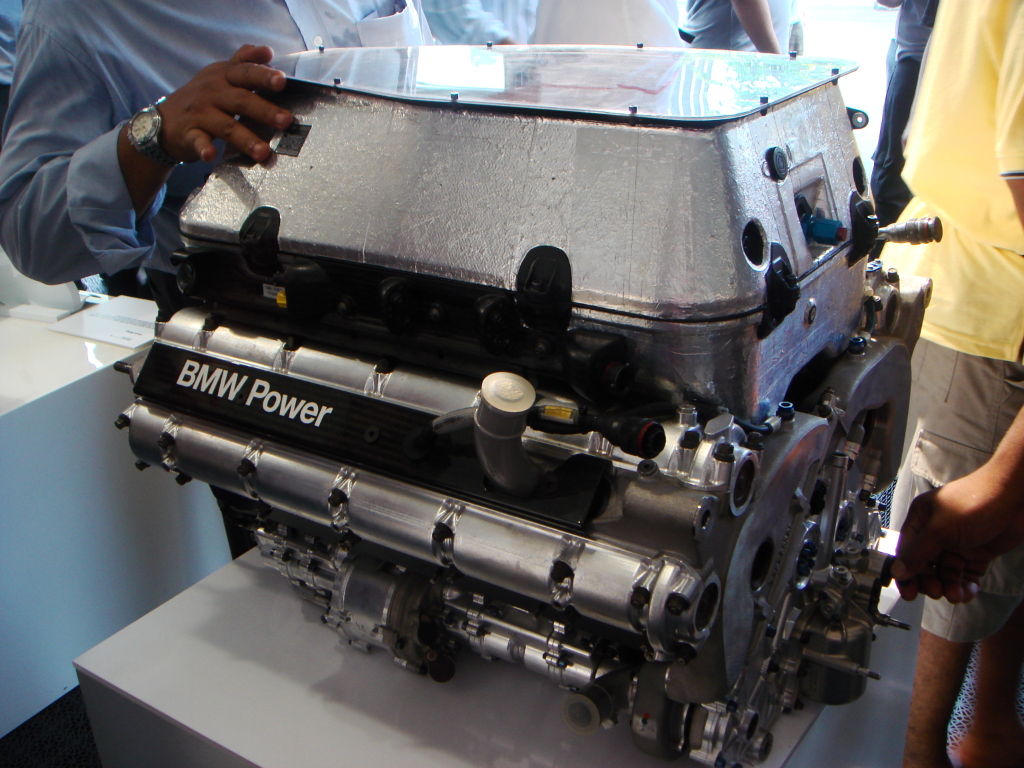
Formula 1 engine
"...when a crank is designed in F1 and an F1 engine idles around 5 to 6000 rpm and the crank will be designed in a way that all the critical speed is put right down..."
A Formula 1 engine is a very powerful engine used in racing cars. It's built to go really fast and work well under high speeds.
A Formula 1 engine is a highly specialized power unit designed for performance in racing. These engines operate at extremely high RPMs and are engineered for maximum efficiency and power output.

Mercedes F1 engine
"the Mercedes F1 engine that I ended up being involved in towards the latter part of my career rev to 18,000 rpm"
The Mercedes F1 engine is a powerful engine used in Formula 1 cars. It can spin very fast, up to 18,000 times per minute, which helps the car go really fast on the racetrack.
The Mercedes F1 engine is a high-performance engine used in Formula 1 racing, known for its ability to rev up to 18,000 rpm, which is significantly higher than typical road car engines. This engine is designed for extreme performance and efficiency in a racing environment.
blipping the engine
"it will constantly be blipping the engine and the reason for that is not to do an elaborate Walmart pits to nullify the vibration..."
Blipping the engine means quickly pressing the gas pedal to make the engine rev higher for a moment. This helps the car shift gears more smoothly.
Blipping the engine refers to the practice of briefly revving the engine, usually during downshifting, to match the engine speed with the wheel speed. This technique helps to smooth out gear changes and maintain vehicle stability.
data logging
"...if you're data logging correctly so much can be worked out from the quality of data nowadays or as obviously back in the day it was all..."
Data logging is when you collect information from a car's sensors to see how it's performing. It helps engineers understand what's happening with the car while it's running.
Data logging refers to the process of collecting and storing data from various sensors in a vehicle to analyze performance and make adjustments. This technology allows engineers to track metrics like speed, RPM, and temperature in real-time.
CAD tools
"...we didn't have the sort of CAD tools that we've got these days and also the ability for final element stress analysis for example..."
CAD tools are computer programs that help designers create detailed drawings of car parts. They make it easier to design things accurately and see how they will fit together.
CAD (Computer-Aided Design) tools are software applications used by engineers and designers to create precision drawings or technical illustrations. In automotive engineering, these tools are essential for designing parts and systems with high accuracy.
finite element stress analysis
"...the ability for final element stress analysis for example..."
Finite element stress analysis is a method that helps engineers see how strong a car part is and if it can handle pressure or stress. It uses computer simulations to test how parts will react to different conditions.
Finite element stress analysis is a computational technique used to predict how objects will react to external forces, vibrations, heat, and other physical effects. In automotive design, it helps engineers ensure that components can withstand the stresses they will encounter during use.
computational fluid dynamics
"computational fluid dynamics none of that was done on a computer back in the day the technology wasn't there how important"
Computational fluid dynamics is a way to use computers to study how fluids, like air and water, move. In car design, it's used to make sure the shape of the car is efficient before building it.
Computational fluid dynamics (CFD) is a branch of fluid mechanics that uses numerical analysis and algorithms to solve and analyze problems involving fluid flows. It's crucial in automotive design for optimizing aerodynamics and engine performance before physical prototypes are made.
F1 engine
"when you look at the price of a modern day F1 engine it's around a million pounds in components so actually"
An F1 engine is the type of engine used in Formula 1 race cars. They are built to be very powerful and fast, and they can be very expensive to make.
An F1 engine refers to the highly specialized and powerful engines used in Formula 1 racing cars. These engines are designed for maximum performance, efficiency, and reliability, often costing millions of dollars to develop and manufacture.
dyno
"...you'll start with an engine on the dyno working out combustion analysis..."
A dyno is a machine that measures how much power an engine makes. It helps engineers see how well the engine is working and make improvements.
A dyno, or dynamometer, is a device used to measure the power output of an engine. It allows engineers to test and tune engine performance under controlled conditions.
combustion analysis
"...start with an engine on the dyno working out combustion analysis and that engine will pretty much look like..."
Combustion analysis looks at how fuel burns in an engine to make it run better. It checks things like heat and pressure to help engineers improve engine performance.
Combustion analysis is the study of the combustion process within an engine to optimize performance and efficiency. It involves measuring parameters like temperature, pressure, and emissions to improve engine design and tuning.
F1
"...especially in F1 when you go and bolt four massive bits of rubber around the engine..."
F1 stands for Formula 1, which is a top-level car racing series. It includes fast cars that race on special tracks, and it's known for using the latest technology in car design.
F1, or Formula 1, is a premier international auto racing sport known for its high-speed cars and advanced technology. It features a series of races known as Grands Prix, held on various circuits around the world, showcasing the pinnacle of motorsport engineering and competition.
over engineering
"...the dyno testing in that respect could actually lead you to over engineer the engine which in essence actually proves to not be necessary in the race application."
Over engineering means making something more complicated or stronger than it really needs to be. In racing, this can make the car heavier and slower than it should be.
Over engineering refers to the practice of designing a product with more features or capabilities than necessary for its intended use. In racing, this can lead to unnecessary complexity and weight, potentially hindering performance.
Formula 1
"You've kind of alluded to your work already in F1 which obviously we don't get too many guests on here who have had hands on experience in the F1 so I want to deal with that in a moment."
Formula 1 is a type of car racing that involves very fast cars competing in races called Grands Prix. It's known for its advanced technology and is considered the top level of motorsport.
Formula 1 (F1) is the highest class of international auto racing for single-seater formula racing cars. It features a series of races known as Grands Prix, held on various circuits around the world, showcasing cutting-edge technology and engineering in motorsport.

Lancia Lambda
"...nthusiast market we're used to tuning at sort of lambda targets maybe in the range of .80 for turbocharg..."
The Lancia Lambda is an old car from the 1920s that was special because it was one of the first to be built with a strong, lightweight body. Car fans talk about it because it was very advanced for its time and is now quite rare.
The Lancia Lambda is a historic automobile produced in the 1920s, notable for being one of the first cars to feature a unitary body construction, which contributed to its lightweight and innovative design. It is significant in automotive history for its engineering advancements and is often discussed among classic car enthusiasts for its rarity and unique features. The Lambda represents a pivotal moment in automotive design and technology.

Nissan 350Z
"... to be involved with and we developed the Nissan 350Z engine into a sort of 480 horsepower race engine..."
The Nissan 350Z is a sporty car made in the early 2000s that has a strong engine and is fun to drive. Many car lovers like to upgrade it to make it even faster and more exciting.
The Nissan 350Z is a sports car that was produced in the early 2000s, known for its powerful V6 engine and rear-wheel-drive layout. It has become popular among car enthusiasts for its performance capabilities and tuning potential, often modified for racing and performance applications. The 350Z is frequently discussed for its balance of power, style, and affordability in the sports car market.

Honda CRX
"..., case and point is we have one in an EF chassis CRX and it's a big engine for a little chassis so th..."
The Honda CRX is a small, sporty car that was made in the 80s and 90s. People love it because it’s light and can be made faster with some upgrades, making it a fun choice for car fans.
The Honda CRX is a compact car that was produced in the 1980s and 1990s, known for its lightweight design and sporty performance. It has become a favorite among car enthusiasts for its potential for modification and tuning, often seen as a fun platform for building high-performance vehicles. The CRX is frequently discussed for its balance of efficiency and excitement.

Ford Pinto
"... far technology has come, go back to the old Ford Pinto engine, you're going to be struggling to sort of..."
The Ford Pinto is a small, cheap car that was made in the 1970s. It’s often talked about because it had some safety problems that made it dangerous in certain accidents.
The Ford Pinto is a subcompact car produced in the 1970s, known for its affordability and compact design. However, it gained notoriety due to safety concerns, particularly regarding its fuel tank design, which could lead to fires in rear-end collisions. The Pinto is often referenced in discussions about automotive safety standards and the evolution of car design.
Honda That Honda
"...20 aren't you? Yeah no and I think the other bit that Honda got so right is they understood the air flow whe..."
The Honda That's is a small car made in the 1980s that is known for being practical and having a lot of room inside for its size. It’s often talked about because of its unusual look and how well it works for city driving.
The Honda That's is a compact car that was produced in the 1980s and is known for its unique design and practicality. It was designed to be a versatile vehicle, often featuring a spacious interior despite its small size, making it popular for urban driving. The Honda That's is discussed for its quirky design and efficient use of space.

Acura NSX
"...'ve developed a turbocharged 2.2 K series for an NSX time attack car which kind of alluded to already...."
The Acura NSX is a fast sports car that was made starting in the 1990s. It’s known for being easy to drive on regular roads while also being really fun and powerful on a racetrack.
The Acura NSX is a high-performance sports car that was first introduced in the early 1990s. It is significant for its innovative design, including a lightweight aluminum body and a mid-engine layout, which set new standards for performance and handling in its class. The NSX is often discussed for its blend of everyday usability and track-ready performance.

Nissan Skyline
"... move into. I'm also a massive fan of the Nissan Skyline so RB26's and bits and pieces I'm sure you'll se..."
The Nissan Skyline is a famous sports car, especially the GT-R version, which is known for being very powerful and fast. It became popular in racing and car shows because of its cool design and great performance.
The Nissan Skyline, particularly the GT-R variant, is a legendary sports car known for its advanced technology and performance capabilities. It gained a cult following, especially in the 1990s, due to its powerful RB26 engine and impressive handling, making it a popular choice for tuning and motorsports. The Skyline is often discussed for its impact on car culture and its status in the racing community.
Request an Explanation
Heard something you'd like explained? We'll add it to this episode.
Sign in to request explanations for terms you heard.
Want to learn more?
Browse our glossary for plain-English explanations of automotive terms, jargon, and concepts.
Help improve this episode
See something that's not quite right? Our annotations are AI-generated and can sometimes miss the mark. Click the flag icon on any annotation to suggest a correction.