
Richard Holdener joins the Street Alpha Podcast to share his extensive knowledge on engine dyno testing, camshaft performance, and turbo setups. He discusses the intricacies of LS engines, including budget-friendly builds and the importance of proper ring gap for reliability. The conversation also delves into the differences between various engine platforms, the impact of throttle body size on performance, and the myths surrounding horsepower limits. With a wealth of racing experience, Richard shares entertaining anecdotes from his time on the track, making this episode a treasure trove of insights for automotive enthusiasts.
In todays episode we sit with Richard Holdener who breaks down real engine dyno results while sharing what he has learned from years of cam testing turbo combinations and cylinder head data.
Richard Holdener Official Instagram: https://www.instagram.com/richardholdener
"...e your holiday wishes come true with a new Camry, RAV4, Tacoma and more! Alright, let's sing it togethe..."
The Toyota RAV4 is a type of car called an SUV, which means it's bigger than a regular car and can hold more people and stuff. It's popular because it's reliable and good for driving in different weather conditions.
The Toyota RAV4 is a compact SUV that has been a popular choice for families and individuals seeking a versatile and reliable vehicle since its introduction in the mid-1990s. Known for its spacious interior, fuel efficiency, and all-wheel-drive capabilities, the RAV4 is often discussed for its practicality and strong resale value.
"Or if you want to pick up an R34 or NSX or whatever it is, he's the guy to reach out to."
The Honda NSX is a high-performance sports car that is known for being fast and having a unique design.
The Honda NSX is a mid-engine sports car known for its performance, innovative design, and being one of the first supercars to feature an all-aluminum body.
"So if you guys are looking for a JDM car and you want to import it, JDM Dre is the guy for you."
JDM means cars that are made for Japan. They are often special and different from cars sold in other countries, making them popular with car fans.
JDM stands for Japanese Domestic Market, referring to vehicles and parts made specifically for the Japanese market, often sought after by enthusiasts for their unique features and performance.
"...you want to test different setups on your car, you can do that in the engine dyno. Yeah, if you want to find out what works doing that and being able to do that..."
An engine dyno is a machine that tests how powerful an engine is. It helps car enthusiasts see how changes to the engine can make it perform better or worse.
An engine dyno is a device used to measure the power output and performance characteristics of an engine. It allows tuners and engineers to test different setups and modifications to see how they affect engine performance.
"...Camshabs have to be a conversation with you because you've studied a ton of them. LS, which I don't really speak too much on this platform about..."
A camshaft is a part of the engine that helps control when the valves open and close. This affects how well the engine runs and how powerful it is.
A camshaft is a crucial component in an engine that controls the timing of the opening and closing of the engine's valves. It plays a significant role in determining engine performance and efficiency.
"...this is the first one. I think this is a good opportunity for me to kind of learn more about the LS platform in the correct manner..."
The LS platform is a type of V8 engine made by General Motors. It's known for being powerful and is often used to replace engines in other cars because it's lightweight and reliable.
The LS platform refers to a series of V8 engines produced by General Motors, known for their lightweight design and high performance. These engines are popular for swaps into various vehicles due to their power and reliability.
"...we'll talk about the junkyard LS stuff and how similar it is to other platforms, because I'm an import guy."
'Junkyard LS' means finding LS engines in junkyards to use in projects. It's a way for car lovers to get powerful engines without spending a lot of money.
'Junkyard LS' refers to the practice of sourcing LS engines from junkyards or used parts suppliers for budget builds or swaps. This approach allows enthusiasts to obtain powerful engines at a lower cost.
"...how this really kind of started is I went out to the Silver State Race, which is an open road race out in Nevada. They just close the road down, let you run flat out as fast as you can..."
The Silver State Race is a special event in Nevada where drivers can race their cars on regular roads that are closed just for the race. It's a chance to drive really fast safely.
The Silver State Race is an open road race held in Nevada where participants can drive as fast as they want on closed public roads. It's known for its unique format that allows for high-speed racing in a scenic environment.
"...I was out there in my Mustang. There was a guy there doing a story for then Turbo Magazine and he said, hey, interviewed me."
The Mustang is a well-known sports car made by Ford. It's famous for being fast and has a strong following among car lovers.
The Ford Mustang is a classic American muscle car known for its performance and distinctive styling. It has a long history and has been popular among car enthusiasts since its introduction in the 1960s.
"I want to see what this exhaust does. I want to see what this header does, what this camshaft does, what all these things do..."
The exhaust system helps remove gases from the engine and can be modified to improve how a car sounds or performs.
An exhaust system is responsible for directing combustion gases away from the engine and reducing noise. Upgrading the exhaust can enhance performance and sound.
"I want to see what this header does, what this camshaft does, what all these things do..."
Headers are parts that help get exhaust gases out of the engine faster, which can make the car run better.
Headers are aftermarket exhaust components that replace the factory exhaust manifold. They can improve engine performance by allowing exhaust gases to exit more efficiently.
"that says that, hey, by our exhaust, it's worth 15 horsepower. Well, is it?"
Horsepower is a way to measure how powerful an engine is. The higher the horsepower number, the more work the engine can do, which usually means it can go faster.
Horsepower is a unit of measurement for power, commonly used to quantify the power output of engines. It indicates how much work an engine can perform over time, with higher horsepower generally translating to better performance.
"You can only do that on a chassis dyno, it would be almost impossible to do that. You can do that."
A chassis dyno is a machine that tests how much power a car has at its wheels. It shows how the car performs when driving, not just the engine alone.
A chassis dyno measures the power output of a vehicle at the wheels, taking into account all drivetrain losses. This type of dyno is essential for understanding real-world performance as it reflects how the vehicle performs on the road.
"...they use an engine dyno, they use a chassis dyno in the top levels of Formula One and stuff. They have atmospheric centers where basically they can take the car and run the whole race the way that it would be in the race."
Formula One is a type of car racing that features very fast cars and is held on special tracks. It's one of the most famous and competitive forms of racing in the world.
Formula One is a high-level international motorsport series known for its fast cars and advanced technology. It features races on closed circuits and is considered the pinnacle of motorsport engineering and competition.
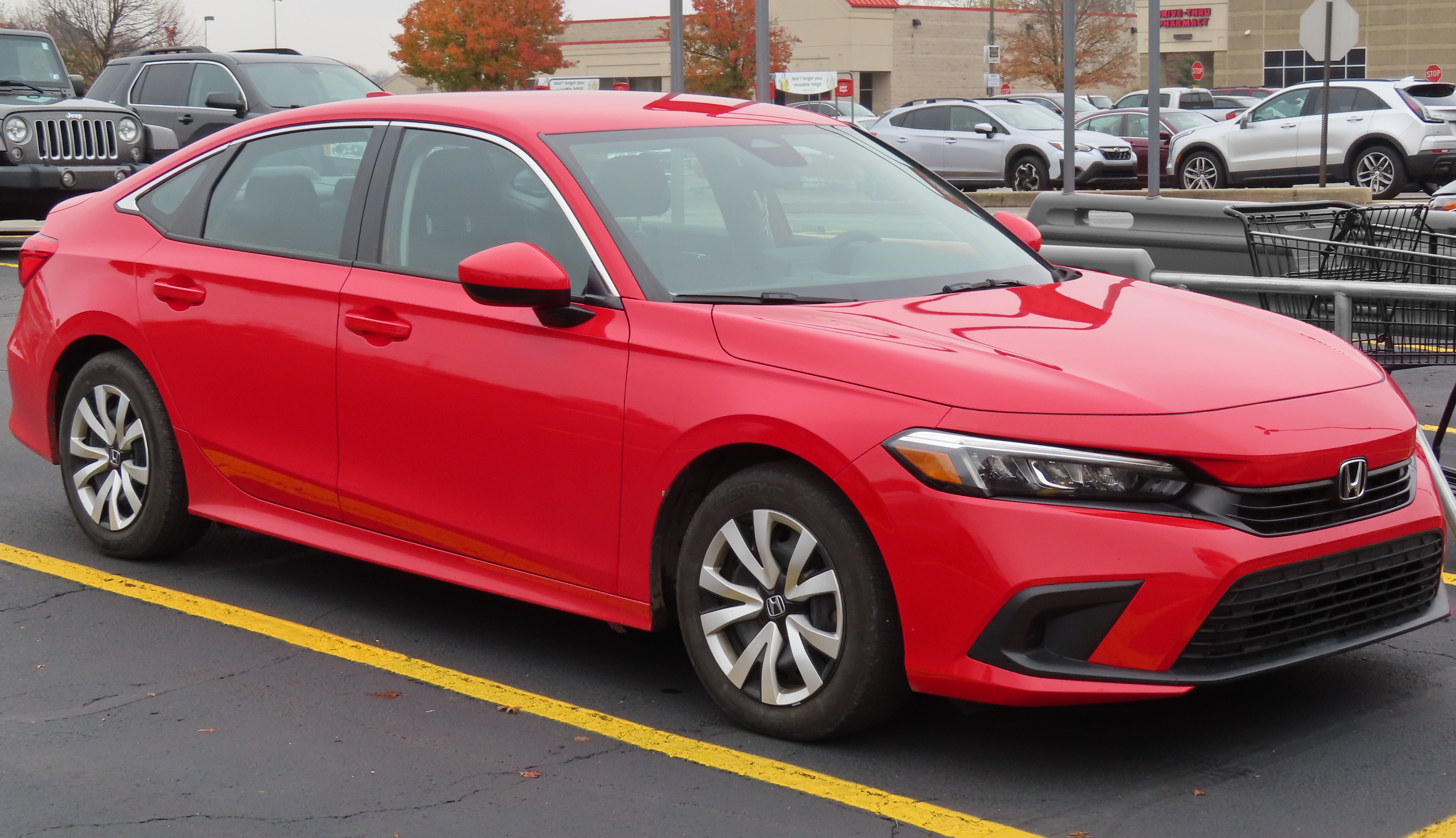
"...as domestic, it seems like, but you see it on the Civic. Yeah, my first car was a Camaro."
The Honda Civic is a small car that many people like because it's dependable and gets good gas mileage. It's also fun to drive and can be made to look and perform better with some upgrades.
The Honda Civic is a compact car that has been a staple in the automotive market since the 1970s, known for its reliability, fuel efficiency, and sporty design. It has a strong following among enthusiasts and is frequently discussed for its performance variants and customization potential.
The Chevrolet Camaro is a well-known sports car from America that is famous for being fast and stylish. It has been around for many years and is loved by car enthusiasts.
The Chevrolet Camaro is a popular American muscle car known for its performance and sporty design. It has been a staple in the automotive industry since its introduction in the 1960s.
"I've had lots and lots of cars, Jensen Healey and 86 MR2, lots and lots of Hondas."
The Jensen Healey is a classic sports car from Britain that was made in the 1970s. It's known for being light and fun to drive.
The Jensen Healey is a British sports car produced in the 1970s, known for its lightweight design and sporty performance. It features a unique combination of British engineering and American power.
"...until somebody goes more than 227, I can still kind of say that. And it's just, you know, it's an awesome thing. Right. We'll talk about that in a little bit with the Hondas..."
Bonneville is a place in Utah where people go to see how fast cars can go. It's known for its flat, dry land, which is perfect for racing.
Bonneville refers to the Bonneville Salt Flats in Utah, a famous location for land speed records. Many automotive enthusiasts and engineers gather there to test the limits of speed in various vehicles.
"...One of the biggest platforms, I guess, for your channel is the LS, it seems like, right?"
The LS is a type of engine made by General Motors. It's popular because it's powerful and can be used in many different cars, especially those that are modified for racing.
The LS refers to a family of V8 engines produced by General Motors, known for their performance and versatility. They are commonly used in various applications, including performance cars and hot rods.
"...if we went to the wrecking yard, I could go to the wrecking yard like the wrecking yards that I go to, the engines are the same price."
A wrecking yard is a place where old cars are taken to be taken apart for parts. People go there to find cheap pieces to fix or upgrade their cars.
A wrecking yard, also known as a junkyard or salvage yard, is a place where damaged or old vehicles are dismantled for parts. Car enthusiasts often visit these yards to find affordable components for their projects.
"GM made a handful of Camaros and Corvettes and GTOs."
The Pontiac GTO is a classic car that became famous for being fast and powerful. It was one of the first muscle cars.
The Pontiac GTO is a classic muscle car that was first introduced in the 1960s. It is often credited with starting the muscle car trend and is known for its powerful engine options.
"So that's why it's, I mean, an LS right now is the biggest thing going still. And it has been for a long time."
The LS engine is very popular because it's powerful and easy to find. Many people use it to upgrade their cars.
The LS engine series has gained immense popularity among car enthusiasts and builders due to its performance potential, availability, and affordability. It's commonly used in various builds, from street cars to race cars.
"You would put head studs and head gaskets on it. You'd put injectors in it."
Head gaskets are seals that keep oil and coolant from leaking out of the engine. They help the engine run smoothly and efficiently.
Head gaskets are seals that sit between the engine block and the cylinder head, preventing coolant and oil from leaking into the combustion chamber. They are critical for maintaining engine integrity and performance.
"You would put head studs and head gaskets on it. You'd put injectors in it."
Head studs are special bolts that hold the top part of the engine in place. They help keep everything sealed tight, especially when the engine is making a lot of power.
Head studs are high-strength bolts that secure the cylinder head to the engine block, providing a strong seal for the combustion chamber. They are often used in high-performance applications to withstand increased pressure and heat.
"You'd put injectors in it. And then you would put some sort of turbo setup on it that has a turbo that's capable of making 1,000 horsepower."
Injectors are parts that spray fuel into the engine so it can mix with air and burn to create power. They help the engine run well.
Fuel injectors are components that spray fuel into the engine's combustion chamber. They are essential for delivering the right amount of fuel for efficient combustion and engine performance.
Term
2J
"...just like a smaller 2J or a smaller RB. It takes more boost."
The 2J is a type of engine made by Toyota that is very popular for making a lot of power. It's often used in racing and performance cars.
The 2J refers to the Toyota 2JZ engine, a well-known inline-six engine famous for its performance and tuning potential, especially in the Toyota Supra. It's often associated with high horsepower builds.
"...they're swapping it from a truck into a S10 or a Chevelle or anything else. On what kind of motor?"
The Chevrolet Chevelle is an older car that many people love because it looks cool and can be very powerful. It's considered a classic muscle car and is sought after by collectors.
The Chevrolet Chevelle is a mid-size car that was produced from the 1960s to the 1970s, known for its performance variants and classic muscle car appeal. It is often discussed for its role in American automotive history and its popularity among collectors.
"...hinking about cams. Can you put a turbo on an NA Supra? Yeah."
The Toyota Supra is a fast sports car that people love for its speed and style. It's known for being able to be modified to go even faster, which makes it popular among car fans.
The Toyota Supra is a sports car that gained fame in the 1980s and 1990s for its powerful performance and tuning potential, particularly with turbocharged models. It has a cult following and is often discussed for its role in car culture and motorsports.
"... talking about I want to swap a... I have a 1985 Dodge Omnia. We made it into a GLHS."
The Dodge Omni is a small, budget-friendly car from the 1980s that people remember for being practical. Some car fans like to modify it and make it faster by changing its engine.
The Dodge Omni is a subcompact car that was produced in the 1980s, known for its practicality and affordability. It is often discussed in the context of retro car culture and modifications, especially among enthusiasts looking to swap engines.
"...o there anyway, we tell them you need the bigger G42 on there. You need the 1200 horsepower turbo on ..."
The BMW 2 Series is a small luxury car that looks stylish and is fun to drive. It's known for being well-made and offers a sporty feel on the road.
The BMW 2 Series is a compact luxury coupe and convertible that offers sporty performance and premium features, appealing to driving enthusiasts and those seeking a stylish vehicle. It is often discussed for its driving dynamics and the brand's reputation for quality.
"...ey were at HP Performance. They had a 2003, a 03 Cobra. So it comes with a factory eaten supercharger."
The Shelby Cobra is a classic American sports car famous for being very fast and powerful. It has a unique style and is loved by car enthusiasts for its racing history.
The Shelby Cobra is an iconic American sports car that was produced in the 1960s, known for its powerful V8 engine and lightweight design. It is often discussed for its racing heritage and influence on the muscle car culture.
"Yeah. But yeah, Lancia did that with their Delta rally cars way back in their Group B cars."
The Lancia Delta is a small car that was really successful in racing, especially in rally competitions. It's known for its cool design and how well it performs on tough roads.
The Lancia Delta is a compact car that gained fame in the 1980s and 1990s, particularly for its success in rally racing, including multiple World Rally Championship titles. It is often discussed for its unique design and performance capabilities in motorsports.
"... Bullet because my friend had a Honda, it was an Accord and it didn't have fifth gear and we had a skip s..."
The Honda Accord is a larger car that many people choose because it's comfortable and reliable. It's great for families and has a lot of space for passengers and luggage.
The Honda Accord is a midsize sedan that has been a top seller in the United States for decades, recognized for its spacious interior, comfort, and reliability. It is often discussed for its balance of performance and practicality, making it a favorite among families and commuters.
"...an open road race in Nevada, we were in a Monster Miata. So it's a Miata with a V8 in it. Oh, wow. So we..."
The Mazda Miata is a small, two-seat sports car that's really fun to drive, especially because it has a convertible top. People love it for its quick handling and the joy of driving on open roads.
The Mazda Miata is a lightweight sports car known for its agile handling and fun driving experience, often celebrated as one of the best affordable sports cars. Since its debut in 1989, it has become a favorite among driving enthusiasts and is frequently discussed for its open-top design and customization options.
"YouTube channel. And there's all, you know, want to, we talked primarily about LS stuff. Yeah. But basically, I've tested everything. So Honda's and Focus's and NSX's, and I had a 4GT and a Ferrari and all kinds of stuff. So I test, I, that's what I do. I love testing everything."
The Acura NSX is a fancy sports car that's really fast and has a cool design. It's special because it combines luxury with high performance, making it a dream car for many.
The Acura NSX is a high-performance sports car that debuted in the early 1990s, known for its innovative design and engineering, including a mid-engine layout and hybrid technology in its latest version. It is often discussed for its blend of luxury and performance, as well as its status as a Japanese supercar.
Select text to request an explanation
Toyota Thon, Toyota Thon, Toyota Thon is on!
Oh, what fun it is to drive a new Toyota today!
Hey, Jan from Toyota here reminding you Toyota Thon is on!
Make your holiday wishes come true with a new Camry, RAV4, Tacoma and more!
Alright, let's sing it together this time!
Toyota Thon, Toyota Thon, Toyota Thon is on!
Dealer inventory may vary.
Toyota Thon ends January 5th.
See your participating dealer for details.
Toyota, let's go places!
Welcome back to another episode of the Street Alpha Podcast.
I am your host, Tukes, and today we have, yet again, another legend in the building.
Before we start though, right?
Before we start, I have to give a huge shout out to my guy, JDM Dre, for letting us host this podcast here.
If you guys are in the market or looking for a Supra or any type of import, we have a ton here that you can purchase.
Or if you want to pick up an R34 or NSX or whatever it is, he's the guy to reach out to.
So if you guys are looking for a JDM car and you want to import it, JDM Dre is the guy for you.
So today we have Richard Holdner, journalist, author, racer, what else can we add to the list of accolades here?
Entrepreneur, Ninja Warrior, Myth Buster, so he's an automotive myth buster doing the stuff with data, engine dinos, which is pretty cool.
So you get to see and experiment with a lot of different combinations, which is probably a car guy's dream,
because you want to test different setups on your car, you can do that in the engine dyno.
Yeah, if you want to find out what works doing that and being able to do that, everyone says that,
dude, that would be so great to have that job.
Yeah, so we're going to talk about a lot of different combinations that you've already won through.
Camshabs have to be a conversation with you because you've studied a ton of them.
LS, which I don't really speak too much on this platform about, but this is the first one.
I think this is a good opportunity for me to kind of learn more about the LS platform in the correct manner
and kind of learn what different combinations are out there and also some of the budget options we have with the LS, because we're all budgeted up in here.
Yeah, so we'll talk about the junkyard LS stuff and how similar it is to other platforms, because I'm an import guy.
That's what I grew up around.
Never got to be around the domestic side of things, but had some interest.
I just didn't really have anybody to guide me in the right direction.
Before we start, let's give a round of applause for Richard Holner.
Thank you guys so much, Jimmy, right?
Yes, Jimmy actually reached out on Instagram and he said he knew you.
So I was like, I'm not going to lie.
I was like, he's full of shit because there's no way he knows this guy.
And why would you reach out to me on Instagram?
It was kind of strange.
I think stalking might be a better word there, right?
So we were back and forth for a while and I was like, yeah, this guy is just talking.
And then I guess up until recently, it was like, you know, legit.
Only so much information you can find on Instagram for somebody's account.
But you guys are here.
I think it's interesting that you thought it was any kind of big deal that he would know me because it's just me.
Not like it's a big deal.
Well, you have come up in the comments before on previous episodes.
People always said, oh, you should interview him.
And I was like, yeah, I think it has to be at the right time.
I just did a podcast with Shane T.
Awesome.
Which was awesome.
And Shane is all kinds of awesome.
Yeah.
So Shane, I was telling you about how he said that he grew up in the shop or he was an apprentice in a shop that used to work at.
Something like that.
So he wasn't sure if you remember him, but apparently you do.
Shane is a legend.
I mean, I love listening to his stuff.
And Jimmy and I talked about this stuff all the time.
It was a fantastic interview and he's like a really super knowledgeable guy and just a cool guy to hang out with him.
Yeah.
So that was pretty cool that he, you know, the car community is very small, I guess.
But just briefly, if you can kind of explain what drew your interest into cars and what you do now.
The story that I was telling about the beginning of all this is that I was a car guy and my stepdad got me into this and we rebuilt motors and stuff.
But how this really kind of started is I went out to the Silver State Race, which is an open road race out in Nevada.
They just close the road down, let you run flat out as fast as you can.
So I was out there in my Mustang.
There was a guy there doing a story for then Turbo Magazine and he said, hey, interviewed me.
And he said, OK, we're doing a thing and I'm writing about the story.
And so after the race, I called the guys at Turbo Magazine after a couple of weeks and said, hey, there was a guy there doing story for you.
And when is that story going to come out?
Because I want to read about it.
Yeah.
This is kind of cool.
And this is a great race and that's a good magazine.
I followed them guys for a long time.
And he said, and then the publisher got on the phone with me and said, hey, this guy wrote the story, but we don't think it captures what this event or might not capture what this event was about.
Would you mind reading it?
I'm like, yeah, but like, who am I?
I mean, this, you know, you guys are you guys and that guy is him.
I said, well, I'm nobody.
I said, yeah, I would love to read it.
And then he they sent it to me and I read it and I'm like, what do I do now?
Because this is horrible.
This is not at all how cool this race was.
Yeah.
And I thought I thought going out there the first year they closed the road down.
I thought for sure they're never going to allow this again because there's no way with with insurance and that kind of stuff.
This is ever going to happen again.
So I had to tell the guy said, look, I'm nobody.
I said, but I don't think that this guy captured what it what this was all about.
And he said, would you mind writing some stuff down?
And I and I and what I did was just rewrote the whole story turned it in.
That turned into my first magazine story that I ever wrote.
Wow.
And then that's where it all started from there.
So that was pretty much the start of you kind of doing other things and writing books and so on.
Yeah.
Do I did magazine articles for a really, really long time?
Everyone like Jimmy telling me, hey, you need to do YouTube.
I'm like, I thought that's that's a fan that'll never catch on.
That's not going to be anything.
I'm going to keep doing magazine stuff.
And then pretty soon what happened was the Discovery guys bought all of the magazines
and then killed all the magazines.
They were only interested in the video portion of that.
And I got a call from David Freiburger.
They said, he said, hey, guess what?
You're going to have to do something else because there's no more magazines.
And so you're not going to be a magazine writer anymore because there are no more magazines.
So then I said, Jimmy, you know, this might be a really good time to start YouTube.
And so that's how all that happened.
So, you know what I find interesting about that is being an author, right?
Nowadays, we have ChatGPT.
Yep.
You can literally write a book probably on that, right?
I'm sure they could, yeah.
Right.
So back then, you definitely didn't have those kind of resources, right?
So can you talk to me about what the process is and putting all these thoughts and things
into a whole book that you're reading, you know?
Well, for me, the book part of it came after doing a lot of magazine articles.
So I was always interested in, like, when I first started with the magazines after doing all the stuff
for trial magazine and everything, I was really only interested in testing things.
I want to see what this exhaust does.
I want to see what this header does, what this camshaft does, what all these things do,
because I wanted to make sure that when I wrote a story for the magazine,
that the thing that we were writing about did what we said it did.
Right.
So as soon as I took my first job at the magazine, I said, look, we have to test this.
It either has to be on some kind of dyno, and this was, like, pre-dynojet and all this stuff.
I remember doing my first test on the dyno, and in my Mustang,
we had to have, like, three sandbags in the trunk, and then three guys sitting in the trunk
to hold the thing down, and this was on some kind of land and sea or some kind of dyno,
and the guy was only able to get, like, readings, like, really quick.
I'm like, this is a horrible idea.
But I said, we at least have to have Veracom testing or some sort of acceleration thing
that says that, hey, by our exhaust, it's worth 15 horsepower.
Well, is it?
And so I was always interested in doing that, and so that's the direction I took
in all these magazine stories, and so the books came later where I had accumulated all of this data
and done all of this testing, and they said, can you write a book?
I'm like, yeah, I can write a book because I have all of this data
and I have all of these photos and everything, and so I can put this in book form and go,
hey, look, my first one was on five-liter Mustangs, and so I said, look,
here's a chapter on air intakes, here's a chapter on exhaust,
here's a chapter on turbos, one on superchargers, one on nitrous, one on cylinder heads,
one on stroker motors, and so I had done all of this testing,
so what I was doing for these books was just combining all of this stuff together,
put it in an organized form so that people could look at it and then, you know,
it's in book form, they could go through, hey, what does an exhaust do?
What does an air intake do? That kind of stuff.
With forums being a popular thing, right?
Yes.
What made your books different from what you could find on the forums?
I don't think it was.
I think the problem with forums early on in groups now that we have
is that a lot of times people would be giving you their opinions
on things that work or don't work.
Correct, yeah.
But they're not giving you data on what works and doesn't work.
Right.
So there's the big difference between those two things,
and a lot of times with the forums and even groups now,
you get somebody who is like the head honcho there
and that everybody respects him because his car runs tens or whatever,
even though he may or may not have actually tested things.
He may have come through and like he turned the boost up and he did all the things
and now he's a hero, and so everybody listens to him.
The problem is that that guy, even though he was successful in the thing that he did,
he cannot answer a question about how much is a long tube header worth
versus a standard exhaust manifold in that test.
He'll give you his opinion, but he has no verifiable test data
to show you when I tested this, this one made this much horsepower
and this one made this much horsepower and here are the graphs to prove it.
They don't have that, and so that can be the difference.
The groups and stuff can be good places to disseminate that.
Good information, they can also be good places to disseminate bad information unfortunately.
With the engine dinos, how accurate is that to the conditions that you would see outside?
Is there a certain setup you have to have for that in order to have it be super accurate?
The accuracy of the dyno is first rate.
The dyno, if you run a motor on it and everything is the same, it will be the same every time.
We were doing a test recently where we had to make the thing repeatable to the decimal point past zero basically.
You can only do that on a chassis dyno, it would be almost impossible to do that.
You can do that.
What I always tell people, look, if we do an engine dyno test and we have something on there that makes 20 horsepower,
50 horsepower, whatever the number it is, and you take it out to the track, you are going to see an improvement.
It will do that because it will do what an extra 50 horsepower does.
Every professional form of motor sports uses dyno.
They use all of the dyno.
They use an engine dyno, they use a chassis dyno in the top levels of Formula One and stuff.
They have atmospheric centers where basically they can take the car and run the whole race the way that it would be in the race.
They can test it under all of those conditions.
They go to the nth degree, most people don't do that.
But almost everybody does all of that and you should do all of that to get the best results.
Is this something you can do in your garage or do you have to have it in a certain area with certain conditions?
There are some engine dyno's that you could, in a shop like this, you could take the engine dyno, put the engine on a stand,
and the dyno hook water up to it, have the exhaust blow out there, and you could run tests like that.
Where I do most of the testing that I've done at Westeck, they have a facility that has the dyno in a closed environment
so that we can, you know, we need to measure the bare-match pressure and temperature, all of these things,
to make sure that the data that we're getting is accurate.
One of the things guys like to do is I'm going to compare this dyno to this dyno over here and this dyno over here.
I'm like, really, and when I was doing engine masters, I took my engine that I competed with in that thing.
I was a finalist in engine masters and I took my engine and ran it at four different dyno's
and they're all within like one horsepower, whatever, of each other, all in different parts of the country.
And so I would say that that's very accurate.
But the data that you get from there, you need to correlate it with data that you get everywhere else.
You know, that's the way you get the best results.
So your initial interest in cars was domestic, it seems like, but you see it on the Civic.
Yeah, my first car was a Camaro.
Okay.
But I've had lots and lots of cars, Jensen Healey and 86 MR2, lots and lots of Hondas,
because I did professional road racing at Adel Sol.
We won the championship in that US touring car.
I had the Civic that I talked to you about that we set land speed records with.
That car went 227 and is still, today, the world's fastest Honda Civic that I know of.
I mean, guys are making lots more power in doing all that stuff.
And they're getting close to the speed that I ran at Bonneville in the quarter.
So what they're doing is fantastic.
Yeah.
But until somebody goes more than 227, I can still kind of say that.
And it's just, you know, it's an awesome thing.
Right.
We'll talk about that in a little bit with the Hondas, because I know there's a ton of information to get to, right?
So at all these, right?
One of the biggest platforms, I guess, for your channel is the LS, it seems like, right?
Oh, yeah.
And it seems like it's a very relatable platform, because there's a ton of them, right?
Different motors, they come in different cars and so on.
So as I said, I'm an import guy.
I'm trying to learn more about the LS stuff, right?
So how much does it cost to do like a cheap LS build and make maybe a thousand horsepower?
Well, you probably have a good idea of what a thousand horsepower costs on a 2G, right?
So if we went to the wrecking yard, I could go to the wrecking yard like the wrecking yards that I go to,
the engines are the same price.
So if you're not going to find a super motor, but you could find one from a Lexus or whatever,
you could get that motor and an LS are the same price.
So you start out with the same thing.
With an LS, if we go get one from a truck, because that's where we'd get them.
GM made a handful of Camaros and Corvettes and GTOs.
They made millions of trucks.
So every time I go to a wrecking yard, you go look in the truck section,
there'll be 15 or 20 LS powered trucks.
So that's why it's, I mean, an LS right now is the biggest thing going still.
And it has been for a long time.
So if you talk to guys that sell LS cams or LS parts, they sell way more of those than anything else.
So it's huge.
And that's because they're inexpensive.
They can make a lot of power.
They're readily affordable and available at any wrecking yard that you go to anywhere in the world.
Or not in the world, at least in the United States, because they don't have those trucks like in Australia.
They have LS's there, but they don't have the trucks.
And so the trucks are where they made millions of them.
That's why it's so popular here.
But if you wanted to make 1,000 horsepower on an LS, we would go get like an Iron 5.3 with aluminum heads in a factory intake manifold.
You would change, you would put ring gap in it.
You would put head studs and head gaskets on it.
You'd put injectors in it.
And then you would put some sort of turbo setup on it that has a turbo that's capable of making 1,000 horsepower.
And then you'd make 1,000 horsepower.
That's it.
That's it.
You don't have to put, I mean, we would normally put a cam in it to a small cam, but not even anything big.
I mean, the cam's a couple hundred dollars or whatever.
So it's not, it's not super money.
It's, you know, it's much, much less expensive to do that.
And the way that we found this out, racers were kind of already doing it, but I did something called the Big Bang Theory.
And what that was was we wanted to find out how much power you could make from a stock bottom end motor.
Like how much power will the stock block, stock crank, stock rod, stock piston stake, we just added ring gap, ring gap, something you don't pitch a ring in.
And then we put, you know, head studs and all, and all that stuff on it.
And we turned it up and I did four of those.
And then one of them made 1,540 horsepower with all of the stock bottom end stuff.
So cast pistons, powdered metal rods, cast crank, factory block.
And it may, I mean, it only made six or eight runs that are near that power level, but it did a hundred over a thousand horsepower.
So that's how easy.
And that's one of the reasons that it's so popular is that it's really easy and inexpensive and the formulas are all out there to make that kind of power.
How does the LS make power compared to something like, you know, 2J or something like that?
Like on an RB, for example, they like to bring the boost in later to prevent, you know, bearings from crushing, right?
Do you have that problem with LS?
No, and I would say that I remember seeing the first time that I saw the power curve of a powerful 2J or an RB motor.
Yeah.
It's like nothing, nothing, nothing, then, then kind of all of it.
Right, right, right.
The, a bigger displacement V8 doesn't do that.
So we worry more about the torque production because that's what's going to, like, cause detonation hurt you.
So we worry more about that.
But really all that you need on an LS, the key to all of that is the turbo.
So if you put a thousand horsepower turbo on your LS, it will make a thousand horsepower.
And, and it will do it in an RPM range.
That's not like the super because the super starting out making like an NA, especially low compression, like turbo super motor.
If you were to run it NA, that's going to be a sub 200 horsepower motor.
And a cammed junkyard LS is going to be a 400 horsepower motor to start out with.
Okay.
So we get to a thousand horsepower at 20 pounds.
Yeah.
A thousand horsepower from a 2J is going to be, you'll, you'll know.
Is it 30 or 40 pounds or what?
Yeah.
It's going to be a lot.
And so that's, it's an easy thing to do.
In fact, we always laugh about the fact that getting the power like out of an LS is very, very easy.
Getting the transmission and the rear end and all the other things that you need to now handle that and driving talent.
You know, sometimes all of that stuff is really the way more expensive part of that.
Junkyard, right?
Yeah.
Which LS are we looking for?
Well, here's the great thing is that there's, there's no bad choice.
There's no bad choice.
No, you, if you go to a wrecking yard and you go to a truck and it's a 4-8, you could make a thousand horsepower really easily with a 4-8.
It just, it's going to take more boost just like a smaller 2J or a smaller RB.
It takes more boost.
A 5-3, a 6-0, we don't normally, and I know that you wanted to talk about this.
There are choices that we make based on the power output and the block that we would pick, for instance.
Okay.
So almost all of the truck motors, certainly all the earlier ones, are going to be iron blocks.
And so those will take as much power as you can.
What years are these?
All of them?
Doesn't matter what year.
Yeah, almost all of them are going to be iron.
There are a handful of them that also had aluminum versions.
Aluminum?
Okay.
So the one that you want, if you're going to get an aluminum motor, it's like you can
get an LS1, an LS2, an LS3, all those are aluminum motors.
Right.
We don't normally take those blocks more than a thousand horsepower.
The iron truck blocks, we take to all of it.
The aluminum 5-3 motors have thicker sleeves in them, and those are the ones that our guys are making crazy power with.
And also it's aluminum, so it's lightweight.
Right.
So those are the real desirable ones, and you can still find those in wrecking yards.
And where are you finding those at?
In trucks.
Those are in trucks too.
Yes.
Yeah, they didn't ever put any 4-8s or 5-3s into cars.
So all of these are truck motors, which they made millions of.
So there's a abundance of them.
Yeah, so there's a ton of them.
When was the last time you saw a super turbo motor in a wrecking yard?
I mean, I never have.
I mean, yeah, I wouldn't even bother to even attempt to look for one.
No.
So now, with the truck motors, right, how much they cost to pick it up?
Well, it used to be, it depends on where the wrecking yard is.
Okay.
But anywhere from, let's say, $300 to, I don't know, $600 or $700, probably.
Is that for the whole engine or just the...
Wow.
Yeah, it comes...
It used to be that you could buy...
Now that LKQ has kind of taken over all of this stuff, they're kind of buying out all the wrecking yards,
it used to be that you could go by a complete motor, throttle body, intake manifold,
injectors, everything, oil pan, all the accessories, not the harness and stuff,
but the motor and then all the way back to the flywheel or flex plate.
They're all going to be flex plates because they're all automatics in the trucks,
with very rare exception.
But you get that whole thing.
And in fact, we were...
I was doing so many of them because we were using it for test motors
that we would just throw all that stuff away.
Now I think, oh my...
Because now they're charging for all of it.
So now we take all that stuff off of the wrecking yard because I don't use mostly...
We don't normally run the accessories, we run an electric water pump and stuff on there.
So we don't run that stuff.
But I think back of all that stuff that I threw away, I'm like,
man, that stuff's probably desirable now.
Jeez.
Budget-wise, what kind of budget...
What could I do with $5,000?
You could easily do $1,000 horsepower.
$5,000?
Yeah.
What?
Yeah.
In fact, if you take a look at...
And it's a shout-out to Matt Happle at Sloppy Mechanics.
He built a Mustang that went eights for $8,000.
It was eights for eights, which was a fantastic thing.
Oh, that's pretty cool.
So that gives you an idea.
Like, you know, he did a junkyard four-wheel-80 swap.
And you know, just all...
Just did it as cheap as possible.
And you can do that.
Are there any downsides?
Like anything that you have to kind of be on top of at that power level with those?
The biggest thing that you have to worry about is not engine-related, like we talked about.
It's the transmission.
The trucks and most of the cars are going to have four-wheel-60e transmissions.
And those will break if you just put a cam in it.
So they're just not strong.
Yeah.
And so you will have to upgrade the transmission.
I mean, like I said, making the motor make 1,000 horsepower is not hard at all.
It's like simple.
But then getting the transmission to go, oh, yeah, I'm okay with 1,000 horsepower full-throttle
shifts, that's a more expensive proposition.
So now back then, because 1,000 horsepower was like the new norm.
It's the new 500, yeah.
So now back then, I'm sure, was it 500?
Like, when was a thing that people were just picking up these motors and trying to make big power with them?
Yeah, when I did the first big bang stuff, those were all $300 motors.
Complete motors.
And like I said, a lot of the stuff I just threw away.
Yeah, yeah.
But we just used the base motor as that.
In fact, the first time I did it, I thought we got a 5.3.
It turned out that it was a 4.8.
We put it on the dyno.
We ran it.
I'm like, this thing seems like it's like down on power.
And when we put the cam in it, I said, it wants to make power at a fairly high RPM.
Oh, we're just going to put turbos on it anyways.
It's all fine.
Yeah.
And then we ran it and that one made like 1,200 and we took it apart.
It was still working, still perfect.
I took it apart and I looked under there.
I'm like, oh, because I looked at the casting number on the rods and on the crank.
I'm like, oh, that's why it's doing this.
Because we just did this with a 4.8 and not a 5.3.
Either one of them will work, just different RPM and stuff.
Yeah.
So now between the LS1, 2, and 3, there was a good amount of controversy around which
one's the best one to get.
Yeah.
I've had on the previous podcast episodes.
So can you talk about the differences in the 3 and explain which one's stronger?
So an LS1 was a 5.7.
That's the OG LS motor that came out before the trucks and all that stuff.
So that was in the Camaros and Corvettes.
So that's a 5.7.
That's an aluminum block, aluminum head, composite intake manifold, 5.7 rated at like 345 horsepower.
Then the LS2 was a bigger 6-liter and it's from stuff that they learned.
They also did an LS6, which was a 5.7, but better camshaft, better heads, better intake
manifold, more compression, and a different block.
And so they learned the stuff from the LS6 program, applied it to the LS2.
So the LS2 compared to an LS1, better heads, better intake manifold, higher compression,
a 4-inch bore, it's a 6-liter, so it's a bigger motor.
So it made more power.
So it went from 345 to like 400.
And then the LS3, bigger still, all of these have the same stroke, different bore size.
So the LS3 went to a 4065 bore from a 4-inch bore and same stroke, but they added rec port
heads.
So they went from everybody else had cathedra port heads.
And they went to a rec port head.
And to put that into perspective, a cathedra port head, the best one that they used on
the LS2, flowed like 245 or 250 CFM.
The cathedra or the rec port head over 300.
So they stepped way up in their game and also arguably the LS3 intake manifold, the best
factory intake manifold that they've ever made.
So it's really, really hard to beat that manifold.
So they made it bigger.
The camshaft is really comparable between an LS2 and an LS3, the factory camshaft.
You're just splitting hairs between those two.
But the heads and the intake manifold and the displacement on the LS3, all of that's
better.
But they went from 400 to 435 rated depending on what exhaust you had on your car.
So, okay.
You see, there's like levels to this, right?
So now people say, well, they base their judgments off of how much they can make on
a platform just because, you know, I had an LS1, I didn't make as much power as an LS3.
But you just explain pretty much why, because it seems like the head seems to flow a lot
And if you add boost, none of that matters anymore.
So if you add boost to them, you just make whatever the thing is that's supplying the
boost, you just make that.
Okay.
So if you put 1000 horsepower turbo on either one of those, on any of those, you make 1000
horsepower.
Now, you can make 1000 horsepower, but will you make it at the same boost levels?
No, it will be different.
If the NA motor has a different power level, where that 1000 horsepower occurs in terms
of boost pressure is going to be different.
Okay.
That was like a little bit of a confusion.
So you still make it.
Yeah.
But you'll just make it at a different boost level.
Yeah.
Okay.
So now what about the other LS platforms?
Well, all the other stuff are, well, they have LS7s, which is a 7-liter, but that's nobody
talks about that because nobody ever uses that.
I mean, those guys use it, they had all the money to buy that car.
And that has even better heads.
It has LS7 heads.
Right.
It's a 7-liter to 427, different intake manifold.
And that thing was 500 horsepower.
So it made a lot of power.
Okay.
And then can even make more.
But all of the guys that we deal with at Richard Holdner Performance, where we're doing the
LS stuff, all of the guys that we deal with are all like truck motor guys.
Not that they have trucks, but anything that they would swap that motor into, they're swapping
it from a truck into a S10 or a Chevelle or anything else.
They're all getting an inexpensive motor because, again, if you can make 1000 horsepower with
a 300 horsepower motor that you're starting out with, that's a better way to do it than
a 3000 or a $30,000 motor because it's just so much less expensive.
Right.
So is budget pretty much the biggest contributing factor to why you...
For our customers, definitely so.
I mean, they want...
And that's one of the reasons that I started this company is that for all of these years,
all the...
These decades that I've been doing this kind of testing, basically I would do testing and
say, this A thing does this and this B thing does this.
And then it would send people off to buy either the A or B thing to somebody else.
Right.
And then they would go buy that if that's what they wanted.
Right.
Now I'm testing...
I don't sell anything that I haven't tested because I want to make sure that it works.
Yeah.
And I tell them, look, here's this and here's this.
And if you want this, we have that now for sale.
Okay.
What about port volume when it comes to these cylinder heads?
Okay.
In terms of the LS cylinder head, so the cathedral port versus the LS or versus the rec port head,
we have a big change in port volume.
Okay.
So the cathedral port is much smaller than the rec port is.
But there are other changes too.
So we have a lot more flow.
We talked about that one of them flows 250, one of them flows 300.
One of them is also a lot bigger.
So the rec port is bigger, but it also has a bigger intake valve.
When you compare the two heads directly back to back, the cathedral port head makes more
power down low.
The rec port head makes more power on the top.
Not surprisingly, it flows a lot more.
But the question is, why does it do that?
Is it because of the port volume?
Is it because of the bigger valve?
Or also the other thing that happens with those two head comparisons, one of them has
a bigger combustion chamber.
So also lower compression.
So the rec port head has three changes that we made compared to the cathedral port head.
So which one do you pin it on or what percentage do you pin on each one of those things?
Is it just port volume?
Is it also the valve?
Is it just compression?
I can tell you this.
I've run tests on cylinder heads where we just changed port volume.
So airflow research or some kind of cylinder head where we ran different sized port volumes
because the theory is that, oh, if I run a small port volume head, it adds a lot of
low speed power.
That hasn't been, the testing doesn't show that.
So if the head, even if the port gets bigger and the airflow gets bigger, the airflow goes
up and commensurate rate with the port volume, it makes more power everywhere.
It doesn't lose low speed power.
I mean, there's going to be a limit to that.
You can get to, if you put a gigantic cylinder head on there, that's going to be a problem.
But in the normal range of stuff, guys are worried about having too big a head port as
long as it flows a lot and you're taking advantage of that.
I don't worry about that.
Now, what about like having larger valves or oversized valves and things like that?
That's another thing, like with the rec port cathedral port, we go from, I think it's a
two inch valve to a two one 65.
So it's dramatically bigger.
So like we were talking about, if you look at the opening of that, when you're opening
that up, that could partially be part of the problem.
There's something that's really important called coefficient of discharge.
And he talked to Brian to be racing, he swears by, he's an awesome guy, I love Brian.
But what it is is the flow rate relative to the valve size.
So you could have one that flows less, but it also has a smaller valve.
So it could have as good or better coefficient of discharge compared to the bigger valve.
If you didn't get a whole bunch more flow from that bigger valve.
I don't know that that's the answer to everything, but it certainly plays a part.
So unless you get more flow with the bigger valve, you know, you might not get more power.
You know Dave from head games, playing a chance.
I know of him.
I don't know that I meant.
So he just primarily is a professional in cylinder heads.
And I think on our B side of things, I think he mentioned that you don't need to run oversized
valve unless you're making over a thousand horsepower because people have this thing
where they just put oversized valves on their cylinder heads and they're only making 700
horsepower and it's like they're actually hurting your performance more than, you know,
increasing that can be the case.
And we see that with like the question is with the LS stuff.
Hey, I want to make a thousand horsepower.
What head should I use?
And there's umpteen million heads, including all the ported versions of the stock ones and
then all these aftermarket heads.
And, you know, logically we think, Hey, I'm making lots of power.
I need lots of head flow.
But just like with a throttle body or maybe an intake manifold,
when we're pressurizing that, if you want to make a thousand horsepower, I tell people,
you should use the head that came with that motor on the wrecking yard.
As long as it's in good shape and it's sealed up, that head will make a thousand horsepower.
Again, it's, it's we made 400 with our camshaft that we put to this.
And then now we can make a thousand with enough boost.
Interesting.
Now, what about on the exhaust side of things when it comes to like, let's say back pressure
and so on, right?
So, um, I just, I guess I want larger everything on my car, right?
So four inch exhaust.
Because I was like, well, I don't want to have any issues with back pressure at all.
I want to make sure everything flows and it's more efficient.
I don't have anything restricting, you know, me making boost and so on or power.
So is that true?
Is it true that you need to run a larger downpipe or either exhaust to make power?
On a turbo application, the ideal situation is unrestricted flow after the turbo.
So everything after the turbo, you want, I mean, if you go from a four inch to a five inch and
you're not utilizing all the flow of the four inch, a five inch isn't going to give you anything
because it's not adding anything to the equation.
So whatever you can put on there, so there's no back pressure and no restriction,
that will be optimum.
It'll make the turbo spool up faster.
You'll make more power.
All that will be good.
When we talk about, and there's a myth in the other world of not just turbo stuff,
but even in naturally aspirated stuff.
Oh, I need back pressure.
It helps me make torque.
No, it doesn't.
Back pressure in the exhaust is a horrible thing.
You do not want that.
That is a myth as a hundred percent of myth.
Back pressure on a turbo application between the cylinder head and the turbo,
that's a real thing.
You will have to have back pressure in order to energize the turbo.
And the more back pressure you have, people are going to get mad at this,
but the more responsive it's going to be.
So a super responsive like a factory turbo might have a two to one boost pressure to back
pressure.
So it might have 10 pounds of boost pressure and 20 pounds of back pressure.
They do that because all of Joe Schmo that thinks that their car is a toaster,
they want that little motor with a turbo to drive like a bigger motor.
So they want the thing to have immediate torque when they step on the gas,
even though it's only a two liter turbo motor in an SUV,
but they want it to feel like a big motor.
So they want immediate boost.
And so most factory OEM turbo things have an elevated,
what you might call an elevated amount of back pressure.
But there's always a trade off.
Like in our Bonneville car in our Civic, we had less back pressure than boost pressure
because we sized our turbo to make that happen.
And also we didn't care about response.
When we were running our Bonneville car, we couldn't go full throttle until the top of
fourth year anyway.
So we couldn't, we weren't worried about response.
So once we could finally get into the throttle in fifth gear, it was it already had temperature
in it, it was already loaded up and we had enough room to get to where we needed to get to.
And also that made the turbo more efficient.
That's a terrible thing to have in a street car because the turbo is too big.
It's not going to be responsive.
You're going to wait forever for it to come on.
In the meantime, that guy that you were just racing,
he's already stopped to have a sandwich because he's already checked out, man.
He's gone.
Why don't people just run a six inch downpipe or seven inch?
You know, it's kind of over exaggerated.
But the size of it, you get, you know, eventually no returns.
Okay.
If you go from a five to a six, you get nothing.
So when a four is big enough, when you don't get any more gains,
that would be the maximum size.
Then the question becomes, can you fit that?
Not everybody can fit a four inch pipe coming off of the turbo in their engine bay and sneak
it down past everything that might be in the way.
And then can you run a four inch exhaust if you want to run it all the way back?
Do you have enough exhaust tunnel for that?
Is it going to miss all the things, the brakes, the lines, the fuel, you know, all that stuff?
Is it going to miss that?
So some of it we just can't do even if we wanted to.
And so, you know, even if we wanted all the exhaust and all the backwards,
you should run out the hood or run out the side.
People do that.
They do that.
It's pretty common.
What about waste geeks?
Like, does that have any effect?
I'm a fan.
Okay.
Yeah.
So what if you run a larger waste gate or small, like how does that translate to?
So a lot of guys don't know.
Ideally, and if you look at lots of professional race cars,
the exhaust should aim at the waste gate, not at the turbo.
So all of the exhaust should go straight toward the waste gate.
That makes the waste gate the most efficient that it can be.
And then the exhaust turns up into the turbo.
That's how most, like, serious efforts are.
That's the lot of, yeah, if you have a header, it aims up and then the turbo is on top of that.
But at that bend, that's where the waste gate is.
That's the waste gate will be most efficient and most responsive if you do that.
It has to also be sized to control the level of flow that it has to bypass to control the boost.
So it has to be sized if you're a thousand horsepower or whatever,
1500 horsepower, whatever.
It has to be sized or it has to be multiples or whatever you're doing to make that work.
Right.
So that's the thing.
Then how are you controlling the waste gate?
So if you just start controlling it with a spring and maybe a bleed valve or whatever,
it's not going to be as effective if you have pressure going to the top and the bottom.
So you're holding it closed.
So when you want 10 pounds, it does not open until 10 pounds.
It does not sneak open at eight and then gets all the way open at 10.
And then start controlling the boost because then all that transition from when it started
opening to where it was open all the way, that's just lost power.
And you see that in the power curve that when you close that, it goes and then goes over and
straight up.
So all of this area in here, you have just gained a bunch.
It doesn't change anything out here, but you've just gained a bunch of response
and a bunch of power in that range.
So if you can control that waste gate, that's very important.
So now single turbo, twin turbo, have you noticed any difference in how carbon obviously
is going to make power differently?
But what do you prefer between the two with LS?
This comes up all the time.
People ask about single versus twin because we've been fed by the magazine guys
that two small turbos spool up faster than a single turbo does.
That's actually not accurate.
The accurate thing is if you have, let's say you want to make a thousand horsepower again.
So you have a single turbo that makes a thousand horsepower.
You have two 500 horsepower turbos that will also make a thousand horsepower because that's
what happens.
You have two twins that make 500.
If you size both of those to do the same thing, they're going to do the same thing.
Because what happens is you have all of your exhaust energy
inaccurate pulses going to a single turbo.
On a twin turbo, you have half the pulses and half the exhaust energy going to each turbo.
So you have less exhaust energy going to each one of those turbos so that that reduces response.
So effectively I've done lots of tests with this where we've run single turbos and twin turbos
and if you size them the same, they basically do the same thing.
What I tell people about single versus twin is usually a choice is more like aesthetic.
Like twins look cool because it's symmetrical.
Maybe they package better because there are some chassis where you can't get a big single turbo.
Like a BMW, you're not going to fit it.
It's just not going to work, but two small ones might fit it.
And also, let's face it, if you're walking around the street or you're talking to somebody
and you can tell them I have a twin turbo, that sounds way better than I just have a turbo, right?
It does.
If you've been watching or listening to the Street Alpha podcast and you already know
we're always looking for ways to level up, becoming a member is one of the easiest ways
you can help push this movement forward and support the growth of Street Alpha.
As a member, you'll unlock exclusive badges, custom emotes, and early access to every video
before it drops. You'll also get access to members only live sessions where we host
real-time Q&A conversations with some of our guests.
Even if you aren't joining for the perks, your support alone helps us continue creating
bigger episodes, better builds, and more content for the community.
So if you want to become a part of the journey, do not wait.
Hit that join button and become a part of the Street Alpha fam today.
With the single turbo, do you run a big hot side with these?
Like I said, and when I have discussions with people,
I do a live feed every night and talk to them, question and answer periods, all that stuff.
So I try to go through all of this.
What I tell people is when you're asking a question about something,
because a lot of times guys want to ask like micro questions.
Okay, let's talk about this.
I'm like, no, let's talk about this part of it.
And this part of it is how much power do you want to make?
That's number one.
So if we're going to size a turbo, the first thing that we have to figure out is how much
power do you want to make?
So if you want to make 1,000 horsepower, picking an 800 horsepower turbo is not going to get us
there. Right.
Let's pick 1,000 horsepower turbo.
Actually, let's pick a 1,200 because anybody that wants to make 1,000
is not going to be satisfied with 1,000 after he's had 1,000 for a while.
You know, that's, you know, turbo, you know, let's turn it up.
So that we always give them a little bit extra.
But we start with that.
Okay, now let's talk about how do we get response?
Like, do you want, you know, are you interested in response?
Are you more interested in response than you are in the 1,000 horsepower?
Are you going to use the spool up more than you're ever going to use this big number?
Because let's face it, 1,000 horsepower out on the street,
most guys can't put that down.
Yeah.
You know, so it's just, can I spend my tires at 100 and 150?
Or, you know, it's that kind of thing.
So I would want to narrow in on, okay, how do we get you now the other part of it?
How do we get your response rate?
The hot side is one of those things.
But you don't want to make it too restrictive and have too much back pressure.
Right.
You have to balance that.
But there are other things to think about besides that.
Like we talked about, the naturally aspirated power output plays a big part.
If we put 1,000 horsepower on a turbo on a 4.8, especially with a cam and a short-runner intake
manifold and put one on a 6.0L, the 6.0L is going to be way more responsive than the 4.8 is.
So we have to look at all the other things.
The single biggest thing that affects the response rate of a turbo is the power output,
the torque down low from the naturally aspirated motor.
So if you can make more or more power down low from the NA motor, long-runner intake
manifolds, mild camshaft, you know, good flowing heads, and displacement, you know,
like I said, 6.0L over a 4.8.
If you can do that, it will be more responsive.
And changes in AR are not going to make that kind of change.
Changes in AR, we've done lots of AR testing on Jimmy's Tahoe with a 5.3 on it.
You know, we go from a .83 to a 121 housing.
And yeah, it changes it, but it doesn't change it anywhere near like it would
if you went to a 6.0L, you know, from a 5.3 or a 4.8.
It's way, way more.
Well, where does it change it though, specifically?
If you change an AR, if you go from like a .83 to like a 121 like we did,
it changes the spool up, so it softens the spool up, but then adds power on the top.
So do you want that?
Do you care about power production?
If you look at the curve, it's almost like changing a camshaft.
So if we make the camshaft bigger and now it makes more peak power,
it now makes less power down low.
So which of those things is more important to you?
And this is one of the things I go over on the channel all the time.
I'm like, look, 95% of people are going to be much happier with a small cam,
the long runner intake, and a more responsive turbo than they are with
something that makes a thousand horsepower that's laggy.
They're just going to like this better because when you nail the throttle,
there's nothing better than having something happen.
And so they like that way, way more, which is why we recommend when we're doing turbo stuff,
small cams.
If you can make a thousand horsepower with a small cam,
it takes a little bit more boost, but you make it with a small cam,
you also get more responsive.
Has anybody ever wanted to make...
Let's say if you're going for a thousand, right?
Pretty common.
Has anybody wanted a laggy setup making a thousand?
Because you can make a thousand with a smaller turbo and also a bigger turbo
or maybe larger cams.
But has anybody ever wanted...
What would be the reason for somebody that want that?
They actually do.
Really?
Yeah.
460 transmission guys want that because they don't want...
What they don't want is to make all of the torque and it just tear the transmission apart.
So some guys want to do that to save drivetrain stuff.
Okay.
And so they may want that.
Some guys like the feel of a turbo rush coming on.
Like they want to see a 2J or an RB kind of old school curve that goes nothing, nothing,
nothing, and then all of it, you know, they like feeling that.
And so sometimes they want to do that.
But like I said, 90 plus percent of the guys, if they have a small responsive turbo
on a small cam deal and the boost comes on immediately, they can go,
Wham!
And zing that thing over.
That's just love, man.
They just want that to happen.
Yeah.
They want the experience.
Yeah.
100%.
I haven't ever had a guy say, that's really too responsive.
That's more responsive than I want.
So it seems like a lot of this is just a balancing act.
That's what I've learned.
It's just like, you know, you have to know what you want.
And you kind of have to make some sacrifices.
It may sound cool to have a twin turbo or whatever it is, a bigger cam and all that,
but is it going to make you happy with what you're looking for?
And that's why it's hard to choose.
Like we can't tell somebody what the ideal turbo is.
Oh, what's the best cam for my thing?
Well, we don't know because we don't decide what the best cam is.
The guy that's getting the cam does.
He may want a smooth idle.
He may want not a smooth idle.
He may want a stock converter.
He may not want that.
All of that stuff comes into play also with a turbo.
What does the guy want?
What's important to him on his list?
So now when it comes to camshafts, right?
Since we talked about turbos and choosing the right turbo and so on, right?
There seems to be this thing about having a turbo cam versus an NA cam.
Is that even a thing?
I'm fairly famous for telling people that every cam is a turbo cam.
Yeah.
And the reason that that came about is because I've done lots and lots of testing.
And I've put, think about it this way, rather than thinking about cams.
Can you put a turbo on an NA Supra?
Yeah.
Can you put a turbo on an NA RB motor or a Berra or anything?
Yeah.
Okay, so there's nothing, there's no motor that we know of
that you can't put a turbo on, right?
Right.
Did we ever even consider the camshaft?
No, all of those camshafts are now turbo cams
because not only do they work, but they work in exactly the same manner.
And by same manner, what I mean is if you run a motor naturally aspirated
and it makes some kind of power curve, if you add boost to that,
forget about the cam timing or anything in the valve events, any of that stuff.
If you have this motor and it makes this kind of power curve
and then you add 10 pounds of boost to it.
And if you add 10 pounds of boost everywhere to the motor,
all it does is do exactly that same thing.
It's just making more power.
The shape of the curve is exactly the same thing.
It makes power in exactly the same RPM.
It just makes more because you've added 10 pounds to that.
Yeah.
Well, that camshaft works fine with that turbo, right?
Right.
Okay, now if we change the cam,
forget about whether it's a turbo cam or not,
we put a different camshaft and put a 272 cam or whatever in a 2J or an RB.
And now it loses power down low, but makes a lot more power up top on an NA motor, let's say.
Okay, so we have a new shape of our NA power curve, right?
So now we add 10 pounds to that everywhere,
assuming that we can get the turbo to spool up
because we just stopped at the bottom end.
But let's say that we could.
So now the 10 pounds is that same new shape, but just better everywhere.
So you'll end up making more power on the top compared to the stock cam
because you put a cam in it, which made more NA power.
And every cam that I have ever tested and trust me,
I've done more of this kind of back-to-back testing
than probably anybody in the country because they don't do this.
If you ask somebody, hey, look, oh, we get this a lot from cam experts.
Oh, I ran this cam in my turbo thing and it made 1200 horsepower.
I'm like, great.
I have two questions for you.
Did you have a 1200 horsepower turbo on it?
Yeah, I did.
Okay, so that's what really did that.
And also, three questions.
Did you try any other cam?
No.
And did you run this motor NA to see what it did before you added the turbo?
And they never do that.
Nobody goes to the trouble of running the motor.
What I do is I run the motor like with a stock cam.
I put the turbo on it.
I run it under some boost or multiple boost levels with the stock cam.
I take the turbo back off.
I do a cam swap.
I run it again NA with the new cam and then put the turbo back on.
And now run it at all of those same boost levels with the new cam.
So we have all of the data.
So I know what the cam did NA and low and behold, when we add boost to it,
it's exactly the same.
It just makes a lot more power because we made a lot more power NA with the cam.
Let's say, like on our cams, we have cams that add to a 53.
One will add 50.
One will add 60.
One will add 70 or 75.
If you add boost to that, you get a multiplier effect.
So the camshaft that adds 75 horsepower, if you add 14.7 pounds of boost to that,
you will gain double that over a stock cam.
I see what you mean by multiplier now.
Yep.
Because that's all that boost is.
Boost is just a multiplier.
So if we have a 300 horsepower motor and we run 14.7 pounds of boost,
one more atmosphere and everything is right.
You have to have enough octane.
You have to have intercooling after all that stuff.
And everything is right.
Your 300 horsepower motor will now make 600.
That's what that's what they do.
And it's not just a JDM thing or a domestic thing or LS thing or big block Chevy.
It's all of them.
Every motor that I've ever tested does this formula.
There are some usually important that do better than that.
Some of them respond better.
I think because they have much better cylinder head relative to the other thing,
their displacement.
That kind of stuff.
So they can do a little bit better.
But that should be your bogey.
Like if you are doing things and figuring things out and you run this boost level,
that's why I run it NA.
So I know that when we add 14.7, if it didn't double it at least,
then I go, OK, what is wrong?
What do I now need to look at to solve this problem?
Because obviously it's not doing what I expect of it.
Is the turbo too small?
What's going on here?
I don't ever even look at the, I mean, we could look at the valve events and stuff.
But when I get in this argument with the CAM experts all the time,
I'm like, that's good.
You can talk to me about opening and closing and when the blowdown is.
And a lot of guys say you can't have any overlap in a CAM chef
because it'll bleed all the boost out the exhaust.
Like, well, here's why that can't happen.
Back pressure is higher than boost pressure.
So if it's going to go in any direction,
it's going to go the other direction when there's overlap.
And I said, and also that doesn't happen.
I mean, it can happen if you did it excessively.
And there are CAMs that will not work as well.
But they're also really, really high RPM CAMs that want to run out there.
Anyway, if you get it out there and can get the turbo spooled up
and you get it out there, the boost multiplier will still work.
Even on CAMs that are like really NA CAMs.
Same thing with nitrous.
And this all occurred to me long ago.
I ran a five liter Mustang and I ran this one CAM that I like to run in,
which is a comp cam.
And I ran it NA.
I ran it with nitrous.
I ran it with a Vortex Supercharger and I ran it with a turbo.
And lo and behold, it worked on all of those.
I'm like, oh, so there isn't a specific CAM that we have to run
that's not going to work.
And I've run every stock LS cam with a turbo.
None of those CAMs were designed for a turbo.
And this is the challenge that I always throw out to all the CAM experts.
Look, I will walk into your place of business.
Comp cams, BTR, Texas speed, cam motion, whoever.
I'll walk into your place of business.
You steer me over, blindfold me, steer me over to where your CAMs are on the shelf.
I will pick a CAM at random and I will do this test.
And it will do exactly what I'm saying.
Because every time that I've done this, it has done exactly that.
And tell somebody shows me a CAM where that doesn't happen.
Yeah.
Every cam's a turbo cam.
Now, it makes sense.
Now, when you're picking a turbo, right, you obviously kind of broke that down.
Now, what should you be looking for in terms of a CAM?
272 is a very popular cam for imports, right?
What is popular cam for an LS?
Well, like I said, when we're choosing the turbo and the CAM shaft,
we first pick the turbo for the power output.
We pick the CAM for how we want the response rate to be.
So that's why we always go, hey, look, let's pick a, we have a low buck truck CAM shaft.
We pick a smaller CAM.
We recommend that because that CAM shaft is going to make the turbo spool up sooner.
You can always make any, you know, any CAM shaft is going to be able to make
your 1,000 horsepower with your 1,000 horsepower turbo.
It's going to be able to do that.
OK.
But now, let's look at the other part of the curve.
So if we put a smaller CAM shaft in it, we can get that turbo spooled up
and we can have the smile on our face sooner when we nail the throttle.
That's what everybody wants.
So that's why we recommend that.
I don't, and I've gone through all this like it used to be that I would put big cams and stuff.
Yeah.
And just be unhappy with the turbo with you.
Like, I want my turbo.
I want it right now.
I mean, let's get going.
Yeah.
So what, what is a popular CAM?
The CAM that we have for LS stuff is small.
It's like a 212 at 50.
212.
Yeah.
Yeah.
That's what I'm talking about.
You don't have to have these, and the 272 that you're talking about is not a 50 number.
That's an advertised number.
Right.
So it's smaller than that.
But still, it's, that would be like two, probably in the 220s, the mid 220s at 50 probably.
But yeah, you don't need, you know, on an 8,000 RPM or higher 3.0 liter motor,
you're going to want more camshaft because you're going to want,
you're going to want to make power up there.
True.
I forgot about that.
I think in the testing that I want to do with the RB that I have, or with the 2J,
is I want to do small, smaller cams and long runner intake manifolds,
because everybody puts that grady style intake manifold that's short runner and something.
That's what causes the power out at the top.
But I would like to treat it like an LS and just run long runner stuff and small cams
and see if we make power, you know, get the boost earlier on and stuff like that,
just like we do with an LS.
What about lift?
How does that affect response and so on in relation to duration?
Well, again, I always defer back to we look at everything as a package.
So we get our turbo size based on the power output and then we get the camshaft.
Our camshaft is 550 lift.
I don't worry about going more lift or less lift because I already know what that cam does
because I've tested it 100 times.
So if a guy wants something, I give him that.
I don't nitpick the other things and go,
well, if I had more lift, I could do this or that or that because those kinds of things would be,
I would rather just pick a different camshaft.
Like if a guy wants a different RPM range, it would just pick a different camshaft.
I don't go into individual things on the camshaft because I think that that's the wrong way to look
at it.
I think the camshaft has to work just like the engine has to work as a whole.
So if we just go, okay, I'm going to only concern about the intake opening or the intake closing
or the lift or the LSA or individual things, we don't need to do that.
Right.
And because what the guy is trying to do is get some sort of combination of response rate and
power output, let's focus on that.
Let's focus on the big part and not the tiny little part.
Now you mentioned advertised duration as well.
I've always wondered why that became a thing.
The reason that it became a thing in the automotive industry is because
early on cam manufacturers were advertising their cam specs just randomly.
So they were starting their duration like, and because we know we are as people,
that if somebody had a 240 cam and somebody came out with a 245 cam,
the guys are going to buy the 245 cam because it's five more, right?
So it's got to be better.
And so they were doing a lot of that.
But what they were doing, and they weren't lying, what they were doing is instead of rating it
6,000, they were rating it at 4,000.
So they're just starting their rating earlier and saying that the cam is bigger.
The cam is actually the same or even smaller.
And so they came to an industry standard.
They said, okay, look, we're going to rate camshafts starting at 50.
A lot of the import stuff doesn't do that, but some of them do.
But all the domestic stuff is like, our camshafts are rated, it advertises also.
But here's the rating at 50.
And so using both of those, you get more information,
but it also helps standardize it.
Is this 224 cam like the other 224 cams can be similar.
Right. Is it like a thing that they have to do that?
Is it like a legal thing or?
I don't know if it's a legal thing or if it was a gentleman's agreement or whatever.
I don't know about the legality of that part.
We'd have to maybe do a Google search on that.
Okay. So if you could break down, it might be a little bit of a weird question,
but if you could break down the easiest way or the simplest way to look at camshafts
when you're looking to buy one because people, they just might look at the numbers and not
really know, how should they approach that?
If you're buying an LS cam, it's a good idea to talk to,
like if you're thinking about dealing with a specific manufacturer.
Because I tell people, look, if you're choosing a cam, obviously we have cams.
And I have all the data.
We have the power numbers.
We have the price, obviously.
We have what it does with the turbo.
We have all of that information.
Other manufacturers have that.
And I tell people, look, if you're buying a cam, usually guys are interested in price.
I said, but you should also be interested in customer service.
So if you work with a guy that is a really good guy and he's taking care of you,
you should stay with that guy because we all want to be taken care of.
And if you have a good interaction with people, by all means, you should stick with that guy.
And you should get the information from that guy and see what he tells you.
It's also a good idea to shop that information around a little bit,
get like with a doctor, get a second opinion on stuff, and try to figure that out.
That's part of the reason that I do what I do with the slide feed stuff is so guys can come
and ask questions.
Like, I don't just steer them to my stuff.
Like, I love the guys at BTR, Camotion, Text Media, all those guys.
I've tested all of their stuff and I tell them,
hey, look, here's what the BTR Truck Norris Cam did.
Here's what the HotRide Cam did.
Here's all of that stuff.
And tell them, look, this Cam, if what you're saying is what you want,
this Cam will give you what you want.
And so I've tested it.
Here are the results.
Go run with that Cam Shop.
Now, do you get those people who maybe, I don't want to say don't care about the performance.
Maybe they want like the sound.
Maybe they want that shop.
So what is your answer to those people?
That's a common thing.
And I was being a dino guy.
I was kind of surprised by that, that that was a thing.
Like, hey, we want to see idol clips.
I'm like, so you care more about, and a lot of these guys do,
you care more about how the thing sounds out of the exhaust
than you care about the dino curve.
Because I'm all about the dino curve is like what I live and breathe for.
But what we're talking about is people want different things.
And so I have to embrace that.
I'm like, OK, yeah, if you want the shop,
this Cam has a different idol than this Cam.
This Cam has more chop.
If you want to go that direction, you can get more chop.
Or I can send them to a Summit Cam or BTR Cam or any of those things.
I can give them the options that we have and also give them other options.
Because I've tested hundreds and hundreds and hundreds of Cam Shops.
We know what they do.
And then if a guy comes out, if I've tested a 224 Cam
and a guy comes out with another 224 Cam, it may not be exact.
But it's going to be close.
And so I can tell them, look, if you're looking for that,
this is a Cam that will suit your needs.
What directly affects the chop and all that stuff?
Well, an LSA has an effect on chop.
Because it has an effect on idol quality.
But so does duration.
And this is why I was talking about you have to look at the Cam in totality.
Because if you have a Cam shaft that has 107 LSA, let's say.
But it only has 190 degrees of duration at 50.
It's not going to chop very much.
Because it's a small Cam.
If you have 107 LSA and you have 250 degrees of duration at 50,
it's going to chop a lot.
And so both of those things work together to help determine the chop.
If you have a 190 at 50 Cam and one of them has 118 degrees and one of them has 107,
the 107 will chop more than the 118.
But it's still a mild Cam shaft because it has no duration.
The valves are not open for very long on 190 degrees,
which is about what the factory 5, 3, and 4, 8 truck Cams are.
They're mild factory Cams.
They don't have 107 LSA.
But if you did, it would still be fairly mild.
What are the biggest Cams you guys usually run on LSS?
Well, for us, because I kind of cater to...
Like, I've tested big Cams when we've tested them.
But the Cams that we offer at Richard Holdner Performance,
I cater to guys that are, one, low buck junkyard guys, that's my jams.
And then also, two guys that have motors where they want a Cams shaft to fit stock
available piston to valve clearance.
Now, there are bigger Cams that will fit.
But the Cams that we have are mostly like kind of truck guys.
And that satisfies a big part of the market, let's say.
Because like I said, they sold hundreds of Camaros.
They sold millions of trucks.
So it's a whole different market.
Right. So with the chop, I forgot to bring that up too.
One of the things I noticed, because I have a pretty decent size Cam,
I wouldn't say.
I mean, is a 276 a big Cam?
On what kind of motor?
On a 32.
Yeah, a 276 Cam on a 32 is a whole different Camshaft than a 276 Cam
on a six liter, because the displacement tames the Cam down.
So if you have a big Cam in a smaller motor,
that's going to be a smaller Cam on a bigger motor.
I mean, it's not going to take it all the way,
but it's definitely going to idle better in the bigger motor.
And it's going to make power at a lower engine speed on the bigger motor.
Now, so this is how my brain's working, right?
With that Cam, you'll make more power up top.
Compared to a stock Cam, yeah.
Right. Now, if it's on a 32, you take it to a bigger displacement motor,
but you're not revving it as high.
Where does that power end up on the graph?
Depends on how big you can, I don't know how big you can make the motor
that you would test that Camshaft on.
But if you made it, I don't know if you could make a six liter super motor.
But let's stay with an LS.
So let's take a 48 and a six liter.
Okay. So on a 48, if we have a Camshaft that's 224, let's say.
224 at 50. So that would be 270 something, let's say.
An advertised duration.
That Camshaft, depending on what you did with the intake and stuff,
because shorter runner intakes want to make power up higher and stuff.
But let's say that that Camshaft makes peak power at 7,000 RPM.
Okay.
On a six liter, it's going to be 6,500 or 6,400.
It's going to be, yeah, it's going to make peak power at a lower engine speed.
And the idle quality is going to be better.
Okay. So is there any way you can kind of clean up the auto quality at all?
Or what can you do to kind of...
Like putting a six liter in that works really, really, really well.
No, some things I've learned myself because this is my first big project.
Choosing the right cam is important because I had this whole
perception that I was going to have a street car.
Something responsive, something similar to what I had in there before.
And now I'm like, damn, this is a full on race car.
But I built it that way thinking like I'm overbuilding the engine.
To make sure I have more reliability.
But you can still have a reliable engine and have a smaller cam
or not have the biggest turbo as well.
In fact, an argument can be made that if you had a smaller cam,
it probably would be more reliable because you don't wear the springs out,
you know, because that's a thing too.
And you're also not running as much RPM.
So more RPM is less reliable.
So if you want to have more reliability, a smaller cam,
spools of turbo up sooner, you know, all of that stuff,
you have to decide what you're doing.
And by the way, you're not alone in going overboard.
Jimmy is everything that we talk about.
Oh yeah, we can mini tub it.
We can put two turbos on it.
You know, we can make like...
I'm like, Jimmy, because we were talking about I want to swap a...
I have a 1985 Dodge Omnia.
We made it into a GLHS.
It's a 2.2 turbo motor and I want to swap a K-Series into it.
He's like, oh yeah, we will do it.
All will go, all will drive.
You know, we're going to do a sleep.
Might as well, right?
Yeah, we're going to do all this stuff.
I'm like, it does not need to be an 1,100 horsepower motor.
But it quickly like...
I say devolves into that, but it evolves into that.
And everybody's like that.
And that's why we tell people, hey, if you're getting...
You want to make 1,000 horsepower,
you're getting 1,000 horsepower turbo,
you're going to get a 1,200 horsepower turbo.
Because it's at least going to go up that far.
Right.
And cams can kind of be the same way.
And cams are one thing where guys, like I said,
are way happier with a smaller cam and a turbo
than they are with a bigger cam and a turbo.
Because it just makes boost sooner
and they're usually happier with that.
Right.
Now you said just now about the turbo,
1,000 horsepower, 1,200 horsepower turbo, right?
If you get a 1,200 horsepower turbo,
is it going to make 1,200?
The motor that you run it on has an effect
on how much power the turbo will make.
Right.
So if you have, for instance, like our...
We have a...
We sell a GTX 3584 RS turbo.
Okay.
We call it an 800 horsepower turbo.
Right.
Because we've made 800 horsepower on an LS with it,
on a 5.3 and put it on there.
We've also run it on the chassis dyno and made it.
That turbo actually is rated at over 900 horsepower.
Now we've never turned it all the way up to see what it'll do.
But it's rated at that power level on something nice,
like a 2J.
We're thinking probably even smaller than that,
like on a K series.
Right.
So where it doesn't have a lot of hot side flow
until it really gets going.
Because when we put more displacement in it,
that turbo becomes hot side restricted, like on an LS.
It's really responsive and it's really good
in that power range.
And like I said, way more people are happy
about seeing the boost gauge go like that immediately.
Then they are about, oh, I can't make 850 with it or whatever.
Right.
If they're going to go there anyway,
we tell them you need the bigger G42 on there.
You need the 1200 horsepower turbo on there,
which we've driven around and it works great too.
But like I said, the vast majority of people want this.
They don't want the maximum peak power.
The guys that want that are guys that come to dyno competitions
or whatever or go to the track.
And we're like, yeah, we're all in on helping you
achieve your track goals.
But if that's what you're doing, let's just do the bigger turbo on it
so you can make all the power you want.
Interesting.
Now you said that more RPM means less reliability, right?
Yep.
But what if you have a spring that can handle the RPM?
It's still the same thing?
Yeah, I wish it was that simple.
But and this is a common misconception
because we get this in the LS world,
but it's this way in anything.
I've built like 8,000 RPM LS motors.
So we did a de-stroke one,
even though I think that that was a total waste of time.
But that's it.
I'll hold the de-stroke, guys.
I'm sorry.
Because the bigger motor just makes more power.
That's what happens.
If you get a racing class and they do a displacement limit,
nobody in that class chooses a smaller motor than that.
Like in Formula One, if they allow a three-liter motor,
every Formula One motor is three liters.
Nobody says, you know what?
I'm going to pick a de-stroke one at 2.5 and really make.
They're like, no, nobody does that.
You just rev the bigger motor.
Yeah.
But if you're picking a spring for that,
the spring really isn't the critical part of that.
The camshaft is.
So the camshaft, a lot of people think
that you can cure RPM problems with spring pressure.
And actually, you can make it worse with spring pressure.
So the camshaft, the lobe design has to be a stable lobe design,
a profile at that RPM.
And then you put the right spring combination,
the right, not just pressure, but frequency.
Because a spring is, it's a complex thing.
And so if you've ever watched a spring with a high-speed strobe
and a high-speed camera, you'll see the spring
doing all kinds of wonky things.
I mean, when I first saw that, I'm like,
I'm never revving my motor again.
That's about to come apart every time the spring cycles.
But the spring will get weird moving frequencies in it
and stuff, sine waves and stuff.
And you're like, oh, that's a terrible thing.
But like I said, a lot of guys like, OK, well, I'll rev it.
I'll just, you know, I'll put these 660 lift springs,
250 pounds on the seat and 1,000 pounds open or whatever.
And they do that on a lot of solid roller, big blocks or whatever.
But on the LS stuff, that's not a good way to go.
If you want to rev it, same thing with any other motor.
If you want to rev it, the cam profile has to be stable
at that extended RPM.
And then you have to spring it properly for that to happen.
You have to make that situation happy.
Which is why a lot of guys like BTR and all these guys
have spin trons, where they test all this stuff.
Skunk, Dave, the guy that works Skunk,
which I do a bunch of stuff with, he has a spin tron too.
So they spin these motors at 9,000, 10,000 RPM.
And then they strobe it and they get all of this data
on what works and what doesn't work.
And they can, you know, you can like stress test the springs.
You can do all this stuff.
And you can make cam lobe profiles that are designed to run there.
They're designed to do two things.
One, they're designed to make power.
They're also designed to be like soft or nice to the valve train.
Because you can get it to rev.
But if it destroys the valve train in short order,
it's just going to come apart.
And so that's not a good thing.
So what do you guys normally rev to on the LS's?
Again, it depends on a lot of things.
We have, like I have a junkyard aluminum 5.3.
It had 200,000 miles on it when I took it out of the wrecking yard.
It now has over 700 dyno poles on it, including hundreds under boost
and at least 100 at 7,800 RPM.
This is again, this is a stock bottom end motor.
We put, we check the ring gap.
It actually had enough ring gap.
But we put good heads on it, put a camshaft in it, a BTR camshaft in it,
short runner intake manifold, and then tried to make lots of power with it,
which we did.
It was a 5.3.
We made like 5.40 with it, 5.45 NA.
So it did good and it revs up cleanly.
It runs up there.
These are the lifters that came out of the 200,000 mile mode.
So if you do it right, it will work.
Now intake manifolds, you just mentioned that too.
Import side, pretty common brands.
We have a few that everybody runs.
But I rarely ever hear any technical sides to it.
Like I think people just make them look nice and they work.
But I never really see any data from this stuff.
Not saying that there's no manifolds that don't have data,
but it just seems like a thing.
It's like, oh, I run a hyper tune manifold or I run this.
Just put it on your car because everyone else is doing it, right?
Is that common with the LS too?
Or do you guys have more data based?
The nice thing about the LS being like the biggest thing going
is that the markets that are available for that,
like there's probably when I did a big intake test,
or big intake shootout, we tested 20 different intake manifolds.
And so there were at that time that many, there's more now.
And so we ran all these different intake manifolds
to show them what they all do.
Now, people can complain or whatever about,
well, I wanted to see it tested on this or this or this or whatever.
You can't make everybody happy.
But it shows a relative thing.
So a lot of times, like you were talking about guys putting it on
because it looks good, there's a lot of that on the LS.
A truck manifold, like a plastic truck manifold,
looks terrible.
People hate it because it looks ugly.
I mean, it does.
That's why they made the cover to go over it.
So you can't see that.
So guys will put these fabricated sheet metal manifolds on there
that are polished.
They look nice.
They look all fancy and they work.
The problem is that they're shorter runner.
So what a short runner manifold does, a shorter runner,
like the Gretti manifold is the perfect example for on the import side.
A short runner manifold loses power down low
because it's tuned to make power at a higher engine speed.
I could go into the reflected wave and all this stuff.
But it's tuned to make power at a higher engine speed.
So it loses power down low, might pick up power on the top,
but that's a trade-off that you have just like with a camshaft.
The bigger camshaft picks up power up top, loses power down low.
Short runner manifolds do the same thing.
So when going back to our turbo and response,
if you put a short runner intake manifold on there,
it's going to lose power down low.
It's going to lose power and lose boost response also.
So it'll be even worse with a turbo
because now it's not spooling the turbo up.
So it's going to feel even softer than it would normally.
Now, shorter compared to what?
The stock?
What's considered short?
The short and long thing is all relative.
So let's say there are short runner intake manifolds that are four inches.
There are long runner manifolds that are probably 15 or 16 inches.
And so the 15 or 16 inch runner is going to make power
in a different RPM range than the four inch runner is going to.
Sometimes some of the stuff is done for packaging.
So if you have a short runner intake manifold
that has to fit under the hood or the cowl in this case of a Camaro,
you can't have a long runner intake manifold under there.
I mean, you can.
You can put a fast or something on there.
But a lot of guys choose that because it fits.
Now, is the runners the only thing that's pretty much important
with the intake manifold?
Just the runners.
What about how the?
For me, and this is my opinion.
OK.
The intake runner length, there are a number of things
to think about when it's intake manifold.
One, reflected wave.
The second one is inertial ram.
The other one is Hamilton's residence.
You can.
And a lot of times guys, like especially guys that started out
in cylinder head flow, they think the flow is important.
The intake runner length to me makes the biggest difference
of anything.
So you can have two intake manifolds.
One of them that's a short runner that flows more
than the long runner manifold does.
The long runner manifold will make more power
than the short runner manifold does in some lower RPM range,
sometimes like on LS, all the way up to 6,000.
We're the guys using it.
And then the other one will make more power above that.
But it doesn't matter because he's already
on the downward side of the curve anyway,
and he's made all the power where he wanted to make it.
So it doesn't matter that the short runner manifold that
flows more doesn't make more power in the RPM range
where he wants it.
And that's all runner length.
And so that's why I'm a big runner length guy.
Guys want to talk about, again, esoteric stuff,
all of these different things.
And there are lots of things to talk about.
The Hamilton's residence, inertial ram, all of these things.
But to make it easy for people, look,
if you want to put a manifold on, again, that's
why I have all this test data, and you
want to run in this RPM range, here's the manifold
that you should get.
Now, does the same apply for the exhaust manifold?
Or it's a lot different.
Yes and no.
OK.
Yes on a naturally aspirated motor.
OK.
Long tube headers, like on a typical V8, on almost anything,
a long tube header makes power, starts making power down low.
A long tube header makes more torque down low,
and usually through the whole RPM range
than any short runner manifold.
This is a common misconception, particularly on the LS guys,
but also on other domestic V8 stuff.
Long runner manifolds, just like long runner intake manifolds,
long runner exhaust manifolds, tubular headers, basically,
help make power down low.
The question that I can't answer is whether or not
that still happens when you put a turbo on it.
Because I can tell you that every form of racing
uses a tubular header style manifold, usually,
unless they're doing packaging problems.
They will do that, but they're not doing super long ones,
usually.
And race motors are usually a different thing, anyways.
But I don't know if you can still have the same scavenging waves
when you put a turbo on a long tube.
I tried to do this a long time ago.
I tried to do this at West.
I got a B-Series on there.
I ran the Apexi header on there.
Tried to put a turbo on there.
But because of all the other changes we had to make
to make that work, I don't know that we got a good test.
I would like to redo that test and see versus some sort of manifold.
Kind of like the one that you have on the truck over here,
on the SR motor.
Yeah, it's an R-Tec manifold.
Kind of like that.
So the manifold that I had to test it against,
in this case, was a drag manifold back in the day.
And that was a manifold that had a wastegate
that was basically positioned over one of the runners.
And so it was not very good at controlling boost.
And then when we did the header,
I had the wastegate positioned somewhere else.
And so I just don't think I'd love to tell you that,
oh yeah, it does or no it doesn't.
But I just don't think that that was a good enough test
to really evaluate that.
It makes me wonder, a lot of these designs now,
because I always think about a lot of the manifolds,
intake manifolds, exhaust manifolds.
It's a lot of fabrication stuff.
But a lot of the stuff is, I'm not going to say that,
but you would think that most of the stuff is in a shop
where the guys is fabbing up stuff, right?
But where's the data?
Like where is that coming from?
Where is that aspect coming from?
Is there like a machine that these guys are putting this on?
Or is it more of an aesthetic thing
where they're just making it look nice
and making it look like it's flowing a certain way
to make power?
And some of that for the fabrication stuff also
is just going to be fitment.
It has to be a kind of this design
because this is the real estate that I have to work with.
So this is where we can make it
and not necessarily because it's optimized flow
or it's equal or any of that stuff.
One of the tests I wanted to tell you about
was that I did a test recently
where we did what's called an asymmetrical turbo.
So we have a V8, but we're running the turbo
off of one side of the V8.
The other side of the V8 is just a header
blowing out.
It's naturally aspirated on that side
in terms of the exhaust.
So on this side, we're feeding this side of the exhaust
to the turbo.
And what I did, and it works, by the way,
Sob did this long ago.
They had an asymmetrical factory turbo card
that only had exhausts feeding one side of their V6
feeding the turbo.
So we knew it worked.
But we did this on an LS.
And so we had it feeding one of our GTX3584RS turbos.
And what I did was we ran it with a header.
So the tubular headers that everybody buys,
they're inexpensive ones or whatever,
we had that header feeding the turbo.
Then, and we ran it.
And in this case, we were just checking actually boost
response.
We wanted to see what the boost response was.
Because on an asymmetrical turbo,
the response goes down a lot because you only
have half of the motor feeding this.
And then all the boost is going into the motor.
So the motor is still turbocharged.
Just half of the exhaust is not being used to drive the turbo.
So we ran this thing with a header.
And then I took that off.
And then we put a log style manifold on it.
Feeding the exact same turbo, same intercooler,
same discharge, all of that's the same.
And when we put the log style manifold on there,
we got a lot better boost response.
So the question is not one about power so much
as it was about boost response.
So would you rather have, they both ended up making,
I think, near the same peak boost, let's say.
But would you rather have the 8 pounds,
1,000 or 2,000 RPM earlier?
And the log style did that.
So it's not just ultimately which one,
like if I was doing an all out thing,
I probably would put headers on it.
But if I was doing a street thing,
that log style manifold would give you
much better boost response for any kind of combination.
You have video of this, right?
Yeah, yeah, the asymmetrical turbo stuff is up.
Just so we could see it when we were talking.
No, it's interesting.
And a lot of people can't understand how that works.
Like how did you boost it?
How did it run boosted?
And then half of that is just blowing out the exhaust.
And I said, it's just, think about it.
It's just half of the exhaust, just like on a twin turbo,
half of the exhaust is going to a turbo.
Same thing.
It's just on the other side, there's no turbo.
It's just long for the ride, just naturally aspirated.
It has all the exhaust.
It has the exhaust of, let's say, a 700 horsepower motor
now blowing, like half of it, blowing out that header.
Right.
And then this other part is just blowing into the turbo.
What about supercharger and turbo combinations?
That's pretty common now.
I've seen on four cylinders now.
I think there's a couple of K series
that are doing like supercharger turbo combinations.
What do you, how do you feel about those?
We've done lots of compound stuff like that.
So in fact, the first one I did was with Jimmy
when they were at HP Performance.
They had a 2003, a 03 Cobra.
So it comes with a factory eaten supercharger.
Four valve modular motor has a factory supercharger.
Well, they put twin turbos on that, feeding the blower.
And that works really well.
You can think about this two ways.
One, if we took the blower off and just had the twin turbos
feeding the motor naturally aspirated.
So now we have a, let's say, 300 horsepower motor
spinning these turbos.
And so it's going to be this amount of responsive, let's say.
And then once the turbos get going,
everything's happy and everything's fine.
When you add the blower to that,
now we have a 450 horsepower motor spinning those turbos.
So what happens is the turbos get happier a lot sooner.
They are kind of now forced to blow through the supercharger,
which actually improves the flow rate of the blower.
Because when you pressurize the inlet,
the blower's like, I'm a roots blower,
and I'm not very efficient,
but all of a sudden I'm real efficient now.
This is awesome.
Yes, turbos getting more of that.
And also on that situation,
it had an air to air intercooler after the turbos
and then an air to water after the blower.
So, and the interesting thing is,
and this is something that we learned way back,
is that we had seven pounds,
the waste gates on the turbos were set at seven pounds.
The blower was providing 11 pounds
when we just ran the blower by itself with the pulley ratio.
When we combine those two together,
we might think, okay, great, we got 18 pounds now.
18 pounds, yeah.
No, we got 22.
That's what I'm thinking.
Oh, really?
Because like I said, now it's compounded,
so the pressure ratio now is a lot higher.
And it made good power and it worked.
And I also did that recently on a V6,
a 3800 V6 that GM did,
they had it in Supercharged Grand Prix
and those kinds of things.
So I did the same thing.
I had a single turbo feeding into that M90 blower
and it worked great.
But you know what worked really, really good?
It's just getting rid of the blower
and just having the turbo feed the motor
because now the blower's out of the way.
It changes the response rate.
But it makes a lot more power at any given boost level.
So the turbo is really the key to all of that.
So people who would want to do something like that,
they just want that response initially.
I think if that's what you wanted, like I said,
if you wanted to go from a 300 horsepower motor
feeding your turbos to a 450 horsepower motor
feeding your turbos, that works really good.
It's very responsive.
You can say I have a compound system.
It's just like having the Shriny manifold on there.
It's awesome.
That's all good.
But ultimately, if you wanted to make the most power,
it would just be the turbos.
But there are people that still want that compound setup.
And I'm all in on all of it.
I want to drive one of those to see what it feels like
because it's not too common.
But I mean, it's been done.
Yeah.
But yeah, Lancia did that with their Delta rally cars
way back in their Group B cars.
Yeah, they had a positive displacement blower
and a turbo on their four-cylinder
deals so that they could get instant response.
And if you should look it up sometime,
look at the Lancia Delta deal,
and you should see the convoluted like discharges
because they're bypassing this stuff also.
And so they made it like you would want it for rally,
basically.
But there's a lot going on in there.
And it's something at an OEM level you could do.
But the average guy is not really going to do that.
Right.
I mean, there's a lot of inspiration that comes from that stuff.
Oh, yeah.
No, that's one of my favorite rally cars ever,
that in a Ford RS200.
But it's not something that I probably would want to duplicate.
Yeah.
I mean, I did a compound turbo system on an LS also.
Again, not because I science it out.
I did it as a G-Wiz thing.
But I had two turbos laying around.
I'm like, you know what this thing needs to do?
Is this needs to be a compound turbo.
Yeah.
And I learned along the way and made it all work.
You know?
And it did work.
But I'm like, it would just work fine
if I just had a big single on there that made 1200 horsepower.
It'd be all great.
It'd be a lot easier.
When you compare two turbos, right,
why would one turbo make more power than the other?
Same size.
Let's look at the generations of turbos.
OK.
So let's look at a GTX 3584 RS.
Let's look at a G35.
And let's look at whatever the next generation is
that Garrett comes out with that's even better.
So each generation of turbo that they have becomes better,
which is good for us as enthusiasts,
because guys like Borg-Warner and Garrett
are doing all that they have like really, really sharp guys there.
And they're constantly wanting to make them better.
And they have.
If you look at back in the day, we would put turbos on stuff
like when Jimmy and I were doing turbo Fox bodies
and that kind of stuff.
We would put turbos on there that would be like, you know,
whole sets from a tractor or whatever.
And then now, and we look at the size of those turbos like,
you know, I had a 76 millimeter on my Honda.
Now the turbo that I put on there would be way smaller
because it now can make a lot more power
being a smaller, more efficient turbo.
So it's like, it's all of the things.
Speller design is a compressor design.
It's hot side design.
It's all of that stuff.
And I'm really happy that there are guys that are
much sharper than I am doing that.
And we get to benefit from that.
Yeah, because that's like a debate too.
People talk about, oh, I made, you know,
this power on this turbo and I swapped it out
for a different brand and it's making more less this and that.
And it's like, all right,
there's got to be some type of scientific reason behind it.
Well, when I look into comments like that,
I usually find the answer.
And the answer usually is that something else changed.
The tune change, the intercooler change, the fuel change,
the turbo size itself is different.
Other things come about where,
because I get guys like that to tell them,
because they know what I do and I do back-to-back testing.
They're like, oh, I did this back-to-back test.
And this happened.
I'm like, well, that didn't happen.
I said, oh, I said, if it did happen,
it's because something else changed, because that can't happen.
I mean, the laws of physics are still the way that they are.
And that can't really be a thing.
I know that you want it to be a thing.
I said, but something else happened.
Oh, yeah, we had to change whatever transmission
of the tire pressure or the downpipe or whatever it was.
We had a bad cat with the tune was off, whatever it is.
I'm like, okay, all of those are good conversations still.
But we can't say that you putting a changing a muffler was worth 50 horsepower,
whatever, because that wasn't the only thing that you change.
Let's do the muffler test 100%.
But let's get good data when we do the muffler test, let's say.
So has there ever been a time where, I mean, of course,
but has there ever been a time where you've done some tests and been wrong?
Oh, all the time.
Or this guy has taught people and said, oh, this is what and went back on what you said.
Oh, yeah, there are tests.
I go back, I have all of my data.
So I have thousands and thousands of dyno tests.
And I have them all organized according to engine family.
And then within the engine family like LS, I have 485360 turbo blow or whatever.
So I have them all labeled like that.
So I will go back and look at test data that I did or videos I did or stories that I did
and reevaluate those and go, I don't think that that's accurate.
I think that more testing needs to be done on that.
I would like to redo that test and find out if what I said or the reason that I gave for the
thing that happened there is accurate.
We all learn as we go.
And so as we go through life, we're like, we experience more and more things.
I'm around guys like Shane and Duttweiler and guys like that.
And I'm like, oh, yeah, I'm way dumber than I thought I was.
I mean, when I was young, I knew everything in the world.
And then as you get older, you're like, I knew nothing.
I know way more now.
And now I realize that I will never know everything.
I can't.
There's no way that that can happen.
And you're humble and you realize, hey, I should just go about this as a learning experience.
And I try to teach people.
I try to teach them what I know and what I've learned.
But when I go on a live feed, there are guys on there that have,
you know, we all have different experiences.
A lot of guys will look at things and go, and I try to tell my kids this.
Oh, I know way more than this guy.
I'm like, well, the first problem with that statement is knowledge is not this bar graph.
Like, I don't know more than you.
What I know is different than you.
So our lives took us down two different paths.
So because of a lot of things, our socialization, our upbringing, our parents, our education,
all of these things that we experienced, we latched on to different things.
And so now when I come have a conversation with you or anybody else, I'm bringing those things.
But the thing that a lot of people don't realize is if I open my mouth,
I already know what I'm going to say.
I already know that knowledge.
But if I don't open my mouth and I allow you to talk, I'm probably going to learn something
because you're going to say or do something that I don't know and I haven't been part of.
So now I try to look at those interactions as like a learning experience.
Stop talking and start listening.
Yes. Finally, somebody said it the right way.
Richard said it. Everybody needs to listen.
So I get a lot of, I don't really get a lot of it anymore.
But this is just me being transparent.
You know, people, when I started this podcast, I didn't really know as much as I thought I did,
right? And I didn't want to start this podcast to be a mechanic or expert, right?
I just wanted to give a platform of people like yourself to be able to speak on
in a high level production. That's all.
But I do get those comments every now and then.
Man, this guy has no shit about cars.
And then I'm like, well, I'm trying to learn.
The point of this podcast is not for me to sit here and tell everybody else what I know.
It's to learn something with everybody else.
As the interviewer, you're interviewing somebody that has knowledge on some specific thing.
That's your job. That's what you're doing.
You're not there to, like if I interviewed Kenny Dutwiler,
I wouldn't be telling people how much I know because they're not interested in that.
They want to know what Kenny does, who knows a thing or two about making power.
I mean, and that's the thing is like, and the thing about like, you know,
we used to get letters in the days of magazines, but now it's comments on Facebook or Instagram,
YouTube or whatever. And you get a lot of that.
And the thing that drives me nuts is the people that want to argue about import versus domestic,
about Coyote versus LS, about Ford versus Chevy or whatever.
I'm like, look, none of that matters. We are all this tiny little group of people.
And if you look at car buyers out there, most people in the world look at cars as toasters.
It's just a generic thing that they go get in and take them from A to B.
But the guys that are doing this, like a guy that's modifying a Supra,
is exactly the same guy as a guy that's modifying an LS or a Honda or a Jeep or whatever it is.
You're an enthusiast. And what the insecure group out there, because that's all that that is.
If a guy says Coyote is the best motor ever made, that's because he's a Coyote owner,
and he has made a choice to have that, and that's now his identity.
So he has to get everybody else to verify that he made the right choice and validate his choice.
That's just pure insecurity. That's nothing else.
What the guy with a Coyote should realize is a Coyote is awesome.
That is awesome. So is an LS. So is an RB. So is a 2J.
All of those can be great. And if you say one of them is great,
it doesn't take away from anything else. How are you not excited about a Skyline or a Supra
or a Hemikuta or whatever it is? I mean, all of those are fantastic.
And you pick the one that speaks to you, but that doesn't mean that you put down the other stuff,
that's just insecurity and nonsense, man. I think it's also pretty easy to do,
because it's not a person. But some people take this stuff really serious.
Some people dedicate their whole lives to these platforms and spend tons of money.
So it can be a sensitive topic for sure. Oh yeah, that happens.
So I don't want to overlook one thing that we've missed in terms of the engine itself.
We didn't talk about the roto bodies. On the intake manifold, like for example mine,
it comes with like a 106mm, I think, which is a pretty big,
it's a pretty big throttle body. This is on the RB? Yes, on the RB.
So they make adapters to convert it down to, I think it's a 82mm Bosch style
dribble wire. I could be wrong. But I didn't really feel the need to have a massive throttle body
because I felt it would affect my idle and throttle response. Is that really a thing? Does
having a bigger throttle body affect your idle or throttle response?
A bigger throttle body 100% affects tip and response. And so we'll go over all this stuff.
The first thing is there are applications where a bigger throttle body is necessary.
So on an NA motor, the first thing I tell people is match the throttle body size
to the opening in your intake manifold. So if your intake manifold is 78mm, running a 90mm
throttle body doesn't do anything. Even if you have an adapter that tapers down nice,
you're probably not going to get any gain. So whatever the throttle opening is in your
manifold, match the throttle body to that. Okay. The other thing is there are applications where
the throttle body is more or less important. So on a really high horsepower NA deal,
you need to have enough airflow going through your throttle body. And it's really easy to measure.
Measure vacuum in the plenum. Okay. If you have vacuum behind the throttle body,
you need more throttle body. So if you have a couple of inches of vacuum, that means that
that throttle opening or something, an air inlet in front of it or is restrictive. So
that's how to find that out. You put a vacuum, a fairly like responsive vacuum gauge on there.
You could do it on your computer too. If it's not 100 kPa and when it's naturally aspirated,
it's 97 or 96, as long as that's not a problem with the map sensor scaling, that if you have
vacuum there, the throttle opening is too small. Okay. So you have to fix that. So that's a naturally
aspirated one. The next combination is positive displacement supercharge. Positive displacement
supercharge, you want as big a throttle body as you can run because the more air that goes into
the supercharger, the more air that will come out of the supercharger. So you can restrict the air
flow in and you'll see less boost coming out of the blower into the motor. Yeah. The big throttle
body on all of a sudden, it's making a lot more boost, spinning the same speed. So again, you can
see that with a vacuum gauge back behind the throttle body between the blower and the throttle
body. Okay. You can see if you have vacuum there. So vacuum is present, that's a restriction.
On a turbo application, you don't need to be worried about throttle body size
because a turbo blows through the throttle body. So all of a sudden, your 78 millimeter
throttle body that was restrictive on your 600 horsepower naturally aspirated LS motor, let's
say, you're blowing through it. Now it's not restrictive at 1200 horsepower because the flow
rate of that orifice now under pressure is gigantic. Right. The one thing that a big throttle body
does and it does this on an NA motor, it does this especially on a positive displacement blower,
but also on a turbo is when you move a bigger throttle blade, let's say five percent, the air
flow that you have now at five percent versus the air flow that you had on a 80 millimeter throttle
body at five percent is up dramatically. We could do the math on it and figure it out,
but it's up dramatically. And the end result of that is, is the thing is like jerky. So you get
into the throttle just a little bit, but it's really, really touchy. It's not the kind of
throttle body or any of that. It's just that now you're a lot closer to basically full throttle
because it flows a lot more. Right. And on a turbo application, like on your RB,
like that's a giant throttle body. I don't know why you'd need anything anywhere near that big.
Even if you were trying to make like we do 1000 horsepower stuff with a 78 millimeter throttle
body, I wouldn't change the throttle body unless I match it on an LS to whatever the throttle opening
size was on the intake manifold. But we run truck manifolds with stock throttle bodies on them.
And if you're blowing through them, you could, and you want to make 1000 horsepower, you could do
that with all the stuff that came on that junkyard truck mode. Yeah. So 106 is a pretty, I think
is 106. I'm pretty sure it's 106. That seems really big. Like that's bigger than, like we have
throttle bodies standard kind of aftermarket available throttle bodies. They're 105s and
102s for the LS stuff. It could be 105, 102. Either way, 106 within that range. It's still up there.
That's a lot for that small of a motor. It's in your turbo charge and you're running a lot of
pressure. So that's not anywhere near necessary. What is the throttle opening size on your intake
manifold? Well, that's, I think it's that size. Is it that big? Yeah. So we have an adapter to get
down to like, it's from a Porsche to the drive by wire throttle body, which is smaller. So they
make an adapter so you can run that drive by wire, which is a pretty common one if you want to,
if it breaks or anything, to get to that. But I don't think they make a drive by wire that is
that same size. Okay. You may, but a lot of the guys just do cable. If they're running that kind
of power, they just have a cable and they can run the bigger, whatever they want. But yeah, it's
pretty much. What intake manifolds on that car? It's a hyper tune. Okay.
Does it have that big of a throttle opening like the throttle body flange?
Yeah, it's large. Okay. It's large. But they make adapters for it. Okay. Like I said. Yeah. But
yeah, I just, I just never understood because you see something like that, you're like, damn,
this is how it comes. I mean, you have the option to get it like that when it's fabbed up. But it's
like, I'm like, who, who is this for? Not necessary on that motor when it's turbo charged because
you're blowing through it. You could get away with a lot less throttle body. And if this was a
street car where that sort of thing was more important, that the smaller throttle body probably
would drive better when you're driving around. Right. So what about intercooler, right? That's
kind of in the same family of things, right? Sure. Now, larger intercooler, small intercooler,
I think I've asked this question before in the past. I don't remember if I got a
clear direct answer based off data. Yeah. How should you pick your intercooler based on how
much power you're making? Well, there's a lot of things that go into the intercooler selection.
One, first of all, is like fitment. If you're, first of all, are you picking an air to air or
an air to water? Both of them good. Both of them work. I've tested all of them. Air to air.
So if we have an air to air, a front-mounted air to air, how much real estate do you have
to put the air to air up there? Because if you want this giant, you know, 48 by 48 air to air
intercooler, but you don't have the real estate to do that, you can't do that. Right. So there's
a limitation on what you can put there. And then also, and this is one of the considerations on air
to air, is that how big that core is, is going to affect how much cooling you have going through
the radiator. So a lot of guys, if the air to air is in front of the radiator, you have hot air
now going to your radiator, do you have excess capacity for your radiator? It's not uncommon
at all for big front mounts to make the car run hotter. Even if you have a larger fan?
Well, if you don't have the capacity in your radiator to shed the extra BTUs that come with
that setup, like less airflow and hotter air being added to the situation, because if you were under
boost, most of the time you're driving around, you're not under boost, it's not hot anyways. So
it's ambient because it's being cooled by the air. But when it's under boost, you have more
temperature. But the big thing is that it stops airflow going to the radiator. So if you knew,
if you ever measured what the airflow was before and after having the air to air,
it's definitely a restriction. So if you don't have a good enough system and you put that there,
it's definitely going to overheat. So if you have a good enough system and it doesn't overheat,
then you had excess capacity with that front mounted cooler in there. So then the next thing
for choosing an air to air is two things. One, you have to get this combination of, and the two
things are flow rate and cooling. Okay. Those two things are at odds. Because for flow rate,
you want the air to go through the intercourse as fast and efficiently as it can. For cooling,
the air needs to be in contact with as much surface area and needs to be there for a long
enough period of time, i.e., it needs to be kind of restrictive, to take that heat and dissipate
that heat and take it away. And so those two things have to have a balance. So there's,
I like air to water. I use them on a lot of stuff. But for the street, they both work. I've run both
of them on the street. And for a lot of applications like a road race car for running out at the silver
state like we do, which is an open road race, where you have an unlimited supply of really high
speed airflow, that works good. For Bonneville, like for the Civic, we ran air to water because we
don't want all of that surface area exposed to the air. We're going to block all that off
so that we have good aero because aero versus horsepower is what gives you speed. So you don't
want big front mounts on that. So we ran an air to water with a 10 gallon cell in the back
full of ice and ran and plumbed ice water through it. And also with ice water, you can get a lot
lower charge temperatures than you will with any air to air because air to air is using ambient air
as the transfer medium. So it could never do better, even if it was 100% efficient, which no
intercooler is, it could never get lower than ambient. Well, if you have 32 degree water going
through there, we can get the charge temperature below ambient. While we're making the Bonneville
run, our charge temperature is going down. So we had charge temperatures that were 55 degrees
going into the motor at 17 pounds. Wow. Yeah. So if you can imagine, like you've driven a turbo
super or whatever on a really cold day, it loves that. Yeah. And so this is that. And we also had
a dedicated cold air and we actually had positive pressure on our cold air going into the turbo.
Not that we were using all the turbo anyway, but all of that is good. And so having that cold,
when you, I've done this test a lot, when you run like ambient dyno water on an air water versus
ice water, the motor gets really happy with ice water. It really likes that. So for those Bonneville
runs, how long do you have? Is it just after one run, you have to put more ice in there, drain it?
We didn't. You would have to do that before the next run. But when we go out and set a record,
the car has to sit overnight. So it goes into impound. So that's not a problem. If we have
to go back and make another run because we didn't go fast enough or something happened,
then we just add more ice. But when we get to the end of the run, our 10 gallon cell is still full
of ice because we only put enough water in there. So we have a sprinkler system basically. So the
water that gets returned out of the intercooler goes to a sprinkler system so that all of the hot
water gets in contact with the ice, which is this whole inter, this whole fuel cell basically,
full of ice. So it sprinkles down on all the ice. So it cools when it gets, you know, the water
levels about this high at the bottom. So when it gets to where we, the pumps that draw this water
back in, it's cold. And so we, we always have lots, lots of ice left when we do a run. We don't go
through anywhere near 10 gallons. I always thought those things like for the drag racing stuff, I
always thought they just, every run, they just change them. Well, I don't think, I don't know if
are any of those guys using that big of a cell and also we're only running like, you know,
that's probably 500 horsepower at the tire or whatever, when we're making a Bonneville run.
But it is for a long time. I mean, we're, we're there a minute and 40 seconds on the track.
That's, that's insane. Yeah. And you can't do that. Like an ice water setup like that is not
good for the street, but air to water works, air to air, I've tested both of them back to back.
And when you have the same kind of temperatures, they both can do the same thing as long as you
size them properly. But, but that's the key is sizing it properly and taking all that stuff into
account. What car are you using for this? The ones that we sit, well, we've, we've, I've done this
for a number of different cars, but that Civic was a 99 2000 Civic Si. Oh, Civic Si. Yeah.
It's pretty cool because I, for some reason, thought that because the cars are looked the way
they do, that there was some type of engine in there that we don't know about, but they're just
like actual motors, right? Like, you know, this was a, you know, I've, I've done, I wrote a number
of books on Honda stuff and I've done lots and lots of Honda stuff. I rode race and did all that
stuff. But in this motor was, I had two of them. So one of them was a dart block. The other one
was a sleeve GSR block. We had one of them was a 89 millimeter crank factory non V tech one. The
other one was an 87 to a GSR crank. And then we just put four draws and pistons in it. We put
skunk cams in it, like the stage two tuners or whatever, a ported head, a type R ported intake
manifold. It was nothing special. And then like a 72 millimeter turbo Jimmy did the exhaust manifold
for it. And then we plumbed all that through the air to water intercooler. Did the tuning with the
Honda data S 100 200 300, depending on which year it was, and did all the tuning with that.
And then when we, I ran the thing on the dyno, it made like seven 25 or something on the engine
dyno. And then that was at 29 pounds. But we never ran it anywhere near that the most that we ever
ran was 17 pounds. And we only had like 16 or 17 degrees of timing in it either. So, and we had
these charge temperatures that were 50 degrees. So we had a really and race fuel. So we had a
really, really safe. So it would run like that almost forever till we ran out again, basically.
So we had a really, really safe tune on it. The key to this, all at least for me, for Bonneville,
like on that car was getting the power that we needed having it work because a lot of guys want
to run, oh, you know, they escalate everything. I'm going to run 10,000 in this. I'm like, no,
I'm going to run 8500 because I know a B series motor will basically run forever at 8500 RPM.
So we had to add gearing to it. So we put, you know, the common thing is to put
the non-VTEC trans in it. Okay. We had a gear set made that was even taller than that. So we had a
4-0 final drive made for that. Just use the non-VTEC. Open diff, no limited slip. And we ran it. We,
because we're just driving on one tire, we couldn't put the power down in that thing
until the top of fourth gear, which was about 155 or 160 miles an hour. Then we could go full throttle.
Wait, on one wheel? Well, well, just... There's no LSD?
No, no limit slip. No, because with a limited slip and the surface is salt. So it's a soft surface.
Yeah. What happens with guys that were running limited slips is that the car kind of wanted to
like wander back and forth. Interesting. So this open diff, this car went just like
arrow straight. And the great thing about a front-wheel drive car at Bonneville is like
rear-wheel drive stuff, like in a Camaro or Mustang or whatever, a truck, the back end
wants to pass the front end. They have a hard time putting power down because there's limited
traction. Right. So lots of times they'll add 1,000 or 1,500 pounds of weight to the back
so they can put their power down. But the back end still wants, on a front-wheel drive car,
it's like throwing the dart. It just goes that direction. The back is just along for the ride.
It was just... It was so simple. It was just great. And it is a funny story. On the first pass,
I went out and made the run and the... I thought that the trans came apart or the car blew up,
but we'd already gone fast enough to do the record. What had happened was the axle popped out.
The axle popped out of the trans. And so we're like, oh, that's an easy fix. That's not going to
problem at all. We're going to... And mind you, all of this is like used stuff, like the axles
came out of my Dill Soul, my road race car. Yeah, all of this is... None of this is special.
This is all stock stuff. And so we took the... We were like, I'm going to get another half shaft.
So we went to town, bought an auto zone, whatever, and put it in. And what I forgot is
when we do these axles, because the speed that we're going, we put zip ties on the boots
in the grooves of the boot so that they don't expand. Yeah, a normal thing.
But what I didn't do is break in the axle. So it had... We had special grease in ours.
And we broke in the axle so that the thing was not bound up at all. So it was free. So the grease
was everywhere. Well, this was just a freshly packed new thing. And we stuck that in and then
made our backup run the next morning, because we had already set the record and made our backup run.
And while I was making the run, the car started wanting to pull to the right. I'm like, oh,
that axle is getting ready to go. And I'm like, I'm not lifting. What I need... Because we set
the record to begin with when the axle popped out in the fourth mile. Yeah. So the rule at Bonneville
is because you get five miles to do it. Right. But if you only go forward, you have to set it
in the fourth mile again. So whatever your speed is at that fourth mile. So I'm at about the third
mile and I'm driving. I'm like, the car's like pulling over and I'm fighting and I'm fighting,
I'm like, countersteering, countersteering, countersteering. I'm like, oh, this is not
going to be good. This is not going to be good. And finally, right at the fourth mile mark,
the axle broke. And so I just pulled the chute. Oh, yeah. It was all over. And then just pulled
over and I'm like, that's a win. And how fast? 227. 227 miles per hour. Yeah. We set a lot of
records with that Civic, but that's the... In that class, that was a record at the time.
200 miles. So the chassis, what is it consistent? Standard stuff, coilovers and things,
just nothing special. On that car for that class, we had a belly pan and air dam, a rear wing and
straps over the windshield in the back and stuff. But you could have or you had to have
basically a belly pan on. So Buddy Burney made a belly pan for it. And so the car was fairly
aero. The other thing that we had to do with that gearing that I told you that we made,
we also had to run tall tires on it. So we had to run 26-inch tall. We run for Bonneville because
they're rated for that speed. And the load is we run tires from a top-fuel dragster, the front
tires that they use. So they're skinny. They're like four and a half inches or whatever. So they
don't have... There's no aero drag. There's also no frictional drag from them. And so they work
really well. The problem with that is our car could be a lot better because with different
gearing in it, we could put smaller tires on it. The car could be lower to the ground,
it could be more aerodynamic. We could take air dam off. You think about all these things.
Really, I would just want to run that car instead of 17 pounds. I'd like to run it at 20 pounds
and run it through the fifth mile and see what it would do. Because I think it would... I mean,
we went to 227, but it was on its way because we're day logging on this. We're tracking it.
Of course. It was definitely... You know, this is a famous Bonneville thing. Oh, it could have
it would have gone faster. But we're thinking it would have been quite a bit faster.
What made you want to go with the dark block though? Is that like just for safety?
They offered it. Okay. We didn't need it really for the power level that we were at.
That's what I was asking. Yeah. I mean, but we knew that when I put that together
with the forged internals that were in it, if we really wanted to...
Turn it on. Like, yeah, if we ever wanted to try 700 horsepower or whatever, which had been...
Probably we would have blown up or whatever. But it worked out. I mean, and like I said,
the class was a... The class that we run in was a two liter limit, displacement limit.
Okay. So both of those fit in there. It's an 84 millimeter bore and an 89 millimeter stroke or an
87.2. One of them was a little bit smaller than the other, but they both made enough power. It's
just one more pound of boost or whatever. It's not a big deal.
So now what made you want to choose that motor specifically, as opposed to anything else? You
know, you have other Honda platforms. Are you getting to the case series question?
No, I mean, I don't know. It's just a common thing, but...
Well, for me, that was a motor that I had and I have lots of experience with. So I built lots
and lots of B-Series. Like we ran the Dill Soul in US Touring Car. We won the championship and that.
And so I learned how to do a lot of that. Okay. And then new turbo charging and stuff.
A case series is a way better motor because it makes more power naturally aspirated. It makes
more power at any given boost level. Yeah. It will rev higher. You know, it does all of those
things. It's just a better motor. But I had no experience in case series stuff. And the car already...
I mean, it was a... It was an SI. So it already came with a V-Tech motor. You already had the
harness, already had all the stuff in it. And we could, and this is something I tell the LS guys,
we could achieve what we wanted to achieve with the thing that was there. Yeah. So there wasn't
the need to spend more money, learn more technology, do something different
if we could already get done what we needed to get done. Now, with the B-Series, because I haven't
even looked into it at all, but are there parts readily available now compared to like case series
in terms of if you wanted to rebuild one or... Back when I was doing it back in the day when
we were doing this, we would go get these JDM 30,000 mile motors or whatever. Yeah. We go get them
for $200 or $300. And I remember going in there and seeing warehouses full of these and I'm like,
this can't last. I should buy like a hundred of these because there's no way that it's going to
keep being like this. You should not be able to go buy a V-Tech Honda motor for this kind of money.
I mean, we use those in our USTCC car. Yeah. We use those as our race motor because we weren't
supposed to modify them. And I'm not going to say whether or not we did modify them. They may or
may not have been. They definitely were. But that was a start for our race modes. Yeah. And they
were so inexpensive. I'm like, this is the greatest thing in the world. And it had been a long time
since I had looked up like what B-Series cost. I'm like, oh yeah, there are a lot more now.
Yeah. That's what I'm asking. Yeah. So when did you start messing around with Hondas? What year
do you say roughly? I did endurance racing in Hondas in
probably 97 or 98, I think. Okay. And then bought those cars back then. But had other
Hondas before that. Like we had what we call the Silver Bullet because my friend had a Honda,
it was an Accord and it didn't have fifth gear and we had a skip shift third gear
and he spray painted it with the chrome spray paint. And so until it faded, it was so bright
that you could not look at it directly in the sunlight. But we had that. We had an early 70s
Civic. So we had a bunch of Hondas before we had these like real kind of B-Series power things.
And I had lots of other ones too. I had like a Civic, I mean a NSI hatch,
like a 93, I think, had a 95. So I, if anybody ever asked me what kind of car to get for anybody,
I always told them like a Honda. It lasts forever. Yeah. I mean, there were fantastic cars. And so
I'm a big fan of those. But for a long time, I was a Honda guy. I was also a Mustang guy,
a five-liter Mustang guy because I had that. I had brought that as a car. I was a Chevy guy.
I'm an LS guy. I'm a, you know, hopefully an RB guy. You know, all of these things modular,
a modular Ford guy wrote a book on modular Fords. I was a Focus guy. The guys from Ford gave me a
Focus. I wrote a book on Ford Focus Performance. So we did a bunch of Z-TEC stuff. So all of that,
I wrote stuff on Yaris and Cyan XB and XT and all that stuff. So I'm whatever the next cool thing
is. That's the next motor. I get that question all the time. What's your favorite motor? And I
was telling the same thing. It's the next motor. I like that. So with the Hondas, right? What were
some of the biggest myths back then in the 90s, 2000s? Oh yeah. No, we had lots of them. And a lot
of them Honda shares with other motors like the modular Ford. One of the things is the,
you can't run more than this amount of power on a stock rod or this much boost or whatever. I'm like,
first of all, a motor doesn't know how much boost you run, nor does it care. If you don't have things
right, if you don't have ring gap, if you don't have the right air fuel, if you don't have timing,
because a lot of guys will add fuel to it, but then don't change the timing. You can't run factory
NA timing on a turbo motor. It's definitely going to break. So we went through that a lot. You can't
run this sort of power level. I'm like, look, I ran B-Series Hondas, B-16s, in endurance racing
for 24 hours. I said, I've shifted this thing a thousand million times. I said,
this thing is not going to break. If you have everything right on it, it's going to work. It's
going to work with boost. It's going to do all of these things. It's going to do all, and so when
we did kind of a big bang motor, I call it, on Honda stuff. So we took a stock B-16 and just
put ring gap in it, and then started turning the boost up. And I think we got to over 500
on a stock B-16 with a turbo, because everyone's telling you, oh, the decks are going to distort,
and you have to have a sleeved block, or you have to have a deck insert, or you have to have all
these things. I'm like, if things are right, you don't have to have that. So on a B-Series,
what are the limitations that you've experienced in terms of how much power you have? Well,
usually in all these stock things, it's a rod or a piston. I mean, a Honda crank,
you're not going to break. And the block is fantastic. You would run into probably a rod
or a crank, and then maybe head gasket, because eventually it's an unsupported deck. You might
run into that, but we didn't see that when we were doing the turbo stuff. We broke a rod.
I mean, that's pretty common for stock. Yeah. And again, you were asking me,
have you ever made a mistake or thought that there was something that you'd like to go back and
check? That's one of the things. I don't know that that rod didn't break, because we know nothing
about what happened to the motor before we bought it, because it was a JDM deal. We don't know how
it was treated. We don't know if it was over revved. I'm certain that it was a lot, because that's
all the V-Tech motors. Oh, yeah, I'm going to rev them to 9,500 or whatever. I'm sure that that
was the case. And we also don't know that I don't know that back then I wasn't doing the tuning on
them. So I don't know that the detonation didn't cause that. So I'd like to go re-evaluate that and
see if there is a thing where, hey, can we get by with more and more? And it's almost a moot point
anyways, because if a guy is trying to make 500 horsepower with a stock B-16, he should do something
to it. He should make it so that the motor can do that with a sleeved block or with a deck in
a circle or with forged rods and pistons, that kind of thing. Do the things that are right anyway
and then go try to do this. So have you messed around with the case series yet? Yeah, I wrote
a book on case series stuff. Okay, but have you done any testing with them? We did do some, most of
it was chassis dyno stuff, not engine dyno stuff. Almost all of it was chassis dyno stuff. That's
interesting, because you hear a lot about the head flow of that, which is why it's... Yeah,
the engine dyno stuff that I have done on a case series is with the guys at Skunk,
so I have a K-24. We took it over there. We ran a bunch of stuff. We ran a bunch of different
intake manifolds, different exhaust manifolds. We took the head off, we put cams in there,
their cams. We ran the IR manifolds, so we did a bunch of that stuff. And then we also ran,
I ran a bunch of different turbos on it, like I run six different turbos of different sizes and
stuff. And so we did a lot of that stuff. I haven't yet gone back to revisit that motor,
to do more testing like I would like to, but there's a lot of that data out there. But none of
it is revolutionary, because guys have already done this. They've already taken a K-24 and put
a turbo on it and go, hey, look, it makes 600 of the tire or whatever. Yeah, that's what they do.
So I think Skunk too, Dave, right? So he has a YouTube where he does all these videos, interviewing
people and so on, but it's a lot for me to digest because... They get pretty technical.
Yeah, it's just like, what are these guys talking about? I tried several times. It's just like,
I can't even relate because I'm not even, I don't even have one yet. I don't even have a
Honda yet to mess around with. So it's pretty interesting seeing how much information they
have on this platform. Yeah, they have a spin-tron, they have dinos, they have airflow benches,
they have all the stuff together, all of that data. And I've watched Dave's stuff and I like
it and they get real technical. And one of the things that I think will help with this thing
is that you have to know your audience. So like I said, I'm a junkyard guy and I can get
more technical into camshafts and intake design with different waves and all that stuff.
But most of the guys, you would lose them. Yeah. Because there might be a handful of guys that
could grab onto it and want to learn that and benefit from it. But the vast majority of guys
are just like, okay, I want this camshaft and I want these injectors and I want this turbo.
That's enough. That's enough for them to gather together. I don't have to tell them
what the speed of the reflected wave is and if it changes into pressure and all these things. I
don't have to go into all that because it wouldn't be beneficial for them and it's just kind of a
waste of time for that audience. And the reason that I bring that up is because Dave, who I love
and is really a technical guy, and I like those technical discussions, but I'm in the minority
because most of the people out there in Honda land are not going to get that. Yeah. Right.
A guy that's putting together a case series for the first time or the second time or even the
third time is probably not going to get a lot of that stuff. Right. And so I think he's talking to
industry experts and not the customer audience, I think, as much as you could. Which is great
because to have those kind of conversations like for this podcast, I mean, I would love to have
those conversations, but like you said, you kind of lose, you know, you lose a viewer retention
and so on. Oh, sure. And then also, I think it's not as relatable because you're the minority,
of course. Yep. But it's good that we have all spectrums now of, you know, information. I tell
people, hey, look, before you learn calculus, you have to learn trig. And before that, you have to
learn algebra too. And there's a whole sequence, you got, you know, prealgebra, algebra, geometry,
algebra two, and you go up through the thing. Yeah. If I started off by, not that I could,
if I started off by trying to teach somebody how to solve a trig problem or a calculus problem,
and they're adding is attracting like I am, it's not going to do anything. They're not going to
learn anything from it. So, so teach them this stuff. And then we go up to the next step, we go
up to the next step, we go up to the next step. Okay. So being that we spoke about pretty much
a lot of misconceptions, myths, right? What would you say is one of the biggest ones
in terms of, I guess, engines, so to speak, and parts or components?
Well, on the LS side, well, one of the things that I talk about a lot is, you know, we talk about
ring gap. You have to have ring gap. I forgot to ask you about ring gap. You keep talking about this,
but I don't really know exactly where you should be at with that, because you seem to have a specific
kind of. We have a formula for it. Yeah, right. And it works with every engine. Okay. And so ring
gap, obviously, is if you take a ring off of a piston and you slide it into the bore,
there's a gap there, because they don't touch. Yeah. So factory ones are really close,
because what they're trying to do is this is primarily for emissions. So any leak pass there
is it can be an emission, an emissions problem. Yeah. And also, that's a, that's a space for
compression. Yeah. So those are usually pretty tight. That's not ideal when we're adding a turbo
to something that didn't have a turbo on it. So what happens is the ring will get hot. It will
grow because everything expands when it gets hot. And then that gap will disappear. And if those rings
touch, they'll butt together. And what will happen is, as they're going up and down the cylinder,
it will catch the cylinder. And when it does, when this only has to happen momentarily. I mean,
we're talking about fractions of a second, right? So it will bite into the cylinder wall. And when
it does and stops momentarily, it snaps the ring land, because it says, Hey, look, I'm,
I'm not moving. And the piston goes, Hey, we're still moving. And then one of them has to go.
And so what it does, it can snap the ring land between the first and second ring,
or snap the top of the piston off and snap the from that first ring up to the crown. So it can
break either one of those. So the way that you get around that is you file it, you make it bigger.
Right. So you have more ring gap, it's got more room to grow. So now you can run more temperature
and then it doesn't ever hit. One of the little esoteric myths in LS land, and I think probably
for other guys too, is that, Oh, well, you just get a motor that has lots of mileage on it. And so
the motor has worn. And so it has more ring gap. There's a certain internet level of logic to
that. And back in the day, like if you took apart an old small block Chevy,
and that I mean, none of them are going to have two or 300,000 miles on them, like an LS does.
I mean, my truck has 350,000 miles on it. And it's still the original motor and still just driving
around. So you'll never get a small block Chevy, because the metallurgy and the cylinders, it
wears. So the rings wear that bore out. So when you go to rebuild the small block Chevy,
there's a ridge at the top where there was no ring where it wasn't wearing. And so the piston
can't come out of that bore now. So you have to have used what's called a ridge reamer.
The LS's don't wear. So it's not unusual to take them because I've taken apart
100 LS motors. And so when you look at the bore on an LS, you can still see the cross hatch.
So they don't wear. And the ring wears very little. So I've taken apart lots and lots of these LS
motors and measured the ring gap, the factory ring gaps. And a lot of times in these motors that
have high mileage, it's still in the teens. So it might be 16 or 17, which is not big enough for
boost, big enough for stock stuff. So they haven't worn. So this myth that these high mileage LS
motors, they just wear and it'll all be fine under boost is just that. It's a myth. Now,
you don't know what it is because we've taken some apart that do have gap in them. I think that they
were rebuilt already or whatever. Somebody did that. But you don't know unless you check it.
So if you don't check it, you don't know. And if it gets too hot and they touch, it's definitely
going to break. And there's enough people out there that are broken them and others that have
broken them because of insufficient ring gap, that that's a real thing. If you put the ring gap in
it, that will never happen. Have you experimented with being that you've done this testing? Have
you experimented with different oils, weights, viscosities and so on? Lots of different oil
tests. Different, different. Viscosities make a big change. The difference between a synthetic oil
and because it's always a question, synthetic oil versus non-synthetic, if both of them are good
oils, not a big change in power anyway, but definitely a change in the amount of contaminants
that they'll tolerate and absorb. Synthetic oil is way better. And so it will last longer,
it will absorb more of that, it will take more of that, take more of that abuse. So it's way better.
But if you're just looking at power, unless you change the, you know, from a 30 weight to a 20
weight or a 10 weight and make it thin, there's not a lot of power. Usually you would choose the
oil based off of bearing clearances or now does ring gap or anything have anything to do with that?
Ring gap, no. It's usually how you put the motor together. So it's bearing clearances versus the
desired oil pressure. And so in a lot of cases, like if you look at a NASCAR motor, a NASCAR motor
runs very little oil pressure. They run only the amount of oil pressure that they need for the
motor to survive what they're doing. Because the other aspect of that is when you drive an oil pump
and you create a lot of pressure, that's horsepower drag. And so the cup guys are going, well, we
don't want that. I mean, we like that there's oil pressure and that saves our stuff. But we can also
do that and take away some of that and get some of that power back. So their setups are set up so
that they have the minimum amount of oil pressure that they need to fix their situation. And on a
streetcar, that's not something we want oil pressure. I want to see 40 pounds of oil pressure on my
gauge. Just driving around because it makes me feel better. But yeah, you would say if you set,
like when we set up the Bonneville Civic, we set it up looser because we're going to get more
temperature and we don't set it up to a factory spec. So we add clearance in both the main and
the rod bearings and that's typical when we're building an LS too. So we have more clearance
there. It's going to get hotter. You can change the viscosity of the oil or the pump. You can
put in a high volume pump, high pressure pump, whatever you want to try to get more. And then
also if you have a turbo, you may want more oil supply because it's losing oil pressure
through what is essentially just a leak in the oil system. Because the oil pressure is going to
the turbo, but then it's just draining after that. So it's just another, it's a fixed flow
orifice basically. Right. Especially if you have oil coolers too. Yeah. And then you have
restrictions, a remote filter, coolers, all that stuff can be problematic. So are there any other
big myths that you've come across? I know you've come across a lot of people who ask you these
random questions. There are lots of individual myths. Like for instance, the modular Ford guys.
Okay. Well, their myth is that the connecting rods and or the pistons, you can't run those over.
I don't know what the number is anymore, but it used to be 400 horsepower.
Okay. Well, the statements were being made. And I was on the dyno making 700 with blower
stuff on them. And I'm like, it's not that number. And again, I'm like, I don't know how you come
across things like this. But then the problem is once that thing goes out there from somebody who
maybe was, you know, the top dog at some forum or whatever, then people think that that's gospel.
And like, before I did the first big bang motor on the LS, they're like, oh, you can't run more than
10 pounds on those. I'm like, how does it know that you did 10 pounds? How does it know that
what if you did 11? And what they were doing is they were blowing them up for some other reason,
tuning usually that tuning is the big thing. Yeah. I'm like, Oh, well, how did you how much
timing did you run? You know, what kind of airfield did you run? If they don't have that data? I'm
like, that's why you blew it up. You know, blow it up because it had weak rods or weak pistons,
any of that stuff, you know, playing guessing games can kind of lead to, you know, longevity of
your engine when you're experimenting early on, especially in the breaking process. And unfortunately,
the other issue that can rear its ugly head is even if you have data, even if the data is supplied
to people, they won't listen to it. They have a preconceived notion of something that they know
they've been told like this connecting rod thing that I was talking about, that that's absolute.
And no amount of anything else is going to sway them from that. So they won't even entertain
like, look, I'll come over and show you, I'll test it for you. That's not that's not what we do. We
know this is the way we do it. And so it becomes a like an ego thing. Yeah. Not a
like fact finding mission. It's like, I don't I don't I can't persuade you, you know,
because you have this preconceived notion, this is a I can't get in your head, make you believe
this, I can just give you the information. And then if you want to use that information, you can.
And if not, I'm okay, I don't have to have you believe this for it to be true. If I tell you
the sky is blue, it's blue. And it doesn't matter that you tell me that it's not, it still is.
And so I'm just going to go on about my business, talk to other people that realize that the sky
is blue. And then we can have, you know, interesting fact finding kind of conversations
that have nothing to do with your belief. So before before we before we close out,
I didn't really ask you too many of your stories in terms of racing, because you do race. Yeah,
made it seem like you just write books. No, no, no, no, and do engine dinos. But you are a racer,
of course, right? So can you can you kind of share with us a maybe a funny story you've had
racing? I know funny is kind of weird with racing. Oh, no, no, there's funny racing stories. It's
definitely yeah. So maybe if you can share with us some of those stories. Oh, yeah, yeah, I got a
lot of them, but I'll focus on one of them. And one of the great things about racing is
like we've won championships. And we've done that because I've done lots of road racing in
Bonneville stuff. And so we've done that. But whenever we get together, the stories that we
tell are never about that. Hey, remember when we won this trophy or whatever? That's dumb.
The stories are always about the funny stuff that happens before or after the race. It's never
about what the results of the race were. So this I was lucky enough to be chosen to go race down in
Mexico. So Budweiser sponsored us. And they took a bunch of us guys down there. And we raced in this
race down like by Mexico City. Okay, so what they did was it was a rally. So they would close a
section of the road, we would race on this road as fast as we can. And then they had another section
that was like a transition stage. So you have to drive to the next fast stage. And so you would
transition to drive to the city streets and whatever. And so there's this big thing. Well,
they give you a like in rally, they give you a co driver. Okay, and he reads the course notes.
Because I've never been to I had never been to Mexico City, never been on this road course,
on this course, and knew nothing about it. So he's giving you directions, he's giving it,
he's giving me directions about how fast to go through these turns. Because he's,
this guy's one, he's been a co driver, one championship, he's not a driver, but he's the
course guy. So he's like, he's like the rally course guy. And so he's an amazing guy, we bonded
immediately. Every time I stopped like a transition thing, he's like chain smoking. I said, you can't
smoke in the car. But as soon as he gets out, he's just like chain smoking. One of the things
when we signed up for the race, they gave us cartons of Marlboro because they sponsored the
race. I just gave him to him. And he's just firing up those things left and right. It was really
funny. But the thing that happened is he had one with another driver, okay, he had won this,
these races. And he's like, Okay, I'm going to go through these course notes and, you know,
tell you how fast to go. I'm like, Okay, this week goes to be exciting. Because this is,
you know, this is a left hander, you know, you're going to go full throttle on this one.
And this one's like a three or two or whatever. I'm like, Okay, this will be interesting. I've
never done this before. And so we go through the first stage, it's like an autocross course.
So I go out and I win the autocross course. And so the other drivers that are there that are
looking, they're like, you know, who's this guy? Because what they do is after you won a couple
of stages, they bring you up to the front, and they give you like the it's like the yellow jersey
or whatever in the tour de France, you get to be the guy and you get to start up. But we're going
through some of these stages. And this guy's like, this is a left hander, left hander 90 degrees,
full, full, full, go, go full. And I'm like, this is not a full throttle turn. I said,
there's no way that this car will go through that turn full throttle. And I come to find out,
this guy was a co driver, course notes guy, for a guy in a Volkswagen Rabbit,
which was a fast car and it handled well. But we're going 40 or 50 miles an hour faster
into this turn in my supercharged Mustang. And this guy, fearless, just just like,
he's going to crash with me when I crash. But he's like, full, full, full, go, go, go, go, go,
we're going to win. We're going to win. This guy was all in unlike this. I'm like, oh, no,
we are not going shooting off the edge of this cliffs and crashing because you think we can go
flat here. Yeah. So, but when this is happening, are you like, is he giving you numbers or he just,
it's all throttle stuff. Yeah, because you're like, we're on a short section of, or a really long
section of straightaway. And he's like, okay, left hander coming up, full, full, full. I'm like,
we're already going like 140. I'm like, there's no way that this can go around that turn. And not
just 140, 140 at wide open throttle, mad it through the turn. I'm like, no, that's not going to happen.
But did your initial instinct, like when you first said that, did you like,
listen to him? Or did you still like kind of like, when we first did it, a lot of the turns
were much slower. So the relative speed difference between me and this other car he was doing was,
this car handled probably a little better than the car that he was talking about. Right. But we,
like I said, we had, you know, he had 140 horsepower. Well, we had four or 500 horsepower
more than he had. So I'm like, this is not, this is not a thing. And it's a Mustang. Like it's not
the best handling car anyway. It's a stress suspension. It's, you know, it had, it had
coil overs and it had stuff on it. But it was not like a modern Corvette or anything like that.
It's not that. But this guy was like, this guy's like, all in, only knows full, full, full.
Do you think he realized that you tell him after like, because you're not saying this to him in
your head. You're probably saying like, dude, this is not a full throttle turn. Oh no, we had that
conversation many, many times. Dude, we cannot go that fast. Oh, go, go, go, go, go. He's just
like, oh yeah, he was like all bravado. I'm like, dude, I, I absolutely love you, but I do want
to strangle you. So what happened after the race though? We had drinks and we were buddies and
we were best friends. And you didn't explain to him that like, dude, he goes, I think you could
have done it. I'm like, no, we absolutely could not have done it. So wait, so you're allowed to,
the smoking thing, was that something that was happening? Not while you're driving. No, no,
no, no. I told him he couldn't smoke in the car while we were doing this. You can smoke in the car
while you're doing that? Well, he could have if he, if we were to let him, yeah, this is Mexico.
They didn't care. Wait, while you're on a driving on a race, you can smoke. Yeah. I mean, it's on
the, it's on the regular streets. They were closed for our race. Right. But like, isn't it intense?
Isn't like there a lot happening? Oh yeah, it's a terrible idea. That's why I told them I do not
want you smoking in the car during these stages while I'm driving. I said, when we stop, get out,
dude, smoke up, Johnny, you guys just change smoke, do all the things you want. Because he's the kind
of guy that smoked and then lit another cigarette off of the one that he was smoking before it would
go away and then get the next one. I'm like, dude, you are gangster and I'm definitely buying you
drinks at the end of this if we make it. So is that the only time you've ever been with like
as co-driver? Yeah, yeah. I mean, I've had, I've had people ride with me. Yeah. One time we went
out to the Silver State, which is an open road race in Nevada, we were in a Monster Miata. So it's
a Miata with a V8 in it. Oh, wow. So we put our five liter Mustang V8 in it and 300 at the tire
whatever. So this car would go 168 miles an hour and and like thumbs up to Miata for the best
convertible top I have ever seen. That thing was rock solid. What? Because the guy was saying the
guy that we borrowed it from lived in Belgium. Yeah. He said, we said, well, we're going to be
going fast in this car. He goes, put the top up. I said, the top is going to just yank right off.
I said, if we're going to be going that fast, he goes, oh, no, the top is fantastic. Just wait
till you try it. And we tried it and it was fantastic. And then, but so we took off. Oh,
there's so many funny stories about the all this stuff that happened. But I'll just tell you one
more. We got to get going. So we're going in the Miata. We take off. Wow. Wow. Well, we get up to
like 165. We go around the first turn and my buddy is with me. My buddy Bernie. He's not doing
navigation because we can see all the roads and I had already done it for 12 years. So we know
what all the turns were. So we're going. Wow. We go around the first turn and the car like steps
out big. I'm like, whoa. And he looks over at me and I'm like, that's not me. He's like grabs his
belt. He goes, I go, it's going to be a long ride because the car would I don't know what they did
to the suspension on it. And I don't know what the aerodynamic center of pressure was. But this car,
when we would go fast around a turn, it would get so upset that it wanted to like pitch one way
or the other. Really? And I was going to go flat because that's what we did. But it was awful. It
was that was when it did that, that was probably the scariest that I've been,
the second scariest that I've been in a car. Really? Yeah. What was the first? The first was
I was racing at the Long Beach Grand Prix. So I was racing in the Bridgestone supercar series.
Okay. In the supercharged Mustang in the supercar series Corvettes and Ferraris and all kinds of
stuff. Yeah. And we come around the last turn on the shoreline drive and I'm racing with a guy in
the Lotus Turbo. So Paul Newman was driving one of those, but Andy Pilgrim, I think was driving
one, was racing. And we see people up ahead. The people on the outside of the turn are going
like this, like to move inward. People on the inside of the turn are going like this. Yeah. Like,
I guess, toward the center. So I'm like, I don't know what you guys want me to do.
Well, what had happened ahead of us, one of the Nissan, so twin turbo Nissan's had just
blown their motor to spin the reeds. And so there was oil and coolant and transmission fluid and
everything all over the track. And I'm probably going, I don't know, 120 or 130 and the Lotus
slows down. I go around this turn and I'm like, Oh no, the car had moved out of the way. But all
of the stuff that was in the road. Yeah. And I'm kind of in a turn. So I'm like, I don't know if I
should counter steer this or which direction I should. I can't, I can't move out of the way of
the oil. It's I'm going to go through it. So I just like kind of neutral the throttle and go through
and it goes like this. And I steer just a little bit and it goes like this. And everybody, this is
like right in front of the pits and everybody on the pit wall is going, Oh my God, because they thought
I'm going into the wall and then I'm pinballing down shoreline and then ending up in the ocean or
whatever. And then, you know, it's going to go, but it goes this way and it goes this way and it goes
this way. And then I come out of it. I'm like, Yes. And everybody, all the people along the pit
are like, Yeah. And I come in and Bernie's like, Oh my God, dude, all of the people ran over, they go,
we thought for sure that we, this was going to be a cleanup on aisle two that there's no way that
I said somebody, I said, that wasn't me. First of all, I didn't do any of that. I said, somebody
reached down and said, this kid needs help. So they reached down and grabbed the car and said,
Okay, we're going to get you through this. Okay. Now, now, now you're good. I'm like, Oh, that was,
that was so awful. So that's because I mean, there's nothing I could do. Yeah. So I was like
helpless and long for the ride and it all turned out okay. And here I am. Yeah, geez man. And that's,
that's the scariest. Yeah, I think so. I mean, I had, I had my Mustang bottom out really bad on
the Silver State and wanted to dart like 10 feet over to the side that but I, but I kind of caught
that and kept going. And so that wasn't, I didn't have time for that to happen. This all seemed
like was happening in slow motion. And I'm like, and all I can think is, Oh, this is going to be
bad. This is going to be really bad. Well, I'm glad you made it out of that one. Yeah, this has
been great, man. You guys came a long way. And I'm so happy that yeah, so I'm so happy that you
guys were able to make it and have this conversation, especially here at one of my close friends shop.
So that's pretty cool that you got to see the Supers as well. No, that's cool. I didn't even know
you were into this stuff. So oh, dude, all of it. I had an NSX. Yeah, you were saying that before.
So he's actually selling it, man. You should buy it. I know. So if the viewers and listeners,
if they want to get in contact with you, maybe, or even watch your content, where can you find
your stuff at? Well, you can, our, our store is richardholdnerperformance.com. You can use
my name, Richard Holdner, for Instagram, for Facebook, and for YouTube, because we have a
YouTube channel. And there's all, you know, want to, we talked primarily about LS stuff. Yeah.
But basically, I've tested everything. So Honda's and Focus's and NSX's, and I had a 4GT and a
Ferrari and all kinds of stuff. So I test, I, that's what I do. I love testing everything.
And so all of these engine families basically get tested and we show them what works and what
doesn't, man. That's awesome. We need more people like you, man. Yeah, there you guys have it. If
you guys want to get in contact with Richard, or if you want to watch his content, you guys can
head over to his YouTube channel. It'll be posted in the description down below. Thank you again.
Thank you, Jimmy. Appreciate it. I appreciate it. So next time, guys, we'll catch you on the next one.
Make sure you guys head over to streetalpha.co to copy merch and catch you on the next one. Peace.
Streetalpha.
Toyota, let's go places.
Request an explanation for:
21 cars
Scroll for more
21 cars featured
Request an Explanation
Heard something you'd like explained? We'll add it to this episode.
Sign in to request explanations for terms you heard.
Want to learn more?
Browse our glossary for plain-English explanations of automotive terms, jargon, and concepts.
See something that's not quite right? Our annotations are AI-generated and can sometimes miss the mark.
Click the flag icon on any annotation to suggest a correction.