Drivability is how easily and smoothly a car can be driven—throttle response, smooth power delivery, and overall usability. The speaker contrasts “saving the planet” with building an EV conversion that feels good to drive.
The Porsche 914 is an older Porsche sports car with the engine mounted near the middle of the car. That layout helps the car feel balanced and fun to drive, which is why people rally-modify them.
The Jaguar XJ is a luxury car made by Jaguar. In the podcast, it’s mentioned because someone used a supercharger from an XJ as part of a performance build. A supercharger helps an engine make more power.
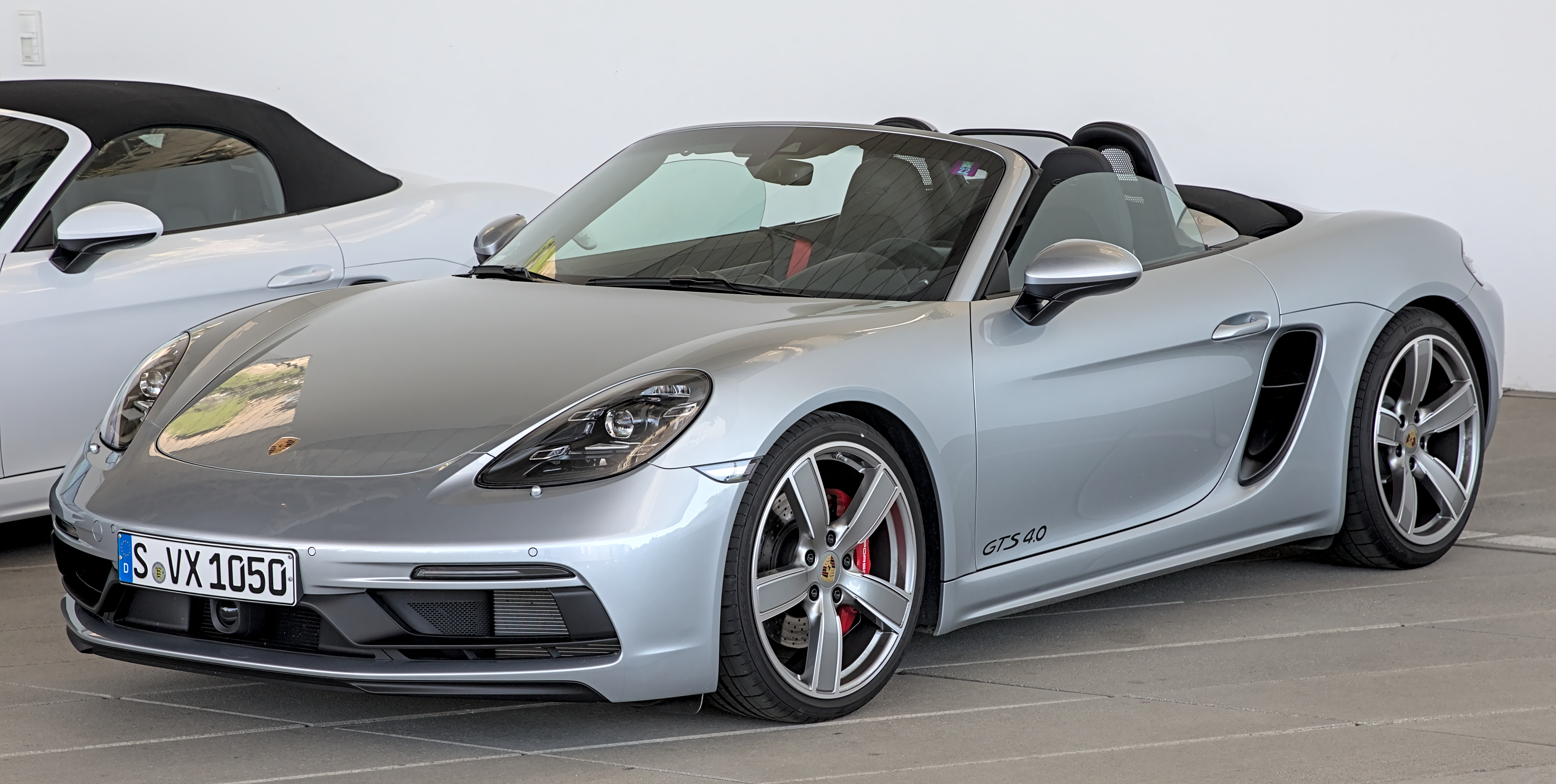
The Porsche Boxster is a sporty two-seat car with the engine mounted in the middle. It’s built to feel nimble and fun to drive. The podcast is referring to a Boxster-style car, including a version with a hard roof.
Electric motors can twist the wheels hard right away, even when the car is standing still. That’s why it feels like instant pull when you press the pedal.
A “rolling road” is a chassis dynamometer setup used to measure engine performance (like power and torque) while the car is stationary. It’s also commonly used for tuning, since the car’s behavior can be adjusted and tested under load.
An oil drip means the car is leaking oil. If you see it after driving, it usually means something needs to be fixed so the engine stays properly lubricated.
An electric conversion replaces the original combustion drivetrain with an electric motor and battery system. In this segment, it’s discussed as one of the major options the shop can handle as part of a full build.
A kit car is a car you build yourself (or with a shop) using parts from a kit. The speaker had one planned but it never turned into a finished project.
A V12 engine is a powerful engine with 12 cylinders. The point here is that if you don’t need a big V12, you can rearrange the car’s interior space more easily.
Eclipse Diagnostics makes diagnostic tools that help you figure out what’s wrong with a vehicle. The host says their system can read fault codes and show you what to do next.
Retropower is a company that takes older cars and upgrades them with newer engines. Here they’re described as doing petrol-based conversions, while the other shop does electric ones.
An “ob-doc” is a documentary that tries to film what’s really happening, without forcing people to act out a script. Instead of planning every moment, the camera just follows the process.
Discovery Channel is the broadcaster/network that agreed to the observation-documentary approach. The speaker emphasizes that the network took a “risk” by backing a format that wasn’t common at the time.
Powder coating is a surface-finishing process where a dry powder is electrostatically applied and then cured (baked) to form a durable coating. The speaker references it as an example of the kind of supplier/tech segment they wanted to include.
A test mule is basically a practice car used to try new technology in the real world. The goal is to find problems early and make the final product better.
EV means electric vehicle. Instead of burning fuel, it runs on electricity stored in a battery. In racing, that changes how fast power can be used and how long it lasts.
This is about keeping an older car’s look, but making it run on electricity instead of fuel. The challenge is that the battery and electric parts don’t always fit or work as easily as people expect.
Disc brakes use a spinning disc and a clamp to slow the car down. They can make braking feel stronger and more consistent, but they don’t automatically make an old car handle like a modern one.
Because it was my poster as I was a kid. I had a poster on the wall. You know,
StoneRoses poster, Contest poster. And the Contest was just, it's a car that just came out of
space. I mean, you look at it, even back in the 80s when I had that poster on the wall,
and this was, you know, it'd been out for a couple of decades or at least one decade by then.
You look at it, it's the cars nuts. I mean, who designed that? I mean, it just looks like an alien
spaceship. The doors go up a weird way. The angles are all odd. And so, from my perspective,
I like to do convert cars to electric where they end up being better than when they came in.
And a Contest looks nuts. But if you've ever driven one, they're horrible.
It's not the first time I've heard that about Contest.
I mean, same with the Ferrari Testarossa. I mean, they're not great cars to drive.
Uncomfortable handling was woeful. You go any further than like, you know, 50 miles and you'll
get cooked from the back because the engine's right there. Gearbox is right there. You know,
you're cramped in there. You haven't really got a proper window to open to just, you know, so
they're not great cars.
Let's do sort of say, don't meet your heroes in that respect.
Exactly. If you like Contest, just remember that. Just to roll that image, share, don't
drive. Just get some of you to drive past you and go, wow, that looks great. Just don't drive it.
I always look at them and think, did they actually draw all that and think, you know what?
That looks great now, you know. But what did the aero team like? Was there involved? Because
it doesn't look aero dynamic. They've got this massive wing on the back, but was it really a
dynamic? The wing is just a stupid thing. I mean, it doesn't need the wing. The wing does
nothing apart from reduce the top speed on a Contest. So yeah, I think they took that from a
Pantera. If you look at a Pantera and a Contest rear wing, I think they look very similar. But
yeah, for me, it would have to be an early Contest before it had all the sills on it and
the wing at the back. Maybe the Periscoper one where, you know, had the rear view mirror was
kind of like a mirror that went that way. Was that the first Lamborghini where they went
full Lamborghini mode, you know, like add all the silly bits, just go, yeah, more crazed,
more, yeah. We're still doing it today, aren't we? It's sort of there like that. There is their
identity, isn't it? It's just make the most crazy looking sound. They had a sensible
time when Audi took him over, though. You're right, the identity of Lambos are nuts.
They have to be nuts. And then Zonda came along and, you know, and we'll see the other one where
the doors kind of go like that. Oh, Lamborghini. So these others started getting on the scene.
And Lambos seemed tame for a while. Yeah, yeah.
Yeah, I can't help it. But yeah, this is how at the time then there was these like connings,
like CC, the doors literally almost looked like they were going to come off on the hinges.
Yeah, yeah. So yeah, it's a contest that I would love to do. And I had a kit car body
on the shelf from a customer for a while just kind of sit in there. And it's a project that
just never happened. I was just saying that never happened. And it's gone back to the customer.
Now he did a Ferrari 308 instead. But because we could address all the five balls you see,
we could that bulkhead, which means that anybody that's over five foot 10 tall can't really properly
drive a Lambo. Because I think Italian men must be short or something. But if you're six foot,
I mean, I've got a picture of my mate who's six foot two, six foot three. And he's in this
kuntash with his head like that. Yeah. No word of a lie. It's like that. And he was going,
oh, I could just about fit. There's no way to drive this. So we could move the bulkhead back
because we don't have a big V12 engine in the way. So the bulkhead could move back.
That huge transmission tunnel that's there, that can go away because we don't need that. So we can
kind of like sit people in a nicer seating position. So weight distribution, we could put
some batteries up front, all these things we could address by converting it to electric.
That's why I say I'd probably prefer a good replica because we'd probably be
moving things like bulkheads around. I wouldn't want to do that with a real kuntash.
But yeah, anybody got the replica kuntash out there? Give us a call.
That's it. You're the man.
Previous to, I mean, setting up the business, you say 10 years ago now, what was that like for
you? What were you doing previous to electric classic cars?
So I was in the energy efficiency industry. I wonder if it would have some connection
somewhere with the electric. Minimally. Okay. So in the daytime, we were helping
organisations save carbon. And in the evenings and weekends, I was putting it back up there again
with race cars. So yeah, I had a suit and tie type job flying around the world with projects in the
US and Australia helping these organisations monitor and manage their energy consumption.
Customers like Tesco's and Walmart in the US and others all around the world.
And it was a very successful business. And we did very well. But my passion was always
classic cars and, you know, for seven odd years rallying. So yeah, I mean,
every time that's on screen, I'm just like, oh, that's so nice.
That's that's a car we did for a guy called Jerry, really cool guy down in London. It was a BMW
6002. So they had the 5002, 6002, 2002. Then the 2002 Ti and then the TiI. Basically, it's a
BMW 02 in short, but we customise it. So chin spoiler Alpina chin spoiler on the front there.
We did a load of, see the arches, they look as if they're standard, they're not. That's
got GTI mark two, I want to say arches. So there's loads of subtle like the bumper there.
See that blade bumper at the front? It doesn't normally look like that. So there's a load at
the back. Normally, it's got plastic trim. It's got overriders. It's a bit fuggly. So we did a load
of smoothen that out, re-trimming it, pushing it back a little bit to be closer to the body,
subtle stuff that you don't normally see. Yeah, very pretty car, very pretty.
Yeah, and it handled nice as well. Yeah, that's great. And we kept that manual. So this is where
we stuck an electric motor onto the original gearbox and kept it manual. Cool. So a lot of
people kind of can't quite get that in the head. So, you know, some classic car owners
want to have a little bit of the classic car feel and have gears, which is absolutely fine.
So when we're doing that, we get an electric motor and try to match the same power and RPM
range as the original engine. So the motor that's in that revs up to around about 7000 RPM,
torque wise, it falls off a cliff around about six, which means you have to change gear.
You can't just put it in second and drive it up to 70 miles an hour. The gearbox will be screaming
at you for a start. So you have to go through the gears. The only difference is on the bottom end,
you can start it, let's say in third, because you've got maximum torque from 0 RPM. So you can
stick it in third and you can pull away from the lights. Right. It won't stall or anything like
that. But it'll be a little bit sluggish. That's still reliable. Does that make a bit more of a
headache when you're developing it? No, not really. I mean, for me, I prefer to put in a
replacement for the engine and gearbox because classic car gearboxes are a little bit fragile.
And with the, you know, engine and gearbox taken out, you can go big with power.
I've got to go big with power. You've got to, haven't you?
Yeah, it's kind of the law with me. Usually, it's a mild or wild discussion. It happens
way at the start of any project with a client. You know, do you want to go mild,
keep everything kind of around about the same power as the original car, etc., or go wild?
What did Jerry do? He went mild. He went mild? Oh, okay. So that's,
it's more like the performance of the 2002 Ti, which is the kind of, apart from the turbo version,
probably the top model that they had. So it's quite sporty, but it's not crazy.
I think from memory, this is around about 160. But the torque is a lot. So it handles and goes
a lot better than you might think. And handling is fantastic on that car.
And the weight, or I suppose the lack of it as well, really, with that sort of power, it's not
all, well, yeah, it is always about power, but with something so light, you can sort of justify
having that little bit less power. He drives it in London, and that's his only car.
Yeah, that's a head turner, obviously. Yeah. And that's his only car?
Yeah. Wow. Okay, that's it. Well, he loves it, though.
Oh, yeah. He doped on it and looks after it. And, you know, you'll see that around West London
now and again. Yeah. And this is the first time we had it back in a number of years.
So it just... Oh, really? You had it for a long time, then?
This was an early one, I'd say it's around about 2020, sort of like around that time.
So he's probably had it six, six odd years. Yeah. Maybe even more than that, actually.
Maybe 2019. So... What does it do? Obviously, it's complicated. Appreciate that.
What does it do to like the value of a classic car? Because I suppose you might turn around and say,
well, it's worth whatever somebody's willing to pay for. Yeah.
I like a classic car, but... It totally depends what the car is. Yeah.
If you're taking some Bugatti Blah Blah Blah, it's worth half a million to, you know,
a million quids worth, probably not a good idea to convert that to electric.
But if you're taking, say, a Mini or, you know, a car that's quite common,
that was built in tens of thousands of them, like these sort of cars,
then, you know, the value of it, certainly from an insurance point of view,
is the sum of its parts as far as, well, what was the car worth when it's petrol?
How much have you spent on it to get it converted to electric?
Well, that's the kind of value. But from a selling perspective, well, it's very difficult to say,
because I've been modifying classic cars for a long time, and I know for a fact,
very few of the cars I've modified over those years and put lots of money in,
I would get back the same amount of money if I sold it, because it's customized,
it's changed, it's not stock. But some of them, you sell, and you think, wow,
somebody really wanted that, and it's worth, like, something somewhere up there.
So it depends on the car and, you know, what we've done to it. We've done some rare cars,
you see, but usually, those customers keep on, you know, keep hold of them.
You don't get any car collectors, let's say, that come to us. And I have an issue with those
guys anyway, because anybody that's, you know, has a classic car and they've bought it as an
investment, they're not classic car guys, they're not. Because if a classic car is there to be
enjoyed, it's a dynamic thing, you get in it, you drive it, you enjoy it, that's what a car is built
for. It's not built to just be hidden away in a storage container, an oxygen tent, gaining value.
And occasionally, you look at it, if you want to do that, get a painting. Painting is a, you know,
a static object has no functional, you know, thing at all. It'll gain in value, buy paintings,
please, leave classic cars to people who want to enjoy classic cars and drive them.
And most of our customers are of that ilk, they want to be able to drive these classic cars
more and more and enjoy them.
Now, Talking Shot wouldn't be possible without our title sponsor, Eclipse Diagnostics. If you work on
commercial vehicles, vessels or machinery, you need GelTest, the UK's leading multi-brand diagnostic
tool from Eclipse. Plug it in, run a scan, and you'll get the OEM fault code, the components
linked to the issue and a clear step-by-step guide to fix it. No head scratching, just results.
And it's not limited to one or two brands. GelTest covers all manufacturers and models,
so whatever roles, sales or shows up at your door, you're covered.
It also goes beyond diagnostics with dealer level functionality, ECU programming, calibrations,
DPF regions and loads more. Plus a huge library of wiring diagrams, repair manuals and OEM technical
data, tightening talks, reference measurements, the lot. So you can get the job done right first
time. With Eclipse, you're backed by world-class technical support when you need it most.
Enquire today and quote code TalkingShop to get a free cable saver with your diagnostic order.
Training at your premises also included. Thanks Eclipse, now back to the show.
Yeah, how do you think electric classic cars differs to, let's call it a traditional
rest-o-mod company who would, let's say, take the idea of a classic but put a modern-day BMW
engine into it or basically that whole reliability factor being put into something new?
Is there a... It's the same, just a different drivetrain. As I say, I'm a car guy, I'm not a
drivetrain guy and although I've found electric is fantastic, so I've gone down that avenue.
But the difference between, say, us and retro powers when I follow online...
Yes, they're in here actually, in Enquire.
Oh, okay. So a company like Retropower that does the same as us but they use petrol engines and
we use electric, I don't see much difference. So they modify these cars to be able to cope with
the amount of power and upgrade them and customise them, we do the same. It's just the same but
different, as I say. Okay, sure. Yeah, it was just something I thought about. I wonder if there's
like a certain type of person that prefers that or traditional engine petrol?
No, I mean, some of our customers have a little bit of both. They have like a Land Rover with an
LS3 V18 and part next to it is another Land Rover. It's got a Tesla motor in. I can tell you which
one's quicker and I can also tell you which one's the louder. Yeah, that's very true.
That's very true. Yeah, do you get much interest from overseas?
Yeah, yeah. We did a TV show a number of years back called Vintage Voltage and it went global
on Discovery Channel. Amazing. What was that like? How did that come about?
How did that come about? Yeah, you're on TV. Yeah. So in the early days of the workshop,
I wished there was a big, huge, massive window between the office area and the workshop because
I would just turn around and watch it. I don't know why I'm saying that,
far as in the workshop most of the time anyway, but you know what I mean? I always thought that
if this was on TV, I would watch this and I am the wheeler dealer type like generation. I used to
enjoy all of those TV programs, which were proper Hammers and Spanners, changing the bearing on an
MG Midget, sort of like knee deep in Greece. That's a TV show to me. And at the time, there was
too many pre-Madonna type car programs that you could tell they were false. They had forced
dramas in them. Oh, we've got to get this car finished for tonight because he's picking up in
the morning. No, he's not. He's really not picking up. And I couldn't watch it. I couldn't stand it.
And I just thought if this was on TV, I'd watch this. And around about the same time,
I became friends with Ed China. I can't remember how, but I had a chat with Ed about it and he
said, yeah, that would be a good TV program. And we kind of like, well, how do you do a TV,
how do you pitch this? How does it work? And he just helped me, like gave me some ideas and guidance
to sort of like, you know, put a pitch together. I got in contact with Ataboy Productions, who
used to do Wheeler Dealers. They were the production company, Andrew there. And yeah,
we just kind of talked it through and, you know, took the concept through. And I was adamant that
I wanted an ob-doc, which is an observation documentary. I wanted the TV crew to come to
my workshop and film what we do as an observation documentary does. What I don't want is for them
to come in and say, right, okay, here's the script, guys. What's going to happen is you're
going to come from over there, you're going to say this, you're going to do that. And then you're
going to find a problem, you know, and then you're going to do this. Because that's how
most TV programs are. Even if you watch them and think they're not telling me now, they're forced.
And I wanted an ob-doc and they agreed to it. And, you know, more importantly, Discovery Channel
agreed to it. So they took a big, massive risk, not really been done properly before.
And, yeah, we started shooting that, I don't know when it was 2020, something like that,
pre-COVID. And we did two years, two seasons, 20 cast in that 20 episodes. It was fantastic.
And we brought in, Peter Greaves, do you know Pedro? No.
Petrol Ped. He's a YouTuber. And, you know, because I didn't have time to do the Mike
Brewer type character, go off to the suppliers and do the hand shakes and meet them and get
their powder coating back or whatever and do a little piece to camera about how powder coating
works. I was running the business and I had to do the day job. So we needed a kind of co-presenter
to do that. And we tried, a couple of people came in, some YouTubers and, you know, the producer
kind of like, yeah, was looking to see are they, are they gelling or not? I don't know these people.
I mean, I'm quite an amenable sort of like guy and I was going, well, but there's no real click.
And then Pedro comes in. And this is weird how the world works, right? So I went to university
in Hatfield, Hertfordshire, and I did a obscure course called Manufacturing Systems Engineering,
right? Sounds good. Don't ask why. It wasn't a plan. I didn't get the grades I wanted to do
automotive engineering. So I did manufacturing systems engineering down in Hatfield.
And on the course was this lad called Peter, who just walked in the door as like this,
like trying out to see if he's going to do this. I haven't spoken to him since I was in
college like 20 years ago. I clicked him straight away. I know him. I didn't let on. I thought,
I don't know him. He didn't recognize me at all. And he comes in and like, you know,
five minutes later, he doesn't recognize me, do you? No? I can guess where you went to university,
because not a hope. He said, I'm quite good at this. And I made up this little story. I was
saying, I don't think you went to one of the top colleges. I think you went to kind of, I know,
a good engineering college, a Bristol or a Hatfield. Yeah, I'm going to say Hatfield,
University of Hertfordshire. And he went, no way. But I don't think he did cars. I reckon you
did something weird, definitely engineering, like manufacturing. And as soon as I said that, he goes,
Moogs! What are you doing here? What are you doing here? But he didn't recognize me, because I was
a party boy in college. I hardly went in. So he was, you know, he went into every lecture. And
like, you know, I was out the first lecture of the semester. And at the end, and the exams,
that was it. And had a massive huge party in between. So I wasn't in much.
You attended? Yeah. So that's how the TV show came along. And it was weird.
You know, I saw myself on TV, dubbed in Italian. No, that's cool. My wife looked at it and she
goes, Oh, yeah, they put it in all sorts of countries around the world. So yeah, it's kind
of got us the global brand equity or recognition, if you like, that everybody knows us from America
to Australia to New Zealand, and socials helps as well. You know, since then, we've done our
socials efforts as well. So we get over a million views a month on our Instagram and Facebook and
stuff like that. So that helps. I did actually look at some stats earlier. Oh, God, look out.
Yeah, we've got 194,000 subscribers on YouTube. Have we? Yeah. Wow. I've looked at that in years.
Yeah, really? Have you not? You have two high videos. Socials. This is how sorry, go on. Yes,
right. No. And overall 17 million views. Wow. Over all the videos. Wow. On YouTube. That's
Yeah, filming. Yeah. Yeah, I don't take it seriously. In that respect, I probably should
those numbers, Christ. And people asked me, you know, who does your socials for you and our
Instagram and stuff like that? Because, you know, we've got, you know, I looked at it a couple of
days ago with a company that I was with, we had, I think 1.1 million views in the past month or
something on it, on one of them, one of the platforms. And they wanted to know what company
we use because they want to use the same. Yeah. It's just me on the phone. I walk past the car
and go, oh, that's a good shot. Click. And then later on or in the pub on a Friday night, I'll
go, oh, I'm just waiting for a pint. Look at this. Isn't it great? Click hashtag car. Yeah.
That's it. Done. Yeah. Do you want? That's as serious as I take it. Yeah. People often say the
videos that you put the less sort of effort into, if you like, do the best, but you put it really,
you know, you really stage a video and, you know, a scene, it'll do, it'll flop.
We've, oh, there's Jim there. There he is. There's the man himself. So he's my best mate. So on a
weekend, what else are we going to do? You know, let's go out and some cool cars we built are
okay then. Yeah. And that's it. I mean, it's not that long ago that we bought the mics.
Before that, you couldn't even hear us. But it's sort of like free content, really,
because you're doing something you do anyway, you know, have a chat anyway. So that's just
documenting. And half the time I'm driving these out to test drive them anyway, because, you know,
I've got to make sure the cars are good. But you're right. You can put, oh, this is a good hairpin.
That's a really nice hairpin. There you go. There you go. But the trouble is right. So
if they weren't filming that, I'd be hanging the arse out and like really going for it.
But I can't. That's not my car. So it's really tame. But believe me, when it's not being filmed,
or if it's my car, that happens. Good fun. Yeah. Yeah. Yeah. It definitely seems a bit more
rotating. This is the thing, right? This is where I live. This is my back garden, literally.
You know, this is where Top Gear like travel for days to come and do filming like
locations like this. And that's just where I'm a house, you know, so we're spoiled for roads,
locations and cars. And if we go make huge effort to do a YouTube effort, a YouTube episode,
there's no point because the views are around about the same. We took two Ferrari Testarosses
that we converted to electric to Samarit's last year. And, you know, that's a big episode for
us. We're driving two electric Tesla Rosses, we call them, all the way from Wales to Samarit's
and back. And it was over two days filming, et cetera, et cetera. And that's not just driving
it around the corner and doing that. That's a good bit of commitment to do that. And it had no
more views than any of our other videos. So I think, oh, what's the point in doing that? Yes,
glorious to go to Samarit's, driving through the Alps and Ferraris. Why wouldn't you?
But if you're chasing views, make it easy. Yeah, make it easy. Absolutely.
We sent the Tesla Rosses to Elon Musk. Sent him a picture yet.
We've done three now, three Tesla Rosses. But those are rubbish cars. Sorry, they were rubbish
cars. Yeah, I know what you meant. They wouldn't sell well now, would they? So this is, I think,
when Fiat really got their teeth into Ferrari. So the quality of some of the bits isn't great. But
anybody out there that's got classic Ferraris and know what I'm talking about. If you look at the
quality of the welding on the chassis, it's not good. I mean, I can't weld, but I can weld better
than some of the welds that are on Ferrari chassis. And, you know, the only real thing that's probably
put weld together is the engine. And with the Ferrari Tesla Rossa, it's got all the weight
behind you. So the flat 12 and the gearbox and the exhaust and the fuel tanks and the coolant system
and everything's behind you. At least with the 911, you've got a fuel tank up front to balance it out.
So handling wise, they're rubbish. And, you know, the other thing I found with the Ferrari
Tesla Rossa as well, one of the benefits of it being so wide is to counteract the fact that
the engine's actually quite high up. Because at least with the 911, you've got the flat six there,
you've got the gearbox there and it's nice and low. With the Ferrari Tesla Rossa,
they have the gearbox here and they put the flat 12 above. Actually, it's a technically,
it's a V12 in a flat configuration. But yeah, so the engine's on top of the gearbox. So it's
quite high up. So but yeah, Ferrari Tesla Rossa was not a great handling car until we got hold of it.
And then, you know, there's a certain roundabout that I come to when I'm testing the cars when
they're petrol, just to make sure everything works. And I kind of know what speed to come into it and,
you know, what it'll have, what cars will go around at speed speeds. And I came into this roundabout
to come out over here, kind of like, you know, right angle. And as soon as I went in, I thought,
I'm not going to make it around this roundabout. So I had to bail out onto this little lane that
went up there. And I thought, what's wrong with this thing? Is this right? So I went and checked
the wheel alignment. I checked the tire pressures. I checked all these things. And eventually,
I found the customer out and said, this, this is something wrong with it. Is the chassis bend
has been in crashes in? Oh, no, no, no, that's what they're like. And then I spoke to another guy,
friend of mine that does stunt driving for Bond movies and, you know, Batman movies and stuff
like this. And he, he's driven Ferrari Test Rosses and films. And he said, oh, yeah, they're rubbish.
Okay. So then we thought, right, well, let's just make it better. Let's put the battery pack,
low down in the front. Let's move. They all wait in front of the rear axle. And by the time I'd
finished with it, handle like a Lotus Elise. It was insane. How good that car was.
That's interesting. So yeah, did they go mild or wild? Oh, they went wild. Yeah. Yeah.
Ferrari got it. We went 600 horsepower Tesla motors in flipped over on their back so that it was
in front rather than behind the axle. And yeah, those things flew. And then we, the other weird
thing with Ferrari Test Rosses is the, you can't get the right rear tires anymore for them.
So the tires that they originally came with the tire size is simply not available anymore.
So the only ones that are available are slightly narrower. So if you ever look at
Ferrari Test Rossa, the rear tires are kind of like scrubbed in a little bit. Okay.
And that's the wrong way to go when you're putting a huge amount of power with the Tesla
motor in. You want wider. So we ended up putting different wheels and tires on that were wider
so you can get some sticky tires on and low profile as well. Yeah. So yeah, I love those cars.
But you're right. You're putting Tesla motors on them. So how did that come out? A Tesla,
obviously, presumably a K selling their motors to the... No, no, they don't sell them new.
I think they may sell them new. But no, we get salvage Tesla motors. But then
we take them apart and completely rebuild them. So you take a Tesla motor, like a large Tesla
drive unit. And now there's Model Y, Model 3 motors that are more technically advanced than the old
LDUs, the large drive units. So the large drive units are what's called an induction motor.
And the more modern Model 3 and Model Y motors, they're permanent magnet motors. So, yeah,
the more efficient, they're just a better motor. But for the LDUs, which are the big,
powerful ones that are in Tesla Model S and Model X are not plaid. That's different.
They have... Because they were the first motor that Tesla did, there's Achilles heels in them,
which need to be addressed. So we completely stripped them apart, put new bearings in,
new seals, quite often new gear sets, a new limited slip diff and quave, a coolant delete,
which is very important. That's one of the biggest Achilles heels on the LDUs.
They can get a coolant leak that goes into the motor and completely destroys it.
So we completely rebuild them before they go into customers cars. So just say we're just
taking a Tesla motor out with scrap Tesla and stick it in. Oh, no. There's hundreds of thousands
of hours that goes into rebuilding a Tesla motor. So it's better than you.
Yeah. That must really take some skill level though from your guys. Are they sort of self-trained
or have they gone courses? That's a good question. So when we started back in 2016,
there was precious little knowledge of doing what we do and certainly hardly any supply chain.
So we had to learn everything. So we had to learn that there in fact is an Achilles heel on the
Tesla motor, how to fix it, because Tesla ain't going to get on the phone and say,
oh yeah, we're fully aware of that problem. We're fixing it by doing this. They're not going to be
openly saying that. Certainly not back in the day. So all of this knowledge of building a battery
pack from scratch, rebuilding motors all had to be self-taught. And you can't treat customers cars
as the learning exercise either because these are going out to customers. They're going to be
driving them. So I had to do this on all my cars. So I've got three test test mules if you like,
my VW Beetle, my Land Rover and my bus. So they were the learning tools, if you like,
to try new technology, to try this and all that stopped working. Let's upgrade it. Whenever
anything gets broken or stops working, the best way to look at it is, okay, don't just replace,
improve it. Why did it break? Well, what can we do to mitigate that in the future?
How can we take that knowledge and apply it to other bits on the car as well? Is there other
things that might be a weakness in that respect? I'm still learning now. But the downsides are
being first to cut that first path through a jungle. It's difficult. There's a lot of things.
The people following me behind, it's easy for them because we've done all the learning for
them and they can just follow us through that path in the jungle. But when you're the first,
it's exciting. Do you get any funny looks at Tesla superchargers?
Yes. In short, it happens every day. I get funny looks anyway because I look funny.
Today in that Land Rover Defender, it has to be De La Juge by the Gregs, I pulled up and reversed
back in the Land Rover. I was there for a while eating my steak slice and then this
Volvo, electric Volvo pulls up and this woman is giving me the evil eyes.
I know what she's thinking. She's going, we need to charge up. What are you doing in part there?
So I just kept on eating and the window went down. And then just as she was about to start
giving me the finger, so you could see the charge cable coming out the back and I could see her eyes
go, and she went to her husband, assuming like this, and the window went back up again.
Saying because that was quite ready. But that happens a lot. The very first car I did that
Red Beetle back in 2016, the charging infrastructure was fairly limited back then. It's fantastic
now. It's getting better, let's see. I stopped off in, I can't remember the name of the motor
services on the M6 and it was one of the very first charges that were there and I parked up
on my way to a car show. And as soon as I closed the door, I can't remember as an old man or who
it was now, but I remember somebody coming up to me and giving me the car park there. That was
the first year I've had that ever since. But the thing is, as soon as you explain, oh, it's electric,
they're fine with it and they're like, oh, is it? Oh, wow. Oh, cool. And then then half an hour later,
you've still haven't gone inside and got your Greg steak slice yet. They're downsides as well.
It's a great conversation piece to start talking to people about it for sure.
Yeah, I love that. Love that. What about Tesla in general, like sourcing them? So,
obviously, they're salvaged. Is there ever a worry of the technology moves on,
are they ever going to become incompatible with what you're doing?
As far as the volume of cars out there, I don't think there'll ever be a problem,
because the amount of cars that we build compared to the tens of thousands that Tesla put out per
month, there's always going to be a huge supply of second hand parts. But we don't
really use many second hand parts, to be fair. The Tesla motors are pretty much the only second
hand part we use. Everything else is new. New chargers, new batteries, new BMSs, VCUs.
Every other component is brand-smoking new from the factories. The battery packs, battery modules,
come from the same factories in China that supply the OEMs, for instance.
So, it's only the Tesla motors, and there's going to be no shortage of those, I don't think.
Scandinavia is a big market for us to get the motors from, because in Norway,
there's what, 99% of all new cars are electric out there, sold in Norway. They have snow and ice,
which is very nice for people to crash into other cars. And it's not, people say,
oh, does that mean Teslas crash all the time? No, it means other people are on the road and
crashing to Teslas. There's plenty of Teslas out there for us to salvage the motors out of.
Yeah. What about Kuntash plaid? Is that possible?
Yeah, yeah. Put you down for one? So, we've just done talking about plaid stuff now.
So, there's two references to plaid that's probably worth mentioning. So, we've recently
built a skateboard chassis for 4x4s, like Ford Broncos, Land Rover Defenders, etc.
And it's, you know, imagine a skateboard with a battery there, you've got a motor there,
motor there, and you can then take a body and plonk it on top. Simple. And so far,
we put Model 3 motors in the front and back, and a plaid motor, the rear, the front is pretty much
just a front Tesla Model 3 Model Y motor. The rear is kind of two Tesla Model 3 motors
bunked together. So, it's technically got three motors in, three Tesla Model 3 motors in.
And the skateboard chassis, which I took for a spin the other day, just plonked like a bucket
seat on. It looked like one of those SIM driver type things with a seat steering wheel
plonked on top of a skateboard chassis. I took it for a little spin outside and sent it to a
client. And he comes back, goes, that's great. But can you put a plaid system in it?
Yeah. So, we might be doing a Tesla plaid Land Rover Defender, which will be a 1000 horsepower
Land Rover Defender. That'll be 0.60 in probably less than three seconds.
And then the other plaid reference, as I mentioned, is the Pikes Peak race car.
So, we did Pikes Peak last year. So, I built a car to tackle Pikes Peak, which if anybody
doesn't know out there what that is, it's the most insane hill climbing in the world
in Colorado, in the States. It's 12 miles, 150 odd corners, one mile elevation,
and electric's perfect for that. Because you haven't got issues with the thin air that's
the oxygen content up there, because it is really high. And there's lots of benefits to
having an electric coming out of a corner, instant talk away, go sort of thing. So,
we built this car for that. And initially, the idea was we'll put a Tesla plaid drive unit,
no drive system in it, because it's a motor in the front, two in the back.
And because we were building this car from scratch virtually, I thought, well, let's just
have an iteration of this first. Let's put in a, let's say a 600, 700 horsepower system in first
out with Tesla Model S Sport before we go and put the 1000 horsepower in, just to dial it all in.
And I put this Tesla Model S P100D motors rear and front in and took it for a spin round Alton
Park. And it was a handful to just understate this. It was a handful. Because when you're going
around a track, you guys will probably do track days. And you're coming out of a corner and you're
concentrating on where the apex is, where your braking points are, when you can start rolling
in the throttle and then getting out to the straight and then completely flooring it and
away you go. You're concentrating on all these things at the same time. And the straights are
normally just a case of floor it, have a break, you know, look around where we go in, where's
the next braking point. When I drove that like around Alton Park with that 600, 700 horsepower
system in. On the straights, I was going sideways. So I was coming out of the corners going,
and I was putting my foot down on the straights. Oh my God, there's another corner, break.
It was just wanting to bite my head off every single second of going around the track. I thought,
I can't, we can't do this at Pike's Peak because, you know, you need to have confidence that the
power can be delivered and it just had too much power. Absolutely too much power.
That's a long way down that. There's big, huge drops. Yeah, there is that.
The elephant in the room here. Yeah. So, but just on those drops, I mean,
the Americans love to make this big, huge thing about, you know, oh, it's a dangerous and big,
huge drops and stuff. And yet you probably will have a, you know, bit of an accident if you go
down there. But you try rallying, right? Rallying, you drive 100 miles down a gravel track with mud,
slippy as hell, past trees that you can literally touch at the window and go in sideways.
And if you hit one of those trees, that's not going to move. Nope, the tree doesn't move.
So coming from that and then going to Pike's Peak, I thought, it's just a nice view.
Okay, there's a couple of boulders, but so yeah, it is kind of dangerous,
but not as dangerous as rallying at all. But anyway, so yeah, I just thought, yeah,
this is too much of a bike, so we downgraded it. Bear in mind, I wanted to go at 1000 horsepower.
I downgraded it to a Tesla Model 3 performance setup, which was around about 500 odd horsepower,
and that made it a whole lot nicer to handle. And it was a little bit lighter as well.
So yeah, that was a better experience system. I'm still good to go with plaid,
but now we dial the car in a little bit more. I'll probably start looking at plaid, but plaids,
there's other things that come with a plaid setup. It works at a higher voltage. So
mostly other Teslas work at 400 volts. Tesla plaid is 450 volts peak. So you kind of have
got to have a different battery pack. You've got to be able to supply more amps because it's more
power. So it's not just a case of put out a plaid system and it'll work. I wish it was.
Is there an electric rally class competitive? No, no, no. There was an electric rally car
that I saw in the rally Caradigian a few years back. It was an Opel. I think it was a Corsa or
something like that, kind of an Alastra, but it was just to give it a go. And it was a
I can't remember who was driving it. It was an Austrian prize or something like that,
but it was a good driver that was in it as well. But it was from Germany. There are certain
advantages of having electric with rallying, but I certainly missed the noise. Yeah,
bouncing off the rev limiter. Yeah, I mean, bear in mind I'm an 80s kid. So I used to watch
David Llewellyn in Audi Quattro and all these sort of guys in the forest of Wales. And to me,
having a Lancia Stratos with a Ferrari engine on full chat going through the valleys in
having a forest for instance, that's a rally car for me. Yeah, go off the trees. So electric,
I love it. Yeah, I'm not sure. To me, it quite fits. But almost sports can have to go there
eventually. So look at F1, it's just getting like closer and closer and closer.
Yeah, it is. Yeah, because I like it. I watch it. I love it massive fan. But the problem is with F1
is for decades, F1 has been on the forefront of automotive technology. Okay, it's always been
pushing new technology from dynamic suspension systems, active aero, etc, etc. It's always been
pushing the technology until hybrids and electric came along. And then whoever it is in charge of
F1 goes, Oh, no, we're not going down that route. So somebody on a boardroom table made a decision
that they're not going to be at the forefront of automotive technology anymore, because of sound.
Oh, come on. I mean, Formula One should be leading the technology as far as EVs are concerned.
Because obviously, if you go to the likes of BMW or one of the manufacturers now to their R&D
department, are they working on petrol and diesel cars? No, of course they're not. For years now,
they're all working on EV. And, you know, F1 is still obsessed with petrol. And they think, you
know, we need to have, you know, bang noises going on. And the electric drivetrain that they've got
in the Formula One cars, it's a joke that the size of the battery, it's only like 2.5 kilowatt
hours. It's insane. A Tesla, you know, will be, you know, 100 kilowatt hours, right, in a Tesla.
And they've got a battery that's a 2.5 kilowatt hour battery. It's the size of a suitcase. What's
the point of that? Well, it's dead by the end of the straight anyway. Exactly. I mean, you've got a
motor that can, I've got what the figures are now, but it's like a 300 kilowatt motor that
can drain a 2.5 kilowatt hour battery in seconds. So what's the point of that? I don't get the logic
of it at all. But unfortunately, Formula E, they can't use the same courses as Formula One. So
they've really limited that. So yeah, unfortunately, Formula One is going to just struggle on and
eventually go EV. But I think they should have been EV a long time ago.
They sound pants now anyway. So I don't really watch it anymore for the V10s and the VTARs
screaming like, yeah. But the sound got worse when turbos came out. Because turbos don't sound
as good as normally aspirated. And then turbos came out. Okay, there's still a sound, but it's
nothing like the screaming normally aspirated kind of. And now then they've got the hybrids coming in,
and I know it's different. Maybe I'm getting old. Maybe that's what's going on.
Is there a project that you'd look at and go, that was the hardest I've ever done, and an
equivalent? Have you got a project that you've gone? That's my most proud work.
One of the most difficult ones we had to do initially was the smallest car.
Actually, not the smallest. Technically, the smallest was the BMW Assetter that we did,
the little bubble car. Yeah, that's one extreme to the rest of it.
Yeah, that was a challenge. It's certainly a challenge when we're trying to figure out
where to put the battery, because there was just nowhere to put the battery.
It is a seat. And in the back, there was a motorbike engine, chain driven, etc.
But we put it underneath the seat in the end. But no, the most technically difficult,
I would say is probably the... I'm going to say two guys. There's the Mini, because it was a
difficult packaging exercise to fit a decent sized battery pack in a Mini and not compromise the
boot space. I mean, you could put a motor in the front, and you could fill the whole boot up
full of batteries. Easy peasy. Or convert it to a pickup. Didn't I see a pickup version?
That's quite cool. By the way, just sorry to interrupt. That car these days on
Modern Rose is the most scariest experience I've ever had, honestly.
This is in California. It's terrifying. You try it in California with trucks and stuff,
the size of houses. I was on the M40 on the inside lane. I've never feared for my life so much.
Honestly, it was terrible. This has 300 horsepower. Oh my God.
So we put a 300 horsepower motor in the front, a battery pack in the front as well,
one underneath the back seat, and also one in the boot. And as far as luggage space is concerned,
you still got a decent sized boot. Crazy. You still got the back seats, but you've got 300
horsepower on tap. It's insane. Imagine the outside lane motorway.
I mean, this one here, that's the purple one. It's got a Honda VTEC engine in it.
Now we're talking. And that made a glorious noise, really nice. And out for a spin with Tyler.
This is Tyler from Gildred Racing. And it was nice. He put his foot down. It was like,
it was great. But it wasn't the, oh my God. Then we went out and that thing, which is the
Tesla powered one, and we put our foot down. And as soon as you little breathe on the throttle, it's
so anybody that says electric cars are boring, come, come for a spin on some of my cars. They
are not boring. They're nuts. You've seen that suit. It's called the Super Cooper. Super Cooper.
Yeah. Super Cooper. That's his brand name. I like that. So yeah, they, they, we ship mini kits out
to Tyler and California. And he puts them in the crazy minis because if you want petrol,
you've got Honda VTEC gear and converges. He does. And if you want electric,
he's got our kits that he does. So did you show him the way then for, for electric?
Yeah. Yeah. He came over to the UK, to Wales, to, to test drive and experience what I've,
because I've got some nuts cars. I mean, those are nuts, but not as nuts.
He was trying to get me back for his Welsh trip because I took him out in my Beetle. I've got a
VW Beetle 1973 Beetle. It does not 16, 2.7 seconds. So 2, 2.7 seconds. Oh, this is us at Seaman.
That's one thing I do want to do actually. Seaman. It's great. So, so my Beetle is not 16,
2.7 seconds, which is, you know, I would hazard, I guess it's the world's fastest daily driven
VW Beetle. There are faster street driven ones, but they're just drag cars that are, you know,
legal on the road. And I've got the world's fastest Land Rover Defender. That's not 16, 3.4
seconds. And I've got the world's fastest VW crew cab, 1968 crew cab with a 450 horsepower
Tesla motor in. Those are my three daily drivers. So I don't have normal cars. No, no, no. That's
quite clear. I got my Land Rover onto Top Gear and Paddy McGinnis drove it. And did you remember
watching it? It's vaguely, yeah. It's coming back to me. A Green Land Rover. Yeah. And Paddy
McGinnis, I love him, had to have two takes because he swore when he put his foot down. So
there was my Defender. There was an Electric 911 and there was a Petrol 911 and a Diesel 911.
And on the day, it was supposed to also be the Cricketer guy, I've got his name now.
Flintoff. Flintoff was supposed to be in my Beetle and there would be a Petrol powered Beetle as
well. So they were going to do this drag race of six cars. And, you know, they were going to put
the presenters in the electric ones. And unfortunately, Flintoff had the flu or something. So he
didn't make it down that day because my Beetle is insane. So I would have probably insisted
that Chris Harris drove it because it was, it's a handful. But he didn't turn up. So it was just
going to be my Land Rover and this, you know, Electric 911. We might not win. My Land Rover might
get beat here. And I want to, although it's a handful is my Land Rover, you know, anything that's
not to 16, three odd seconds is a handful. But when it's Defender, it's even more of a handful.
So I said to a producer, I need to have a check with Paddy if he's going to be driving my Land Rover,
just to tell him that when he flaws it, he's just going to have to be prepared. It's a huge
amount of power. He's probably going to have to turn into it because it's probably going to want
to turn left. So I wanted to kind of brief him and the producers said, we want to get his honest
reaction. And I said, okay, but that's the case. My Land Rover is going to be fine, but that 911 is
going to get taken out. I said, no, we're going to film for real and want to see his reaction.
Okay, just make sure it's pointing in the straight line at the start before he flaws it.
And when you go to the airfield, you're quite away away from, you can see them, but you're behind
a fence. They don't want you in shot. So you're kind of looking at a screen, which has got the
close-ups of the shots. And you can hear that on the radio, right, everybody ready for a shot?
And you know, because you've got the cameras at the start, middle, end, et cetera. Yeah. Yeah,
camera two. Yeah, camera three. Yeah. Okay, really, we're going for a take. Okay, action.
And then all you hear on the thing was,
right, right, potty mouth, paddy. We're going to do a take. We're going to do that again.
And you just hear him go, nobody told me about this thing, Jesus Christ.
So the second shot was the one that went on TV. And that's when he like, you know,
put his foot down. But yeah, he won. I mean, it was just a bonkers, you know,
when you see this Land Rover, he gets four cars in, all of a sudden this Land Rover just goes,
it's not for other than the other three cars are kind of like, you know, following behind.
Yeah. Yeah. It's pretty bonkers. He said it's the most fun he's ever had in any vehicle ever on
Top Gear. Oh, that says something, isn't it? Oh, yeah. I've got a T-shirt with that on, I think.
Yeah. Paddy says, yeah. He turned around to it in the studio later and he said,
this thing is bonkers. I'll say, I built that. Yeah. I think we've sort of been through
certainly everything we can sort of think of. Is there anything else that you want to mention,
anything you want to plug? I mean, our business just is continuously evolving. And one thing
that we've realized in the last few years is, you know, we've converted over 100 odd cars to
electric now. But there's always a limitation when you're converting a classic car to electric.
You can't make it handle like a modern car, if you like. It's, you know, an old Porsche 356
from the 1950s. It's still going to be an old Porsche 956 from the 50s. You know, okay,
you can upgrade it with disc brakes. You can improve the handling a little bit
when you convert it to electric, but it's still going to be a 1950s car. And I had a chat with
a customer a while back, a 356 customer. And he said, I love this car. I love it. It's brilliant.
I'm driving it a lot. And he had a little bit of a Porsche collection going on as well. And he said,
if this handled as well as my GT4, et cetera, and I'll be driving it all the time. So I can't
really do that unless you just completely started again and design a new chassis, put the battery
back underneath the car where it normally is on most EVs, better handling, better weight distribution,
modern suspension, et cetera, et cetera. That's the only way you do it. I just said,
well, why don't you do that then? Why don't you do that? Yeah, all right, I'll do that then.
So we started to do new electric classic cars now. So we've started doing our own chassis.
We've got an AC cobra, for instance, it's got a tubular chassis with a dual motor setup, 82
kilowatt hour battery pack, centrally mounted. So we're going to start doing new electric classic
cars that will have a 2026 number plate on. And they look like classic cars, but they go and
handle like a modern car, which means you can even more like enjoy them as daily drivers now.
So yeah, that's the latest thing if you like that gets me out of bed every morning to get excited
about. So I can't wait to drive the Cobra. How does that sort of work being a new car with
not so much tax put like MOTs and things like that? Just a new car. Just okay, just if you
bought a catrum or an aerial atom or something like that, it's registered as a new car and
you'll have a new number plate on. Yeah, just treat that as it would. Just a new car. It's not
taking an existing car and making it electric and it goes and you've modified it so much now,
it's got to have a Q plate on for instance. I mean, it's a brand spanking new car.
Something I've just thought about as well. How do you sort of get round ensuring these
things? Are they any less to ensure? Are they more to ensure? They're more to ensure than a stock
VW Beetle for instance. But if you took a modified, if I took my VW Beetle with that
Supercharged 2.4 litre Porsche motor in and an electric one, they'd be about the same.
So whenever you modify a car, classical, modern probably, your insurance goes up because you've
changed it from original. But when it's electric, it's no more insurance than if it was a modified
petrol version of it. That's interesting. Yeah. Mr Morgan, thanks for that. So we're going to
start the quote. One last question. How many modifications and what modifications have you
made to your VW Beetle? You've put a Tesla into a what? We did a Gordon Keeble once and the Gordon
Keeble is a really rare car. So rare. In fact, I thought the customer was called Gordon Keeble
because I'd never heard of a Gordon Keeble before at that point. They only made about
96 of them, I think. And yeah, that was another case where I had to have a chat with a customer
and say, you sure? This is a very rare car. And yeah, he said, I've rallied it. It's not stock.
It's got a roll cage in it. It's got different engine in it. It was modified for rallying.
And once I understood that, that, okay, that's fine. And he said that when he ensured that,
it was less than when it was petrol. I had no idea why. Probably because I think electric
car drivers are more sensible than if you had a big 7.2 liter Chrysler V8 in it or something.
I don't know. That thing made a hell of a noise. Oh, it was straight pipes. Whenever we started it
in the workshop, you literally have to go like that. It was nuts. So it's a lot quieter and a
lot better handling, a lot more power when we'd finished with it.
One question we ask all our guests, what does success mean to you?
A smile on my face. It's the most important thing in life. I mean, the life we live,
this isn't a dress rehearsal. This is it. So you can't go back and say, I wish I did that.
I should have done that differently. Life is a journey. And the destination is a grave.
So you better start having fun on your journey. And if you haven't got a smile on your face,
change whatever it is in your life to make sure you've got a smile on your face,
because you don't want to be sitting in deathbed regretting the things you didn't do in life.
So success to me looks like a smile. Yeah, no, I love that one. Absolutely.
That's it. The simple as that. Yeah. All right. Yeah. Thank you so much. Super interesting.
No worries. Now I'm going to take you out on the Tesla-powered Land Rover report.
Oh, yes. Okay, then. Okay, then. Have you brought spare pants?
No, yeah, I would love that. Cool. Yeah, I've got it outside.
Yeah, cool. Well, if you've enjoyed this episode of Richard, Moggy, Morgan of Electric
Classic Cars, please make sure to like, comment and subscribe and let us know who you want on
Talking Shop next.
About this episode
Richard Morgan of Electric Classic Cars breaks down why he went from petrol to electric after building a supercharged VW Beetle conversion and feeling instant torque “from zero RPM.” He argues electric swaps make classics more reliable and usable daily drivers, while still allowing gear-driven setups when desired. The chat covers packaging tricks (using batteries as ballast), pricing and lead times, bolt-in EV kits for specialists, and the real-world challenges of rebuilding salvaged Tesla drive units. They also debate whether electric “removes soul,” share Top Gear drag-race stories, and look ahead to purpose-built electric classic chassis like an EV Cobra.
In this episode of the Talkin’ Shop Podcast, we sit down with Richard “Moggy” Morgan — founder of Electric Classic Cars and one of the pioneers of EV conversions in the UK. From rallying and modifying classics to building a global brand, Moggy shares how one garage experiment turned into a business that’s converted over 100 classic cars. Moggy explains why he’s “fuel agnostic,” why reliability is the real selling point for many owners, and how converting classics can make them more usable without losing their character. There’s honest talk about value, identity, and whether removing an engine removes a soul — plus dream builds (including a Lamborghini Countach), Tesla-powered Testarossas, manual EV conversions, and what it takes to build cars that are better than when they left the factory. From launching a Discovery Channel series to shipping kits worldwide, this episode is packed with bold opinions, proper engineering insight, and a fresh perspective on what the future of classic cars might look like. If you’re into big builds and the debate between petrol and electric, this one is an eye-opening listen.
--
Brought to you by Eclipse Diagnostics. If you work on commercial vehicles, vessels or machinery, check out Jaltest – the UK's leading multi-brand diagnostic tool. Quote "TALKINSHOP" in your enquiry for a free cable saver with your order; on-site training included: https://www.eclipse-tech.co.uk/talkin-shop/