Richard Morgan of Electric Classic Cars breaks down why he went from petrol to electric after building a supercharged VW Beetle conversion and feeling instant torque “from zero RPM.” He argues electric swaps make classics more reliable and usable daily drivers, while still allowing gear-driven setups when desired. The chat covers packaging tricks (using batteries as ballast), pricing and lead times, bolt-in EV kits for specialists, and the real-world challenges of rebuilding salvaged Tesla drive units. They also debate whether electric “removes soul,” share Top Gear drag-race stories, and look ahead to purpose-built electric classic chassis like an EV Cobra.
In this episode of the Talkin’ Shop Podcast, we sit down with Richard “Moggy” Morgan — founder of Electric Classic Cars and one of the pioneers of EV conversions in the UK. From rallying and modifying classics to building a global brand, Moggy shares how one garage experiment turned into a business that’s converted over 100 classic cars. Moggy explains why he’s “fuel agnostic,” why reliability is the real selling point for many owners, and how converting classics can make them more usable without losing their character. There’s honest talk about value, identity, and whether removing an engine removes a soul — plus dream builds (including a Lamborghini Countach), Tesla-powered Testarossas, manual EV conversions, and what it takes to build cars that are better than when they left the factory. From launching a Discovery Channel series to shipping kits worldwide, this episode is packed with bold opinions, proper engineering insight, and a fresh perspective on what the future of classic cars might look like. If you’re into big builds and the debate between petrol and electric, this one is an eye-opening listen.
--
Brought to you by Eclipse Diagnostics. If you work on commercial vehicles, vessels or machinery, check out Jaltest – the UK's leading multi-brand diagnostic tool. Quote "TALKINSHOP" in your enquiry for a free cable saver with your order; on-site training included: https://www.eclipse-tech.co.uk/talkin-shop/
"Today we're joined by Richard Morgan, Electric Classic Cars. We're going to talk classic electric cars... I'm Moghi from Electric Classic Cars and for the past 10 years I've been converting classic cars to electric with my company Electric Classic Cars as the name."
Electric Classic Cars is the company Richard works for. They take older classic cars and convert them to run on electricity.
Electric Classic Cars is the company Richard Morgan represents, focused on converting classic cars to electric power. The episode frames their work as making classics usable and fun, not just “saving the planet.”
"...it's not to save the planet. It's not to save, you know, any pollution or emissions. Yeah, it's done for the drivability. I'm saving the planet one burnout at a time."
Drivability is how easily and smoothly a car can be driven—throttle response, smooth power delivery, and overall usability. The speaker contrasts “saving the planet” with building an EV conversion that feels good to drive.
"Okay. Yeah, that's my mentality. I'm a car guy. I'm drivetrain agnostic, if you like. I don't give a monkeys if it's got petrol, diesel or electric."
It means they don’t care whether the car is gas, diesel, or electric. They just care that it’s fun and drives well.
“Drivetrain agnostic” means the person isn’t loyal to one type of powertrain (petrol, diesel, or electric). They judge cars by how they drive and feel rather than by fuel type.
"in, you know, I think the last iteration of that car ended up with a 2.4 liter or two liter Porsche
914 engine that took up to 2.4 liters. I put a supercharger on it from a Jaguar XJ something."
The Porsche 914 is an older Porsche sports car with the engine mounted near the middle of the car. That layout helps the car feel balanced and fun to drive, which is why people rally-modify them.
The Porsche 914 is a mid-engine sports car from Porsche’s 1960s/70s era. In rally and track use, its mid-engine layout helps balance and handling, which is why it’s a popular classic platform for modifications.
"... to 2.4 liters. I put a supercharger on it from a Jaguar XJ something. I put a Ford Focus RS rally car, char..."
The Jaguar XJ is a luxury car made by Jaguar. In the podcast, it’s mentioned because someone used a supercharger from an XJ as part of a performance build. A supercharger helps an engine make more power.
The Jaguar XJ is a line of Jaguar luxury cars, typically known for comfort and refinement. In the podcast, the XJ is mentioned as a source for a supercharger used on another build, showing how parts from one vehicle can be adapted to improve performance on a different platform. That’s why it comes up in a discussion about engine upgrades.
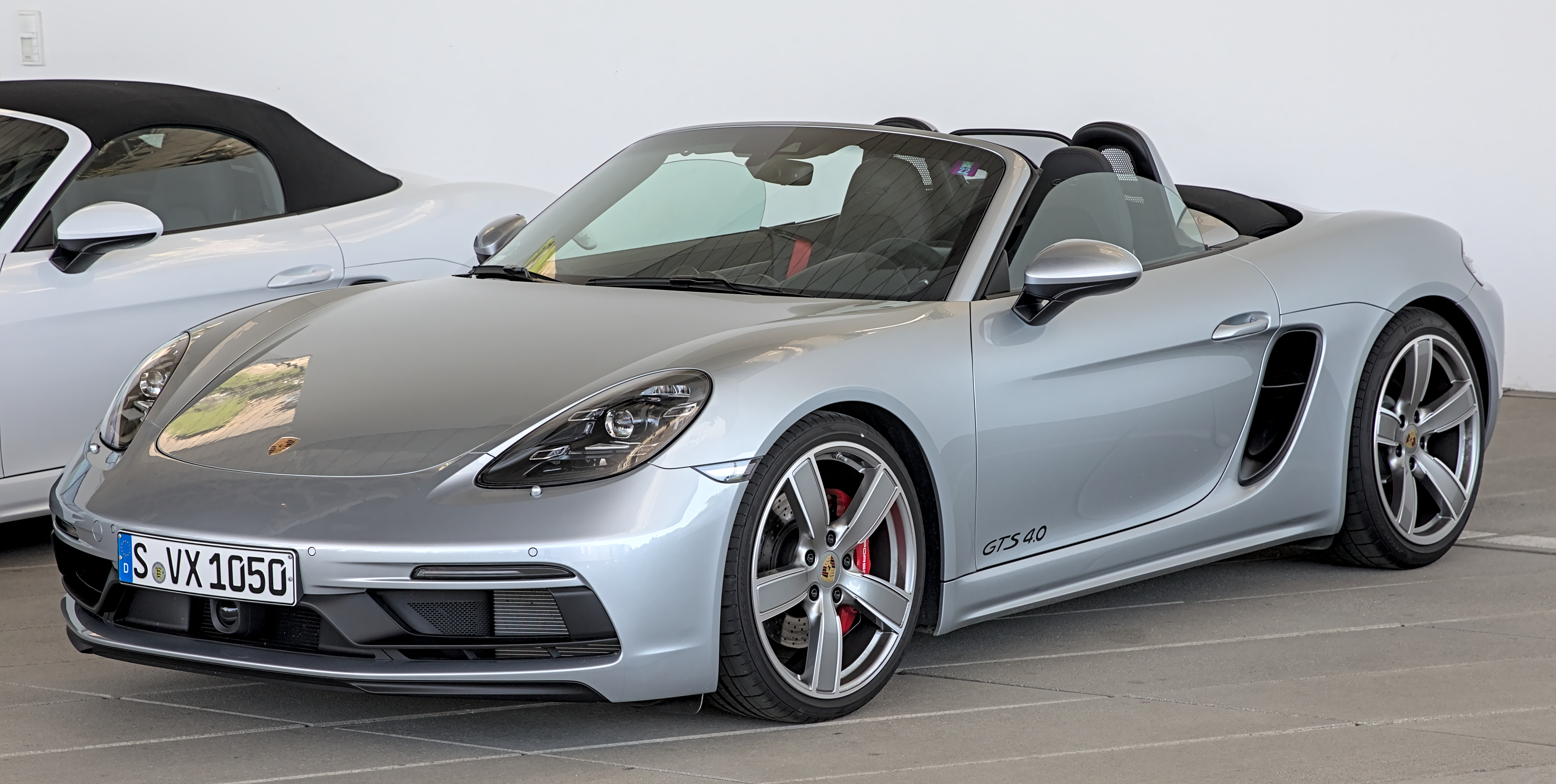
"...on't know what that is, it's kind of the original Boxster with a hard roof, if you like. It was mid-mount ..."
The Porsche Boxster is a sporty two-seat car with the engine mounted in the middle. It’s built to feel nimble and fun to drive. The podcast is referring to a Boxster-style car, including a version with a hard roof.
The Porsche Boxster is a mid-engine roadster designed for sporty handling and everyday usability. The podcast mentions an “original Boxster” style car with a hard roof, which highlights how the Boxster’s layout and driving character are central to the discussion. It’s a common reference point when talking about balanced, driver-focused sports cars.
"So I know the benefits of what a motor can give you, you know, maximum torque from zero RPM. So I know they're hugely powerful."
Electric motors can twist the wheels hard right away, even when the car is standing still. That’s why it feels like instant pull when you press the pedal.
Electric motors can produce high torque immediately from a stop, which is why they’re often described as having “maximum torque from zero RPM.” This makes them feel instantly responsive and can improve real-world acceleration compared with engines that need revs to build torque.
"he picked his car up from the rolling road yesterday and we've had it tuned up."
A “rolling road” is a chassis dynamometer setup used to measure engine performance (like power and torque) while the car is stationary. It’s also commonly used for tuning, since the car’s behavior can be adjusted and tested under load.
"Then we were driving it back and drove it out of the car park and there's a little spot of oil in there."
An oil drip means the car is leaking oil. If you see it after driving, it usually means something needs to be fixed so the engine stays properly lubricated.
An “oil drip” indicates a leak where engine oil is escaping from a seal, gasket, or drain point. The speaker notes that seeing oil after driving is a sign the car likely needs further work, especially after a recent tune.
"...are you going to have with the electric conversion? Are you going to have AC? Are you going to have rapid charging, etc. etc."
An electric conversion replaces the original combustion drivetrain with an electric motor and battery system. In this segment, it’s discussed as one of the major options the shop can handle as part of a full build.
"[1631.8s] So yeah, it's a contest that I would love to do. And I had a kit car body [1638.6s] on the shelf from a customer for a while just kind of sit in there."
A kit car is a car you build yourself (or with a shop) using parts from a kit. The speaker had one planned but it never turned into a finished project.
A kit car is a vehicle built from a kit supplied by a manufacturer, often using donor parts and custom fabrication. The host mentions having a kit car body on the shelf, describing it as a project that never got finished.
"So we could move the bulkhead back [1680.9s] because we don't have a big V12 engine in the way."
A V12 engine is a powerful engine with 12 cylinders. The point here is that if you don’t need a big V12, you can rearrange the car’s interior space more easily.
A V12 engine is a high-performance configuration with 12 cylinders arranged in a V shape, commonly used in older supercars. The host notes that without a big V12 engine in the way, the bulkhead could be moved back—highlighting how electric conversions can free up packaging space.
"“...So chin spoiler Alpina chin spoiler on the front there.”"
A chin spoiler is a small front lip under the bumper. It’s mainly for aerodynamics and also changes how the car looks.
A chin spoiler is an aerodynamic front lip that sits low at the front bumper area. It helps improve airflow under the car and can slightly change the car’s stance and visual profile.
"[1986.9s] And the weight, or I suppose the lack of it as well, really, with that sort of power, it's not [1990.6s] all, well, yeah, it is always about power, but with something so light, you can sort of justify"
Lighter cars are easier to speed up and easier to steer. Because there’s less mass, the car can feel fast even without maximum horsepower.
Lower vehicle weight improves acceleration, braking, and cornering because there’s less mass to move and less inertia to fight. The speaker suggests that with a light car, you can “justify” slightly less power because the car still feels quick and responsive.
"Now, Talking Shot wouldn't be possible without our title sponsor, Eclipse Diagnostics. If you work on commercial vehicles, vessels or machinery, you need GelTest, the UK's leading multi-brand diagnostic tool from Eclipse."
Eclipse Diagnostics makes diagnostic tools that help you figure out what’s wrong with a vehicle. The host says their system can read fault codes and show you what to do next.
Eclipse Diagnostics is the podcast’s title sponsor and provides diagnostic tools for vehicle and equipment troubleshooting. In this segment, they’re positioned as offering multi-brand scan capability and OEM fault-code guidance.
"Oh, okay. So a company like Retropower that does the same as us but they use petrol engines and
we use electric, I don't see much difference."
Retropower is a company that takes older cars and upgrades them with newer engines. Here they’re described as doing petrol-based conversions, while the other shop does electric ones.
Retropower is an aftermarket company that converts classic cars to modern drivetrains. In this segment, they’re contrasted with the host’s shop: Retropower uses petrol engines while the host uses electric powertrains, but both aim to make the cars handle more power.
"We did a TV show a number of years back called Vintage Voltage and it went global
on Discovery Channel. Amazing."
“Vintage Voltage” is the name of the TV show they made. The speaker says it became popular internationally.
“Vintage Voltage” is the name of the TV show the speaker says went global. It’s central to the story of how their workshop’s conversion work reached a wider audience.
"I was adamant that I wanted an ob-doc, which is an observation documentary. I wanted the TV crew to come to my workshop and film what we do as an observation documentary does."
An “ob-doc” is a documentary that tries to film what’s really happening, without forcing people to act out a script. Instead of planning every moment, the camera just follows the process.
“Ob-doc” is short for observation documentary. It’s a documentary style where the crew films real events and processes as they unfold, rather than following a tightly scripted, staged format.
"And, you know, more importantly, Discovery Channel agreed to it. So they took a big, massive risk, not really been done properly before."
Discovery Channel is the broadcaster/network that agreed to the observation-documentary approach. The speaker emphasizes that the network took a “risk” by backing a format that wasn’t common at the time.
"go off to the suppliers and do the hand shakes and meet them and get their powder coating back or whatever and do a little piece to camera about how powder coating works."
Powder coating is a surface-finishing process where a dry powder is electrostatically applied and then cured (baked) to form a durable coating. The speaker references it as an example of the kind of supplier/tech segment they wanted to include.
"Because, you know, we've got, you know, I looked at it a couple of days ago with a company that I was with, we had, I think 1.1 million views in the past month or something on it, on one of them, one of the platforms. And they wanted to know what company we use because they want to use the same."
Instagram is an app where people post pictures and videos. Car creators use it to share driving clips and get followers.
Instagram is a social-media platform where people share photos and short videos. In car content, it’s often used to reach enthusiasts and build an audience around driving clips and car builds.
Concept
battery pack from scratch
"So all of this knowledge of building a battery pack from scratch, rebuilding motors all had to be self-taught."
They’re saying they also learned how to build battery packs themselves, not just fix motors. That’s a complex and safety-sensitive job.
Rebuilding or building a battery pack “from scratch” implies deep expertise in high-voltage battery systems, including cell/module management and safety-critical assembly. The speaker groups this with motor rebuilding as work that had to be learned early on.
"So I've got three test test mules if you like, my VW Beetle, my Land Rover and my bus. So they were the learning tools, if you like, to try new technology..."
A test mule is basically a practice car used to try new technology in the real world. The goal is to find problems early and make the final product better.
A “test mule” is a vehicle used to trial new technology in real-world conditions before it’s rolled out broadly. The speaker uses multiple cars as learning tools to identify failures, understand why they happen, and improve future implementations.
"concentrating on where the apex is, where your braking points are, when you can start rolling
in the throttle and then getting out to the straight"
The apex is the spot in a turn where you aim to go near the inside. Doing it right helps the car exit the corner with more grip and speed.
The apex is the point in a corner where you aim to pass closest to the inside. Hitting the right apex helps you set up the car for better exit speed and traction.
"I can't, we can't do this at Pike's Peak because, you know, you need to have confidence that the
power can be delivered and it just had too much power. Absolutely too much power.
That's a long way down that."
Pike’s Peak is a famous race up a mountain. It’s challenging because the road is steep and the driving conditions can change.
Pike’s Peak is a famous hill climb in Colorado, known for steep grades and dramatic elevation changes. Driving it demands strong traction and confidence because conditions and grip can vary significantly.
"For years now, they're all working on EV. And, you know, F1 is still obsessed with petrol."
EV means electric vehicle. Instead of burning fuel, it runs on electricity stored in a battery. In racing, that changes how fast power can be used and how long it lasts.
EV stands for electric vehicle, meaning the car uses an electric motor powered by a battery instead of a gasoline or diesel engine. In motorsport, the shift to EVs changes how power is delivered and how teams manage energy usage.
"...fit a decent sized battery pack in a Mini and not compromise the boot space. I mean, you could put a motor in the front, and you could fill the whole boot up full of batteries."
Boot space is the trunk area you put bags in. When you add a battery, it can take up that space.
Boot space is the trunk volume available for luggage. EV conversions often threaten it because batteries and electronics may need to be installed where the trunk would normally be.
"...everybody ready for a shot? ... camera two. Yeah, camera three. Yeah. Okay, really, we're going for a take."
They’re using multiple cameras at once. “Camera two” means there’s another camera filming from a different angle so they can get the best views.
“Camera two” indicates a multi-camera production setup, where different angles are recorded simultaneously. This is common in automotive filming to capture both wide context shots and close-ups without missing key moments.
"He said it's the most fun he's ever had in any vehicle ever on Top Gear."
Top Gear is a famous car TV show. They’re saying the vehicle was the most fun he’s ever had, even compared to other cars featured on the show.
Top Gear is a long-running British automotive TV show known for vehicle tests, challenges, and stunt-style segments. The speaker uses it as a benchmark for how fun the Land Rover was compared with other vehicles he’s driven on the show.
"...But there's always a limitation when you're converting a classic car to electric."
This is about keeping an older car’s look, but making it run on electricity instead of fuel. The challenge is that the battery and electric parts don’t always fit or work as easily as people expect.
Converting a classic car to electric means keeping the original body/identity while changing the drivetrain to an EV. The “limitation” mentioned points to real-world constraints like space for batteries, maintaining proper balance/handling, and ensuring reliability and drivability.
"It's still going to be an old Porsche 956 from the 50s. You know, okay, you can upgrade it with disc brakes. You can improve the handling a little bit when you convert it to electric, but it's still going to be a 1950s car."
Disc brakes use a spinning disc and a clamp to slow the car down. They can make braking feel stronger and more consistent, but they don’t automatically make an old car handle like a modern one.
Disc brakes replace older brake designs (often drums) with a rotor and caliper. Upgrading to disc brakes can improve braking consistency and fade resistance, but it won’t fully solve handling limitations caused by an older chassis.
"they look like classic cars, but they go and handle like a modern car, which means you can even more like enjoy them as daily drivers now."
A daily driver is a car you use all the time for everyday trips. They’re saying these electric classics could be good enough to drive every day.
“Daily driver” refers to a car you use regularly for normal commuting rather than only for shows or occasional weekend use. The speaker’s point is that these electric classics can be engineered to handle well enough for everyday driving.
Select text to request an explanation
He gets four cars there and all of a sudden this Landry just goes whoop and there's no
four other three cars are kind of like you know following behind. Yeah. Yeah. It's pretty
bonkers. He said it's the most fun he's ever had in any vehicle ever on top gear.
Oh, that says something, isn't it? Oh yeah. So anybody that says electric cars are boring,
come come for a spin on some of my cars. They are not boring. They're nuts.
Hello and welcome to another episode of Talking Shop. Today we're joined by Richard Morgan,
Electric Classic Cars. We're going to talk classic electric cars.
And please make sure to like, comment and subscribe and let us know who you want on Talking Shop next.
Tell us about you then, with everyone who doesn't know.
Okay. I'm Moghi from Electric Classic Cars and for the past 10 years I've been converting
classic cars to electric with my company Electric Classic Cars as the name.
You never guess. I don't know where that name came from. Did you struggle with the name?
Yeah, crazy ideas of names. But now we picked Electric Classic Cars mainly because we were
the first to do it really in Europe. I mean, there wasn't really anybody else
properly converting classic cars to electric at that time. I thought, yeah, there you go.
I've got my pick of the names. Danger, danger, high voltage maybe? Oh, there was definitely a
few other options. Like, you know, ruined or sacrilege cars. That's interesting to say that,
because from what I sort of did, you know, sort of conceived from your background as well, it's
not to save the planet. It's not to save, you know, any pollution or emissions.
Yeah, it's done for the drivability. I'm saving the planet one burnout at a time.
Okay. Yeah, that's my mentality. I'm a car guy. I'm drivetrain agnostic, if you like. I don't
give a monkeys if it's got petrol, diesel or electric. I love cars and always have done.
Ever since I was 16, the age of 17, I had my first car in 1968 Beetle, which I've still got.
And it's roof chopped, steepillared, it's modified. And since that age of 17, I've always modified
cars. So I've never had an issue taking a classic car and customizing it, putting a different engine
in, you know, I think the last iteration of that car ended up with a 2.4 liter or two liter Porsche
914 engine that took up to 2.4 liters. I put a supercharger on it from a Jaguar XJ something.
I put a Ford Focus RS rally car, charge cooler on it, cozy injectors. I mean,
it was nuts. Absolutely not. It sounded bonkers. It just, you know, it made a hole in the floor
every time you've blipped the throttle because the exhaust was pointing down and it was just great.
So I've been modifying classic cars all my life. And then 10 years ago,
I started converting them to electric. Why? Well, up until, well, seven years prior to that,
I've been doing the British Historic Rally Championship in a Porsche 914, which for those
that don't know what that is, it's kind of the original Boxster with a hard roof, if you like.
It was mid-mount engine, beautiful handling, better handling than an equal age 911, if you ask me.
And I knocked that on the head after doing it for seven years. You kind of get itchy fingers in
the garage if you stop at some kind of race championship where you're always working on
the car, prepping it and trying to get it ready for the next race or fixing it or whatever.
Normally, you fix nicks and trash, do you? And when you stop that, it's like coming off heroin.
You've got this like, what am I doing now? Oh, shake. I'll go out in the garage. I've got
to do a project. And I thought, right, I'll take that supercharged engine that I've got in the
back of the Beetle, I'll put a turbo on it. Because one of my favorite cars from back in the day is
a Lancia Delta S4. So an S4 was a Group B rally car that had a supercharger and a turbo on. And
it was insane. It sounded insane. The power was insane. It was, for me, the pinnacle of the Group
B rally era. So I thought, right, I'll do that. I've never done that before. I've done turbos,
engines, done supercharged engines, never put the two together. And as I was kind of scoping
this out thinking, how is this going to work? We need a wastegate system so that that kind of
like closes when the supercharger is all puffed out, turbo can take over. It was getting complicated,
no problem with that. And as I was scoping this out, I came across a video of a guy online in
America who was pulling wheelies on a drag strip in a VW Beetle with a small electric motor bolted
to hit the gearbox of the Beetle. It was like a size of a biscuit tin or a plant pot about that
size onto the gearbox, floored it, up comes the front and down down the track he goes, you know,
beating everybody can see. I looked at that, I thought, what? There's no moving part. Well,
there's hardly any moving parts is, you know, it's simple. And then some of my background is
electrically, you know, orientated. So I know the benefits of what a motor can give you, you know,
maximum torque from zero RPM. So I know they're hugely powerful. I looked at our,
there's something in that. So I looked at the complication that I was kind of building there.
I looked at that battery, two wires, motor, two bearings in it. Yeah, okay, I'll give that a go
because I like to do something new as well. And that was 10 years ago. And when I finished that car,
I pulled down the driveway, turned left onto the main road. And the first time I put my foot down,
there was the end of petrol for me. So I just turned left, put my foot down, it was like,
oh, where's this power be normal life? And that was it. From that moment on,
petrol has been dead to me. For me personally, I still love, you know, sound of V8s and,
you know, rally cars and stuff like that. But for me, then I just follow the power.
Yeah. Yeah, it's all about the power for me.
Yeah. Well, if you put music on, you can't hear it anyway, then can you?
No, I mean, I came up in an old Land Rover Defender today, it's electric. And, you know,
hands free and stuff like that. And I wasn't talking really loud because it was just gentle,
talking away and put the stereo back on and it was lovely. It's a serene, comfortable, luxurious
environment to be in a Land Rover Defender. And that's not normally two words that go in the
same sentence, Land Rover Defender and luxurious, but it is. And electric allows you to do that.
But another thing electric has allowed me to do, which is why I turned it into a business,
is because I very quickly realised that if you go electric with a classic car, you instantly
make it very, very reliable and maintenance free. And then you're thinking, well, hang on a minute,
I can keep on driving this now without fear of like, oh, what's that rattle? What's that noise?
Yeah. That vibration wasn't there before. Christ, am I going to get home? What's going on?
Am I going to break down? And you start relaxing and enjoying the journey and using it more and
then you start to realise, and I haven't driven that modern car for weeks now, I'm going to sell
that. And I realised that very early on that there's a huge opportunity to turn classic cars
into usable daily drivers. And that's when I turned it into the business and I've
not had a modern car since, well, 10 years. I've been driving classic cars as daily drivers.
In fact, I'm probably the biggest classic car nut in the country. Why? Because I drive classic
cars as daily drivers. I have done for 10 years. There's not many people out there that can say
they've driven 1960s cars exclusively for the past 10 years and don't have modern cars. I do.
Yeah. Other than the conversion, what else are you having to do to 9-eleven when you put in a
400 kilogram battery? For a 9-eleven? Oh, there you go. That's me. So you've got
an opportunity when you put in battery packs in the car to use them as ballast. So a 9-eleven,
for instance, and Beatles and other cars, they're inherently flawed because there's only one place
you can put the engine and gearbox or the weight and that's in the back with a 9-eleven. You can
counteract it a little bit by having a fuel tank up front, but obviously that weight changes as the
fuel goes down, if you like, and don't even get me started on Ferrari Test Roses because they're
even worse weight distribution and handling. So with electric, you've got the opportunity to kind
of address some of the foibles of the original car. So you can move a little bit more weight up front.
You can kind of like distribute the weight to help it handle better. So with the 9-eleven,
we put a little bit more weight up front and you've got a choice of either 300 horsepower or way up to
600 horsepower. 300 horsepower is pokey enough. 600 horsepower is bonkers. You've got to have
like a turbo wide arch like 9-eleven to be able to fit some sticky tires under even to make that work.
So you've got a huge amount of power. You've got better handling because of the weight distribution
and then you've got things like traction control, which you can play around with, with electric
motors. We always aim to build a car better when it comes out of the workshop than when it came in.
As far as performance and handling is concerned, obviously if you're going to have huge amounts
of power, that comes with huge brakes as well. So you've got to put some big brakes on there,
which for 9-elevens, there's plenty of options for upgrades on brakes.
So do you find it a younger audience buying classic cars? Now maybe the same thing as me,
I love cars. I love everything about cars, but I can't fix a thing and that's where I lack.
So do you find maybe younger people are doing this sort of thing to be able to have the looks,
have the picture opportunities, but be able to just drive it and not worry about it?
So there's no specific demographic for our customers, I've noticed. However, you have
picked up on one of the groups, if you like. So the younger generation don't know what a
Haynes manual is. My son's got a Porsche 924 S. There's no point in them. Haynes manual,
everything's online. I've got a draw full of Haynes manuals out there. Oil all over them,
curled pages, some of the pages probably burned. And now most young people are completely
put off by the slightest bit of maintenance on a car. And a classic car takes that up to the next
level. So they're put off by having a classic car. They look at a lovely old classic Fiat 500
or a Mini or whatever and think, I really would love that, but there's no way I'm having that.
Because I'm from the, not even the iPod generation now, I'm from, what's the next one after the
iPod generation? iPad. I don't even know what it is now, VR. So my kid's generation are not
the same mindset of let's just fix it and make it work again. My son's an exception because
I think he's just caught the bug off me a little bit. So he's right at home right now because
he sent me a photo about two minutes ago working on this Porsche 924 S again. And that's another
reason why I'm so done with petrol because I picked his car up from the rolling road yesterday
and we've had it tuned up. We've put a high lift cam and stuff in it. Then we were driving it back
and drove it out of the car park and there's a little spot of oil in there. And when there's
water, any oil drip just looks huge, hasn't it? I looked at that, oh no, got to do more work on it.
And I thought, why am I working on this? This is his, but I'll end up working on it. We've
changed the clutch on it, the engine blew up. There's all sorts of things. He's got an
avenue accelerator cable now. It's continuous, especially if you're going to use it regularly,
which he's got it as a hobby car. But imagine if he was using that as a daily driver.
It'd be in trouble. It'd be a nightmare. How many times have you told him if he just made it
electric? Oh, he'd do that in a second if he could afford it. He's got a Renault Zoe,
which is electric as his daily driver. If he could afford to make it electric, he would,
believe me, because he's been in my crazy cars. He knows that quick. So, no, he just can't afford
it, unfortunately. And no, I'm not doing it for free. No, there's a camera. I thought I said
he said he would do that for free. But no, do you think, okay, looking from another angle here
now, do you think there would be people out there that would say, well, to remove the engine and
the gearbox from an old 911 or, you know, we were talking about it about the SLs. Do you think that
removes some of the vehicle's identity, the way it makes you feel hearing the engine and the
just changing gear, the way it clunks? Just do you think it sort of removes some of that?
So, remove, for me, is the wrong word. It changes it. Okay. So, for bear in mind,
for most of my life, I've been a petrolhead, still caravan, really, and the last 10 years
electric. So, I've seen both sides of it. And for me, it's just different. The best way,
oh, that was the first one I ever created back in 2016, that red beel. There you go. Look at that.
There's a bit of history. Burt, it was called. And that was the second car I ever did, that
Porsche 911 there. Oh, there he is. I was going to have any classic ZB.
Yeah, the target. It's glorious. So, sorry, I got sidetracked by that. So, yeah, for me,
it's not about you removing an aspect of the car, although physically you are.
For me, it's just changing it slightly. And the best analogy I can give you is it's,
imagine you've got an old house. I live in a house that was built in 1800 and whatever it was.
It's got a fireplace in every single room. And a single glazed windows, et cetera. And if you
go back a little bit older in time, you'll have an outside toilet and you wouldn't even have plumbing
and some houses. And for me, putting an electric drivetrain in a classic car is like putting
modern central heating in a house like that. It's still an old house, but now it's a lot easier
and nicer to live with on a day-to-day basis. And okay, you don't have a real fireplace there in
the smell of the coal or the wood or whatever and the noise of the crackling fire and stuff like
that, which is nice in the winter time. But your clothes don't stink anymore.
Exactly. But that is rose-tinted nostalgia thinking, oh, yeah, you're right, that is nice.
But you still got to go out to the shed, you got to chop the wood or you got to go to the coal
bunker, you got to clean the grate out afterwards and you got to start the fire in the morning.
There's hassle that comes with that. And having modern central heating where it just comes on
when you need it to and it's nice and warm and there's no issues, there's no maintenance,
reliability is fantastic. That is the best analogy to convert a classic car to electric for me.
So it's not necessarily a negative, you're removing some of the soul, etc, etc. For me,
all the positives that come with it far outweigh any negatives that come with converting it to
electric. You could argue you're prolonging the longevity of the lifespan of the vehicle as well,
totally. I mean, a lot of our customers use them, sometimes maybe not as daily drivers,
like I do all the way through winter with salt on the roads and all sorts,
but they use them a lot more than when they were petrol. Ferrari owners are the typical
example of that. We had a Ferrari 308 that we had to convert many years ago. The customers now got
the Mercedes 190 SL mentioned off-camera. And when he came to us, and this was an early conversion,
we've done five, six Ferraris now, but this was the first one. And when he came to us,
I honestly tried to figure out what he was doing because although he came to me, I think the first
post was, what can you do with this? And he sent me a picture of the Ferrari 308 and I thought,
you can make it better for a start. And that was apparently a light bulb moment for him. He thought,
okay, let's see if he can then, because he already had a Tesla. He knew the benefits of electric,
but that was just kind of a serious, but kind of a throwaway comment.
I thought no more of it, and then it turned into a project. And I was thinking,
it's a Ferrari, mate. Are you sure about this? And we've had to have that sit down discussion with
a few customers. And then he explained, you know, that, you know, I love it to bits. He's had this
into the 1980s, but he can't enjoy it the same as he used to be able to because it's just not
reliable enough to relax and enjoy it. And he's had a, I think it was an oil, an oil salvation,
had a, some issue with the engine where when it got hot and you switched it off, it wouldn't start
for, you know, another half an hour once it's cooled down, like a vapor lock type issue or something.
And he said, there's nothing more embarrassing than breaking down on the M1 motorway in a Ferrari.
You can imagine it. You know, you've broken down, bonnet up on an old Ferrari. And he said,
that happens more often than not. So he can't enjoy it anymore. It's always like, is it going to,
and then, you know, we discussed it and thought, right, well, let's keep the weight distribution,
you know, better. The total weight the same, put up the power and turn it basically into a Tesla,
but with, you know, the rest of it being Ferrari. And it ended up being one of the
best handling cars we've ever done. I love Ferrari 308s. They're really cool. We ended up doing two
in the end. So what's the sort of cost for the project like that? It depends. It's a little bit
like how much is it to build a car. It's anything from 25 grand up to 125 grand.
How many problems are you going to get along the way?
Yeah. And what upgrades do you want to do? And do you want us to sort out the suspension?
Do you want us to sort out the brakes? Are we doing an interior trim? Is there a restoration
happening? You know, what are the options if you like, are you going to have with the electric
conversion? Are you going to have AC? Are you going to have rapid charging, etc. etc. Now,
you're going to have a powerful motor. You're going to have an eco motor. So we normally sit down
with the customer and agree the spec up front and say, you know, what are you expecting? And then
come up with a project cost and timeline. Yeah. So it is really a one stop shop for you guys. And
it's not just the case of that motor goes in that vehicle. It is. You've got the bodywork
sorted. You've got the trimming sorted. So it's sort of, you can't take something to,
well, sort of nothing to. We're finding now a lot of people are bringing us cars
pre restored and pre kind of like done, ready to convert. Because when you're converting a car
to electric, it might take, I know, six months, a year sometimes to convert a car that we've
not done before to electric. It's one week done before can do it in short short order.
Because those lead times are quite long to getting it converted, a restoration on say,
an E type Jag, that can take a year, two years sometimes. And then the last six months has
converted to electric. Well, do self favor, get that restored somewhere else, because there's
101 restoration shops that can do an E type Jag, for instance, have been doing it for decades.
And then once it's finished, bring it to us and we'll do the electric conversion. So
we're done a lot less, you know, restorations, trim outs and stuff like that than we used to,
but more conversions. So we've got a shop that can cope with up to 16 conversions at
any one time. So I've noticed on your website, you advertise the kits. So I'm right in thinking
you're actually able to buy the kit and sort of do it yourself if you've got half, half a thing.
Yes and no. Okay. So yes, we have the kits. Yeah. No, you can't do it yourself.
Okay. So if I explain what I mean by that, so we've converted over 100 classic cars to electric
over the years now. And you learn a lot over that time and you repeat a lot of conversions.
Land Rover Defenders, Porsche 911s, VWs, fear 500s, minis, etc, etc. And you develop a very
efficient conversion kit that's a bolt in. So no cutting and welding, new bracketry, etc.
This is just bolts in. And it includes the low voltage loom, the high voltage loom,
the battery packs, the motor instrumentation, everything you need to just plonk that in a car.
Sounds so easy when it's a plonk. Plonk it in the car and away you go.
So we sell these kits to specialists around the world. One recent one is Arconic, who is one of
the premier Land Rover specialists in the world in the UK and the US. And they do Land Rovers for
people all over the world. And we've partnered with them, for instance, to supply our Land Rover
Defender bolt-in kits to them to now offer a new EV Defender offering in their stable
to all their customers. So that's typically how we work with our kits. We partner with companies
like Arconic or Gildred Racing that do minis in California and other companies around the world
who have their own staff to be able to get trained up to know how to install these.
Because with the best will in the world, a DIYer who might say, oh, I can do it. I'll give it a go.
I'm an electrician. What can go wrong? What could possibly go wrong? And even though our kits are
pretty bolt-in, when we used to supply to the public, you'd have one guy, perfect, it install it,
no problem whatsoever. And hardly even heard about it apart from just the odd message saying,
it's working. Thanks for the kit is brilliant. The next one might be on the phone a few times
for a bit of pointers. And then you'll have one that literally is non-stop on the phone,
emailing, he's got problems. And it's very apparent very early on that he has no idea what
he's doing. And he shouldn't even be working on cars, let alone convert and went to electric.
And there's some form of liability there as well, I suppose.
Absolutely. Yeah. And it got to the point then where also our insurance company was saying,
there's no, how do you know that that person that's installing that kit is qualified to work with
400 volts? And we don't. Well, that's a risk. Whereas if you're supplying to a company,
is the company's responsibility to train those people up to be city and guilds level or an
IMI level for qualification to be working on high-voltage cars? Yeah.
What's the, let's say, hypothetical question then, and you may have already had it, I don't know,
but you get a phone call tomorrow, the dream project for you. What car would that be and why?
See something that's not quite right? Our annotations are AI-generated and can sometimes miss the mark.
Click the flag icon on any annotation to suggest a correction.