A road flare is a handheld warning device you light to make yourself visible. The host is saying Element’s product works in a similar “stick you activate” way.
ABC is a label for fire types that a fire extinguisher or fire device is meant to handle. The host is saying this one is designed to work on more than one kind of fire.
K fires are fires involving cooking grease or oils, like what you’d find in a kitchen. The host is saying the device is meant to handle those too, not just other common fire types.
A multi-use fire extinguisher is one that’s meant to work on more than one kind of fire. The host is saying this device is designed to be broadly useful.
“Baja” is off-road racing in Mexico’s Baja California region. It’s famous for being extremely rough, which is why people choose gear that can handle punctures and abuse.
King of the Hammers is a very tough off-road race. It’s known for brutal terrain, so gear that survives punctures and hard impacts gets used a lot there.
A fuel line is the part that carries fuel to the engine. If it comes loose or breaks, fuel can leak and spray onto hot parts of the engine, and that can start a fire.
A coolant hose is a rubber hose that carries engine coolant to and from the radiator and engine cooling passages. The host contrasts it with a fuel line to explain that while coolant leaks can be bad, fuel leaks are especially dangerous because gasoline can ignite on hot surfaces.
An O-ring is a small rubber seal that helps keep fluids from leaking. If the seal in a fuel injector gets old or brittle, fuel can start leaking and drip onto hot parts under the car.
Fuel injectors are the parts that spray fuel into the engine. If their seals start leaking, fuel can drip onto hot parts underneath the car and become dangerous.
The Land Cruiser is a tough SUV made for both everyday driving and rough roads. People often keep older ones for a long time, so they may talk about fixing leaks in parts of the fuel system. If fuel injectors or related seals leak, it can be a big maintenance job.
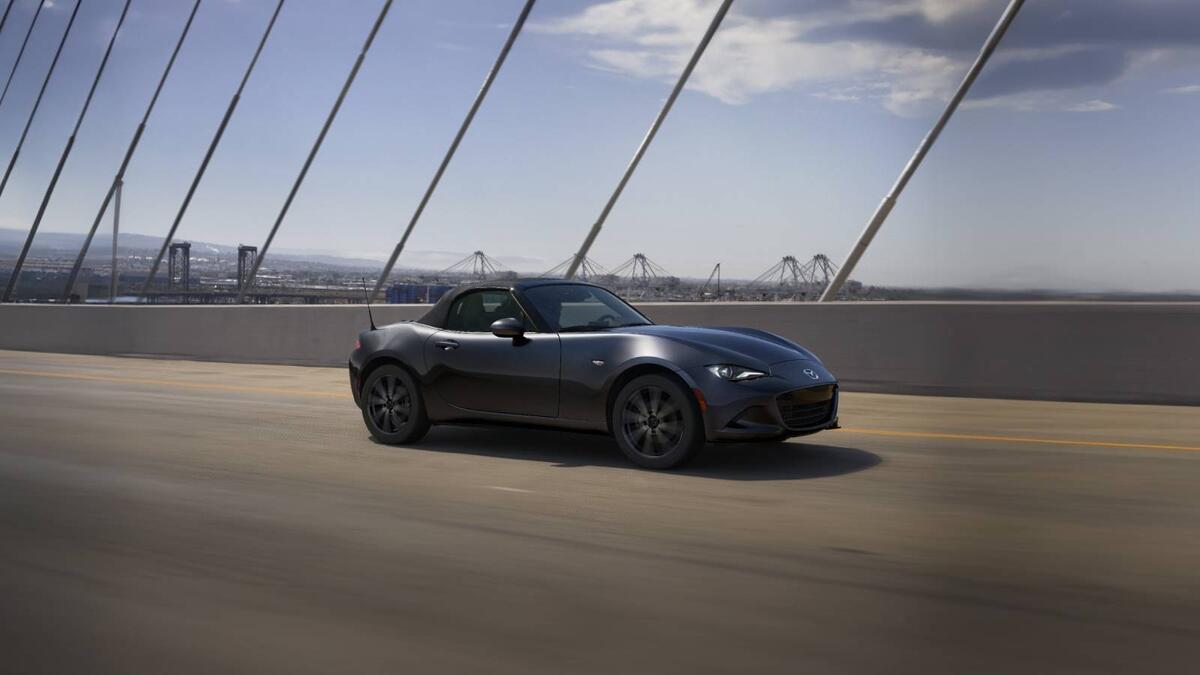
The Miata is a small two-seat sports car with a convertible-style design. It’s made to be light and easy to drive, which is why many people like it. The podcast mentions it because the car’s look is distinctive enough to be compared to other roadsters.
The MR2 is a small sports car from Toyota. It’s designed to feel sporty and fun to drive. The podcast mentions it because someone thought it was a Miata at first, but it was actually an MR2.
“Unmolested” basically means the car is mostly stock and hasn’t been messed with by previous owners. People like that because it’s closer to how it left the factory.
It’s a car that uses a regular manual-style gearbox, but computers do the clutch and shifting for you. You don’t have to press the clutch yourself, but the gearbox is still based on a manual design.
Solenoids are small electrical “switches” that move fluid or parts inside the car. In this context, they help the computer control when the transmission shifts.
Monkey Wrench is a company that makes and sells aftermarket parts for car swaps. Here, they’re mentioned as providing the engine/transmission conversion parts.
Variable valve timing means the engine can adjust when its valves open and close. That helps it make more power at different speeds instead of only feeling strong in one RPM range.
VTEC is a Honda technology that changes how the engine’s valves work. At certain RPMs it switches to a more aggressive setting, which makes the car feel like it suddenly pulls harder.
A transaxle is where the gearbox and the differential are built together. “Six-speed” means it has six gears, which can help keep the engine in the right RPM range.
A limited-slip differential helps both drive wheels work together instead of one wheel spinning uselessly. The “torsion” part refers to the specific way the diff resists that slip.
In a manual gearbox, synchros help the gears spin at the same speed before they lock together. If a synchro is worn or damaged, shifting can get rough or a gear may not engage.
Front-wheel drive means the front wheels do the work of moving the car. It also changes how the drivetrain is laid out, so repairs can be different than on rear-wheel-drive cars.
Term
hoist bar thing
That “hoist bar” is a tool used to lift and support the engine safely while you take it out. It helps keep everything balanced so you can slide the engine/transmission free.
Coilovers are suspension parts that let you adjust how stiff the ride is and how high or low the car sits. People use them to make the car handle better when driving hard.
Autocross is a timed driving event on a closed course with cones. It’s mostly about how well the car turns and grips during quick maneuvers.
Term
rotates
When drivers say a car “rotates,” they mean it turns into a corner in a very noticeable way. It’s basically how quickly and how easily the car pivots through the turn.
The Toyota Celica All-Trac turbo is a Celica with a turbo engine and all-wheel drive. That combination helps it grip the road better and feel more confident when driving quickly.
The Cupra Born is an electric car with a hatchback body style. It runs on electricity instead of gasoline. The podcast mentions it briefly in a personal story context.
Pacific Raceway is a track where people race motorcycles and cars. The host is describing different parts of the track—like sections through woods and open grass areas.
A road course is a track made of lots of turns, like you’d drive on roads, not just a simple oval. The host is saying the track includes that kind of driving section.
The “line” is the best route through the turns on a track. The host is saying the rider didn’t really know the best path, but still rode well and confidently.
“Sideways” here means the bike is sliding a bit instead of gripping straight. The host is describing a controlled drift-like moment where the rear tire is spinning.
“Spin in the rear tire” means the back wheel is slipping and turning faster than it’s actually moving the bike forward. The host is saying the rider could do that while still staying in control.
The Cutlass is an older American car model. In the podcast, they mention a Cutlass with a 425 engine and talk about changing engines. That suggests it’s a car people modify for stronger performance.
Supermoto is a type of motorcycle racing that happens on a track with both pavement and dirt. The bikes are set up to handle both surfaces, so it feels more chaotic and fun than normal road racing.
Place
Portland International
Portland International is a race track in Portland, Oregon. He crashed during a Supermoto race there.
A concussion is a type of head injury where the brain gets shaken up. After a crash, it can be dangerous to ride again too soon, so doctors usually want you to rest and be checked.
“Bleeding from the brain” means there’s internal bleeding after a head injury. That can be life-threatening, so it requires urgent medical treatment and careful monitoring.
The Corvette is a sports car made by Chevrolet. It’s designed for fast driving and has a lot of fans. The podcast mentions it in a sales-related joke or point about people who sell them.
“Super sport” is a category of fast, performance-focused motorcycles. The point here is that they’re usually too powerful or too advanced for a beginner bike.
A catalytic converter is part of the exhaust system that cleans up the gases from the engine. Removing it can be illegal and also costs a lot to replace.
A “hot turn” means you take a corner too fast. When you do, the tires can’t grip enough, so you go off the road or into something instead of staying on your line.
“Chicken strips” are the parts of a motorcycle tire that never get worn down. They usually sit on the outer edges because the rider isn’t leaning the bike far enough in corners. If the tire edge is clean and unworn, it means you’re not using all the tire’s grip.
“Rounded profile” means the tire shape is curved, not flat. That shape helps the tire start gripping as you lean the bike over in a turn. It can make it easier to wear down more of the tread at the edges.
Term
80 55
Those numbers are part of the tire’s size. They describe the tire’s shape—how wide it is and how tall the sidewall is. That shape affects how the tire grips and how it wears when you lean in corners.
Chump Car is a low-cost racing series where people use older cars to race for endurance (longer stints). In this story, that’s why they built their BMW 2002 into a race car.
“Formula forward” here likely refers to a particular racing setup or category rule for their Chump Car build. The speaker treats it like a defined option you choose for the race.
The BMW 2002 is an older BMW that’s popular with enthusiasts because it’s small and fun to modify. Here, the hosts say they took a 1976 BMW 2002 and turned it into their race car for Chump Car.
The throttle is what controls how much the engine “gets to breathe,” which changes how fast the car can go. They’re describing a very improvised way to test the car by pulling the throttle with a string.
Car
Alpina
Alpina is a company that tunes and upgrades certain BMWs. The hosts are saying their BMW 2002 was an Alpina car, meaning it had special Alpina modifications.
A roundel is a logo or badge on a car, usually a circular one. Here they’re saying their badge was made in a weird shape (dog-bone shaped) instead of a normal circle.
“Lemons” is a type of amateur endurance racing where the cars are cheap and teams often make them funny or wild. The point is to race and have fun while dealing with lots of real mechanical work.
“Rear end” usually means the parts in the back of the car that help transfer power to the rear wheels. Here, they’re saying teams were swapping those parts too.
An engine hoist is a tool used to lift an engine safely when you need to take it out or put it back in. They’re describing how teams use it constantly in the pits.
Penalties are the consequences when a team breaks a rule or doesn’t meet requirements. In this story, the penalties sound more like silly-but-real punishments (like pushups) than just a stopwatch deduction.
Formula Ford is a type of race series for small open-wheel cars. It’s known for being a good training ground because the cars are fairly similar and the driver matters a lot.
A roll bar is a safety bar inside a race car that helps protect you if the car tips over. If it’s too low, your helmet can get close to it, so people sometimes raise it.
“Merlin” sounds like the name of a particular race car/chassis setup. In this moment, it’s tied to the roll bar height and helmet clearance the host is describing.
Ayrton Senna was one of the greatest race drivers in history. Here, he’s mentioned to show that even world-class drivers often began in junior open-wheel series like Formula Ford.
The Ford Festiva is a small, budget-friendly car. The podcast mentions it in connection with a big racing event in England where lots of cars show up. The point is more about the event than about performance specs.
A tube frame is a car’s skeleton made from metal tubes. It’s common on race cars because it’s strong, light, and helps the car handle more consistently.
Disc brakes are brakes that use a metal disc and a clamp to stop the car. They’re widely used because they can handle hard braking without overheating as easily.
Wishbone suspension uses shaped arms to hold the wheel in the right position. As the car hits bumps, it helps keep the tire pointed the right way for better grip.
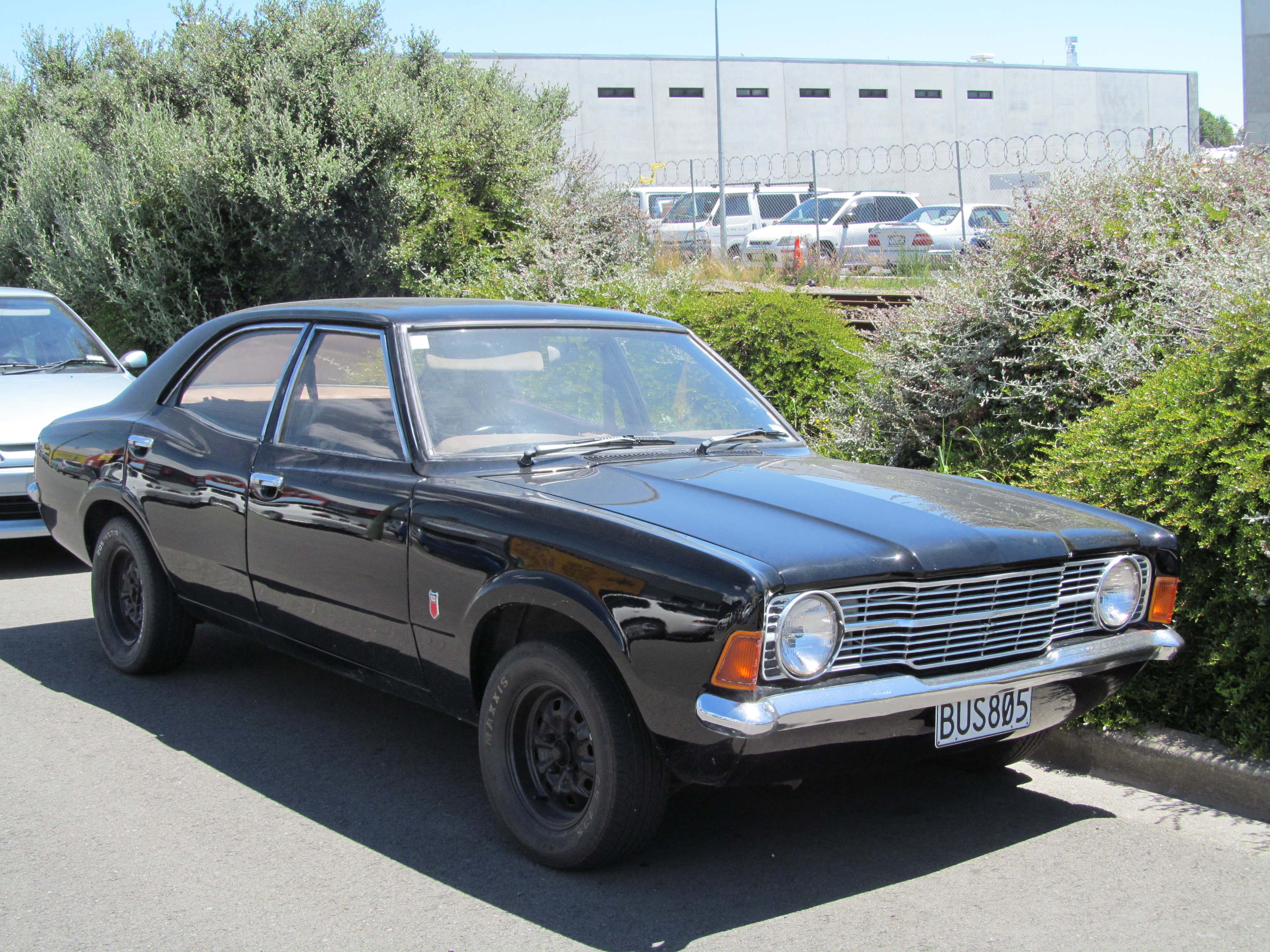
The Cortina is an older Ford model that was popular in the 1960s. In the podcast, it’s mentioned as a lightweight project car with a simple four-cylinder engine. The point is about what engine it uses and how the build is set up.
A pushrod engine is a type of engine where the camshaft uses rods to open the valves. “Four cylinder 1600” means it’s a 1.6-liter engine with four cylinders.
This is the name of a school program/organization the speaker worked with. They say it was involved in building cars and doing real vehicle research, not just classroom learning.
A carbon-fiber chassis uses carbon-fiber composite material for the vehicle’s structural frame. It’s used to reduce weight while maintaining stiffness, which can improve handling response and acceleration potential.
Autocross is a motorsport format where cars run timed laps through a course of cones, emphasizing agility and acceleration/braking control. A “chassis production” for autocross implies they built a dedicated frame intended to be repeatable and usable as a platform for that kind of driving.
The MGF is a small British sports car with an open-top design. In the podcast, it’s mentioned as the kind of car that can be turned into a custom build using a lightweight frame and fiberglass body. The idea is to combine the look of a roadster with a different engine setup.
IMSA is a big organization that runs sports-car races in North America. If you watch IMSA, you’re watching real race series with different types of cars competing on the track.
The Porsche 935 is a purpose-built Porsche race car based on the 911. It’s known for being turbocharged and used in serious racing, especially endurance events.
Car
Porsche 962
The Porsche 962 is a high-level race prototype made for long-distance endurance races. It’s the kind of car teams used when they wanted to compete at the very top of endurance racing.
IndyCar is a major U.S. open-wheel racing series. The speaker is saying they’d do some races in IndyCar instead of only sports-car prototype racing.
Person
Bruce
The speaker is talking about a person named Bruce who helped the team get sponsorship and acquire race cars. In other words, he was a key part of making the racing program happen.
Company
Texaco Havilland
Texaco Havilland is mentioned as a sponsorship source, indicating a corporate backer involved with the racing program. Sponsorship like this is often crucial for funding race teams and securing cars and logistics.
A liquid-cooled engine uses a coolant that flows through the engine to absorb heat. That heat is then dumped elsewhere (usually a radiator), helping the engine stay in a safer temperature range during hard driving.
An air-cooled engine sheds heat using airflow over the engine’s metal surfaces (often fins). Instead of coolant, it depends on the car moving through air to stay cool.
LIVE
Welcome to the Abantz Podcast. I'm Dan.
I'm Nick.
How you doing, buddy?
I'm pretty good.
I'm pretty good.
Loving the sunshine.
Well, I mean, I don't have air conditioning,
so I wasn't loving it.
But a fan will keep me cool.
Yeah, that's true.
I kept the shop nice and cool for us today.
It's supposed to be cool this weekend.
I'm heading out to Leavenworth or to Plain for the Northwest
Overland Rally with Brian Dell.
Let's read this this weekend.
Yeah.
I'm just going for a couple of days.
Hopefully get the van back tomorrow.
They finally put the bigger gas tank in it,
and the shelf, and things like that.
So we're still chasing that gremlin
on the power for the Starlink.
But yeah.
Yeah.
Well, you can run it off a battery for a while.
Well, for a long while.
Well, no.
Yeah, I can still plug it in and run it off the inverter.
But it's just easier when it's mounted to the roof
and I don't have to touch it.
Right, yes, I mean.
Yeah.
I mean, for now, we can get by.
Yeah.
Yeah, I'll survive.
I'll survive.
I should head down there.
I've got a little bit of time this weekend for once.
I need to run up to Snohomish of all places
and pick up a part for my lawnmower.
But I can do that.
Yeah.
Yeah, Friday, Saturday, and then I think it's
Friday and Saturday, the main days.
But then it's just about 15 miles north.
I think we rode through there on the monkeys.
That's kind of where we have.
Is playing kind of where Brandon Bimpel went down?
Isn't that up there?
Yeah, it is actually.
Oh, OK.
Interesting.
Good memory.
Yeah.
I don't know how I remember that.
Yeah.
Yeah.
Brandon?
Brandon Bimpel?
Yeah.
Yeah.
That's funny.
How have you been?
Not bad.
Not bad.
I was just getting back to, I was just saying,
we're not getting back to anything,
but I'm kind of normalizing the routine of her not going
anywhere.
Yeah.
And just still getting stuff done around here.
Yeah.
Yeah.
Nerdstand.
Yeah.
Nerdstand.
That works.
That works.
And then work in full effect.
But yeah.
Been enjoying the sunshine, so lots of short walks,
which has been great.
I need to go out and do some driving though.
That's why I was so interested at playing.
I was like, oh crap, that is this weekend.
I need to go do that.
Yeah.
Yeah.
What else?
That's kind of it.
Good response in the last episode.
A lot of controversy about tires, as there obviously
is with politics.
But yeah.
Yeah.
I mean, I would prefer if it didn't turn political,
but it seems that it had a little bit.
So that's everything.
Take it as you may.
Read into the law.
A lot of people are saying, perfect example,
as we've heard, the smoking tire are saying it's not as bad
as they think it is.
But again, we talk about these things
so that you can go out and research it, have a conversation.
You don't have to make it.
It happened to be in California.
The only reason we were making the reference.
The political agreement is a lot of cars that car laws
start in California move out.
And then they move out.
Which is so good.
That will definitely come hit us next.
Yep.
Yep.
Yeah.
I'm trying to think what else is going on.
I mean, everybody's seeing a ton more cars out.
People are finally getting, it's warm enough
that you can be out with the windows down.
And if you have a car without air conditioning,
you drive fast enough.
Yeah.
Watch out for those motorcycles.
They are out and all over right now.
I've seen a bunch of them.
Yeah.
And there was a crash today.
Just yesterday on 18, that was pretty unfortunate.
So just keep your eyes open, people.
A lot of new riders out right now.
And if you're in the woods, there are bears.
There are bears.
Who knew?
Yeah.
Yeah.
There are bears.
Mother bears.
Mother bears.
You see a mother bear.
Go the other way.
Yeah.
That also happened down the road.
Yeah.
It did.
And also carry a bear spray.
Yeah.
Because bear spray is far more effective than people
think than anything else for bears.
Yeah.
Because they sense of smell.
You don't need to shoot a bear.
Just saying.
Well, as local, not local, but national news,
brings up our Carter Automotive tip of the week.
If you're a YouTuber and you know, or if you're a YouTube,
if you watch YouTube and you're into YouTube,
you know who the Stradman is.
Right.
His original, he calls it his OG, original Garardo,
almost burned down.
I mean, pretty close burned down.
Pretty close, yeah.
He happened to be in a section where it seems like everybody
around him happened to have a fire extinguisher.
Thank God.
But that's a good topic about stuff.
I started thinking about, like, I
don't have any type of fire suppressant in the triumph.
And not that that would take more than about six seconds
to burn, but yeah.
Right.
No kidding.
Yeah.
So I have you several different fire extinguishers.
Around the house side, there's standard fire extinguishers
that you get at Costco that everybody does.
That's by far, if you just need a standard fire extinguisher,
by the way, by far the best place to buy them is Costco
usually.
That said, even those require service, especially in a car.
This is a problem people with car fire extinguishers
do not think about and often forget about when they have them
is if you have a fire extinguisher that's
been sitting in the same spot for years,
everything that's in that fire extinguisher
is just settled on the bottom until, like, a thick.
It's a dust that's in there, basically, and it settles.
And if you've seen somebody service a fire extinguisher,
it's kind of funny.
They usually take a big rubber mallet,
and smack it on the bottom a couple times and shake it up.
You need to just do the same thing with fire extinguisher
in your car.
Yes, G-forces are kind of sloshing it around,
but a lot of people's cars are just sitting there for months
on end, if not longer sometimes over the entire winter,
and that fire extinguisher's sitting there.
There are different options now.
So I've talked about this a little bit before.
There's a brand called Element.
I actually had one of these in another vehicle I had,
and I've never used a fire extinguisher on my own vehicle,
but I have used them on other vehicles
that I've seen burning on the side of the road,
believe it or not.
So the E50, they have two different models.
E50 and the E100, these are solid sticks.
They think of them like a road flare.
Don't have to shake them.
You literally just crack them open and they run.
And the E50 runs for 50 seconds, and the 100 last for 100 seconds.
They put out a ton of juice.
Like these things will, 50 seconds is a long time
when you're holding it directly at a fire,
and they work really, really well.
They also can be thrown in a glove box and forgotten about.
Is it the same powder that's in a fire extinguisher?
Not really.
It's a different thing, but they cover ABC.
This is like the road flare thing.
Yeah, they cover class ABC and K fires.
So even if it's electrical, chemical, whatever,
same fire extinguisher, it's a multi-use fire extinguisher.
The other ones, these are kind of a new one that we're seeing
a Russo.
These are cartridge type filters.
They work the same way as a regular fire extinguisher,
as far as like how you physically use them,
but they have a cartridge inside,
much like the element fire extinguishers.
So don't need to be shaken up.
Don't need any servicing.
They just work.
I think they have at least like a 10-year warranty
for them just sitting there,
which is pretty much unheard of.
They meet every spec.
You can self-service them.
They're reloadable because that cartridge
just take the cartridge out, put a new cartridge in,
screw back on the top.
You've got a fire extinguisher that works again.
So these are definitely a premium price, 255, 260.
A lot of race teams use these off-road.
Like, I mean like Baja, I don't mind King of the Hammers.
You're going to see a lot of these
because these things can take an absolute beating
and they don't explode when they get punctured,
which is nice.
The other ones don't explode.
They just spray the crap everywhere.
So just a thought,
it's something you should have in your vehicle, period.
Even if you never use it on your own vehicle,
they will help you.
If you ever run across a fire,
you'll be really, really glad you had it.
And I feel like this is one of those things
that I wish government would step in
and say you need a fire extinguisher in your car.
Like it should come with the car.
It should be in the car.
Like it should be like probably in the trunk
strapped to the top there.
I think is the best spot for a sedan.
But they're just so useful.
Like it's kind of like an AED.
There's one around.
You're going to be really glad it was there
and it'll probably save somebody's life.
If you have a fire extinguisher around
and have cars just catching on fire,
you can change that into a completely burned down,
ruined side of, you know,
steaming pile of trash on the side of the road
to caught and done.
I've had a fuel line pop off on a project car
and start a fire.
And it luckily, it actually,
as soon as I turned the car off, it actually stopped.
Thank God.
R7, surprising.
This is power steering fluid that let the car go.
Yeah, it's on gas.
Yeah, but hot fluids in cars,
when they spray all over your hot engine,
tend to not cause good things.
So even, obviously, you know,
if you're lucky, it's just your coolant hose,
but it's a fuel line.
We were just talking about older cars
and how fuel lines crack and get brittle.
I've had to replace every O-ring in my fuel injectors
and my old Land Cruiser because they were leaking fuel.
Like just, it's just a little drip down the side,
but that's dripping down the exhaust.
Yeah.
So like, and that older car is spending like 20 years.
And there's a lot of those on the roads too.
The way car prices are is a lot more people driving them.
So if you enjoy that stuff, just think about it.
It's a very worthwhile investment.
Like I said, the Element ones are like,
I think they're like a hundred bucks.
I think the Russo ones are like 250.
Look for discount codes on those.
They do, they're heavily promoted by influencers
and brands online.
If you're partners with, I think,
I'm trying to think,
I don't think they're an advanced partner yet.
We should work on that.
I'll talk to Chrissy about that, getting that set up,
because I know some contacts with those companies.
But I know like Snail 12x4, Blue Ribbon Coalition,
a lot of the off-road guys have links to those
off-roaders are really going to have fire extinguishers around
because forest burning is a bad thing.
Weird.
Yeah.
So it's a, yeah.
Obviously probably use one on a normal campfire,
but you may come across one smoldering water.
Anyway, just saying there's lots of opportunities
to buy these things at a discounted rate.
I think PCA as a member has a discount for the Element ones.
Okay.
Anyway, lots of options.
Yeah, just make sure you have one because,
I don't know, I don't know how many times
we've seen a car fire, plenty.
If you don't need it for yours,
you might need it for somebody else's.
Yeah, especially if you're doing rallies like we love to do.
Yeah.
Thanks for the invite, Todd, by the way.
Yeah.
Yeah, nice.
Yeah.
Hindsight.
Yeah.
We have a guest today, an audience member who's talking,
Pete has called, messaged into the show before,
and he was, I sent out the invite,
hey, if you want to join the show,
I could talk about, let us know.
And so Pete was like, yeah, can I come down?
I was like, of course.
Sure.
Come on down, come to the shop, hang out, be on the show.
This is great.
Welcome.
Thank you.
Great to have you, Pete.
I drove up into Dan's driveway and I was like,
that's an ugly Miata.
Oh, it's an MR2.
I love MR2.
Perfect.
An unmolested visually MR2.
And just so we're clear, how tall are you?
Six-five.
Six-five, and you fit in there.
Mostly above the waist.
Mostly above the waist.
With the roof up, you can drive that car.
My issue, yes.
OK.
What year is yours?
It's 2002, MR2 Spider.
So it's a third gen, yeah.
Yeah.
But it's probably.
That's why I wanted one, because I'd just gotten out
of high school.
Yeah.
Well, I guess I should have kind of collaged you.
But yeah, I still wanted one.
Yeah.
And for those listening, that's stock, the car's 130 horsepower.
And if you're familiar with some of those,
they had that weird not automatic, but automatic manually
engaged.
I think it was the first single clutch auto manual.
And it was the same transmission.
It just had a computer shifting it for you with solenoids.
Yeah.
Super interesting to drive.
I've driven one before.
And yours is swapped.
So you tell us about the car, because it's no longer that.
Yeah.
There's an outfit in the Midwest called Monkey Wrench that
makes a lot of parts and actually sell motors and transmissions
for these.
And it's got the conversion from the GTS Celica or the Matrix,
whatever the hot rod version of that came with the 2ZZ
motor, which is also 1.8 liter.
But it has not only variable valve timing,
it has valve lift that hits, sort of like VTEC.
Yeah.
At about 6,000 and snaps your neck until you get to 8 or 8.82
maybe.
Yeah.
But it's a quick little car.
It's got a six speed transaxle.
They originally had a five speed with the,
and I've got a torsion limited slip.
And you did all this to the car, right?
You didn't buy this, right?
No, I bought it like this.
Oh, you did.
OK.
Although the transmission that was in it had a bad synchro.
So I had no third gear most of the time.
So I ended up swapping with an exchange from Monkey Ranch.
And it was my first front wheel drive type vehicle to work on.
I've worked on a lot of muscle cars and stuff.
Right.
Interesting.
It was fairly straightforward.
Yeah, it wasn't too bad.
You use a weird little kind of hoist bar thing that goes
across the engine compartment and holds it up while you slide it off.
Did you have to create that or was that something you could?
No, I bought it off Amazon for like $75.
Oh, OK.
Yeah.
It'll come in handy.
Yeah, well, I don't know about that.
Great little go-kart, though, especially with the coilovers.
And you've got tires and wheels on it and everything.
Yeah, it's a fun little car.
I've auto-crossed it a few times.
And it rotates like nothing I've ever auto-crossed before.
I had a Celica All-Trac turbo.
Cool car.
And yeah, 88.
And it's a very desirable car now.
A couple other cars.
But yeah, nothing is like that.
It is just like a go-kart.
Well, your history in cars and as an enthusiast goes way back.
We were talking before we started the show before Nick even got here.
Like you've been big into motorcycles too and racing other stuff.
We're just meeting Pete for the first time.
So I'm loving the story.
So tell us how that passion started.
We found him in the driveway.
Yeah.
And the road you went down to get through all the different types
of racing you've been into.
Boy, it started out very young.
For some reason, my dad, who's a lawyer and has really, well, he liked cars,
but he's not really, I wouldn't call him an enthusiast.
But he took us to on any Sunday.
Oh, yeah.
Malcolm Smith.
In the theater when I was about seven years old.
I have an autographed copy upstairs.
Yeah, Malcolm Smith.
Yeah.
My hero.
And I was done.
After that, it was all motorcycles.
That's all I wanted.
My mom was a doctor.
It was like no frickin' way.
She used to say.
She was right.
Yeah.
When you were born, I said, you'll never have a motorcycle.
And she said, the only word you understood was motorcycle.
Yeah.
But yeah, it took me a while until I was in high school.
And I got a dirt bike that she didn't know about.
And I rode it to high school a couple of times, even though I didn't have any lights on it.
And as you do, that's all I got kicked out of my parents house.
I bought a motorcycle.
I didn't tell them about it.
My neighbor ratted me out.
I bought a truck.
Actually, before that, my uncle showed up.
I was born in North Bend.
OK.
And my uncle lived in Seattle.
But he had a whole bunch of kids.
And they'd come up.
And he bought a whole bunch of motorcycles one day and came up.
And I was just like, oh, my gosh.
I mean, this is the greatest thing ever.
It was actually right about when we saw that movie.
And so yeah, ever since then, it's just been motorcycles.
And I got a dual sport.
And then I found out you could race them.
Yeah.
And I ran the, have you guys ever heard of the white knuckle Grand Prix?
Yes.
Or it was called the Nasty Winch at one time.
Nasty Winch, yeah.
And it rented out at, well, I call it SIR still, but it's Pacific Raceway.
Raceway, yeah.
And it goes on the road course.
And it goes through the woods.
And it goes on those big grass fields.
And it was the most fun I ever had on my old XL 600 dual sport.
That's a big heavy bike to move through.
And that's where I started racing.
And then my buddy started road racing in high school.
And I was impressed.
But I was like, oh, that's crazy, you know, the way.
And he was kind of a nutty guy.
And I remember he rode his, he bought a 750 Suzuki GS 750E, rode it to Pacific Raceway,
taped over the lights on a rainy day and went out on the road race track and raced.
And I couldn't believe what I was seeing.
He had no idea what the line around the track was, but he was really brave and he was really good.
He could go all the way down Cold Creek Parkway sideways, spin in the rear tire,
and not even think about it.
But he almost ran off SIR a couple of times.
And anyway.
Track will bite you.
Kind of got me hooked.
And then for some reason, I was drag racing my Katana 1000, which was my first street bike.
Seemed like a good idea.
Yeah, why not?
I bought a high-boostle.
It was like my third bike lasted a day and a half.
So I understand.
Yeah.
And I was drag racing it, as you do.
That's what I was doing in high school.
Legally at the drive track.
Drag track, right?
I had a few cars too, a 425 old Cutlass.
I put a few motors in.
And so I was drag racing the bike.
It was way faster.
And I managed to spin the flywheel off.
Oh, geez.
And then it was like, oh, now it's got no charging system or starter.
And my buddy's like, well, you can still road race it.
Yeah.
Just push start it.
Bomb start, yeah.
Yeah, charge up the battery.
And I'm like, well, maybe I'll just go out and do a practice.
Yeah.
And so I got, I had leather, you know, ish.
I had to duct tape the middle of my jacket because I'm so long together with about six
inches of duct tape.
I connect them and somehow they still let me out on the track.
Different times.
And so I went out there and practice with this was before track days.
Yeah.
So it was just a road race practice for all the racers.
So I went out there and a guy named Joe Pittman, who was multiple number one plate,
came by me.
I thought I was going into turn two and I'm like, this is amazing.
I'm flying here.
And he went by me so fast and clicked my foot with his hand on his handlebar.
Clicked my right foot peg as he went by.
He was that close.
Just just touched me barely in it.
It scared me so silly that I was like, oh, I'm never I'm not doing this ever again.
This duct tape is not going to hold me together.
Yeah.
And I'm like, I can't do it.
I can't do it.
And then for some reason, I found out there was a novice class.
And so I tried that and darned if there were other novices were as slow as me.
Yeah.
What do you know?
Oh, this is kind of fun with guys who are like the same speed.
And then so I long story short, I ended up road racing for about 10 years.
And I think I told you Dan that I did some Super Moto as well.
It came in.
That's the fun stuff in there.
And I.
I managed to break my what did I break?
Oh, yeah.
Yeah.
I I crashed a Super Moto race at Portland International and.
Knocked myself unconscious and woke up in the hospital.
And my wife was there, which was weird because she was at home in Seattle.
Oh, so you had been asleep for a little while.
Yeah.
OK.
I was like, oh, I'm in trouble.
I was the first realization that I got.
Am I a more doctor trouble?
Doctor trouble or wife trouble?
Yeah, it was.
I have a pretty serious concussion, contusion, whatever they call bleeding from the brain.
And yeah, so so I quit road racing and kept Super Moto racing, which for some
reason she thought seemed like a logical idea, even though that's what I got hurt doing.
Technically, it's much slower.
Yeah, that was the argument.
I was going to say, but it's a lot more wild to ride a Super Moto than it.
Like that's funny.
I will never I never forget my you reminded me of the story.
I'll never forget my first track day like training session, not like race.
And I was never done road racing.
I've always done track days and I've had training and same experience.
Holland ass into a corner and down.
I'm like, yeah, so fast.
The instructor comes up on the outside points to me.
He's talking to me.
He's like, yeah, you need to tell me about how my body position is wrong.
And I'm like, you're like, you're way too aggressive and you're
lean and this is not doing you any good.
Your whole body business is all wrong.
And I'm just like, I am so slow, so, so slow.
And I have no idea what I'm doing.
I'm taking his hand of the throttle point net.
Yeah.
Yeah, literally.
He's like, you know, he's literally got his left hand off and he's pointing at
me and talking to me through the headset, telling me what I'm doing wrong.
As I'm like, full tilt as fast as I can go.
And I've been riding dirt bikes my whole life at this point.
So I'm thinking I I've got some idea what I'm doing.
Oh, no.
Oh, no, I had no idea what I was doing.
It was very humbling and also kind of fun.
So I'm like, oh, there's so much room for me to grow here.
Because that's the best.
That's a good way to teach somebody.
Yeah, a lot of there's worse ways.
Oh, yeah, super cool about it.
Great instructors.
It was just one of those things like, man, until you do a track day, like I tell
everybody, I don't care what you do on a motorcycle, do a track day.
Just an instruction day.
I don't go don't go race.
Go out there and just do an instruction day.
You will love it.
It's so fun.
Well, not only that, but you'll begin to understand you can't really go fast on
the street now, unless you're completely insane.
Yeah, because the street is 12 feet wide.
Yeah, the racetrack is 60 feet wide.
Yep.
And everybody's going the same direction.
Yeah.
And it's been cleaned.
Yeah.
And well, not without you get to go around.
You get to go around the same corner over and over and you get to figure it out.
Yeah.
Oh, that's exactly the advice I give because yeah, people buy these bikes and go
and I did it on my Katana when I was young and stupid and threw it away.
Yeah.
And I used to give guys a discount to too fast when it was
that they were the only ones in the business when I was back
and doing that and I would give a discount.
If I buy a bike, I think they got like 20% off a too fast session.
And I tell everybody's like, look, go do it, go pay for it.
Because I would sell them all their gear and their parts and stuff like that.
And a lot of guys are go over where it's like, when's your last track day?
Because they're buying exhaust and all this other, you know, all these go fast
parts like when you've done a track day, I've never done one.
I was like, dude, I'm not selling any of this crap.
It's like, I'm going to sell your leathers and sell your gear and you're
going to do a track day.
I said, no, you don't think it's the best money you've ever spent.
I'll pay for it myself.
It's like, I don't make enough to do that.
It's like, but I'll do it because I don't want you to die because you're
your first bike's your brand new R one.
Good luck, buddy.
And I feel like there should be something that stops people from doing
like something that salesman should go.
No, well, I'm not going to sell this to you.
Well, I just you know how many Corvette salesmen would lose sales?
No, I have some people the same thing, though, like R six, R one.
If you're in the super sport categories, I mean, they're six, 50 now.
But if you're in the super sport category, both of those bikes are too big
for your first bike.
Like if I told her if I was doing it again, like I don't I'm not a dad,
but if I was, I'd be like, here's your gromp, go put some slicks on it,
take it to the track, get your full leathers and rip on it, crash it,
lean it over, let it fall over in the parking lot, do whatever.
I was like, but you start there.
It's like one, when you crash it, you'll just kind of laugh and because
you won't be going fast enough on the street, totally plenty of damage on
the track, I'll just be like, oh, there it went.
Oops, go pick it back up, fix your lever, keep going.
You do that.
I'm gonna end up and let it ride away.
Yeah, you're like, oops.
Yeah, you do that on your first super sport bike.
It's like, oh, you laid it over.
Well, there's five grand in damage now because the price of bikes with the
where they're at when you pull, you know, especially if you do it on the
passenger side, where you've taken out the catalytic converter, your plastics,
the signals, the windscreen, probably cracked an engine case cover.
I'm like, no dude, start with something stupid, small, have some fun, and you
will have more fun than you've ever had in a workshop doing that.
Then you go buy something.
And on dirt is exactly what I tell people to get a little dirt bike.
Yeah, because everything happens much slower, the same thing, but it happens
much slower and with much less, you know, force on a, on a little dirt bike
then on the pavement, people don't, it's, I'm amazed at how
many people die running off the side of roads.
Yeah.
Because they don't understand how much traction those tires, these modern tires
have.
And that's one of the things that you learn at the track is like, you can
go crazy fast.
People get into a hot turn too hot and they just like sit up and ride off into
the woods.
It's like, dude, they try and straighten out and slam on the brakes and go
straight into the trees and they're still like, and they're doing 80.
And you lose that concept of speed.
And so you hit that tree like 40, you do that off road, you hit it at like 10.
And it still hurts a lot at 10, but it hurts.
Guess what?
Four times less than 40.
You go where you're looking to.
Yeah.
I mean, like so guilty of that.
In the safety course, they tell you, you stand up the bike straight and you slam
on the brakes because you can stop really fast, but with super sports.
Back into the.
But that you just don't understand how grippy those tires are.
Yeah.
Yeah.
So we call chicken strips.
That's, I mean, if you people would just lean over more.
Yeah.
Yeah.
Chicken straight.
Exactly.
Yeah.
Those tires will go all the way to the edge.
Chicken strips.
Yeah.
We call it, if you look at a tire on a sport bike, they have a really rounded
profile, right?
Like even our groms and monkeys, like it's not nearly as rounded as a super
sport tire.
One 80 55 in the rear standard sport, super sport size.
And we always look at people who say they're fast, because look at their
tires, because they have like they're only using 50% of the time right
on the middle, right on the middle.
Okay.
And on the sides is you've still got all those, what those chicken strips are,
are little nubs, little nubs, they're casts from the where they, where they
mold the tire.
Yeah.
And so they're still on there because they've never leaned the bike over far
enough to scrape them off.
Got it.
Like, and we used to give people shit about it all the time because we're like,
like, dude, you're not, you're not fast.
I'm a racer.
Sure you are.
No, you're not.
Yeah.
And it's like, yeah, we'd go, we'd go to the, yeah.
Good.
So, okay, you need to do a track day because obviously this means just means
you're riding way above your limit and you're going to kill yourself, usually
yourself and not somebody else.
So yeah.
But anyway,
Yeah, you know, track tires wear out the sides.
Yeah.
The middle has full tread on them.
Yeah.
Pretty much when you're done with it.
It just burns the edges off.
Yeah.
Cause that's where you're.
Yeah, that's where you're spending your time.
Yeah.
Living on the edge.
Yeah.
Yeah, okay.
Well said.
What do you do for a living?
What, I mean, you seem like a very mechanical kind of person.
Well, I was thinking about that.
I've had since getting out of college, I've had two jobs.
One only lasted a couple of years.
And then I've been with the same company for 35 years now.
Okay.
Hey, I work for a company called Precision Air Motive.
We build aircraft fuel injection for light aircraft like Cessnas and Pipers.
You're based at Arlington Airport then?
Yes.
Okay.
Yeah.
Up your old stomping grounds there.
Yeah.
My friend Jeff still has a hanger up there.
Oh, okay.
Yeah.
Nice.
Glassers up there.
Boy, you know how to stick with something.
That's impressive.
Yeah.
Well, I was telling Dan, unfortunately, they're moving our company back east and
I'm kind of being forced to retire a little earlier.
I'm not entirely upset about it because I want to go down, kind of keep an eye on my
95 year old dad who lives down in Tucson.
Okay.
So that's a great spot to retire.
Oh yeah, he did it a while ago.
Yeah.
I love it down there.
So looking forward.
So I mean, is it just two wheels that you're racing or if you raced four or two?
I have raced four.
I with a couple of buddies of mine, kind of the lowest common denominator we raced
you may have heard of 24 hours of lemons.
Yeah.
There's another outfit called Chump Car.
Yeah.
They've transitioned to Lucky Dog.
Yeah, Lucky Dog.
That's right.
But we raced, we built a car for Chump.
Chump Car and same guy that talked to me into getting that formula forward.
I was talking about earlier, but we want to talk about that too.
Yeah, we built a, we dragged actually a 76 BMW 2002 out of the four
wrist and Shelton of this guy's property.
And my buddy, it actually ran.
Wow.
My buddy drove it down a dirt road using a string on the throttle out the window.
Yeah.
And we're like, oh yeah, perfect.
That's our race car.
That'll work.
Yeah.
And so, yeah, we built that for, built that for Chump Car.
We painted it orange like the Jagermeister cars.
No, no, actually, no, the black and orange.
So it was a Alpina.
Oh, okay.
Okay.
Oh yeah.
Except instead of orange paint, we used three inch orange bathroom carpeting.
And it was the Alpona.
Oh, kind of dog.
Take some liver.
Oh, okay.
Fair enough.
And the roundel instead of being shaped round, it was a dog bone shape with a
number on the side.
Love it.
And yeah.
Creativity.
We, we had a great time with that, but a couple other buddies and yeah, we'd joke around.
Well, Chump Car was similar to Lemons.
Everybody had to decorate their cars all crazy.
And I love it.
So you got the racing, but it was, it was pretty fun.
And probably the most amazing thing about Chump Car was that they would run between
six and 24 hour races, but usually maybe a six to 12 and then on a Saturday and then
another one on Sunday.
But the night, Saturday night in between these two races, you'd go through the pits
and there was major engine work going on.
I mean, people's changing engines, rear ends.
It was just met.
There's engine hoist being rolled down back and forth from one area to the other.
It was, it was wild.
So we definitely started with that engine.
I've seen that happen in the Lemons pits like that.
Yeah.
And then, and the penalties associated with it, everything from being duct tape to
your hood to pushups to, yeah.
It was, yeah, that was almost the most fun.
But racing was great in the car too.
And we built it so I could fit.
And, uh, yeah, I remember the first race in Portland, it was raining and they
started 82 cars, uh, PIR and it was raining.
And you know, you can imagine Lemons.
Yeah.
Over half, over half of the cars were leaking.
Yeah.
It's going to say it's a giant oil slick.
And actually I was used to bike racing.
So I never really ran the festival turn.
Oh, yeah.
The chicane thing.
Yeah.
So I was used to going wide open all the way to, and let me tell you, that's one
thing that'll.
Pucker.
Give you a religion is, uh, starting a 40 bike, 600 super sport race in the rain.
And by the time you get to turn one, you're going 160 in a cloud of mist.
And all you can see are the bikes that are close to you, which are within
a several feet.
Yeah.
This is why they're just waiting for the first guy to break.
Yeah.
Yeah.
Cause you can't see break markers, let alone the edge of the track.
But anyway,
Someone say that would be on state.
Yeah, I could get you a concussion.
Yeah.
It was slightly less scary.
Stuff like that'll make you end up in the hospital.
You're right.
Oh, it makes sense now.
My buddy put his bike in the river.
Oh, okay.
That's going off.
That one Portland.
Okay.
Oh, it's way out there.
Yeah.
He was launched it.
Yeah.
Yeah.
That was before they had the wall out there.
Yeah.
And he went off and it was wet on the grass.
Yeah.
Cause he was trying to outbreak this other guy and the guy said, he was trying
to outbreaks another guy.
Yeah.
Yeah.
Well, we went and talked to the guy and he said, he goes, he goes, man, he goes,
I was in way too deep.
He goes, you went by me in a tuck.
Wide open.
My buddy went up just off the end and he went, you know, when you're racing
to once you go off in the grass, you're like, and you slow down a little bit.
You're thinking, yeah, I'll be fine.
I'll slow down.
Yeah.
Yeah.
This would be all right.
How fast could I be going?
Yeah.
He tried to set up.
There's a big embankment before the river.
And he hit that embankment and he figured, I'll bring me to stop.
Oh, no, he launched off that embankment.
He go with the bike.
He landed right on the shore and the bike went in the water.
Heaven forbid he landed in the water.
Something soft.
The bike might be softer.
And, uh, yeah, it emptied that back grandstand.
I'm sure.
Sure.
It emptied his pants and everything else.
Yeah.
Okay.
But, uh, yeah, actually, in retrospect, the chump car race in the rain with
oil wasn't that much scary.
It was mostly like racing and traffic.
There are so many cars.
Don't do that either.
That sounds kind of fun.
Yeah.
Yeah.
And yeah.
And you, oh, and also our 2002 had a, we didn't have a positive traction limited
slippery run.
So we had a welder.
Oh, you welded it.
Oh, we welded it solid.
Yeah.
So rock crawling or as soon as, as soon as you turn the back end starts going,
comes around, but the, that little thing, those little BMWs, I had a 318 Ti too.
And it handled almost exactly the same.
They're very, very forgiving.
I don't think I ever spun it.
Huh.
Huh.
Even in the wet.
It was, it was awesome.
It wasn't particularly fast.
That's not all it's fun though.
No.
Yeah.
That's it.
How'd you end up with a factory Ford?
Oh, the formula Ford?
Formula Ford.
Sorry.
Oh, well, that was my buddy from chump car.
He started since racing, actually a BMW 2002 with sovereign out at the vintage races.
And he was constantly trying to get me to do it again.
And then one day I was daydreaming one night smoking a cigar and looking at
four mil Ford's on the internet.
And I'm like, huh, I bet my Jeep could pull that.
And strangely the next morning he calls me while I'm waiting for my kid to give
him a ride to the airport.
And he's like, Hey man, guess what I bought?
Formula Ford.
I'm like, no, let's look at it.
Those he goes, Oh, he goes, I know where there's another one.
I mean, I got the good one, but you could have the other one.
Well, worse than that, it was orange.
My favorite color.
I'm like, Oh, he sent me a picture.
I was like, Oh, you, he said to you.
Yeah.
Yeah.
And so, yeah.
So it had been sitting on a trailer since 1978.
It was like, what was that 30, 50, 48 years or something?
I don't know.
I can't even do the math.
But the rubber going to go.
Yeah.
Those good tires, you should have seen the slicks that were on it.
They were so deformed and hard that I thought it was going to have to saws all.
I was going to say, but I got them off.
Yeah.
Yeah.
I got them off with my tire, my manual tire machine, but yeah, I managed to get it
running.
I bought it in November and I made the first race the following year.
That's pretty quick turnaround for a car that's been sitting for 30 years.
Yeah.
And it was, yeah, I can't say I did it exactly right that most people would have
done it, but I got it.
Good enough.
Why don't you pass that?
Yeah.
Yeah.
Pass that guy out there.
And of course, my buddy helped me weld the six inch roll bar extension.
Yeah.
In which you can.
Oh.
Yeah.
Because when I sat in it with the helmet, it was a couple inches over the top of
the original roll bar, but it was, it was called a Merlin.
Oh yeah.
So Formula Ford is the largest open wheeled class in the world.
Oh, OK.
That's where everybody started.
Ayrton Senna.
Yeah.
And they have the Giant Formula Ford Festival in England that is just hundreds
of cars and it's, it's literally where all the guys have started out.
Yeah.
They're not going to race through the race.
Yeah.
I could name, yeah, I could name off a couple of Formula One champions if I could
think clearly right now.
But anyway, so it was cool.
It's a cool little car.
It's a, you know, it's a real race car.
It's tube frame, disc brakes, independent.
Upper and lower wishbone suspension, coil overs.
Yeah.
Johnny Go-kart.
Yeah.
It weighs about.
Downforce.
800.
Go-kart.
Yeah.
800 pounds.
It's got a, you know, 1960s Ford Cortina motor, Pushrod four cylinder 1600.
So it makes maybe a hundred horsepower or so.
Are they under pounds though?
Yeah.
Yeah.
It's, I mean, it's, it's, it's pretty fun to drive.
Although I'll tell you some of those guys may be cheating.
Cause I could pass them in the corners and they would go buy me down the straightaway.
Like, oh yeah.
But anyway, sour grapes.
It was fun.
But I just decided that, yeah, brought me back to motorcycle racing again and sleeping
in the back of the truck.
And yeah, I was like, you know, I think I'm too old for this.
Yeah.
So I sold that, bought the MR2.
Okay.
Hey, you could pull that with the storyteller.
Yeah.
I'm not sure.
I'm not sure.
Hey, you could pull that with the storyteller.
I could just saying.
That's, that's a really cool van.
I saw one at the park yesterday when I was sitting in that race cars, probably my biggest
issue, not who's going to tell it would be hilarious to watch.
Yeah.
That's one used car.
Now you got to cut me out.
Yeah.
Nick, there are bigger guys than you.
Oh, I'm sure it could be done with enough money and sponsorship.
I'm sure it could be done.
I don't know if anybody should put money into me racing.
Now you know why they sell those 55 gallon drums of lube.
I do.
I do.
I do.
It's nothing sexual.
It's just getting him out of the car.
Just getting him into a race car.
Yeah, exactly.
I think I can get in.
It's the getting out that I'm more worried about.
Yeah.
So, yeah.
It's, it's, it's not easy.
Yeah.
You're worried about, you're worried about oil on the track?
Getting me out of the track.
Be worse.
Okay.
Geez.
I mean, you're pretty much conquering everything with wheels.
How are you on a unicycle?
I work with a guy that can ride one, but I can't.
Fair enough.
Fair enough.
But I, I, I should tell you about the first job I ever had that only lasted a couple of
years.
Tutile.
I went to school in Bellingham at Western Washington University.
Got a degree in engineering technology there in a special program called the Vehicle Research
Institute, which was run by one of the most brilliant and knowledgeable, probably the
most largest knowledge of cars in general that person I've ever met was Dr. Michael
Seal who's passed, but he, he was one of my greatest mentors.
And we, I don't know if you're familiar with the Vehicle Research Institute.
They built the Viking cars.
Oh, yeah.
We built our own cars up there.
Okay.
We've, we've had one of these.
Chassis, carbon fiber.
Okay.
You've seen these before.
I'm sure I have.
It sounds weird.
Mileage, mileage, record cars, all, I mean just the wildest technology.
Oh, okay.
Okay.
All kinds of stuff.
We built our own autocross chassis production, like a, built it up as a production, autocrosser
was a little tube frame with a one piece, like an early MG roadster body looking one
piece fiberglass that used a Mazda RX7 drivetrain.
Okay.
And that's where I first learned to autocross and driving Dr. Seal's cars.
And anyway, after going to school there and getting my degree, I was like, well, he got
me hooked on auto, auto racing too, and motorsports.
And, you know, I started watching IMSA and all kinds of stuff.
And I'm like, there's a, I found out there's a, there's an IMSA team in Redmond, Bayside
Motorsports.
I'm like, well, this close to going to work for Boeing, I was ready to take the P test
and get a cubicle.
But I was like, well, I'll never forgive myself if I don't go in there and ask, ask, can't
I hurt, I could beg and offer to sweep the floor.
And who knew?
But next thing I knew, I was sweeping the floor.
And it's funny, we've heard this story before from other people.
And I, the only reason really I got lucky was I had the engineering technology degree,
but I had also kind of had a minors in composites that I got up at Western and they needed somebody
to do the body work on the race cars and paint them.
I probably hadn't seen my painting, but I did know how to do composites.
What's under it's fine.
It's the stuff on top.
That's the, yeah.
Luckily, the main guy who was my mentor, Frank at the race shop, he just didn't want to travel
with the team anymore.
And so I was the body guy to travel and be on the pit crew.
So I was on the pit crew and it was right about the time where Bruce Levin, who owned
our team had transitioned, kind of, kind of started with a 9-11, worked his way up, started
racing, turbo, 935, started racing pro stuff with some pro driver Sharon and eventually
about 9-62s, which are the big prototypes and had been racing that.
When I went to work for them, they had just bought a couple Craco Indy cars from Craco.
So yeah, this was 89, right at the, actually, end of 88.
And so I was on the race team and we were going to race some, you know, half the IMSA
schedule with the GTP and half with Indy car.
And I was like, awesome.
This is my dream.
That sounds horrible.
I couldn't believe it.
My first race was a 24 hours a day town with and we brought two 9-62s.
We were sponsored.
We got Bruce managed to get full sponsorship from Texaco Havilland.
And those cars.
So we had a 9-62 C, which is the liquid cooled engine.
And then we had the original 9-62 that they had had for a while, an air cooled one the
night.
And Bruce bought it along because he figured he could find sponsorship and him and his
buddy Bruce or Rob Dyson who ran Dyson Racing, which was kind of the East Coast version of
Bruce ran 9-62s as well.
Privateer and our Indy car driver Dominic Dobson and they would all drive the other
car.
We know Dominic really well.
It's a good friend of ours.
Yeah.
So Dominic is a one guy.
Yeah.
Great guy.
And so, you know, and it was kind of Dominic's intro to the 9-62.
So they brought that.
Unfortunately, they never really found sponsorship for the 24 hours.
So the day before the race, all of a sudden Bruce has got this sign painter in the shop
in the pit in the garage.
I'm like, what's this guy doing?
And it was just plain white.
And Bruce had him paint.
You know, that was back in the day of generic beer.
Yeah.
Yeah.
He just had him paint race car in big black black letters down the side.
Sponsored by race car.
And across the nose.
Yeah.
No sponsor.
Yeah.
It was the race car.
Yeah.
And that was the car I got to fuel.
And unfortunately we broke not halfway through or so, but did pretty good.
And the other one, I think we got third.
That's excellent.
Yeah.
Pro drivers driving.
Believe it was Klaus Ludwig and Hans Stuck.
Oh.
You know.
Yeah.
That's the name of it.
The factory Porsche guys that Bruce would hire.
And yeah, those guys are just amazing.
I remember in 1990, the second time we went, Bob Wallach was driving for us.
And he was qualifying the car.
And that was the time also the mighty Nissan's, the red and blue.
Yeah.
Jeff Brabham and Jim Robinson and those things were virtually unbeatable on the short races.
But they never, I don't know if they ever finished the 24, but in qualifying, they were
formidable.
And Wallach went around the last lap.
And I remember looking down the pit lane and Bruce and we're all watching him.
And he went diving down into turn one off the banking.
And we never saw brake lights.
And Bruce was like, he crashed it.
And he came around and P1.
We're on the pole at the day 10 and 24 hours.
That was probably my greatest, greatest day.
And Brabham was pissed because he couldn't get back out there again because it was a
time went out while the lap was going.
And but it was pretty great.
Yeah.
The 24 hours is amazing.
I mean, you've seen the Daytona 500.
Yeah.
And the giant grandstands are all full.
Yeah.
The 24 hours, it's not quite like that.
It's kind of not full, but it's an amazing race.
I mean, it goes 24 hours.
You really can't quite fathom what a 24 hour race is.
That first race in 89, the fog rolled in in the middle of the night and they actually
red flagged it.
Oh, wow.
And I was pretty upset because we had a guy by the name of Cerell Vandemurva.
And he was a South African pro Porsche driver, but he was also a rally car driver.
And at the time they red flagged it for fog and we couldn't see the grandstand from the
pits across the track.
Yeah.
It was that thick.
And Cerell was, you know, everybody else had slowed way down.
So, yeah, Cerell dropped about a second off of his qualifying time.
Oh, geez.
And this is pitch black.
In the fog.
Dense fog.
And he's in a 24 hours a day, Tony, you know, we're the fast guys.
We're going, you know, 200 and something across the finish line.
There are also little 9 11s and RX 7s and stuff going considerably faster.
Yeah.
Half of that.
60, 70 miles an hour slower.
And he's going by him and they're, and they're going even slower, obviously, in these conditions.
And he is just slicing and rally driver.
He's usually worried about hitting trees.
He didn't care about hitting the car.
It was unbelievable.
My we were gaining six seconds of lap on the leader at the time.
And then they stopped it.
Oh, what a great story, though, in memory.
Oh, yeah, it was.
I'm sorry.
Your first job sucked.
Right.
You were served fries or worked in a gym.
You were helping race cars.
Well, then I got to go to the Indy 500, which is the other most amazing thing you've ever
seen because you watch it on TV, you know, I'm sure we all have and you'll look like
and it looks almost like they're going pretty slow.
Oh, it's like, uh, yeah.
The only race that doesn't look slow on TV is the Isle of Man.
Everything else looks like it's half speed of when you're there.
Yeah.
So it's true.
I appreciate it, but I'll tell you standing on that pit wall when they go by down the
middle of that straightaway at 235 miles an hour and you're standing there watching
them come out of turn four and they're a little dot in the distance.
And then all of a sudden they just go, and then they're a little dot the other direction.
And it's, it's pretty impressive, especially, I remember being in the pits in our engineer
dykstra.
Oh, yeah.
Famous designer.
Yeah.
Actually, he designed a whole bunch of cool stuff.
But anyway, long story short, he's talking to Dom and he's like, oh yeah, Dom.
He's like, so are you flat?
What does he mean?
Flat.
He, he's talking about holding the throttle wide open all the way around the track and
not, not letting up.
Yeah.
Flat out.
No.
So basically the way you tune the Indy car at the Indy 500 is you just, you tune it until
it'll go flat all the way around and then you start taking wing out of it until it slides.
And then you go up.
A little more.
We'll put a little back.
Yeah.
And then that's about right.
Oh.
But I'll tell you, and you, you know how you qualify at the Indy 500?
It's four laps timed.
Okay.
Average four laps.
So you go out there and you hold the throttle wide open and it, it's big on TV, but that's
a 90 degree turn.
Yeah.
You are holding, you are going 235 miles an hour and you were just turning the steering
wheel into a 90 degree turn and holding.
And hoping you got enough wing.
The throttle flat.
Entire.
Entire.
Yeah.
And one of the most impressive things that I've ever come to realize is those guys are
brave.
Yeah.
If you've ever wondered if you could do what they do, the answer is no.
Absolutely not.
No, none of us can.
I can't even do it in fours.
Yeah.
Yeah.
Yeah.
There are some Formula One guys who are like, nope.
What got you out of it?
I mean, I know racing is a volatile area of work no matter where you are in it, but what
made you, what, what transitioned the move into aerospace?
Well, stability for one.
I mean, it's, it was my dream, but then I, I came to realize for one, it's, it was about
70, 80 hours a week.
Yeah.
Yeah, that's rough.
And you maybe get a Wednesday off once in a while.
Yeah.
And so it's a lot working on somebody else's toys.
Yeah.
And not really having any chance to play with your own.
And I'm a, I'm a pretty toy enthusiast.
Yeah.
You don't say.
As we all are.
Yeah.
So I came to the realization that, you know, and then I was looking at, you know, moving
up and I was looking at my boss and I decided I didn't really want his job because he was
just working as hard as me.
And I just decided, nah, I think I'd rather have a 40 hour a week job and, and be able
to play with my own toys and, and, you know, maybe see my girlfriend months and a while
a little more often, a couple times a week.
I mean, it's a great first job story.
I mean, and then to move to a job that you've now been in for 35 years is pretty impressive
in today's day and age.
So yeah.
And yeah, I just, I kind of lucked into it.
I, you know, because it's hard to, you know, extrapolate my experience on the race team
to a normal job, but they needed an engineer in charge of actually at the time aircraft
carburetor product line.
And you were the guy.
I was the guy.
And I learned a lot from there.
And now I'm on to the next chapter and Marvel.
Yeah.
And Marvel Shevlar is the name of the carburetor product.
But actually now we build the fuel injection, but our company still owns the carburetor
line in North Carolina too.
Yeah.
You had a good trivia question that I didn't know.
What is the only vehicle sold today with a carburetor?
New production vehicle.
New production vehicle of any kind.
Carburetor.
I already forgot the answer.
Yeah.
Airplane.
Yeah.
And helicopter helicopters.
Yeah.
Yeah.
Crazy.
There are brand new airplanes and helicopters because the technology is so tightly controlled
in aviation because reliability.
Safety.
Yeah.
So to be and it's a relatively small, you know, compared to the number of cars General
Motors makes or something, the production level is small.
So it's extremely expensive to certify everything certified by the FAA to ensure that it's safe.
Yeah.
And it's very difficult to certify new technology.
So airplanes don't have electronic fuel injection.
Right.
They only build mechanical fuel injection.
Yeah.
One good thing about it, not quite as accurate as as electronic, but if your battery dies
or your alternator goes haywire, it keeps running.
Still runs.
Yeah.
So airplanes have magnetos, which are like a distributor with their own generator in
it that creates the spark and carburetor mechanical fuel injection.
So they will run with no electricity.
Yeah.
That's what you want if you lose electricity at 35,000.
I mean, I shouldn't say there are new production airplanes that are certified with some, but
the vast majority out there, the average airplane is probably 60 years old.
Yeah.
Yeah.
I think about that.
At least 50.
Yeah.
I think I was working at Spokane Airways.
I think I was in a system 152, which we both had to breathe deeply and I think it was from
60 something.
Oh, yeah.
And we had an advanced plane, which was a 172 with the swoop back wheels.
And I think that was a 72, I think.
Yeah.
I don't quote me on that, but yeah.
So.
Yeah, I learned to fly on a 152 and 172.
Okay.
Yeah.
Anybody can fly.
It's landing that's hard.
Yep.
Those both used, the early ones both used our carburetors, the 152.
I don't think it's in production anymore.
The new 172s are still in production.
They use our fuel injection.
Interesting.
The ones I trained in, that was like 20 years ago.
So they all were in.
I was probably learned that from me.
Yeah.
More than that.
Yeah.
I worked the line so I got to fly for free.
That's the only reason I learned.
Yeah, buddy of mine was an instructor.
Yeah.
So I got some free hours, otherwise I wouldn't be able to afford it.
I mean, thanks for showing up.
Yeah.
That was amazing stories.
Yeah.
It's been a blast.
Yeah.
I could tell you a whole bunch more, but we'll come back and talk some more.
You can just hang out.
Yeah.
Yeah.
It's great to connect with the audience, people who message us.
Like I said, if you want to come join us in the show, we love to have people who have
great stories.
It's fun just to hang out and meet people.
That's what we, it's literally what I built the shop and the spot for.
Yeah.
Yeah.
Here is the question of the week.
What modification have you done to a vehicle that you regret doing and why?
Yeah.
That's, I've seen, the question came to me by a video, a Bronco video where people were
talking about the mods that they've done to their Bronco and some things that they wouldn't
do.
A lot of it was just stupid stuff, stuff that was lit or dash and stuff like that.
But it made me think, what if you, what do you put on your car or your truck or your
motorcycle that you thought was a good idea and it wasn't.
Yeah.
Yeah.
The aftermarket bumper on the Bronco comes to mind right away.
Yeah.
I agree.
It looks nice on there.
Everybody likes the way it looks, but the factory bumper is really good.
And the way the, the way Ford designed the winch to be mounted on that vehicle is not
aesthetically pleasing, but it's extremely functional.
And once you kind of take everything apart, look at it, you realize, you know what, that
really fancy aftermarket bumper probably wasn't that good of an idea for that vehicle.
On the other side, there's like, you know, there's, there are some that are, but that
just popped into mind for myself.
Anything for you?
Oh, many, many exhausts.
Oh yeah.
Oh yeah.
Oh yeah.
100%.
On my original Subaru's, absolutely.
Oh yeah.
Cherry bomb exhaust, horrible.
Yeah.
My RX7 straight out, straight, turbo straight out into an Apex N1 dual, which was a stupid
design, still is, and sounded terrible.
Like rotaries in, okay, there's people who love the sound of rotaries.
Racing car rotaries sound amazing.
Street car rotaries, when they put exhausts on them sound like ass.
Quite literally.
And so.
Now that sounds like.
Yeah.
It's accepted a much higher pitch in them, much more RPMs in my opinion.
You can get really nice exhaust for them, but if you straight pipe them, that's what
they sound like.
They sound awful.
And like, think of that old 90s pipe civic that woke you up at two in the morning.
Oh, I get it.
Yeah.
But like worse.
That's a great call though.
That's exhaust is good.
I think some bed covers I've tried on the truck.
Nails are minor, but exhaust.
Yeah.
Little things like that.
Little things.
I'm curious.
I mean, that's the question of the week.
Obviously, comment, you know, in the post or give us a call at.
425-298-7873.
Yeah.
Shoot us a text.
Send us a voicemail if you want me to play it on the show.
I will for the most part, unless you swear a lot, even then I will.
Well, it's definitely play it.
Well, it'll just be BBB.
BBB.
Yeah.
Yeah.
Yeah.
Yeah.
Or you can shoot us an email, Dan at Avance or Nik it Avance and we'll make sure it gets
up there.
Yeah.
Excellent.
Again, thank you for coming and stopping by and telling your stories.
We really appreciate it.
Yeah.
Thanks Pete.
It's great to have you.
Thank you guys.
This was really fun.
I'm going to come back, tell more stories.
The door is open.
We like to have people over.
I've got more chairs.
I can add more audience.
Exactly.
All right.
For this episode of Avance Podcast, as always, I'm Nick.
And I'm Dan.
And don't just get there.
Enjoy the drive.
About this episode
Riding, driving, and flying collide as the Avants talk overland plans, van upgrades, and ongoing Starlink power troubleshooting. The conversation pivots into practical safety: car-fire preparedness, why extinguishers need periodic service, and how Element devices and cartridge-style systems work. Pete Nielson joins with a mechanical background building aircraft fuel injection, plus stories from racing, track days, and endurance events. Along the way, they share motorcycle training tips, tire/grip insights, and real-world crash and fuel-system anecdotes.
This week we had the pleasure of meeting our new friend Pete Nielson! Pete had messaged on the show about a few great topics and took us up on our offer to have him swing by and hang out on the show. Little did we know Pete has had one heck of life of riding motorcycles, racing cars, working on race teams, and working with the aerospace industry.
Nick brings us this weeks question of the week: What mod do you regret doing and why?
The Avants Podcast is brought to you by our friends at STEK USA and Carter Seattle!