
Riding, Driving, and Flying with Pete Nielson
About this episode
Riding, driving, and flying collide as the Avants talk overland plans, van upgrades, and ongoing Starlink power troubleshooting. The conversation pivots into practical safety: car-fire preparedness, why extinguishers need periodic service, and how Element devices and cartridge-style systems work. Pete Nielson joins with a mechanical background building aircraft fuel injection, plus stories from racing, track days, and endurance events. Along the way, they share motorcycle training tips, tire/grip insights, and real-world crash and fuel-system anecdotes.
This week we had the pleasure of meeting our new friend Pete Nielson! Pete had messaged on the show about a few great topics and took us up on our offer to have him swing by and hang out on the show. Little did we know Pete has had one heck of life of riding motorcycles, racing cars, working on race teams, and working with the aerospace industry.
Nick brings us this weeks question of the week: What mod do you regret doing and why?
The Avants Podcast is brought to you by our friends at STEK USA and Carter Seattle!
Not an Avants member? https://www.avants.com/member-plans
Leave us a review on Apple Podcasts!
Leave us a voicemail or send us a text any time at 425-298-7873!
We're doing give aways! Leave us a review on Apple Podcasts and we'll pick a random name every 25th review!
Element
"There's a brand called Element. I actually had one of these in another vehicle I had,"
Element is a company that makes car fire-safety tools. In this segment, the host talks about their fire device and how it works.
Element is a brand of automotive fire-safety devices the host discusses in the context of keeping something in the car. The host compares Element’s products to road flares and explains how they’re activated.
E50
"So the E50, they have two different models. E50 and the E100, these are solid sticks."
E50 is a specific Element fire device size. The host says it burns/works for about 50 seconds after you activate it.
E50 refers to one of Element’s handheld fire devices, described as a “solid stick” flare-style unit. The host says it runs for about 50 seconds once activated.
E100
"So the E50, they have two different models. E50 and the E100, these are solid sticks. They think of them like a road flare."
E100 is another Element fire device size. The host says it lasts about 100 seconds after you crack it open and activate it.
E100 refers to Element’s longer-duration version of the same flare-style fire device. The host says it runs for about 100 seconds once activated.
road flare
"They think of them like a road flare. Don't have to shake them. You literally just crack them open and they run."
A road flare is a handheld warning device you light to make yourself visible. The host is saying Element’s product works in a similar “stick you activate” way.
A road flare is a handheld safety signal that burns to make a visible warning. The host uses this as an analogy for Element’s “solid stick” fire device, emphasizing that you don’t have to shake it and can activate it quickly.
ABC
"Not really. It's a different thing, but they cover ABC. This is like the road flare thing."
ABC is a label for fire types that a fire extinguisher or fire device is meant to handle. The host is saying this one is designed to work on more than one kind of fire.
ABC is a fire-classification shorthand used to indicate a multi-purpose extinguishing agent. The host says the device “covers ABC,” meaning it’s intended to work on multiple categories of fires (not just one type).
K fires
"Yeah, they cover class ABC and K fires. So even if it's electrical, chemical, whatever,"
K fires are fires involving cooking grease or oils, like what you’d find in a kitchen. The host is saying the device is meant to handle those too, not just other common fire types.
“K fires” refers to a specific class of fires involving cooking oils and fats (commonly associated with kitchen grease). The host says the device can cover “class ABC and K fires,” implying it’s intended for both general and grease/oil-type incidents.
multi-use fire extinguisher
"So even if it's electrical, chemical, whatever, same fire extinguisher, it's a multi-use fire extinguisher. The other ones, these are kind of a new one that we're seeing"
A multi-use fire extinguisher is one that’s meant to work on more than one kind of fire. The host is saying this device is designed to be broadly useful.
A multi-use fire extinguisher is designed to be effective across more than one fire class rather than a single specialized type. The host uses this phrase to describe the device’s broad coverage, including electrical and chemical scenarios.
cartridge type filters
"These are cartridge type filters. They work the same way as a regular fire extinguisher, as far as like how you physically use them, but they have a cartridge inside, much like the element fire extinguishers."
These filters are built so the “filter part” can be swapped out. You don’t have to replace the entire filter housing—just the cartridge inside.
“Cartridge type filters” use a replaceable filter cartridge inside a housing. Instead of replacing the whole unit, you remove the cartridge and install a new one, which is why they’re often described as reloadable or serviceable by the owner.
self-service
"You can self-service them. They're reloadable because that cartridge just take the cartridge out, put a new cartridge in, screw back on the top."
“Self-service” means you can do the upkeep yourself. In this case, it’s likely just swapping the cartridge rather than taking it to a shop.
“Self-service” means the owner can perform the maintenance/refresh steps without sending the unit out to a specialist. For these cartridge-based systems, self-service is typically done by swapping the cartridge.
reloadable
"They're reloadable because that cartridge just take the cartridge out, put a new cartridge in, screw back on the top. You've got a fire extinguisher that works again."
“Reloadable” here means you can put in a new cartridge so the device works again. Instead of throwing it away, you just replace the part inside.
In this context, “reloadable” means the device can be restored to working condition by replacing an internal cartridge rather than discarding the whole unit. That typically reduces long-term cost and downtime because you only buy the replacement cartridge.
Baja
"A lot of race teams use these off-road. Like, I mean like Baja, I don't mind King of the Hammers. You're going to see a lot of these because these things can take an absolute beating..."
“Baja” is off-road racing in Mexico’s Baja California region. It’s famous for being extremely rough, which is why people choose gear that can handle punctures and abuse.
“Baja” refers to off-road racing in Baja California, Mexico—an environment known for rough terrain and frequent punctures. The mention is used to explain why certain safety/filtration products are popular with off-road race teams.
King of the Hammers
"Like, I mean like Baja, I don't mind King of the Hammers. You're going to see a lot of these because these things can take an absolute beating and they don't explode when they get punctured, which is nice."
King of the Hammers is a very tough off-road race. It’s known for brutal terrain, so gear that survives punctures and hard impacts gets used a lot there.
King of the Hammers is a notoriously punishing off-road race in the U.S., known for extreme rock crawling and high-speed desert sections. The host cites it as an example of where puncture-resistant, durable equipment is especially valuable.
fuel line
"[442.1s] I've had a fuel line pop off on a project car [444.2s] and start a fire. [464.3s] but it's a fuel line."
A fuel line is the part that carries fuel to the engine. If it comes loose or breaks, fuel can leak and spray onto hot parts of the engine, and that can start a fire.
A fuel line is the hose/tube that carries gasoline or diesel from the fuel tank to the engine. If a fuel line pops off or cracks, fuel can spray onto hot engine components and ignite, which is why it can quickly become a fire risk.
coolant hose
"[462.7s] So even, obviously, you know, [464.3s] if you're lucky, it's just your coolant hose, [465.7s] but it's a fuel line."
A coolant hose is a rubber hose that carries engine coolant to and from the radiator and engine cooling passages. The host contrasts it with a fuel line to explain that while coolant leaks can be bad, fuel leaks are especially dangerous because gasoline can ignite on hot surfaces.
O-ring
"[471.3s] I've had to replace every O-ring in my fuel injectors [473.9s] and my old Land Cruiser because they were leaking fuel. [477.3s] Like just, it's just a little drip down the side,"
An O-ring is a small rubber seal that helps keep fluids from leaking. If the seal in a fuel injector gets old or brittle, fuel can start leaking and drip onto hot parts under the car.
An O-ring is a rubber sealing ring used to prevent leaks at joints and fittings. In fuel injector setups, worn or hardened O-rings can allow fuel to seep out, which can drip onto hot exhaust areas and create a fire hazard.
fuel injectors
"[471.3s] I've had to replace every O-ring in my fuel injectors [473.9s] and my old Land Cruiser because they were leaking fuel. [477.3s] Like just, it's just a little drip down the side,"
Fuel injectors are the parts that spray fuel into the engine. If their seals start leaking, fuel can drip onto hot parts underneath the car and become dangerous.
Fuel injectors are the electronically (or mechanically) controlled valves that spray fuel into the engine in precise amounts. If injector seals/O-rings leak, fuel can escape and drip onto hot exhaust components, creating a fire hazard even if the leak seems small.

Toyota Land Cruiser
"...lace every O-ring in my fuel injectors and my old Land Cruiser because they were leaking fuel. Like just, it's j..."
The Land Cruiser is a tough SUV made for both everyday driving and rough roads. People often keep older ones for a long time, so they may talk about fixing leaks in parts of the fuel system. If fuel injectors or related seals leak, it can be a big maintenance job.
The Toyota Land Cruiser is a rugged, body-on-frame SUV known for long-distance durability and off-road capability. It often comes up in discussions about keeping older vehicles running, including fuel system issues like leaks at injector components. That makes it a common subject when people talk about maintenance work on older examples.

Mazda MX-5 / Miata
"...nto Dan's driveway and I was like, that's an ugly Miata. Oh, it's an MR2."
The Miata is a small two-seat sports car with a convertible-style design. It’s made to be light and easy to drive, which is why many people like it. The podcast mentions it because the car’s look is distinctive enough to be compared to other roadsters.
The Mazda MX-5, commonly called the Miata, is a lightweight two-seat roadster designed for fun, balanced handling. It’s frequently discussed because it’s relatively simple, easy to drive, and popular with enthusiasts. In the podcast context, it’s referenced as a recognizable shape people can misidentify.

Toyota MR2
"that's an ugly Miata. Oh, it's an MR2. I love MR2."
The MR2 is a small sports car from Toyota. It’s designed to feel sporty and fun to drive. The podcast mentions it because someone thought it was a Miata at first, but it was actually an MR2.
The Toyota MR2 is a compact sports car known for its sporty driving feel and distinctive mid-engine layout in many versions. In the podcast, it’s brought up as a misidentification compared to a Miata, and the speaker says they love the MR2. That makes it a recognizable alternative in the small roadster/sports-car conversation.
unmolested
"Perfect. An unmolested visually MR2. And just so we're clear, how tall are you?"
“Unmolested” basically means the car is mostly stock and hasn’t been messed with by previous owners. People like that because it’s closer to how it left the factory.
“Unmolested” means the car hasn’t been modified or tampered with—so it’s closer to original condition. Enthusiasts often prefer this because it preserves factory fitment, parts, and value.
MR2 Spider
"OK. What year is yours? It's 2002, MR2 Spider. So it's a third gen, yeah."
“MR2 Spider” is the open-top version of the Toyota MR2. It’s the convertible-style body, not the hardtop.
“MR2 Spider” refers to the open-top (convertible/roadster) version of the Toyota MR2. It’s the specific body style being discussed, which matters for how the car feels and how it’s used.
single clutch auto manual
"And for those listening, that's stock, the car's 130 horsepower. And if you're familiar with some of those, they had that weird not automatic, but automatic manually engaged. I think it was the first single clutch auto manual."
It’s a car that uses a regular manual-style gearbox, but computers do the clutch and shifting for you. You don’t have to press the clutch yourself, but the gearbox is still based on a manual design.
A “single clutch auto manual” is a manual-transmission layout where the clutch is still a single clutch, but an automated system operates it for you. It’s essentially a manual gearbox with computer-controlled clutch and shift actuation, aiming to feel like a manual while reducing driver workload.
solenoids
"It just had a computer shifting it for you with solenoids. Yeah. Super interesting to drive."
Solenoids are small electrical “switches” that move fluid or parts inside the car. In this context, they help the computer control when the transmission shifts.
Solenoids are electrically controlled valves that move fluid or actuate mechanisms inside a transmission. In an automated-manual setup, they help the computer control clutch/shift actions by commanding hydraulic movement at the right times.
Monkey Wrench
"There's an outfit in the Midwest called Monkey Wrench that makes a lot of parts and actually sell motors and transmissions for these."
Monkey Wrench is a company that makes and sells aftermarket parts for car swaps. Here, they’re mentioned as providing the engine/transmission conversion parts.
Monkey Wrench is an aftermarket outfit in the Midwest that supplies parts and even complete engines/transmissions for certain Toyota-based conversions. In this segment, they’re presented as the source for the drivetrain swap components.
variable valve timing
"But it has not only variable valve timing,"
Variable valve timing means the engine can adjust when its valves open and close. That helps it make more power at different speeds instead of only feeling strong in one RPM range.
Variable valve timing (VVT) changes the timing of the engine’s intake and/or exhaust valves to improve power and efficiency across different RPM ranges. On performance engines, it helps deliver stronger midrange response while still allowing good top-end breathing.
VTEC
"it has valve lift that hits, sort of like VTEC. Yeah."
VTEC is a Honda technology that changes how the engine’s valves work. At certain RPMs it switches to a more aggressive setting, which makes the car feel like it suddenly pulls harder.
VTEC (Variable Valve Timing and Lift Electronic Control) is Honda’s system that changes valve lift and timing to improve low- and high-RPM performance. When the engine “hits” VTEC, it typically feels like a sudden surge in power as the cam profile switches.
six speed transaxle
"But it's a quick little car. It's got a six speed transaxle. They originally had a five speed with the,"
A transaxle is where the gearbox and the differential are built together. “Six-speed” means it has six gears, which can help keep the engine in the right RPM range.
A transaxle is the combined transmission and differential assembly, often used on front- or mid-engine layouts. A “six-speed transaxle” means the car uses a 6-gear manual (or 6-gear drivetrain) integrated with the axle/differential for packaging and driving feel.
torsion limited slip
"and I've got a torsion limited slip. And you did all this to the car, right?"
A limited-slip differential helps both drive wheels work together instead of one wheel spinning uselessly. The “torsion” part refers to the specific way the diff resists that slip.
A torsion limited-slip differential uses internal friction/clutch or biasing forces to reduce wheel spin while still allowing some speed difference between the left and right wheels. It helps traction when accelerating, especially in corners or on low-grip surfaces.
synchro
"Although the transmission that was in it had a bad synchro. So I had no third gear most of the time."
In a manual gearbox, synchros help the gears spin at the same speed before they lock together. If a synchro is worn or damaged, shifting can get rough or a gear may not engage.
A synchro (synchronizer) is the mechanism in a manual transmission that matches gear speeds so you can shift smoothly without grinding. A “bad synchro” often shows up as difficulty engaging a gear or missing gears (like no third gear).
front wheel drive
"So I ended up swapping with an exchange from Monkey Ranch. And it was my first front wheel drive type vehicle to work on. I've worked on a lot of muscle cars and stuff."
Front-wheel drive means the front wheels do the work of moving the car. It also changes how the drivetrain is laid out, so repairs can be different than on rear-wheel-drive cars.
Front-wheel drive (FWD) sends engine power to the front wheels, which affects packaging and how the car handles and drives. It also changes what’s involved when working on the drivetrain compared with rear-wheel-drive cars.
hoist bar thing
"Yeah, it wasn't too bad. You use a weird little hoist bar thing that goes across the engine compartment and holds it up while you slide it off."
That “hoist bar” is a tool used to lift and support the engine safely while you take it out. It helps keep everything balanced so you can slide the engine/transmission free.
A hoist bar is a lifting/rigging support used to suspend or hold a powertrain or engine while it’s being removed. Using a bar across the engine bay helps distribute load and keeps the engine/transmission stable during removal.
coilovers
"Great little go-kart, though, especially with the coilovers. And you've got tires and wheels on it and everything."
Coilovers are suspension parts that let you adjust how stiff the ride is and how high or low the car sits. People use them to make the car handle better when driving hard.
Coilovers are an adjustable suspension setup that combines a coil spring and shock absorber into one unit. Enthusiasts use them to fine-tune ride height and damping for sharper handling, especially on lightweight cars like go-karts or track toys.
auto-crossed
"I've auto-crossed it a few times. And it rotates like nothing I've ever auto-crossed before."
Autocross is a timed driving event on a closed course with cones. It’s mostly about how well the car turns and grips during quick maneuvers.
Autocross is a motorsport where drivers complete timed laps on a closed course marked with cones, emphasizing quick steering response and traction. It’s a common way to test a car’s handling balance because small changes in suspension and tires show up immediately.
rotates
"And it rotates like nothing I've ever auto-crossed before. [739.7s] I had a Celica All-Trac turbo."
When drivers say a car “rotates,” they mean it turns into a corner in a very noticeable way. It’s basically how quickly and how easily the car pivots through the turn.
In driving talk, “rotates” usually means the car’s tendency to pivot into a turn—often linked to handling balance and how quickly the car changes direction. When someone says it rotates “like nothing” they’ve autocrossed, they’re describing an unusual feel in turn-in and weight transfer behavior.

Celica All-Trac turbo
"I had a Celica All-Trac turbo. Cool car."
The Toyota Celica All-Trac turbo is a Celica with a turbo engine and all-wheel drive. That combination helps it grip the road better and feel more confident when driving quickly.
The Toyota Celica All-Trac turbo is a performance-focused Celica variant known for its turbocharged engine and all-wheel-drive traction. The “All-Trac” system helped it put power down more effectively than many front-wheel-drive rivals, which is why it’s remembered as a fun, capable enthusiast car.

Cupra Born
"Actually, before that, my uncle showed up. I was born in North Bend. OK."
The Cupra Born is an electric car with a hatchback body style. It runs on electricity instead of gasoline. The podcast mentions it briefly in a personal story context.
The Cupra Born is an electric hatchback from the Cupra brand, built around EV performance and everyday practicality. In the podcast context, it’s mentioned as part of a personal background moment rather than a technical discussion. That still places it as a modern EV example in the conversation.
Pacific Raceway
"And it rented out at, well, I call it SIR still, but it's Pacific Raceway. [882.9s] Raceway, yeah. [883.5s] And it goes on the road course."
Pacific Raceway is a track where people race motorcycles and cars. The host is describing different parts of the track—like sections through woods and open grass areas.
Pacific Raceway is a race venue the speaker associates with road-course and track-day style riding. In this segment, they describe the layout as including a road course, wooded sections, and large grass fields—making it memorable for motorcycle racing.
road course
"And it goes on the road course. [885.8s] And it goes through the woods. [887.0s] And it goes on those big grass fields."
A road course is a track made of lots of turns, like you’d drive on roads, not just a simple oval. The host is saying the track includes that kind of driving section.
A road course is a type of race track layout designed for continuous left/right turns and varying corner types, rather than a simple oval. Here, it’s used to describe how Pacific Raceway is driven through on a motorcycle.
dual sport
"And it was the most fun I ever had on my old XL 600 dual sport. [893.7s] That's a big heavy bike to move through."
A dual-sport bike is made for both street riding and dirt/off-road riding. The host is describing their XL 600 as that kind of motorcycle.
A dual-sport motorcycle is designed to handle both on-road riding and off-road trail use. The speaker uses “dual sport” to describe their XL 600 and emphasizes how fun it was to ride at the track.
line around the track
"He had no idea what the line around the track was, but he was really brave and he was really good. [941.1s] He could go all the way down Cold Creek Parkway sideways, spin in the rear tire,"
The “line” is the best route through the turns on a track. The host is saying the rider didn’t really know the best path, but still rode well and confidently.
The “line” is the ideal path a driver or rider takes through a corner sequence to maximize speed and control. The speaker says his friend didn’t know the line, yet was still brave and fast—highlighting how track knowledge affects lap consistency.
sideways
"He could go all the way down Cold Creek Parkway sideways, spin in the rear tire, [945.5s] and not even think about it. [946.8s] But he almost ran off SIR a couple of times."
“Sideways” here means the bike is sliding a bit instead of gripping straight. The host is describing a controlled drift-like moment where the rear tire is spinning.
Riding “sideways” describes a controlled oversteer slide where the bike is rotated relative to its direction of travel. In this context, it’s paired with spinning the rear tire, suggesting the rider was intentionally breaking traction to maintain speed and control through a section.
spin in the rear tire
"He could go all the way down Cold Creek Parkway sideways, spin in the rear tire, [945.5s] and not even think about it. [946.8s] But he almost ran off SIR a couple of times."
“Spin in the rear tire” means the back wheel is slipping and turning faster than it’s actually moving the bike forward. The host is saying the rider could do that while still staying in control.
“Spin in the rear tire” means the rear wheel is losing traction and rotating faster than the bike’s forward motion. That typically happens during hard acceleration, braking, or cornering slides, and it’s used here to describe the rider’s ability to control a traction-limited situation.
drag racing
"And then for some reason, I was drag racing my Katana 1000, which was my first street bike. [960.22s]"
Drag racing is racing in a straight line—usually from a start to a finish over a short distance. The host is saying they drag-raced their Katana 1000.
Drag racing is a straight-line motorsport where vehicles accelerate as quickly as possible over a short distance. The speaker mentions drag racing their Katana 1000, contrasting it with their earlier road-racing experiences.

Oldsmobile Cutlass
"...rag track, right? I had a few cars too, a 425 old Cutlass. I put a few motors in."
The Cutlass is an older American car model. In the podcast, they mention a Cutlass with a 425 engine and talk about changing engines. That suggests it’s a car people modify for stronger performance.
The Oldsmobile Cutlass is a classic American muscle-era car, and the podcast specifically mentions a 425 engine Cutlass. The speaker talks about putting in multiple motors, which highlights how these cars are often modified and rebuilt for performance. That’s why it’s discussed: it’s a platform people use for engine swaps and track-style builds.
Super Moto
"And I think I told you Dan that I did some Super Moto as well. ... And yeah, so so I quit road racing and kept Super Moto racing, which for some reason she thought seemed like a logical idea..."
Supermoto is a type of motorcycle racing that happens on a track with both pavement and dirt. The bikes are set up to handle both surfaces, so it feels more chaotic and fun than normal road racing.
Supermoto (often called “Super Moto”) is a motorcycle racing discipline that mixes road-racing style handling with dirt-track surfaces. Riders typically use smaller, lighter wheels and tires suited for both pavement and dirt, so the bike feels very agile and “wild” compared with traditional road racing.
Portland International
"I crashed a Super Moto race at Portland International and. Knocked myself unconscious and woke up in the hospital."
Portland International is a race track in Portland, Oregon. He crashed during a Supermoto race there.
Portland International refers to a motorsports venue in Portland, Oregon used for racing events. The track is known for hosting motorcycle and car racing, so crashes there are part of the venue’s racing history.
concussion
"I have a pretty serious concussion, contusion, whatever they call bleeding from the brain. And yeah, so so I quit road racing..."
A concussion is a type of head injury where the brain gets shaken up. After a crash, it can be dangerous to ride again too soon, so doctors usually want you to rest and be checked.
A concussion is a traumatic brain injury caused by a blow or jolt that disrupts normal brain function. In motorsports contexts, it’s taken seriously because symptoms can worsen and return-to-riding decisions must be made carefully.
bleeding from the brain
"I have a pretty serious concussion, contusion, whatever they call bleeding from the brain. And yeah, so so I quit road racing..."
“Bleeding from the brain” means there’s internal bleeding after a head injury. That can be life-threatening, so it requires urgent medical treatment and careful monitoring.
“Bleeding from the brain” refers to intracranial hemorrhage, where blood collects inside the skull after a head injury. It’s a medical emergency because the pressure can damage brain tissue, and recovery depends on the type and severity of the bleed.

Chevrolet Corvette
"... sell this to you. Well, I just you know how many Corvette salesmen would lose sales? No, I have some people..."
The Corvette is a sports car made by Chevrolet. It’s designed for fast driving and has a lot of fans. The podcast mentions it in a sales-related joke or point about people who sell them.
The Chevrolet Corvette is a performance sports car known for strong power and a long-running enthusiast following. It comes up in conversations about sales and marketing because it has a dedicated buyer base. In the podcast, it’s referenced in a discussion about how “Corvette salesmen” might react to certain scenarios.
super sport
"If you're in the super sport categories, I mean, they're six, 50 now. But if you're in the super sport category, both of those bikes are too big for your first bike."
“Super sport” is a category of fast, performance-focused motorcycles. The point here is that they’re usually too powerful or too advanced for a beginner bike.
“Super sport” refers to a motorcycle class focused on high performance and sport riding geometry, often with powerful engines and track-oriented behavior. In this context, the host is saying these bikes are too big or too demanding for a first motorcycle.
slicks
"but if I was, I'd be like, here's your gromp, go put some slicks on it, take it to the track, get your full leathers and rip on it, crash it,"
Slicks are special tires made for the track. They have little to no tread, so they grip the pavement really well when it’s dry.
“Slicks” are tires with no tread pattern, designed to maximize grip on dry track surfaces. They typically work best when the road is clean and dry, because they can be unsafe or ineffective in wet conditions.
catalytic converter
"where they're at when you pull, you know, especially if you do it on the passenger side, where you've taken out the catalytic converter, your plastics, the signals, the windscreen, probably cracked an engine case cover."
A catalytic converter is part of the exhaust system that cleans up the gases from the engine. Removing it can be illegal and also costs a lot to replace.
A catalytic converter is an emissions-control device that helps reduce harmful exhaust gases by converting them into less harmful substances. The host mentions it being taken out, which is a major legal and cost issue because it’s expensive and affects emissions compliance.
windscreen
"where you've taken out the catalytic converter, your plastics, the signals, the windscreen, probably cracked an engine case cover."
A windscreen is the plastic shield in front of you on a bike. If you drop the bike, it can crack and you may need to replace it.
A motorcycle windscreen is the clear or tinted panel in front of the rider that helps deflect wind and debris. Cracking it is common in tip-overs or low-speed crashes and is often a noticeable, replaceable bodywork part.
engine case cover
"the signals, the windscreen, probably cracked an engine case cover. I'm like, no dude, start with something stupid, small, have some fun,"
The engine case cover is a protective shell around the engine. If you lay the bike over, it can crack, and fixing it can cost money.
An engine case cover is a protective housing panel over parts of the engine casing. In a crash, it can crack or break, and replacing it can be expensive because it may require removing surrounding components.
traction
"Because they don't understand how much traction those tires, these modern tires have."
Traction is how much grip your tires have on the ground. If you have more traction, you can brake and turn harder without the tires sliding.
In driving and riding, traction is the grip between the tires and the road or dirt. More traction means the tires can transmit more force without slipping, which is why modern tires can feel dramatically safer and more capable than older ones.
hot turn
"People get into a hot turn too hot and they just like sit up and ride off into the woods."
A “hot turn” means you take a corner too fast. When you do, the tires can’t grip enough, so you go off the road or into something instead of staying on your line.
A “hot turn” is an enthusiast way of describing a corner taken too fast for the available grip. When you enter a corner too hot, the tires can’t generate enough lateral grip, so the rider/driver runs wide and ends up off the intended line.
slam on the brakes
"In the safety course, they tell you, you stand up the bike straight and you slam on the brakes because you can stop really fast, but with super sports."
It means braking as hard as you can to stop quickly. Safety courses teach this because it can reduce how far you travel before you slow down.
“Slam on the brakes” refers to maximum braking input to quickly slow the bike. In motorcycle safety training, the point is to use strong, controlled braking to shorten stopping distance—especially when you’re already upright and stable.
chicken strips
"So we call chicken strips. That's, I mean, if you people would just lean over more. ... Those tires will go all the way to the edge. ... We call it, if you look at a tire on a sport bike, they have a really rounded profile"
“Chicken strips” are the parts of a motorcycle tire that never get worn down. They usually sit on the outer edges because the rider isn’t leaning the bike far enough in corners. If the tire edge is clean and unworn, it means you’re not using all the tire’s grip.
“Chicken strips” are the un-used outer edges of a motorcycle tire tread. They show that the rider isn’t leaning the bike far enough into turns to scrub the tire all the way to the edge. On sport bikes, riders often use them as a quick visual cue for how much cornering grip they’re actually using.
rounded profile
"We call it, if you look at a tire on a sport bike, they have a really rounded profile, right? Like even our groms and monkeys, like it's not nearly as rounded as a super sport tire."
“Rounded profile” means the tire shape is curved, not flat. That shape helps the tire start gripping as you lean the bike over in a turn. It can make it easier to wear down more of the tread at the edges.
A “rounded profile” describes the tire’s sidewall shape, where the tread surface curves toward the center. Sport tires are often shaped so they can contact the road progressively as you lean, making it easier to use more of the tread in corners. Tire profile affects how quickly the outer edge starts working when you turn in.
80 55
"One 80 55 in the rear standard sport, super sport size. And we always look at people who say they're fast, because look at their"
Those numbers are part of the tire’s size. They describe the tire’s shape—how wide it is and how tall the sidewall is. That shape affects how the tire grips and how it wears when you lean in corners.
“80 55” is part of a tire-size shorthand that indicates the tire’s width and aspect ratio (height relative to width). In motorcycle sizing, these numbers help determine the tire’s overall shape, which influences how the tire contacts the road at different lean angles. Changing tire size can affect turn-in feel and how quickly you use the outer tread.
Chump Car
"Chump Car and same guy that talked to me into getting that formula forward. ... And so, yeah, we built that for, built that for Chump Car."
Chump Car is a low-cost racing series where people use older cars to race for endurance (longer stints). In this story, that’s why they built their BMW 2002 into a race car.
Chump Car is a grassroots endurance racing series built around affordable, often older cars. The idea is to keep costs down and let regular people race, which is why the hosts talk about building a “race car for Chump” out of a BMW 2002.
formula forward
"Chump Car and same guy that talked to me into getting that formula forward. I was talking about earlier, but we want to talk about that too."
“Formula forward” here likely refers to a particular racing setup or category rule for their Chump Car build. The speaker treats it like a defined option you choose for the race.
“Formula forward” sounds like a specific setup or class rule within the Chump Car world, likely referring to a particular configuration of the car (such as drivetrain layout or front-end rules) rather than a generic driving technique. In the segment, it’s mentioned as something a “guy” talked the host into getting.

BMW 2002
"Yeah, we built a, we dragged actually a 76 BMW 2002 out of the four wrist and Shelton of this guy's property."
The BMW 2002 is an older BMW that’s popular with enthusiasts because it’s small and fun to modify. Here, the hosts say they took a 1976 BMW 2002 and turned it into their race car for Chump Car.
The BMW 2002 is a classic 1970s-era BMW compact that became a favorite for grassroots racing because it’s light, simple, and easy to modify. In this segment, the hosts describe dragging a 1976 BMW 2002 out of someone’s property and turning it into a Chump Car race entry.
throttle
"My buddy drove it down a dirt road using a string on the throttle out the window. Yeah."
The throttle is what controls how much the engine “gets to breathe,” which changes how fast the car can go. They’re describing a very improvised way to test the car by pulling the throttle with a string.
The throttle is the driver-controlled input that regulates how much air (and therefore fuel) the engine can use. Here, the hosts describe a crude test where a buddy used a string on the throttle out the window to get the car moving.

Alpina
"So it was a Alpina. Oh, okay."
Alpina is a company that tunes and upgrades certain BMWs. The hosts are saying their BMW 2002 was an Alpina car, meaning it had special Alpina modifications.
Alpina is a tuner brand known for modifying BMWs with performance-focused engineering and distinctive styling. In this segment, the hosts say the car “was a Alpina,” implying the BMW 2002 had Alpina modifications or identity.
roundel
"And the roundel instead of being shaped round, it was a dog bone shape with a number on the side."
A roundel is a logo or badge on a car, usually a circular one. Here they’re saying their badge was made in a weird shape (dog-bone shaped) instead of a normal circle.
A roundel is a circular badge or emblem used for branding or identification on a car. In this segment, the host is describing a custom emblem that’s not actually round—it's shaped like a dog bone with a number on the side.
Lemons
"Well, Chump Car was similar to Lemons. Everybody had to decorate their cars all crazy. And I love it. So you got the racing, but it was, it was pretty fun. I've seen that happen in the Lemons pits like that."
“Lemons” is a type of amateur endurance racing where the cars are cheap and teams often make them funny or wild. The point is to race and have fun while dealing with lots of real mechanical work.
“Lemons” refers to the racing culture behind the Lemon-style endurance events, where cars are intentionally inexpensive and teams lean into humor and creativity. The host compares Chump Car to Lemons and mentions the pit-style chaos and rules-driven penalties.
pits
"But the night, Saturday night in between these two races, you'd go through the pits and there was major engine work going on. I mean, people's changing engines, rear ends."
The pits are where the race team brings the car in to fix it or change parts. In this story, the pits are busy with big repairs between races.
In racing, the pits are the service area where teams stop to work on the car—changing parts, making repairs, and doing setup adjustments. Here, the host describes the pits as a place where teams perform major engine and drivetrain work between race stints.
rear ends
"I mean, people's changing engines, rear ends. It was just met."
“Rear end” usually means the parts in the back of the car that help transfer power to the rear wheels. Here, they’re saying teams were swapping those parts too.
“Rear end” is shorthand for the rear axle assembly, including the differential and related gearing that sends power to the driven wheels. In this segment, the host says teams were swapping rear ends as part of the major mid-event mechanical work.
engine hoist
"It was just met. There's engine hoist being rolled down back and forth from one area to the other."
An engine hoist is a tool used to lift an engine safely when you need to take it out or put it back in. They’re describing how teams use it constantly in the pits.
An engine hoist is a lifting device (often a gantry or overhead crane with a hoist) used to raise and lower an engine during removal or installation. The host mentions it being rolled around between areas, highlighting how intense the pit work is during these endurance events.
penalties
"And then, and the penalties associated with it, everything from being duct tape to [1750.2s] your hood to pushups to, yeah."
Penalties are the consequences when a team breaks a rule or doesn’t meet requirements. In this story, the penalties sound more like silly-but-real punishments (like pushups) than just a stopwatch deduction.
In endurance racing, penalties are rule-enforcement consequences for violations or failures—often including time penalties, mandatory tasks, or other team obligations. The host lists examples like duct tape repairs, hood-related issues, and pushups as part of the penalty culture.
Formula Ford
"How'd you end up with a factory Ford? Oh, the formula Ford? Formula Ford... And he's like, Hey man, guess what I bought? Formula Ford."
Formula Ford is a type of race series for small open-wheel cars. It’s known for being a good training ground because the cars are fairly similar and the driver matters a lot.
Formula Ford is a single-seater open-wheel racing class known for emphasizing driver skill and mechanical grip over expensive aero. Cars in the Formula Ford category are typically lightweight and use standardized components, making it a common “step” for aspiring racers.
roll bar
"Because when I sat in it with the helmet, it was a couple inches over the top of the original roll bar, but it was, it was called a Merlin."
A roll bar is a safety bar inside a race car that helps protect you if the car tips over. If it’s too low, your helmet can get close to it, so people sometimes raise it.
A roll bar is part of a car’s safety structure designed to protect occupants during rollovers. Raising it (via an extension) changes how much clearance there is between the driver’s helmet and the bar.
Merlin
"Because when I sat in it with the helmet, it was a couple inches over the top of the original roll bar, but it was, it was called a Merlin."
“Merlin” sounds like the name of a particular race car/chassis setup. In this moment, it’s tied to the roll bar height and helmet clearance the host is describing.
“Merlin” here appears to be the name of a specific Formula Ford car or chassis configuration the host is referencing. The key point is that the raised roll bar setup is associated with that Merlin car.
Ayrton Senna
"That's where everybody started. [2087.9s] Ayrton Senna. [2088.8s] Yeah."
Ayrton Senna was one of the greatest race drivers in history. Here, he’s mentioned to show that even world-class drivers often began in junior open-wheel series like Formula Ford.
Ayrton Senna is a legendary Formula 1 driver who is referenced here as an example of someone who started in Formula Ford. The mention is used to support the idea that Formula Ford is a common launchpad for top talent.

Ford Festival
"Yeah. And they have the Giant Formula Ford Festival in England that is just hundreds of cars and it's..."
The Ford Festiva is a small, budget-friendly car. The podcast mentions it in connection with a big racing event in England where lots of cars show up. The point is more about the event than about performance specs.
The Ford Festiva is a small, economical car that’s often remembered for being simple and affordable. In the podcast, it’s mentioned alongside the Giant Formula Ford Festival in England, where there are many cars on track. That context suggests the Festiva is being referenced as part of a broader motorsport or event story.
tube frame
"It's a, you know, it's a real race car. It's tube frame, disc brakes, independent."
A tube frame is a car’s skeleton made from metal tubes. It’s common on race cars because it’s strong, light, and helps the car handle more consistently.
A tube frame is a lightweight chassis made from welded metal tubes, often used in race cars and kit cars. Because it’s rigid and relatively light, it helps the car respond predictably when you’re cornering hard.
disc brakes
"It's tube frame, disc brakes, independent."
Disc brakes are brakes that use a metal disc and a clamp to stop the car. They’re widely used because they can handle hard braking without overheating as easily.
Disc brakes use a spinning rotor and a clamp (caliper) to slow the car down. Compared with older drum brakes, discs generally handle repeated hard braking better because they dissipate heat more effectively.
independent
"It's tube frame, disc brakes, independent. Upper and lower wishbone suspension, coil overs."
Independent suspension means the left and right wheels can move separately. That helps the tires stay in contact with the road more consistently.
“Independent” suspension means each wheel can move up and down without directly forcing the other side to move. That usually improves grip and ride control, especially over bumps or while cornering.
Upper and lower wishbone suspension
"Upper and lower wishbone suspension, coil overs. Yeah."
Wishbone suspension uses shaped arms to hold the wheel in the right position. As the car hits bumps, it helps keep the tire pointed the right way for better grip.
Upper and lower wishbone suspension uses two control arms (one above and one below) to locate the wheel. This layout helps control wheel alignment as the suspension moves, which can improve handling consistency.
Go-kart
"Johnny Go-kart. Yeah. Yeah. It weighs about. Downforce."
A go-kart is a small race vehicle you drive on a track. They’re using it as a comparison for how this car feels to drive.
A go-kart is a small, lightweight, open-wheel vehicle typically used for racing and track days. In this context, the speaker is comparing the car’s feel and size to go-kart-like racing.
downforce
"It weighs about. Downforce. 800."
Downforce is the “suction” effect that pushes a race car down onto the road. More downforce usually means the tires can grip better in corners.
Downforce is the downward aerodynamic force that increases tire grip by pressing the car toward the track. Race cars use it to improve cornering traction, especially at speed.
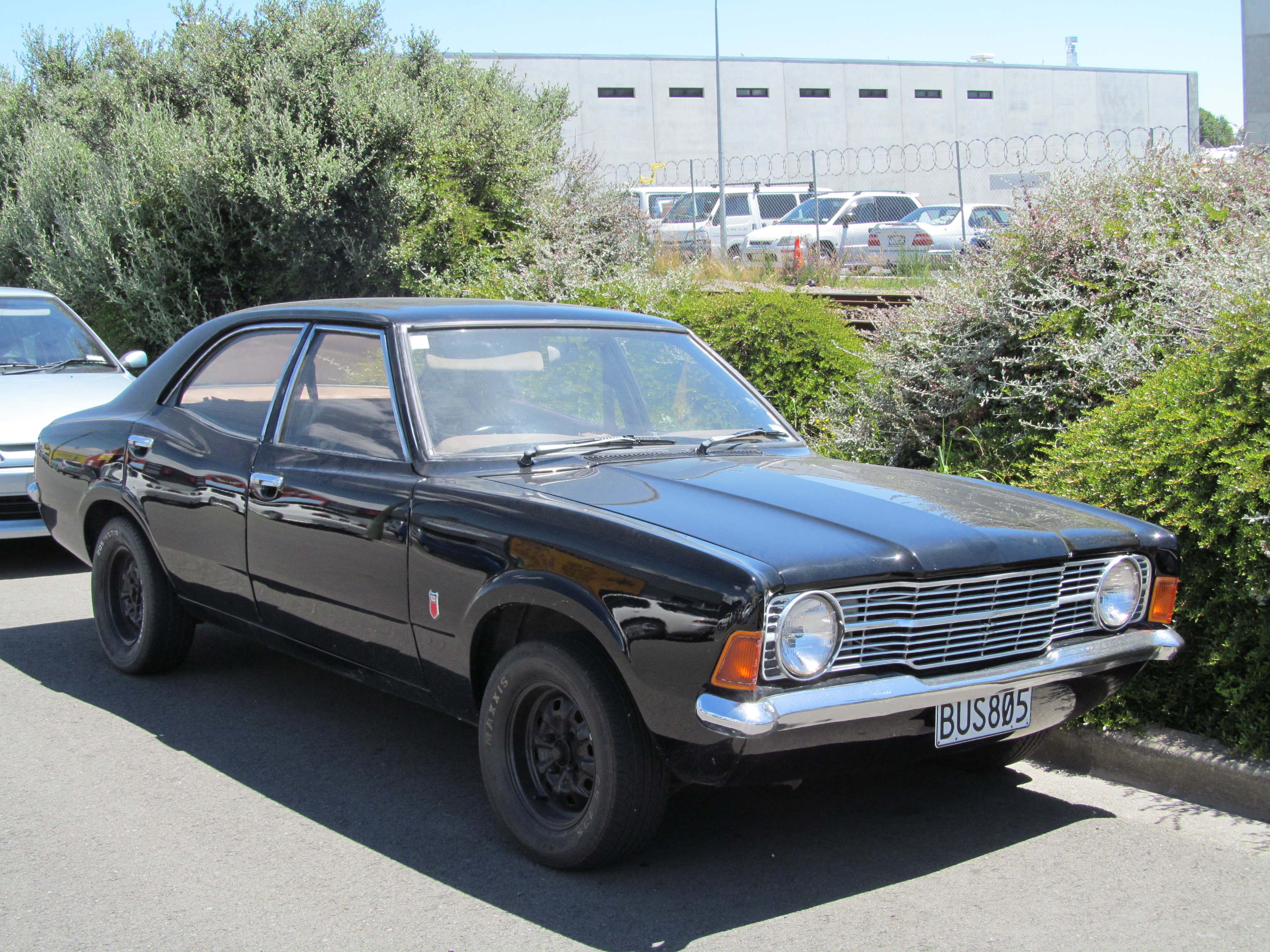
Ford Cortina
"800 pounds. It's got a, you know, 1960s Ford Cortina motor, Pushrod four cylinder 1600. So it makes ma..."
The Cortina is an older Ford model that was popular in the 1960s. In the podcast, it’s mentioned as a lightweight project car with a simple four-cylinder engine. The point is about what engine it uses and how the build is set up.
The Ford Cortina is a classic compact car from Ford’s lineup, especially associated with mid-century British motoring. In the podcast, it’s referenced as a lightweight build with a 1960s-era Ford pushrod 1600 four-cylinder engine. That kind of detail suggests the conversation is about swapping or building classic cars for performance.
Pushrod four cylinder 1600
"It's got a, you know, 1960s Ford Cortina motor, Pushrod four cylinder 1600."
A pushrod engine is a type of engine where the camshaft uses rods to open the valves. “Four cylinder 1600” means it’s a 1.6-liter engine with four cylinders.
A pushrod engine uses pushrods to transfer motion from the camshaft to the rocker arms that operate the valves. “Four cylinder 1600” indicates a 1.6-liter displacement, which is a common size for compact racing engines.
Vehicle Research Institute
"Got a degree in engineering technology there in a special program called the Vehicle Research [2255.2s] Institute, which was run by one of the most brilliant and knowledgeable... [2276.2s] And we, I don't know if you're familiar with the Vehicle Research [2280.5s] Institute."
This is the name of a school program/organization the speaker worked with. They say it was involved in building cars and doing real vehicle research, not just classroom learning.
The Vehicle Research Institute is a specific program/organization the speaker references as part of their engineering education. In this episode, it’s described as a place that built cars and supported hands-on vehicle development.
chassis, carbon fiber
"We've, we've had one of these. [2288.1s] Chassis, carbon fiber. [2290.4s] Okay. [2291.4s] You've seen these before."
A carbon-fiber chassis uses carbon-fiber composite material for the vehicle’s structural frame. It’s used to reduce weight while maintaining stiffness, which can improve handling response and acceleration potential.
autocross chassis production
"We built our own autocross chassis production, like a, built it up as a production, autocrosser [2307.4s] was a little tube frame with a one piece, like an early MG roadster body looking one"
Autocross is a motorsport format where cars run timed laps through a course of cones, emphasizing agility and acceleration/braking control. A “chassis production” for autocross implies they built a dedicated frame intended to be repeatable and usable as a platform for that kind of driving.

MGF Mg Roadster
"...little tube frame with a one piece, like an early MG roadster body looking one piece fiberglass that used a Maz..."
The MGF is a small British sports car with an open-top design. In the podcast, it’s mentioned as the kind of car that can be turned into a custom build using a lightweight frame and fiberglass body. The idea is to combine the look of a roadster with a different engine setup.
The MGF is a British roadster known for its lightweight, open-top design and classic enthusiast appeal. In the podcast, it’s referenced as part of a custom build concept involving a tube frame and one-piece fiberglass bodywork, using a Mazda RX-7 drivetrain. That’s why it comes up: it’s a popular base for kit-style or swap projects.
IMSA
"And, you know, I started watching IMSA and all kinds of stuff. And I'm like, there's a, I found out there's a, there's an IMSA team in Redmond, Bayside Motorsports."
IMSA is a big organization that runs sports-car races in North America. If you watch IMSA, you’re watching real race series with different types of cars competing on the track.
IMSA is the International Motor Sports Association, which organizes major sports-car racing in North America. When someone says they started watching IMSA, they’re usually talking about endurance-style racing series with classes of cars competing together.
Bayside Motorsports
"And I'm like, there's a, I found out there's a, there's an IMSA team in Redmond, Bayside Motorsports. I'm like, well, this close to going to work for Boeing, I was ready to take the P test"
Bayside Motorsports is a racing team. The speaker is saying they found this team near where they lived and thought about working with them.
Bayside Motorsports is referenced as an IMSA team located in Redmond. In this context, it’s the racing organization the speaker found and considered joining for work on race cars.
composites
"And, you know, I started watching IMSA and all kinds of stuff. And I'm like, there's a, I found out there's a, there's an IMSA team in Redmond, Bayside Motorsports. I'm like, well, this close to going to work for Boeing, I was ready to take the P test"
Composites are special materials made from a mix of fibers and resin. Race teams use them because they can make parts that are lighter and strong.
Composites are materials made by combining fibers (like carbon or fiberglass) with a resin to create a strong, lightweight structure. In race-car work, composites are often used for body panels and other parts because they can be both light and stiff.
pit crew
"And so I was the body guy to travel and be on the pit crew. So I was on the pit crew and it was right about the time where Bruce Levin, who owned"
A pit crew is the group that works on the car during pit stops at the track. They do fast tasks like tire changes so the car can get back out quickly.
A pit crew is the team that services a race car during pit stops—typically changing tires, making adjustments, and handling quick repairs. Being on the pit crew means the speaker was doing hands-on race operations under time pressure.

Porsche 935
"racing, turbo, 935, started racing pro stuff with some pro driver Sharon"
The Porsche 935 is a purpose-built Porsche race car based on the 911. It’s known for being turbocharged and used in serious racing, especially endurance events.
The Porsche 935 is a famous 1970s/80s turbocharged race car derived from the 911 platform, built for endurance and GT racing. In this segment, it’s mentioned as the starting point for the team’s racing progression, highlighting how turbo flat-six race cars were their foundation.

Porsche 962
"about 9-62s, which are the big prototypes and had been racing that. ... My first race was a 24 hours a day town with and we brought two 9-62s."
The Porsche 962 is a high-level race prototype made for long-distance endurance races. It’s the kind of car teams used when they wanted to compete at the very top of endurance racing.
The Porsche 962 is a Group C-era endurance prototype built around the 911/935 racing lineage, designed to win long races. Here it’s described as one of the “big prototypes” they raced, and later as the cars they brought to a 24-hour event, underscoring its role as a top-level endurance machine.
GTP
"half the IMSA schedule with the GTP and half with Indy car."
GTP is a class of race cars used in IMSA. It’s basically the top prototype category, and they planned to race in that class for part of the season.
GTP refers to the IMSA Grand Touring Prototype class, a top prototype category focused on endurance racing. Here it’s used to describe one half of the team’s schedule, contrasting it with IndyCar.
Indy car
"half the IMSA schedule with the GTP and half with Indy car."
IndyCar is a major U.S. open-wheel racing series. The speaker is saying they’d do some races in IndyCar instead of only sports-car prototype racing.
IndyCar is the top level of open-wheel racing in the United States, with races on ovals, road courses, and street circuits. The speaker contrasts IndyCar with IMSA prototype racing as part of their season plan.
Bruce
"We got Bruce managed to get full sponsorship from Texaco Havilland. ... Bruce bought it along because he figured he could find sponsorship"
The speaker is talking about a person named Bruce who helped the team get sponsorship and acquire race cars. In other words, he was a key part of making the racing program happen.
“Bruce” is referenced as the person who helped secure sponsorship and also owned/bought a Porsche 962 for racing. The segment ties his actions directly to how the team got funding and cars to compete.
Texaco Havilland
"We got Bruce managed to get full sponsorship from Texaco Havilland. ... And those cars."
Texaco Havilland is mentioned as a sponsorship source, indicating a corporate backer involved with the racing program. Sponsorship like this is often crucial for funding race teams and securing cars and logistics.
liquid cooled engine
"So we had a 9-62 C, which is the liquid cooled engine. And then we had the original 9-62 that they had had for a while, an air cooled one"
A liquid-cooled engine uses a coolant that flows through the engine to absorb heat. That heat is then dumped elsewhere (usually a radiator), helping the engine stay in a safer temperature range during hard driving.
A liquid-cooled engine uses coolant circulated through passages in the engine to carry heat away to a radiator. In racing, this can help keep temperatures more stable than air cooling, which matters for sustained high-speed operation like endurance events.
air cooled
"And then we had the original 9-62 that they had had for a while, an air cooled one"
An air-cooled engine sheds heat using airflow over the engine’s metal surfaces (often fins). Instead of coolant, it depends on the car moving through air to stay cool.
An air-cooled engine relies on airflow over the engine’s fins to remove heat, rather than using liquid coolant. The speaker contrasts an air-cooled Porsche 962 with a liquid-cooled variant, which is a meaningful difference in how the engine manages heat during long races.
Request an Explanation
Heard something you'd like explained? We'll add it to this episode.
Sign in to request explanations for terms you heard.
Want to learn more?
Browse our glossary for plain-English explanations of automotive terms, jargon, and concepts.
Help improve this episode
See something that's not quite right? Our annotations are AI-generated and can sometimes miss the mark. Click the flag icon on any annotation to suggest a correction.