Amazon Auto is a service from Amazon that helps people buy cars online. It makes it easier to find and finance a vehicle without going to a dealership in person.
Used vehicles are cars that someone else has owned before you. Certified pre-owned vehicles are used cars that have been checked and approved by the dealer, so they are generally in better condition and may come with a warranty.
A credit application is a form you fill out when you want to borrow money to buy a car. It helps the bank decide if they can trust you to pay them back.
Loan offers are deals from banks or lenders that show how much money they will lend you to buy a car and what the costs will be. You can look at different offers to find the best one for you.
The Jeep Recon is a new electric SUV made by Jeep, which is known for its tough, off-road vehicles. This car is special because it combines being eco-friendly with the ability to handle rough terrains, making it a great choice for outdoor lovers.
Battery replacement means getting a new battery for an electric car. This can be very expensive, so it's important to know how much it costs before buying a used electric car.
The used EV market is where people buy and sell second-hand electric cars. It's becoming more popular, but buyers need to be careful about things like the battery's condition.
A battery testing system checks how well an electric vehicle's battery is working. It helps buyers and sellers know if the battery is in good shape or needs replacement.
The OBD port is a plug-in point in cars where you can connect tools to check how the car is running. It helps mechanics find problems and understand the car's health.
State of health tells you how well a battery is working compared to when it was new. It's shown as a percentage, so if it's at 97%, it means the battery is still in good shape but has lost a little bit of its power.
An EV battery is the part of an electric car that stores energy to make it run. It's important because it determines how far the car can go before needing a recharge.
A battery pack is like a group of batteries working together to power an electric car. If one battery in the group is weak, it can make the whole pack less effective.
The state of charge tells you how much battery power your electric car has left, similar to how your phone shows its battery percentage. It helps you know when you need to recharge your car.
Lithium-ion batteries are the batteries used in many electric cars. They can hold a lot of energy, but they don't last forever and can lose their ability to hold a charge as they age.
EVs stand for electric vehicles, which are cars that run on electricity instead of gas. They are better for the environment because they produce less pollution.
Battery repair means fixing problems with the battery in an electric car. This can involve replacing parts of the battery that aren't working properly.
The Carfax buyback guarantee is a way to protect car buyers. If a car has been in a serious accident and is considered a total loss, Carfax promises to buy it back from you at a certain price, so you don't lose money on a bad purchase.
A battery certificate is like a report card for a car's battery, showing how well it's working. It's important for electric cars to make sure the battery is in good shape before you buy it.
EV rebates are discounts or money back from the government when you buy an electric car. They help lower the price and make it easier for people to buy these cars.
A battery performance test checks how well the battery in an electric car is working. It helps you know if the battery is still good or if it needs to be replaced.
Combustion engines are engines that work by burning fuel, like gas or diesel, to make the car go. They are what most cars used to have before electric cars became popular.
LIVE
Hey everybody, welcome to another episode of the Daily Dealer Live.
I'm your host, Sam Dark.
Thank you for joining us today in this gathering place for all automotive to learn, to share,
to grow, to have a voice.
Today you'll notice my background's a little different.
Today I'm here broadcasting live from Ziggler Motorsports in Kalamazoo, Michigan.
I'll give you a little more on that in a moment, but it was kind of a specific request from
a viewer Wednesday saying, lose the black screen for an episode.
We did it.
More on that in a minute, but first let's dive into today's automotive headlines.
First up today, Amazon Auto, the e-commerce giant's online car buying platform has announced
new lending partnerships with Chase, Santander and Wells Fargo.
For now, the partnerships extend to used and certified pre-owned vehicles only, but
Amazon Auto's does plan to expand these offerings to new car sales quote in the coming months
according to the official announcement.
Like other digital retailing platforms, customers can submit their credit applications online
and compare loan offers side by side before completing paperwork online and picking up
their vehicle from a participating dealership.
In addition to leveraging Amazon's digital storefront, market reach and sales process,
partner dealers can now offer customers loan providers they already use in store,
rather than being limited to just one or two provided by them.
They also risk relinquishing massive control over the customer relationship.
Zooming out, the more valuable angle Amazon Auto's is most likely after is collecting
data on customer preferences and financing behavior, which could eventually lead to the
launch of its own branded financial products or deeper integrations with Prime.
Super interesting to watch Amazon grow in this initiative, starting with Hyundai, then to used
and then to parts abroad.
Next up in the news today, on Truth Social, President Trump recently announced a 25% tariff
on imported medium and heavy duty trucks.
It's set to take effect November 1st, a move that will likely create more headaches for
automakers trying to figure it out.
What's unclear is how far the tariffs will reach and whether they'll include tariffs from
Mexico and Canada or countries like South Korea and Japan that already have trade deals with the U.S.
Ford, on the other hand, is largely protected here and applauded the president for its
development.
Every Super Duty Ford sells is built in Kentucky and Ohio.
GM, on the other hand, assembles some heavy duty trucks in Canada
and Stellanus builds its Ram 2500 and 3500 trucks in Mexico.
That means both of those OEMs could face higher costs if those regions
aren't exempt for as well positioned with this move.
And while light duty trucks account for most U.S. auto sales, the heavier segments
are still real profit drivers for automakers, ultimately fanning the flames of an already
tense trade environment, a constantly evolving tariff environment.
And last up today, we turn to the CDGE Bicell Tracker for an update.
Ed Candley Automotive Group has acquired Metro Lexus and Lexus of Akron Canton from Ascent
Automotive Group.
That adds two of Ohio's top performing Lexus stores to the Gantley portfolio,
this according to Kerrigan advisors.
Metro Lexus ranks first in state and tenth in its region, while Lexus of Akron Canton ranks
third.
Together, they control nearly 75% of Lexus market share in Greater Cleveland.
Now, Ken Ghandley Automotive Group operates more than 50 dealerships,
representing over 30 brands.
And the Cleveland market is one of the most ludicrous, ludicrous, oh my goodness,
that is not, it's not ludicrous, it's lucrative.
It's one of the most lucrative in the U.S. for Lexus, with less than a handful of stores
serving nearly 4 million people.
And don't forget everyone, you can see this deal announcement and many more throughout
the entire year on the CDGE Bicell Tracker at cdgebicell.com.
That's exactly right.
And that's a wrap on today's auto industry news, which brings us to co-host today.
Yuli, welcome back.
What's up guys?
And look, for everybody joining the livestream, we're live across all CDGE social media platforms.
Post your comments.
This is the place all of Automotive has a voice.
It's the place to engage in the conversation.
So if you're watching the livestream, get involved, post your comments.
We'll bring them into today's show at Enriching's, which Yuli, did you notice my background?
Do you notice I'm in a different place?
I did.
It looks like you're outside.
It looks like I'm outside because at Motorsports, you bring the outside inside to sell all the
cool toys they have here.
So we have temporarily created a stage.
We have five vehicles on the Sherman floor.
We're bringing the best person to do a walk around from the top five presentations we did
thus far.
And they will compete tonight for the crown of 2025 product knowledge champion across all the Ziggler
Auto Group.
And so I've got the five vehicles behind me.
You see a Maserati off to this side.
You see the Ford or the Ram off to this side.
Do you want to see someone do a wheelie behind you?
We should.
That would be cool.
Actually, if Caleb is watching the livestream, he is free to quietly do some sort of an EV or
something right behind me.
But it's kind of exciting.
You're going to see a little bit of chaos as people are walking around.
You'll probably hear some things because we are in an active Motorsports store.
But it's fun to bring you this unique perspective on this day when everybody across Ziggler
gathers.
So hey, that brings me to a point.
Everybody wants a voice on this show.
We welcome it.
We would love to have as many dealers on this show as we can possibly get if you want to be
on the show.
If you have an opinion, if you have a viewpoint on current events and automotive, go to cdgguest.com.
Fill out the intake form to be included in the show.
And then final up today, you can join us at the NADA party that's happening in Vegas on
Thursday, February 5th.
You'll be there.
I'll be there.
A lot of our guests or some of our guests who've appeared on the show will be there to be
considered for a formal invite.
Hit the link in the show notes, request to join and fill out a questionnaire.
Spots are limited, as we've said.
And unfortunately, we can't invite everyone.
So RSVB today to be considered for an invite.
And we hope to see you in Las Vegas.
And by the way, Lauren Klein reminds me.
She says she's watching today's show from the showroom floor.
We've had people in sky lounges.
We've had people in air watching the show live.
I'm now watching from a showroom floor myself.
So I'm excited to be back on the retail showroom, lose the black background for a day.
So all right, well, let's dive into it, Yuli.
Let's turn to Operations Director, our first guest of Lascaux Auto Group, Kelsey Riley.
Welcome to the show.
Kelsey.
Hi, Sam and Yuli.
Thank you for having me on today.
Kelsey, we're pumped to have you on.
You're actually on the opposite side of the state from us here at the Ziggler Auto Group.
We're in Kalamazoo.
You're in, well, tell us where you are.
Where you are.
So we have a Ford store in Fenton, a population of about 12,000.
And then we have a Mitsubishi store in Grand Blank.
Nice.
Oh, okay, very good.
So you're just north of Detroit by a little bit, right?
Yeah, about 45 minutes north of Detroit, about 20 minutes south of Flint.
Yeah, okay.
Well, hey, we always start with one question on the Daily Dealer Live.
And it is, how is Biz?
So tell us how is Biz.
And along with that, tell us a little bit about who you are and what you do at the dealership.
Okay, so as far as who I am, I've been here going on 13 years since I graduated college.
Obviously, nobody like, you know, as a kid is like, oh man, I want to grow up and work in a
dealership.
But I came in shortly around my graduation time and moved back home, had some sick family.
My best friend was working here.
She's like, hey, I got you a job.
Like, okay, awesome.
Had no intentions of like sticking around was going to go to grad school, my degrees in biology.
And then fell in love with the business.
Wanted to learn as much as I could.
You know, really kind of came up in the variable side and I went through NADA Academy and learned,
you know, fixed operations and that type of thing.
And I have a partner here who comes from the variable or the fixed ops side.
So between the two of us, we've got like a good foundation of experience between the two departments.
But really, I mean, we're in growth mode this year.
We're up about 415 units year over year.
Wow, nice.
So we're having 15 more units a month right now.
We got our first president's award ever last year.
So that was awesome.
We've been a business since 1983.
We're family owned.
So that was a big one.
So you're up 400 units.
How many units do you sell a year?
A year?
A year.
We are tracking about...
It's not a test.
Yeah, sorry.
You can make up the answer.
No, I'm kidding.
Don't make up the answer.
And by the way, you'll hear paging in the background.
Somebody was paging for somebody carry.
That was not for you, Kelsey, just so you know.
But that was my background.
I'm kidding.
Um, we're trending to do about 3,250 this year.
Okay.
So we're doing about 275 units a month right now.
Our goal is to get over that 300 cup.
Yeah.
So you're about 15% up.
So when you think about that increase,
that's a substantial increase even compared to other dealers.
What's one thing that you would attach to that increase
in unit sales this year?
So it's causing the increase.
We've really focused on people in process, I would say.
Making sure, you know, as a good degree says,
like having the right people on the bus, right?
And then once you have the right people on the bus,
finding the right seats for those people.
And we had the right people on the bus.
And we moved some people around and that type of thing.
I've really got them in spots where they flourish.
We focused on like the team atmosphere and growth and employee experience.
Because if you don't have a good employee experience,
it's really hard to have that, like, you know,
top to your customer experience.
So those are kind of things that we have really honed in on.
And without the people in process,
it's really hard to get the volume and then the customer retention with it.
All right, so you talked people, process, and retention.
I want to come back to process in just a second,
but I want to take you back to a comment you made earlier.
And I think it's a truth.
You said, I never intended to be an automotive.
Like, you got a biology degree, you know,
you probably had other plans.
And then you came into automotive, it took you a hot minute,
but then you decided at some moment, hey, this is for me.
Same path, right?
Yeah.
What is it about automotive that causes people to say,
hey, I'm not going to do this forever.
I'll do it for now.
And yet people stay.
And what is it going to take for us to kind of lose that stigma?
So I was just going to say, it was the stigma, right?
Like when she was, my best friend had, you know, got me in and she was like,
I was like, man, I really don't know, you know,
dealership doesn't have the best stigma, right?
Well, why stuck around?
I mean, we've got amazing owners.
We've got an amazing team.
I love that we're family owned.
I love the chaos of the day.
So we have, you know, 165 employees company-wide between sales and service and ROs
and all that type of thing between the two stores.
We probably have close to 1600 customers coming through each month.
So it's just, no day is the same.
And I love that challenge, right?
And it also like you get in the room with like certain people
and everybody just motivates you to be, you know, not to sound cliche,
but like 1% better every day.
It's the goal, right?
So Kelsey, you mentioned having the right person on board.
Where are you finding, you know, given the stigma and given the allure of automotive,
I think this is the best kept secret in employment in the United States.
Like not enough people realize how great it is to work in an auto dealership
or as part of an auto group.
Where are you finding your best employees
that are the right people to bring on that bus today in 2025 October?
We have a lot of tenure.
We have a lot of sales reps that have been with us for five, 10.
We have people getting 15, 25 longevity awards and that type of thing.
And I know that you have had people on in the past that have maybe talked about,
like sometimes it's like bad to have that retention that long.
But I think when you have the right people, it's what stabilizes you
in a challenging market.
Like obviously automotive has been like pretty volatile since COVID, right?
So having the right people, recruiting, and then when you have that environment
that people do well in, they tend to refer, you know, other people that they've worked with.
And we do get a decent amount of our staff off of employee referrals.
All right, so now turn us to process.
Turn us to process for just one second, Yuli, and then you can come back in.
So you've got the right people and they're on the bus and they're rowing in the same direction.
They're bought into the vision.
What's one process in 2025 that has helped you to capitalize and get that increase?
So you've got this team launching towards the goal.
What's a process you've implemented where you're like,
hey, this is really driving increased sales for us.
This is going to sound very simple.
We've worked on communication internally.
So we have a morning meeting.
Every morning, it starts at 8.45 with the sales staff.
We have email communication with updated numbers and that type of thing.
Everybody knows what the mission and goal is for the month.
Like if you don't have a mission, it's kind of hard to have a goal
of what everyone's trying to strive for, right?
I would say that that's like the biggest thing in our process.
And we still have challenges with it.
Like communication is, I think, every organization's Achilles heel to some point.
But is there a technology tool that you're using to help forward that communication
that other dealers could implement to help improve their own if they're like,
hey, we're two or three rooftops.
We don't communicate well enough.
And if we did, we'd sell more cars.
Is there a tool you're using to communicate with?
We use Teams.
So we switched to Microsoft Office about two years ago.
And it's easy.
Like you can have the apps on your phone.
There's chats in there, the email, all that type of thing.
The Teams calls makes things, I would say, roll a lot smoother.
We also obviously have our text group chats and that type of thing as well.
In regards to processes and your tenure,
because obviously there's a tremendous amount of upside
for having the same people that are there greeting your customers
and creating that welcoming atmosphere.
But there is that negative potential with people that are a little accustomed to being around.
Being that your group is so successful, what helps you guys implement new processes in 2025?
Because I would imagine your car buying process,
while being pretty linear since the beginning of time,
has evolved dramatically over time.
So how do you get those people to adopt the new processes that you put in place?
So I will tell you that that has been a little bit of a challenge.
We've been on a mission of growth for really about the last year and a half or so.
We've hit our hurdles just as anybody would, but you keep pressing.
And you find out the people that are bought in and want to press forward with you
and they want to be on a winning team.
And then you can kind of see the people that maybe
that's not their mission or their goal.
And same thing, you have to adapt to everybody on your team individually.
It's not a one size fits all thing.
So like where communication, we do it in all different methods.
Some people are really great at reading emails and I know some people aren't.
So I might send them a text message instead, but they still get the same message.
I think as a leader, you have to adapt to your team to a certain extent to be able to have the success.
So as head of operations in your stores, Ford Mitsubishi,
you've got KPIs that you're communicating frequently and helping to keep everybody
focused on mission and goal.
What are some of the most important KPIs to you on the sales side that
you focus the team on as you're communicating?
Obviously we have volume goals with our manufacturers and then our CSIs, extremely
important at both stores or NPS with Ford is kind of what it's called now, but all in the same realm.
Those two are probably the biggest factors.
Obviously you want to hone in on the EVs, which we hit our objective each month with those.
But SSI would say or CSI and volume are two biggest ones.
I think when you focus on too many things, it becomes kind of convoluted as to what the goal is,
but if you can do volume and you can get good customer satisfaction,
then you can pretty much hit the tick on the rest of them.
So with a 15-20% increase in on the year and unit count, what keeps you up at night as head of
operations? What are you thinking about as the next big obstacle you've got to solve for
as we launch through the end of 2025 and beginning 26 Q1?
That's a loaded question. A lot of things keep me up at night.
Such as?
Such as making sure that we do have the right tools and processes to get to the goals that
we're trying to achieve. Our team, making sure everybody's mindset is everything,
making sure that when they walk in the door that morning that they left whatever was outside of
work or whatever the yesterday brought is a fresh mindset. Use cars, acquisitions, making sure we've
got enough cars in the pipeline coming in and that recon's going smoothly and that we can get
things, you know, our time deline's down and we can get things on the lot fast for our turns.
Just kind of a mix of everything really. I have a remarkable, and it like basically is next to
my gut at night and I'll wake up and I'll like write it out. I love you. I've got a remarkable
as well. Hopefully you have the new one that's backlit. They're a great piece of technology.
So last question up. Last question up. So Ford is the most recalled OEM this year,
year to date, right? Where do you see the opportunities in those recalls and then also
what are the challenges for you in a dealership in eastern Michigan?
So when it comes to recalls, I would say we have a phenomenal service team that's here to
help support any of our customers and that type of thing. We have a mobile service team,
they go out, they do recalls. You know, we try to best serve the customer in that realm. The
challenge would be is, I guess, can come along consumer confidence, right? However, we're not
the only manufacturer with recalls. We just happened to be this year, but everybody has them. So,
you know, it's just part of doing business, I would say. Any message you deliver to Ford about
fixing it or figuring out what's going on? I know that they've talked about it in meetings. They
have processes that they're working on to implement better quality control when it comes to those
types of items. And hopefully in the future, we don't have this type of thing in the headlines as
much. Well, Kelsey Riley, Operations Director Alaska Auto Group in eastern Michigan north of
the Detroit area. Thanks for joining the show today and sharing your perspective on your journey
and what it takes to win in today's environment. Thanks for being on the show, Kelsey. Thank you
guys for having me. Thanks, Kelsey. It's an interesting conversation. It's, you know, I'm
always fascinated to talk to people about the recall thing because it's like, hey, where do you see
the opportunity? Where do you see the challenge? How do you focus your team around the opportunity?
Because at the end of the day, recalls don't hurt the store. That's more service revenue,
but she's right. You've got to build confidence in your team so that nobody freaks out before
they fix it because they're going to fix it. They're going to fix it, I think, quickly. And
they aren't the only ones that are challenged with that. So, Uli, let's talk, get Appraisal Pro.
So, stop losing thousands on trade-ins with hidden issues. Appraisal Pro scans in seconds
on covers reconditioning costs and integrates directly with Viato. Try Appraisal Pro free
for one week. Visit appraisalpro.com to learn more or click in the show notes below. And I actually
just did an industry spotlight with these folks that will get released on Saturday. I was actually
surprised by how inexpensive the tool is and how transparent it is and how much information it gives
you about the vehicle when you're trying to make a buy decision. There's not a lot of things I get
that excited about, but when price matches technology, that's a winning solution. So,
Appraisal Pro, thanks for joining the show and watch out for the industry spotlight on Saturday.
I think that's when it releases anyway. So, well, let's turn up to our next guest,
founder of Avilu, Wolfgang Berger. Wolfgang, welcome to the show.
Hey, thanks a lot for having me.
Dude, you've got a headset. I need to get a headset one of these days. That is very cool. So, we
appreciate you being on the show. Thanks for coming. You're going to talk to us about something
that in my mind is a fascinating problem in all of automotive. You've got used car managers. You
have the consumer public out there trying to figure out how to buy an EV well. And on the
reverse side, you've got the reality that the most expensive component of an EV. Yuli, we talked
about this. A Ford F-150. What was the battery replacement on that Ford F-150? 74,000.
So, when you're buying a used EV, you can't afford to make a mistake on figuring out the
condition of that battery. So, as kind of a setup to that, Wolfgang, I'd ask,
how's biz in your world, in your company, and then what do you do and tell us a little bit about
your company? Sure, sure. Thanks, Sam. Yeah, business is great for us. The used market for EVs is
picking up around the world. And as you know, we sell our battery tests in Europe, in Asia,
and of course, in the United States. And the first waves of used EVs are coming in, hitting the
used car markets. And we help car dealerships selling them better, selling them at the better
price with the help of our battery testing system. That's very cool. Very cool. So,
is there, you know, you've got a battery test that will give the consumer and will give car dealers
a picture of the battery. How does it work? Like, how does that proactively work, a battery test,
in this case? Yeah, I think best, in the best, I just show you that very quickly on a vehicle
by coincidence. This has never happened before. We got a live demo. Holy cow. This is a daily
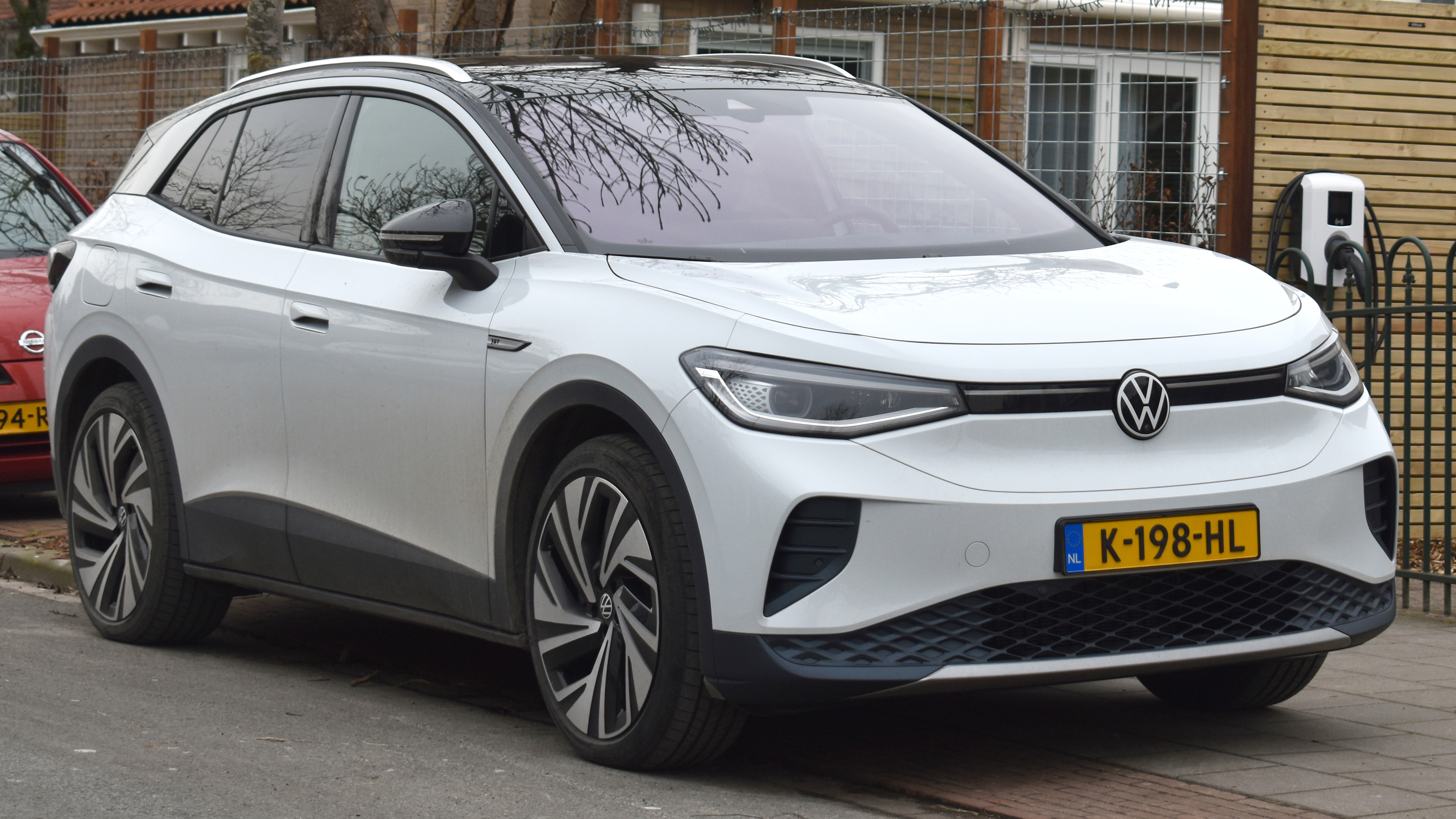
dealer live industry first. Yeah, live demo. Very cool. That's a Volkswagen ID4 full electric. And
in the center of our system is the Avila box. That's how it looks like. And what it does,
it connects to the so-called OBD port of the vehicle. And really everything you have to do is
switch on the vehicle, make sure it's on, and then connect the box to the OBD port. We do that here
with the help of an OBD extension cable that comes in the case that we ship. And that's about it.
You do not need to enter any data, any app or anything. The box itself already comes with a
SIM card built in. So it gets the internet connection via the 3G network and starts sending data
back to our cloud system, back to our servers, where we have developed machine learning systems,
an algorithm that can independently conclude to what is called the state of health of the battery,
what is ultimately telling you how good is that battery working. And that result is then handed
out to a customer in the form of a battery certificate. You see the state of health. Again,
that's a number in percentage. It's like 97.9% in that case. And that gives the confidence
to the consumer when he is buying a used electric car. Because you're totally right,
the battery is tremendously expensive. It's easily 50% of the whole vehicle value. So you might want
to check brake suspension and everything, but the money sits in the battery. So what are some of
the things from your industry expertise that make an EV battery go bad? Or what causes problems in
the battery that a used car manager might not realize? There's a lot of issues that can happen
in a battery. It can be from manufacturing, from day of manufacturing. There could be a defect cell
in the battery pack. And the weakest cell defines the whole battery pack. So if you got one weak cell,
your capacity of the battery will go down, your range will go down. And then, of course,
you have the usage of the car. I mean, we all know there are certain aspects that are not
very good for a battery, like a lot of fast charging, a lot of high strong accelerations,
hot temperatures. And as a used car buyer, you obviously you don't know how that battery has
been treated before. And that's what we tell you is the battery test. And what we do is we help the
car dealer, right? We're the ally of the car dealer. We help the car dealer to sell an EV with
confidence. And the numbers are showing that car dealers get all the way up to 500 or 1,000 euros,
a dollar, sorry, more for an EV if they put it on the market with one of our independent
certificates. So what's the difference between this report and the status report that shows up on
the dashboard of the EV, like? Well, you're probably referring to the state of charge,
which is shown on the dashboard, which has, which you can tell I don't own an EV. So yeah, no.
Yeah, you get the state of charge, which tells you the car is fully charged, but even a bad
battery can be fully charged. And you know that from the smartphone, right? When it's brand new,
it's all good. And after two years, it's empty at lunchtime, even though it was fully charged
in the morning. And that's because these batteries, these lithium-ion batteries,
they get worse over time. They degrade, right? They cannot store energy as good anymore.
And the same thing happens in an EV traction battery worth tens of thousands of dollars.
And that's why we need the battery test. The consumer wants to see it and they're ready to
spend more. So what makes your test so proprietary that you're able to provide information about
the battery that the manufacturer that EV doesn't provide on the dashboard? Like, it seems to me,
I get it in the gas engine. There may not be as much diagnostic stuff available to like,
give a report like that back. But in EVs, like, it's in there somewhere. Like, why don't the OEMs,
why don't the manufacturers make that available on the dashboard or in a report as a printout?
Well, it's, it's a very complex matter. Yeah, we have a team of 80 people working on that for
seven years now. I did start the company all the way back in 2016 when I got my first EV and,
you know, I was quickly sold on EV and thought about services that would be needed
in the future. So it's a complex thing. And we spend a lot of time and effort to do that.
But more importantly, even is that our test is independently, right? It's independent. You might
not want to have an OEM telling you that his battery is great, right? You want an independent
assessment from a third party, inspection party. And that's the role we play as an inspection
company here, providing a test system that is independent. It's also harmonized across all
brands. So we calculate the state of health in the same way, no matter if it's a BMW, a Ford,
or any other brand. So it's that independent aspect that's really important.
So as you think about all the different manufacturers, Tesla and everybody else that does EVs,
is there a, is there a type of vehicle that's tougher for you to pull this diagnostic report
from as you spent all these years with all the engineers trying to come up with it?
Well, as you could probably guess, Tesla is making it more difficult than others. Yeah.
But there's, we still found the ways or there is, you know, adapter cable that you need,
but it comes in the box. And as a car dealership, you can test all different Tesla models. And
you don't even need to know which model exactly it is. There is such a variety with different
battery sizes. Our box, once it's connected, it's able to figure out exactly what battery variant
is in the vehicle, and it'll be printed on the report. Wolfgang, do you agree then that if we're
trying to focus on sound used EVs, which is going to be this next wave that's coming through,
the battery health is an even more important indicator of quality of the vehicle over mileage.
Like I think a traditional used car buyer is always sorting by price and miles, but you think
we're going to get to a point, or should we get to a point where we are leading with, hey,
here's my used EV. It has 97% battery health. Absolutely. So we could even say the state
of health is the new mileage, right? Because you can have two exact vehicles with the same
mileage even, and one has a great battery health and the other one doesn't. So the mileage doesn't
help you a lot anymore, right? It still helps you on evaluating wear and tear on brakes and tires,
but not on the battery anymore. And some used car platforms have already started to introduce
filters and the value where you can even sort out vehicles and say, hey, show me only vehicles
that have a battery test or that are above a certain state of health, right? And that's certainly
going to be at that value that defines the whole value of the used EV. Do you think that this will
start to become a tool in service departments? Like, if I'm a customer, I've got my EV, I'm bringing
it into the service department. Maybe I'm a GM dealer. Like, do you have some dealers that will
plug it in, assess the health, and then they'll, they'll suggest repairs to the vehicle to the
battery, even replacement based on that health report? Yes, absolutely. It can be used in the
service business, could also be offered to a customer as a service. And the good thing is
that our battery test is really down to a cell level. So we are able to identify a defect cell
and therefore a defect module so that even it's helpful for dealership to know which
module could be replaced if, you know, if we're talking about battery repairs.
And we can identify that very cell that is causing the trouble.
Lauren Klein asks a great question online. She says, is there any kind of guarantee you
offer with this information, thinking about like a car fax buyback guarantee or something similar?
Yeah, that's a great question. Stay tuned on that. There is more to come. Something along
those lines will be introduced early next year. Yeah. So what's the charge to a dealer for
having this diagnostic tool in the store? How do you do that? Yeah, so what we do is we license
the equipment. It's a 40 US dollar per month and box or per rooftop. One car dealership only needs
one. So it's a relatively inexpensive device. And then we charge $35 per battery test. And
what we see is that car dealers are able to sell their EVs for anywhere between $501,000 more
if they put it online with one of our battery tests. So the 35 euros comes in multiple times
easily. So the per pole includes the certificate plus some sort of a link where if they want to
post it online, it'll kind of like a car fax report. Is that what you're saying? It's quite
similar to that. Yeah, the battery certificate is issued in real time. It's sent over to the
car dealer as an email attachment or some larger customers are using our API to integrate it directly
into a dealer management system. And then they can use that and put it directly on the use car
platform so customers can see, hey, this is a tested vehicle. It has a Navilo battery certificate. So
I can purchase this vehicle with confidence. So EV rebates are over. I'm going to ask is your
last question to pontificate a little bit on what the future of EV looks like here in the United
States. What do you what do you make of demand and use cars for EVs over the next six months?
Do you have any opinion or feedback on that? Yes, I mean, currently we see relatively low prices
for used EVs. That's not because these are cars are bad. But of course, there is always, you know,
new cars coming in a bigger batteries faster charging time. So technology evolves very quickly
on EVs. But I think we have reached a point now where you can you can buy a two, three,
four year old EV without, you know, hesitation, of course, as long as it has a battery test.
And I'm pretty sure we'll see used EV prices rebounds and getting up again, because they're
just very low now. And these are great cars. So if you're in the market for used EV, go for it now.
You get a lot of car for for a little money. So what does a service department do? I've got like
a let's say I've got a Tesla. It's a used car. I've already bought it. I run the test.
The battery performance test says it's not good. What do I do with that car?
Well, you might still have, you know, there might still be a warranty on it. So you have,
you know, you have a proof in your hand that the battery needs, you know, needs repair or needs
replacement. So it helps you a lot to turn back to, you know, your AM and claim claim battery warranty.
And ideally, as a as a on a car dealership side, right, if you if you're taking trade-ins,
if you're buying EVs, you run the test before buying them, right? That avoids you to buy any,
you know, a bad any lemon here with a bad battery. And on the sales side, same, you run the test
and and and your your customer will appreciate the transparency and customer sees dealerships
that offer that certificate just as way more trustworthy and reliable than than dealerships
that don't. Yeah, that's fascinating. You know, really, you're working to solve a major concern.
It's interesting. You think about like plasma TVs 20 years ago, super expensive. They came down as a
technology got less expensive. When do you think the the cost of EV batteries will come down to
answer it with some of that other technology? What do you see the next six 12 months? Well,
we get some relief. Well, because of batteries, they came down a lot in the last five years,
right? It's a long process, not about six or 12 months, right? But I think we will very soon see
price parity between gasoline cars and EVs, right? Where you, you know, you get a very,
a very nice CV for for the same price as a gas car. And then, well, you can make your choice.
Yeah, but there's very, you know, ready for the simple cars, you don't have gearboxes that can
break down or clutches or anything like that. And, you know, of course, driving EVs, I love them,
I love the acceleration and the power they have. But, you know, both cars are great. Some
also mechanical engineers. So I also love combustion engines. Yeah. Well, Wolfgang Berger,
founder of Avalu. We appreciate you being on the show sharing your perspectives on all things EVs,
battery, battery health and how to make sure you don't how to avoid that time bomb of buying the
wrong EV with a bad battery. Wolfgang, appreciate you being on the show. Thank you very much for
having me. One last word. If you're a digital dealer week in Vegas or use car week in November,
or as you mentioned at another show in February next year, we will be there. So
we can see you at any of these trade shows around the US.
Thank you. Thanks for the live demo, too. That was super, super cool.
Thank you for having me. Thanks, Wolfgang. Bye.
It is a problem. Like, how do you buy a used car when you don't know what's lying under the
hood? And you know, it's interesting you think about the best used car managers and all of
automotive, they can feel the problem in that in turn, you know, the ice engine, the gas engine,
the old engine. So they say, although sometimes they may not be right. But EVs, you got no idea,
you get in there, you're like, it seems okay. I do this once a year, not EV related, but I get
a new iPhone every year, and I list my old iPhone for sale. And now they stack them based off, yes,
price and battery health. So there's no used electronic listing that has a battery that is
now not taking into account battery health, because that's what matters. Why don't the
manufacturers put battery health on their dash? I don't think he hit the nail on the head. I think
it's probably to separate themselves a bit. They got what most of them have a 10 year, 100,000,
right? So. Yeah, well, Lauren Klein says battery lifespan is one of the biggest hang ups for
consumers. Looking at a pre owned EV, and I think that's absolutely correct, just because we don't
understand it. So companies like his Wolfgang, they're kind of dispelling the, the, think about
handing 150,000 mile gas car compared to 150,000 mile EV, but the battery is 97%. Like, yeah,
two completely different cars. Yeah. All right, let's, let's keep going. Next, we turn to director
of learning and development at principal auto group, Fabula Mathis. Welcome to show Fabula.
Hi, thanks so much for having me. All the way from Texas. So Fabula, we're going to ask you
our first question. We ask everyone, which is how's business is part of that? Just tell us a
little bit about yourself and your auto group. So I'm with a principal auto and we are a multi
rooftop across different cities that we have store out in Memphis. We have one in Greatvine,
Corpus Christi, and then also here in San Antonio in the Bernie area. So we are definitely expanding
and growing pretty quickly. Very cool. And how's business? Business is great. We're actually
looking at different options for, you know, acquiring, like for example, we just had our
grand opening at our Hyundai of Bernie store, which is fantastic, especially since the Bernie in
the hell country area are growing pretty, pretty quickly there. Yeah. So you're the director of
learning and development from your perspective as you're growing quickly. What are some of the
best practices that you're implementing to help ensure culture stays intact and people are able
to execute and do the do their job correctly? What are some of the tips you'd give groups that
don't have a department dedicated to what you're doing? So the biggest thing is I have a fantastic
recruiting department that does really great job at getting the right people here. We do a culture
index that kind of helps us to bed personalities because when you're a certain type of personality,
you know that you're either going to thrive or you're going to have a little bit of difficulty
in a role that you're in. So that's the first thing that they do is they make sure that the
recruiters are aligned with the culture of the company and what they're looking for. Okay. I'm
going to stop you there before you go to the next one. So you said a personality test. Which
personality test do you do or what test do you do to kind of test for that? What are you looking for
when you do that? So what we're looking for and that is just your personality. So I can kind of
show you on my name tag. I was like to take it off and show it. So this is what it looks like on
everybody's name tag. There we go. Okay. And it kind of gives you different points on someone's
personality. So for example, the red dot means something different than the yellow, the blue,
and the green. So everybody has this on their name tags throughout the entire organization. So when
you have a conversation with somebody, you know how to speak to them. So that really helps in
development and growing the right culture because you want to have the right people in the right
role kind of like what Kelsey was talking about. So from a practical standpoint, I know their
personality. I see their graph and I walk up to you and I see your name badge and presumably I'm
trained enough that I understand what those dots mean and what is their different language that I
use to engage with the person that way. And then like what's the impact from a financial standpoint
to the group utilizing that? So the biggest thing is yes, just like we have a different
conversation with everybody. Back in the day, like when I was selling cars, they taught you
one way and one way only, which was no way. All they would do is hey, go get a customer and you'd
be like, I don't even know where the bathrooms are. Like, come on guys, help me out here. And so
this kind of helps us teach them about communication, which is number one thing that I tell everybody
all relationships in your life are going to fail if you don't learn to effectively communicate with
that. But Fabiola, you don't need to focus on communication today. It's all about AI and technology
and texting and Snapchat. Like, I don't need no stinking communication. What do you say to that?
Of course you do. You know, consumers are still coming into dealerships and a lot of people think
that they can buy online, but people are starting to see, hey, I did buy it from Carvana and I didn't
have the best experience because you have no experience. Something just showed up like an
Amazon box to my front door and there was nothing emotional about it. There was no excitement. There
was no buildup. There was no cycle of purchasing. So I tell everybody, this is all emotional and
relationship based. And if you don't have the right people that know that and can actually see it
from a standpoint from hiring, then you're going to fail. You're going to fail at putting the right
people at the right places. So let's go back to your name badge and then we'll go to our next
topic. But I'm super curious about that. Showing your name badge with the different dots,
will you just walk us through what dots specifically tell us and then we'd love to know
which test and how much the test costs. So I see the red dot. I see the yellow dot. I see
I think blue and then green. I think is what I've got. So what does that mean? How do I interpret
that as an employee of principle? So kind of as a good rule of thumb, the red one is about power
and taking on challenges and being a leader. So for example, mine is far right. So I tend to
take on leadership roles immediately versus somebody who wants to be told what to do and
wants to be directed instead of taking the direction upon themselves. Somebody is yellow. I am far,
far, far right. Yellow, which means I am a social butterfly. So somebody who is far left tends to
work really well in a support role. For example, maybe in the parts department where you're not
constantly communicating with a lot of people, but you're very organized. The next dot is going to be
your blue dot and your blue dot is actually your patience. So that's kind of one of my
bows in my life that I don't have. That means you don't have patience. Got it. I don't have patience,
but for me, it's more of I don't have patience when somebody's investing into you and they're just
not caring. That's my answer, by the way, when people don't try hard enough and realize their
potential. That's the frustrating thing. So what's the name of the test and how much is it?
So this one is I'm not familiar with the actual name. All I know is we have it internally for our
company and we just call it our CI test and it doesn't cost the service person or the new employee
anything. We do this at recruiting. So when you first come into the company, it's all about
knowing who you are so we can get to the next conversation or not. So and then the very last
one is kind of my favorite. It is the green button, which is about structure. So are you somebody who
thrives in a structure like area? So this is somebody who like for me, I've have always taught
whether I was a general manager or the director of learning and development. I've always been very
process oriented. You know, you do it one way, it builds your confidence and there are some people
that are just kind of wall flowers. They're kind of, you know, the butterflies that just like to
pull creative from everywhere, but those people are great in different roles as well. So I think
it all starts with finding the right people. It is truly interesting about in automotive. You
got to find the right people for the right roles, but just because they come in in the wrong role
doesn't mean they don't necessarily end up in the right way, right? If you've got a super intentional
approach to trying to figure out how do we career path you through the organization. Automotive
is great. There's plenty of room for everybody. You can find, I think you can find that right
role. So one challenge and you kind of alluded to this fabula is beginning employment at any
auto group. So our prior guest said, Hey, I got into automotive, never thought I'd stay, by the way,
same here, right? I always thought I'd go on and have my real job at some point. How do you,
how do you a principal auto group think about that day one and that first week or so,
giving an employee a great experience so that they find they feel fulfilled at work.
What does that first day and first week look like for you? So basically that has actually
been the biggest thing that they brought me in for was to focus on that is onboarding,
because if you have a first grade impression, it doesn't matter if you're the receptionist and you
have a big smile or you're selling a car or you're an ASM, the first impression is everything.
So we want to have a great first impression and say, Hey, we're here. We're here to support you.
We're here to give you some structure. And we want to make sure that you thrive in that environment.
So what I put together is a 10 day onboarding program for all client advisors, which are sales
people. And I go day by day, hour by hour, what they should be doing within the first two weeks.
So you work Monday through Friday for the first two weeks. And by the time you finish your second
week, you will have already taken a nap, taken a phone call, know how to make an outbound phone
call, know how to work for internet leads, and then also have your expectations from your leadership
team. So if you're closing at a percentage less than this, you're going to be, you know, put back
on probationary so that you can learn a little bit more about it. Maybe you're not so strong on the
phone. Okay, well, if you're closing less than this percentage, then we're going to put you back on,
you know, shadowing somebody. And I know as a manager that I can follow up with that
by using KBS. How do you track all that fabulous? Is there a system or a process that you track all
that? Because presumably you've got a lot of employees between you've got Toyota, BMW, VW,
Hyundai, Mini Volvo, Infinity, all that. How do you track all that? So what I do is I actually
track every single one of my owners every single Monday. And I have a meeting with them at 1030
every single Monday, because everybody's here for first and second shift. And I just have
honest conversations with them. Hey guys, how's it going? Do you have your onboarding? Do you have
your manager supporting you? Do you have your logins? And I go by that checklist and make sure
that they're holding them accountable. So on that sheet that I've created, you have your day to day
and it asks two questions. The first question that you're asked at the beginning is, what do you feel
confident in doing today? And number two, what do you find as a challenge already? So asking those
questions and sitting down with your manager on a day to day basis for two weeks is giving them
purpose, giving them structure, because if somebody can learn to have structure within the
dealership, they're going to thrive in anything that they do. So it also it kind of keeps the
manager accountable as well. So hey, it's your job to train them, because the salesperson doesn't
fail because of themselves, they fail as a combination of both. So the sales managers really
have to be there to support them. And the employee has to be there to listen as well.
So what do you do fabula with those sales people, finance people, GMs, others that are like, you
know what, fabula, I appreciate this. Thanks for all the structure and all the training help you're
doing. But you know, it's not for me. I'm really good at selling cars and I can do it without any
help. I don't need, I don't need this. I don't need to take the personality test. I don't need to do
all the other things. What's your response? Because you run into that, right? Yeah, all the time. And
I tell them, hey, if you're selling 15 cars, you do you boo boo, you know, just kind of one of those
statements. And I tell them, hey, if you're thriving the way that you're doing it. Yeah. Hey, if I teach
you one thing today, whether it's how to progress, how to change your vernacular, how to do something
differently so that you can get ahead. Because, you know, the definition of insanity is doing
the same thing and expecting different results. Well, if you're tapped out at 14 cars, and you
can't get past that, maybe anything that I will say in the next day or two will help develop you
into getting to that 15 car guy, that 16 car person. So constant development is actually
something that everybody should seek. So if you are not seeking constant improvement and growth,
and especially in this industry that, you know, just like Wolfgang was talking about EVs, we've
got AI coming in, we've got so many changes that if you're not progressively changing with the
business, you're going to fall behind and you're going to be stagnant and then you're going to
fall below the pack in comparison to somebody who's actually actively changing and wanting to grow.
I love that response. I love that answer. And here's what's the truth of automotive today is,
if you got into automotive as a salesperson four or five years ago, three to five years ago,
you completely misunderstand a lot of them do about what it takes to succeed, right? A lot of
those X's and O's, dotting eyes, crossing T's just got missed during the exuberance and the crazy
times that were started in 2020 and kind of went up to a couple years ago. Training sales people
is awesome. Is there like a training system that you're utilizing or when you're thinking about
training on talking to a new customer and going through steps to the sale and whatnot,
who, what process are you using and who's conducting that training fabula?
I'm doing all of that training. So I travel amongst all six of our stores. I actually created the
principal sales principles, which do a step by step, starting with the meet and greet, ending with
your follow-up. And I go step by step at every single store. I make sure everybody signs in and
learns the way to develop a customer because you don't eat a chocolate cake in just one bite. You
got to take little baby bites and learn. And I've never been a type of person that can sit in a
classroom and learn by PowerPoints. I'm totally against that because when you're in the car business,
your brain works way faster than normal. You know, all of us are high energy. We got to go. We want
to learn in 30 seconds. Let's go. Let's sell a car. And so my coaching, I keep everything under 30
minutes. And most of my coaching is one-on-ones. So I spend most time sitting down with my sales
managers. So what I do is at the beginning of the month and mid-month, I sit with every single
manager and I go over their KPIs of their team. And they tell me who they see is struggling
through their KPIs and through their personalities. So that's when we game plan together kind of like
as a team. And then that's when I go sit with those people that need a little bit more development
in something because I'm a one-size-fits-all versus everybody's going to fit to what I want to do.
So what you are doing is so important in automotive today. What would you say to
a dealer principal that's watching this show today in October of 2025 and he or she are like,
look, I'm not sure it's worth the investment for the type of role Fabiola has. Like,
it costs to have that role in. What would you say to them about being reticent or hesitant to add
the position, the value of it? Because I see the value in it, but not every group has it.
Yep, correct. And you know what? If you guys are willing to invest in having snacks and water
bottles for your guests, why won't you invest in having a coach side by side with your team?
Because I guarantee you that if you're not constantly a general manager that is walking
through the service department, walking through technicians, walking on the sales floor,
you're going to miss something. And if you have somebody who's constantly training,
like for example, I don't just train client advisors. I train ASMs, service directors.
I've worked in every facet of the dealership because as a previous general manager,
I've kind of managed it. So I have the coolest job because I can go everywhere and I can teach
everybody and watch everybody develop, but you have to invest into this. Everybody invests on
more third party vendors. Hey, all these third party vendors, more money to get more leads,
but who cares how many leads you get if your people are not managing them correctly? Who cares
when somebody walks in and your four managers are not paying attention? And this keeps sales
managers accountable. It keeps client advisors accountable. And it's a system that kind of
checks itself. So as we wrap up here, last question or so, you've got a bunch of different brands,
Toyota, BMW, VW, Hyundai, Mini, Volvo, Infiniti. Is there a brand that better supports your training
efforts and kind of coordinates and collaborates with you? And is there one that's a challenge?
Let's start with the best one. I think all of them do because I've met every single OEM trainer
for all the organizations and all the brands and they're so kind and I've sat in their training
so that I can be aligned with their training styles. So like at our Volvo store, I sat with
the Volvo trainer so that I know that how Volvo wants to position their training program,
same thing with their BMW OEM trainer. So I like to be a partner and I like to get advanced in it
because I can also be a better trainer and a better partner if I teach them to listen.
And that's the biggest thing that I try to do. So Fabula, we connect on this here at the Ziggler
Auto Group. Aaron Ziggler 20 years ago or plus hired a high school principal, his name's Mike Van
Ryan, to head up our talent and leadership development courses. Araya Daniels and he
worked together and they travel across all 41 rooftops. They're engaged in training, development,
hiring, processes, what it looks like on that first day. And I want to make an invitation to
you and actually everybody can do this. Tonight on Ziggler Auto Group's YouTube channel, we have
a live stream that starts at 615 and we're going to do what you talk about. We're going to actually
have salespeople walk around each one of these five vehicles behind me and do a good old fashion
walk around, right? And some people would say, I'd be curious your response. Hey, in today's world,
you don't need to do a walk around anymore because technology replaces that. Consumers can go out and
find all the information they want on their own. Consumers don't want to be shown. And I think
that's maybe one of the biggest lies in automotive is that you can skip good product knowledge,
you can skip good setup because technology will take that away from you. And that's why
we go back to this old fashion process with our salespeople and we crown a champion, which we'll
do tonight. But what's your take on that? I don't need to do no stink and walk around because
technology will do it for me. What do you say to that, Fabiola? So I tell everybody, you know,
when I teach them, I tell them, hey, a customer walks in with an emotional piggy bank with them
and the more emotional deposits you make when it comes to the numbers and negotiation,
you have a lot more there to cash out on and they're a lot less resistant. So you have to
emotionally deposit and the walk around is one of the biggest components because when you do
your needs analysis, did you listen to my needs? Did you find the right car? And number three,
a walk around, what people forget is a walk around isn't showcasing the car. They're usually
pretty sold on the brand already. What you are doing your walk around is based upon your relationship
with your client and telling them this vehicle fits your needs and this is why. And Fabiola needs.
All right, very good. Fabiola Mathis, Director of Learning and Development at Principal Autogroup.
Thanks for being on the show. Thanks for joining us today and sharing your perspectives on all
things training and development. Thanks for being here. Thanks, Fabiola. Well, that's fun. I love it.
We believe in that training. We believe in that development, but it's not something everybody
invests in. So it's a channel. And everyone should because I mean, I'm fired up right now.
I'm 20 years in the business and I'm still looking to be 1% better every single day. So to have those
resources, like you guys provide in your group and like they're doing, that's the leading edge.
You know, not everyone wants to suck. They want to be good. Give them the resources.
All right, go find the Ziggler Auto Groups YouTube channel, Yuli, and log in tonight and then you
can vote live for who's the best of the five. I love it. You'll see a lot of former walk around
champion. I am too. So I sold Saturn's and I went to a big competition. I still have a little wooden
trophy from them. Now, what does that say about me? Saturn's no longer, right? My talent is no
longer needed in the Saturn world. That's right. And I hit it. They had the old walk around where
you actually beat the living daylights out of the thing. So Sean H says technology doesn't build
the emotional connection needed for the experience. And I agree with that 100%. So Yuli, don't forget
Friday coming up. We've got our F and I roundtable. DNC, thanks. Can't wait for Friday's F and I
roundtable session. We're going to bring on some of the best in the automotive industry in F and I.
We're going to have a debate around what is the current state of F and I? Where are we headed?
What are some of the big pitfalls? And at the end of the day, with all things technology and AI,
do we still need finance managers? Really? So it's going to, it promises to be a fun,
action packed episode for everybody, dealers and everybody else included. So Yuli into our
loyal Daily Dealer Live audience. Thanks for watching today. Daily Dealer Live where we break
down the biggest moves in the car business as they happen. Broadcasting live from Ziggler Motorsports
here in Kalamazoo, Michigan. Don't forget we're back Friday with our F and I roundtable and we're
here live every Monday, Wednesday, Friday, 1pm. So if this is your world, hit like, subscribe,
turn on those notifications so you'll never miss a beat. And we'll see you next episode,
everybody. See you Friday.
About this episode
The episode covers a range of automotive industry topics, including Ford recalls, Amazon Auto's new lending partnerships, and insights from Kelsey Riley of Lascaux Auto Group on dealership operations. Riley discusses the importance of team dynamics and communication in achieving sales growth. Wolfgang Berger, CEO of Aviloo, highlights the challenges and solutions in the used EV market, particularly regarding battery health assessments. Finally, Fabiola Mathis from Principal Auto Group shares best practices for onboarding and training staff to enhance dealership culture and performance.
Today's show features:
Kelsey Riley, Operations Director at Lasco Auto Group
Wolfgang Berger, Founder of Aviloo
Fabiola Mathis, Director of Learning and Development at Principle Auto Group
This episode is brought to you by:
AppraisalPRO – Stop getting hammered on hidden trade-in costs. AppraisalPRO instantly reveals repair costs, alerts you to recently cleared codes, and integrates directly with vAuto— meaning diagnostic data populates automatically in your appraisals. Special deal for CDG listeners: FREE 1-week trial, then just $195/month with no setup fees and OBD2 scanners included. Visit getAppraisalPRO.com to get started.
AVILOO Inc. – AVILOO Inc. helps you transform EV and PHEV batteries from being the #1 risk into the #1 trust builder and sales driver in the used EV market by offering independent and instant cell-level diagnostics in just 3 minutes. Visit aviloo.com and get 10% off your first-year license by enter code CDGNEWS (offer ends November 30, 2025.) and find out, how an independent battery certificate can support your business and help you to boost your profit.
Car Dealership Guy is back with our second annual NADA Party—happening in Las Vegas on Thursday, February 5th. It’s the hottest ticket at NADA 2026. Spots are limited and unfortunately we can't invite everyone —so RSVP today at https://carguymedia.com/cdglive and we hope to see you in Vegas!
—
Check out Car Dealership Guy’s stuff:
CDG News ➤ https://news.dealershipguy.com/
CDG Jobs ➤ https://jobs.dealershipguy.com/
CDG Recruiting ➤ https://www.cdgrecruiting.com/
My Socials:
X ➤ https://www.twitter.com/GuyDealership
Instagram ➤ https://www.instagram.com/cardealershipguy/
TikTok ➤ https://www.tiktok.com/@guydealership
LinkedIn ➤ https://www.linkedin.com/company/cardealershipguy/
Threads ➤ https://www.threads.net/@cardealershipguy
Facebook ➤ https://www.facebook.com/profile.php?id=100077402857683
Everything else ➤ dealershipguy.com