The Chevrolet Corvette is a sports car made for fast driving and performance. The podcast mentions a “sixty-three” model, which is an older version that people often collect. It’s the kind of car where knowing the condition and maintenance history matters a lot.
This is a 2022 Honda CR-V, a common family SUV. The person is talking about a problem where the steering wheel feels like it locks or sticks, and they mention Honda had a recall for it.
The steering gearbox is part of the steering system that helps turn your steering wheel into the wheels actually turning. A malfunction means that part isn’t working correctly, which can affect how the car steers.
A “campaign” is when a car company starts an organized effort to fix or address a known issue on certain cars. Sometimes it starts as a preliminary action and later becomes an official recall.
An electronic steering rack is a steering system where an electric motor helps you steer. The host is saying the motor can overheat and stop briefly, then start working again.
In this steering system, an electric motor provides the extra help when you turn the wheel. The host’s point is that it can overheat, shut down briefly, and then come back on.
The Saturn Ion Sedan is a small, everyday car meant for basic transportation. The podcast mentions it in a service context, which usually means someone is asking about repairs or maintenance. If you own one, it helps to know what problems to watch for and how to keep it maintained.
The Saturn Sky is a small two-seat convertible/roadster. The host is remembering it from a car show and how it was presented as a future-looking car at the time.
Anti-theft systems are the car’s security features meant to stop someone from stealing it. In this conversation, they’re saying older cars can still be targeted, depending on how easy it is to get parts.
Anti-theft is the car’s security system that stops it from starting if it doesn’t recognize the key. If the anti-theft light is flashing, it usually means the car thinks the key isn’t valid.
A fault code is a number the car’s computer stores when something goes wrong. A scan tool reads it so you can narrow down what system is causing the problem.
The electronic ignition switch is what the key turns to tell the car you want to start. If it’s not communicating correctly, the anti-theft system may refuse to let the engine start.
A relearn is a reset/calibration step after replacing a part so the car can “re-pair” it with the key and security system. Without it, the car may still think the key isn’t valid.
OBD-II is the standard computer diagnostic system many cars use to report problems. Some cheaper scanners only read emissions-related codes, so they might not show the full story on older cars.
Xtool is a brand that makes car diagnostic scanners. The point here is that some of their tools are supposed to work on more car systems than basic code readers.
The body module is a computer in the car that controls lots of the body-related electronics, like locks and security features. If you mess with its signals, you can change how the car thinks about the key/security.
Resistance value is an electrical “number” the car measures. In this story, the idea is to fake that number so the car thinks everything is normal and the security system doesn’t block starting.
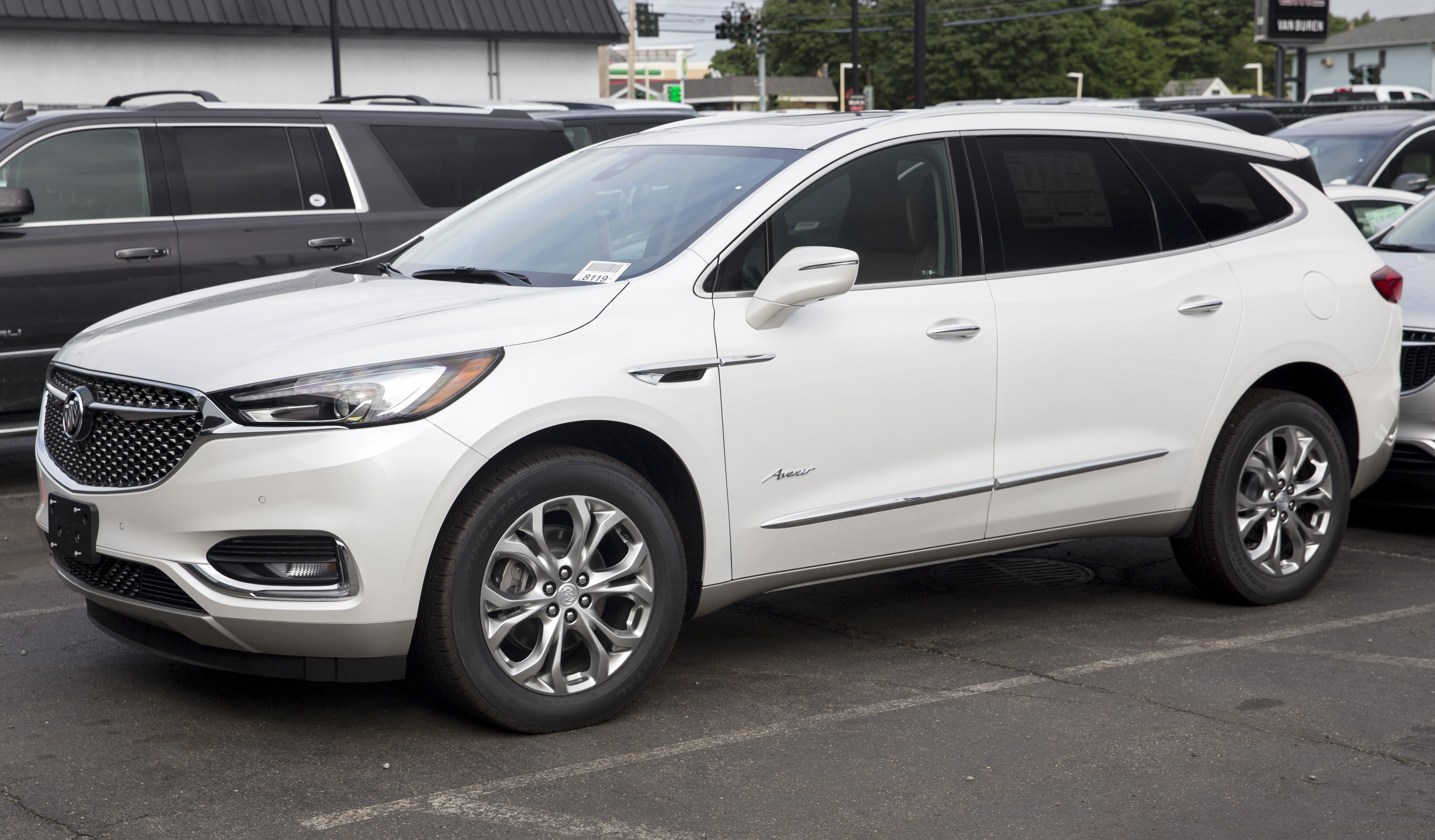
The Buick Enclave is a larger SUV with three rows of seats, so it can fit more people. The podcast mentions it in the context of vehicle production and model lineup. It’s the kind of car people buy when they need extra seating and space.
Minimum operating voltage is the lowest battery voltage the car can use while running. If the voltage drops too low (around the high-9s in this discussion), the car’s electronics stop working properly.
Your battery has a “charge level,” like how full it is. If it’s only partly charged, the car may start weakly or stop cranking, and then the electronics won’t have enough power to keep things running.
A capacity test checks whether the battery can actually power the car when it’s under demand, like during starting. A “failed” result means the battery may look okay at first, but it can’t deliver enough power when you need it.
Cars today have several computer “communication lines” that share information. If the battery isn’t strong enough, those computers can lose power or reset, which can make the car behave strangely.
A radar unit is a sensor that “sees” nearby objects using radio waves. If the battery is weak, the sensor may not work reliably, which can affect safety features.
Blind spot mirrors help you see cars that are next to you and hard to notice. If the battery is weak, the system that powers/controls them can stop working or give warnings.
LIVE
You're listening to Ron and Nanian The Car Doctor, nationally recognized auto expert trusted by Mechanics, Weekend wrenchers and vehicle owners alike. Ron brings over forty years of hands on
experience and deep industry insight to help you understand your vehicle.
Join the Conversation live every Saturday from two to four pm Eastern by calling eight five to five five six zero nine nine zero zero. That's eight five to five
five six zero ninety nine hundred, your direct line to honest answers and practical advice. Looking for more, visit cardoctorshow
dot com for past episodes, repair tips, and Ron's latest insights, and be sure to subscribe to the Car Doctor YouTube channel for exclusive videos, real repair footage and more. Now
start your engines. The Car Doctor is in the garage
and ready to take your call.
Hey, Hey, let's get right to the phones. I want
to go talk to Brian. Brian as Brian's from Jersey
and he's got asked before us. Brian, and this is
the one hundred year anniversary about Root sixty six. Right,
let's dive right into it. I know your question, are
you coming pretty much?
Clinton? Only the two hundred and fiftieth of are a
great country, and I'm in the process of fulfilling my bucket list.
Yeah, where are you going?
Well, I'm going to relocate down to Tennessee. But once
I'm established down there, I want to still educate myself.
Pennsylvania turnplate. I have brochures of when they first opened
that up. But the whole dynamic of transportation Route sixty
six was supposed to be the continuation of the connection between the modern connection between the east and the west.
So I guess my question is not pertaining to a vehicle repair, but so much as your recommendations of where to visit, what to look along the Route sixty six.
A pathways, Burma Shave signs. You know, they say that
the history of Route sixty six is or the charm of Route sixty six is the history that it still holds.
So let's define it right. Route sixty six started out
in nineteen twenty six. It's about twenty four hundred some
odd miles. It gooes from Chicago to Santa Monica. It
was the first westward highway. This this is a time
before Route eighty existed, before Route seventy eight existed. There
was no interstate highway system.
There was no there was no interstate establishment, right, that's right.
The interstate highway system, as I recall in my history and my understanding of history, was created in the fifties by Eisenhower when he created the interstate highway system. And
do you know the well you probably do. But the
reason behind the interstate highway system creation was to move military forces quickly from the east coast to the west coast and vice versa. They wanted to be able to
have rapid transport in the case of an emergency.
Big time yep.
And it's really staggering how fast they rolled out this interstate highway creation that we've got now eighty seventy eight and so on, so up until that point, up until I think it was around nineteen fifty five or fifty four when Eisenhower created this or designated this.
It was fifty yeah, I was right there.
Yeah, yeah, you know, sixty six was it. You know,
you got your kicks on route sixty six, as the song says.
But it's still parallel to what they put in as far as Bob passes, yep. And there's little spots along
the way, places of interest, must see hidden treasures, and that's what I'm compelled to investigate, and I think the best.
And there are books written about it, and you can you can obviously the Internet and everything else. But I
think the charm and traveling sixty six from my perspective, and I've only been on certain parts of it, is just it's the little things you bump into. Root sixty
six is kind of like being at a garage sale and you're you sort of stumble along and all of a sudden you find that one thing that you've been looking for your whole life, or you find that one little piece that you never knew existed, and all of a sudden, there it is because Route sixty six is one of the few places where you can step back in time and see America when we traveled a lot slower, and you know, the world wasn't going by at eighty miles an hour because you couldn't the road didn't support it.
You know, it was it was. It was a very
different time. Have you been on sixty six at all, Brian, say, again.
Years and years and years ago.
I have, So I think Brian's cell phone, yeah, there he.
Is really sends me stuff from Elberquerque, Right, So it's that whole stop by drive by and you make mention of automobile repairs. It's very similar to going into an
automotive shop on one of those small towns and you end up engaged in a conversation with a gentleman who knows the history of the entire world, right, And that's what that kind of what should I expect?
Well, I get going, you know it. It makes you
wonder sometimes. I think you find small town America and
you find people that you can talk to, You find people that know the history of the area, You find people that can explain some of these things to you, and you wonder if living in the quote unquote fast lane, as so many of us do, has tainted us. And
as you know, we've been.
I was raised in New Jerseys, so I know what the past lane.
You know what, you know what the hustle and bustle is, right, and it's it's we miss a lot and sometimes I think the best way to see it all is to slow down, and you can do that on Route sixty six.
You know, the staggering thing about sixty six is it was decommissioned I think around eighty five eighty five or ninety five, I forget now it's been a while, and you know, they talk about how they broke it up in segments. It was a federal highway at one point,
and it had federal highway designation and funding to help support it and keep it going. And the amazing stories
behind sixty six is how many towns just withered away and disappeared as a result of it, you know, no longer being there. Somewhere in the studio I'm in right now,
I've got a book, The Sign by the Side of the Road, and it talked about Burmashave and you know Burmashave signs. Sure, yeah, yeah, you know, And I have
it somewhere. I'm almost tempted to get up in the
middle of a live broadcast and go find it because I could read it to you guys. It's just it's
it's crazy, some.
Of the things. Just the mere mention of that conjures
up the memory of your audience of what, uh just it brings back so many just joyous memories. I guess
that's that's the way I can describe it. Growing up
and understanding what that era was like, and that's what I want to I don't want to see a giant ball of yarn. I want to just kind of like
see what it was like in the age of development.
Yep, oh, here it is. You know, I just found it.
Thank thank you for that, Brian. You allowed me to
get up and walk around the studio.
The boy.
It's almost like we planned this brother. The verse by
the side of the road by Frank Rossom, Frank Rossom Junior.
Burma Shave was it was an advertising campaign and a lot of those signs were on Route sixty six. You know,
things like his face was loved by just his mother.
He Burma shaved and now, oh brother, you know his beer was his beer was long and strong and tough.
He he lost his chicken in the rough, Burma shave.
Can you say that? I guess you can. So you chicken,
I guess you know. It's it's the things we did
on Route sixty six. So and then and then of course, you.
Know, off the air ron I was telling Brian, Yeah, I've traveled a good portion of Root sixty six through Arizona, and there's stuff you don't see in books. I mean,
you see these old abandoned gas stations.
You just see the.
Uh, this amazing scenery. And and what's really amazing to
someone here from the East Coast is stopping in at the gas station to buy a soda and here comes a here comes a guy with the cowboy boots and the chaps and two guns and hulsters on either side, and he walks into the store and it's like whoa.
Well, yeah, because it's it's it's real, guys, you know, this is this is real America. This is real small
world America, and it's you know. And I think I
would encourage everybody if you can still find it. I'm
sure it's out on YouTube. I'm sure it exists in
some place in our digital world. Go find the old
TV show with Martin Milner Route sixty six where they yeah, where they drove around in the corvette.
For sure? Is that was a sixty three Corvette.
Yeah, I think it was a sixty three. I think
the show was created. I'm going to say nineteen sixty,
so I think it was older than sixty three. I
think it was a sixty Corvette or a fifty nine vet.
Todd and Buzz, remember Todd and Buzz.
What I'm planning on doing is just stopping from town to town and spending a week here or a week there, just like they did, and learn to understand what that community was like.
As a matter of fact, a little bit of a little bit of Root sixty six TV show trivia. Martin Milner,
who played Todd, later went on to star in What TV show and it made him a household name.
Well, that was the motorcycle No Adam twelve Adam twelve?
Right, No, yeah, yeah, he was an Adam twelve. Martin
Milner was an Adam twelve. I'll tell you another piece
about Adam twelve because I'm just a fountain of useless information.
If you ever watch and then I gotta go, if you ever got to get back to a car show, if you ever watched The Sands of Viogima with John Wayne nineteen forty nine, store Martin Milner is in Sands of Ewogina.
Martin Milner was a figure and a lot of those sinlestography.
Yep's right, he was. He was one of those. He
was that young face fresh in Hollywood that later went on to start him in Route sixty six and one Adam twelve, Adam twelve.
So well, listen, I want you to know that I am a consistent listener to your show, and you have confer him to me that maintaining vehicles is still the milestone of Americana. I had a fifty five special and
I just I had that and I started tuning in still listening to you and how to repair certain things these days, it's beyond my comprehension. Yeah, it's it's working
on an old car like that easy, as easy as piece.
We had. We had two fellas stop by the shop
the other day. I'll tell you this real quick. We
had two guys stopped by the shop the other day.
Sixty six must thank convertible. And normally I don't go outside.
Normally I don't go up to the front because you know, when I it just just all pandemonium breaks loosen.
You know.
I diagnosed the miss On number two cylinder in about three and a half minutes because I went through this, this, this, this, and this, Okay, it's dead on number two next. You know,
It's cars were just so much easier and so different.
And that's probably a much longer conversation that I don't have time at this point.
But my first car was a sixty six Dodge cart right, Oh yeah, just easy is anything to work on what.
We've created, and I gotta go. I appreciate the conversation.
Brother, conversation, Thank you so much.
You're very welcome. Enjoy your travels on Route sixty six.
I'm running ay and the car doctor. We are back
right after this. Well, well, well, you know a little
bit of a you know, fun look down Route sixty six. Okay,
it's it's And what you have to realize is, you know there was no interstate highway system.
It was.
That was it. To go to go west, you had
to go to Chicago and leave from there. All right,
that was it. That was the jumping off point. Well,
you know, it often makes me think, I'll tell you what gets me before we go to back to the phones.
When I go to Pittsburgh to visit family. Right, I'll
go out, I'll take the I'll take I'll go down seventy eight, out through I think it's eighty seven, and I pick up the Pennsylvania Pike down a little bit past Carlisle. Well, once you're on the Pennsylvania Pike, it's
long and flat all the way to Ohio. So you
can just make that whole run. But you could also
leave New Jersey on Route twenty two out of Union, New Jersey, and go Route twenty two west the entire way, and it's traffic lights and small towns, well not small towns anymore. But the Route twenty two in New Jersey
becomes Route twenty two in Pennsylvania, and then I think it stops at the Ohio border. I don't know that
it goes further than that, because I think I've seen the end of Route twenty two. You'll go there's a
point where you have to go north or south and it becomes the Pennsylvania Pike Extension of sixty six. So
just kind of interesting. It's crazy, but yeah, it's hard
to imagine a country without interstate highways. But boy, we
had it, and we had a big time. Let's go
over to ed Upstate, New York. Twenty two hon to
CRV and some problems with the steering ed How can I steer you in the right direction?
Yeah?
Yeah, yeah? Yet? Yeck?
How you going on?
Come?
Good sir? What's going on?
Hey?
Twenty twenty two CRV? Yes, right, I've got an issue
with the steering wheel locking or sticking. I guess in
place doesn't come back naturally, especially on a left hand turn more than the right. I noticed that they do
have a recall on that. It's the twenty four V
seven four recall.
Report it to my wife's car.
I barely drive it. We brought it back to the dealer.
They took it for a test drive. They said they
could not duplicate the issue. But the funny thing is there.
We picked it up and drove it home and it was absolutely perfect. There was no sticking, no nothing. And
it was like that for months and about through two three months ago it started again.
How many miles are on the shed right now?
There's fifty almost fifty eight thousand. I bought it and
there was thirty five just over thirty five thousand when I bought it.
Is it a CPO car?
I'm not sure what that is.
CPO is certified pre owned. Was it a certified car?
Oh?
No, it was not.
Okay, and you bought it from a Honda dealer.
Yes, I did.
Is this your first Honda or is it one of many.
Second second Honda? We had a twenty sixteen CRV Okay.
So there's a couple of bulletins. I'm aware of twenty
two dish oh one to one which is twenty two dish oh one one talks about a steering gearbox malfunction. Uh,
it's the actual that's the actual campaign that they're doing, because there's a there's first. It's first it was a campaign,
then it became a recall. Yes, so twenty two dish
oh one one was the campaign noticed. Twenty four dish
oh one one was the Hey, we think we've got a problem. And it affects twenty one through twenty two
crvs and so on, and for all I know, it's gone on to other model years. This is an electronic
steering rack, they aim. The problem is that the electric motor.
So imagine you're running the oh I don't know, you're running the blender in the kitchen, and all of a sudden the armature overheats and the motor stops mid blend, and then all of a sudden it picks back up again.
Sure you know, I started today's show in the previous hour talking about how if you wait long enough, people and companies will show.
You who they are.
Yes, they've got a problem, brother, And you know, here's a perfect example. And you know I often say to myself,
thank god, car manufacturers are so stupid, because otherwise I'd be out of business all right, as a repair shop, because they have the ability to command the market, and they don't. They just don't. They keep saying stupid, dumb things. Well,
you know, you know what, if it was a problem we could detect. Listen, you generated multiple bulletins, you've generated
a campaign, You've got a recall going on. Stop thinking
with your checkbook, start thinking with common sense and logic.
And and this has to be your argument, because you know, listen, listen, you know, Honda Corporate. I bought one and then I
was dumb enough to buy another one. And this is
the way I'm being treated. I don't understand. So unless
you want me to go buy a Toyota and never think about your car company again and prevent my kids from ever buying one, can't you help me on a known problem? Can't you have some consideration for what I'm
going through? You know, you guys general, you want me
to make the call, get them on the line, let's go.
You know sometimes I.
Agree with you.
Sure, I'm going to give them a call, and I'm going to raise a little hell there.
You know, it's it's it's it's you got to remember.
And I say this time and time again for them to generate bulletins, campaigns, recalls, does it really have to be based on you know, I've got to see and feel the condition. And this is the part, this is
the part I don't understand. This is where I think
car companies think too much with with their head and trying to be cold and discerning when they don't think with their heart. Make the customer happy, because I guarantee
you if they turn around and go ED, you know what, we can't experience the problem, but we've got fifty thousand other cars out there doing it. We're gonna take care
of it for you. You would come back and buy
Hondas till the day you died. And that's the reality.
Ed.
If you need more, I'm here, brother, good luck, and let us know how it works out. I'm running any
in the car, doctor. I'll be back right after this.
From the seat streets to the open.
Route to night.
If you ride les hell, Ron will keep you rolling right.
Yeah, he's the call. They're starting to sound a little dehydrated, Tom.
I don't think the band's getting enough water. A little
bit of hard rocking there. No, I want to give them,
give them.
Some work, a little little bit of water, and turn up the air conditioning a little bit happy.
I don't want to make them too happy, so they might come back next week. Let's go over to Joe
in Michigan and see what's going on. Oh seven, Saturn, Joe,
how are you?
Yeah? I ain't around.
Yes, sir, i's going.
I love your show man.
Thank you, sir. Well listen, let me let me start
with the first caveat This is a Saturn. Yes, so
turn two, right, So we're talking about an obsolete, bankrupt, out of business car company. Just so we're clear. I
think they're good cars. I think they're good cars. I
I had a very dear friend worked on them. We
used to talk about them all the time. They were great.
But you know what, finding parts for this thing, you might find a unicorn before you do.
So let's I think I think you're one hundred percent right on that.
Right.
So, So, having said that, Hi, Joe, how can I help you with your Saturn iron today? That glorious wonderful
you know, every time I see it, and I got to jump out of this for a second. Every time
I get a Saturn question, I think I think back to the car show I went. I did New York
City car Show at Jacob Javits in two thousand and eight, and I remember it was two thousand and seven, so the two thousand and eights were coming out. And remember
that convertible, Remember that two seater convertible they had the whatever the heck it was, the oh yes, sky, the sky right yeah, And I remember sitting in it with the big GM executive and he kept telling me about how what a glorious future Saturn had. And you know,
the next the car of the future was here today and and you know, and look at how we're growing, and you know, here we are almost twenty years later.
They've been dead for the past, you know, nineteen years.
So I I know, you know, it's it's it's tragic.
But it's been so good to me.
Ron Nah Joe, listen, I get it. So what's going
on with your obsolete, unrepaarable, no parts available automobile?
Sir? How can I help the anti set system shut
the car completely down?
Now?
This is this is kind of a misnomer, right, Like, who's going to really want to steal a seven a nineteen year old Saturn that you can and get parts for right. You know, I've often said anti theft systems
should expire after twelve years. They should automatically clear themselves.
So as far as I'm concerned, you leave the key in the ignition, nobody will take the darn thing. It
wouldn't matter that will right, And wheel locks should be taken off a car after it's after it's six years old, because by then they've corroded and they won't come off either that you've lost the key, and that applies to all cars. So anyway, I agree you've got an anti
theft issue. You're aware of the commonality. Do you have
the fault code? Do you have the twenty nine to
fifty seven fault code?
I don't know. I don't know what the code is. Ron, No,
I don't.
Okay, have you scanned it? Have you have you scanned it?
I can't take it anywhere.
Nobody will work on it, nobody's got the technology. Right.
Well, it's well, like I said, I have to have it told. I can't drive it anywhere, all right.
So so here do this. Do you have a regular mechanic, Joe, Yeah, yeah, Okay,
go talk to your mechanic. Tell them Hey, listen, the
car won't start. I believe it's anti theft because the
light's flashing, right, I assume the lights flashing on the dashboard.
Yes, okay.
If it has a bias in Baker twenty nine fifty seven fault code or twenty nine sixty all right, one of those two, it's likely related to the ignition switch, all right, or that it lost track of the key.
The way this works is there's a resistance value between the key and the ignition switch. That that the body
module we'll see when it sees a correct resistance value or signal from the switch, it says, Hey, it's Joe.
It's really his key. It's not some guy turning the
tumblers with a screwdriver, right, and we want we want to let the car start.
Hold on, Ron, let me stop you there. I did.
I did change the electronic ignition switch.
Okay, did you do a relearn?
I say, I did a relearn. I got it ten minutes,
ten minutes, and then ten minutes. But I'm thinking I
opened the door, and I don't. I don't think i'd
don't it. I don't think I've done it correctly.
Ron, Well, wait a minute, now, Joe, what what prompted you to put an ignition switch in the car? Did
you wake up one morning and said it's Tuesday, it must be time to change the switch?
Well, no, no, no, I was just I was just doing some research on my own run, like, you know, going online and you know, asking AI, you know, telling him the problems I'm having, and I mean, I guess I just took up tell myself to change it.
Okay, So you know, did you clear whatever fault codes were in there? No?
No, okay, I have, no, I have. I mean I
did unhooked the battery. But no I didn't.
Joe, Joe, Joe.
Yes, I don't want to hear it.
Rot Joe. It's time to put the wrench down and
step away from the car.
Joe.
You're you're you're making this worse. So let's do this,
all right. Do you like working on your car? Well, yeah, yeah,
let's let's let's what the heck, let's spend five hundred bucks.
Let's go buy a scan tool and there's enough stuff used on eBay. Let's get something that will read fault codes.
You're you're working on it, in all seriousness, you're working on an antique right now. You want to make sure
you get you get something that will read Year Make Model, not just ob D two. You you you probably. I
don't believe this fault code will appear in ob D two because it's not necessarily an emissions related fault. So
we want to get something that has the capability to read Year Make Model. All right, yep, that before go
take a look at who is I talking to the other day. He claims he's got the next scan tool
for the next generation. Go take a look at x tool.
All right, I've heard some good things about it. I've
been reading about it. X tool. Just go Google search
x tool. They've got some d why stuff at an
affordable level. And see what that does for you, all right,
and get a you know, let's see what FOULT code is in here. And then, since you've already changed the
ignition switch, if you get a twenty nine to sixty or a twenty nine to fifty seven, clear the code and go through your relearn again. Maybe that fixes it
in the end, And I want to close it here in the end, all right, if you can't duplicate the problem, or you can't fix this by normal hooking crook and you're looking for a part. You know, back in the day,
we would take GM models and we would bypass the anti theft How would we do that? We would find that, Yeah,
we would find the two data lines that feed the body module the resistance value. We'd go down. This is
back in the day when radio shack existed, or that.
You can go with to Tom Ray's basement. I'm sure
Tom's got resistors of all types and shapes and create a resistance value, plug it in across the wires, solder it in place to the dashboard, and bypass the theft system completely. Now, the downside to that is somebody could
come along with a screwdriver, stick it in your lock cylinder and steal your car. Of course, you know, I
don't think that's happening anytime soon.
Again, who's gonna want to steal that? Right?
Well, there you go, see, and that's back to the point of our original conversation. Joe, there should be a
timer on anti theft systems that you know, brother, set me free. So you got some homework to do, Joe,
All right, Okay, go take care of it and you call me and you be you'd be smart. Now, you
do the right thing.
Okay, hey, Ron, Well, one more thing real quick if I could real quick. Okay, check this out my twenty
twenty five brand new semi tracks. The display is upside down.
Hang on a wait, I'm gonna hang on a second. Joe,
I'm gonna come back. We're gonna come back to this
because now you've got me confused. While you're driving a Saturn,
You've got a brand new car in the driveway. This
has to be a story. Joe, I love you a five, five,
five six nine nine zero zero. We'll be back to
talk to Joe right after this. I'm ronning Ay in
the car, doctor Joe in Michigan. Are you still there?
Yes?
I am right, I'm here, Joe.
Why are we driving a two thousand and seven Saturn? Well,
why are we trying to drive a two thousand and seven Saturn when we've got a one year old Chevy whatever in the driveway? And it's nice to see you
really a GM man? Did you work at the plant?
You must have?
Yes?
I do?
Yes?
I do you still do?
Yes? Yes?
What do you build?
We built Traverse, the Enclave in the kadio.
Yeah.
How long have you been at GM?
Eight years?
Yeah?
Not long, not long. I was the kind of I
was a late I was a late starter. Is it
in fifty six?
Is it fascinating?
Joe?
Oh yeah, hell yeah, oh yeah right. I can't stop
looking at them robots.
Right.
It's it's staggering how they put cars together today, isn't it?
Yes? Yes, yeah. One thing, one thing. One thing I
don't like, Ron is I look at the side of the part bens and Ron, who would not believe where all these parts are coming from? Mexico, Canada, Korea, all
over the world. And I'm like, what happened? Like in
the seventies, we had all these GM plants around here and we built our own parts.
Right, Well, this goes This is a much bigger conversation the time we have. But I agree one hundred percent. Listen,
I'm a North Jersey boy. I remember when GM's main
warehouse was in Englewood, New Jersey, and you know, everything was here, and but that's you know, but that's yeah.
I'll tell you what. In my next life, I want
to go work at a GM assembly plant because I am a GM guy from way back, and it's just it's it's crazy stuff. So real quick, ask me, ask
me your Chevy tracks question.
From the display is upside down?
What do you mean? It's an inverted It's an inverted
it's an inverted display almost like the almost like the screen is upside down, but it's not.
Yes, okay, no, no, it's it's upside down, but it really is upside down?
Was it always? It wasn't always like that?
No? No, no, right, no right. And and I've been
I've been to four Chevy dealerships. They've they've never seen it.
And I was I was like, okay, am I the only that's the problem.
Well, I'm confused. This is this is a one year
old car. Yes, and how many and how many miles
are on?
I think like eight eight thousand?
So why aren't we taking Why aren't wait a minute, time out? Why aren't we taking the display? Why aren't
we taking the control unit out and sending it out to a GM rebuilt center and have them test it.
Oh I'm I'm in the process run picking it in, but they have to keep it. And I've been trying
to get this Saturn going in.
Oh now it makes sense. Okay, now it makes sense. Joe.
I knew there was an answer. I knew there was
an answer that would make sense down here, somewhere at the at the at the heart of this. So I'll
tell you what, Joe, Joe, stay on the line, give Tom your information. I want to send you out a
card doctor T shirt. But here's the caveat all right?
Oh okay?
Can you? Can you wear anything you want to work?
Oh?
Yeah, all right?
I want a picture of you on the assembly line at the in my card doctor T shirt. We're going
to put it up on the Facebook page. I think
that'd be cool. So give us a good picture, give
us a good picture of putting something really crazy together.
All right, Joe, Oh heck yeah.
All right, stay on the line. Let Tom get your information.
It's fun talking to you. You'd be well, Joe.
Okay, all right, thanks so much.
Ron, You're welcome, Joe. Be well. Yeah, you know what.
I'll tell you what. I want to go take a
tour of a GM assembly plant. I think that would
be the craziest thing. I keep thinking I should have.
I probably couldn't do it anymore. But I had a
friend from high school who was a mid level engineer for GM, and he always said, hey, GM knows who you are. We want to come out to the Heritage Center.
We'll take you behind the scenes. I would have gone,
but the problem is I would have had to get a bigger garage after I came home, because I'd buy a few things while I try to buy a few things while I was out there. You know, look at
that that Chevy's got a scratch in the fender. No
it doesn't, Yes it does. Okay, I'll take it half price.
I'm running ady in the car. Doctor. I'll be back
right after this. My my, my, my, gosh. You know what,
maybe it's not too late for me. Maybe I couldn't
work in a GM assembly plant. Joe did it at
fifty six. I'd probably got another ten twelve years ago.
I want to talk about batteries to close out the show today real quick, if I can. You know, the
battery is so misunderstood. And we've had a couple of
calls today, and we had a couple of calls in the previous hour talking about batteries, and it's really the truth, you know, it's it's the battery is so misunderstood. It's
not the engine, it's not the transmission, it's not the computers.
It's the battery. And I understand that, because you know,
we all grew up in a time when batteries did one thing. It started the car. You turned the key,
the engine cranked off, you went. The battery got weak,
you noticed it. The engine turned over slower and slower,
until one cold morning it wouldn't start. Simple, right, Yeah,
today not so much. You know, the average vehicle needs
a minimum, a minimum of ten volts on a consistent basis to operate. That's its minimum operating voltage. Some of
them will tolerate down to nine and a half volts, but below nine and a half nothing happens. All right,
you might as well just un the unplugged the computer.
It's not gonna start. And we've seen more than a
few vehicles marginal issues problems where it's, hey, my car doesn't start. It's not a cold day, it's not a
warm day. It just it just seems to crank funny
if it cranks it all and then it'll stop cranking and I'll get nothing. And a lot of times it's
the battery. And every time when it's the battery, that
battery is over three years old, maybe four. So you know,
you've got to start to think about that because checking the battery. Usually find out it's a marginal state of charge.
It's it's it's it's a failing capacity test. If you
were a runner, your lungs, you know, can't absorb anymore oxygen.
You're just worn out. You know. Every vehicle counts on
that battery. It's the foundation for everything your vehicle does,
every computer module, every sensor, every network on that car.
And cars today have three, four or five different communication networks.
That camera that we all hated at first and now love, that radar unit up front that keeps us straight on the road, the safety system, they're all dependent on one thing.
In you know, in order to start up the enterprise, Captain Kirk always had to have a good battery, and without that starter battery, it was just you know, Spock and Scotty had to get out and push start it.
And you know that can't really happen on the road.
It couldn't happen in space either. Actually, the battery is
the heart of the system, and just like your heart, when it starts to weaken, strange things happen. So think
about it. You know, maybe your transmission is shifting funny,
maybe the radio reboots, maybe the blind spot mirrors don't work anymore. Maybe you get warning lights, but you don't
know why. I think about the battery. Like I said,
talk to your mechanic, read about it at allto batteries dot com if you want to know how precise and critical batteries are. But batteries really are the heart of
today's car. I'm running Ady in the car doctor. The
mechanics aren't expensive, they're priceless. See you, he's a car doctor.
Carr Advice Tolay
About this episode
Route 66 nostalgia kicks off the hour, with the caller asking for “recommendations of where to visit, what to look along the Route sixty six.” The hosts connect that slower, time-capsule road trip vibe to how the interstate system changed travel—built in the 1950s for fast military movement. The conversation then pivots to real shop work: quick misfire diagnosis, Honda CR-V steering-wheel sticking tied to a 24V74 recall, and older GM anti-theft/immobilizer relearn and scan-tool diagnostics. Battery voltage also gets spotlighted as the root of many modern no-start gremlins.