
Ron Ananian, The Car Doctor - 6/13/26 Hour 2 -
About this episode
- Grab your Car Doctor gear – T-shirts & more at CarDoctorShow.com
-
Follow the wrench – Instagram @ronananian for shop life & behind-the-scenes
-
Watch & learn – Auto repair tips & videos on our YouTube Channel
-
Got a car question? Call the Car Doctor Hotline 24/7 – (855) 560-9900
-
Join the conversation LIVE – Saturdays 2–4 PM Eastern
See omnystudio.com/listener for privacy information.

Chevrolet Corvette
"...x where they yeah, where they drove around in the corvette. For sure? Is that was a sixty three Corvette."
The Chevrolet Corvette is a sports car made for fast driving and performance. The podcast mentions a “sixty-three” model, which is an older version that people often collect. It’s the kind of car where knowing the condition and maintenance history matters a lot.
The Chevrolet Corvette is a performance sports car known for its distinctive styling and strong engine options. In the podcast context, the discussion appears to focus on a specific early-1960s example (a “sixty-three Corvette”), which is often mentioned because these cars are classic, collectible, and mechanically interesting. That makes it a common topic for a “Car Doctor” style conversation about what to look for and how they’re maintained.

Twenty twenty two CRV
"Twenty twenty two CRV? Yes, right, I've got an issue [838.2s] with the steering wheel locking or sticking."
This is a 2022 Honda CR-V, a common family SUV. The person is talking about a problem where the steering wheel feels like it locks or sticks, and they mention Honda had a recall for it.
A 2022 Honda CR-V is a mainstream compact SUV known for everyday drivability and high-volume dealer support. In this segment, the key issue is a steering-wheel lock/stick behavior that can be tied to specific Honda recalls.
twenty four V seven four recall
"It's the twenty four V [855.3s] seven four recall."
That “24V74” is basically the recall’s ID number. It helps the dealer look up the exact problem and confirm whether your specific car needs the fix.
“24V74” is a Honda recall identification code (the “V” indicates a vehicle safety recall, and the number identifies the specific recall campaign). Using the exact code helps owners and dealers look up the correct remedy and whether their VIN is affected.
CPO
"Is it a CPO car? [902.7s] I'm not sure what that is."
CPO means “certified pre-owned.” It usually means the dealer inspected the car and backs it with extra coverage compared to a regular used car.
CPO stands for “certified pre-owned.” It’s a program where a dealer certifies a used car (often with inspections and an added warranty), which is different from buying a non-certified used vehicle.
steering gearbox malfunction
"which is twenty two dish oh one one talks about a steering gearbox malfunction. Uh, it's the actual that's the actual campaign that they're doing"
The steering gearbox is part of the steering system that helps turn your steering wheel into the wheels actually turning. A malfunction means that part isn’t working correctly, which can affect how the car steers.
A steering gearbox is the mechanical/electromechanical part that helps convert steering input into steering motion. A “malfunction” here means the system can behave incorrectly—triggering Honda notices and potentially affecting drivability and safety.
campaign
"it's the actual that's the actual campaign that they're doing, because there's a there's first. It's first it was a campaign, then it became a recall."
A “campaign” is when a car company starts an organized effort to fix or address a known issue on certain cars. Sometimes it starts as a preliminary action and later becomes an official recall.
In automotive safety/quality communications, a “campaign” is a manufacturer-led action to address a known issue across affected vehicles. The host notes it can later become a recall once the problem is formally recognized as requiring regulatory action.
electronic steering rack
"This is an electronic steering rack, they aim. The problem is that the electric motor."
An electronic steering rack is a steering system where an electric motor helps you steer. The host is saying the motor can overheat and stop briefly, then start working again.
An electronic steering rack uses an electric motor to assist steering rather than relying purely on hydraulic assist. In this segment, the host says the issue is tied to the electric motor overheating and then cutting out temporarily.
electric motor
"The problem is that the electric motor. So imagine you're running the oh I don't know, you're running the blender in the kitchen, and all of a sudden the armature overheats and the motor stops mid blend, and then all of a sudden it picks back up again."
In this steering system, an electric motor provides the extra help when you turn the wheel. The host’s point is that it can overheat, shut down briefly, and then come back on.
The electric motor in an electronically assisted steering system provides the assist torque to help turn the wheels. The host’s example describes an overheating/thermal protection behavior where the motor stops mid-use and then resumes.

Saturn Iron
"... said that, Hi, Joe, how can I help you with your Saturn iron today? That glorious wonderful you know, every ti..."
The Saturn Ion Sedan is a small, everyday car meant for basic transportation. The podcast mentions it in a service context, which usually means someone is asking about repairs or maintenance. If you own one, it helps to know what problems to watch for and how to keep it maintained.
The Saturn Ion Sedan is a compact car that was produced as part of Saturn’s lineup, aimed at being an affordable, practical daily driver. The podcast context references a “Saturn Ion” and a service-style call, which fits because these cars often come up when discussing maintenance and troubleshooting. It’s a model where owners may want guidance on keeping older components running reliably.

Saturn Sky
"convertible, Remember that two seater convertible they had the whatever the heck it was, the oh yes, sky, the sky right yeah"
The Saturn Sky is a small two-seat convertible/roadster. The host is remembering it from a car show and how it was presented as a future-looking car at the time.
The Saturn Sky is a two-seat roadster from the Saturn brand, known for its compact, open-top layout. Here, the host recalls seeing it at the New York City car show and sitting in it during the brand’s active years.
anti theft systems
"I've often said anti theft systems"
Anti-theft systems are the car’s security features meant to stop someone from stealing it. In this conversation, they’re saying older cars can still be targeted, depending on how easy it is to get parts.
Anti-theft systems are vehicle security features designed to prevent unauthorized use or theft. The host is specifically discussing how a car’s age and parts availability can affect how attractive it is to thieves, even if the car has security hardware.
wheel locks
"And wheel locks should be taken off a car after it's after it's six years old, because by then they've corroded and they won't come off either that you've lost the key, and that applies to all cars."
Wheel locks are special lug nuts that require a matching key to remove. Over time they can rust, and then you may not be able to take the wheel off.
“Wheel locks” are anti-theft devices that replace one or more lug nuts with a special keyed fastener. The host recommends removing them after several years because corrosion can make them difficult or impossible to remove.
anti theft issue
"So anyway, I agree you've got an anti theft issue. You're aware of the commonality. Do you have the fault code?"
Anti-theft is the car’s security system that stops it from starting if it doesn’t recognize the key. If the anti-theft light is flashing, it usually means the car thinks the key isn’t valid.
“Anti-theft” refers to the car’s immobilizer system, which prevents the engine from starting unless it recognizes the correct key. In this segment, the host ties the flashing anti-theft light to a fault that can be caused by the key not being recognized or the ignition switch not reporting correctly.
fault code
"Do you have the fault code? Do you have the twenty nine to fifty seven fault code? [1298.2s] I don't know."
A fault code is a number the car’s computer stores when something goes wrong. A scan tool reads it so you can narrow down what system is causing the problem.
A “fault code” is a diagnostic trouble code (DTC) stored by the car’s computer when it detects a problem. The host is asking whether the scan tool pulled a specific code, because certain immobilizer/ignition-switch-related codes point to a likely cause.
electronic ignition switch
"Hold on, Ron, let me stop you there. I did. I did change the electronic ignition switch. [1374.0s] Okay, did you do a relearn?"
The electronic ignition switch is what the key turns to tell the car you want to start. If it’s not communicating correctly, the anti-theft system may refuse to let the engine start.
An “electronic ignition switch” is the switch assembly that signals the vehicle when you’re turning the key and requesting start. In immobilizer systems, it also has to provide the correct information so the body module can confirm the key is valid and allow starting.
relearn
"I did change the electronic ignition switch. [1374.0s] Okay, did you do a relearn?"
A relearn is a reset/calibration step after replacing a part so the car can “re-pair” it with the key and security system. Without it, the car may still think the key isn’t valid.
A “relearn” is the procedure used after replacing or resetting certain immobilizer/ignition components so the car’s modules relearn the correct key/switch pairing. The host asks if a relearn was done because swapping the ignition switch often requires reprogramming or calibration for the anti-theft system to recognize the key again.
scan tool
"let's spend five hundred bucks. Let's go buy a scan tool and there's enough stuff used on eBay. Let's get something that will read fault codes."
A scan tool is a gadget that plugs into your car and reads the computer’s error codes. It helps you figure out what’s wrong instead of guessing.
A scan tool is a diagnostic device that connects to the car’s onboard diagnostics to read stored fault codes and sometimes live data. For older cars, the right scan tool matters because not all tools can communicate with every vehicle system or protocol.
OBD two
"you get you get something that will read Year Make Model, not just ob D two. You you probably. I don't believe this fault code will appear in ob D two because it's not necessarily an emissions related fault."
OBD-II is the standard computer diagnostic system many cars use to report problems. Some cheaper scanners only read emissions-related codes, so they might not show the full story on older cars.
OBD-II (often said as “OBD two”) is the standardized on-board diagnostics interface used on many cars to report emissions-related faults. Some scan tools only support OBD-II, which may miss non-emissions issues on certain vehicles.
x tool
"All right, yep, that before go take a look at who is I talking to the other day. He claims he's got the next scan tool for the next generation. Go take a look at x tool."
Xtool is a brand that makes car diagnostic scanners. The point here is that some of their tools are supposed to work on more car systems than basic code readers.
Xtool is a brand of automotive diagnostic scan tools. In this context, the host is pointing out that some newer/marketed scan tools claim broader vehicle coverage than basic OBD-II readers.
body module
"We would find the two data lines that feed the body module the resistance value. We'd go down."
The body module is a computer in the car that controls lots of the body-related electronics, like locks and security features. If you mess with its signals, you can change how the car thinks about the key/security.
A body module is an electronic control unit that manages many convenience and security functions—often including door locks, lighting, and parts of the immobilizer/anti-theft strategy. The host describes using the module’s data lines to spoof a resistance value, which is a classic “defeat” approach for certain older systems.
resistance value
"the resistance value. We'd go down. This is back in the day when radio shack existed, or that."
Resistance value is an electrical “number” the car measures. In this story, the idea is to fake that number so the car thinks everything is normal and the security system doesn’t block starting.
A resistance value is an electrical measurement (ohms) used by some car sensors/inputs to verify identity or status. The host describes creating a specific resistance with resistors and wiring it into the circuit so the body module “sees” the expected value and allows the anti-theft bypass.
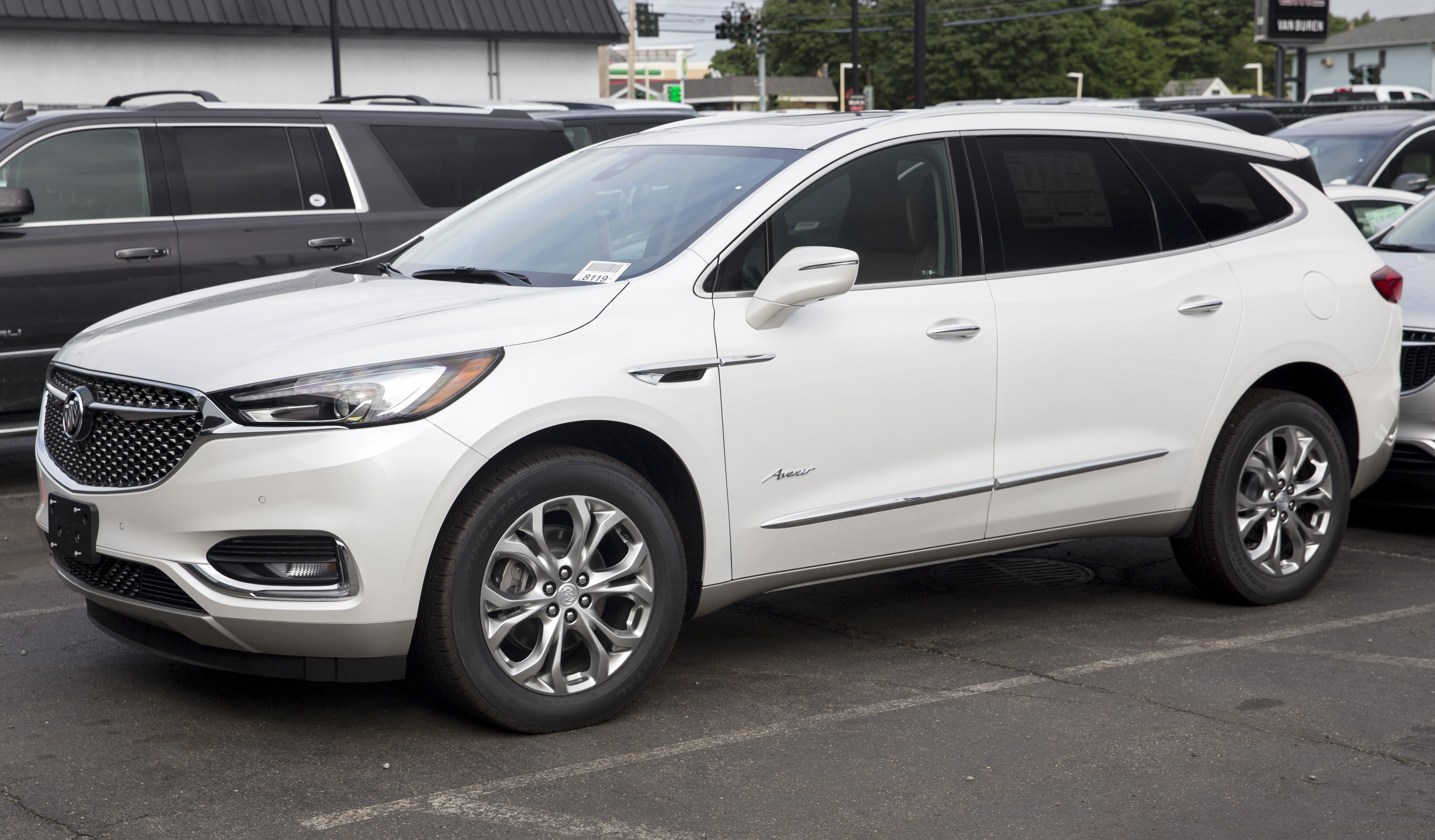
Buick Enclave
"What do you build? We built Traverse, the Enclave in the kadio. Yeah."
The Buick Enclave is a larger SUV with three rows of seats, so it can fit more people. The podcast mentions it in the context of vehicle production and model lineup. It’s the kind of car people buy when they need extra seating and space.
The Buick Enclave is a midsize three-row SUV built to carry more passengers and provide a comfortable family-oriented ride. In the podcast context, it’s mentioned alongside other GM vehicles, which suggests the conversation is about what models were produced and how they fit into a lineup. That makes it relevant when discussing how these vehicles are positioned and maintained over time.
battery
"I want to talk about batteries to close out the show today real quick, if I can. You know, the battery is so misunderstood."
A car battery isn’t only for starting the engine anymore. It also has to keep enough voltage available for the car’s electronics to work correctly.
In modern cars, the 12-volt battery (and sometimes the broader electrical system it supports) is more than just a “starter” power source. It has to maintain a minimum voltage so the engine management, sensors, and other electronics can function reliably.
minimum operating voltage
"You know, the average vehicle needs a minimum, a minimum of ten volts on a consistent basis to operate. That's its minimum operating voltage. Some of them will tolerate down to nine and a half volts, but below nine and a half nothing happens."
Minimum operating voltage is the lowest battery voltage the car can use while running. If the voltage drops too low (around the high-9s in this discussion), the car’s electronics stop working properly.
Minimum operating voltage is the lowest electrical voltage the vehicle’s systems can run on consistently. The host says the average vehicle needs at least about 10 volts, and that below roughly 9.5 volts the car’s systems won’t function.
marginal state of charge
"you've got to start to think about that because checking the battery. Usually find out it's a marginal state of charge."
Your battery has a “charge level,” like how full it is. If it’s only partly charged, the car may start weakly or stop cranking, and then the electronics won’t have enough power to keep things running.
State of charge is how full a battery is, measured as a percentage. A marginal state of charge means the battery is technically still working, but not enough to reliably power the car’s computers and sensors, so you can get weird “cranks funny then dies” no-start behavior.
capacity test
"It's it's it's it's a failing capacity test. If you were a runner, your lungs, you know, can't absorb anymore oxygen."
A capacity test checks whether the battery can actually power the car when it’s under demand, like during starting. A “failed” result means the battery may look okay at first, but it can’t deliver enough power when you need it.
A battery capacity test checks whether the battery can deliver enough usable energy under load, not just whether it reads a voltage number. The host describes it as “failing,” meaning the battery can’t provide the current the car needs to start and keep electronics stable.
communication networks
"Every vehicle counts on that battery. It's the foundation for everything your vehicle does, every computer module, every sensor, every network on that car. And cars today have three, four or five different communication networks."
Cars today have several computer “communication lines” that share information. If the battery isn’t strong enough, those computers can lose power or reset, which can make the car behave strangely.
Modern cars use multiple communication networks (data links) to let computers talk to each other and coordinate functions. If the battery is weak, those networks can become unstable, causing symptoms like reboots, missing sensor inputs, and warning lights even when the underlying issue is electrical power.
radar unit
"That camera that we all hated at first and now love, that radar unit up front that keeps us straight on the road, the safety system, they're all dependent on one thing."
A radar unit is a sensor that “sees” nearby objects using radio waves. If the battery is weak, the sensor may not work reliably, which can affect safety features.
A radar unit is a sensor that uses radio waves to detect objects and measure relative distance and speed. In driver-assistance systems, radar depends on stable electrical power—so a failing battery can lead to the safety system not functioning correctly.
blind spot mirrors
"maybe the radio reboots, maybe the blind spot mirrors don't work anymore. Maybe you get warning lights, but you don't know why."
Blind spot mirrors help you see cars that are next to you and hard to notice. If the battery is weak, the system that powers/controls them can stop working or give warnings.
Blind spot mirrors are part of a vehicle’s blind-spot monitoring system, helping drivers detect vehicles alongside or behind them. If the battery is failing, the monitoring hardware or its power supply can act up, leading to non-functioning mirrors or related warnings.
Request an Explanation
Heard something you'd like explained? We'll add it to this episode.
Sign in to request explanations for terms you heard.
Want to learn more?
Browse our glossary for plain-English explanations of automotive terms, jargon, and concepts.
Help improve this episode
See something that's not quite right? Our annotations are AI-generated and can sometimes miss the mark. Click the flag icon on any annotation to suggest a correction.