In the podcast, “Lobo” is mentioned as a Ford performance truck variant the speaker drove. They say it impressed them and that it feels good to drive. It’s being used as an example of a truck that can be more than just basic transportation.
The Maverick Lobo is a sportier version of Ford’s smaller Maverick pickup. The host is basically saying it was a good surprise after not seeing many new sport-truck options lately.
The Ford F-150 Lobo is a sportier version of the Ford F-150 pickup. Here, the hosts mention it mainly to set up the comparison—Ram’s new Rumblebee is meant to be a bigger step up.
Car
2027 Ram Rumblebee
The 2027 Ram Rumblebee is a special version of Ram’s pickup meant to feel more like a performance truck. In this discussion, the big deal is that it’s expected to come with stronger V8 engines like the 5.7 Hemi and bigger Hemi options, and even a Hellcat.
“5.7 Hemi” is a type of V8 engine with a 5.7-liter size. The “Hemi” part refers to the engine’s combustion chamber shape, which helps it breathe and make power.
“392” is a nickname for a specific bigger V8 engine option. In this segment, it’s being used to describe the 6.4-liter Hemi that’s expected to show up in a Ram 1500.
Here, “6.4” means a bigger V8 engine—6.4 liters. The host also mentions “392,” which is another way they’re referring to that same stronger engine option.
“Hellcat” is a performance engine package known for being very powerful. The host is basically saying the Rumblebee could get the kind of engine you’d normally associate with Dodge’s most extreme models.
The Dodge Challenger is a muscle car. The podcast talks about it in terms of very high performance, including the Hellcat. That means it’s built to be fast, especially in acceleration.
A burnout is when you spin the tires to heat them up and show off power. It’s something people do at car events, not something you’d do on normal streets.
Term
R&D checks
“R&D checks” means money or support for research and development. The host is joking that the company should invest in the idea they’re talking about.
The “Viper engine” is the big, powerful engine that came in the Dodge Viper. The host is saying they used that kind of engine idea, but it still doesn’t end up being more powerful than expected.
A “single cab” pickup has only front seats and two doors. The host is talking about why it might not be the best choice for the market they’re targeting.
Final drive ratio is the gear “multiplier” that helps the truck turn the wheels. A more aggressive one usually makes it feel quicker off the line, but it may be a bit less efficient at steady highway speeds.
A spool rear differential basically forces both rear wheels to spin together. It can help with traction for aggressive driving, but it can make the truck feel less smooth on normal roads and may wear tires faster.
This is an all-wheel-drive setup that can decide how much power goes to the front and rear wheels. When the road is slippery or you accelerate hard, it can shift power to the wheels that have better traction.
Tow rating is the manufacturer’s maximum safe weight a vehicle is approved to tow under specified conditions. It can vary by trim, engine, axle ratio, cooling capacity, and equipment, which is why the hosts discuss how the Rumblebee’s tow rating compares to other Ram and Durango setups.
The Durango SRT is the fast, performance version of the Durango SUV. They’re comparing how quickly it gets moving versus the truck, and they explain that gearing plays a big role.
Effective gear ratio is how “geared for takeoff” the car is at the moment it launches. If it’s not as high, the vehicle may feel less punchy from a stop.
Max towing is the biggest amount the manufacturer says you can tow. They’re clarifying that the top number only applies to one specific version/configuration.
Shocks/dampers are what help control the bounce of the suspension. If the truck gets wider or changes its suspension geometry, the shocks/dampers often need different tuning so it doesn’t feel sloppy or unstable.
Track width is the distance between the left and right wheels on the same axle (front or rear). Increasing track width can improve stability and cornering grip, but it often requires suspension and wheel/tire fitment changes to avoid rubbing and to maintain proper alignment.
Ground clearance is how much space there is between the bottom of the truck and the ground. More clearance helps on bumps and uneven roads; less clearance can look/feel sportier but can scrape sooner.
It’s a truck design where the “shell” sits on a separate metal frame underneath. That frame helps the truck handle heavy work like towing, and it can make it easier to build different suspension setups.
The Ram TRX is a very aggressive Dodge/Ram pickup that’s built for big off-road capability and a wide, muscular look. Here, they’re talking about how a newer version would keep the same basic truck platform but update parts like the suspension and rear axle.
The Jeep Grand Wagoneer is a large luxury SUV. The podcast talks about the possibility of a more performance-focused SRT version. That would mean a sportier, more powerful version of the Grand Wagoneer.
Independent suspension lets each rear wheel react to bumps on its own. That generally makes the ride smoother and can help the tires stay in contact with the road better.
Towing capability is the maximum safe weight the vehicle can pull. It depends on the whole vehicle—brakes, cooling, and how the suspension handles the load.
“Fully independent rear” means the two rear wheels don’t move as one unit. That can help the tires stay planted and make the ride feel more controlled over bumps.
The “Hurricane” is a name people use for a newer inline-six engine. They’re talking about whether that engine makes the truck feel quick and whether it sounds good compared to a V8.
A “Hemi V8” is a V8 engine type associated with Chrysler. People like it partly because of how it runs and how it sounds, so it’s used as a comparison point here.
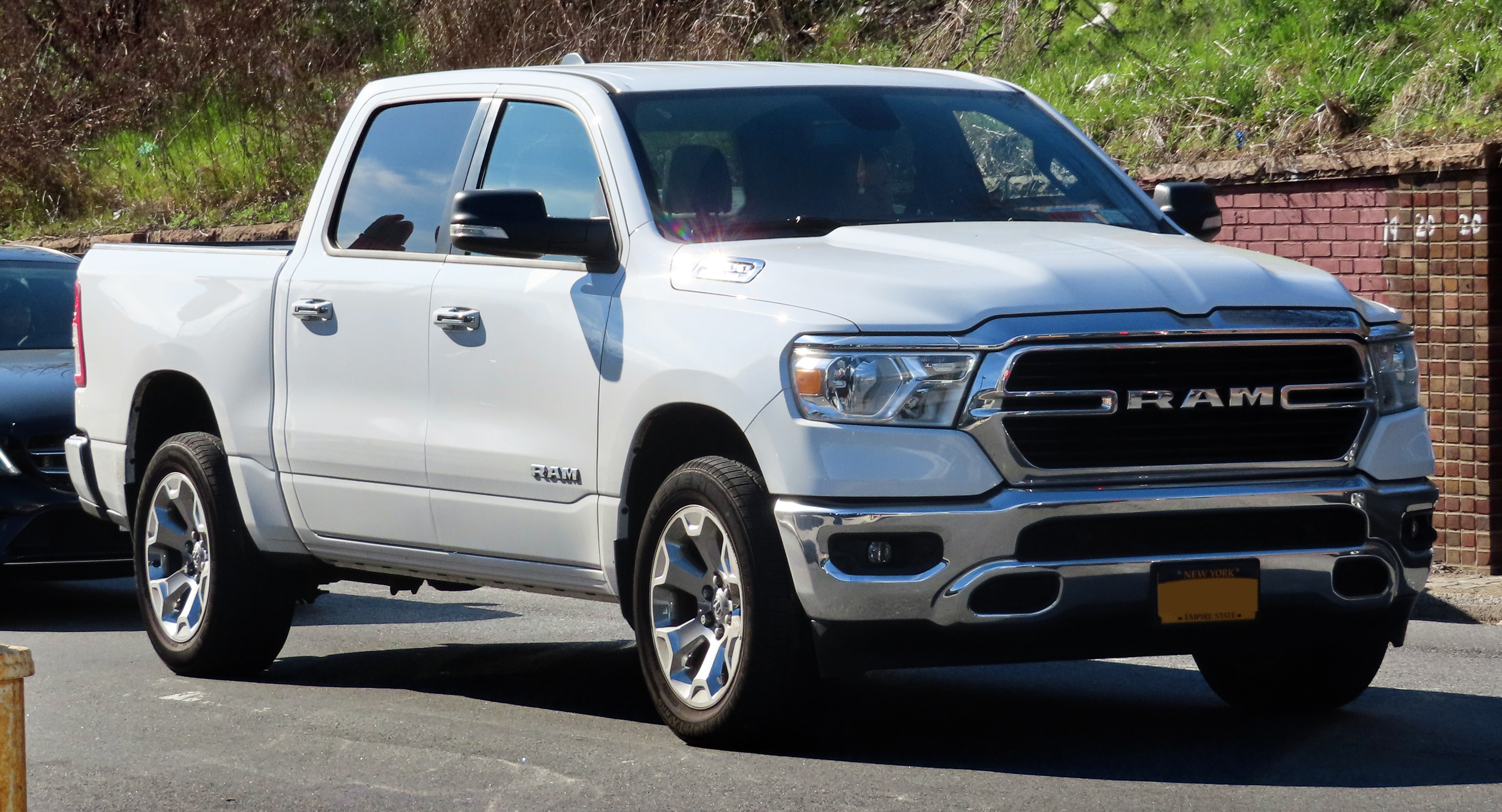
Ram is a brand of pickup trucks. The podcast talks about Ram in terms of whether a certain truck fits what the speaker wants. Pickup trucks like these are usually chosen for hauling, towing, and everyday utility.
The Ram 1500 is a popular full-size truck. In this segment, they’re talking about which engine makes it tow better and feel quicker, and how much the sound matters to buyers.
An inline six is an engine with six cylinders lined up in one row. They’re saying that, in this truck context, that engine layout can feel faster and be easier to tune than the V8.
A turbocharged engine uses a device that squeezes extra air into the engine. That extra air helps the engine make more power, and it also tends to be easier to modify for more output.
Modifiability here means how easy it is to upgrade or tune the car to make it do something different. Some engines are set up in a way that makes upgrades simpler than others.
Wide tires generally grip the road better because they touch more surface area. They can also make the car feel different to drive than narrower tires.
Air suspension uses air bags instead of metal springs. It can raise or lower the truck and change how it rides, which can make the ride smoother and the truck easier to set up.
The Volvo S60 is a compact luxury sedan. The podcast mentions it when talking about Volvo making cars in North America and whether those models were profitable. It’s part of a history discussion about how Volvo’s business worked at the time.
The Volvo V70 is a wagon-style car from Volvo. The podcast mentions it as part of a time when Volvo’s North American production was doing well financially. It’s included to explain the business side of which models were successful.
The EX-60 is a Volvo vehicle being discussed as a new model. The podcast focuses on how big it is compared with other Volvo SUVs. A larger size usually means more space inside for people and luggage.
The Volvo XC-60 is used as a comparison point for size. The hosts are basically saying the EX-60 is bigger, and they’re thinking about what could work for a family.
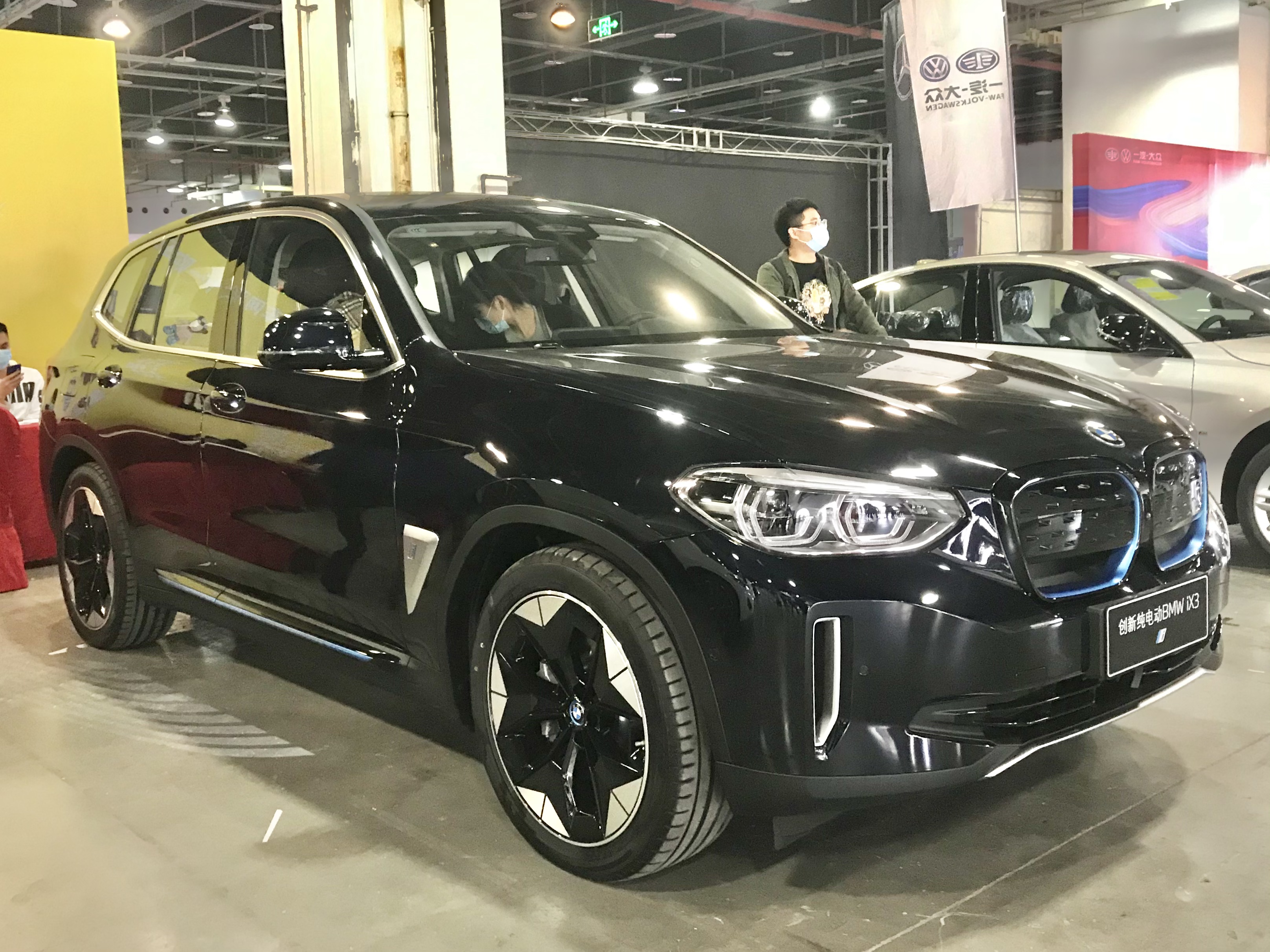
The BMW iX3 is another electric SUV the hosts compare the EX-60 to. Here it’s mostly about positioning—size and price—rather than deep technical details.
Charging speed is how fast the car can refill its battery when you plug into a fast charger. Faster charging usually means you spend less time waiting at the station.
300 kilowatts is a measure of how powerful the fast charger is. The higher the number, the faster the car can typically charge—at least under the right conditions.
“10% to 80%” is a standard way to compare EV charging times. It’s meant to show how quickly you can add a useful amount of battery without waiting for the last part to fill up slowly.
Term
AMG 600 watt charging
This is a comparison to another EV charging claim—AMG is mentioned as having even higher charging power. The point is to show how the EX-60’s charging compares to the most extreme numbers out there.
NMC is the type of battery inside the EV. The point is that with this battery chemistry, you generally shouldn’t charge to the very top every day if you want the battery to last longer.
Adaptive dampers are shocks that can adjust how stiff or soft the ride feels. They’re saying the regular EX-60 uses this, but the cross-country version switches to air suspension.
This is about how an EV’s battery system is wired electrically. A higher-voltage setup can let the car pull more power from a charger more efficiently, which can mean faster charging.
Tesla’s V3 Supercharger is a newer type of fast-charging station. It’s built to deliver more power than older Superchargers, so compatible cars can charge faster.
“V4” means a newer generation of Tesla fast chargers. Newer charger hardware can deliver more power, which can make charging much quicker for cars that are set up to use it.
An adapter is like a plug converter for EV charging. It helps your car use a fast charger that uses a different connector than your car normally supports.
Electrify America is a company that runs public fast-charging stations for EVs. The point here is that you can charge away from Tesla’s network too, depending on your car and connector setup.
CCS and NACS are two different plug types for fast EV charging. An adapter lets a car with one plug work with chargers that use the other plug.
Brand
Hyundai Ioniq 9
Hyundai’s Ioniq 9 is mentioned as an EV that’s supposed to charge faster. The speaker’s point is that, in practice, owners may still end up using Tesla fast chargers a lot.
800-volt charging means the EV is built to use a higher electrical voltage. That can help it take in more charging power faster, which can shorten charging times.
The Chevrolet Volt is a plug-in hybrid, which means it can run on electricity and also use gas. The podcast mentions it while talking about faster-charging technology for electric vehicles. Charging improvements can affect how quickly you can refill the battery.
Fast charging is when an EV battery charges much quicker than normal. The hosts are talking about which cars can take advantage of that speed at a charging station.
Tesla Cybertruck is Tesla’s electric pickup with a very unusual, futuristic look. The discussion is about how it compares to other EVs and whether it was truly the most exciting new release.
Towing a trailer means pulling another vehicle or load behind the car, which adds weight and aerodynamic drag. The segment uses towing as a stress test because it can noticeably affect acceleration and drivability.
LFP batteries are a type of lithium battery used in some EVs. The idea is that charging them to 100% sometimes helps the battery cells line up correctly and lets the car use the full capacity.
AC charging is the more typical, slower way to charge an EV (often at home). They’re saying that for topping up to 100%, a moderate AC charge is preferable to aggressive fast charging.
A voltage curve is how the battery’s voltage changes as it gets more empty or more full. They’re saying the battery voltage doesn’t change much for a while, then it shifts near empty and near full.
State of charge just means “how full the battery is.” The trick is that the battery’s voltage doesn’t always change much while the battery is going from, say, half-full to mostly full.
LFP is a type of lithium battery chemistry. It often has a “flatter” voltage reading, so the battery can look similar electrically even when it’s more or less full.
The charge curve is basically the battery’s “map” of how it behaves as it fills up or empties out. Some parts of that map are easier to interpret than others.
BMS is the battery’s “brain.” It watches the cells and tries to figure out how full the battery is, but it can be less accurate if you only use a small slice of the battery’s capacity.
Cell balancing means making sure every small battery inside the big pack stays equally full. If one cell gets ahead of the others, it can hit the safety limit first.
A battery pack is the whole battery system in an EV, built from many smaller battery cells. Managing all those cells is why EV batteries need special monitoring.
Internal resistance is like internal “friction” inside the battery. If one cell has more of it, it may charge or discharge differently than the others.
An EV battery management system is the car’s “battery brain.” It watches each battery cell and helps keep them healthy by making sure they charge and discharge evenly.
Cell balancing means making sure all the individual battery cells are “on the same level.” If they get uneven, the battery can’t use all of its stored energy.
“Active” battery management means the system doesn’t just watch the cells—it also helps fix them. If one cell is higher or lower than the others, it works to bring them back into line.
kWh is a way to measure how much energy is stored in the battery. The speaker is saying that if the cells aren’t balanced, you might not be able to use some of that stored energy.
Concept
charging to 80% vs 100% for balancing
The speaker’s point is that if you never charge the battery all the way up, the individual cells can drift out of sync. Then you may end up with less real-world range than you expect, even though the car’s estimate looks fine.
An LFP battery is a type of EV battery chemistry. The key idea is that it’s often more comfortable with regular high charging (like charging near 100%) than some other battery types.
DC fast charging is the quick-charging method you use at fast-charge stations. It fills the battery faster, but it can be harder on the battery than slower home charging.
The Chevrolet Bolt is an electric car that’s often priced to be a good value. Here, the host is pointing out that it can work well with charging up to high levels more often than some EVs.
Charging to 100% means topping the battery all the way up. The hosts are discussing whether doing that every day is helpful or harmful, and how it depends on the type of EV battery.
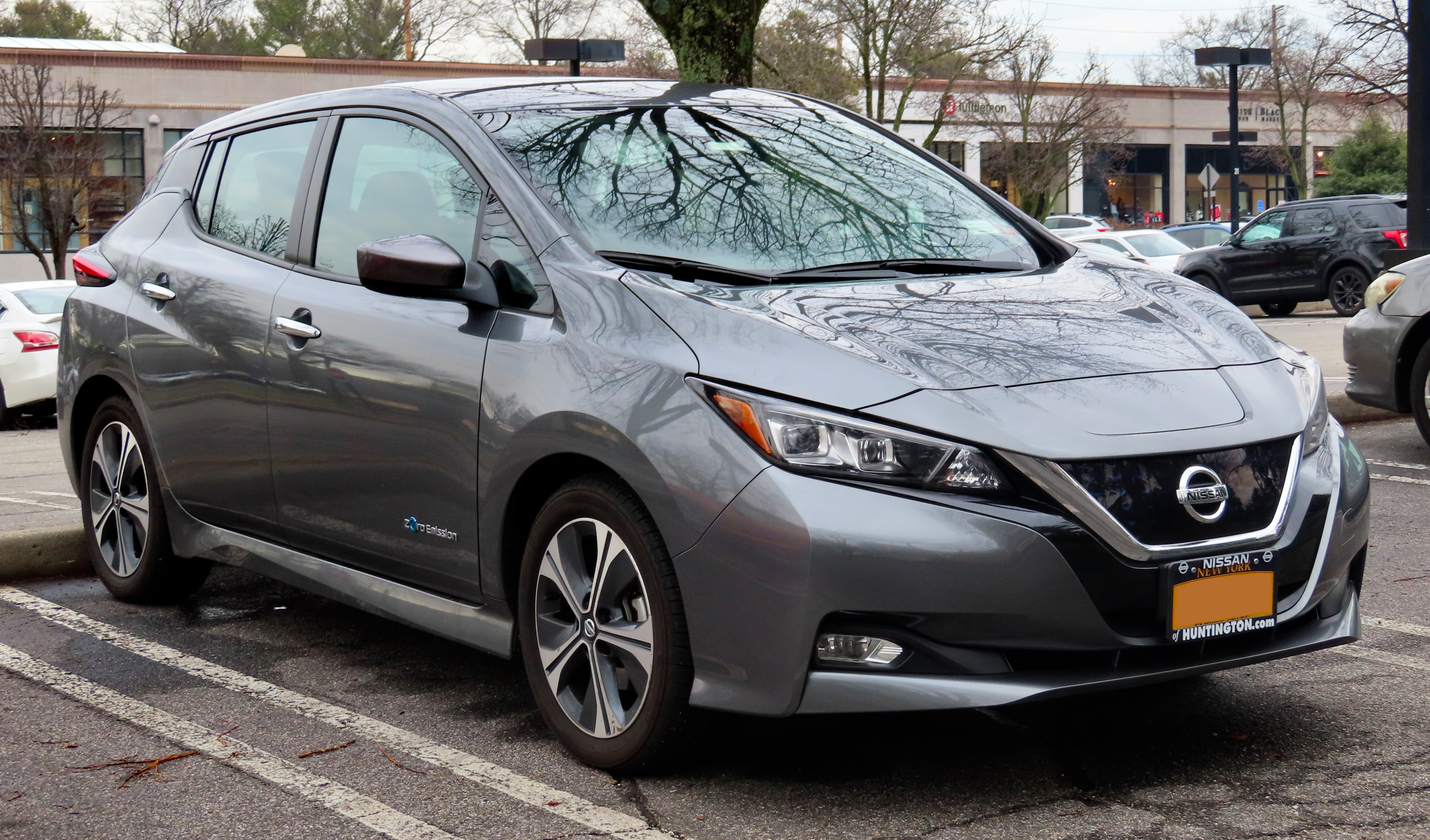
The Nissan Leaf is an electric car people use for daily driving. The hosts are saying you usually don’t need to fill the battery to 100% every single day, because you can still get enough daily range without doing that.
LFP packs are a type of EV battery. The key point is that this battery chemistry is usually happier with charging to a full 100% more often than other battery types.
Effective range is how far you can actually drive before the car limits you. Even if two EVs claim similar range numbers, the amount you can use day-to-day can be different.
The Chevrolet Trax is a small SUV that’s meant to be affordable. The hosts are saying GM is making more of the cheaper versions and may update the look and tech for 2027.
A “refresh” is an update to a vehicle’s design and features—often including styling changes (like headlights and front-end design) and tech updates—without fully replacing the model. Here, the hosts expect the Trax to receive a 2027 refresh with a new front end, new headlights, and larger screens.
“Bigger screens” means the car’s main display for media, navigation, and settings may be larger. The hosts are saying the update is likely to improve the tech you interact with day to day.
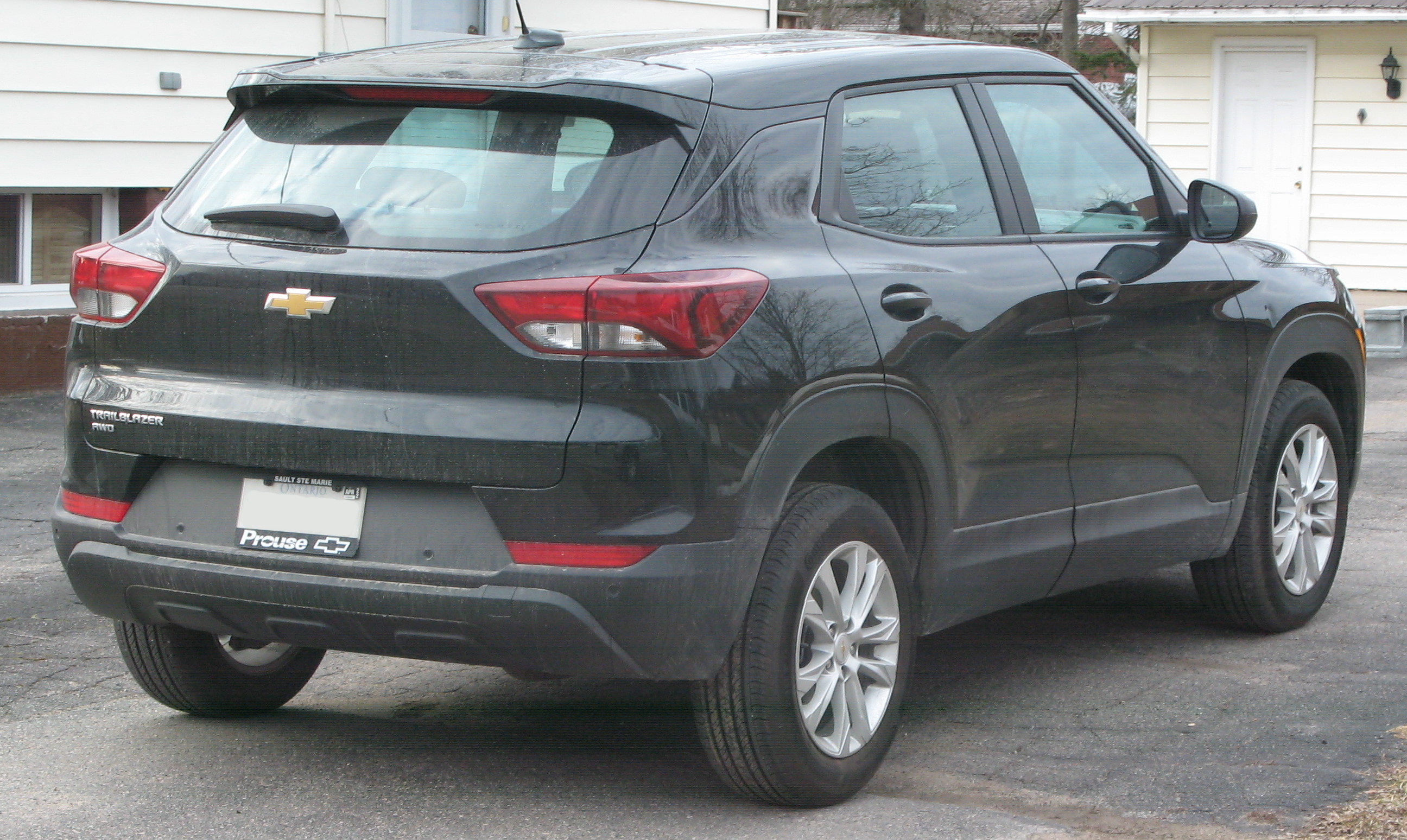
The Chevrolet Trailblazer is a small-to-midsize SUV from GM. In this part of the discussion, it’s mainly used for sales comparison against other affordable models.
“Subcompact” means a smaller, more budget-friendly size of car or SUV. The hosts compare sales within this size class to see which brands are winning on price and demand.
LIVE
So Travis, the first topic we obviously have to talk to is the fascinating world of new
sport trucks.
I was recently driving the Maverick Lobo and I came away impressed because it is the first
sport truck in America in a decent amount of time and it's a compact sport truck.
Well, compact in air quotes.
But now we have some real sport trucks because of course Ford tried the F-150 Lobo thing
and Ram just said, hold my beer three ways.
Yeah.
Yeah.
I mean, so we're talking about the Rumblebee, the 2027 Ram Rumblebee based off the 1500.
Are you ready to Rumblebee?
Are you ready to Rumble?
They are.
That works.
Sorry, I apologize.
Yeah, for everyone who has their volume turned up a little bit.
The Rumblebee is fantastic and I'm not one who loves like excess for the sake of excess,
but this is so much more than what the Lobo is, right?
Like the Lobo packaging is minimal changes that I don't think is worthless.
Right?
Like that's not what I'm saying, but this is such a step above.
First of all, Ram is hitting with engines that they know this customer wants to buy.
It's the 5.7 Hemi.
It's the 6.4, so that 392, making its way into a 1500.
And then of course we're getting the Hellcat.
So 6.2 supercharged, 777 horsepower, zero to 60 in 3.4 seconds.
But they wouldn't let me try it nor did they get to do a burnout, at least not this time.
Yes, hopefully that is coming soon.
The thing that strikes me about, well, a few things striking about this is it is interesting
that they're doing three Rumblebees.
They're doing the 5.7, the 6.4 and the Hellcat engine.
Next thing that surprises me is when the first generation TX, TRX launched.
I made this comment to Tim Kaniscus at the time.
We were having dinner and I said, why is there no street truck version of this?
All you have to do is lower it a bit, paint some body color panels on this thing,
call it a replacement for the SRT 10.
And he was like, ah, you know, people don't want sport trucks.
They don't want street sport trucks.
They want these off-road trucks for dune jumping, et cetera.
And I was like, you know what, more of America lives closer to a drag strip
or just a fun parking lot than lives next to a sand dune.
So, right.
So what gives and, you know, what gives apparently is it just took him a while.
And Tim, send your R&D checks here.
So that might have been the start of their production, right?
I mean, that was the, hey, guys, we need to rethink this.
No, so here's the thing.
It's not just swapping in the TRX engine because obviously that is there, right?
777 horsepower, 50% more power, more than 50% than the SRT 10, which is crazy.
Not just because it's such an increase in a relatively short period of time,
but also that that was a viper engine and that it wasn't more powerful.
I, I love the engine choices, but it's clear who they're going for.
Because frankly, I would have loved to see in a high output hurricane in there.
Does that end up down the line?
Probably a couple of years before they would consider doing that.
But the biggest change is the body.
So yes, it's lowered, but it is shrunk.
They brought 13 inches out of that frame comes in one configuration.
That's the quad cab and the short box.
So we are looking at a stubby little truck, but it does have four doors,
which I think is going to be a sticking point for some.
Obviously that video has already gone live.
We saw it in the comments, you know, why not a single cab?
And don't worry.
Your friend Tim was ready for that one because he said less than 5%.
I want to say it's like 3% of all trucks are single cab.
So why would you take an already smaller segment and make it
an infinitely small and therefore just never build the truck in the first place?
And it's worth noting that, that those few people that do buy the, the small
truck, the small cab truck, they're buying their trades, the customers are buying it.
Yeah.
So it's like, that's not, that's not this market.
That really would not have made any sense.
You know, but, but, but they did still make it smaller.
I mean, they went through significant effort to essentially give you that difference,
right?
And so, and, and he also said, I want to say it's about a 5% weight penalty by
not having the single cab versus the essentially extended cab, right?
The four door, the smaller four door variant.
And, and yeah, worth it, right?
Because they're going to sell way more than 5% more because of it.
And it exists.
There's a strange, they made some meaningful changes here too.
They didn't just drop a more powerful engine in, although I kind of wish that
they would make that 6.4 liter V8 available in some of the other trims.
But what they also did was they gave it a more aggressive final drive ratio in the
64 and the 62 they gave it better brakes.
They gave it an interesting rear differential.
It's a spool rear differential so you can burn out on your tracks.
If you want to, they gave it an active torque split all wheel drive system,
basically out of the TRX also used in some other SRT vehicles.
It's a high torque capable unit that can split power front and rear whenever it
needs to, et cetera.
It's, it's a really, really interesting combo.
The thing's going to go like hell.
I mean, there are no, even, even, but even the 57 like the driving
dynamics on that are going to be so different than your, your standard 1500.
It's going to feel like a totally different truck.
And the biggest thing for me, I know it's the small box.
I know it's not quite as capable.
We're still looking at, oh, perfect.
That's what we were missing.
Thank you, Alex.
That's me at the launch of the Rumblebee.
Exactly.
The biggest thing is that, and now you completely lost my train of thought.
Oh, is that it can still tow?
And that's, that's a big one, right?
If your truck can't do all the hauling things, can it still do the towing things?
And what most we're going to buy is that 57 can be just under
9000 pounds of towing.
Yeah.
Admittedly, as I say, the, the tow rating does drop decently versus the regular
Ram, which is kind of why I mean, I would like to see that 64 in a regular
half ton Ram, but it does drop to just under 8,900 pounds or so somewhere around
there, just under 9,000.
So it can tow a tiny bit more than a Durango with the same engine.
What did surprise me though, is that it's not going to be as quick as a Durango
SRT with the 64
That seems to mainly be mechanical advantage.
The final drive ratio is not quite as aggressive as on the Durango.
So the effective gear ratio from a launch is not quite as aggressive, even
though it actually is lighter than the Durango also.
One quick correction on the towing though.
So 8890 is the max towing that's only on the 57
It's about 8,300 for the six to the 64 is actually the lowest.
It's around 7,500.
And if you get the track pack, 7,300.
So, Oh, 7,300.
Ah, yeah.
So if you get the track pack, if you don't get the track pack, that one
gets you around 7,500 or so.
There are some lower than that Durango.
I don't know.
And there's some pretty substantial suspension changes in order to make this
work different, different arms, different shocks, dampers, et cetera.
Because it is significantly wider.
It is, it is like nine inches wider track front and rear than a regular Ram track.
This thing is crazy wide.
Also with 325 with tires on it, if you get the right trim.
So yeah, definitely an interesting truck.
Yeah.
And you know what?
Here's the thing.
I'd be interested.
Like there's a part of me that goes, Hey, you know, the 8.2 inches of ground clearance
is still plenty of normal people ground clearance, right?
This isn't slammed.
Uh, Tim did say the aftermarket is going to have a lot of fun with it.
Absolutely.
They'll find these on the ground, you know, in no time, but that's still a very
usable truck.
I have no need for a huge extended cab, you know, a crew cab instead of quad cab.
Yeah, bigger beds, nice.
But can I still do everything I want to with a really good looking truck?
Yeah, probably good.
If I could have one item on my wish list for a second generation of this craziness
would be, you know, they didn't change the frame and they didn't change the cab.
So it makes sense with a body on frame vehicle like this.
They chose the smallest frame they had the smallest beds, smallest cab
combo in this contraption jammed on the TRX, vendors, et cetera, the wider body
kit, the arms, et cetera, from the TRX tweak the suspension here and there as
needed to lower it down, but the frame is the same and they give it a new
differential on the back, but basically the same axle.
I would love to see them graft on an independent suspension from the back half
of a Grand Wagoneer.
I think that would make a really cool Ram sport truck.
If they could do that in the future, because you've already sacrificed a lot
of towing capability, mind you, a Grand Wagoneer can do almost 10,000 pounds
of towing anyway with a fully independent rear.
You do lose some durability for off-roading, et cetera, but for a street
performance truck, I would love to see an independent rear just by hybridizing
that frame, grafting on some Grand Wagoneer bits.
If this sells well, you can very well see it.
And like I said, the thing that's missing for me, I'd love to see a
hurricane engine in there.
I think it'd be a fantastic pairing.
I know it wouldn't be as exciting as those, those Hemi V8s, but, but I think
it'd be a better option, especially for someone like myself.
But I know, I know Ram did not build this truck for me.
I know that inside.
Would it not be as exciting?
Because according to the numbers, the Ram with the three liter hurricane in
high output form is decently faster than this 6.4 liter Hemi.
Oh, I know.
I know that.
And you know that, but does it sound like it's faster?
That's, I think the big thing.
Yeah.
I would be intrigued to see it as an option at some point in the future, just
to see how many people would be interested in it.
It's, it's one of those, do you want to go faster or do you want to sound fast
in this process?
Yeah.
If you're not going to have high tow ratings, the reason I want the 6.4 and
the Ram 1500 is, well, it does sound good, but also because it really does
tow very well.
That is a fantastic engine for towing.
And I think that would fit really nicely in the Ram 1500, but, you know, in a
sport truck, the inline six is just faster and more modifiable.
I mean, as far as like, taking this to the, yeah, taking this to the
tuner level, the truck that you could modify yourself and, and, you know,
yeah, you'd be blowing up engines left and right probably because you'd be
having a good time doing it.
Right.
I'm sure you can take that thing over a thousand horsepower without too much
trouble, uh, the benefits of turbocharged engines is their modifiability.
You can do it at least once, but they added a new engine to the 1500 that
hasn't been there instead of giving it an engine that is already there.
So it is an interesting choice.
I understand why they did it.
Um, and if I was going to actually have to order one today and I don't get to
change anything on it, I'd actually go with that 64 and I give the six
fourth track pack, give me those wide tires, give me the air suspension.
Um, I don't need the 62
I don't actually need the 64 but those would be the bits that I'd be
more interested in.
Yep.
And speaking of bits that we'd be interested in, we only have 70 ratings on
the Apple podcasts app.
I'm wondering if we can get to a hundred.
Yeah.
I mean, that's a good chunk of the way there, but there's, there are a few more.
There seems to be one person in this room that still has not reviewed us,
despite having that podcast app on the computer that he is using.
I don't know.
Company provided, you know, I feel weird about using company resources in ways
that, I mean, I guess it would benefit the company.
I don't know.
Things to consider.
Um, I thought you were recording alone though.
I don't, yeah, I don't know.
Yeah.
You know, uh, five stars, five stars would be nice.
I mean, yeah, this is definitely a five star podcast.
There's no doubt about it.
It does.
It does, but it really sounds like you have some issues that you need to work
through that you don't think you're truly deserving of this five star status.
I don't know what that could be.
Well, that may take some time.
That may take some time.
I will tell you though, sitting at the SRAM event, I was talking to a
journalist who said on the way there, they were tuned into our podcast,
getting caught up.
Oh, see, no, if only you could have the dedication to our podcast that they do.
I know I keep showing up, but am I really showing up, you know?
And speaking of showing up, Volvo is apparently open to using their factory
to build other cars as is Stalantis apparently there and they've named someone.
So Stalantis is apparently talking to Jaguar Land Rover about building some
of their vehicles in the USA.
I'm curious to know which of those vehicles that would be.
I'm guessing the Defender line, since that's probably the best one.
That's not going to be the first thing they're building here.
I'm going to go ahead and say it's not the Jaguar and confirm this.
Never a Jaguar.
Another episode.
Well, we're on a roll.
We'll keep moving with it.
But yeah, Defender would make the most sense probably for this market.
It speaks to an interesting moment where, you know, obviously
manufacturers want to be building their own vehicles.
And if you let somebody else build their vehicle here, that's you have to make
sure you're not in direct competition, because then you're giving them some
sort of advantage, even if it works out for you.
But it's a shame we're not at full capacity anyway for every manufacturer
with their own factories here.
The interesting question is, where will this lead?
We are seeing a movement towards regionalization in production.
We've been seeing this move for a while.
This is not a current tariff related issue.
Otherwise Volvo wouldn't have built the factory when they built the factory,
right? They'd be scrambling to do it now.
So it has nothing to do with that.
It has to do with mainly in the past.
It was worries about currency conversion, et cetera.
We covered this topic in a previous video, for instance,
but the cost of building a new car, the labor cost associated with building
a new car in the US versus one of the cheapest markets in America right now,
China, is only about $700 on a $50,000 car.
So we're not talking about a huge amount of difference in labor costs.
A lot of it tends to be the other logistics around at the shipping,
the rapidness of getting that vehicle built to order, if that's what is happening.
Flexibility, currency conversion issues, et cetera.
Because if you're taking that profit home,
that can affect the profitability structure of the vehicle.
A good case in point actually is Volvo.
Speaking with someone about this,
actually about a decade ago, I was about to say not that long ago,
but it really was a while ago.
There was comment in the Ford era of Volvo
that one of the reasons they wanted a North American factory was that when
the S60 and V70 of that era launched, they were profitable in North America.
But by the time they reached the end of their production cycle,
the Kroner was strong.
The dollar was relatively weak versus the beginning of that structure.
And so it wasn't as profitable to build it in Sweden or in Belgium as it was at the beginning.
So whether or not it was actually truly profitable anymore,
we don't know because they will never tell us,
but they were lamenting that it was significantly less profitable at the beginning.
So you have these currency conversion differences
and you can't just raise the price on a car, you know, $10,000 US dollars
over a run of only six years when nothing changed
to try and resolve that difference.
Which is part of why sometimes in imported vehicles,
we see definitely big price hikes in generations.
You know, one generation over there, they're a pretty big chunk of change there.
And also why we see the US complaining about countries
trying to really keep their currency steady with the US currency.
We're a big market for exports to the United States.
And this profitability question definitely helps put a lever
on maybe artificial or semi-artificial moves around the world
to try and keep currencies at par with a particular,
or at balance, I guess I should say,
just the particular currency conversion rate,
you're like, that's our target.
We want to stick around there so that way this cycle continues to work.
Yeah, I will say on the Volvo front,
my goal is that the Volvo and potential Polestar wagons that they keep talking about
do finally make their way here.
I'm less worried about the financial impact.
I just want to see them.
Yeah.
On the Volvo front, the EX-60 does appear pretty interesting.
Our friend, Jared, was able to drive that in Barcelona.
So he has a video on the channel where he was graciously able to film that for us.
The interesting thing about that EX-60 really does seem to be the size.
It's larger in a number of critical dimensions than the XC-60
or the BMW iX3.
While being priced between the BMW and the Rivian,
it's decently bigger than the Rivian,
and the charging speeds apparently are truly fantastic.
We don't know the big battery yet,
but the other two batteries are going to charge over 300 kilowatts,
and both of them will do the 10% to 80% run in around 15 minutes.
So we're talking really, really fast charging there.
Yeah, it's not that new AMG 600 watt charging,
but 300 kilowatts, right?
But 300 is still pretty good.
And like you said, I think it's paired really well.
Space between that Rivian and the BMW.
It's just a question of, is it interesting enough?
And I'm worried about some of these EVs that are really good to drive,
but not flashy, not catchy.
They're almost a little bit too smooth in just general,
that it's not going to catch people's attention.
But obviously, I had to just look at the XC-60 when it was first announced.
I know you're looking for a new vehicle for a couple of kids
in the not too distant future.
I would expect that to be on the list, or at least the short list.
The XC-60 is definitely on the list.
There are two problems that I see, though.
The first one is that the P12, the long range model,
that's not going to be out for another year in the US.
It's going to be available in New York City.
Long range and high performance.
Right. Long range is what I'm mostly interested in.
But the P10 is definitely really quick as it is, mind you.
And over 300 miles of range is nice.
But that 400 mile range, I really want to see whether that's worth it or not,
because these are going to be NMC batteries, not LFP batteries,
meaning you're only going to ideally want to charge it to 80% on a regular basis.
And so 80% to 300 miles, that's decent.
It's pretty average, though, is the thing.
The 400 mile range one, that is where things get really interesting.
Also, some interesting and weird twists in this lineup.
There's going to be a cross-country version of the EX-60.
Also seems weird since the whole X thing was supposed to be cross-country,
but why ask why?
Don't worry about it.
That one's going to get an air suspension,
rather than the regular adaptive dampers that we find in the regular EX-60,
but it's not going to get the big battery pack.
That was a weird twist there.
I kind of don't know why that, that combo doesn't have...
Why call the cross-country if it's not the one you're going to cross the country with.
But I think it's really going to be down to what's that rear seat space going to look like.
We do seem to have greater clarity, though, on the 400 volt charging.
It sounds like it's going to charge somewhere around 120 kilowatts.
That bigger battery will take about an hour to charge at a Tesla V3 charger.
If you can find one of the rare V4s that is open to everybody,
then it will charge in the 15 to 18 minute window,
or Electrify America, et cetera, with an adapter.
This is going to be one of those new generation of high charging rate EVs.
That's going to require that adapter from CCS to NACS to really make the most of it.
Yeah. There are already manufacturers like Hyundai who do have faster charging
that say that most of the charging that happens on those like the Ioniq 9 specifically
happens at a Tesla supercharger, even though that's not the ideal charging situation.
And hopefully Tesla is going to be more rapid at their rollout of the superchargers.
I think it's finally over 10 stations that are in existence fully complete in the U.S.
That's double digits.
Yeah. The question will be, when are we going to see a next generation model Y
with 800 volt charging? The Roadster should benefit from this, too, if it ever comes to fruition.
The Cybertruck's just not selling in enough volume, because honestly, it's a sales turd.
Just like, and then, and they haven't flushed it yet.
But if they had a product that was flying off the shelves that was 800 volts,
it would make a lot of sense to deploy their network faster. But right now,
the cars that will make the most of it, it's everybody but Tesla's who's going to benefit
really. So it's, you know, the Porsches, the Lucas, the BMWs, the Volvo's, the Hyundai's,
the Kia's, et cetera. And that's not great for business either.
Yeah. In fact, by the way, all these vehicles here are charging faster than the other ones
at the charging station. In fact, actually, when I'm going down the list here,
there are a whole lot of EVs that would be really benefiting from that fast charging
that do not have a Tesla logo on it. Volumize, actually, I think even more than have a Tesla logo
on it. Yeah. I mean, it's at least getting close, right? I mean, Cybertruck's sales is
actually quite small quantities. So if you had all the high voltage Hyundai's, Kia's,
Porsches, BMWs, all those together, that's, you know, plus the humbers in the trucks,
that's definitely more. Yeah, for sure. And again, not great for business when you're at a station
and you go, oh, that guy's charging way faster, but mine's the one that matches the logo here.
Yeah, it would have to be a Model Y, right? S and X are dead. I think they're doing their
delivery event here. When this goes live, it probably already happened. I won't be tuning in.
It's Model S and Model X and nothing's really changed. But you're missing the fact that Tesla's
a software company and an AI company and a robot company these days. I drive software all the time.
I just hop in my software and I just, it takes me where I need to go. Yeah, it's like a magic carpet
really. And it truly is magical. Yeah, you know what? Here's the thing. If that roaster comes out,
I'll be excited because that's going to be a great performance product. And there are obviously
high performance EVs out there, but more globally than what we actually get here.
And it'll be like the first new interesting product because the Cybertruck was not the
new interesting product. It was just the new product. And it looks good. So, well, hopefully
it looks good. I mean, hopefully it'll look like we're told, but will it get
cyber-fied before it actually exists? I hope not. Because it was beautiful. It was beautiful.
We'll see what happens. I was talking to a Tesla superfan that we know in the industry. I won't
use his name because you know, but it was funny. Commented that our Durango SRT, we haven't 0-60
tested it with a trailer on it before. 6600 pound trailer, FYI for everybody, just over five
seconds, 0-60. Surprisingly quick. I actually didn't think, I didn't, I thought it would lose
more than a second in the zero to 60 time, but it turns out it didn't. It's like wicked fast with
the 6600 pound trailer on the back. And I got this comment from so certain person that was like,
oh yeah, but you could do that in a Cybertruck. Blah, blah, blah, blah. And I was like, yeah,
but the Cybertruck's fuggly. And he actually agreed. And I was like, whoa, uh-huh.
Yeah. Moving along. Related question here. We have a question from Daniel in here that I did
not remember to tell you about it because it just came in earlier. That's okay. That's how that happens.
Also real quick, I just looked and it seems like the Durango on its own does sell better than the
Cybertruck. So more people would have the Durango that SRT does. No, no, certainly not. But not
all Cybertrucks will do it either. It's true. It's true. Yeah. All right. Sorry. Back to Daniel,
right? Daniel's question was, why is it that LFP batteries are recommended to be charged to
100% on a regular basis? This is actually a really good question. And it all has to do with
the electrical properties of batteries and charging dynamics here. And it doesn't just
apply, by the way, to LFP batteries. If you want the most capacity out of any electric vehicle out
there, you actually do need to charge that battery fully every now and then. And here's the reason
why. Each chemistry is going to be a little bit different. Each chemistry is going to be a little
bit differently. They still need to reach their max capacity. Right. They will all need to be charged
to 100% on an occasional basis and preferably be charged on a moderate AC charge speed. So
level two, don't take it to the DC fast charge station and charge it all the way up and expect
that to help, quote unquote. But here's the reason why you need to do this. The cells in the car
need to all achieve a common voltage. And so the way that this works is, if you're looking at, for
off grid situations, so for instance, in my home setup in off grid, we are working on charging it
to 100% still currently because we have this particular problem. So say you have 16 cells
and you're charging this battery. Well, because the voltage curve on a lithium battery is very,
very shallow. So it's very horizontal and it falls off dramatically at 0% state of charge.
And way up there towards 100%, it has like a little bit of a ramp up and then you hit over
voltage and charging must stop. But the main problem is you have this, this window in the middle
where the voltage is very constant. So voltage alone is not the best way to determine the state of
charge of a cell, a lithium ion cell, especially LFP cells, just because there's so little difference
between these states of charge, the voltage in these states of charge and so many other factors
that play here. So what you do is you know what the capacity of this cell is in watt hours. And
when you, you charge it fully and you hit that maximum voltage that you're supposed to get,
again, steep ramp up at the end of the charge cycle, that helps because you're like, okay,
full battery, 3.6 volts per cell, we are done. So done, done, done. And, and the thing is,
now, now we've hit 100%. So now what we do is as we discharge the battery, we have monitored
the current leaving and we calculate out how much is left based on the design capacity of this cell.
But you don't really know for 100% sure how much capacity is left, unless you got it all the way
down to the bottom of that charge curve, you can get really close though. The point here though is
that if you constantly cycle your battery from 60 to 80%, 60 to 80% over and again,
A, you don't really know where you are in that range anymore, because the BMS software is not
100% accurate and monitoring current in this way is not full proof. So you have to get it back to
100% to reset that that capacity window, because you're probably creeping up and down and around
that 60 to 80% window. The other problem is cell balance. So if you have a battery pack at home,
like I do, where we have 192 cells, getting all 192 cells, which is about
200 kilowatt hours for anybody wondering. So we're talking battery pack the size of a Hummer.
To get all those cells up to 100% and equal, you have to manage the charging of each individual
cell because some cells will be slightly weaker than others, they may have slightly higher internal
resistance than others. And charging on this entire pack must stop when one of those 192 cells
gets to 3.6 volts. Here's the problem though, that one cell might get to 3.6, a whole ton of
others are down there at 3.2 or 3.3. So what you have to do is you have to drain that cell
and then either move the power to some lower cells, or you just drain it off and burn it for
no good reason. And then as you're charging a good battery management system, as you're charging,
we'll start balancing these cells at around 3.33, 3.4 volts somewhere in that range. And what
they'll basically do is like, this one's getting high, start draining it down, that one's getting
high, start draining it down, that one's too low, pump it up a bit, et cetera. So that's what active
battery management systems will do, but they only start functioning general terms when an LFP
cell is around 3.4 volts or so. So you're in this 3.4 to 3.6 volt window, and that's when the BMS
is doing their jazz. It's usually above 80% where this starts, depending on the battery
pack design, it could be upwards of 90% state of charge, where the BMS is really taking over.
But that's the point is that you need that higher voltage to actually start this function.
And then all the cells need to get up there to 100% to really have 100% capacity left.
So the parallel here in my off-grid setup, for instance, is currently because they're not all
in balance properly, which is something we're working on again, we are leaving the equivalent
of 22 kilowatt hours unavailable. So the pack must stop charging. Right, it's a bit, it's a 10%
difference. So 10% and translate this to an electric vehicle, if it had the same problem,
10% of your range would be missing. 30 miles or so are their amounts.
Now, admittedly, my off-grid battery has like the world's cheapest battery management software
and hardware, and cars have very expensive battery management hardware and software. The
gap is massive, right? Every EV, every cheap EV even has a much more robust battery management
software than my pack has at home, which is my current problem. But the point here is that
in your LFP pack, especially if you're only cycling in the midpoint of its capacity,
all those cells are going to be getting higher and lower over time, and they will never be
in balance unless you charge it up to that 100%. So even in this 80 to 60 to 80% window,
you could be losing range and you wouldn't know it. The software wouldn't know it until you needed
it and it's not there. So this is kind of why in some EVs, you charge it to 80% on a regular
basis, say, or 70% if you're being a good little person and you're not charging your battery a
lot. And then you go on a road trip and the car says you got 200 miles of range and 160 miles of
range in, the battery is like, oh my God, no, I'm actually dead. And you think to yourself, well,
what happened? My efficiency is still good. Where did this all go? It could be just because the
BMS is a little bit lost and your cells need to be down. So that's why charge to 100% now,
and then don't be too scared. See, and I'm doing the exact opposite. I charge 100% every day.
And it's mostly because, well, not every day, but every time I charge, my charge rate is set to 100
because I have a small battery Tesla. It is still an LFP. So I'm less worried about the impact.
And I've got my three year review coming up soon. It's hit three years. I just haven't reviewed it
yet. But I'm over 60,000 miles. So, you know, plenty of mileage over that time. And where I
believe my starting rate was 272, as listed, right, at least, I'm down to about 258, which is still
really small, all things considered. But that is with this zero to 100 being my standard. And for
folks who have seen my first year review, we have that on our EV channel, EV Buyer's Guide.
I charged at about 20% of my total capacity or my total charging happening at a DC fast charge
station. So that is way more than your average person is going to be. So in a weird way, I'm
actually, you know, kicking this battery pretty hard. But it's still doing exactly what it's
supposed to. If I had, however, a different, you know, daily living scenario, I was closer to
certain airports, you know, whatever that would be. Yeah, I would be in that 80% charge rate
all the time. But I ended up being my battery. I had to stop for five minutes on the way home
today. That was no problem. But yeah, I need my battery. And so this is the hey, you don't have
to worry about it. Basically, as you said, because of how good the BMS is on most of these cars. And
thankfully, I'm not having to manage charging the same way you are at home.
Yep. And the bottom line here is don't be afraid to charge your EV to 100% on an occasional
basis if you have most packs, or on an everyday basis with an LFP battery. That's one of those
benefits, for instance, of the the new Chevy Bolt, which by the way, has a pretty big discount on
it right now. Apparently, you can get it well under $30,000 if you're a Costco member. So if
you were Costco member, why not get one of those bolts? But at any rate, that's a good reason to
consider it. One of those reasons to get a bolt over like a Nissan Leaf is the Nissan Leaf,
you're not supposed to charge to 100% every day. On a regular basis, you should absolutely charge
100%. Like if you're daily cycling your battery, once a month charge it to 100%, keep it in check,
etc. The bolts, like a lot of the Teslas with LFP packs, you can charge 100% every single day,
absolutely no problem. And so the effective range available to you is greater because
even though on paper, they seem the same. Just remember, you're only using 70% of that
that Leaf battery, and it's a little bit different over there in the bolt.
See, and I hear you on that one, and I understand the logic. I will just say that I don't know if
something people need to worry about. I mean, obviously, in the world of EVs, one of the best
things is you don't have to think about it very often. Come home, plug in, drive, plug in, and
don't worry about it. The road trip is where you have to start doing some math, but the car will
do the math for you 99% of the time. I just don't know if people need to worry about what happens
if I don't charge 100% every day, like I'm losing range because your daily trip is under 50 miles
anyway. So yes, you're right. On a moment's notice, if you're trying to do a 100% max versus an 80%
max versus a 70, that's not going to be huge, obviously. But it's also going to depend on
how you use your EV because if you turn into one of those Tesla people that doesn't have charging at
home, you're going to need to DC fast charge it all the time, right? As your alternative, a lot of
people are starting to do that as the penetration is now reaching groups of people that don't have
home charging. If that's you, then you're probably going to want to kick it up to 100% every time
you charge it so that way you don't have to stop by the charger as often. Maybe it's a once a week
thing instead of twice a week at that DC fast charge station. So I would argue that it actually
kind of is important for especially maybe the bolt owners argument where maybe it's a starter vehicle
for someone and they don't have a home charger. Yeah. Okay. That's fair. That's fair. The answer is
more charging. But yes, I hear you. In the mean time. Now, speaking on to other Chevy's,
this is actually kind of heartening. Chevy is increasing tracks production specifically the
less expensive trims. And it's also anticipated to get a refresh for 2027 looks like a new nose
and new headlights, bigger screens, maybe a more streamlined tech line. But what struck me,
what struck me about this is once upon a time, the Japanese and the Koreans were the car companies
that were bringing us the discount cars in America. Now it is firmly General Motors because Ford's
given up. Stalantis gave up. Suppose they're coming back. I'll believe that when I see it.
But in 2025, they sold 206,000 tracks, 101,000 trailblazers, about 60,000 and Vista's an on course
for a whole heap of new cars. Let's say, you know, it's like a 420,000 something
affordable vehicles in the subcompact category. And we compare that to the competition HRV
54,000. Corolla is the standout, but they get a lot more expensive. So 248,000. But
nothing in the Corolla lineup is as cheap as the tracks. And a lot of them skew towards the
higher dollar values, mind you. Venue 30,000, Sol 50,000 versus 51 kicks 104 and Centro 152. So Nissan
is really the one challenging this. But GM has far and away the best sales in the discount segment.
Yeah. And it doesn't feel like the discount car. That's one of the things I so appreciate
about the tracks is that could you start picking it apart? Absolutely. Right. Anything with a low
price tag, you're going to start finding it. But but the on the surface, it's a good looking vehicle
that connects to your phone. And so you have all the latest tech in that you're using your phone
software for a lot of it. There's plenty of room. I'm actually almost even worried about what they
would change in the front and the rear, because it's already really good looking. I would hope
they don't go a different direction. And I hate to say it, when the HRV changed, I didn't like the
way the HRV went. I'm not worried about it. But I just go, Oh, careful with it, GM, because
you hit a home run on the first one. I have a feeling it's going to get a little bit more,
more, you know, a traverse like is my guess. Okay. Okay. Yeah. Do you mean a little bit?
I don't want to say more masculine, but a little bit more like truck like versus
where he or the par like butcher, maybe I guess. Yeah, okay. Yeah, but yeah,
high shots indicate a more upright front end, maybe a little blunter instead of round and new
headlights, etc. So I'm going to guess slightly bigger, square or grill, a little bit blunter,
upright, but the majority of the sheet metal doesn't look like it's changed. So, you know,
so not a drastic change either way. Otherwise, you start looking at mismatch. I will say that
I was thinking about this the other day, I was talking to somebody and I think we covered it
on our last episode, you know, buying it and any or maybe two ago, buying an inexpensive car,
what are some good options? And I talked about how much I enjoyed visually the Chevy Sonic,
especially in the hatchback trims, you know, they had the funky like motorcycle like display.
But then you know, it pulled in front of me the other day, which I have not seen a lot of recently.
And that was a Chevy Aveo. And I was thinking from the Aveo to the Sonic, like that was a
huge advancement visually speaking, and they filled the same segment, right? It was still the
inexpensive car out there. And the tracks really seems like it's picked up where that Sonic left
off while still being inexpensive. It's fun and interesting. And good, it doesn't feel
like this cheap slab sided whatever. And I also remember a time I had a Saturn, Saturn
Coupe. And the Saturn Coupe to the Toyota. Oh, gosh, now I can't remember what the the oh,
the Toyota Echo, they fell in this same sort of category with the same sort of engine power and
fuel economy. And I went, this Saturn is way more interesting to look at maybe not everyone's thing,
but that's what that's what GM's done really well is make an interesting looking inexpensive vehicle.
Yeah. And of course, remember, there is a corollary with the Aveo, because the Aveo was
really the Daewoo Klaus K-Losts, I believe, something like that. And of course, Daewoo was
purchased by GM and became GM Korea, which is who makes the tracks. So I guess you could say
that we still don't really have an American affordable car because that one's built in Korea.
And of course, the Sentra kicks said they're not built in the United States either.
Do we need to kick up a documentary? The Chevy Trax, Daewoo's Revenge, something like that?
I mean, that'd be a hey, you know, if it's a GM product, because GM owns GM Korea,
and that's where they're putting resources into competing with other world markets.
Chevrolet Trax, Daewoo strikes back. There we go. That's the working title.
And I think that, to be honest, I think that their location of manufacture is important
for why it is competitive and why we don't see a Ford or some other car companies competing in
the same way. Let me rehash a comment from previous, which is GM with Daewoo Korea has
a pretty good foothold in developing markets, the Philippines, Malaysia, other Southeast Asian
countries, South America, et cetera, because of their global footprint that Ford does not quite
have. The North American side of Stellantis has really not had. Remember, Stellantis is a global
company, but if we're thinking about the way the North American part works, Fiat works in some of
those other global markets, so does some of the French things, but not the American side. So
GM, by building that car in Korea and designing it for the Korean market, the Southeast Asian
market, other developing markets, as well as China and other places like that, and North America,
I think they were able, they were forced to make it more competitive, not just that if they were able,
it's that if you're going to sell it in those markets, it has to be decent and cheap to compete
with the other decent and cheap things in those markets. And we benefit from that competition.
Whether or not they built it here or not was a kind of a different question, but you
unquestionably have higher costs. If you tried to split manufacturing between two plants, even 400,000
units is not enough probably to justify splitting it off. And Bill would probably go to Mexico anyway.
So I think it's actually a worthwhile thing there. One last touch. I promise it'll be quick.
I also love that there's a Buick version, because if the tracks does a little bit too edgy for you
and you're looking for something a little bit more smooth, maybe a little bit more feminine,
you know, or our higher class, whatever you want to call it, right? We know the Invista is just
a reskin tracks, but it works. Yeah, sexist there on the thoughts that Buick's the lady car.
I didn't say the lady car. I said just a little bit more feminine, more feminine. Okay, okay.
It's not how I heard it, but the comments will determine how that one's read.
I'm shifting gears though. Toyota definitely has some problems, not shifting gears, although
their automatic transmissions have been, you know, a little bit lately, but the 3.4-liter
twin-turbo V6 has another problem. Toyota has added another 44,000 vehicles to the recall,
now recalling 27,000, sorry, 270,000 trucks with their twin-turbo V6. This is bad though,
because these 44,000 vehicles are vehicles that have already had the recall repair in the factory.
So supposedly they thought they had fixed the manufacturing problem. These are 44,000 vehicles
that had that fix and are now having a problem. Also, apparently of the 77,000 vehicles that
have had the fix, we're starting to see new failures there, apparently more on the engine
oiling side of things rather than simply a debris question. So for those that aren't familiar,
these engines have been having especially bearing failures, the main bearing failures,
that are really bad. So, you know, sudden loss of power, complete engine seizing and failure,
well-driving the vehicles have happened. So if you're buying anything with a 3.4-liter twin-turbo
V6 from Toyota, or you have one already, you know, I might think about getting a replacement
here soon at any rate. Or make sure your warranty is stellar and you've got other
parts to get you to and from the office. I mean, that's not going to help you if you're
off in the middle of nowhere and your engine blows up, but that's right. You're going to ruin
a road trip. That's a great way to ruin a road trip. So the failure rate ostensibly for the
original group is about 100%, which is why the solution is to replace the engine according to
Toyota. What that actually looks like in practice still remains a little bit to be seen,
but it is concerning that a lot of teardowns that we've seen recently, more than just one,
a lot of teardowns and now sort of anecdotal evidence seems to indicate that there is a failure to
oil components properly, even in engines that don't have debris. That is concerning because
that's a structural design problem, which means these engines may have to get replaced again
to fix it. Right. And not a manufacturing issue to the core of the engine. And,
boy, I mean, it's already been not a good start for this powertrain, which, you know,
not like we had any specific issues with the powertrain operationally, functionally,
but it was also not this standout thing. So it's not like, oh my gosh, we've, you know,
this is a huge step forward in what we're bringing to the table. This is, this may just end up being
a bad engine design. And I'm not saying is, but we're running into a lot of issues that
not only do we not normally see it from Toyota, but just don't generally bode very well.
And it kind of makes me wonder if there is going to be a pause in future model launches
with this engine or if there's going to be some other alternative. If, if Toyota is working on a
redesigned engine secretly or not so secretly, maybe to replace this, that I think is something
that we're going to have to watch for. Because if it is an intrinsic oiling issue that is really
causing all these new failures, then the only answer is a redesign probably of the bottom end
of the engine, which is going to be pretty expensive. And then, and then of course replacement of all
the engines as well. Right. Because you're not just trying to fix the problem from happening,
moving forward, you've already got them out there. And these people already bought your vehicle and
they, and again, this isn't some high performance engine where they go, yeah, yeah, yeah, we knew
it wasn't going to last more than 10,000 miles. And you know, this is, this is a, this is supposed
to last 300,000 miles from the person who wants to run it that way. Speaking of Toyota though,
there is a little bit of Toyota, well actually kind of a lot of Toyota really in every new jeep
Cherokee that is riding on the road. And this has kind of made me wonder in a way,
is the Jeep Cherokee the new escape hybrid? Because of course, Ford has killed off the
escape hybrid, at least for the moment in North America's last year for it. This new Cherokee
is big for the segment and practical, kind of reminds me of the first generation Ford
escape hybrid in that way. The cargo area is really actually quite large. And this week we
have it here, I was right, child seats fit in the back significantly better than anything else in
the segment. It's actually a little bit better on the child seat front than a Sportage or a Tucson.
The roof line is lower. So head, headroom is a little bit more limited in the back, but, but
actual distance between the seats is pretty broad. And you get 37 miles per gallon, which is pretty
healthy, the mechanical all wheel drive system, a little bit below the escape at 39. And of course,
the, the 40 plus and the RAV4, right. But here's the twist that transaxle that we asked about
at the launch, if you recall, it's manufactured by Blue Nexus.
And Blue Nexus is not just another family guy spin off of Star Wars, right?
Nope, it is the Toyota Ice and Denso collaboration to create hybrid drive trains for other car
companies. So this is being marketed at, you know, the Stellantis is the forwards of the world,
the GMs of the world that want to integrate hybrid systems in their vehicles, or, you know,
the Mazdas of the world that probably want to look at this. But what's interesting is it's
structured as an Ice and Denso thing. So it's 45% ISO, 45% Denso, 10% Toyota. But
if you really calculate the numbers there, that's really 70% Toyota, because of course,
Toyota owns 33% of Isen and 27% of Denso. So they kind of own the whole Blue Nexus thing.
You mean, you mean these, all these companies that share a lot of similar ownership, so we
should work together. This seems like a good idea. Yeah. So, but then it makes me ask this question,
will this and the provenance of this transactional matter to the shoppers in this segment,
who have already decided without any evidence that the Cherokee is going to be the least reliable
thing in the world, does the fact that it has a Toyota hybrid system lurking under the hood
actually matter? I think that we need more than 100 reviews for that to start to make a
significant impact, because people have to know, right? I mean, we're doing it right here,
but it has to get to the people to know. We've also talked about the Toyota planetary
transmission system, the planetary gear split, and how this is being used in other manufacturer
use cases. But people go, oh, because it's a blank, it's not going to work. But it's the same tech,
essentially, right, or the same concepts that Toyota has been using in Toyota is Toyota. They're
fun surprise. If it turns out that this Jeep Cherokee is the most reliable Jeep that they've
ever built or, you know, these sorts of things. I don't know if I go that far. No, you know what
I mean, right? If it becomes a surprise, then we go, oh, yeah, I've heard good things about the
Cherokee, but I don't know if it'll ever get back to the Toyota thing. And I don't think it's going
to swing people who went, no, no, no, it's, I'm going to do a Toyota or similar instead of the Jeep.
It is interesting. I like the Cherokee. I have to admit, there are just a few things that put
me off a tiny bit. I think it should have just a few more luxury touches because that's been
Jeep's thing for a while is that, you know, we are the premium luxury thingy in that segment. So I
think it needs a few more bells and whistles. It'd be nice if it had a super cruise competitor.
It would be nice if we had more comfortable, more adjustable front seats. I think they're okay,
but like this trim doesn't have four way lumbar support, for instance, I think
four way lumbar extending cushions, things that you find in Ikea at similar price points
should be on this thing. I dislike the electronic door handles. I also really dislike the fact that
there's no mechanical release in the rear doors and I don't want my child to die in a fiery car
crash because I couldn't get her out. So that seems bad. But other than that, I think it looks
decent. I also would like to see more of this hybrid thing going on. There's going to be a
Trailhawk version. They've already basically said that. We don't know whether it's going to be a
hybrid or not hybrid. They won't talk about future drivetrains. Probably not though,
but I would love to see more of this hybrid system and greater availability maybe of the Cherokee.
But speaking of Stellantis, at an investor call today, we have some really interesting big news.
I have to admit, investor calls are where we get a lot of big news because they're trying to pump
up the stock and go like, Hey guys, we're not dead. And we're not invited to those. It's a shame.
Yeah, it's fine. We're not investors there. We own no stocks in car companies here. Well,
Travis owns some Tesla. I don't know if he's fully divested or not. I am out. No Tesla? Oh,
no Tesla. No shares in any car companies. At any rate, Stellantis says globally,
they're going to be launching 60 new vehicles and 50 refreshed vehicles over the next five years.
Remember, Stellantis is a big multinational octopus here. Of this, it's going to be 29
electric vehicles, 15 plug-in hybrids, 24 hybrids and 39 gas cars.
Yeah, I mean, if you think, Oh my gosh, all those are coming to the US. Unfortunately, that is not
the case. And I'm guessing we are getting 11 of the 60. Yeah, I'm guessing it's not the biggest
chunk of the 29 hybrids. How many p-heves? We probably get EVs and p-heves. We'll probably
get some of the hybrids and we'll certainly get some of the ICE versions and a sprinkling,
hopefully, of the others. And that is the question. We know that Stellantis is really gung-ho on
transmission partnerships. That's why they signed on to this blue Nexus thing, but also ZF. So, I
love it. Except for some limited capacity here and there a decent while ago. So, you know, the
heavy-duty trucks are now getting ZF's heavy-duty transmission, replacing the in-house design
and the ICE in transmission. Their entire line-up practically in North America, very few exceptions,
have ZF transmissions in them. So, I love it when you see a comment on the YouTubes and they're like,
Oh, I wouldn't buy that one because Chrysler makes shitty transmissions. Well, it's like,
do the Germans make shitty transmissions? Because that's the same one that's in a whole
bunch of other stuff. The higher volume, lower torque application ones, yeah, they do build
in either a Chrysler factory in North America, a Stellantis factory in North America,
retooled to build that to the German specifications. But especially like the high torque ones,
like the ones in the Hellcats, etc., those are actually still made in Germany. Same production
line that handles the BMW M5 transmission, for instance. But back to the actual line-up here.
So, looks like we are going to get the Chrysler Airflow finally, which is amazing. I don't like
the name, but apparently it won't just... I don't even care. Give me another Chrysler. It's driving
me crazy. Oh, we're getting three more. But the Airflow is importantly not just going to be an
EV. Apparently, it's going to be a multi-platform vehicle with other things. There's also going
to be an aero and an aero cross, which is apparently a sportback and a regular SUV variant
of the same sort of thing. Dodge will get a related GLH to replace the ill-fated Hornet.
Also, a supercar. They're also going to get SRT versions of the Charger, two-door and four-door,
a new Durango with SRT versions within two years, which seems like a lifetime away.
Jeep is going to get a Wrangler scrambler pickup truck. And why that is different than a
Wrangler Gladiator, which is how it was described on the Investor Day thing. So are they changing
the name to Wrangler Gladiator? Who knows? Looks like Wrangler is going to be a sub-brand kind of
sort of. We're also going to get SRT versions of the Grand Cherokee and Grand Wagoneer, most
likely tied with the refresh of the Grand Cherokee and Grand Wagoneer. I thought the refresh of the
Grand Cherokee happened, but apparently that was a tweak, not a refresh. Who knows? Anyway,
that's happening. We're also going to get tweaks to the Wrangler and Gladiator. Then we're going to
get a Ram-Rampage, which is the Ram-Rampage from Brazil. So it's related to the ill-fated Hornet
as well, about the same size as a Maverick. Don't know whether we're going to get a hybrid or not.
I would hope that we do, but who knows? I think that's where you have to look at it to be competitive.
Yeah. We're also getting a Dakota with the Dakota getting an SRT version. The Ram Charger is still
under wraps and that name has now been applied to a big SUV, which is going to be a Grand Wagoneer,
based Ram 30 SUV. Where is the e-rev rev thing coming? We don't know yet,
but I would guess it's probably going to wait till the 2030 model year of the Ram 1500 because
that's when it's getting a refresh apparently. Now, okay, but the Wagoneer is supposed to be
getting that e-rev or the Grand Wagoneer is supposed to be getting that e-rev first.
Yeah, we'll see how that goes. But what I do find interesting here is they did kind of explain
what was happening with the Rampage and the Dakota. Apparently they kind of sort of admitted
that they had a brain glitch internally and they were like, do we Maverick? Do we Ranger?
What do we do? Ranger or Maverick? They were thinking and they were
torn in this loop or stuck in this loop rather for years. They basically said a unibody small truck
or a body on frame small truck. Which truck do we do? And somehow or another, the glitch was
released and their answer is do both. So we're getting a Dodge version of the Gladiator, which
is itself a hybrid of Wrangler and Ram 1500. That kind of makes sense because it could help the
costs of Gladiator and Gladiator sure. And sort of justify Gladiator's positioning because if
it's supposed to be the rugged off-road expensive thing, okay, whatever, give us a cheap one to
actually compete with Tacoma is what I'd rather have, which is the Dakota thing. Which would be
probably Hellcat it if they can. That'll be all kinds of weird. If the hurricanes in there,
either way, they're going to have some some performance. Yeah, who knows. It's probably
going to be the hurricane for would be my guess for that and not the hurricane six. Who knows.
Maybe there'll be a new tornado or something in there.
Or what do they call the hurricanes on this court on this side of the
Atlantic, the Pacific rather. Sorry, it's a typhoon. Well, that one's that's already taken,
but not for an engine, maybe. Yeah, a little tacky, but that's okay.
But the rampage, I think a that's a great name. And B, if you guys Google it, that's the Brazilian
small truck that's selling in decent numbers in Brazil, but Brazil is not a huge market. So
I am intrigued to see how that goes down because it could not be built in Brazil or Brazil.
It's going to have to be built here to avoid the taxes and just make sure its prices are right.
Maybe Mexico will see exactly where that production goes. So a couple things jump out to me right
away. So this, I really hope Wrangler doesn't spin off as this sub brand because Jeep doesn't
need to be doing the sub brand thing. Wagoneer already is no longer a sub brand. Why would you
make Wrangler a sub brand? It seems to be working just fine, right? Wrangler is the image of Jeep.
I don't think people go, oh, I shouldn't get a grand Cherokee because it's going to be too Wrangler
like, but I don't make those decisions. But Scrambler that presumably is a two door version of
a glad eater slash Wrangler with a pickup bed, right? That's what Scrambler historically was,
was a two door. I would hope so. That's, that's how I am. That's how I'm seeing this.
I would say it's making my brain hurt, but I am not offended by Wrangler becoming a sub brand
as long as they take it no further than this. If Wrangler as a sub brand is Wrangler is the two
door Wrangler unlimited, which is how it was displayed on the presentation Wrangler unlimited
is the four door. So we returned to the unlimited name. That kind of makes sense. Wrangler gladiator
is the big truck Wrangler Wrangler Scrambler is the little truck and they're all actually Wrangler
and they're all actually body on frame Wrangler, right? Roof comes off soft top hard top windshield
pulls down doors come off. If body on frame, you fit this envelope, then I'm like, okay,
so all we're talking about is the four different flavors of Wrangler. You know, the big one,
the little one, the truck one, the little truck one, but okay. But the moment you Bronco sport
that bitch, no, thank you. Right. We didn't need a Wrangler. You know what I mean? Like it's one
of those no Wrangler compass or whatever. Yeah, it'd have to stick with Wranglers. Yeah. And then
it's stay a sub brand now that it's on the spinoff brand, right? So it does it because at that
point is the name. Yeah, at that point, you could almost justify it by saying, is it a sub brand
or is it a trim level? And if we're going to call gladiator scrambler and unlimited trim levels,
you know, okay, whatever, I'm fine with that. Like a rumblebee. Yeah. So that's fine, I guess.
Again, gladiator cells are not enormous. So whatever this scrambler situation is, we just
said Stalantis knows that the truck market less than 5% are two doors. So I can't be putting a
bunch of money into a scrambler in my mind. But if it's small and you want to diversify
your jeeping, I guess that's fine. The big one for me here is the airflow. And I'm guessing
it's going to be built essentially just like we get those chargers. Here's your here's your
hurricane. Here's your EV. That's going to be the split basically doing what the Wagoneer S was.
And then, you know, with the Chrysler modifications, and then here's your hurricane engines available
as well. So that would be big for Chrysler. I'm just curious at this point now, what they
differentiate it from the Wagoneer S, because is it the Wagoneer S with an ice, basically? And
if you look at the EVs are the same, you could, but good for them for finally giving a reason.
And you're going to have to give me some education. What in the world is a GLH? That Dodge GLH is
not something I'm familiar with. Is that a bringing back from beyond? I believe so. Let me look here.
I, yes, that that was a Dodge Omni that was modified by Shelby was the Shelby GLHS,
if you recall, way back in the 1980s. So this is a bit of a harkening back. And the gladiator,
or sorry, the Wrangler Scrambler is going to be a two door gladiator based truck. There's still
four seats and the doors will be slightly longer to enable. It's going to be kind of a,
I'm assuming high levels of commonality with two door Wrangler. So it sort of makes sense to me
with a body on frame vehicle like Wrangler, because you can shrink the frame a little bit more easily
than a unibody vehicle, even though you're changing the body on top. The frame is where a lot of
air quotes shorter and longer versions. So maybe my, if I put my thinking cap on here,
I don't know how small it's going to be, but it's possible that maybe it shares some frame
components with Wrangler unlimited to try and reduce costs. But I think that, that as a halo
product, if you have thinking out loud here, if we have Dakota back that can help increase
volume on some of these common parts, and we have gladiator dropping cheap trims,
so it's a more premium truck, more off road truck. So which we don't have really arguably in the U.S.
There are some people want to try and put Tacoma or Raptor, you know, Wrangler or the Ford Ranger
Raptor Ranger Raptor in the same category. And it is not in the same category as the gladiator,
just due to the lockers and the doors coming off and the roof coming off everything. It's
not, it's just not that thing. So nothing. If you, if you delete the low end versions,
you have high margin, low volume gladiators and scramblers going out the door. I think it makes
sense as that halo product, just like the two door Wrangler, you can't have a four door Wrangler
without the two door Wrangler according to Jeep marketing, right? Because it's the halo thing
that's what people think of. It creates the thing. Yeah, I think it kind of makes sense.
Gladiator will probably outsell it by 10 to one, but if price is right, it doesn't matter.
It's just a question of do you two door gladiator or do you gladiator a two door, right? It's just,
it just, is it, is it taking the gladiator shortening the cab and adding some more bed,
or are we trying to shrink this whole thing down? Like you said, obviously Wrangler and
available right there, lower your or decrease your breakover or your, your distance between the,
the wheels, the, and then better breakover angles and then actually better off road
truck, like a truly actually better off road truck in the same way that you get in the two door
that you don't know. So yeah, that would make sense. But it's obviously advertising and,
and we are the best. Here's our proof. It's obviously got to be a different frame than
Wrangler Unlimited because that would be too short. Even if they shrunk the bed, I think that
would still be too short to have any sort of usable bed unless the bed's only going to be 18
inches long or something. But, but maybe they could use the wheel base of the Wrangler Unlimited
and tack onto the back for the bed to shrink thing in and, you know, you jiggle things around and
make that work in my brain. That seems like that would be the more rational thing to do. Maybe your,
your breakover angles and departure angle, sorry, departure angle and your breakover angles
suffer a bit there. It depends on your priorities. You know, you link them to wheel base, you're,
you're changing your breakover angle. You have too long of a back end. You ruin your departure
angle. So, you know, where Jeep lies on this, I don't know, but I'm casually intrigued.
So, but the, I think that more interesting one for me seems like Durango is not getting looped in
with the Ram Charger, which is what I had originally expected. Ram Charger to be more
grand Cherokee based and, you know, and, and essentially being the Ram Durango, that's because
there's already a recipe that seems to be working. Maybe they don't make it a three row. That kind
of makes sense to me. Leave the three rows to the Jeeps or the Durango itself, but just make this,
this, just like they did with this Rumblebee, this gnarly muscle, you know,
adrenaline pumping Ram, Ram SUV, but let the Durango be the more family friendly and the
Jeep be the more grand Cherokee, grand Cherokee L, even, even up to Grand Wagon year. That's for the,
the bigger family, but I guess, I guess it's going to be a little bit bigger. But so Durango's
going to be on its own, but Durango's catching up with the grand Cherokee, right? That's the
idea. Yeah. The rationale here is this is, this is the sort of the boiled down version of the
rumors that had come out for a while. So there was always this rumor like, is Durango going to go
body on frame to compete with Tahoe again, because there's no Tahoe in the lineup. And even Grand
Wagon year does not have a Tahoe corollary because it kind of starts arguably in the middle of the
middle to upper end of the Yukon lineup and gradually, well, actually not gradually, rapidly
becomes Escalade Navigator. So Grand Wagon year was initially intended to be Escalade Navigator
competitor. The question was, how do you compete then with suburban Tahoe and share costs among
these things? And the thought, the question had been, does that, is that a Dodge? No, the answer
is it's a Ram. And I think that alignment actually makes more sense because Dodge, they're claiming
it's supposed to be the sportier brand and Ram is the, yeah, there's an SRT and a TRX version,
but it's more of the utility, mainstream brand, truck brand there. So it makes sense that
the truck thing is there in that lineup. And Durango has always been tied with Grand Cherokee.
It's just skipped a generation. So the next Durango will be tied with the next Grand Cherokee
and whatever that entails there. So my guess is that it's probably still going to have some V8s,
because they're saying SRT and SRT has so far been V8s. And doesn't seem like there's any hint of
a SRT three liter twin turbo and no SRT hurricane, which I think is sad actually, because you could
boost that puppy up the wazoo. I actually, I know they're working on it and they just don't need to
do it right now. Yeah, I know this is sacrilege, but I think that the one thing that is missing on
the hurricanes could be solved with hybridization. Just look at the, the BMW and the Mercedes lineup,
and that is the low end torque problem on the hurricane engines. There's a bit of turbo lag at
the beginning. So if you're from a stop, you, you accelerate with greater urgency for sure
in the 64 liter Hemi. But then once that initial shove is gone, the hurricane just runs
away like there's no tomorrow. I mean, the, the, the bigger four door truck is, is going to be
faster zero to 60 than that, that new rumble BSRT thing with the 64 So it's proof,
proof that, you know, 550 horsepower, still 550 horsepower and still more torque than that six
four. But, you know, you, you do a Mercedes and you have a small-ish hybrid battery pack in there.
And, you know, you don't target it as efficiency hybrid. It's a performance hybrid. So you,
you jam on a hundred horsepower, 200 pound foot of torque motor onto that inline six and that
torque fills from the zero to 10 mile an hour range. And you'd have a rocket ship that felt
like a rocket ship rather than a rocket ship that feels more like a train starting.
But it seems like the effort in what they're going to call the muscle categories, you know,
they even went and removed the e-torque system from the 57 that is, and this one is confusing
to me, but it's just confusing in that it's on every other 1500. If you have the 57
it comes with an e-torque and they just said, no, we're just going to remove it now completely
gone. I mean, obviously they've done it before. So it's not like, what do we do without e-torque,
but it seems to add complexity almost, right? Like your line is e-torque, e-torque, e-torque,
not that one. E-torque, e-torque, e-torque, not that one. It seems like it adds complexity that
I don't know actually makes sense. The 64 I don't think has an e-torque variant. So that,
that one makes sense. But it felt like a, a very conscious choice that I'm not sure
needed to be made, but they're happy to talk about it.
I think there are two things going on there. There's the reality that we have fines rolled back.
The legislation's still there, but the fines have been rolled back for cafe compliance. So it's easy
to delete an e-torque and save some cash. Cause the software is already there. You just don't
have the widget in the car. And it's a simple bolt on, bolt off thing with a different battery pack.
So that, that's an easy deletion just for cost and complexity reasons. And if the fuel economy
standards went back to before instantly, all of a sudden it's e-torque again, and you get a boost
on the EPA numbers, you get a minor benefit in, in real world driving on the fuel economy front,
but it's not massive. I think it's probably on balance worth it, but I think that e-torque
could have been better utilized by doing more than just the start and stop and the little power bump.
I think they should have tied it with a high output inverter system like Ford does. So it'd
be like, Hey, e-torque is here and it saves you one MPG, but it also gives you a 5,000 watt on-board
inverter like, Hey, it's like a nine, 10 kilowatt motor. So it can actually give you even more
output than that. That'd be super handy. I'd love that for camping or, or job site work, etc.
I think that every, every work truck focused Ram needs a one of those things. Let's put that way.
But I also think that e-torque just should be better designed. I think that what G or what
Chrysler needs to do is work with ZF to create a smaller transmission mounted pancake motor
that doesn't have the belt issue, doesn't have the cooling concerns that e-torque might have there.
So better integrated with the transmission, etc. To give you that permanent power output
and maybe a modicum of fuel efficiency because you have a better start-stop system
and a little bit of extra shove off the line for trailering and this and that and the other.
But I think primarily as a, as a power output thing, because Ford's pro power thing,
that has been incredibly well received. That was a stroke of genius, I think, from them.
Yeah. And, and, you know, Ram is competing in so many different areas that right now I,
I understand where they're going with it. And, and, you know, I think, I think I commented just
like, you know, loud and brash is what Ram is doing best right now. And they're doing it in
ways that nobody else is. I just hope behind the curtain that they're thinking ahead for these
things. Hey, cash in on these rollbacks. And you're the only brand who's got this sort of engine,
this sort of attitude, you know, this sort of, I get that. But just remember, things are going
to change again. And I just hope they are not, you know, what, while they're raking in, not just
the sales, but hopefully the profitability, the capitalizing on their V8s, I hope they're,
they're being smart with the cash and have ready to go options when, you know, like the 29 EVs,
we're not getting those here in the US, but the world is moving towards hybrid,
plug-in hybrid and electric vehicles. So I hope they're using this moment to capitalize and then
be ready for the next one. Yeah, time will, time will tell. In the European portfolio,
they have a number of in-house hybrid designs that I think are very good. The question is,
how many of those will really come to the US? I don't, that's, that's the unanswered one. We
know that they have this 1.6 liter turbo that's been redesigned for the North American market.
Well, retweet. It's a French design, been around for a decent amount of time.
Retweet for the American market. It's built in the US now. That's going into the Cherokee hybrid.
We know that it mates with a hybrid system. So I would say there's ostensibly hope for
a bunch of 200 approximate horsepower hybrids in the new Chrysler and Dodge little things.
Not a lot of, not a lot of other things I think will get that engine somehow,
that engine combo. I don't think we're going to see a hybrid Pacifica with that. I think people
would think it's too, too weak for something like a Pacifica. So unless they made it with
the bigger engine or figure something else out, I don't know. I am intrigued to see
what the rest of these products coming to North America are like, what really will that Dodge
be? Especially what is the, the, the Chrysler Arrow and the Arrow Cross? Are those going to be a
French car? Are they going to be a complete ground up North American design that we haven't seen
rolling around anywhere? I would have my money on that, but I'd be intrigued. Yeah. Or is it going
to be this weird Nexus where, you know, it's, it's a French car underneath the skin. It's
being built here. So they took the opportunity to completely redesign the exterior and interior
and Chrysler. Yeah. And I don't know. Maybe I'm just a Debbie Downer, but I think that if Chrysler
does that, if Chrysler takes what is a solid, maybe a Pujo 3008, 5008, something like that
from Europe, Chrysler, if I is it too much and then tries to have a half French, half American
thing built in the U S. I just don't think that's going to sell well somehow. I think it would sell,
it would sell better than the beer than a pure French thing rebadged, but not enough better
to justify the cost. I think it should just be the one or the other, you know, a true American
thing that's really going to be American sized, American customer targeted, or just bring the
French thing in and slap a Chrysler logo on it. But at this point, you keep saying Chryslerify it,
and I have no idea what that means. That's what's going to be exciting. What is Chryslerifying?
It really means because I hear Pacificaene, and I don't think that's where we're going to end up.
I think it's something with a vaguely Kia looking front end.
Okay. All right. All right. You heard it.
Yeah. And some wings.
Chryslerification.
And some wings.
Chryslerification.
I can't get my heads that way, you know, to do the wing, but.
The new wings.
The new wings.
Yes.
But yeah, my impression of Chrysler is still stuck in the 90s and 2000s,
where there were some big sedans, there were some little sedans, there was a convertible,
you know, there were things there in the Chrysler portfolio.
But what that means for, you know, the 21st century, which is pretty removed from the 90s,
that I don't know.
Time will tell.
And with that out of the way, let us know what you think of this episode.
Send us a voice memo to hayatautobuyersguide.com.
Call us at 669-842-1947.
We do really love those comments and questions as they come in.
Also give us the five star reviews, comment on the video on the,
the YouTubes, because one last thing that I did want to bring up here,
while I remember before we go, is let me share this image, because I have a thought that,
that we may be changing some things in future videos.
In the segments where we're talking about the size of the vehicle and the size scale,
I've been thinking maybe about a graphic like this, where we compare graphically the size of,
say, the Jeep Cherokee to it's the top seller in the segment, which would be RAV4, for instance,
and a compact and a standard parking space.
So you can see kind of how that fits in the US.
So that's how that fits relative to those parking spots here.
My other thought was in the same graphic or maybe a similar graphic, doing a turning circle
comparison. So that's Jeep Cherokee versus RAV4.
And I probably want to move that one circle to the left.
If you're watching this on YouTube, thanks.
If you're listening to this podcast, what we have here is a graphic with two circles on it,
showing the relative turning circle diameter of Jeep Cherokee versus RAV4,
and how many standard planes across that is.
And for everyone who's watching, I hear you screaming that Cherokee does not have
two Rs in it, especially not at the end.
But don't worry, that would be nice before we publish that.
The Cherokee.
The Cherokee.
The Cherokee.
The Cherokee.
No spell checker in this sprawl software.
At any rate, my other thought, and I don't know how useful this is to then demonstrate
that turning circle in the average perpendicular suburban parking lot.
That would be good, actually.
I mean, I think it's interesting, but if you think it's interesting, that's why we ask.
And there's not enough variance in a segment to really make that graphic make a lot of sense,
I guess you'd say.
So that's one other question there.
But how it fits in a parking space, I do think is worthwhile.
Yeah.
And so let us know what your thoughts are there.
Is the current bar graph at the bottom useful showing length?
I'd like something that shows length and width, including mirrors obviously here,
because parking spaces and that turning circle.
And then I'm thinking that we'll do this instead of a park and bark where we're parking
the car and talking about it.
This might be more of a overlay with a voiceover, just a real quick, like this is how
it compares and fits in a parking spot, just sort of dimensionally there.
At any rate, let us know down there in the comment section of this video,
and we'll see you all later.
Thanks for watching.
Thanks for listening.
Let's get ready to rumble bee.
Should have a stinger on it and you should have had like some sort of like a weird,
weird like your butt sticking out twist on the camera.
So that we could have put a stinger on it and we could have painted your body in stripes.
You know what, I totally missed it.
I totally put a put your head on a cartoon bee.
Yes.
Can we do that without AI?
No.
About this episode
Rumblebee buzz takes over as the hosts lay out Ram’s 2027 sport-truck plan—based on the 1500—with engine options like the 5.7 Hemi, 6.4/392, and Hellcat, plus drivetrain details like a spool rear differential and an active torque-split AWD. They also dig into towing and gearing, then pivot to Toyota’s expanding recall over the 3.4-liter twin-turbo V6 bearing failures. EV talk follows with the Volvo EX-60’s fast-charging and battery/charging guidance, before ending on Stellantis/Chrysler and Dodge/Ram lineup rumors.
The auto world is heating up as Ram throws down the gauntlet with not one but three versions of the all-new Rumble Bee sport truck — and the hosts dig deep into what makes it tick: wider tracks, spool rear differentials, SRT-sourced all-wheel drive, and engine choices ranging from the 5.7 Hemi all the way to the Hellcat. But the conversation doesn't stop there. From Volvo's screaming-fast EX60 EV charging speeds and Toyota's alarming twin-turbo V6 recall, to GM quietly dominating the budget car market with Korean-built compacts, this episode covers the full spectrum of what's moving in the industry right now.
Stellantis steals the spotlight in a major investor-day reveal: 60 new vehicles globally, with 11 headed to North America — including a revived Chrysler Airflow, a Dodge GLH to replace the Hornet, a new Durango with SRT versions, a Wrangler Scrambler pickup, and the Ram Rampage compact truck. The team also takes a hard look at the new Jeep Cherokee Hybrid, which secretly runs a Toyota-Denso transaxle under its hood, and debates the future of mild hybrids, inline-six performance, and whether Chrysler's rumored French-platform products can actually win over American buyers. It's a packed, opinion-heavy episode for anyone who loves trucks, EVs, and the business of cars.