
Rumble Bees Are Buzzing, Toyota's V6 Has More Issues, EX60, & Finally New Chryslers Are Coming
About this episode
Rumblebee buzz takes over as the hosts lay out Ram’s 2027 sport-truck plan—based on the 1500—with engine options like the 5.7 Hemi, 6.4/392, and Hellcat, plus drivetrain details like a spool rear differential and an active torque-split AWD. They also dig into towing and gearing, then pivot to Toyota’s expanding recall over the 3.4-liter twin-turbo V6 bearing failures. EV talk follows with the Volvo EX-60’s fast-charging and battery/charging guidance, before ending on Stellantis/Chrysler and Dodge/Ram lineup rumors.
The auto world is heating up as Ram throws down the gauntlet with not one but three versions of the all-new Rumble Bee sport truck — and the hosts dig deep into what makes it tick: wider tracks, spool rear differentials, SRT-sourced all-wheel drive, and engine choices ranging from the 5.7 Hemi all the way to the Hellcat. But the conversation doesn't stop there. From Volvo's screaming-fast EX60 EV charging speeds and Toyota's alarming twin-turbo V6 recall, to GM quietly dominating the budget car market with Korean-built compacts, this episode covers the full spectrum of what's moving in the industry right now.
Stellantis steals the spotlight in a major investor-day reveal: 60 new vehicles globally, with 11 headed to North America — including a revived Chrysler Airflow, a Dodge GLH to replace the Hornet, a new Durango with SRT versions, a Wrangler Scrambler pickup, and the Ram Rampage compact truck. The team also takes a hard look at the new Jeep Cherokee Hybrid, which secretly runs a Toyota-Denso transaxle under its hood, and debates the future of mild hybrids, inline-six performance, and whether Chrysler's rumored French-platform products can actually win over American buyers. It's a packed, opinion-heavy episode for anyone who loves trucks, EVs, and the business of cars.
#RamRumbleBee #SportTruck #Stellantis #JeepCherokee #CherokeeHybrid #VolvoEX60 #ElectricVehicle #EVCharging #ToyotaRecall #TwinTurboV6 #DodgeGLH #ChryslerAirflow #WranglerScrambler #RamRampage #GMTrax #AutoNews #CarPodcast #TruckNews #AutoBuyersGuide #NewCars2025 #HybridCars #eTorque #SRT #Hellcat #carreview
00:00:00 - Intro: The Return of the Sport Truck
00:01:28 - Ram Rumble Bee Deep Dive: Specs, Suspension & Engines 0
0:06:40 - Rumble Bee vs Durango SRT & Future Wish List
00:12:21 - Stellantis & JLR US Manufacturing + Volvo Factory Talk
00:17:18 - Volvo EX60 EV: Charging Speeds, Range & Options
00:36:43 - GM's Affordable Car Dominance: Trax, Trailblazer & Envista
00:44:27 - Toyota 3.4L Twin-Turbo V6 Recall: 270,000 Trucks at Risk
00:47:58 - Jeep Cherokee Hybrid: Toyota Transaxle & Real-World Impressions
00:52:21 - Stellantis Investor Day: 60 New Vehicles & North America's 11
01:11:31 - Ram eTorque, Hybrid Futures & Chrysler's French Platform Dilemma

Ford Lobo
"sport trucks. I was recently driving the Maverick Lobo and I came away impressed because it is the first..."
In the podcast, “Lobo” is mentioned as a Ford performance truck variant the speaker drove. They say it impressed them and that it feels good to drive. It’s being used as an example of a truck that can be more than just basic transportation.
“Lobo” in the podcast context appears to refer to a Ford Ranger Raptor–type performance truck variant, discussed as impressive after driving it. The key point is that the speaker is comparing it to other trucks and highlighting its driving feel. That’s why it’s mentioned: to describe how a performance-focused midsize truck can stand out in real-world use.

Ford Maverick
"I was recently driving the Maverick Lobo and I came away impressed because it is the first [11.5s] sport truck in America in a decent amount of time and it's a compact sport truck."
The Maverick Lobo is a sportier version of Ford’s smaller Maverick pickup. The host is basically saying it was a good surprise after not seeing many new sport-truck options lately.
The Maverick Lobo is a sport-oriented variant of the Ford Maverick compact pickup. In this segment, the host says they recently drove it and found it impressive, framing it as a relatively recent entry into the “sport truck” space.

Ford F150
"But now we have some real sport trucks because of course Ford tried the F-150 Lobo thing [23.1s] and Ram just said, hold my beer three ways."
The Ford F-150 Lobo is a sportier version of the Ford F-150 pickup. Here, the hosts mention it mainly to set up the comparison—Ram’s new Rumblebee is meant to be a bigger step up.
The Ford F-150 Lobo is a performance-leaning trim of the F-150 aimed at buyers who want a sportier look and feel without going full super-truck. In this segment, it’s used as the benchmark that Ram’s Rumblebee is trying to surpass.
2027 Ram Rumblebee
"Yeah, for everyone who has their volume turned up a little bit. [44.1s] The Rumblebee is fantastic... [27.1s] ...we're talking about the Rumblebee, the 2027 Ram Rumblebee based off the 1500."
The 2027 Ram Rumblebee is a special version of Ram’s pickup meant to feel more like a performance truck. In this discussion, the big deal is that it’s expected to come with stronger V8 engines like the 5.7 Hemi and bigger Hemi options, and even a Hellcat.
The 2027 Ram Rumblebee is a new “sport truck” concept built on Ram’s 1500 platform, positioned as a more performance-leaning alternative to earlier Lobo-style trims. The key hook in this segment is that Ram is pairing it with higher-output Hemi-family V8s, including the 5.7 Hemi and the 6.4/392, with a Hellcat mentioned as well.
5.7 Hemi
"First of all, Ram is hitting with engines that they know this customer wants to buy. [68.7s] It's the 5.7 Hemi."
“5.7 Hemi” is a type of V8 engine with a 5.7-liter size. The “Hemi” part refers to the engine’s combustion chamber shape, which helps it breathe and make power.
“5.7 Hemi” refers to a 5.7-liter V8 engine in Ram/Chrysler’s Hemi family. The “Hemi” name comes from the hemispherical combustion-chamber shape, which is associated with efficient airflow and strong power potential.
392
"It's the 6.4, so that 392, making its way into a 1500."
“392” is a nickname for a specific bigger V8 engine option. In this segment, it’s being used to describe the 6.4-liter Hemi that’s expected to show up in a Ram 1500.
“392” is an engine-family nickname for a 6.4-liter V8 in the Hemi lineup (commonly associated with the Chrysler 392 designation). It’s used as a shorthand for the specific higher-output displacement option the host says is heading into the 1500.
6.4
"It's the 5.7 Hemi. [70.3s] It's the 6.4, so that 392, making its way into a 1500."
Here, “6.4” means a bigger V8 engine—6.4 liters. The host also mentions “392,” which is another way they’re referring to that same stronger engine option.
In this context, “6.4” is shorthand for a 6.4-liter V8 used in Ram’s Hemi lineup. The host ties it directly to the “392” designation, indicating a higher-displacement engine option intended for more performance than the 5.7.
Hellcat
"And then of course we're getting the Hellcat."
“Hellcat” is a performance engine package known for being very powerful. The host is basically saying the Rumblebee could get the kind of engine you’d normally associate with Dodge’s most extreme models.
“Hellcat” refers to Dodge/Chrysler’s high-performance Hemi V8 package known for extreme output, typically using forced induction (supercharging). In this segment, the host’s mention of Hellcat signals that the Rumblebee is expected to offer a top-tier, enthusiast-focused performance engine option.

Challenger Hellcat
"...into a 1500. And then of course we're getting the Hellcat. So 6.2 supercharged, 777 horsepower, zero to 60 ..."
The Dodge Challenger is a muscle car. The podcast talks about it in terms of very high performance, including the Hellcat. That means it’s built to be fast, especially in acceleration.
The Dodge Challenger is a muscle car known for strong engine options and straight-line performance. The podcast references the Challenger in a performance context, including a mention of the Hellcat and very high horsepower figures. That’s relevant because it frames the Challenger as part of a lineup focused on high-output driving experiences.
supercharged
"So 6.2 supercharged, 777 horsepower, zero to 60 in 3.4 seconds. But they wouldn't let me try it nor did they get to do a burnout, at least not this time."
“Supercharged” means the engine has a device that pushes extra air into it. More air usually means more power, which is why the truck can be so fast.
A supercharged engine uses a belt-driven compressor to force more air into the cylinders. That extra airflow lets the engine burn more fuel and produce more power, which is why the segment ties it to very high horsepower and quick acceleration.
burnout
"But they wouldn't let me try it nor did they get to do a burnout, at least not this time. Yes, hopefully that is coming soon."
A burnout is when you spin the tires to heat them up and show off power. It’s something people do at car events, not something you’d do on normal streets.
A burnout is when a driver spins the tires while the vehicle is stationary or moving very slowly, heating the tires and sometimes clearing debris. It’s often used to demonstrate traction and power at events or test drives.
R&D checks
"And Tim, send your R&D checks here. So that might have been the start of their production, right?"
“R&D checks” means money or support for research and development. The host is joking that the company should invest in the idea they’re talking about.
“R&D checks” is shorthand for funding or resources allocated to research and development. The host is joking that the idea they discussed should be taken seriously enough to be supported by the company’s development budget.
Viper engine
"but also that that was a viper engine and that it wasn't more powerful."
The “Viper engine” is the big, powerful engine that came in the Dodge Viper. The host is saying they used that kind of engine idea, but it still doesn’t end up being more powerful than expected.
“Viper engine” refers to the Dodge Viper’s V10 powerplant, known for its big-displacement, high-output character. In this context, the host is comparing engine choices and whether they deliver more power.
quad cab
"That's the quad cab and the short box."
A “quad cab” is a pickup with four doors, so you can get in and out of the back seats. It usually has smaller rear doors than a full-size crew cab.
“Quad cab” is a pickup-truck cab style with four doors, but the rear doors are typically smaller and more rear-seat-focused than a full crew cab. The host uses it to describe the specific configuration being discussed.
short box
"That's the quad cab and the short box."
A “short box” is a shorter truck bed for cargo. You give up some space for easier driving and parking.
“Short box” means the pickup’s cargo bed is shorter than the standard or long-bed options. That typically reduces maximum hauling length but can improve maneuverability and fit for tighter spaces.
single cab
"you know, why not a single cab?"
A “single cab” pickup has only front seats and two doors. The host is talking about why it might not be the best choice for the market they’re targeting.
“Single cab” (also called a regular cab) is a pickup configuration with only two doors and no rear passenger doors. The host discusses why buyers might not want that version if the goal is to keep the truck’s appeal broad.
final drive ratio
"But what they also did was they gave it a more aggressive final drive ratio in the 64 and the 62 they gave it better brakes."
Final drive ratio is the gear “multiplier” that helps the truck turn the wheels. A more aggressive one usually makes it feel quicker off the line, but it may be a bit less efficient at steady highway speeds.
The final drive ratio is the gearing between the transmission and the differential. A more aggressive (numerically higher) ratio typically improves acceleration and engine response, but can reduce highway cruising efficiency.
spool rear differential
"They gave it an interesting rear differential. It's a spool rear differential so you can burn out on your tracks."
A spool rear differential basically forces both rear wheels to spin together. It can help with traction for aggressive driving, but it can make the truck feel less smooth on normal roads and may wear tires faster.
A spool rear differential locks the left and right rear wheels together so they rotate at the same speed. That can improve traction for hard launches and burnout-style driving, but it usually makes normal street driving harsher and can increase tire wear.
active torque split all wheel drive system
"If you want to, they gave it an active torque split all wheel drive system, basically out of the TRX also used in some other SRT vehicles."
This is an all-wheel-drive setup that can decide how much power goes to the front and rear wheels. When the road is slippery or you accelerate hard, it can shift power to the wheels that have better traction.
An active torque split all-wheel-drive system dynamically divides engine torque between the front and rear axles. It can send power to whichever axle has traction, improving grip and stability—especially during acceleration or changing road conditions.
tow rating
"the tow rating does drop decently versus the regular Ram... it does drop to just under 8,900 pounds or so..."
Tow rating is the manufacturer’s maximum safe weight a vehicle is approved to tow under specified conditions. It can vary by trim, engine, axle ratio, cooling capacity, and equipment, which is why the hosts discuss how the Rumblebee’s tow rating compares to other Ram and Durango setups.

Dodge Durango SRT
"What did surprise me though, is that it's not going to be as quick as a Durango SRT with the 64 That seems to mainly be mechanical advantage."
The Durango SRT is the fast, performance version of the Durango SUV. They’re comparing how quickly it gets moving versus the truck, and they explain that gearing plays a big role.
The Dodge Durango SRT is a high-performance SUV variant known for strong acceleration. Here, the hosts compare its launch quickness to the Ram Rumblebee, attributing differences to drivetrain gearing rather than just weight or engine choice.
effective gear ratio
"So the effective gear ratio from a launch is not quite as aggressive, even though it actually is lighter than the Durango also."
Effective gear ratio is how “geared for takeoff” the car is at the moment it launches. If it’s not as high, the vehicle may feel less punchy from a stop.
Effective gear ratio is the overall multiplication the drivetrain provides at a given moment, combining transmission gear selection with differential gearing. During a launch, a higher effective gear ratio typically means more wheel torque and quicker initial acceleration.
max towing
"One quick correction on the towing though. So 8890 is the max towing that's only on the 57"
Max towing is the biggest amount the manufacturer says you can tow. They’re clarifying that the top number only applies to one specific version/configuration.
Max towing refers to the highest towing capacity the manufacturer lists for a specific configuration. The hosts correct themselves by clarifying that the stated maximum applies only to a particular setup (they mention “only on the 57”).
shocks, dampers
"And there's some pretty substantial suspension changes in order to make this work different, different arms, different shocks, dampers, et cetera."
Shocks/dampers are what help control the bounce of the suspension. If the truck gets wider or changes its suspension geometry, the shocks/dampers often need different tuning so it doesn’t feel sloppy or unstable.
Shocks and dampers are suspension components that control how quickly the wheels move up and down. Changing them (along with other suspension arms) is a common way to keep ride quality and handling stable when a vehicle’s track width or stance changes.
track front and rear
"Because it is significantly wider. It's like nine inches wider track front and rear than a regular Ram track."
Track width is the distance between the left and right wheels on the same axle (front or rear). Increasing track width can improve stability and cornering grip, but it often requires suspension and wheel/tire fitment changes to avoid rubbing and to maintain proper alignment.
ground clearance
"Like there's a part of me that goes, Hey, you know, the 8.2 inches of ground clearance is still plenty of normal people ground clearance, right?"
Ground clearance is how much space there is between the bottom of the truck and the ground. More clearance helps on bumps and uneven roads; less clearance can look/feel sportier but can scrape sooner.
Ground clearance is the distance between the lowest part of the vehicle and the road. Higher ground clearance helps with rough roads and obstacles, while lower clearance can improve aerodynamics and handling but may scrape more easily.
body on frame
"So it makes sense with a body on frame vehicle like this. They chose the smallest frame they had the smallest beds, smallest cab"
It’s a truck design where the “shell” sits on a separate metal frame underneath. That frame helps the truck handle heavy work like towing, and it can make it easier to build different suspension setups.
“Body on frame” means the vehicle’s body is mounted on a separate ladder-like frame, rather than being integrated into a single unibody structure. That construction is common on trucks and SUVs because it can handle heavy loads and towing, and it’s easier to swap or modify components like suspension setups.

Ram TRX
"combo in this contraption jammed on the TRX, vendors, et cetera, the wider body kit, the arms, et cetera, from the TRX tweak the suspension here and there as needed to lower it down, but the frame is the same"
The Ram TRX is a very aggressive Dodge/Ram pickup that’s built for big off-road capability and a wide, muscular look. Here, they’re talking about how a newer version would keep the same basic truck platform but update parts like the suspension and rear axle.
The Ram TRX is a high-performance, off-road–oriented pickup built on a traditional truck platform, known for its aggressive stance and suspension tuning. In this segment, the hosts discuss how a “second generation” version keeps the same frame/cab concept but changes suspension components and rear axle hardware.

Jeep Grand Wagoneer
"...an independent suspension from the back half of a Grand Wagoneer. I think that would make a really cool Ram sport ..."
The Jeep Grand Wagoneer is a large luxury SUV. The podcast talks about the possibility of a more performance-focused SRT version. That would mean a sportier, more powerful version of the Grand Wagoneer.
The Jeep Grand Wagoneer is a large, full-size luxury SUV positioned above the Grand Cherokee, aimed at buyers who want more space and upscale features. The podcast mentions it in the context of potential SRT performance versions and lineup refresh planning. That’s significant because it suggests Jeep may be considering higher-performance trims for its top-tier SUV.
independent suspension
"I would love to see them graft on an independent suspension from the back half of a Grand Wagoneer. I think that would make a really cool Ram sport truck."
Independent suspension lets each rear wheel react to bumps on its own. That generally makes the ride smoother and can help the tires stay in contact with the road better.
Independent suspension means each wheel can move up and down somewhat separately rather than being tied together by a single rigid axle. That usually improves ride quality and traction on uneven roads because one wheel hitting a bump doesn’t force the other wheel to move the same way.
towing capability
"If they could do that in the future, because you've already sacrificed a lot of towing capability, mind you, a Grand Wagoneer can do almost 10,000 pounds of towing anyway"
Towing capability is the maximum safe weight the vehicle can pull. It depends on the whole vehicle—brakes, cooling, and how the suspension handles the load.
Towing capability is how much weight a vehicle can safely pull, which depends on more than just engine power—like cooling capacity, drivetrain gearing, braking, and suspension strength. Changing rear suspension design can affect how well the vehicle handles the stresses of towing.
fully independent rear
"a Grand Wagoneer can do almost 10,000 pounds of towing anyway with a fully independent rear. You do lose some durability for off-roading, et cetera, but for a street performance truck,"
“Fully independent rear” means the two rear wheels don’t move as one unit. That can help the tires stay planted and make the ride feel more controlled over bumps.
A fully independent rear suspension means both rear wheels are mounted so they can move independently, rather than using a solid rear axle. This can improve traction and ride quality, and it’s often associated with better handling on pavement compared with traditional live-axle setups.
Hurricane engine
"[554.0s] hurricane engine in there. [555.1s] I think it'd be a fantastic pairing. [562.3s] I know it wouldn't be as exciting as those, those Hemi V8s, but, but I think"
The “Hurricane” is a name people use for a newer inline-six engine. They’re talking about whether that engine makes the truck feel quick and whether it sounds good compared to a V8.
“Hurricane” is a nickname for a modern Chrysler/Stellantis inline-six engine family. In this discussion, it’s being compared against a V8 (the 6.4L Hemi) for how quickly the truck feels and how it sounds.
Hemi V8
"[562.3s] I know it wouldn't be as exciting as those, those Hemi V8s, but, but I think [564.9s] it'd be a better option, especially for someone like myself. [569.8s] Would it not be as exciting?"
A “Hemi V8” is a V8 engine type associated with Chrysler. People like it partly because of how it runs and how it sounds, so it’s used as a comparison point here.
“Hemi” refers to Chrysler’s hemispherical combustion-chamber cylinder-head design, most commonly associated with their V8 engines. Enthusiasts often connect it with a distinctive sound and strong low-end feel, which is why it comes up in comparisons to newer inline-six options.

Dodge Ram
"...ially for someone like myself. But I know, I know Ram did not build this truck for me. I know that insi..."
Ram is a brand of pickup trucks. The podcast talks about Ram in terms of whether a certain truck fits what the speaker wants. Pickup trucks like these are usually chosen for hauling, towing, and everyday utility.
The Dodge Ram (often referred to simply as Ram) is a pickup truck brand known for full-size truck offerings. The podcast mentions Ram in a personal context—suggesting the speaker is thinking about whether a particular truck was built for their needs. That’s a common way these trucks get discussed: as practical vehicles with different trim and capability targets.
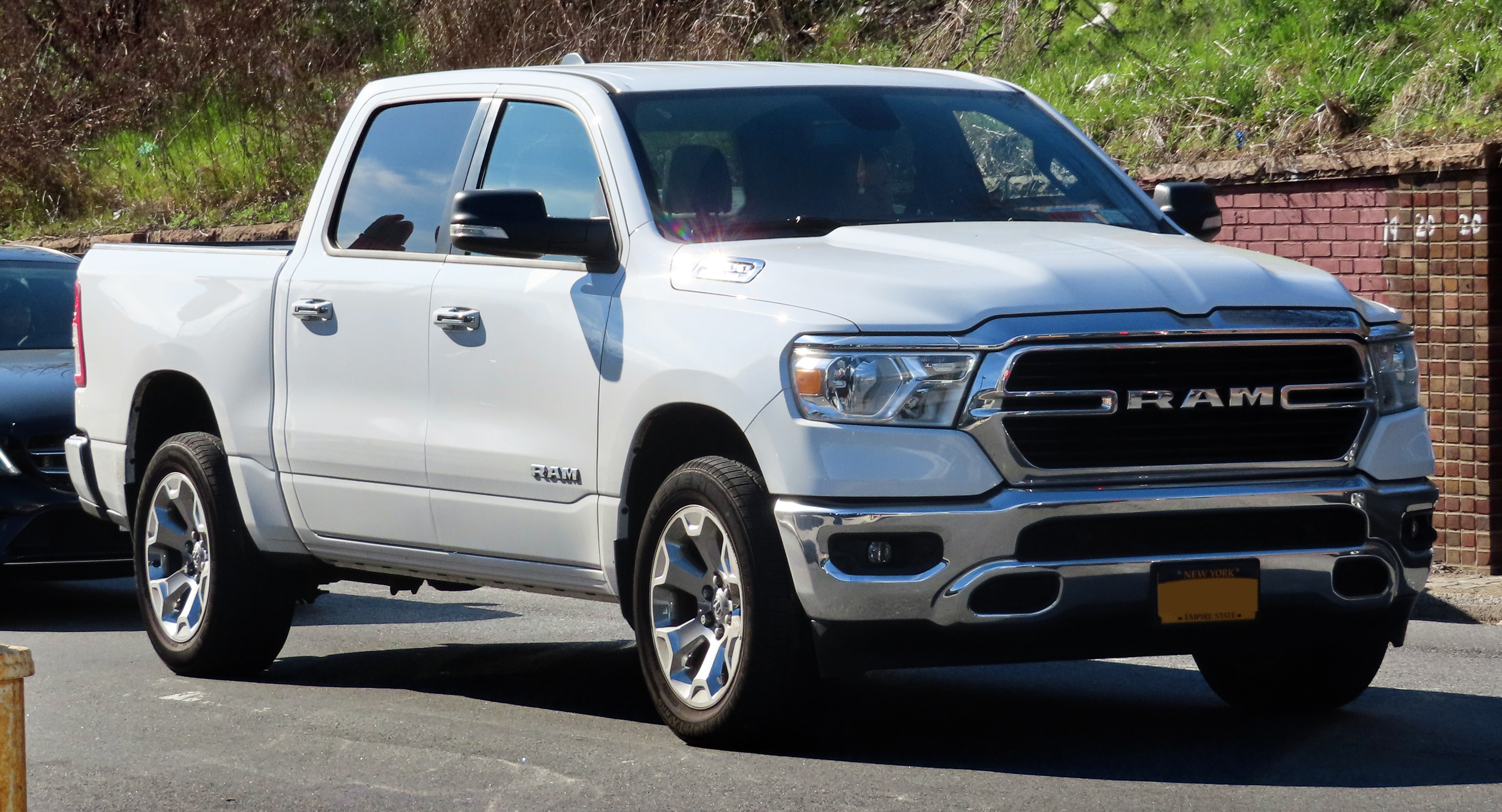
Ram 1500
"[600.9s] If you're not going to have high tow ratings, the reason I want the 6.4 and [604.0s] the Ram 1500 is, well, it does sound good, but also because it really does [608.9s] tow very well."
The Ram 1500 is a popular full-size truck. In this segment, they’re talking about which engine makes it tow better and feel quicker, and how much the sound matters to buyers.
The Ram 1500 is a full-size pickup that’s being discussed here specifically in terms of engine choice for towing and everyday drivability. The hosts compare the 6.4L Hemi setup against the Ram’s “Hurricane” inline-six option, focusing on whether it’s faster on paper and whether it sounds/feels right.
inline six
"[618.7s] sport truck, the inline six is just faster and more modifiable."
An inline six is an engine with six cylinders lined up in one row. They’re saying that, in this truck context, that engine layout can feel faster and be easier to tune than the V8.
An “inline six” is an engine with six cylinders arranged in a single row. In this segment, the host argues that in a sport truck application, an inline-six can be quicker and easier to modify than the larger-displacement V8 alternative.
turbocharged engines
"I'm sure you can take that thing over a thousand horsepower without too much trouble, uh, the benefits of turbocharged engines is their modifiability."
A turbocharged engine uses a device that squeezes extra air into the engine. That extra air helps the engine make more power, and it also tends to be easier to modify for more output.
A turbocharged engine uses a turbocharger to force more air into the cylinders. More air generally allows more fuel to be burned, which can make higher power more achievable—especially when you modify the engine.
modifiability
"I'm sure you can take that thing over a thousand horsepower without too much trouble, uh, the benefits of turbocharged engines is their modifiability."
Modifiability here means how easy it is to upgrade or tune the car to make it do something different. Some engines are set up in a way that makes upgrades simpler than others.
In this context, modifiability means how easily an engine or vehicle can be changed with aftermarket parts or tuning to produce different performance levels. Turbocharged setups are often considered more modifiable because they respond well to changes in boost and fueling.
wide tires
"give the six fourth track pack, give me those wide tires, give me the air suspension."
Wide tires generally grip the road better because they touch more surface area. They can also make the car feel different to drive than narrower tires.
Wide tires have a larger contact patch with the road, which can improve grip—especially during acceleration, cornering, and braking. They can also change steering feel and ride comfort compared with narrower tires.
air suspension
"give me those wide tires, give me the air suspension."
Air suspension uses air bags instead of metal springs. It can raise or lower the truck and change how it rides, which can make the ride smoother and the truck easier to set up.
Air suspension uses air-filled springs instead of conventional steel coil springs. It can automatically adjust ride height and stiffness, which helps with comfort and can improve stance and handling when properly set up.

Volvo S60
"...wanted a North American factory was that when the S60 and V70 of that era launched, they were profitabl..."
The Volvo S60 is a compact luxury sedan. The podcast mentions it when talking about Volvo making cars in North America and whether those models were profitable. It’s part of a history discussion about how Volvo’s business worked at the time.
The Volvo S60 is a compact luxury sedan, and the podcast references it in the context of Volvo’s North American production and profitability during an earlier era. The mention of the S60 alongside the V70 suggests the conversation is about how Volvo’s lineup performed financially when those models launched. That’s significant because it ties vehicle strategy to manufacturing success.

Volvo V70
"... North American factory was that when the S60 and V70 of that era launched, they were profitable in Nor..."
The Volvo V70 is a wagon-style car from Volvo. The podcast mentions it as part of a time when Volvo’s North American production was doing well financially. It’s included to explain the business side of which models were successful.
The Volvo V70 is a wagon model that, in the podcast, is referenced alongside the S60 during a period when Volvo’s North American factory was reportedly profitable. That context suggests the episode is discussing how Volvo’s model lineup and production decisions affected business outcomes. It’s relevant because it connects specific vehicles to broader manufacturing and product planning.

Volvo EX60
"Yeah. On the Volvo front, the EX-60 does appear pretty interesting. Our friend, Jared, was able to drive that in Barcelona."
The EX-60 is a Volvo vehicle being discussed as a new model. The podcast focuses on how big it is compared with other Volvo SUVs. A larger size usually means more space inside for people and luggage.
The EX-60 is a Volvo model discussed as an interesting new direction, particularly because of its size. The podcast notes that it seems larger in several key dimensions than the XC-60 and BMW iX3, using those as reference points. That kind of size comparison is important because it affects how much room the vehicle offers and how it competes in the luxury SUV market.

Volvo XC-60
"It's larger in a number of critical dimensions than the XC-60 or the BMW iX3. While being priced between the BMW and the Rivian,"
The Volvo XC-60 is used as a comparison point for size. The hosts are basically saying the EX-60 is bigger, and they’re thinking about what could work for a family.
The Volvo XC-60 is referenced as a size benchmark for the EX-60, with the hosts saying the EX-60 is larger in key dimensions. It’s also brought up in the context of what might make sense for a future family vehicle.
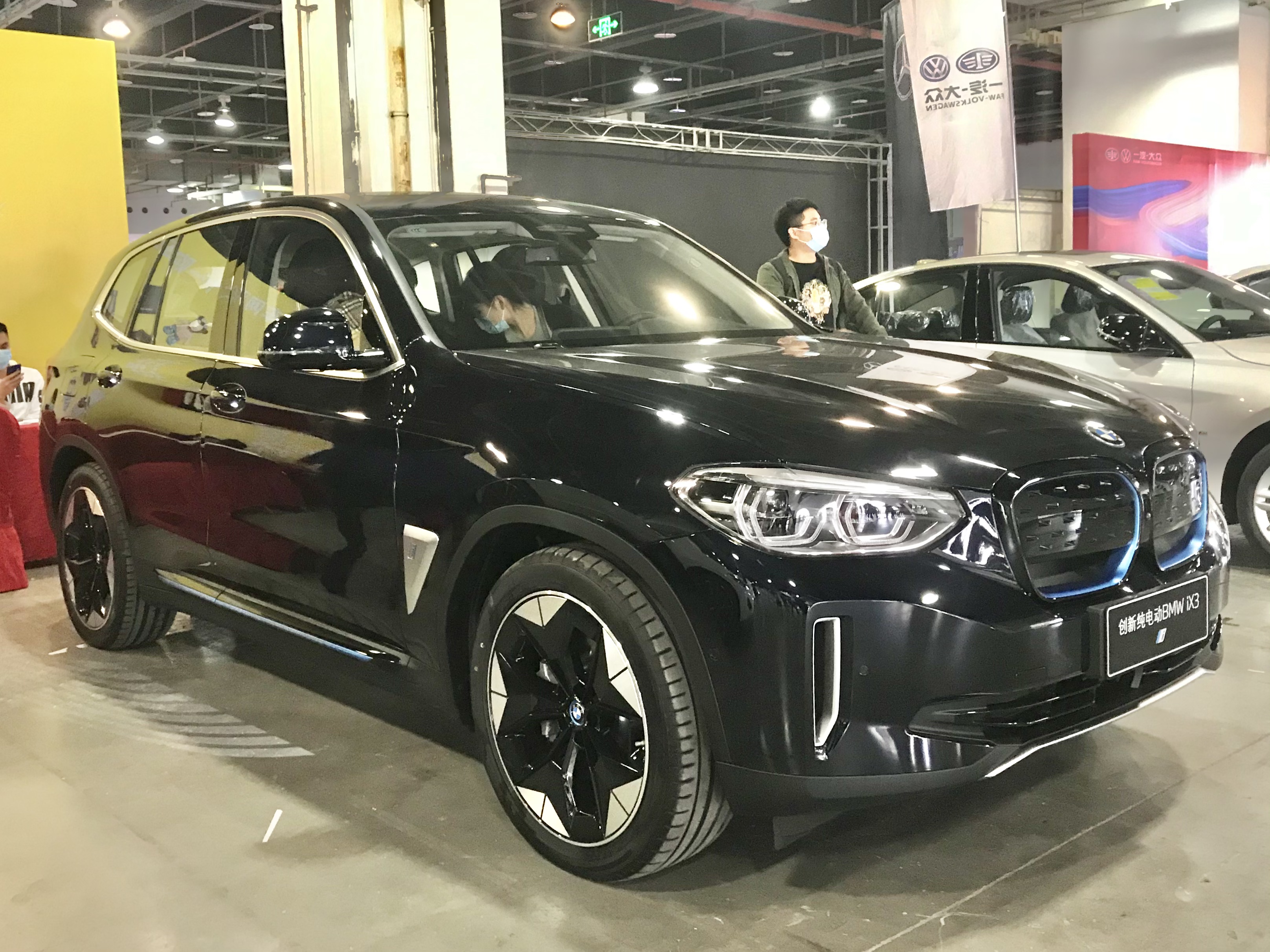
Bmw Ix3
"It's larger in a number of critical dimensions than the XC-60 or the BMW iX3. While being priced between the BMW and the Rivian,"
The BMW iX3 is another electric SUV the hosts compare the EX-60 to. Here it’s mostly about positioning—size and price—rather than deep technical details.
The BMW iX3 is mentioned as another EV size and pricing comparison point against the EX-60. In this segment, it mainly serves to frame where the EX-60 sits relative to established BMW EV offerings.
charging speeds
"and the charging speeds apparently are truly fantastic. We don't know the big battery yet, but the other two batteries are going to charge over 300 kilowatts,"
Charging speed is how fast the car can refill its battery when you plug into a fast charger. Faster charging usually means you spend less time waiting at the station.
Charging speed is how quickly an EV can add energy at a charger, typically discussed in terms of kilowatts (kW). Higher charging speeds generally mean less time spent at fast chargers, though real-world results depend on the battery and charger.
300 kilowatts
"but the other two batteries are going to charge over 300 kilowatts, and both of them will do the 10% to 80% run in around 15 minutes."
300 kilowatts is a measure of how powerful the fast charger is. The higher the number, the faster the car can typically charge—at least under the right conditions.
300 kilowatts (kW) refers to very high fast-charging power. In practice, it indicates the EV can accept a large amount of energy from a DC fast charger, which is why the hosts also mention a quick 10% to 80% charging time.
10% to 80% run
"and both of them will do the 10% to 80% run in around 15 minutes. So we're talking really, really fast charging there."
“10% to 80%” is a standard way to compare EV charging times. It’s meant to show how quickly you can add a useful amount of battery without waiting for the last part to fill up slowly.
The “10% to 80%” charging metric is a common EV benchmark because it avoids the slower charging behavior near the very top of the battery. It’s used to estimate how long fast charging will take for a practical partial charge during road trips.
AMG 600 watt charging
"Yeah, it's not that new AMG 600 watt charging, but 300 kilowatts, right? But 300 is still pretty good."
This is a comparison to another EV charging claim—AMG is mentioned as having even higher charging power. The point is to show how the EX-60’s charging compares to the most extreme numbers out there.
“AMG 600 watt charging” is a reference to a very high charging-power claim associated with Mercedes-AMG. In this context, it’s used as a comparison point to the 300 kW charging being discussed for the EX-60.
NMC batteries
"because these are going to be NMC batteries, not LFP batteries, meaning you're only going to ideally want to charge it to 80% on a regular basis."
NMC is the type of battery inside the EV. The point is that with this battery chemistry, you generally shouldn’t charge to the very top every day if you want the battery to last longer.
NMC (nickel-manganese-cobalt) is a lithium-ion battery chemistry. The hosts say these packs are why you should avoid charging to 100% regularly—because routinely charging to the top end can reduce battery longevity.
charge it to 80% on a regular basis
"meaning you're only going to ideally want to charge it to 80% on a regular basis. And so 80% to 300 miles, that's decent."
They’re recommending that you don’t fill the battery all the way every day. Charging to around 80% is a common way to help the battery last longer.
Charging to 80% regularly refers to keeping the battery’s state of charge (how full it is) below the top end for everyday use. The goal is to reduce stress on lithium-ion cells, which can help slow capacity loss over time.
adaptive dampers
"rather than the regular adaptive dampers that we find in the regular EX-60, but it's not going to get the big battery pack."
Adaptive dampers are shocks that can adjust how stiff or soft the ride feels. They’re saying the regular EX-60 uses this, but the cross-country version switches to air suspension.
Adaptive dampers are shock absorbers whose damping force changes based on driving conditions. The hosts use them as the baseline setup in the “regular EX-60,” contrasting them with air suspension on the cross-country variant.
400 volt charging
"We do seem to have greater clarity, though, on the 400 volt charging. It sounds like it's going to charge somewhere around 120 kilowatts."
This is about how an EV’s battery system is wired electrically. A higher-voltage setup can let the car pull more power from a charger more efficiently, which can mean faster charging.
“400 volt charging” refers to the electrical system voltage used by many EVs. Higher-voltage EV architectures can reduce current for the same power, which helps enable faster charging with compatible chargers.
Tesla V3 charger
"That bigger battery will take about an hour to charge at a Tesla V3 charger. If you can find one of the rare V4s that is open to everybody, then it will charge in the 15 to 18 minute window,"
Tesla’s V3 Supercharger is a newer type of fast-charging station. It’s built to deliver more power than older Superchargers, so compatible cars can charge faster.
A “Tesla V3 charger” is Tesla’s third-generation Supercharger hardware. It’s designed to deliver higher charging power than older generations, which can significantly reduce charging time for compatible EVs.
V4s
"If you can find one of the rare V4s that is open to everybody, then it will charge in the 15 to 18 minute window, or Electrify America, et cetera, with an adapter."
“V4” means a newer generation of Tesla fast chargers. Newer charger hardware can deliver more power, which can make charging much quicker for cars that are set up to use it.
“V4s” refers to Tesla Supercharger generation 4 hardware. The speaker is implying these newer stations can deliver much faster charging times than earlier Supercharger generations, especially for EVs designed for higher charging rates.
adapter
"then it will charge in the 15 to 18 minute window, or Electrify America, et cetera, with an adapter. This is going to be one of those new generation of high charging rate EVs."
An adapter is like a plug converter for EV charging. It helps your car use a fast charger that uses a different connector than your car normally supports.
In EV charging, an “adapter” is a device that allows a car to use a charger with a different connector type. The adapter can be necessary when the car’s charging port standard doesn’t match the station’s connector standard.
Electrify America
"then it will charge in the 15 to 18 minute window, or Electrify America, et cetera, with an adapter. This is going to be one of those new generation of high charging rate EVs."
Electrify America is a company that runs public fast-charging stations for EVs. The point here is that you can charge away from Tesla’s network too, depending on your car and connector setup.
Electrify America is a fast-charging network that provides DC fast charging for non-Tesla EVs in the U.S. The speaker mentions it as an alternative to Tesla chargers, implying compatibility via adapters and charging standards.
CCS to NACS
"That's going to require that adapter from CCS to NACS to really make the most of it. Yeah. There are already manufacturers like Hyundai who do have faster charging"
CCS and NACS are two different plug types for fast EV charging. An adapter lets a car with one plug work with chargers that use the other plug.
“CCS to NACS” describes switching between two EV charging connector standards. CCS is the common European/US fast-charging standard, while NACS is Tesla’s connector; adapters let some cars use chargers built for the other standard.
Hyundai Ioniq 9
"There are already manufacturers like Hyundai who do have faster charging that say that most of the charging that happens on those like the Ioniq 9 specifically happens at a Tesla supercharger, even though that's not the ideal charging situation."
Hyundai’s Ioniq 9 is mentioned as an EV that’s supposed to charge faster. The speaker’s point is that, in practice, owners may still end up using Tesla fast chargers a lot.
Hyundai Ioniq 9 is referenced as an example of a manufacturer claiming faster charging. The speaker says much of the charging for it happens at Tesla Superchargers, even if that’s not the “ideal” setup, highlighting real-world charging behavior and network compatibility.
800 volt charging
"The question will be, when are we going to see a next generation model Y with 800 volt charging? The Roadster should benefit from this, too, if it ever comes to fruition."
800-volt charging means the EV is built to use a higher electrical voltage. That can help it take in more charging power faster, which can shorten charging times.
“800 volt charging” refers to an EV electrical architecture designed to charge at higher voltage levels. This can enable faster charging because the car can accept more power with lower current, reducing resistive losses in cables and components.

Chevrolet Volt
"...e going to see a next generation model Y with 800 volt charging? The Roadster should benefit from this, ..."
The Chevrolet Volt is a plug-in hybrid, which means it can run on electricity and also use gas. The podcast mentions it while talking about faster-charging technology for electric vehicles. Charging improvements can affect how quickly you can refill the battery.
The Chevrolet Volt was a plug-in hybrid electric vehicle from Chevrolet, designed to use electricity for daily driving and a gasoline engine as backup. In the podcast, it’s brought up in the broader conversation about next-generation EV charging concepts like 800-volt charging. That’s relevant because charging technology and power electronics are central to how plug-in vehicles manage energy and charging speed.
fast charging
"Yeah. In fact, by the way, all these vehicles here are charging faster than the other ones at the charging station... not great for business when you're at a station and you go, oh, that guy's charging way faster, but mine's the one that matches the logo here."
Fast charging is when an EV battery charges much quicker than normal. The hosts are talking about which cars can take advantage of that speed at a charging station.
Fast charging refers to charging an EV at high power so the battery adds range quickly. The hosts are comparing how different EVs can benefit from fast charging depending on charging-station compatibility and charging behavior.

Tesla Cybertruck
"Yeah, it's at least getting close, right? I mean, Cybertruck's sales is actually quite small quantities... And it'll be like the first new interesting product because the Cybertruck was not the new interesting product."
Tesla Cybertruck is Tesla’s electric pickup with a very unusual, futuristic look. The discussion is about how it compares to other EVs and whether it was truly the most exciting new release.
Tesla Cybertruck is Tesla’s futuristic, angular electric pickup truck, notable for its distinctive design and its role in Tesla’s recent product push. The hosts argue it wasn’t the “new interesting product” because it was more of a new product than a major performance breakthrough.
high voltage
"So if you had all the high voltage Hyundai's, Kia's, Porsches, BMWs, all those together, that's, you know, plus the humbers in the trucks, that's definitely more."
High voltage is the EV’s electrical system voltage. Higher-voltage EVs can often charge faster and deliver power more efficiently.
High voltage in EVs is the electrical system voltage used to move energy efficiently from the battery to the drivetrain and to support faster charging. In this segment, “high voltage” is used to group EV brands that can take advantage of fast-charging infrastructure.

Tesla Model Y
"Yeah, it would have to be a Model Y, right? S and X are dead. I think they're doing their delivery event here."
Tesla Model Y is an all-electric SUV/crossover. The hosts mention it as the most likely Tesla model you’d see charging fast at a station.
Tesla Model Y is Tesla’s compact crossover EV, designed around efficient electric drive and practical daily usability. In the context of charging, it’s being used as an example of which Tesla model would likely be at a fast-charging station.

Tesla Model S
"Yeah, it would have to be a Model Y, right? S and X are dead. I think they're doing their delivery event here. When this goes live, it probably already happened."
Tesla Model S is Tesla’s main electric sedan. The hosts bring it up as one of the Tesla models they think is still active in the lineup.
Tesla Model S is Tesla’s flagship sedan EV, known for strong performance and advanced software features. Here it’s referenced alongside Model X as part of the discussion about which Tesla models are currently relevant.

Tesla Model X
"Yeah, it would have to be a Model Y, right? S and X are dead. I think they're doing their delivery event here."
Tesla Model X is an all-electric SUV. It’s mentioned as part of the Tesla lineup the hosts are comparing in terms of attention and sales.
Tesla Model X is Tesla’s electric SUV, built on the same EV platform family as other Tesla models but in a larger, more family-oriented package. The hosts mention it as being “dead” in the sense of not being the main focus compared with other models.
towing a trailer
"Commented that our Durango SRT, we haven't 0-60 tested it with a trailer on it before. 6600 pound trailer, FYI for everybody, just over five seconds, 0-60."
Towing a trailer means pulling another vehicle or load behind the car, which adds weight and aerodynamic drag. The segment uses towing as a stress test because it can noticeably affect acceleration and drivability.
0-60 time
"Commented that our Durango SRT, we haven't 0-60 tested it with a trailer on it before. 6600 pound trailer, FYI for everybody, just over five seconds, 0-60."
0-60 time measures how quickly a car goes from standing still to 60 mph. The hosts are using it to compare acceleration even while towing.
0-60 time is the elapsed time for a vehicle to accelerate from 0 mph to 60 mph. It’s a common performance metric, and here it’s specifically discussed in the context of towing a heavy trailer.
LFP batteries
"Daniel's question was, why is it that LFP batteries are recommended to be charged to 100% on a regular basis?"
LFP batteries are a type of lithium battery used in some EVs. The idea is that charging them to 100% sometimes helps the battery cells line up correctly and lets the car use the full capacity.
LFP stands for lithium iron phosphate, a specific lithium battery chemistry used in some electric vehicles. The segment explains why LFP packs are often recommended to be charged to 100% occasionally: the cells need to reach a common maximum state so the pack can balance and reach full usable capacity.
AC charge speed
"preferably be charged on a moderate AC charge speed. So level two, don't take it to the DC fast charge station"
AC charging is the more typical, slower way to charge an EV (often at home). They’re saying that for topping up to 100%, a moderate AC charge is preferable to aggressive fast charging.
AC charging refers to charging an EV using alternating current, typically slower than DC fast charging. The segment recommends charging LFP packs to 100% on a moderate AC charge speed because it’s gentler and helps the cells reach full capacity more evenly.
voltage curve
"because the voltage curve on a lithium battery is very, very shallow... and it falls off dramatically at 0% state of charge."
A voltage curve is how the battery’s voltage changes as it gets more empty or more full. They’re saying the battery voltage doesn’t change much for a while, then it shifts near empty and near full.
A voltage curve describes how battery voltage changes as the battery’s state of charge changes. The segment notes lithium’s voltage curve is relatively flat through much of the range, then drops more sharply near 0% and rises near 100%, which is why occasional full charges help the cells reach a common voltage.
state of charge
"So voltage alone is not the best way to determine the state of charge of a cell, a lithium ion cell, especially LFP cells..."
State of charge just means “how full the battery is.” The trick is that the battery’s voltage doesn’t always change much while the battery is going from, say, half-full to mostly full.
State of charge (SoC) is how full a battery is, usually expressed as a percentage. For lithium-ion packs, SoC can’t be read perfectly from voltage alone because the voltage changes only slightly across parts of the charge curve.
LFP cells
"So voltage alone is not the best way to determine the state of charge of a cell, a lithium ion cell, especially LFP cells..."
LFP is a type of lithium battery chemistry. It often has a “flatter” voltage reading, so the battery can look similar electrically even when it’s more or less full.
LFP stands for lithium iron phosphate, a lithium-ion chemistry used in many EV battery packs. It tends to have a flatter voltage curve across a wide SoC range, which makes SoC estimation harder if you rely on voltage alone.
capacity of this cell is in watt hours
"So what you do is you know what the capacity of this cell is in watt hours."
Watt-hours tell you how much energy is stored in the battery. It’s more about “how much power you can get out” than just the battery’s voltage.
Watt-hours (Wh) measure energy storage, not just voltage. When the speaker says the cell’s capacity is in watt-hours, they’re describing how much total energy the cell can deliver over time.
3.6 volts per cell
"full battery, 3.6 volts per cell, we are done. So done, done, done."
That “3.6 volts per cell” is a safety limit for charging. When any one small cell hits its limit, the charger has to stop to protect that cell.
“3.6 volts per cell” refers to a per-cell maximum charging voltage used to determine when a lithium-ion cell is fully charged. In the speaker’s example, charging must stop when any cell reaches that limit to avoid overcharging the weakest cell.
charge curve
"unless you got it all the way down to the bottom of that charge curve, you can get really close though."
The charge curve is basically the battery’s “map” of how it behaves as it fills up or empties out. Some parts of that map are easier to interpret than others.
A charge curve is the relationship between battery voltage (and other signals) and state of charge as the battery charges. The speaker notes you can’t be 100% sure of remaining capacity unless you discharge down to the bottom of that curve, because the voltage behavior varies across the curve.
BMS software
"because the BMS software is not 100% accurate and monitoring current in this way is not full proof."
BMS is the battery’s “brain.” It watches the cells and tries to figure out how full the battery is, but it can be less accurate if you only use a small slice of the battery’s capacity.
BMS stands for battery management system, the electronics and software that monitor and control an EV battery pack. It estimates state of charge and helps protect the pack, but the speaker says it isn’t perfectly accurate when you repeatedly cycle only part of the battery’s range.
cell balance
"The other problem is cell balance. So if you have a battery pack at home... where we have 192 cells..."
Cell balancing means making sure every small battery inside the big pack stays equally full. If one cell gets ahead of the others, it can hit the safety limit first.
Cell balancing is the process of keeping all cells in a multi-cell battery pack at the same state of charge. The speaker explains that with many cells, some can become weaker (e.g., higher internal resistance), so the pack needs management so no single cell reaches the limit early.
battery pack
"So if you have a battery pack at home... where we have 192 cells..."
A battery pack is the whole battery system in an EV, built from many smaller battery cells. Managing all those cells is why EV batteries need special monitoring.
A battery pack is the full assembled EV battery system made from many individual cells connected together. The speaker uses the pack size (192 cells) to illustrate why balancing and per-cell monitoring matter.
internal resistance
"they may have slightly higher internal resistance than others."
Internal resistance is like internal “friction” inside the battery. If one cell has more of it, it may charge or discharge differently than the others.
Internal resistance is how much a cell resists the flow of current inside the battery. Cells with higher internal resistance can behave differently during charging and discharging, which contributes to imbalance across a pack.
battery management system (BMS)
"we'll start balancing these cells... So that's what active battery management systems will do, but they only start functioning... when an LFP cell is around 3.4 volts or so. So you're in this 3.4 to 3.6 volt window, and that's when the BMS is doing their jazz."
An EV battery management system is the car’s “battery brain.” It watches each battery cell and helps keep them healthy by making sure they charge and discharge evenly.
A battery management system (BMS) is the electronics that monitors an EV battery and controls charging/discharging to keep cells within safe limits. In this segment, it’s specifically described as actively balancing cells so they stay at similar voltages.
cell balancing
"we'll start balancing these cells at around 3.33, 3.4 volts... So that's what active battery management systems will do... where the BMS is really taking over."
Cell balancing means making sure all the individual battery cells are “on the same level.” If they get uneven, the battery can’t use all of its stored energy.
Cell balancing is the process of keeping individual battery cells at similar voltages so the whole pack can be used evenly. If cells drift out of balance, the pack may have less usable capacity even when the state-of-charge reading looks normal.
active battery management systems
"So that's what active battery management systems will do, but they only start functioning general terms when an LFP cell is around 3.4 volts or so."
“Active” battery management means the system doesn’t just watch the cells—it also helps fix them. If one cell is higher or lower than the others, it works to bring them back into line.
Active battery management systems actively move energy between cells (or adjust cell conditions) to correct voltage differences. The goal is cell balancing—bringing high cells down and low cells up—so the pack can deliver its full usable capacity.
kilowatt hours (kWh)
"we are leaving the equivalent of 22 kilowatt hours unavailable... translate this to an electric vehicle... 10% of your range would be missing."
kWh is a way to measure how much energy is stored in the battery. The speaker is saying that if the cells aren’t balanced, you might not be able to use some of that stored energy.
Kilowatt-hours (kWh) measure electrical energy stored in a battery. The speaker uses kWh to quantify how much usable energy is lost when cells aren’t balanced, translating that into a range shortfall in an EV.
charging to 80% vs 100% for balancing
"in your LFP pack... if you're only cycling in the midpoint of its capacity... they will never be in balance unless you charge it up to that 100%... in some EVs, you charge it to 80% on a regular basis... or 70%..."
The speaker’s point is that if you never charge the battery all the way up, the individual cells can drift out of sync. Then you may end up with less real-world range than you expect, even though the car’s estimate looks fine.
The segment argues that repeatedly charging only to mid-level SoC (like 70–80%) can prevent an LFP pack from fully rebalancing. As a result, the battery may lose usable range without obvious warning until you need that capacity.
LFP battery
"because I have a small battery Tesla. It is still an LFP. So I'm less worried about the impact."
An LFP battery is a type of EV battery chemistry. The key idea is that it’s often more comfortable with regular high charging (like charging near 100%) than some other battery types.
An LFP battery uses lithium iron phosphate chemistry. Compared with many other EV battery types, LFP cells are generally considered more tolerant of frequent charging to high state-of-charge levels, which is why the host is less worried about charging to 100%.
DC fast charge
"I charged at about 20% of my total capacity or my total charging happening at a DC fast charge station."
DC fast charging is the quick-charging method you use at fast-charge stations. It fills the battery faster, but it can be harder on the battery than slower home charging.
DC fast charging is a high-power way to recharge an EV using direct current. It can add significant range quickly, but it typically stresses the battery more than slower charging, so charging habits matter.

Chevy Bolt
"Basically, as you said, because of how good the BMS is on most of these cars. ... of the the new Chevy Bolt, which by the way, has a pretty big discount on it right now."
The Chevrolet Bolt is an electric car that’s often priced to be a good value. Here, the host is pointing out that it can work well with charging up to high levels more often than some EVs.
The Chevrolet Bolt is an EV known for practical everyday usability and, in recent years, for being offered with aggressive pricing. In this segment, the host highlights the Bolt’s suitability for frequent charging habits, especially when paired with an LFP battery approach.
charge to 100%
"you're not supposed to charge to 100% every day... The bolts, like a lot of the Teslas with LFP packs, you can charge 100% every single day... [2168.3s] kind of is important for especially maybe the bolt owners argument where maybe it's a starter vehicle"
Charging to 100% means topping the battery all the way up. The hosts are discussing whether doing that every day is helpful or harmful, and how it depends on the type of EV battery.
Charging to 100% means filling the EV battery to its maximum state-of-charge. The hosts debate how often that’s necessary or advisable, arguing that some battery types (like LFP) can tolerate daily 100% charging better, while other cars may benefit from charging less frequently to protect the battery and manage usable range.
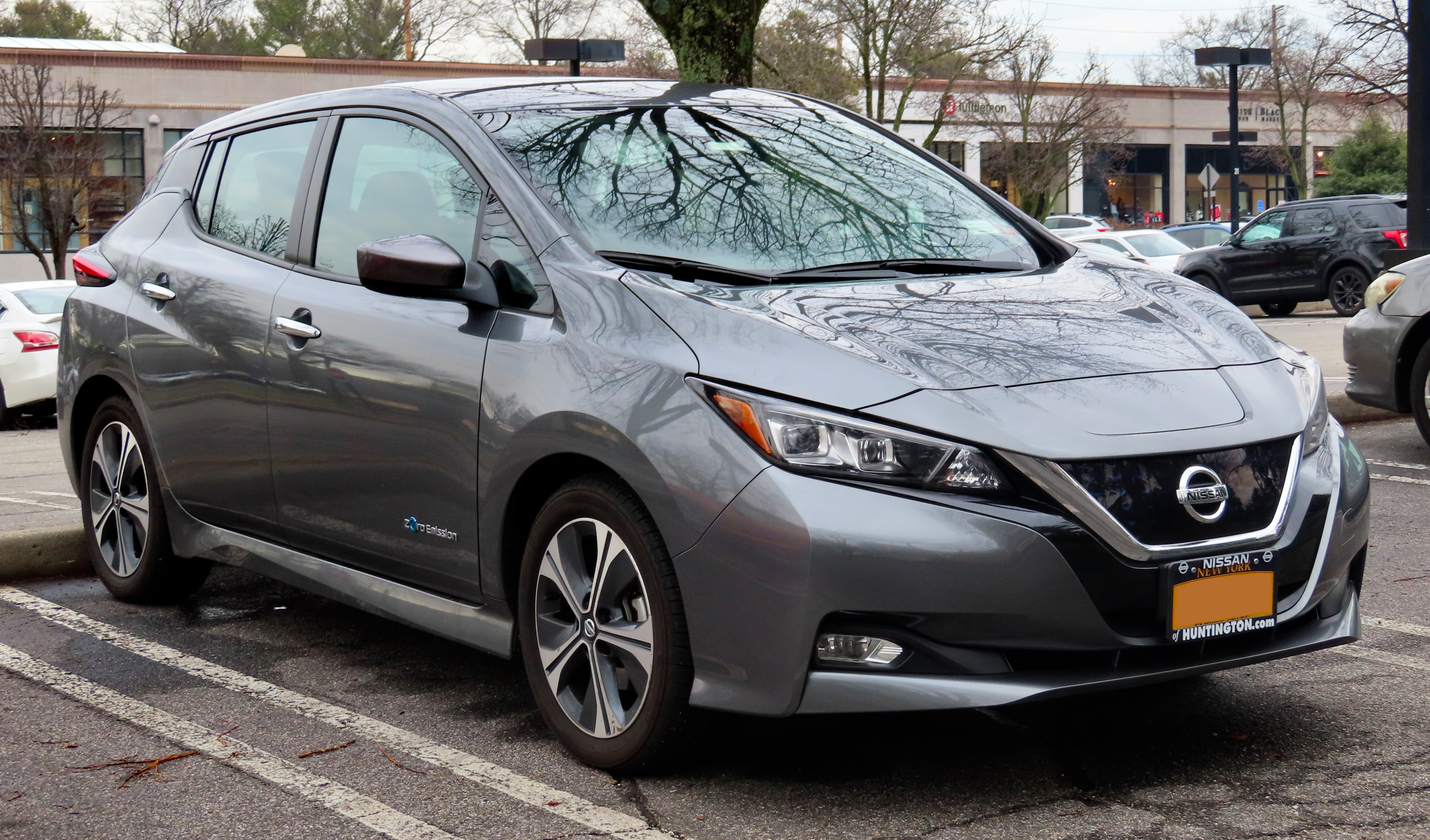
Nissan Leaf
"One of those reasons to get a bolt over like a Nissan Leaf is the Nissan Leaf, [2058.4s] you're not supposed to charge to 100% every day. On a regular basis, you should absolutely charge [2063.4s] 100%."
The Nissan Leaf is an electric car people use for daily driving. The hosts are saying you usually don’t need to fill the battery to 100% every single day, because you can still get enough daily range without doing that.
The Nissan Leaf is a mainstream EV that’s often used as a reference point for everyday charging habits. In this segment, the hosts discuss how you generally shouldn’t charge it to 100% every day, and how that affects the usable range versus the battery’s full capacity.
LFP packs
"The bolts, like a lot of the Teslas with LFP packs, you can charge 100% every single day, [2075.3s] absolutely no problem."
LFP packs are a type of EV battery. The key point is that this battery chemistry is usually happier with charging to a full 100% more often than other battery types.
LFP packs refers to lithium iron phosphate battery packs. Compared with some other EV battery chemistries, LFP is generally more tolerant of frequent charging to 100%, which is why the hosts say daily full charges are less of a concern on cars with LFP.
effective range
"And so the effective range available to you is greater because [2080.8s] even though on paper, they seem the same. Just remember, you're only using 70% of that [2085.5s] that Leaf battery, and it's a little bit different over there in the bolt."
Effective range is how far you can actually drive before the car limits you. Even if two EVs claim similar range numbers, the amount you can use day-to-day can be different.
Effective range is the real-world driving distance you can use, based on how much of the battery’s total capacity the car allows you to access. The hosts explain that even if two cars look similar “on paper,” the usable portion can differ—like using only about 70% of the Leaf’s battery in their comparison.

Chevy Trax
"this is actually kind of heartening. Chevy is increasing tracks production specifically the less expensive trims. And it's also anticipated to get a refresh for 2027 looks like a new nose and new headlights, bigger screens, maybe a more streamlined tech line."
The Chevrolet Trax is a small SUV that’s meant to be affordable. The hosts are saying GM is making more of the cheaper versions and may update the look and tech for 2027.
The Chevrolet Trax is a subcompact crossover SUV that GM positions as an affordable entry point. In this segment, the hosts discuss GM ramping up Trax production for lower-priced trims and the expectation of a 2027 refresh with updated styling and technology.
refresh for 2027
"And it's also anticipated to get a refresh for 2027 looks like a new nose and new headlights, bigger screens, maybe a more streamlined tech line."
A “refresh” is an update to a vehicle’s design and features—often including styling changes (like headlights and front-end design) and tech updates—without fully replacing the model. Here, the hosts expect the Trax to receive a 2027 refresh with a new front end, new headlights, and larger screens.
bigger screens
"and new headlights, bigger screens, maybe a more streamlined tech line."
“Bigger screens” means the car’s main display for media, navigation, and settings may be larger. The hosts are saying the update is likely to improve the tech you interact with day to day.
In modern cars, “screens” usually refers to the infotainment display and sometimes the digital instrument cluster. The hosts are pointing out that GM’s expected 2027 refresh for the Trax likely focuses on updated in-car technology and user interface.
discount segment
"Now it is firmly General Motors because Ford's given up. Stalantis gave up. Suppose they're coming back. I'll believe that when I see it. ... But GM has far and away the best sales in the discount segment."
The “discount segment” just means the cheaper end of the car market. The hosts are saying GM is doing especially well there with affordable models.
The “discount segment” refers to the lower-priced portion of the market where shoppers are primarily cost-sensitive. In this segment, the hosts argue that GM is currently strongest here, with models like the Trax offering low starting prices while still feeling modern.
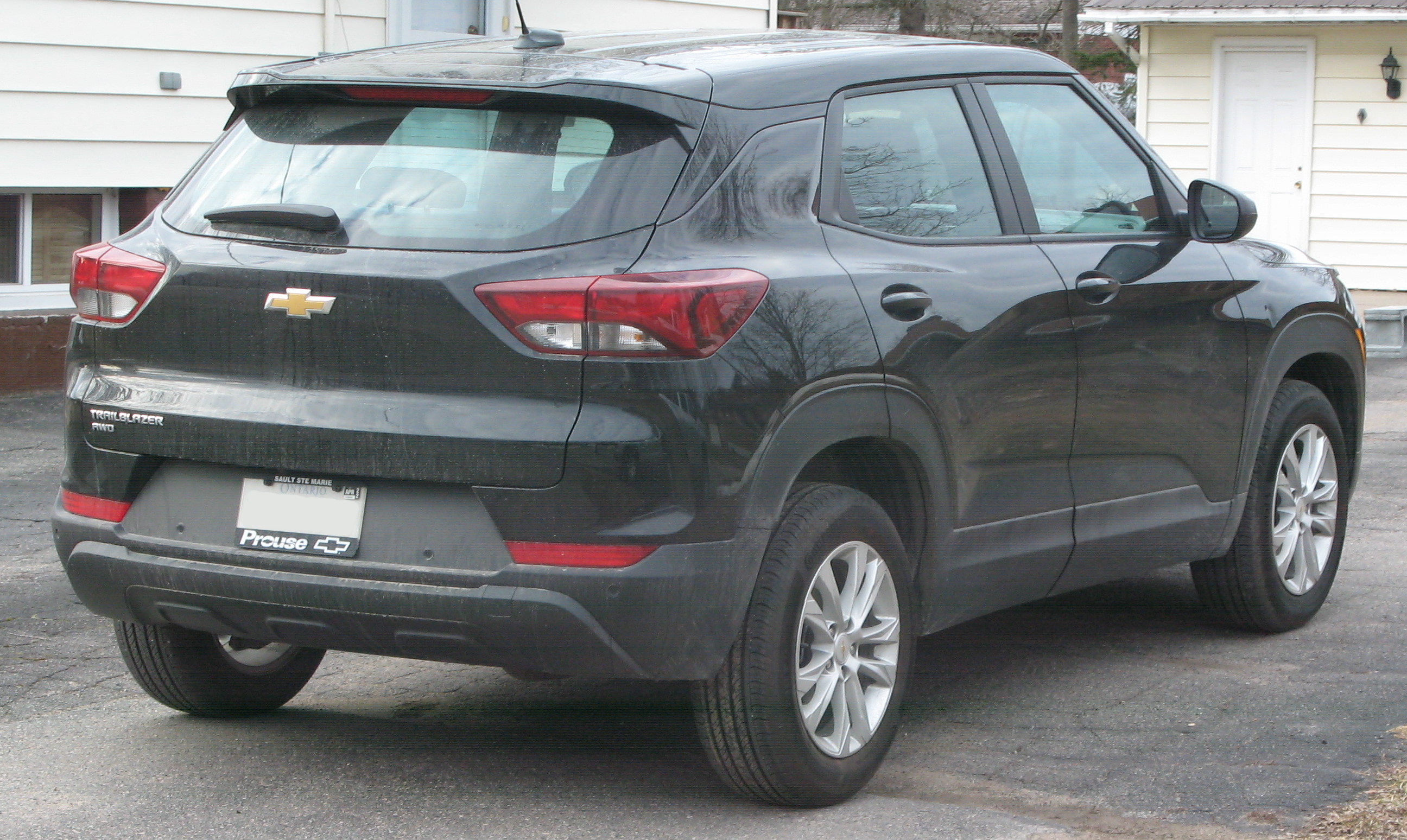
Chevy Trailblazer
"But in 2025, they sold 206,000 tracks, 101,000 trailblazers, about 60,000 and Vista's an on course for a whole heap of new cars."
The Chevrolet Trailblazer is a small-to-midsize SUV from GM. In this part of the discussion, it’s mainly used for sales comparison against other affordable models.
The Chevrolet Trailblazer is another GM crossover SUV that sits above the Trax in size/positioning. Here it’s mentioned alongside Trax sales figures, used to support the idea that GM is dominating the “discount” segment with multiple models.
subcompact category
"Let's say, you know, it's like a 420,000 something affordable vehicles in the subcompact category. And we compare that to the competition HRV 54,000."
“Subcompact” means a smaller, more budget-friendly size of car or SUV. The hosts compare sales within this size class to see which brands are winning on price and demand.
The subcompact category is the class of small cars and crossovers that are typically sized for easy city driving and lower purchase prices. The hosts use this category to frame sales comparisons between models like the Trax, HR-V, and Corolla.
Request an Explanation
Heard something you'd like explained? We'll add it to this episode.
Sign in to request explanations for terms you heard.
Want to learn more?
Browse our glossary for plain-English explanations of automotive terms, jargon, and concepts.
Help improve this episode
See something that's not quite right? Our annotations are AI-generated and can sometimes miss the mark. Click the flag icon on any annotation to suggest a correction.
2 community members have helped improve this episode.