
Tesla's A "Legacy" Car Maker Now, Who'll Be Hands Free Next, Polestar & TRX vs Raptor
About this episode
A listener asks when a non-Tesla automaker will offer true supervised, hands-free driving (not just highway hands-off). The hosts compare timelines for legacy brands—Ford and GM pointing to 2028 for level 3—while noting rivals like Rivian and Lucid are working toward similar capabilities. The discussion then pivots to Tesla’s changing role: from tech leader to “legacy” benchmark, with slower progress in charging speed and limited new vehicle innovation. They debate whether Tesla’s camera-only approach and heavy AI/FSD spending (including cybercab) will be enough to keep its edge.
A listener wants a fun weekend car with supervised self-driving that is not a Tesla, which sends us down a rabbit hole on when Ford, GM and Rivian might actually ship level three autonomy, and whether Tesla has quietly turned into a legacy car company. We dig into Tesla's R&D spending per vehicle versus GM, why the charging and range crown has slipped to Hyundai, Kia and Lucid, and what we would actually do to fix Tesla's product lineup and priorities.
From there we cover GM's Ultium charging push, the strange story behind Volvo getting a connected-car waiver while Polestar did not, and whether EV road trips make sense with young kids in the car. We also talk through GM's heavy but practical EV trucks, why a hybrid or gas Silverado EV would be a game changer, and settle the debate between the Ram 1500 TRX, Rumble Bee and Ford Raptor R.
0:00 Intro: winging it this week 0:22 Listener question: a fun, self-driving car that isn't a Tesla 4:16 Has Tesla become a legacy car company? 11:07 Tesla's R&D spending compared to GM 20:56 How we'd fix Tesla 29:31 GM's Ultium push for faster charging 32:15 Volvo's connected-car waiver and Polestar's problem 37:27 Road tripping in EVs with young kids 43:08 GM's EV trucks, the mid-gate, and wanting a hybrid Silverado EV 47:48 Ram TRX vs Ford Raptor R showdown
hands free
"[628.2s] but they still had somebody behind the wheel [632.2s] because they are doing testing."
“Hands free” means a car can drive with less or no steering/braking input from the driver. The idea is that the car handles more of the driving while the system is being tested.
“Hands free” refers to driver-assistance or autonomous driving systems that reduce or remove the need for continuous driver input. In the episode title it’s a key theme, and in this segment the discussion of testing and who’s behind the wheel connects to how these systems are evaluated.
supervised self-driving
"He would like to buy a new car, fun to drive on weekends, that has supervised self-driving during the week... Because supervised self-driving already exists in the likes of Supercruise and BlueCruise."
This is “mostly driving for you,” but you’re still responsible. The car can help on certain roads, and you have to watch and be ready to take over quickly.
Supervised self-driving is driver-assist automation where the car can steer and/or accelerate/decelerate, but a human driver must stay engaged and ready to take over. It’s typically limited to certain roads and conditions, like well-marked highways.
in all conditions
"I think the clarifier for me is going to be whether you mean in all conditions or on the highway."
This is about whether the car can do the driving in every situation. Most driver-assist features work well only in certain conditions, like clear highway driving.
The phrase “in all conditions” highlights a key limitation of driver-assist systems: they often work only within specific environments (weather, road type, lighting, lane markings). Many systems are strong on highways but not designed for every scenario.
BlueCruise
"Because supervised self-driving already exists in the likes of Supercruise and BlueCruise."
BlueCruise is Ford’s system that can help drive on some highways. You still have to watch the road and be ready to take over.
BlueCruise is Ford’s hands-free driver-assistance system for certain mapped highways. Like other supervised systems, it requires driver attention and readiness to take control.
Supercruise
"Because supervised self-driving already exists in the likes of Supercruise and BlueCruise."
Super Cruise is a GM feature that can help drive the car on certain roads. It’s not fully autonomous—you still have to pay attention and take over if needed.
Super Cruise is General Motors’ hands-free driver-assistance system that can control steering and speed on approved roads. It’s designed for “supervised” operation, meaning the driver must monitor the system and be ready to intervene.
hands off the wheel driving
"There's already hands off the wheel driving. But I think if you're talking about Tesla,"
This means the car can steer and drive with you not holding the steering wheel for a while. But it usually only works in certain situations, and the car can ask you to take over if it gets confused or the conditions change.
“Hands off the wheel driving” refers to driver-assistance systems that can steer and control the vehicle without the driver physically holding the steering wheel for at least some conditions. In practice, these systems still have limits (road type, weather, mapping, and driver monitoring) and may require the driver to take over when the system can’t handle the situation.
door to door driving functions
"Rivian is working on their, what do you call it, door to door, [101.4s] I think, driving functions. [103.8s] Same sort of idea."
“Door to door” means the car is trying to handle the trip from start to finish, not just one kind of road. It’s harder because it has to deal with more complicated driving situations along the way.
“Door to door” driving functions describe automated-driving capability intended to cover the whole trip—starting from leaving your home/parking area, handling roads and traffic, and continuing until you reach your destination. It’s a higher bar than systems limited to highways or geofenced areas because it must manage more complex driving scenarios.
legacy builders
"Because the OEMs, the manufacturers who are legacy [139.0s] builders, they go, ooh, we're going to go slowly"
“Legacy builders” is a way of referring to traditional automakers that have long histories of making cars (as opposed to newer EV-first companies). The host contrasts their development approach—moving more cautiously to avoid failures—with newer manufacturers that may take bigger risks to advance automated-driving capabilities.
level three driving package
"Ford and GM have both said that 2028 is when they will have their fully autonomous level three driving package available."
This is a way of ranking how much the car can drive by itself. Level 3 means the car can do most of the driving in certain situations, but you still have to be ready to take over if it asks.
“Level three” is an SAE autonomy level where the car can handle most driving tasks in specific conditions, but the driver must be ready to take over when the system requests it. The key difference versus lower levels is that the car actively manages driving rather than just assisting.
Ultra Cruise
"My bet would be probably GM, because Ultra Cruise has been announced for some time as the next generation of Super Cruise, the next level of autonomy."
Ultra Cruise is GM’s planned upgrade to its advanced driver-assistance system. The idea is that it should be able to handle more driving situations than the current version.
Ultra Cruise is GM’s next-generation higher-level driver-assistance/autonomy system being positioned as an upgrade beyond its current Super Cruise. The discussion frames it as the “next level of autonomy,” implying broader capability and/or more scenarios than the existing system.
Very limited cases
"Mercedes effectively already has a level three system. Very limited cases, use cases in the US, et cetera."
Even when a car can do more driving by itself, it often only works in certain places and conditions. The host is saying Mercedes’ level 3 capability is restricted rather than universally available.
“Very limited cases” refers to the real-world constraints on higher-level driver-assistance systems—typically limited geographies, road types, weather, and mapping coverage. The host uses it to describe Mercedes’ level three capability as restricted compared with broader claims.
escalate IQ
"It's going to go in an escalate IQ. So rather, unfortunately, that means big six digits."
This sounds like a GM vehicle program or platform name. The host is basically saying GM will put the new autonomy system into a specific upcoming premium lineup, and it won’t be cheap.
“Escalate IQ” appears to be the name of a GM vehicle platform or model line the host believes will receive Ultra Cruise. The segment connects this to pricing expectations, implying it’s a premium product where advanced autonomy will be offered.
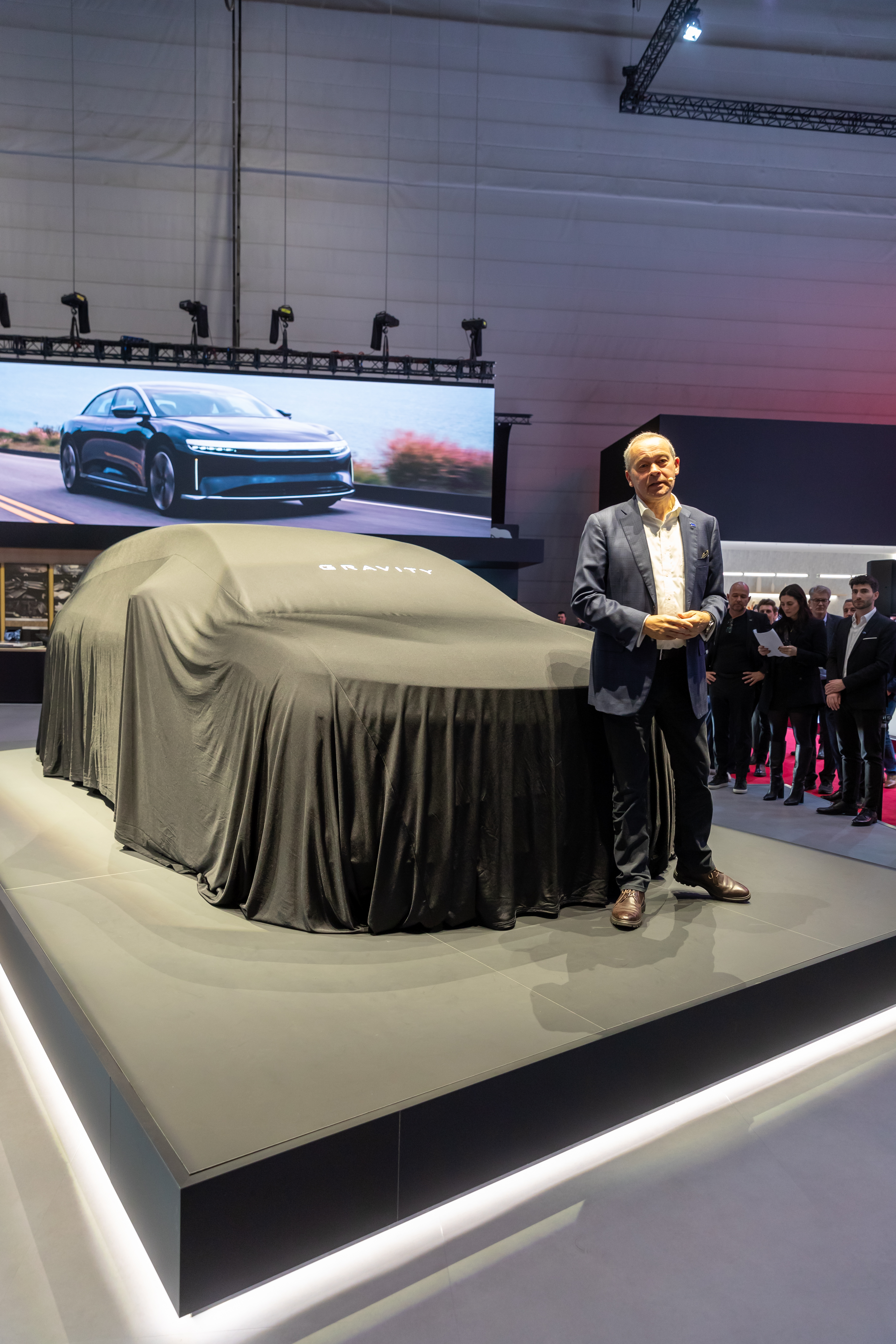
Lucid Gravity
"[227.3s] I will say we have a Lucid Dream, sorry, a Lucid Gravity, [232.3s] not the Dream Edition, but the Touring Edition in the driveway"
The Lucid Gravity is Lucid’s electric SUV. Here, the host mentions it because it has advanced driver-assistance features that they’re comparing to other cars’ hands-free systems.
The Lucid Gravity is Lucid’s electric SUV, positioned as a more practical, family-oriented alternative to its sedan lineup. In this segment, it’s used as an example of how Lucid’s driver-assistance tech stacks up against other brands’ systems.
charging network
"and the charging network is still the biggest Trump card [299.1s] they have."
A charging network is the system of public EV charging stations. If there are lots of chargers where you drive, it’s easier to own an EV without worrying about running out of power.
A charging network is the set of public charging stations (often with standardized connectors and payment systems) that lets EV drivers recharge away from home. For many buyers, it’s a key deciding factor because it affects how practical long trips are and how easily you can find a charger when you need one.
fully electric vehicle
"They are ostensibly the first fully electric vehicle [328.1s] manufacturer."
A fully electric vehicle is a car that runs only on electricity from a battery. You charge it instead of buying gas.
A fully electric vehicle (EV) runs on an electric motor powered by a battery, with no gasoline engine. This matters because it changes everything from how the car is packaged to how it’s charged and maintained compared with hybrids or gas cars.
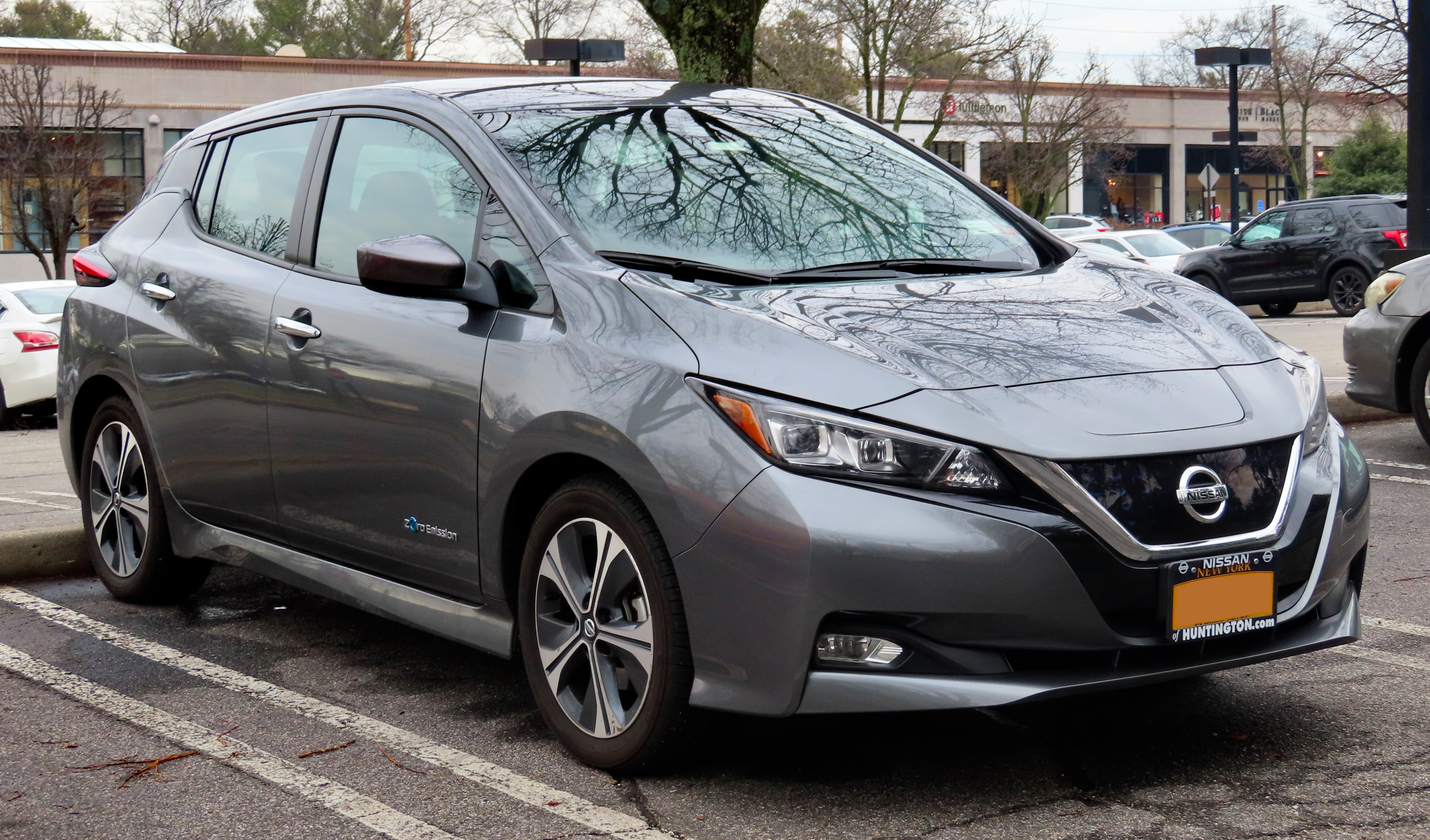
Leaf
"It was a Tesla or a Leaf. [333.2s] So really, really slim pickings there."
The Nissan Leaf is an early, popular electric car. The host is basically saying that, back then, there weren’t many EV choices besides Tesla and the Leaf.
The Nissan Leaf is one of the earliest widely sold mass-market EVs, and it’s often used as a benchmark for early EV options. In this segment, the host contrasts Tesla’s early lineup with the limited number of fully electric choices at the time.

BMW i3
"And then it was an I3. [337.0s] And then it was everything starts to trickle out."
The BMW i3 is an electric car from BMW. It’s mentioned here because, early on, there were only a few mainstream EV models to choose from.
The BMW i3 is a compact electric car that helped expand the early EV lineup beyond Tesla and the Nissan Leaf. The host mentions it as part of the “slim pickings” of early fully electric options.
charging infrastructure
"And then obviously the charging infrastructure, [353.6s]"
Charging infrastructure refers to the physical systems that enable EV charging—charging stations, power supply, and the supporting network that keeps them working. It’s a major factor in EV adoption because it reduces “range anxiety” and makes everyday charging more convenient.
electric vehicles
"which was absolutely pivotal to making not just Tesla [357.4s] successful, but electric vehicles, [359.0s] because no one else was building the charging stations."
Electric vehicles are cars that run on electricity stored in a battery. The host is saying EVs became successful only when charging became available enough for people to use them confidently.
Electric vehicles (EVs) rely on battery power and charging infrastructure rather than gasoline fueling. In this segment, EVs are discussed as a category whose adoption was constrained by the availability of charging stations.
charging stations
"because no one else was building the charging stations. [362.3s] And to their credit, if you don't build the stations, [365.8s] they will not come"
Charging stations are where you plug in an electric car to recharge it. The host is saying EVs only work well for most people if there are enough places to charge along the routes you want to drive.
Charging stations are the public infrastructure that enables long-distance and everyday use of electric vehicles. The host’s point is that Tesla’s early success depended on building enough charging access so EV buyers could feel confident they could “get there.”

Tesla Model 3
"I mean, I think when the Model 3 launched, [374.2s] that was a big, big step."
The Tesla Model 3 is one of Tesla’s main electric cars. The hosts are saying it was an important turning point for Tesla and EVs because it helped bring electric cars to more mainstream buyers.
The Tesla Model 3 is Tesla’s mass-market electric sedan that helped prove EVs could scale beyond niche buyers. In this segment, it’s framed as a pivotal step because it arrived after Tesla built early momentum and infrastructure.

Tesla Model Y
"And then Model Y was a small incremental step above that. [379.7s] And it reached more people... [400.5s] No, but the question is, is the new Model Y six-seater"
The Tesla Model Y is Tesla’s popular electric SUV/crossover. The hosts say it was a step that reached more buyers, and they’re debating whether a bigger, six-seat version could make a real difference.
The Tesla Model Y is Tesla’s compact electric crossover, and it’s positioned here as an incremental step that reached more people than the Model 3. The discussion also pivots to a proposed “six-seater” version, treating it as a potential volume and practicality play.

Tesla Model X
"Model S, Model X refresh was really a refresh, [388.0s] not a next generation, not really."
The Tesla Model X is Tesla’s electric SUV. The host is basically saying its update wasn’t a totally new car—more like improvements on the existing one.
The Tesla Model X is Tesla’s electric SUV, and the host groups it with the Model S as receiving a “refresh” instead of a next-generation change. This implies the product didn’t deliver the kind of leap that might drive major new demand.

Tesla Model S
"Model S, Model X refresh was really a refresh, [388.0s] not a next generation, not really."
The Tesla Model S is Tesla’s top electric sedan. The host is saying its recent update was more of a facelift than a brand-new design.
The Tesla Model S is Tesla’s flagship electric sedan, and the host mentions a “refresh” rather than a true next-generation redesign. That distinction matters because a refresh typically updates styling/tech without fundamentally changing the platform.
next generation
"Model S, Model X refresh was really a refresh, [388.0s] not a next generation, not really."
“Next generation” means a truly new version of a car, not just small updates. The host is saying Tesla’s changes to the Model S/X were more like a facelift than a brand-new design.
“Next generation” refers to a major redesign that changes the underlying platform, architecture, or core engineering—not just styling or minor feature updates. The host contrasts this with a “refresh,” implying Tesla’s Model S/X updates didn’t deliver a big enough leap to reset demand.
refresh
"Model S, Model X refresh was really a refresh, [388.0s] not a next generation, not really."
A “refresh” is when a car gets updated during its model life—usually small changes like new styling or features. The host is saying Tesla’s Model S/X updates didn’t feel like a totally new car.
A “refresh” is a mid-cycle update to a vehicle, often including styling changes, interior tweaks, and updated tech, while keeping the same basic platform. Here, the host argues the Model S/X “refresh” wasn’t a true next-generation step.
van door
"You might have been better off making a Model V [414.2s] and just stretching the Model Y and giving it a van door"
A “van door” is a door style you often see on vans that’s easier for getting in and out—especially for rear passengers. The host is proposing a more practical, van-like setup for a bigger Model Y.
A “van door” typically means a large, sliding or wide-opening side door design borrowed from vans to make rear-seat access easier. The host suggests Tesla could improve practicality by stretching the Model Y and using a more van-like door layout.
leapfrog moment
"And then I think we're running into another leapfrog moment [447.2s] because Tesla is still only using cameras."
A “leapfrog moment” is when one company gets ahead quickly, like it skipped ahead of everyone else. The host is using it to talk about Tesla moving forward faster, but then hitting new legal questions.
A “leapfrog moment” describes a period when one company jumps ahead of others by skipping steps and moving to a newer capability faster. Here, it’s used to frame Tesla’s rapid progress and the next regulatory/technology hurdle for its camera-based approach.
cameras
"because Tesla is still only using cameras. [450.1s] And how long is that going to be legal?"
The host is talking about how Tesla uses cameras to “see” the road for its driver-assist features. They’re questioning how long that camera-only approach will be allowed by regulations.
In Tesla’s current approach (as discussed here), the vehicle relies on cameras as its primary sensing method for driver-assistance and autonomy features. The host contrasts this with the broader idea that other manufacturers could enable similar capabilities if they were willing to deploy the technology.
legacy car company
"because I think that the Tesla becoming a legacy car company [463.3s] runs a little bit deeper than some of that"
A “legacy car company” means an old, established car brand that’s been around a long time. The host is saying Tesla might be starting to act more like those traditional brands.
A “legacy car company” is an established automaker that has traditionally built cars for decades, often with more conventional engineering and business models. The host argues Tesla is becoming one—suggesting it may start thinking and operating like older automakers rather than staying disruptive.
range
"They were really focusing on these things [476.5s] it was the new thing. [476.5s] They were really focusing on these things [479.7s] that we have come to associate with Tesla, [481.6s] range, charging speed, efficiency,"
For electric cars, “range” is how far you can drive before the battery runs out. The host is saying Tesla used to lead in that kind of metric.
In EV discussions, “range” means how far the vehicle can drive on a full battery charge under specified conditions. The host lists range as one of the areas Tesla originally emphasized when it was new.
efficiency
"range, charging speed, efficiency, [484.9s] and now they lead in none of those categories,"
“Efficiency” here means how much energy the EV uses to drive a certain distance. The host is saying Tesla isn’t leading in that anymore.
“Efficiency” in EV context refers to how effectively the vehicle converts battery energy into motion, often expressed as energy used per distance. The host uses it as one of the traditional Tesla strengths that other brands may now match or surpass.
charging speed
"In fact, when it comes to charging speed, [491.5s] they're arguably quite far behind, not just China, [495.4s] but quite far behind a lot of other brands."
Charging speed is how fast an electric car can refill its battery at a charger. Faster charging means less time waiting at public stations.
Charging speed is how quickly an EV can add energy to its battery during a charging session. It’s usually discussed in terms of how many kilowatts the car can accept at a charger, and it strongly affects real-world trip planning.

Lucid
"The average Lucid is mind-blowingly quick [507.8s] and Lucids are slow compared [509.6s] to what's going on in China, right?"
Lucid is an electric-car brand. The host is saying Lucid cars can charge faster than Tesla, at least based on typical charging results.
Lucid is an EV brand known for very fast charging and high-efficiency electric drivetrains. In this segment, the host contrasts Lucid’s charging speed with Tesla’s, suggesting Lucid can charge quicker in real-world averages.

roadster
"Is the roadster missing [552.8s] because they're spending so much money on full self-driving? [558.6s] Well, and I would say not just full self-driving,"
The Tesla Roadster is Tesla’s high-end electric sports car. The host is wondering if it’s taking so long because Tesla is putting more resources into self-driving software.
The Tesla Roadster is Tesla’s planned/announced high-performance electric sports car. The host suggests it may be delayed because Tesla is spending heavily on full self-driving development instead of prioritizing new hardware.
crowdsourcing
"[564.7s] Obviously, there's a lot of vehicles out there, [566.5s] they gather in a lot of data, [567.8s] they're crowdsourcing a lot of this data,"
Here, crowdsourcing means Tesla uses data from lots of cars on the road. More real driving examples can help the software get better over time.
In this context, crowdsourcing means collecting driving data from many Tesla vehicles to improve the self-driving software. The idea is that real-world inputs from a large fleet help the system learn patterns and edge cases faster than relying on limited internal testing.
radar
"It is cameras, it is processors, [579.6s] but beyond that, we're not using radar or LiDAR, [582.0s] or any of these big leap technologies"
Radar is a sensor that uses radio waves to detect objects around the car. It helps the car judge distance and speed, and it can work better than cameras in some bad weather.
Radar is a sensor technology that uses radio waves to detect objects and estimate their distance and relative speed. For advanced driver-assistance systems, radar can help the car “see” through some adverse weather and measure motion even when cameras struggle.
in scale
"but who's it gonna go to and what's it going to do? [609.8s] And is that in scale? [611.8s] Because in scale is where it needs to be to make sense."
“In scale” means it has to work well not just once or in a small test, but for lots of cars and lots of rides. That’s what makes it practical and worth running as a service.
“In scale” here means the system has to work reliably across many vehicles and many real-world trips, not just in limited demos. For autonomy and robotaxis, scaling is what turns a technology into a practical business because it requires consistent performance, operations, and safety at high volume.

Chevrolet Ev Blazer
"[654.0s] But I will say, we're turning in [656.0s] or you may have already turned in our EV Blazer [660.0s] is the next long-term test vehicle we buy a cyber cab."
An “EV Blazer” is a Chevrolet Blazer that runs on electricity instead of gas. Here, they’re using it as a long-term test car to see how it works in practice.
“EV Blazer” refers to an electric version of the Chevrolet Blazer nameplate. In this segment it’s described as a long-term test vehicle, meaning they’re using it to evaluate real-world EV behavior over time.
R&D spend
"[667.8s] Yeah, so the interesting part here [669.0s] is when I look into R&D spend, [672.1s] Tesla spends way less than General Motors spends"
“R&D spend” is how much money a company spends on research and development. It’s basically the budget for inventing new tech and improving cars.
“R&D spend” means research and development spending—money a company puts into creating new technologies and improving products. The hosts use it to compare how Tesla and General Motors allocate resources toward innovation.
General Motors
"[669.0s] is when I look into R&D spend, [672.1s] Tesla spends way less than General Motors spends [675.4s] on research development,"
General Motors is a big car company. In this discussion, they’re comparing GM’s research spending to Tesla’s.
General Motors (GM) is a major automaker used here as a benchmark for how much it spends on research and development compared with Tesla. The comparison is meant to highlight differences in innovation strategy and investment intensity.
R&D budget
"So for every vehicle they sold in 2025 versus their R&D budget for 2025, they spent nearly $3,000 per car on R&D versus less than a thousand for General Motors."
R&D budget is the amount of money a company spends on new ideas and engineering. Here, they’re comparing how much Tesla spends on that work compared with how many cars they sold.
“R&D budget” means the money a company sets aside for research and development—work like engineering new vehicle features, testing prototypes, and building software. In this segment, it’s used to compare how much Tesla spends per car sold versus General Motors.
artificial intelligence
"but instead they spend an astronomical amount of that on their artificial intelligence and full self-driving kind of thing."
Artificial intelligence here means computer software that tries to “understand” what’s happening around the car and help it decide what to do next. In this discussion, it’s connected to Tesla’s self-driving features.
In automotive context, “artificial intelligence” refers to software that learns from data to make driving-related decisions—like interpreting sensor inputs and choosing steering/braking actions. The host ties it to Tesla’s driver-assistance and autonomy efforts, including compute and platform work.
AI compute clusters
"So apparently a lot of it's been going towards expanding internal AI compute clusters, higher performance chips, in-house supercomputer architecture, and the cyber cab autonomous platform with full self-driving research."
AI compute clusters are basically a bunch of powerful computers teamed up to do heavy AI work. For self-driving, they’re used to train and improve the software using lots of data.
“AI compute clusters” are groups of high-performance computers working together to train and run machine-learning models. For self-driving systems, these clusters are used to process large amounts of driving data and to iterate on perception and decision-making algorithms.
higher performance chips
"expanding internal AI compute clusters, higher performance chips, in-house supercomputer architecture, and the cyber cab autonomous platform with full self-driving research."
“Higher performance chips” refers to faster/more capable semiconductors used to run AI and vehicle control tasks. In autonomy discussions, more capable chips can reduce latency and improve how quickly the car processes sensor data.
in-house supercomputer architecture
"higher performance chips, in-house supercomputer architecture, and the cyber cab autonomous platform with full self-driving research."
This phrase means Tesla is designing its own very powerful computer setup. Self-driving software development can need huge amounts of computing power, so the company builds the system to fit its needs.
“In-house supercomputer architecture” means Tesla is building its own high-end computing system design rather than relying entirely on off-the-shelf hardware. This matters for autonomy because training and validating AI models can require massive compute resources.
cyber cab autonomous platform
"in-house supercomputer architecture, and the cyber cab autonomous platform with full self-driving research."
A “platform” is the underlying design and technology base a vehicle is built on. “Cyber cab autonomous platform” means Tesla’s planned base meant to support self-driving features in that vehicle.
“Cyber cab autonomous platform” refers to Tesla’s planned autonomy-focused vehicle platform associated with its Cyber Cab concept. A “platform” here implies a shared hardware/software foundation designed specifically to support autonomous driving functions.
under the hood
"not attacking, just sort of attempting to see what's happening under the hood. Popping the hood, taking a poke around, right?"
“Under the hood” just means “let’s look at how it really works,” not just what’s advertised. Here, they’re talking about the technical side of Tesla’s self-driving approach.
“Under the hood” is a metaphor for looking at the technical details rather than just the marketing. In this segment, it frames the discussion as investigating how Tesla’s autonomy and computing strategy works.
full self-driving
"The question in my mind would be [763.8s] is when we look at how many people have full self-driving, [768.0s] Tesla won't say exactly"
“Full self-driving” is Tesla’s name for its advanced driver-assist software. It’s meant to handle more driving for you, but it usually still expects the driver to stay alert and take over when needed.
“Full self-driving” is Tesla’s marketing name for its driver-assistance software package, which aims to automate more of the driving task than basic cruise control. In practice, it’s still typically designed to require driver supervision rather than being a fully autonomous system in all conditions.
new motors
"You know, new motors, new batteries, [811.0s] you know, change a, yeah, I mean, [813.1s] it's like you change some suspension components here"
In an EV, the motors are what actually make the car move. If a car gets “new motors,” it can feel different and may be more efficient or powerful.
In an EV, “motors” are the electric machines that convert electrical energy into motion. Updating motors can change efficiency, performance, and how the vehicle delivers torque across driving conditions.
new batteries
"You know, new motors, new batteries, [811.0s] you know, change a, yeah, I mean, [813.1s] it's like you change some suspension components here"
In an EV, the battery stores the electricity that powers the car. Newer or updated batteries can improve things like range and how well the car charges.
In EVs, “batteries” store the electrical energy used by the drivetrain. Replacing or updating the battery pack can affect range, charging behavior, and overall energy efficiency.
suspension components
"it's like you change some suspension components here [814.7s] it's like you change some suspension components here"
Suspension components are the parts that help the wheels stay controlled over bumps. Updating them can make the ride smoother and the handling feel different.
Suspension components are the parts that connect the wheels to the body and control ride quality and handling. Changes to suspension components can alter how the car absorbs bumps and how it behaves during cornering and braking.
Tesla S and X
"[821.1s] Some might say yes, but intrinsically, [824.4s] the S and X were almost the same car. [828.2s] It's like the Rev two of the same car kind of a thing"
The Model S and Model X are Tesla’s older, big EVs. They look different—one is a sedan and one is an SUV—but they’re built on a lot of the same core design underneath.
Tesla’s Model S and Model X are the brand’s earlier flagship EVs. The host is arguing they’re “almost the same car,” meaning they share much of the same underlying platform/architecture even though one is a sedan (S) and the other is an SUV (X).
three and why
"[832.6s] And it looks like we're getting the same basic sort of thing [836.1s] with three and why. [838.0s] So, you know, new computers, new screens, [841.4s] but the fundamental architecture of the vehicle [843.6s] is not changing"
The host is referring to Tesla’s Model 3 and Model Y. They’re discussing whether Tesla will keep doing incremental updates (new screens/computers) while leaving the core vehicle architecture largely unchanged, similar to how other automakers refresh models on their own timelines.
fundamental architecture of the vehicle
"[838.0s] So, you know, new computers, new screens, [841.4s] but the fundamental architecture of the vehicle [843.6s] is not changing the way that GM or BMW refresh"
This phrase means the car’s basic “bones” and engineering setup. It’s different from just updating the infotainment screen or software—those are changes on top of the core design.
“Fundamental architecture” means the core engineering layout—things like the platform, structural design, and major systems integration—rather than just visible updates. The host contrasts this with “new computers, new screens,” implying the tech can change while the underlying design stays similar.

cyber cab
"[854.6s] And then if the answer is yes, because they're cyber cab, [860.0s] are they actually gonna get 500,000 people a year [862.3s] to buy a cyber cab?"
A “Cyber cab” is Tesla’s idea for an autonomous taxi. The discussion is basically whether enough businesses and fleets will buy them in huge numbers to make the business work.
“Cyber cab” refers to Tesla’s planned autonomous taxi concept. The host is questioning whether Tesla can reach very high sales volume (e.g., hundreds of thousands per year) if the vehicle is primarily intended for robo-taxi fleets rather than individual retail buyers.
Robo Taxi
"[872.3s] that want to buy up cyber cabs [874.0s] and that becomes their business, right? [875.6s] They're hosting their own taxi fleet. [878.4s] And their website right now says Robo Taxi. [880.8s] So I guess we'll stick with that for the moment,"
“Robo Taxi” means a self-driving taxi service. The host is pointing out that Tesla is framing the plan as a ride service, which would affect who buys the vehicles.
“Robo Taxi” is the concept of an autonomous ride-hailing service where vehicles operate with minimal or no human driving. The host notes Tesla’s website language (“Robo Taxi”) to support the idea that the Cyber cab is aimed at fleet/transportation operations, not just consumer ownership.
Waymo
"Waymo is very careful about how they expand and what markets they go into and that sort of thing."
Waymo is a company that builds self-driving technology and runs driverless taxi services. They don’t just expand everywhere at once—they choose places carefully.
Waymo is Google’s autonomous-driving company, known for operating driverless ride-hailing services in limited areas. In this segment, it’s referenced as being cautious about expansion, which affects how quickly driverless fleets scale.
EV
"Not like starting an electric vehicle company on its own isn't risky."
EV just means an electric car. It runs on electricity stored in a battery instead of using gasoline.
EV stands for “electric vehicle,” meaning a car powered primarily by an electric motor and battery rather than a gasoline engine. The segment contrasts starting an EV company with expanding an autonomous ride-hailing fleet, both described as risky.
driverless vehicle
"and they had the Ioniq 5 Waymo driverless vehicle out there. And I said, this vehicle might take my job away"
A “driverless vehicle” is a self-driving car that can drive itself. Even when it’s called driverless, it usually works only in certain places and under certain conditions.
A “driverless vehicle” refers to an autonomous car that can operate without a human driver controlling it. In practice, most real-world deployments are limited by geography, weather, and operational rules, even if the car is marketed as driverless.
Uber Lyft
"I could see Uber Lyft buying cybercabs. They've been working on their own autonomy things, but it seems like they're less interested in specific solutions."
Uber and Lyft are ride-hailing platforms that could, in theory, adopt autonomous vehicles to reduce driver costs and expand service. The segment suggests they may be more focused on moving people and monetization than on building the underlying autonomy stack.
LiDAR
"So you don't have LiDAR and radar and all the other DARS on your thing."
LiDAR is a “laser mapping” sensor. It shoots lasers out and measures how far away things are to help the car understand its surroundings.
LiDAR (Light Detection and Ranging) is a sensor that uses laser pulses to measure distances and build a 3D map of the environment. In autonomous driving, it helps the system understand where objects are in space, especially in complex scenes.
acceptance of liability
"I wonder if there's gonna be an acceptance of liability. So you don't have LiDAR and radar and all the other DARS on your thing."
“Acceptance of liability” is the idea that a company (or operator) is willing to be legally responsible for crashes involving autonomous systems. For robotaxis, this can shape what sensor/technology choices are acceptable and how risk is allocated.
DARS
"So you don't have LiDAR and radar and all the other DARS on your thing."
DARS is shorthand for the sensor setup a self-driving or driver-assist system uses to understand the road. The speaker is saying the car might rely on fewer sensor types.
DARS here refers to the broader set of “driving assistance” sensors used for perception—typically including things like LiDAR, radar, and cameras. The point being made is that removing those sensors changes how the car detects hazards.
value proposition
"And the value proposition is getting closer, right? There was a point where Tesla's were on the less expensive end"
A value proposition is the reason someone would choose a product. In this case, the host is saying Tesla’s overall deal is becoming more competitive compared with other EVs.
A value proposition is the overall “why buy it” argument—what benefits you get relative to the cost and tradeoffs. Here, the speaker says Tesla’s value proposition is getting closer to competitors, even as charging speeds lag.
fleet transportation
"It really is, to me, going to be less of a personal vehicle than it is going to be a fleet transportation."
Fleet transportation is when cars are used for a service or business, not just owned by one person. The host is saying the cyber cab is more likely to be used like a ride-service vehicle than as someone’s personal car.
Fleet transportation means using vehicles as part of a shared, business-operated service—often with centralized routing, scheduling, and cost tracking. The speaker contrasts that with personal car ownership, arguing the cyber cab is more likely to function as a fleet asset than a typical family vehicle.
level of autonomy
"The push towards this level of autonomy, the aggressive, super aggressive push on spending to this level of autonomy"
“Autonomy” is how much of the driving the car can do by itself. The host is saying Tesla is spending heavily to move toward a more self-driving level, and that’s causing issues too.
A “level of autonomy” refers to how much driving task the vehicle can perform on its own, typically ranging from driver assistance to fully autonomous operation. The host frames Tesla’s push toward higher autonomy as a major driver of both spending priorities and problems.
ultra lightweight battery
"making Model 3 a 500 mile EV with some ultra lightweight battery, making the Model Y the solid 400 mile range EV"
This means a battery pack designed to be much lighter. A lighter battery can help the car use less energy and potentially drive farther.
An ultra lightweight battery refers to battery pack designs that use less mass for the same usable energy. In EVs, reducing battery weight can improve efficiency and range without changing the vehicle’s overall size.
charging curves
"Tesla has in the past proved that they can act rapidly and change and update things to be very aggressive with the charging curves on their stuff, but if you notice they've stuck"
A charging curve is basically how fast the car charges at different points during a charging session. The host is saying Tesla can adjust this to make charging feel quicker and more aggressive.
Charging curves describe how an EV’s charging power changes over time during a fast-charge session. Tesla has historically tuned these curves to improve real-world charging behavior, even if the peak power or time-to-full varies by battery state of charge and temperature.
megawatt charging
"If Tesla could be that megawatt charging EV, that would re-blow people's minds"
“Megawatt charging” means charging an EV with extremely high electrical power. Higher power usually means you can add energy much faster—if the car and charger are designed for it.
Megawatt charging refers to charging at extremely high power levels (on the order of 1,000 kW). The idea is that higher charging power can dramatically reduce charging time, assuming the car’s battery and charging system can accept it safely.

Ioniq 5
"and all of a sudden why would anyone want an Ioniq 5 or an EV6"
The Hyundai Ioniq 5 is an electric SUV/crossover. The host is basically saying that if charging got fast enough, people might stop considering cars like this.
The Hyundai Ioniq 5 is a battery-electric crossover that’s often compared against other mainstream EVs on charging and practicality. In this segment, it’s used as an example of an EV that might lose appeal if a Tesla could charge far faster.
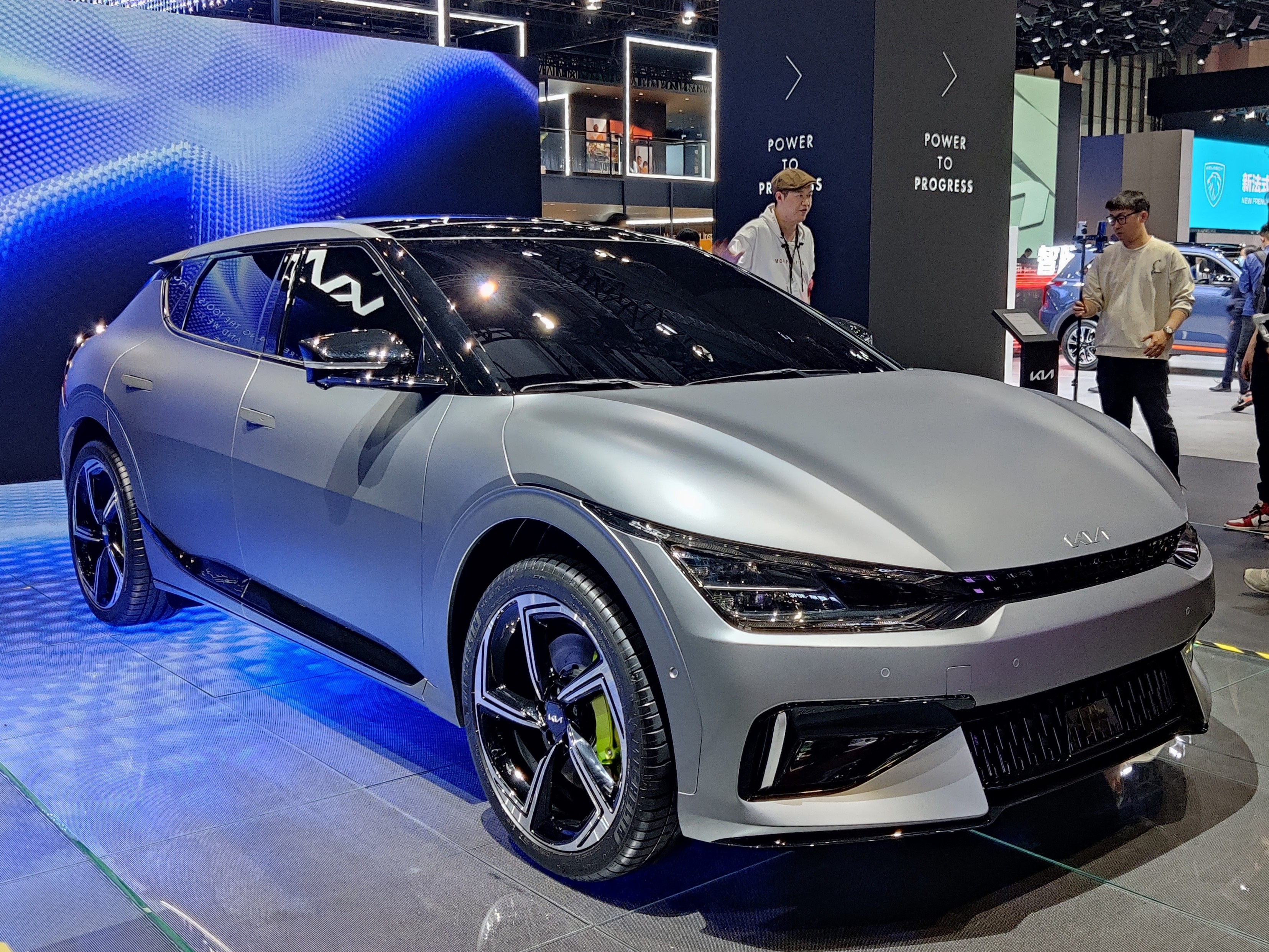
Kia EV6
"why would anyone want an Ioniq 5 or an EV6"
The Kia EV6 is an electric crossover. The host is saying that if one EV could charge in about 10 minutes, shoppers might choose that instead of cars like the EV6.
The Kia EV6 is a battery-electric crossover known for its modern design and mainstream performance/charging appeal. Here it’s mentioned alongside the Ioniq 5 as a current alternative that could be less attractive if Tesla offered dramatically faster charging.

Toyota RAV4
"where the volume is, it's definitely in there in the RAV4 size thing"
The Toyota RAV4 is a very popular compact SUV/crossover. The host uses it as a reference point for the size of the Tesla Model Y.
The Toyota RAV4 is a mainstream compact crossover that’s a volume leader in the U.S. market. In this segment, it’s used as a sizing benchmark for where the Tesla Model Y fits in the lineup.

Hyundai Ioniq 9
"So we're talking Palisades and Ioniq 9s, et cetera, things like that."
The Ioniq 9 is Hyundai’s idea of a bigger electric family vehicle. The hosts bring it up to compare which brands offer large passenger EVs versus smaller or niche models.
“Ioniq 9” would be Hyundai’s next-generation Ioniq-branded large electric vehicle concept/line, positioned as a bigger, family-focused EV. Here, it’s mentioned as part of the “people mover” conversation—whether a brand offers a large passenger vehicle.

Cybertruck
"The Cybertruck is kind of between worlds. Right, and they, yeah, so there's no major people mover."
The Cybertruck is Tesla’s electric pickup. The hosts are saying it doesn’t fully cover the big, high-volume vehicle types that other brands sell a lot of.
The Tesla Cybertruck is Tesla’s angular, all-electric pickup that’s meant to compete in the truck world. In this segment, the hosts call it “between worlds” because Tesla lacks other high-volume categories like a true people mover or cargo van.
people mover
"Right, and they, yeah, so there's no major people mover. There's also no major cargo mover."
A “people mover” just means a vehicle made to carry lots of people, like a minivan or big family SUV. The hosts are saying Tesla doesn’t really have a big seller in that category.
A “people mover” is a vehicle category focused on transporting multiple passengers—typically minivans or large three-row family vehicles. The hosts use it to say Tesla lacks a major high-volume passenger-transport option.
cargo mover
"There's also no major cargo mover. Now, it does exist, right?"
A “cargo mover” means a vehicle meant to haul stuff—like a delivery van or truck. The hosts are saying Tesla doesn’t have a big, high-volume option for that role either.
A “cargo mover” refers to vehicles optimized for hauling goods—commonly vans, trucks, or other freight-focused platforms. In the segment, it’s paired with “people mover” to argue Tesla’s lineup doesn’t cover the mainstream commercial hauling categories.

Tesla Semi
"They have a Tesla Semi, which is, again, interesting on paper, and there's totally a world where you can say it only goes from California up and down the coast"
The Tesla Semi is an electric big rig for hauling goods. The hosts are saying it could make sense on certain routes—especially if charging stations are built along those corridors.
The Tesla Semi is Tesla’s all-electric Class 8 heavy truck aimed at long-haul and regional freight. The hosts discuss a scenario where it’s most useful along the California coast, plus how charging infrastructure buildout could support its impact.

Zevo Bright Drops
"... commercial vehicles. GM did, of course, kill the bright drops. They did, but of course, they still sell"
Zevo is a name that comes up when people talk about electric commercial vehicles. The podcast is comparing how some electric delivery or fleet programs change over time. The point is about what companies do with these EV products after launch.
Zevo is mentioned in the context of commercial vehicles and how certain EV-related efforts have changed over time. The podcast notes that GM “killed” the BrightDrop program but still sells, which frames Zevo as part of the broader conversation about what happens to electric commercial offerings. It’s likely being used to illustrate how the market and product plans evolve.

Honda Clarity Plug-In
"We talked about the Clarity Plug-In, [1519.9s] which was a great plug-in hybrid. [1521.9s] And not that many people were super interested at the time, [1525.1s] and then they canceled it, and then it never came back,"
The Honda Clarity Plug-In is a car that can be driven using electricity from a charger, but it also has a gas engine for longer trips. The point here is that Honda offered it early, not many people wanted it at the time, and Honda eventually stopped selling it.
The Honda Clarity Plug-In is a plug-in hybrid (PHEV) sold by Honda, meaning it can run on electricity from a charger and also uses a gasoline engine. In this segment, the host points out that it arrived before enough buyers wanted that kind of electrified powertrain, and Honda later canceled it.
plug-in hybrid
"We talked about the Clarity Plug-In, [1519.9s] which was a great plug-in hybrid. [1521.9s] And not that many people were super interested at the time,"
A plug-in hybrid is a car that you can charge like an electric car, but it also has a gas engine. That means you can drive on electricity sometimes, and gas when you need it.
A plug-in hybrid is a hybrid car that can be charged from an external power source (like a home charger) and also runs on a gasoline engine. The key difference versus a regular hybrid is that you can use electricity for a meaningful portion of daily driving.
stock value
"And that requires that the stock value stay high. You know, that game that a lot of wealthy people, it doesn't work if the stock value drops."
“Stock value” means how much a company’s shares are worth in the market. When it goes up, it can make it easier for wealthy owners to borrow against their holdings; when it drops, it can create financial pressure.
“Stock value” is the market price of a company’s shares, which moves up and down based on investor expectations. In this discussion, the speaker links it to the ability to borrow against wealth or maintain access to capital.
subscription thing
"I think it was Rivian who said that they don't think that you're gonna be able to do this subscription thing forever. They see it's here now, and I get what people would jump on board,"
They’re talking about paying for car features like a service. Instead of buying everything upfront, you pay to unlock or keep using certain functions.
This refers to paying a recurring fee (or sometimes a timed plan) to access a vehicle feature after purchase. In EVs and connected cars, it’s often used for software-enabled functions rather than physical hardware changes.
connectivity
"There's probably some connectivity there, right? So I get that, but it's a feature that people wanna have."
Connectivity is how the car stays online. That matters because some features need internet access to work, update, or verify your subscription/unlock.
Connectivity is the car’s ability to communicate with the internet and other services via cellular/Wi‑Fi. For features like hands-free driving or paid software unlocks, connectivity is often required for activation, updates, and ongoing verification.
race to the bottom
"and once other people have it, it could turn into a race to the bottom as well, unless car companies just look the other way"
It means companies might keep cutting prices to avoid losing customers. Over time, that can push prices lower for everyone.
A “race to the bottom” describes a market dynamic where companies keep lowering prices or loosening terms to stay competitive. In this context, it suggests pricing for software features could be driven down as more brands offer similar capabilities.
800 volt architecture
"there was a lot of promise in the 800 volt architecture in the Cybertruck"
“800-volt” describes how the EV’s electrical system is set up. In simple terms, it can make charging faster because the car can take in more power efficiently—if the charger and the car are designed for it.
An 800-volt architecture is an EV electrical system designed to run at a much higher voltage than the more common ~400-volt class. Higher voltage can reduce current for the same power, which helps enable faster charging and more efficient power transfer—assuming the rest of the charging network and vehicle hardware are built to match.
mega castings
"The big mega castings and the large, ultra large castings that they've been using are a bear to repair."
Mega castings are big one-piece metal parts used in some EVs to simplify construction. If something gets damaged, it can be harder and more expensive to repair than smaller, separate parts.
Mega castings are very large structural castings used in EV manufacturing to reduce the number of separate parts in the body or chassis. The host says repair shops find them difficult to fix when damaged, which can raise repair costs compared with more modular construction.
ultra large castings
"and the large, ultra large castings that they've been using are a bear to repair."
Ultra large castings are extremely big one-piece parts in the vehicle’s structure. If the car is damaged, fixing that big part can be tougher and cost more than repairing smaller sections.
Ultra large castings are an even more extreme version of mega castings—massive single-piece castings intended to improve manufacturing efficiency and stiffness. The tradeoff, as described here, is that collision or damage repairs can be more complex because replacing or repairing a huge casting is harder for body shops.
faster charging
"And also a significant focus on faster charging. [1809.2s] Just look at the new BMW X5 and the IX3."
Faster charging is how quickly your EV can refill its battery at a charger. People care because it can reduce wait time on trips.
Faster charging refers to how quickly an EV can add energy at a charger, usually discussed in terms of charging power (kW) and how quickly the battery accepts that power. The segment treats it as a key EV adoption factor and compares it across brands/models.
Ultium
"If we see that the next generation of Ultium [1790.8s] is supposed to have faster charging"
Ultium is a battery system used by General Motors for its electric cars. Think of it as GM’s “battery design” that helps them build EVs more efficiently.
Ultium is General Motors’ battery platform used in many of its electric vehicles. It’s designed around a modular approach to battery packaging and cell layout, which GM says helps with scaling production and varying vehicle sizes.
LFP battery
"and of course more LFP battery availability, supposedly. [1797.0s] We are seeing definite investment"
LFP is a type of lithium battery chemistry. It’s generally considered safer and long-lasting, and it can be cheaper to make—so it helps EVs become more available.
LFP (lithium iron phosphate) is a lithium-ion battery chemistry known for strong safety and long cycle life. It’s often cheaper than some other chemistries, and the transcript links it to more availability and manufacturing investment.
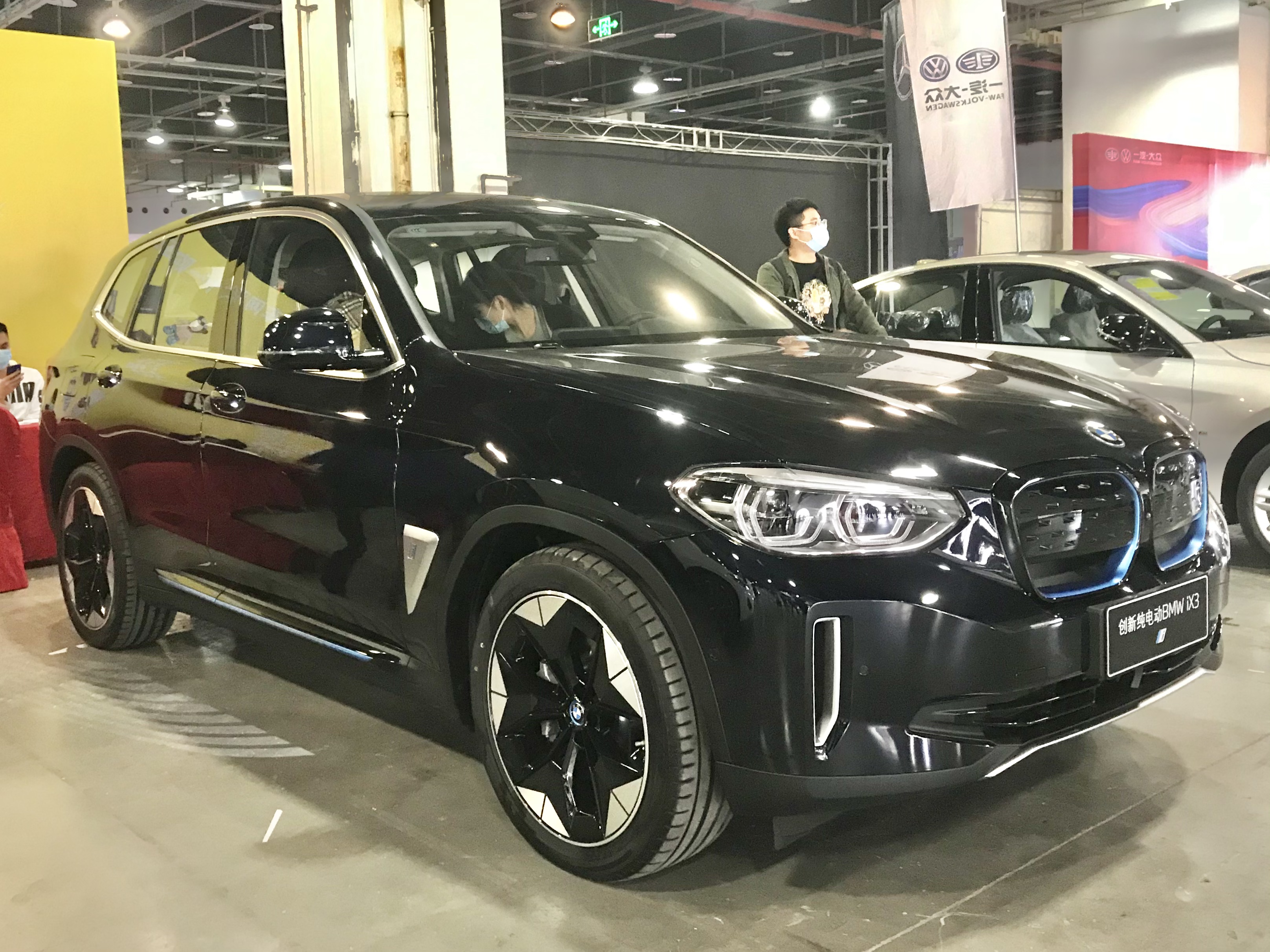
IX3
"Just look at the new BMW X5 and the IX3. [1813.6s] They charge very, very quickly."
The BMW iX3 is BMW’s electric SUV. The host brings it up because they say it charges quickly, which helps make EVs easier to live with.
The BMW iX3 is BMW’s electric version of the X3 platform, positioned as a compact-to-midsize electric SUV. In the segment, it’s cited alongside the BMW X5 as an example of EVs that can charge very quickly, supporting the argument that charging speed is no longer a niche feature.

BMW X5
"Just look at the new BMW X5 and the IX3. [1813.6s] They charge very, very quickly."
The BMW X5 is a popular luxury SUV. Here it’s mentioned because the host says it can charge quickly, which matters for EV convenience.
The BMW X5 is BMW’s midsize luxury SUV, and in this segment it’s used as an example of an EV that can charge quickly. The host is contrasting its charging speed with other EVs to argue that charging performance is becoming a competitive baseline.

Volvo EX90
"...rge very, very quickly. The Volvos, the EX60, the EX90 is gonna be getting the same battery."
The Volvo EX90 is an electric SUV. It uses a battery instead of a gasoline engine. The podcast mentions an update to its battery, which can change how far it can go and how it charges.
The Volvo EX90 is an all-electric SUV positioned as a premium family vehicle. The podcast notes that it’s going to be getting the “same battery” as the EX60, which matters because battery choice can affect range and charging behavior. It’s discussed as part of Volvo’s broader EV rollout and updates.

Volvos, the EX60, the EX90
"The Volvos, the EX60, the EX90 is gonna be [1818.6s] getting the same battery."
Volvo’s EX60 and EX90 are electric cars the host says will charge very fast. They’re mentioned together to suggest Volvo is using similar battery tech across multiple models.
Volvo’s EX60 and EX90 are electric models mentioned here as charging quickly. The host also ties them to using the “same battery,” implying shared battery technology across the lineup to improve charging performance and supply.
barriers to entry for an EV
"And if that is supposedly the, [1826.2s] one of the barriers to entry for an EV,"
“Barriers to entry” means the things that make people hesitant to buy an EV. In this discussion, faster charging is presented as a way to make EVs feel less inconvenient.
“Barriers to entry” here means the practical reasons people hesitate to buy an EV—such as charging speed, charging availability, and trip-planning concerns. The segment frames faster charging as a way to reduce those concerns and improve adoption.
pure EVs
"before we move on from, you know, pure EVs and all the Tesla conversation."
“Pure EVs” are cars that are fully electric—no gasoline engine. They’re powered by a battery you charge.
“Pure EVs” means fully electric vehicles that run only on an electric powertrain (battery and electric motors). The hosts use it to separate the broader EV discussion from other electrified approaches that might include hybrids or plug-in hybrids.
architectures
"The more interesting Volvo EV, you know, based on a lot of the same architectures and using a lot of shared components, but you know, a little more edgy when it comes to styling..."
In EV context, “architectures” refers to the vehicle platform layout—how the battery, motors, wiring, and structural design are packaged and engineered. Sharing EV architectures and components can reduce development cost and speed up production across brands.
shared components
"based on a lot of the same architectures and using a lot of shared components, but you know, a little more edgy when it comes to styling..."
“Shared components” means the same parts are used in more than one car. That can make the cars cheaper to build and easier to produce.
“Shared components” means parts used across multiple models or brands—such as electronics, motors, battery modules, or structural pieces. This is common in EV programs because it lowers cost and simplifies manufacturing.
software programming
"if it comes to massive overhauls on your software programming and, you know, maybe they really were planned to branch farther away..."
This means the car’s computer code—how it controls things like how it drives and how features work. The hosts are saying big software changes might have helped Polestar.
“Software programming” here points to the EV’s control software—how the car manages functions like power delivery, driving modes, and user features. The hosts suggest that major software overhauls could have changed Polestar’s trajectory.
Request an Explanation
Heard something you'd like explained? We'll add it to this episode.
Sign in to request explanations for terms you heard.
Want to learn more?
Browse our glossary for plain-English explanations of automotive terms, jargon, and concepts.
Help improve this episode
See something that's not quite right? Our annotations are AI-generated and can sometimes miss the mark. Click the flag icon on any annotation to suggest a correction.