“Hands free” means a car can drive with less or no steering/braking input from the driver. The idea is that the car handles more of the driving while the system is being tested.
This is “mostly driving for you,” but you’re still responsible. The car can help on certain roads, and you have to watch and be ready to take over quickly.
Concept
in all conditions
This is about whether the car can do the driving in every situation. Most driver-assist features work well only in certain conditions, like clear highway driving.
Super Cruise is a GM feature that can help drive the car on certain roads. It’s not fully autonomous—you still have to pay attention and take over if needed.
This means the car can steer and drive with you not holding the steering wheel for a while. But it usually only works in certain situations, and the car can ask you to take over if it gets confused or the conditions change.
“Door to door” means the car is trying to handle the trip from start to finish, not just one kind of road. It’s harder because it has to deal with more complicated driving situations along the way.
“Legacy builders” is a way of referring to traditional automakers that have long histories of making cars (as opposed to newer EV-first companies). The host contrasts their development approach—moving more cautiously to avoid failures—with newer manufacturers that may take bigger risks to advance automated-driving capabilities.
This is a way of ranking how much the car can drive by itself. Level 3 means the car can do most of the driving in certain situations, but you still have to be ready to take over if it asks.
Ultra Cruise is GM’s planned upgrade to its advanced driver-assistance system. The idea is that it should be able to handle more driving situations than the current version.
Even when a car can do more driving by itself, it often only works in certain places and conditions. The host is saying Mercedes’ level 3 capability is restricted rather than universally available.
Term
escalate IQ
This sounds like a GM vehicle program or platform name. The host is basically saying GM will put the new autonomy system into a specific upcoming premium lineup, and it won’t be cheap.
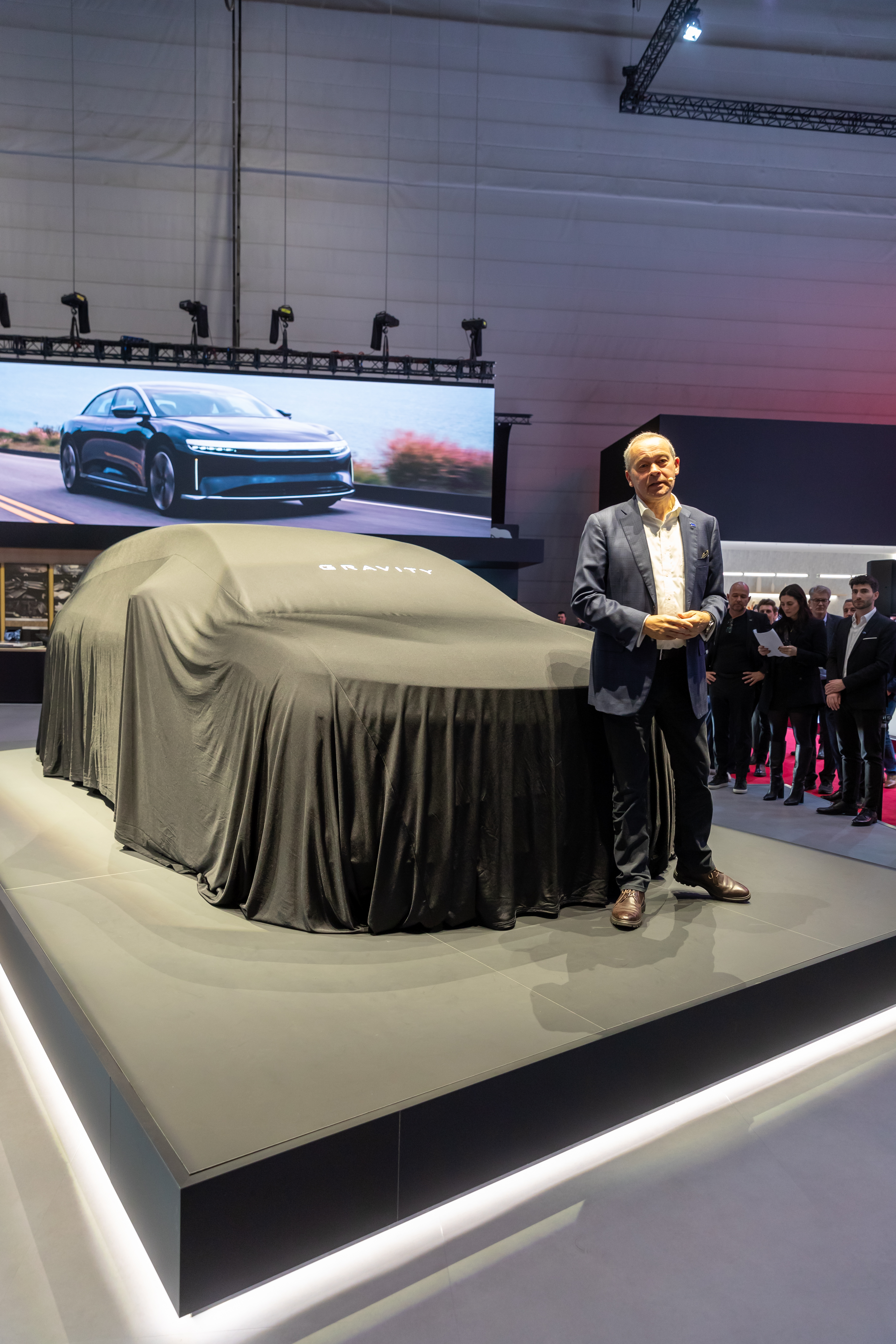
The Lucid Gravity is Lucid’s electric SUV. Here, the host mentions it because it has advanced driver-assistance features that they’re comparing to other cars’ hands-free systems.
A charging network is the system of public EV charging stations. If there are lots of chargers where you drive, it’s easier to own an EV without worrying about running out of power.
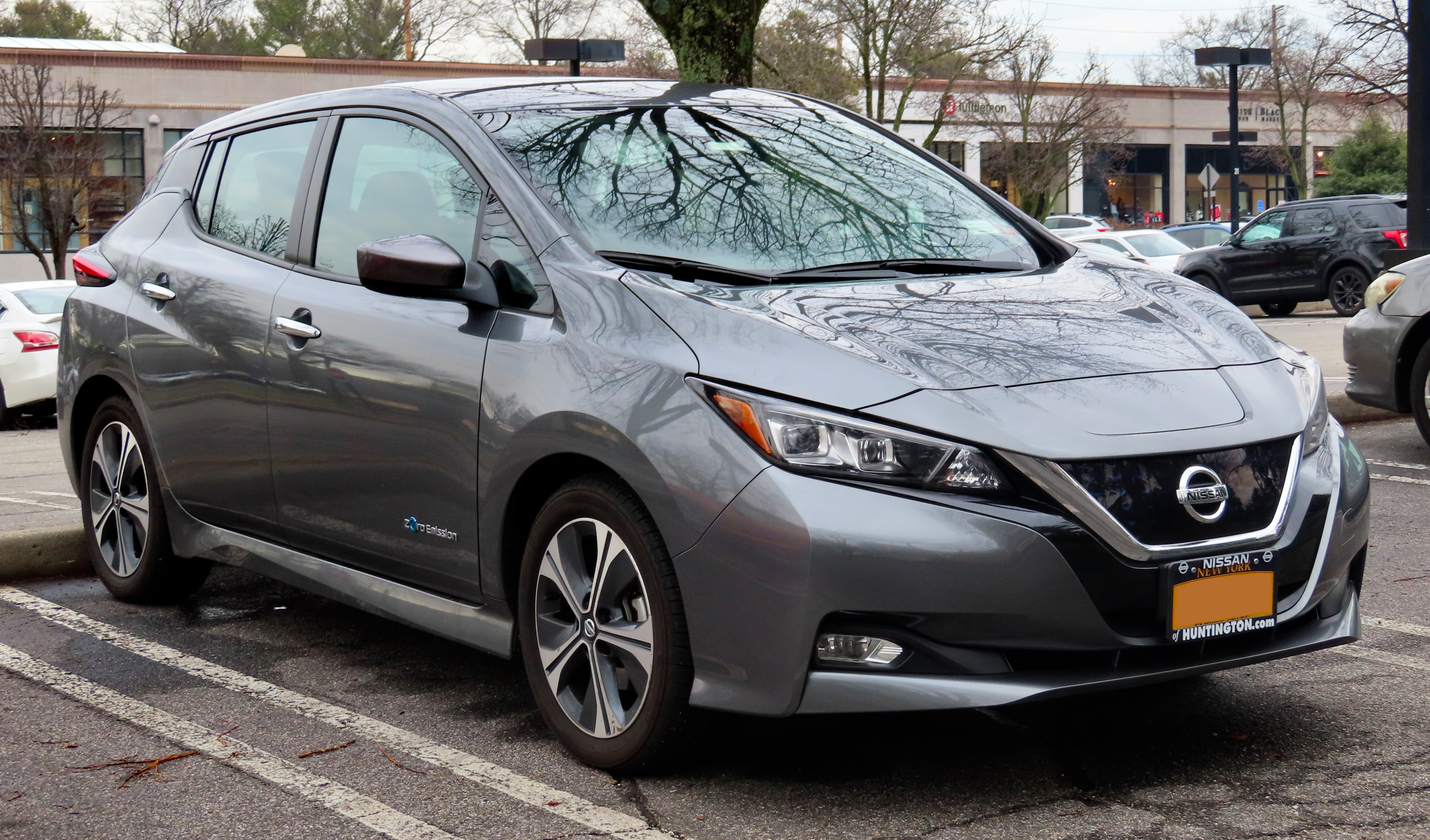
The Nissan Leaf is an early, popular electric car. The host is basically saying that, back then, there weren’t many EV choices besides Tesla and the Leaf.
Charging infrastructure refers to the physical systems that enable EV charging—charging stations, power supply, and the supporting network that keeps them working. It’s a major factor in EV adoption because it reduces “range anxiety” and makes everyday charging more convenient.
Electric vehicles are cars that run on electricity stored in a battery. The host is saying EVs became successful only when charging became available enough for people to use them confidently.
Charging stations are where you plug in an electric car to recharge it. The host is saying EVs only work well for most people if there are enough places to charge along the routes you want to drive.
The Tesla Model 3 is one of Tesla’s main electric cars. The hosts are saying it was an important turning point for Tesla and EVs because it helped bring electric cars to more mainstream buyers.
The Tesla Model Y is Tesla’s popular electric SUV/crossover. The hosts say it was a step that reached more buyers, and they’re debating whether a bigger, six-seat version could make a real difference.
The Tesla Model X is Tesla’s electric SUV. The host is basically saying its update wasn’t a totally new car—more like improvements on the existing one.
“Next generation” means a truly new version of a car, not just small updates. The host is saying Tesla’s changes to the Model S/X were more like a facelift than a brand-new design.
A “refresh” is when a car gets updated during its model life—usually small changes like new styling or features. The host is saying Tesla’s Model S/X updates didn’t feel like a totally new car.
Term
van door
A “van door” is a door style you often see on vans that’s easier for getting in and out—especially for rear passengers. The host is proposing a more practical, van-like setup for a bigger Model Y.
A “leapfrog moment” is when one company gets ahead quickly, like it skipped ahead of everyone else. The host is using it to talk about Tesla moving forward faster, but then hitting new legal questions.
The host is talking about how Tesla uses cameras to “see” the road for its driver-assist features. They’re questioning how long that camera-only approach will be allowed by regulations.
A “legacy car company” means an old, established car brand that’s been around a long time. The host is saying Tesla might be starting to act more like those traditional brands.
The Tesla Roadster is Tesla’s high-end electric sports car. The host is wondering if it’s taking so long because Tesla is putting more resources into self-driving software.
Radar is a sensor that uses radio waves to detect objects around the car. It helps the car judge distance and speed, and it can work better than cameras in some bad weather.
Term
in scale
“In scale” means it has to work well not just once or in a small test, but for lots of cars and lots of rides. That’s what makes it practical and worth running as a service.
An “EV Blazer” is a Chevrolet Blazer that runs on electricity instead of gas. Here, they’re using it as a long-term test car to see how it works in practice.
General Motors is a big car company. In this discussion, they’re comparing GM’s research spending to Tesla’s.
Term
R&D budget
R&D budget is the amount of money a company spends on new ideas and engineering. Here, they’re comparing how much Tesla spends on that work compared with how many cars they sold.
Artificial intelligence here means computer software that tries to “understand” what’s happening around the car and help it decide what to do next. In this discussion, it’s connected to Tesla’s self-driving features.
AI compute clusters are basically a bunch of powerful computers teamed up to do heavy AI work. For self-driving, they’re used to train and improve the software using lots of data.
“Higher performance chips” refers to faster/more capable semiconductors used to run AI and vehicle control tasks. In autonomy discussions, more capable chips can reduce latency and improve how quickly the car processes sensor data.
Term
in-house supercomputer architecture
This phrase means Tesla is designing its own very powerful computer setup. Self-driving software development can need huge amounts of computing power, so the company builds the system to fit its needs.
A “platform” is the underlying design and technology base a vehicle is built on. “Cyber cab autonomous platform” means Tesla’s planned base meant to support self-driving features in that vehicle.
“Under the hood” just means “let’s look at how it really works,” not just what’s advertised. Here, they’re talking about the technical side of Tesla’s self-driving approach.
“Full self-driving” is Tesla’s name for its advanced driver-assist software. It’s meant to handle more driving for you, but it usually still expects the driver to stay alert and take over when needed.
Term
new motors
In an EV, the motors are what actually make the car move. If a car gets “new motors,” it can feel different and may be more efficient or powerful.
Term
new batteries
In an EV, the battery stores the electricity that powers the car. Newer or updated batteries can improve things like range and how well the car charges.
Suspension components are the parts that help the wheels stay controlled over bumps. Updating them can make the ride smoother and the handling feel different.
The Model S and Model X are Tesla’s older, big EVs. They look different—one is a sedan and one is an SUV—but they’re built on a lot of the same core design underneath.
The host is referring to Tesla’s Model 3 and Model Y. They’re discussing whether Tesla will keep doing incremental updates (new screens/computers) while leaving the core vehicle architecture largely unchanged, similar to how other automakers refresh models on their own timelines.
This phrase means the car’s basic “bones” and engineering setup. It’s different from just updating the infotainment screen or software—those are changes on top of the core design.
A “Cyber cab” is Tesla’s idea for an autonomous taxi. The discussion is basically whether enough businesses and fleets will buy them in huge numbers to make the business work.
“Robo Taxi” means a self-driving taxi service. The host is pointing out that Tesla is framing the plan as a ride service, which would affect who buys the vehicles.
Waymo is a company that builds self-driving technology and runs driverless taxi services. They don’t just expand everywhere at once—they choose places carefully.
A “driverless vehicle” is a self-driving car that can drive itself. Even when it’s called driverless, it usually works only in certain places and under certain conditions.
Uber and Lyft are ride-hailing platforms that could, in theory, adopt autonomous vehicles to reduce driver costs and expand service. The segment suggests they may be more focused on moving people and monetization than on building the underlying autonomy stack.
“Acceptance of liability” is the idea that a company (or operator) is willing to be legally responsible for crashes involving autonomous systems. For robotaxis, this can shape what sensor/technology choices are acceptable and how risk is allocated.
Term
DARS
DARS is shorthand for the sensor setup a self-driving or driver-assist system uses to understand the road. The speaker is saying the car might rely on fewer sensor types.
A value proposition is the reason someone would choose a product. In this case, the host is saying Tesla’s overall deal is becoming more competitive compared with other EVs.
Fleet transportation is when cars are used for a service or business, not just owned by one person. The host is saying the cyber cab is more likely to be used like a ride-service vehicle than as someone’s personal car.
“Autonomy” is how much of the driving the car can do by itself. The host is saying Tesla is spending heavily to move toward a more self-driving level, and that’s causing issues too.
A charging curve is basically how fast the car charges at different points during a charging session. The host is saying Tesla can adjust this to make charging feel quicker and more aggressive.
“Megawatt charging” means charging an EV with extremely high electrical power. Higher power usually means you can add energy much faster—if the car and charger are designed for it.
The Hyundai Ioniq 5 is an electric SUV/crossover. The host is basically saying that if charging got fast enough, people might stop considering cars like this.
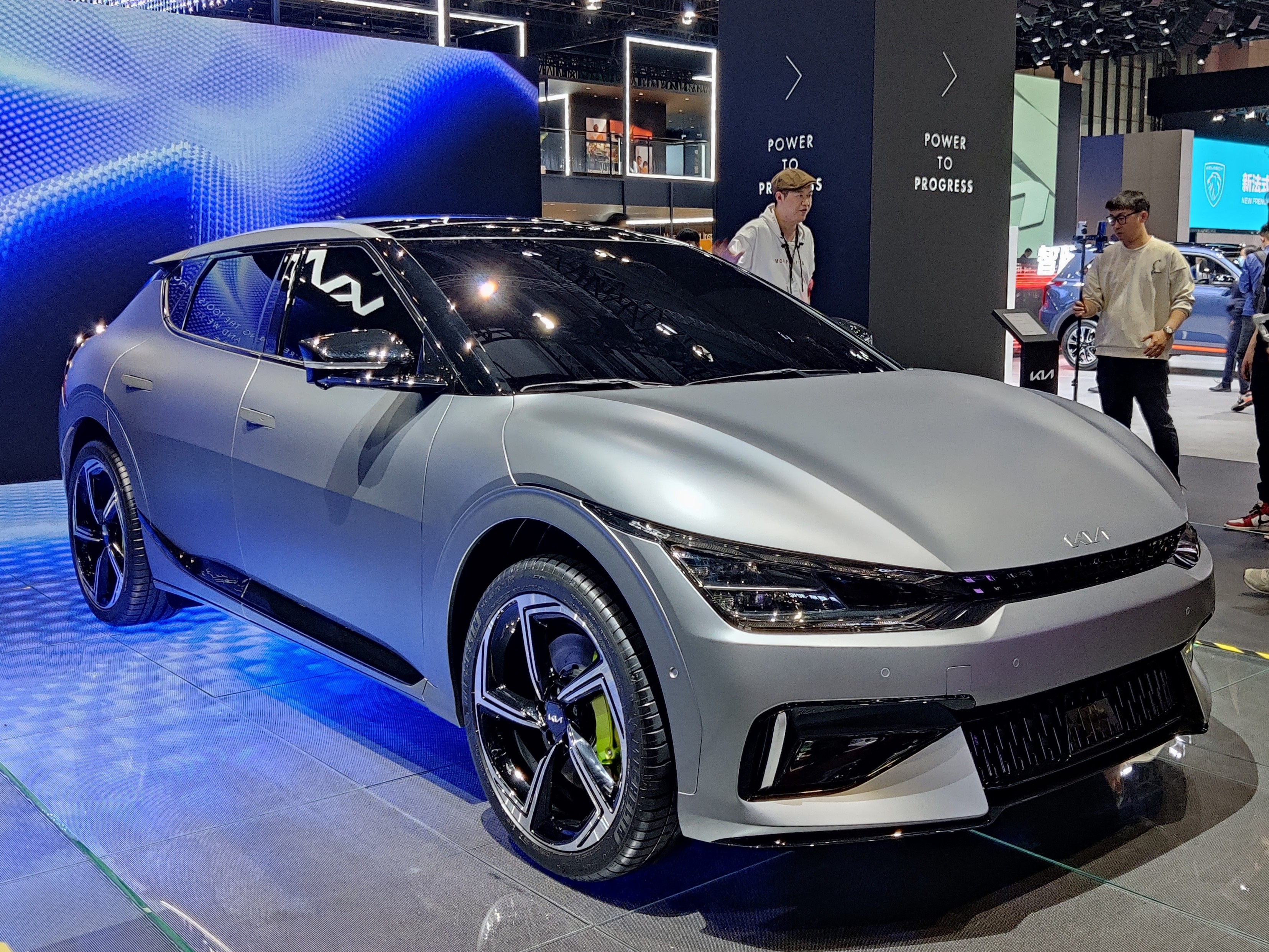
The Kia EV6 is an electric crossover. The host is saying that if one EV could charge in about 10 minutes, shoppers might choose that instead of cars like the EV6.
The Ioniq 9 is Hyundai’s idea of a bigger electric family vehicle. The hosts bring it up to compare which brands offer large passenger EVs versus smaller or niche models.
The Cybertruck is Tesla’s electric pickup. The hosts are saying it doesn’t fully cover the big, high-volume vehicle types that other brands sell a lot of.
A “people mover” just means a vehicle made to carry lots of people, like a minivan or big family SUV. The hosts are saying Tesla doesn’t really have a big seller in that category.
A “cargo mover” means a vehicle meant to haul stuff—like a delivery van or truck. The hosts are saying Tesla doesn’t have a big, high-volume option for that role either.
The Tesla Semi is an electric big rig for hauling goods. The hosts are saying it could make sense on certain routes—especially if charging stations are built along those corridors.
Zevo is a name that comes up when people talk about electric commercial vehicles. The podcast is comparing how some electric delivery or fleet programs change over time. The point is about what companies do with these EV products after launch.
Car
Honda Clarity Plug-In
The Honda Clarity Plug-In is a car that can be driven using electricity from a charger, but it also has a gas engine for longer trips. The point here is that Honda offered it early, not many people wanted it at the time, and Honda eventually stopped selling it.
A plug-in hybrid is a car that you can charge like an electric car, but it also has a gas engine. That means you can drive on electricity sometimes, and gas when you need it.
Term
stock value
“Stock value” means how much a company’s shares are worth in the market. When it goes up, it can make it easier for wealthy owners to borrow against their holdings; when it drops, it can create financial pressure.
Term
subscription thing
They’re talking about paying for car features like a service. Instead of buying everything upfront, you pay to unlock or keep using certain functions.
“800-volt” describes how the EV’s electrical system is set up. In simple terms, it can make charging faster because the car can take in more power efficiently—if the charger and the car are designed for it.
Mega castings are big one-piece metal parts used in some EVs to simplify construction. If something gets damaged, it can be harder and more expensive to repair than smaller, separate parts.
Ultra large castings are extremely big one-piece parts in the vehicle’s structure. If the car is damaged, fixing that big part can be tougher and cost more than repairing smaller sections.
Ultium is a battery system used by General Motors for its electric cars. Think of it as GM’s “battery design” that helps them build EVs more efficiently.
LFP is a type of lithium battery chemistry. It’s generally considered safer and long-lasting, and it can be cheaper to make—so it helps EVs become more available.
The Volvo EX90 is an electric SUV. It uses a battery instead of a gasoline engine. The podcast mentions an update to its battery, which can change how far it can go and how it charges.
Volvo’s EX60 and EX90 are electric cars the host says will charge very fast. They’re mentioned together to suggest Volvo is using similar battery tech across multiple models.
Term
barriers to entry for an EV
“Barriers to entry” means the things that make people hesitant to buy an EV. In this discussion, faster charging is presented as a way to make EVs feel less inconvenient.
In EV context, “architectures” refers to the vehicle platform layout—how the battery, motors, wiring, and structural design are packaged and engineered. Sharing EV architectures and components can reduce development cost and speed up production across brands.
This means the car’s computer code—how it controls things like how it drives and how features work. The hosts are saying big software changes might have helped Polestar.
LIVE
Welcome to another episode of the Autobire's Guide podcast.
Today, Travis and I are just going to wing it, right?
Well, it's summertime, so it's our summer fling.
We're going to throw some ideas out there, see what sticks,
and hopefully enjoy at least some summer themed ideas.
OK, and we should start with a viewer question.
Let me see if I can pull this up because it literally
rolled in as I was hitting the record button.
And it is an interesting one that I think
is worth talking about, which is James is asking here, first time
caller, longtime listener.
He would like to buy a new car, fun to drive on weekends,
that has supervised self-driving during the week,
but I don't want to buy a Tesla.
How long will I have to wait to make that car,
for that car to be made, rather?
He's chatted with Gemini and Claude, oh, tricky.
And they say that Ford sometime in 2028 might be the first.
He would like a Toyota, but that's probably not
going to happen for some time.
I think the clarifier for me is going
to be whether you mean in all conditions or on the highway.
Because supervised self-driving already
exists in the likes of Supercruise and BlueCruise.
And everyone's got a name for it.
But you know what I mean?
There's already hands off the wheel driving.
But I think if you're talking about Tesla,
you mean will it do it almost anywhere?
And there's an argument whether Tesla should or shouldn't.
And actually, I think your closest answer might be Rivian.
Rivian is working on their, what do you call it, door to door,
I think, driving functions.
Same sort of idea.
So I'd say they are working on it.
And I haven't driven the last iteration,
but that would be something to consider.
And Rivian is sort of like the anti-Tesla
within the same sphere.
They learned what Tesla's doing.
And they said, we're going to do it in an adventure way.
But that might be your best guess.
And it's going to be one of these new manufacturers who
says, yeah, we're going to talk about winging it.
They're going to wing it.
They say, we'll try something that is
stretching the envelope.
Because the OEMs, the manufacturers who are legacy
builders, they go, ooh, we're going to go slowly
to make sure something doesn't crumble underneath of us.
Yeah, I mean, it is interesting because Ford and GM have both
said that 2028 is when they will have their fully autonomous
level three driving package available.
We just don't know anything about it.
The question, I guess, would be, is Rivian
going to throw us a card here and suddenly have it first,
even though they haven't given us any deadlines on it?
So it is interesting that GM and Ford
are giving us timelines.
Toyota, really nothing.
Nissan, nothing.
Honda, God knows what Honda's doing on the autonomy fronts.
They don't even have a hands-free system yet, really.
My bet would be probably GM, because Ultra Cruise has
been announced for some time as the next generation of Super
Cruise, the next level of autonomy.
Mercedes effectively already has a level three system.
Very limited cases, use cases in the US, et cetera.
But technically, they are now.
I would assume that GM is probably going to be first,
because they've already said where it's going to go.
It's going to go in an escalate IQ.
So rather, unfortunately, that means big six digits.
What Ford is planning to put their next generation of the Blue
Cruise system in, I don't know.
But if Blue Cruise is anything to benchmark this on,
I would put more general faith in Super Cruise.
It's a lot smoother, works over greater capability areas.
I will say we have a Lucid Dream, sorry, a Lucid Gravity,
not the Dream Edition, but the Touring Edition in the driveway
right now.
And their level two plus hands-free system
is really, really good.
So we know that Lucid's also working on something like this,
and that's part of why their package is on the pricey side.
So I might put them up there, too, on the possibility front.
But essentially, you're not looking at anything now
that is going to do what full self-driving does other
than Tesla.
This does take me to one of my thoughts.
I wanted to cover all of a sudden filming
the Lucid Gravity in the driveway.
It occurred to me, Tesla has become a legacy car company.
They have.
I mean, especially a legacy electric manufacturer.
They are the one that everyone is benchmarking,
which means you're the established builder, right?
Yeah, everything that Tesla is doing now
seems like they're punching down, not punching up,
for lack of a better descriptor.
And they no longer lead the pack in, I would say,
arguably anything other than sales volume, unquestionable,
and the charging network is still the biggest Trump card
they have.
But is that Trump card enough?
And is the Trump Trump card still the
liability that maybe it was a year ago,
even though the sales do appear to be recovering
from that Elon Trump tie up?
It's an interesting point, mostly because the two things
they are the best at are basically built in from their head
start, right?
They are ostensibly the first fully electric vehicle
manufacturer.
They hit the ground running.
It was a Tesla or a Leaf.
So really, really slim pickings there.
And then it was an I3.
And then it was everything starts to trickle out.
Or to be perfectly honest, yeah, other leaf-like things.
I mean, all the EVs that they can.
Yeah, I mean, that was kind of OK, but mm.
Yeah.
And there's a reason it's dead now.
And then obviously the charging infrastructure,
which was absolutely pivotal to making not just Tesla
successful, but electric vehicles,
because no one else was building the charging stations.
And to their credit, if you don't build the stations,
they will not come because they cannot get there
because they ran out of electricity.
So what have they done since?
I mean, I think when the Model 3 launched,
that was a big, big step.
And then Model Y was a small incremental step above that.
And it reached more people.
But after that, they've kind of just sat back, right?
Model S, Model X refresh was really a refresh,
not a next generation, not really.
And then those are dead.
Cybertruck is not, obviously, taking off.
It's not that 500,000 unit a year vehicle they said, huh?
No, but the question is, is the new Model Y six-seater
going to save everything?
And the answer is, obviously not.
Sort of an interesting insert there.
You might have been better off making a Model V
and just stretching the Model Y and giving it a van door
and making it just that much more practical.
That would have been interesting.
Or you could do a Cybertruck inspired look,
because I do think somehow that would work for a van
more than it would work for that truck.
But yeah, besides the full self-driving,
not functionality, like capable,
it's just what they'll let it do, right?
All these other manufacturers could flip a switch
and they have the tech to do it right now.
They're just not willing to do it.
And then I think we're running into another leapfrog moment
because Tesla is still only using cameras.
And how long is that going to be legal?
That's my question.
Yeah, interesting questions there.
I'm gonna dig a little deeper under the hood
because I think that the Tesla becoming a legacy car company
runs a little bit deeper than some of that
because I think that sometimes legacy car companies
fall into legacy thinking.
You know, when Tesla was started, it was novel,
it was the new thing.
They were really focusing on these things
that we have come to associate with Tesla,
range, charging speed, efficiency,
and now they lead in none of those categories,
interestingly enough.
In fact, when it comes to charging speed,
they're arguably quite far behind, not just China,
but quite far behind a lot of other brands.
I mean, you know, Hyundai, Kia,
their average EV charges way faster.
The average Lucid is mind-blowingly quick
and Lucids are slow compared
to what's going on in China, right?
So it's made me wonder,
was Tesla's decision to try and claim that they're,
and this is an air quotes,
you know, Tesla always wants to say they're a tech company,
they're not, in my opinion,
they're a car company that wants to focus on
the tech side of the car experience,
but the core of what Tesla does is build cars
that take people places, right?
They are a car company,
and their interest in things like full self-driving
is it arguable that we don't have a new S or a new X
or anything?
Is the roadster missing
because they're spending so much money on full self-driving?
Well, and I would say not just full self-driving,
because I would actually argue
they're not spending that much money on full self-driving.
Obviously, there's a lot of vehicles out there,
they gather in a lot of data,
they're crowdsourcing a lot of this data,
and I'm sure it's working into their programming,
but we're not looking at big innovations
on actual technology here.
It is cameras, it is processors,
but beyond that, we're not using radar or LiDAR,
or any of these big leap technologies
that add functionality.
It does seem like Tesla really is hedging on the robots
and the cyber cab, whatever we wanna call it,
I think that's what they're calling it these days.
And those are like the roadster, not actually here.
The robot is close, they have a functional robot,
but who's it gonna go to and what's it going to do?
And is that in scale?
Because in scale is where it needs to be to make sense.
And then the cyber cab situation
is wholly reliant on full self-driving.
So they are out there in the wild,
I drove past one the other day up near,
past road was around Bellevue, something like that.
Bellevue, Washington, and that makes sense.
That's where you would find them,
but they still had somebody behind the wheel
because they are doing testing.
And then when that happens, who buys them?
And for how long?
I don't think it's an immediate concern,
but if that ends up replacing every vehicle on the road
in some, let's say dystopian,
but some futuristic whatever,
at some point you're gonna run out of a need
to keep building them because they'll just already be out.
But I will say, we're turning in
or you may have already turned in our EV Blazer
is the next long-term test vehicle we buy a cyber cab.
And see what that turns into.
Yeah, so the interesting part here
is when I look into R&D spend,
Tesla spends way less than General Motors spends
on research development,
but they're spending in different ways.
And Tesla spends about three times per vehicle sold
than what GM does on R&D spend.
So massive, massive amounts.
Actually, when you really look at where this cash
from the sale of a vehicle is going,
and that's how this is calculated.
So for every vehicle they sold in 2025
versus their R&D budget for 2025,
they spent nearly $3,000 per car on R&D
versus less than a thousand for General Motors.
Now, one would logically argue that
they could have spent that $2,000 per car,
R&Ding another car,
but instead they spend an astronomical amount of that
on their artificial intelligence
and full self-driving kind of thing.
So apparently a lot of it's been going towards
expanding internal AI compute clusters,
higher performance chips,
in-house supercomputer architecture,
and the cyber cab autonomous platform
with full self-driving research.
It is interesting.
Part of what I'm wondering on this one
was our sort of serious picking apart Honda
and then Toyota, now we're attacking Tesla,
not attacking, just sort of attempting to see
what's happening under the hood.
Popping the hood, taking a poke around, right?
It's a little tough,
because they don't use the same access
as other manufacturers do,
including zero access to the vehicles.
The question in my mind would be
is when we look at how many people have full self-driving,
Tesla won't say exactly,
but it sounds suspiciously like
not the numbers they really wanted
or they expected to buy full self-driving.
We do not see in survey after
out there of the general auto buying public
is enough interest in the cost
of full self-driving like technologies
in the new customer side for people
to really seem to be that interested in it,
even a reasonable number of people
don't resubscribe to supercruise or bluecruise, et cetera.
So my question here, I guess in a way,
is bearing in mind that Tesla never redesigned S and X.
I mean, they changed them over time
in the way that Volvo changes things over time.
You know, new motors, new batteries,
you know, change a, yeah, I mean,
it's like you change some suspension components here
and some this, that and the other,
and did you end up with a new vehicle after a decade?
Some might say yes, but intrinsically,
the S and X were almost the same car.
It's like the Rev two of the same car kind of a thing
over that time.
And it looks like we're getting the same basic sort of thing
with three and why.
So, you know, new computers, new screens,
but the fundamental architecture of the vehicle
is not changing the way that GM or BMW refresh
or redesign a car on their schedules.
So like, are we gonna see that with three and why?
And then if the answer is yes, because they're cyber cab,
are they actually gonna get 500,000 people a year
to buy a cyber cab?
I don't know.
I mean, I can see an argument that this,
that would be a vehicle that sells in scale
because you're going to get businesses
that want to buy up cyber cabs
and that becomes their business, right?
They're hosting their own taxi fleet.
And their website right now says Robo Taxi.
So I guess we'll stick with that for the moment,
but people might buy up the Robo Taxi fleet.
So yes, I could see that happening,
but who is gonna be the first one jumping in
because that is going to be a lot of money up front
and how quickly is it going to grow?
And is the Tesla sentiment still gonna be
a little bit iffy, right?
Waymo is very careful about how they expand
and what markets they go into and that sort of thing.
I don't know.
I think it's pretty risky.
Not like starting an electric vehicle company
on its own isn't risky.
So it's not like it hasn't happened before,
but it is also, we just posted on our EV channel
a trip we took a month or two ago out to the Hyundai plant
and they had the Ioniq 5 Waymo driverless vehicle out there.
And I said, this vehicle might take my job away
because nobody is gonna wanna buy a car and drive it.
So they're not gonna be that concerned about it.
But I think we're still a ways off.
I really do.
And there's absolutely gonna be people
who don't want to go that direction.
But I think it more replaces current Uber Waymo fleets
than it does replacing people's personal vehicles
outside of your heavy downtown zone.
And that's the question I guess is,
it's never gonna replace Waymo
because Waymo is doing their own thing.
So Waymo is never gonna go buy cybercabs, right?
Because their whole thing is doing the R&D on the hardware
setter for the driving thing.
So Waymo is always gonna be Waymo-ing.
I could see Uber Lyft buying cybercabs.
They've been working on their own autonomy things,
but it seems like they're less interested
in specific solutions.
It seems like they're more interested
in just moving people around and making money, right?
So I could somehow see that in a way.
I wonder if there's gonna be an acceptance of liability.
So you don't have LiDAR and radar
and all the other DARS on your thing.
You only have cameras and you run over one kid in your car.
And that's a problem, you know?
Yeah, I know what.
Yeah.
But then I also wonder if that is where all this is going,
what does that do to the core of Tesla's business?
Which is, again, selling cars to people
that want to buy cars.
Right, and I would say that they did get a really good start
on their efficiency and their performance,
your driving experience.
They're still very competitive there,
even though obviously they are down in charging speeds.
And the value proposition is getting closer, right?
There was a point where Tesla's were on the less expensive end
when you looked at the three and a Y,
but there are lots of other competitors
that have kind of filled into that segment.
But a cyber cab is not gonna be for families.
It's not going to be for any sort of enthusiast.
It's not gonna replace all vehicles out there.
I mean, it just isn't.
It's gonna be too small, too limited.
Do you have a place to charge it?
It really is, to me, going to be less of a personal vehicle
than it is going to be a fleet transportation.
And it will be somebody's personal vehicle.
And this concept, back when I was in the Tesla showrooms,
it was this vehicle could someday make you money.
My Model 3 was positioned as a vehicle
that could take me to work.
That's just like your model thing.
Mm-hmm, mm-hmm.
Take me to work and then go drive everyone else to work
and make money while I'm not using it.
It's a great idea.
It's just, there's just a lot of pieces
that have to come together to make that work.
But I don't think a lot of people are gonna go out
and replace whatever they drive with one of these.
I actually think it would bring in,
if you can pencil out the math,
and if they have either lease deals
or purchasing options that are competitive,
it would bring in people who maybe couldn't afford
a brand new car, but they can if that car
is subsidizing its own payments somehow.
Because they say, ooh, I can get this,
and it's the idea of an asset.
It's a second income stream or something like that.
Passive income from your vehicle.
But once you kill all the driver vehicles,
if you could say, okay, Tesla's gonna make
a million of these a year,
which would be a shit ton of driverless vehicles.
Totally cool, right?
Very jet-sency.
If Tesla could do it, and they probably can,
because all the basic components
are not that different than what they have now.
So they could definitely make a million of these a year.
You start putting them on roads,
all of a sudden you will have completely
decimated the gig economy for Lyft and Uber, et cetera.
I mean, pretty darn quick.
And then I think it's simply a race to the bottom
as far as driver costs.
So if the driver is a large part of the cost
of operating the thing,
you're Lyft or your Uber, and now you've taken that out,
there's gonna be a moment where these driverless cars
that you have your driverless car go drive someone around,
there's gonna be a moment where you're getting
pretty good bang for your buck there,
because no one's in it, and it's doing that for you.
But the moment there aren't very many drivers around,
then it's a race to the bottom on a cost per mile basis,
a charge per mile basis.
You won't be able to command as much,
because other people out there are gonna go like,
well, my costs are low, so I'll just set my profit,
margin super low, and mine will be the cheapest one.
And we've already seen that.
When I had a couple of vehicles out on Turro,
that was essentially it.
It was a race to the bottom.
If you are $2 lower and it shows lower on the screen,
people click it more, and now you're gonna get more rentals,
but you have a lot more turnaround.
You have a lot more upkeep to do.
And we basically see the same thing with Uber and Lyft,
they are constantly competing for riders,
and they have decimated the taxi fleets out there,
and then how can make it cheaper, how can make it cheaper?
So there's the car side of this,
which I think is interesting.
There's a technology side, what's the vehicle,
and what's it using to operate,
and how does it drive itself, and that sort of thing.
And then there's the implications for society,
which we do dabble into,
but those are much bigger conversations.
I would love to see Tesla do a number of things,
because now we must move on to the how would we fix Tesla
part of the breakdown here.
I would love to see Tesla do a number of things,
including honestly for Elon to step back, step away,
step aside, step some way other than where he is now,
because Tesla would not be anything without Elon,
but then Tesla's biggest problems
are also Elon driven, it seems like.
The push towards this level of autonomy,
the aggressive, super aggressive push on spending
to this level of autonomy in a market
where they're trying to create the market for this thing,
I think there's as much appetite
and as much potential for market creation
as there was for the original Tesla in the first place,
is the kind of where I'm going there.
Rather than spending that money on regaining your crown
for charging and range and efficiency,
I would rather see the money that they're spending
on CyberCab spent on making Model 3 a 500 mile EV
with some ultra lightweight battery,
making the Model Y the solid 400 mile range EV
that charges in 15 minutes.
Tesla has in the past proved that they can act rapidly
and change and update things to be very aggressive
with the charging curves on their stuff,
but if you notice they've stuck,
they've been stuck in the mud for years now actually,
quite some years on the charging speed side of things.
I would love to see a fast Chinese charging EV
made by Tesla basically.
If Tesla could be that megawatt charging EV,
that would re-blow people's minds
and all of a sudden why would anyone want
an Ioniq 5 or an EV6
because you could charge your Tesla in 10 minutes,
you know, that kind of thing.
I also think they need to explore more formats of vehicles.
I mean, having a three vehicle line up
with one fugly thing, one sedan,
and people aren't buying sedans,
and one really main thing, it seems so limiting.
They need to have a truck, a better truck,
a real truck kind of a thing.
Yeah.
Some sort of minivan thing, a bigger three row SUV thing,
a smaller SUV thing.
When you look at the segments in America
and where the volume is,
it's definitely in there in the RAV4 size thing,
which is Model Y, roughly RAV4 sized, capability-wise,
but they have nothing in the million unit plus a year segment
that is the big three row thing.
So we're talking Palisades and Ioniq 9s, et cetera,
things like that.
Model YL is not an Ioniq 9 competitor.
And they don't have anything
in the growing small truck segment either.
The Cybertruck is kind of between worlds.
Right, and they, yeah, so there's no major people mover.
There's also no major cargo mover.
Now, it does exist, right?
They have a Tesla Semi, which is, again, interesting on paper,
and there's totally a world where you can say
it only goes from California up and down the coast
and it's limited there, but that could still have an impact.
There are still sales there
and there's building of the charging stations
that they can capitalize on.
But where's the Ford, or the Tesla Transit Van?
That's a vehicle that sells in volume.
Where is that?
I would have much rather seen that
from than a Cybertruck, because again,
it's going to sell in volume.
It's how Rivian got its start
by building a commercial vehicle alongside
their first production car, the consumer's vehicle.
But Tesla has not been at all interested, it seems,
in going the route of commercial.
And that might be where they're missing out
because everybody else who is in this field,
look at our big three, and they all have commercial vehicles.
GM did, of course, kill the bright drops.
They did, but of course, they still sell
vans and trucks and fleets.
That's true, yeah.
I guess the RoboTaxi would be the closest thing
they have to commercial, but again, that doesn't exist yet.
And it relies on so many things.
And this is a circumstance, I wonder,
where I feel like Honda has gotten into this space
a little bit.
There have been a few vehicles they've produced
that were a little bit early for the time.
And it has ended up hurting them.
We talked about the Clarity Plug-In,
which was a great plug-in hybrid.
And not that many people were super interested at the time,
and then they canceled it, and then it never came back,
and now they're behind.
That could be what we're looking at
with full self-driving, is the technology
to be completely hands off the wheel
and don't have to pay any attention.
We're just not ready for it yet.
But if you sink all the money right now,
it's gotta have a payoff, or it ends up hurting.
Tesla at least has the cash to do it at the moment.
When you really look at them, they're not as profitable
as the combination of the average car company
plus their dealer network.
But because they're able to squeeze all that profit together,
you know, the otherwise dealer network profit, et cetera,
their margins are actually quite good compared to
core GM, core Stellantis margins, et cetera.
So quite good on that front,
which gives them this flexibility to have these projects.
But I also think that there's a little bit too much focus
from Tesla on shareholder value
because part of this whole drama is
trying to convince your shareholders and investors
that you are a tech company.
So in order to convince them that you're a tech company,
not a car company, you have to sink huge amounts of money
into this tech bucket on the full self-driving,
on that thing, on the promise of all that,
in order to make sure those values are high,
so that we, you know, honestly, the people like Elon
and all the people that are way less wealthy than him,
but are doing the same thing, can keep their cash
because Elon's not selling stock to live on generally.
He's living on borrowing.
And that requires that the stock value stay high.
You know, that game that a lot of wealthy people,
it doesn't work if the stock value drops.
And that would be a big problem.
I do think there is an Elon issue.
Elon is a company builder, not necessarily a company runner.
So it's built, pass it off.
And I'm curious what that would turn into,
but it's also worth noting one of the reasons
that you don't have nearly as many people jumping
on full self-driving is it is by and large,
the most expensive version of this, you know,
driver, or hands-free assist feature that's out there.
Right, it's $100 a month.
That's a huge chunk of change.
Not necessarily for the first owner,
but certainly for second, third, and fourth,
but second, third, and fourth may say,
hey, this is an incredible feature
that I didn't have to buy a brand new car for.
I can get them on what already exists.
But I think it was Rivian who said that
they don't think that you're gonna be able
to do this subscription thing forever.
They see it's here now,
and I get what people would jump on board,
but you'll still be able to do that.
Again, I forget what their name for it,
but you'll be able to do their hands-free driving
for a $2,500 single flat payment.
And 25 months, that's paid for itself,
and you never have to pay for it again in theory.
There's probably some connectivity there, right?
So I get that, but it's a feature
that people wanna have.
We're kinda backed at having.
Once other people have it, right,
and once other people have it,
it could turn into a race to the bottom as well,
unless car companies just look the other way
and go like, well, we're not gonna lower our price
until they lower their price,
and maybe everybody holds prices at somewhere,
but that's tricky, long term as well on that front.
So I am interested to see how Tesla's reputation
changes over the next four to five years, for instance.
If we do see these continual improvements
in charging speeds in other vehicles and efficiency,
and we aren't seeing that same level of push
at Tesla anymore, there was a lot of promise
in the 800 volt architecture in the Cybertruck
and in their new batteries,
and a lot of that has fallen flat,
or just not gone anywhere else.
We're also seeing some pushback from the repair industry
on some of the innovations.
The big mega castings and the large,
ultra large castings that they've been using
are a bear to repair.
So definitely it increases repair costs there.
The manufacturer, but yeah.
Yeah, so it is an interesting one there,
and now I have a cat wandering here.
It's about to, nope, not on the keyboard kitty cat,
so let's not over there either.
Let's down on the floor.
See, hearing these reflections, it's,
it's blaming me.
Blame the cats.
So, yeah.
I'm just intrigued.
If we see that the next generation of Ultium
is supposed to have faster charging,
and of course more LFP battery availability, supposedly.
We are seeing definite investment
in LFP manufacturing in the US,
which is definitely gonna be helpful
for other manufacturers.
And also a significant focus on faster charging.
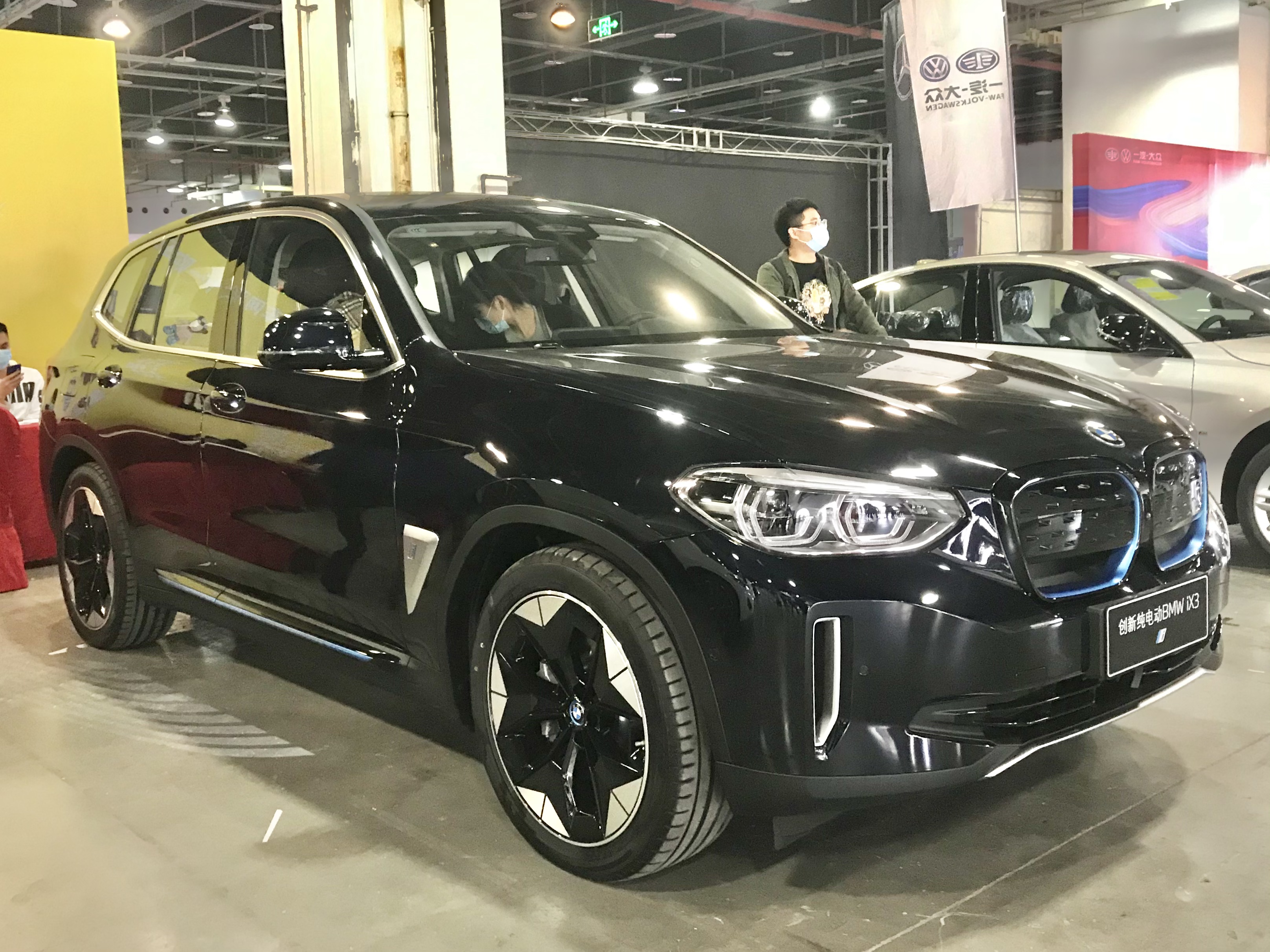
Just look at the new BMW X5 and the IX3.
They charge very, very quickly.
The Volvos, the EX60, the EX90 is gonna be
getting the same battery.
They charge lightning fast.
And if that is supposedly the,
one of the barriers to entry for an EV,
this whole like I want faster charging,
faster charging, even if you never use it,
which is the logical argument back to Tesla is that,
it's not actually a problem because people don't use it,
but they want it.
Just like they want 400 miles of range.
They want the faster charging.
And they don't have it.
And everybody else has those headlines.
That's tricky.
It is.
And I do want to take a moment
before we move on from, you know,
pure EVs and all the Tesla conversation.
You brought up Volvo.
Just want to take a second to pour one out for Polestar.
Will they be missed?
I think so.
Or will they somehow roll a rabbit out of their hat?
The more interesting Volvo EV,
you know, based on a lot of the same architectures
and using a lot of shared components,
but you know, a little more edgy when it comes to styling
and a little more performance oriented.
I am gonna miss Polestar.
They were sort of an interesting twist,
but obviously they didn't sell a ton of units.
And if it comes to massive overhauls
on your software programming and, you know,
maybe they really were planned to branch farther away
from Volvo as time went on
and that just didn't make sense to carry on.
At least for the moment, it's a shame
because we never got to see that Polestar for a state.
The Polestar three was great to drive.
And even though they were a-
We will see them just not in the US, of course.
Yeah, yeah.
And we already lost a Polestar two this year
because of tariffs.
And that one, you know,
that one's less of an impact on the people,
but a shame for me, I really enjoyed that vehicle.
And I guess we'll just see what Volvo maybe picks up on.
Right?
Maybe we get another performance trim or two
because they bring some of the Polestar components.
Although there's a lot of share software.
So I'm curious how Volvo got through
and Polestar did not.
I would guess it probably has more to do with lobbying
and the size of the company,
which is probably why Volvo got a waiver and they didn't.
For those that are wondering,
it all has to do with connected car rules and regulations.
This is not a Trump era thing,
but the waivers are current administration
giving the waivers.
So the legislation was written a number of years ago,
basically attempting to crack down
on where consumer data is going,
where it's housed and how the software was written, et cetera,
focusing largely on China.
So they wanted China to be out of the loop
for data retention and data processing
and a bunch of other stuff.
Volvo got a waiver,
but it is not correct to read this as it's the same
and Volvo got a waiver and Polestar didn't.
Because we don't actually know, neither one has said,
what differences there are or aren't in the core software
or where the telematics and other software app connectivity,
et cetera, where is that housed versus Volvo?
We don't know the intricacies there,
but whatever it is, Volvo got a waiver, Polestar didn't.
I suspect there's some difference
that is probably in Volvo's favor in this instance,
but I also suspect that there is probably some simply,
Volvo was the bigger company
and they felt like they needed a waiver
so they have a factory in the US,
more employees, larger dealers and dealer networks, et cetera.
So I think it would be harder to say that with them,
which is probably also why it looks like,
GM will be getting waivers for their vehicles made in China
and Ford for their vehicles made in China, et cetera.
I don't see that as affecting anything else.
The thing that I do find surprising
is that Polestar didn't figure out a way
to move quickly against this.
Somehow re-hous whatever it is that they do with Volvo
or change directions just enough to qualify.
That is what I'm surprised by
and I don't know because no one at Polestar
is really talking anymore.
Is there any plan afoot to somehow fix this
or is this truly the end of Polestar in the United States?
I will say that headlines popped up,
firesale on Polestar models that are currently in stock
and that's one that I wouldn't feel too concerned
with jumping in on because obviously a lot of those parts
and support are gonna be,
are carried through the Volvo network anyway.
So if you're looking for a killer deal on something,
you might be able to get it on a Polestar 3 or Polestar 4
and it'll be serviceable and functional for years to come.
It's not one of those,
it's not a startup that has a product
that may or may not exist in two years
and you'll never be able to get a part.
But I don't think they're shutting down
with plans to ramp back up.
That would be tough, right?
Because they had all these stores,
they have, they at least have hubs where these things are
which is a lot easier to shut down or start or restart
than it is a factory.
But yeah, it's a bit of a change
because I liked what Polestar was doing.
If Volvo, if Polestar could fix this in six months,
I don't think it would be a huge, too huge of a problem.
If it takes a year or more,
it's, I don't know how they'd come back from that.
That would be a lot trickier.
But it depends on how much money,
the parent company really wants to put into this thing.
That's a really odd setup.
And it might be getting out what they want from Volvo already
and able to, not subsidize,
but say it's not that much of a loss
that it's worth keeping up for
and we can put our money elsewhere.
But I do wanna shift directions
because I had two interesting conversations this last week,
both about road tripping, right?
It's summertime, people have kids home from school,
they take a little bit more time off at work,
things are a little prettier, generally speaking,
than they are throughout the rest of the year.
And so there was a conversation about road trips.
And I will start by saying,
one of these conversations included the statement,
I liked to have the vehicle running 24 hours a day.
And they said, we'd like to take a couple of days
and go somewhere.
And I said, well, you're a little bit limited
on where you can go.
And they said, not if you're always driving.
And I have to say, that's probably not the route I would go,
is, hey, we wanna go to this destination,
but to get there, we are going to take,
eight hour shifts, six hour shifts, something like that.
That's probably not the way I would prefer to do it.
But even then came up with an interesting question of,
what kind of vehicle do you get if that's what you do?
Because if you like to pull off on the side of the road
or you go get a hotel,
then you're not worried about sleeping in the car
while it's moving.
And I'd love to get your thoughts on this.
I came up with Carnival, get the Carnival Hybrid
with the executive rear seat package.
I think that's the way to do it.
If you're looking for space and comfort
and you need to be able to sleep in the car
while it's moving, that's a pretty good go-to.
That's such an interesting one.
Be very young to do that, I would assume.
I think outside of a minivan,
yeah, you don't have too many options
as far as rear seat comfort and road trip room, et cetera.
But yeah, I mean, that's probably logical.
I wouldn't road trip that way.
I was just thinking about the Chrysler Pacifica.
There's gonna be a launch thing for the Chrysler Pacifica.
It's gonna be a road trip style event.
And I was just like, hmm,
I can't make that work with a one-year-old.
I cannot road trip that long with a one-year-old.
It is a little tricky as it is.
Yeah, and as much as I have not done that much road tripping,
my extent is from up in Seattle down to the Bay Area.
And I've done that a few times.
And I would call that a road trip,
but there's some folks that,
if it's not cross-country, then it doesn't count.
And I get that.
I haven't spent more than a couple nights on the road.
But beyond that, it takes a lot of time.
And if that's part of the journey, I totally get it.
And you'll listen to your favorite podcast, perhaps.
Or you know, your jamming, your chatting,
and then you're having a good time.
Cool, by all means.
I think most people aren't trying to drive 24-7
to make it to a spot.
Enjoy the spot for presumably a couple hours
and then head back home.
Probably not how I would do it.
But the other conversation I had
was centered around a Model Y.
And the idea that, hey, we can sleep in the Model Y.
Of course, it sells in huge numbers.
There are lots of accessories for it,
including a rear mattress designed
to make sure it fits right in there.
But the question came up with big dogs.
And where do they live?
So the hope there is that the Rivian R2
is able to step in because it is taller
and square throughout.
So that might happen.
But would you do an EV road trip
if you plan to sleep in the car?
Because then, of course, you can basically leave it running.
It's a huge benefit that you're just not really gonna do
in your standard internal combustion vehicle.
I suppose you could, but it's a little wasteful overall.
You're gonna burn a lot of gas sitting there overnight.
And if you're willing to do an EV road trip,
I think I may have found the perfect solution.
But I'd love to get your thoughts first.
If you're going, let's say you're going to Southern Oregon.
So you've got to drive.
Is it worth taking an EV if you don't mind stopping?
It builds into your lunch and your dinner spots?
Or are you like, I need to get there as fast as I can.
I don't want to deal with anything.
That's tricky.
I mean, it really just depends on your style of road trip.
For me, I would be worried about the stops
with the little ones on hand.
But when they're maybe a little bit older
and a little bit more patient,
I don't think an EV would necessarily be too bad.
There's certain conveniences around charging at hotels
if the hotel offers charging in that,
but if you can make it from stop to stop,
you don't have to go and find a gas station
or a charging station.
You can just charge wherever you are.
So it depends on how the road trip is formatted.
If you're driving a 400 mile range EV
and that has a solid 300 miles of highway range,
new drive-thru 30 miles, stay for the night,
wake up the next morning, it's already charged,
you just continue on your way.
That does actually make things handier than a gas car
where you would have to stop.
So it all depends.
So many moving parts.
The question about the EV specifically
is because this is their everyday vehicle
and they enjoy driving electric
and it's less expensive than gas
and higher performance for the dollar in general.
So it's, hey, this is my everyday car.
Can I make it do this thing?
And I said, I was, I wonder what would be
a great EV road tripper?
And I have had this thing in mind for a long time.
And it's when they first announced the Silverado EV
and they said, it's gonna have a mid-gate.
I said, if you can put a canopy on that thing,
you are looking at an enormous space inside.
I mean, it's basically the size of every tent that you can buy
except for the jumbo jumbo tents.
And you can leave your climate control on
and it's all locked and secured and that sort of thing.
But unfortunately, even though General Motors
posted pictures with these canopies on them,
they never actually built them.
And I think the closest thing they got to it
was, you know, Lear or ARE, they have a commercial cap.
But that of course is not open
and designed to function with the mid-gate.
That's just here you go, Bob's your uncle.
But I found, because this came up,
I said, if you are looking for, you've got big dogs,
you wanna go long distance, you wanna not,
I mean, obviously not the fastest charging,
but huge, huge range.
I found a company, Dirtbox Overland,
who now builds a canopy for the Silverado EV
and the Sierra EV.
And they have it set up like you can find
with GoFast campers, where you can have the canopy
plus a pop-up tent and access through that canopy space.
They haven't produced the tent version yet,
but I thought that has got to be,
if your road trip is more outdoorsy, right?
You're not trying to go downtown Los Angeles
and explore all the sites.
You wanna get out in nature?
That's gotta be a pretty incredible way to do it,
because now you can essentially run your heating
and air conditioning all the way through the cab,
into the bed, and then up into your tent space.
And that is a lot of real estate,
though the everyday driving of a Silverado or Sierra EV
takes up a lot of real estate.
My question would be,
is are they gonna try and tie into the Karis HVAC system?
Because it's a little wishful thinking to think
that it might blow that far back in there
and up into the tent.
Yeah, so it's obviously it's not full operation.
What you could do is turn on your AC,
and then you put another,
just a little powered fan that you even plug into the truck
to just push that air a little bit more.
I mean, they might have some sort of clip on thing
to the back center console that like re-ducts
those vents up in there or something.
Yeah, I'd be interested in something
that'd be kind of interesting and wacky,
but I always thought that GM's EV trucks
are really solid option.
The weight is just so high.
That's really the complaint I have with them
is they're so incredibly heavy
that it does make a lot of things difficult.
And they really don't handle that well
as a result of all that weight.
It is a problem, but everything else about them I love.
I mean, they're huge on the inside, bigger cabs,
more practical cabs than any other truck in America.
The practicality of that midgate is just fantastic.
I would actually love to see,
I don't know how heavy it would be,
but I would love to see some sort of hybrid
or even just a regular gas version
of the Silverado EV and Sierra EV.
Like, is it possible to just take the batteries out
and make a gas version of that?
Because that would be the pickup truck game changer
in a way that we don't have in America.
No, the midgate is obviously something
that GM has used before.
And it's, I wouldn't say it's coming back,
but in companies that are trying to do something
a little bit different,
they are starting to build this in as an idea.
Tello is not quite ready for production,
but they're going very, very small form factor
for their production intent truck.
And the way you make that happen is have a midgate
so you can add to it.
It's something like if we had a Santa Cruz or a Baja
that was continuing forward,
the way you can make it more functional is add a midgate.
But obviously there's manufacturing complexity
and engineering involved.
And I'm not gonna say reliability concerns,
but you just have to build for that and make it work.
But GM has definitely crushed it on this one.
In the meantime, I just...
It does add a decent amount of cost to the structure.
You know, the part of the reason the Silverado's here
are heavy is not just the massive battery pack.
I mean, there's some non-zero component
that is the midgate.
To make the vehicle rigid enough
to not need that to be a fully formed part of the unibody,
that definitely adds weight somewhere else.
But I think it's a worthwhile trade-off.
And I will say that's why it didn't work as well
in the Avalanche and other vehicles
because they were trying to take a regular body-on-frame vehicle
with all the pros and cons you have in that body style
and, you know, a vehicle style with the body on frame
and try and midgate that.
So it was squeaky, it was rattly.
The design was a little bit funky and awkward
just because of the way these parts are all moving together
and the need for extra rigidity.
A unibody actually solves a lot of the problems
that they had with the Avalanche, et cetera.
So I am curious to see where GM goes with this.
I have no idea whether they're planning anything or not.
But again, I would love to see a hybrid or gas version
of that thing.
Yeah, well, I'd love to see a hybrid GM at all here in the US.
But we'll have to wait a little bit longer for that one.
Anyway, I just wanted to throw that out there
because, you know, road tripping happens
a bunch of different ways.
Hybrid is the best way to do it for your fuel.
If you're electric, then there are some limitations,
but there are also some added benefits.
I added in, you know, you can just look at a trailer
because this is not something you're gonna do
every weekend.
Small trailer, right?
Just enough space to sleep, basically.
But you gotta find parking for that.
And then of course, if you are towing with an EV
that is going to decrease your range fairly significantly.
So those are the things to consider.
But shifting away from EV completely,
Alex, I drove one of the craziest trucks
that had ever hit the market and it's back.
It is the Ram TRX.
It is better than ever.
And it really, for all intents and purposes,
falls for me into a super truck category, right?
Yeah, it's not a full trophy truck,
but how can you argue that over 700 horsepower
and the ability to just go anywhere at any speed,
essentially, is not-
And we're gonna get the Rumblebee version soon.
Is not a super truck.
But there is competition for the super truck market.
And we got limited driving.
You know, we got to jump it.
We got to hammer on it.
But do you, Alex, if you were driving one of these homes,
do you take the Raptor R or the Ram TRX?
Honestly, I wouldn't take it.
No, the one has gotten dropped off in your driveway.
It is now yours.
Which would you prefer?
I would, I like the Ram TRX better than the Raptor R.
The Raptor R is almost there.
I think the whole point of that truck
is to be the bonkers stupid one.
And I think Ram does stupid better.
Let's just go with that.
I mean, it's more powerful.
It sounds crazier than the Ford.
The interior, I think, is more comfortable as well.
I like the interior a bit more than the interior
that we find in the Raptor R.
But I think it's more of the whole package.
The, I do like the Ram differential
and the eight speed a bit more.
It just, but it just takes everything to the crazy level.
Let's just put it that way.
That's the best way to describe it.
Raptor's fun, don't get me wrong.
Yeah, the Raptor R.
But the one that I find more interesting,
I think the street sport truck is more interesting to me
than the TRX though, because that's the one
other people don't have.
Don't worry, I'm getting there.
So I'm gonna take a Raptor R.
And it's because I think it's a better off-road truck.
I think it's more fun to drive.
But that's because it's a little more focused
in what it's doing.
Ram said, we wanna throw literally everything at this.
But then it's not quite as,
it's more bonkers, but not as fun.
Again, it just depends on what you're looking for
in the driving experience.
But would you spend?
I will say, go ahead.
It is interesting that we haven't been able
to test them back to back, but I will say it is interesting
that at TRX events, you went to this one,
I went to the last one.
At the events, Ram is much more willing to say,
I don't care what you do with it.
Jump it, whatever you do, you do you.
Ford, much more careful on things.
They really didn't want us to jump the Raptor.
There were some very limited opportunities to do it.
We had to have someone in the car,
like no, no, no too fast and very specific speeds.
And the Ram people were like, whatever, do the thing.
It won't bend, don't worry.
I think, I wonder how much of those concerns fall
into things.
I know there's lots of stories out there about TRX's
and Raptor are both having bent frames.
Obviously neither one of these trucks will let you land it
from the moon and not bend, right?
But I don't know where that level is.
Yeah, I don't know where that level is.
And all I know is that at the events
where we as journalists are driving them,
we were allowed by the people that made them
and designed them.
They were allowed to go much faster
and do dumber things in the TRX than in the Raptor R.
And having driven the Raptor R as well,
I had to say, I had more fun in it.
But yes, our leash is a lot longer
when it comes to something like the TRX.
But here's the next question.
Do you look at the TRX and go, this is incredible.
But forget that the RHO exists and for $25,000 less,
is it seven tenths?
Is it eight tenths?
Is it nine tenths of the TRX experience for $25,000 less?
Yeah.
I cannot imagine that both of them will exist
for a very long time because, yes,
the TRX always draws the person who wants.
Right, so like, and I like, again, for daily driving,
which ideally you are gonna use this maybe every day,
I would rather have the RHO.
I'd rather have that high output hurricane.
But it doesn't sound as though,
no two ways about it, but the off road driving we did,
I didn't go any faster in the TRX
than I really would have been able to do in that RHO.
I'm saying 25 brand, I'm buying an RHO.
Oh yeah.
I cannot think of any situation
where you would need the TRX,
where it would be better than something else off road.
Maybe certain Dune things, if you really are,
if you've got the perfect sand dunes,
you're in the Middle East and some of those sand Dune parks
you see that are totally, totally crazy amazing.
I mean, massive sand dunes, you see these people out there
and they're just ripping through those things.
Maybe seven or 77 horsepower could be handy
in some of those situations to help keep your speed up
or whatever, but I cannot, other than that,
think of a single normal off road event at Dune parks
in the Midwest or in California or wherever you are,
or just regular off roading.
I can't think of anything that the TRX is needed for
that the RHO wouldn't do just as well at a cheaper cost.
And that's, that's why for me, I think, right.
That's why I think for me, Raptor, Raptor R and TRX
are the trophy truck without doubt.
And I think, but that it kind of helps RHO exist
and regular Raptor exist because they don't seem
quite as crazy, so, and they don't quite-
Yeah, how is Raptor reasonable?
Yeah, it makes them, it's like, it's like the,
back in the day when Hellcat existed
and we had the 6.4 Hemi in a bunch of things,
I said this with Durango, it's like,
do I need a Durango that does zero to 60
in just over four seconds?
No, but it was the rational choice
because it's not the Hellcat one
because the Hellcat one was even faster.
So it helps you justify that one, right?
Yeah, like, well, I didn't get the one for whatever, so.
But now to the big one, right?
If we're picking a vehicle getting dropped off,
Raptor, Raptor R, TRX, RHO, or any form,
I really like any form of a Rumblebee,
it's so boring, but I think you and I are both saying,
Rumblebee, please.
I don't think it's boring though.
I think Rumblebee is the one that interests me
because it is different.
It's not, there is no Chevy, Ford,
there's no Toyota, there's nothing else
like that Rumblebee currently in the US,
which I think is stupid.
I think that there needs to be,
but there is not, unfortunately.
And I don't mean not interesting in its model,
I just think unfortunately, you can't go, you know,
head to head against each other on something.
But if there is a company who's going to play catch up,
I think this is where a GM who does not have
a high performance off-road truck and say,
but you know what we could do,
we could lean into the street truck.
Now's your chance, right?
Because Toyota's coming with their Tundra Hammer
and they're going to take on the big dogs,
not probably the TRX, but like a Raptor or an RHL,
I think is where they're swinging the start.
But GM, now's your chance.
I'm not saying you have to bring back Typhoon and a Cyclone,
we're a little bit beyond that, but give us an SS.
Let's see what you can do.
Yeah.
With that, we probably ought to move on
because we are nearing the end of our hour.
So what shameless plugs would you like to make this week,
Travis?
Shameless plugs.
You know, I-
I'll start with mine then.
If you don't have any in mind yet.
I am loving Home Assistant.
I will, whoops, I'll move over here to show you
my Home Assistant-y things.
If you haven't heard of Home Assistant,
it's a home automation thing made for the nerd
and everybody because I was having real problems
getting my solar information all kind of tied together
with things and the battery monitoring of the house,
battery and water tanks are up too, et cetera.
So it has been pretty handy.
Lots of flexibility if you're looking for
the ultimate home automation widget
and you're willing to do a lot of, you know,
YAML programming, you can do it yourself.
I can see what my gray water pumps up to
and all my various temperatures and widgets are.
So I have spent way, way, way too much time lately,
Home Assistant-ing.
But for those who get excited about that, that's,
like you have it, it's there now.
And yeah, I'm sure there's a little more fiddling,
but you're getting close.
I'm the exact opposite.
I'm currently tearing my house apart.
I'll be moving here soon.
So getting things packed up, lots of stuff thrown away,
lots of overdue maintenance that now needs to be done.
But I'll tell you what I've had a lot of fun doing is
my truck has gotten pulled into service
and is getting used to be a pretty serious utility hauler
for my community.
And I need some towing mirrors,
which is, it's a little bit disappointing
because I would love to throw on the original factory
towing mirrors and just sort of keep in the,
in the spirit of things.
However, that includes for this generation,
punching holes in my door and having, you know,
the big mirror sticking out that mirror technology
has certainly improved over the last couple of decades.
So I think we have to go for a little bit of a more,
a little more modern touch, but yeah,
as far as plugs go, I don't know.
That's, I'm busy.
I'm busy and we're running around.
So.
Alrighty, everybody.
Be sure and send us your questions to hayatautobuyersguide.com
so we can answer all those burning questions
and we will see all of you next week.
Adios.
About this episode
A listener asks when a non-Tesla automaker will offer true supervised, hands-free driving (not just highway hands-off). The hosts compare timelines for legacy brands—Ford and GM pointing to 2028 for level 3—while noting rivals like Rivian and Lucid are working toward similar capabilities. The discussion then pivots to Tesla’s changing role: from tech leader to “legacy” benchmark, with slower progress in charging speed and limited new vehicle innovation. They debate whether Tesla’s camera-only approach and heavy AI/FSD spending (including cybercab) will be enough to keep its edge.
A listener wants a fun weekend car with supervised self-driving that is not a Tesla, which sends us down a rabbit hole on when Ford, GM and Rivian might actually ship level three autonomy, and whether Tesla has quietly turned into a legacy car company. We dig into Tesla's R&D spending per vehicle versus GM, why the charging and range crown has slipped to Hyundai, Kia and Lucid, and what we would actually do to fix Tesla's product lineup and priorities.
From there we cover GM's Ultium charging push, the strange story behind Volvo getting a connected-car waiver while Polestar did not, and whether EV road trips make sense with young kids in the car. We also talk through GM's heavy but practical EV trucks, why a hybrid or gas Silverado EV would be a game changer, and settle the debate between the Ram 1500 TRX, Rumble Bee and Ford Raptor R.
0:00 Intro: winging it this week
0:22 Listener question: a fun, self-driving car that isn't a Tesla
4:16 Has Tesla become a legacy car company?
11:07 Tesla's R&D spending compared to GM
20:56 How we'd fix Tesla
29:31 GM's Ultium push for faster charging
32:15 Volvo's connected-car waiver and Polestar's problem
37:27 Road tripping in EVs with young kids
43:08 GM's EV trucks, the mid-gate, and wanting a hybrid Silverado EV
47:48 Ram TRX vs Ford Raptor R showdown