
Jeep's Toyota Secret, MSRP Is a Lie & Why Your Car's Legroom Numbers Are Wrong
About this episode
Jeep’s hybrid tech gets traced back to Toyota—right down to “planetary power split” architecture and Toyota-derived regen behavior—while the hosts challenge how outlets test prototypes and how “0-to-60” and MPG results can swing with tires and setup. The episode then pivots to why MSRP comparisons are misleading: discounts, markups, and even residual-value math can flip the story. Finally, legroom and cargo specs are unpacked, showing how SAE measurement geometry and seat-position choices can make published numbers feel wrong.
Alex and Jared open with a revelation that stops most car shoppers cold: the new Jeep Cherokee hybrid isn't running some Stellantis-developed powertrain — it's essentially Toyota technology, sourced through Blue Nexus, the joint venture Toyota quietly controls via its majority stakes in Aisin and Denso. From there the conversation expands into the Cherokee's real-world performance (38 mpg, a 7.5-second 0-60, and a Motor Trend early-prototype controversy), how it actually sizes up against the RAV4 despite looking smaller inside, and whether a Jeep Cherokee that's really an on-road mall crawler can still legitimately wear the Jeep badge. The guys also dig into the deeper history of how Jeep went from a tiny niche brand to over a million global sales, the brand's increasingly crowded lineup, and where a rumored two-door Wrangler-based pickup might fit into all of it.
The second half of the episode tackles one of the trickiest questions in automotive journalism: how should reviewers talk about car prices when Jeep and GM routinely sell at 10–15% below MSRP while Toyota holds at or above sticker? Alex breaks down how MSRP-to-MSRP comparisons can mislead shoppers, how resale value data is distorted by markups and dealer add-ons (and why Wrangler's "strong resale" is partly a statistical illusion), and how Toyota's own trucks are now hitting 10% off MSRP as competition heats up. The episode closes with a frank look at the Lexus lineup — including the ES's evolution from budget Camry rebadge to Lexus flagship sedan — and a quick update on what Volvo's SPA3 platform and the EX60 might mean for the forthcoming Polestar 3 refresh.
0:00 Intro: The Cherokee, MSRPs & What's on the Docket 0:43 Jeep's Toyota Secret: Blue Nexus, Aisin & How the Cherokee Hybrid Really Works 4:20 Cherokee Real-World Results & the Motor Trend Prototype Controversy 7:00 Cherokee vs RAV4: Size, Cargo & the "Don't Believe Your Lying Eyes" Problem 10:00 How Legroom & Cargo Numbers Are (Mis)Measured — The C1100 Standard Explained 19:00 Can a Jeep Cherokee Be a Real Jeep? + Jeep Brand History 25:00 Jeep's Overcrowded Lineup, Global Growth & the Wrangler Pickup Rumor 34:00 Are MSRPs Meaningless? Pricing, Discounts & Resale Value Reality 44:00 Toyota Trucks at 10% Off & the Tundra Engine Recall 52:00 What Average Car Shoppers Actually Want (vs What Enthusiasts Think They Want) 1:03:23 Lexus Lineup: ES as Flagship, Lexus's Core Strategy & the IS We Miss 1:11:00 Volvo EX60, SPA3 Platform & What It Means for Polestar 3

Dodge Ram
"...talking about them? What's up with Jeep Dodge and Ram and a whole lot more in this episode. Let's just ..."
The Dodge Ram is a pickup truck. It’s made for tasks like towing and hauling, not just everyday driving. The podcast mentions it while talking about what people should consider in the truck lineup.
The Dodge Ram is a pickup truck line focused on hauling, towing, and work-capable utility. The podcast references it as part of a broader episode segment about Jeep, Dodge, and Ram—suggesting it’s being discussed in terms of what to buy and how the models stack up. That makes it relevant for truck shoppers comparing options.
transmission shifts
"He's like, oh, I don't like the way the transmission feels. [61.7s] I don't like the way the transmission shifts. [63.4s] It's just not as good as the Toyota one."
When people talk about “transmission shifts,” they mean the moments when the car changes gears. The segment is saying the shift feel in this Cherokee hybrid doesn’t match what the listener expects from Toyota.
“Transmission shifts” refers to how the gearbox changes gears (or gear states) as you accelerate and decelerate. The host is using shift feel as a comparison point between the Jeep Cherokee’s hybrid drivetrain behavior and Toyota’s.
regen-breaking
"And I was like, buddy, that is the Toyota one. [74.2s] In fact, the regen-breaking programming and like it is, it is all Toyota."
Regen-breaking is a feature where the car slows down using its electric motor. Instead of wasting that energy, it helps recharge the battery, and it can change how the car feels when you take your foot off the gas.
Regen-breaking (regenerative braking) uses the electric motor to slow the vehicle while turning that energy back into electricity for the battery. The host claims the “programming” for this behavior is Toyota-derived, which affects how strongly the car slows when you lift off the accelerator.
Blue Nexus
"Fun fact, Stellantis Jeep's parent company, Inc. [82.3s] to deal with Blue Nexus, which is the mechanism by which Toyota and their partner companies [87.7s] are selling hybrid tech around the world, sort of at an arms distance."
Blue Nexus is mentioned as the way Toyota shares or distributes hybrid technology to partner companies. In other words, it’s part of how Toyota hybrid know-how can end up in non-Toyota vehicles.
Blue Nexus is described here as the mechanism for Toyota and partner companies to sell hybrid technology around the world. The key point is that it frames how Toyota’s hybrid tech can show up in vehicles from other brands.
drivetrain
"they will do things like they will [111.8s] sell you the entire drivetrain, basically what they're doing with Mazda, the whole [115.7s] kit and caboodle made in a Toyota factory, or they will license bits and even let you"
The drivetrain is everything that transfers power to the wheels. It’s the “power delivery system” of the car.
A drivetrain is the collection of components that deliver power from the engine (and/or electric motors) to the wheels. In hybrid discussions, it often includes the transmission, motor(s), power electronics, and the final drive arrangement.
kit and caboodle
"basically what they're doing with Mazda, the whole [115.7s] kit and caboodle made in a Toyota factory, or they will license bits and even let you [120.5s] build them in your own factory."
It’s an expression meaning “the whole package.” Here, they’re saying Toyota can provide everything needed, not just pieces.
“Kit and caboodle” is an idiom meaning “the whole package.” In this context, it emphasizes that Toyota can supply a complete set of components and systems, not just individual parts.
Stellantis
"the transmission [127.6s] is being built to Toyota specifications in a Stellantis factory, sort of like the ZF [135.3s] arrangement they have, with parts sourced from Blue Nexus and the design sourced from"
Stellantis is a big car company that makes and assembles vehicles. Here, it’s mentioned because the drivetrain parts are made in a Stellantis factory.
Stellantis is the automaker formed from the merger of FCA and PSA. In this segment, it’s mentioned as the company operating factories where components are built and assembled for the hybrid drivetrain being discussed.
inverters
"the motors, the inverters, the control systems, all of that jazz is actually coming directly [152.9s] from Isen and Denso going to the Stellantis factory where they assemble it into a custom"
An inverter is the electronics box that turns battery power into the right kind of electricity for the electric motor. Without it, the motor can’t run.
Inverters are power electronics that convert DC electricity (from the battery) into AC electricity to drive the electric motors. In a hybrid/EV system, they’re essential for controlling motor torque and speed.
mechanical all-wheel drive system
"assemble it into a custom [158.3s] case to mate with their engine and their mechanical all-wheel drive system. [162.4s] And it's a..."
All-wheel drive means power goes to all four wheels. A mechanical system does that using physical drivetrain parts, not just electronics.
A mechanical all-wheel drive system sends power to all four wheels using mechanical components like a transfer case and driveshafts. In hybrid setups, it determines how the hybrid’s torque is ultimately delivered to the wheels.
planetary power split system
"that Toyota and Isen used for their planetary power split system. [188.2s] Only they did it themselves and they licensed the patents from PACE."
This is a hybrid transmission design that uses gears to share power between the gas engine and the electric motor. It helps the car decide how much power comes from each source.
A planetary power split system is a hybrid drivetrain design that uses a planetary gear set to divide and blend power between the engine and electric motor(s). It’s called “power split” because the gearset can route different proportions of torque to the wheels and to the electric components.
Toyota
"Just FYI, everybody out there, the patents are not Toyota's patents because Toyota effectively [196.2s] licenses them from PACE as well."
Toyota is the automaker being compared here. The host is saying Toyota’s hybrid tech and related patents are part of what other companies are building on.
Toyota is referenced as the source of the underlying hybrid/gear approach being compared to other automakers’ implementations. The host also mentions Toyota licensing patents via PACE, tying Toyota to the technology and IP landscape around hybrid systems.
patent arrangements
"So Ford, Toyota, the GM Voltex system, they all operate on a similar principle and lots [204.0s] of patent arrangements are whirling around out there."
Patent arrangements are legal agreements about who is allowed to use certain inventions. In car tech, they can explain why different brands’ systems end up looking similar.
Patent arrangements are licensing or agreement structures that determine who can use certain technologies and under what terms. In automotive tech, these arrangements can explain why different brands end up with similar hybrid components or architectures.
GM Voltex system
"So Ford, Toyota, the GM Voltex system, they all operate on a similar principle and lots [204.0s] of patent arrangements are whirling around out there."
This is GM’s named hybrid/drive system. The host is using it as an example of how different automakers can use similar ideas but implement them differently.
The “GM Voltex system” refers to General Motors’ hybrid/EV-related drivetrain technology being compared to Toyota’s approach. The host uses it to illustrate that multiple automakers are working from similar underlying principles, even if their implementations differ.
Ford
"So Ford, Toyota, the GM Voltex system, they all operate on a similar principle and lots [204.0s] of patent arrangements are whirling around out there."
Ford is mentioned as another car company involved in similar hybrid technology discussions. The host is grouping it with other brands to explain how the tech and patents are shared.
Ford is mentioned as one of the automakers operating under similar patent arrangements for hybrid-related technology. The host groups Ford with Toyota and GM to suggest multiple companies are using comparable approaches and licensing structures.
hybrid system
"And even though the hybrid system is from Blue Nexus, they kind of Jeepified it because [212.6s] instead of using an electric motor at the rear axle, this does have a drivetrain going [219.0s] to the rear axle."
A hybrid system uses both a gas engine and electricity to help move the car. Depending on how it’s set up, the electric part can assist the gas engine and sometimes improve efficiency.
A hybrid system combines an internal-combustion engine with an electric motor/generator to move the car and/or recharge the battery. The key point is that the electric portion can assist propulsion, but the exact layout (where the electric power goes) changes how the car drives and how efficient it is.
rear axle
"instead of using an electric motor at the rear axle, this does have a drivetrain going [219.0s] to the rear axle. [219.9s] So it has a little bit more off-road capability."
The rear axle is what delivers power to the rear wheels. If the car sends power to the rear wheels differently, it can change how well it grips and how capable it feels off-road.
The rear axle is the assembly that connects the rear wheels to the drivetrain. Whether power is sent to the rear axle via an electric motor or via a mechanical drivetrain affects traction, off-road capability, and how the hybrid system behaves.
1.6 liter turbo four engine
"I believe this is the first, maybe not the first, but it's a 1.6 liter turbo four engine [240.2s] from a lot of Pujo Citroen products, which is kind of interesting."
This is a small four-cylinder gas engine (1.6 liters) with a turbo. The turbo helps it make more power than you’d expect from a small engine.
A 1.6-liter turbo four is a four-cylinder engine with a turbocharger that forces more air into the cylinders for more power. Turbocharging lets a smaller engine produce strong output, but it also changes how torque is delivered and how the engine is tuned for efficiency.
Pujo Citroen
"I believe this is the first, maybe not the first, but it's a 1.6 liter turbo four engine [240.2s] from a lot of Pujo Citroen products, which is kind of interesting."
“Pujo Citroen” is referring to Peugeot and Citroën. The host is saying this same kind of 1.6-liter turbo engine shows up in those brands’ cars too.
“Pujo Citroen” appears to be a mis-transcription of Peugeot and Citroën, which are French brands under the Stellantis umbrella. The host is saying the 1.6-liter turbo four is used across those PSA/Peugeot-Citroën product lines.
torque
"It's like 210 horsepower and they do quote the torque here. [247.9s] It's 230 pound feet, 0 to 16, about 8.4 ish seconds is what I got from 0 to 60."
Torque is the engine’s twisting force. More torque usually helps the car feel quicker, especially when you’re starting from a stop or pulling at lower speeds.
Torque is the twisting force an engine produces, and it strongly influences how quickly a vehicle accelerates, especially from low speeds. The transcript cites torque in pound-feet, which is a common way to quantify that force for engines and transmissions.
0 to 60
"It's 230 pound feet, 0 to 16, about 8.4 ish seconds is what I got from 0 to 60. [255.3s] And it is the same like planetary gear set system that Toyota would use. [260.2s] We definitely got a faster 0 to 60 time, which is interesting."
“0 to 60” measures how fast a car accelerates from a stop to 60 mph. Different tests can produce slightly different times, even for the same car.
“0 to 60” is a common acceleration test measuring how many seconds it takes a car to reach 60 mph from a standstill. It’s useful for comparing real-world acceleration, but results can vary with testing conditions, traction, and technique.
planetary gear set system
"And it is the same like planetary gear set system that Toyota would use. [260.2s] We definitely got a faster 0 to 60 time, which is interesting."
A planetary gear set is a type of gearbox inside the drivetrain. It helps the car multiply torque and send power to the wheels efficiently, especially in hybrid systems.
A planetary gear set is a compact gear arrangement used in many automatic transmissions and hybrid transaxles. In hybrids, it helps manage how torque is multiplied and routed between the engine, electric motor(s), and the wheels.
off-road course
"Motor Trend then decided to put it on an off-road course, even though later Jeep was real clear that this is not the off-road model... Those are aerodynamic panels and they took it on this course and then ripped them off course and then we're complaining about that."
An off-road course is a track or route built to challenge a car with rough terrain. The hosts are saying the test setup didn’t match what Jeep said the vehicle was meant to be.
An off-road course is a test route designed to stress a vehicle with traction limits, obstacles, and uneven surfaces. In this segment, the hosts argue that Motor Trend used an off-road course even though Jeep said the prototype wasn’t intended to represent the off-road model.
aero panels underneath
"Then Motor Trend tried to say that the aero panels underneath the Cherokee were like underbody protection and underbody cladding. They were not."
These are parts under the car that help the air flow smoothly underneath. The hosts are saying they weren’t meant as simple protection panels—they were there to improve efficiency, and the test ripped them off.
Underbody aero panels are shaped body components under the vehicle that help manage airflow to reduce drag and improve efficiency. The hosts dispute Motor Trend’s claim that these panels were just “protection/cladding,” saying they were aerodynamic parts that were damaged during the test.
low rolling resistant street tires
"And it's on regular low rolling resistant street tires. Good friend of ours up in the Pacific Northwest also did an off-road test and comparison with a woodland RAV4."
Low rolling resistance tires are made to make the car easier to roll along. That can help gas mileage, and in this story it affects how the vehicle performs on the test route.
Low rolling resistance tires are designed to waste less energy as they roll, which can improve fuel economy. The hosts connect tire choice to test outcomes, implying that the Cherokee’s behavior on the course was influenced by these efficiency-focused tires.
on-road mall crawler
"So I will say full disclosure, this Cherokee that we have now is an on-road mall crawler. This is not meant to go to the off-road park exactly..."
A “mall crawler” is a joking way to describe an SUV that’s mostly meant for regular roads, not real off-roading. The hosts are saying this Cherokee is more about daily practicality than going off-road.
“Mall crawler” is an enthusiast term for an SUV that looks rugged but is mainly set up for pavement and everyday driving rather than serious off-roading. In this segment, the hosts use it to frame the Cherokee as practical and efficient, not as a dedicated off-road machine.
E-axle setup
"This is not meant to go to the off-road park exactly, although the all-wheel drive system is going to feel more traditional in snow than an E-axle setup."
An e-axle setup uses an electric motor to help drive the wheels. The hosts are comparing how that kind of electric torque delivery can feel different from a more traditional AWD system, especially in snow.
An e-axle setup uses an electric motor integrated into an axle (or driving module) to deliver torque to the wheels. The hosts contrast it with a more conventional AWD feel in snow, implying the torque delivery and traction behavior can be different between electric and mechanical AWD architectures.
miles per gallon
"it still feels Jeep enough that you're like, Hey, I got a Jeep, even though it's the one that's going to get you the best miles per gallon for sure, it's going to be your daily driver."
Miles per gallon (MPG) tells you how efficiently a car uses gas. The hosts are saying this Cherokee should get the best MPG for daily commuting.
Miles per gallon (MPG) is a fuel-economy measurement that indicates how far a vehicle can travel on one gallon of fuel. The hosts use it to argue that this Cherokee is the most efficient option in the Jeep lineup for daily driving.
fuel efficiency loop
"It's also like the least Jeep of them all. [404.0s] But it gets 38 miles per gallon. [405.7s] That's what we averaged in our fuel efficiency loop."
A “fuel efficiency loop” is a consistent driving route the hosts use to measure gas mileage. They use it so the results are comparable between cars and can be checked against the EPA numbers.
A “fuel efficiency loop” is a repeatable test route and driving routine the hosts use to measure real-world fuel economy. The point here is to compare those consistent results against EPA estimates for different hybrid SUVs.
EPA
"So that was slightly above EPA, not RAV4 above EPA because RAV4 is, you know, in our test [413.5s] loop is like 43, 44, so it's punched actually decently above its EPA number."
EPA is the U.S. agency that sets the official fuel-economy test numbers you see on car labels. The hosts are saying their testing sometimes gets better mileage than the EPA estimate.
EPA refers to the U.S. Environmental Protection Agency’s fuel-economy testing and labeling. In this segment, the hosts compare their own “fuel efficiency loop” results against EPA-rated numbers to show how real-world driving can differ.
zero to 60 testing
"Not sure why my zero to 60 times have been slower than you guys and some other people lately. "
“Zero to 60” is a simple acceleration test: how fast the car goes from 0 to 60 mph. They’re saying their times have been slower than other people’s, which can happen depending on conditions and testing.
“Zero to 60” testing measures how quickly a car accelerates from 0 mph to 60 mph. The hosts mention their zero-to-60 results being slower than others, which highlights how testing conditions and vehicle behavior can vary.
limited trim
"At least the one I'm driving is the limited trim. It's $45,000, doesn't have ventilated seats, doesn't have a 360 degree camera."
A “trim” is the version of a car with a specific set of features. “Limited” usually means a more optioned-up version than the base model, but it still may not include every luxury feature.
“Limited” is a specific equipment level (trim) that usually adds comfort and convenience features compared with lower trims. In this segment, the host uses it to explain which features are (and aren’t) included on the vehicle they’re driving.
360 degree camera
"It's $45,000, doesn't have ventilated seats, doesn't have a 360 degree camera. I know it's a hybrid."
A 360-degree camera shows a stitched view of the car from above. It helps you park and avoid hitting things when you’re moving slowly.
A 360-degree camera system uses multiple cameras around the car to create a top-down or stitched view. It helps with low-speed maneuvering by showing obstacles near the bumpers and sides.
ventilated seats
"It's $45,000, doesn't have ventilated seats, doesn't have a 360 degree camera. I know it's a hybrid."
Ventilated seats have small fans that blow air through the seat so you don’t get as hot. It’s like built-in cooling for your body while you drive.
Ventilated seats use fans and airflow channels to move air through the seat cushions and/or backrests. They’re a comfort feature that can reduce heat buildup in warm weather.
tape measure
"I think is the problem because visually, I agree. It doesn't look bigger inside, but the tape measure doesn't lie."
They’re basically saying: don’t trust how big the cabin looks—measure it. A tape measure can show whether there’s actually enough space for passengers.
The host is contrasting visual impressions with measured interior dimensions using a tape measure. This is about how “legroom/headroom” style numbers can reveal that a car’s cabin doesn’t feel as roomy as it looks (or vice versa).
SAE measures legroom
"Legroom figures, the way that the SAE measures legroom, it is only one inch more than the RAV4. [605.1s] But this is where we probably ought to dive into legroom because this is a perfect example."
SAE is the organization that sets the rules for how car companies measure legroom. The test uses a specific “dummy” body position and a straight-line measurement, then adds a fixed amount, which can make the number not match real life.
SAE legroom numbers come from a standardized test method used to compare vehicles. In this segment, the hosts explain that the measurement is taken from the hip point to the ankle hinge point in a straight line, then adjusted by adding 10 inches—so the published figure can differ from how legroom feels in practice.
ankle point
"they measure from the hip point to the ankle hinge point in a straight line, [659.7s] as if it could be measured through the seat."
The ankle point is a specific spot the test uses to represent where your feet/ankles would be. Since the measurement is based on these fixed points, the published legroom number may not match what you feel when you sit down.
The ankle point (specifically the ankle hinge point) is another standardized reference location used for interior space measurements. Because legroom is measured from hip point to ankle hinge point in a straight line (and then adjusted), the spec can be counterintuitive compared with how far your knees and feet actually reach.
hip point
"Well, what we do or what manufacturers do is they measure from the hip point to the ankle point in a straight line. [648.6s] So in the back seat, they literally put a dummy in the car or use a calculated dummy measure."
The hip point is a fixed spot used by the measurement standard to represent where your hips would be. It’s part of the official legroom calculation, so it can affect the number even if your legs feel different.
The hip point is a reference location used in standardized interior measurements. Here, the hosts describe measuring from the hip point to the ankle hinge point in a straight line, which is why the legroom spec depends heavily on the test geometry rather than your actual seating position.
rear leg room
"And it can be set at a calculated 40 inches for that measurement in the rear to be taken. Or it can be all the way back... to then measure the rear leg room."
Rear legroom is how much space back-seat passengers have for their legs. The number can change depending on where the front seat is moved during measurement.
Rear legroom is the space available for passengers’ legs in the back seat. Like front legroom, the reported value depends on how the front seat is positioned during the test, so the “same” number may not come from the same setup.
front leg room
"Or it can be wherever the front leg room has been measured, which is typically all the way back, because car companies want to advertise. I've got 44 inches of front leg room, right?"
Front legroom is how much room your legs have in the front seat. The tricky part is that the reported number can depend on where the seat is set during testing.
Front legroom is the space available for a person’s legs in the front seating position. In marketing and testing, it can be reported using different seat positions, which can make comparisons between brands misleading.

Honda Crv
"Which is why when you hop in a Honda CR-V and then you hop in a Ford Escape, you think, my God, this Ford Escape is not as big as a CR-V."
The Honda CR-V is the example the host uses to show how legroom can feel different in practice. They’re saying published “legroom inches” can be measured in a way that makes cars seem equal on paper.
The Honda CR-V is used here as a real-world reference point for how legroom can feel different between vehicles. The host argues that seat-position measurement tricks can make another SUV’s published numbers look comparable even when the cabin doesn’t feel the same.

Ford Escape
"Which is why when you hop in a Honda CR-V and then you hop in a Ford Escape, you think, my God, this Ford Escape is not as big as a CR-V. But you look at the numbers and the presto, it looks as big as a CR-V."
The Ford Escape is the comparison car in this segment. The host’s point is that the “legroom inches” you see for it may come from a test setup that makes the car look bigger than it feels.
The Ford Escape is brought up as an example of how published legroom numbers can be misleading. The host claims Ford measures legroom using seat positions that maximize the number, which can make it look as roomy as a Honda CR-V even if it doesn’t feel that way.

Volvo EX60
"hosted for Alex with the Volvo EX60, the Volvo EX60 is 189.1 inches long. The Volvo EX60 is that long."
This is Volvo’s EX60. The host is talking about how the car’s published size should line up with how much room it has inside, especially for legroom.
The Volvo EX60 is an electric SUV from Volvo, and the host is using its published dimensions to argue about interior space. They cite overall length and then compare it to a gas variant to show why the legroom numbers shouldn’t contradict the exterior measurements.
Volvo EXC60
"The EXC60, the gas one, is only 185.4 inches long. The wheelbase is 116.9 on the EXC60 versus 112.8 on the EXC60."
This is the gas version of Volvo’s EX60 family, called the EXC60. The host compares it to the electric EX60 to question whether the published legroom numbers make sense.
The Volvo EXC60 is the gas-powered counterpart the host compares against the electric Volvo EX60. They use differences in overall length and wheelbase to set up the claim that the electric version should not have less legroom than the gas version.
wheelbase
"The wheelbase is 116.9 on the EXC60 versus 112.8 on the EXC60. So there is zero chance in AT double hockey sticks that the EX60, the electric one,"
Wheelbase is the car’s “front-to-back” measurement between the wheels. A longer wheelbase usually helps designers fit more interior space, including legroom.
Wheelbase is the distance between the front and rear axles, and it strongly influences how much room a car can package inside. In this segment, the host uses wheelbase differences between the Volvo EXC60 and Volvo EX60 to argue about expected legroom.
leg room measurements
"However, if you look at the leg room measurements that I gave them, and you know, it's funny because I'm in Europe driving this car,"
Legroom measurements are the published numbers that try to describe how much space you have for your legs. The host says the way they’re measured can make two cars look different (or the same) even if the real-world feel is different.
Legroom measurements are standardized numbers used in spec sheets to estimate how much space occupants have for their legs. The host argues that these numbers can be misleading because they depend on how the measurement is taken and on seat height/recline, not just the car’s overall size.
straight line calculated measure
"because since it's this in straight line calculated measure, like from the tips of these two pencils in a straight line."
The host is saying some legroom specs are measured as a straight-line distance on paper. That can miss how your legs really fit when you sit normally, so the number may not match what you feel.
The host is describing how some legroom specs are taken as a straight-line distance between reference points, rather than reflecting how your legs actually move and fit in the seat. That measurement method can produce numbers that don’t match real-world comfort, especially when seating position changes.

Toyota 4Runner
"which is part of why like the old Tacomas and forerunners felt really cramped inside, even though some of their leg room numbers seemed big,"
The Toyota 4Runner is an SUV. The host uses it as another example that the official legroom numbers don’t always predict how much space you’ll actually feel.
The Toyota 4Runner is an SUV, and the host groups it with the Tacoma as an example where occupants can feel cramped despite seemingly decent legroom specs. The point is that seat height and how far your feet can slide under the front seat matter as much as the published measurements.
SAE 1100 standard
"And it's also important to remember that these measurements, the SAE 1100 standard, [883.8s] was designed in a world of exclusively sedans. [887.1s] So all the reference images for how you do this calculation,"
SAE J1100 is a set of rules for how car makers measure “legroom” so the numbers are supposed to be comparable. The catch is that the method was created with sedans in mind, so it doesn’t always match how space feels in SUVs. That’s why two cars can show similar numbers but feel different in the back seat.
The SAE J1100 standard is a measurement procedure used to calculate “legroom” so different vehicles can be compared consistently. It specifies how to measure from the seat reference points to where your legs would be, but it was originally developed around sedan seating layouts. That matters because SUVs and crossovers can have different seat geometry, which can make the published numbers feel misleading.
power reclining rear seat
"And in the Volvo, all of them have a power reclining rear seat that you can control on the door. [950.8s] So you could literally go like this and give yourself more leg room."
A power reclining rear seat is a back seat that you can tilt/recline using buttons or controls, not by hand. In this case, the host says you can do it from the door. Reclining can change how much room you have behind the seat, which affects how legroom feels.
A power reclining rear seat is a rear seat that can be adjusted electronically (typically with motors) rather than by manually pulling a lever. In this segment, the host emphasizes that the adjustment can be controlled from the door, which can change the effective rear-seat space. That makes it relevant when discussing why printed legroom specs may not reflect real usability.
cargo room
"And it was the same with cargo room. That's another one where they mess up all the time because they said based on the numbers"
Cargo room is how much stuff you can fit in the back of a car. The problem is that companies measure it in different ways, so the numbers on paper don’t always mean the same thing.
“Cargo room” is the manufacturer-reported space you can load in the back of a vehicle, but the number depends on how it’s measured. Different regions and standards can include or exclude areas like the space above the rear seat back, so two cars can have “the same” cargo-room number that isn’t directly comparable.

Volvo XC60
"that there were certain measurements where the XC60 was bigger and it for sure was not."
The Volvo XC60 is an SUV, and the host is saying its cargo-space number can be confusing. The reason is that different measurement rules can make one car look bigger on paper than it really is.
The Volvo XC60 is a compact luxury SUV, and the episode uses it as an example of how cargo-room comparisons can be misleading. The claim is that under certain measurement conventions, the XC60 was reported as having more cargo space than it “for sure was,” highlighting inconsistent standards.
European measurement
"The reason that like X5 seems like it has such a tiny cargo area compared to some is because BMW tends to use the European measurement and they just convert it to cubic feet and just throw it at us."
Different regions use different rules for measuring cargo space. If a car is measured one way in Europe and then converted for the U.S., the published number can look smaller or bigger than you’d expect.
“European measurement” here refers to a different cargo-capacity testing convention used in Europe, which can include/exclude different areas and use different test methods. When that result is converted for U.S. marketing, it can make the same vehicle appear to have less cargo space than competitors measured under U.S. conventions.

BMW X5
"The reason that like X5 seems like it has such a tiny cargo area compared to some is because BMW tends to use the European measurement"
The BMW X5 is an SUV, and the point here is that its cargo-space number can look smaller on paper. That’s because the measurement rules can differ by region, not necessarily because the trunk is actually worse.
The BMW X5 is a midsize luxury SUV, and the episode is pointing out that its published cargo numbers can look unusually small depending on the measurement standard used. The key issue is that BMW may report cargo capacity using a European convention that gets converted for U.S. shoppers.
cubic feet
"because BMW tends to use the European measurement and they just convert it to cubic feet and just throw it at us."
Cubic feet is just a way to measure volume—how much space there is. If two companies measure differently, their cubic-feet numbers can look different even if the space is similar.
Cubic feet is a volume unit used to report interior space like cargo capacity. When manufacturers convert between measurement standards, the same physical space can end up with different cubic-feet figures, making cross-brand comparisons misleading.
SAE mixed set of various different boxes
"You can either use the standard set of boxes like little tiny square boxes or an SAE mixed set of various different boxes that you stuff in there."
SAE is a set of measurement rules. Instead of just estimating, they use test boxes of different sizes to figure out how much real-world cargo space a car has.
SAE refers to a standards body that defines how to measure cargo volume using test “boxes” that represent typical shapes. An “SAE mixed set” uses multiple box sizes/shapes, which can yield a different cargo-volume result than a single standardized box set.

BMW 3 Series
"I believe there was actually a day that I remember where every BMW trunk just got smaller. They updated their press site and every BMW trunk, I think the three series had like 17.3 cubic feet"
The BMW 3 Series is a popular sedan, and the host says BMW’s published trunk space number changed after an update to their press info. That can happen because the measurement method or reporting standard changed, not because the trunk suddenly got smaller.
The BMW 3 Series is a compact executive sedan, and the segment claims BMW changed how it reports trunk/cargo volume on its press materials. The example given is a reported drop from about 17.3 cubic feet to about 14 cubic feet, illustrating how measurement/labeling changes can alter published numbers without a meaningful real-world redesign.

Subaru Outback
"Cherokee reminds me more of the outback in a way than a RAV4, just the format of it. Well, that's kind of what I meant about the short roof line. It feels much more wagony than I would have anticipated."
The Subaru Outback is a crossover SUV that’s shaped like a wagon and is popular for road trips and rougher roads. The hosts are saying the Cherokee’s styling/shape feels closer to that vibe than to a more typical SUV.
The Subaru Outback is a wagon-like crossover SUV that’s especially known for its outdoorsy, road-trip-friendly packaging and standard all-wheel-drive positioning. The hosts say the Jeep Cherokee’s shape reminds them of the Outback more than a typical compact SUV like the RAV4.
trail-rated
"They did tease a trail-rated version, though. Oh, yes. They did tease like a trail."
“Trail-rated” is a label that means the vehicle is set up to handle off-road trails better than a basic street SUV. It usually implies tougher off-road features and testing.
“Trail-rated” is an off-road capability designation used by Jeep to indicate the vehicle is engineered and equipped to handle dirt trails and light off-road conditions. In this segment, they mention Jeep teasing a version with that kind of capability focus.
trailhawk
"They didn't call it a trailhawk, but they basically said it's going to be the trailhawk. You can't not call it a trailhawk at this point unless it's really not up to snuff."
Trailhawk is a Jeep trim that’s meant to be more capable off-road than regular versions. The hosts are saying the new teased model is basically that Trailhawk style of package.
Trailhawk is a Jeep trim/level associated with more off-road-focused hardware and tuning than standard models. The hosts say Jeep didn’t use the name directly, but the teased version is essentially “the Trailhawk,” implying the same off-road intent.

Jeep Wrangler
"but then I reminded myself there was an era where Wranglers came as two-wheel drive vehicles by default."
The Jeep Wrangler is the Jeep most known for off-roading. The host is saying that in the past, Wranglers could be sold in a simpler two-wheel-drive form, not just the hardcore off-road kind.
The Jeep Wrangler is the model most people think of when they hear “Jeep” and off-roading. In this segment, the host points out that Wranglers weren’t always off-road-only—there was an era when they were sold as two-wheel drive by default.
two-wheel drive
"there was an era where Wranglers came as two-wheel drive vehicles by default."
Two-wheel drive means the car only powers two wheels instead of all four. It usually makes off-road traction worse than four-wheel drive on dirt, snow, or mud.
Two-wheel drive (2WD) means power is sent to only one axle (either the front or the rear). Compared with four-wheel drive, it generally reduces traction on loose surfaces and makes serious trail driving harder.

Jeep Grand Wagoneer
"we have vehicles like Grand Wagoneer, which they've said there is never going to be a trail-rated version of this thing."
The Jeep Grand Wagoneer is a big, more luxury-style Jeep SUV. The host is saying that even though it can have four-wheel drive, it’s not really the kind of vehicle people think of for tight, serious off-road trails.
The Jeep Grand Wagoneer is a large, luxury-oriented Jeep SUV, and this segment contrasts it with traditional trail-focused Jeeps. The host notes that it has a four-wheel drive system but is “way too big for a trail,” and discusses how Jeep’s lineup messaging can differ from what enthusiasts expect.
four-wheel drive system
"It has a four-wheel drive system, but it is way too big for a trail."
Four-wheel drive powers all four wheels, which helps grip on rough or slippery ground. But the host is pointing out that being 4WD doesn’t automatically mean it’s good for off-road trails.
A four-wheel drive (4WD) system sends power to all four wheels, improving traction when roads get slippery or uneven. In this segment, the host uses 4WD to highlight that capability isn’t just about drivetrain—it also depends on vehicle size and how it’s set up for trails.

Jeep Renegade
"Like, was the Renegade a real Jeep in whatever context you want to capture it in?"
The Jeep Renegade is a smaller Jeep SUV. The host is using it to question whether a Jeep has to be truly off-road-capable to be considered a “real Jeep.”
The Jeep Renegade is a smaller Jeep SUV, and the host brings it up as a comparison point in the debate about what counts as a “real Jeep.” The underlying idea is that some Jeep models are more about urban practicality and less about hardcore off-road hardware.

Lamborghini Urus
"It's the same folks who are really upset about the Lamborghini Urus, right? Like, oh, that's not a Lamborghini."
The Lamborghini Urus is Lamborghini’s SUV. Some fans dislike it because it’s not the traditional low-slung supercar shape Lamborghini is known for.
The Lamborghini Urus is a luxury SUV from Lamborghini, notable because it’s the brand’s mainstream, high-volume take on the supercar formula. In enthusiast debates, it often gets compared to what people think a “real” Lamborghini should be.

Jeep Wagoneer
"So, you know, they basically were a brand with Wrangler, and they had Wagoneer, which then turned into Cherokee, which turned into Grand Cherokee."
The Jeep Wagoneer is a classic Jeep SUV. The host is using it to explain how Jeep’s SUV lineup evolved over time into models like the Cherokee and Grand Cherokee.
The Jeep Wagoneer is an older Jeep SUV nameplate that helped establish Jeep’s move into more comfort- and luxury-oriented big SUVs. In the segment, it’s part of the lineage that leads into Cherokee and Grand Cherokee.

Jeep Grand Cherokee
"which then turned into Cherokee, which turned into Grand Cherokee. And it's an interesting progression there. But there was some theory at the beginning that Grand Cherokee was going to replace Cherokee."
The Jeep Grand Cherokee is one of Jeep’s biggest, more upscale SUVs. The host is saying it was a big breakthrough for Jeep and helped the brand grow a lot.
The Jeep Grand Cherokee is Jeep’s flagship-style SUV that became a major success and helped expand Jeep beyond a “tiny brand” image. The segment frames its rise as a turning point in Jeep’s growth during the SUV boom of the 1980s and 1990s.
body-on-frame
"they had that if you pick up trucks, they had a body-on-frame thing that was big and a body-on-frame thing that was small. And that was that was kind of it with Jeep."
Body-on-frame means the car’s body sits on a separate heavy frame, kind of like a truck. The host is saying Jeep used that traditional setup, especially in its pickup-style roots.
Body-on-frame is a vehicle construction method where the body mounts to a separate ladder-like frame. The segment uses it to describe Jeep’s traditional pickup-truck-style underpinnings, contrasting “small” and “big” body-on-frame approaches within Jeep’s lineup.
Jeep Aspen
"instead of making a Jeep or an SUV for Chrysler, they tried once upon a time with an Aspen,"
The Jeep Aspen is a Jeep SUV model. The host brings it up as an example of Jeep trying a more upscale SUV approach when SUVs were becoming popular.
The Jeep Aspen is a full-size SUV nameplate that represents Jeep’s attempt at a more luxury-oriented direction. In the segment, it’s mentioned as an early experiment during the period when SUVs were starting to dominate the U.S. market.
Stalantis
"And it sort of makes sense because there are very few standalone or limited brand [1360.8s] dealerships for Stalantis in North America. [1363.0s] By and large, Chrysler, Jeep, Dodge and Ram are all sold at the same dealership."
Stellantis is a big car company that owns multiple brands. The host is saying their dealerships often sell several of those brands under one roof, which changes how easy it is to compare SUVs.
Stalantis (Stellantis) is the automaker formed from the merger of Fiat Chrysler Automobiles and PSA Group. The host is discussing how Stellantis’ dealership structure in North America groups multiple brands together, affecting how consumers shop for SUVs.

Dodge Avenger
"... shit ton. So I mean, they've got they've got the Avenger internationally in the U.S., almost overlapping i..."
The Dodge Avenger is a car model that’s been sold as a sedan. The podcast mentions it because the same name and model can show up differently depending on the country. That can matter when you’re comparing listings or trying to identify the right car.
The Dodge Avenger is a midsize sedan that the podcast references in the context of its availability and naming internationally versus in the U.S. It’s mentioned as part of a broader discussion about how Dodge models overlap or differ across markets. That kind of talk is useful for shoppers trying to understand what model they’re actually looking at.

Jeep Avenger
"So I mean, they've got they've got the Avenger internationally in the U.S., [1376.1s] almost overlapping in the segment. [1378.0s] We have Wagoneer S. We have the the EV thing, the Recon."
The Jeep Avenger is a smaller Jeep SUV. The host is using it to show that Jeep has multiple SUVs that compete with each other in the same general market.
The Jeep Avenger is a compact Jeep SUV sold internationally, and the host notes it’s available in the U.S. as part of Jeep’s lineup. The point here is that it overlaps with other Jeep models in the same general size/segment.
Jeep Wagoneer S
"We have Wagoneer S. We have the the EV thing, the Recon. [1382.2s] We have the Cherokee and we have the Compass and the Grand Cherokee, [1386.1s] which are all actually really close in size."
The Wagoneer S is another Jeep SUV in their lineup. The host mentions it to illustrate that Jeep has several SUVs that end up competing with each other.
The Jeep Wagoneer S is a Jeep SUV positioned in the lineup as a newer, more modern model. The host groups it with other Jeep SUVs to argue Jeep’s range overlaps heavily in size and pricing.

Jeep Compass
"We have the Cherokee and we have the Compass and the Grand Cherokee, [1386.1s] which are all actually really close in size. [1388.9s] In fact, Cherokee is closer to Grand Cherokee in size than it is to RAV4."
The Jeep Compass is a smaller SUV in Jeep’s lineup. The host mentions it to show Jeep has several SUVs that can overlap and confuse shoppers who are trying to pick one size/price point.
The Jeep Compass is a smaller Jeep SUV, and the host lists it alongside the Cherokee and Grand Cherokee to show how Jeep’s lineup overlaps. The key point is that multiple models can end up competing for the same buyer depending on trim and pricing.
electric
"we're going to get a gasoline powered Recon instead of just the electric Recon."
“Electric” means the car is powered mainly by a battery and an electric motor. The host is saying they’re not sure enough people are ready for that yet.
“Electric” here refers to an all-electric powertrain that runs primarily on stored electrical energy from a battery. The hosts are debating whether enough buyers want electric right now, which is why they’re discussing adding a gasoline-powered alternative to the Recon name.
capture different markets
"sell two vehicles of like the same size and price, you know, but just capture different markets."
This means selling different versions of cars to appeal to different types of buyers. The host is suggesting Jeep could do that by offering similar-sized vehicles but aimed at different customer tastes.
“Capture different markets” is the idea of selling multiple versions of similar-sized vehicles to appeal to different customer groups. In this segment, the hosts suggest Jeep could offer two near-sized products with different styling/powertrains to target separate buyer preferences.

Mazda Cx50
"...ed and cool and boxy like how Mazda did with CX5, CX50. I think that would be a winning strategy with it..."
The Mazda CX-50 is a compact crossover SUV. It’s designed to look more rugged and “boxy” than some other crossovers. The podcast mentions it because they think that style and approach could attract buyers.
The Mazda CX-50 is a compact crossover with a more rugged, boxy styling compared with some other crossovers. In the podcast, it’s brought up as a potential winning strategy because it’s described as “edgy” and similar in spirit to the CX-5 and CX-50 design direction. That makes it relevant to buyers who want a crossover look with Mazda’s approach to design.

Jeep Commander
"The commander, as I recall, is what it's called over there. It's a little three row thing."
The Jeep Commander is a Jeep with three rows of seats. The point here is that Jeep sells different versions of its SUVs in different countries, so the lineup you see at home may not match what’s sold elsewhere.
The Jeep Commander is a three-row Jeep model sold in some markets, including China. In this segment, the hosts use it to explain that Jeep’s lineup can differ by country, which affects what vehicles people can actually buy locally.

Dodge Durango
"He says, we have a V8 only strategy on Durango. Now, we violate that on a regular basis and build some of them with Pentastars."
The Dodge Durango is a big SUV with three rows. The hosts are saying the company can’t always build it with a V8 because V8 engines are in short supply, so they sometimes use a different engine instead.
The Dodge Durango is a three-row SUV that’s being discussed in terms of engine availability—specifically a “V8 only” strategy when supply allows. The segment claims they sometimes use Pentastar V6s instead because they “run out of V8s,” and that once V8 supply improves, the Durango will return to V8s.
V8 only strategy
"He says, we have a V8 only strategy on Durango. Now, we violate that on a regular basis and build some of them with Pentastars."
A “V8 only strategy” means the company wants that SUV to be sold only with a V8 engine. Here they’re saying they can’t always do that because there aren’t enough V8 engines to go around.
A “V8 only strategy” means a model is planned to be sold with only V8 engines, not V6s or other powertrains. In this segment, the host says Stellantis sometimes deviates from that plan because V8 engines aren’t available in sufficient quantity.
Pentastars
"Now, we violate that on a regular basis and build some of them with Pentastars."
“Pentastar” is the name for a certain type of V6 engine used in some Stellantis vehicles. The point here is that if V8s aren’t available, they may put this V6 in the Durango instead.
“Pentastar” is Stellantis’ branding for a family of V6 engines used in various models. The quote implies that when V8s are unavailable, some Durangos are built with Pentastar V6s instead.
cylinder shortage
"There's a cylinder shortage as you were there. There's a cylinder shortage."
A “cylinder shortage” here means the company can’t get enough of the engines they want—specifically V8 engines. So they sometimes have to use a different engine until supply catches up.
A “cylinder shortage” is a supply constraint where the company can’t get enough engines with a certain cylinder count—here, V8s. The segment uses it to explain why a planned V8-only approach for the Durango doesn’t always happen.
Jeep Durango
"And so so apparently that's why there are occasionally some some Durango V6 is poking out here and there. But Grand Cherokee, then in this sort of same breath, he said Grand Cherokee isn't getting a Hemi reboot because it's not refined enough."
The Jeep Durango is a family SUV with room for more than two people. They’re just referencing that some Durangos are coming with a V6 engine.
The Jeep Durango is a three-row midsize SUV that has also been offered with different engine choices over the years. The host mentions “Durango V6” as an example of what’s showing up in the lineup occasionally.
Hemi reboot
"But Grand Cherokee, then in this sort of same breath, he said Grand Cherokee isn't getting a Hemi reboot because it's not refined enough. So odd because when I drove the four cylinder Grand Cherokee, you know what I instantly didn't think of?"
“Hemi” is a nickname for a specific type of engine design that’s often used in performance cars. “Reboot” means they’re talking about updating or bringing that engine back in a newer form.
“Hemi” refers to Chrysler’s hemispherical combustion-chamber engine design, which is associated with strong performance. A “reboot” here means a planned redesign or reintroduction of that engine concept for a model like the Grand Cherokee.
Hurricane six
"Yeah, it's that's all that's left right as the hurricane. Yeah, the hurricane six. Yeah, because obviously the four is also a hurricane."
“Hurricane” is the name they use for a newer engine family. The “Hurricane six” means the six-cylinder version, and the host is saying it feels better and is the one to choose if you want more power.
“Hurricane” is the nickname for a modern engine family used by Stellantis (Chrysler/Jeep/Dodge) across multiple vehicles. The “Hurricane six” specifically points to the inline-six version, which the host claims they prefer for performance compared with the four-cylinder “Hurricane four.”
Hurricane four
"Yeah, the hurricane six. Yeah, because obviously the four is also a hurricane. So yeah, the hurricane four is okay."
“Hurricane four” means the four-cylinder version of that newer engine line. The host is basically saying it’s fine, but it won’t feel as strong as the six-cylinder.
“Hurricane four” refers to the four-cylinder version of the “Hurricane” engine family. The host’s point is that while it can be “okay” for a four-cylinder, it’s still fundamentally a four-cylinder compared to the inline-six.
Hellcat
"I just wrote a story about this, that all of those amazing Rumblebee trucks that they just came out, save for the SRT, the Hellcat one, are all slower than the hurricane ones."
Hellcat is a name Jeep/Dodge uses for a very high-power performance setup. The host is saying it’s the one that’s not “slower” like the other versions being discussed.
Hellcat is a performance engine and trim branding associated with high-output supercharged V8 power from Dodge/Chrysler. The host uses it as a reference point for the “fast” exception compared with the Hurricane engines in these trucks.

Challenger Hellcat
"...ks that they just came out, save for the SRT, the Hellcat one, are all slower than the hurricane ones."
The Dodge Challenger is a muscle car made for strong acceleration. The podcast talks about how some newer Challenger versions are slower than other high-performance versions, with exceptions like the SRT and Hellcat. It’s basically a performance comparison within the Challenger lineup.
The Dodge Challenger is a muscle car known for powerful engines and straight-line performance. In the podcast, it’s mentioned in the context of comparing newer versions—except for the SRT and Hellcat—against other faster models. That suggests the episode is discussing performance differences across Challenger trims.
inline six
"But at the end of the day, the numbers are better. It just doesn't go quite as well. They call it the whoosh bee. I think they just need to work on a better exhaust because BMW is really the only one that has a decent exhaust sound with their inline six."
An inline six is an engine with six cylinders lined up in a row. It’s often praised for being smooth and having good pull at lower speeds.
An inline six is an engine layout where all six cylinders are arranged in a single straight line. It’s known for smoothness and strong low-to-midrange torque, and many BMW models use this configuration.

BMW B58
"There's something about it. Like the B58 is a stupendous motor. I mean, but you look at it, they're getting what, 550 horsepower out of the hurricane. Oh, yeah. BMW is getting 382."
The BMW B58 is a specific BMW engine (a turbo inline-six). People like it because it makes strong power and tends to feel really well matched to the car’s driving setup.
The BMW B58 is a turbocharged inline-six engine family used in several BMW performance models. In this segment, the host highlights its output and character, including how the engine sounds and how well the drivetrain is tuned.
horsepower
"I mean, but you look at it, they're getting what, 550 horsepower out of the hurricane. Oh, yeah. BMW is getting 382. But yeah, the sound of a B58 is tough to beat."
Horsepower is a way to describe how much power an engine makes. Higher horsepower usually means the engine can push the car harder, especially at higher speeds.
Horsepower is a measure of engine power—how much work the engine can do over time. It’s commonly used when comparing how much output different engines make, like the numbers being discussed here for the B58 versus other engines.

Dodge Charger
"And I even like the charger. I've driven both versions now, the RT and the the Scat Pack. And I think it's a great car."
The Charger RT is a higher-performance version of the Dodge Charger. The host is comparing how it drives and sounds versus the even stronger Scat Pack.
The Dodge Charger RT is a performance trim of the Charger that’s typically associated with a more powerful engine and sportier tuning than the base models. Here, the host says they’ve driven both the RT and the Scat Pack, framing it as a comparison of real-world feel and sound.
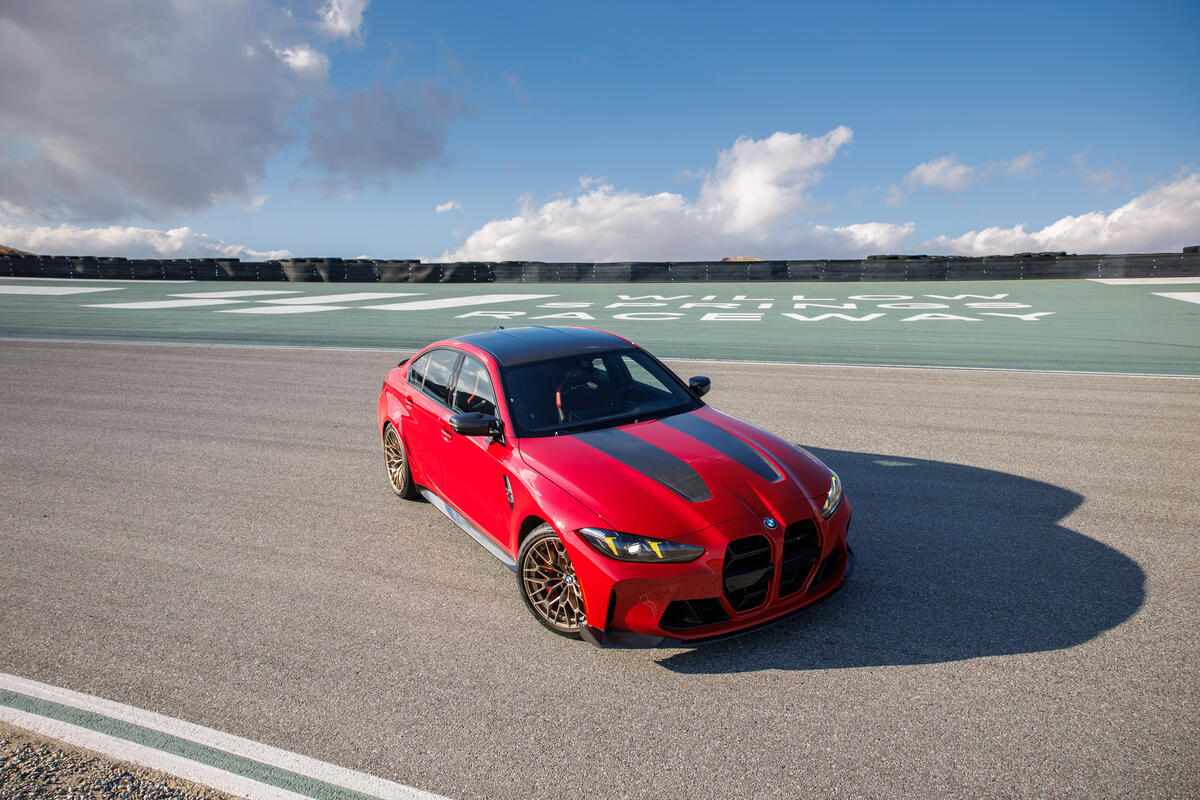
BMW M3
"...ound bad. But it definitely doesn't sound like an M3 or an M340i. They just need some extra tuning."
The BMW M3 is a sporty, high-performance BMW sedan. People talk about it a lot because it’s designed to feel fast and sound distinctive. The episode mentions it because they’re comparing how something sounds to what an M3 should sound like.
The BMW M3 is a high-performance version of the 3 Series, built for drivers who want a sporty engine and sharp handling. It’s often discussed because its sound, acceleration feel, and tuning are part of what makes it recognizable. In the podcast, it comes up in the context of whether a car “sounds like” an M3 or needs tuning.
digital augmentation
"Maybe they also need to go down the BMW rabbit hole of a little bit of digital augmentation on the sound."
It means the car uses software to change the sound you hear. Sometimes it’s done with speakers so the engine sounds more exciting than it really does.
Digital augmentation is using software and audio processing to change or enhance what you hear from the car. In practice, it can add or modify engine sound through speakers or sound-generating systems so the cabin experience feels more “right.”
V8 soundtrack over a V6
"Not, not Ford, where they're playing a V8 soundtrack over a V6. That's wrong."
They’re complaining that the car sounds like it has a bigger engine than it really does. It’s like fake engine noise that doesn’t match the actual engine.
This describes a mismatch where the audio (the “soundtrack”) suggests a V8, but the engine is actually a V6. Enthusiasts often dislike this because the sound character doesn’t match the engine’s real cylinder layout and firing behavior.
V6 over the four cylinder
"Or an infinity doing a V6 over the four cylinder. Yeah."
They’re saying the car’s noise is made to sound like a V6, but the engine is actually a smaller four-cylinder. That can make the sound feel fake or off.
This is another example of sound mismatch: the car’s audio is tuned to sound like a V6 even though the engine is a four-cylinder. The cylinder count affects how the engine’s pulses and rhythm sound, so the mismatch can feel artificial.

Jeep Gladiator
"So last week we thought it was going to be smaller, smaller than a gladiator. It is not. It looks like it's actually going to be about the same length as a gladiator"
The Jeep Gladiator is Jeep’s pickup truck. It has a cab for passengers and a separate cargo bed in the back. Here, they’re using it as a size reference for the new scrambler’s layout.
The Jeep Gladiator is Jeep’s pickup truck, built on a truck body with a cab and a separate cargo bed. In this segment, the hosts compare the upcoming scrambler’s overall length and rear packaging to the Gladiator, including how much space it might offer in the back.
two door four seat
"Wait, it's a two door, but there's rear seats. Yes. Two door four seat."
“Two door four seat” means there are only two doors to get in, but it can still seat four people. It usually also means the back seat area may be a bit tight compared with a four-door setup.
“Two door four seat” describes a cabin layout with two doors total (not four) but seating for four people. In pickup terms, it often implies a more compact front cabin and a rear seating area that may be tighter or more “jump-seat” oriented.
jump seats
"You know, so I don't understand that one, but it, what it sounds like is that we have some more jump seats in the back."
Jump seats are smaller back seats meant for occasional riders. They’re usually not as roomy or comfortable as the main front seats or a full-size rear bench.
“Jump seats” are small, often rear-facing or compact seats intended for occasional passengers rather than full-size comfort. The host is implying the scrambler’s rear seating may be more limited than a typical full rear bench.
Easter Jeep Safari
"Cause I literally on Easter Jeep Safari doesn't sound like it's any shorter though."
Easter Jeep Safari is a yearly Jeep off-road event where people show off new Jeep ideas and gear. They’re referencing it to talk about what kind of vehicle setup they saw or expected.
Easter Jeep Safari is an annual off-road event in Moab, Utah, where Jeep enthusiasts and the brand showcase concept vehicles and accessories. In this segment, the host uses it as a timing/context reference for whether a vehicle configuration would be “shorter” or different.
Request an Explanation
Heard something you'd like explained? We'll add it to this episode.
Sign in to request explanations for terms you heard.
Want to learn more?
Browse our glossary for plain-English explanations of automotive terms, jargon, and concepts.
Help improve this episode
See something that's not quite right? Our annotations are AI-generated and can sometimes miss the mark. Click the flag icon on any annotation to suggest a correction.