
Spare Tires & the 2027 Silverado
About this episode
Spare tires take center stage with real-world examples: a compact “donut” spare that left the host limping “the last 50 miles,” and the reminder that some EVs simply omit spares—“because it of course does not have a spare tire, right?” The discussion weighs temporary spares, sealant/inflator kits, and maintenance habits like checking pressure. It then pivots to the 2027 Silverado, where the hosts expect “a full size spare tire in just about every trim,” with a key question for the ZR2.
Spare tire or no spare tire? After limping the last 50 miles of a 1,000-mile road trip home on a donut, the crew digs into whether the spare still matters in 2026 — the Consumer Reports data behind what new cars actually carry, why Honda and Subaru hybrids bury the spare-tire well under a battery and waste the space entirely, what a replacement donut really costs, and the safety reasons you should almost always mount the spare on the rear axle. Along the way: a listener voicemail making the case for aftermarket modern-spare kits, the truth about whether AAA brings you a tire (spoiler — they don't), the right and wrong way to use fix-a-flat, and how often you should really be checking your spare's pressure. Then it's on to the 2027 Chevy Silverado refresh — the surviving 2.7L turbo now bolted to the 10-speed, the new 5.7L and 6.6L V8s replacing the old 5.3 and 6.2, a detour through the wild history of the segment's diesels (Cadillac, Fiat, and Land Rover all make an appearance), the new triple-screen interior, and why a GM sport truck could give the Ram Rumble Bee a real run for its money.
0:00 Intro: spare tires and what's ahead 0:22 Limping home on the donut after a 1,000-mile trip 1:50 Glad I skipped the Blazer EV (no spare) 3:00 Voicemail: John from Philly on modern-spare kits 5:44 Spare tires, regions, and brand culture 8:18 The AAA myth: do they bring you a tire? 9:14 The data: Consumer Reports spare-tire stats 14:27 Spare categories and donut limitations 16:47 The five-tire rotation philosophy 20:10 Honda & Subaru hybrids: batteries in dumb places 24:43 What a replacement spare actually costs 26:31 Is fix-a-flat an okay compromise? 28:31 Checking spare pressure & air compressors 31:20 Where do you even put the full-size spare? 34:55 Front vs. rear: mounting the spare safely 38:14 Upgrading: modern-spare universal kits 41:55 The 2027 Chevy Silverado refresh 44:01 Engines: 2.7L turbo, new V8s, and the 10-speed 48:19 Diesel history: Cadillac, Fiat & Land Rover 50:24 Power estimates for the 5.7L & 6.6L V8s 53:33 New triple screens & smartphone integration 55:12 Sport truck speculation vs. the Rumble Bee 59:11 Torque-split 4WD and why it matters 1:02:24 Wrap-up
full-size spare tire
"…you'd think I would have learned my lesson and actually put the full-size spare tire that I have for my Durango on said Durango, but no…"
A full-size spare is basically a normal-sized spare tire. That means it behaves more like your regular tire if you need it. It’s usually more convenient than a small temporary spare.
A full-size spare tire is the same size category as the tires you normally drive on, so it can be used more like a regular tire. Compared with a compact “donut,” it generally offers better ride quality and fewer limitations. Many modern vehicles still choose compact spares to save space and weight.
T185
"…for a car that comes with 295, 40R20s, a T185, whatever donut looks real stupid."
T185 is a code that describes the size of a compact spare tire. It’s basically telling you how small that spare is compared to your regular tires. The host is pointing out that the spare looks and feels different because it’s not the same size.
T185 is a tire size designation commonly used for compact spare tires. It indicates the tire’s width and aspect ratio category in a shorthand format. In the segment, the host uses it to highlight that the compact spare is dramatically different from the vehicle’s normal wheel/tire setup.
air pump
"…it was also a little low on air, which fortunately I had an air pump with me…"
An air pump is what you use to put air back into a tire. The host says their spare was a little low, and the pump helped them fix it so they could keep going. It’s a practical tool to have in case of a flat.
An air pump (often an onboard or portable compressor) is used to inflate a spare tire after a puncture or when the spare is low. Compact spares can lose pressure over time, so having a way to reinflate it can be the difference between driving safely and being stranded. The host specifically credits having one for preventing a worse outcome.

Chevrolet Blazer EV
"...as really torn about doing, which was driving our Blazer EV down to San Diego and around there about, and the..."
The Chevrolet Blazer EV is an electric SUV. The podcast mentioned driving one, which usually means they’re talking about how it works in everyday use. Electric vehicles can also have different storage setups, including for things like spare tires.
The Chevrolet Blazer EV is an electric version of the Blazer nameplate, aimed at bringing EV power to a midsize SUV format. It was referenced as part of a driving experience (“driving our Blazer EV down to San Diego”), which typically comes up when discussing real-world usability. Spare-tire and packaging topics often matter on EVs, so it fits the episode’s theme.
DC charge
"I could do it in the EV. I'd still need to charge DC charge in the middle. So, you know, one quick DC charge down to Solvang, get full,"
DC charging is the fast way to charge an EV at a public charger. It usually gets you back on the road quicker than charging at home.
“DC charge” refers to fast-charging an electric vehicle using direct current. It’s typically what roadside fast chargers use, and it can add a lot of range in less time than slower home charging.
weight-rated and speed-rated spare tire
"order a spare from Modern Spare that included a weight-rated and speed-rated spare tire and a weight-rated jack for the car."
“Weight-rated” and “speed-rated” describe the legal/engineering limits of a spare tire. They tell you the maximum load (weight) and maximum safe speed you should use the spare at, which matters because many spares are not meant to be driven like a normal tire.
Modern Spare
"And one of the first things I did before we even took it to the in-laws for Easter was order a spare from Modern Spare that included a weight-rated and speed-rated spare tire and a weight-rated jack for the car."
Modern Spare is a company that sells spare tire kits. The speaker bought one because it included the right spare tire and jack for their car.
Modern Spare is a company that sells spare tire kits, including tires and the associated jack. The speaker highlights that the kit included specific load/speed-rated components for their car.
weight-rated jack
"order a spare from Modern Spare that included a weight-rated and speed-rated spare tire and a weight-rated jack for the car."
A weight-rated jack means the jack is designed to lift up to a certain maximum weight safely. You don’t want to use one that can’t handle your car.
A “weight-rated jack” is a lifting tool with a specified maximum load it can safely raise. Using a jack beyond its rating can be dangerous, especially when lifting a heavier vehicle or when the spare/tire kit includes specific hardware.
special size tires
"What if it's Easter Sunday, I'm driving out in rural Pennsylvania, we get a flat on an EV or a Tesla with special size tires or something like that, and we can't get a rental car, we can't get a tire repaired or anything until the next day."
Some cars use tire sizes that aren’t as common. If you get a flat, it can take longer to find the right tire to fix it.
“Special size tires” means non-standard tire sizes that may be less common in local shops and harder to source quickly. That can turn a simple flat into a longer wait for repair or replacement.
Tesla
"What if it's Easter Sunday, I'm driving out in rural Pennsylvania, we get a flat on an EV or a Tesla with special size tires or something like that, and we can't get a rental car, we can't get a tire repaired or anything until the next day."
Tesla is a company that makes electric cars. The speaker is using a Tesla example to explain what could happen if you get a flat far from help.
Tesla is an EV brand, and the speaker uses it as an example of an electric car that might be harder to get help for if you’re stranded. The point is about tire/spare readiness during trips, not Tesla-specific hardware.
Marketplace
"I figured I could either take it with me to my next car if it fits, or I could just sell it on Marketplace in a couple years if I move on from that car."
Marketplace is an online place to buy and sell things locally. In this case, he’s saying he could sell the spare kit there later.
“Marketplace” here refers to Facebook Marketplace, an online classifieds platform. It’s relevant because the host is describing selling the spare kit later if it doesn’t fit the next car.
spares
"So that's why I'm a big believer in spares. And I also do check my spare tire pressure"
“Spares” means you keep an extra tire in the car. If you get a flat, you can swap to the spare instead of waiting for help.
“Spares” here means keeping an extra tire (usually a spare wheel and tire) in the vehicle so you can replace a flat without waiting for roadside help. It’s a practical ownership choice that matters most when help may be far away or slow to arrive.
spare tire pressure
"So that's why I'm a big believer in spares. And I also do check my spare tire pressure for all the cars in my household"
Spare tire pressure is how much air is in your spare tire. Checking it matters because the spare can lose air while it’s sitting in the trunk.
Spare tire pressure is the air pressure in your spare tire, which needs to be kept within the recommended range so the spare is usable when you need it. Spare tires often sit unused for long periods, so pressure can drop over time.
AAA
"I don't ever want to think about it, I want to call AAA and just have them fix it. And then there's the I must be prepared."
AAA is a roadside help service. If your car breaks down or you have a flat, you can call them for help instead of fixing it yourself.
AAA is a roadside assistance organization many Americans use for services like towing and tire changes. The host contrasts relying on AAA versus being prepared to handle a flat yourself.
emergency kit
"And in the make sure you have things, emergency kit means, you know, like a blanket and this extra food, it doesn't necessarily mean make sure you can get out of an emergency."
An emergency kit is stuff you keep in your car in case something goes wrong. It can include items to help you stay safe and comfortable while you wait for help.
An emergency kit is a set of supplies kept in the vehicle for unexpected situations, such as breakdowns or being stranded. The host notes that it’s not only about getting out of an emergency immediately, but also about being able to manage the situation until help arrives.

Toyota Corolla
"...s not like you open the trunk of your Kia or your Corolla, and there's like no spare tire in there, or you ..."
The Toyota Corolla is a small, everyday car. The podcast mentioned it because some versions don’t include a full-size spare tire in the trunk, or they store it differently. That matters if you want to know what you can use when you get a flat.
The Toyota Corolla is a compact car known for practical everyday transportation and strong mainstream appeal. It came up in the discussion about spare tires and how some cars store them differently (or don’t include a full-size spare). That makes it relevant for buyers who want to understand what’s in the trunk and what to expect during a flat tire.

Jeep Cherokee
"or you know, what else we were in recent recently that, you know, the Jeep Cherokee didn't"
The host mentions the Jeep Cherokee as an example of a newer SUV where you might not get a normal spare tire. That can make a flat more of a hassle if you’re not near help.
The Jeep Cherokee is called out as another recent vehicle the host says may not include a spare tire you can simply swap in. This is relevant because some trims/years rely on temporary solutions rather than a conventional spare wheel.

Honda Passport
"the the funniest version of that is the Honda Passport, where it does have a temporary spare option or a full size spare, and they've made considerations for both."
The Honda Passport is an SUV that can come with a spare tire. They try to fit it in a way that doesn’t waste as much room in the back.
The Honda Passport is an SUV that offers a temporary spare tire option (or a full-size spare, depending on configuration). The key point is that Honda designs the storage and mounting so the spare doesn’t take as much cargo space as it would in a more basic setup.
temporary spare
"the Honda Passport, where it does have a temporary spare option or a full size spare, and they've made considerations for both."
A temporary spare is a smaller spare tire meant to help you drive a short distance to get the real tire fixed. It’s not usually meant for long trips or high speeds.
A temporary spare (often called a “donut” in everyday talk) is a smaller, lighter spare tire designed to get you to a repair shop rather than replace the tire permanently. It typically has speed and distance limits, so it’s meant for short-term use.

Tesla Model 3
"I have a Tesla Model 3. And a lot of EVs are kind of the first grouping to say, yeah, we're not going to put a spare tire in there."
The Tesla Model 3 is an electric car that often doesn’t include a spare tire. Instead, you typically rely on roadside help if you get a flat.
The Tesla Model 3 is an EV that, as discussed here, is commonly delivered without a spare tire. That’s part of a broader EV packaging trend: space and weight are managed differently, so many EVs rely on roadside assistance or tire-repair solutions instead of a spare.

Tesla Model
"... have a spare tire in my vehicle, right? I have a Tesla Model 3. And a lot of EVs are kind of the first groupin..."
The Tesla Model Y is an electric SUV. The podcast talked about it because some electric cars may not have a traditional spare tire. That can affect what you do if you get a flat.
The Tesla Model Y is an electric compact SUV designed for daily driving with an all-electric powertrain. It was mentioned in the context of whether EVs include a spare tire, since many EVs package tools and tires differently than gas cars. That’s important for owners because a flat tire can be more inconvenient if there’s no full-size spare.
run flats
"Consumer Reports in 2020 said that as of six years ago, 4% of new cars had nothing, 7% had run flats, which I personally hate. 34% have a can of fix a flat and a tire inflator kit"
Run-flat tires are tires that can keep you rolling for a short distance even after they’re punctured. That way you don’t have to stop right away to change the tire.
Run-flat tires are tires designed to keep supporting the vehicle even after a puncture, so you can keep driving for a limited distance without changing the tire immediately. They’re meant to reduce roadside hassle, but they can feel harsher and may be more expensive to replace.
can of fix a flat
"34% have a can of fix a flat and a tire inflator kit, as I like to call it, or the, what do they call that, the emergency puncture repair kit, or, you know, whatever they call that thing. The Band-Aid."
This is a sealant you spray into a punctured tire to plug the hole. Then you use an air pump to refill the tire so you can drive to a repair shop.
A “fix-a-flat” can is a tire sealant product used to plug a puncture and allow the tire to hold air again. It’s typically paired with a tire inflator kit so you can seal the leak and then reinflate the tire to get moving.
tire inflator kit
"34% have a can of fix a flat and a tire inflator kit, as I like to call it, or the, what do they call that, the emergency puncture repair kit, or, you know, whatever they call that thing. The Band-Aid."
It’s the small pump that lets you add air back into the tire after you’ve used sealant. It helps you get the tire inflated enough to drive safely to get it fixed.
A tire inflator kit is the air pump (often with a hose and pressure gauge) included with sealant kits to reinflate the tire after the puncture is sealed. It’s part of many modern “no spare” setups because it’s lighter and takes up less space than a spare tire.
space saver spare
"46% have a space saver spare of some kind, and then 9% have a full size spare. But I will tell you, these numbers on their face seem wrong to me."
A space-saver spare is a smaller spare tire meant just to get you by. It’s usually not for long-term driving and often has limits on how fast or how far you can go.
A space-saver spare is a smaller, lighter spare tire (often with a narrower tread) intended for temporary use. Because it’s not meant for full-time driving, it typically has speed and distance limits compared with a normal spare.

Dodge Durangos
"and that adds another 7% to that. And then we have a decent number of American vehicles that have full size spares. Your SUVs, your big SUVs, your Dodge Durango's of most descriptions, your Tahoe's and Suburbans and all that jazz generally have full size spares. And then there are a few"
The Dodge Durango is a larger SUV that can fit more people. The podcast mentioned it because some Durangos include a full-size spare tire. Having a full-size spare can make a flat tire less of a problem.
The Dodge Durango is a three-row midsize SUV aimed at families that need space and versatility. The podcast noted that some American vehicles, including Durangos, can come with full-size spare tires. That’s a practical advantage because full-size spares are generally easier and safer to use than temporary spares.

Chevrolet Tahoe
"Your SUVs, your big SUVs, your Dodge Durango's of most descriptions, your Tahoe's and Suburbans and all that jazz generally have full size spares. And then there are a few vehicles out there that have compact spares"
The Chevrolet Tahoe is a big SUV. The host is saying that vehicles like the Tahoe often include a full-size spare tire, which can be more useful than a small spare or a repair kit.
The Chevrolet Tahoe is a large, full-size SUV, and the host cites it as an example of an American vehicle that generally includes a full-size spare tire. In the spare-tire debate, that’s a practical difference versus sealant kits or space-saver spares.

Chevrolet Suburban
"Your SUVs, your big SUVs, your Dodge Durango's of most descriptions, your Tahoe's and Suburbans and all that jazz generally have full size spares. And then there are a few vehicles out there that have compact spares"
The Chevrolet Suburban is a large SUV. The host is pointing out that big SUVs like the Suburban often still come with a full-size spare tire.
The Chevrolet Suburban is a full-size SUV, and the host groups it with other big American SUVs that “generally have full size spares.” That’s relevant because spare-tire equipment is increasingly being replaced by lighter solutions like sealant and inflators.
percentage of sales
"I'm just, I'm wondering, and I'm pretty sure you know the answer, but is this based on volume or just vehicle percentage, right? So each model counts for whatever small percentage. I assume this is based on volume. Yeah, percentage of sales."
This means the numbers are based on how many cars were actually sold. So popular models can skew the results more than rare models.
“Percentage of sales” means the data is weighted by how many units were sold, not just how many models exist. That matters for interpreting spare-tire statistics because a single high-volume vehicle can heavily influence the overall percentages.
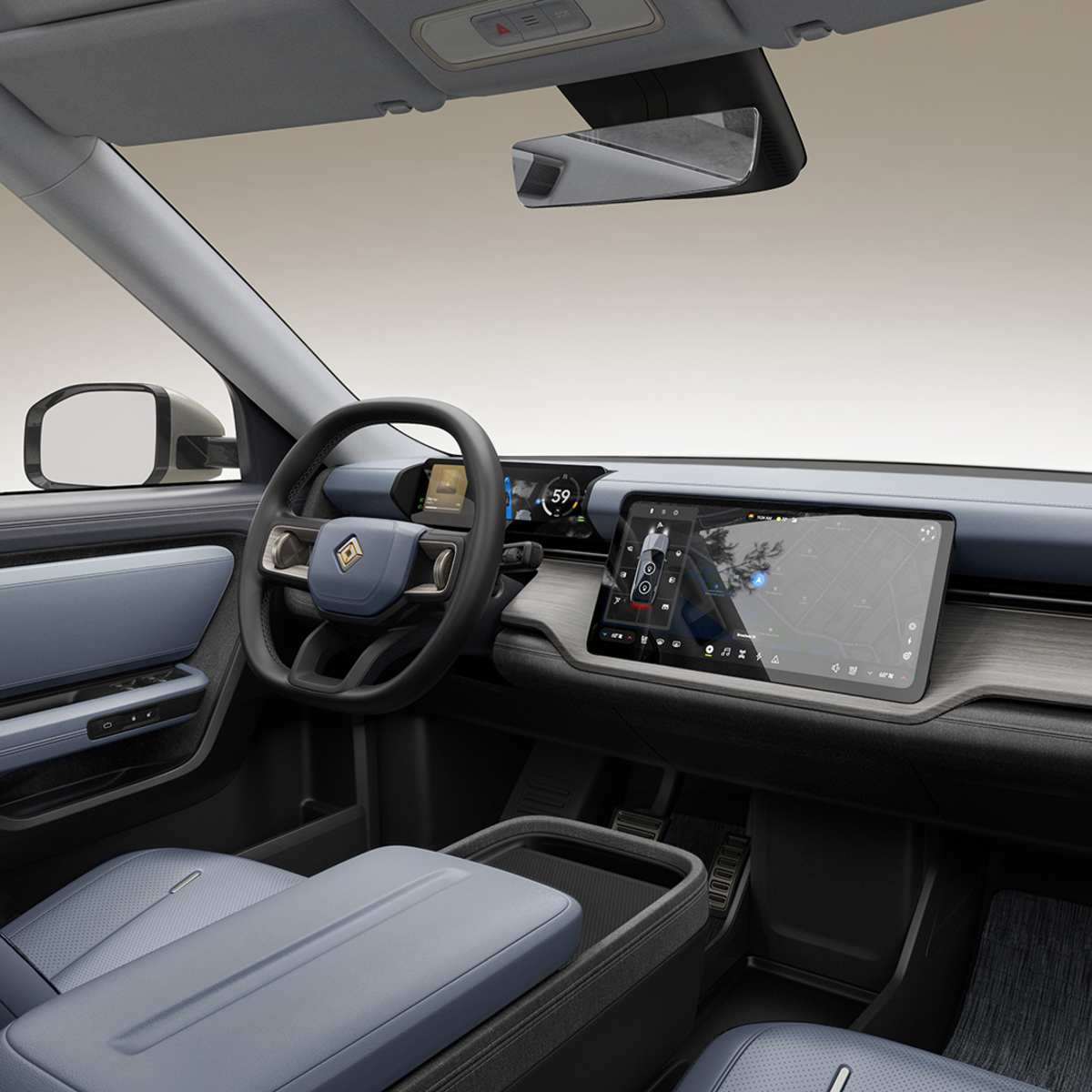
Rivian R2
"...urprised. I was with Rivian last week driving the R2 and there is a spot for a spare tire, but it does..."
The Rivian R2 is an electric vehicle. The podcast said it has a place for a spare tire, but it may not work exactly like a normal spare. That matters if you want to know what you can rely on during a flat tire.
The Rivian R2 is an upcoming electric vehicle platform discussed in the context of practical EV equipment. The podcast mentioned that there’s a spot for a spare tire, but it may not be a straightforward full-size spare situation. That’s important because EV packaging can change what you can use after a flat.
inflatable spare tire
"if your sidewall starts here, it ends here and you go, oh boy, that is the inflatable spare tire that we have a video on the channel of just plugging that one."
An inflatable spare is a small spare tire that you inflate when you need it. It’s usually only for getting you to a tire shop, not for long-term driving like a normal tire.
An inflatable spare tire is a compact spare that’s designed to be much smaller than a full-size tire, often using an air-inflation system. Because it’s so compact, it’s typically meant for temporary use until you can repair or replace your regular tires.
cost and consumer taste
"And this is the biggest reason apparently given by car companies for not having the spare is not necessarily weight and efficiency, but that's a close second. It's actually cost and consumer taste apparently."
The point being made is that some automakers don’t include a spare because it saves money and because they think many buyers don’t care about having one. They may prefer to lower the price instead of bundling the spare.
The host says car companies justify removing or not including spares using reasons like cost and “consumer taste,” rather than only weight and efficiency. The idea is that manufacturers would rather discount the vehicle price (e.g., $700 off) and assume many buyers won’t use a spare anyway.
PSI
"The spare was harder than hell to get out of the back and turned out to only be at 35 PSI, usually there around 60."
PSI (pounds per square inch) is a unit of pressure used for tire inflation. The segment notes the spare was only at 35 PSI versus the usual ~60 PSI, which matters because underinflation can affect how the spare behaves and how safe it is to use.
tire protection package
"is the lack of tire protection package, that, you know, accidental damage thing that you get on tires when you go to the tire store, as well, offer it, I should say. That does not generally seem to come with new cars."
A tire protection package is an optional add-on that can help cover costs if your tires get damaged. The host’s point here is that many new cars don’t include it automatically.
A tire protection package is an add-on coverage offered by dealers or tire retailers that helps pay for certain tire-related issues, such as accidental damage. In this segment, the host argues it often isn’t included with new cars, which can leave buyers paying out of pocket after a puncture.
full size tire
"If it is not a full size tire, then you are not supposed to operate your vehicle quite as normal… basically… don't go more than 50 miles and don't go over 50 miles an hour…"
A “full size tire” is the same kind of tire your car normally uses. If your spare isn’t full size, the car may not handle the same, so you’re expected to drive more carefully and for a shorter distance.
A “full size tire” is the same tire size as the ones on the vehicle, meaning it matches the normal rolling diameter and width. If the spare is not full size, manufacturers typically require reduced driving speed and distance because handling and traction can change.

Jeep Grand Cherokee
"... air quotes here in some vehicles, like I believe Grand Cherokee has a full size spare that is not the same size a..."
The Jeep Grand Cherokee is a larger SUV that can handle both regular driving and rougher roads. The podcast mentioned it because some versions may include a full-size spare tire. That’s helpful because it can be easier to drive on than a smaller temporary spare.
The Jeep Grand Cherokee is a midsize SUV that’s known for off-road capability and family-friendly comfort. In the podcast, it was specifically referenced for having a full-size spare tire in some configurations, which can be different from “donut” spares. That detail matters for real-world driving safety and convenience after a flat.
50 miles of driving and 50 miles an hour
"…are limited to no more than 50 miles of driving and importantly, 50 miles an hour."
When you use a temporary spare, you’re usually told not to drive farther than a certain number of miles and not faster than a certain speed. That’s because the spare isn’t built to handle normal driving conditions for long.
Temporary spares (especially compact “doughnut” spares) are commonly restricted to a maximum distance and speed. The limits exist because the spare’s size, tread, and construction aren’t meant to provide the same grip and durability as a full-size tire.
Volkswagen's
"…especially the inflatable kind, the kinds that you'll find in a lot of Volkswagen's and Audi's and some Alphas, etc."
The host is pointing out that some Volkswagen models have used temporary inflatable spares. Those spares aren’t meant to drive like a normal tire, especially in bad weather.
The host mentions Volkswagen as an example of a brand that has used inflatable temporary spares. This matters because inflatable spares can have different traction and water-shedding behavior than normal tires.
Audi's
"…the kinds that you'll find in a lot of Volkswagen's and Audi's and some Alphas, etc."
The host is saying Audi has used temporary inflatable spares too. They’re designed for short-term use and can be worse in rain than a regular tire.
The host cites Audi as another example of a brand that has used inflatable temporary spares. The key takeaway is that these spares often have limited grip and limited rain performance compared with full tires.
Alphas
"…Volkswagen's and Audi's and some Alphas, etc. Where you have to pump them up before you put them on the car."
“Alphas” here is the host’s shorthand for Alfa Romeo. They’re mentioned as another brand that has used inflatable temporary spares, which usually aren’t great for wet or long-distance driving.
The host refers to “Alphas” as an example of brands that have used inflatable temporary spares. In this context, the point is that inflatable spares can have less effective tread and water evacuation than normal tires.
water evacuation ability
"…The water evacuation ability of them is very limited. So in the rain, this is definitely a problem."
This means how well the tire can push water out of the way. If a spare doesn’t clear water well, it can feel slippery in the rain and be less safe.
“Water evacuation ability” refers to how well a tire’s tread channels water away to maintain contact with the road. Temporary spares and inflatable spares often have limited tread design, so they can struggle in rain and increase the risk of hydroplaning.
snow traction
"Snow traction, obviously, beg big bad problem, right? But then"
Snow traction is how well a tire grips when roads are covered in snow. A temporary spare often doesn’t have the right tread for winter, so it can be harder to control the car.
“Snow traction” is a tire’s ability to grip on snowy or icy surfaces. The host is warning that many temporary spares have tread patterns that are not optimized for snow, which can reduce control in winter conditions.
premature tire failure
"So the tire itself will heat up faster than the other tires, just the way that's deforming as you're driving along down the road with the extra weight. And that will cause premature tire failure if you go too fast or too far."
It means the tire might wear out or break sooner than expected. The host is saying that if one tire behaves differently—like heating up faster—it can get damaged sooner, especially if you drive hard or for too long.
“Premature tire failure” means the tire wears out or fails earlier than it should. In this segment, the host links it to running a full-size spare (or mismatched tire sizes) that can heat up and deform differently under extra load or different rolling behavior.
differential
"And then you can also heat up the differential in the vehicle and really reduce the wear, the lifetime wear of this part, at least the fluid, if nothing else, if you're driving quickly..."
The differential is a drivetrain part that helps the two driven wheels spin at different speeds when you turn. If the tires don’t match well, it can make the differential work harder and run hotter, which can shorten its life.
The differential is the gear assembly that lets the drive wheels turn at different speeds, especially when cornering. The host notes that mismatched tires can increase heat in the differential and reduce wear on the differential fluid (and potentially the differential itself).
rear wheel drive vehicles
"if you're driving quickly, which is definitely one of those things that you'll notice in in rear wheel drive vehicles. For instance, if you, a classic rear wheel drive vehicle, if you pop one back there and drive for any length of time..."
Rear-wheel-drive cars put the driving power to the back wheels. The host is saying that if tires aren’t matched, it can matter more because the drivetrain is working through the rear wheels.
Rear-wheel-drive vehicles send power to the rear wheels, so tire differences can affect how the drivetrain loads and distributes torque. The host specifically says the tire/spare management issue is something you notice more in rear-wheel-drive setups.
tire rotation
"Are you the kind of person that has ever rotated your full-size spare in a five tire rotation? [1032.0s] I haven't gotten to it yet. So I have not put enough miles on to get to it."
Tire rotation means swapping tire positions so they wear more evenly. The host is debating whether you should rotate the spare too, or keep it untouched as a backup.
Tire rotation is the practice of moving tires from one position on the vehicle to another (front-to-rear, side-to-side) to even out wear. The host discusses whether a full-size spare should be included in a five-tire rotation and how that affects wear patterns over time.
compact
"Yeah, exactly. You'll have all the capability you need and you're good. The compact is a stop gap measure."
A compact spare is a smaller spare tire you use just to get going until you can fix the real problem. It’s usually meant for short distances and lower speeds.
A “compact” spare is a smaller, lighter temporary spare tire (often a donut) meant to get you to a tire shop. It’s typically limited in speed and distance, so it’s not a full replacement for a full-size tire.
rotate your own tires
"The other thing is do you rotate your own tires or do you have someone do it because you at least need the equipment, which is not a lot, but you need the equipment and you need the space."
Tire rotation means swapping tires to different wheel positions so they wear more evenly. Some people don’t do it themselves because they don’t have the tools or space.
Tire rotation is the practice of moving tires between positions (front-to-rear, side-to-side) to help even out tread wear. The host ties it to needing equipment and space, which can affect whether owners do it themselves.

Subaru Crosstrek
"Forester or in the Crosstrek hybrids, these three hybrids at the moment, and we know they're more coming soon from Subaru. The battery is not in the spare tire well."
The Subaru Crosstrek is a small crossover. The host is saying that in some hybrid versions, the battery takes up the space where a spare tire would normally go, so you lose both the spare and the storage space.
The Subaru Crosstrek (Crosstrek) is a small crossover, and the host groups it with other Subaru hybrids that share the same spare-tire-well packaging problem. The key point is that the hybrid battery placement prevents using the spare-tire well for cargo or a spare tire.

Honda CR-V
"The problem is they would have to redesign it because it's the same battery they use in other vehicles that are meant to be sort of pancake-y. And they didn't want to make a new battery for the CRV. That's the actual answer."
The Honda CR-V is a common SUV. Here, the host is talking about a hybrid version where the battery takes up the space where a spare tire would normally go, so you lose that “backup tire” storage.
The Honda CR-V is a popular compact SUV, and this segment focuses on how its hybrid battery packaging affects the spare-tire area. The host argues Honda used the same battery design as other models, so the battery couldn’t be placed in the spare-tire well without redesigning the layout.
pancake-y
"The problem is they would have to redesign it because it's the same battery they use in other vehicles that are meant to be sort of pancake-y."
“Pancake-y” is the host’s description of a battery shape that’s designed to be thin and flat for packaging. The point is that if the battery is optimized to be low-profile in other vehicles, it may not fit in the spare-tire well of a different model without redesigning the battery or the vehicle’s layout.
Corp pack
"It's probably because it is most likely the same Corp pack that we find in Toyotas hybrids. Only it wasn't rearranged to fit there in the Subaru."
This refers to the hybrid battery pack design that automakers reuse across different models. The host is saying Subaru probably used a similar battery pack as Toyota, and that’s why it didn’t get packaged into the spare-tire area.
“Corp pack” appears to refer to a corporate/standard hybrid battery pack used across multiple Toyota hybrids. The host’s claim is that Subaru likely uses a similar battery pack but didn’t rearrange it to fit the spare-tire well, instead using custom brackets and cooling ducts.
Wilderness hybrid
"And I think that's extra vexing in the new wilderness hybrid, which is supposed to be the outdoorsy one. And now you got an outdoorsy one with all-terrain tires and no spare."
This is Subaru’s more outdoorsy “Wilderness” style hybrid. The host’s complaint is that it’s marketed for taking on tougher trips, but it doesn’t include a spare tire, which can be a big deal if you get a flat away from help.
The segment calls out the “Wilderness hybrid,” an outdoors-focused Subaru trim concept, and criticizes it for being paired with all-terrain tires while lacking a spare tire. The host frames this as a mismatch between the vehicle’s intended adventure use and the practical limitation created by the hybrid battery packaging.
all-terrain tires
"And now you got an outdoorsy one with all-terrain tires and no spare."
All-terrain tires are made to work on both regular roads and rougher surfaces like dirt or gravel. The host mentions them to emphasize that the car is meant for outdoor use, but it still doesn’t include a spare tire.
All-terrain tires are designed for mixed road and off-road use, typically with tougher sidewalls and tread patterns that handle dirt, gravel, and uneven surfaces better than standard highway tires. In this segment, they’re used to highlight the contradiction: an outdoors-oriented setup paired with no spare tire.
self-reported data
"Whatever that definition of off-road means to the owner, self-reported data might do. But I mean, it is light years away."
Self-reported data is what people say they did, not what someone measured. If different owners have different ideas of what “off-road” means, the results can be a bit fuzzy.
Self-reported data means information collected from owners’ answers rather than measured directly by the car or a third party. The hosts caution that “off-road” can mean different things to different owners, so the flat-tire/off-road conclusions depend on how people interpret the term.

Subaru Outback
"And the outback, Forester and Crosstrek are up there with Jeep, as far as their brand average being taken off-road, significantly more likely than RAV4..."
The Subaru Outback is a car that’s designed to handle rougher roads than a typical crossover. The hosts are saying Subaru owners tend to use their cars off-road more than some other brands.
The Subaru Outback is a crossover wagon built with an SUV-like stance and is commonly used for light off-road and rough-road driving. In this segment, it’s grouped with other Subaru models as being more likely to be taken off-road by owners than Honda’s CR-V.

Subaru Forester
"And the outback, Forester and Crosstrek are up there with Jeep, as far as their brand average being taken off-road, significantly more likely than RAV4..."
The Subaru Forester is a crossover that’s meant to do more than just smooth city driving. The hosts are using it as an example of Subaru owners being more likely to drive off-road.
The Subaru Forester is a compact crossover known for practical ground clearance and a strong reputation for handling unpaved roads. Here, it’s mentioned alongside the Outback and Crosstrek as a Subaru model whose owners are more likely to take the car off-road than owners of some competitors like the Toyota RAV4.

Toyota RAV4
"significantly more likely than RAV4, which, you know, HintHit has a spare tire in the hybrid and the plug-in hybrid... And if you want a new compact spare wheel or tire for your RAV4..."
The Toyota RAV4 is one of the most popular compact SUVs. The hosts are talking about how much it can cost to replace a spare tire setup if you damage the compact spare.
The Toyota RAV4 is a top-selling compact SUV/crossover, and it’s central to this segment’s spare-tire discussion. The hosts mention RAV4 hybrid and plug-in hybrid variants and then give example pricing for replacing a damaged compact spare wheel/tire and related kits.
aftermarket
"then it could be $200 to $250, because fortunately, there are a bunch of aftermarket companies making those kits."
Aftermarket parts are made by third-party companies instead of the car brand itself. In this case, aftermarket spare-tire kits can cost less than OEM parts.
Aftermarket refers to parts made by companies other than the vehicle’s original manufacturer. Here, it’s used to describe spare-tire wheel/tire kits for the RAV4 that can be cheaper than OEM replacements.
OEM
"because fortunately, there are a bunch of aftermarket companies making those kits. But if you want an OEM one, it's going to be more like $350 to $400."
OEM parts are the “factory” version of a replacement part. The hosts are saying OEM spare-tire parts usually cost more than cheaper aftermarket options.
OEM means “original equipment manufacturer,” i.e., parts made by (or for) the vehicle maker to match factory specifications. The segment contrasts aftermarket spare-tire kits with OEM replacements, noting OEM typically costs more.
fix flat
"OEM kits are $100 to $200 to replace, but an aftermarket one with a brand new cat, a fix, fix a flat slime, whatever you want to call it, only about 50 bucks. Well, and another sort of maintenance issue, those cans of fix flat are not good forever, right?"
“Fix flat” is sealant in a can that you put into a tire to plug a puncture. It’s temporary, and the can can expire—so it may not seal properly when you need it.
“Fix flat” refers to tire sealant used in a can to temporarily seal punctures. It’s meant to work for small punctures and then be topped up with air, but the sealant has an expiration/use date and can fail if it’s old.
air compressor
"And I'm like, it's got to be at 60. Got to dig for the air compressor, which is way at the back. And you know, fun fact, most cars with spare tires don't have air compressors."
An air compressor is the pump that adds air back into the tire. If your car doesn’t include one, you may have a harder time reinflating a tire after using sealant.
An air compressor is the pump used to inflate a tire after sealing a puncture with a can. The host notes that many cars with spare tires don’t include an air compressor, which affects how you’d handle a flat if you don’t have a full-size spare.
tire pressure sensor
"And you will have the original air air pressure sensor, the tire pressure sensor in that tire still to monitor its pressure. So should it get low, you can pull over and you can reinflate it."
A tire pressure sensor is what tells your car when a tire is losing air. Even if you use sealant, the sensor can still warn you if the tire pressure gets low.
A tire pressure sensor is part of the tire pressure monitoring system (TPMS) that measures each tire’s pressure and alerts you when it drops. In the sealant scenario described, the sensor can still detect low pressure so you know when to pull over and reinflate.
donut spare
"And if you have that classic full size spare or donut spare, I will say driving dynamics wise, driving on a low air pressure donut way worse than driving on a low pressure regular tire, both for vehicle dynamics and safety, the safety of that tire."
A donut spare is the small temporary spare tire. It’s meant for short-term use, and driving on it—especially when it’s low on air—can be less stable and less safe than driving on a normal tire.
A donut spare (also called a compact spare) is a smaller, temporary spare tire designed to get you to a repair shop. Because it’s not meant for normal driving conditions, it can behave noticeably worse—especially when underinflated—compared with a regular full-size tire.
emergency door handle releases
"It's emergency door handle releases, right? It's really important when you need it. But do you think in advance and how much is the manufacturer trying"
Emergency door handle releases are backup door-opening controls meant for urgent situations. The point is that you should understand how they work before you ever need them.
Emergency door handle releases are mechanisms that allow occupants to open a door from inside or outside in an urgent situation (for example, if normal latches are difficult to use). The host is using it as an analogy: some safety features only matter when you need them, so you should think about them ahead of time.
TPMS
"in our Grenadier, every time I connect a trailer to the Grenadier, I check the spare and the trailer's tires because the trailer doesn't have TPMS."
TPMS is a system in the car that watches your tire pressure and warns you if something’s low. It’s helpful for regular tires, but your spare tire still needs occasional checking.
TPMS (Tire Pressure Monitoring System) is a vehicle system that monitors tire pressure and alerts you when a tire is low. It helps catch slow leaks before they become a safety issue, but it doesn’t replace checking spare tires manually.
jump
"And I was looking for, hey, what's something I can leave in the truck that is going to give me a jump if I need it and has an inflator if I need it and then has a light"
A “jump” means getting your car started again when the battery is dead or weak. Usually it’s done with jumper cables or a portable battery booster.
A “jump” refers to jump-starting a car’s battery using another power source (typically jumper cables or a portable jump pack). The host is looking for a solution that can both inflate a tire and help restart the vehicle if the battery is low.
cigarette plug
"You have to make sure you can charge it off of your car, right? You need a cigarette plug to try and do that."
A cigarette plug is the car’s 12-volt power outlet. Some portable tire inflators/jump packs need it to recharge while you’re in the car.
A “cigarette plug” refers to powering accessories from a vehicle’s 12-volt outlet (often called the cigarette lighter socket). The host notes you may need that outlet to recharge a cordless inflator/jump device from the car.

Toyota RAV4 Prime
"And it's not like you're putting it in a spare tire well in the trunk, which now it's a little taller [1987.4s] than or whatever, like in a RAV4 Prime, you could put a full size spare in but the floor would"
The Toyota RAV4 Prime is mentioned because it can carry a full-size spare, but it may take up trunk space. Other versions of the RAV4 handle spare storage differently, which can affect cargo room.
The Toyota RAV4 Prime is brought up as an example where a full-size spare can be stored in the trunk area. The host contrasts it with other RAV4 variants where the spare may fit under the floor instead, changing how much usable cargo space you have.
Toyota RAV4 hybrid
"but the floor would [1987.4s] all of a sudden be bumped up in a regular RAV4 hybrid, you could put a full size spare in under [1993.1s] the floor."
The Toyota RAV4 hybrid is mentioned because its spare tire storage can be under the floor. If you put the full-size spare there, you may lose some of the extra storage space that normally lives under the floor.
The Toyota RAV4 hybrid is discussed in terms of how the underfloor storage area can be used for a full-size spare. The host points out that if you use that space for the spare, you lose access to other underfloor storage features.

Chevy Traverse
"But in a Chevy Traverse, for instance, [2013.7s] where are you going to put that full size spare tire? Because the spare tire slot and well is a [2017.7s] little on the tight side."
The Chevrolet Traverse is mentioned because its spare tire storage area doesn’t have a lot of extra room. That can make it harder to fit a full-size spare compared with some other SUVs.
The Chevrolet Traverse is used as an example of a vehicle where the spare tire storage area is tight. The host notes that the spare tire slot and well are “a little on the tight side,” which can make fitting a full-size spare more challenging.

Volkswagen Touareg
"Or, you know, your Volkswagen Touareg from back in time when I had to do that [2023.6s] in that vehicle with the inflatable spare tire, nowhere for it to go in that one."
The Volkswagen Touareg is mentioned because the host says there wasn’t a good place to put the inflatable spare. It’s an example of how spare storage can be awkward depending on the vehicle’s layout.
The Volkswagen Touareg is referenced as a case where the host had to deal with an inflatable spare tire and found there was nowhere convenient to store it. This highlights how some SUVs’ cargo floor and storage layouts can limit spare tire options.
driven wheels
"because you probably don't want to put the spare [2067.2s] tire on the driven wheels, because those are already doing quite a bit of work."
Driven wheels are the tires that actually get power from the engine to move the car. The host is saying you usually don’t want to put the spare on the wheels that are doing the driving, because it can change how the car behaves.
Driven wheels are the tires connected to the vehicle’s powertrain that receive torque to move the car (for example, front-wheel drive or all-wheel drive). The host’s point is that putting a spare on the driven axle can affect traction and handling, since those tires are doing the most work.

Ford Mustang
"...re tire on the non driven axle. So if you're in a Mustang or a Camaro, you want to put the spare tire up fr..."
The Ford Mustang is a sporty car designed for performance. The podcast mentioned it because if you use a spare tire, you may need to put it on a specific axle (front or rear) depending on which wheels are driven. This helps keep the car behaving normally.
The Ford Mustang is a performance-focused sports coupe known for its driving feel and strong enthusiast following. It was mentioned in a spare-tire discussion, specifically about where to place a spare relative to the driven axle. That matters because using the spare on the wrong axle can affect traction and handling.

Chevrolet Camaro
"...e non driven axle. So if you're in a Mustang or a Camaro, you want to put the spare tire up front and driv..."
The Chevrolet Camaro is a sporty car built for performance. The podcast mentioned it because when you use a spare tire, you may need to install it on the right side of the car (front or rear) based on which wheels drive the car. This helps the car stay safer and more predictable.
The Chevrolet Camaro is a performance sports coupe with a focus on handling and power. Like the Mustang, it was referenced in the spare-tire guidance about placing the spare on the correct axle for the vehicle’s drivetrain. That’s important for maintaining predictable traction and stability when driving on a temporary tire.
contact patch
"Now the reason that it's a stability concern is because your contact patch up front on one side has been dramatically reduced."
The contact patch is the portion of the tire tread that’s actually touching the road. If you move a spare tire to the front (or otherwise change which tire is on which axle), you can reduce effective grip on that side, which affects braking and stability.
stability concern
"Now the reason that it's a stability concern is because your contact patch up front on one side has been dramatically reduced. So especially in rainy weather or on a slippery surface, if you go to hit the brakes, your car can like skid off into the bushes..."
They’re saying the car might not handle safely if the spare tire is placed in the wrong spot. On slippery roads, braking can cause the car to slide instead of slowing straight.
“Stability concern” here means the car may lose traction and become harder to control during braking or emergency maneuvers. With a spare tire on the wrong axle, the car can skid because grip and braking force aren’t balanced the way the vehicle was designed for.
50 50 rule
"Now this goes back to the 50 50 rule though with compacts, which is why the 50 miles and 50 miles an hour, because you're now having a tire with a different diameter possibly on the car."
They’re referring to the usual temporary-spare rule of thumb: don’t go far or fast. The spare tire is usually smaller/different, so it’s not meant for long, high-speed driving.
The “50/50 rule” is the common spare-tire guideline that you should drive only about 50 miles at about 50 mph (or similar limits) on a temporary spare. The reason is that the spare is often a different diameter and construction, which can affect driveline behavior and tire wear.
different diameter
"because you're now having a tire with a different diameter possibly on the car. Generally speaking, spares are a little bit different diameter. And this can cause overheating and extra wear of your"
A spare tire can be a different size than your normal tires. That can make the car’s tires work harder than they should, causing extra heat and faster wear.
A spare tire often has a different diameter than the other tires. That mismatch can change how the wheels rotate relative to each other, which can lead to overheating and extra wear, and can be especially problematic on vehicles with traction-control or all-wheel-drive systems.
spare tire issue
"So I don't have the time today to deal with my Durango and its spare tire issue. So I drove it to the office, the last of its, you know, 50 miles or so."
A “spare tire issue” means you might not have a spare you can rely on when you get a flat. The host is saying the problem can get worse if you keep driving, especially at higher speeds.
A “spare tire issue” refers to a problem with having a usable spare when you need it—either the spare isn’t present, isn’t the right type, or isn’t practical to use. In this segment, the host limits driving distance because the situation worsens at higher speeds.
universal kits
"And that's what I get ads served to for me an awful lot from that company... but they are one of the few companies out there that will sell sort of universal kits."
A universal kit is an aftermarket spare-tire setup meant to work on lots of different cars. Instead of buying everything through a dealer, you can often get a kit that’s easier to match to your vehicle.
Universal kits are aftermarket spare-tire solutions designed to fit many different vehicles rather than being a one-car-only package. The host contrasts this with dealer options, which may be expensive or may not be willing to sell just the specific wheel/tire you need.
tire iron set
"So you're going to also need a jack and a tire iron set, which modern spare will also sell you."
A tire iron set is the tool you use to loosen the nuts/bolts that hold the wheel on. The host is saying you need that, not just the spare tire.
A tire iron set is the set of tools used to loosen and tighten the wheel fasteners (lug nuts/bolts) when changing a tire. The host pairs it with the jack to highlight that spare-tire kits should include the tools needed to actually mount the spare.

Volvo EX 30
"Interesting. For our EX 30, the Volvo EX 30, $509 to get a spare tire for it."
The Volvo EX 30 is a small electric SUV. The host is talking about how much it costs to add a spare tire, since some newer cars don’t come with one.
The Volvo EX 30 is a compact electric SUV, and the host is discussing the cost and practicality of adding a spare tire. This matters because some modern vehicles don’t include a full spare, so owners may need an aftermarket kit to carry one.

Chevrolet Blazer
"...out that. I wasn't going to get one for the Chevy Blazer, even though currently it has a tire that is losi..."
The Chevrolet Blazer is a midsize SUV for regular driving. The podcast mentioned it while talking about spare tires and what you might find in the vehicle. That matters because it affects what you can do if you get a flat.
The Chevrolet Blazer is a midsize SUV positioned for everyday practicality with available sportier trims. It was brought up because the discussion included spare-tire details, including a mention of a tire that was “losi…” (likely referring to losing/lowing or a temporary tire situation). That’s relevant because spare-tire setup affects how you handle flats.
slow leak
"Speaking of spares and all their various functions, it does have a slow leak in one tire. The EX 30, I've thought about it because we plan on keeping it longer."
A slow leak means the tire is slowly losing air over time. The host mentions it to show why having a spare plan matters even when the tire isn’t totally flat yet.
A slow leak means a tire is losing air gradually rather than going flat immediately. The host uses it to explain why they’re thinking about a spare for the Volvo EX 30 while the Blazer is temporarily dealing with air loss.
bolt patterns
"So they've got a whole bunch of different holes on the face of the wheel to try [2369.7s] and align to different bolt patterns and spacers. And they may include spacers that you have to [2374.4s] insert on the hub in order for the wheel to align properly, etc."
Bolt pattern is the “layout” of the holes on the wheel that match your car’s wheel studs. If the spare’s layout doesn’t match, you may need extra parts so it can bolt on safely.
A wheel’s bolt pattern is the specific arrangement of the lug holes (how many there are and the circle diameter they sit on). If a spare wheel doesn’t match your vehicle’s bolt pattern, it won’t mount correctly without the right adapters or spacers.
spacers
"And they may include spacers that you have to [2374.4s] insert on the hub in order for the wheel to align properly, etc."
Spacers are thin parts that go between the car and the wheel. They can help the spare wheel line up correctly so it can mount properly.
Wheel spacers are parts placed between the hub and the wheel to change how the wheel sits and to help it line up with the hub’s mounting surfaces. In the context here, spacers are used so a universal spare wheel can match the vehicle’s fitment.
tire bag
"But if you're trying [2451.6s] to say, Hey, I want to make sure I'm good to go. I think I would add a tire bag, which is, you know, [2459.4s] the carrying case that I just mentioned for Martin's spare here, but get a tire bag and some straps."
A tire bag is a cover/case that helps you carry and store the spare tire more neatly. It also helps prevent the tire from scuffing or damaging surfaces in your vehicle.
A tire bag is a protective carrying case used to store a spare tire (especially a compact spare) without it rubbing against the vehicle’s interior or other cargo. The host emphasizes it helps protect the paint and keeps the spare easy to secure.

Hyundai Venue
"...ly the same size as the actual tires on a Hyundai venue, the donut. Yeah, it's all relative. Let's shift ..."
The Hyundai Venue is a small crossover SUV. The podcast talked about its spare tire being a temporary “donut” size and compared it to the regular tire size. That matters because temporary spares often have limits on speed or distance.
The Hyundai Venue is a subcompact crossover designed for city-friendly size and easy maneuvering. It was mentioned in the context of spare tire sizing, specifically comparing a temporary spare (“donut”) to the size of the regular tires. That matters because the spare’s size can affect how you should drive after a flat.
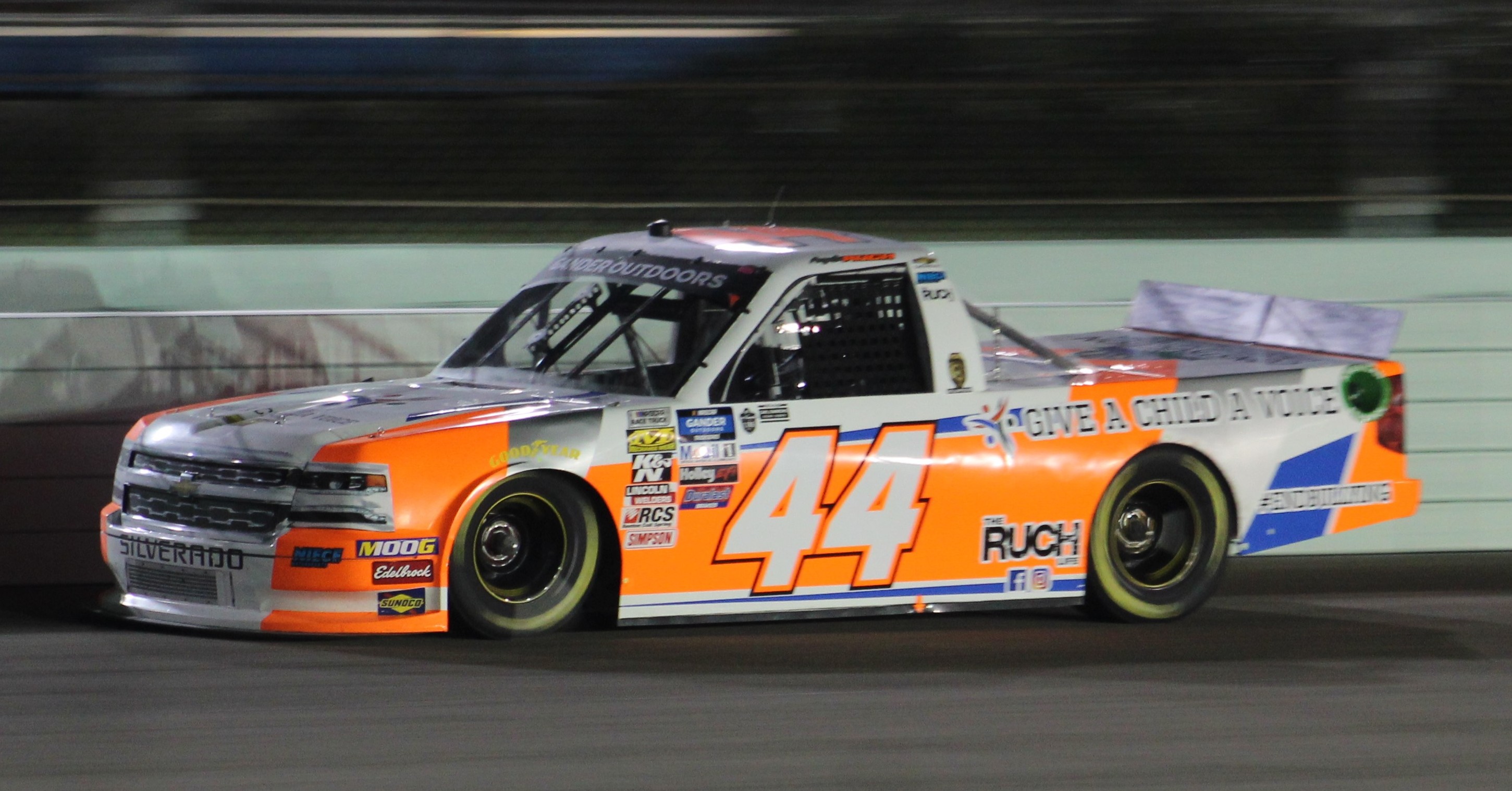
2027 Silverado
"Let's shift gears and talk about the new 2027 Silverado, which I can almost guarantee you is going to come with a full size spare tire in just about every trim."
This is the next-generation Chevrolet Silverado pickup. The big question here is what kind of spare tire it will include—whether it’s a full-size spare like you’d want for real driving, or a smaller temporary spare.
The 2027 Silverado is Chevrolet’s full-size pickup, and the hosts are focusing on how it’ll handle spare-tire practicality across trims. They specifically discuss whether the ZR2 off-road variant will include a full-size spare versus a smaller “donut” style spare.
refresh
"Here's the deal. It's exactly the same size as the current one, because it is a refresh of the current one. So this is a heavy duty refresh inside and out, new interior sheet metal, tweaky tweaks here and there are not major sheet metal tweaks,"
A “refresh” means the automaker updated the current truck rather than starting over with a brand-new design. Expect changes like styling and interior updates, not a totally new truck.
A “refresh” is an update to an existing vehicle generation, typically involving styling changes and interior revisions rather than a completely new platform. The hosts say the 2027 Silverado is a heavy-duty refresh “inside and out,” with new interior sheet metal and tweaks rather than major sheet-metal redesigns.
sheet metal
"new interior sheet metal, tweaky tweaks here and there are not major sheet metal tweaks, big bumper tweaks, minor sheet metal tweaks, major interior tweaks,"
Sheet metal is the outer metal body panels of the truck. When people say “tweaks” to sheet metal, they mean changes to the shape or design of those panels.
Sheet metal refers to the stamped metal body panels that form the exterior surfaces of a vehicle. In this segment, the hosts distinguish between minor sheet metal tweaks and bigger changes like interior updates and bumper revisions.
2.7 liter turbo
"the hood. So headline here is the 2.7 liter turbo is still kicking around... Also, though, the 2.7 liter turbo gets the 10 speed automatic"
This is a relatively small engine (2.7 liters) that uses a turbo to boost power. The turbo helps it feel stronger without needing a huge engine.
A 2.7-liter turbo is a small-displacement gasoline engine that uses a turbocharger to make more power than its size would suggest. In this segment, it’s paired with a 10-speed automatic, which matters because the engine’s torque delivery and the transmission’s gear ratios work together to feel responsive.
10 speed automatic
"Also, though, the 2.7 liter turbo gets the 10 speed automatic... the woes and concerns over the last generation 10 speed"
This is an automatic transmission with ten gear steps. More gears can help the truck stay in the right engine speed for power or fuel economy.
A 10-speed automatic is a transmission with ten forward gears that can keep the engine closer to its most efficient or most powerful operating range. The host also references “woes and concerns” from the previous generation 10-speed, implying there were durability or drivability issues worth watching for any updates.
5.3 and six liter v8s
"And then the big news is that the 5.3 and six liter v8s, which have hung on for a real long time, they're gone"
They’re saying the older V8 engines (around 5.3 liters and about 6 liters) are going away. Replacing them with different V8 sizes can change how the truck pulls and how efficiently it runs.
The segment says the 5.3-liter and “six liter” V8s are being discontinued in favor of newer V8 displacements. This is a meaningful lineup shift because changing engine displacement can affect torque, towing feel, and fuel economy strategy.
5.7 and 6.6 liter v8s
"they're gone and they've been replaced by 5.7 and 6.6 liter v8s should say sorry, 6.2 liter v8"
They’re talking about switching to bigger V8 engines (around 5.7 and 6.6 liters). Bigger engines often pull harder, but the host is also wondering how much fuel economy will change.
The host claims the outgoing V8s are replaced by 5.7-liter and 6.6-liter V8s, with a correction to “6.2 liter” mentioned in the middle of the discussion. Larger-displacement V8s typically target stronger low-end torque for towing and hauling, but the real question is how efficiency changes versus the previous engines.

Dodge Ram
"... interesting here though, because I was just with Ram last week and I was talking about engines. And I ..."
The Dodge Ram is a pickup truck. The podcast mentioned it because they were talking about engines and what’s available. Engine options can affect how the truck drives and what it’s like to own.
The Dodge Ram is a pickup truck line known for work-capable capability and a wide range of engine and configuration options. In the podcast, it was referenced during a discussion about engines, suggesting the conversation focused on what powertrains are available and how they’re discussed by the brand. That makes it relevant for buyers comparing engine choices and expectations.
ice engines
"I was talking about engines. And I said, Ram has the largest range of what I would call, you know, what I'm gonna call ice engines, but gasoline engines"
ICE means an engine that burns fuel to make power. It’s the traditional gasoline or diesel kind of engine.
ICE stands for internal combustion engine, meaning the engine burns fuel (like gasoline or diesel) to create power. The host uses “ICE engines” to distinguish conventional gasoline engine options from electrified or non-ICE powertrains.
Hemi
"then they're bringing back the Hemi and then of course, next year we'll have for 27 model year, we'll have the 392 in there"
“Hemi” is a nickname for a type of engine design that Chrysler is known for. It’s often associated with strong power and performance.
Hemi refers to Chrysler’s “hemispherical” combustion-chamber engine design, known for efficient airflow and strong performance potential. In this segment, the host says Ram is “bringing back the Hemi,” implying a return to a performance-oriented V8 architecture rather than relying only on smaller or turbocharged engines.

Buick 27 Model
"...Hemi and then of course, next year we'll have for 27 model year, we'll have the 392 in there and we'll have ..."
“Buick Model 27” is a Buick model-year reference mentioned in the podcast. They were talking about what engine options would be available, including a 392. Engine options can change how the car performs and what it’s like to own.
“Buick Model 27” in the podcast appears to refer to a specific model-year naming discussion tied to engine options (including a 392 and a 27 model year). It was mentioned as part of an engine lineup update rather than spare-tire packaging. That makes it relevant for buyers tracking what powertrains are offered for that model year.
Request an Explanation
Heard something you'd like explained? We'll add it to this episode.
Sign in to request explanations for terms you heard.
Want to learn more?
Browse our glossary for plain-English explanations of automotive terms, jargon, and concepts.
Help improve this episode
See something that's not quite right? Our annotations are AI-generated and can sometimes miss the mark. Click the flag icon on any annotation to suggest a correction.