Vinyl overlays are like stickers made from vinyl that get put on top of your car’s paint. They can change the look of parts of the car without needing a full paint job.
Rear reflectors are the shiny parts on the back of the car that help you be seen, especially at night. Some people customize them with designs or coverings.
Overland Expo is a big event for people who travel with their vehicles and do off-road adventures. The hosts are saying they met there, which sets up the conversation.
The Ford F-150 is a large pickup truck. People use it for everyday driving and for work like hauling or towing. The podcast mentions it while discussing a rally/event and other trucks in that conversation.
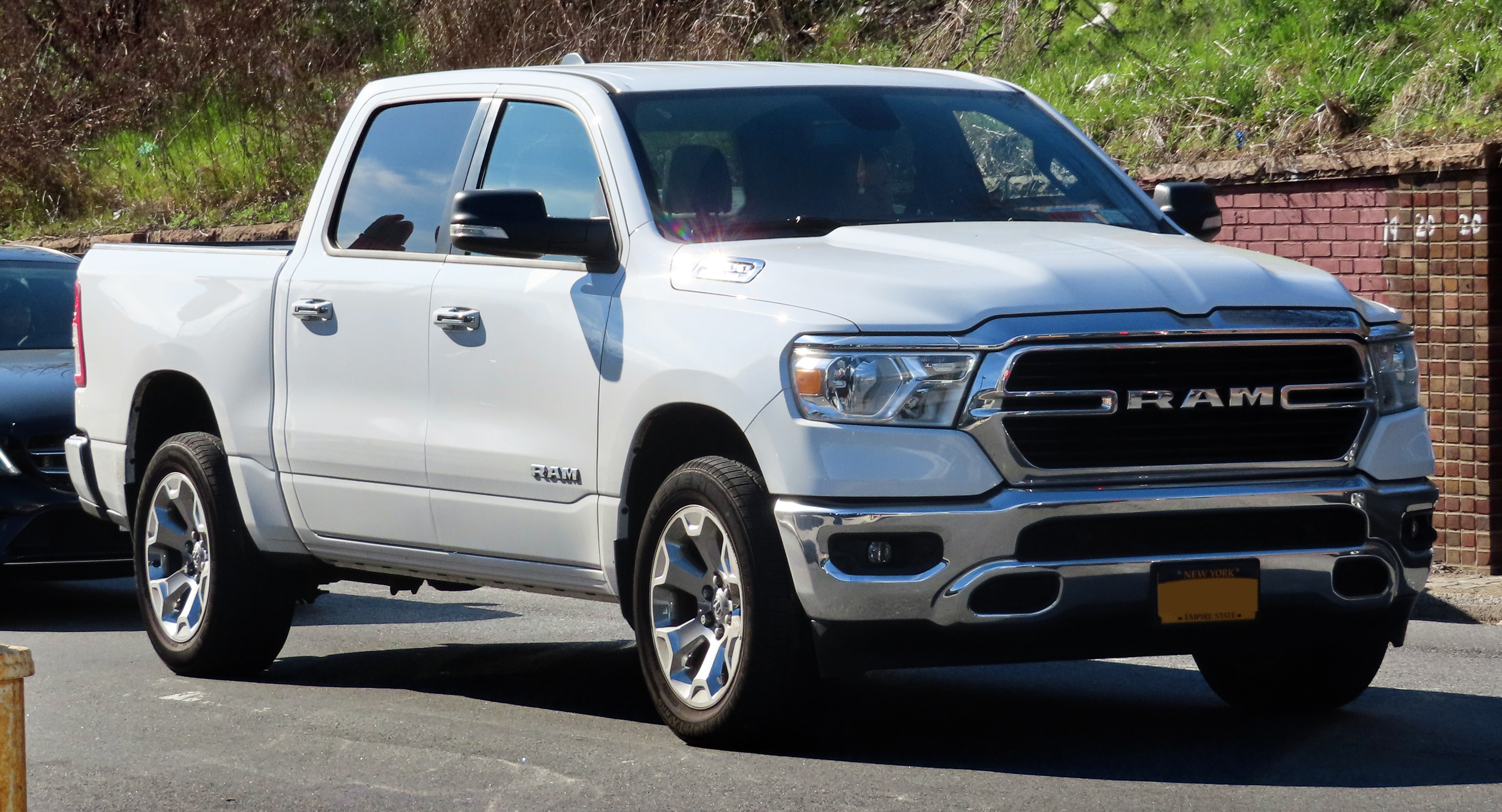
The Dodge Ram is a large pickup truck. It’s typically used for towing and carrying heavy loads. The podcast brings it up because the speaker worked at a dealership that sold and serviced these vehicles.
The Ram 2500 is a big, heavy-duty pickup truck designed to tow and haul. In this episode, it’s the truck the speaker used for the rally because it was ready for the job.
A turbo setup adds forced air to make more power. “Rear mount” means the turbo is placed toward the back of the vehicle, which can change how the exhaust and plumbing are routed.
The Ram 1500 is a full-size pickup truck. The speaker says they had a 2003 Ram 1500 set up for the rally—so it could handle the trip and the work they needed to do.
They mention the Rebell rally as an event coming up next year. It sounds like a rally with a planned route and organized stops/checkpoints along the way.
A course official is the person running parts of the rally route. They set up the checkpoints and help make sure everything is organized and works smoothly.
In rally events, checkpoints are specific spots on the route. Officials use them to confirm that drivers are where they should be and that the event is running on schedule.
Term
running sweep
A “sweep” is the support crew that comes after the race cars. “Running sweep” means they’re driving the course to find cars that need help and get them back on track.
A “solid axle” is a strong, rigid axle that connects wheels. In rough rally driving, it can get bent or broken, and then the team may have to repair or replace it.
The Land Cruiser FJ80 is a classic Toyota SUV that’s famous for being tough off-road. They’re talking about replacing or repairing the transmission, which is one of the biggest repairs you can do on a vehicle.
A clutch is what lets you smoothly connect the engine to the gearbox in a manual car. If it’s wearing out, you can feel weird behavior like chattering, and it may need replacement sooner depending on how you drive.
In this context, “chattering” describes a rough, vibrating engagement—often associated with a clutch that’s starting to wear or not fully engaging smoothly. It’s a practical symptom listeners can recognize as a sign the clutch may be near the end of its service life.
Car
06 Dodge Cummins
The 2006 Dodge Ram Cummins is a diesel truck known for having lots of pulling power. They’re talking about using it for rally events, and how it lost second gear, which is a serious drivetrain problem during a competition.
“Lost second gear” means the car can’t use the second gear anymore. In a rally, that’s a big deal because gear choice helps the truck accelerate and stay controllable on different parts of the course.
An automatic transmission is the part of the car that changes gears for you. Instead of you shifting manually, it uses internal mechanisms to do it automatically.
A torque converter is a fluid-based part in an automatic transmission that helps transfer power from the engine to the gearbox. If it’s not working right, the transmission can overheat and fail.
The Tesla Model X is an electric SUV. It’s designed to carry people and uses an electric powertrain instead of gasoline. The podcast mentions it because someone found it through social media and was discussing it.
Direct injection means the fuel is sprayed directly into the engine’s cylinders. It can make the engine a little different to service than older fuel systems.
Spacers are basically add-on pieces that make the suspension sit higher. They’re a cheaper way to lift a car, but you still want everything aligned and installed properly.
A five-speed manual means you shift gears yourself with a clutch. The speaker likes manuals because they can feel more controllable, especially when driving uphill.
The Subaru Outback is a Subaru wagon/SUV that’s built around all-wheel drive. In the story, it’s one of the models this “Subaru guy” collects and often fixes with engine swaps.
This is a cover on the front of the engine that protects the timing belt area. You take it off so you can reach the belt and pulleys to check or replace them.
The timing belt is what keeps the engine’s timing lined up—so the valves open at the right moments. If it slips or jumps, the engine can run wrong or make noise, and you may need to replace it.
These are pulleys that help guide the timing belt. If the pulley bearings wear out, the belt system can start making a really loud noise and the timing can get off.
If the timing belt “jumps teeth,” it means the belt moved one or more notches out of position. That changes when the valves open, and the engine may run badly—though sometimes it’s not immediately ruined.
Car
STI block
An STI block is the engine block from Subaru’s performance STI cars. The key point here is that it’s built to handle more stress, and the speaker thinks it’s tougher than the alternative.
A closed deck block is an engine design where the cylinder area is more strongly supported. That helps the engine stay stable when it’s under higher load or pressure.
Naturally aspirated engines don’t use a turbo or supercharger. They breathe in air just by suction from the engine, which usually makes power delivery feel smoother.
Compression ratio is how much the engine squeezes the air-fuel mixture before it ignites. The “right” ratio helps the engine make power efficiently without knocking.
Part
B 25 heads
Cylinder heads are the top part of the engine where the valves and combustion happen. “B25 heads” is a specific type of Subaru head, and it can change how well the engine breathes and runs.
Term
Rebel rallies
A “Rebel rally” is an off-road event where people drive through rough terrain and hit checkpoints. It’s a good test of whether a vehicle can handle real trail conditions.
Term
Super Raptor
“Super Raptor” is the name for a specific off-road Raptor setup the speaker bought. It implies the truck is modified for tougher trail driving.
Jimmy Lewis is a famous off-road motorcycle racer. The host says he’s done extremely well at the Dakar Rally, including a podium finish as an American.
A header is the part that collects exhaust from the engine. “Unequal length” means the pipes are different lengths, which can help the engine breathe better and often changes the exhaust note.
“Subi rumble” is a fan way of describing the recognizable Subaru exhaust sound. Here they’re saying their setup makes that signature rumble everyone can hear.
The Ford Ranger is a pickup truck. It’s generally smaller and easier to drive than the biggest trucks. The podcast mentions it while talking about different kinds of Ford performance trucks.
Plasma cutting is a way to cut metal using a super-hot electrical arc. If it’s done by hand, the cuts may not be as perfectly precise as machine-cut parts, but it can still work well.
Term
Ironman four by four overload coils
Overload coils are extra springs that help the rear of the vehicle handle heavy loads. They’re meant to keep the car from sagging when you’re carrying gear or towing.
Rock sliders are metal bars under the sides of the car. They’re there to protect the body when you’re driving over rocks and the car gets scraped or hits uneven ground.
The Jeep Wrangler JK is an off-road Jeep generation. The host is using parts from its suspension—specifically control arms—to build stronger rear suspension links for his Subaru.
Trailing arms are parts of the suspension that connect the wheel to the car. They help control how the wheel moves over bumps, and in this case they’re being upgraded for tougher off-road use.
That number is the tire’s size. It tells you how wide the tire is, how tall the sidewall is, and what size wheel it fits—so it affects whether the tire rubs on the suspension or fenders.
Cutting the front fenders means trimming the metal to give the tires more room. It helps prevent the tire from scraping the fender when the suspension compresses.
Struts are part of the suspension that help the wheels move smoothly over bumps. If a tire rubs on a strut, it can mean you need more clearance or a stronger setup.
The lower control arm is a metal arm that helps hold the wheel in the right position. When it gets bent or damaged, the car’s handling and alignment can be seriously affected.
A head gasket is the sealing layer between the engine block and cylinder head that prevents coolant and combustion gases from mixing. The host mentions shops “telling these people” they need head gaskets, which is a common Subaru repair topic and can sometimes be over-claimed depending on symptoms and diagnostics.
EJ25 is Subaru’s 2.5-liter engine used in many models. People talk about it a lot because some versions can develop gasket problems that may show up as oil leaks.
They’re calling it a “re-homing project” because they buy a used Subaru, fix it up, and then pass it on to someone else. The idea is to save it from being scrapped or dismantled.
A lift kit is a set of parts that raises the car higher off the ground. That helps with rough roads and lets you run bigger tires.
Term
18s from the 20s
“18s” and “20s” are wheel sizes. Going down to 18-inch wheels usually means the tires have more sidewall, which can make the ride a bit less harsh.
Term
Patagonians
“Patagonians” sounds like the name they’re using for a certain set of tires they want to put on the car. It’s likely a specific tire option, not a general tire type.
The Subaru Ascent is a bigger Subaru SUV with three rows of seats. Here, they’re saying it can fit everyone, so they don’t feel like they need a minivan.
A mild lift means raising the car a little bit. It helps the tires clear obstacles and makes it easier to drive on rough roads, especially when you add all-terrain tires.
All-terrain tires are meant to handle both regular roads and rougher surfaces. They’re a common upgrade for people who want more traction when they leave the pavement.
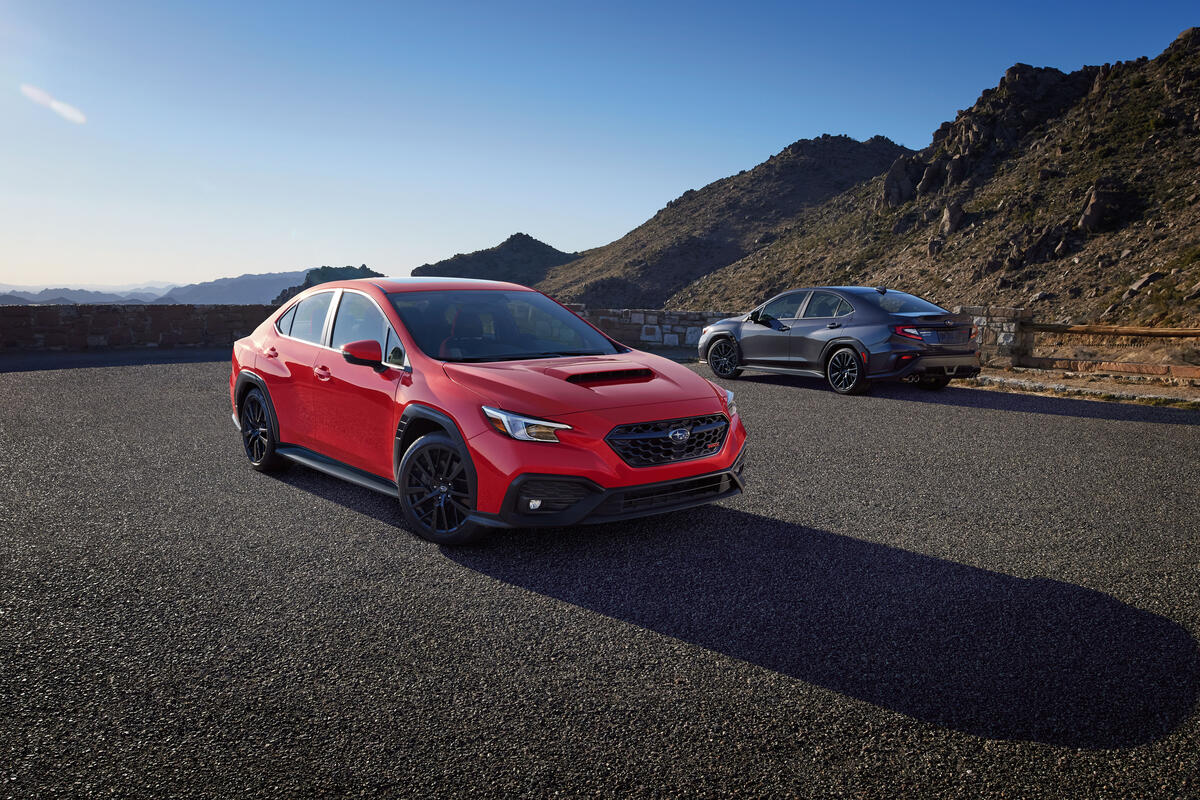
The Subaru WRX is a performance Subaru that’s built to be quick and mod-friendly. In this story, they’re using a WRX engine, so parts made for the WRX should fit and could help add more horsepower later.
Rallycross is racing on a short course that mixes surfaces like dirt/gravel and pavement. The idea here is to take the car to an event and drive it hard in that style.
A stage rally is a type of rally race where the course is broken into timed sections. The goal is to be fastest on each section, usually on rough or changing terrain.
Heavy recovery means the more serious kind of help when a car is really stuck. It usually involves stronger towing or pulling gear to get the vehicle out safely.
A sweep vehicle is like the backup car that comes after the main group. “Heavy sweep” means it’s the more capable backup, ready to help with bigger problems.
Control arms are parts of the suspension that help hold the wheels in the right position. Upgrading them can make the truck handle better on bumpy off-road trails.
A torque locker helps the car put power to the wheels that have traction. That can make a big difference in sand, where one wheel can spin while the other has grip.
A front sway bar is a bar that helps keep the car from leaning too much when you turn. If you remove it, the handling can feel different—sometimes less stable.
“Overload springs” are helper springs used to add extra support under heavy compression, often to protect suspension components on rough roads. In a rally setup, they’re commonly used to manage bottoming-out and keep ride control when the suspension is working hard.
These are extra coil springs meant to help when the suspension gets compressed hard. They can make the car handle rough hits better and reduce harsh bottoming-out.
Bump stops are like safety cushions for the suspension. When the car hits a big bump and the suspension compresses too far, bump stops help prevent damage and keep things from getting out of control.
The Subaru Crosstrek is a small Subaru crossover that’s popular for people who want extra traction. Here it’s mentioned because the owner chose a cheaper engine replacement instead of paying for expensive head work.
LIVE
Hi, this is Josh and you can find me on Instagram at SubiRaptor.
You are listening to episode 233 of Subian New Podcast.
Hello and welcome to another episode of the Subian New Podcast.
As you just heard, I have Josh on and it was really cool because he's another guest that
I was actually able to meet in person that I've had on the podcast.
When I went out to Overland Expo West in Flagstaff, Arizona, I was able to meet Josh there and
we chatted for a while and I think I also had him on the bonus episode.
But anyway, yeah, it was cool to catch up with him.
He was also a guest on the Dirt Subis podcast, hosted by my buddy Ben and that was episode
19.
So after you listen to this one, go check that one out also if you haven't listened to it
and check out the Dirt Subis podcast.
Give them a follow on Instagram.
Give them a follow anywhere that you listen to podcasts because he's on Apple podcast
Spotify and I'm sure many other apps.
He also does it as a YouTube podcast.
So that's really cool too.
There is also the Wave podcast that's hosted by Patrick and Dave.
Again, another great podcast.
It's very, I think they get pretty technical because they're both Subaru technicians and
those guys are funny too.
So go check out the Wave podcast as well.
But before we get into anything else, we'll hear from one of our sponsors.
The Subi and You podcast is brought to you by Accentric Designs.
For those of you who don't know, Accentric Designs is a small, community driven business
that offers custom fit vinyl overlays for most Subaru models.
This includes various designs for the rear reflectors, tail lights and side tail lights.
I also offer fun, detailed designs like the popular fender stripes and stickers.
To find designs for your Subi, head on over to AccentricDesigns.com.
There's always more projects in the works, so be sure to follow at Accentric.designs on Instagram.
Be sure to give Accentric Designs a follow on Instagram if you're not already doing so.
It's also a great way to incorporate decals on your Subaru.
If you're new to this community and you're not really sure what you want to do with your
Subaru yet, decals are a very cost effective way to personalize it and do some cool stuff.
So go check her out.
She has a website and she's also on Etsy.
You can find her both places.
Also, if you were a previous guest on the Subi and You podcast, you can go to her website.
Just type in episode and you can get an episode specific decal that'll say Subi and You podcast
and then it'll have episode whatever it was that you were on.
So go check that out.
Help support her and help support the podcast and we would both appreciate it.
I hope that everybody is having a good summer and staying cool out there.
I'm in Texas and it's it's it's hot here and I know it gets hot in Arizona and some other places.
So if you're out there somewhere where it's really, really hot, be sure to stay cool, stay hydrated.
And you know, if you want to carry around some drinks to keep you nice and cool,
there are some really nice cooler bags at SubaruGear.com.
You can navigate to lifestyle and then bags and coolers and you can find some cooler bags to carry around drinks.
You know, your cold drinks to keep you nice and hydrated when it's really, really hot out there.
Grab an ice cold drink and, you know, just wash down the heat because it gets hot out there.
But yeah, go check out SubaruGear.com.
You can use the code SUBI and you 2026 a checkout to get 20% off a single item
or you can fill up your cart and save 20% off your entire purchase.
Also, if your total is over $50 after the 20% discount, you'll automatically get free shipping and that is really, really cool.
Thank you so much, SubaruGear, for sponsoring the Subi and you podcast and bringing this great offer to the listeners.
All right, this big event is coming up this Saturday.
Subifest, California is coming up Saturday, July 25th from 3 to 10pm at Santa Anita Park in Arcadia, California.
So if you don't already have your tickets, be sure to get tickets for that event and go check it out.
Subifest is always a great time. There's so many great Subaru's there.
They have giveaways. They have the DJ making announcements.
They have, you know, the all, they have the car show where you can potentially win a trophy.
There's just, then they have the athletes. They're usually Bucky and sometimes Travis Pastrana,
but it's always a great time. So go check it out.
If you don't already have your tickets again, go ahead and get those for that event this weekend and just have fun.
One more quick announcement before we get into this episode,
but another sponsor of the Subi and you podcast is Melee Design Firm.
My buddy Mitch was kind enough to give a discount code for everybody.
So you can get 10% off pretty much anything site-wide.
But of course, most of the stuff that is Subaru related,
one of the really great products that you can get are the engine bay caps.
Those really help to enhance the look of your engine compartment plus their billeted aluminum.
And they just look cool. So you can get it either with the Melee logo on it,
or you can get it with like the appropriate symbol for where it goes for like the radiator
or the brake, the brake cylinder, and also for your oil.
There's one more. I think I can't remember the last one, but anyway, yeah, those are available.
They're really nice looking. You can use the code SUBI and you at checkout to get 10% off your purchase.
Thank you so much Melee Design Firm.
So we'll go ahead and get into this episode with Josh.
His Subaru is called Subiraptor and he goes into the story of how that name came about.
And it's actually a pretty cool story. And he just has a pretty cool story
overall and a really cool Subaru journey. So we'll go ahead and get into this conversation with Josh.
Hey Josh, welcome to the podcast man.
Thanks. It's good to be on.
Yeah, it's good to see you again. I know we're just seeing each other like over the internet,
but I got to actually meet you at Overland Expo in Arizona, which is really cool.
Yeah, yeah, it was a fun time, a little windy, but that's kind of to be expected over there in flags.
I'm sure if you've listened to other episodes, you know what the most important question is,
and that's whether you prefer waffles or pancakes.
I probably partake in pancakes more, probably make pancakes more.
I like to hear that.
But I definitely do like waffles, but probably my favorite is French toast.
My wife's not a big fan of French toast, so I don't make it very often though.
Yeah, it's so good man.
But really I should stay away from it all being I'm a type 1 diabetic, so I should probably
stay away from the carbs, but I'll still enjoy some pancakes every now and then.
Yeah, they're good stuff man. I like them.
So before we get started with anything having to do with your Subaru and Subarus,
because I know you have more than just, you know, a Subi Raptor, but I want to talk about
the Rebell rally, because whenever, I didn't know this about you before I met you in Arizona,
and you had like Rebell rally attire on, you were like all geared out with Rebell rally.
We got to talking about it there, but how did you find out about the Rebell rally,
and then like how did you get involved, like what's your role been, like how long have you
been doing it, and then, so we can start there.
Okay, so really it was pretty soon after I switched from working at Hyundai,
I went and worked at a Chrysler Dodge Ram Jeep dealership, and a lady who owned a Jeep rental
company in Sedona, Nina Barlow, you know, she always would bring her Jeeps in there,
we put the lifts on, we did everything, outfitted them out for her for the rental business,
and she knew I came from an import background. I've had Toyotas, that's all I really owned
before I started working there, so being that she was going to be part of this Rebell rally,
the first one as a competitor, she was friends with Emily Miller, who is the creator of the
Rebell rally, and she was asking her about, you know, do you know anyone who would want to come
and spend, you know, 10 to 11 days out in the desert, and working on all these different vehicles
that are going to be in this competition, and this was probably, it probably was almost a year
even before the very first Rebell rally. Yeah, I know there's a lot of planning involved with it.
Oh yeah. They planned for a long time. So she was all like, the only thing she told me was like,
hey, I don't even really know what to expect with this, I mean no one really does,
would you want to drive out in the middle of the desert with a bunch of people, and you know,
do this crazy navigation rally, be a part of it, and I kind of went home, talked to the wife
about it, and said, hey, you know, it's an all-female navigation rally, and they want me to go and do
this, and you know, she's always been, my wife's always been a big, you know, supporter through
everything, and was like, that's awesome. Yeah, go for it, so I mean, so that was, like I said, that
was probably, probably almost 12 years ago now that, you know, that first thought kind of took,
got into my head about it. Yeah, because I know they just celebrated their 10th anniversary this
past year. Yeah, the 10th anniversary. So yeah, I've been a part of it all 10 years, so my wife
is, you know, graciously let me, let me go for, you know, 10 to 12 days to the desert every,
every October. And how did that work out, you know, with your job being able to, I mean,
I guess, did you just like take vacation time, were they supportive of that, like, hey, we really
think this is a cool opportunity, yeah, you should go do it, like how did that work out, because
that's a long time. Yeah, for sure. I actually get, you know, paid by the rally for being on it,
because I'm, you know, a mechanic and course official for the entire, for the entire event.
So, but at first it was kind of, you know, with Nina Barlow, like she was a big, you know, a big
kind of contributor to that dealership. Oh, nice. She brought her, I mean, at that point,
I think she owned 20 some Wranglers that were always in and out of that, that dealership,
so they kind of would do whatever she said. You gotta let him come with me. Yeah, I was like,
hey, I'm going with Nina and they were like, oh yeah, sure, just let us know when you're leaving
and when you're coming back. That's really cool. And then actually, so that the first year actually
took Nina Barlow's Ram 2500, because at that point I had a 98 4Runner with, you know, a bunch of miles
on it. And it was, I mean, it was in good shape. It was lifted and actually built a rear mount
turbo setup for it. And it was, it was pretty cool, but it wasn't something that I wanted to go and,
you know, throw 2500 miles on and in 10 days. Yeah. So she let me take that. And then the next
year I bought a, I bought a 03 Ram 1500 from my brother-in-law. He was the original owner and I
had got that one all outfitted and geared up for it. And the dealership actually paid
to wrap the whole back of it. So it was kind of cool. So they were completely supported of me going.
And these were vehicles you're talking about, like that you took her Ram and then you took the other
these are vehicles that you needed to be out there, to get to the vehicles,
to do maintenance and stuff, correct? Correct. Yeah. They were, there were vehicles that I had set up
to be on course, to do, to either just be a course official, as course worker,
to mechanic vehicles, to work on vehicles out in the field. And then, you know,
anything I really needed out there, that thing was, was geared up to do it.
And were you working on like all different vehicles out there or were you like only with a
specific team? How did that? Oh yeah. So I'm, I'm open to, to anybody and everybody
out there. I mean, where you even sometimes, you know, work on other, other course workers or
other staff vehicles throughout the event as well. So yeah, I mean, we're just mainly out there
to make sure everyone's safe, that the event is fair for everybody. And just, just really
out there to make, make the event as special as it is. And part of the reason why
the event is special, because there's so many people who just like me who, you know, really
care about the event. And a lot of people have been there the full 10 years as well. So yeah,
it's really cool. It's kind of like seeing a, you know, a different, another, another family out
there once a year. Yeah. And like, so how many mechanics are out there? Because I'm guessing
there's more than just you, like, I mean, I'm guessing they would have to have multiples,
you know, you've got so many vehicles out there. Yeah. So I'm like, one of the only
one that's actually like a mechanic out in the field. We do have the first, that first year,
like I said, that first year was, we had no idea what to expect. Our camp,
our kind of base camp garage, was out of the back of a U-Haul with some easy ups.
Oh my God. It's grown quite a bit since then.
Yeah. The U-Hauls broke down. We had to switch, switch them out and, you know,
like every few days because they just kept breaking down. But yeah, now it's, we have a full two
story, you know, double decker, big, like 50 foot trailer. Like it's, it's kind of crazy what,
what it's become. We're sponsored by Penn's Oil. We're sponsored by Milwaukee.
Yeah. The sponsorships for that event are pretty crazy. Because I mean, it's, it's,
it's a really big deal. I mean, and it's such a cool event that all these women come together,
you know, drivers and navigators to do this and then just, you know, the scale of it is really cool.
Yeah, for sure. And like I said, from, from what it's, what it started out as, to what it is now
is just, you know, more than any of us going out that first year, you know, could have imagined.
So, you know, it's, it's really all, you know, thanks to, to Emily Miller, who, you know,
kind of had this dream of making this event. And now she actually started a road course event as
well. Really? That's, that's really cool. Yeah. It's called the Trinity Road Rally. It's a little
bit shorter of an event, but yeah, it's all on the roads, on the paved roads. And then it's,
it ends as a track day out at like a, like a raceway. Very nice. How long has she been doing
that? This was, this was the inaugural year. Okay. Just, just a couple of months ago.
Wow. That's so cool. She's, she's definitely got a lot on her plate. I know now she's, she's running
trails for this next upcoming year's Rebell rally. So very nice. She's always running around.
Yeah. That's cool. So what it, like as a course official, like what does that entail? Like what
are, what is it that you're doing as a course official? So we're usually out on course, you
know, before anybody will usually get up at five o'clock in the morning, head out, and then we
will set checkpoints along the way. There's three different checkpoints in the Rebell rally. There's
green checkpoints, which are manned by a course official. So there's actually, you know, a physical
person there. There's blue checkpoints, which are marked either by a blue pole or a blue flag.
And then there's black checkpoints, which there's, there's no, no indicator that
they're all in the right spot. Okay. So we'll go set out in the morning. We'll set our green
checkpoint along the way. If we pass where they have a blue checkpoint set up, we'll set up the
blue pole or blue flag. So everything's set up. That's one of the biggest things is, is just make
sure all the blue flags and all the blue poles and the green checkpoints are set up in the right
spot. Okay. Because you definitely get some angry competitors at dinner that night when you don't
set them in the right spot. But we really haven't had, had too many of those. We've had some,
some close calls where, you know, some communications got crossed and an opening time was not given to
us. So we've had to race over and hurry up and set one. But so as a course official, we'll set up
those. I'll usually be one of the, you know, first to middle of the pack green checkpoint so I can
be available for any mechanical. And then also, so they'll come through my green CP.
And then as soon as everyone moves through my green checkpoint, then I'll get with some other
course workers from previous green CPs. And then we'll just kind of what's called running sweep
and follow them kind of the rest of the way, you know, far behind. But yeah, we can also, we also
have a full, full tracking. That's another kind of thing that's evolved with the rally. Now we all
have star links and full tracking capabilities of all the competitors. So very nice. Yeah. They
don't get too far away before a weekend. Yeah. Yeah. If we have to get them on a correct course,
if they're just going, you know, completely wrong, which, you know, it happens to the best of them.
You know, it's, it's tough, you know, they don't have any GPS. They don't have anything. They're
just map and compass and it's not too hard to get turned around. I know I would be all over the
place if I didn't have GPS and tracking and everything. So I got a, I got a hand at each and
every one of them. Yeah. Mad props to them because they do a really amazing job with it.
But also before, as we were saying about other mechanics, so there's me on course and then
there's usually between three to five base camp mechanics. And it's kind of grown since we kind
of have our kind of core mechanic group, you know, of people that, that we see every year
that come back. So if, if there is like a big breakdown, we'll have someone either come
with like a wrecker or a trailer and pick them up and, and, and take them back into camp and
then we'll be up till sometimes 34 o'clock in the morning fixing them and getting
them on the road for the next day. Yeah. And then you're basically getting no sleep.
Yeah. Yeah. Yeah. Cause I'll usually roll in after sweep, especially on some of those,
you know, day three, day fours, um, you know, I'll be rolling into camp sometimes seven,
eight, sometimes as late as nine o'clock at night. Um, when everyone gets in, uh, and then,
then we'll see how there's, there's a full line of people at the, at the garage. So yeah, let's,
let's get some food and, and start, start working. So we've, we've repaired, you know,
broken solid axles. We've, I think we've welded back together two of those two axles back together.
Um, we've done an engine swap. Oh yeah. I was going to ask, like, have you ever done anything
like that? Like as crazy as a man. Yeah. Two years ago, we did a, we did a 22 RE in a Toyota
four runner and like an 87 Toyota four runner. Uh, we did that in a night. We sourced the engine
and got it put in in a night and had them, had them go on the next day. Um, that's pretty
amazing. This last year, this last year we did a transmission, uh, in an FJ80 Land Cruiser. Um,
we've done a, we've done a Cross Trek, uh, clutch at Glamis one year.
We'll put a clutch in a, in a Cross Trek. I, yeah, I need a new clutch soon. I'm at 147,000
miles on my original clutch. Yeah. You just gotta go, you'll, you'll start, it'll, it'll start
kind of chattering a little bit if it's starting to go. So if you haven't really felt that yet,
you should be, you're probably good to go. Yeah. I mean, I was talking to somebody about it not
too long ago. I'm like, I'm sure I will, like something's going to feel off. I just don't know
what it feels like. I, you know, cause, but I'm, I'm impressed with it being at 147,000 miles.
Like, I don't know how long they're supposed to last. I mean, it really just depends on your
driving habits. Um, yeah. And I don't know stuff like that. Like, I don't take it easy either.
I burned my clutch, pretty bad climbing stuff on the rally, uh, in my car. Um, and sometimes
like, oh man, I'm going to have to change it for next year. And I'm like, eh, it's okay.
Just keep going. So I'm five years on, on the clutch. I put a new, you know, clutch
in it when I, when I put my engine in it, but yeah.
I, uh, it's probably cause most of my miles, it's like 95, 90% of my miles are all, you know,
on road cause I live in Houston. So that could be a good reason for it too.
Yeah. But so speaking of Subaru's, like, where did your interest in Subaru initially come from?
Um, so I had an 06 Dodge Cummins, uh, you know, big, big diesel truck. It was,
I had it all set up for the rally. I only got to do one rally in it because I lost second gear,
like on day two. So I had to do the rest of the rally, uh, with no second gear in my truck.
So that was, that was fun. Um, but it really was, I mean, I loved that truck. It was so nice.
It was an 06 mega cab. Um, you know, it, it was just gorgeous. Got it from the original owner.
He traded it in. Um, you know, he buffed and polished that thing religiously. Um, just,
just a gorgeous truck. And, um, the weak link of those is the automatic transmissions. Um,
and I definitely, you know, found that, that weak link on that rally. Yeah. Um,
so I, you know, got it home from the rally, took it in, completely rebuilt it, you know,
beefed it up all stage three, uh, performance parts, billet internals, uh, should have been,
should have been bulletproof. Um, but the torque converter I got had an issue with it. And so it,
I went and we went and took the camper, went up to Payson. Um, and it started overheating and just,
just cook. I came back from Payson, uh, after we were done camping and with almost to my house,
and it just went out again. Uh, so after it went out that second time, I'm like, I just need something
just to drive to back and forth from work. Yeah. Um, and this little 03 Forester base model X, uh,
I came across my, my Facebook, um, and I kind of knew, knew the people who, who owned it
and had 320,000 miles on it. Oh my gosh. Um, they just wanted like 1500 bucks for it. I think I
talked to him about like, I think I only paid like 1200 bucks for it. Um, he was in good shape.
They knew the original owner. So it was all original, the, that it never had head gaskets,
original engine, original transmission. Um, the guy, I mean, had a stack of service records
who guided oil change every 3000 miles. Um, the guy just, you know, babied it. Yeah. Now,
did you know anything about Subaru at the time? I mean, a little bit. I mean, I've done a little
bit. I've done head gaskets on them at the shop. Yeah. Um, but it was still kind of one of those
like Subaru most, most mechanics have this whole like, Oh man, it's a Subaru. Like I don't want to
work on that. After working on them now for the past seven years, they're the easiest vehicle to
work on. Like I love working on Subaru. That's good. Uh, I can have an engine pulled out in my
driveway in an hour. Um, I can have, I can do, I can do a complete engine swap in about
four to five hours if I really like push and get everything done. I mean, it doesn't matter if it's
an older, you know, late nineties, early 2000s, or I just did a 2018 cross-track engine in my
driveway. Like they're, they're pretty much the same. Like there's a little bit different,
especially now with being, you know, the direct injected and everything. But I mean, for the most
part, it's the same thing. Um, but so, you know, I went and, you know, bought this little forester with
320,000 miles on it. Everything worked on it. Ice cold AC. Um, and I just kind of started. I'm
like, well, you know, my trucks broke down. I got a, I got a hunt coming up. So, uh, I'm going to
build a lift kit for this thing. It's just spacers. I was, you know, kind of looked around and kind of
saw what was available. I'm like, man, I can't spend more for a lift kit for this thing than I
paid for the entire car. Yeah. Um, so I got some metal. I mean, it was, it was a very, a very primitive,
um, not primitive racing. No, no, primitive. Like it was like a cave, a caveman built it.
But, uh, it was, you know, three steel tubes, um, little pieces of steel pipe, and then some
flat strap steel that I welded together in a triangle. And that's what I made. It was about,
I made about two and a half inches. Um, and that's how I made my first lift kit. And it's
still on that car today. I built that like eight years ago. The transmission finally did go out
in that car. Um, but I think it got racked up to around 360,000 miles on that car. Um, he drove,
the guy that I sold it to, he's a firefighter in Phoenix. So he drove it back and forth about three
times a week. Okay. Um, and so, uh, but yeah, so it's still, I was just saying he never had an
issue. He off-roaded it, you know, uh, regularly. Um, but yeah, so that thing definitely tried and
true, uh, threw some tires on it. They got, you know, that I got, they were takeoffs off of a,
a little Jeep at, at work. And you know, I, I took that on my hunts. I, you know, I blasted it down
Perkinsville road, um, which is a nice little, you know, dirt trail, uh, from, from here where I am,
or from Jerome to Williams. Okay. Um, and yeah, it was just, it just blew me away. Everyone I took
in that car was blown away. For some reason still, I think that car rode smoother than even, even the
old Subi Raptor, but it was, it was a fun little car for sure. Was it an automatic? No, it was, it was
also a five speed manual. Okay. Okay. Gotcha. Yeah. Yeah. Manuals are fun. Yeah. Yeah. I enjoy it.
Sometimes I, I wait like when I'm climbing hills, um, cause back in my years, the automatics actually
were geared lower. Uh, so they came with like 444s and my, my car being a manual only is at a 410.
So it would be nice to have that little bit lower, but I've never had an issue with, with my car. I
just were in the clutch a little bit sometimes and sometimes I just got to hit stuff a little faster,
but yeah. So where'd it go from that, uh, first forester? So, um, from that first forester, it kind
of went to, you know, I, I want to build up one to take on the rally. Um, I'm not going to take one
that has 300 and some thousand miles on it to the rally. Um, so it was okay. Um, I have a, a buddy who's
been a, you know, he was, he's been working on Subaru's since the seventies. Um, and he has a,
he has a little local gas station here in town and he's known as the Subaru guy. I mean, I'm hoping
to take that, that, that, uh, namesake from him someday. Yeah, that's a long time. But yeah, he's got,
yeah, I should have wrote it down. He has about, I think 60 Subaru's in his possession right now
that are his, he has titles for, they're, they're his cars ranging from, I think he has
five Bratz. He has, I think he's up to four Baja's. Um, and then mostly he has outbacks.
Okay. That kind of that first generation outback, first and second generation outback.
Are these all running? Um, no, there's very few that are running. Okay. I was like, that'd be cool
if they're all running. Yeah, he likes to collect them. I mean, all, most of them wouldn't be,
you know, too far off. Um, a lot of them, it's just doing engine swap in them and they're,
you know, they're good to go. Um, so one day he told me, he's all, Hey Josh, I have this,
this O five, uh, Forester and it's actually a pictures of it on my, my Instagram. Yeah, I saw
that when I got it, just sitting in the weeds there with the weeds halfway up the doors.
Um, and he's like, yo, it, it looks a little rough, but it's actually really straight.
It only has 97,000 miles on it. Um, and he's like, you know, it needs an engine. He said,
I have this engine that I had built up for my Baja, but you know, it's been sitting for years.
I'm probably never going to end up putting it in. Um, you know, if you want it, you can buy it.
It's yours. Uh, just give me what I have into it. So I gave them a $500 for the car. Uh, and
then I gave him another $2,500 for the engine. Um, so I, you know, picked up the car, picked up
the engine, walked through the engine in the back of the Subaru and then, uh, in the, of the Forester
and then took it back to the house. Um, pulled the, well, I first started taking it apart and
well took the engine out and then I pulled the front timing cover. Um, and I've seen this before
at the dealership, uh, one of the lower idler pulleys on the timing belt. Sometimes it'll kick
the bearings out of it and it makes this crazy racket that sounds like a really bad rod knocked.
Um, and it, it jumped a couple teeth, but the engine was perfectly fine. I threw a timing
belt on it and that engine is in his sister's car. I put it in his sister's car and she's
been driving it for, you know, six years with that, the engine out of my car. So I'm like,
thanks, Richard. You made me just spend an extra $2,500 that I didn't need to spend.
So, so that's all you had to do on the engine that was in the engine bay?
Yeah. And then how long did you run it with that engine?
Well, I, I never had it because I already had the engine already pulled out.
Oh, gotcha.
I already bought that other engine from him.
Okay, gotcha.
So, um, so yeah, so it was just sitting there and I said, hey, I, I guarantee you we can put
the timing belt on this car or on this engine and this engine is perfectly good. Uh, so he
brought it over and said, well, you can throw it in my sister's car and I'll just, you know,
take, take a little bit of money off of what you owe me. Um, and you know, if, if anything,
you just, you know, spent a little bit of time putting a bad engine in the car. He's like,
I don't, I don't think it's going to run. I'm like, I'm, I almost guarantee you, Richard,
it's going to run. Uh, so yeah, I did it through a timing belt on it. And like I said, it's,
it's still driving around today. That's pretty cool. But I, y'all kind of needed my engine anyways,
because it's a, it's an STI block, which is more of a closed deck cylinder or more of a closed
deck block. Uh, so it's stronger. Yeah. Um, it's, it's naturally aspirated, of course,
and it has pistons in it, you know, that give it the right compression ratio, uh, to be naturally
aspirated. Um, it has the better, uh, the, the B, uh, their B 25 heads on it. Um, so it has the
better flowing heads. Um, and it has cams in it. So it's, it's probably pushing around like 210
horsepower. That's pretty good. So yeah. So about, about, you know, 30 more than, than stock. So it,
it definitely needs that. I definitely have a little bit more, a top end, uh, which it needs,
because I'm running, you know, almost 30 inch tires on it. So yeah, so it's nice to have,
have a little bit more motor. Um, but yeah, it's been, it's been a, you know, great car. I've taken
it on, uh, five Rebel rallies. Oh, nice. So yeah. So it's, it's seen a lot of, a lot of ground. Um,
it's, it's covered, covered quite a bit of miles. And that's really,
really the only time I really off-road it. I mean, other than, like I said, I'll, you know,
take people out who are thinking about throwing a lift on their car. I'll go, hey,
well, I'll take you out in mine and you can kind of see what a lifted one can do.
Um, yeah. So, but yeah, when you bought that one, did you, were you already planning to do
some mods or you just needed something to drive at the time? Oh, I'm like, when I bought the,
the first 03. No, no, the, the, the Super Raptor. Like I said, I pretty much bought it
specifically, like I'm going to take it on the, on the Rebel rally. I didn't know exactly. I'd
you know, I've, when I, when I first pulled up, uh, to the first rally, actually the guy that
ended up naming the Subi Raptor, the Subi Raptor. Yeah, I want to hear that story. Yeah. Um,
he, you know, he kind of saw it and he's like, dude, what the heck are you driving? He's like,
did you bring this in the back of your truck that you usually bring? I'm like, no, this is what
I'm doing today. And he's the one that sets all the checkpoints and everything. And I mean, he
knows, he knows every inch of that rebel rally court or that rebel course. Um, he knows every,
he probably knows by heart every trail in Nevada and you know, that part of California that, that
his name is Jimmy Lewis. Um, he's a very famous, uh, like Enduro, a motorcycle
rider. Uh, he's podiumed the Dakar rally. Um, I believe he's the first American ever to podium
the Dakar rally. Oh, that's cool. Go America. He's an awesome guy. Yeah. He's, he's really cool.
He's from, uh, Perump, Nevada. Uh, he's crazy, but yeah, he's really cool. And so I first,
you know, pulled up in that and I, I don't think I, it didn't get the name until the
second year after he saw what it could do. Okay. Um, but, uh, I first pulled up and he's like,
man, I don't think I'm going to be able to hardly use you at all. I said, just, just give me some
checkpoints and I'll set them. Like, I'll just, I'll get them set. I said, just, just think like
I'm driving my truck and he's all, okay, man, whatever you say, you like, and this might be
the last time you're on the, the course crew for the rebel. So he first gave me some checkpoints
and, um, that was before we really had like full on tracking. So I'd call over on the sat phone
and be like, okay, my points are set. And he's like, dude, there's, there's no way. Like you just
went out a half hour ago and it takes like an hour for me to get there in my truck. I'm like,
they're set. Like they're there. Trust me. He's like, man, these points are in the wrong spot.
And he's like, I'll go check on him. He goes and checks on him and gets to my checkpoints.
He's like, no, they were there in the right spot. Like, I don't know how you did it. I'm like,
I'm like, man, like I can, I can go 60, 70 miles an hour down these dirt roads that I couldn't in
my truck. Yeah. So, uh, so he was, he was super impressed. And so that next year, you know, I had,
I've always had loud exhaust on it. It's, um, right now I'm running like a full STI, uh,
and Prezza 22 and three quarter inch exhaust on it. Um, so it's got an unequal length
header. So it's definitely got the subi rumble. Um, everyone hears it. It comes in the camp and
leaves camp. You woke us up. Yeah. But, uh, so yeah, so I mean, all these other guys on the
course crew, I think two of them are running, uh, you know, Ford Raptors. There's some Ranger
Raptors and everything out there. And so he just kind of walked up. He's like, yeah,
so we got all these, these Raptors, uh, sitting these checkpoints. We look at him. He's like,
they look at him and like, yeah, I got the Ford Raptors. We got the subi Raptor over here. So
that's kind of how it, how it got its name. Oh, that's cool. Yeah. So what, when you went out
that first year, like, how did you have it set up as far as like, because obviously you got it,
it was pretty stock as far as like, you know, tires and suspension and all that kind of stuff.
So what did you do to it to prepare it for that first rally? Um, so the first rally, I actually
put, uh, you know, I still have a homemade lift kit on it. I still, I still running the same lift
kit that I built, you know, six years ago for it. Um, it's definitely, it came a long way
from that first, uh, very, very primitive one. I mean, still like I don't have a, uh, plasma
cam and like a CNC or laser jet or anything like that. So everything's usually like hand plasma cut
and ground down. Uh, so everything, you know, not perfect, but it does, it does the job. Yeah.
Most of the material that I got, um, I got from my work, just scrap steel that we had laying around.
That's convenient. Yeah. So, uh, so I mean, really, I mean, other than that,
that original like $3,000 that I have in my car, I probably don't even have
$2,500 more than that. So I'm probably, that's pretty impressive. Yeah. I'm probably,
I'm not even six grand into my car, like the way it sits right now. Yeah. Um, so it's definitely a
budget build, but, um, it can definitely do pretty, pretty crazy things. Um,
but yeah, so I, you know, built that lift kit. I had some Ironman four by four,
overload coils in the back, which I still have on it today. Um,
and then I took some rock sliders off of a JK Jeep Rubicon, and I cut those down, modified them,
and those are mounted. So I had a full Rubicon rock sliders on my, on my Forester. Um, let's see,
I took Runt lower control arms off of a Jeep JK Wrangler, and those are my, I cut those down
and fabricated those. So they're my rear control arm or my rear trailing arms on the car. Um,
the bend is almost perfect to the factory ones. I kind of just saw them laying there and
uh, was that a work? Those look a lot like Subaru rear trailing arms. And sure enough,
they do. So they're fully adjustable, um, trailing arms and they're, they're way heavy duty. I mean,
they're way overkill. If I bend one of those, um, I don't think there'll be anything left of my car
if I hit something. Yeah. You must have done something really, really rugged.
So, you know, those are things that I kind of, you know, am proudest of about my, about my build.
My skid plates are all just, you know, flat, uh, kind of heavier duty like sheet metal that I,
that I got from the, from my work and, uh, and kind of put that on. So I don't have any,
like name brand, uh, skid plates or anything, but they, they do the job. Josh plates. Yeah,
skip through the sand. Pretty good at Glamis. So, uh, and then yeah. So after I, that first rally,
though, it was definitely kind of more, I, you know, my, my tires rubbed because we're,
we're sponsored by Pirelli tire and the smallest tire they had was a 29 and a half inch tire,
a 235 70 16, uh, same size tire because that's still the smallest that they make. I probably
would have liked to go a little smaller, um, if they had it, but that was the size they had.
So that's what I went with. Um, so since then I've rolled my rear fenders and I've cut my front
fenders. Oh yeah. Make more space for it. Yeah. And then flares on them. So, so my tires don't
rub anymore. Um, so we actually had, had video of that first rally that we were, we had a pipe and
had all the guys in the shop jumping on it. We're rolling my fenders. Uh, so they, so they
didn't rub and quit cutting up my tires. Um, but that first rally, and I actually have pictures
of this on my Instagram too. I bent, I bent three out of the four struts. Um, so, but I mean, all
I had to do was actually have a floor jack and one that I put behind the strut and straightened
it out, straighten that strut out. So my tire quit rubbing on my strut. Um, and yeah, I mean,
it's still, I did that on like day two and yeah, I've made the whole rally the rest of the way.
I didn't really wear my tires or anything. Uh, so since then I've sleeved and gusseted my struts.
So those have been on there the past four rallies with my beefed up struts that I did. I have
pictures of that on my Instagram as well. Um, the show kind of how I, how I sleeved and modified
just cheap eBay struts. I think I spent like $70 a pair for those struts, just cheapies.
Man, that's great when you can do all that work yourself. And then I mean, like you said, you're
not, you're not doing anything. I mean, yeah, you are, you are putting these, you know, this vehicle
through some, some, you know, decently tough terrain, but I mean, it's for not using it all
the time and using it for having a very specific use for it. Man, I mean, why spend a lot of money
on, on that kind of stuff, you know, it's good, good move there. In these, uh, in the five years
of taking on the rally, I think I've put about 13,000 miles on the car. Yeah, it's not bad.
So, so yeah, like I said, it doesn't get a ton of use. I probably should use it to
drive back and forth to work. Um, it's like 12 miles each way and gas isn't that cheap.
My Forrester doesn't get crazy good fuel mileage, but it gets a lot better than my,
than my big 2019, uh, Hemi Rams. But I like driving the truck, but it's got, it's got remote start
and heated seats and all that good stuff. Yeah. The, uh, Subi Raptors Raptors probably not going
to take care of you there. Yeah. Yeah. Um, but yeah, so like I said, so since then I've, I've
reinforced my struts, um, the third year with it, I, uh, kind of came over a wash and hit my
passenger front tire and it taco'd my, my lower control arm and pushed it back into my firewall,
my tire back into the firewall. Uh, so I had my buddy come with his wrecker and we came over,
tied a strap to it, yanked it three times until it was straight. Oh my gosh. And I drove my car
all the way home from Yuma, uh, you know, from Glamis. Uh, how far of a drive is that? That's
I think it's about 350 miles. Oh my gosh. So yeah, perfectly straight track down the road,
perfectly straight. I think I kept it on that bent strut on there for like six months until I could
afford some, some, uh, STI aluminum lower control arms. So that has those on them now and that's
been good. So it's pretty much like how I've built my car is just by, if something breaks, I find out
why it broke and, uh, get somebody to yank it and throw a rock on it and find, find
a remedy to, to make it so it doesn't do that again. But usually that, uh, when you beef up
something, it just kind of moves down the line and then bend something else. Yeah. So, so you had the,
the first Forester and then you've got Subi Raptor, but you've, you've had some other Subrues and
don't you have like another Subaru that you, uh, like own right now and kind of use? Yeah. So I have,
you know, since then I've seen, you know, I enjoy working on, on, uh, Subarus, uh, you know, and
people, like I said, people take them over to shops and the shops don't want to work on them
because they're, you know, scared of them like I used to be when I was a mechanic. Yeah. Um, and
so they'll try just telling these people, oh, well, yeah, gotta do head gaskets on this. It's gonna be
you know, $5,000 for a car that's not even worth $5,000. So, you know,
a lot of times they'll be like, hey, it needs head gaskets and these old EJ25, uh, engines,
when they say head gaskets, they're just leaking some oil. Like they're not, it's not like when you
say it's got a blown head gasket, um, when it's getting coolant into the engine,
when it's getting coolant into the oil, like these Subarus, unless they're really, really bad,
they didn't do that. They were just leaking oil. So, I mean, they could go another
200,000 miles leaking oil from the heads. Um, and as long as you keep topping it off with oil,
they'll, they'll run forever. Yeah. But people would say that and yeah, my son has on his,
he's got, his 2010 Outback, there's, he's got some oil leaks. I forgot exactly what's leaking, but
I mean, for a car that has 220,000 miles on it and has had, you know, some issues here and there,
it's still, like it actually runs really well. Yeah, it's earned, it's earned those leaks. Yeah,
yeah, yeah. But, uh, yeah, so I mean, my daughter, uh, she has an 04 Impressa Outback Sport
that I put, uh, 05 Forester struts on and lifted it at about three inches just by putting struts on
it. Oh, that's fun. And she has 220,000 miles on it. Thing runs like a top, but it, it leaks out
of those head gaskets that, you know, people will, I mean, pretty much give you, that's how my buddy
has all those, so many of those Subarus, because people, you know, get that and don't want to
drop the money into it. So they're like, okay, well, you can just have my car or they'll, or he
sometimes will go and fix some up. So he'll take those cars in on trades. So, um, so that's how
usually you kind of got his collection. Um, but so, so I'll go and buy these cars, whether it be
most of them need engines, um, that I've purchased. Um, the one that I have now is an 08, uh,
Impressa, I mean, not Impressa Outback LL Bean, uh, 3.0R. Um, and it's, it's a, it's a gorgeous car.
Like it's in really, really good shape. Nice. Um, I bought it for, for very cheap, uh, because
she got told it needs a transmission, uh, which, you know, it turns out it did need a transmission.
It was a very difficult task in finding the correct transmission, because they only put
that transmission in, uh, for two years that I could find, um, and only in the 3.0R.
Yeah. So that's like a tough find there. And only, only the Outback. So it wasn't even like,
oh, it could be in an Outback or a legacy. No, it had to be an Outback. Yeah. So it was, it was very
tough to find, but I did find one. And hopefully I'll be putting it in tomorrow morning, uh, and
getting that car. I already bought that car, some, some, uh, used, uh, all terrain, so it'll get a
little lift, kind of spruced up a little bit. And then I might drive it around a little bit,
but I think the, the wife will probably want me to sell it and make some money off of it.
But, uh, it's kind of, you know, I kind of, kind of call it a Subaru re-homing project that I do.
Yeah, nice. Take these, take these Subarus out from, you know, which would be a scrap yard,
or parted out and kind of, you know, give them, give them new life. Yeah, most of them, most of
them I do, you know, come out lifted, um, and, you know, ready for the trail. And I find it,
find it a new owner that, um, usually loves it very much. That's good. Yeah. How many have you
done so far? I think I've purchased and sold, uh, five of them. Um, and then I have, I think,
two or three that, you know, the people came to me and they purchased it, but then kind of gave
it to me and I put engine in, uh, lifted and kind of built it for them the way that they wanted.
That's awesome. So I have, you know, quite a, quite a few under my belt. Yeah. Um, and then my wife,
we just bought her a 2019 Subaru Ascent Touring. I thought I saw that. Yeah. Nice. So that one,
I, you know, blacked out all the chrome on it already. Um, you know, blacked out the tail lights
and everything. It's a really sharp looking rig, uh, but it, I have the, the two inch lift kit
sitting there waiting to go on it. Uh, I'm just waiting, I think to sell once I sell this out
back, uh, then I'll buy some, some tires for it. I'll go to 18s from the 20s. Uh, but I've already
talked to Carrie and Milton about getting some, some Patagonians for it. Yeah. So like with your,
with your wife's, uh, you know, with the Ascent and having it blacked out and, and all this kind
of stuff, like, does she like that? Or are you just like, I'm going to do this, whether you like it
or not. Well, let's see. She's, she's been in a minivan for the past 12 years. So I finally talked
her into, Hey, you know, we got two kids that are, you know, one kid driving, one kid that's
going to be driving very shortly. Um, we don't really need, you know, a big minivan anymore.
We still can take everyone in the Ascent. Um, so we finally convinced it. I went and showed her
this one. It has the dark chocolate brown, uh, interior and she just fell in love with.
We got it for a great deal, um, from Vinley Subaru and Prescott. Um,
and, uh, she's, she's kind of one that's like, well, I, I know it makes you happy about doing it.
So I'm okay with it. So, but she, I think, I don't think she would be okay if I put exhaust on it
or anything like that. Uh, but she's okay with doing a mild lift and throwing some all-terrain
on it. And there might be some future, uh, engine mods since it does have a WRX engine in it that
all the WRX performance parts actually bolt right up to it. So it might get a little more horsepower
in the future. Yeah, that would be nice to be like, Hey, look, I like doing this stuff and I'm
going to do this stuff for you. And, uh, okay, cool. Why not? Yeah, it's cool that you've got,
you know, uh, started off with that one forester and then now you're, you know,
building some Subaru's for people and we've got a Subaru Raptor,
Subaru Raptor built out the way you need it and got your wife an ascent. Yeah, it's pretty cool.
Yeah. And the family and your daughter's got one. Yep. She, she loves her and Prezza. Um,
I even offered her that, oh wait, Outback H6. And, uh, she said no. I'm like, yes. I mean,
her car, her car is cool. I mean, it's, it runs really good. It's, it's fun. It's got exhaust on
it. I told her that it's a, more of exhaust for me so I can hear if she tries to sneak
out in the middle of the night. Cause I mean, it's, it's got the suit and rumble. You wake up
in the neighborhood and you fire it up. You snuck out last night, didn't you?
But no, she's, she, she loves it. Um, I'd like to get her into it, you know, a little bit more,
um, over, you know, the town next to us, they do, uh, they do some rally cross over there.
So I'd really like to go and, and get her out and do some rally cross. And I really like to
be fun. I'd really like to take my car out there too and, and do a little bit of,
of rally cross with it. Cause it would be fun. Yeah, go do it. That would be awesome. Uh, so like
other, so you, the only, you said really the only time you take Subi Raptor off road is if you're
going to go take somebody off road to show them like what it's capable of. But other than that,
are you like, I mean, have, since you've had these Subaru's over these years, do you not
usually like just go drive off road? Unless it's for that specific reason to show somebody
what it can do or what its capabilities are and the rebel rally? I mean, I definitely want to,
I want to do a lot more. Um, I usually work, you know, 50 some hours a week and then I'm usually
coaching some youth sport. So you got a lot of your time taken up. Have a lot of time. Yeah.
My wife isn't always a super happy with, you know, going off roading.
I'd rather spend our extra time doing something else. Yeah.
That makes sense. And I was planning, there's a, there's an actual like stage rally
that's, I mean, right up on the hill from me in that previously mentioned Perkinsville road
off of Jerome there. They do a, they do an actual stage rally there. That's cool.
And so this was the first year I volunteered. I went a couple years ago and just kind of hung
out with a friend and watched it for a day. This is the first year I volunteered for it.
I wanted to take my car out, but they're like, well, we'd like you to run heavy sweep
and recovery if you need it. So we'd like you to take the ram just because they, you know,
wanted something that if I had to, to tug something out from the side of a cliff,
you know, the, the 4,500 pound forest or just wouldn't cut it. So I had to bring out the big guns.
But I brought my wife with me. We had a, we had a good weekend doing that, just sitting out in
the desert, blasting down some, some trails and stuff. So like I said, I really wanted to take
the Subaru out there for that. But maybe next year, my truck, my marriage truck is good off-road.
It's got some suspension and stuff on it to do some total chaos, control arms and stuff. But
yeah, but it's, it's nothing, it doesn't ride like the Subaru. That's for sure.
Yeah. So with the Subaru Raptor and like going out doing the rebel rally, have you ever,
because I know there's a lot of conditions that are, you know, kind of like there's,
I know there's a lot of sand and some of the ones like, have you ever gotten stuck out there?
Or does it make it through everything? I luckily have, have never been stuck.
That's good. I almost got stuck last year in Glamis. In the trucks, I've always gotten stuck in Glamis.
I'm not a, I'm not a big, you know, dune, dune rider. I don't really like being out in the,
the sand. I just haven't done, you know, a ton of it. But yeah, I first went out those few years in,
in full size, either 2,500 or 1,500 trucks, even in my big, you know, diesel. I went out in the sand.
So yeah, I think most of those years I've always gotten stuck. I've always had to break the max
tracks out and even sometimes the winch and get myself out. But no, I haven't, I haven't in the
Subaru. The only issue I've really had in the Subaru is just, it starts getting, it starts getting
hot because you have to keep your RPMs up high so you can stay on top of the sand.
And it's, it's always, even though it's, it's October, like middle of October when we're there,
it's sometimes still 98 to 100 degrees over there at Glamis. So it's, it's, it's warm.
The Subaru doesn't like wrapping out and, you know, in first and second gear for,
for long periods of time. So I try to avoid the, the really big dunes.
Are you going to take it to Kerry and Milton so they can cut some hood louvers for you?
I know. I wanted to do, do some hood louvers. I've been actually talking with Milton
about, about options for, for cooling, because I actually put just before this last year's rally,
I actually put a Ford Ranger front bumper on my car, like an aftermarket big steel winch bumper
on the front of it. And so that, you know, kind of, kind of decreased my airflow a little bit
on my radiator. So I did kind of notice, you know, pulling big hills and stuff. My temperature
is going up a little bit. So I might be putting in a, you know, an aftermarket bigger aluminum
radiator. Okay. We've been talking about some, some cooling options. I've been kind of shooting
back and forth with Milton, but nothing, nothing really firm yet. I'm starting to run out of time.
I have all this stuff I need to do before this rally. I have a torque locker. I need to put that
in. You know, I went and hit up Cora this year and said, Hey, I'm finally ready to pull the
trigger on, on a torque locker. And she made me, she made me a crazy good deal. Nice. You know,
because I've known her from the rebel for years. She's been there. She, I think she was actually
in the very, she was, she was in the very first rally. Yeah. She talked about that when I had her
on. Yeah. And then I got full, because I still run, I don't run a front sway bar in my car,
but I do run the rear sway bar and Kerry's like, why do you still have a rear sway bar on there?
I say, because it gets really squirrely if I don't. And she's all, well, just, just get some rally,
some rally tech overload springs and you'll be fine. You can take that off. I'm like, okay,
I'll give it a shot. So I bought, it might have been a Black Friday sale. I got, I got a full
set of rally tech overload coils and I haven't put those on yet because I've been debating
if I wanted to build another set of strengthened struts or just go year five with those struts
and throw those coils on it and see how they do. Yeah. I was going to do that. And then the Kong
Kerry told me about using Kong dog toys for bump stops. Oh, interesting. So they're actually like,
and I told them, I'm looking for Kong bump stops everywhere, Kerry, like where, where do you find
them? And she said, just look up on Amazon, Kong, Kong dog toys. I'm like, what are you talking about?
And I looked up and she, I said, they're actual dog toys. And she's like, yeah. Oh my gosh, that's
funny. The mountain subi has it. The forester has it. So I'm like, okay, I'll do it. I'll trust you.
You definitely test them enough to know that they obviously work. That is funny. Yeah. I just,
I just looked it up. Oh my gosh, that's funny. But yeah, so it's, I am the worst at
rebel rally prep. I'm partially because when I do have free time, I'm usually working on other people's
stuff. Because I hate that shops are taking advantage of people. So I usually go in and,
you know, they'll tell me, oh, the shop's trying to charge me. You know, that's why I did that
Subaru Crosstrek, that 2018 Crosstrek engine, because a shop in Phoenix was trying to charge
my old high school math teacher like $7,500 to just resurface her heads and put new head
gaskets on it. And I said, well, I can get you a complete engine and with less miles on it than
you have, and for half of that, for less than half of that. So yeah, so I did that for, and yeah,
it's just, you know, these shops nowadays, and that's kind of why I got out of the dealership life,
because, you know, it gets to the point where you have to lie, cheat and steal to make any money,
and I didn't do that. So I didn't make a lot of money being a mechanic. So I just, you know,
kind of, you know, left that world and went to something that was completely different for me.
Well, I mean, you know, it's something that you, like you said, you enjoy doing it and you're
helping people, which is like a big deal, because I mean, that's, everybody wants to be able to
take care of what they need to take care of and have it done right, not have things done that
they don't need to have done, and then also not have to spend a crap ton of money, you know,
to get it done. Yeah, because I mean, actually, I mean, I make more money, you know, doing it at
my house than I made at the dealership, because, you know, you spend $110 an hour at a dealership
and they pay the technicians, you know, $25 an hour to do the work. So, you know, I can charge
50 or $60 an hour at the house that that money just goes straight to my pocket and it's still
yeah, still a better deal for them. So, most people, like I feel bad, that's the worst part
about doing it is, you know, telling people at price, you're saying you owe me this much money,
but in most cases, they'll say, oh no, that's a great price and usually end up giving me more
than I ask for. But I mean, you know, you're providing a good service and, you know, you're
doing something that's just helping people out and that's, that's what we all want to do, you
know, and when you can help, especially help, you know, solve their problem and save them money,
I mean, it's just a win-win for everybody because then it makes you feel good that you
were able to help them and, you know, that you solve their problem for them for, you know,
a lot less and then it's just, you know, you, they tell somebody else about it and, you know,
more people come by and, you know, it's just, it's just a good way to do things and help people out.
And that's kind of, that's kind of the whole, like what I've noticed, you know, being part
of the Subaru community now is, I mean, that's how most people are. Like, I mean, I can, I can
message Milton, you know, or Kerry anytime, like throughout the year, day or night, and I mean,
usually within the hour, they'll get back to me and I know that I'm not the only one that does that.
Yeah, we do it too. I mean, when my, yeah, one of my son had a, he was downtown Houston, which is
like a 30 minute drive, you know, it's, I don't know, like 25 miles or 20 miles or whatever.
And he was downtown with a friend and he's like, oh, there's like smoke coming out from
underneath my hood. So he popped the hood and he was, he didn't see anything at first and then he
saw like green fluid and his AC discharge hose had split. And so, and I didn't know anything about
it, you know, so I was like, hey, Milton, can you please like, and can Luke FaceTime you so you
can take a look at his car? And he was like, yeah, well, this is, you know, it looks like the AC,
well, I don't think Milton knew exactly what it was, but he just said, do not drive that car.
And so, because I don't remember exactly what he said. So then, so we, I had it towed home
because I have AAA and then I talked to Jacob, breadneck with tech and I was like, you know,
he, because he, because Milton said, hey, contact him because he's going to know more than I will.
So contacted Jacob and he was, I was showing him what was going on. I took some video and pictures
and sent it to him and he was like, this is what it is, is what you need to do. And so,
I went and bought the hose from the dealership and then brought it back and me and Luke replaced it
with Jacob's help. So I mean, it's just like, you know, at any time that there's something
that we can do ourselves, like we like to do it one just to save money, but it's fun.
Yeah. And I mean, in Subaru is, you know, the perfect platform to do that. Like, I mean, like I
said, they're, they're really one of the most simplest vehicles to work on. Like people will
be like, oh, well, you pull an engine out and in a, you know, an hour and a half at the house,
well, can you do it on this Hyundai Elantra? I'm like, no, I can't. You know, even though I was an
eight year master, master technician with Hyundai before I went to Chrysler Dodge Jeep Ram,
you know, that involves a lift, a cradle drop, you know, removing engine and transmission
assemblies out together. You know, it's, it's not like, you know, a Subaru where everything will
come out the front or, you know, up the top, you know, very easily. You can get all the bell housing
bolts, you know, from the top of the vehicle. Yeah. And you know, I do usually do everything
out in my driveway. I'm in Arizona, that driveway concrete will get to probably,
well, it's definitely back burning temperature. Yeah, I can only imagine. So I don't like laying
on my back very much. I'm, I'm, you know, not as young as I used to be for sure. I don't like
getting up and down. I only have to spend about 15 minutes underneath the Subaru to pull an engine.
I have to pull the six bolts out for the exhaust manifold and pull the two motor mount nuts off.
And I mean, that's, that's pretty much all you have to do under there. Nice. Yeah. It's very
quick. Both 14 millimeters for all of eight of those bolts and nuts. Yeah. So with my son's 3.6,
he, he needed to change his spark plugs. And so we bought the spark plugs and he, you know,
we kept, we were hearing from some people like, oh man, they're so hard on on the six cylinder,
especially that sixth cylinder way back there tucked away. And my son did 95% of that work by
himself. I was like, very impressed. Yeah. Cause you know, I want him to learn how to work on cars
and do things rather than like, you know, hey, let's just go have somebody else do it, you know,
or I'll do it for you. Like he's, he's done quite a bit of stuff. Like we've changed both the front
axles on my car. We changed one of his front axles and then, uh, you know, and then like the,
we did the AC discharge hose, we did the spark plugs and, you know, so we've done a decent amount
of work and it's fun. Yeah. Yeah. If you're going to be off-roading a Subaru, probably, you know,
the number one thing you should know how to do is change tires and change axles.
Yeah. Yeah. We've got that down now. Yeah. So I mean, once you can do that, like I said, those
things are, you know, you know, anyone, anyone can really, can really do those. Um, you know,
but that's for off-roading Subaru's. That's probably the two most important things that you
would encounter on a, you know, on a trail run. Um, but it was, yeah. And same thing with my,
with my daughter's, uh, impresa, you know, we needed both rear, uh, wheel hubs, uh,
those bearings were bad in, in both, uh, the rear, uh, corners. Uh, so, you know, I bought them and,
you know, I had her out there wrenching on it and pulling it apart. Now the other day I tried,
tried having her, I'm like, we need to do an old change on your car. And, you know, she kept,
oh, well, I got swim. Oh, I have all this going on. I've worked. I'm like, no, we need to do it. And
she's all like, well, you'll always be there to do it. And I said, well, I won't. And, uh,
I said for, for the boys, you're interested in, I know they're not going to know how to change
your oil. So you're going to need to change your oil. Yeah. That's funny. Yeah. No, my, that's the
other thing too. It was like my son is, he's changed the oil on his car every single time we
take it to my cousin's house. He's got, he's got a primitive skid plate that I bought him. So he
gets under there, takes a skid plate off. We ended up, I ended up getting him a Fumoto valve too.
So we had put that on at one point, but yeah, I mean, he does, does all that himself. And
yeah, just because I want him to know how to do it. Yeah. They're just good skills to have. I mean,
my daughter, her first year of high school, she took, um, you know, the entry automotive and I
was so upset because like they didn't teach you things. They didn't teach you how to change your
oil. They taught you how to use a tire machine and change a tire, which no one, no one's going to do
that. Exactly. And like, I think it would be really cool to. I can go work at discount tire now.
Yeah. Yeah. And that's what it is. It was supposed to be, you know, to gear you up for going into a
career. But I mean, teach kids how to, how a internal combustion engine works. Like, you know,
what a spark plug does. I mean, some just simple things. I mean, take, you know, an engine is
really simple. It takes fuel and a spark like that. Yeah. That's all. But that, you know,
they didn't, they didn't teach you any of that. So I was, I was a little bummed. I mean, she,
she did good. She stayed with it. Uh, you know, still kept her, her straight A's.
But so I was, you know, a little, little bum that they didn't, they didn't kind of go towards that.
But I think it'd be really cool. Like kind of doing like a course that was just teaching kids
about, about that kind of stuff. I mean, especially how to, you know, change your oil, how to change
a tire, you know, some things that, you know, so, so people like those, you know, shops and stuff
in town don't take advantage of these, these kids and, you know, know, know a little bit
to keep you from falling into those traps. Yeah, definitely. So you've, you've owned
some Subaru's and been around them for a while, but how would you say that owning a Subaru or
Subaru has changed your life? Um, definitely. I mean, just the, just the people, um,
I mean, like I said, I used to be into, you know, building Toyotas. I built an 87 Toyota Supra.
That was about like 450 horse. I mean, it was, it was just a, you know, nasty. I mean, it was,
it was a fun car. Like, um, but Matt, you get onto those, those forums.
And like people are just so like just rude and not helpful. They just bash them, anything you do.
I've never really met anybody on any of the, the social media, any of the forums for Subaru's
that, you know, that people are really like that. I mean, it's definitely, you know, they
call it the Subaru community and it, it really is a community. Um, you know, like you go like
spending that time at the Overland Expo, like just with all those Subaru people around there, like
just nice. I mean, even Subaru, they had that, that booth that, you know, if you're a Subaru owner,
you could go in there and hang out. Yeah. I mean, it's just like lounge, but yeah,
you've got all these people that own these cars that love the cars themselves. And then you have
the people from Subaru of America coming out there and hanging out with us, you know, it's like,
it's just amazing what they do for everybody. And, and to be able to like do that and have that
with this brand, it's like, you just, you don't really get that with other brands, not at, not
to this level. Yeah. I mean, I know there's, there's a big, you know, Jeep, you know, kind of,
you know, community and everything too. And they got their ducks and all that stuff, but
it's still not as like, you know, just friendly and, you know, just everyone, you know, kind of
working together. I mean, I don't think, I think if you had, you were on a trail and, you know, your
Subaru was stuck or, you know, not working another Subaru. I mean, if you can find another Subaru
that's out there on the trail, I don't think they would ever pass you up and not, not give you a,
give you a hand. But yeah, I mean, like my old, you know, 98 4Runner, I mean, I fully custom built
a full rear mount turbo setup on that thing. I mean, me and my buddy kind of did each of our
4Runners at the same time. I mean, one off, like no one was doing anything like that. And I mean,
we just got bashed all the time for doing it. It's just like, it's just crazy, you know, like
it's working. I'll do something like really dumb and, you know, simple on my car, just because
it's something that I needed to, to make work. And, you know, everyone will, you know, compliment
me on it on social media. If it's something that they don't understand or don't get,
instead of just jumping to, to hate or, you know, bashing on your trolling, you know, they'll say,
hey, like, well, why did you do that? And then you go, they'll kind of, you know, oh, yeah, I see how
that works. Like, you rather than just jump into conclusions that I'm just some, you know, person
has no idea what I'm doing and welding on my struts and stuff like that. Like, oh, I, I know
how a strip works. I know they can't take a lot of heat. So I, you know, made it so the spots that
I am welding, it's not hitting anywhere where there's gas filled inside. Yeah, there's just,
there's a lot of support and a lot of respect. And that's what's super cool. So,
but do you think you'll always own a Subaru? Yeah, I mean, you know, definitely, I mean, it's
for all the vehicles I've had, I mean, I've owned, I don't know, I counted at one time how many
Toyotas I've owned, it's probably upwards of 15. Wow. You know, whether, whether they're Tacomas,
whether they're for runners, whether one I just had for a short amount of time so I could fix up
and sell, whether they were for on-road, off-road. You know, they, they just, I don't know where
I was going there. Talking about Toyotas, but. Yeah. But yeah, I mean, they just, they just aren't,
oh, I was going to say that I, the most fun I've ever had off-roading has been in
that Subaru Forester and either of my two Foresters. So with all those Toyotas that I've owned,
the Forester's been, with, without a doubt, the funnest off-road rig that I've had. With all the,
the Rams and full-size trucks that I've had, it's just, it's just one of the things like,
I can't break it. Every time I took a truck out there, you know, something broke. I mean,
I was always able to get home, but you know, something broke. It was expensive.
You know, everything, nothing I've really needed to really spend a lot of money to repair to,
you know, to make it to the next rally the next year on the, on the Subaru. They're just a really
good, you know, quality made car that definitely does not get enough credit. You definitely will
not believe what it's capable of unless you've been in one. Exactly. Yeah, I think that's where
so many people are surprised is like, oh, this thing like really made it through this, you know?
Yeah. Yeah, but yeah, they're just so cool. And it sounds like with the Subaru Raptor, you're just,
you're kind of making modifications as you need it based on like circumstances and stuff that you
come into with the Rebel rally. So that's really cool. There's one year I ended up taking a turn
another story with, with Jimmy Lewis. He's like, well, just go out and grab this,
this blue checkpoint. It was, it was getting late. He said, everyone's out of that area. Just grab
that checkpoint and then just look on your, your map and then just take the shortest,
shortest route to asphalt and, you know, jam back. So I'm like, okay, looked on my map and
our course log and okay, well, that's definitely the shortest course. So I took a left and
dropped down and it's just a full valley of boulders. I mean, full on like rock crawling boulders.
And I had someone like a stock wrangler behind me.
And we're like, uh, I don't think we were supposed to go down this road. And yeah, it was about,
it was about a mile of full on my rock sliders on boulders going through this trail. And I got
there and I said, Hey, Jimmy, what the heck? What are you talking about? And I said, yeah,
when you told me to get that and take the shortest route while I got it and ended up going down this
like rock crawling course, he's a, what road did you go down? I said, I got that blue checkpoint
and I took a left and he's like, you took a left. Yeah, he's all, that trail is completely washed
out. We weren't supposed to go down that one. I'm like, yeah. Well, that was the shortest one.
Um, but no, it, it made it through it. And uh, he just, I mean, he thought like my car would
just be destroyed going down this. He's like, well, what'd you break? I said, well, nothing.
I said, I popped a tire before I got down there. We went through this obsidian field and I sliced
one of my sidewalls. So I was going down that without an extra spare in this valley and uh,
yeah, it, it made it through it. And uh, yeah, I, I will never doubt, uh,
doubt my, my Subaru again after, after that one. So
sui raptor, man. Yeah. That's awesome. I saw on one of your posts that you were a mechanic
for an episode of top gear. So like, I was like, wait a minute, is this, am I reading this right?
So like, how did that opportunity come about? Cause you, and you said something like, um,
Dak Shepard was really cool. So one, like, yeah, how did you get that gig? And then two,
did you get a chance to like actually meet him and talk to him or like,
you were just around him and you saw that he was cool. So it was, uh,
it was, this was probably, actually, I wrote this down. It was 66 years ago today,
actually. Oh, sweet. This took place. Perfect timing. Yeah, for sure. Um, so it was the American
top gear. It was, it was kind of that one. They didn't even know if they were going to do it
because it was right in the middle of COVID or kind of towards the tail end of COVID. Okay.
So it was the American top gear. They were like 30 minute episodes that were on
like motor trend TV. It was like an app that you could get. So it wasn't like on a, you know,
a network, but it had some big teams. They had Dak Shepard, uh, Rod core today and, uh,
professional driver. His first name is a Jethro. I can't remember his last name right now. Um,
but this again was a, a Nina Barlow came to me, uh, my friend with the Jeep. Yeah. Yeah. Um,
and she's like, Hey, she's actually did a different episode, not with the British, um,
top gear, but I think like top gear USA or, or one of those other ones,
but it was on the Rubicon trail. So she kind of had a relationship with, with the producer
of top gear. Um, very nice. So they said, Hey, we want to have, we're wanting to do an episode
at the cinders in, in flagstaff. Um, we, you know, we want, she said, or they wanted her to be
kind of like the professional, um, driver kind of give them, you know, kind of just be the,
the professional there to make sure they weren't doing anything, you know, too terribly stupid.
Yeah. Um, and they said, Oh, well, also if you have, you know, a mechanic, we were probably
going to need that. So if you have someone in mind, you know, we'd like you to bring them along. So,
you know, she asked me and of course I said, well, yes. Like you're going to say no to that.
Yeah. So at that time I hadn't that, that big, uh, oh, six Cummins of mine. Um, and this was on
third transmission, finally, I think doing good. So I'm like, yeah, let's go. And so,
you know, we went up there. Um, you know, and everyone was still, you know, distancing with
being COVID and everything. Uh, so we all, we all wore masks, but you know, the, the stars,
you know, of course didn't cause they were getting filmed and everything. Um, but still like Rob
Core today was a little, like if you, if you went and like worked on his vehicle, you know,
he had Lysol wipe everything down, you know, really sterile at which, you know, of course he
sees a bunch of people. He's, you know, he can't get sick, but you know, Dak Shepherd, you know,
he was, he was really cool. One of the pictures I have on my Instagram is him standing right in
front of my, my 06 mega cab Cummins. Um, and then, so the first, well, the only night, uh,
we, they kind of took all their vehicles, the vehicles were like an old 78, um, conversion
van, like Ford conversion van, uh, that they, that had a conversion four wheel drive set up in it.
And that was Dak Shepherds. Rob core today drove like an 86 Toyota four runner with a giant,
like tough shed built on the back of it. And then a Jethro had a Nissan 350Z that was lifted,
had all terrain tires on it. It had a roof rack with a rooftop tent on it.
Yeah, I, yeah, I'm looking at that right now. That's super cool.
That thing, that thing was awesome. I never, I didn't even have to touch that Nissan 350Z. The
Toyota and the van, the van especially, I had to work on almost non-stop. Um, so that one,
they put a giant water bed in the back of it, you know, just for the Hollywood, you know, Dak
Shepherds thing. Um, and he had a giant mural on the side of it that was him and his wife,
Christian Bell, and he like has like a sword over his head. Like he's a, like he's slain a dragon,
I think. And that was on the side of the van. Um, but so for one thing with that van,
it ran terrible because it was carbureted. It had a big 460 in it. Um, with a carburetor that was
jetted for sea level and then flagstaff year at 7,000 feet. Yeah. It's, it's a big difference.
So it kept running really hot. Um, and just, just barely ran. We'd get like 20, 30 minutes of
filming before they had to shut it down because it was overheating. Um, so at the end of the day,
they, they run it up this giant cinder hill and, you know, they park on this top of this hill.
And, uh, you know, Hollywood, they camped there all night, but they didn't actually camp there.
The only one that actually camped there on top of the hill was me. Um, they were all like, they
came to me and they're like, Hey, we're, we're kind of worried about, you know, leaving these vehicles
here overnight. When we go back to the hotel and they're like, do you think they'll be safe up here?
And I said, well, I'll just stay up here and camp. And they just look at me. You're going to camp up
here by yourself. I'm like, yeah, like I was already preparing to, you know, sleep in the back
of my truck. Like it's, it's not a big deal. Like I do it. Yeah. Some are already, I'm already used to
planning already doing it. So, so I stayed there and just, um, you know, watched over the cars all
night. Um, and I said, well, I'll get up in the morning early and I'll, uh,
you know, fix the van and everything. Um, I had to do like a belt and everything that had to
replace on the forerunner. Um, and like I said, I didn't have the touch to Z. Um, I said, I'll do
that before you guys get here in the morning. What time are you, you guys want to start in the
morning? They're all, you know, we're going to get up there. You're bright and early. We should be
there around 11 o'clock. Wow. That's bright and early. But so by that time I was able to get a
cardboard box, um, because there was, there was no fan shroud on that van. So I was wondering
reasons why I kept overheating because it wasn't, it wasn't funneling the air through the, through
the radiator. So I took this air mattress, uh, cardboard box that was sitting in the back of
one of the cars and I got duct tape and I made a fan shroud for this van. Um, I adjusted the
carburetor. Um, oh, another thing too, you had to start, start that, uh, old van with
a screwdriver across the starter solenoid because the ignition switch wasn't working. So I still have
that, uh, that, uh, screwdriver to this day that Dax Shepherd used to start his, uh, van. Um, but
so after, you know, all that happened, they came, they came back and, um, you know, Dax Shepherd
came up and asked me, you know, what I did to the van. So I have this one thing where I'm talking
with Dax Shepherd and the video or the picture somewhere, I think Nina, uh, has the picture of
me, you know, being face to face with Dax Shepherd talking to him about what I did to the van. But
no, he was really cool. He was really thankful and impressed at what I did. And Dax Shepherd,
he's a, he's a car guy, like he knows, he knows his stuff. That's awesome. So yeah, it was cool
just having a 15, 20 minute, you know, conversation, just being him about, uh, about this van that I
had to rig up and build a fan shroud and everything for him. But, uh, and then actually what a cool
experience. Yeah. At the end of the, their very last scene, um, they're kind of coming,
racing down to the bottom of this, this like dry lake bed at the cinder, um, at the cinders up there.
And so they first go in and do it. And then they wanted to, to take some more takes after
they were all done with their final scene, but you know, all the Dax Shepherd and all them, they all
left. Um, and they said, Hey Josh, can you, you know, can you get this van started back up again?
Um, because we want to, you know, rerun it. And I'm like, you know, I'll try. It's, it's on the last
legs, but I was able to get it started. And they're like, well, can you just hop in it? And can you
drive it for the last, you know, retakes of this last scene? Sure. Yeah, I can. I have a very bad,
you know, cell phone video of me, you know, bombing this van down this cinder, but I mean,
just bouncing all over the place. So some of that last final scene is actually like with me driving
because they got like drone footage and stuff. So anytime it's like it's in the drone, uh,
scenes, like I was actually driving the van and that, that last part, but no, it was a very cool
experience. Um, definitely one of those, you know, those once in a lifetime thing. Yeah.
Man, that is super cool. I'm not like credited anywhere at all. So like you can never just
look it up, but I did have a thing like in the bonus, um, like the little bonus features for
that episode that actually they talked to me and I am telling them what I had. Oh, that's cool.
The van running. So, so there is some spots of that that you can see. I'm not lying.
No, that's cool, man. That's cool. Yeah. We'll get into this last segment here,
get to know you a little bit better, but who is Josh as in describe yourself?
Um, I remember pretty much just a husband, father, coach. Um, you know, I definitely couldn't do,
you know, anything. I wouldn't be where I am today without, without my family. Um,
you know, I've been with, with my wife. We've been dating since freshman year of high school.
We've been married, you know, 18 and a half years. Oh, we have four kids. Um, youngest is nine.
My youngest boy is 13. My oldest boy is 15. And then my daughter, uh, my oldest, she's almost
17 now. Um, that's awesome. So yeah. So I mean, like with my, with my kids, I've coached them
in pretty much, you know, every sport they've ever been in since they were four. Um, so yeah.
So if I'm not at work, I'm coaching something or, um, but yeah, like I said, you know, my, my
wife, you know, we've been through everything together. Um,
you know, like I said, she, she's the sport. She supports me in my rally. She supports me in my,
you know, changing my, my work from my, my careers. Uh, something completely different
and just, you know, trusted me that I was doing it for the better of the family. And it, it was,
uh, definitely for a better of the family. Um, I'm actually, you know, completely left working
at a dealership wrench and on cars. I went and, uh, went to go work for a local, uh, cement plant.
Um, where we, you know, manufacture cement, um, we have a, we have a quarry. So we actually mine,
mine all the rock and everything, uh, bring it down and crush it and melt, melt the rock. And, uh,
you know, it was definitely something I've never, never considered doing. And, uh, I just knew it was
crazy good benefits. Um, and just, just a great place to work. Uh, so I went over there,
started working utility for way less than I was making, uh, working on cars. Um,
you know, but it saved us a ton on health insurance. Oh, and way better health insurance and me being
the type one diabetic that, that definitely says a lot. Cause yeah. Yeah. Yeah, insurance is important.
It's a lot of money to get shelled out for all that. So, um, but yeah, you know, 401k, all that
stuff. Um, that's just, just amazing. Our company really, really takes good care of us. Yeah, that's
important. Um, so, and now, you know, been there almost, been there almost six years, six years now.
Very nice. Uh, so, so now definitely, now I'm definitely making, you know, more than I was
making a wrench in on cars. So, you know, definitely panned out and then along with, uh,
with the insurance and, and everything. That's good. Yeah. So, yes, that's very good. No,
that's good. You know, it's nice cause I mean the benefits are a huge part of it. So,
yeah, that definitely is helpful. Um, so what is a favorite memory from your childhood?
Um, probably spending the summers at my, uh, my grandparents house up by
pace and a little bit past pace in a little town called Christopher Creek. Uh,
they owned cabins that they rented out like small, like, you know, kind of
single, single room. Early Airbnb. Like cabins up there. Yeah, sort of. Yeah. Yeah. Um, so that was
kind of my, my childhood was going up there in the summer. Uh, you know, it's, you know, everyone
thinks Arizona's, you know, flat desert. I mean, obviously, you know, it's not. Oh, I know. Yeah,
it's beautiful. It's a good, good check. I mean, I drive 20 minutes from my work and I'm in full
blown, you know, pine trees. Yeah. Um, every then, you know, drive the other way and I'm in desert
with saguaro cactuses. Uh, you know, Arizona definitely has, has that kind of feel, but I,
I love being in the woods. Um, you know, I can just, just go and sit and just listen to the,
the wind blowing through the trees. Yeah, it's such a nice sound too. You know, so that was,
that was definitely, you know, a good part of my childhood was, was being there,
helping them with the cabins, cleaning them and, uh, you know, just, just being up there in the,
in the woods and being with my grandparents was definitely my, my favorite place to be.
Grandparents are cool. Yeah. Uh, so you just told us what you do for a living, but do you have a
dream job? Um, I mean, kind of like what Carrie and Milton do is they have a pretty,
pretty sweet gig and just kind of, you know, going around and, you know, hanging out with all
these really cool Subaru people and, uh, you know, you know, kind of how Milton can just,
you know, have some crazy idea and just kind of get it, get it built and put it on his car and,
you know, go make some, some content of, you know, beating up Silver Bullet.
Yeah, that would be fun. But honestly, by me, it would have to be something where, you know, I could,
I could take the, the family with me and, and do that stuff. Cause I mean, just, just being gone
11 days for the rally, you know, you definitely get kind of, kind of homesick and want to see the
family after a few days. So, um, but yeah, if it could be something where I could go around and
just talk about cars and hang out with people with cars and have the, have the family with me,
that would be a, that'd be a pretty, pretty cool gig. Yep. Yeah. Uh, so what is something that
makes you want to get out of bed every day? Um, I mean, probably just, you know, supporting my
family. I'm definitely not a morning person, even though sometimes I have to be at work at
330 in the morning. Oh, it's definitely tough. And I think if I didn't have,
you know, have the family, you know, counting on me, um, I'm, I'm not the only source of income.
My wife is a, you know, has her master's. She's a teacher. Um, incredible at her job. Yeah. But I
mean, still, you know, it's, it's, it's very tough to support a family of six with a single income.
So yeah, yeah, I definitely have to be out there, you know, on the grind too. Yeah. Um,
so yeah, so definitely, definitely the support in the family. Um, and then occasionally being able
to spend a little bit of money on the, on the Subaru, which is pretty much why the, you know,
the Subaru Raptor was definitely and is a budget build because I mean, if I told the wife, I was
spending four grand on coilovers for the Subaru. What? You only use it once a year? Yeah, I might
be sleeping in the Subaru more than just those, those 10 days on the rally. Yeah. What is something
that makes you want to stay in bed? Probably just getting older and being sore. And like I said, I'm
definitely not a morning person. So it's every morning, it's, it's everything just to get me up.
When I'm, when I'm hurting, when I've been like shoveling or jackhammering the day before and
it's just the body's just not feeling it. It's definitely tough to get out. Yeah. What is something
that really scares you? Um, probably getting like a bad injury or illness that wouldn't allow me to,
to drive. Like, you just kind of thinking about that. Like, man, like, you know, and, you know,
being a diabetic, that can happen if you don't control your, your sugars and stuff. I mean,
not so much anymore, but, you know, you lose a leg or, you know, that's, that's a possibility. So,
you know, it'd be, it'd be tough, you know, not being able to, to drive. I mean, I know that's not
like a necessity that I, that I have to. I mean, there's, I definitely, you know, it would definitely
be hurtful more to not do stuff without an arm than just drive. But that's a big, big,
scary mind to, to not be able to go and just get in my car and take care of myself and drive to work
or drive everywhere. So yeah. Yeah. Well, besides things like all Subaru, what's something that
really excites you? The weekend. Yeah. Like, I definitely, when, when it hits about Thursday,
I'm like, yeah, this week's almost over. It's getting there. But yeah, you know, I like,
you know, just, just the weekends, just being able, even if it's just hanging out at home,
you know, just kind of unwinding, you know, holidays, vacations.
You know, we, we definitely don't get out and go on vacations as much as, as much as we want.
But you know, we've been doing some little, even if it's just heading to Phoenix for a night or
something like that, or taking the kids to Great Wolf Lodge for a couple of days or something like
that. Yeah. I mean, short, little like, you know, local, local things can always be fun. You know,
you don't have to like go across the country or something like that. Just to get away from home
and do something is, can be a vacation. Yeah, for sure. What would be your best bit of advice to
give to someone about anything? Oh, I mean, I guess, you know, if you have a talent that, you know,
you can, you know, do something that can contribute and ability to help someone else.
Or even, I mean, just, just an idea, like, you know, building, building something that, you know,
they're like, oh, I could go and spend $300 on it, or I could, you know, try to build it. Just,
just believe in yourself and do it. If you have that ability to, to help another person,
you know, like I do with, with helping people with, you know, not spend fortune at a,
at a garage. Yeah. You know, just, just do it. You know, help, help me, you know, contribute a
little bit and help some people out. It really does make you, you know, feel better. Just being
able to help people. I mean, it's, like I said, it's very upsetting to me to see people, you know,
come up to me and in tears being like, you know, I just don't know what to do about a car because
I can't, you know, I can't afford this repair and I can just see in the joy in their, their face
when you tell them, like, I can do this for a fraction of that price. Yeah. That's nice.
But yeah, that's what I'd say. You know, just, just try to, try to help people,
you know, if you have that talent and, you know, have that ability to help people, you know, don't
try to, you know, don't try to exploit it. Don't be like, oh, well, you know, there's something
that I can do that no one else can. So I'm going to charge a fortune for it. Yeah. But just be kind.
Yeah. For sure. I mean, that's the whole, you know, Subaru thing, right? Love. It's what makes a
Subaru a Subaru. So yeah. Yeah. Yeah. Definitely. Well, thank you so much for taking the time to
record with me. And, you know, it was, again, it was great. It's great seeing you. And I'm,
I'm glad that I got to meet you and flagstaff and add you to the list of people that I've actually
met in person that I've had on the podcast. That's always cool. Yeah. Yeah. Thank you so much for
tuning in to another episode of the Subi and you podcast. If you're not doing so already,
go give Josh a follow. His Instagram account is subiraptor. It's just S U B I E R A P T O R.
And give him a follow. So also, if you have not gotten your tickets already for Subifest,
California and you're planning on going, go ahead and get them. It's this Saturday, July 25th,
from three to 10 p.m. And they're doing it later in the evening to hopefully so that it's not as
hot because Subifest events get really, really hot. So be sure to go check that out. But again,
thank you so much for listening. Thank you for sticking around and checking out the Subi and
you podcast. I hope you all have a wonderful week. We'll see you next Monday for another
Subi scoop. Otherwise, take it easy. Much to be love, Ralph.
So, that's all for this week.
About this episode
Josh’s Subaru nickname “Subiraptor” anchors a wide-ranging chat about rally life, desert prep, and driveway wrenching. Listeners hear how the Rebell rally works—“an all-female navigation rally” with green/blue/black checkpoints, running sweep support, and map-and-compass navigation. The crew shares real mechanical stories (engine swaps, clutch chatter, timing-belt noise, and transmission failures) plus Subaru-specific service ease. Off-road build details include homemade lifts, repurposed Jeep parts, and cooling/traction plans for sand and Glamis heat.
Josh hops on the mic to talk about his Subaru Forester he built specifically to use during the Rebelle Rally events each year. He also shares his journey with other Subarus he has owned.
Links from the show, links to sponsors and discount partners, and ways to support the podcast: