
About this episode
Josh’s Subaru nickname “Subiraptor” anchors a wide-ranging chat about rally life, desert prep, and driveway wrenching. Listeners hear how the Rebell rally works—“an all-female navigation rally” with green/blue/black checkpoints, running sweep support, and map-and-compass navigation. The crew shares real mechanical stories (engine swaps, clutch chatter, timing-belt noise, and transmission failures) plus Subaru-specific service ease. Off-road build details include homemade lifts, repurposed Jeep parts, and cooling/traction plans for sand and Glamis heat.
Josh hops on the mic to talk about his Subaru Forester he built specifically to use during the Rebelle Rally events each year. He also shares his journey with other Subarus he has owned.
Links from the show, links to sponsors and discount partners, and ways to support the podcast:
Subie Raptor
https://www.instagram.com/subieraptor/
- - - - - - - - - - - - - - - - - - - - - - - - - - -
Subie & YOU! Podcast Website!!
https://subieandyoupodcast.com/
Go check out the Subie & YOU! Podcast website!!
Subie & YOU! YouTube Channel
https://www.youtube.com/@subieyou
Please visit the channel and subscribe.
- - - - - - - - - - - - - - - - - - - - - - - - - - -
Sponsors of the Podcast:
Subaru Gear
Use code subieandyou2026 to get 20% off your purchase!
Get FREE shipping for orders over $50 after 20% discount!
Website:
Accentrek Designs
Instagram:
https://www.instagram.com/accentrek.designs/
Website:
https://www.accentrekdesigns.com/
Mele Design Firm
Use code subieandyou on most products store wide to get 10% off your purchase!
Website:
- - - - - - - - - - - - - - - - - - - - - - - - - - -
Other Brands Offering Discounts
Orbis Overlanding
10% discount off Orbis Overlanding and partnering car products
(excludes apparel)
Discount code: subieandyou
Website:
vinyl overlays
"that offers custom fit vinyl overlays for most Subaru models. This includes various designs for the rear reflectors, tail lights and side tail lights."
Vinyl overlays are like stickers made from vinyl that get put on top of your car’s paint. They can change the look of parts of the car without needing a full paint job.
Vinyl overlays are thin sheets of colored or patterned vinyl applied over existing exterior surfaces. On a Subaru, they’re often used to change the look of trim, reflectors, or other visible panels without repainting.
rear reflectors
"This includes various designs for the rear reflectors, tail lights and side tail lights. I also offer fun, detailed designs like the popular fender stripes and stickers."
Rear reflectors are the shiny parts on the back of the car that help you be seen, especially at night. Some people customize them with designs or coverings.
Rear reflectors are the reflective elements on the back of a car that help other drivers see your vehicle at night. They’re commonly integrated into the rear fascia or tail-light area and can be customized with overlays or graphics.
tail lights
"This includes various designs for the rear reflectors, tail lights and side tail lights. I also offer fun, detailed designs like the popular fender stripes and stickers."
Tail lights are the lights on the back of the car. They turn on when you brake, and people sometimes add designs around them for a different look.
Tail lights are the rear lamps that illuminate when you’re braking and also provide running light functions. Because they’re highly visible, many customization styles focus on the tail-light area with overlays or matching graphics.
fender stripes
"I also offer fun, detailed designs like the popular fender stripes and stickers. To find designs for your Subi, head on over to AccentricDesigns.com."
Fender stripes are decorative stripes placed on the car’s fenders (the panels over the wheels). People add them to make the car look more unique.
Fender stripes are decorative graphic stripes applied to the front or rear fenders. They’re a common styling choice on Subarus because they visually emphasize the body lines and can be matched to other decals.
decals
"It's also a great way to incorporate decals on your Subaru. If you're new to this community and you're not really sure what you want to do with your Subaru yet, decals are a very cost effective way to personalize it and do some cool stuff."
Decals are like car stickers that stick onto the paint or glass. They’re an easy way to personalize your car’s look.
Decals are graphics or labels applied to a vehicle’s surface, usually using adhesive. In this context, decals are being used as a low-cost way to personalize a Subaru’s exterior appearance.
Subarugear.com
"there are some really nice cooler bags at SubaruGear.com. You can navigate to lifestyle and then bags and coolers and you can find some cooler bags to carry around drinks."
SubaruGear.com is a website that sells Subaru-branded gear and accessories. Here they’re recommending it for cooler bags.
SubaruGear.com is a consumer-facing brand/store site mentioned as a place to buy Subaru-themed accessories. In this segment, it’s specifically tied to cooler bags for hot-weather use.
Overland Expo in Arizona
"but I got to actually meet you at Overland Expo in Arizona, which is really cool. [386.2s] Yeah, yeah, it was a fun time, a little windy, but that's kind of to be expected over there in flags."
Overland Expo is a big event for people who travel with their vehicles and do off-road adventures. The hosts are saying they met there, which sets up the conversation.
Overland Expo is an off-road and overlanding event where people showcase expedition builds, gear, and vehicle setups. Mentioning it frames how Josh’s Subaru build and community connections were formed.

F-150 Raptor
"... I know you have more than just, you know, a Subi Raptor, but I want to talk about the Rebell rally, becau..."
The Ford F-150 is a large pickup truck. People use it for everyday driving and for work like hauling or towing. The podcast mentions it while discussing a rally/event and other trucks in that conversation.
The Ford F-150 is a full-size pickup truck and one of the most common trucks on the road, often discussed for its variety of engines and configurations. In the podcast context, it’s mentioned while talking about “Rebell rally,” tying it to a performance or event-related conversation. It’s brought up as part of the broader truck lineup the speaker wants to discuss.

Dodge Ram
"...rking at Hyundai, I went and worked at a Chrysler Dodge Ram Jeep dealership, and a lady who owned a Jeep rent..."
The Dodge Ram is a large pickup truck. It’s typically used for towing and carrying heavy loads. The podcast brings it up because the speaker worked at a dealership that sold and serviced these vehicles.
The Dodge Ram (often called the Ram pickup) is a full-size pickup truck commonly associated with towing and hauling. In the podcast, it’s mentioned in the context of working at a Chrysler Dodge Jeep dealership, which ties it to how these trucks are sold and serviced. It’s part of the speaker’s background and the types of vehicles they dealt with.

Ram 2500
"And then actually, so that the first year actually took Nina Barlow's Ram 2500, because at that point I had a 98 4Runner with, you know, a bunch of miles on it."
The Ram 2500 is a big, heavy-duty pickup truck designed to tow and haul. In this episode, it’s the truck the speaker used for the rally because it was ready for the job.
The Ram 2500 is a heavy-duty pickup from Ram (Stellantis) built for towing and payload. Here it’s used as the speaker’s rally-course vehicle, and it’s specifically mentioned as Nina Barlow’s truck that they borrowed for the first year.
rear mount turbo setup
"And it was, I mean, it was in good shape. It was lifted and actually built a rear mount turbo setup for it. And it was, it was pretty cool, but it wasn't something that I wanted to go and, you know, throw 2500 miles on and in 10 days."
A turbo setup adds forced air to make more power. “Rear mount” means the turbo is placed toward the back of the vehicle, which can change how the exhaust and plumbing are routed.
A rear-mount turbo setup means the turbocharger is packaged toward the rear of the vehicle rather than in the typical front location. This can be done for packaging, heat management, or drivetrain layout reasons, but it usually requires careful plumbing and tuning to work reliably.
lifted
"And it was, I mean, it was in good shape. It was lifted and actually built a rear mount turbo setup for it. And it was, it was pretty cool, but it wasn't something that I wanted to go and, you know, throw 2500 miles on and in 10 days."
“Lifted” means the vehicle sits higher than stock. That helps it clear obstacles off-road, but it can also change how it drives and wears tires.
A “lifted” vehicle has been raised higher off the ground, usually with suspension changes like taller springs or lift kits. This increases ground clearance for off-road use, but it can also affect ride quality and tire wear.
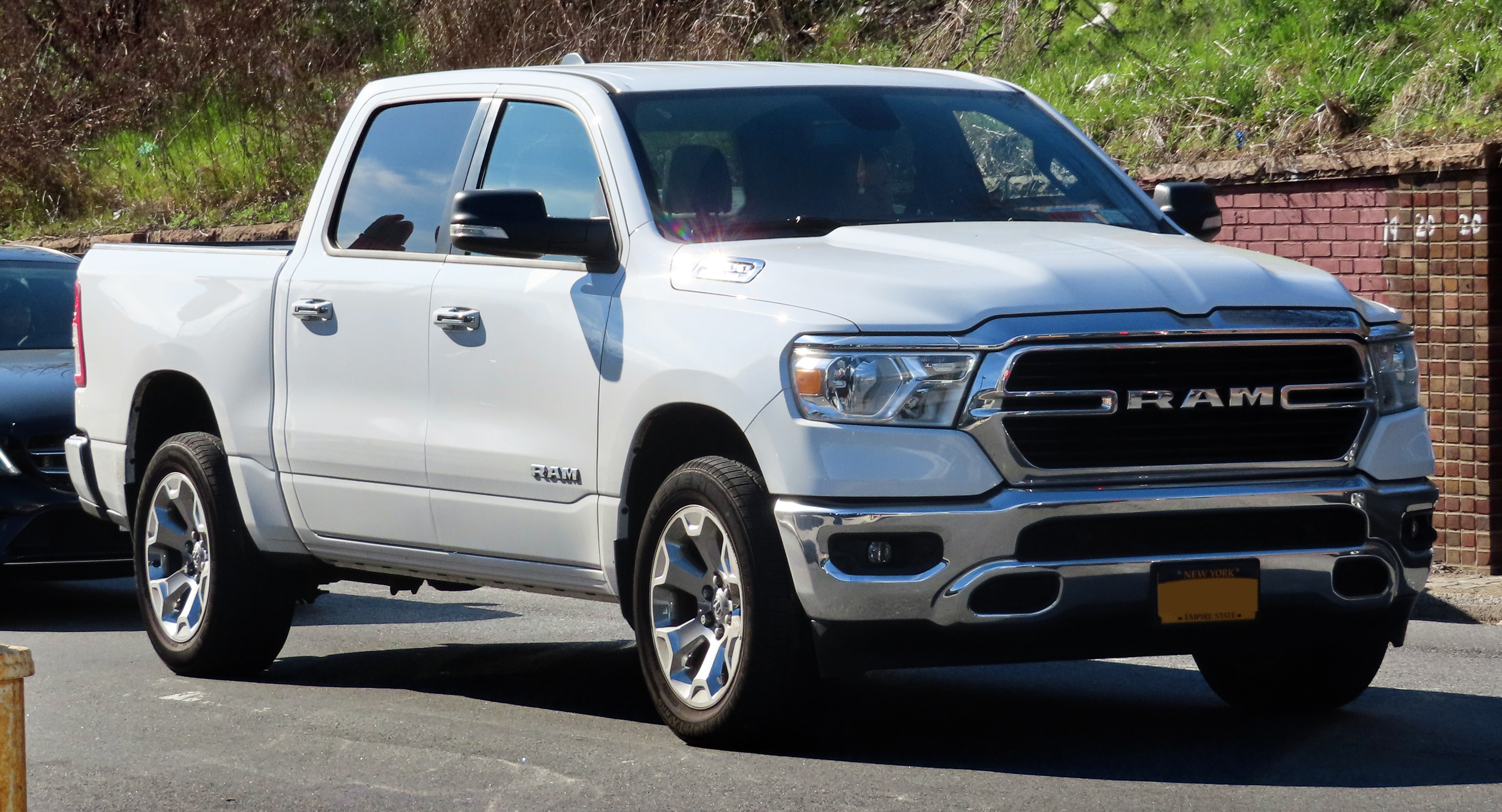
03 Ram 1500
"And then the next year I bought a, I bought a 03 Ram 1500 from my brother-in-law. He was the original owner and I had got that one all outfitted and geared up for it. And the dealership actually paid to wrap the whole back of it."
The Ram 1500 is a full-size pickup truck. The speaker says they had a 2003 Ram 1500 set up for the rally—so it could handle the trip and the work they needed to do.
The Ram 1500 is a full-size pickup known for being a more everyday-friendly alternative to the heavier 2500/3500 models. Here, the speaker says they bought a 2003 Ram 1500 and had it outfitted and “geared up” for rally-course use, including dealership support for wrapping the rear.
Trinity Road Race
"Really? That's, that's really cool. Yeah. It's called the Trinity Road Rally. It's a little bit shorter of an event, but yeah, it's all on the roads, on the paved roads."
This is a driving event called the Trinity Road Rally. It’s mainly on paved roads, and then it wraps up with a track-day session at a race track.
The Trinity Road Rally is an organized driving event that takes place on paved public roads. In this segment, it’s described as ending with a track-day-style session at a raceway, blending road rallying with circuit driving.
track day
"And then it's, it ends as a track day out at like a, like a raceway. Very nice. How long has she been doing that?"
A track day is when people drive on a race track for fun and practice. It’s usually more about getting laps in than competing in a formal race.
A track day is an event where drivers use a race circuit for practice and timed runs (often without the full structure of a race). In this segment, the rally is said to end with a track-day experience at a raceway.
Rebell rally
"I know now she's, she's running trails for this next upcoming year's Rebell rally. So very nice. She's always running around."
They mention the Rebell rally as an event coming up next year. It sounds like a rally with a planned route and organized stops/checkpoints along the way.
The Rebell rally is referenced as an upcoming rally that the course official will be supporting. The segment also frames it as having multiple checkpoints and a structured schedule, typical of timed or route-based rally events.
course official
"So what it, like as a course official, like what does that entail? Like what are, what is it that you're doing as a course official?"
A course official is the person running parts of the rally route. They set up the checkpoints and help make sure everything is organized and works smoothly.
A course official is an event staff member responsible for managing and verifying parts of a rally route. Here, the official describes setting up checkpoints early in the morning and being available for issues as competitors pass through.
checkpoint
"And then we will set checkpoints along the way. There's three different checkpoints in the Rebell rally."
In rally events, checkpoints are specific spots on the route. Officials use them to confirm that drivers are where they should be and that the event is running on schedule.
Checkpoints are designated locations on a rally route where officials verify that competitors pass through at the correct time and/or follow the route. This segment explains that the rally uses multiple checkpoint types, each with different staffing and signaling.
running sweep
"and then we'll just kind of what's called running sweep and follow them kind of the rest of the way, you know, far behind."
A “sweep” is the support crew that comes after the race cars. “Running sweep” means they’re driving the course to find cars that need help and get them back on track.
In rally support, a “sweep” is the vehicle/team that follows the competition to catch anything that went wrong. “Running sweep” implies they’re actively moving through the route to locate and help cars that are off-course or disabled.
full tracking
"have a full, full tracking. That's another kind of thing that's evolved with the rally. Now we all have star links and full tracking capabilities of all the competitors."
“Full tracking” means the rally team can see where each car is in real time. That helps them spot problems early and send help faster.
“Full tracking” refers to continuously monitoring each competitor’s position during the event. In modern rallies, this is typically done via GPS-linked systems so organizers and support can respond quickly if a car goes off course or stops.
GPS
"it's, it's tough, you know, they don't have any GPS. They don't have anything. They're just map and compass and it's not too hard to get turned around."
GPS is a satellite system that tells you where you are. Without it, navigation is harder and it’s easier to end up lost.
GPS (Global Positioning System) uses satellites to determine a vehicle’s exact location. The host contrasts GPS-based tracking with older setups where teams relied on map-and-compass navigation, which makes it easier to get turned around.
map and compass
"they don't have any GPS. They don't have anything. They're just map and compass and it's not too hard to get turned around."
That’s old-school navigation—using a map and compass instead of GPS. It’s easier to get lost when you’re driving fast and conditions are chaotic.
“Map and compass” describes traditional navigation using paper maps and a compass instead of satellite positioning. In rallying, this increases the chance of getting off-route, especially under stress or in unfamiliar terrain.
engine swap
"So we've, we've repaired, you know, broken solid axles. We've, I think we've welded back together two of those two axles back together. Um, we've done an engine swap."
An “engine swap” means putting a different engine into the car. Rally teams do it when the original engine is too broken to fix quickly.
An “engine swap” is replacing a car’s original engine with a different one, often to get a rally car running again after a major failure. It’s a major job because it involves matching mechanical fitment and integrating key systems like wiring and driveline connections.
solid axle
"So we've, we've repaired, you know, broken solid axles. We've, I think we've welded back together two of those two axles back together."
A “solid axle” is a strong, rigid axle that connects wheels. In rough rally driving, it can get bent or broken, and then the team may have to repair or replace it.
“Solid axles” are axle assemblies that transmit drive and wheel motion through a rigid shaft rather than an independent suspension setup. In off-road/rally contexts, they can be stressed heavily by impacts, so damage can require serious repairs like axle welding or replacement.
22 RE
"Two years ago, we did a, we did a 22 RE in a Toyota"
“22 RE” is the name of a particular Toyota engine. In this story, they swapped that engine into a Toyota to make the project work.
“22 RE” refers to a specific Toyota engine family/variant (a 2.2-liter, typically carbureted or early fuel-injected inline-four used in older Toyota trucks/SUVs). Mentioning it in the context of an engine swap signals they’re using that engine as a known swap candidate for reliability and parts availability.

Toyota Land Cruiser
"This last year, this last year we did a transmission, uh, in an FJ80 Land Cruiser. Um,"
The Land Cruiser FJ80 is a classic Toyota SUV that’s famous for being tough off-road. They’re talking about replacing or repairing the transmission, which is one of the biggest repairs you can do on a vehicle.
The Toyota Land Cruiser FJ80 is an 80-series Land Cruiser known for its strong off-road reputation and long service life. The episode specifically mentions doing a transmission job on an FJ80, which is a major drivetrain repair that enthusiasts often tackle to keep these trucks reliable.
clutch
"We'll put a clutch in a, in a Cross Trek. I, yeah, I need a new clutch soon. I'm at 147,000"
A clutch is what lets you smoothly connect the engine to the gearbox in a manual car. If it’s wearing out, you can feel weird behavior like chattering, and it may need replacement sooner depending on how you drive.
A clutch is the friction device that connects and disconnects the engine from the transmission in a manual gearbox. The episode discusses clutch wear symptoms—like chattering when starting—and how driving style affects lifespan, especially with off-road or rally-style use.
chattering
"Yeah. You just gotta go, you'll, you'll start, it'll, it'll start kind of chattering a little bit if it's starting to go."
In this context, “chattering” describes a rough, vibrating engagement—often associated with a clutch that’s starting to wear or not fully engaging smoothly. It’s a practical symptom listeners can recognize as a sign the clutch may be near the end of its service life.
06 Dodge Cummins
"Um, so I had an 06 Dodge Cummins, uh, you know, big, big diesel truck. It was, [1412.2s] I had it all set up for the rally."
The 2006 Dodge Ram Cummins is a diesel truck known for having lots of pulling power. They’re talking about using it for rally events, and how it lost second gear, which is a serious drivetrain problem during a competition.
The 2006 Dodge Ram Cummins is a diesel pickup famous for the Cummins inline-six engine, which is known for strong torque and durability. The host describes rally setup and a transmission/gear failure (losing second gear), showing how these trucks are used for motorsport-style events and how drivetrain issues can quickly limit performance.
lost second gear
"I only got to do one rally in it because I lost second gear, [1418.1s] like on day two. So I had to do the rest of the rally, uh, with no second gear in my truck."
“Lost second gear” means the car can’t use the second gear anymore. In a rally, that’s a big deal because gear choice helps the truck accelerate and stay controllable on different parts of the course.
“Lost second gear” means the transmission can no longer select or hold second gear, forcing the driver to use other gears instead. In a rally context, that’s a major limitation because gear selection strongly affects acceleration, traction, and how the vehicle responds on different surfaces.
automatic transmissions
"just a gorgeous truck. And, um, the weak link of those is the automatic transmissions. Um,"
An automatic transmission is the part of the car that changes gears for you. Instead of you shifting manually, it uses internal mechanisms to do it automatically.
An automatic transmission is the gearbox that shifts gears without a manual clutch pedal. It uses hydraulic control and internal components to change ratios, which can be a weak point on high-stress builds or towing/rally use.
torque converter
"but the torque converter I got had an issue with it. And so it, [1475.2s] I went and we went and took the camper, went up to Payson."
A torque converter is a fluid-based part in an automatic transmission that helps transfer power from the engine to the gearbox. If it’s not working right, the transmission can overheat and fail.
A torque converter is the fluid coupling inside many automatic transmissions that transfers engine power to the transmission. If it has a fault, it can cause overheating, slipping, and eventual transmission failure—especially under load.

Tesla Model X
"... work. Yeah. Um, and this little 03 Forester base model X, uh, I came across my, my Facebook, um, and I kin..."
The Tesla Model X is an electric SUV. It’s designed to carry people and uses an electric powertrain instead of gasoline. The podcast mentions it because someone found it through social media and was discussing it.
The Tesla Model X is an electric SUV known for its performance and distinctive design features. In the podcast, it’s mentioned alongside an “03 Forester base model X,” which suggests the speaker is talking about their personal experience finding or comparing vehicles online. It comes up as part of a discussion about what someone came across and considered.
direct injected
"Like there's a little bit different, [1600.3s] especially now with being, you know, the direct injected and everything. But I mean, for the most"
Direct injection means the fuel is sprayed directly into the engine’s cylinders. It can make the engine a little different to service than older fuel systems.
Direct injection is a fuel system where injectors spray gasoline directly into the combustion chamber instead of into the intake port. It can change engine maintenance and service procedures compared with older port-injected setups.
spacers
"build a lift kit for this thing. It's just spacers. I was, you know, kind of looked around and saw what was available."
Spacers are basically add-on pieces that make the suspension sit higher. They’re a cheaper way to lift a car, but you still want everything aligned and installed properly.
Lift spacers are simple components placed between suspension parts to increase ride height without changing the whole suspension geometry. They’re often used for budget builds, but they can affect ride quality and alignment if not set up correctly.
Perkinsville road
"I took that on my hunts. I, you know, I blasted it down Perkinsville road, um, which is a nice little, you know, dirt trail"
Perkinsville Road is a dirt trail the speaker drove to see how the car handled. It’s the kind of rough road where a lift and better tires help.
Perkinsville Road is a dirt trail route the speaker used to test the lifted Forester. In overlanding terms, it’s the kind of local back-road environment where ground clearance, tire choice, and suspension setup matter.
five speed manual
"Was it an automatic? No, it was, it was also a five speed manual."
A five-speed manual means you shift gears yourself with a clutch. The speaker likes manuals because they can feel more controllable, especially when driving uphill.
A five-speed manual is a gearbox with five selectable gears operated by a clutch pedal. Manual transmissions are often favored by enthusiasts for direct control, and in this episode the speaker contrasts manual gearing with automatic gearing when climbing hills.
444s
"Sometimes I, I wait like when I'm climbing hills, um, cause back in my years, the automatics actually were geared lower. Uh, so they came with like 444s and my, my car being a manual only is at a 410."
“444s” is shorthand for the rear gear ratio. It changes how the car pulls at low speeds—gears like this help you climb hills more easily.
“444s” refers to a rear differential gear ratio (commonly written as 4.44:1). Lower (numerically higher) gear ratios help an automatic feel stronger at low speeds and during hill climbs by multiplying torque more.
410s
"cause back in my years, the automatics actually were geared lower. Uh, so they came with like 444s and my, my car being a manual only is at a 410."
“410” is shorthand for the rear gear ratio. It affects how strongly the car pulls at low speeds versus how it feels on faster roads.
“410” is shorthand for a rear differential gear ratio around 4.10:1. Compared with a higher-numerical ratio like 4.44, a 4.10 typically gives less low-speed multiplication (less crawl torque) but can help with highway cruising.

Subaru Outback
"ranging from, I think he has [1849.2s] five Bratz. He has, I think he's up to four Baja's. Um, and then mostly he has outbacks. [1857.9s] Okay. That kind of that first generation outback, first and second generation outback."
The Subaru Outback is a Subaru wagon/SUV that’s built around all-wheel drive. In the story, it’s one of the models this “Subaru guy” collects and often fixes with engine swaps.
The Subaru Outback is a wagon-based SUV that shares much of its underpinnings with the Forester, including Subaru’s all-wheel-drive focus. The host mentions multiple Outback generations as part of a collection, and notes that many are not running until an engine swap is done.
front timing cover
"well took the engine out and then I pulled the front timing cover. Um, and I've seen this before at the dealership, uh, one of the lower idler pulleys on the timing belt."
This is a cover on the front of the engine that protects the timing belt area. You take it off so you can reach the belt and pulleys to check or replace them.
The front timing cover is the protective housing at the front of the engine that covers the timing belt and related components. Removing it lets you access the timing belt system to inspect or service parts like pulleys and the belt itself.
timing belt
"one of the lower idler pulleys on the timing belt. Sometimes it'll kick the bearings out of it and it makes this crazy racket... I threw a timing belt on it and that engine is in his sister's car."
The timing belt is what keeps the engine’s timing lined up—so the valves open at the right moments. If it slips or jumps, the engine can run wrong or make noise, and you may need to replace it.
A timing belt synchronizes the crankshaft and camshaft so the engine’s valves open at the correct times. If the belt jumps teeth, the engine timing can be off even if the engine itself isn’t immediately damaged.
lower idler pulleys
"at the dealership, uh, one of the lower idler pulleys on the timing belt. Sometimes it'll kick the bearings out of it and it makes this crazy racket"
These are pulleys that help guide the timing belt. If the pulley bearings wear out, the belt system can start making a really loud noise and the timing can get off.
Lower idler pulleys are the belt-guiding pulleys in the timing belt system. If an idler pulley’s bearings fail, it can create loud, metallic noises and can also contribute to timing belt misalignment.
jumped a couple teeth
"Um, and it, it jumped a couple teeth, but the engine was perfectly fine. I threw a timing belt on it and that engine is in his sister's car."
If the timing belt “jumps teeth,” it means the belt moved one or more notches out of position. That changes when the valves open, and the engine may run badly—though sometimes it’s not immediately ruined.
When a timing belt “jumps teeth,” the belt shifts relative to the sprockets, changing valve timing. Even a small shift can cause rough running or noise, but the engine may still survive depending on how far timing was off.
STI block
"But y'all kind of needed my engine anyways, because it's a, it's an STI block, which is more of a closed deck cylinder or more of a closed deck block."
An STI block is the engine block from Subaru’s performance STI cars. The key point here is that it’s built to handle more stress, and the speaker thinks it’s tougher than the alternative.
An STI block refers to the engine block used in Subaru’s performance STI models, which is known for being built for higher stress. In this story, the speaker highlights it as a “closed deck” design, implying it’s stronger than some other block configurations.
closed deck block
"because it's a, it's an STI block, which is more of a closed deck cylinder or more of a closed deck block. Uh, so it's stronger."
A closed deck block is an engine design where the cylinder area is more strongly supported. That helps the engine stay stable when it’s under higher load or pressure.
A closed deck block is an engine block design where the cylinder walls are supported by material around the top area, improving rigidity. That extra support can help the engine better resist deformation under higher cylinder pressures.
naturally aspirated
"Uh, so it's stronger. Yeah. Um, it's, it's naturally aspirated, of course, and it has pistons in it, you know, that give it the right compression ratio"
Naturally aspirated engines don’t use a turbo or supercharger. They breathe in air just by suction from the engine, which usually makes power delivery feel smoother.
Naturally aspirated means the engine makes airflow without a turbocharger or supercharger, relying on atmospheric pressure and engine design. This often changes how power is delivered—typically more linear response compared with forced-induction setups.
compression ratio
"and it has pistons in it, you know, that give it the right compression ratio uh, to be naturally aspirated."
Compression ratio is how much the engine squeezes the air-fuel mixture before it ignites. The “right” ratio helps the engine make power efficiently without knocking.
Compression ratio is the ratio between the volume in the cylinder when the piston is at bottom vs. top dead center. Higher compression generally improves efficiency and power potential, but it must match the engine’s fuel and induction method to avoid knock.
B 25 heads
"Um, it has the better, uh, the, the B, uh, their B 25 heads on it. Um, so it has the"
Cylinder heads are the top part of the engine where the valves and combustion happen. “B25 heads” is a specific type of Subaru head, and it can change how well the engine breathes and runs.
“B25 heads” refers to a specific cylinder head casting used on certain Subaru engines, identified by the B25 designation. Cylinder heads strongly influence airflow and combustion, so head choice affects how the engine breathes and makes power.
Rebel rallies
"I've taken it on, uh, five Rebel rallies. Oh, nice. So yeah. So it's, it's seen a lot of, a lot of ground."
A “Rebel rally” is an off-road event where people drive through rough terrain and hit checkpoints. It’s a good test of whether a vehicle can handle real trail conditions.
“Rebel rallies” refers to an off-road rally event series where vehicles navigate trails and checkpoints over multiple days. It’s the kind of event that stresses cooling, tires, suspension, and overall durability rather than just straight-line speed.
Super Raptor
"Oh, I'm like, when I bought the, the first 03. No, no, the, the, the Super Raptor. Like I said, I pretty much bought it specifically, like I'm going to take it on the, on the Rebel rally."
“Super Raptor” is the name for a specific off-road Raptor setup the speaker bought. It implies the truck is modified for tougher trail driving.
“Super Raptor” is the name used here for the specific Ford Raptor-based build the speaker bought. The key idea is that it’s not stock—it's a modified version intended for off-road use and events like the Rebel rally.
Jimmy Lewis
"his name is Jimmy Lewis. Um, he's a very famous, uh, like Enduro, a motorcycle rider. Uh, he's podiumed the Dakar rally. Um, I believe he's the first American ever to podium the Dakar rally."
Jimmy Lewis is a famous off-road motorcycle racer. The host says he’s done extremely well at the Dakar Rally, including a podium finish as an American.
Jimmy Lewis is a well-known enduro (motorcycle off-road) rider. The speaker credits him with podium finishes at the Dakar Rally and highlights him as the first American to podium there.
enduro
"Um, he's a very famous, uh, like Enduro, a motorcycle rider. Uh, he's podiumed the Dakar rally."
Enduro is off-road motorcycle racing that’s more about riding endurance and handling rough trails than just going fast in a straight line.
Enduro is a form of off-road motorcycle racing focused on long-distance riding over trails and varied terrain. It emphasizes endurance, navigation, and traction over pure speed.
Dakar Rally
"Uh, he's podiumed the Dakar rally. Um, I believe he's the first American ever to podium the Dakar rally."
The Dakar Rally is a very tough off-road race over long distances. Getting a podium there is a huge achievement.
The Dakar Rally is a famous long-distance off-road race known for extreme navigation and harsh terrain. Podium finishes there are a major credibility marker for riders and teams.
three quarter inch exhaust
"I've always had loud exhaust on it. It's, um, right now I'm running like a full STI, uh, and Prezza 22 and three quarter inch exhaust on it."
That phrase is about how big the exhaust tubing is. Bigger tubing can let exhaust gases move more easily and usually makes the car sound louder.
“Three quarter inch exhaust” refers to exhaust pipe diameter (or a component size) around 3/4-inch. Exhaust diameter affects flow and sound; larger diameters typically reduce restriction and can make the exhaust louder.
unequal length header
"Um, so it's got an unequal length header. So it's definitely got the subi rumble. Um, everyone hears it."
A header is the part that collects exhaust from the engine. “Unequal length” means the pipes are different lengths, which can help the engine breathe better and often changes the exhaust note.
An unequal length header uses exhaust pipes of different lengths before the exhaust merges. That design can improve exhaust scavenging and change the engine’s sound and power delivery compared with equal-length headers.
subi rumble
"So it's definitely got the subi rumble. Um, everyone hears it. It comes in the camp and leaves camp. You woke us up."
“Subi rumble” is a fan way of describing the recognizable Subaru exhaust sound. Here they’re saying their setup makes that signature rumble everyone can hear.
“Subi rumble” is an enthusiast nickname for the distinctive Subaru exhaust sound, often associated with Subaru’s boxer engine and aftermarket exhaust setups. In this segment, it’s specifically tied to the speaker’s unequal-length header and loud exhaust.

Ford Ranger
"...running, uh, you know, Ford Raptors. There's some Ranger Raptors and everything out there. And so he just ..."
The Ford Ranger is a pickup truck. It’s generally smaller and easier to drive than the biggest trucks. The podcast mentions it while talking about different kinds of Ford performance trucks.
The Ford Ranger is a pickup truck that’s often discussed as a smaller, more maneuverable alternative to larger trucks. In the podcast context, it’s mentioned alongside “Raptors,” which points to performance-oriented versions and the broader Ranger lineup. It’s brought up as part of a conversation about what kinds of trucks people are running or talking about.
hand plasma cut
"I don't have a, uh, plasma cam and like a CNC or laser jet or anything like that. So everything's usually like hand plasma cut and ground down."
Plasma cutting is a way to cut metal using a super-hot electrical arc. If it’s done by hand, the cuts may not be as perfectly precise as machine-cut parts, but it can still work well.
Plasma cutting uses an electrically heated plasma arc to slice metal quickly and precisely. Doing it by hand (instead of CNC/laser) usually means more manual fitting and finishing, which can be less perfect but still functional for a budget build.
Ironman four by four overload coils
"I had some Ironman four by four, overload coils in the back, which I still have on it today."
Overload coils are extra springs that help the rear of the vehicle handle heavy loads. They’re meant to keep the car from sagging when you’re carrying gear or towing.
Overload coils are auxiliary spring coils (often used on the rear) that help support extra weight. Brands like Ironman Four by Four are known for off-road suspension components, and these coils help the vehicle stay stable when loaded for trails or gear-heavy trips.
rock sliders
"and then I took some rock sliders off of a JK Jeep Rubicon, and I cut those down, modified them, and those are mounted."
Rock sliders are metal bars under the sides of the car. They’re there to protect the body when you’re driving over rocks and the car gets scraped or hits uneven ground.
Rock sliders are side underbody protection bars designed to take impacts when tires drop into ruts or the vehicle scrapes over rocks. They help prevent damage to the rocker panels and floor while keeping the suspension and body safer during off-road driving.

Wrangler Rubicon
"and then I took some rock sliders off of a JK Jeep Rubicon, and I cut those down, modified them, and those are mounted."
The Jeep Wrangler Rubicon is a rugged off-road Jeep. In this build, the host uses its rock sliders as a starting point for his own protection parts.
The Jeep Wrangler Rubicon (JK generation) is an off-road-focused version known for strong factory hardware and trail capability. Here, the host is repurposing Rubicon rock sliders from a JK Rubicon to protect the underside and rocker panels on his Subaru.
Jeep JK Wrangler
"I took Runt lower control arms off of a Jeep JK Wrangler, and those are my, I cut those down and fabricated those."
The Jeep Wrangler JK is an off-road Jeep generation. The host is using parts from its suspension—specifically control arms—to build stronger rear suspension links for his Subaru.
The Jeep Wrangler JK is a generation of Wrangler built for off-road use, including robust suspension components. In this segment, the host removes lower control arms from a JK Wrangler and repurposes them as rear trailing arms on his Subaru build.
rear trailing arm
"and those are my, I cut those down and fabricated those. So they're my rear control arm or my rear trailing arms on the car."
Trailing arms are parts of the suspension that connect the wheel to the car. They help control how the wheel moves over bumps, and in this case they’re being upgraded for tougher off-road use.
Trailing arms are suspension links that locate the wheel and control how it moves as the suspension cycles. Using rear trailing arms (fabricated from Jeep JK parts) suggests the host is targeting stronger geometry and durability for off-road impacts and articulation.
skid plates
"My skid plates are all just, you know, flat, uh, kind of heavier duty like sheet metal that I,"
Skid plates are metal shields underneath the car. They protect important parts from getting hit by rocks or debris when you drive off-road.
Skid plates are protective panels mounted under the vehicle to shield vulnerable components like the oil pan, transmission, and fuel lines from rocks and impacts. Using heavier-duty sheet metal indicates the build is focused on durability over street comfort.
Glamis
"skip through the sand. Pretty good at Glamis. So, uh, and then yeah. So after I, that first rally,"
Glamis is a famous off-road sand area in Southern California. People go there to ride and race in dunes, so tires and protection are a big deal.
Glamis (often spelled Glamis) refers to the Glamis Dunes area in Southern California, a well-known off-road desert riding and racing destination. It’s famous for sand driving, where traction and underbody protection matter a lot.
235 70 16
"the smallest tire they had was a 29 and a half inch tire, [2618.4s] a 235 70 16, uh, same size tire because that's still the smallest that they make."
That number is the tire’s size. It tells you how wide the tire is, how tall the sidewall is, and what size wheel it fits—so it affects whether the tire rubs on the suspension or fenders.
“235 70 16” is a tire size code: 235 is the tire’s width in millimeters, 70 is the aspect ratio (sidewall height as a percentage of width), and 16 is the wheel diameter in inches. This size determines how tall the tire is and how much clearance you need for suspension and fenders.
rolled my rear fenders
"So since then I've rolled my rear fenders and I've cut my front [2638.5s] fenders. Oh yeah. Make more space for it."
Rolling the fenders means bending the metal lip outward so the tires have more space. It’s a common way to stop rubbing when you run bigger tires.
Rolling rear fenders is a body modification where the fender lip is bent outward to create extra clearance for larger tires. It’s commonly used to reduce tire rubbing without fully cutting the fender.
cut my front fenders
"I've rolled my rear fenders and I've cut my front [2638.5s] fenders. Oh yeah. Make more space for it. Yeah. And then flares on them."
Cutting the front fenders means trimming the metal to give the tires more room. It helps prevent the tire from scraping the fender when the suspension compresses.
Cutting front fenders is a more aggressive clearance modification than rolling. By trimming the fender opening, you reduce interference points so the tire can move through suspension travel without rubbing.
flares
"And then flares on them. So, so my tires don't [2644.4s] rub anymore. Um, so we actually had, had video of that first rally"
Flares are add-on pieces around the fenders that cover the extra tire width. They help keep dirt and rocks from getting kicked up by the tires.
Fender flares are extensions added to the fender edges to cover wider tires and protect against debris. Off-road builds often use flares after tire and fender clearance work to keep mud/sand from being thrown into the wheel wells and cabin.
struts
"I bent, I bent three out of the four struts. Um, so, but I mean, all [2682.7s] it out, straighten that strut out. So my tire quit rubbing on my strut."
Struts are part of the suspension that help the wheels move smoothly over bumps. If a tire rubs on a strut, it can mean you need more clearance or a stronger setup.
Struts are suspension components that combine shock absorption with structural support, typically located at the front and/or rear corners. In this context, the speaker is describing how tire clearance issues can cause the tire to rub against the strut body, requiring adjustment or reinforcement.
floor jack
"all I had to do was actually have a floor jack and one that I put behind the strut and straightened"
A floor jack is a tool that lifts the car up. In this story, it’s used to help straighten a bent suspension part so the tire can clear again.
A floor jack is a hydraulic lifting tool used to raise a vehicle safely for work underneath or near suspension components. Here, it’s used as part of a quick repair to straighten a bent strut so the tire stops rubbing.
lower control arm
"“…hit my [2808.7s] passenger front tire and it taco'd my, my lower control arm and pushed it back into my firewall,”"
The lower control arm is a metal arm that helps hold the wheel in the right position. When it gets bent or damaged, the car’s handling and alignment can be seriously affected.
A lower control arm is a suspension link that locates the wheel and controls its movement and alignment. In the crash described, the tire impact “taco’d” the lower control arm, pushing it into the firewall—so it’s a major structural suspension failure, not just cosmetic damage.
head gaskets
"“…they'll try just telling these people, oh, well, yeah, gotta do head gaskets on this. It's gonna be [2921.28s] ”"
A head gasket is the sealing layer between the engine block and cylinder head that prevents coolant and combustion gases from mixing. The host mentions shops “telling these people” they need head gaskets, which is a common Subaru repair topic and can sometimes be over-claimed depending on symptoms and diagnostics.
EJ-25
"a lot of times they'll be like, hey, it needs head gaskets and these old EJ25, uh, engines, [2936.7s] when they say head gaskets, they're just leaking some oil."
EJ25 is Subaru’s 2.5-liter engine used in many models. People talk about it a lot because some versions can develop gasket problems that may show up as oil leaks.
The EJ25 is Subaru’s 2.5-liter flat-four engine family. It’s commonly discussed in the used-car market because certain EJ25 variants are known for head-gasket-related issues, which can show up as oil leaks or coolant/oil mixing.
re-homing project
"But, uh, it's kind of, you know, I kind of call it a Subaru re-homing project that I do. Yeah, nice. Take these, take these Subarus out from, you know, which would be a scrap yard, or parted out and kind of, you know, give them, give them new life."
They’re calling it a “re-homing project” because they buy a used Subaru, fix it up, and then pass it on to someone else. The idea is to save it from being scrapped or dismantled.
A “re-homing project” is an enthusiast-style way of describing buying a used car (often one that’s been neglected or is headed for scrap) and then restoring it so it can go to a new owner. In this segment, it’s framed as rescuing Subarus from scrap yards or parted-out cars and returning them to trail-ready condition.
blacked out all the chrome
"So that one, I, you know, blacked out all the chrome on it already. Um, you know, blacked out the tail lights and everything."
“Blacked out” means making shiny chrome parts look dark instead. It’s a common style change, and they also did it to the tail lights.
“Blacked out” trim refers to covering or replacing chrome exterior pieces with a darker finish (often black or dark gray) for a stealthier look. The host specifically mentions blacking out the chrome and the tail lights on the 2019 Subaru Ascent Touring.
lift kit
"I, you know, blacked out all the chrome on it already. Um, you know, blacked out the tail lights and everything. It's a really sharp looking rig, uh, but it, I have the, the two inch lift kit sitting there waiting to go on it."
A lift kit is a set of parts that raises the car higher off the ground. That helps with rough roads and lets you run bigger tires.
A lift kit is a suspension modification that raises a vehicle’s ride height, usually to fit larger tires and improve ground clearance. Here, the host says there’s a two-inch lift kit waiting to be installed on a 2019 Subaru Ascent Touring so it can be more capable off-road.
18s from the 20s
"then I'll buy some, some tires for it. I'll go to 18s from the 20s."
“18s” and “20s” are wheel sizes. Going down to 18-inch wheels usually means the tires have more sidewall, which can make the ride a bit less harsh.
“18s” and “20s” refer to wheel sizes measured in inches (the wheel diameter). Moving from 20-inch wheels to 18-inch wheels typically allows taller sidewalls on the tires, which can improve ride comfort and help with potholes and trail impacts.
Patagonians
"I've already talked to Carrie and Milton about getting some, some Patagonians for it. Yeah. So like with your, with your wife's, uh, you know, with the Ascent and having it blacked out and, and all this kind of stuff, like, does she like that?"
“Patagonians” sounds like the name they’re using for a certain set of tires they want to put on the car. It’s likely a specific tire option, not a general tire type.
“Patagonians” here appears to be a nickname for a specific tire model or tire brand the host is planning to buy for the Ascent. Since it’s not clearly identified as a tire brand/model in the excerpt, it’s best treated as a product name they’re referencing for the wheel/tire setup.

Subaru Ascent
"We still can take everyone in the Ascent. Um, so we finally convinced it."
The Subaru Ascent is a bigger Subaru SUV with three rows of seats. Here, they’re saying it can fit everyone, so they don’t feel like they need a minivan.
The Subaru Ascent is a three-row family SUV built for carrying multiple passengers comfortably. In this segment, it’s the vehicle the speaker’s wife is using for the family, and it’s contrasted with the idea that they don’t need a big minivan anymore.
mild lift
"but she's okay with doing a mild lift and throwing some all-terrain, uh, on it."
A mild lift means raising the car a little bit. It helps the tires clear obstacles and makes it easier to drive on rough roads, especially when you add all-terrain tires.
A mild lift is a small increase in ride height, usually to fit larger tires and improve ground clearance without turning the vehicle into a full-on off-road build. It’s often paired with all-terrain tires for better traction on rough surfaces.
all-terrain
"but she's okay with doing a mild lift and throwing some all-terrain, uh, on it."
All-terrain tires are meant to handle both regular roads and rougher surfaces. They’re a common upgrade for people who want more traction when they leave the pavement.
All-terrain tires are designed to work on both pavement and unpaved surfaces, balancing everyday comfort with improved grip in dirt, gravel, and light mud. In this segment, they’re mentioned as the tire choice to go along with a mild lift.
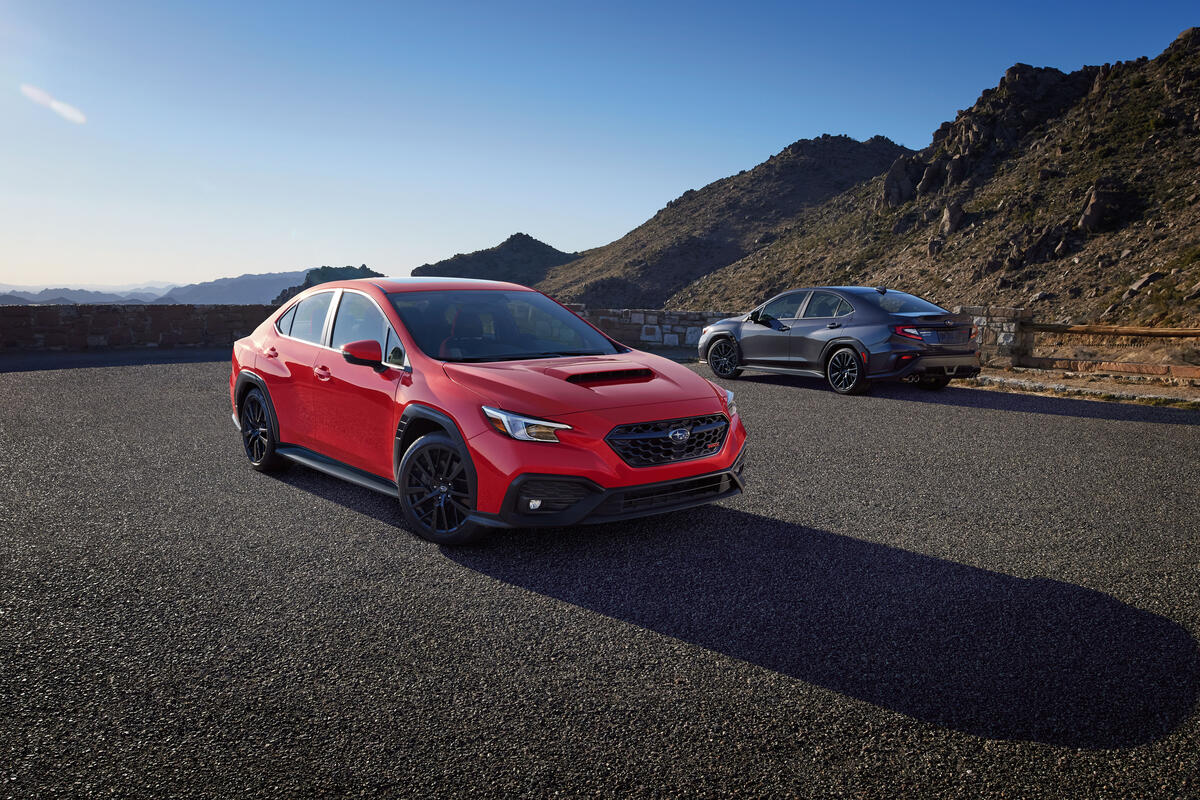
Subaru WRX
"And there might be some future, uh, engine mods since it does have a WRX engine in it that all the WRX performance parts actually bolt right up to it."
The Subaru WRX is a performance Subaru that’s built to be quick and mod-friendly. In this story, they’re using a WRX engine, so parts made for the WRX should fit and could help add more horsepower later.
The Subaru WRX is known for its turbocharged performance and rally-inspired tuning. Here, the speaker says the build they’re doing uses a WRX engine, and that WRX performance parts bolt right up—meaning future upgrades could increase power.
rally cross
"they do some rally cross over there. So I'd really like to go and, and get her out and do some rally cross."
Rallycross is racing on a short course that mixes surfaces like dirt/gravel and pavement. The idea here is to take the car to an event and drive it hard in that style.
Rallycross is a motorsport format where cars race on short, mixed-surface tracks (often gravel and tarmac) with frequent turns and close competition. The speaker wants to take the car to a local rallycross event and do it for fun.
rebel rally
"Unless it's for that specific reason to show somebody [3424.4s] what it can do or what its capabilities are and the rebel rally? I mean, I definitely want to,"
The Rebel Rally is an event they’re talking about—basically a rally/trail day—where they might bring the Subaru to show what it can do.
The Rebel Rally is the specific off-road/rally event the host mentions as a reason to take the Subi Raptor out. It’s used as a reference point for how they decide when the Subaru gets used for event driving versus everyday off-roading.
stage rally
"And I was planning, there's a, there's an actual like stage rally [3466.4s] that's, I mean, right up on the hill from me in that previously mentioned Perkinsville road [3473.2s] off of Jerome there."
A stage rally is a type of rally race where the course is broken into timed sections. The goal is to be fastest on each section, usually on rough or changing terrain.
A stage rally is a rally format where the route is split into timed “stages,” and drivers race against the clock on closed or controlled sections. It emphasizes traction, suspension setup, and driver skill over varying surfaces rather than just average speed on open roads.
heavy recovery
"I wanted to take my car out, but they're like, well, we'd like you to run heavy sweep [3494.3s] and recovery if you need it. So we'd like you to take the ram just because they, you know, [3501.1s] wanted something that if I had to, to tug something out from the side of a cliff,"
Heavy recovery means the more serious kind of help when a car is really stuck. It usually involves stronger towing or pulling gear to get the vehicle out safely.
Heavy recovery refers to using more serious off-road recovery equipment and procedures to extract a vehicle that’s stuck or damaged—often from deep ruts, mud, or steep/awkward positions. It typically requires stronger towing/rigging than light “get-you-out” methods.
heavy sweep
"I wanted to take my car out, but they're like, well, we'd like you to run heavy sweep [3494.3s] and recovery if you need it. So we'd like you to take the ram just because they, you know,"
A sweep vehicle is like the backup car that comes after the main group. “Heavy sweep” means it’s the more capable backup, ready to help with bigger problems.
In rally/off-road event support, a “sweep” vehicle is tasked with following behind the main group to assist with breakdowns, stuck cars, or safety issues. “Heavy sweep” implies the sweep vehicle is equipped and capable enough to handle tougher recoveries, not just minor issues.
total chaos, control arms
"my truck, my marriage truck is good off-road. [3536.1s] It's got some suspension and stuff on it to do some total chaos, control arms and stuff."
Control arms are parts of the suspension that help hold the wheels in the right position. Upgrading them can make the truck handle better on bumpy off-road trails.
Control arms are suspension components that connect the chassis to the wheel and help control wheel movement and alignment. In off-road builds, upgraded control arms can improve articulation and stability over rough terrain.
winch
"I've always had to break the max tracks out and even sometimes the winch and get myself out."
A winch is like a heavy-duty pulling tool with a cable. If you get stuck in sand, you can use it to pull the vehicle back out.
A winch is a powered cable-retrieval device used to pull a vehicle out when it’s stuck. In off-road sand, it’s often used when traction is lost and you can’t self-recover.
RPMs
"The only issue I've really had in the Subaru is just, it starts getting, it starts getting hot because you have to keep your RPMs up high so you can stay on top of the sand."
RPMs are how fast the engine is spinning. Higher RPMs can help the car keep moving in sand, but it can also make the engine run hotter.
RPMs (revolutions per minute) are how fast the engine crankshaft is spinning. In sand driving, keeping RPMs up helps maintain momentum and traction, but it can also increase heat buildup.
radiator
"And so that, you know, kind of decreased my airflow a little bit on my radiator. So I did kind of notice, you know, pulling big hills and stuff. My temperature is going up a little bit."
The radiator helps cool the engine by moving heat out of the coolant. If something blocks airflow to it, the engine can start running hotter.
The radiator is the heat-exchanger that removes heat from engine coolant before it circulates back through the engine. If airflow is reduced (like with a front bumper), the radiator can struggle, raising engine temperature.
Torque Lockers
"I have all this stuff I need to do before this rally. I have a torque locker. I need to put that in."
A torque locker helps the car put power to the wheels that have traction. That can make a big difference in sand, where one wheel can spin while the other has grip.
A torque locker is a type of limited-slip or locking differential setup (often a mechanical locker) that helps transfer power to the wheel(s) with traction. In sand, it can reduce wheelspin and improve forward progress when one side loses grip.
front sway bar
"[3736.4s] Yeah. And then I got full, because I still run, I don't run a front sway bar in my car, [3746.6s] but I do run the rear sway bar and Kerry's like, why do you still have a rear sway bar on there?"
A front sway bar is a bar that helps keep the car from leaning too much when you turn. If you remove it, the handling can feel different—sometimes less stable.
A front sway bar (anti-roll bar) connects the left and right suspension up front to resist body roll during cornering. Removing it can change balance and handling, often making the car feel more “loose” or unpredictable.
rear sway bar
"[3746.6s] but I do run the rear sway bar and Kerry's like, why do you still have a rear sway bar on there? [3751.2s] I say, because it gets really squirrely if I don't."
A rear sway bar helps control how much the back of the car leans in turns. Changing it can noticeably change how the car feels and how stable it is.
A rear sway bar (anti-roll bar) performs the same anti-roll function at the back of the car. Keeping the rear sway bar while removing the front can shift handling balance and affect how the car behaves when pushed hard.
rally tech overload springs
"[3751.2s] I say, because it gets really squirrely if I don't. And she's all, well, just, just get some rally, [3756.4s] some rally tech overload springs and you'll be fine. You can take that off. I'm like, okay,"
“Overload springs” are helper springs used to add extra support under heavy compression, often to protect suspension components on rough roads. In a rally setup, they’re commonly used to manage bottoming-out and keep ride control when the suspension is working hard.
rally tech overload coils
"[3762.0s] I'll give it a shot. So I bought, it might have been a Black Friday sale. I got, I got a full [3768.1s] set of rally tech overload coils and I haven't put those on yet because I've been debating"
These are extra coil springs meant to help when the suspension gets compressed hard. They can make the car handle rough hits better and reduce harsh bottoming-out.
“Overload coils” refers to coil-spring overload helpers from Rally Tech, designed to supplement the main springs. The idea is to improve how the suspension behaves when it compresses a lot, such as during rally-style impacts.
bump stops
"[3786.9s] Kerry told me about using Kong dog toys for bump stops. Oh, interesting. So they're actually like, [3795.5s] and I told them, I'm looking for Kong bump stops everywhere, Kerry, like where, where do you find"
Bump stops are like safety cushions for the suspension. When the car hits a big bump and the suspension compresses too far, bump stops help prevent damage and keep things from getting out of control.
Bump stops are suspension components that limit how far the suspension can compress. They protect the struts and other parts from metal-to-metal contact and help control the car’s behavior during big hits.

Subaru Crosstrek
"[3854.4s] you know, they'll tell me, oh, the shop's trying to charge me. You know, that's why I did that [3859.6s] Subaru Crosstrek, that 2018 Crosstrek engine, because a shop in Phoenix was trying to charge"
The Subaru Crosstrek is a small Subaru crossover that’s popular for people who want extra traction. Here it’s mentioned because the owner chose a cheaper engine replacement instead of paying for expensive head work.
The Subaru Crosstrek (2018) is a compact crossover built around Subaru’s all-wheel-drive focus, which makes it a common platform for off-road and rally-style prep. In this segment, it’s used as an example of a real-world engine repair decision.
Request an Explanation
Heard something you'd like explained? We'll add it to this episode.
Sign in to request explanations for terms you heard.
Want to learn more?
Browse our glossary for plain-English explanations of automotive terms, jargon, and concepts.
Help improve this episode
See something that's not quite right? Our annotations are AI-generated and can sometimes miss the mark. Click the flag icon on any annotation to suggest a correction.