
About this episode
Shana “Melissa” Felch shares her Subaru journey, starting with her husband’s 2005 Forester XT and how commuting needs and life changes pushed the family deeper into Subarus. After she falls for the 2019 Ascent, the conversation expands into the cars she’s owned, what she’s running now, and how her Subaru Adventure Club connects people through events like Overland Expo. The episode also includes plenty of Overland Expo stories—especially the food with Chef Chad—and a few fun debates (waffles vs. pancakes, crispy vs. soggy).
Melissa joins us today to talk about her Subaru Outback, and also the many other Subarus she has owned and currently owns. She also talks about rallycross and other Subie adventures!
Links from the show, links to sponsors and discount partners, and ways to support the podcast:
Melissa: Shenefelt Journey
https://www.instagram.com/shenefeltjourney/
- - - - - - - - - - - - - - - - - - - - - - - - - - -
Subie & YOU! Podcast Website!!
https://subieandyoupodcast.com/
Go check out the Subie & YOU! Podcast website!!
Subie & YOU! YouTube Channel
https://www.youtube.com/@subieyou
Please visit the channel and subscribe.
- - - - - - - - - - - - - - - - - - - - - - - - - - -
Sponsors of the Podcast:
Subaru Gear
Use code subieandyou2026 to get 20% off your purchase!
Get FREE shipping for orders over $50 after 20% discount!
Website:
Accentrek Designs
Instagram:
https://www.instagram.com/accentrek.designs/
Website:
https://www.accentrekdesigns.com/
Mele Design Firm
Use code subieandyou on most products store wide to get 10% off your purchase!
Website:
- - - - - - - - - - - - - - - - - - - - - - - - - - -
Other Brands Offering Discounts
Orbis Overlanding
10% discount off Orbis Overlanding and partnering car products
(excludes apparel)
Discount code: subieandyou
Website:
Subarugear.com
"your wardrobe from Subarugear.com. They have a lot of really great merchandise."
Subarugear.com is a website that sells Subaru-themed clothing and accessories. They’re sponsoring the podcast and offering a discount code.
Subarugear.com is a consumer merchandise site focused on Subaru-themed apparel and accessories. The hosts mention it as a sponsor and provide a discount code for listeners.
SUBI and you
"Fill up your cart, use the code SUBI and you 2026 at checkout to get 20% off either one item or your entire purchase."
“SUBI and you” is the name/branding used for the podcast and the sponsor deal. It’s how they identify the promotion for listeners.
“SUBI and you” appears as the podcast/sponsor branding used for the discount code and promotional shout-out. It’s not a car model—it's the show’s branded identity tied to the sponsorship offer.
Melee Design Firm
"One last shout out and sponsor that I'm going to mention before we get into this conversation with Melissa is Melee Design Firm."
Melee Design Firm is a company that makes Subaru accessories. They mention it because it offers parts you can add to your Subaru’s engine bay.
Melee Design Firm is presented as a company that offers Subaru-specific customization options. In this segment, they’re highlighted for “engine bay caps,” implying a fitment-focused accessory for Subaru owners.
engine bay caps
"But Melee Design Firm has some really, really great options for your Subaru. One of them especially is engine bay caps."
Engine bay caps are small covers you put in the area under the hood. They’re usually added to make the engine compartment look nicer (and sometimes to cover things up).
Engine bay caps are aftermarket covers/caps installed in the engine compartment. They’re typically used to dress up visible components and sometimes to protect openings or improve the look of the bay on a specific car fitment (here, a Subaru).

2005 Forester XT
"Uh, it started with my husband getting a 2005 Forester XT, um, bone stock."
A 2005 Subaru Forester XT is a Forester SUV with extra power from a turbo. The host is saying it started out stock, then was changed a lot later.
The Subaru Forester XT is a turbocharged Forester variant, and the 2005 model is known for being a more enthusiast-leaning take on the usual family-SUV formula. In this story, it starts as a “bone stock” car and then gets modified heavily, which is a common path for Subaru owners who want more capability and personality.

Focus ST
"He had a, uh, tuned out, uh, focus, uh, ST, um, but he was commuting across"
The Ford Focus ST is a sportier version of the Focus. In the episode, they mention it was tuned and that commuting made it feel like too much.
The Ford Focus ST is a performance-focused compact hatchback/sedan (depending on market) that’s designed for everyday driving but with a sportier setup than a base Focus. Here it’s described as “tuned,” and the speaker links it to commuting stress, which frames why the family later considers switching vehicles.
racing clutch
"I five traffic and rush hour and with the racing clutch, he's like, this is killing me."
A “racing clutch” typically refers to a performance clutch setup (often a more aggressive friction material and different pressure plate) meant to handle higher torque and provide sharper engagement. Compared with a stock clutch, it can feel heavier or grabby, which can make stop-and-go commuting more tiring.

2019 ascent
"Yeah. I test drove the, uh, 2019 ascent when it came out. Um, the soccer mom car, uh, grocery getter."
The 2019 Subaru Ascent is a bigger Subaru SUV with three rows of seats. The host is saying she liked it a lot, even though it’s the kind of car people usually buy for family life.
The Subaru Ascent is Subaru’s three-row family SUV, and the 2019 model is notable for bringing Subaru’s all-wheel-drive practicality to a larger, commuter-friendly package. In the segment, the host calls it a “soccer mom car,” then says she “fell in love,” showing how the Ascent can be a lifestyle fit even for someone coming from more performance-oriented Subarus.
skids
"Um, and I quickly lifted that one, um, and put skids on it."
Skids are protective plates under the car. They help protect the bottom of the vehicle when you drive on rough roads or trails.
Skids (usually “skid plates”) are protective metal or composite panels mounted underneath a vehicle to shield vulnerable components from rocks, debris, and impacts. They’re common on off-road-oriented builds, especially when someone is lifting a car and wants extra underbody protection.
blown head gaskets
"Mike McAllister was going to fix it up. He bought it with blown head gaskets and stuff."
A “head gasket” is the sealing layer between the engine block and the cylinder head that keeps combustion pressure and coolant/oil from mixing. When the head gasket is “blown,” it can cause overheating, coolant loss, and rough running—often expensive to repair, which is why the car is described as a cheap beater.
beater
"So it was my $500 beater. Um, like,"
A “beater” is a slang term for an inexpensive, older car that you don’t mind using roughly or risking damage to. In enthusiast circles, it often means a vehicle you can thrash for projects or off-road use without worrying about resale value.
ORV
"I was going to like thrash it and just, you know, take into who you are the ORV"
“ORV” typically means Off-Road Vehicle, referring to a vehicle used on unpaved or rough terrain. In this segment, it’s used in the context of thrashing the Forester and ripping the bumper off while going off-road.
big tires
"we also, um, lifted it pretty high and put some really big tires on, um, that were not made for that, for that car."
“Big tires” means the car has been fitted with larger tires than it originally came with. That can make the car sit higher and handle differently, and it can also be harder on parts if the car wasn’t meant for that size.
“Big tires” usually means larger-diameter tires than stock, which can change ride height, steering feel, and how the vehicle fits through tight obstacles. Larger tires also increase rolling resistance and can stress suspension components if they’re not intended for that setup.

2001 Subaru Outback
"Our kid's first car was actually, we bought him a 2001 Suss, the Subaru, um, outback, so the legacy sedan."
The Subaru Outback is a car that’s part wagon, part SUV—made to handle rough weather and roads. This is a 2001 model year, from the early Outback generation.
The Subaru Outback is a wagon-based crossover built on Subaru’s Legacy platform, known for its practical all-weather capability. A 2001 Subaru Outback is an early-2000s example of that formula, typically associated with Subaru’s symmetrical all-wheel-drive setup (depending on trim).
T bone
"he drove it four times with his permit and some guy on a, in a Honda on his cell phone, uh, T bone them."
A “T-bone” crash happens when one car hits the side of another car, like the two vehicles make a “T” shape. Side impacts can be more dangerous because there’s less protection for the people inside.
A “T-bone” crash is a side-impact collision where one vehicle hits the other near the side doors, forming a T shape in the intersection. It’s especially dangerous because the struck vehicle’s side structure and occupants have less protection than in a front-end crash.
$500 chip box
"So that's actually what we used to buy the, uh, the $500 chip box, Forester with, and then added all the mods using that money."
A “chip box” is a device you add to the car’s electronics to change engine settings. People use it to try to get more power or better throttle response, especially on older cars.
A “chip box” is an aftermarket electronic module used to alter engine control parameters (like fuel and ignition) to change how the car runs. In practice, it’s often a simpler, less precise alternative to modern tuning, and it’s commonly discussed in the context of older turbo or mod-friendly Subarus.
Raleigh Cross with Northwest Raleigh Association
"my husband and I both raced Raleigh Cross with Northwest, uh, Raleigh Association. [953.0s] It's the local cross."
They’re talking about a local racing event (“Raleigh Cross”). It’s the kind of event where people bring their cars to compete, which explains why they’re excited about the car and mods.
The hosts discuss “Raleigh Cross,” described as a local cross event run through the Northwest Raleigh Association. This is presented as the kind of grassroots motorsport where people drive and race their cars, tying directly into why they bought/modded Subarus.
coilovers
"Um, when I, when I got that one, we needed some of the, we needed like rally suspension because it was like slammed on cheap eBay, like coilovers and stuff."
Coilovers are a type of suspension that lets you adjust how high or low the car sits. They’re popular for improving handling, and they’re often used on rally or track builds.
Coilovers are an adjustable suspension setup that combines a coil spring with a shock absorber. Enthusiasts use them to lower the car (“slam it”) and to tune ride height and damping for rally or track use.
triple A
"So I looked up, um, cause it didn't run obviously. So I looked up a triple A and it was, I found out it was a 200 mile radius."
AAA is a roadside assistance service. If your car breaks down, they can help with towing or getting you back on the road.
“Triple A” refers to AAA, a roadside assistance service. It’s commonly used for towing and breakdown help when a car can’t drive to a shop.
roadside assistance logistics
"So I signed up for triple A, waited the week waiting for you. You drove out there, called them and was like, Hey, my car broke down. I needed to back to Permanent. And they turned it all the way back for us."
They talk about what happens when a car won’t start—like how far roadside help will go and how they arranged the tow. It’s the kind of real-life hassle car owners run into.
The hosts discuss the practical logistics of getting a broken rally car towed, including service radius limits and coordinating pickup. It’s a real-world ownership problem that affects how quickly you can get a non-running car repaired.
autocross car
"Cause my husband's like, well, since we have it, we could rebuild it and be an autocross car. Yeah."
An autocross car is a car prepared for autocross, which is a timed driving event on a closed course with cones. The goal is quick handling and good traction through tight turns.
An autocross car is set up for autocross events, where drivers run short timed courses on a closed lot using cones. These cars are typically prepared for quick acceleration, responsive handling, and repeatable grip rather than high top speed.
rare purple color
"So he got his, his dream one that he wanted. It's that rare purple color. It's the hatch one."
“Rare purple color” is a reference to a specific factory paint color choice, which can affect collectability and buyer appeal for enthusiast Subarus. Color rarity is often a big part of why a particular car feels like a “dream” to its owner.
hatch one
"It's that rare purple color. It's the hatch one."
“Hatch” refers to a hatchback body style, where the rear door opens upward and the cargo area is integrated with the passenger compartment. Hatchbacks are often valued for practicality and packaging, especially in performance trims.
lifted
"Um, it's lifted by King Springs from primitive and, uh, modded out, uh, conservatively cause I have a warranty."
A “lift” means the car sits higher than stock. It’s usually done with suspension parts so you get more clearance, but it can also change how the car feels and may require alignment afterward.
A “lift” in this context means raising the vehicle’s ride height by changing suspension components (often springs). That increases ground clearance and changes the vehicle’s stance, but it can also affect ride quality and alignment needs.
King Springs
"Um, it's lifted by King Springs from primitive and, uh, modded out, uh, conservatively cause I have a warranty."
King Springs makes aftermarket suspension parts, especially springs that can raise a car’s ride height. In this case, they’re used to lift the Outback so it sits higher.
King Springs is an aftermarket suspension brand known for lift springs and other spring products used to raise ride height. Here, they’re used to lift the Subaru Outback, which changes stance and can improve clearance for rough roads.
Onyx
"Um, so it's a premium. Everyone thinks it's an onyx because I blacked everything out when I got it. Yeah."
“Onyx” is a name people use for a darker, blacked-out style trim. The speaker says people assume their car is that version because they customized it to look that way.
“Onyx” here is being used as a trim/appearance name people associate with a blacked-out look on certain Subaru models. The host says people think their Outback is an Onyx because they blacked out the exterior pieces.
vinyl for my pillars
"So, um, my buddy Brad, uh, I had him make custom, uh, vinyl for my pillars with, cause at the time you couldn't get black on black, uh, topography vinyl. You couldn't buy it."
Vinyl wrapping is applying a thin film to surfaces for color change or protection. “Pillars” are the vertical trim pieces around the windows (like the A-, B-, and C-pillars), and wrapping them is a common way to create a consistent blacked-out theme.
black on black
"Everyone thinks it's an onyx because I blacked everything out when I got it. Yeah. So, um, my buddy Brad, uh, I had him make custom, uh, vinyl for my pillars with, caus at the time you couldn't get black on black, uh, topography vinyl."
“Black on black” just means everything is done in dark/black tones together. Here, it describes the vinyl they wanted so the pillars matched the blacked-out look.
“Black on black” refers to an all-dark appearance theme, typically pairing black exterior trim or accents with black interior elements. The host uses it to describe the vinyl color combination they had custom-made for the Outback’s pillars.
wrap the chrome
"And then I was like, how much to, uh, wrap the chrome and he's like, oh, about 400 bucks. And I'm like, nah, I'll figure it out about an hour into it."
“Wrapping the chrome” means putting a vinyl film over shiny chrome trim so it looks darker or matches the rest of the car. It’s mostly for style, and it has to be applied carefully to last.
“Wrapping the chrome” means covering chrome trim with vinyl film to change its color—often to black or a darker finish. It’s a popular aesthetic mod because it can make the car look more uniform, but it requires careful prep so edges don’t lift.
snowmageddon
"Okay. So it was, yeah, it was right before what we call snowmageddon happened here."
“Snowmageddon” is just a nickname for a huge snowstorm. The speaker is using it to say their purchase happened around that time.
“Snowmageddon” is a nickname for a major snowstorm event, used here as a time marker for when the host’s Subaru was purchased. It’s not a car term, but it helps date the vehicle’s ownership context.
all-wheel drive
"Um, so snowmageddon hit like six months after we bought that car and nobody was getting anywhere cause we had so much snow."
All-wheel drive means power goes to all four wheels. That usually helps the car get traction on snow and ice, but you still need winter tires and careful driving.
All-wheel drive (AWD) sends power to more than just the front or rear wheels, improving traction when roads are slippery. In snow, AWD helps the car move more confidently, though it doesn’t replace good tires and safe driving.
BlizzX
"Um, the, the FXT, they gave us BlizzX with it."
BlizzX is a type of winter tire. Winter tires are made to grip better when it’s cold and snowy, so you can brake and turn more safely than with regular tires.
BlizzX is a brand/model name for winter tires. Winter tires use softer rubber compounds and tread designs that stay grippy in snow and cold temperatures, which is why they’re often bundled or recommended for harsh winter conditions.
turbo
"Um, and then when I got the ascent or a test drive, the ascent, it had the turbo and, um, the 444 gearing, which was great for operating, uh, probably not with super intended for the ascent."
A turbo is a device that helps the engine make more power. It pushes extra air into the engine, so the car can feel stronger, especially when you’re driving uphill or accelerating.
A turbocharger forces more air into the engine, allowing it to make more power without needing a larger engine. On a heavier vehicle like the Subaru Ascent, that can help with passing and climbing by improving low- to mid-range response.
444 gearing
"it had the turbo and, um, the 444 gearing, which was great for operating, uh, probably not with super intended for the ascent. Uh, um, but it works perfect."
“Gearing” is how the car’s drivetrain multiplies engine speed. A “4.44” style ratio usually makes the car feel quicker off the line, but it can mean the engine spins faster when you’re cruising.
“444 gearing” likely refers to a 4.44:1 final drive (differential) ratio, which changes how quickly the car accelerates versus how fast it cruises at a given RPM. Higher numerical ratios (like 4.44) generally make a vehicle feel punchier but can raise engine speed on the highway.
Subaru's were being raised
"And then, you know, when we got into rally cross, we noticed like how many Subaru's were being raised and we're like, and they're like Legos, you know, you can just take parts from other Subaru's and they just go right on for the most part."
When someone says the cars were “raised,” they usually mean lifted. A lift kit raises the suspension so there’s more clearance underneath for rough roads and obstacles.
“Raised” here most likely means lifted—installing suspension lift components to increase ground clearance. That’s common on off-road builds because it helps tires clear obstacles and improves approach/departure angles.
Legos
"Subaru's were being raised and we're like, and they're like Legos, you know, you can just take parts from other Subaru's and they just go right on for the most part. So. Yeah. I don't know much about like swapping parts and building Subaru's and stuff"
They’re comparing Subarus to Legos because parts are often easy to swap and upgrade. If you find the right parts from another Subaru build, you can usually make them fit and keep the project moving.
The speaker uses “Legos” as a metaphor for the Subaru aftermarket and parts ecosystem—many components are shared or compatible across models/years. That makes it easier to modify cars because you can source parts from other builds and swap them with less hassle.
CVTs
"So I got the L back because the ascent went through two CVTs and 102,000 miles."
A CVT is a type of automatic transmission that can change “gears” smoothly rather than jumping between set steps. The speaker is saying their car had serious CVT problems and needed it replaced twice.
CVT stands for continuously variable transmission, a gearbox that uses pulleys and a belt/chain to smoothly vary gear ratio instead of fixed gears. The speaker’s point is that their Subaru Ascent reportedly required two CVT replacements or major CVT repairs by 102,000 miles.
overlanding
"I love my ascent. I wish I still had an ascent. I missed the size, especially for overlanding and all the gear and everything."
Overlanding means taking long trips where you’re prepared to camp and handle rough roads. The speaker is saying they want a bigger vehicle because it can carry more gear for that kind of travel.
Overlanding is a style of long-distance, self-sufficient travel—often off paved roads—where you carry gear for camping and extended trips. The speaker specifically mentions missing the Ascent’s size “for overlanding” because it fits more equipment.
King spring overload springs
"Um, so again, it's pretty conservative because I have the warranty on it. Um, so I have the, the one and a quarter inch King spring overload springs on there."
King overload springs are extra springs added to the suspension to help the vehicle stay level when you’re carrying a lot of stuff. They’re often used for trips where the car is loaded up for camping or rough roads.
King spring overload springs are aftermarket suspension helper springs used to support the vehicle under load. Overload springs can help maintain ride height and control sag when carrying gear—common in overlanding and off-road use.
spacer
"Um, I added an additional three quarter inch spacer, uh, primitive racing spacer in the rear, um, because I knew I wanted a tire swing on the back."
A spacer is basically a thick insert you add to make something sit a little farther away. Here, it’s used to give the rear more clearance so the tires and the rear-mounted setup don’t hit obstacles.
A spacer is a thickness add-on used to change suspension/ride height or clearance. In this context, the speaker adds a spacer in the rear to increase lift so the vehicle has more room for tires and accessories like a rear tire swing.
tire swing
"in the rear, um, because I knew I wanted a tire swing on the back... Problem is, is I just got my own tire swing and it's a lot heavier than the one I borrowed."
A tire swing is a spare tire mount at the back that swings out like a door. It’s used on off-road rigs so you can reach the spare easily without removing it.
A tire swing is a rear-mounted spare-tire carrier that swings outward on hinges. It’s common on off-road builds because it keeps the spare accessible while allowing better departure angles than a fixed rear mount.
rear diff skid plate
"I'd borrowed my buddies for one of my ladies only trips and my rear diff skid plate... Thank you, primitives."
A rear diff skid plate is a tough shield under the back of the car. It helps protect the rear differential from getting smashed by rocks when you’re driving off-road.
A rear diff skid plate is a protective metal plate mounted under the rear differential. It shields the differential housing from impacts with rocks and ruts during off-road driving.
Overland Expo
"Cause at the overwind expo, um, I went from this cheap $90 Walmart tent is leaking water to, oh, I guess."
Overland Expo is a show/event for people who travel and camp with off-road vehicles. The speaker mentions it as the moment they upgraded their camping setup.
Overland Expo is an off-road and overlanding event where people showcase gear and vehicle builds. In this segment, it’s used as the reference point for the speaker’s camping setup upgrade.
rooftop tent
"Cause at the overwind expo, um, I went from this cheap $90 Walmart tent is leaking water to, oh, I guess. Roof top tent."
A rooftop tent is a tent that sits on top of your vehicle. Instead of sleeping on the ground, you unfold it from the roof for a more protected camping setup.
A rooftop tent is a camping tent mounted on the roof of a vehicle, typically with a ladder and a fold-out base. The speaker contrasts it with a leaking $90 Walmart tent, implying the rooftop tent is a more weather-resistant setup for travel.
on board air
"When we're operating, um, I am on board air. I have an ARB air compressor in my engine and nobody."
On-board air means the car has its own air compressor system. It lets you add air to tires or run air accessories without needing a separate pump.
On-board air (OBA) is a system that uses a compressor and tank(s) to supply pressurized air from the vehicle itself. It’s commonly used on off-road builds for tasks like inflating tires, running air tools, or operating air accessories.
ARB air compressor
"When we're operating, um, I am on board air. I have an ARB air compressor in my engine and nobody."
ARB makes off-road gear, including air compressors. Here, it’s the compressor that powers the car’s built-in air system.
ARB is an aftermarket off-road brand, and its air compressors are widely used for on-board air systems. In this setup, the ARB compressor is the source of pressurized air for the host’s OBA use.
facelift
"So my year's the 23. It was the year of the facelift for the outbacks. Okay."
A facelift is a refresh of a car partway through its generation. It can change details that affect whether aftermarket parts bolt on correctly.
A facelift is a mid-cycle refresh where automakers update styling and sometimes hardware for a model year. Even when the car is “the same model,” facelift changes can alter mounting points and clearances for accessories like winches.
hidden winch mount
"So I can't even find a hidden winch mount for my car because nobody makes one to fit the 23 premium."
A hidden winch mount is a bracket that lets you install a winch but keeps it out of sight. That helps protect it and keeps the front end from looking cluttered.
A hidden winch mount is an aftermarket bracket designed to attach a winch while keeping it concealed in the vehicle’s structure or underbody. It’s valuable on adventure builds because it preserves approach angles and protects the winch from damage.
ADF
"So, um, Patrick at ADF, he actually like, I drove up there and he custom, I did his scanner tool thing and, um, made a custom, uh, bracket from my car."
ADF is the shop the host went to for help making a custom bracket. They did fabrication because the normal parts weren’t made for that exact car setup.
ADF is referenced as the shop/person the host worked with to fabricate a custom bracket for their specific vehicle. This is a practical example of why custom fabrication is sometimes needed when off-the-shelf parts don’t fit a facelifted or trim-specific layout.
scanner tool
"Patrick at ADF, he actually like, I drove up there and he custom, I did his scanner tool thing and, um, made a custom, uh, bracket from my car."
A scanner tool is a device that plugs into the car to read error codes and data from the computer. It helps a shop diagnose problems and verify things are working correctly.
A scanner tool is an OBD-II (or similar) diagnostic device used to read vehicle fault codes and live data from the car’s computer. Shops use it to confirm system behavior and ensure modifications don’t interfere with vehicle electronics.
swap my engine
"You know, I'm in Houston and like, uh, like people that live near Milton and Carrie, they're like, Oh, I'm going to, I need to swap my engine."
An engine swap is when you take the old engine out and put a different one in. People do it to fix a broken engine or to change how the car runs.
An engine swap means replacing the car’s original engine with a different engine—often from the same model family or a different variant. It’s a common way to upgrade power, fix a failed engine, or pursue a specific setup.
change out my transmission
"You know, or I need to change out my transmission and you know, there's just, there's a lot of people up there that have a lot of resources that, where they can help each other out."
This means replacing the car’s transmission (the part that sends power to the wheels). People usually do it when it starts failing or shifting poorly.
Changing out the transmission means removing the gearbox and installing a replacement. This is typically done when the transmission fails, wears out, or when the owner is changing the car’s drivetrain behavior (like switching to a different transmission type).
engine modification
"If I, if I need to do some kind of, you know, engine modification, like I'm going to have to change out my clutch cause the, with 146,000 miles, I'm still on the original clutch."
Engine modification means changing the engine to make it run differently—often for more power or better response. Sometimes you have to update other parts too so everything works together.
Engine modification refers to changing parts or settings to alter how the engine performs—such as improving airflow, fueling, or engine control. In practice, modifications can also require additional supporting work because the engine’s new behavior may stress other components.
original clutch
"If I, if I need to do some kind of, you know, engine modification, like I'm going to have to change out my clutch cause the, with 146,000 miles, I'm still on the original clutch."
The clutch is what lets you smoothly connect and disconnect the engine from the transmission. If it’s still the original clutch after a lot of miles, that usually means it hasn’t worn out yet.
The clutch is the friction device that connects and disconnects the engine from the transmission in a manual (or manual-style) drivetrain. Saying they’re still on the original clutch at 146,000 miles implies the clutch has lasted a long time, which can be a sign of gentle driving and/or good maintenance.
ramps
"I could probably do it at my cousin's house where I'm going today, but he doesn't have a lift. So we would have to just, you know, put it up on ramps."
Ramps are like sturdy inclines you drive onto to get the car higher off the ground. They help you work underneath, but it can be harder than using a proper lift.
Ramps are sloped platforms used to raise a car safely for under-car work without a full lift. They’re common for DIY jobs, but they can limit access and make larger jobs more awkward compared with a lift.
jacked up
"So like when my husband rebuilt the engine in his FXT, um, he did it out in the driveway with the jacked up and the engine actually sat in my house for almost a year"
“Jacked up” means the car was lifted off the ground with a tool so you can work on it. In this story, it’s part of why the engine work was so improvised at home.
“Jacked up” means lifting the car with a jack so you can work underneath or remove components. It’s a basic garage practice, but it matters here because the host describes doing an engine rebuild without a proper shop setup.
type RA block
"Cause we just bought parts as we could afford them and pay cash for it. And you know, we got to type RA block."
A “Type RA block” is a specific Subaru engine block used as the base for a stronger build. It’s the kind of part people choose when they’re upgrading an engine for more power or durability.
A “Type RA block” refers to a specific Subaru short-block/engine block variant associated with the factory “RA” (often linked to rally-inspired) engines. Using that block is a way to build a stronger foundation for a heavily modified turbo setup.
pistons
"And all the four drawers and pistons and like it's heavily modified our, our 20 year old drives it now."
Pistons are the parts inside the engine cylinders that move with each combustion cycle. When people rebuild or modify an engine, they may replace pistons to better handle extra power.
Pistons are the engine components that move up and down inside the cylinders, transferring combustion force to the crankshaft. In performance builds, pistons are often upgraded to handle higher boost and heat.
stack of tires
"So that year for Christmas, I have pictures of him opening Christmas gifts sitting on a stack of tires."
They’re describing a pile of tires in the living room, like part of the car project. It’s not a technical term—just a memorable detail from the story.
A “stack of tires” is mentioned as part of the home rebuild story, but it isn’t a specialized automotive term. It’s included only because it’s a distinctive visual detail tied to the car project.
rod knock
"She, her name's Larissa and her, uh, account is, um, Rod knock WRX and it's [2042.1s] ROD KNCK."
Rod knock is a scary knocking sound from inside the engine. It usually means something inside the engine is worn or loose, and it can lead to expensive damage.
Rod knock is an engine noise caused by excessive clearance or damage at the connecting rod bearings. It’s a serious symptom because it can escalate into major internal engine damage if driven.
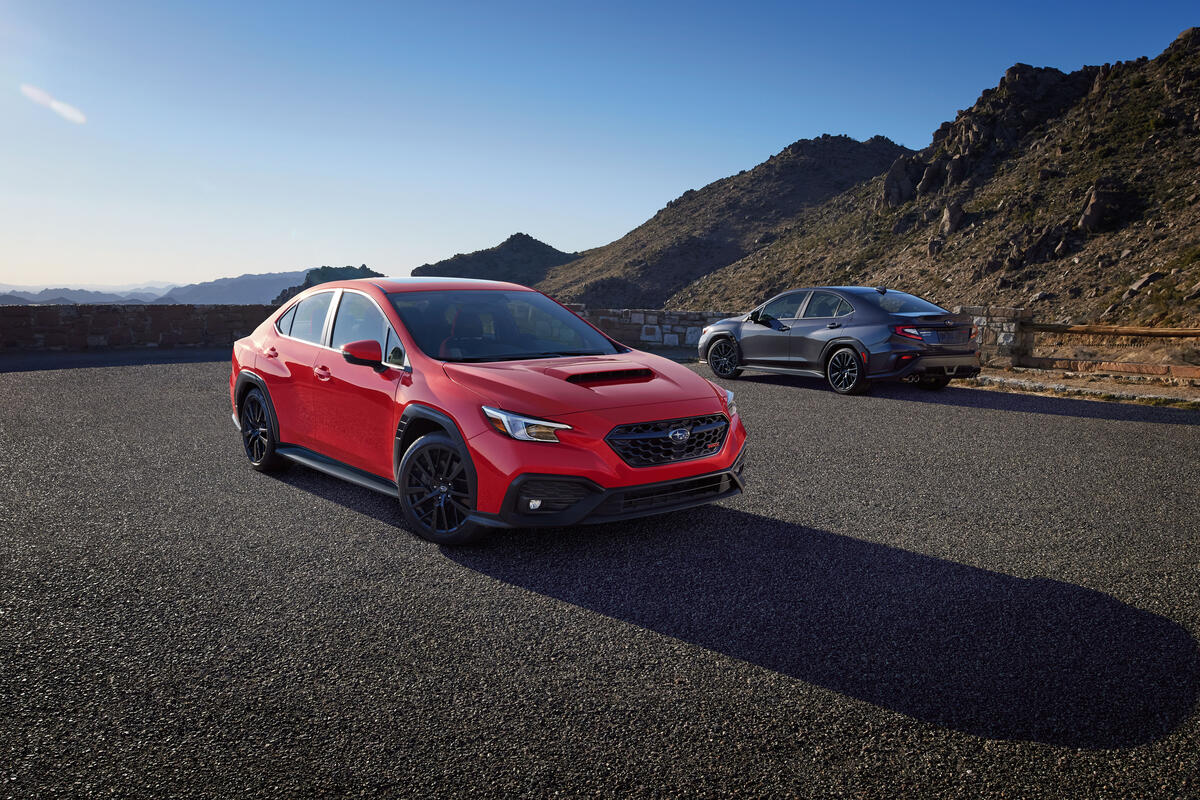
Subaru WRX
"She, her name's Larissa and her, uh, account is, um, Rod knock WRX and it's [2042.1s] ROD KNCK."
The Subaru WRX is a popular Subaru that comes with a turbo and all-wheel drive. People like it because it’s a great base for modifications and upgrades.
The Subaru WRX is a turbocharged performance sedan/wagon platform known for rally-inspired all-wheel-drive traction. In enthusiast circles, it’s a common “tuner” car because its turbo and engine management respond well to upgrades.
Subaru FXT
"When John had to pull the engine a second time on the FXT, um, because the [2102.8s] bull kept shearing off on the attentioner for the pulley system."
“FXT” here means the turbo Forester from Subaru. It’s an all-wheel-drive SUV that some people modify for more power, but that can put extra stress on the engine.
The Subaru FXT refers to the Subaru Forester XT, a turbocharged Forester variant. It’s notable because it uses Subaru’s all-wheel-drive system and a turbo setup that can be built for performance, but it also means the engine and drivetrain can be stressed by repeated hard use.
shearing off
"When John had to pull the engine a second time on the FXT, um, because the [2102.8s] bull kept shearing off on the attentioner for the pulley system."
Shearing off means a part snaps or breaks under stress, like it gets “cut” by the forces acting on it. If it keeps happening, something about the setup or load is probably wrong.
Shearing off means a component breaks because the forces exceed what it can handle, cutting through at the weakest point. In mechanical systems, repeated shearing usually points to misalignment, incorrect parts, or excessive load from the setup.
pulley system
"When John had to pull the engine a second time on the FXT, um, because the [2102.8s] bull kept shearing off on the attentioner for the pulley system."
A pulley system in an engine context typically refers to the belt-driven components that route power from the crankshaft to accessories. If a part in that system repeatedly fails (as implied here), it can cause cascading issues and may require repeated engine work.
snow tires
"And it was the only car at the time that had the snow tires on it because the forester, the FXT was down so we couldn't run it. And he's like, it'll be real fast."
Snow tires are special tires made for winter weather. They work better when it’s cold and snowy, which is why the hosts are talking about having the right tires before the snow hits.
Snow tires are winter-specific tires designed with a softer rubber compound and tread patterns that grip better in cold temperatures and on snow/ice. The hosts emphasize them because they were the difference between being able to drive during a snow period versus being stuck with a car that was down.
wiring
"Torsten, they all like, I just drove an hour to Olympia. So that way he could do the wiring for my midland radio."
Car wiring is the set of wires and connectors that carry electricity and signals to different parts of the car. When someone helps with wiring, they’re making sure the electrical connections are done correctly so the system works.
In cars, “wiring” refers to the electrical harness and connections that power and signal everything from lights to radios to sensors. When someone “does the wiring,” they’re typically routing wires, making proper connections, and ensuring the circuit works safely and reliably.
bolt sheared off
"cause like my, uh, my son's out back. He, I think whenever you said that the bolt sheared off of the tensioner system"
If a bolt “sheared off,” it means it broke and snapped instead of coming loose. This can happen when the bolt is stuck or rusted, so the force needed to move it is too much for the bolt.
A “bolt sheared off” means the bolt fractured under load, snapping cleanly rather than bending. In automotive work, this often happens when a fastener is over-torqued, corroded, or stuck, and the force needed to remove it exceeds the bolt’s strength.
tensioner system
"cause like my, uh, my son's out back. He, I think whenever you said that the bolt sheared off of the tensioner system"
A tensioner system is the part that keeps a belt or chain tight. If it fails or loses tension, the belt/chain can slip, which can cause timing or drivability problems.
A “tensioner system” is the mechanism that keeps a belt or chain at the correct tension so it doesn’t slip or jump. Depending on the application, it may use a spring, hydraulic pressure, or an adjuster to maintain proper tension as components wear.
AC discharge hose
"And so he stopped, opened it up and it was like the, um, AC discharge hose had split [2274.3s] and it was like spraying."
That hose is part of your car’s air conditioner. It carries the refrigerant under pressure—if it cracks, it can leak and spray, which can look like smoke and needs fixing quickly.
An AC discharge hose is part of the car’s air-conditioning refrigerant plumbing. It carries high-pressure refrigerant from the compressor toward the rest of the AC system, so if it splits it can spray refrigerant and create smoke-like symptoms.
do not drive that car
"Luke was kind of showing him what was going on and what Milton like, you know, assessed was do [2295.6s] not drive that car."
This is basically a warning to stop driving the car when something serious is going wrong. If you see smoke or a major leak, driving can make the problem worse or create new damage.
“Do not drive” is a safety-and-damage-avoidance call based on an active fault. In this case, the speaker’s assessment implies the leak/smoke condition could worsen quickly or cause additional damage if driven.
ditch lights
"I know somebody's always willing to help when I got my ascent and I wanted to run um, ditch lights and everything up to a switch panel inside the cabin."
Ditch lights are extra headlights you add low on the front of the car. They help light up the road edges and shoulders, especially on dark or unlit roads.
Ditch lights are auxiliary driving lights mounted low on the vehicle (often near the grille or bumper) to illuminate the roadside. They’re commonly added for off-road use, rural driving, and rally-style visibility.
switch panel
"I know somebody's always willing to help when I got my ascent and I wanted to run um, ditch lights and everything up to a switch panel inside the cabin."
A switch panel is a place inside the cabin where you mount buttons/switches to control add-on accessories. Instead of using random wiring or separate switches, everything is organized in one spot.
A switch panel is an aftermarket control board where you mount switches for accessories like auxiliary lights. It provides a clean, accessible way to control multiple add-on electrical loads.
firewall
"He was doing all of it and he walked, Robert walked him through how to get through the firewall and the easiest way to get it in and everything."
The firewall is a wall of the car that separates the engine area from the inside of the cabin. For wiring, people usually pass cables through the firewall so they’re protected and don’t get in the way.
The firewall is the barrier between the engine bay and the cabin. When adding wiring for accessories, installers often route cables through or around the firewall using existing grommets/paths to keep things sealed and protected.
viscous coupling
"Paolo who goes by, um, man, I'm having a hard time with these, uh, rally XT or rally Trek, uh, both of them, they helped me know that it, the sound that I was hearing was my, um, viscous coupling that was blown out."
A viscous coupling is an AWD part that helps the car send power to the wheels when they start spinning at different speeds. If it fails, you can get odd sounds and the AWD system may not work the way it should.
A viscous coupling is a type of limited-slip/torque-transfer device that uses silicone fluid to transfer drive when there’s a speed difference between axles. If it’s “blown,” it can cause abnormal noises and reduced AWD behavior depending on the vehicle’s system design.
drive shaft
"You just like take the drive shaft out the back of the transmission, slide the old viscous coupling out, put the new one in, put everything back, put fluid in it and you're good to go."
A drive shaft is the part that sends power from the transmission to the wheels. If you’re working on drivetrain parts, you often have to remove the drive shaft to get access.
A drive shaft is the rotating shaft that transfers torque from the transmission to the differential/axles. On AWD cars, removing or reinstalling the correct drive shaft is part of accessing drivetrain components like couplings.
AWD
"You just like take the drive shaft out the back of the transmission, slide the old viscous coupling out, put the new one in, put everything back, put fluid in it and you're good to go. ... Subaru of America putting together events like it overland expo."
AWD stands for all-wheel drive, meaning the car can send power to more than one set of wheels. That helps with grip when roads are wet, snowy, or uneven.
AWD (all-wheel drive) means power can be sent to more than just the front or rear axle. Subaru’s AWD systems use drivetrain components (like couplings and differentials) to manage how torque is distributed for traction.
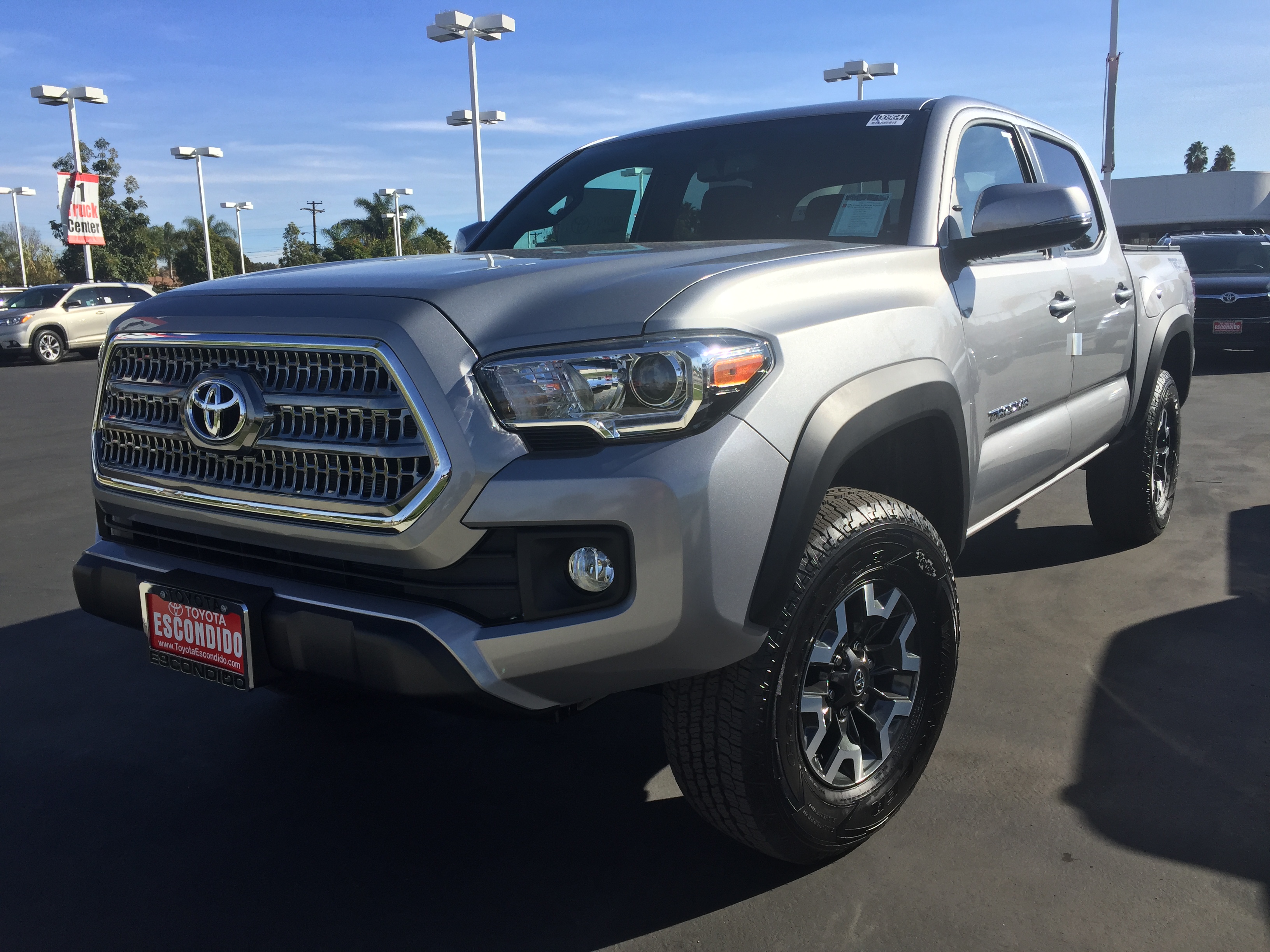
Toyota Tacoma
"he knows my dream car since high school would be a Toyota Tacoma. And like I want to, but I'm also like, you know, I'm not going to get this"
The Toyota Tacoma is a popular mid-size pickup truck. People like it because it’s good for rough roads and there are lots of upgrades available if you want it to go off-road.
The Toyota Tacoma is a midsize pickup known for its off-road capability and strong aftermarket support. It’s a popular choice for people who want a truck that can handle trails and also work as a daily driver.
park
"So we were literally cramming a lot of stuff into a short amount of time. [3231.5s] So most days we were waking up at 34 in the morning to be gone by five [3236.8s] a.m. Um, so we didn't do really any like big hikes. [3242.1s] We did a short little trail hike when we're, um, by the waterfalls in Yellowstone."
Here, “park” means a public outdoor area where people go to see sights. They’re describing stops at different parks during their trip.
In this context, “park” refers to a designated public land area with specific attractions and viewpoints. The hosts are talking about visiting multiple parks as part of a road trip itinerary.
Yellowstone
"We did a short little trail hike when we're, um, by the waterfalls in Yellowstone. [3247.8s] Um, a lot of it was just, Hey, what did you want to go see? [3251.3s] Like what site?"
Yellowstone is a famous national park in the U.S. People go there to see unique nature and wildlife. In this episode, they’re visiting it and doing some short hikes near the waterfalls.
Yellowstone is a major national park in the U.S. known for geothermal features like geysers and hot springs, plus wildlife. In the segment, it’s the destination for short hikes and sightseeing stops.
grand prism basins
"Like, was it the, um, grand prism basins in Yellowstone or was it, you know, [3259.3s] one of the grand canyon of Yellowstone?"
“Grand prism basins” is a named spot inside Yellowstone. It’s one of the specific places people go to see geothermal features.
“Grand prism basins” refers to a specific geothermal area within Yellowstone. It’s the kind of named site visitors look for when planning what to see in the park.
Buffalo
"Me, I just wanted to see Buffalo. [3263.8s] I'd never seen Buffalo in real life. [3266.0s] And when I saw it, my eyes lit up like a kid on Christmas morning and I was like, [3269.8s] Buffalo."
In this context, “buffalo” means bison—big animals native to North America. The speaker is excited because they finally got to see them in person.
“Buffalo” here means American bison, a large native North American animal commonly seen in Yellowstone. The speaker is emphasizing that they’d never seen bison in real life before this trip.
Midland radio
"luckily I had gotten my Midland radio hardwired into my car before the trip, uh, Torsten did it for me"
A Midland radio is a walkie-talkie style device for talking to other people. Here, it’s connected directly to the car so they can communicate more easily while traveling.
A Midland radio is a brand/model of two-way radio used for short-range communication. In this story, it’s hardwired into the car so the driver can communicate while driving in remote areas.
hardwired
"luckily I had gotten my Midland radio hardwired into my car before the trip, uh, Torsten did it for me"
Hardwired means the radio is connected directly to the car’s electrical system. That way it can run reliably without relying on a loose plug or battery.
Hardwired means the radio is electrically connected directly to the vehicle’s power system instead of using a plug-in adapter. This usually provides more reliable power and a cleaner installation.
50 watt radios
"luckily reception with those 50 watt radios was quite clear and we were able to make it down before the storm."
“50 watt” refers to the radio’s transmit power. Higher wattage generally improves range and signal clarity, which matters when you’re in mountains or away from cell coverage.
Perseides Meteor Stour
"[3963.7s] Perseides Meteor Stour, um, in Alvord desert. [3967.2s] We stayed up and watched that, um, for two nights."
The Perseids are a yearly meteor shower—basically lots of shooting stars in the night sky. They happened around the same time every year, so people plan trips to watch them.
The Perseids (often misspoken as “Perseides”) are a meteor shower that peaks when Earth passes through debris left by the comet Swift–Tuttle. The “meteor shower” idea matters because it explains why they planned to stay up for multiple nights in a dark-sky location.
Alvord desert
"[3963.7s] Perseides Meteor Stour, um, in Alvord desert. [3967.2s] We stayed up and watched that, um, for two nights."
Alvord Desert is a remote, open area in Oregon with very dark skies. It’s a good place to watch the stars and meteors.
Alvord Desert is a remote high-desert area in southeastern Oregon, known for its wide, flat playa where you can see the night sky clearly. Here it’s used as the setting for a meteor-stargazing stop during their trip.
114 degree weather
"[3971.0s] Um, let me tell you three days in 114 degree weather went too much. [3975.1s] Never do that again ever."
That’s extremely hot—hot enough to make outdoor time miserable and potentially risky. They’re saying the heat was so intense they wouldn’t do it again.
“114 degree weather” refers to extremely high ambient air temperature, which can quickly overwhelm cooling systems and increase fatigue during long outdoor drives or stops. In this context, it’s used to explain why they won’t repeat that part of the trip.
snorkel
"It was pretty badass. It had snorkel and everything. And so him with the Tribeca and me with the ascent were kind of like the misfits"
A snorkel is a raised tube for the engine’s air intake. It helps the engine breathe when you’re driving through water or dusty trails by keeping the intake higher.
A snorkel is an intake extension that routes the engine’s air intake higher up the body. It’s commonly used on off-road vehicles to reduce the chance of water ingestion during deep-water crossings and can also help with dusty conditions.
lift kit
"And at that time, when I wanted to lift it, they were the only company that made a complete kit to lift the super ascent rally tech had one, but you had to buy extra stuff."
A lift kit is a set of parts that raises a car or SUV higher off the ground. That can help with clearance when driving on rough roads.
A lift kit is a set of parts used to raise a vehicle’s ride height. In this segment, the speaker is comparing companies that offer a complete lift kit versus piecing together extra components, which affects total cost and how straightforward the install is.
front bumper
"So I never bought the rear diff skid. Turns out that wasn't the issue my front bumper was."
The front bumper is the part at the front of the vehicle that can take hits. Off-road, it can also be the first thing to scrape when you go over rocks or uneven ground.
The front bumper is the vehicle’s front-end impact and protection structure, and in off-road setups it can also be a key clearance and strike point. Here, the speaker says their front bumper was what they were actually hitting, not the rear differential area.
skid plates
"Turns out that wasn't the issue my front bumper was. I had the front two skid plates. And I was always hitting them up like, hey,"
Skid plates are protective plates under the vehicle. They help prevent damage when you drive over rocks or rough terrain.
Skid plates are protective panels mounted under a vehicle to guard vulnerable components from impacts with rocks, logs, and debris. The speaker mentions having the front two skid plates, implying they helped where the rear diff skid didn’t end up being necessary.

Crosstrek Cross Tracks
"...ause, you know, everybody's in their outbacks and cross tracks and they're doing all this stuff. And I'm like, n..."
Peninsular Subaru
"because it went out and I wasn't planning on it and we didn't have any money saved, Peninsular Subaru did me a solid knowing the problems that I have."
Peninsular Subaru is the Subaru dealership the host dealt with. They helped out with service and financial support when the host needed a replacement vehicle.
Peninsular Subaru appears to be the Subaru dealership/service provider the host worked with. The host credits them with helping after they learned about the “problems” they were having and with supporting their loan payoff and vehicle purchase.
Primitive
"And I hit up Primitive and I was like, hey, I have to rebuy all this stuff. And they're like, hey, we'll sponsor you."
Primitive is a company the host says helped them out with a discount and parts. It sounds like they sell aftermarket gear for the kind of car setup the host is building.
Primitive is referenced as a sponsor/vendor that helped the host after they had to “rebuy all this stuff.” The context suggests it supplies aftermarket accessories or off-road equipment, and they offered a discount and products to support the build.
oil pan
"Subaru actually, when I brought my car in for an oil change, the little like rivets in the oil pan or in the skid plate for the oil, they used a drill on it and they broke them."
The oil pan is where the engine oil sits at the bottom of the engine. If something under the car is mounted near it, like a skid plate, it can get damaged during service.
The oil pan is the reservoir at the bottom of the engine that holds engine oil. In this segment, the speaker says fasteners/rivets near the oil pan area (and/or the skid plate) were damaged during an oil change.
Permanent
"So Permanent is like, hey, just drive it down like to us in Tigard, which is about two hours away. They're like, and we'll just fix it for you."
Permanent is a company the speaker trusts for their car setup. They offered help by having the car driven to their shop so they could fix it.
Permanent is referenced as a company that supports the speaker’s Subaru build with parts and service help. The speaker says they offered to fix an issue by having the car driven to their location in Tigard.
rally tech
"you know, and like primitive and ADF or two companies that you hear, you know, and rally tech too. I mean, these names going around all around the community."
Rally Tech is referenced as a brand whose name comes up in the Subaru/off-road community. The speaker groups it with other companies they hear about, suggesting it’s known for aftermarket parts or build support.
rally car
"it could be anything, you know, it doesn't have to be an off-road build. It could be a rally car or whatever."
A rally car is a special kind of race car made for rally events. Instead of a track, it’s meant for rough, changing road surfaces and lots of bumps.
A rally car is built and prepared for rally racing, where cars run on closed public roads or gravel/asphalt stages rather than a traditional circuit. They’re typically set up for durability, traction on mixed surfaces, and quick handling over rough terrain.
Pave B and W
"I actually would probably pick Derek on on Pave B and W because it doesn't stand out."
“Pave B and W” sounds like a name Derek’s car/build goes by. The point they’re making is that it doesn’t look flashy, but it’s still set up to be useful and capable.
“Pave B and W” appears to be a specific car/trim or build name the hosts are using for Derek’s vehicle. In this context, it’s being contrasted with a flashy look—so the key idea is a non-showy, practical setup rather than a loud visual package.
sleeper car
"Like I've seen it. Yeah, it does. Yeah. So, you know, I'm like, and I've gone out with him and done part of the Oregon BDR. And I'm like, he has the ability to be kind of like that sleeper car."
A sleeper car looks normal or boring, but it can still be surprisingly fast or capable. It’s the opposite of a flashy “look at me” car.
A sleeper car is a vehicle that looks understated or even plain, but has performance or capability that surprises you. The “sleeper” idea is about hiding the performance behind a non-flashy exterior.
Request an Explanation
Heard something you'd like explained? We'll add it to this episode.
Sign in to request explanations for terms you heard.
Want to learn more?
Browse our glossary for plain-English explanations of automotive terms, jargon, and concepts.
Help improve this episode
See something that's not quite right? Our annotations are AI-generated and can sometimes miss the mark. Click the flag icon on any annotation to suggest a correction.