Motul is a company that makes motorcycle and car fluids like oil and cleaners. Riders often use their products for things like engine oil and cleaning the chain.
Horsepower is a measure of engine output that’s commonly used to compare performance between motorcycles. In this discussion, it’s referenced as part of the value equation—whether the power level justifies the price and competitiveness.
Buell was a motorcycle company that Harley supported. The hosts are saying Harley tried that direction, but it didn’t succeed.
Car
2009 Honda CBF 600
This is a Honda CBF 600 from 2009. The rider is saying they don’t like how it feels for commuting and is asking whether adding wind protection would make it better.
A torque curve describes how engine torque changes across the rev range. Two bikes can have similar peak power but very different torque curves—one may pull harder in the low/midrange while another feels stronger at higher RPM.
A clip-on windscreen is an add-on windshield mounted to the handlebars or front area. It can redirect airflow to reduce rain hitting the rider’s chest, even without a full fairing.
A parallel twin is an engine with two cylinders next to each other. The hosts are saying a lot of modern motorcycles use this setup, so it’s worth thinking about if you’re shopping.
A test ride is when you get to try a motorcycle before you buy it. The big question here is: if you crash during the test ride, who pays—insurance or the dealer?
Triumph is a motorcycle brand. In this story, Triumph had (at least at one time) dealership rules that pushed dealers to offer test rides under certain conditions.
AmEx is a credit card company that can also provide travel help/insurance benefits. In this story, it helped coordinate medical care and payments during an emergency.
A wheelie is when you lift the front wheel off the ground. It’s a skill that takes practice, and the hosts recommend starting in safer conditions.
Car
Honda CRF 250
A Honda CRF 250 is a smaller dirt bike that’s great for learning. It’s not as powerful as the big expensive bikes, so it’s easier to ride while you practice.
Car
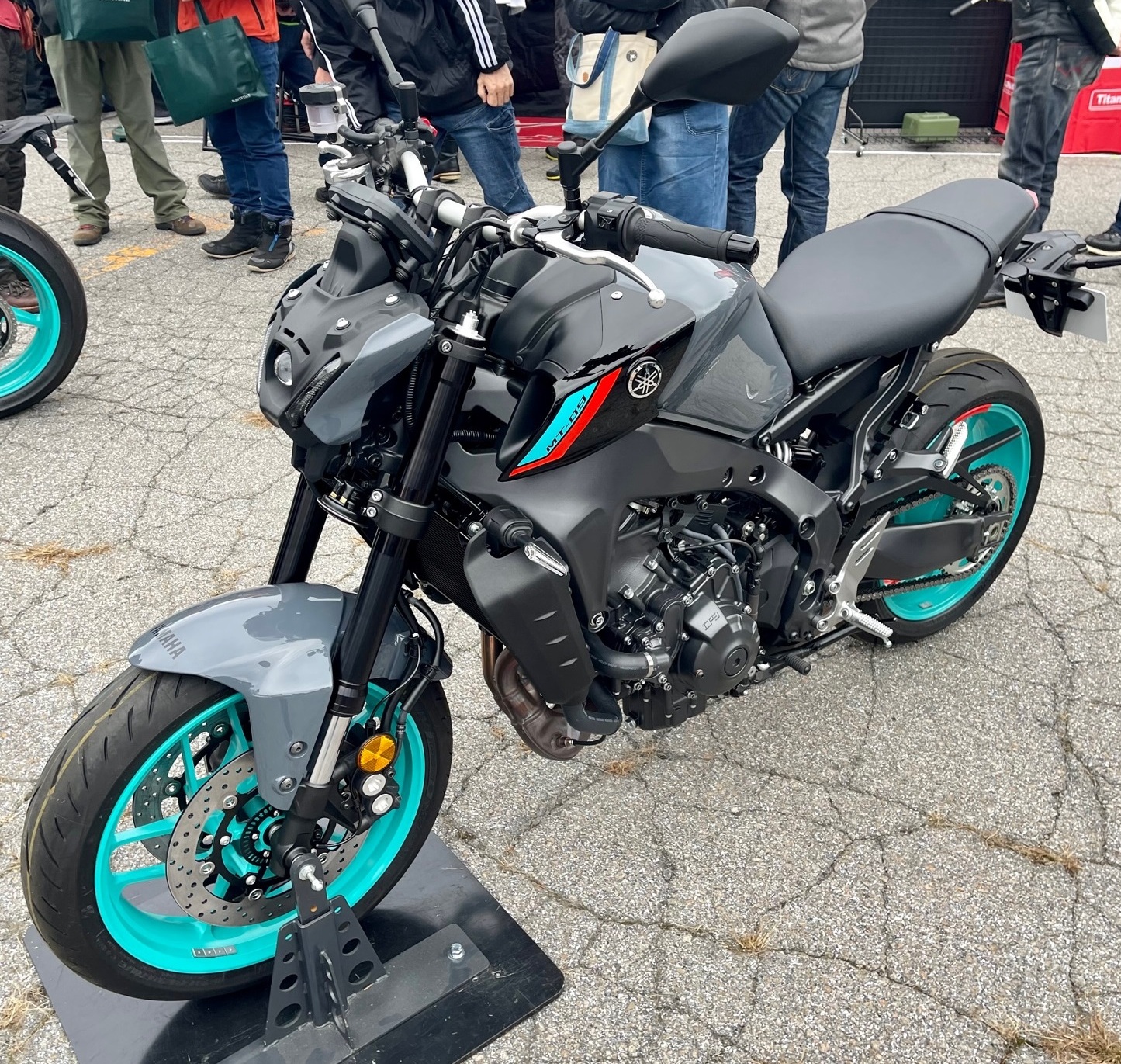
Yamaha MT-10
The Yamaha MT-10 is a bigger naked street bike. The speaker thinks it could be more comfortable for a tall rider while still giving the kind of acceleration that can lift the front wheel a little.
A live episode is when the podcast is recorded with people in the room. Instead of talking to a microphone alone, the hosts can interact with the audience and answer questions right away.
Q&A (questions and answers) is a format where the audience asks questions and the hosts respond. In motorcycle podcasts, it often turns listener experiences and technical questions into a more interactive discussion.
Car
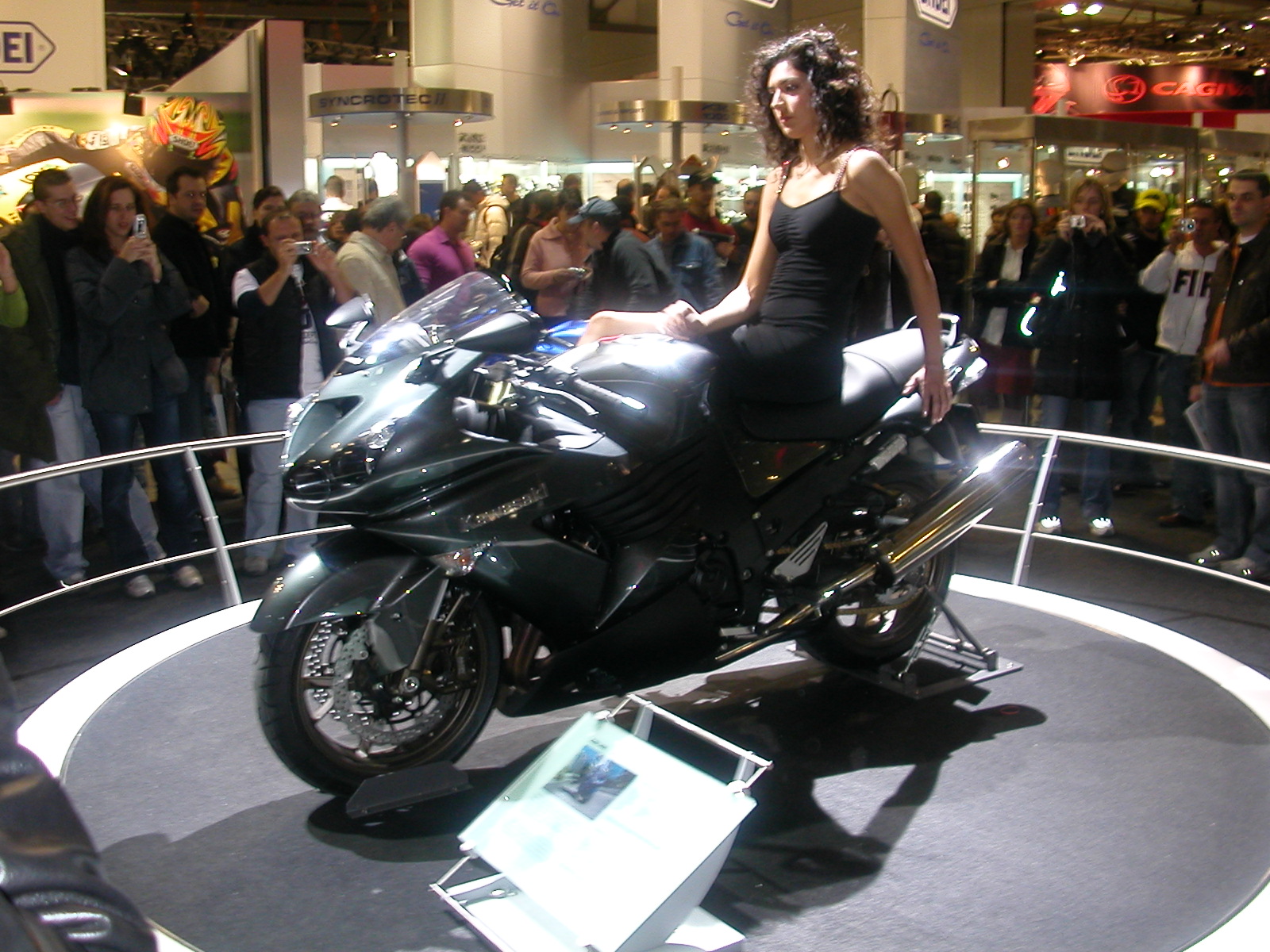
Kawasaki ZZR 1400
The Kawasaki ZZR 1400 is a fast, long-distance style motorcycle. Here it’s brought up because sitting on the back of it makes Grant’s wife’s knees hurt on longer trips.
100,000 miles is a big mileage milestone. It usually means the bike has been used a lot, so people start thinking about how reliable it is and what maintenance it might need.
Damping is basically the “shock absorber tuning” that controls how the suspension moves. It affects how the bike reacts when you hit bumps—whether it feels smooth or bouncy. Changing damping can make the bike feel more controlled.
In some places, the money you pay to register your motorcycle helps pay for training classes. That can make it cheaper for new riders to get started safely.
They’re doing a “what if” scenario. Instead of following the real story, they imagine a different version of events and talk about how it could change motorcycles and careers.
Car
Triumph Thruxton
Triumph is a British motorcycle brand, and the Thruxton is one of their classic-style bikes. They’re pointing out that their review of the 2014 Thruxton was the very first bike review they ever did.
Car
Honda Rebel 300
The Honda Rebel 300 is a beginner-friendly cruiser motorcycle. They’re saying they met Ari at the launch event for the Rebel 300.
Car
Kawasaki Ninja 400
The Kawasaki Ninja 400 is a sport motorcycle that’s often recommended for riders who want something quick but not too big. They’re mentioning they were together at the bike’s launch.
RevZilla is a motorcycle store website. They also run a lot of motorcycle content, so it makes sense the hosts direct listeners there for messages and merch.
LIVE
Welcome to the season finale of Highside, Lowside.
Zach and I have come together to wrap up Season 11 with you as our guest.
That's right.
This is going to be the comments episode and we're going to dive into all of the queries
you have thrown our way over the past season as well as a Fiat 500 with a Suzuki Jixxer
1000 motor in it that you can buy.
You going to spend the cash?
We got a t-shirt for you if you do.
All that and much more, but first a word from our sponsor.
This is the part where I remind you that Motul is the biggest supporter of Highside,
Lowside and you should buy its products.
But maybe you already do buy Motul products.
You're thinking, I'm already putting Motul oil in my motorcycles and bathing myself
in chain cleaner.
What more can I do?
Great question.
And I'll just remind you that Motul also makes, for example, diesel system cleaner for
use in all types of diesel injection systems in cars, trucks, RVs, and even military spec
KLRs.
To see all of Motul's products, check out RevZilla.com slash Motul.
That's RevZilla.com slash M-O-T-U-L.
And when you're over there on RevZilla.com, just keep in mind that every time you make
a purchase with a RevZilla, a little bit of that money goes back into funding the programs
that you enjoy, whether it's Zach and I sitting here talking with you on Highside, Lowside
or the shenanigans that people get into when you're out riding for a CTXP episode or maybe
you just appreciate the gear reviews and the product information.
RevZilla gives back to riders because that's who we all are, riders.
So keep that in mind next time you need to make a purchase for your motorcycle, from cruisers
to sport bikes to adventure bikes and everything in between.
We've got you covered at RevZilla.com.
All right, giddy up everybody.
Highside, Lowside, Season 11, Episode 12, Spurjo.
I would pat myself on the back for making it through a whole season, but I didn't really
help you out that much this season.
You made it through half a season, you came on, you shared your personal story of trials
and tribulations, coming back from a motorcycle crash and you helped me finish out the season
strong. It's not how you start the race, Zach. It's how you finish it.
Hey, that's a good friend for you, everybody.
All right, we're going to kick off this finale episode of all of your viewer, listener comments,
which we're excited to get into, with a Craigslist find sent to us by Eric, E-R-I-K via email.
Eric says, I'm not quite sure this counts as a motorcycle, but thought it would be an honorable
mention given the recent Suzuki GSXR icons episode, which was Episode 5 of this Season 11.
And the link to Craigslist is quite a fine Spurge. Can you talk to the ladies and gentlemen
through what we're seeing here?
All right, so if we get this ad up on the screen, there is a somewhere out there available for
purchase, a 2006 Fiat 500 EV with a bad battery. So they pulled the electric drivetrain and replaced
it with quote, unquote, thousands of dollars in fabrication costs to install a 200 horsepower
GSXR 1000 engine.
That's right. This is 2006 Suzuki GSXR 1000 engine. So that's essentially the K5
GSXR, famous K5 jigsaw, the best jigsaw of all time in many people's eyes.
And someone put this engine into a Fiat 500 automobile and it's, I mean, we're not going
to read the whole ad because it's very, very long and spoiler alert, the project's not quite
finished yet. There's two cars and one of them has the engine in it and you could take the
suspension from one and put it in the other one, but they ran out of time or something like that.
But it does appear, based on the pictures and the description, it appears that the
engine is in there and the car drives and it has a GSXR 1000 engine in a Fiat 500.
And yeah, the line I really like spurred. Let me see if I can find it here. I just lost it.
Oh yeah, it uses the motorcycle engine, sorry, it uses the GSXR 1000 gearbox and clutch. So I
think it has a hand clutch as far as I can tell and then a sequential gearbox like a motorcycle.
And the one line in the ad says, it has semi-tall gearing, so it doesn't take off from a stop
overly quick, but once going, it rips with a 13,000 RPM red line, which I think is a nice way of saying
yeah, it's kind of dog slow when you first get on it because the GSXR doesn't make a lot of power at
3500 RPM, but it must be a real wild ride when you get up to five digit RPM and you have that
sort of like super bike howl. I bet it's pretty wild. I mean, I feel like a Fiat 500 from the
factory is not a super aggressive car off the starting line. You said you were going to look
that up. Did you look up with it? Yeah, I couldn't find stats on the EV version, but typically
what I did find was Fiat's, the Fiat 500 has anywhere from a 0.9 liter all the way up to a
whopping 1.4 liter turbojet I4 and makes somewhere around 75 upwards of 110, 120 horsepower.
So it sounds like this Suzuki GSXR 1000 engine is quite the upgrade. And the one note that I
wanted to throw out was in addition to Zach's comment about the fact that like,
you know, this has got a hand shifter, still a front wheel drive, but it now has a chain drive.
So they have a chain drive to like the axle presumably of the car. And if you want to,
if you want to utilize reverse, the car will move backwards easily on flat ground.
Because they use the starter motor, I think, right? It uses the starter motor of a BMW
K series motorcycle. And you just don't want to park it on a hill because it will not necessarily
go backwards up a hill without a friend pushing. So it does have some limitations, but quite a
machine. And if you're worried about fuel mileage, don't worry, it has a 15 gallon fuel tank. So
even if you're only getting, you're only getting like 13 miles per gallon because you're spinning
this Jixxer 1000 engine up at 10,000 RPM to keep the thing going down the road.
You can still, you'll still make it a little while before you need gas. I just think it's a
delicious and hilarious project. It definitely deserves a call out. And thank you, Eric, for
sending it in. A Fiat 500 with a 13,000 mile or 13,000 RPM red line is the final note there.
If anyone listening decides to buy this, we'll give you a t-shirt. So if you
if you want to make the bad decision to invest in this Fiat 500, Zach and I will
patch you on the back with a free t-shirt, just let us know.
$5,500, by the way, for the, for the Fiat Jixxer.
I feel if you offer five, they might, they might accept your offer.
Good stuff. That really, really great find. Thank you again, Eric, for sending that in.
We had a great time mulling it over and we hope that we did it justice describing it.
And if you're watching on YouTube by any chance, you would have seen some of the ads that we put
on the screen. Either way, great craigslist find. Thank you, Eric, and send us your preferred t-shirt
size and mailing address because we think this deserves a t-shirt. Gosh darn it.
And you didn't even have to buy it to get one. So that's the, that's the real gem for you, Eric.
I do want to say before we jump right in, for those of you that are avid high-side,
low-side listeners, you probably have noticed that we changed things up a little bit here in
season 11. Typically, we have the comments episode as our 11th episode. And then we go into a finale
episode with a guest. We wanted to, you know, acknowledge that we do take feedback from our
listeners seriously. And we're always trying to, you know, slowly tweak and improve the podcast.
And one of the things that we noted was that there were a lot of good comments that always kind
of came in on the finale episode. And we're like, oh, that would have been fun to include in the
comments episode. So in an effort to kind of like flip the script a little bit and see if this works
a little bit better, season 11 episode 11 was obviously a little bit more of a finale type
episode as we would historically do it. And now what we're doing is we're getting all the comments
from the first 11 episodes of the season and bringing you this new finale episode.
New, I would say new and improved, but we don't actually know yet. We haven't done it.
So let us know. I will, one thing I'll add, if you're an avid enough high-side,
low-side listener that you noticed that the comment episode was episode 12 instead of episode 11,
I'm impressed. I would offer you a t-shirt, but I'm not sure I have the authority to do that.
Anyway, let's jump right in, shall we, Spurge? The comment episode is always one of my favorite
ones because I think people ask questions that are both silly and thoughtful and educational,
useful, and we have a lot of fun digesting it. So I'm excited to dive right in.
Why don't you take it away, Spurge? Oh, comment number one.
Comment number one comes from Mike. Mike sent an email saying,
why do we not have a U.S. manufacturer making a range of motorcycles like we see coming out of
the Japanese companies? Obviously, other examples from around the world too.
These manufacturers have comprehensive lineups of sport bikes, adventure bikes,
naked, dirt bikes, cruisers, the whole gamut. CFMoto demonstrates that there is slash was
space for newish players to join the fray, at least new in the variety of models that they're
creating. What gives? So the too long didn't read here, Zach, is why do we not have Harley Davidson
or Indian motorcycles creating more variance of bikes? If I'm reading this correctly,
that's not right. Yeah. I mean, I think that that's what the question is rooted, right? Just
sort of like Harley and Indian have leaned into the sort of, I don't know, define this American
V-Twin style of big luxury. I mean, not all luxury, but big V-Twins that are either cruisers or touring
bikes or something like that. To be fair to Harley Davidson, they made XR 1200 and whatever
that was 20 years ago, gave that a try. I mean, whatever. Also, to be fair to Harley Davidson,
the Pan America, you know, branched into adventure bikes. So I just want to give some credit where
credits do. And to be fair to Indian, they had that whole FTR 1200 experiment. But Mike's question
is still valid, which is sort of like, how come? Like, why aren't there, why isn't Harley Davidson
making a 450cc liquid cooled motocross bike that's just like every other motocross bike? Like Triumph
and Ducati have recently showed that you can just like not have any history motocross and just
build a motocross bike and go motocross racing if you want to. And I think it comes down to
to brand image and culture kind of, right? Like, I feels like big European companies
like KTM, like Ducati, like BMW, they don't mind blowing up their image a little bit to branch
into a new place, a new avenue of the industry, right? Like we saw with BMW due at the S1000
in 2009, 2010, whatever that was. You know, there were a lot of people, BMW fans that were like an
inline four BMW. I never thought I'd see the day. But that's turned into a staple of their lineup
and a really fantastic bike and blah, blah. I just don't like, that's what it seems to me. Like,
is it, can you ever, like would Harley Davidson ever just build a 450 motocrosser?
I think, I think that's part of, I think the answer is probably a little bit more simple
here and it's that people don't buy them and they don't, they don't end up.
People don't buy their bikes? No, no, I'm saying people, like every time we've seen,
anytime, anytime manufacturer try this, like, and so we had this conversation recently during a
Common Tread meeting because for those of you that were paying attention at Daytona this year,
Harley Davidson unveiled an XLCR replica, which was basically, they took their...
Yeah, let's put that on screen, shall we? That's a really cool looking bike.
Yeah, they took the new, is it the Evolution Max? Is that the Pan-American engine?
Revolution Max. Revolution Max, okay.
So the Revolution Max, which is their big 1200, 1250, you know...
It's Pan-American engine, basically.
Yeah. And they put it in a cafe racer. They built this sport bike around it and all the comments
were like, oh, I'd buy that, I'd buy that, I'd buy that. And Lance and I were talking about Lance,
it's like, how much would you actually pay for it? And I was like, I don't know. He's like,
no, no, no. You want to build it? How much would you pay for that? I was like,
and I'm thinking personally, I don't know, like, I could, if I was looking for a sport bike,
if I was in the market, like $15,000, and the problem is Harley Davidson can't build that
bike for $15,000. Or they won't.
Or they won't. And so that becomes a $20,000 motorcycle and are you going to spend
$20,000 on a sport bike that makes 150 horsepower and isn't really competitive?
It's more of a fun ride around in the street type piece.
Well, that's arguably the whole other podcast is like, how much horsepower do you need?
And I think that there's a pocket of sport bikes in the market now that's proving that you don't need
maximum horsepower to have maximum quality and maximum fun and that kind of thing.
But another thing I would like to point out, Spurge, you said,
historically, these motorcycles are not purchased, right? You said,
you know, Harley builds an XR 1200, nobody buys it. They build a Pan America, not enough people buy
it. And in some ways it's important, we've said this before on the podcast, but it's
important to reiterate that Harley Davidson is a victim of its own success in many ways because
historically, Harley Davidson sells so many street glides and road glides and, you know,
touring models and cruisers that it's just hard for, it's hard to pencil out what we're going to
sell 3,000 of these bikes or 5,000 of those bikes, whereas Ducati builds a bike and if they sell
5,000 of them, it's like, great, cool. That's what we do. We build bikes that we sell 5,000 of,
you know what I mean? But when you're, if you're selling, you know, whatever, 15 years ago,
Harley Davidson selling 50,000 street glides in a year or something or whatever, I'm making
up the numbers, but like, then you, you can't, that's like such bread and butter, you can't,
you can't, you can't depart from that. It's too difficult. I think that the, but you know,
the landscape's always shifting and, and Harley's like, there's been a lot of stories lately about
Harley Davidson losing market share and dealers closing and Indians under, you know, different
ownership now and things, things are getting shaken up in the, in the American motorcycle
industry. And I guess I like to think, I mean, I don't know, how cool would it be if you went
to Supercross and there was a Harley Davidson, like would it be a, would it be a quote unquote
real Harley Davidson if it was a 450 motocross bike? No, it wouldn't be a real Harley Davidson,
but like you could, it would have the barge shield on the side. No, I think, and this is where
like, where this is, this is probably a whole other podcast here, but like if Harley Davidson is
actually manufacturing the motorcycle itself and putting it into competition, yeah, it's a real
Harley Davidson. If they're importing tiny Italian dirt bikes like they did in the 60s and 70s with
the, you know, Air Maki badge on them and throwing a Harley Davidson badge on top of it and saying,
oh, we've got dirt bikes now. Like, yeah, like that's, that's problematic. Okay. And, and then
also like just to kind of round this out, because I know I went into the new prototype that everybody's
excited about, but like Harley Davidson introduced the XL CR and 77. It didn't sell Harley Davidson
invested in Buell and brought Buell to market and eventually that, that didn't work out. Buell was
making sport bikes and adventure bikes for, for the American market. Yeah. You have, you had Modus
brought in a V4 sport touring bike that was manufactured and sold in the US, couldn't afford,
people couldn't afford a $30,000 Modus. You have the FTR 13 FTR. No. Yeah. The FTR 1200.
Yeah. 1200 that you were talking about. Indian made it and then they changed the wheel size to
make it even sportier and get away from the weird, you know, flat track thing. Yeah. No, it didn't
sell. People were all upset that, you know, they were getting rid of it, but nobody actually bought
it. So like that's, you know what, you know what, Spurge, you make a good point. And I, the answer
was right in front of us the whole time. Mike sent us this email. You're the problem, Mike.
You're not buying the bikes. Mike. Mike, if you would just buy the bikes, then they would make
that. Mike, do you own a Pan America? Mike, do you own a Pan America? If you don't, then you're
the problem. Yeah. No, I think, um, I obviously we could spin this out into a whole hour long
conversation. And if we were on a road trip, Spurge and I, we would, um, but we're going to move
along in this conversation for the sake of you, the viewer listener. The point is, Mike,
I'm just kidding. You're not actually the problem. Um, and, uh, this is a good question.
I, you know, I think there's room for it. I guess that's what I'll say. I think I can imagine a day
when, when we see, um, uh, the Harley or Indian, uh, change their tune a little bit, um, literally
and figuratively, but well, we tell that day comes, uh, we have another question from James.
So Mike, thank you for the question. Zach, would you like to read comment number two?
This comes in from James via email. James says, I currently ride a 2009 Honda CBF 600,
which I do not enjoy. It's slow, ugly and heavy with no bottom end, bought out of desperation.
As a rider in the less than ideal British climate, is it worth the extra to get a bike with a big
screen or front fairing? I commute about 30, 40 minutes to the office per week along, uh,
the motorway, highway, freeway, whatever 75, 70 miles an hour on straight roads.
Does the screen and fairing make enough of a difference when riding in the rain to justify
the extra cost? Or is it just a case of buying good waterproof gear? Pretty basic question here.
We, um, we just loved this so much because it is so unbelievably rare to get an email from someone
that says, I ride this bike and I don't like it. Um, I bought the wrong bike. Exactly. Yeah.
You know, people always have, um, yeah, it's just rare, I think, to hear about a buyer's remorse
or like a truly, uh, critical owner of their own machine. You know, normally people are like,
well, I bought this bike and yeah, it's not perfect, but oh man, when you get on the,
it's so great for these reasons, you know, people want to justify their purchase. James
has no problem absolutely panning his own motorcycle, which I think is hilarious.
I want to say that I feel like there's two questions here. Um, and I just want to acknowledge
that like, it sounds like James is unhappy with his motorcycle because it's slow,
ugly and heavy with no bottom end. Um, there's probably a lot of better bikes out there for
you. James that are, you know, more focused on low and mid-end, mid-range power. James,
James likes big bottom ends and he cannot lie. Yeah. I mean, who doesn't? Sure. Um, and so in that
sense, like there's probably even like an FC, uh, oh seven would probably be a better bike for you
just in its, its, you know, torque curve, even though it doesn't have the top end wallop that a,
you know, uh, uh, inline four would have. Right. Well, yeah. I mean, James, I'm guessing, well,
I don't, I don't want to be too much of it. Can we, can we, I'm sorry, can you explain to the
audience that maybe doesn't understand that a CBF 600 is not the same as a CBR 600? Is that worth
explaining? I actually don't quite remember what a CBF 600 is, but yeah, it's not, it's not a CBR
600. If you're imagining a CBR 600 sport bike, it is not that. It is, um, it is a much more
street oriented motorcycle, but it does have, um, the 600 CC inline four that's broadly, uh,
I think it's from the, I think it's, I think his is the older one that has the old Hornet engine
in it. It's like the old 509 style, like 75 horsepower. Yeah. Yeah. So yeah, that's a fair
thing to point out. This is the naked bike he's talking about not, um, it's, it's not a CBR 600
is the point. That's a good thing to call out just to be clear. Um, so yeah, maybe, uh, yeah,
maybe a twin cylinder bike or a MTO nine or something like that would be a better, but
the question that James put to us really is sort of like, is it worth it to have wind,
to weather protection on the bike? Does it even help? Spurge, what's your answer there?
I think you're better off investing in like a car rain suit than like, uh, than a windshield.
Really? I mean, a windshield is not going to do anything to keep you dry if you're out for
more than 10 minutes. He's got a 70 mile, he's got a 30 to 40 minute commute. If he's, if it's
pouring down rain, like you just get a, get a throw of a rain suit. So yeah. So I guess
Spurge's answer would be like buy good waterproof gear. What I would say is that if you get a
bike that has some wind protection, it does make a big difference at 70 miles an hour,
having a windscreen that keeps the wind off your torso at least, like your arms are going to be
in the water, your feet are going to be in the water, your head's going to probably going to be
in the water. Do you, you know, you're going to, you're going to be riding in the rain, James,
but if you have a motorcycle that pushes wind away from your torso, your, your, uh,
you know, your sort of the middle of your body, it's going to make a big difference
with how much water actually hits your body and, and, and how hard your waterproof gear then has
to work. I guess if you're, if you're in motion the whole time, but if you're coming to a red light,
70 miles an hour on straight roads, he says. And so there's, I guess if there's no red lights at
all or stop signs, like, I guess let's not, let's not split hairs here. The point is what Spurges
saying, what Spurges saying is that water falling from the sky is going to get you wet no matter
how you slice it on a motorcycle pretty much. But what I'm saying is that at highway speeds,
it, in my opinion, it makes a huge difference to have a little bit of wind protection. Like if,
if rain, if rain and, and weather is just hitting you square in the chest and in the stomach and
like pooling in the seat and in your crotch, like that's hard for waterproof gear to deal with,
harder for waterproof gear to deal with than if you have, you know, your, your arms and shoulders
and your lower legs and feet are out in the water or out in the wind, you know, but your torso is
protected from the wind. I think it'll make a big difference. And I think you deserve a better
motorcycle, James, if for no other reason than your humility. Well, I will say that
Zach and I are going to agree to disagree a little bit on this one, James, but maybe there's a
compromise. Maybe you could meet somewhere in the middle instead of, instead of going out and buying
a fancy big bike with a giant fairing on it, maybe you could buy a naked middleweight, get a little
clip on windscreen, which does what Zach's talking about, which just helps to keep the water from
blowing and hitting you in the chest and pooling and then just get a nice throw over rain suit
to help keep you dry for the moments where the water is coming straight down from the sky or
to keep your legs and your arms dry as well. Okay. All right. Okay. I'm trying to be diplomatic
here. Yeah, that's fair. I just think that I just think I'm imagining James trying out a,
you know, whatever, Honda Transalp 750 or something like that and bombing down the highway and then
he's got his twin cylinder engine. He's got that big bottom end he wanted and he's got some wind
protection and he he's thumping along and he's happy and and maybe he still thinks it's ugly,
I don't know, but at least he'll be a little bit drier. Is that your I think you deserve your bike
right? Is that your bike recommendation for him? Not necessarily. I don't know. I was going to say
NX 500 also or like Transalp, but like maybe he wants to be a little faster. I don't know. I'm
trying to think maybe James bought a 2009 Honda CBF 600 because he thought it was the perfect
motorcycle, but I'm guessing price was a factor. No offense, James. And so I'm not going to say
like, you just got to get an R13 heart GS, James. No, no, he bought it out of desperation. I think
that's fair. I think it's interesting that we both of us gravitated towards parallel twins, right?
Like I made the comment about the Yamaha F-207, you picked Transalp. It's hard not to gravitate
towards parallel twins these days. It's like they're everywhere. Can't can't can't swing a
crankshaft in this industry without hitting a parallel twin. So James, maybe that's something
to consider too is the engine type. Maybe a maybe a parallel twin of a, you know, there's a lot of
varieties out there to Zach's point. Maybe something with a parallel twin in it will be, you know,
an option for you. All right, let's move on to comment number three, Spur Joe. I'm going to
read comment number three because I want your take. You're the one that's going to answer this
question. Comment number three is quite long. So I'm not going to read the whole thing,
but I would like to thank Michael for sending this in via email. Basically, Michael's story
goes like this, test rode, went to a dealership, test rode an Indian Springfield. The dealership
was happy to let him take the bike on a test ride with proof of insurance and proof that he had a
motorcycle endorsement. Long story short, Michael tips the bike over like turning around to muddy
something or other, gets back to the dealership says, God, you know, guys, I tip the bike over.
Sorry about that. And then, you know, they kind of like, they work it out.
But then his insurance finds out that it was a test ride. And then all of a sudden,
it blows up in his face. It's not covered. They try to charge him $6,000 for all this damage.
He's sort of blown away. He thought it was okay. The dealer thought it was okay. Everyone thought
it was okay. Insurance didn't cover it. And he ended up working this out because the dealer was
nice to him. But basically, what Michael says is, should test rides be banned? Should dealerships
be forced to carry liability insurance if they even allow test rides? And should insurance
cover test rides if you have full coverage slash comprehensive on your current motorcycle?
All good questions. Spurjo, former dealership employee, what say you?
Michael, this is a hard question to answer. And I did a little bit of research to like
brush up on like, how we used to do things. And like, it sounds to me from the little
research that I've done is that this is still very much a case by case basis. I think the biggest
issue with test rides in general is that there's not a uniform policy that blankets across all
dealerships or all brands. I know, for example, there was a policy for a while when I was working
at the dealership where you had, if someone had a motorcycle endorsement on their license,
and they wanted to take a triumph product out, you were not allowed to say no, you were encouraged
to offer a test ride, right? And so, sorry, really, just quickly, you're suggesting that like,
if they want to take a Kawasaki different story, but because the manufacturer was behind, okay,
gotcha. Yeah, so like, we actually like, and again, I can't speak to whether or not this is
still the case, but like, we got tests, we got like secret shopped. And if someone came in and
secret shopped a triumph product, and we did not offer them a test ride, or at least ask if they
wanted to take a test ride, do you have a motorcycle license? We got negative points on our score
from the dealership network, you know, around like, hey, you didn't offer this person a test ride.
So that was specific to the triumph brand that we carried at the time. I will say that like,
this, Michael, sounds also to be maybe a potential issue with your individual insurance.
I know that my particular insurance covers me if I'm using someone else's vehicle.
And I know that the dealership that I was working at did have insurance that covered
to an extent test rides. So like, I think the issue, the larger issue here isn't should test rides
be banned, because there's probably a lot of people listening to this podcast, it feels like
we need more opportunities for test rides. Right. I would argue that maybe some type of
uniformity across dealerships is what we're really looking for, and that's not going to come
without support from OEMs, right? It's going to have to be more of an OEM push down.
So to some extent, this was a perfect storm for for Michael was a sort of like a gap in
insurance, a misunderstanding with the dealer, an unfortunate, you know, tip over to begin with.
Okay. Well, I think, I think that's fair. I don't think that I think that's a good answer,
Spurge. And I don't think that we correctly from wrong have a lot more to say about that,
except the reason we wanted to present this was as a, to some extent, as a cautionary tale,
if you're listening, you know, and you, you're about to take a test ride and you're, you know,
your dealer's like, yeah, no problem, take it for a spin. You want to take that adventure bike out?
Yeah, there's a dirt road up there. Go for it. And then, you know, you could slip through the
cracks of, of a gap in insurance and a misunderstanding with the dealer, just like Michael did. And so
maybe, maybe the, if there is any advice we can give Spurge, aside from the background that you
gave about dealerships is sort of like, get your ducks in a row ahead of time, like make sure that
you have, you know, your, your, your insurance, make sure what your insurance does cover and
does not. And make sure that if something happened, how the dealer would feel about it, or like,
I don't know, I think that's maybe the right thing to do. Well, I would say to Zach's point,
if you find a motorcycle dealership that tosses you the keys to a brand new adventure bike and says,
hey, feel free to go trundle down that dirt road, you hold on to that dealer because I don't think
there's too many of them out there that are willing to let you do that. And you treat them well.
The other thing I would say is we would love to hear from anyone out there listening,
whether you work at a dealer and you have some anecdotes or, you know, policies in your individual
case, you'd like to share with the audience, or if you too have had a mishap test riding a motorcycle
and you would like to let us know how your experience fared, you know, we would love to hear
more, maybe there's a future episode around dealerships or test rides or something that we're
going to tackle. Yeah, we're still, still working on cracking that nut. I think it's a good idea.
So shoot us a message if you've got any experience on your own for motorcycle test rides at a
dealership. Michael, thank you for your email. And we're now going to move on to comment number four.
Yes, sir. Take it away, Spurge. It's from Jason. Jason says,
my current ride is a naked middleweight, a GSX S750. I'm starting to look for a second bike
for touring. I'm planning to go with a street-oriented adventure bike or a sport tour.
My question is, what is a better distant tire combo, 17-inch front and back tires,
or a 19-inch front-wheel tire slash 17-inch rear on the back? Most of my miles on this bike will
be spent on the highway, and I will keep the naked bike for track days and back roads. Zach?
So what is, what is your tire preference basically? Right. So this question is essentially,
do I need 17-inch wheels or like, what difference does it make to have a 1917 wheel set?
Our buddy Tim Harris from episode 11 has, we've talked about this a good deal because,
because he always wonders about the, the, the sort of like front wheel size and what difference it
makes. I suppose, I feel like if Ryan Fortnight in here, he would say, well, he would say, well,
he would say, if you want distance out of your front tire, well, then get the 19-inch front
instead of a 17-inch front, because then you have more tire, like your front tire will theoretically
wear out less quickly because you have a larger circumference. So for each mile,
your wheels will be doing fewer revolutions and that will be better for distance. Is that?
You are going all scientific. I wasn't, I wasn't expecting that. Here's, here's the, the bottom
line here, Jason. My quick take is like, is it doesn't matter. It's fine. It doesn't, you know,
Harley Davidson just came out with, or not just came out this last year or something like that,
came out with that Pan America ST, which has a 17-inch front wheel on the front and the,
you know, theoretically, it's sportier because of the, the smaller front wheel provides more
agility and greater handling characteristics or whatever, you know, the press releases always
say when a bike gets a 17-inch front wheel instead of a 19. I don't think it makes a huge
difference. I think a bike's, there's a lot more, there are many more factors and characteristics
that go into creating a bike feeling agile, stable, all those things than the wheel size.
And I think if you have a bike that you like that has a 19-inch front wheel,
get it. It's probably going to be fine. And if you, if there's one you happen to find,
you know, versus, versus 1,100 or versus 650 and it has a 17-inch front wheel and you decide to
get that bike for touring, also fine, also fine. Yeah. I was just going down a rabbit hole recently,
Jason researching some facts on, on Michelin for a, for a product review video that I was working on.
And one of the things that I will note is that if you would have asked this question 10 or 15
years ago, our response probably would have been different because tire, tire options 10 or 15 years
ago are not what they are today. But for example, one of my favorite sport touring tires that I've
used historically is the Road Series. It used to be the Pilot Road Series. Now it's just the Road
Series from Michelin. They wear tremendously well. They give you great mileage, they give you great
handling, great all-weather grip. And I bring this up because the tire or the Michelin Road 6
tires are now out. The last time I bought them, I think it was, they were on the fourth iteration
and I started buying on the second or third iteration, but they now have options for 19-inch
wheels. So they don't have 21s yet. If you want to go 21s, you have to kind of switch away from
the Pure Road Series. But if you're looking at something like a GS1250, which has a 19-inch front,
or if you're looking at something like a Tiger 800 with 17-inch front and back,
you're going to be able to get great tire options for both of those. So I would put less emphasis
on the wheel size. Tiger Sport 800, you mean? Tiger Sport 800, sorry. Thank you for that correction
because there's now multiple Tiger 800s out there. But if you're looking between a Sport
Touring bike with 17s or an Adventure Touring bike with a 1917 combo, I think your better
consideration is what bike gives you the features and the comfort that you're looking for because
both of those options will handle relatively well. But good of you to bring up tire selection
search because that's something too that if you have tires that you definitely know you want to
run or perhaps the tires for the bike that you'll be buying will be a lot more expensive because
it's a 1917 wheel set or something like that, then that's something to consider. It's a smart thing to
have on your mind because the selection is different. It has gotten a lot better, as
Spurge said, but it can be different. So keep that in mind. But otherwise, don't worry about it. Get
the bike you want, Jason. So Jason, hopefully that helps to answer your question, especially with
your specific point about distance for tires, I think you're going to be good no matter which one
you go. And now we're going to move on. Zach, I'm going to throw this one at you. This is a
combination of five and six. We're going to start with five, but I wanted to say that both of these
questions relate back to the episode where we covered a little bit of the behind the scenes on
your accident, which happened at the start of the season, which is why you were not necessarily
with us for half of high side low side this season. But specifically about getting injured
abroad, where we talked about this in episode six. And first comment comes in from Justin.
And Justin says, first of all, I'd like to thank you, Zach Quartz, for sharing your crash journey.
When I ride internationally, I just wanted to point out that I always get adventure travel
insurance. And the type of insurance is key. Some will only cover up to 125 ccs, i.e., a moped in
the Caribbean, rather than a full fledged motorcycle. It's also important to have
reparation coverage for both you and your bike. The policies that I usually buy include air transport,
which is sometimes private for both me and my bike back to the United States.
It's obviously an additional expense, but one that's very much part of my routine when traveling.
Quick correction there. He says, repatriation. Repatriation, sorry. Which is,
yeah, important distinction. That's what he was saying. Repatriation coverage, as far as I
understand it, is the policy that it will include transport back from whence you came.
Yeah. So Justin sent us in his email about how he's extra cautious about the type of
insurance that he purchases when he travels abroad. I think, again, we don't have a lot of,
we're not going to, this isn't an insurance podcast. We're going to break down every single
policy you can get and how some of it will cover you in Uganda, but not in Kenya, because
that's what we're doing here. But multiple people responded to this episode about my
crash and injury in Spain and the hospitalization in Spain and how that all went with a couple of
notes on either what they do or good things to remember when you're traveling.
So the next comment came in from Martin via email who said,
my wife was traveling in Italy and suffered a major heart attack. When we travel outside the
States, we use AmEx travel insurance, and he was very impressed with it. He said they called
at 2 a.m. to say they vetted the hospital and doctors that were caring for his wife.
They handled all the financial dealings with Italian medical system, including billing and
payment, that even paid for the plane fare back, or sorry, for him to get to Milan to see her.
And yeah, friendly reminder, that's another avenue of insurance, this credit card insurance,
that happened to cover them. And it's a good thing for anyone to know when they're traveling
internationally, but especially a motorcyclist who you're more likely to tip over and
hurt yourself and be stuck somewhere. So it's a good thing to keep in mind, either purchasing
insurance ahead of time, adventure travel insurance, or something like it, like Justin said, or
checking on what you are covered with a travel credit card, for example.
The one thing that I wanted that Zach and I were talking about during the pre-pro of this is that
even listening or even reading through some of these emails that came through,
historically, I've had a spot device or a Garmin in reach is what I currently use,
probably for, I mean, going on seven or eight years at this point, from when I started riding
adventure bikes a little bit more on my own, just in the case that something happens, you want to
be able to click the button and have somebody come and get you. And I pay for the, it's a monthly
subscription. And then on top of that, you pay for an actual insurance plan. And the insurance
covers the evacuation. But what I didn't even think about, and Zach, you and I were talking about
this in relationship to India, because we had to get special in reach insurance because of how
high we were traveling in India. But that only gets us to the nearest hospital. Should something
have happened, what I didn't even think about, until we were going through this and reviewing
these comments and you and I were talking about your instance was that gets you to the closest
hospital in India, but it doesn't cover to get you then back home. And so what we wanted to do
was call attention to some of this because up until these comments came through, I was like,
no, I'm covered. I pay for my in reach insurance and I'm good. I'm not worried about it.
And I have health insurance and blah, blah, everything's fine. Yeah.
And even for you, I know you're American health insurance. There were issues with that being
accepted abroad. And then, you know, you had a lot of that.
Yeah, it's it's a it's a very, very smart thing to, you know, it's like it's a
it's sort of pessimistic, kind of cynical, right, to think about all that stuff sometimes to be like,
well, I just need to make sure that I have all this insurance covered in case literally the
worst occurs. But it's the right thing to do. And I appreciate these two anecdotes from Justin
and Martin V, because two different approaches to solving, you know, a similar problem. And
and yeah, good good food for thought, I think. I and what Zach and I don't want to do is discourage
anyone from motorcycle travel, or traveling abroad or anything like that. We just want to make sure
that we're at least calling attention to the fact that like, we've we've both learned some things,
we've got some some high side, low side listeners that are writing in with additional tips.
And we figured it would be worth sharing that with our audience. So next time you are planning a trip,
maybe you make some considerations that while we might not have made them in the past, we will
certainly be making them for ourselves in the future. Yes, indeed indeed. All right.
Moving right along, comment number seven to change, I'm laughing at the name here.
Yeah, right. This is an Apple podcast review, actually. Someone left an Apple podcast review
with a question. And we appreciate that very much. The username is grumpy one. So you can just set
the tone for what this question is going to be like. Actually, a totally reasonable question
from grumpy one, which is that quote, I am an old new rider, which means I rode a long time ago,
but took a break in life and started again, not unlike our buddy Tim from episode 11 there.
I bought the quintessential Harley Davidson that I dreamed of as a kid. Then I bought an Indian
and thought I was done after listening to you, Yahoo's and now looking at speed triples,
monsters, etc. I'm approaching 60. I'm six foot two, 225 pounds. And I want to learn how to do
wheelies and endos without completely killing myself. What should I get? Well, grumpy one.
I feel honored that we Yahoo's have inspired you to do endos and wheelies without killing
yourself, but you shouldn't get a speed triple or a monster to start doing for endos. I just want
to start there. Don't get like a hundred and something horsepower naked sport bike to start
fooling around on. I think that, well, here, here's here. I'm going to give you two different
answers. If you are serious about doing wheelies and endos, then you should get a tiny little dirt
bike and go to a grassy field or something like that and start experimenting with wheelies. And
you should also be ready to tumble off and hit the ground a little bit because that's what's
going to happen. If you're just saying wheelies and endos in kind of a playful sense, like you
just want a motorcycle that is more playful or a motorcycle that is capable of doing those things,
and that's how you want the motorcycle to make you feel, then maybe a speed triple or a monster
is the right avenue to go down. What do you say, Spurge? Yeah, I took it more literally.
And yeah, that's what I did too. I just realized when I was reading it that maybe that's not what
I meant. I don't know. Yeah, I was going to say you took the words right out of my mouth.
And you could go even smaller, but I know that my KTM 350, it makes it really easy to practice
wheelies and endos because it just wants to get a little rowdy right away. And it's an easier,
it's an easier, lighter machine. And to your point, going out in a field, it's a lot simpler
when you do flip off the back to get yourself up in a dirt field than it is to pick yourself up
the asphalt with a brand new street triple or speed triple laying on the ground. It's lower risk,
same reward basically. But you don't need a $10,000 enduro bike to do that.
You can buy, depending on where you're living grumpy, you can buy a used Honda CRF 250 dirt
bike and it's going to be just fine for you to play around and practice on. I'm sure Zach
in his mind is thinking about like a CRF 50, which might be a little bit too small. No,
but there's probably a compromise in there somewhere. Yeah, I guess I was thinking this one.
Yeah, if you really want to learn how to do wheelies, I think whatever, like a,
what's the bike that Nicole has? Is it Kalex 230?
Or she's a 230L. Yeah, a 230L or a TTR 2225 or something like that,
like sort of an adult sized little dirt bike. Those are really fun and you can learn a lot
if you actually want to learn how to do wheelies. And you should be doing something
very small and cheap and going very slow is what you should do.
But to your point about grumpy one, maybe he just wants to be an endow wheelie doer in
quote unquote theory. Yeah, and you're just looking for something sportier.
Yeah, or wants to like, you know, leave a stoplight and have a bike that will just sort of like
gently lift the front wheel as he accelerates. He doesn't want to do like 12 o'clock wheelies
down the highway. Just wants like a little, little power wheelie here and there, you know,
and if that's the case, then, then a, yeah, some kind of naked sport bike is not a bad idea.
I'd get something if you're 16 and you're six foot two.
Maybe smaller than a speed triple. I mean, I guess I'm trying to, he's 60 old new rider, like
a 70 or 80 horsepower midsize naked sport bike is probably going to feel
a lot different than the hard. Yeah, it's going to be pretty punchy.
So you could experiment with that. But I would also, I guess I wouldn't,
I wouldn't say you need to shy away from like a full size bike. I just think like
something like an MT-10 or something like that would be more comfortable for, for,
for grumpy, six foot two to 25, be like a little more comfortable on a full size bike. And
MT-10 is not like overwhelmingly fast, but it like, it'll, it'll certainly
hook a wheelie if you want it to. Anyway, whatever. Okay. Yeah, cool. We can move on.
No, no, I hope that helps grumpy. I'm always, I think I'm always just always weary. And this
goes back to like even some, some personal associations, but it's like, Oh, well, no,
I rode a motorcycle 20 years ago. So I'm, I'm experienced. I can go by the 150, 160 horsepower.
You know, I feel like sometimes like, you know, people don't realize that like,
again, like that torquey 70, 80 horsepower parallel twin is going to be a lot of fun.
Yeah. And probably a little bit less chance of getting away from you.
Sure. Yeah. All right. Let's do,
let's do, yeah, this is, this is a good one too. All right. So comment number eight
comes in from Chase. No, not producer Chase. Chase W. Chase W via email.
And Chase W says, I'm an avid listener, watcher of high side, low side,
and a lot of reviews, those content. I just found out that you guys did a high side, low side live.
As far as I can tell, this is the only high side, low side live event that's ever happened.
I was wondering if you're going to do it again,
because if you do, I guess I'll have to make the cross country trip to watch it in person.
So yeah, good question, Chase W. And this is sort of like a production question,
and maybe it doesn't interest all of you, but we wanted to take the opportunity
to say that we would like to do it again. Yes, Birch.
Yeah. So for those of you that are not familiar, it is on YouTube. You can watch it.
We rented out a theater in Southern California. Zach and I were joined by our colleagues. We
had a great time. It was really enjoyable. It was a different way of producing a podcast,
a lot more stress, because there was, you know, 250 people in the audience, you know,
and if they weren't cheering or laughing, we kind of heard crickets and it made things feel
more real. We have explored this option in the past, Chase with a W. Most recently, we were
talking to the good folks at the ABR festival in England. Unfortunately, we couldn't make it work
this year because of just some scheduling conflicts between Zach and myself. But we are trying to
figure out when, where, how we could potentially do a live episode again in the future. And Zach,
to that point, I believe we had a question for the audience.
Did we? I can tell you're throwing to me as though I'm supposed to know what's happening,
but I don't remember what then. No, it's okay. So if anybody has suggestions out there about
where we would potentially, where you think a good location for a live episode would be,
small theater or a large theater even. Yeah. If you think that we can fill
500 people in a room, 700 people, who knows? Let us know. Shoot us an email. If you have any
suggestions for a location for a live episode, like I said, ABR festival and the good folks over
there that have been very patient with Zach and I is on our list, as well as some other,
some other, you know, revisitations of what we've thought about in the past. So
indeed, let us know. All right. Well, yeah. So thank you, Chase W, for bringing that up and letting
us give you a little window into our minds and how we would like to do that again.
Let me ask you a question. I'm sorry. So we're going to go to a MoTool ad here in a second.
What was your favorite part about the live episode?
I don't know. I'm not sure. I mean, it just the environment is totally different, right?
When you have a room full of people that are excited to have the same conversation.
And that was great. The energy was great. The Q&A we did was great.
And yeah, it was just super fun to, you know, we sit here and we record these podcasts and we
come into your headphones or into your car, into your speakers or whatever, and we are honored to
do that. But we really record this in kind of a vacuum, you know, like we each sit in our house
right now, spurs in his house, on his house, and we talk about bikes and we get excited and we try
to keep the energy up. But it was a really different feeling to be in a room full of people
who are excited to talk and ask questions and be engaged in the conversation. So that's,
I would say, just the energy was totally different. How about you? Did you have a favorite part?
Yeah, I was going to say the Q&A slash meet and greet at the end. So we actually, we rented out
the bar next door, or we had like a special section in the bar next door. And after we were
done recording the episode, we went next door and we talked with people that are just motorcyclists
that happened to listen to Zach and I for two hours at a chunk produce this podcast, people
like yourself. And for us, it was great. It was great to have those conversations and get a little
more FaceTime with our audience. And I think that to me is the best part of getting to do some of
these live episodes. And that's why we're interested in doing it again. And speaking
of the audience, you out there that we adore so much, here's an advertisement from our sponsor,
which is important because we got to pay the bills. Gosh darn it.
It's hard to believe that high side low side has been around for 10 seasons. It's truly
remarkable to take a minute and look back and see how far we've come. So much of which wouldn't
have been possible without the sponsorship of Motul who has supported us since season three.
Not only has Motul been an amazing supporter of this podcast and motorcycling in general,
but they've given me free reign to come up with wacky ads as I see fit. They never balked when
I referred to a Stallone classic over the top to let folks know that their oil tasted like s***.
Or when I researched neon green drinks like the fuzzy leprechaun and hammered hulk to drive home
the dangers of confusing their 300V oil for a cocktail. They weren't phased when I found a
way to work in British Prime Minister Margaret Thatcher's nickname of Thatcher the Milk Snatcher
to promote lubricants. And they should have cringed, but they didn't, at my poem about bugs
to introduce their line of cleaning products. So please take a minute to join me in giving the
old high side low side tip of the cap to Motul for everything they've done to help us make it through
10 seasons of this podcast and for everything they do for all motorcyclists out there. We thank you.
All right. As we wrap up another season, just again, a thank you to Motul for their continued
support of this podcast. Indeed. 11 seasons going strong into season 12.
Let's jump back in here. Comment number nine comes in from Grant. Grant is taking a little
bit of Umbridge with one Zachary Quartz. So Grant says, my wife finds sitting on the back of my
ZZR 1400. That is a Kawasaki ZZR 1400. For long rides, absolutely destroys her knees.
Recently, I believe that I may have solved the problem in incredible fashion by buying a second
motorcycle. Congratulations, Grant. That is always a good solution to our wife's frustrations.
A 2014 Kawasaki Vulcan 1700 Voyager. In previous episodes, Zach has often been quite critical
of the Kawasaki Vulcans, referring to them as quote unquote fake Harleys, whereas Spurge,
the lovable and intelligent co-host of Zachary, seems to appreciate the Vulcans a little more
and has said that the Vulcan range is full of excellent motorcycles that do a better job at
being Harley than sometimes Harley Davidson's do. Zach, what is your beef with the Kawasaki Vulcans?
I don't remember saying that Kawasaki Vulcans weren't good or that they're fake. Okay,
I do. I'm going to go. I'm going to start with Grant on this one. Zach, why don't you?
Why do you not like Kawasaki Vulcans? I think I can like them and they can be fake Harleys at the
same time. Two things can be true, Grant. Yeah. I mean, if your wife's knees hurt on the back of
a ZX-14 and you got a Vulcan to solve that problem, I would say that's a good call. I don't know.
I don't have any mechanical problem with the Kawasaki Vulcans. I don't think it's a bad motorcycle.
I don't think it handles poorly or performs poorly or anything like that. I don't know.
I just, I don't know. I think if I was going to lean in to any hate that I've sprayed toward
a Kawasaki Vulcan in the past, it would be sort of like, you know, if you went to like a burger
joint and someone ordered a veggie burger, you might be like, oh, you got the veggie burger. Is
that a vegetarian or like, why didn't you get the burger that's made out of beef?
What was the reason? And if the person said, well, it's cheaper, then you'd be like, okay,
fair enough. You got it because it costs less than the burger made out of beef. But you'd have
some questions that you'd want to know, right? And there are people out there that'll say,
well, a veggie burger just tastes better than a beef patty. And those people aren't wrong.
They're entitled to their opinion. That's a great analogy. I'm sorry. I didn't see that coming.
That's nothing, ladies and gentlemen, that we rehearsed in pre-production for this episode.
That is straight off the cuff. The veggie burger versus beef analogy when thinking about a Kawasaki
Vulcan versus a Harley-Davidson touring bike. I will grant, come to Zach's defense here a little
bit. I don't like to do it, but I will. I don't like to do it. As someone that has worked at a
dealership where we sold Kawasaki Vulcans and quite a lot of them in middle Tennessee,
you would have customers come in and they'd come in to look at a used Harley-Davidson touring
model that we had sitting on the floor and they would try to negotiate on price or they
weren't, didn't like something about it and you would show them a gleaming row of beautiful
Kawasaki Vulcans. Often you could buy them brand new for less than a used Harley-Davidson
and they'd be like, nope, don't want it, not interested. And I think there's just this mindset
with certain demographics of riders. We're like, if they want a Harley-Davidson,
they want a Harley-Davidson and they do not want the Japanese version of a Harley-Davidson.
To that end, the Kawasaki Vulcans are great motorcycles. They're big, they're torquey,
they do the big touring bike thing really well. They've got a lot of different variants you
can choose from and they're bulletproof reliable. I don't think either of us are negating that and
if you found a Vulcan 1700 Voyager that you like, it fits in your garage and your wife enjoys riding
on the back, well, more power to you, Grant. I think Zach and I would probably both give you
a virtual high five for that. Yeah, I agree. I don't, yeah, I think this is my personal opinion
that I would, you know, like a Honda Shadow, a Star Bolt, those are good motorcycles.
There's really nothing wrong with them. I don't think, like when I ride them,
I think like, this is good. This is a good motorcycle and lots of people have purchased
them. I just wouldn't do that. I was going to get a sort of like whatever mid-sized
air-cooled V-Twin to rumble around on. I just buy an old air-cooled sports car. That's what I would
do because you're a Harley man at heart. I didn't know this about you. I'm learning something new.
I don't know. That's like, look, I would go back to the burger analogy. I was a vegetarian for years.
I like a veggie burger. I do. They're good. I don't have any problem with them,
but you cannot deny that a veggie burger is impersonating the original thing. That's all.
That's all I'm saying. I have nothing more to add. We've brought, we've come back around to the
veggie burger analogy a second time, and I think that takes us into comment 10. So speaking of
folks that are taking umbrage with us and apparently the way that we're positioning our
feelings about certain motorcycles that they may own, Zach, why don't you read comment 10 for
the audience? Yes. Comment 10 comes in from quote anonymous, the email, who says, I bought a 2012
Yamaha Super 10 Array new and I've put over 100,000 miles on it. Most of them very, but it's like
that 100,000 miles on a motorcycle. That's a, you get an applause for that, sir, anonymous.
Most of them very hard comma off-road comma single track comma, etc. So riding this Super
10 Array through the thickets and bush and uh, and, and having a good old time, it seems.
The email goes on to say, I've been listening to your podcast backwards now. Um, and I'm now
almost through season seven. I see. Looking back. Okay. Backwards. That took me a minute.
I've heard you mentioned the Super 2 maybe twice now. What am I doing wrong to me? It's
perfect. It can do this. It can do that. Burnouts, a thousand miles. Never breaks down. Shaft drive.
Awesome. The endorphins are flowing. I just think about how great this thing is yet clearly
I am wrong. According to your expert journalism, I need a Himalayan or a KTM 890,
but I feel this will simply exasperate my problem of having no friends. Please help me.
Um, yeah. So another person that thinks that we don't talk about how awesome their bike is enough.
And, um, I don't remember. I don't think I have an analogy. I don't think I have a hamburger analogy
for, um, for anonymous here. Um, but I think the first thing I would say before spurgy way in
is that, uh, just because we don't talk about a bike doesn't mean that it's not good. There are
there are the, the Honda shadows and the star bolts and the super tenories out there that are,
that are, that are, that are fine. So I was at a barbecue today and I hope you're going to
have some hot dogs on the grill and we had some all beef hot dogs and we had some turkey hot dogs.
No veggie hot dogs and they were both delicious. So I'm going to, I'm going to say that like,
frankly, while I prefer the beat, I don't know, like, I'm not going to keep going with this. But
like, I mean, it's the same, it's the same thing that we just talked about here to an extent.
Like the super tenor a is a fine motorcycle. However, um, Mr or Mrs anonymous, uh, you know,
there were some hiccups with the super tenor a that did not make it a first option for a lot of
people, um, for, for riding off road. There were some quirks with the way that you had to turn
the traction control off. You had to put it up on the center stand and like restart the bike. And
I watched a guy in a sand wash really struggle, um, and, and was really not happy with his choice.
One of my best friends, his first adventure bike was a super tenor a. He wrote it and he had a
great time with it, but he was also very excited to move on and, and trade it in on a different
model. Um, he owns a tenor a 700 now and had owned a KTM 890. Um, but like the, the super
tenor is a great motorcycle. It's just not one that we really gravitate towards. It's not,
it wasn't super popular. They don't, I think, do they even import it into America anymore?
Uh, yeah, this is, this is, they will have the electronic suspension model. Wasn't there a
super T 1200? Yes. That was like 18. It's 2026. I don't even know. Life comes at you fast.
I think if I was going to, uh, yet again, if I was going to lean in to the, to, to Anonymous's
email here and, um, and sort of like take the stance that they think that I have, um,
the super T is a good bike, but doesn't do anything better than another bike.
And I think that's why it doesn't bubble to the top of our, of our list, because if you're
saying like, well, what adventure bike should I get for touring? Well, you should probably get
this one. Well, which bike should I get for riding off road? Well, you could probably get
this one. And it's possible, you know, every motorcycle has its, um, you know, it has this sort
of like, uh, um, pluses and minuses in the things that it does. And each bike has a different
balance of things that it's good at and things that it's not good at. And for a certain rider,
a super tenor a is the bike that like, you know, it has Japanese reliability. It has
a shaft drive like a BMW, but it has a parallel twin, like an Africa twin, but it also has this,
but also has a large tank like that bike, but it also got the weight. It's got the weight of
an American cruiser touring bike. Yeah, exactly. So I think that there's, there's a, there's the,
the perfect customer for each bike. And maybe you're the perfect customer, Anonymous for this,
the super tenor a, um, but I guess I would be surprised if, if you, you know, even, even pulling
from the 2012 or, you know, whatever, 2012 to 2014 model years of motorcycles, uh, if you road
every other option, if you rode a KTM 1190 and the BMW R 1200 GS and a, uh, what else was there
back then? Anyway, um, you know, if you rode the other options from that era and I feel like you'd
be impressed with some of the things that those bikes do as well. But at the end of the day,
I just want to say I'm happy that you're happy. And who cares if we bring the bike up a lot or
not? It doesn't, it doesn't matter. Yeah. So, uh, just a couple of final points here. Uh, one is,
it looks like, uh, 2024 was the last, it is not currently available in North America, but it had
a good run. Um, it had a good run. Uh, to Zach's point, I do want to bring up an analogy because
this is actually something that came up the other day. Um, we released our, our best of motorcycle
helmets video, which we try to do every year, um, highlighting new and favorite motorcycle helmets.
It's not a be all end all. It's not like, Hey, if we didn't mention the helmet that you like,
the means that the helmet you're riding isn't safe or whatnot. And one of the comments we got was
on the Shoei Neotech 3 and they said, Hey, how did you not pick the Shoei Neotech 3 for a best
modular helmet? And I think this speaks to Zach and I have our opinions. We have the things that
we like and we don't like. I like the Shoei Neotech 3, but it's hard to say that it's one of the
best modular helmets out there because it only carries a DOT rating. They import a different
version for the US. It doesn't, it's not the ECE version. It weighs over four pounds in the American
market. Do I still have one and like to ride in it? Yeah. But it's not necessarily the first one
that I would go to if someone's like, Hey, what's the best modular out there to consider?
You know, it's not the one that I would necessarily go to the same way that frankly,
I don't think the KTM 890 is the best bike for everybody out there looking to get on an
adventure motorcycle, right? It's the one that I really like. It's the one that I have in my garage,
but it's not necessarily the one that I recommend. If someone's like, Hey, I'm looking to get an
adventure bike, what's the best one for doing XYZ? So I would just say, keep that in mind. Like,
we have our favorites and our opinions, and we have certain things that we gravitate towards.
And then there's ones that we genuinely think are like a great all around option.
And I'm sorry that we've upset you by not talking about the Super Tender Ray more. And hopefully,
by talking about this comment with our multiple comparisons to hot dogs and helmets,
it has helped to ease a little bit of your pain.
But genuinely, congrats on 100,000 miles. And we're happy that you're happy with the bike. It's
interesting, Mr. or Mrs. Anonymous. If you would like to give us one follow up,
do you plan on keeping it and trying to hit 200,000 miles? Or was this question a way of saying, Hey,
I am thinking about getting a different motorcycle, and I'm disappointed that you haven't just
recommended me to go buy another Super Tender Ray. Right, exactly. Fair enough. And if you hit 200,000
miles, we'll send you a t-shirt. Comment number 11 and a gas card comes from Eric, E R I C via email.
And what is, oh, this is another dealer. This is not a dealer question. So I'm going to read
this one as far as so you can answer it because I think this is Eric says, why can't I order a new
Honda Transalp 750 from my local dealer? I have called around and apparently this isn't a thing.
Each dealer gets allocated certain numbers and models of bikes. As far as I've heard, is this
just a Honda thing? Also, there are rumblings of the 2026 Transalp 750 getting upgraded suspension
and a stock skid plate, but no one seems to know when this will hit the US market.
What gives? Okay, deep breath. Eric, first and foremost, I'm going to give you, to my knowledge,
the best information that I have rolling around my head of how this works.
Dealerships place an order prior to ride season, usually three to six months out,
their allocation of bikes come in that they order. And once they sell out of that,
then they're out until the next ordering period. We are, I would love, and we're trying to figure
out how to put together an episode that looks behind the curtain a little bit about how
motorcycle dealerships work. We're actually talking to a couple of different owners to
see if they'd be willing to come on and talk about what it takes to run a motorcycle dealership
because I think there's a lot of misunderstanding and misinformation out there. But it's not just
a Honda thing. You place an order in advance, your shipment comes in, those are the bikes you
have allocated to you. Now, what I will say is that while a dealership typically can't just go
place another order willy-nilly, typically what they can do is reach out to their Honda rep and
say, Hey, do you have any of these hanging out in a warehouse somewhere? No, okay. Let's head over
to the website, which is not the website that you and I see, but there's a dealership side of it and
see where might other local dealerships have a trans out sitting on the floor. Can we get a dealer
to dealer transfer? So it sounds like maybe there's some levers that your local dealership could pull
if they wanted to. Maybe they're just maybe the incentive for them doing that isn't in the right
place and they just don't feel like doing the extra mile. It sounds like it might be an actual
dealer thing that they're not at least offering you some solutions as to how they could help you
solve that problem. The final note here, Eric, is the second part of your question. As far as
rumblings around a upgrade to a 2026 Transalp 750 getting upgraded suspension and a stock skid plate,
what I will tell you is that Lance and I at the end of 2025 rode and did two separate reviews. Lance
did an on-road review. I did an off-road review of the updated Transalp and I believe it was a 2025
model that got the upgraded very minor upgrade to the suspension. They changed some of the damping
around. If you look at the articles that Lance and I published on Common Tread, one is a Transalp
on-road review, one is a Transalp off-road review. We can make sure that those pop up on the screen.
There was no skid plate on that motorcycle, but it did get the upgraded suspension. I'm not sure
and I've heard nothing about them upgrading the suspension again for this model. Zach,
I don't know if you've heard anything. I have not. No, I can't say what if there's another update or
if there's another trim level or something like that. I can't say, but it does seem like
one thing I'll add is that occasionally motorcycles are a specific model of motorcycles in high
enough demand that dealers can't keep them in stock. They just order them and there's a wait list
and that's it because they can't get there are enough models or there aren't enough
units of that particular model. It's popular and you have to wait and that's the way the
cookie crumbles. That does happen sometimes, though from what I know about the motorcycle
market lately, I don't think that that's the case. I would guess it's more in line with what
Spurge said. In defense to the dealership, it might have been an allocation from Honda. Certain,
very popular new models. A dealership might say, hey, I want 12 of these and the OEM,
in this case, Honda North America could have come back and said, hey, we can only give you four
because we're trying to make sure every dealership gets X amount. There could be something specific
with the popularity of the Transalp 750 or it could just be that you would just want to maybe
go back to your dealer and say, hey, could you call around and see if there's anything out there
that you could do a dealer to dealer transfer for?
I like it. Good answer, Spurge. All right, we got a couple of questions here that
we're going to cut for time, but I think we're on time here. We can touch on these, right? These
are kind of fun. They're not huge or longer necessarily. I think it bears mention that this
gets into Zach and I paying attention to the comments you leave and it's funny because we'll
see comments that are like, this episode was way too long. It should have been shorter.
And then there's people that are like, this episode wasn't long enough. You should have
talked longer. And so Zach and I are always very cognizant of our runtime. We try to keep it at or
around or slightly below the two hour mark and we recognize that for some people that's too long
and maybe you have to break it up into different listens or some people that's not long enough
because you're a long haul truck driver and you want to listen to us for eight hours on end.
Any thoughts or opinions? Again, please feel free to share them with us. We're going into
a consideration of how we want to revamp things for season 12 and we're always
looking forward to hearing your feedback. Indeed. So this comment number 12 comes in from
Animesh who says, I am a 25 year old new motorcyclist of one month. Animesh has come to
realize that most people, brands and governments do not see motorcycles an enjoyable, efficient
motor transportation, but more as a sport or hobby. And basically to get to the chase here,
Animesh says, what do you think about governments giving rebates on fuel efficient beginner
motorcycles and scooters to MSF or other safety agency qualified riders? Animesh goes on to say,
it feels like most people, well, I'll just quote Animesh here. I don't know where you got
these statistics, but that's not my problem. Something like 80% of American car trips are
taken alone. In other words, one person in the car with nothing more in the car than you can
carry in a backpack. And I hope people realize how silly it is to not use a motorcycle. Animesh
goes on to say that a motorcycle will generally have a lower lifetime pollutant footprint per
mile than even an electric car once you include manufacturing associated oil and plastics and
transportation, et cetera. So bottom line here, Animesh is a new rider and says like,
why don't more people do this? It makes sense. You don't, you use a smaller vehicle, you blah,
blah, blah. Spurge, what's your first response here? Well, anytime I'm in Southern California
visiting my dear friend Zachary, I'm always amazed at how many people are traveling down
the 405 at rush hour in a car and to Animesh's comment about 80% of Americans. I would believe
that, you know, because there's a carpool lane on the 405 and there's a lot more people in the
four lanes outside the carpool and then there are in the carpool lane, right? So like there's a lot
of people just sitting singular in a car driving around. I have done a little bit of research
on this for an article because every time we see a fuel crisis, you know, the question always
comes back is, you know, oh, why shouldn't we all be riding motorcycles? And while there are some
bikes out there that give you tremendous fuel mileage, right, you know, I'm thinking of a Honda
NC 700, when that was released, they were claiming like 70 miles to the gallon, things like that.
Oftentimes, the overall operating cost of a motorcycle, when you're getting into like how
many sets of tires you have to, you know, wear through compared to a car, how many, you know,
the frequency of oil changes, things like that, you know, I've heard both sides of the coin,
I've heard that motorcycles and some of the research lends itself to motorcycles are actually
not as efficient as cars for the environment. And then other, you know, information and other
statistics will say that it is, in fact, more efficient than a car. I think there's certainly
something to be said for the fact that more people could use two-wheeled transportation
to get around, especially in urban and suburban environments, and save on parking and save on
congestion, and it would certainly be a good idea. But I don't know that it really pencils,
as Spurge said. If you're interested in talking or if you're interested in listening to more
discussion about this, Animesh, I would like to point out that high side, low side, season five,
episode nine was a conversation between Spurge myself and our buddy Spencer Robert,
where we talked about, where the question we were trying to answer was, are motorcycles the
cheapest way to get around? And we talked a lot about buying cheap motorcycles, fuel mileage,
insurance costs, stuff like that. So if you, Animesh, or anyone else listening and interested in
this conversation being drawn out, we drew it out in season five, episode nine, which was a lot of
fun. And I don't think that there's like a really solid answer here. I don't think there's like a,
it's not black and white. But I appreciate that you're a month into this motorcycling thing,
Animesh, and you're loving the efficiency of it. And I think if other people don't do it, at least
you can have the satisfaction of parking anywhere you want and not using a lot of fuel or space on
the road when you go somewhere. I will say to your question about the MSF,
certain rebates and stuff. I know like certain states like in Pennsylvania, the MSF program is
covered by motorcycle registration. So like our state government actually pays to cover your
motorcycle training using motorcycle registration fees. So like, I know that's not exactly what
you're talking about, but there is a little bit of a give back there. And I was just going to say,
when I got my license, which was a long time ago now, I got a break on insurance for having
done the MSF course as well. So, you know, there are some things that you get for having,
for being a trained licensed motorcyclist and probably not exactly what you meant,
Animesh, but you know, there's some movement in that direction, at least.
But I think it's a hard conversation to have at the moment, because like we saw even at the end
of 2025, like the current administration is rolling back, you know, credits for EV vehicles and other
things. So it doesn't seem like necessarily that's the, you know, the environmental side of things is
necessarily the priority at the moment. But I stand with you, Animesh, and I think that if we're all
riding motorcycles back and forth, it would probably have an overall positive effect on
a lot of people. Maybe not just environmental, but like we'd probably all be mentally a little
bit happier if we're, you know, just out riding bikes together. Bring back lane splitting too.
Have we talked about lane splitting yet? Let's come on. Let's pile that on there as well.
Comment number 13, Spurge. Take it away. All right. Comment number 13 comes in from Tony.
Tony says, American motorcycles weren't always cruisers. The Indian chief of the 40s
to the first electric lines of the 60s had high seats and controls under their hips.
They were closer to standard motorcycles. When did cruisers completely take over?
All right. Comment number 14 is, oh, sorry. Right. Tony, when did cruisers completely take over?
This, this, you know, this, I said these, these are quick questions. I forgot that Tony's,
we could ramble for a long time about this, but you know, this is a fair thing to point out
that, you know, we, we talk about Harley-Davidson, we talk about India, we talk about American V-Twin
motorcycles and we talk about them as though it's like they've always been these big lumbering,
sometimes cumbersome, heavy things that were made to thunder across the, the open planes of
a vast country. And that's true that, that is true that what Tony says, that that wasn't
necessarily always the case. You know, like if you look at a, a 19, whatever, 62, when did the
sports to come out? 59? I don't remember. Anyway, if you look at early sportssters in the 60s or
something like that, it was an episode of the podcast on that. Just go back and share our sports
for episode. It wasn't totally different than, you know, a triumph Bonneville or something, you
know. And, but, you know, I think that ultimately the, the market has dictated that Tony, that's the,
that's the bottom line is that those are the bikes that people gravitated towards liked, bought,
and then, and then American manufacturers leaned into it even more, and they sold even more of
them, and then leaned into it even more, and then they sold more of them. And it's the evolution has,
has dictated that the bikes are the way they are, you know, the demand was for big and heavy and,
and go straight. And that's what the American manufacturer has made. And now here we are with
a 900 pound motorcycles with big fairings and big saddlebags. It's, it's a, that, that's,
that's just like what people wanted. And that's what they built.
1957 was the introduction of the Harley Sportster. For those of you that were curious on that. Zach,
to your point, if we wanted, if we want to make, if we want to put a finer point on what you're
trying to say, Tony, I would say the 70s, you know, we, we talked about this in the Goldwing
episode a little bit, you know, when, when Honda started coming to America with a bike like the
Goldwing saying, Hey, we're going to build a big dependable motorcycle for American roads. And then
you had Harley Davidson kind of responding to that. And then it became this displacement war.
And it, it got into, you know, the brand focusing a little bit more on, on big touring comfort.
And as the technology evolved, you know, that was, that was their version of, of what made
something, you know, more comfortable. Yep. My dad really likes the term
sneakerization. Are you familiar with that, Spurgio? I'm not. Tell me about it.
I don't, I don't remember what the, where it came from or some article he read years ago or
something. I don't know. But someone pointed out that, you know, sneakers used to be just sneakers
of decades and decades ago, you could get a pair, you get a pair of sneakers and you could,
and you could do whatever you did in sneakers with them. You play basketball, you go, whatever.
And by the time you and I were kids, Spurgio in the nineties or whatever, then it was like,
my dad was always blown away. We're like, oh, you get, we're gonna buy basketball shoes.
And then we got to buy cleats. You're gonna buy cleats to play soccer and you can buy cleats to
play baseball. Aren't they both just shoes with spikes on the bottom? Like, why do you need
a different pair of shoes to play soccer? And then you need to play baseball,
which is kind of a good point. You don't really. But ultimately, you know, whatever, shoes, shoes
have gone in all these different directions and you can, they're sliced really thin now.
And that started happening, I think in the, in the seventies, especially in the eighties
with motorcycles, right? They started branching out and that was the birth of the adventure bike,
the birth of the sport bike, that these sort of like branches on the tree of motorcycling that
went in different directions. And probably that's that exacerbated the American companies leaning
into the bread and butter of big cruising, big touring bikes. So I will leave you with this
because one of the things that I love to do on high side low side is throw out book recommendations.
I'm an avid reader and I like books. If you ever want to learn more about the evolution of sneakers,
the Phil Knight book is actually an amazing read. So if you're looking for something to read
this, this spring, this summer, when you're on the beach or taking a vacation, or maybe you're
on a motorcycle trip and you want to sit below a tree and, you know, eat your lunch,
check out the Phil Knight book. It's very good. I believe it's called shoe dog, right?
Shoe dog, shoe dog, correct. All right, comment 14. This is a, this is just one that we wanted
to focus on. This comes in from Timothy. He had sent me a message on, he had sent me an email,
actually, and it just had spurred great job covering such an iconic bike with Ari. This
was in reference to our GSX R7, I think it was the GSX R750, specifically the GSX R model that
we focused on for an icons episode, episode five. Yes. And Timothy went on to say that he
restored a 1990 slingshot and he absolutely loves the bike. We just wanted to give Timothy's bike
a shout out here. Remember the slingshot refers to the carburetors that would have been on that
particular model. And not only does his bike look amazing, but his garage looks pretty darn swell
as well. Yeah. Yeah, it's a, it's a, it's a, I got big garage envy there. And yeah, pretty cool
restoration on that. Just, sorry, I did sort of a Kevin Schwann's Lucky Strike
you know, GP paint job on it and it's handsome. Very cool.
All right. Do you want to read the final comment? Yeah, this one I should take. I should take this
one. Play the engine sound guessing game. Comment number 15. This came in from long time listener
Jay, who was the one that suggested the alternate timelines episode where we talked about
alternate timelines. And this is another of those, but a good way to end out the season,
I think, finish off the season here, Spurge. The question is from Jay is simply, what if Spurge
Dunbar never joined Revzilla? And this was that alternate timeline. This was one that he actually
had suggested and was asking us to use in the alternate timelines episode for those of you,
but it got cut for time. Yeah. And if you remember back to that episode, it was the one where we
did where like, what if Germany would have won World War II? What would motorcycles look like?
And we pontificated on some different outcomes. We ultimately decided that from a timing standpoint,
we would save this one for the finale episode because I think what's really interesting with
me or with this question is that it has less to do with me specifically as it does with the
evolution of everything that came along. So I honestly, I don't know what my career would
look like right now. I mean, hang on. Hold up. Back up a little bit. Let's give,
does anyone know your story, your story at Revzilla here, Spurge? We've talked about that maybe years
ago in podcast, but I just want to give a quick recap. You were working at dealership and you
decided to try and get a job at Revzilla and you joined Revzilla as a customer service app, right?
You're picking up phones and talking to people about buying gears, right? Yeah, I was out of work.
I was an out of work high school teacher. I got caught up in the layoffs of the economic downturn
of 2008, 2009. Ended up in Tennessee at a motorcycle dealership working nights,
slinging beers as well. I went on a motorcycle vacation. I took some PTO, went on a motorcycle trip,
ended up riding motorcycles alongside some folks and one of the guys got to talking to me at lunch
and was like, hey, I'm an architect and I just designed this new headquarters for this company
in Philadelphia and you would like them. You should check them out and that company turned
out to be Revzilla. I checked them out. They had a job posting for, they wanted to start creating
content. I applied and I said, I would like to help you create content and they came back and
they said, absolutely not. You have no experience creating content, but we will hire you to answer
the phones. I had a friend at the time who was advising me and said, hey, I think you need to
swallow your pride a little bit and go answer some phones. I think this would be good for you
and it's a good foot in the door. Even though it's not what you had applied for, you should take
them up on it. I actually worked customer service for a year. I loved it and I did say when I got
hired that I would work customer service and all I would ask in return is that in my free time,
I would be allowed to volunteer content and the person that ended up getting hired for the
job that I applied for was one, Lance Oliver. Obviously, much more qualified. Lance had a
long history of journalism as well as motorcycle journalism and I spent my nights and weekends
writing articles for him and basically submitting articles and he would come back and say, hey,
try this or hey, your writing needs to be stronger here and I got to learn from him without it being
necessarily part of my job. I worked many hours for free, but I learned a lot. It was a great
education. At that time, about a year after customer service, I started doing a similar
thing. Brett Walling, who is now our VP of brand, started looking to expand the video team. He was
in charge of the video team at the time and he found one Lemmy working as a merchandiser for the
company and he had found me working for CS and I was working Tuesday through Saturday shift,
so on Mondays, I would come in and work for free for Brett and we would try doing bike reviews.
If you go back, the first bike review we ever filmed was never released. It was like a test
release on an F-800, but the Triumph Thruxton from like 2014 was the first bike review we ever
produced. It came out as the second bike review. Lemmy did one on a Harley V-Rod, I believe, which
was the first one to get released, but actually the second one to get produced. There's a little
fun nugget for you is that the 2014 Triumph Thruxton review is the very first bike review we
ever did. Fast forward, right? So we start doing bike reviews, we start doing product reviews,
I came from customer service, Lemmy came from the merchandising side, and through bike reviews,
I met Ari Henning and out of the whole Zach, Ari, Spencer combination, which later joins this story,
Ari and I just kind of hit it off. We were at a Rebel introduction for the original Rebel 300.
Ari had a broken arm at the time, or I think it was a shoulder injury, maybe. Yeah. And we just
kind of sat around, had a couple drinks and talked, and we realized that we're both just genuinely
like motorcycles. And I think there's oftentimes in this industry, people that...
I don't know how to put this. Some people just want to hear themselves talk, maybe,
or they think pretty highly of themselves. And I, while sometimes we play around in this podcast,
I don't know, I'm pretty fallible. You don't think a lot of yourself. I do not,
especially not in the presence of somebody like Ari Henning. Anyway, so Ari and I got along,
and we kind of kept in touch, and we were at a Ninja 400 launch together, and Ari was really
kind, and we just kind of became close. And that's how I eventually met Zach and Spencer,
who at the time... This is where I'd like to interrupt. Jump in. And just say, quickly,
to back up a little bit, real bootstrap story. I like your story at RevZilla Spurge. I like how
you started answering phones, and you did so while you're pride. And then, and ultimately,
you said, like, I want to write, and I want to write, and kept writing articles and making
videos and chipping away at it, and changed your own future there, which I think is a
admirable thing to have done. And I hope is inspiring for anyone
earlier, early-ish in their career, and who might be questioning their ability to change their own
stars, as it were. Well, I appreciate that. So I guess this is where Zach enters the story, right?
So back to the original question, what if Spurge never got on RevZilla? I mean, I don't know.
I mean, Common Tread would probably be different. Our video content in the early years would have
definitely been different, because it was really just Lemmy and I working alongside Brett trying
to put something together. We had a great team of people behind the scenes, and that team certainly
would have potentially still been there. But as I became friends with Ari and Zach and Ari at
the time, we're working for Motor Trend. Zach, what happened with your story at Motor Trend?
Funny old day. I wish I remembered the date. I don't know. It was November or something,
because it was at Long Beach. I could find the date. Yeah, we could find the date. I have it in my
calendar. Anyway, it doesn't really matter that much. But what happened was we had a, we took a
conference call with the people at Discovery Plus, a Motor Trend on Demand, about season three of
our show, Throttle Out. And what they told us is your show is canceled. And we were at this show
about to hang out with Spurge and do this sort of like collab thing where we were going to sell
shirts for Throttle Out show at the RevZilla booth and blah, blah, whatever. It's going to be super
cool. And we left that meeting from the conference room at the convention center and we were like,
okay, well, that's kicking the teeth. We're jobless now. And we walked downstairs and we told Spurge,
we were like, met up with him and he was like, hey, how's it going guys? And we're like, well,
our show just got canceled. We don't want to give away t-shirts. Yeah. So we're probably not going
to give it, which in retrospect, we should have just given away the t-shirts. Like, who cares?
Anyway. But yeah, we were sort of like, I don't really know how this changes things, but that,
but our lives just changed a lot. And long story short, Spurge basically said,
do you want to work for RevZilla? And we said, do you have money to pay three salaries and a
production budget for us to make videos and write stories for you and that kind of thing?
And Spurge just said, let me check. And then, and then fast forward to January of 2020, we flew
to Philadelphia and met with everyone and hung out a little bit. We recorded a couple podcasts
with the gang and then signed employment contracts in February. So to get back to the
question, what if Spurge and Dunbar never joined RevZilla? Not only would Spurge's life be different,
but certainly Spurge has been the catalyst for myself, for Aerie, for Spencer, joining RevZilla,
for the CTXP program, for the shop manual, for daily rider, for these things that existed in
some capacity elsewhere in the past on the internet, but the way they have evolved have all
benefited from Spurge and Dunbar, swallowing his pride, picking up a phone and talking to people
about their online purchase. I will say that there were a lot of people behind the scenes who
supported, of course, yeah, there were like people, people signed signed off on the whole
thing and, and you know, signed off on budgets to pay us and we are in their debt, I suppose.
But I think some, I think it speaks volumes. You were talking about like the younger people
just starting out like so much of it is just relationships right place, right time, you know,
and also putting yourself out there a little bit. And that's what I would say. And maybe if that's
the takeaway, if there's something that you want to do, you know, it's just kind of a little bit
of willing it into fruition at certain times. What are you laughing at? You're looking at something
on your screen. I can see what are you laughing at? I'm laughing at what the Chase plugged into
the document. I didn't see that Chase put like these things. He apparently solicited
the question of what if Spurgeon never joined RevZilla? And he put that to our editor Matt
and, and our boss Steve. And some of the, some of the answers are pretty funny. I don't know if we
should take the time to go through all this. Just give, give it, go ahead, give this synopsis here.
What would our co-workers say about this? Apparently, apparently editor Matt said that
history teacher Spurge would end up, would, would been a vice principal at least by now.
And he says, he says, I can almost hear the hushed tones in the school hallways
under the clatter of locker doors. Quote, did you know that Mr Dunbar plays guitar? Jesse's
parents saw him at club nine over the weekend. They said he was pretty good. All boomer music,
but whatever. Delightful. And how about our boss? How about our boss? Because he does you too.
Yeah, yeah. Let's see. Our boss, our boss also thinks that you'd be a, you know, professional
guitarist of some, or, you know, you were whatever. And then he says that I would be a
semi pro soccer player, which almost certainly not true, but, but it does make me wistful for
the days where I had two ankles that worked because I did enjoy playing soccer. So thanks
for that, Steve. I appreciate you. Steve says, he says that I will be a guitar player in an
Angus young school boy outfit, getting, getting elderly ladies excited. So yeah, Steve, I
appreciate the vote of confidence that if I didn't have a successful career here,
that's what I would be doing with myself. Editor Matt does say that Zach Zach's vision,
or editor's Matt vision for Zach is that Zach's Vermont wood pile would be the object of envy
and bewilderment because he would be out there just stockpile on wood for a 40 mile radius because
he's going to live alone in a shack. But his inborn athleticism and ambition would require
a bigger summit than the well stacked wood pile. I'm thinking he would also be merciless and
somewhat legendary in the local cross country skiing community. Well, I'm going to go cross
side if I gaze at my navel any longer. Let's, let's move it along to one final engine sound
guessing game of this season 11 of high side, low side. Super fun questions from, from everyone,
and especially all of our colleagues here who have, I had no idea that chase that our producer
Jason is going to do this. What we're not sharing with you is a Patrick Garvin made AI images of
us. Zach is a baker and me apparently is a paintball something. Anyway, let's move on. Maybe
some of this stuff will pop up on the screen and maybe some of the stuff will pop up on our
criminal record later. Anyway, the engine sound guess game is brought to you, of course, by a
Krapovich. If you don't know a Krapovich, they make premium exhausts for your motorcycle sport bikes
to off road everything in between. And we are very thankful that a Krapovich is generous enough to
sponsor the engine sound guessing game. If you haven't played this game before, I don't believe you
because you're on season 11 episode 12 of this show. So you probably know how it works.
But anyway, we're going to, we're going to hear a motorcycle start up and rev a few times. We're
going to try to guess how many cylinders it has and what the make and model is spur joe. Are you
okay?
Interesting. Interesting. Interesting. They sound a little bit blown out to you.
Yeah, I did. Recording is not great. But, but a fun, a fun game to play.
Nonetheless, I was okay. Well, spur joe, what do you got right off the bat? We usually do
number cylinders. What do you hear? More than one. I agree. I agree. Doesn't sound like a twin,
doesn't sound like a triple. No, I was torn between triple and four. But I think when it revved up,
I'm hearing, I'm hearing four cylinders, I think. Yeah, it didn't. I mean, I've been wrong on the
triples before, but usually triple has a pretty distinct sound to it. I was hung up on the,
the starter noise because motorcycles have very specific starter noises, you know, and that sort
of like slow crank. I don't know. We'll listen to it again in a minute here, but the wine of that
starter motor, I was like, it's tickling my brain. And I thought, God, what is it? But for me, spur
joe, I'm hearing something very specific in this recording that's giving it away. Did you hear
anything when it revved up extra high? Anything, anything tickle your ears? No, did you hear an
extra valve open or something? I heard something. I think, I think I heard a little whistle whistle.
Yeah. Like when the, the engine revved up and then when the throttle was closed
on the overrun of the engine, I heard a little, a little chirp, almost like, uh,
do you want to make a guess before we even do a hint? I think this is a supercharged Kawasaki H2.
I think I heard a supercharger in there and I could be embarrassed yet again with my horrible
guess and the engine sound guessing game. I like you taking a stand, man. I like it. Well, anything
else you'd like to add before we listen to it a second time? Should we do a hint? Let's,
let's do the first hint. Give me a second. Let me just open this up. First hint is
an inline four. So, Zach, that could be your supercharger. Okay, everybody, we're going to listen
to it one more time here. Give a listen for that little, that little chirp, little,
I could be wrong. I've been wrong before. Did you hear it? It was only, it was on that,
the most aggressive rev right around the 22nd mark. Yeah. Okay. Let's, let's get hint number two.
Hint number two. This is our final hint. The model line premiered in 2018.
Okay. What year did the H2 come out? Before 2018, wasn't it? I don't think so. I think,
I was going to say it was after 2018. Oh, okay. But that might be it.
Really? I thought the model year premiered in 2018. I can't think of any other guess. I think
you hear a supercharger and so there's, that's the only bike I can think of that supercharger
that's like popping straight to mind. So that's what I'm going to go with, but I'm not going to go,
I'm not going to bet against you at this point in time. You heard the chirp, right? I'm not crazy.
I did. No, I heard it. I did not hear it the first time, but as soon as you pointed out,
I was like, there it is. And I, I feel like the H2 in its original form was introduced around this
time. So I guess we get now, now the question is that you never, I would never be able to tell
based on this recording, but there is a Ninja H2, a Ninja H2R, a Ninja H2SX, a Ninja ZH2 naked
bike. There's a whole, there's old model line, but they all use this. I think it's a, it's like
a thousand CC supercharged in line four, right? And I think that that first one that came out
that like the $60,000 one that introduced this whole thing, I think started around 2R, I think,
wasn't it? Yeah. And I think it started around this time. Well, they, remember there was a track
version? Yeah, that was the R, the one that's like, doesn't have lights and stuff. And then there's a
H2, which is the sport bike. And then there's H2SX, which was the sport touring bike. And then
there was a naked, the ZH2, which is the naked one. So you have to take a guess which one it is.
I say it's a Z, I say it's a H2SX SE, I don't know. I'm going to give you, I'm going to give you,
if listen, if this is any of them, you get credit for it because like, they're all going to sound
relatively safe. Stop talking, put me out of my misery Spurge. The answer is a 2023 Kawasaki
H2SX. Bone stock, nothing to hear here except for the glory of the motorcycle in its original form,
chirping, supercharger and all. Ben sent in a audio clip of his 2023 Kawasaki H2SX. Ben,
thank you so much for helping us play the, the interesting game. And I would just like to say,
tip of the cap to Zach Quartz. Man, it's like, you didn't even need to hit that time.
I didn't know. You know, supercharger chirp is a pretty unique thing in the world of motorcycle.
That was a fun one. That was a fun one. And I appreciate you, you sending in that clip, Ben,
and a friendly reminder that you have earned yourself a t-shirt. So please do send us your
preferred size and mailing address to highsidelowside at RevZilla.com.
Well, if you have more comments than you have already left us, make sure to drop them on YouTube,
Spotify, shoot us an email to highsidelowside at RevZilla.com. Please stop by Apple
and leave a review over on the Apple podcast app. We do very much appreciate it. And, and share with
your friends. If you have anyone out there that likes motorcycling, yeah, if you have a friend,
maybe it's because you're not riding around on a super tenor A 1200. Go ahead and, and pass the
podcast on to your friends. We would surely appreciate it. Indeed. All right, Spurgio.
Well, we come to the end of another episode and the end of another season. So, so what's your,
what do you got? What's your, what's your view from 10,000 feet here?
I did not think that I fully appreciated how hard it is to do this podcast without you.
So I know that we sometimes, I'm not, I'm not being sweet. Just let me finish here. I'm,
I'm just, I'm being honest. There's a difference. But like we, we have a lot of great and talented
co-workers, right? To all the people that helped fill in this season, Ari Henning, Lance Oliver,
Spencer Robert, Patrick Garvin, right? Yeah. He was involved, wasn't he? I believe so. Let's,
let's thank him anyway. I want to thank Patrick Garvin because Patrick Garvin's involved. Yeah.
These are all people that have helped us in the podcast before, right? And I
appreciate all of them. They're all very talented people. But you and I have gotten into such a
groove with this where, you know, I can kind of play off of you and you can play off of me. And
I kind of have an idea of what you're going to like or not like. And we know when we're going
to disagree and how heated we can get before you tell me that I'm full of and then we have to move
on. And it was hard, man, starting this season and having a half a season without you. And I
meant here, but like, it's, it was good to have you back. And, and I think the podcast to me
is a lot more fun, you know, with you helping me co-pilot the ship and then having the Patrick
Garvin's and the Lance Oliver's and the Ari Henning's on in conjunction with us is a lot of fun.
But it's just not quite the same without you. Well, thanks, Spur Joe. And I suppose to that
point, I would like to thank all of our colleagues who stepped in to help. And I would like to thank
you listeners for being patient with me and my convalescence. And yeah, I was sad to miss the
first part of the season there, but, but it was a good way to get back into life and to feel normal
again after being laid up to be able to do high side, low side with you and, and our man Chase,
it was, it was good. And that's actually a good segue, I think what you said is a good segue
into my sort of Jerry Springer moment here at the end of the, of the show and at the end of the
season, which is at some point in this show, I don't remember which question we were answering,
but you said, I'm going to step in to defend Zach. I don't like to do it, but I will jump in and do
it. And I think that that's, that's one of the reasons that I have fun with this podcast. And
I like to think that it's a reason that folks that listen have fun with this podcast is that
we have a lot of respect for each other, Spurge, but we don't have too much respect
because you don't want that either. I think, I think part of what makes a conversation fun is
when it's not, when you can have a little bit of a debate, throw it in, you know? Yeah, absolutely.
All right. Well, I guess last thing I'll say is thank you to you listeners and viewers out there
for listening and viewing, of course, but especially for sending in your questions, your
comments, your dog whistles for Spurge and I to react to. It's been a fun episode to co-pilot
with you, Spurge. I had a great time talking about all the questions and comments that people sent
in. And so yeah, big thanks to the audience as usual. Yes, the finale or the comments episode
is as much an episode where you are our guest as anyone else. So couldn't do it without you.
And that's a wrap for Zach and for myself on a wild season 11. I'm really hoping that in the
next couple of weeks, Zach doesn't do any foolish to hurt himself again because I really
want to just have a smooth and comfortable and exciting start to season 12, which will be coming
shortly. Indeed. Yes, indeed we do. Okay. All right, everybody. Well, thanks for sticking around
for another show. Thanks for sticking around for another season. We hope that your 2026 ride
season has started with, I don't know, dry roads, sunny days and exactly the dreams you were looking
forward to. So thanks for hanging out with us and we'll see you next season.
You
About this episode
Season 11 wraps with a comments-and-questions finale: a Craigslist gem turns a Fiat 500 EV into a chain-driven 2006 GSX-R1000-powered “Fiat Jixxer,” complete with a motorcycle-style gearbox and hilariously high redline. The hosts then tackle listener debates on Harley/Indian lineup variety, whether windshields beat rain gear, test-ride insurance nightmares, touring tire wheel sizes, international evacuation coverage, and what to buy for safer wheelie/endos practice. They also discuss live-show plans, dealership allocations, and an alternate-timeline career “what if” for Spurge—ending with a supercharger engine-sound guessing game.
We're wrapping up season 12 with a listener-favorite… giving you the chance to ask Zack and Spurg any question you want!
Should test rides be banned? Why don't US manufacturers make a range of bikes like the Japanese? What is Zack's beef with Kawasaki Vulcans?! And those questions and more…
Plus, a Craigslist ad for a Suzuki GSX-R and Fiat 500 hybrid that you're not gonna want to miss!