JDM means “Japanese cars for Japan.” The “cultural explosion” is when a lot more people around the world started getting into that Japanese car scene—especially drifting and street-racing vibes.
Kaichi Tsuchiya is a famous Japanese drift driver. The hosts mention him because he was actually on set, connecting the movie to real drifting culture.
“Drift culture” means the scene around drifting—people who practice it, talk about it, and build a community around it. The host is saying the episode will trace how that scene grew into something mainstream.
Kaiti Tsuchiya is a famous Japanese driver who helped make drifting a real “scene,” not just something people did on mountain roads. His driving and media appearances made drifting much more widely known.
A VHS tape is an old-school home video format. The point here is that people learned drifting by watching videos at home, not only by going to mountains with a mentor.
Person
Daijira Inada
Daijira Inada is portrayed as someone who helped shape how Japanese car culture talked about and followed cars and drifting. He’s credited with helping make Tsuchiya famous through the drifting media ecosystem.
“Option” here means the culture of customizing cars—choosing parts and looks in a way that’s recognizable to enthusiasts. The host is saying it helped turn a niche scene into something people could talk about and follow.
Drifting is when a driver deliberately slides the car sideways through a turn while still controlling it. In drift competitions, judges care more about how well and how stylishly you slide than just who finishes first.
Angle is how sideways the car is during the drift, and whether it stays that way. Judges use it to see if the slide is real and controlled, not just a quick wiggle.
Entry velocity just means how fast the car is when it starts the corner. In drifting, keeping that speed while you slide is a big deal because it shows the driver is in control.
Speed here means how fast the driver can go while still drifting through the corner. Judges look for speed that proves the drift is controlled, not slow or cautious.
Style is the part of drifting judging that’s harder to put into a simple rule. It’s more about the overall impression—how the car sounds and looks while it’s sliding.
Abisu Circuit is a race track in Fukushima, Japan. The episode emphasizes it was far from Tokyo and not a flashy venue, but it hosted early big drifting events.
The All Japan Professional Drift Championship was the early name for what later became the D1 Grand Prix era of pro drifting. The segment links it to the moment the sport’s judging criteria were finalized for a major national competition.
The Nissan Silvia S15 is a popular Japanese car for drifting. It’s rear-wheel drive and has lots of aftermarket parts, which is why it shows up in drift builds like the one mentioned here.
Nobuteru Taniguchi is a well-known Japanese drifting driver associated with early D1-era competition. In this segment, he’s presented as the driver behind the SKS-backed S15, tying a specific car history to a real competitor.
HKS is a well-known Japanese company that makes performance parts for cars. When a build is “handed to HKS,” it usually means they’re involved in tuning or supplying parts.
Concept
D1
D1 is a major Japanese drifting competition. It helped turn drifting into a more organized sport with rules and judging, and it also became a hub for the community.
Yuichi Ebimura is the driver credited with winning the first round. The story uses his AE86 win to show that you don’t always need big turbo power to do well in drifting.
The Toyota Corolla is a small everyday car made by Toyota. Some versions—like the AE86—are popular for racing because they’re light and can be modified for performance. That’s likely why it’s being mentioned in a competition story.
Naturally aspirated means the engine doesn’t use a turbo to force extra air in. The 4A-GE is the specific Toyota engine used in the AE86, and the point here is that it didn’t need turbo power to compete.
A sequential gearbox changes gears in a fixed order, like stepping through them one-by-one. The host is saying the AE86 didn’t need that kind of race-focused transmission to be competitive.
Here, “nerve” means how brave and committed the driver is. It’s about how confidently they keep pushing even when the situation is tense and mistakes could happen.
“Toge” refers to Japan’s mountain-pass driving culture—twisty roads where drivers push hard. The idea is that it tests how well someone can drive under real pressure, not just show off skills in a calm run.
Twin Run is a drift competition setup where two cars go at the same time. One car leads and the other tries to follow as closely as possible, so it feels more like a real race between drivers.
Blitz is a company that makes aftermarket performance parts for cars. The episode mentions it as a sponsor during the time when D1 was growing into a bigger, more official series.
Brand
PEXI
PEX (as mentioned in the episode) is an aftermarket tuning brand. The episode uses it to show that the drift scene’s existing parts companies were backing D1 before it got big internationally.
Term
B-suit
This sounds like a word for the kind of car fans outside Japan who might not have known about D1 yet. The transcript wording is unclear, so it may be a mis-heard term.
Willow Springs Raceway is a real race track in Southern California. Car creators and drivers like it because it’s fast and challenging, and a lot of people go there to test and film cars.
The Nissan 180SX is a Japanese sports car that’s set up to be fun to drive, especially for sliding and drifting. Here, it’s the exact car the two Japanese drivers used to show what their style of driving looked like.
Kenji Okazaki is a drag-racing veteran from the NHRA. In this story, he helps connect the Japanese drivers’ perspective with the American event and judging.
VTEC is Honda’s technology that helps an engine make more power when you need it, like at higher RPMs. The episode mentions it because it became a big part of why people got excited about Civics in the import scene.
“Bolt-on mods” are car upgrades you can usually install without special fabrication work—more like swapping parts than rebuilding the car. The episode mentions them to explain why the Civic scene was easy for people to join and customize.
They’re talking about the driving style where a rear-wheel-drive car intentionally slides through a turn. The episode says that kind of technique wasn’t fully part of the American scene yet, but it was coming.
Jim Law is someone deeply involved in the import car scene. The episode says he realized that a lot of the cars being built for shows looked like racing, but the builders hadn’t actually been to real tracks—so he tried to fix that.
Hot Import Nights is a big car event series in the U.S. The episode says it was a major place for import car fans to gather, and later Jim Law left because he felt the events weren’t reflecting real racing.
Topic
IDRC series
IDRC is mentioned as a drag-racing series for import cars. The episode uses it to explain Jim Law’s background in real racing, not just show cars.
Body kits are aftermarket parts that change the outside look of a car, like bumpers and side skirts. The episode mentions them as part of the “race car” style people were adding to show cars.
Here, “wings” means the spoiler-like aero parts you see on race cars. The episode mentions them as part of the racing look people were copying for show cars.
Slipstream is the name of the group Jim Law started with a partner. The episode frames it as a way to change how import events and car culture were done.
Hoonigan is a car culture brand known for drifting and stunt-focused media and events. In this segment, it’s referenced via the “Hoonigan burn pit,” a dedicated burnout area that signals how drifting venues doubled as broader car-culture gathering spots.
Term
Suisu format
The “Suisu format” is the competition rules that decide how drivers advance and who wins. It’s basically the event’s bracket/format for turning qualifying results into a final winner.
SR20 is the name of a Nissan engine used in certain Japanese cars. People like it for upgrades because it’s a strong starting point for making more power.
The Mazda RX-7 is a famous Japanese sports car, and it’s known for its special rotary engine. In this story, a drift driver brought a version built for the U.S. to compete in America.
The Nissan Skyline R34 is a famous Japanese car that became a drift icon. This part is describing a specific R34 build that’s known for dramatic smoke during runs.
The Nissan 240SX is a common American-market Japanese car that drift drivers love because it’s easy to modify. This segment uses it to show an American driver competing with a proper drift setup.
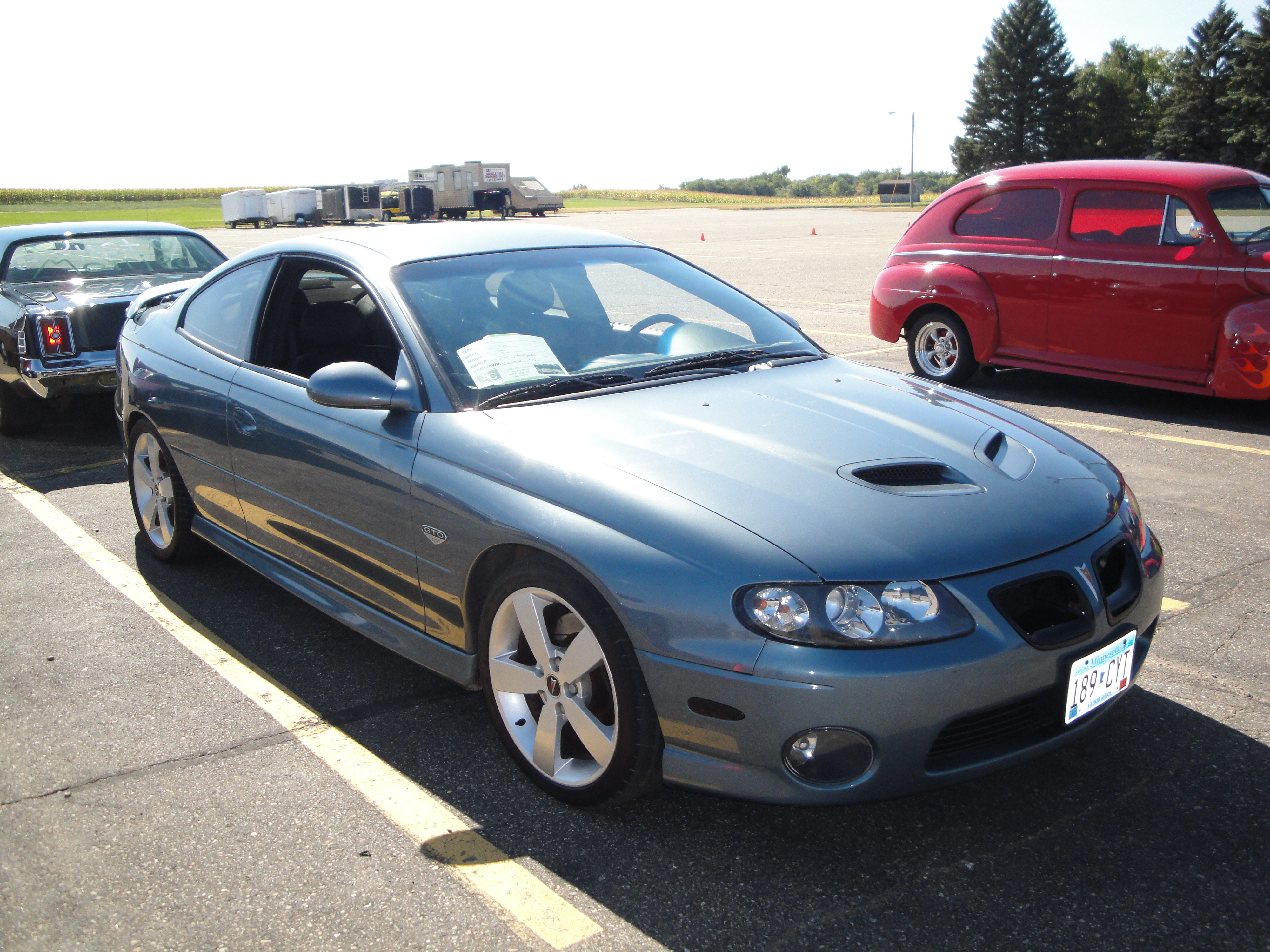
The Pontiac GTO is a classic American muscle car. In this story it’s used as a surprising non-Japanese drift entry, showing how drifting crossed over beyond Japan.
The Toyota Corolla Triana is a regular compact car, not the kind of car people usually expect to win drifting. This part emphasizes that it still managed to beat everyone, proving you don’t always need a super-special race car.
A twin run battle is when two cars drift side-by-side or in matched runs so you can judge who did it better. It’s a key part of how drifting competitions are scored and understood.
SEMA is a big U.S. car-industry event where companies and teams announce new stuff for cars and motorsports. The host is using it as a timeline marker for when a drifting-related development was announced.
Formula Drift is a drifting competition series where drivers battle while sliding their cars around corners. The show talks about how it was organized and judged in a way that made it easier for new viewers to understand.
Term
Suiso battle
A “Suiso battle” is a particular kind of drifting showdown where drivers try to slide in a coordinated, close way. The host is saying long-time Japanese drift fans understood that format immediately, but new fans didn’t.
Road Atlanta is a race track in the U.S. The host says Formula Drift started its first season there in 2004. Different tracks can change how drifting feels and how easy it is to follow on TV.
Place
Erwin Dale
Erwin Dale is the track the host says became the main home base for Formula Drift. They also explain that drifting can feel and look different depending on the track, including how drivers and fans can see the action.
Universal Pictures is the movie studio involved with the Fast and the Furious movies. The host says the studio noticed drifting and later worked with a director to bring the franchise to Tokyo.
The Dodge Viper is a sports car built for strong acceleration and high performance. It’s known for having a big engine and a focus on driving feel rather than comfort. The podcast mentions it because it was used in racing by drivers in competition.
The Dodge Charger is a well-known American car model. Here it’s mentioned as one of the cars a Formula Drift driver used, showing how American cars were getting competitive in drifting.
Justin Lin is a movie director. The host says he watched the first Fast and the Furious in theaters and later got hired to direct the next movie, helping bring drifting to the story.
Kaiichi Tsuchiya is a famous Japanese race driver who helped make drifting a real, respected driving style. In this story, he’s the expert they turned to so the movie would feel authentic.
“Drift king” is a title people use for the most respected drift driver. Here it’s describing Tsuchiya as the go-to expert because he’s a legend in drifting.
Toshi Hayama is the bilingual host who helped explain drifting to American fans. The episode credits him with bridging Japanese drifting and U.S. audiences.
Fast and the Furious: Tokyo Drift is the movie in the franchise that focuses on drifting. This episode explains how the filmmakers tried to make the drifting feel real by involving actual experts and drivers.
It means they film different pieces separately and then use editing/VFX later to make it look like everything happened together. In this case, they’re talking about whether the stunt was done for real or faked and then blended in after filming.
Hawthorne is a place in California where the movie filmed big racing scenes. The episode is pointing out that they used real locations there because closing streets in Tokyo is much harder.
Veilside is a Japanese company that customizes cars. In this story, they built the special RX-7 that became the movie’s main “JDM” look. It’s basically the real-world source of the car’s style.
Daikoku Futo is a famous parking area in Yokohama under the highway ramps. The episode says it was used by real car culture groups and then showed up in the movie as a key location.
LIVE
It's 2005 and something strange has happened.
A car culture developed on mountain passes at 2 in the morning then spread through magazines,
VHS tapes and internet forums has traveled so far from its origins that it's now a blockbuster
Hollywood franchise.
A film crew, a studio budget, a director doing his homework on video option footage.
What was once a private obsession practiced in secret on roads where nobody was watching
has become a global phenomenon.
But the strangest thing of all is that it's still growing and the newest evolution is so
popular that now Hollywood is coming all the way to Japan.
The Fast and the Furious Tokyo Drift was the culmination of the early 2000s JDM cultural
explosion and the Drift King himself, Kaichi Tsuchiya, was right there on set watching
it happen.
It was a long way from the mountains where he cut his teeth sliding a Toyota through
corners at 2 in the morning, but a lot can change in 30 years.
On today's episode of PASCAS, it's the evolution of Drift culture.
Guys thank you for listening, my name is Nolan Sykes, welcome to the show.
So, episode 10 baby, we are approaching the end here, but we still got a few episodes
to go and I'm very stoked to hop into this Tokyo Drift dude.
I remember when that first came out, not considered a good movie, but what's funny
is when a series continues to make movies, it's possible that some of them are even
worse than the third installment and people start to appreciate that one, especially Tokyo
Drift.
I mean, because it sort of captured that authentic Japanese feel, that's why it's looked back
on so fondly and also just the acting cred of Lucas Black and other actors in the film.
Anyway, Tokyo Drift is still a fun watch and even though it's still a very Hollywood treatment
of the JDM culture, still at the time one of the better representations at least in
American media.
But what we're going to learn today is the real side of that story, what was actually
going on over there, let's get right into it, how about that?
By the late 1990s, Kaiti Tsuchiya had already become something larger than himself.
The mountain passes that shaped him were still there, same roads, same corners, same physics,
but the culture he had helped create had grown into something that nobody, including
him, could have planned for.
Plus Spy had circulated, video option had expanded, a whole generation of drivers had
learned to drift not from a mentor at the side of a mountain, but from a VHS tape in
a living room.
Tsuchiya had spent years building something on those mountain roads, he just hadn't planned
on it going this far.
Daijira Inada had noticed.
Inada was the man who built option into the central nervous system of Japanese car culture
and made Tsuchiya a sensation with Plus Spy.
Now he was looking at drifting and seeing something familiar, a gap, the same kind of
gap that had existed between the enthusiast community and the mainstream before option
came along to fill it.
Drifting needed a more formal home, a competition, something that could keep growing.
The problem was, drifting doesn't work like normal motorsport, it doesn't reward whoever
crosses the finish line first, it's about angle, line, speed, and most subjectively style.
You judge it with your eyes, not a clock.
So building a competition meant building a language around something that had only ever
been communicated through demonstration, it meant taking what Tsuchiya did on a mountain
road and turning it into a criteria, a format, something a crowd could follow and a judge
could actually score.
It was nearly the same problem Plus Spy had solved, just in a different direction.
Tape had taken the drift technique and made it visible.
What Inada was now proposing, was taking that same technique and making it competitive.
Getting there though, meant going through the Japanese automobile federation.
The JAF had been drifting's institutional adversary from the beginning.
They were the same body that had suspended Tsuchiya's racing license over Plus Spy
nearly a decade earlier.
The irony was not lost on anyone.
Inada went through the process anyway.
Sanctioning the sport meant moving it off of mountain passes, which addressed exactly
the public endangerment concern the JAF had raised in the first place.
A production company called Sun Pros helped Inada navigate the JAF's requirements and
build the administrative scaffolding the series would need to exist.
Tsuchiya was brought into this process early.
He wasn't just the figurehead of drifting, he was its institutional memory.
The person who understood it better than anyone, what it was supposed to look like, what it
demanded from a driver and what separated genuine technique from imitation.
If you were going to build a framework for something that had never been formally judged,
you needed the person who had been doing it longer than anyone else at the table.
You would also need drivers.
They found them where option had always found its best material, in the community they had
spent years documenting.
The same toge drivers, tuning shop regulars, and grassroots drift competition veterans
that have been in magazines and videos since the 1980s.
Provisional contests were held in 1999 and 2000.
They tested formats and judging criteria.
They watched drivers do run after run, working out what the competition was actually measuring,
which brought them immediately to the hardest question the series had to answer.
How do you actually score it?
The criteria existed in broad form from the beginning.
Angle, line, speed, style, but they still needed to zero in on what each one actually meant.
Angle was defined by how sideways the car got and how long it held that position.
Line was about whether the driver was hitting the right path through each corner
while fully committed to the slide, not taking the safe route.
Speed was about whether the driver could carry their entry velocity all the way through,
not just survive the corner.
Style was the hardest to define, but the easiest to see.
The engine note, the smoke, you just knew it when you saw it.
With those four criteria agreed upon, the first D1 Grand Prix was set for October of 2000.
It was held at Abisu Circuit in Fukushima and originally titled the All Japan Professional
Drift Championship.
40 cars entered and 3,000 people came to watch.
Nobody there that day could have told you where it was going,
but they knew it was going somewhere and then it had to be big.
Abisu Circuit sits in the mountains of the Fukushima Prefecture,
far from Tokyo, far from the expressway and the tuning shops and the magazine offices that
had spent the previous decade turning Japanese car culture into something the world could see.
It was not a glamorous venue and it wasn't meant to be one.
The paddock sits close enough to the track that you can feel the heat coming off the
asphalt between runs.
The pit lane smells of rubber and fuel and the particular kind of focused anxiety that exists
in the place where something is about to be decided for the first time.
On the grid, 40 cars that carry the specific fingerprints of the people who built them,
not corporate machines, not identical spec sheet entries.
Each one is a set of choices made by the driver behind the wheel.
Nobuteru Taniguchi is here in the SKS-backed S15.
It started life as a yellow K office demo car before being sold to Taniguchi,
who painted it red and handed it to HKS.
A properly sponsored build that looked like what D1 was trying to become.
At the judging table, three people.
Kaichi Shuchio, of course, his name is the reason half the people here learned to drive in the
first place. Then you've got Minabu Suzuki, a former racing driver and option journalist,
the voice that have been part of the community's media infrastructure since before D1 even had a
name. Then there's Max Orido, winner of the Carboy Drift Grand Championship back in 1990,
the contest that predated everything being formalized here today.
The first event judged drivers individually.
Solo runs, three attempts each, scored on angle, line, speed and style by our decorated panel,
building criteria in real time and applying decisions that would immediately become precedent.
Yuichi Ebimura won the first round of the competition in an AE86.
He was 24 years old and his engine was a naturally aspirated 4A GE.
No turbo, no sequential gearbox, nothing the other teams would recognize as a weapon.
He beat them anyway on angle and timing alone.
Apparently, D1 was looking for drivers in the right places because he still holds the record
for the youngest driver to ever win a D1 Grand Prix event.
The crowd responded. It was working. The door was open to everything that everyone in attendance
thought was possible in the circuit. But there is still something missing.
What the first event made clear to everyone in the stands and the judging table was that
solo runs could show you technique, but they couldn't show you nerve. And nerve was the
thing the toge had always been testing. The thing that made the mountain pass compelling
was never a single car on the road. That was entertaining, sure. But it couldn't beat two
cars. The chase, the gap, the specific pressure of having someone behind you and trying to close
the distance and someone in front of you trying to hold it. From round two of the 2001 season,
D1 introduced the Suiso or Twin Run. The format wasn't invented for D1. It was simply lifted
directly from the mountain pass tradition that produced every driver in the field.
Two cars released together, one leading, one chasing. Single elimination. The chase car had
to follow the lead as closely as possible. Take the same line, the same angle, the same proximity.
Contact was not the goal, but it was always a possibility, and every person watching knew.
That changed the temperature of every run.
When the all-Japan professional drift championship rebranded to the D1 Grand Prix,
it did so with this whole competition system in place. Blitz arrived as a sponsor, an HKS,
then a PEXI. These were the aftermarket brands that had built their reputations inside exactly
the communities D1 was now formalizing. They knew what the series was before it had proven itself
to anyone outside the room. Their sponsorship meant one thing. D1 was now worth backing.
But it was not yet visible to the world outside Japan.
There were no international broadcasts, no English language coverage, no pathway for a
tuner or enthusiast outside Japan to even know what was happening at a B-suit.
To understand how drifting became what it is now, you have to go even further back
to a track in the California desert where Tajira Anata planted something in the ground
that would take the better part of a decade to fully grow.
So that's where the lovely people at Shopify come in and help you out.
Shopify is the e-commerce platform behind millions of businesses around the world.
And 10% of all e-commerce in the United States is pretty incredible.
How big Shopify is. They are perfect for your small business. They're perfect for any size
business. Get started with your own design studio with hundreds of ready-to-use templates.
Shopify helps you build a beautiful online store that matches your brand style. That's right.
It also helps you accelerate your efficiency. Whether you're unloading new products or trying
to improve existing ones, Shopify is packed with helpful tools that can write product descriptions,
page headlines, and even enhance your product photography.
So it's time to turn those what-ifs into...
With Shopify today, sign up for your $1 per month trial today at Shopify.com
slash gas. Go to Shopify.com slash gas. One more time. That's Shopify.com slash gas.
80 miles north of Los Angeles sits Willow Springs Raceway, a fast track in the high desert.
It has absolutely nothing in common with a mountain pass in Nagano or the circuit in Fukushima.
But it's the oldest permanent road course in the United States, running continuously since 1953.
Willow Springs is one of my favorite places, I think. We've shot so many videos there. I mean,
car YouTube in general, I think, owes a lot of its existence to Willow Springs. A lot of people
like Matt Farah, early iterations of the drive, and other early YouTube car YouTube channels
going there to test out. I mean, Hagerty making really great videos out there all the time. I
love it. I actually just went out with my Civic for the first time to go to Big Willow, race there,
and man, it's just such a fun track. So fast, really fast. Yeah, I really can't wait to build
my mansion next to the track and complain about the noise. It's going to be great.
By 1996, Willow Springs had seen everything the world of motorsport had to offer.
Except drifting. That year, Option Magazine organized a drift demonstration event.
It was the first of its kind on American soil. Anata and Tsuchiya made the trip from Japan,
bringing with them a Nissan 180SX shipped over specifically for the occasion.
Kenji Okazaki was also in the building. An NHRA funny car drag racing veteran who existed at
the crossroads of Japanese and American car culture, he was one of the few people in America
that could sit at a judging table with Anata and Tsuchiya and understand what they were looking at.
The event ran. Drivers competed. Tsuchiya showed off in the 180SX. And the winner of the event
was Ahanda Civic.
As we've covered in this series, it kind of makes sense that this happened. The Civic was
the car, full stop. California's entire enthusiast infrastructure had been built around the Civic for
the better part of a decade. VTEC, bolt on mods, forum culture, the entire ecosystem of the American
import scene at the time revolved around the Civic. The idea that a rear wheel drive Japanese
cars sliding through corners was the pinnacle of driving technique hadn't fully arrived yet.
But it was coming. As Anata and Tsuchiya flew home, a small number of people stood on the
edge of that California track replaying what they had just seen. Something about it didn't fit neatly
into anything they already knew. One of those people was Jim Law.
Law had grown up in the import car world. It worked at Sport Compact Car as an intern,
then moved into import drag racing with the IDRC series and eventually landed at hot import nights.
That was the touring event series that had become one of the primary gathering points
for the American import community through the 1990s and into the early 2000s.
Law liked cars. He liked the culture. He also liked it enough to notice with increasing clarity
what was wrong with the events he was helping to produce.
Showcar styles were being taken from racing, the wings, the body kits, the visual language of
competition. But the people building those cars had never been to an actual racetrack.
There was a disconnect at the heart of the import scene between the aesthetics of performance
and its reality. So Law left hot import nights and with his partner Ryan Sage formed Slipstream
Global Marketing. It was a marketing and consulting agency working primarily with companies in the
Japanese automotive aftermarket. Think Gretti, Trust and HKS, the brands that had been building
their American presence through the exact same channels Law was in. Then the D1 Grand Prix called.
By 2003, D1 was three seasons old and growing fast. Yokohama had come on as the title sponsor
the previous year. The field had grown from 40 cars in Abisu in 2000 to over 60 across a seven
round domestic calendar that now included the iconic Fuji Speedway. D1 wanted to stage an
exhibition event in the United States. Professional drifting had never been presented as a standalone
competitive event on American soil before. The 1996 Willow Springs demonstration had been exactly
that. A demonstration. This would be different. All they needed was an American partner who
understood the market, which brings us to Irwindale Speedway in August 2003.
Yeah, so Irwindale is like it was a combo drag strip and short oval racing venue. It was over
in Irwindale, California about an hour from our office here. Yeah, at the time surrounded by like
not a lot. Like there's like a mine next door. Now it's surrounded by like Amazon
fulfillment warehouses. Other sort of like consumer warehouses, probably a data center in there.
It felt like Irwindale was going to close for years because there's like rumors of them wanting to
build a mall on the property. But then there was like a soil survey and it found that the soil was
too soft. And if there's ever like a big earthquake that anything built on it would sink into the
ground. So that kept it open for a while. Eventually Formula Drift would go to Irwindale.
That was the final event of the year. The house of Drift. Really good time out there. The Hoonigan
burn pit was out there, like a burnout box area. Just another center of car culture here in SoCal.
Unfortunately, it closed last year. We went to the final kind of testing tonight. And yeah,
it sucks that it closed. It's a really cool spot. August 2003.
The parking lot was filled before noon. By the time the gates opened, cars were backed up along
the access road and spilling onto the surrounding streets. People had driven from up and down the
state from San Diego to the Bay Area to the Central Valley, maybe the Central Coast, to see
something that had never happened before. Official attendance was somewhere north of 9,000 people.
It was the largest crowd ever assembled to watch a dedicated Drift event anywhere outside of Japan.
27 D1 competitors from Japan, nine American drivers who had qualified at a driver's search
held earlier in the year. All of them given two solo qualifying runs with the top 16 advancing
to elimination rounds. Then the Suisu format would determine who went home with the trophy.
Japan pulled up with their best.
Nobuteru Taniguchi in the HKS Sylvia, pulling 480 horsepower from a stroke 2.2 SR20.
Yuiichi Imamura in the Apexi Mazda RX-7,
built from a US spec chassis specifically for this American round. Ken Nomura or Nomuken left an
impression with his signature smoke trails from his Blitz sponsored Nissan Skyline R34 sedan.
If you didn't have that car in Gran Turismo, what are you doing?
2 non-Japanese drivers made the final 16, Ernie Fixmer in a Rotaru Nissan 240SX,
and Reese Millen in a Pontiac GTO. I'd love that car. Millen's GTO is so sick, unfortunately
though neither made it past round 1. American drivers like Ernie Fixmer,
were not there to beat Japan. They were there to establish that America had drivers in the first
place. Japan's own Ketsuhiro Ueo walked away with the title, doing so in the strangest car in the
field. He had come to Irwindale in an 8086. Not a turbocharged purpose-built D1 machine running
400 horsepower through a sequential gearbox, it was a Toyota Corolla Triana. The same platform
in Nomura had used to win the very first competition in 2000, and that Tsuchiya had
made famous on the Toge had come to California and beaten everyone.
Law watched all of it from inside the event he had spent nine months building.
He had promoted it to an audience that didn't have a word for drifting.
He had explained the Suiso format to people who had never seen a twin run battle.
He did not go back to D1 to ask about a partnership. He and Ryan Sage started their
own series. They gave D1 a courtesy call, assembled four events, secured sponsors,
and announced it at the 2003 SEMA show in Las Vegas.
Formula Drift was born. It wasn't just D1 with an American accent. Law and Sage made
deliberate choices about judging criteria and event structure that helped give the series
its own identity. Plus, Erwin Dale was a banked oval, not a Japanese circuit.
The physics were different. The sightlines crowd was different.
D1 fans already knew what a Suiso battle was supposed to look like,
but what worked at Abisu, where a knowledgeable audience already understood what they were
watching, didn't automatically translate to Southern California fans who were encountering
drifting for the first time. Formula Drift's first season opened in May of 2004 at Road Atlanta,
but Erwin Dale became its spiritual home, the House of Drift. Within a few years,
the series had TV deals, OEM sponsorships from Ford and Toyota, and a roster of American
drivers who could finally hold their own against the Japanese. Somewhere in Hollywood,
execs at Universal Pictures were paying attention.
It was actually kind of easy to find Formula Drift, I think at this time. If you had cable or
direct TV and you had G4, that's where that TV deal came in. It was G4 Tech TV was showing
Formula Drift events, and that's where I first saw it. I think I was like 12 or something,
and I remember seeing Reese Millen's car, the GTO, which I mentioned, loved that car.
Then there was Sam Hubernett, had a Dodge Charger at some point. He also ran a Viper
in the series, Ken Gushi, but again, it was there. It was out there if you're looking for it.
Justin Lin was a film student when the Fast and the Furious first opened in 2001.
He saw it in a sold out theater and felt, he later said, the specific electricity of a crowd
that completely surrendered to something. When Universal approached him in June of 2005 to direct
a third installment of the franchise, the pitch was straightforward. Take the series to Tokyo,
make drifting the discipline at its center, and build something that felt real.
Lin had recently directed Better Luck Tomorrow, a film about Asian American teenagers that
showed he could work inside subcultures without being condescending. He understood that authenticity
was what the audience wanted before he even understood drifting.
So he started doing his homework.
He watched video option footage. He studied D1 Grand Prix runs. He looked at what the American
import scene had been building toward, then looked at what the Japanese scene had been
doing in parallel. The distance between them was not as large as Hollywood had been treating it.
The culture was real, the technique was real, and the cars were real.
What the film needed now was someone who had been inside all of it from the beginning.
Lil Bow Wow. I mean, he had graduated to just Bow Wow at this point. Also, just kidding.
Bow Wow was in the movie, but we're talking about our boy, Kaiichi Tsuchiya,
who had just stepped back from his professional racing career.
He had spent the better part of three decades competing at the highest level of motorsport,
but now the retired drift king was the person that Japanese car media turned to when it needed
someone to talk about the culture. Lin's route to him ran through Toshi Hayama.
Hayama was the bilingual MC who had been calling D1 Grand Prix events at Irwindale from the beginning.
He stood trackside with a bullhorn, translating Tsuchiya's judging commentary in real time
for American audiences who didn't speak Japanese. Standing there with the drift king on one side of
him and 9,000 new drift fans on the other, one man connecting two sides of the Pacific Ocean
made Hayama as responsible for drifting's American foothold as anything that happened on track.
When the Fast and the Furious Tokyo Drift went into pre-production, Hayama was brought in as a
technical consultant via an old friend of Lin's. From inside the production, Hayama pushed hard
every day for real cars and real drivers, and it was through his network that the production
found its way to Tsuchiya. They met with him at Willow Springs, the same track where Anata and
Tsuchiya had run that first drift demo back in 96. Tsuchiya had one condition before he agreed to
help with the film, that there would be no CGI drifting. It would be real cars, real technique,
or he was out. He wasn't interested in spending months teaching a stunt team to approximate
something on a California backlot while the actual technique got composited in post-production.
If they wanted him, they were going to do it properly. The production said yes.
Tsuchiya joined on as a stunt coordinator, driver, and eventually, even as an actor playing a fisherman.
Principal photography began in August of 2005 and ran until November, splitting time between Tokyo
and Los Angeles. The street scenes, the aerial shots, and the texture of the city came from Japan.
The bulk of the stage racing sequences were shot in California, primarily at a closed
mall in Hawthorne and on industrial roads near the port. Tokyo's streets were difficult to close
for a Hollywood production, so Lin was forced to film some of these scenes without permits.
A stunt double was even arrested by Tokyo police during one shoot. The city pushed back at every
turn, which was fitting. The culture the film was depicting had never been easy to pin down either.
The centerpiece car was a Veilside Fortune RX-7 in Sunset Orange Pearl.
Driven by Han, the film's most culturally literate character. He was the one who felt like he had
actually lived inside the world the film was depicting. Veilside had built the car as a show
piece for the 2005 Tokyo Auto Salon, where it won Best Car & Show, making it the perfect vehicle
to carry the visual language of Japanese tuning culture onto the big screen. So the production
team found it, bought it, and repainted it. Nine extra cars were eventually built to the
same specifications for stunts, and only two survived the shoot.
Think about that timeline. The car went from winning Best of Show in January of 2005 to
being on a Hollywood set by August in a different color performing a different role.
And that's roughly what Tokyo Drift was doing with the culture it borrowed from,
taking something built on Japanese terms and repackaging it for a global audience.
Not erasing where it came from, just giving it a new coat of paint.
Daikoku Futo, the parking area beneath the looping expressway ramps in Yokohama that the
Midnight Club had used as a staging ground, appeared in Tokyo Drift as the location where
the main character, Sean, first encounters the underground drift scene. It began as a meetup
spot hidden in the back pages of newspapers. Decades later, that same slab of concrete was
lit for a film scene in cinemas around the world by people who had no idea the place had any history
at all. Tsuchiya was written into the film for a cameo as a fisherman sitting on a dock,
watching Sean attempting to drift for the first time. The camera finds him in civilian clothes,
fishing rod in hand, watching a foreign kid clumsily attempt the thing he did best.
His first line, delivered in Japanese and subtitled,
call that drifting? Later, after Sean has picked up what Han had taught him,
the camera finds Tsuchiya again. He watches Sean make a clean run.
Turns to his companion and says, not bad.
Two lines. That was his entire role. But look at everything contained inside that simple dialogue.
First, judgment. A master watching a student who hadn't earned the right to be called that yet.
Then, something rarer. Approval. Not for the technique, but for what happened to it.
The discipline crossed the Pacific, moved through a fictional Tokyo underground,
got filtered through a Hollywood screenplay, and came out the other side still recognizable.
Not bad.
The film opened in June of 2006 and grossed $158 million worldwide, the lowest of the franchise
at the time of release. The critical reception was mixed at best. Rob Cohen, who had directed
the original, was openly dismissive of it. But what did Rob Cohen know? In the years that followed,
Tokyo Drift was gradually reappraised as a film in the series most sincere about car culture.
The one where the cars were less set dressing and more subject matter.
Roger Ebert was one of the few to notice this early. He gave it three out of four stars and wrote
that it was more observant than expected. Tsuchiya had already delivered his verdict from the dock.
Not bad. Coming from the man who built the whole thing, those two words were the closest thing
to a blessing the global drift culture was ever going to get. Which is all it needed.
By the end of the 2000s, drifting was everywhere.
TV deals, stadium crowds, the big screen, what had started on mountain roads in the middle of
the night with no audience and no rulebook had become one of the most recognizable motorsports
on the planet. The culture had achieved escape velocity. It had traveled so far from its origins
that it became something its founders could watch from the outside. It had its own momentum,
its own language, and a generation of people who would carry it forward into places no one
at Abyssu could have ever imagined. Which is exactly what success looks like. But the story
wasn't quite over. Because while drifting was exploding in popularity, something else was
happening in Japanese design studios. Engineers who had grown up watching Tsuchiya on VHS were
now the ones signing off on production cars. And they had their own legends to make.
Cars built not to create a culture, but for people who were already a part of it.
Every design decision and engineering choice made in full awareness of what came before.
This generation didn't need to invent a mythology, they just had to live up to it.
Next time on PassGas, we explore the last generation of halo cars.
Guys, thank you so much for listening to this episode. My name is Nolan Sykes.
Big thank you to our writers, as always, Anthony Hardin, Greg Nix, Audrey Holden.
Thank you to Joe, sitting across from me at The Mixer. Big thank you to our editor, Mark Schroeder.
And again, big thank you to you for supporting this series so far. We got two episodes and then a
kind of wrap up episode at the end. So three episodes left of this series. So stick with us.
Man, this has been a lot of fun. And I love doing this. So anyway, we will see you next time on PassGas.
Thanks for listening.
About this episode
Early-2000s JDM drifting culture gets traced from secret mountain practice to Hollywood’s “Tokyo Drift,” with Kaichi Tsuchiya showing up as a real authority. The hosts break down how drifting became a judged sport—angle, line, speed, and style—then evolved into Twin Run battles that revealed “nerve.” They connect that structure and visibility to Formula Drift’s growth and Universal’s interest, while detailing how real cars, tracks, and even a Veilside RX-7 helped sell authenticity.
In this episode, we explore the unbelievable evolution of drift culture. From Keiichi Tsuchiya—the legendary "Drift King"—cutting his teeth by sliding through dark corners, to the creation of the D1 Grand Prix and the birth of Formula Drift, drifting had to invent its own competitive rules and scoring systems from scratch. Join us as we dive into how this underground Japanese phenomenon captured the world's attention, conquered the American car scene, and eventually demanded absolute authenticity on the set of The Fast and the Furious: Tokyo Drift. Thanks to Shopify for sponsoring this episode! Sign up for your one-dollar-per-month trial today at https://www.Shopify.com/Gas