S2 Ep10: The Golden Era of JDM: The Secrets That Made Tokyo Drift Successful
About this episode
Early-2000s JDM drifting culture gets traced from secret mountain practice to Hollywood’s “Tokyo Drift,” with Kaichi Tsuchiya showing up as a real authority. The hosts break down how drifting became a judged sport—angle, line, speed, and style—then evolved into Twin Run battles that revealed “nerve.” They connect that structure and visibility to Formula Drift’s growth and Universal’s interest, while detailing how real cars, tracks, and even a Veilside RX-7 helped sell authenticity.
Thanks to Shopify for sponsoring this episode! Sign up for your one-dollar-per-month trial today at https://www.Shopify.com/Gas
JDM cultural explosion
"The Fast and the Furious Tokyo Drift was the culmination of the early 2000s JDM cultural explosion and the Drift King himself, Kaichi Tsuchiya, was right there on set watching it happen."
JDM means “Japanese cars for Japan.” The “cultural explosion” is when a lot more people around the world started getting into that Japanese car scene—especially drifting and street-racing vibes.
“JDM” stands for Japanese Domestic Market, and the “cultural explosion” refers to the early-2000s surge of interest in Japanese cars and street racing/drifting culture outside Japan. In this segment, it’s framed as the backdrop that made the movie feel timely and influential.
Kaichi Tsuchiya
"The Fast and the Furious Tokyo Drift was the culmination of the early 2000s JDM cultural explosion and the Drift King himself, Kaichi Tsuchiya, was right there on set watching it happen."
Kaichi Tsuchiya is a famous Japanese drift driver. The hosts mention him because he was actually on set, connecting the movie to real drifting culture.
Kaichi Tsuchiya is a legendary Japanese drifting driver often credited with helping popularize modern drift driving. The segment notes him watching the filming of “Tokyo Drift,” linking real drift culture to the Hollywood portrayal.
Drift culture
"On today's episode of PASCAS, it's the evolution of Drift culture."
“Drift culture” means the scene around drifting—people who practice it, talk about it, and build a community around it. The host is saying the episode will trace how that scene grew into something mainstream.
“Drift culture” refers to the community and lifestyle around drifting—how it’s practiced, shared, and celebrated through events, media, and online forums. In this episode framing, it’s the main subject: how drifting went from private road practice to mainstream entertainment.
Kaiti Tsuchiya
"By the late 1990s, Kaiti Tsuchiya had already become something larger than himself."
Kaiti Tsuchiya is a famous Japanese driver who helped make drifting a real “scene,” not just something people did on mountain roads. His driving and media appearances made drifting much more widely known.
Kaiti Tsuchiya (often spelled Keichi Tsuchiya) is a key figure in Japanese drifting culture. He’s closely associated with the mountain-road origins of drift driving and helped popularize it through media like Plus Spy.
VHS tape
"a whole generation of drivers had [197.5s] learned to drift not from a mentor at the side of a mountain, but from a VHS tape in [202.7s] a living room."
A VHS tape is an old-school home video format. The point here is that people learned drifting by watching videos at home, not only by going to mountains with a mentor.
A VHS tape is a consumer video format that was widely used for home recording and playback. The transcript uses it to explain how drifting knowledge spread—people learned from recorded driving rather than from in-person coaching.
Daijira Inada
"Daijira Inada had noticed. [216.7s] Inada was the man who built option into the central nervous system of Japanese car culture"
Daijira Inada is portrayed as someone who helped shape how Japanese car culture talked about and followed cars and drifting. He’s credited with helping make Tsuchiya famous through the drifting media ecosystem.
Daijira Inada is described here as the person who helped embed “option” into Japanese car culture and used Plus Spy to turn Tsuchiya into a sensation. In this context, he represents the media/scene-builder role that helped drifting become organized and mainstream within Japan’s enthusiast world.
option
"Inada was the man who built option into the central nervous system of Japanese car culture [221.1s] and made Tsuchiya a sensation with Plus Spy."
“Option” here means the culture of customizing cars—choosing parts and looks in a way that’s recognizable to enthusiasts. The host is saying it helped turn a niche scene into something people could talk about and follow.
In Japanese car culture, “option” refers to a style-and-modification mindset (and the media/scene around it) that emphasizes specific aesthetic and performance choices. The transcript frames it as a “language” that helped connect enthusiasts and make the culture easier to understand and grow.
drifting
"The problem was, drifting doesn't work like normal motorsport, it doesn't reward whoever [249.3s] crosses the finish line first, it's about angle, line, speed, and most subjectively style."
Drifting is when a driver deliberately slides the car sideways through a turn while still controlling it. In drift competitions, judges care more about how well and how stylishly you slide than just who finishes first.
Drifting is a driving technique where the car is intentionally kept sideways while maintaining control through a corner. Unlike traditional racing that’s judged by who crosses the finish line first, drift competitions focus on measurable elements like angle and speed, plus subjective style.
Angle
"Angle was defined by how sideways the car got and how long it held that position."
Angle is how sideways the car is during the drift, and whether it stays that way. Judges use it to see if the slide is real and controlled, not just a quick wiggle.
In drifting judging, angle refers to how sideways the car gets and how long it maintains that sideways attitude during the run. It’s one of the core criteria because it directly reflects the driver’s ability to sustain a controlled slide.
Line
"Line was about whether the driver was hitting the right path through each corner [430.7s] while fully committed to the slide, not taking the safe route."
Line means the path the car follows through the corner. Judges want the driver to commit to the drift and hit the right route, not just avoid trouble.
In drifting scoring, line is about whether the driver hits the intended path through each corner. The segment emphasizes that judges look for commitment to the slide rather than taking the safer, more direct route.
entry velocity
"Speed was about whether the driver could carry their entry velocity all the way through, [443.1s] not just survive the corner."
Entry velocity just means how fast the car is when it starts the corner. In drifting, keeping that speed while you slide is a big deal because it shows the driver is in control.
Entry velocity is the speed a driver has when they commit to a corner—right as the car turns in. In drifting scoring, it matters because carrying that speed through the slide shows control and momentum, not just surviving the turn.
Speed
"Speed was about whether the driver could carry their entry velocity all the way through, [443.1s] not just survive the corner."
Speed here means how fast the driver can go while still drifting through the corner. Judges look for speed that proves the drift is controlled, not slow or cautious.
In drifting judging, speed measures whether the driver can carry momentum through the corner while still maintaining the slide. The idea is that a good drift isn’t just controlled—it’s also fast enough to show real commitment.
Style
"Style was the hardest to define, but the easiest to see. [453.3s] The engine note, the smoke, you just knew it when you saw it."
Style is the part of drifting judging that’s harder to put into a simple rule. It’s more about the overall impression—how the car sounds and looks while it’s sliding.
In drifting judging, style is the most subjective criterion—harder to define than angle, line, or speed. The segment describes it as something you can “see,” like the engine sound and smoke, which signal how dramatic and authentic the drift is.
D1 Grand Prix
"With those four criteria agreed upon, the first D1 Grand Prix was set for October of 2000."
D1 Grand Prix is a major Japanese drifting competition. It helped standardize how judges score drifts so everyone is judged the same way.
D1 Grand Prix is a Japanese professional drifting series that formalized how tandem and solo drift runs are judged. The episode describes how the series locked in scoring criteria—angle, line, speed, and style—so drivers could be evaluated consistently.
Abisu Circuit
"It was held at Abisu Circuit in Fukushima and originally titled the All Japan Professional [472.9s] Drift Championship. [500.3s] Abisu Circuit sits in the mountains of the Fukushima Prefecture,"
Abisu Circuit is a race track in Fukushima, Japan. The episode emphasizes it was far from Tokyo and not a flashy venue, but it hosted early big drifting events.
Abisu Circuit is a motorsport venue in Fukushima, Japan, used early on for major drifting events. In this segment, it’s framed as a remote, non-glamorous setting that helped the sport grow away from Tokyo’s mainstream tuning and media scene.
All Japan Professional Drift Championship
"It was held at Abisu Circuit in Fukushima and originally titled the All Japan Professional [472.9s] Drift Championship. [476.6s] 40 cars entered and 3,000 people came to watch."
The All Japan Professional Drift Championship was the early name for what later became the D1 Grand Prix era of pro drifting. The segment links it to the moment the sport’s judging criteria were finalized for a major national competition.

SKS-backed S15
"Nobuteru Taniguchi is here in the SKS-backed S15."
The Nissan Silvia S15 is a popular Japanese car for drifting. It’s rear-wheel drive and has lots of aftermarket parts, which is why it shows up in drift builds like the one mentioned here.
The Nissan Silvia S15 is a JDM drift icon from the late 1990s/early 2000s, known for its rear-wheel-drive balance and strong aftermarket support. In this segment, the host ties the S15 to a specific, community-backed build associated with drifting culture.
Nobuteru Taniguchi
"Nobuteru Taniguchi is here in the SKS-backed S15."
Nobuteru Taniguchi is a well-known Japanese drifting driver associated with early D1-era competition. In this segment, he’s presented as the driver behind the SKS-backed S15, tying a specific car history to a real competitor.
HKS
"who painted it red and handed it to HKS."
HKS is a well-known Japanese company that makes performance parts for cars. When a build is “handed to HKS,” it usually means they’re involved in tuning or supplying parts.
HKS is a Japanese performance parts brand known for turbo kits, exhausts, and engine tuning. In the transcript, HKS is mentioned as the recipient of the car after it was repainted, signaling a sponsored build path common in Japanese motorsport.
D1
"A properly sponsored build that looked like what D1 was trying to become... the voice that have been part of the community's media infrastructure since before D1 even had a name."
D1 is a major Japanese drifting competition. It helped turn drifting into a more organized sport with rules and judging, and it also became a hub for the community.
D1 refers to the Japanese drift competition/series that helped formalize modern drift judging and driver progression. The segment frames it as a community institution that existed before the “name” became official, emphasizing how drift culture and media grew together.
Yuichi Ebimura
"Yuichi Ebimura won the first round of the competition in an AE86."
Yuichi Ebimura is the driver credited with winning the first round. The story uses his AE86 win to show that you don’t always need big turbo power to do well in drifting.
Yuichi Ebimura is identified here as the driver who won the first round of the competition in an AE86. The segment uses his win to support the idea that driver skill and car balance mattered even without turbo power.

Toyota Ae86
"...mura won the first round of the competition in an AE86. He was 24 years old and his engine was a natural..."
The Toyota Corolla is a small everyday car made by Toyota. Some versions—like the AE86—are popular for racing because they’re light and can be modified for performance. That’s likely why it’s being mentioned in a competition story.
The Toyota Corolla is a compact car that’s been produced for decades, and it’s especially significant in motorsport because it has a long history of being raced and modified. In the context you shared, it’s mentioned alongside the AE86, a Corolla generation that’s well known for its lightweight, rear-wheel-drive layout and natural-aspirated engine setups. That’s why it comes up in discussions about drivers and competition builds.
naturally aspirated 4A GE
"He was 24 years old and his engine was a naturally aspirated 4A GE."
Naturally aspirated means the engine doesn’t use a turbo to force extra air in. The 4A-GE is the specific Toyota engine used in the AE86, and the point here is that it didn’t need turbo power to compete.
“Naturally aspirated” means the engine makes power without a turbocharger or supercharger, relying on atmospheric air pressure. The “4A-GE” is Toyota’s 1.6L four-cylinder engine family used in the AE86, and the transcript emphasizes that this setup was non-turbo and still effective for drift judging.
sequential gearbox
"No turbo, no sequential gearbox, nothing the other teams would recognize as a weapon."
A sequential gearbox changes gears in a fixed order, like stepping through them one-by-one. The host is saying the AE86 didn’t need that kind of race-focused transmission to be competitive.
A sequential gearbox is a transmission where you move through gears in order (typically with a lever or paddles), rather than using an H-pattern. The transcript contrasts it with the AE86’s setup to underline that the car didn’t rely on “race-tech” shifting hardware to win.
nerve
"solo runs could show you technique, but they couldn't show you nerve. And nerve was the thing the toge had always been testing."
Here, “nerve” means how brave and committed the driver is. It’s about how confidently they keep pushing even when the situation is tense and mistakes could happen.
In drifting judging language, “nerve” refers to the driver’s willingness to commit to risky, high-stakes driving—staying aggressive even when mistakes are costly. The hosts contrast it with solo runs, which can show technique but may not reveal how confidently a driver pushes under pressure.
toge
"And nerve was the thing the toge had always been testing. The thing that made the mountain pass compelling was never a single car on the road."
“Toge” refers to Japan’s mountain-pass driving culture—twisty roads where drivers push hard. The idea is that it tests how well someone can drive under real pressure, not just show off skills in a calm run.
“Toge” is short for Japan’s mountain-pass street driving culture, where drivers attack winding roads for speed and control. The hosts describe it as a proving ground for the kind of pressure and commitment (“nerve”) that later influenced how D1 structured competition.
Suiso or Twin Run
"From round two of the 2001 season, D1 introduced the Suiso or Twin Run. The format wasn't invented for D1. It was simply lifted directly from the mountain pass tradition..."
Twin Run is a drift competition setup where two cars go at the same time. One car leads and the other tries to follow as closely as possible, so it feels more like a real race between drivers.
In D1 Grand Prix, the Suiso (Twin Run) format pairs two cars released together: one leads and one chases. The chase car is expected to mirror the leader’s line, angle, and proximity, which turns drifting into a direct “battle” rather than just a solo display of skill.
Blitz
"Blitz arrived as a sponsor, an HKS, then a PEXI. These were the aftermarket brands that had built their reputations inside exactly the communities D1 was now formalizing."
Blitz is a company that makes aftermarket performance parts for cars. The episode mentions it as a sponsor during the time when D1 was growing into a bigger, more official series.
Blitz is an aftermarket performance brand that sponsors motorsport and drift communities. In this episode, the host mentions Blitz as an early sponsor tied to the period when D1 Grand Prix was formalizing and becoming “worth backing.”
PEXI
"Blitz arrived as a sponsor, an HKS, then a PEXI. These were the aftermarket brands that had built their reputations inside exactly the communities D1 was now formalizing."
PEX (as mentioned in the episode) is an aftermarket tuning brand. The episode uses it to show that the drift scene’s existing parts companies were backing D1 before it got big internationally.
PEX is referenced here as an aftermarket brand involved with D1 Grand Prix sponsorship. The host’s point is that these companies already had credibility within the drift/tuning community before D1 became widely visible outside Japan.
B-suit
"no pathway for a tuner or enthusiast outside Japan to even know what was happening at a B-suit."
This sounds like a word for the kind of car fans outside Japan who might not have known about D1 yet. The transcript wording is unclear, so it may be a mis-heard term.
“B-suit” appears to be a transcription of a niche term related to the audience/tuning scene outside Japan—used to describe how enthusiasts couldn’t even know what was happening in D1. Because the exact word is unclear, treat this as a likely transcription error rather than a standard automotive term.
Willow Springs Raceway
"80 miles north of Los Angeles sits Willow Springs Raceway, a fast track in the high desert. It has absolutely nothing in common with a mountain pass in Nagano or the circuit in Fukushima."
Willow Springs Raceway is a real race track in Southern California. Car creators and drivers like it because it’s fast and challenging, and a lot of people go there to test and film cars.
Willow Springs Raceway is a well-known racing circuit in the high desert north of Los Angeles. It’s especially famous in car culture and motorsport media because it has multiple track layouts and has hosted decades of testing and track-day activity.

Nissan 180SX
"bringing with them a Nissan 180SX shipped over specifically for the occasion. Kenji Okazaki was also in the building."
The Nissan 180SX is a Japanese sports car that’s set up to be fun to drive, especially for sliding and drifting. Here, it’s the exact car the two Japanese drivers used to show what their style of driving looked like.
The Nissan 180SX is a Japanese-market compact sports coupe known for its rear-wheel-drive layout and drift-friendly balance. In this segment, it’s the specific car Anata and Tsuchiya brought to demonstrate Japanese driving culture on American soil.
Kenji Okazaki
"Kenji Okazaki was also in the building. An NHRA funny car drag racing veteran who existed at the crossroads of Japanese and American car culture, he was one of the few people in America that could sit at a judging table with Anata and Tsuchiya and understand what they were looking at."
Kenji Okazaki is a drag-racing veteran from the NHRA. In this story, he helps connect the Japanese drivers’ perspective with the American event and judging.
Kenji Okazaki is described as an NHRA funny car drag racing veteran, placing him at the intersection of Japanese and American motorsport culture. His role here is as someone who could judge what the Japanese drivers were looking at, bridging two different racing worlds.
VTEC
"California's entire enthusiast infrastructure had been built around the Civic for the better part of a decade. VTEC, bolt on mods, forum culture, the entire ecosystem of the American import scene at the time revolved around the Civic."
VTEC is Honda’s technology that helps an engine make more power when you need it, like at higher RPMs. The episode mentions it because it became a big part of why people got excited about Civics in the import scene.
VTEC (Variable Valve Timing and Lift Electronic Control) is Honda’s system for changing valve timing and lift to improve performance across different engine speeds. In this segment, VTEC is cited as part of the “ecosystem” that helped define the American import scene around the Civic.
bolt on mods
"VTEC, bolt on mods, forum culture, the entire ecosystem of the American import scene at the time revolved around the Civic."
“Bolt-on mods” are car upgrades you can usually install without special fabrication work—more like swapping parts than rebuilding the car. The episode mentions them to explain why the Civic scene was easy for people to join and customize.
“Bolt-on mods” are aftermarket upgrades that can be installed with minimal fabrication—typically replacing or adding parts without major engine or chassis machining. The segment uses it to describe how the Civic import scene encouraged accessible, DIY-friendly performance changes.
rear wheel drive Japanese cars sliding through corners
"The idea that a rear wheel drive Japanese cars sliding through corners was the pinnacle of driving technique hadn't fully arrived yet. But it was coming."
They’re talking about the driving style where a rear-wheel-drive car intentionally slides through a turn. The episode says that kind of technique wasn’t fully part of the American scene yet, but it was coming.
This phrase points to the drift-style driving idea—using a rear-wheel-drive car to rotate and slide through corners. The host contrasts it with what the American import scene was focused on at the time, suggesting that the “drift as technique” mindset hadn’t fully arrived yet.
Jim Law
"One of those people was Jim Law. Law had grown up in the import car world. It worked at Sport Compact Car as an intern, then moved into import drag racing with the IDRC series and eventually landed at hot import nights."
Jim Law is someone deeply involved in the import car scene. The episode says he realized that a lot of the cars being built for shows looked like racing, but the builders hadn’t actually been to real tracks—so he tried to fix that.
Jim Law is portrayed as a key organizer in the American import scene who noticed a mismatch between how show cars looked and how real racing worked. His background spans Sport Compact Car, import drag racing (IDRC), and hot import nights, and he ultimately leaves to form Slipstream.
hot import nights
"eventually landed at hot import nights. That was the touring event series that had become one of the primary gathering points for the American import community through the 1990s and into the early 2000s."
Hot Import Nights is a big car event series in the U.S. The episode says it was a major place for import car fans to gather, and later Jim Law left because he felt the events weren’t reflecting real racing.
Hot Import Nights is described as a major touring event series that became a primary gathering point for the American import community through the 1990s into the early 2000s. In this segment, it’s also the place Jim Law leaves after noticing the disconnect between show aesthetics and real track experience.
IDRC series
"then moved into import drag racing with the IDRC series and eventually landed at hot import nights."
IDRC is mentioned as a drag-racing series for import cars. The episode uses it to explain Jim Law’s background in real racing, not just show cars.
The IDRC series is referenced as part of Jim Law’s move into import drag racing. It’s mentioned as a specific racing context that helped shape his understanding of how imports perform in real competition.
body kits
"Showcar styles were being taken from racing, the wings, the body kits, the visual language of competition."
Body kits are aftermarket parts that change the outside look of a car, like bumpers and side skirts. The episode mentions them as part of the “race car” style people were adding to show cars.
Body kits are aftermarket exterior panels—like bumpers, side skirts, and fender pieces—installed to change a car’s appearance and sometimes its aerodynamics. The segment lists them as part of the racing-inspired look that was spreading through the show-car world.
wings
"Showcar styles were being taken from racing, the wings, the body kits, the visual language of competition."
Here, “wings” means the spoiler-like aero parts you see on race cars. The episode mentions them as part of the racing look people were copying for show cars.
In this context, “wings” refers to aerodynamic rear spoilers used on race cars and show cars. They’re part of the visual language of competition mentioned in the segment, even though the builders may not have track experience.
Slipstream
"So Law left hot import nights and with his partner Ryan Sage formed Slipstream"
Slipstream is the name of the group Jim Law started with a partner. The episode frames it as a way to change how import events and car culture were done.
Slipstream is introduced as the organization Jim Law formed with Ryan Sage after leaving hot import nights. In this segment, it represents a new direction for the American import community—aimed at aligning show culture with real track knowledge.
Hoonigan
"The house of Drift. Really good time out there. The Hoonigan burn pit was out there, like a burnout box area."
Hoonigan is a car culture brand known for drifting and stunt-focused media and events. In this segment, it’s referenced via the “Hoonigan burn pit,” a dedicated burnout area that signals how drifting venues doubled as broader car-culture gathering spots.
Suisu format
"All of them given two solo qualifying runs with the top 16 advancing to elimination rounds. Then the Suisu format would determine who went home with the trophy."
The “Suisu format” is the competition rules that decide how drivers advance and who wins. It’s basically the event’s bracket/format for turning qualifying results into a final winner.
The “Suisu format” is a specific competition structure for D1-style drifting that determines advancement and the winner. In this segment, it’s described as the rule set that decides who goes home with the trophy after qualifying.
SR20
"Nobuteru Taniguchi in the HKS Sylvia, pulling 480 horsepower from a stroke 2.2 SR20."
SR20 is the name of a Nissan engine used in certain Japanese cars. People like it for upgrades because it’s a strong starting point for making more power.
SR20 is Nissan’s engine family name used in cars like the Silvia. It’s a popular base for performance and drifting because it responds well to tuning for higher displacement and power.

Mazda Rx7
"Yuiichi Imamura in the Apexi Mazda RX-7, built from a US spec chassis specifically for this American round."
The Mazda RX-7 is a famous Japanese sports car, and it’s known for its special rotary engine. In this story, a drift driver brought a version built for the U.S. to compete in America.
The Mazda RX-7 is a legendary JDM drift and track car known for its rotary engine, which helps it rev quickly and feel responsive. Here, the segment highlights Yuiichi Imamura’s RX-7 built from a US-spec chassis for the American round.

Nissan Skyline R34 sedan
"Ken Nomura or Nomuken left an impression with his signature smoke trails from his Blitz sponsored Nissan Skyline R34 sedan."
The Nissan Skyline R34 is a famous Japanese car that became a drift icon. This part is describing a specific R34 build that’s known for dramatic smoke during runs.
The Nissan Skyline R34 is a highly influential Japanese performance car, especially in motorsport and drift culture. The segment calls out a Blitz-sponsored R34 sedan with signature smoke trails, emphasizing how it was used to impress in competition.

Nissan 240SX
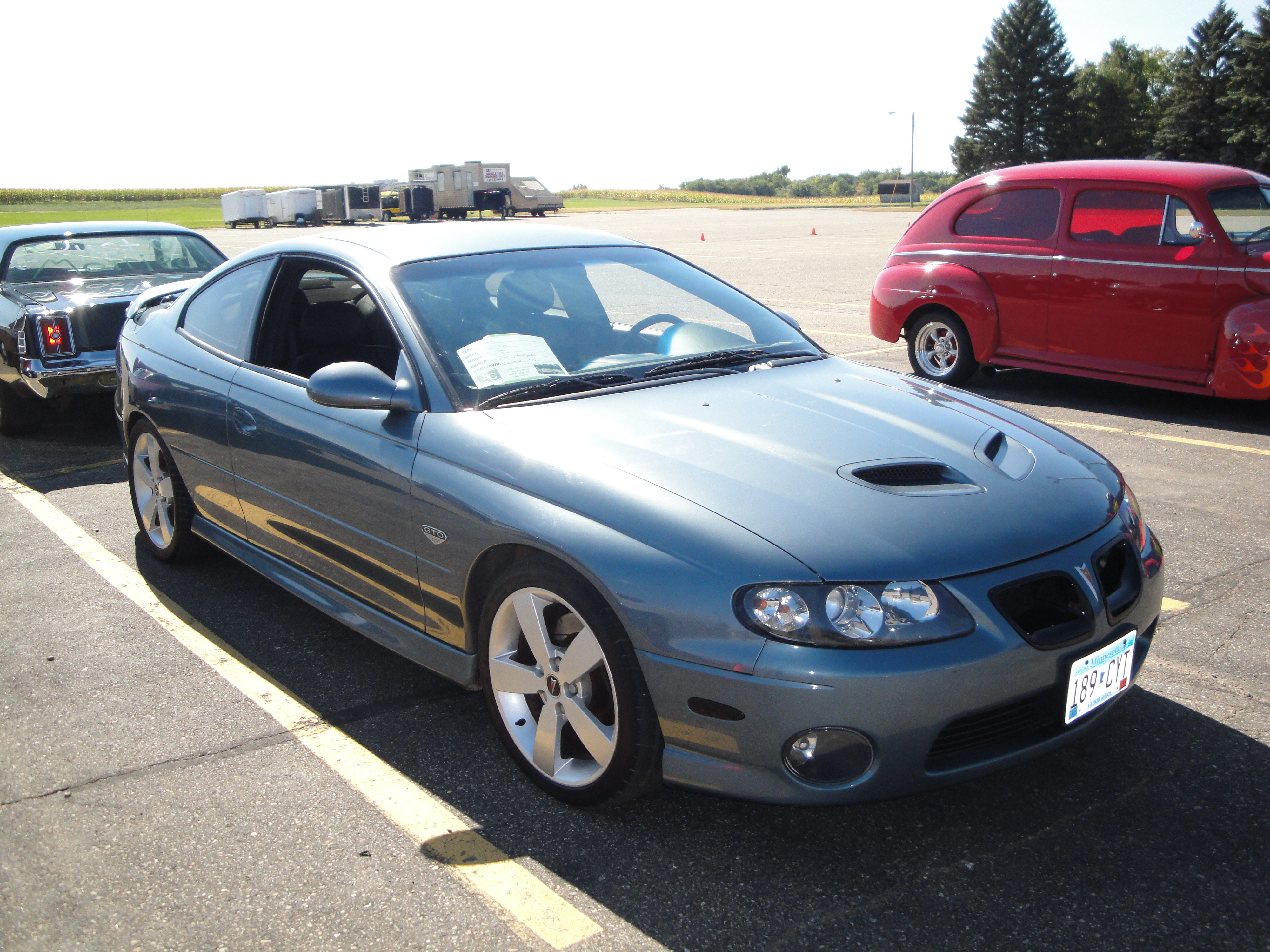
"2 non-Japanese drivers made the final 16, Ernie Fixmer in a Rotaru Nissan 240SX, and Reese Millen in a Pontiac GTO."
The Nissan 240SX is a common American-market Japanese car that drift drivers love because it’s easy to modify. This segment uses it to show an American driver competing with a proper drift setup.
The Nissan 240SX is a popular U.S.-market JDM-style platform that became a drift favorite because it’s relatively lightweight and has a strong aftermarket. Here, it’s specifically Ernie Fixmer’s “Rotaru Nissan 240SX,” representing American participation in D1-style drifting.
Pontiac GTO
"2 non-Japanese drivers made the final 16, Ernie Fixmer in a Rotaru Nissan 240SX, and Reese Millen in a Pontiac GTO. I'd love that car."
The Pontiac GTO is a classic American muscle car. In this story it’s used as a surprising non-Japanese drift entry, showing how drifting crossed over beyond Japan.
The Pontiac GTO is an American muscle car that’s notable here because it shows up in a D1-style drift field dominated by Japanese cars. Reese Millen’s GTO is presented as a standout “sick” entry, even though it didn’t advance past round 1.
Ketsuhiro Ueo
"Japan's own Ketsuhiro Ueo walked away with the title, doing so in the strangest car in the field."
Ketsuhiro Ueo is a Japanese driver who won the drifting competition described here. The story highlights that he did it in an unexpected kind of car.
Ketsuhiro Ueo is a Japanese drift driver credited in this segment with winning the title in a surprising, non-turbo, non-purpose-built setup. The episode frames his win as a key moment in bringing drifting to an American audience.
Irwindale
"He had come to Irwindale in an 8086. Not a turbocharged purpose-built D1 machine running 400 horsepower through a sequential gearbox, it was a Toyota Corolla Triana."
Irwindale is a race venue in California where motorsport events are held. This is where the competition described in the episode took place.
Irwindale refers to Irwindale Speedway in California, a well-known venue for motorsports and drifting events in the U.S. The segment uses it as the setting where Japanese drivers came to compete and where the “Corolla Triana” win happened.
Toyota Corolla Triana
"He had come to Irwindale in an 8086. Not a turbocharged purpose-built D1 machine running 400 horsepower through a sequential gearbox, it was a Toyota Corolla Triana."
The Toyota Corolla Triana is a regular compact car, not the kind of car people usually expect to win drifting. This part emphasizes that it still managed to beat everyone, proving you don’t always need a super-special race car.
The Toyota Corolla Triana is a compact, non-traditional choice for drift success, which is exactly why it’s highlighted. The segment says Ketsuhiro Ueo won the title in an “8086” at Irwindale, and that it wasn’t a purpose-built D1-style turbo machine—showing how a simpler platform could still win.
twin run battle
"He had explained the Suiso format to people who had never seen a twin run battle."
A twin run battle is when two cars drift side-by-side or in matched runs so you can judge who did it better. It’s a key part of how drifting competitions are scored and understood.
A twin run battle is a head-to-head drifting format where two cars run in coordinated passes to compare angle, speed, and control. The segment notes the host explained this concept to people who had never seen it, which helped drifting make sense to a new audience.
Ryan Sage
"He did not go back to D1 to ask about a partnership. He and Ryan Sage started their own series."
Ryan Sage is mentioned as someone who helped create a new drifting series. The point is that he and the host worked to grow drifting in the U.S.
Ryan Sage is mentioned as a collaborator who, along with Law, started their own series after not returning to D1 to ask about a partnership. In this segment, he’s part of the story of how drifting expanded beyond Japan.
SEMA show
"and announced it at the 2003 SEMA show in Las Vegas."
SEMA is a big U.S. car-industry event where companies and teams announce new stuff for cars and motorsports. The host is using it as a timeline marker for when a drifting-related development was announced.
SEMA is the Specialty Equipment Market Association show, a major U.S. automotive trade event where companies announce new products and motorsport-related developments. The segment mentions it as the place where something was announced in 2003, tying drifting/series growth to mainstream auto-industry attention.
Las Vegas
"and announced it at the 2003 SEMA show in Las Vegas."
Las Vegas is where the SEMA show was held. It’s a major place for big events, including car-industry announcements.
Las Vegas is referenced here as the location of the 2003 SEMA show. It’s a common venue for large auto-industry events, which helps explain why announcements there can quickly reach industry and media.
Formula Drift
"Formula Drift was born. It wasn't just D1 with an American accent. Law and Sage made deliberate choices about judging criteria and event structure that helped give the series its own identity."
Formula Drift is a drifting competition series where drivers battle while sliding their cars around corners. The show talks about how it was organized and judged in a way that made it easier for new viewers to understand.
Formula Drift is a professional drifting series that helped standardize how drift competitions are judged and produced as an event. In this segment, the hosts connect its early rule/judging choices to why it became recognizable to mainstream audiences.
Suiso battle
"D1 fans already knew what a Suiso battle was supposed to look like, but what worked at Abisu, where a knowledgeable audience already understood what they were watching, didn't automatically translate to Southern California fans who were encountering drifting for the first time."
A “Suiso battle” is a particular kind of drifting showdown where drivers try to slide in a coordinated, close way. The host is saying long-time Japanese drift fans understood that format immediately, but new fans didn’t.
A “Suiso battle” refers to a specific style of Japanese drifting competition format where two cars run in close proximity, emphasizing synchronized angle and control. The segment uses it to explain that D1 fans already knew what that kind of battle looked like, while new audiences needed a more accessible presentation.
Road Atlanta
"Formula Drift's first season opened in May of 2004 at Road Atlanta, but Erwin Dale became its spiritual home, the House of Drift."
Road Atlanta is a race track in the U.S. The host says Formula Drift started its first season there in 2004. Different tracks can change how drifting feels and how easy it is to follow on TV.
Road Atlanta is a road course in the U.S. that the segment says hosted Formula Drift’s first-season opener in May 2004. Track choice matters in drifting because layout, grip, and sightlines affect how drivers can link corners.
Erwin Dale
"but Erwin Dale became its spiritual home, the House of Drift. Within a few years, the series had TV deals, OEM sponsorships from Ford and Toyota, and a roster of American drivers who could finally hold their own against the Japanese."
Erwin Dale is the track the host says became the main home base for Formula Drift. They also explain that drifting can feel and look different depending on the track, including how drivers and fans can see the action.
Erwin Dale is described as Formula Drift’s “spiritual home” and the “House of Drift,” implying it became the series’ signature venue. The segment contrasts it with Japanese circuits by noting differences in track physics and sightlines, which are crucial for drifting.
Universal Pictures
"Somewhere in Hollywood, execs at Universal Pictures were paying attention. It was actually kind of easy to find Formula Drift..."
Universal Pictures is the movie studio involved with the Fast and the Furious movies. The host says the studio noticed drifting and later worked with a director to bring the franchise to Tokyo.
Universal Pictures is the studio behind the Fast and the Furious franchise. The segment says Universal execs were paying attention to Formula Drift, and later approached Justin Lin to direct a third installment.

Dodge Viper
"... had a Dodge Charger at some point. He also ran a Viper in the series, Ken Gushi, but again, it was there..."
The Dodge Viper is a sports car built for strong acceleration and high performance. It’s known for having a big engine and a focus on driving feel rather than comfort. The podcast mentions it because it was used in racing by drivers in competition.
The Dodge Viper is a high-performance sports car known for its aggressive styling and powerful V10 engine. It’s often discussed in racing contexts because it was used in various motorsport series and attracted drivers who wanted a raw, high-output platform. In your excerpt, it’s brought up as part of a driver’s racing history, which is why it’s relevant to the conversation.

Dodge Charger
"Then there was Sam Hubernett, had a Dodge Charger at some point. He also ran a Viper in the series, Ken Gushi, but again, it was there."
The Dodge Charger is a well-known American car model. Here it’s mentioned as one of the cars a Formula Drift driver used, showing how American cars were getting competitive in drifting.
The Dodge Charger is a classic American muscle sedan/coupe platform that’s been used in motorsports, including drifting. In this segment, it’s mentioned as part of Formula Drift’s driver lineup and the mix of American cars competing against Japanese entries.
Justin Lin
"Justin Lin was a film student when the Fast and the Furious first opened in 2001. He saw it in a sold out theater and felt, he later said, the specific electricity of a crowd that completely surrendered to something."
Justin Lin is a movie director. The host says he watched the first Fast and the Furious in theaters and later got hired to direct the next movie, helping bring drifting to the story.
Justin Lin is a film director associated with the Fast and the Furious franchise. In this segment, he’s described as seeing the first movie in 2001 and later being approached by Universal in 2005 to direct a third installment set up around drifting in Tokyo.
Kaiichi Tsuchiya
"Bow Wow was in the movie, but we're talking about our boy, Kaiichi Tsuchiya, [1689.3s] who had just stepped back from his professional racing career."
Kaiichi Tsuchiya is a famous Japanese race driver who helped make drifting a real, respected driving style. In this story, he’s the expert they turned to so the movie would feel authentic.
Kaiichi Tsuchiya is a Japanese motorsport figure best known for pioneering and popularizing drift as a competitive driving discipline. In this segment, he’s described as a “drift king” and a key source of authenticity for Japanese car media and for the film’s technical guidance.
drift king
"but now the retired drift king was the person that Japanese car media turned to when it needed [1703.6s] someone to talk about the culture."
“Drift king” is a title people use for the most respected drift driver. Here it’s describing Tsuchiya as the go-to expert because he’s a legend in drifting.
“Drift king” is a nickname used in drifting culture to refer to a top, highly influential driver. In this segment, it’s used for Tsuchiya to emphasize his status and why Japanese media trusted him to explain the culture.
Toshi Hayama
"Lin's route to him ran through Toshi Hayama. [1711.0s] Hayama was the bilingual MC who had been calling D1 Grand Prix events at Irwindale from the beginning."
Toshi Hayama is the bilingual host who helped explain drifting to American fans. The episode credits him with bridging Japanese drifting and U.S. audiences.
Toshi Hayama is described as a bilingual MC who called D1 Grand Prix events for American audiences. In this segment, he’s portrayed as a key translator and connector who helped bring drifting culture from Japan to the U.S.
Fast and the Furious Tokyo Drift
"When the Fast and the Furious Tokyo Drift went into pre-production, Hayama was brought in as a [1745.7s] technical consultant via an old friend of Lin's."
Fast and the Furious: Tokyo Drift is the movie in the franchise that focuses on drifting. This episode explains how the filmmakers tried to make the drifting feel real by involving actual experts and drivers.
Fast and the Furious: Tokyo Drift is the installment of the franchise that centered on drifting culture. The segment discusses its pre-production process and how technical consultants pushed for authenticity—especially real cars and real drivers.
composited in post-production
"He wasn't interested in spending months teaching a stunt team to approximate something on a California backlot while the actual technique got composited in post-production."
It means they film different pieces separately and then use editing/VFX later to make it look like everything happened together. In this case, they’re talking about whether the stunt was done for real or faked and then blended in after filming.
“Composited in post-production” means combining multiple filmed elements (like a background plate and a car/stunt shot) into one final image using visual effects after filming. The segment contrasts approximating a stunt on set versus using the actual technique and then merging it later. It’s a filmmaking workflow term rather than an automotive one, but it directly explains how the movie achieved its action realism.
Hawthorne
"The bulk of the stage racing sequences were shot in California, primarily at a closed mall in Hawthorne and on industrial roads near the port."
Hawthorne is a place in California where the movie filmed big racing scenes. The episode is pointing out that they used real locations there because closing streets in Tokyo is much harder.
Hawthorne is a city in California where the segment says the movie shot major stage racing sequences at a closed mall. For listeners, it’s a concrete filming location that helps explain why the production relied on California for racing scenes instead of trying to recreate everything on Tokyo streets. It’s part of the practical logistics behind the film’s “Tokyo” look.
Veilside
"Veilside had built the car as a show piece for the 2005 Tokyo Auto Salon, where it won Best Car & Show, making it the perfect vehicle"
Veilside is a Japanese company that customizes cars. In this story, they built the special RX-7 that became the movie’s main “JDM” look. It’s basically the real-world source of the car’s style.
Veilside is a Japanese tuning company best known for creating bold, aftermarket styling packages and builds for cars like the RX-7. In the segment, Veilside is credited with building the Fortune RX-7 as a showpiece for the 2005 Tokyo Auto Salon, then having it repainted and used for the film. That ties the brand directly to the movie’s visual identity of Japanese tuning.
Daikoku Futo
"Daikoku Futo, the parking area beneath the looping expressway ramps in Yokohama that the Midnight Club had used as a staging ground, appeared in Tokyo Drift as the location where"
Daikoku Futo is a famous parking area in Yokohama under the highway ramps. The episode says it was used by real car culture groups and then showed up in the movie as a key location.
Daikoku Futo is a well-known parking area in Yokohama located beneath the looping expressway ramps. In the segment, it’s described as a staging ground used by the Midnight Club and then appearing in Tokyo Drift as a recognizable location. That makes it a named real-world JDM hangout/scene reference, not just a generic “Tokyo street” backdrop.
Request an Explanation
Heard something you'd like explained? We'll add it to this episode.
Sign in to request explanations for terms you heard.
Want to learn more?
Browse our glossary for plain-English explanations of automotive terms, jargon, and concepts.
Help improve this episode
See something that's not quite right? Our annotations are AI-generated and can sometimes miss the mark. Click the flag icon on any annotation to suggest a correction.