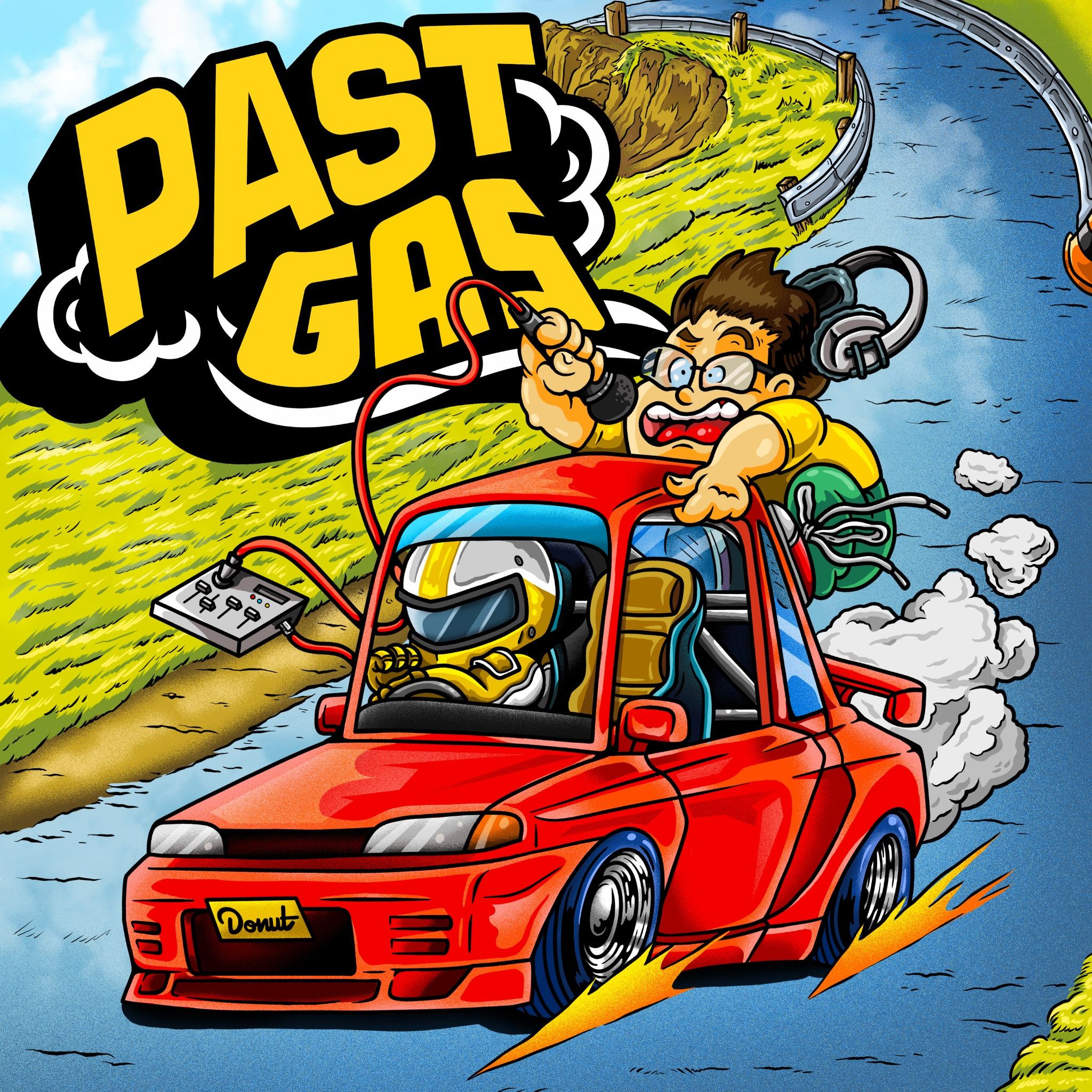
S2 Ep13: The Golden Era of JDM: Our Favorite Cars
About this episode
Wrapping up the JDM “Golden Era” arc, Past Gas thanks listeners, asks for word-of-mouth help, and teases season three. The hosts explain upcoming production changes—adding a mic and showing the cars more for YouTube—while framing the theme as the Japanese Golden Era from the late ’80s to mid-2000s. They also revisit how pop culture and games (Fast & Furious, Gran Turismo) kept JDM alive, then look ahead to a muscle-car-focused next season.
From the early days of innovation after WWII to the brand new supercars coming out of Japan, "The Golden Era" of the Japanese Car Industry spans many generations and is more far reaching than anyone realizes. In this final installment of Season 2 of Past Gas, Nolan Sykes and Joe Weber recap their favorite parts and unpack what didn't make it to the episodes.
This episode is brought to you by Shopify! Sign up for your one-dollar-per-month trial today at https://www.Shopify.com/Gas
World War Two
"Japan like he has these days historians do not give him any points for his combat during World [579.4s] War Two, but they'd now give him a lot of credit for his effort to help genuinely help Japan rebuild"
They’re referencing World War II as the earlier conflict that sets the stage for what comes after. The discussion is about how someone’s wartime record is judged differently than their later help rebuilding Japan.
“World War Two” is referenced here as the historical backdrop for evaluating a person’s combat record versus their later role in rebuilding Japan. The segment uses it to contrast wartime actions with postwar industrial recovery efforts.
Korean War
"That was also the governing body that kind of consolidated industry to ramp up for the Korean [594.1s] War because that was such a strategic hub to watch from."
They mention the Korean War as the reason industries had to ramp up production. The hosts connect that surge to Toyota’s early vehicle-building history and how it influenced later SUVs.
The “Korean War” is mentioned as a driver for industrial ramp-up and strategic logistics, with the hosts tying it to Toyota’s earlier Jeep-building work. In this context, it’s used to explain why certain companies expanded capacity and supply chains in the early Cold War period.

Toyota Land Cruiser
"And now like Land Cruiser, like the expensive ass Lexus SUVs and Land Cruiser and stuff that [613.0s] you can buy right now all trace their lineages back to building Jeeps for the Korean War,"
The Toyota Land Cruiser is a tough, off-road SUV that’s been around for decades. Here, the hosts are saying Toyota’s older military vehicle history helped shape the company’s later SUV lineup.
The Toyota Land Cruiser is a long-running Toyota off-road SUV known for rugged body-on-frame construction and durability. In this segment, it’s used as an example of how Toyota’s early military vehicle work traces forward into modern Toyota SUVs.
first Japanese Grand Prix 1963
"was the first Japanese Grand Prix 1963. [902.0s] 20 years after the time period we're talking about [904.7s] with Soichiro Honda and everything."
The first Japanese Grand Prix in 1963 was a big moment for racing in Japan. It’s when Japanese cars and teams got a chance to prove themselves in a major international event at home.
The first Japanese Grand Prix in 1963 is a key milestone because it marked Japan bringing major motorsport competition to home soil. The segment frames it as a turning point where Japanese manufacturers could show their cars on the world stage.
Soichiro Honda
"[902.0s] 20 years after the time period we're talking about [904.7s] with Soichiro Honda and everything. [906.5s] Like the industry has found a little bit of a foothold,"
Soichiro Honda was the person who started Honda. The hosts mention him to connect Japan’s early automotive push to later racing success.
Soichiro Honda was the founder of Honda and a driving force behind Japan’s rise in automotive engineering and motorsport. In this segment, he’s used as a historical anchor for the “time period” that led up to Japan’s later racing breakthroughs.
Suzuka circuit
"They had just built Suzuka circuit, which was like [915.1s] 200,000 people convened to see this first Grand Prix."
Suzuka Circuit is a well-known race track in Japan. The hosts mention it because it was built for major racing, and it helped turn the Grand Prix into a huge event.
Suzuka Circuit is a famous Japanese road course known for its high-speed layout and technical sections. The segment highlights that it was newly built around the 1963 Japanese Grand Prix, which helped make the event a major spectacle.

Prince Skylines
"We had Prince Skylines back then. [936.2s] I think there was a Datsun in the mix too, [939.0s] but the Skylines were the real star of the Grand Prix the next year."
The “Prince Skyline” is an early version of the Skyline that Nissan made under a different company name. It matters because it was one of the cars that helped prove Japanese performance cars could compete with the famous European ones.
“Prince Skylines” refers to Nissan’s Skyline line when it was produced under the Prince marque. In the JDM “golden era,” these cars are important because they helped establish Japan’s credibility in performance racing against European brands.
toe to toe
"like toe to toe with some of the world's best. Porsche going against Porsche too is such a cool thing."
“Toe to toe” just means going head-to-head and competing directly. In this context, it means Porsche was taking on top competitors in a way that felt evenly matched.
“Toe to toe” is a figurative way to describe direct competition where two sides are closely matched. In car talk, it usually means the cars were battling for similar performance or prestige rather than one clearly dominating.
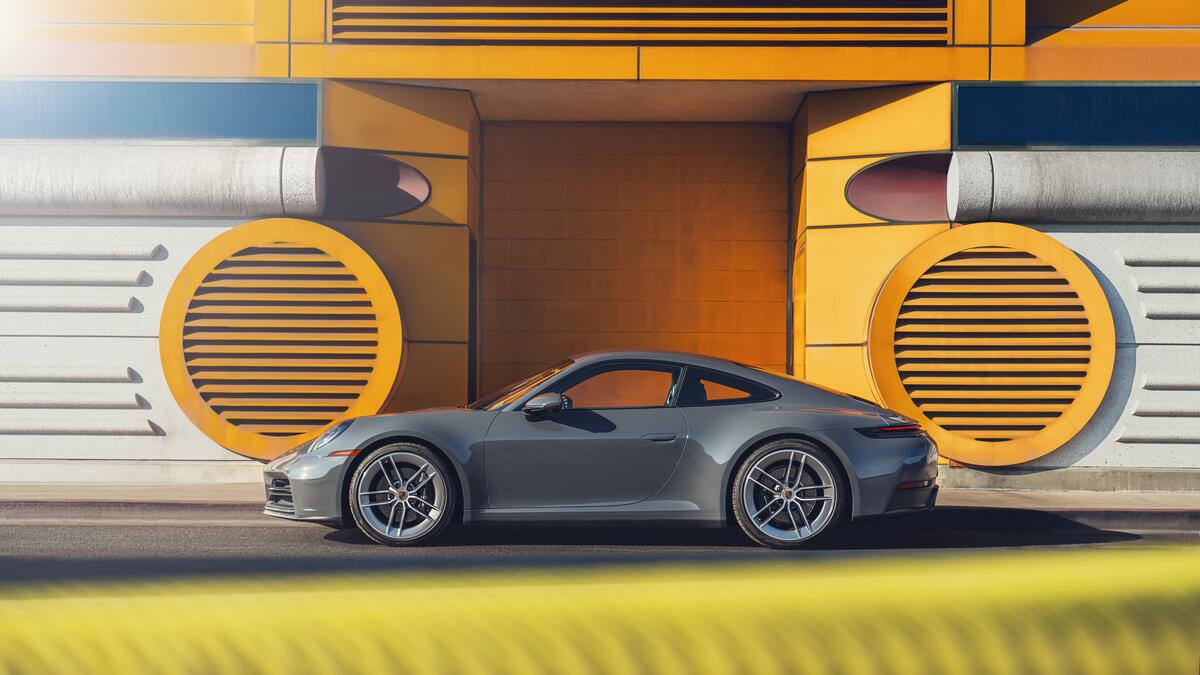
Porsche 911
"Obviously they didn't have the 911. They didn't even have the 912 at that point."
The Porsche 911 is Porsche’s most famous sports car model. The host is pointing out that, at the time they’re talking about, the 911 hadn’t been introduced yet.
The Porsche 911 is Porsche’s iconic rear-engine sports car line, and the host contrasts it with an earlier era. Here, they’re saying Porsche didn’t yet have the 911 (or even the 912) at that point in time.

Porsche 912
"They didn't even have the 912 at that point. I could be wrong, but I think they were still producing 356s."
The Porsche 912 is another early Porsche sports car model. The host mentions it to explain that Porsche hadn’t reached the later lineup you might associate with the brand today.
The Porsche 912 is closely related to the early Porsche 356-era cars and is often discussed as a more affordable companion model. In this segment, the host uses it to emphasize that Porsche’s lineup at the time didn’t yet include the later 911/912 products.

Honda CVCC
"And that's where cars like the Honda CVCC came into the picture. [1214.0s] Yeah. [1214.7s] That I think is Honda's single most important innovation is the CVCC engine."
The Honda CVCC is a Honda model known for an engine design that burns fuel more efficiently. The big idea is that it helps the engine use the fuel better and can meet emissions goals without needing a catalytic converter right away.
The Honda CVCC is a Honda that became famous for its CVCC engine, which uses a pre-combustion chamber to improve how the fuel-air mixture burns. That design helped it achieve high efficiency and emissions performance without relying on a catalytic converter as early as many competitors.
CVCC engine
"Yeah. [1214.7s] That I think is Honda's single most important innovation is the CVCC engine. [1220.5s] It was like a really innovative vortex combustion engine."
A CVCC engine is Honda’s special way of burning fuel. It uses a small chamber to help the air-fuel mix ignite and burn more completely, which can make the engine more efficient.
The CVCC engine is Honda’s “Compound Vortex Controlled Combustion” design, which uses a pre-combustion chamber to create a more favorable burn of the fuel-air mixture. By shaping the airflow and ignition process, it can improve combustion efficiency and reduce wasted fuel.
pre-combustion chamber
"It basically had like a pre-combustion chamber that shot, [1230.6s] you know, like a more aspirated version of the gas into the cylinder so that it exploded more and [1237.9s] less, you know, more efficient, less waste."
A pre-combustion chamber is like a small starter area inside the engine. It helps kick off the burning process in a controlled way so the main cylinder can burn the fuel more efficiently.
A pre-combustion chamber is a smaller chamber in the engine where part of the fuel-air mixture is ignited first. In the CVCC approach, that helps create a more controlled “vortex” burn so the main cylinder combustion is more efficient and wastes less energy.
fuel-air mixture
"Very efficient because it used all of the, not all of it, but like a very high percentage [1246.0s] of the fuel-air mixture in there to make the combustion. [1249.3s] Did not even need a cat."
The fuel-air mixture is just the fuel and air that get mixed together inside the engine before it’s ignited. If that mix burns well, the engine can use more of the energy instead of wasting it.
The fuel-air mixture is the combination of gasoline (fuel) and air inside the engine cylinder before ignition. Combustion efficiency depends on how well that mixture is prepared and burned, which is why the host connects it to CVCC’s “less waste” approach.
catalytic converter
"So each of your Honda himself was like, a catalytic converter is an engineering failure. [1258.3s] You know, if like you can't, if you can't extract all of the energy, the potential energy [1263.9s] from your free-all air mixture, you have engineered a bad engine and we're not going to do that."
A catalytic converter is a part in the exhaust system that helps clean up the car’s fumes. The discussion here is about whether you can make the engine burn cleaner in the first place, instead of fixing emissions only after they leave the engine.
A catalytic converter is an emissions device that uses catalysts to convert harmful exhaust gases into less harmful ones. The host’s point is that the CVCC design aimed to get cleaner combustion at the source, rather than relying on a “Band-Aid” after the exhaust is already produced.
Band-Aid solution
"It wasn't good enough for him to use a Band-Aid solution like the catalytic converter [1272.4s] for his CVCC engine. [1275.2s] And I just think that's, again, before working at Donut, I was not a Honda guy at all."
A “Band-Aid solution” means a quick fix that doesn’t solve the real problem. In this context, the host is saying it’s better to make the engine burn cleaner than to just clean up the exhaust afterward.
“Band-Aid solution” is a metaphor for a fix that treats the symptoms rather than the root cause. Here, it’s used to argue that relying on a catalytic converter is less ideal than designing the engine’s combustion to be efficient and clean from the start.

Honda Civic
"I actively disliked them. I did not like Civics with huge fart cans rolling down the road. Well, ..."
The Honda Civic is a small car meant for daily driving. A lot of people buy them, and some modify them, including changing the exhaust so they sound louder. The podcast mention is about that kind of modified Civic.
The Honda Civic is a compact, high-volume everyday car known for being practical and efficient. In the podcast, it comes up in a negative context tied to how some owners modify them, like loud exhaust setups. That makes it a common topic because the Civic is both widely owned and frequently customized.
fart can
"Well, you lived in an area where you couldn't go to sleep because there was constantly [1292.4s] fart cans going past. [1293.6s] Yeah, a lot of fart cans out there in Central California."
“Fart can” is slang for a very loud car exhaust, usually from an aftermarket muffler. People say it because it sounds obnoxious, and it’s often more about noise than real performance.
“Fart can” is a slang term for an aftermarket exhaust system (or muffler) that’s tuned to be very loud and high-pitched. Enthusiasts often associate it with cheap, non-optimized exhaust setups that prioritize sound over refinement or performance.
hubris
"Can we blame Detroit's hubris for the invention of the fart can in the first place? [1327.8s] That was the exact word that came to mind when you brought it up. [1333.2s] I think hubris is the right word because we were so short-sighted."
Here, “hubris” means arrogance or overconfidence. The point is that Detroit made choices without thinking ahead about what would happen next.
In this context, “hubris” means overconfidence—automakers making decisions without fully accounting for future constraints. The hosts connect it to Detroit’s short-sightedness about fuel and energy realities.
OPEC boycott
"I think hubris is the right word because we were so short-sighted. [1338.5s] And no one could have seen the OPEC boycott coming. [1345.4s] But having 8.3-liter engines is kind of irresponsible."
This is about OPEC and an oil-supply disruption. When oil got harder to get (and more expensive), carmakers had to change course because big, thirsty engines weren’t as practical.
The “OPEC boycott” refers to an oil-supply disruption tied to OPEC (the Organization of the Petroleum Exporting Countries). It’s used here to explain why fuel became scarce/expensive, forcing automakers to rethink large-displacement, fuel-hungry engines.
8.3-liter engines
"But having 8.3-liter engines is kind of irresponsible. [1351.8s] It's crazy. [1352.4s] Even for the time, just because you can do that doesn't mean you need to do it."
“8.3-liter” is the engine’s size, based on how much space the cylinders have. Bigger numbers usually mean the engine drinks more fuel, which is why it’s brought up as irresponsible.
“8.3-liter engines” refers to engine displacement—how much volume the engine’s cylinders displace during one cycle. In the era being discussed, very large displacement often meant high fuel consumption, which becomes a key part of the hosts’ argument.
159 horsepower
"Waste so much gas making 159 horsepower. [1364.1s] This is crazy, dude. [1365.9s] A lot of torque to pull down a house if you wanted to."
Horsepower is a way to describe how much power the engine makes. They’re saying that even with a big engine, the power number wasn’t as high as you’d expect.
“Horsepower” is an engineering measure of how much power an engine produces. The hosts use “159 horsepower” to argue that even with huge engines, the output wasn’t necessarily efficient or impressive by modern expectations.
torque
"This is crazy, dude. [1365.9s] A lot of torque to pull down a house if you wanted to. [1369.4s] Yeah, with your El Camino for some reason."
Torque is the engine’s pulling strength. It’s what helps the car move easily and feel strong, especially at lower speeds.
“Torque” is the twisting force an engine produces, which strongly affects how quickly a car can accelerate from low speeds and how easily it can move heavy loads. The hosts contrast torque with horsepower to emphasize how big engines can feel strong even if power figures aren’t huge.
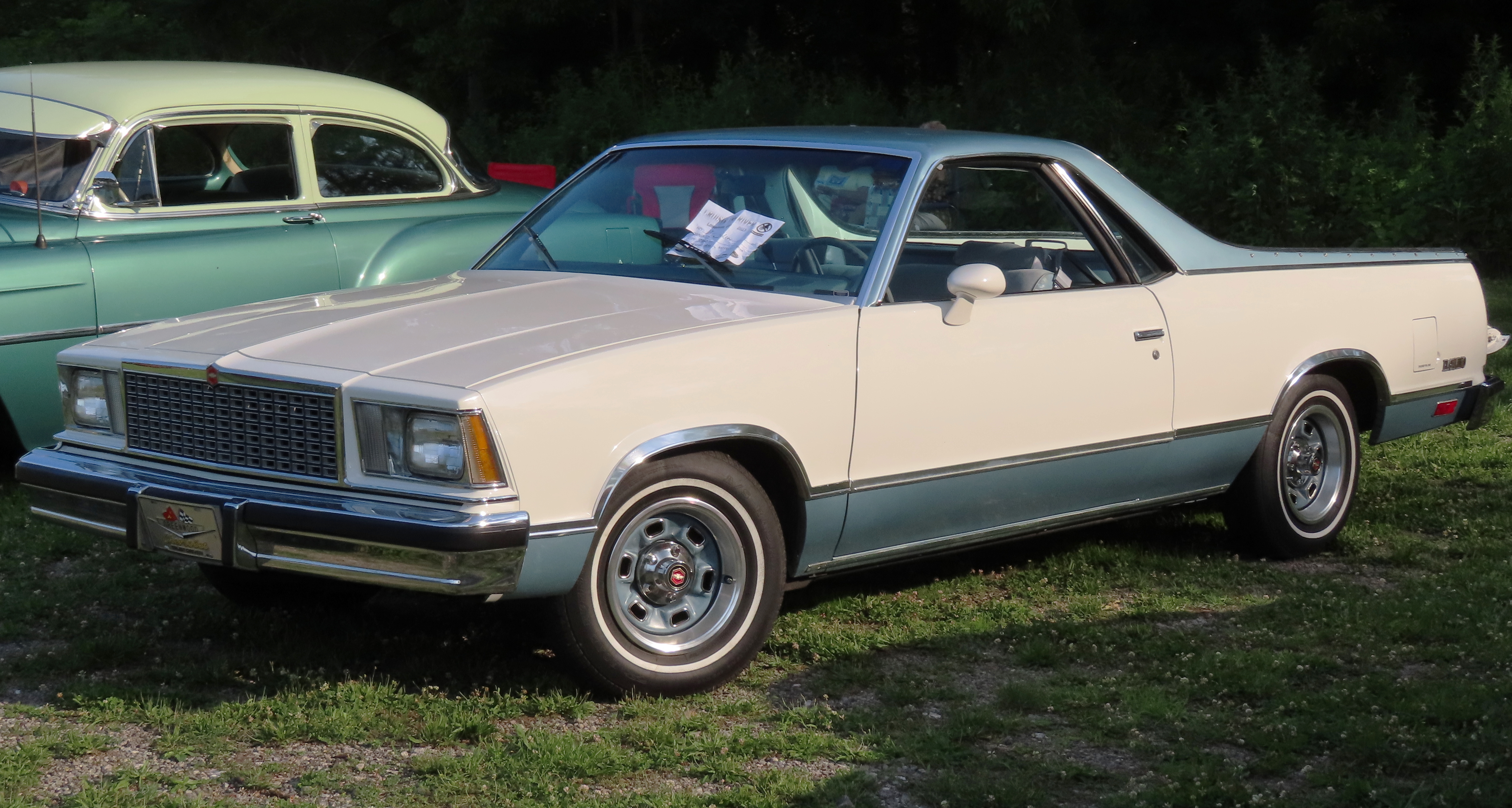
El Camino
"Yeah, with your El Camino for some reason. [1370.7s] Yeah, or you're a Cadillac El Dorado. [1375.1s] But I think there's some parallels we can draw to today, obviously, too, with like,"
The El Camino is a Chevrolet that looks like a car but has a truck bed. The hosts mention it to make a joke about using huge engine power in something that’s more lifestyle than utility.
The Chevrolet El Camino is a classic American “car-based pickup” built on a passenger-car platform. It’s brought up here as an example of pairing big, old-school V8 torque with a vehicle that’s not really meant to be a heavy-duty work truck.

Cadillac El Dorado
"Yeah, with your El Camino for some reason. [1370.7s] Yeah, or you're a Cadillac El Dorado. [1375.1s] But I think there's some parallels we can draw to today, obviously, too, with like,"
The Cadillac El Dorado is a big, luxury Cadillac. The hosts are using it as another example of how people used to put very large engines in cars that were mostly about comfort and style.
The Cadillac El Dorado is a luxury personal car from Cadillac, known for big, comfortable styling and (in many eras) large-displacement engines. Here it’s used as another example of old-school American power being applied to a non-work, lifestyle vehicle.

Cadillac El
"...your El Camino for some reason. Yeah, or you're a Cadillac El Dorado. But I think there's some parallels we can..."
The Cadillac ELR is a luxury car that uses both electricity and a gas engine. It’s shaped like a coupe, so it’s more about style than being a big family car. The podcast brings it up as part of a comparison between different car types.
The Cadillac ELR is a luxury plug-in hybrid coupe designed to combine a stylish body with electric-assist driving. The podcast mentions it alongside the Eldorado and El Camino idea, using it as part of a comparison about car categories and names. It’s discussed because it’s a more unusual, niche Cadillac model.
Chinese cars
"But I think there's some parallels we can draw to today, obviously, too, with like, [1380.7s] now the Chinese cars are like the biggest threat to every automaker in the world. [1386.3s] Even the, I think we mentioned in a previous episode, maybe the last episode,"
They mean Chinese car brands are becoming a big competitive force worldwide. The hosts are comparing that pressure to earlier moments when older automakers felt blindsided.
“Chinese cars” here refers to the competitive push from Chinese automakers into global markets. The hosts frame it as a major threat to established automakers—similar to how Detroit faced disruption in the past.
tariff
"Over here in the US, we have that 100% tariff on Chinese cars, which means a car that would normally sell in China for $20,000 is now a $40,000 car."
A tariff is a tax on imported products. If the government adds a big tariff to cars coming from China, the car costs more in the US, even if the original price in China is lower.
A tariff is a tax the government charges on imported goods. Here, the host says a 100% tariff on Chinese cars effectively doubles the price, turning a $20,000 car into a $40,000 car and changing what buyers consider “good value.”

BYD Dolphin
"that a $40,000 car like a BYD Dolphin, it would be a pretty big ripoff, but like the features you would get are pretty similar to like a $40,000 Honda."
The BYD Dolphin is an electric car made by BYD. In this episode, they’re saying tariffs can make it cost about twice as much in the US compared to what it costs in China, so it stops feeling like a bargain.
BYD Dolphin is a compact electric car from BYD, and it’s being used here as an example of how tariffs can double its effective price in the US. The point is that a car that might cost about $20,000 in China can end up around $40,000 after import costs, making it less of a value buy.

Honda
"but like the features you would get are pretty similar to like a $40,000 Honda."
Honda is mentioned as a well-known car brand. They’re basically saying that if a cheaper electric car gets priced up by tariffs, you might as well buy a Honda instead for similar money and features.
Honda is referenced as a benchmark for what you’d get at roughly the same $40,000 price point as the BYD Dolphin. The host is using it to argue that, once tariffs inflate prices, the value proposition of cheaper imports shrinks because you can buy comparable features from established brands.

Dodge
"I've been like kind of looking at, I like my Dodge, but after doing the Dodge video recently, I'm kind of like, do I want this? Don't get another Dodge."
Dodge is the brand the host says they currently have. They’re saying after reviewing a Dodge video, they’re not sure they want to buy another one because newer cars are getting too expensive.
Dodge is mentioned as the host’s current brand of choice, followed by a decision to avoid buying another Dodge. This is part of a broader discussion about how expensive entry-level cars have become, pushing shoppers to reconsider their usual brands.

Ford Maverick
"Maybe not 40, like $35,000. I'd say the Maverick is what, 37? A Maverick, which is based on the Es..."
The Ford Maverick is a small pickup truck. It’s built to cost less and be easier to drive than bigger trucks. The podcast is mainly talking about its price and what it’s based on.
The Ford Maverick is a compact pickup truck designed to be more affordable and easier to live with than larger trucks. The podcast discusses its pricing and positions it as a budget-friendly option. It’s also mentioned as being related to the Escape platform, which helps explain its size and intended use.

Ford Escape
"...ck is what, 37? A Maverick, which is based on the Escape, which is a cheap car. Like that shouldn't be 37."
The Ford Escape is a compact SUV. It’s made for everyday driving and practical use. In the podcast, it’s mentioned because the Maverick is related to it.
The Ford Escape is a compact SUV designed for daily commuting and general utility. The podcast mentions it as the basis for the Maverick, which helps explain why the Maverick can be priced and packaged like a more affordable vehicle. It’s discussed because platform sharing affects size, driving dynamics, and cost.

Nissan Frontier
"... looking at, I was recently looking at the Nissan Frontier truck. It's not bad."
The Nissan Frontier is a pickup truck. It’s meant for people who want truck utility but in a smaller, more manageable package. The podcast is saying it seems like a decent option.
The Nissan Frontier is a mid-size pickup truck aimed at buyers who want truck capability without going to the largest sizes. The podcast briefly notes it as “not bad,” which suggests it came up as a reasonable option under consideration. It’s discussed because it’s a common alternative when shopping for a practical truck.
Midnight Club
"But the myth of Midnight Club is so big now that who knows what actually happened because like... Well, we think our episode is pre-acted."
“Midnight Club” is being talked about like a street-racing group whose reputation became bigger over time. The hosts are basically saying the story is hard to verify, because people tell a lot of tales but few admit they were actually involved.
“Midnight Club” here is treated like a real-world street-racing subculture with a growing legend, including claims about who was involved and what happened. The hosts discuss how the myth grew through stories, media, and alleged incidents, even though no one is coming forward to confirm participation.

Datamaso Pantera
"...and then also the Datamaso Pantera, which was used, I think, in one of the first option things around the twin-ring Motegi speed runs they did."
The De Tomaso Pantera is a classic Italian sports car with its engine mounted in the middle. The hosts mention it as one of the unexpected cars connected to the Midnight Club story.
The De Tomaso Pantera is a mid-engine grand tourer known for its aggressive styling and V8 power. In this segment, it’s named as another surprising car choice tied to the Midnight Club legend.
twin-ring Motegi
"...which was used, I think, in one of the first option things around the twin-ring Motegi speed runs they did. And I think they used that as like a benchmark to get up to with the Japanese cars."
Twin Ring Motegi is a race track in Japan. The hosts mention it because they’re talking about speed runs and how those stories got tied into the Midnight Club legend.
Twin Ring Motegi is a motorsport circuit in Japan used for racing events and track testing. The segment references “speed runs” there, framing it as part of how the Midnight Club myth connects to real-world Japanese track culture.
street racing syndicate
"the idea of a street racing syndicate in the U.S., [1859.3s] in big cities like L.A., New York, or whatever like is pretty cool."
A street racing syndicate is basically a group of people who coordinate illegal street races together. The hosts are saying that kind of organized scene is harder now because it’s easier to get caught or have it posted online.
A street racing syndicate is an organized group that coordinates illegal street races and related activities. The hosts mention the idea as part of a “Midnight Club”-style fantasy, then question whether it’s feasible today due to surveillance and social media posting.
L.A.
"in big cities like L.A., New York, or whatever like is pretty cool. [1863.5s] But I just don't know if this sort of thing is even possible these days anymore without getting"
L.A. (Los Angeles) is referenced here as a major U.S. city where street-racing and drifting culture is discussed. The hosts use it as an example of big-city locations where surveillance and posting online make illegal driving harder to do discreetly.
surveillance
"without getting [1867.6s] caught. [1867.8s] There's just so much like surveillance. [1870.4s] Surveillance and big brother."
Here, surveillance means being watched—like cameras and people recording what you do. The point is that it makes street racing harder because someone can catch it and post it.
In this context, surveillance refers to the widespread monitoring of public activity via cameras, tracking, and online sharing. The hosts argue that this makes it harder to run street-racing-style events without being identified and caught.
Kaichi Tsuchiya
"but like we talked about the Drift King, [1882.4s] talked about how Kaichi Tsuchiya popularized drifting through his tapes like Plus Spy,"
Kaichi Tsuchiya is a famous Japanese drifter. The hosts are saying he helped make drifting popular by sharing it through video tapes, so more people could discover the sport.
Kaichi Tsuchiya is a Japanese drifting icon credited with helping popularize drifting for a wider audience. In this segment, the hosts connect his influence to his video tapes, which helped turn drifting into a recognizable subculture beyond Japan.
drifting
"talked about how Kaichi Tsuchiya popularized drifting through his tapes like Plus Spy, [1889.3s] which again, pronounced Plus Spy."
Drifting is when a driver intentionally makes the car slide sideways through a turn while still steering and controlling it. It’s a skill-based way of cornering that looks dramatic and requires practice.
Drifting is a driving technique where the car is intentionally steered so the rear wheels lose traction while the driver maintains control and angle through a corner. It’s judged by how well the driver holds the slide and controls speed and line, not just by going fast in a straight line.
toge drift
"but there's a lot of [1906.6s] channels and pages cropping up now of dudes doing like toge drift, like runs in L.A., [1914.2s] like going up into the mountains, doing that crazy shit."
Tōge drift means drifting on twisty mountain roads. The road has lots of tight turns, so it’s harder to keep control while sliding.
Tōge drift refers to drifting on mountain pass roads (tōge), where tight corners and elevation changes make traction and line choice especially challenging. In the segment, it’s tied to crews running routes in places like Los Angeles and “going up into the mountains.”
unsanctioned way
"They've got radios, they're doing it as best you can, I would say, in an unsanctioned way, but like it's still pretty dangerous."
“Unsanctioned” means it’s not an official, approved event. Here, it suggests people are doing dangerous driving on public roads without the safety setup you’d get at a track.
“Unsanctioned” means the activity isn’t officially approved or organized by the proper authorities or event organizers. In this context, it implies drifting/sliding on public highways without track safety controls, which increases risk to everyone nearby.

BMW
"but he's got this BMW that he was sliding, and he's trying to keep up with this one car and flies off the road."
They’re talking about a BMW that was being driven aggressively—sliding around—on a regular road. They later say it was an E36, which is a BMW 3 Series from a specific generation that a lot of people modify for drifting.
The speaker mentions a BMW in the context of high-speed sliding/drifting on public highways. They later specify it as an E36, which is a BMW 3 Series generation known for being popular in JDM-style builds and drift scenes.
GT3RS
"You drive with GT3RS, go to the track. [2125.1s] You're not even driving fast."
The Porsche 911 GT3 RS is a very track-oriented Porsche 911. It’s the kind of car people bring to the track, and the host is basically criticizing how someone uses it—like not driving fast or not respecting track rules.
The Porsche 911 GT3 RS is a track-focused version of the 911, built around a high-revving naturally aspirated flat-six and serious aerodynamic grip. Mentioning someone driving a GT3 RS to the track is a way of talking about track-day behavior and whether they’re actually driving within the spirit of the event.
track limits
"And you have track limits, [2130.3s] and that's what makes it fun is like trying to stay within those limits, cutting across,"
Most race tracks have rules about where you’re allowed to drive. If you cross the painted lines or go onto the wrong part of the track, it’s called breaking “track limits.” People try to stay inside those lines because it’s part of the challenge.
Track limits are the boundaries set by a circuit (often marked by curbs and painted lines) that define where tires are allowed to go. In racing, going over them can mean you’re cutting corners too aggressively, and it’s often monitored by marshals or lap-time/telemetry rules.
cutting across
"and that's what makes it fun is like trying to stay within those limits, cutting across, [2136.0s] like going 35 miles per hour and cutting across the yellow is dumb and doesn't look cool."
“Cutting across” means taking a shortcut through the track area instead of following the normal racing line. It can make you go faster, but it can also break the track’s rules about where you’re allowed to drive.
In track driving, “cutting across” usually means taking a shorter line by crossing curbs or painted runoff areas rather than following the intended racing surface. It can reduce lap time, but it’s also a common way to violate track limits and can be frowned upon in track-day etiquette.
donuts
"If you're doing something, you know, if you're doing donuts in the parking lot, [2151.6s] I don't give a s***."
“Donuts” are when a car spins around in place in a circle, usually by spinning the tires. People do it for fun, but it can be dangerous and can get you in trouble depending on where you do it.
Donuts are a stunt where the car spins in a circle while maintaining throttle and steering input, typically using tire slip to keep the rotation going. They’re common in informal parking-lot antics, but they’re also a safety and legality concern because they can damage tires, surfaces, and nearby property.
drift guys
"But again, now I'm contradicting myself. [2162.4s] I'm saying, okay, like those drift guys are doing it right or within reason. [2166.5s] They're doing it at night."
Drifting is when a driver intentionally makes the car’s rear end slide while still steering through the turn. The “drift guys” are people who practice that style on purpose.
“Drift” driving is a style where the driver intentionally over-rotates the car so the rear tires slide while the car is still steered through the corner. When the host says “drift guys,” they’re referring to enthusiasts who prioritize that controlled slide technique.
Tokyo drift aesthetic
"[2237.5s] So we talked a little bit about fast and furious bringing the Tokyo drift aesthetic [2244.6s] but also bringing like the JDM cars to the big screen helping to popularize them [2252.1s] in the US these cars."
The “Tokyo drift aesthetic” refers to the visual style popularized by Japanese street-racing culture—especially the look and vibe around drifting cars. It’s mentioned here as something Fast & Furious brought to a wider audience, helping make JDM cars more recognizable in the US.
JDM
"[2244.6s] but also bringing like the JDM cars to the big screen helping to popularize them [2252.1s] in the US these cars. [2253.1s] They already had a strong and dedicated following among those who people who already own them."
JDM means “Japanese Domestic Market.” It refers to cars that were made for sale in Japan, and it’s become a shorthand for Japanese cars and parts that enthusiasts especially like.
JDM stands for “Japanese Domestic Market,” meaning cars that were originally sold in Japan (often with different specs than what the US got). In enthusiast circles, “JDM” also signals a particular style of performance and parts availability that became more mainstream after movies like Fast & Furious.

Volkswagen Jetta
"Yeah. I was just thinking about the Jetta this morning. And it's not."
The Volkswagen Jetta is a regular compact sedan. It’s designed for everyday driving like commuting and errands. The podcast is basically saying they were thinking about it and that it’s not a bad idea.
The Volkswagen Jetta is a compact sedan positioned as a practical, everyday alternative in Volkswagen’s lineup. The podcast mention is short and suggests the speaker is thinking about it as a possible choice. It comes up because the Jetta is a common “normal car” comparison point.
hooning
"[2274.9s] It's not my favorite per se. [2277.4s] But it's kind of sparked this like I see a lot of Jettas hooning on the highway. [2285.3s] Really? [2285.6s] I'm like why is that? [2287.6s] It's not because of fast and furious."
“Hooning” means driving in a reckless or showy way—like speeding up hard or doing stunts just for fun. Here they’re saying people do that with Jettas on the highway.
“Hooning” is slang for aggressive, playful driving—things like hard acceleration, drifting, or generally pushing a car beyond normal commuting behavior. In this segment, it’s used to describe how people drive Jettas in a way that looks faster or more exciting than the car really is.
VW's Altima
"[2287.6s] It's not because of fast and furious. [2289.2s] It's just because it's like basically VW's Altima. [2294.7s] Yeah, okay. [2296.0s] It's just kind of entry level sedan and people don't really care about it."
They’re comparing the Jetta to the Altima as a common, everyday sedan. The idea is that because it’s so widespread, some people drive it aggressively even if it’s not actually a fast car.
This is a comparison: the speaker is likening the Volkswagen Jetta to the Nissan Altima in terms of being a common, entry-level sedan that many people drive. The point is that it’s easy to find and tends to attract “looks faster than it is” behavior.

Nissan Altima
"...rious. It's just because it's like basically VW's Altima. Yeah, okay."
The Nissan Altima is a regular mid-size sedan meant for everyday driving. The podcast compares it to another common sedan type, basically saying they feel similar. It’s brought up as a mainstream car example.
The Nissan Altima is a mid-size sedan that’s often discussed as a mainstream, high-volume family car. In the podcast, it’s compared to a Volkswagen model in a way that frames it as a similar “type” of car. That kind of mention usually comes up when people talk about what feels familiar or interchangeable in the sedan market.
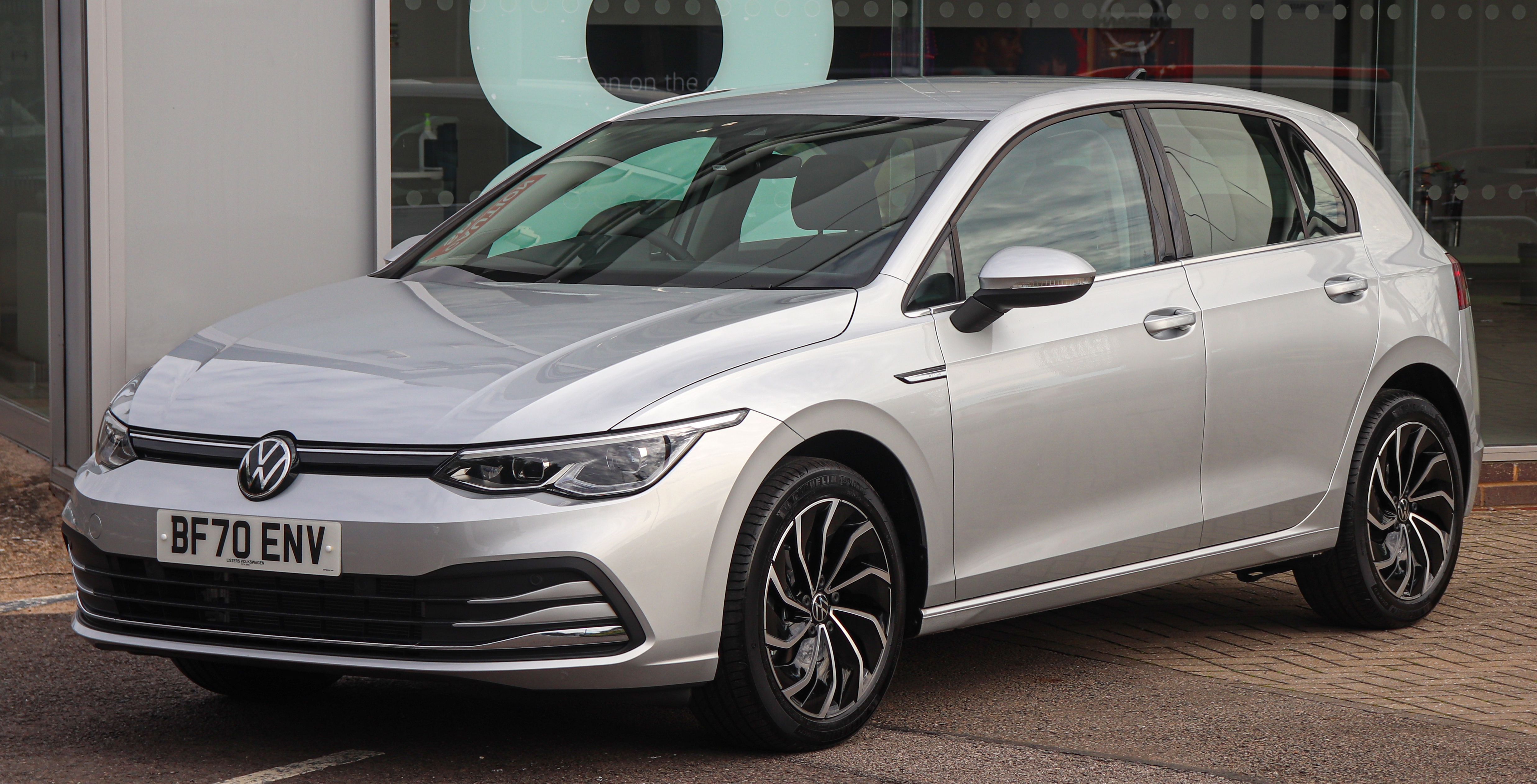
Volkswagen Jetta Gli
"...hen I was in college, I was very intrigued by the Jetta GLI. Yeah."
The Volkswagen Golf is a compact car made for everyday driving. The podcast is talking about compact performance cars in the Volkswagen lineup, which is why the Golf comes into the conversation. It’s basically part of the same “small but fun” idea.
The Volkswagen Golf is a compact car line known for being practical, with a strong enthusiast following in certain trims. The podcast references being intrigued by the Jetta GLI, which is closely related in spirit to the Golf family of compact performance options. It comes up because the Golf/Jetta platform concept often influences how people shop for compact cars.

Mitsubishi Eclipse
"I would say, except for the Eclipse now, like those are so hard to find in good condition. When you see a clean Eclipse these days, you're like, oh, they like care about their car."
The Mitsubishi Eclipse is a sporty car that a lot of car fans love, especially the versions people modify. The point here is that good, well-kept examples are getting rare.
The Mitsubishi Eclipse is a popular JDM-era coupe that became especially famous in enthusiast culture for its turbocharged variants and aftermarket support. The hosts are pointing out that finding a clean Eclipse today is harder because many have been modified, neglected, or worn out over time.
clean stock
"Yeah, there's not a lot of clean stock out there. There's not."
“Clean stock” means the car is basically how it came from the factory and looks/works well. For older enthusiast cars, that’s harder to find because many people modify them.
“Clean stock” means a car that’s still mostly original—unmodified—and in good visual and mechanical condition. In JDM hunting, that matters because many examples have been changed over the years, so finding one that hasn’t been heavily modified is rarer.
Plymouth Laser
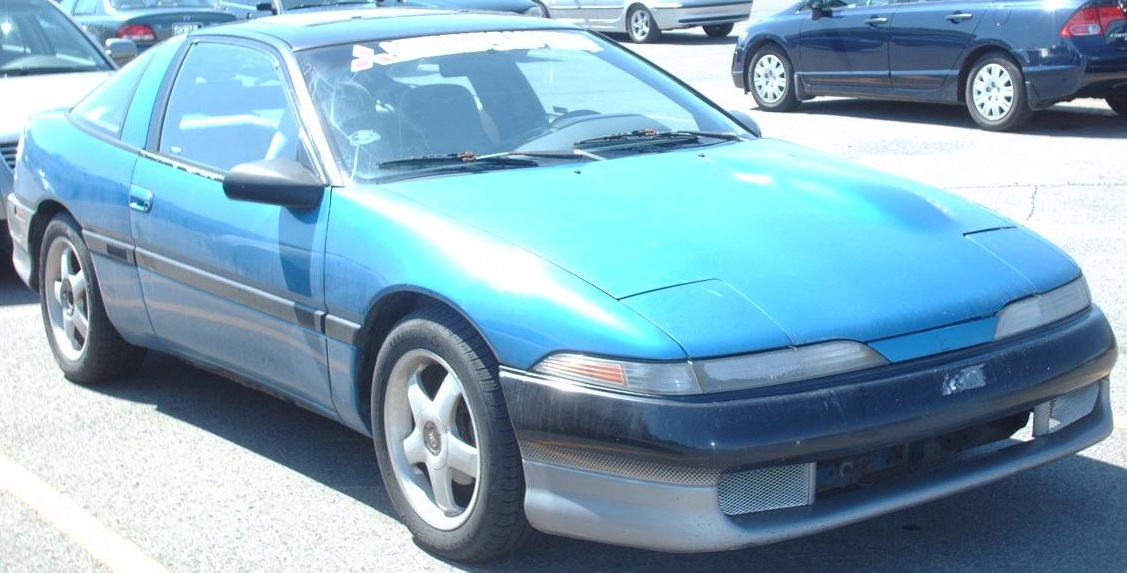
"There's not. I will say it. There's a Plymouth laser on sale."
The Plymouth Laser is an older sporty car from the 1980s that’s related to the Mitsubishi Eclipse. The hosts are basically saying one is for sale right now, but it may sell before they finish the episode.
The Plymouth Laser is a badge-engineered 1980s-era coupe that’s closely associated with the Mitsubishi Eclipse platform. It’s mentioned here as a current listing/auction item, highlighting how these JDM-adjacent cars can still pop up for sale but may be time-sensitive.

Eagle Talon
"... Eagle, and then, wait. Yeah, so it goes Eclipse, Talon, and then Laser for me. Just because Plymouth is ..."
The Eagle Talon is a sports car model. In the podcast, it’s mentioned as part of a list of similar cars. The context suggests they’re talking about how these models are connected or grouped together.
The Eagle Talon is a performance-oriented sports coupe that’s often remembered for its place in the late-1990s/early-2000s era of affordable turbocharged cars. The podcast mentions it in a sequence of model names, likely as part of a discussion about related cars and naming. It comes up because the Talon is a recognizable part of that performance lineup.
Red Line
"Do you remember that show Red Line? [2462.9s] Does that bring a bell at all? [2464.0s] I remember the movie Red Line."
“Red Line” is a show the hosts say they watched on TV reruns. They’re using it to explain how people were seeing drifting and Japanese cars before it became super mainstream.
“Red Line” is referenced as a show the hosts watched via reruns on G4TechTV. The conversation treats it as part of the early media ecosystem that exposed viewers to drifting and Japanese cars before the mainstream movie wave.
G4TechTV
"It was on, they were doing like reruns on G4TechTV, which was also showing. [2473.8s] Red Line."
G4TechTV is a TV channel the hosts mention as where they watched reruns. It’s part of the story of how drifting content reached fans back then.
G4TechTV is mentioned as the TV channel that ran reruns of “Red Line.” It’s relevant because it shows how early JDM/drifting content circulated through niche tech/TV networks before broader streaming and mainstream coverage.
Formula D
"Red Line. [2474.5s] Formula D, right? [2475.2s] The early days of Formula D."
Formula D is a drifting racing series. It’s one of the big reasons drifting became popular with mainstream car fans in the U.S.
Formula D is a professional drifting championship in the U.S. that helped mainstream drifting and JDM culture. When the hosts say “the early days of Formula D,” they’re pointing to the period when drifting became a major pop-culture phenomenon.
Ken Gushi
"And like seeing guys like, like it was Reese Millen driving like a GTO versus [2490.2s] Ken Gushi, the yellow one. [2492.4s] He had Ken Gushi who was also driving a Mustang, I think, for Falcon."
Ken Gushi is a famous professional drift driver. He was one of the drivers people watched during the early days of Formula D, when drifting became huge.
Ken Gushi is a well-known Japanese-American professional drifter who competed in Formula D. He’s frequently associated with the “golden era” of drifting because his cars and driving style were widely covered during the early 2000s JDM boom.

Ford Falcon
"...ushi who was also driving a Mustang, I think, for Falcon. Pretty sure."
The Ford Falcon is a Ford car model name. In the podcast, it’s brought up in the middle of a discussion that includes a Mustang. The point seems to be comparing or connecting those cars.
The Ford Falcon is a model name used for different generations and markets, but it’s generally known as a mid-size car platform. In the podcast context, it’s mentioned alongside a Mustang, suggesting a comparison or a shared driving story. That kind of mention usually comes up when people talk about classic or period-correct choices.

2JZ
"Like everything's like a blown LS or a 2JZ or a B58."
The 2JZ is a Toyota six-cylinder engine that’s become famous in the car world for being strong and easy to modify. People often build it with turbocharging to make big power.
The Toyota 2JZ is a legendary inline-six engine (often associated with the JDM scene) known for its strength and tuning potential. It’s especially famous in forced-induction builds, which is why it gets name-dropped alongside other “swap” engines.

B58
"Like everything's like a blown LS or a 2JZ or a B58."
The B58 is a BMW six-cylinder engine that’s popular with modifiers because it can make good power and handle upgrades. It’s commonly used in turbo-style builds.
The BMW B58 is a modern inline-six engine known for making strong power efficiently and responding well to tuning. Like the 2JZ, it’s often mentioned as a “go-to” engine for swaps and boosted builds in today’s JDM/enthusiast scene.
blown LS
"Like everything's like a blown LS or a 2JZ or a B58."
“LS” is a type of Chevy V8 engine people love to modify. “Blown” means it’s been upgraded with a forced-induction system (usually a supercharger) to make more power.
“LS” refers to GM’s LS-series V8 engines, which are popular for swaps and tuning. “Blown” means the engine is fitted with a supercharger (or sometimes a blower-style forced-induction setup) to push more air into the cylinders for higher power.
four turbo four bangers
"But back then it was a lot of like four turbo four bangers versus NA V8s and stuff like that."
A “turbo four banger” is a turbocharged four-cylinder engine. It was a common recipe in earlier JDM drifting because turbo fours can make a lot of power for their size.
“Turbo four bangers” means turbocharged inline-four engines, which were common in older JDM drift and street-racing builds. The “four” emphasizes the engine’s cylinder count, while “turbo” points to forced induction as the power strategy.
NA V8s
"But back then it was a lot of like four turbo four bangers versus NA V8s and stuff like that."
“NA” stands for naturally aspirated, meaning the engine makes power without a turbocharger or supercharger. “V8s” are eight-cylinder engines with a V-shaped cylinder layout, and naturally aspirated V8s were a common contrast to turbocharged four-cylinders in older eras of car culture.
Roger Ebert
"And I think I didn't really clock that until I read Roger Ebert's review of it,"
Roger Ebert was a well-known movie critic. Here, the host mentions his review because it’s an example of a mainstream critic who actually liked “Tokyo Drift.”
Roger Ebert was a prominent film critic known for his reviews and star ratings. In this segment, his review of “Tokyo Drift” is used as a reference point because he recommended it and gave it a specific rating.
Gran Turismo
"cause at Polyphony Digital, [2848.8s] building Gran Turismo, sleeping in the office to make this game happen, making sure that [2853.5s] everything was as realistic as possible."
Gran Turismo is a racing video game series. The developers tried to make the cars and driving feel realistic, and that’s part of why it got a lot of people interested in cars.
Gran Turismo is a long-running racing video game series by Polyphony Digital. It’s known for trying to model cars and driving behavior realistically, which helped many players learn car culture and terminology.
Nurburgring
"Scanning asphalt at the Nurburgring or you know, like crazy shit. [2859.3s] Yeah, exactly."
The Nürburgring is a very famous race track in Germany. Car fans use it as a benchmark because it’s challenging, and how a car does there says a lot about how it drives.
The Nürburgring is a famous motorsport venue in Germany, best known for the Nordschleife (“the North Loop”) track. It’s often used as a benchmark because lap times and vehicle behavior there are a strong indicator of real-world performance and handling.

Acura NSX
"We would go over to play Gran Turismo and he showed me what these cars were and I didn't, he wasn't necessarily a car guy, but he was like, yes, this is a yellow bird. This is an NSX. That's when I started appreciating them."
The Acura NSX is a Japanese supercar. It’s famous for being a serious performance car, not just a styling exercise, and it helped make Japanese sports cars more popular.
The Acura NSX is a mid-engine sports car known for its advanced, performance-focused engineering and its role in bringing Japanese supercar credibility to a wider audience. In this segment, it’s used as an example of a “new era” JDM-era car that helped shape mainstream appreciation.
role of video games in keeping the car industry relevant for young people
"I think like maybe get appropriate level of appreciation, but like, I'm kind of of the opinion that the role of video games in keeping the car industry relevant for young people, I think is like underappreciated at the moment."
They’re saying video games help keep cars interesting to younger people. If you learn about cars through games, you’re more likely to care about them in real life too.
The hosts are arguing that video games can act like a gateway for younger audiences, keeping car brands and models culturally “present” even if they aren’t widely seen on roads. In this context, games like Gran Turismo can turn unfamiliar cars into recognizable icons.
second golden age ish
"Okay, so we close out the season with some discussion on the JDM manufacturers, like the second golden age ish, you know, cars that came out after the great recession or during the great recession, even cars like the R35 GTR, the new era, Acura NSX, LFA, we talked about."
They’re talking about a “golden age” era of Japanese cars. In their story, it’s the time when new JDM models showed up around the Great Recession.
This is the episode’s framing for a period of JDM releases—cars coming out after or during the Great Recession. It’s a narrative “era” label used to organize which models the hosts consider part of the JDM revival.
Lexus LFA
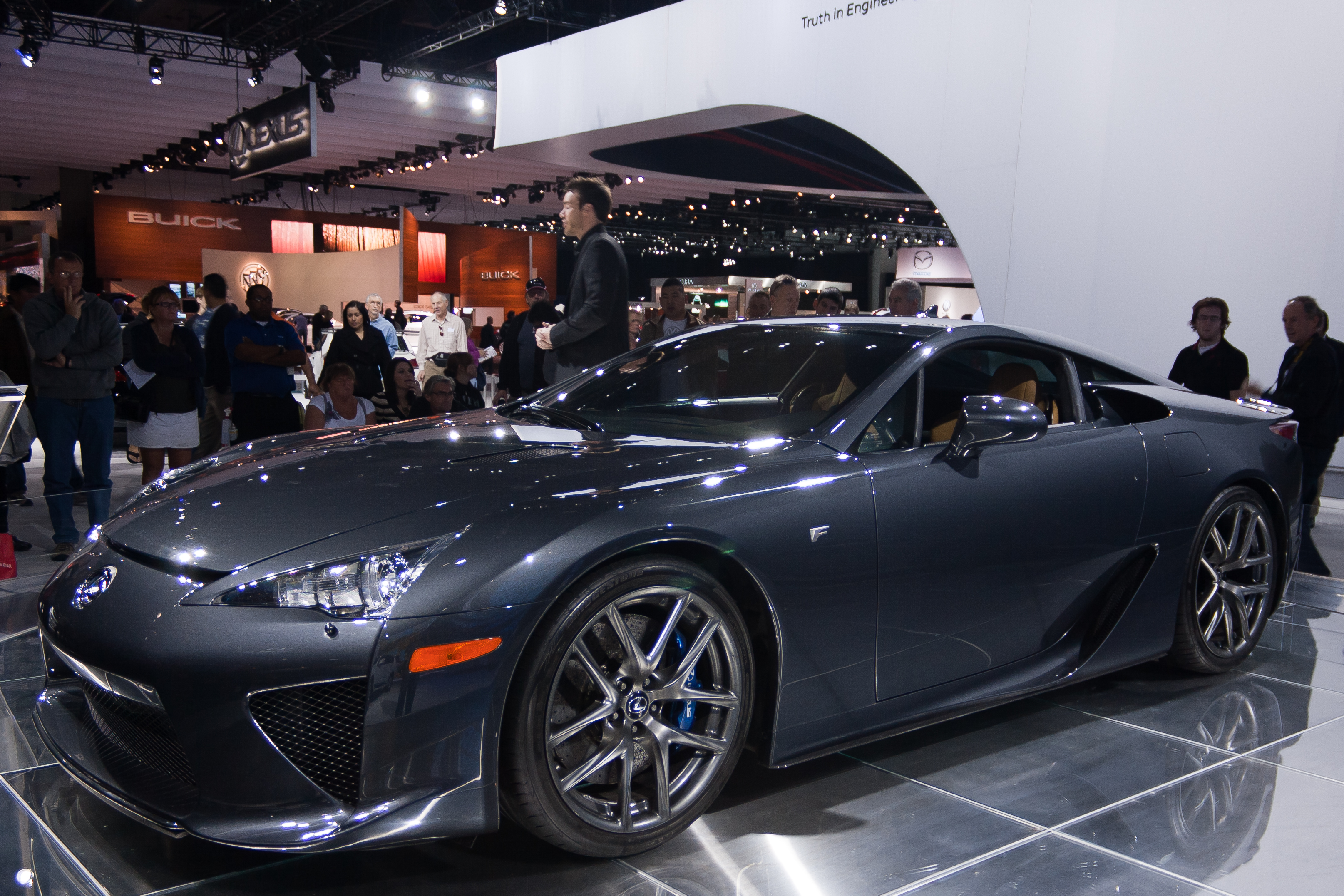
"...en cars like the R35 GTR, the new era, Acura NSX, LFA, we talked about. And now, I mean, Toyota talk ab..."
The Lexus LFA is a very expensive, limited-run sports car. It’s designed to be extremely fast and special compared to normal cars. The podcast mentions it as one of the big-name performance cars.
The Lexus LFA is a limited-production supercar built to deliver high-end performance and a distinctive sound and feel. The podcast includes it in the same conversation as other major performance icons, emphasizing its status in the supercar world. It’s discussed because it’s rare and represents a peak, halo-model effort.

Nissan R35 Gtr
"...or during the great recession, even cars like the R35 GTR, the new era, Acura NSX, LFA, we talked about. An..."
The Nissan GT-R (R35) is a high-performance sports car. It’s built to be very fast and capable, not just stylish. The podcast mentions it as one of the major cars in the modern supercar era.
The Nissan GT-R (R35) is a modern supercar known for strong performance and a reputation for being fast in real-world driving. The podcast groups it with other high-profile performance cars, calling out the “new era” of supercars. It’s discussed because the GT-R is a benchmark name for accessible, high-tech speed.
spiritual successor
"I guess that the new Audi, new Volari is kind of like the spiritual successor to the R8."
A “spiritual successor” is basically a “spiritually next” version of something—same idea or vibe, even if it’s not the exact same model. In this case, they’re saying the new Audi is meant to feel like the next R8.
“Spiritual successor” is a marketing and fan term meaning a new product isn’t a direct replacement, but is intended to capture the same spirit, purpose, or audience as the older one. Here, the hosts use it to connect a new Audi to the Audi R8’s role in the lineup.

Audi R8
"I guess that the new Audi, new Volari is kind of like the spiritual successor to the R8. By the way, for some reason, I don't know what it is. R8 people are so sour about that car right now."
The Audi R8 is a supercar from Audi with its engine placed in the middle of the car. The hosts are basically saying a newer Audi model is meant to feel like the next version of the R8.
The Audi R8 is a mid-engine supercar from Audi, known for its performance-focused layout and use of a V8 or V10 depending on generation. In this segment, the hosts compare the new Audi to the R8, framing it as a spiritual successor—meaning it’s meant to carry on the same role in Audi’s lineup.

Dodge SRT Durango
"I'm like, it's almost, I wonder if it's the same reason as like, Dodge quit making the SRT Durango and like the current owner's like, yes, it's going to stay a collectible. And then Dodge like announced another run of it and then they got pissed."
The Dodge SRT Durango is a high-performance version of the Dodge Durango SUV, built by Dodge’s SRT performance division. The hosts reference it as an example of how limiting production can affect collector interest and resale value—especially when a model is discontinued and then later brought back for another run.
collectible
"Like Dodge quit making the SRT Durango and like the current owner's like, yes, it's going to stay a collectible. And then Dodge like announced another run of it and then they got pissed."
Here, “collectible” means the car is treated like a collectible item—people expect it to be rare or desirable enough to keep its value. The hosts are saying owners can get upset if the company later makes more, because it can reduce the car’s rarity.
In car talk, “collectible” means a vehicle is expected to hold or increase value because of limited availability, demand from enthusiasts, or historical significance. The hosts connect this to production decisions—suggesting that if more units are announced after a discontinuation, some owners feel the collectible status is diluted.
value
"Maybe, but they're only building 500 of these new Volaris. And it's not, it's only going to make R8s go up in value."
They’re talking about “value” as in what the car is worth to buyers and collectors. Their point is that if a new model is limited (like 500 cars), it may help keep the older R8s expensive.
The hosts are discussing “value” in the enthusiast/collector sense—how a car’s market price can change based on supply and demand. They argue that building only 500 units of the new Audi (the “Volari”) would likely keep R8 prices moving upward rather than hurting them.
powertrain
"And you know, they're going to use that powertrain for a new Lamborghini. If they're not already."
A powertrain is basically the car’s “go” system. It includes the engine and the parts that send power to the wheels. So when they say they’ll use the same powertrain, they mean the mechanical parts that make it move.
A powertrain is the set of components that generate and deliver power to the wheels—typically the engine, transmission, driveshafts, and final drive. When someone says a company will “use that powertrain,” they mean they’ll reuse the underlying mechanical layout rather than just the body or styling. In this segment, it’s mentioned in the context of Lamborghini using a shared platform/technology.

FDRX7
"90s golden age like Acura NSX, FDRX7? No question."
The “FD RX7” is the Mazda RX-7 from the FD generation. It’s famous because it uses a rotary engine, which feels and sounds different from normal piston engines. They’re naming it as one of the classic 1990s JDM picks.
“FD RX7” refers to the Mazda RX-7 (FD generation), a legendary JDM sports car best known for its rotary engine. The FD RX-7 is a key part of the 1990s JDM “golden era” reputation because it combined sharp handling with a distinctive, high-revving rotary character. In this segment, it’s listed as a classic alternative to the newer R35 GT-R.
rotary
"And it's just so beautiful. And also the rotary, you know, I'm not even going to think about the maintenance on one of those and like trying to keep that thing alive."
A rotary engine is a special type of engine where a rotor spins to make power instead of pistons moving. It can be trickier to maintain than a normal engine, which is why the speaker is thinking about the upkeep.
A rotary engine (often called a Wankel) is an engine design where power comes from a spinning rotor rather than pistons moving up and down. Because of that design, rotary cars can have different maintenance needs and wear patterns than conventional piston engines, which is why the host brings up “maintenance” and “keeping that thing alive.”
22B WRX STI
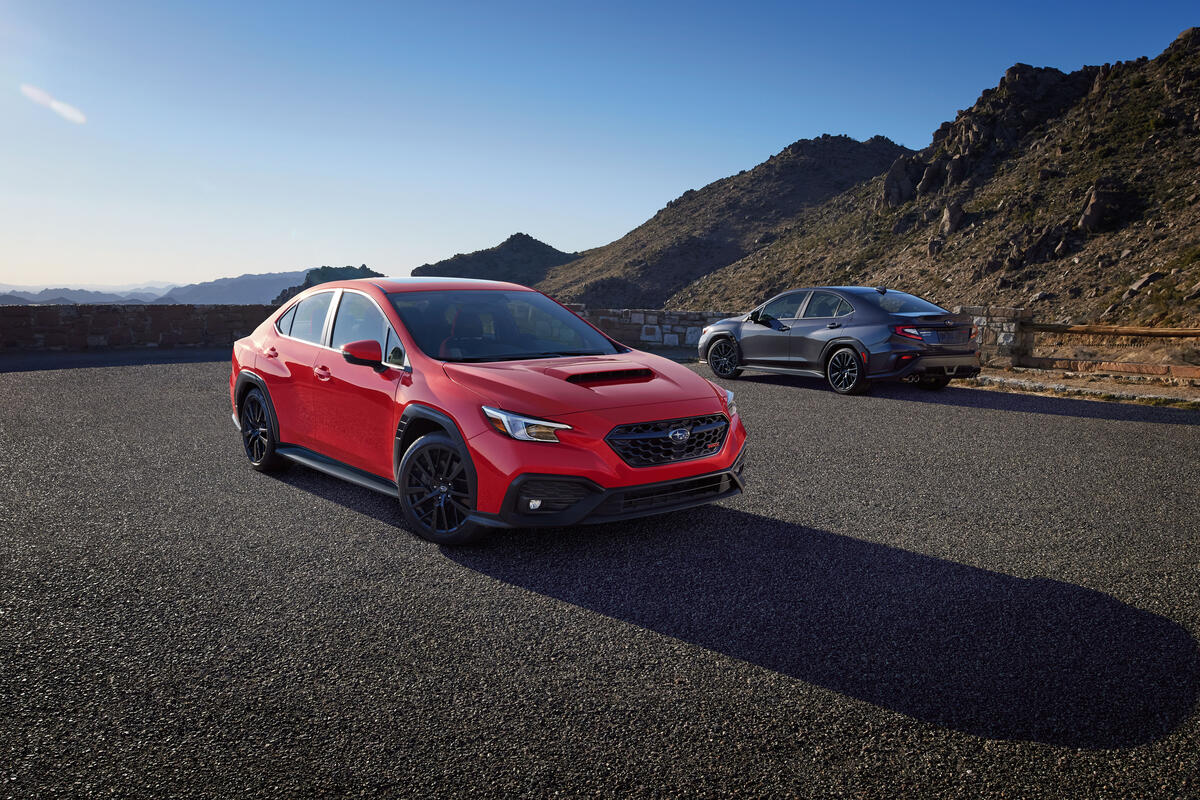
"but I think like the 22B WRX STI looks the best. [3275.3s] They look great."
The Subaru 22B WRX STI is a rare, special Subaru from the 1990s that fans love because it looks unique and has rally roots. People talk about it like a “holy grail” JDM car. When someone says it “looks the best,” they’re usually reacting to that iconic widebody style and limited status.
The Subaru 22B WRX STI is a JDM legend built around Subaru’s rally heritage, specifically the WRX STI platform. It’s famous for its distinctive widebody look and the “22B” name tied to the model’s 1980s-era rally success and limited production. In enthusiast circles, it’s often treated as a design-and-collectibility icon from the 1990s JDM boom.
Miata
"No. [3323.3s] Except Miata. [3327.9s] No, there's no wrong answer because, and again, that just validates like the entire story"
Miata is a nickname for the Mazda MX-5, a small, lightweight roadster. It’s famous for being a “smile” car—easy to enjoy—more than for being the most extreme choice. The host is joking that it’s the one car they wouldn’t pick in this lineup.
Miata is the enthusiast name for the Mazda MX-5, a lightweight, front-engine, rear-wheel-drive roadster known for being fun and approachable rather than outright fast. In this conversation, “Except Miata” is a playful way of saying that even if there’s no “wrong answer” among the JDM picks, the speaker personally wouldn’t choose the MX-5. It highlights how different JDM icons appeal for different reasons.
Mazda MX-5 / Miata
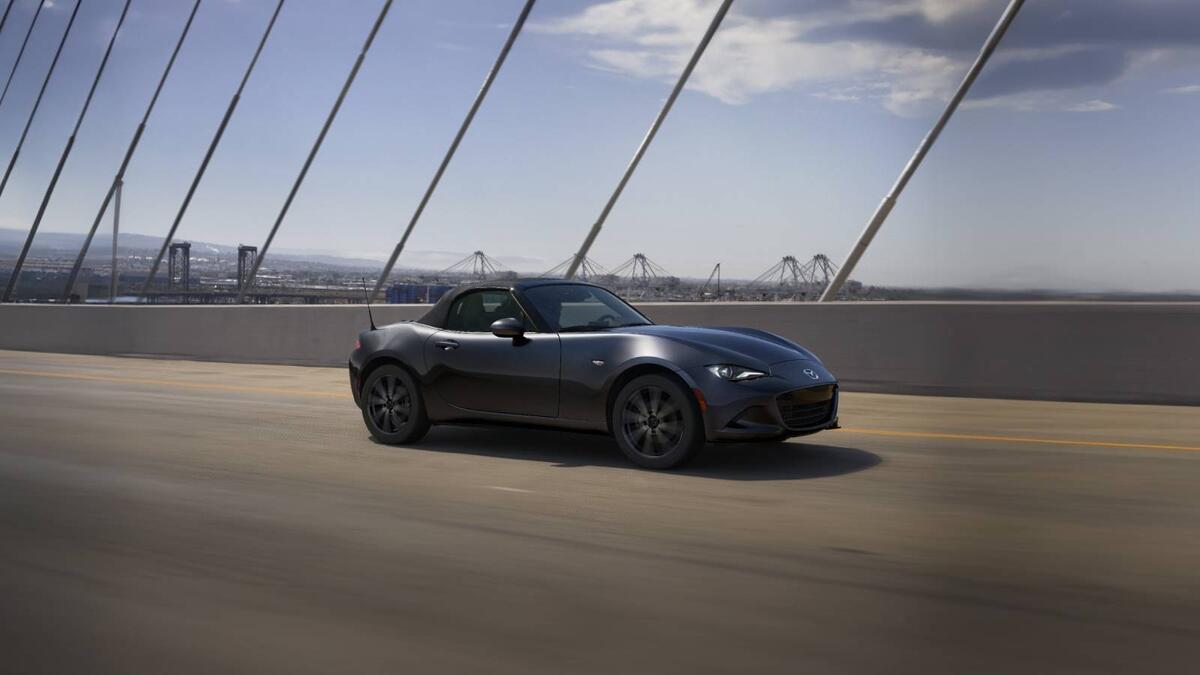
"No. Except Miata. No, there's no wrong answer because, and again, ..."
The Mazda Miata is a small two-seat sports car. It’s made to be fun to drive, especially on twisty roads. The podcast is saying it’s a safe, easy choice for people who want that kind of car.
The Mazda MX-5 Miata is a lightweight, affordable roadster focused on fun handling rather than raw power. The podcast calls out the Miata as a case where there’s “no wrong answer,” which reflects its reputation as an enthusiast-friendly choice. It’s often discussed because it’s simple, engaging, and widely loved by drivers.
inline sixes
"but like at the late 80s, I think they had six different six cylinder engines. [3384.0s] but like at the late 80s, I think they had six different six cylinder engines. [3390.4s] And it was like two different inline sixes, two different V6s, like insane amount of excess."
An inline-six is an engine with six cylinders lined up in a row. It’s a specific engine design, and the host is saying Nissan had several different versions of these back then.
An inline-six is an engine layout where six cylinders are arranged in a single straight line. The speaker is contrasting “inline sixes” with other V6 options, highlighting how Nissan had multiple six-cylinder designs in the late 1980s.
V6s
"And it was like two different inline sixes, two different V6s, like insane amount of excess. [3397.6s] That's what I mean by excess is like, and then you saw real trickle down"
A V6 is an engine with six cylinders arranged in two groups that make a V shape. The host is using it to explain that Nissan offered multiple different six-cylinder engine designs.
A V6 is an engine with six cylinders arranged in two banks that form a “V” shape. The transcript pairs V6s with inline sixes to emphasize Nissan’s wide variety of six-cylinder engine families during that era.
trickle down
"That's what I mean by excess is like, and then you saw real [3402.6s] trickle down stuff to, you know, the commuter cars in the Akano boxes."
“Trickle down” here means advanced engineering and design ideas moving from higher-end or experimental models down into more mainstream “commuter” cars. The speaker is describing how excess engine variety and development eventually influenced everyday vehicles.
K cars
"you get stuff like the AutoZam and these crazy little K cars that look sick [3425.3s] and people spend a lot of time on R&D with."
K cars are small Japanese cars made to fit special rules that keep them cheap to run and easy to drive. Even though they don’t have huge power, people still find them fun and stylish.
“K cars” are Japan’s kei-car category: small, lightweight vehicles built to strict size and engine-displacement limits. They’re designed to be affordable and practical, and they often have a surprisingly fun character despite modest power.
AutoZam
"you get stuff like the [3419.5s] AutoZam and these crazy little K cars that look sick [3425.3s] and people spend a lot of time on R&D with."
AutoZam is a Japanese car brand name. The host brings it up as an example of the small, stylish kei-car type that people still like today.
AutoZam is a Japanese automotive brand associated with Mazda-era kei and small-car offerings. In the transcript, it’s used as an example of the “crazy little” kei-car style that enthusiasts still enjoy.

Miata
"But to me, it's still exciting to, you know, like drive 120 horsepower little tiny Miata at 10 tenths. Yeah. I mean, there's been, how many times you've been driving in your, I know in my truck, just driving around LA and some of the Canyon roads around here, it's like, man, I wish I was in a little NA Miata right now instead of this, you know."
The Mazda Miata is a small, lightweight sports car that’s famous for being easy to drive fast on twisty roads. Here, they’re saying it’s fun and agile in a way a big, powerful truck isn’t.
The Mazda Miata is a lightweight, front-engine, rear-wheel-drive roadster known for its nimble handling and driver-focused feel. In this segment, they’re comparing how a small Miata can “dance” through roads versus a much more powerful truck that can’t match that agility.
10 tenths
"But to me, it's still exciting to, you know, like drive 120 horsepower little tiny Miata at 10 tenths. Yeah. I mean, there's been, how many times you've been driving in your, I know in my truck,"
“10 tenths” is a way of saying you’re driving as hard as the car can handle. It doesn’t just mean fast—it means you’re right at the edge of traction and control.
“10 tenths” is racing slang meaning you’re driving at the absolute limit of grip and control. When they say “120 horsepower little tiny Miata at 10 tenths,” they mean the car is being pushed extremely hard despite its modest power.
400 horsepower
"My truck has 400 horsepower, but like can't go around it now. It's like, it's crazy, but like it can't dance."
“400 horsepower” means the engine makes a lot of power. They’re saying even with that much power, the truck still isn’t as fun or nimble as a small Miata.
“Horsepower” is an engineering measure of engine power output, and “400 horsepower” indicates a high-power setup. In context, they’re contrasting that big power with the truck’s inability to be as agile and fun as a Miata on twisty roads.

Delorean DMC-12
"...rc around these characters. We got guys like John DeLorean, Lee Iacocca, Carol Shelby, uh, a million insane ..."
The DeLorean DMC-12 is a sports car with a very unusual look. It’s famous for its stainless-steel body and for showing up in popular media. The podcast mentions it while talking about notable automotive personalities.
The DeLorean DMC-12 is a distinctive sports car best known for its stainless-steel body and its pop-culture fame. The podcast references DeLorean and other automotive legends, using the DMC-12 as part of that broader “insane” character lineup. It’s discussed because it’s an iconic, recognizable car even beyond pure performance talk.
Request an Explanation
Heard something you'd like explained? We'll add it to this episode.
Sign in to request explanations for terms you heard.
Want to learn more?
Browse our glossary for plain-English explanations of automotive terms, jargon, and concepts.
Help improve this episode
See something that's not quite right? Our annotations are AI-generated and can sometimes miss the mark. Click the flag icon on any annotation to suggest a correction.