S2 Ep11: The Golden Era of JDM: The Last Great JDM Halo Cars
About this episode
Skyline GT-R mythology meets late-2000s reality as emissions pressure and shifting demand helped close the JDM “golden era.” The hosts walk through how Nissan rebuilt the GT-R—FM platform starting point, 50/50 balance goals, RB26 to VR38 DETT, and Takumi clean-room assembly—then use Nürburgring lap-time challenges to define the R35 as a true halo car. Toyota and Honda follow with their own halo efforts (LFA, canceled NSX V10), while Mazda’s rotary era ends and driver-first philosophies like Jimba Itai keep the story moving.
By the late 2000s, shrinking markets, tightening emissions, and a younger generation losing interest in vehicles signaled the end of the legendary JDM era. But a few rebellious engineers refused to go quietly, choosing instead to make their last cars arguably their greatest.
In this second-to-last episode of Past Gas: The Golden Era of JDM, we explore the dramatic conclusion of Japan's greatest automotive era. Discover how Nissan built the R35 GT-R from scratch to successfully crush Porsche at the Nurburgring, why Toyota intentionally lost money on every screaming V10 LFA they built to educate their next generation of engineers, the heartbreaking cancellation of Honda's highly anticipated V10 NSX, and how Mazda kept the pure driving spirit alive despite the death of the rotary engine.
This episode is brought to you by Lumi Gummies! Go to https://www.LumiGummies.com and use code PASTGAS for 30% off your order!

Nissan Skyline
"The Skyline GT-R had beaten Porsche's. It had won 29 consecutive races in Japanese touring car competition. It had traveled the world in shipping containers, going to countries [24.9s] that were never supposed to have it."
The Nissan Skyline GT-R is one of Japan’s most famous fast cars. It’s known for being extremely quick and for helping make “JDM” performance cars a big deal worldwide.
The Nissan Skyline GT-R is a Japanese performance icon built around a turbocharged, all-wheel-drive formula that helped define the modern “JDM halo car” idea. In this segment, it’s credited with dominating Japanese touring-car racing and becoming a global legend.

Nissan Gtr
"The Skyline GT-R had beaten Porsche's. It had won 29 consecutive races in Japanese touring car competition. It had traveled the world in shipping containers, going to countries"
The Nissan GT-R is a high-performance sports car made by Nissan. The podcast connects it to racing success and explains how it became known beyond Japan. It’s mentioned because it’s a major performance model with a strong competition background.
The Nissan GT-R is a performance sports car known for its racing heritage and ability to compete at a high level. In the podcast, it’s tied to the Skyline GT-R’s success, including a long streak of consecutive wins in Japanese touring car competition, and it’s described as being shipped worldwide. That’s why it’s discussed as both a motorsport success story and a globally recognized performance name.
emissions regulations were tightening
"In the late 2000s, the market for Japanese sports cars was shrinking. Emissions regulations were [54.1s] tightening. Young Japanese people had largely stopped wanting cars at all."
Tightening emissions regulations means governments are requiring cars to produce less pollution, which often forces automakers to change engines, tuning, and sometimes even discontinue certain performance models. For JDM “golden era” cars, these rules were a major reason the lineup of affordable, high-revving sports cars shrank.
Carlos Gone
"A year before the R34 ended production, Nissan CEO Carlos Gone unveiled a new GTR concept at the R34's, just a car on stage and Gones assurance that the name would survive."
Carlos Ghosn was a top executive at Nissan. Here, he’s mentioned because he was the one teasing that the GT-R name would keep going, even though Nissan wasn’t saying exactly how yet.
Carlos Ghosn (spoken here as “Carlos Gone”) was the Nissan CEO who publicly teased the future of the GT-R name. In this segment, his role is tied to the idea that Nissan wanted the “GTR” identity to continue even as the underlying car strategy changed.

Infinity G37
"It would eventually reach American showrooms as the Infinity G35, then the G37, then the Q50. The GTR badge and the skyline name, which have been inseparable for decades, were now going their separate ways."
The Infiniti G37 is another U.S. version in the same family as the G35. The episode mentions it to explain how Nissan kept changing the name as the Skyline moved into the luxury market.
The Infiniti G37 is the next step in the U.S. “semi-luxury” line that the Skyline became, sitting between the G35 and the later Q50. In this segment, it’s part of the chain that demonstrates the Skyline name and GT-R badge becoming separate identities.

Infiniti Q50
"It would eventually reach American showrooms as the Infinity G35, then the G37, then the Q50. The GTR badge and the skyline name, which have been inseparable for decades, were now going their separate ways."
The Infiniti Q50 is a later model in the same U.S. luxury line that replaced the G35/G37. The episode uses it to show how the Skyline identity changed over time in America.
The Infiniti Q50 is the later U.S. model that the Skyline-derived “semi-luxury” direction culminates in, after the G35 and G37. Here it’s used as a marker of how Nissan’s naming strategy in America moved on, while the GT-R badge went its own way.
FM platform
"That job went to a chief engineer named Kazutoshi Mizuno. Gone gave him a starting point, the FM platform. It was efficient. It was proven."
A platform is the underlying “bones” of a car—its basic layout and structure. Nissan’s FM platform is a common layout they used for many rear-wheel-drive cars, but the GT-R needs a different setup than that platform was built for.
The “FM platform” refers to Nissan’s front-engine, rear-wheel-drive vehicle architecture used across multiple models. In this segment, the chief engineer starts from the FM platform because it’s proven and efficient, but the GT-R’s goals require a different layout than the FM was designed for.
5050 weight distribution
"The GTR's performance targets required near perfect 5050 weight distribution, the kind of balance that separates a car that handles from a car that dances."
“50/50 weight distribution” means the car has about the same weight on the front and back wheels. The idea is that it helps the car handle more evenly instead of feeling front-heavy or rear-heavy.
“50/50 weight distribution” means the car’s mass is split nearly evenly between the front and rear axles. The segment frames it as crucial for the GT-R’s handling targets—because balanced weight helps the car respond predictably when turning and transferring grip.
grey market
"The press swarmed him with questions. His answer? No comment. ... Gran Turismo had put the Skyline GTR on a 100000000 screens. The grey market had been shipping R32s and R33s into countries that were never supposed to have them, like the United States, Australia, and the UK."
A “grey market” is when cars get imported and sold through unofficial channels, not the normal dealer network. The episode says this is how older GT-Rs ended up in places they weren’t originally meant to be sold.
A “grey market” is the unofficial import and sale of vehicles outside the manufacturer’s intended distribution channels. Here, it’s described as shipping R32s and R33s into countries that weren’t supposed to receive them, which helped spread the Skyline GT-R mythology internationally.
Gran Turismo
"Meanwhile, the skyline itself was being remade into a semi luxury car. It would eventually reach American showrooms as the Infinity G35, then the G37, then the Q50. The GTR badge and the skyline name, which have been inseparable for decades, were now going their separate ways. ... Gran Turismo had put the Skyline GTR on a 100000000 screens."
Gran Turismo is a popular racing video game series. The episode credits it with making the Skyline GT-R famous to a huge number of people who might never have seen one in real life.
Gran Turismo is a long-running racing video game series that helped popularize specific cars—like the Skyline GT-R—far beyond traditional car audiences. In this segment, it’s credited with putting the Skyline GTR “on a 100000000 screens,” fueling the mythology around the name.
RB26
"The RB26, the inline 6 engine that had powered every GTR from the R32 through the R34, was brilliant but dated. Nissan had wanted to replace it with the V6 as far back as the R34's launch, but never had the money or time to develop such an engine."
The RB26 is a well-known Nissan engine used in older GT-Rs. The point being made is that it was great, but it had become outdated, so engineers replaced it with something newer.
The RB26 is Nissan’s famous inline-six engine associated with the GT-R “RB” era, powering cars from the R32 through the R34. The segment frames it as brilliant but ultimately dated, which is why Nissan moved on to a new engine architecture.
VR38 DETT
"Mizuno and his powertrain chief, Naoki Nakata, designed a replacement from scratch, the VR38 DETT, a 3.8 liter twin turbocharged V6. Its 60 degree architecture was more compact than the inline 6, which made it easier to sit low and centrally in a chassis that needed perfect weight distribution."
VR38 DETT is Nissan’s twin-turbo V6 engine. The segment says it was built specifically for the next GT-R so it could fit the car’s layout and make strong power right away, with potential for even more later.
VR38 DETT is Nissan’s VR38-series twin-turbo V6 engine used in later GT-Rs. In this segment, it’s described as a 3.8-liter twin-turbo V6 designed from scratch to fit the chassis layout and target high output (480 horsepower) with room to grow.
twin turbocharged
"the VR38 DETT, a 3.8 liter twin turbocharged V6. Its 60 degree architecture was more compact than the inline 6, which made it easier to sit low and centrally in a chassis that needed perfect weight distribution."
Twin turbocharged means the engine has two turbochargers. They help the engine make more power by pushing extra air into the cylinders.
Twin turbocharged means the engine uses two turbochargers to force more air into the cylinders, allowing higher power. The segment ties it to the VR38 DETT’s goal of making strong output while still fitting a compact, low-mounted layout.
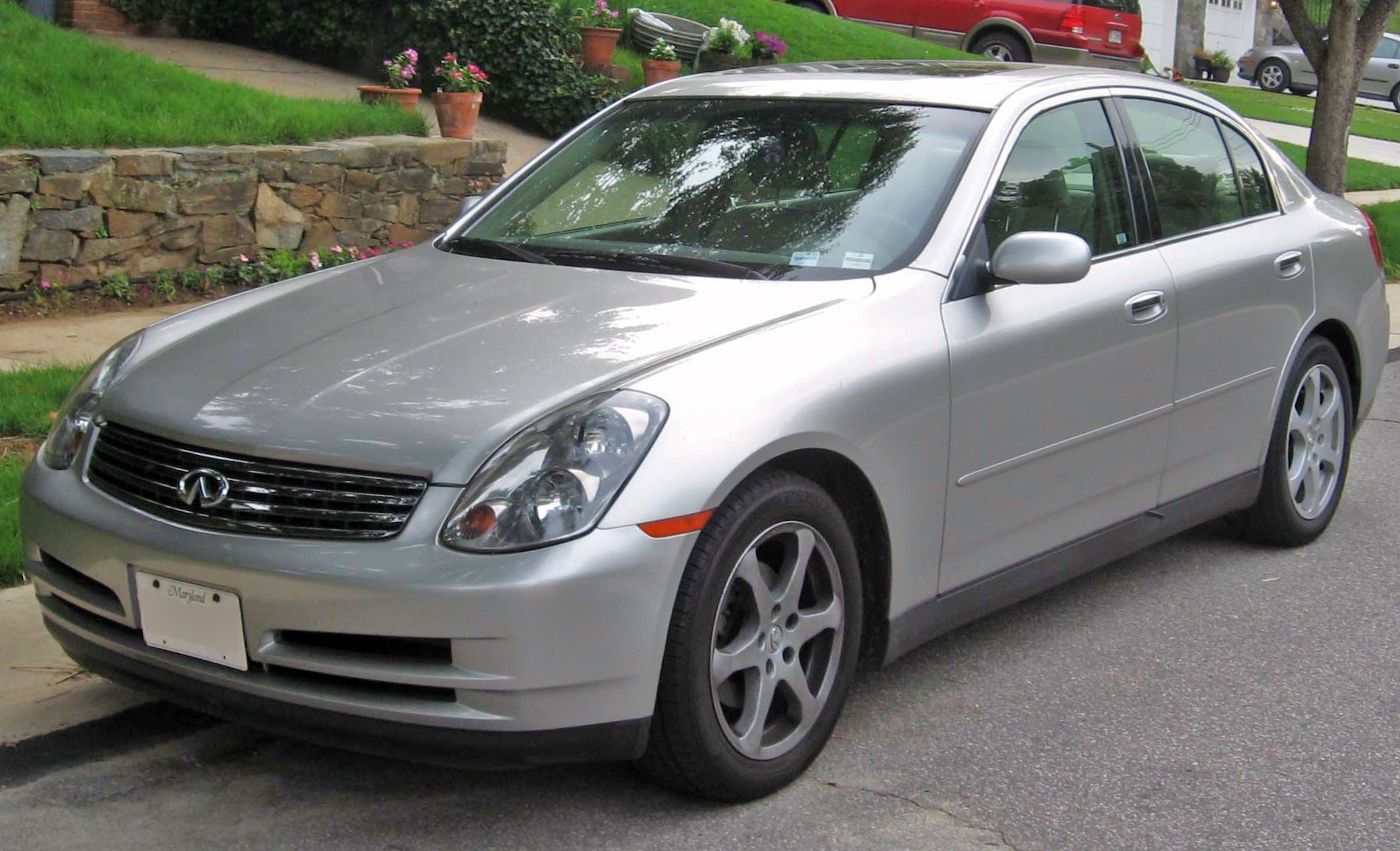
Infiniti G35
"He started with the Infiniti G35, Nissan's most sophisticated rear-wheel drive car at the time. He stripped it down to its essentials, the floor pan, the structural geometry, the suspension pickup points that define how a car behaves through a corner."
The Infiniti G35 is a rear-wheel-drive Nissan-related car. Here, the host says it was used as a starting point—basically stripped down—so engineers could build a stronger, more performance-focused foundation for the next big Nissan.
The Infiniti G35 is a rear-wheel-drive Nissan-era luxury sports sedan/coupe that served as a technical starting point here. In the segment, it’s used as a donor platform so Mizuno could strip it down and rebuild the chassis fundamentals for a new halo car.
structural geometry
"He stripped it down to its essentials, the floor pan, the structural geometry, the suspension pickup points that define how a car behaves through a corner."
Structural geometry is basically the chassis’s key shapes and point locations. The host is saying these details matter because they influence how the suspension and body work together when you turn.
Structural geometry refers to the chassis shape and the relative positions of key structural points that determine how loads travel through the body. The segment treats it as fundamental because it affects suspension alignment and how the car behaves under cornering forces.
floor pan
"He stripped it down to its essentials, the floor pan, the structural geometry, the suspension pickup points that define how a car behaves through a corner."
The floor pan is the main metal base under the seats and cabin. In this story, it’s one of the key parts engineers kept because it helps determine how the car’s structure and mounting points work.
The floor pan is the structural sheet-metal “base” of the cabin that ties together the chassis and supports mounting points. The segment highlights it as part of the “essentials” Mizuno kept when stripping the G35 down, because it helps define the car’s rigidity and geometry.
suspension pickup points
"He stripped it down to its essentials, the floor pan, the structural geometry, the suspension pickup points that define how a car behaves through a corner. Everything that made it a grand tour came out."
Suspension pickup points are the spots on the car where the suspension connects to the body. Where those points are placed affects how the wheels move when you turn, which changes handling.
Suspension pickup points are where the suspension arms/links attach to the chassis. Their location and strength strongly influence wheel motion, alignment changes, and ultimately cornering feel—so the segment calls them out as defining how the car behaves through a corner.
grand tour
"Everything that made it a grand tour came out. All that remained were the bones. It's kind of funny now thinking about this being the foundation when every G35 you see on the road here now is completely clapped."
“Grand tour” is a style of car meant for comfortable long trips. The host is saying they removed those comfort-oriented parts to leave a performance-focused foundation.
“Grand tour” here means a car built for comfortable long-distance driving, typically prioritizing ride comfort and refinement. The segment contrasts that with the stripped-down “bones” approach used to create a more performance-focused chassis.
rear-mounted dual-clutch transmission
"[486.5s] Inwent a rear-mounted dual-clutch transmission. The G35 body stayed on [493.2s] top. At first glance, you wouldn't suspect a thing, but one look under the hood"
A dual-clutch transmission uses two clutches so gear changes can happen quickly. “Rear-mounted” just means it’s positioned toward the back of the car, which can help the drivetrain layout for performance.
A rear-mounted dual-clutch transmission (DCT) places the transmission at the rear of the car and uses two clutches to pre-select gears. That layout can improve packaging for a performance drivetrain and helps enable fast, smooth shifts compared with a traditional automatic.
all-wheel drive system
"[486.5s] all-wheel drive system. Inwent a rear-mounted dual-clutch transmission. The G35 body stayed on"
All-wheel drive means power goes to all four wheels. That can help the car grip the road better, especially in slippery or low-traction situations.
An all-wheel drive (AWD) system sends power to both the front and rear axles, improving traction and stability—especially when grip is limited. Here, it’s mentioned as part of the prototype drivetrain package being developed alongside the VR38 DETT.
premium midship
"[498.9s] face-to-face with something entirely new. A rolling proof of concept for a platform Mizuno was calling [505.6s] the premium midship. When he brought it back to GONE, it was clear Mizuno was well ahead of where"
“Premium midship” is basically a way of saying the car’s design is aiming for a more advanced, higher-end layout with the engine positioned closer to the middle. That helps balance the car for handling.
“Premium midship” is a development description implying a mid-engine-style layout (or at least a midship-focused packaging philosophy) aimed at higher-end performance. The point in this segment is that the prototype was a rolling proof of concept for a new premium platform direction.
development authority
"[512.1s] When he brought it back to GONE, it was clear Mizuno was well ahead of where [512.1s] anyone expected. GONE stepped back entirely and gave Mizuno full development authority over the project. [520.1s] The development process that followed was unlike anything Nissan had ever done before."
“Development authority” here means Mizuno was given direct control over the project’s engineering decisions rather than working under the usual constraints. The segment frames this as a major organizational change that enabled a different kind of engineering process.
temperature-controlled clean room
"[567.3s] The VR38 was hand assembled in a [573.7s] temperature-controlled clean room at Nissan's Yokohama plant by a team of four master craftsmen"
A clean room is a very controlled workshop environment with fewer contaminants. Keeping temperature stable helps ensure the engine is built consistently and correctly.
A temperature-controlled clean room is a controlled manufacturing environment that limits contamination and stabilizes conditions like temperature. In this segment, it’s used to emphasize how carefully Nissan assembled the VR38 engine to protect build quality and consistency.
Takumi
"[579.2s] called Takumi, the Japanese word for artisan. Each engine took roughly two hours to build from [587.4s] 375 individual components."
“Takumi” means artisan or master craftsman in Japanese. Here it refers to the expert people who carefully build the engines by hand.
Takumi is the Japanese word for artisan/craftsman, and it’s used here to describe the master craftsmen who hand-assemble the VR38 engines. The segment uses it to highlight a “craft” approach to manufacturing rather than purely industrial assembly.
Lotus Engineering
"[593.9s] the block. For chassis refinement, Mizuno sent the prototype to Lotus Engineering in England. [601.4s] It was Lotus, after all, who had brought their Lotus 23s to Suzuka in 1963"
Lotus Engineering is a company known for helping design and refine cars, especially around handling and lightweight engineering. The segment says Nissan brought them in to help improve the prototype’s chassis.
Lotus Engineering is the engineering arm associated with Lotus, known for chassis and lightweight engineering expertise. In this segment, Mizuno sends the prototype to Lotus Engineering in England to refine the chassis, tying Lotus’s engineering heritage to the project’s development.
Suzuka
"[601.4s] It was Lotus, after all, who had brought their Lotus 23s to Suzuka in 1963 and taught Japan a [607.5s] lesson about lightweight engineering that the industry never forgot."
Suzuka is a well-known race track in Japan. The hosts mention it to point to an old example of racing-based engineering lessons.
Suzuka refers to the Suzuka Circuit in Japan, a famous motorsport track used for testing and racing. The segment references Lotus bringing the Lotus 23 there in 1963 to connect that track’s history to the “lightweight engineering” lesson being carried forward.
Skyline badge
"[612.0s] Then Mizuno made one more significant decision. He argued that the R35 [619.1s] should not carry the Skyline badge. Every GTR before had been a Skyline first and a GTR second."
A “badge” is the nameplate/emblem that tells you what model a car is. The segment says the R35 shouldn’t use the Skyline name because the earlier GT-Rs were marketed as Skyline cars first.
A “badge” is the model name/emblem used to identify a car’s identity on the body and in branding. Here, the segment says Mizuno argued the R35 should not carry the Skyline badge, because earlier GT-Rs were branded as Skyline first—so the naming decision was part of how the car’s identity evolved.
halo car
"In the automotive world, that kind of car has a name, a halo car. A flagship built not primarily to sell, but to define what a manufacturer stands for and pull everything beneath it upward."
A “halo car” is a company’s showpiece. It may not be the one they sell the most of, but it’s designed to make people think the whole brand is better.
A “halo car” is a flagship model built to represent a brand’s identity and aspirations. It’s often not the highest-volume seller; instead, it’s meant to boost interest and credibility for the rest of the lineup.

Nissan R35 Gtr
"That car was the R35 GT-R and the 2007 Tokyo Motor Show was where Nissan introduced it to the world. As the R35 GT-R drove onto the stage, a surge of photographers rushed forwards."
The Nissan GT-R (the R35 generation) is a very serious performance car. It’s famous for being fast in a straight line and, more importantly, for being hard to beat around race tracks.
The Nissan R35 GT-R is a performance flagship known for its all-wheel-drive traction and “supercar-fighting” pace. It became a benchmark in the late-2000s JDM halo era, especially after Nissan used Nürburgring lap times to prove its credibility.
Carlos Ghosn
"Then Carlos Ghosn stepped forward and said something that stopped the room. He told the press that Mizuno had taken the car to the Nürburgring."
Carlos Ghosn was a Nissan executive. In this story, he steps up to the press and talks about where the car was tested to prove how good it is.
Carlos Ghosn (often spelled Carlos Ghosn) was a top executive at Nissan during the GT-R’s launch era. In this segment, he’s portrayed as directly addressing the press and tying the car’s credibility to a Nürburgring run.
Nürburgring
"He told the press that Mizuno had taken the car to the Nürburgring. The track that had become the global benchmark for performance cars."
The Nürburgring is a well-known race track in Germany. Car makers use it to see how fast and well their cars really are, not just on simple test routes.
The Nürburgring is a famous German race circuit used as a benchmark for performance cars. Because it has complex corners and changing conditions, lap times there are often treated as a real-world test of engineering and driver confidence.
Mizuno
"He told the press that Mizuno had taken the car to the Nürburgring. ... Mizuno didn't care. In 2008, he returned to the Nürburgring and clocked a 7.32. Then, in 2009, he walked away with a 7.29."
Mizuno is the driver mentioned here. He keeps going back to the Nürburgring and posting faster times, which is the point of the argument in the segment.
Mizuno is referenced as the person who drove the GT-R at the Nürburgring and then returned for additional attempts. The repeated lap times (7.32, then 7.29) are used to argue that the car’s performance wasn’t a one-off result.

Corvette ZR1
"The 2009 world performance car of the year voted on by jurors from 25 countries, and the cars it was beating out told the full story. Porsche 911, Corvette ZR1, Audi R8,"
The Corvette ZR1 is the most hardcore version of the Corvette. Here it’s mentioned because it was one of the other big-name performance cars competing for a major award.
The Chevrolet Corvette ZR1 is a high-performance variant of the Corvette line, known for being a top-tier American track weapon. In this segment it’s named as one of the cars the GT-R’s award was beating, placing the GT-R in a “global halo” performance conversation.

Audi R8
"The 2009 world performance car of the year voted on by jurors from 25 countries, and the cars it was beating out told the full story. Porsche 911, Corvette ZR1, Audi R8,"
The Audi R8 is a supercar from Audi. It’s mentioned because it was among the top performance cars being compared in a big international award.
The Audi R8 is a mid-engine supercar built around Audi’s performance engineering and all-wheel-drive traction. It’s included here as part of the shortlist of cars that the 2009 “world performance car of the year” was beating, underscoring how the GT-R was competing with established supercar brands.

Porsche 911
"The 2009 world performance car of the year voted on by jurors from 25 countries, and the cars it was beating out told the full story. Porsche 911, Corvette ZR1, Audi R8,"
The Porsche 911 is Porsche’s famous sports car. In this segment it’s mentioned as one of the top contenders in a major performance-car award.
Porsche 911 is the iconic rear-engine sports-car line that repeatedly shows up as the performance yardstick in this era. Here it’s listed among the cars competing for “world performance car of the year,” reinforcing how central the 911 was to the debate over lap-time credibility.

Lamborghini Gallardo
"[1134.3s] Lamborghini Gallardo, Ferrari 430 Scuderia. Cars that cost two to three times as much"
The Lamborghini Gallardo is a high-end exotic supercar with a powerful engine. The hosts mention it to show just how much money these “halo” cars cost compared to the Japanese cars they’re talking about.
The Lamborghini Gallardo is a V10-powered supercar that became a benchmark for accessible exotic performance in the late 2000s. In this segment, it’s used as a reference point for how expensive the “halo” cars were compared to the JDM target.

Ferrari 430 Scuderia
"[1134.3s] Lamborghini Gallardo, Ferrari 430 Scuderia. Cars that cost two to three times as much"
The Ferrari 430 Scuderia is a special, more track-oriented Ferrari with a strong, high-revving engine. The episode brings it up as an example of the kind of expensive “halo” car they’re comparing against.
The Ferrari 430 Scuderia is a track-focused version of the 430, known for its high-revving V8 and lightweight, performance-first approach. Here it’s mentioned alongside the Gallardo to illustrate the price tier of famous “halo” supercars.
attack package
"[1154.3s] In his final year, the Nismo variant, with its optional and attack package of aerodynamic [1159.6s] and suspension upgrades, lapped the Nürburgring in seven minutes, eight seconds."
An “attack package” is a set of upgrades meant to make a car feel more aggressive and track-ready. Here, it includes things like aero and suspension changes to help it go faster on a lap.
An “attack package” is a factory (or official) bundle of performance-oriented upgrades—typically aerodynamic add-ons and suspension changes—meant to sharpen track behavior. In this context, it’s part of the Nismo setup that helped the car achieve a Nürburgring lap time.

Toyota MR2
"...T. They had produced the AE86, the Supra, and the MR2, the very car that gave a generation of enthusias..."
The Toyota MR2 is a small sports car made by Toyota. It’s designed for driving fun rather than being a big family car. The podcast mentions it because it was one of the important Toyota sports cars that helped inspire a generation of fans.
The Toyota MR2 is a sports car known for its compact size and enthusiast-focused layout, including versions that became especially influential among driving fans. In the podcast, it’s referenced as part of Toyota’s run of enthusiast cars—alongside the AE86 and Supra—that helped define a generation of interest. That’s why it’s discussed as a key piece of Toyota’s performance history.

Toyota Ae86
"...yota had built the 2000 GT. They had produced the AE86, the Supra, and the MR2, the very car that gave a..."
The Toyota Corolla is a small, everyday car made by Toyota. It’s known for being practical and generally dependable. The podcast mentions it because Toyota also made more exciting cars, and the Corolla is part of that bigger story.
The Toyota Corolla is a compact car that became one of the most widely sold nameplates in the world, known for dependable everyday transportation. In the podcast, it’s brought up as part of Toyota’s broader history of enthusiast and performance models, including the AE86 era that helped define a generation of driving culture. That’s why it’s discussed alongside cars like the Supra and MR2—Corolla represents the mainstream side of Toyota’s lineup.
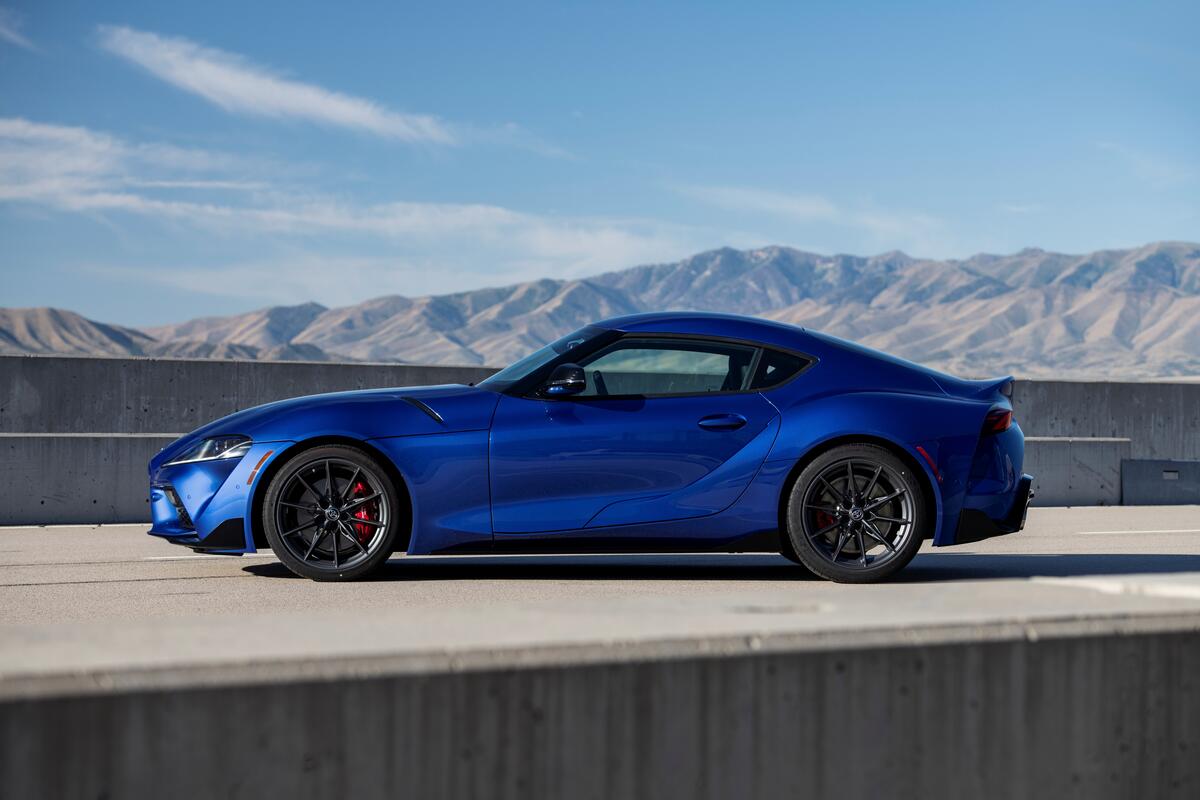
Toyota Supra
"...uilt the 2000 GT. They had produced the AE86, the Supra, and the MR2, the very car that gave a generation..."
The Toyota Supra is a sports car made by Toyota. It’s built for performance—faster acceleration and more engaging driving than a typical daily car. The podcast brings it up because it’s one of the most famous Toyota performance models.
The Toyota Supra is a performance sports car that has become an icon for enthusiasts, especially due to its reputation for balance of power and handling. In the podcast context, it’s referenced as part of Toyota’s lineup that included other enthusiast favorites like the AE86 and MR2, helping shape what a “generation” of driving fans wanted. That’s why it’s discussed in a historical comparison of influential cars.
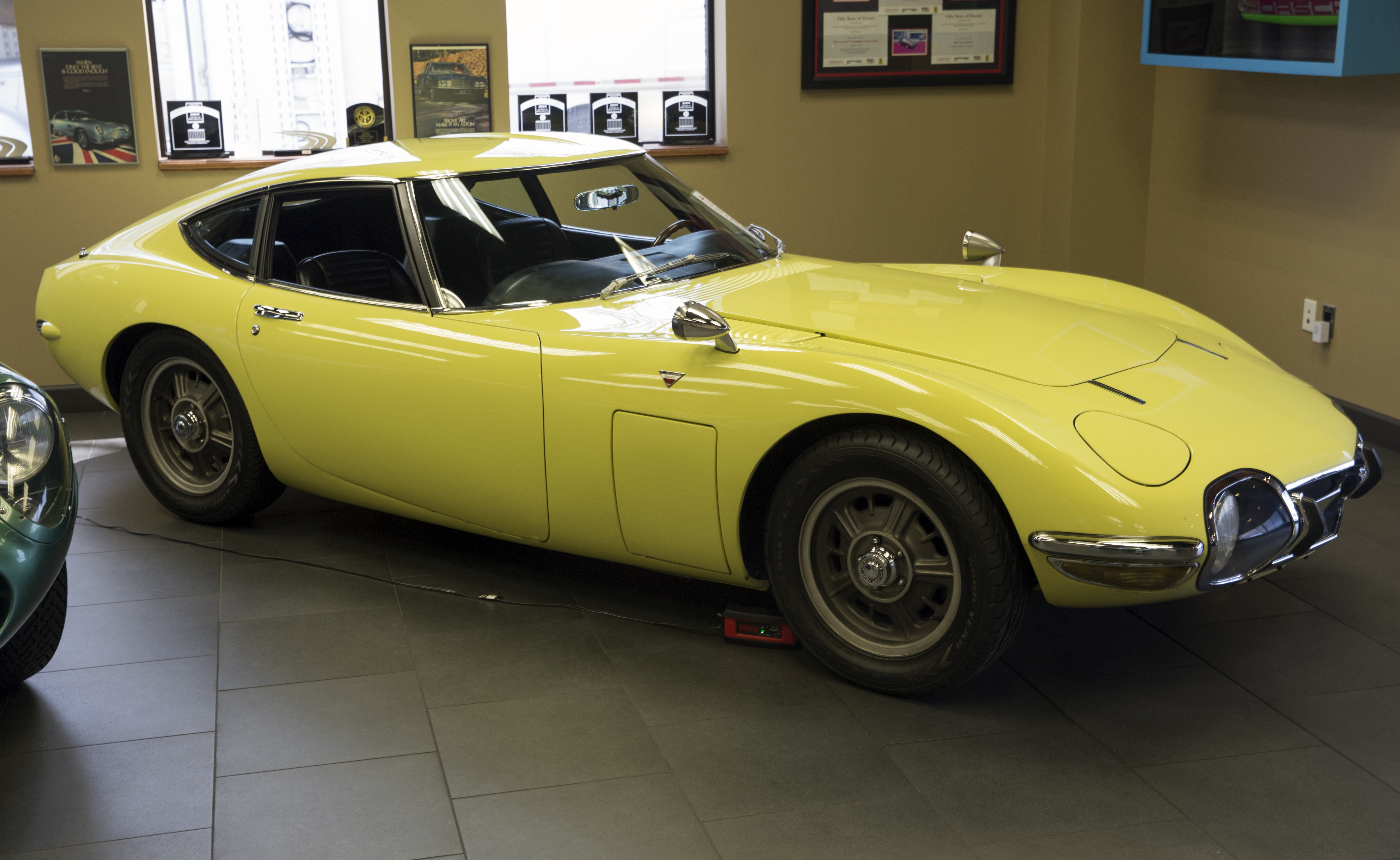
Toyota 2000 GT
"[1265.3s] Toyota had built the 2000 GT. They had produced the AE86, the Supra, and the MR2,"
The Toyota 2000 GT is an old-school Japanese sports car that helped build Toyota’s reputation with enthusiasts. The hosts mention it to show Toyota used to make exciting cars, not just practical ones.
The Toyota 2000 GT is a classic Japanese sports car from the late 1960s, famous for its performance and for proving Toyota could build a serious enthusiast-focused coupe. The segment uses it to contrast Toyota’s earlier sports-car credibility with what the lineup became by 2000.
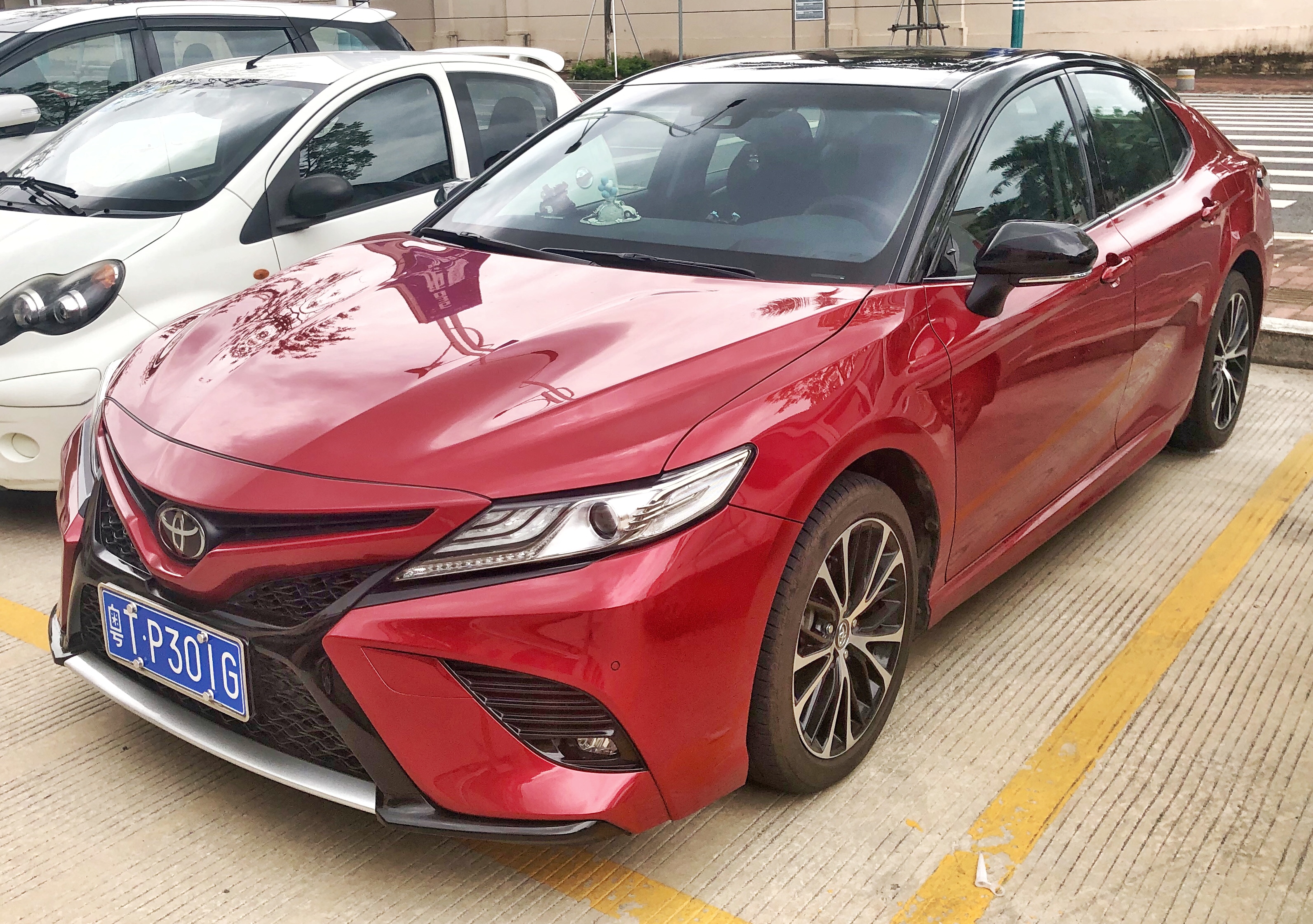
Toyota Camry
"...rer by volume, and its lineup reflected that. The Camry, the RAV4, the Corolla, reliable, endlessly refin..."
The Toyota Camry is a regular-size family car made by Toyota. It’s designed to be comfortable and dependable for daily driving. The podcast mentions it because it’s one of the big sellers that helped define Toyota’s reputation.
The Toyota Camry is a midsize sedan built for high-volume, everyday use, emphasizing comfort and long-term dependability. In the podcast, it’s mentioned as part of Toyota’s lineup that reflected its popularity and consistent refinement over time. It’s discussed alongside other mainstream Toyota models to highlight how Toyota’s “reliable and refined” approach became a core identity.

Toyota RAV4
"...me, and its lineup reflected that. The Camry, the RAV4, the Corolla, reliable, endlessly refined, and vi..."
The Toyota RAV4 is a compact SUV made by Toyota. It’s built for daily driving and is known for being practical and dependable. The podcast mentions it because it’s one of Toyota’s big-selling models.
The Toyota RAV4 is a compact crossover SUV built for everyday practicality, comfort, and broad market appeal. In the podcast, it’s mentioned alongside the Camry and Corolla as part of Toyota’s lineup that reflected its high sales volume and reputation for reliability and refinement. It’s discussed as a key example of Toyota’s mainstream strength, not just its sports-car history.

2JZ engine
"emissions regulations had made the 2JZ engine too expensive to update."
The 2JZ is a Toyota engine that became legendary with car fans because it can handle upgrades. Here, the host is saying new emissions rules made it expensive to keep meeting regulations, so it wasn’t worth updating.
The 2JZ is a famous Toyota inline-six engine best known from the JDM scene for its strength and tuning potential. In this segment, they’re saying emissions regulations made it too costly to keep updating, which is why it became financially impractical to continue the platform in its then-current form.

Toyota Celica
"...ensive to update. The MR2 was killed in 2005. The Celica followed in 2006, a victim of declining sales in ..."
The Toyota Celica is a sporty compact car made by Toyota. The podcast says it was discontinued because sales were dropping. It’s mentioned as part of the story of Toyota ending some of its sports models.
The Toyota Celica is a compact sports coupe that historically served as Toyota’s sporty option before it was discontinued. In the podcast, it’s described as a victim of declining sales after the MR2 ended, showing how Toyota’s sports-car lineup shifted over time. That’s why it’s mentioned in a timeline of Toyota’s enthusiast models coming and going.
Carumabonare
"The Japanese automotive industry had a phrase for what was happening. Carumabonare, or demotorization, the voluntary separation of a generation from cars."
Carumabonare is a Japanese idea for people choosing not to care about cars anymore. In this episode, it’s used to explain why younger Japanese buyers moved away from owning cars, especially sporty ones.
Carumabonare (also described here as “demotorization”) is a Japanese term for the voluntary separation of a generation from cars. The host uses it to explain why demand for affordable sports cars and traditional car ownership fell, even while other consumer spending shifted to electronics.

Toyota Alphard
"The cars that did retain status among the young Japanese during this period weren't sports cars. They were vehicles like the Toyota Alphard."
The Toyota Alphard is a big, upscale minivan. The host is using it as an example of how status shifted away from sports cars and toward comfortable, spacious family vehicles.
The Toyota Alphard is a large, prestige minivan that became a status symbol in Japan during the period the host describes. Instead of signaling “sports car” identity, it communicates wealth through space and comfort—exactly the shift the segment is arguing happened to young buyers.
Haruhiko Tanahashi
"Japan wasn't the only market that mattered, and outside Japan, the appetite for what Japanese automakers could build hadn't gone anywhere. Haruhiko Tanahashi recognized this."
Haruhiko Tanahashi is mentioned as someone at Toyota who noticed the global market still wanted what Japanese automakers could build. The point here is that Toyota needed to keep its identity strong for buyers outside Japan.
Haruhiko Tanahashi is referenced as recognizing the need to prove Toyota’s “soul” was still alive outside Japan. In the context of this segment, he represents the leadership mindset that pushed Toyota to keep relevance in global markets even as Japanese domestic demand shifted.
9,000 rpm
"Together, they built a list of 500 individual qualities the car needed, from the engine's power delivery to the sound it made at 9,000 rpm."
RPM means how fast the engine spins. Saying “9,000 rpm” is pointing to the high-speed part of the engine where the car’s sound and feel are especially noticeable.
RPM is revolutions per minute, and “9,000 rpm” describes how fast the engine is spinning at a particular point in the powerband. Mentioning the sound at 9,000 rpm highlights how the car’s character and response are tuned for high-engine-speed operation.
12-year project
"someone with enough authority to protect a 12-year project from the accountants who would inevitably question why the world's largest car maker was spending money on something with no guaranteed return. I mean, this is a super valid concern as we'll see later."
This is talking about a car project that took about 12 years to develop. Over that time, new technology and new information can force the team to redo parts of the design.
A “12-year project” describes a long development cycle where the product is designed, then effectively redesigned as technology and requirements evolve. The transcript frames this as a major organizational challenge because it spans multiple budget cycles and changing technical constraints.
bean counters
"Oftentimes, especially on some of our older episodes of Pass Gas, the bean counters are the enemy here, but they're doing their job too."
“Bean counters” means the finance people who focus on costs and budgets. In big companies, they may question expensive projects if the return isn’t clearly proven.
“Bean counters” is a colloquial term for finance-focused people who prioritize budgets, cost control, and measurable returns. In car development, they can challenge long, expensive programs—especially ones without a guaranteed payoff.
carbon fiber supercar
"working on a multi-million-dollar carbon fiber supercar of which the engine is the only thing that that engine ever goes into."
A carbon fiber supercar uses lightweight carbon-fiber materials in the car’s structure. The goal is usually to make the car lighter and more rigid so it drives sharper.
A carbon fiber supercar uses carbon-fiber composite materials to reduce weight while maintaining stiffness. That can improve acceleration, braking, and handling by lowering mass and helping the chassis resist flex under load.
pseudonym
"Toyoda even raced cars competitively under a pseudonym, because the board felt it was inappropriate. So yeah, he would race under the pseudonym"
A pseudonym is a made-up name someone uses instead of their real one. Here, it’s used so Toyoda can race without revealing who he is.
A pseudonym is a false name used to hide someone’s real identity. In motorsport contexts, it can be used to race without drawing attention from corporate leadership or conflicts of interest.
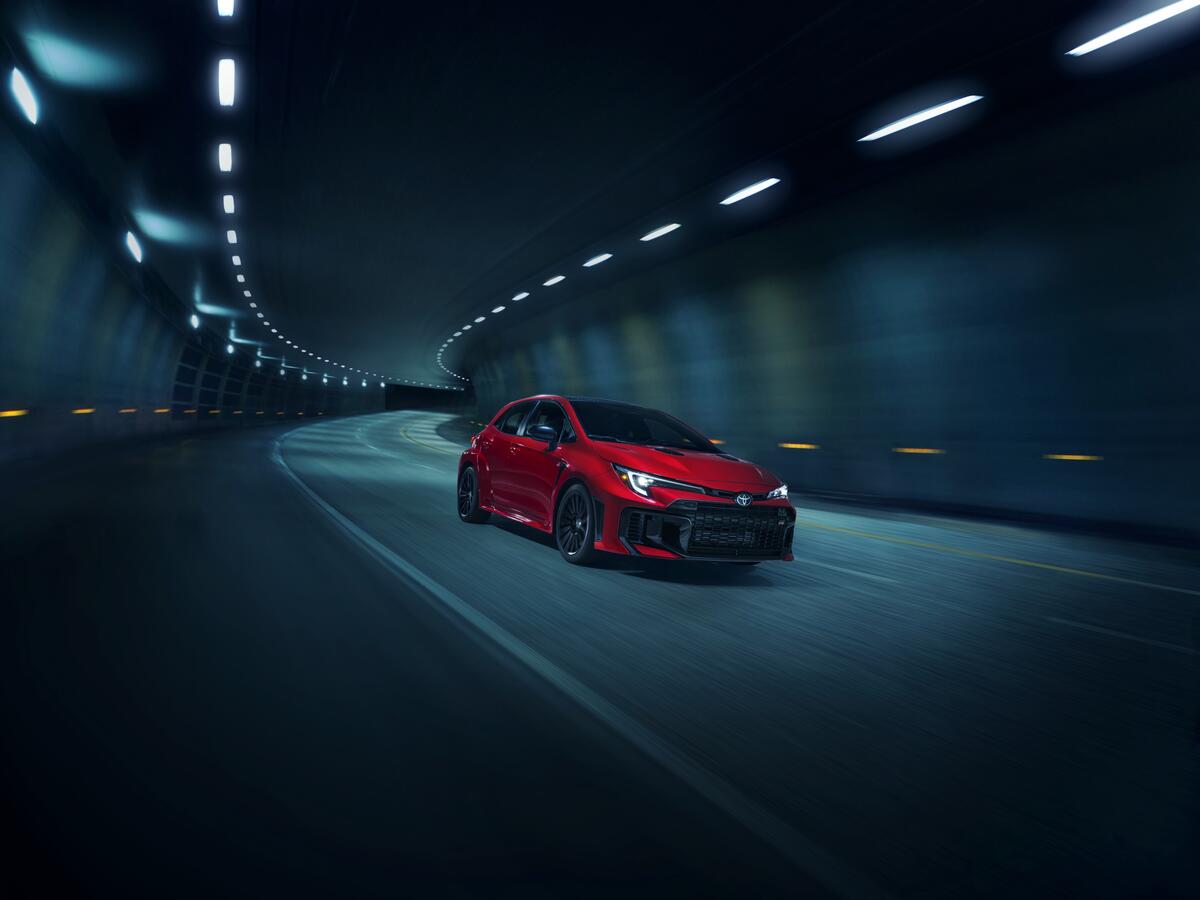
GR Corolla
"And now, you can get the Morizo edition of the GR Corolla to commemorate that. That's a little wink, wink, nod, nod."
The GR Corolla is a performance version of the Toyota Corolla. In this story, Toyota connects it to “Morizo,” a racing name used by Akio Toyoda.
The Toyota GR Corolla is a modern hot hatch built for rally-style performance, and it’s notable here because Toyota is tying it to the “Morizo” identity. The “Morizo edition” is presented as a commemorative nod to Akio Toyoda’s racing pseudonym.
Detroit Motor Show
"In January 2005, the team unveiled its first public version at the Detroit Motor Show under Toyoda's Lexus banner, calling it the LFA concept."
The Detroit Motor Show is a big car show in the U.S. where automakers show off new cars and concept cars.
The Detroit Motor Show is a major North American auto event where manufacturers unveil new vehicles and concepts. In this segment, it’s the venue for the first public reveal of the LFA concept.
aluminum
"It was an aluminum car at this point, built over a chassis of extrusions and castings. The press responded enthusiastically."
Aluminum is a light metal. Using it in a car helps reduce weight, which can improve how the car feels and performs.
Aluminum is a lightweight metal used in car structures to reduce mass. In performance cars, the material choice affects stiffness, weight, and how the chassis responds under load.
chassis of extrusions and castings
"It was an aluminum car at this point, built over a chassis of extrusions and castings. The press responded enthusiastically."
This describes how the car’s frame pieces are made. Extrusions are like pushing material through a shaped tool, and castings are made by pouring metal into a mold.
“Extrusions” and “castings” are two manufacturing methods for metal structures. Extrusions are formed by forcing heated material through a die, while castings are poured into a mold—together they can shape a chassis frame with targeted strength and weight.
tolerances
"And outsourcing wasn't an option. The tolerances Tanahashi needed, [1804.1s] the specific weave patterns required for the chassis to behave exactly as he intended,"
Tolerances are how precisely a part has to be made. If the fit or shape is off by even a little bit, the car’s structure can behave differently than the engineers intended.
Tolerances are the allowable variation in a manufactured part’s dimensions and fit. For a carbon-fiber chassis, tight tolerances matter because small differences can change how the structure flexes and behaves under load.
weave patterns
"The tolerances Tanahashi needed, [1804.1s] the specific weave patterns required for the chassis to behave exactly as he intended,"
Weave patterns describe how carbon-fiber sheets are laid up (the orientation and arrangement of fibers) before curing. Because fiber direction strongly affects stiffness and strength, the weave pattern is tuned so the chassis flexes in the exact way the engineers designed.
Yamaha
"co-developed with the Yamaha's engineering division, the same company that had helped [1865.2s] Toyota build the 2000 GT's engine four decades earlier."
Yamaha is a company that makes more than just motorcycles. In this story, they helped Toyota and Lexus with the LFA—first on the engine, and then by applying their precision know-how from making musical instruments.
Yamaha is an engineering-focused company best known for motorcycles, but it also has divisions that build precision products. Here, the segment highlights Yamaha’s engineering division co-developing the LFA’s engine and later its musical-instrument division contributing expertise in sound-related precision.
naturally aspirated V10
"a naturally aspirated V10. [1879.4s] During development, the team ran into an interesting problem."
A naturally aspirated V10 is a 10-cylinder engine that breathes normally without forced induction. It’s known for a sharp, high-revving character because the engine has to pull in air on its own.
A naturally aspirated V10 is an engine with ten cylinders in a V configuration that relies on atmospheric pressure for air intake (no turbocharger or supercharger). This kind of engine typically emphasizes high-rev response and a specific throttle feel, which is part of why the LFA’s character is so distinctive.
analog tachometer
"During development, the team ran into an interesting problem. A conventional analog [1885.0s] tachometer couldn't move fast enough to track the engine revs accurately."
An analog tachometer is the RPM gauge with a needle. If the engine revs change very quickly, the needle may not keep up, so the reading won’t feel accurate.
An analog tachometer uses a needle and dial to show engine RPM. If the needle can’t move fast enough or doesn’t have sufficient resolution, it can lag behind rapid rev changes—exactly the issue described for the LFA.
digital
"The instrument cluster [1890.5s] had to go digital. It was a car so fast its own gauges couldn't keep up with it."
A digital gauge shows RPM on a screen rather than with a needle. It can update faster, which helps when the engine speed changes extremely quickly.
A digital instrument cluster displays RPM and other data using electronic screens instead of a moving needle. For very fast-revving engines like the LFA’s, digital readouts can update quickly enough to match what the engine is doing.
surge tanks
"Surge tanks were tuned to specific audio frequencies. Channels were cut to pipe the intake sound directly into the cabin."
Surge tanks are parts in the intake system that help control how air moves into the engine. Here, the story says they were tuned so the intake sound coming into the cabin would be more musical and intentional.
Surge tanks are tuned intake components used to shape airflow dynamics and pressure waves in an engine’s intake system. In this segment, they’re described as being tuned to specific audio frequencies so the intake sound delivered to the cabin becomes part of the car’s engineered “music.”
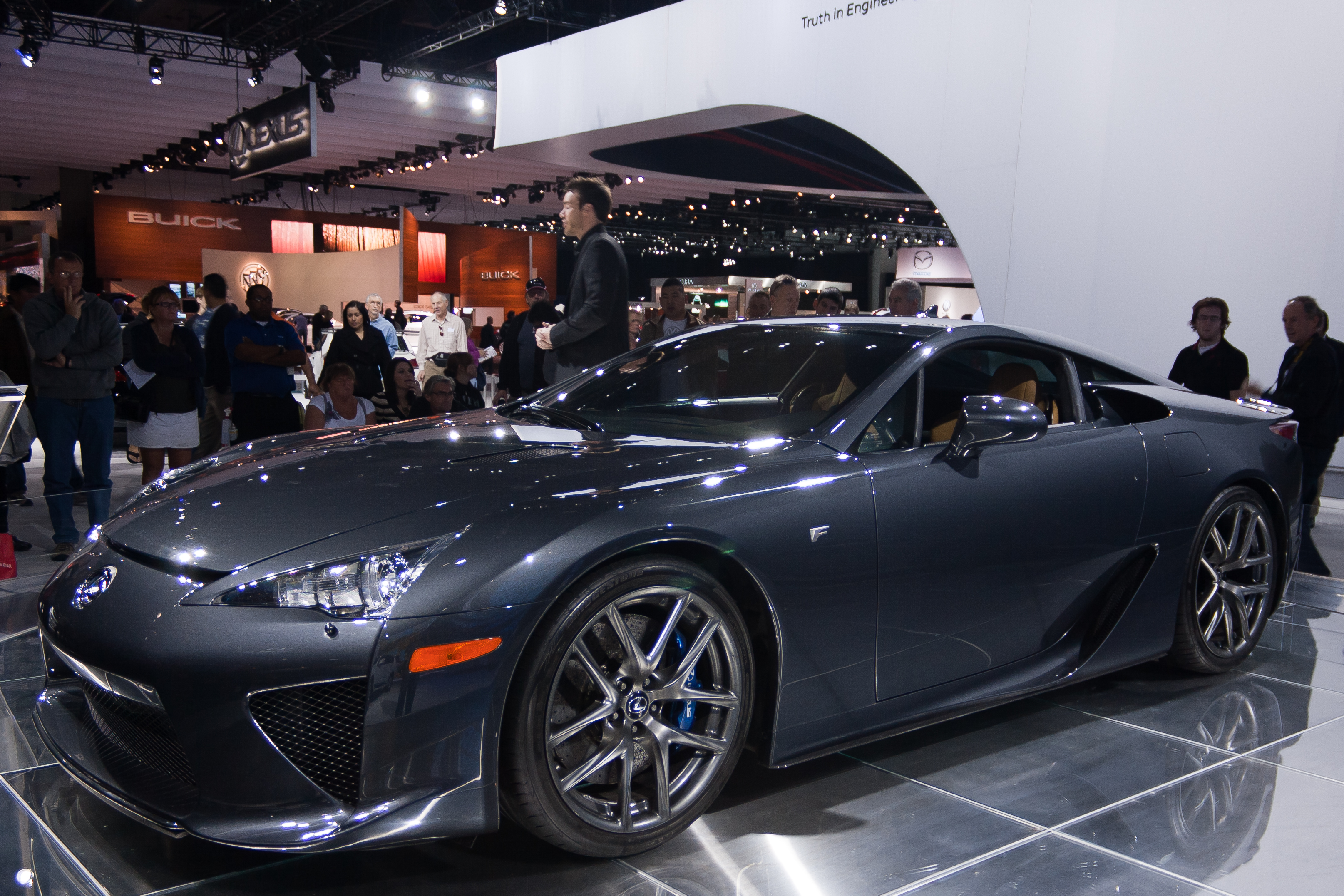
LFA
"Every journalist who drove the LFA said the same thing. It produced the greatest engine sound of any production car ever built. A V10 screaming to 9000 rpm with the voice unlike anything else on earth."
The Lexus LFA is a special supercar from Lexus (Toyota). It has a high-revving V10 engine, and the sound is a big part of why people love it—engine noise that feels tuned and “musical,” not just loud. The episode says even reviewers who drove it all described the same standout sound.
The Lexus LFA is a halo supercar built around a naturally aspirated V10 that revs extremely high, and its signature is the way the engine sound is tuned to feel “musical” rather than just loud. In this segment, the hosts emphasize that journalists consistently praised its engine note as the best among production cars, and they connect that to Toyota’s engineering focus on sound design.
intake sound
"Channels were cut to pipe the intake sound directly into the cabin. Every journalist who drove the LFA said the same thing."
“Intake sound” is the noise you hear from air being pulled into the engine. The episode says Toyota didn’t leave that to chance—they designed parts of the intake so the sound in the cabin would be exactly right.
“Intake sound” refers to the audible character of airflow as it enters the engine, including pressure-wave timing and resonance in the intake tract. This segment treats it as something Toyota engineered—using channels and tuned components—so the cabin experience matches the intended sound signature.
proof
"But money was never the point. The LFA was never a product. It was proof."
Here, “proof” means the LFA was built to show what Toyota could do. The hosts say it wasn’t mainly about making money—it was about proving the company’s engineering skills and learning from the project.
In this context, “proof” is the idea that the LFA functioned as a technical demonstration of what Toyota could still do when not constrained by typical business demands. The segment frames the car as an engineering showcase meant to generate knowledge and capability rather than immediate product success.
Akiyo Toyota
"The year before the LFA launched, Akiyo Toyota wrote something on Toyota's Gazoo website that explains exactly why a company would lose money on purpose."
Akiyo Toyota is a Toyota insider whose writing is quoted in this segment. The hosts use his explanation to argue that Toyota built the LFA not to make money, but to learn and pass that knowledge to future engineers.
Akiyo Toyota is the Toyota executive/engineer referenced in the segment as writing about why a company might intentionally lose money on sports-car development. The episode uses his Gazoo website post to frame the LFA as an educational investment rather than a normal profit-driven product.
Issei Jingu Shikinin Sengu
"He compared sports car development to the Issei Jingu Shikinin Sengu, the ceremony where Japan's most sacred Shinto shrine is completely rebuilt every 20 years."
Issei Jingu Shikinin Sengu is a Shinto tradition where a very important shrine is rebuilt on a schedule. The episode uses it as a metaphor: the real goal is passing down the know-how to the next generation, not just keeping a building standing.
Issei Jingu Shikinin Sengu is a Shinto ceremony in which Japan’s most sacred shrine is completely rebuilt on a fixed cycle. The segment uses it as an analogy for sports-car development: the “building” isn’t the point, but the knowledge transfer to the next generation of builders.
Tetsuya Tata
"In 2007, Akiyo Toyota called a chassis engineer named Tetsuya Tata and asked to see him urgently."
Tetsuya Tata is a Toyota chassis engineer mentioned in the story. The hosts say Toyota called him urgently in 2007, and they use his background to show how the company pulled in engineers from unexpected areas for sports-car work.
Tetsuya Tata is identified as a chassis engineer at Toyota who was called urgently in 2007 to help shape the next project. The segment positions him as someone whose career path didn’t look like sports-car preparation, emphasizing how Toyota assembled talent from different engineering domains.
ABS development
"His career looked nothing like preparation for a sports car. Chassis control systems, ABS development, three years in Europe validating WRC cars, then a decade as chief engineer of compact budget vehicles..."
ABS stands for anti-lock braking system. It helps you keep steering control when you brake hard by stopping the wheels from locking up. The segment mentions ABS to show the engineer’s background before sports-car work.
ABS (anti-lock braking system) is a safety system that prevents the wheels from locking up during hard braking. Here it’s mentioned as part of Akiyo Toyota’s background, contrasting practical engineering work (ABS) with later sports-car development.
WRC
"Chassis control systems, ABS development, three years in Europe validating WRC cars, then a decade as chief engineer of compact budget vehicles..."
WRC means World Rally Championship, which is a major form of rally racing. The episode mentions it to say the engineer worked on cars that had to survive and perform in tough rally conditions.
WRC stands for World Rally Championship, a top-level rally series where cars are developed and tested for loose surfaces and high-impact durability. The segment references Europe validating WRC cars to highlight the engineering experience behind the LFA program.
toge runners
"[2143.8s] could have been. Tata's first move was to go and talk to the people the car was supposed to be for, [2150.7s] the drifters and the toge runners, the people who had fallen in love with the AE86 through a VHS tape,"
“Toge runners” are people who drive hard on mountain roads in Japan. It’s a culture where the car’s handling and the driver’s skill matter a lot.
“Toge runners” refers to drivers who push cars on Japan’s mountain passes (“tōge”), where tight corners and elevation changes make handling and driver technique crucial. It’s a specific subculture tied to JDM cars like the AE86 that are valued for balance and controllability.
devil's cycle
"[2175.1s] The conventional wisdom inside car companies when it came to sports cars was what Tata came to call [2180.8s] the devil's cycle."
“Devil’s cycle” here means the usual car-company pattern of making each new sports car bigger, faster, and more complicated. The episode says Tata thought that assumption was wrong for the kind of fans he wanted to reach.
“Devil’s cycle” is the episode’s term for the industry habit of escalating sports cars each generation—more power, more tech, more complexity, and higher cost—because companies assume enthusiasts always want “more.” Tata rejects that idea after talking to the actual community he was building for.
flat box configuration
"[2251.8s] Tata needed something compact enough to keep the hood low and still package four seats. [2257.9s] A flat box configuration suited what Tata needed, short enough to package correctly,"
This is about how the engine is shaped and placed so the car can keep a low hood and still fit people comfortably. The episode connects it to making the car balanced and practical for a young driver.
“Flat box configuration” describes a packaging approach that uses a flat, low-profile engine layout to fit the car’s body shape and keep the hood low. In context, it’s about how Tata chose an engine form factor to fit four seats while also supporting better weight distribution.
boxer engine
"Tata approached Subaru about jointly developing a boxer engine low enough to sit where he needed it."
A boxer engine is a type of engine where the cylinders sit flat and move opposite each other. It’s a design Subaru is known for, and it can help the car feel more balanced.
A boxer engine is an engine layout where the pistons move in opposite directions, lying flat on either side of a central crankshaft. Subaru is especially known for using boxer engines in many of its models, which helps keep the center of gravity low.
rear-wheel drive
"Getting involved in a rear-wheel drive sports car was the opposite of everything the Subaru name stood for."
Rear-wheel drive means the rear wheels do most of the work to move the car. It can make the car feel different to drive than cars that send power to the front or all wheels.
Rear-wheel drive (RWD) sends power primarily to the rear wheels, which can change how a car accelerates and handles compared with front- or all-wheel drive. The transcript treats RWD as a major departure from Subaru’s usual engineering identity.
Team 86
"Tata's assistant chief engineer Yoshinori Sasaki would later describe that day as the start of Team 86."
“Team 86” is the name of the group working on a new car project. The “86” part is a nod to the AE86 legacy and what fans associate with it.
“Team 86” is a project team name tied to the AE86 legacy, used here to describe the collaboration that formed once Subaru committed to the successor effort. The “86” reference signals the car’s intended cultural lineage rather than just an internal number.
development code
"The development code had always been 086A, not by accident. Tata chose it before a single body panel had been shaped."
A development code is an internal label engineers use while a new car is being designed. It’s like a placeholder name before the final model name is decided.
A development code is an internal project identifier used during engineering and product planning before the public name is chosen. In this transcript, the code “086A” is treated as meaningful because it was selected early and tied to the car’s intended identity.

AE86
"A successor to the Hachi Roku, the AE86. The car that Tsuchiya had made famous on the mountain passes in Initial D"
The AE86 is a famous older Toyota that became a big deal in car culture. It’s especially known because it showed up in the anime Initial D and became a symbol of affordable, fun driving.
The Toyota AE86 is a legendary rear-wheel-drive sports coupe from the 1980s, best known for its lightweight feel and tuning potential. It became a cultural icon after being featured in Initial D, where it helped define the “Hachi Roku” JDM halo.
Initial D
"The car that Tsuchiya had made famous on the mountain passes in Initial D had turned into a jeep."
Initial D is a Japanese racing story (manga/anime). It made certain Japanese cars famous worldwide, including the AE86.
Initial D is a Japanese manga and anime series centered on street racing and mountain-pass battles. It heavily influenced global JDM fandom by spotlighting specific cars—especially the AE86—and turning them into modern icons.
Tsuchiya
"A successor to the Hachi Roku, the AE86. The car that Tsuchiya had made famous on the mountain passes in Initial D"
Tsuchiya refers to Keiichi Tsuchiya, a well-known Japanese drifting and motorsport personality. In car culture, he’s strongly associated with promoting the AE86 and mountain-pass racing imagery popularized by Initial D.

NSX
"In the next generation NSX, a V10 supercar confirmed [2571.5s] to the press in December 2007, deep enough into development to have already been tested at the [2576.7s] Nurburgring was canceled, effective immediately."
The Honda NSX is Honda’s famous supercar. The hosts say the next NSX was planned as a V10, but it was canceled before it could happen, which they treat as a major turning point for Honda’s performance identity.
The Honda NSX is a mid-engine supercar that became a benchmark for performance and engineering. In this segment, the “next generation NSX” is described as a V10 project that was deep into development, with testing planned/linked to the Nürburgring before being canceled.
Formula 1
"Restructuring was [2555.6s] necessary. But the financial figures weren't the worst of it. Honda was withdrawing from Formula [2563.1s] 1 immediately. 2008 would be their final season."
Formula 1 is the highest level of auto racing with purpose-built race cars. The hosts mention Honda pulling out of it to show how big the company’s change was.
Formula 1 (F1) is the top tier of open-wheel motorsport run by the FIA, featuring highly engineered single-seater race cars. In this segment, Honda withdrawing from Formula 1 is presented as a sign of a broader shift away from performance-focused priorities.

Honda S2000
"...hree weeks later came the third announcement. The S2000 would be discontinued. The lightweight rear-wheel..."
The Honda S2000 is a sports car made by Honda. It’s designed to be light and fun, with power sent to the rear wheels. The podcast mentions it because it was discontinued, and its design was a big part of why people liked it.
The Honda S2000 is a lightweight, rear-wheel-drive sports car known for its high-revving character and driver-focused design. In the podcast, it’s discussed in the context of Honda discontinuing it, with emphasis on its lightweight rear-wheel-drive layout. That makes it a notable part of Honda’s performance history and a car enthusiasts often remember for its feel.
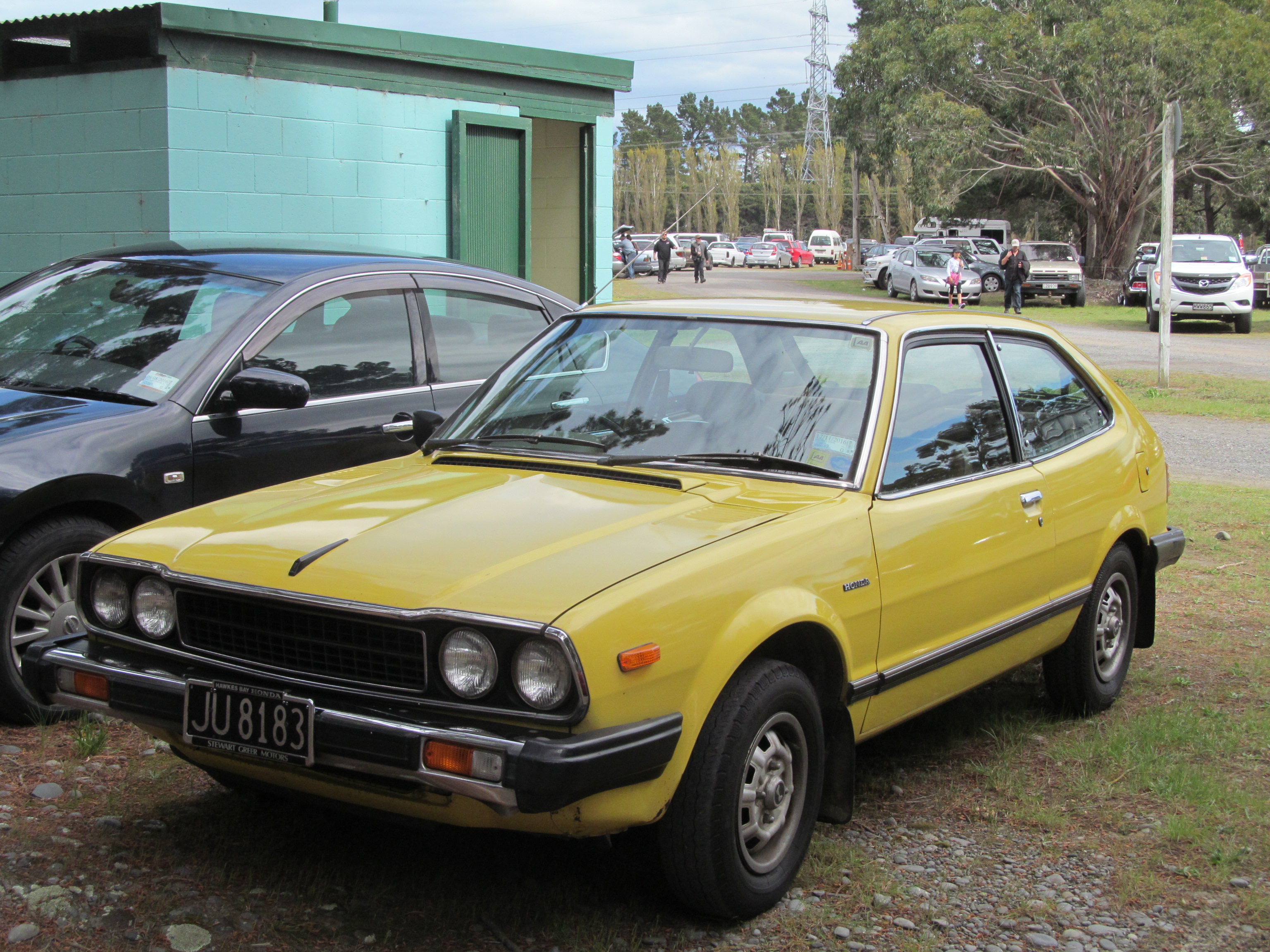
Honda Accord
"...e Sirichiro Honda died in 1991. The Civic and the Accord sold in enormous numbers, and commercially that w..."
The Honda Accord is a mid-size car made by Honda. It’s meant for comfortable daily driving, like commuting and family use. The podcast brings it up because it sold very well and helped Honda succeed in the mainstream market.
The Honda Accord is a midsize sedan that helped establish Honda as a high-volume, mainstream brand. In the podcast context, it’s mentioned together with the Civic to emphasize how both models sold in huge numbers and supported Honda’s commercial success. It’s discussed as part of the story of Honda’s lineup strength after key leadership changes.

Honda Civic
"... this way since Sirichiro Honda died in 1991. The Civic and the Accord sold in enormous numbers, and comm..."
The Honda Civic is a small car made by Honda. It’s designed for everyday driving and is known for being practical and efficient. The podcast mentions it because it sold very well and helped make Honda a big player in the market.
The Honda Civic is a compact car that became a major sales success for Honda, known for efficient, practical design and broad appeal. In the podcast, it’s highlighted as selling in enormous numbers alongside the Accord, reinforcing Honda’s commercial strength. That’s why it comes up in a discussion about how Honda built a lasting lineup and reputation.
Type R badges
"But the rebel soul of the founder had survived through Honda's presence in motorsport, through Type R badges and high-revving four-cylinders."
“Type R” badges are Honda’s designation for performance-focused versions, typically tuned for sharper throttle response, higher-revving behavior, and a more track-oriented setup. In this segment, they’re used to represent the founder’s “rebel” performance spirit that persisted through Honda’s lineup.
high-revving four-cylinders
"But the rebel soul of the founder had survived through Honda's presence in motorsport, through Type R badges and high-revving four-cylinders."
This means a four-cylinder engine that’s tuned to rev very high. The host is saying Honda’s enthusiast identity was tied to that kind of engine feel—especially in performance cars and racing.
“High-revving four-cylinders” refers to inline four-cylinder engines tuned to spin to high engine speeds, often with aggressive cam profiles and a strong top-end. The segment uses this phrase to describe the kind of Honda character that remained in motorsport and performance models even as the mainstream focus shifted.
Nurburgring
"It was a functioning prototype that had already lapped the Nurburgring faster than the R35 GTR's official debut time."
The Nürburgring is a well-known race track in Germany that car people use to judge how fast and capable a car really is. The host mentions it to show the Honda prototype was already extremely quick.
The Nürburgring is a famous German circuit used as a benchmark for performance cars. In this segment, it’s referenced to emphasize how advanced the canceled Honda prototype already was—reportedly lapping faster than the R35 GT-R’s official debut time.
front-mounted 5.5-liter V10
"A front-mounted 5.5-liter V10 producing somewhere between 550 and 600 horsepower."
This describes a big 10-cylinder engine (a V10) placed in the front of the car, with a total size of 5.5 liters. The host is emphasizing that the canceled Honda plan was serious, not just an idea.
A front-mounted 5.5-liter V10 describes an engine layout where the V10 sits at the front of the car, displacing 5.5 liters total. V10s are known for smooth, high-revving power delivery, and the segment uses this to underline how ambitious the canceled Honda prototype was.
HSV O10 GT
"When it was canceled though, the chassis didn't disappear. Honda repurposed it as the HSV O10 GT, a race car that competed in Japan's Super GT series between 2010 and 2013."
The HSV O10 GT is a Honda race car that came from a prototype that never made it to the street. It raced in Japan’s Super GT series and was good enough to win the championship right away.
The HSV O10 GT is a Honda-developed race car that was repurposed from the canceled front-engine V10 NSX prototype. It competed in Japan’s Super GT series from 2010 to 2013 and proved its pace by winning the championship in its debut season.
Super GT series
"Honda repurposed it as the HSV O10 GT, a race car that competed in Japan's Super GT series between 2010 and 2013."
Super GT is a major racing series in Japan where teams race highly developed performance cars. The host points out that the HSV O10 GT won there, showing it wasn’t just a “cool prototype,” it was truly competitive.
The Super GT series is Japan’s premier grand touring racing championship, featuring manufacturer-backed teams and heavily developed GT cars. The HSV O10 GT’s success there is used to argue that the canceled Honda road-car plan still produced a genuinely top-level race machine.
electrification
"It was all wheel drive, not because the engineers had chosen it, but because electrification required it. It was still impressive, but it was a different answer to a different question"
Electrification means the car uses electric power in a bigger way—like a hybrid system or an electric motor. In this story, it affected how the car had to be built.
Electrification is the shift toward using electric powertrains (hybrids or fully electric systems) instead of purely gasoline power. The host uses it to explain why a particular car ended up with AWD, framing it as a design constraint rather than a traditional performance choice.
Long Beach Grand Prix
"I got to go to the Long Beach Grand Prix a few years ago and ride with a race car driver in that car around that track."
The Long Beach Grand Prix is a famous racing event in California. It’s known for being exciting and for featuring real race cars on a track.
The Long Beach Grand Prix is a major motorsport event held in Long Beach, California, known for bringing high-level racing to a street-course setting. The host uses it as the backdrop for riding in an NSX with a race driver.
rotary engine
"The rotary engine had been the spine of Mazda's identity for 45 years. It was the technology that had saved the company from government forced consolidation in the 1960s,"
A rotary engine is a different kind of engine than the usual piston design. Instead of pistons going up and down, it uses a spinning rotor, which is part of why Mazda’s RX cars feel so distinctive.
A rotary engine (Mazda’s Wankel design) uses a spinning rotor instead of pistons moving up and down like a conventional engine. In this segment, it’s described as the core of Mazda’s identity for decades and the technology that ultimately became hard to meet emissions rules.

RX8
"When the last RX8 came off the line in 2012, it was gone."
The Mazda RX-8 is a rotary-powered sports car. In this segment, it’s important because the host says the last one was built in 2012, ending that classic rotary era.
The Mazda RX-8 was the last production RX model mentioned here and is the rotary-powered car that ended the era for Mazda’s traditional engine. The host says the last RX8 came off the line in 2012, marking the rotary’s production end.
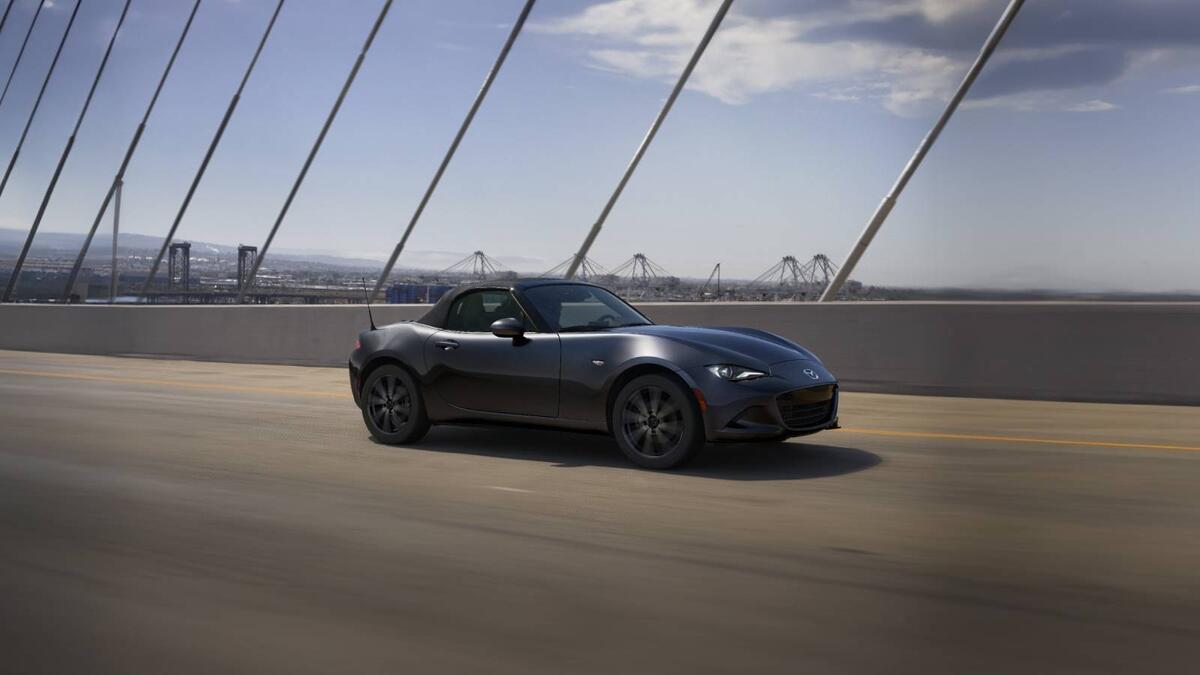
Mazda MX-5 / Miata
"...012, it was gone. But Mazda kept moving. The MX-5 Miata was still in production on the day the last RX8 r..."
The Mazda Miata (MX-5) is a small two-seat sports car. It’s built to be light and easy to drive, with power going to the rear wheels. The podcast mentions it because it stayed in production while other sports models ended.
The Mazda MX-5 Miata is a lightweight, rear-wheel-drive roadster designed to deliver simple, fun driving rather than outright luxury or brute power. In the podcast, it’s referenced as still being in production even after another Mazda sports car line ended, showing Mazda’s continued commitment to that kind of driving experience. That’s why it’s mentioned as a key part of Mazda’s enthusiast story.
Jimba Itai
"Still built in the same city, still front engine, rear wheel drive, and affordable. Still organized around the philosophy Mazda called Jimba Itai, or horse and rider as one."
“Jimba Itai” is Mazda’s idea that the car and driver should feel like one unit. Instead of the car taking over, it should help you feel what you’re doing and respond in a natural way.
“Jimba Itai” is a Mazda design philosophy meaning “horse and rider as one,” describing a car that feels like an extension of the driver. The idea is that the driver should be able to sense and control the car directly, rather than feeling like the car is constantly intervening or “managing” them.
Request an Explanation
Heard something you'd like explained? We'll add it to this episode.
Sign in to request explanations for terms you heard.
Want to learn more?
Browse our glossary for plain-English explanations of automotive terms, jargon, and concepts.
Help improve this episode
See something that's not quite right? Our annotations are AI-generated and can sometimes miss the mark. Click the flag icon on any annotation to suggest a correction.