S2 Ep12: The Golden Era of JDM: Why Gen Z Grew Up Without Cars
About this episode
Daikoku’s rise from a highway rest stop into a global JDM pilgrimage is traced through media, shifting local rules, and even guided tours. The show then zooms out to explain why Gen Z grew up without cars: tightening Japanese enforcement, corporate turmoil at Nissan, and a YouTube-fueled archive that made JDM content instantly accessible. That visibility helped drive collector demand and price spikes, while preservation efforts like JCCA meetings and museum exhibits keep the culture alive.
From legendary 90s JDM icons skyrocketing into the millions, to corporate scandals, economic crashes, and a generation forced to trade the steering wheel for a smartphone, this is the true story of how we lost the greatest automotive era in history, and why the "car dream" is now completely out of reach for most of us.
The golden era of Japanese sports cars is officially dead... or is it?
Suzuka Circuit
"Let's go back, 1963, the Suzuka Circuit, Japan's first Grand Prix, a generation that [17.9s] grew up in a country defined by devastation, watches machines built by their own people"
Suzuka Circuit is a well-known race track in Japan. It’s the kind of place where major racing moments happen, and it’s part of why Japanese motorsport became a big deal.
Suzuka Circuit is a famous Japanese motorsport track in Suzuka, known for its high-speed layout and challenging corners. It’s closely associated with major Japanese racing history, including early Grand Prix-era events that helped define Japan’s modern motorsport identity.
Japanese imports
"The early 2000s, all around the world, a new generation finds its way into [57.0s] Japanese imports through every door available. Kids play Gran Turismo on the living room sofa."
“Japanese imports” are cars shipped from Japan to other countries. Enthusiasts often want them because they can be different from what’s sold locally.
“Japanese imports” refers to cars brought into other markets from Japan, often because enthusiasts want specific JDM models, trims, or configurations. In the early 2000s, this became a major pathway for spreading JDM culture globally.
Gran Turismo
"Japanese imports through every door available. Kids play Gran Turismo on the living room sofa. [64.1s] Online enthusiasts trade specs over dial-up connections."
Gran Turismo is a popular racing video game. A lot of people learned about real cars through it, including Japanese models and how they feel to drive.
Gran Turismo is a long-running racing video game series that became a gateway for many people into car culture. When the host mentions it alongside JDM, the point is that the game helped familiarize players with Japanese performance cars and tuning ideas.
specs
"Online enthusiasts trade specs over dial-up connections. [69.6s] Movie stars drive Supras and [69.6s] skylines on the big screen."
In car talk, “specs” means the technical details about a car. People compare those numbers and features to figure out what’s better or more interesting.
In car communities, “specs” means the technical details of a car—like engine output, drivetrain layout, suspension setup, and other measurable characteristics. The host uses it to describe how enthusiasts compared and discussed cars before social media made it instant.
Season 2 finale of Past Gas
"And figuring out what that means is [115.3s] exactly what we're here to do today on the Season 2 finale of Past Gas. [125.7s] That's right, it's episode 12."
This is the last episode of the season, so it’s wrapping up the main story. It helps you know you’re at the conclusion of the current arc.
This marks the episode as the end of the current season’s story arc. It’s a structural cue for listeners about where the narrative is heading.
JDM
"That's right, it's episode 12. It's the last one of our story here. It's the golden age of JDM. [132.6s] Guys, if you have made it this far, thank you so much for joining us on this journey."
JDM means “Japanese Domestic Market.” It refers to cars that were originally made for Japan, and enthusiasts seek them out because they’re often different from what other countries got.
JDM stands for “Japanese Domestic Market,” meaning cars built for Japan’s own market rather than for export. The term is central to the episode’s theme because it describes a culture of specific models, tuning styles, and import pathways that spread worldwide.
critical mass
"phenomenon is over? Or is this another stepping stone for the JDM scene? Like, are we at critical mass? Are people going to be bored of this subject?"
“Critical mass” means the moment a trend gets so popular that it starts feeding itself. The host is wondering when JDM will hit that point—either topping out or continuing to grow.
“Critical mass” is the point where a trend becomes self-sustaining—enough people are interested that it keeps growing or at least doesn’t fade out. In this context, the host is asking when the JDM craze will reach a level where it either peaks or keeps momentum.

S chassis
"But the ones that are they still love, you know, cars of that era, S chassis and E 36s and civics"
“S chassis” refers to a Nissan lineup (like the Silvia) that became famous in the JDM scene. It’s the kind of car people associate with the 90s/2000s tuner era.
“S chassis” is a shorthand for the Nissan Silvia/180SX/200SX platform family, which became a major JDM icon for drifting and tuner culture. The host is grouping these cars as part of the 90s/2000s JDM era that Gen Z still considers “cool.”

E 36s
"But the ones that are they still love, you know, cars of that era, S chassis and E 36s and civics"
“E36” is BMW’s code name for a 3 Series generation from the 1990s. It’s a popular car among enthusiasts, and the host is saying it still feels “cool” today.
“E36” refers to the BMW 3 Series generation (commonly the 1990s-era 3 Series), which is a cornerstone of modern BMW enthusiast culture. The host is using it as an example of the 90s/2000s JDM-adjacent cars that younger people still want.

Honda Civic
"But the ones that are they still love, you know, cars of that era, S chassis and E 36s and civics"
“Civics” means Honda Civics—one of the most common and popular tuner cars. The host is saying people still think the older ones are cool.
“Civics” refers to the Honda Civic, a long-running compact car that became a staple of tuner culture in the 90s and 2000s. The host is pointing out that these era-defining Hondas remain desirable even decades later.
Formula One comes to Japan
"Every year when Formula One comes to Japan, Lewis Hamilton arrives a few days ahead of the rest of the paddock"
The host is talking about when Formula One races in Japan, and using that moment to show how famous Japanese cars still matter to big-name drivers.
This is a narrative setup using Formula One’s Japan visits to illustrate how JDM icons remain relevant internationally. It’s less about racing rules and more about the cultural link between F1 and Japanese car fandom.

R34 Skyline
"A rental car company on the edge of Tokyo reluctantly keeps an R34 Skyline readily available just for him."
The R34 Skyline is a famous Japanese performance car from Nissan, especially the GT-R version. The host is saying even a rental company keeps one around for Lewis Hamilton when Formula One is in Japan.
The Nissan Skyline GT-R R34 is one of the most iconic JDM performance cars, known for its advanced all-wheel-drive and turbocharged setup. In the segment, the host uses an R34 Skyline as a real-world example of how deeply these cars are still embedded in global motorsport culture—here, tied to Formula One in Japan.
Shudo Expressway
"He goes driving. The Shudo Expressway at night. The [340.5s] same elevated highway the Midnight Club ran in the 1980s, the same infrastructure that appeared in [346.5s] Tokyo drift for several years running."
The Shuto Expressway is a big elevated highway system in Tokyo. Car fans associate it with late-night street driving and racing culture.
The Shuto Expressway is a major network of elevated highways around Tokyo. It’s become famous in Japanese car culture because it’s where illegal street-racing and “kanjo” style driving scenes historically played out.
aggressive driving
"Japan had recently tightened its grip on public road behavior with an amendment that introduced [377.1s] an entirely new category of offense, aggressive driving, carrying penalties of up to three years [383.4s] in prison."
“Aggressive driving” is a legal term for dangerous driving behavior. It’s meant to crack down on reckless actions that put other people at risk.
“Aggressive driving” is a legal category used to target dangerous street behavior rather than just minor traffic violations. In Japan, the segment says an amendment created this new offense category with penalties that can include prison time.
Kanjo Racing Clubs
"The Kanjo Racing Clubs, the ones who had been running the Osaka loop since the 1980s, [392.1s] took the biggest hit. After years of weaving through traffic and outrunning the police, [397.3s] they faced enforcement so thorough that most clubs dissolved entirely."
“Kanjo” is a Japanese car-scene term for late-night street driving on city expressways. It’s often organized around clubs, and the segment explains how crackdowns shut many of them down.
“Kanjo” refers to street-driving culture focused on public urban expressways and loops, often associated with night runs and club racing. The segment says Kanjo Racing Clubs had been operating on the Osaka loop since the 1980s, and that new enforcement caused many clubs to dissolve.
Osaka loop
"The Kanjo Racing Clubs, the ones who had been running the Osaka loop since the 1980s, [392.1s] took the biggest hit. After years of weaving through traffic and outrunning the police, [397.3s] they faced enforcement so thorough that most clubs dissolved entirely."
The “Osaka loop” is a particular highway route around Osaka. In car culture, it’s known as a place where people used to do organized late-night street driving.
The “Osaka loop” is a specific urban expressway route in the Osaka area that became a focal point for kanjo-style street driving. The segment uses it to describe where clubs had been running for decades before enforcement tightened.

Ferrari F40
"In 2025, he arrived at Daikoku in a Ferrari F40, completely unannounced. No corporate [422.8s] infrastructure, no staging. Well, I mean, it's a F40 though, and he's like the Ferrari guy, [428.6s] so maybe a little bit of staging."
The Ferrari F40 is one of the most iconic old-school supercars Ferrari made. It’s known for being fast, loud, and very focused on driving—not comfort.
The Ferrari F40 is a mid-engine supercar built for raw performance and driver focus, famous for its lightweight construction and turbocharged V8. In this segment, it’s used as a recognizable “halo” car showing how mainstream celebrity attention can intersect with Japanese night-driving culture.

Honda S2000
"...media. Yuki Sonoda grew up riding in his father's S2000 and watches his dad compete in an NSX at Gymkhana..."
The Honda S2000 is a small two-seat sports car made by Honda. It’s designed to be exciting to drive, especially at higher engine speeds. The podcast mentions it because it’s part of someone’s family and racing memories.
The Honda S2000 is a compact two-seat sports car known for its high-revving character and driver-focused layout. It’s frequently mentioned in enthusiast circles because it’s a pure, analog-feeling roadster that’s become a benchmark for “fun per dollar.” The podcast ties it to personal background and motorsport viewing, which is why it stands out in the conversation.
Gymkhana events
"Yuki Sonoda grew up riding in his father's S2000 and watches his dad compete in [459.1s] an NSX at Gymkhana events. And those are just the people whose names we know. Behind them is a [465.2s] generation of drivers, athletes, musicians, and designers who found their way into Japanese car"
Gymkhana events are competitions where drivers show off precise control. It’s more about handling and maneuvering than just going fast in a straight line.
Gymkhana events are motorsport-style competitions built around precision driving—think tight turns, obstacles, and controlled slides—rather than straight-line speed. The segment mentions them to show how JDM cars and drivers show up in structured driving formats.
death tones effect
"Again, the death tones effect. The community is larger, more diverse, and more internationally distributed than anything DiGiro Anata could have planned for."
It’s a slang idea that when people think a car scene is in danger, more people get interested and the community grows. Social media can make that “this might disappear” feeling spread fast.
“Death tones effect” is a fan term for how social media and online communities can make a niche car culture feel bigger and more urgent as it’s threatened. The idea is that when enthusiasts fear the culture is dying, attention and participation can spike instead of fading.
rotary engine
"The same manufacturers that built the GTR and the rotary engine are facing an existential moment."
A rotary engine is an engine design that spins instead of using pistons. It’s known for a unique feel and sound, and it’s a big part of why some Japanese cars became legends.
A rotary engine (most famously Mazda’s Wankel design) uses a spinning rotor instead of pistons moving up and down. That architecture gives it a distinctive sound and smooth high-RPM character, which is why it became a JDM icon.
Shuto Expressway
"And yet, in spite of all that, Hamilton keeps coming back to Tokyo every year to drive an R34 on the Shuto Expressway and post it to Instagram."
The Shuto Expressway is a major highway system in Tokyo. Car fans connect it with the late-night street-car culture because it’s where a lot of that activity is talked about.
The Shuto Expressway is Tokyo’s network of expressways, and it’s become culturally associated with Japanese street racing and night drives. When people mention it alongside cars like the R34, they’re usually pointing to the “Tokyo night” scene and the route’s reputation among enthusiasts.
Plus 5
"Daikoku is full every Friday night. Someone right now is discovering Plus 5 for the first time through a YouTube rabbit hole and has no idea what they're about to get into."
“Plus 5” here sounds like a specific car-scene thing people get into online. The host is saying someone is about to learn what that scene is really like.
“Plus 5” is a specific Japanese car-culture reference (commonly tied to a popular style of night cruising and meetups). In this context, it’s being used like a named rabbit-hole destination that newcomers discover via YouTube.

GT-R
"The GT-R was still being sold, but nobody inside Nissan had stepped forward with a clear vision of what came after it. I mean, Ghosn was brought in because he had a reputation for"
The Nissan GT-R is Nissan’s famous high-performance sports car. It’s known for being very fast and capable, and the hosts are saying Nissan’s leadership problems hurt the confidence behind that kind of product.
The Nissan GT-R is a performance sports car known for its all-wheel-drive system and “go-fast” hardware that made it a mainstream benchmark. In this segment, the hosts connect the GT-R’s success to Nissan’s internal confidence and leadership stability.
cut costs across the board
"You can't cut costs across the board and expect your quality to stay the same. I just don't think that's how it works."
The host is talking about companies trying to save money everywhere. Their point is that if you cut too much, the car can end up not being built as well, so it may break or wear out sooner.
The host is describing a broad cost-cutting approach—reducing spending in many areas at once—and arguing it can hurt product quality. In automotive terms, this is often associated with reducing engineering time, materials, testing, or manufacturing robustness, which can show up as reliability issues.
Nissan
"as a result, this is part of why at least Nissan's reputation for build quality and unreliability started becoming more and more prominent."
Nissan is a Japanese car company. The host is saying Nissan has been dealing with quality/reliability complaints and big competitive pressure, especially in China.
Nissan is a major Japanese automaker, and the host connects its cost-cutting and management decisions to concerns about build quality and reliability. The segment also covers Nissan’s heavy competitive pressure in China and its role in merger talks with Honda.

Nissan Versa
"When my wife and I first started dating, she had a little Versa, it was like a 2014, and that thing was like falling apart."
The Nissan Versa is a budget-friendly small car. The host is saying that their wife’s 2014 Versa felt like it was breaking down even though it was still fairly new.
The Nissan Versa is a subcompact sedan built for low cost and high practicality. In the segment, the host uses a 2014 Versa as an example of how a relatively new Nissan can feel like it’s “falling apart,” tying it to concerns about build quality.
merge
"In late 2024, Honda and Nissan announced they were in talks to merge. The idea was to combine two of Japan's most storied automakers into a single company"
A merger means two companies try to combine into one. The host says Honda and Nissan discussed it as a way to compete better with other automakers, especially in electric vehicles.
A merger here refers to Honda and Nissan exploring combining into one larger company to gain scale and resources. The host frames it as a strategic response to intense competition from Tesla, BYD, and fast-growing Chinese EV makers.
Tesla
"...would become the world's third largest, with enough scale and resources to compete with Tesla, BYD, and the Chinese EV manufacturers"
Tesla is an EV-focused automaker used in the segment as a benchmark for competitive pressure. The host mentions it alongside BYD and Chinese EV manufacturers to explain why Japanese automakers feel market-share erosion.
BYD
"...to compete with Tesla, BYD, and the Chinese EV manufacturers that have been steadily eroding their market share."
BYD is a Chinese company that makes electric cars. The host is saying companies like BYD are taking sales away from Japanese brands.
BYD is a major Chinese automaker and EV brand referenced as a competitor. In the segment, BYD is grouped with Tesla and other Chinese EV makers as forces eroding Japanese automakers’ market share.
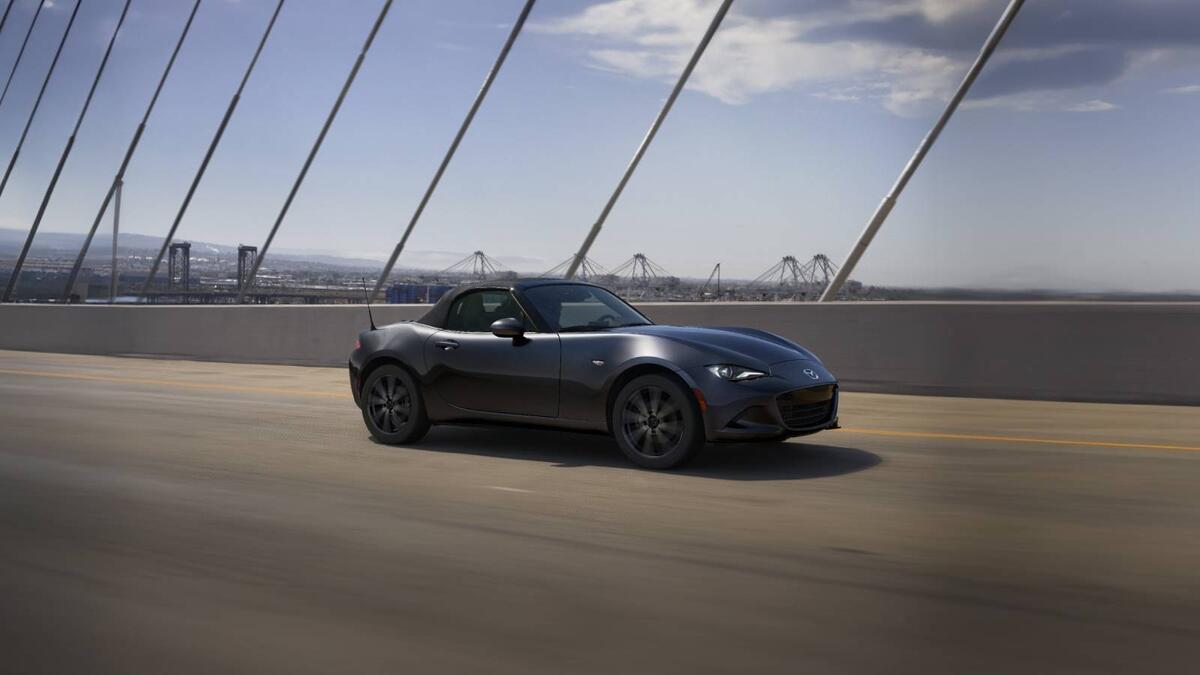
Mazda MX-5 / Miata
"...decided it doesn't need to drive at all. Even the Miata hasn't been immune. The car that survived everyth..."
The Mazda MX-5, or Miata, is a small two-seat convertible. It’s made to feel quick and responsive without being complicated. People like it because it’s fun to drive and has a reputation for lasting a long time.
The Mazda MX-5 (often called the Miata in the U.S.) is a lightweight, affordable roadster built for simple, driver-focused handling. It’s frequently discussed because it’s one of the most popular “enthusiast” cars and has a long history of being easy to enjoy. The podcast mentions it in the context of a car that “survived everything,” highlighting its durability and popularity.
Alexi Smith
"One of the first people to understand what this meant for Japanese car culture was an Australian named Alexi Smith."
Alexi Smith is described as an Australian who moved to Japan in 2008 and documented Japanese car meets and parking-lot scenes. His online persona “Noriyaro” became a trusted window into Japanese car culture for English-speaking viewers.
Marty Mulholland
"Two more Australians broken to the scene early. Marty Mulholland and Blair Jocelyn, known online as Marty and Moog, launched mighty car mods in January of 2008..."
Marty Mulholland is a creator behind Mighty Car Mods. The channel is known for showing how to modify cars without spending a ton of money.
Marty Mulholland is one of the founders of Mighty Car Mods, a car-enthusiast YouTube channel focused on DIY modifications. The hosts describe their early approach as budget-friendly and learning-focused, starting with a small project car in suburban Sydney.
Blair Jocelyn
"Two more Australians broken to the scene early. Marty Mulholland and Blair Jocelyn, known online as Marty and Moog, launched mighty car mods in January of 2008..."
Blair Jocelyn (Moog online) is the co-founder of Mighty Car Mods. He helped make car-mod videos that were easier for beginners to follow.
Blair Jocelyn is named as the other Australian co-founder of Mighty Car Mods, going by “Moog” online. The segment frames Mighty Car Mods as influential in making JDM-style DIY modification content accessible to a global audience.
Ken Block
"Then there was Ken Block. His Gymkhana practice video landed in 2008 and rewrote what car content on YouTube could look like."
Ken Block is a famous car driver and video creator. The hosts say his Gymkhana video in 2008 helped change how car videos were made and watched online.
Ken Block is referenced as the creator behind a Gymkhana practice video that landed in 2008. The hosts credit Block with reshaping car video content on YouTube by making it more cinematic and skill-focused.
budget DIY
"If Mighty Car Mods is like budget DIY, like using that zine energy that we talked about"
“Budget DIY” means doing car upgrades yourself without spending a huge amount of money. The idea is learning as you go, instead of buying everything fully built.
“Budget DIY” describes a modification approach where you build and improve a car using relatively low-cost parts and hands-on learning. In the segment, the hosts use it to contrast Mighty Car Mods’ style with more expensive, high-production car content.
slow motion tire smoke
"Slow motion tire smoke, close angles on steering inputs, sound mixed for emotional effect, cinematic techniques delivered on a platform that cost nothing to access."
It’s a video editing trick where they slow down the footage so you can clearly see the tires losing grip. That makes the driving look more dramatic and easier to understand.
“Slow motion tire smoke” is a filmmaking technique used in performance driving videos to make tire slip and traction loss visually readable. By slowing the footage, editors can emphasize when the tires break grip and how the driver’s steering and throttle inputs create the smoke.
Option
"This was a problem for the old guard. Companies like Option had adapted to every previous shift in how the culture consumed itself. When the culture needed video, they invented option video."
Option is a Japanese automotive media brand known for covering tuning culture and motorsport-adjacent street scenes. In this segment, it’s used as an example of how traditional car media adapted to changing ways audiences consumed content.
street drag racing
"They looked backwards. They launched Legend of Option, a new run of magazines that revisited the early years, with sidebars featuring famous tuners and drivers talking about what it used to be like and retrospectives on street drag racing with before and after photographs of the places where it all happened."
Street drag racing is when people race cars in a straight line outside of an official race track. It’s part of car culture history because it was a way to prove which cars were faster.
Street drag racing is drag racing done on public roads or informal locations rather than sanctioned drag strips. It’s often associated with car culture history because it was a common way for tuners to test performance and build reputations before modern online communities.
Best Motoring
"Option's rival, Best Motoring, a video magazine that had been documenting circuit battles and performance car tests since 1987 didn't survive the transition at all."
Best Motoring was a long-running Japanese car video magazine that covered track racing and performance testing. The host says it didn’t make it through the move to online/digital content.
Best Motoring is a Japanese video magazine brand that documented circuit battles and performance car testing starting in 1987. The segment highlights it as an example of legacy car media that struggled to survive the shift to digital distribution and piracy.
digital piracy
"In 2011, it ended physical production after 24 years, killed by digital piracy, and a generation that stopped paying for content."
Digital piracy means people copying and sharing digital videos or files without paying. The segment uses it to explain why older car video magazines struggled when everything went digital.
Digital piracy is unauthorized copying and sharing of digital media. In the context of this segment, it’s presented as a major factor in why a traditional video magazine model became unsustainable once content moved online.
licensing deal
"In 2013, a company called GT Channel struck a licensing deal with Option's parent company and put the entire video option archive on YouTube with English narration."
A licensing deal is permission to share someone else’s content. In this case, it let the JDM video archive be put on YouTube legally.
A licensing deal is an agreement where one party gets permission to reuse or distribute another party’s content. Here, it’s what allowed the Option video archive to be posted on YouTube with English narration.
GT Channel
"In 2013, a company called GT Channel struck a licensing deal with Option's parent company and put the entire video option archive on YouTube with English narration."
GT Channel is a company that helped put old Japanese car videos online. They worked with the rights holder so the content could be shared on YouTube with English narration.
GT Channel is described as a company that secured a licensing deal to republish Option magazine’s video archive. In this segment, it’s the platform that moved JDM video content onto YouTube with English narration.
gray market connection
"Every plus by tape, every D1 run, every circuit battle, every video that had previously required a gray market connection three weeks of waiting in a VHS player was now available instantly"
A gray market connection means getting something through unofficial channels. The point here is that older JDM videos were hard to find unless you knew the right backdoor sources.
A gray market connection refers to unofficial or non-authorized ways of obtaining goods or media. In the segment, it describes how people previously had to rely on informal channels to get the videos, instead of accessing them instantly online.
VHS player
"Every plus by tape, every D1 run, every circuit battle, every video that had previously required a gray market connection three weeks of waiting in a VHS player was now available instantly"
A VHS player is an old-school video tape machine. The host is saying that getting these car videos used to take a long time—like waiting for tapes to show up.
A VHS player is the consumer device used to play VHS tapes, a common home-video format before streaming. The segment uses it to highlight how long it took to get JDM footage back then—waiting weeks for a tape to arrive and be watched.
Drifting
"Drifting is visually dramatic. The mountain pass is cinematic. The builds produced are somehow relatable and aspirational at the same time."
Drifting is when a driver makes the car slide sideways while turning. It looks wild on camera, which is why it became so popular online.
Drifting is a driving style where the car intentionally oversteers so the tires break traction and the car slides through corners. It’s visually dramatic, which is why it translates so well to online video and social media.
twin-turbo
"In 2005, a clean twin-turbo Mark IV Supra with a six-speed could be bought for under $35,000."
Twin-turbo means the engine uses two turbochargers. That helps the car make more power by pushing extra air into the engine.
“Twin-turbo” means an engine uses two turbochargers to force more air into the cylinders, improving power output. On cars like the Mark IV Supra mentioned here, it’s part of what makes the performance and enthusiast appeal so strong.
Bayside Blue
"He had a Bayside Blue R34 GT-R, very expensive car."
Bayside Blue is a specific factory paint color associated with the Nissan Skyline GT-R (commonly referenced by enthusiasts). Color can matter in collector pricing because it affects how “correct” and desirable a car looks to buyers.
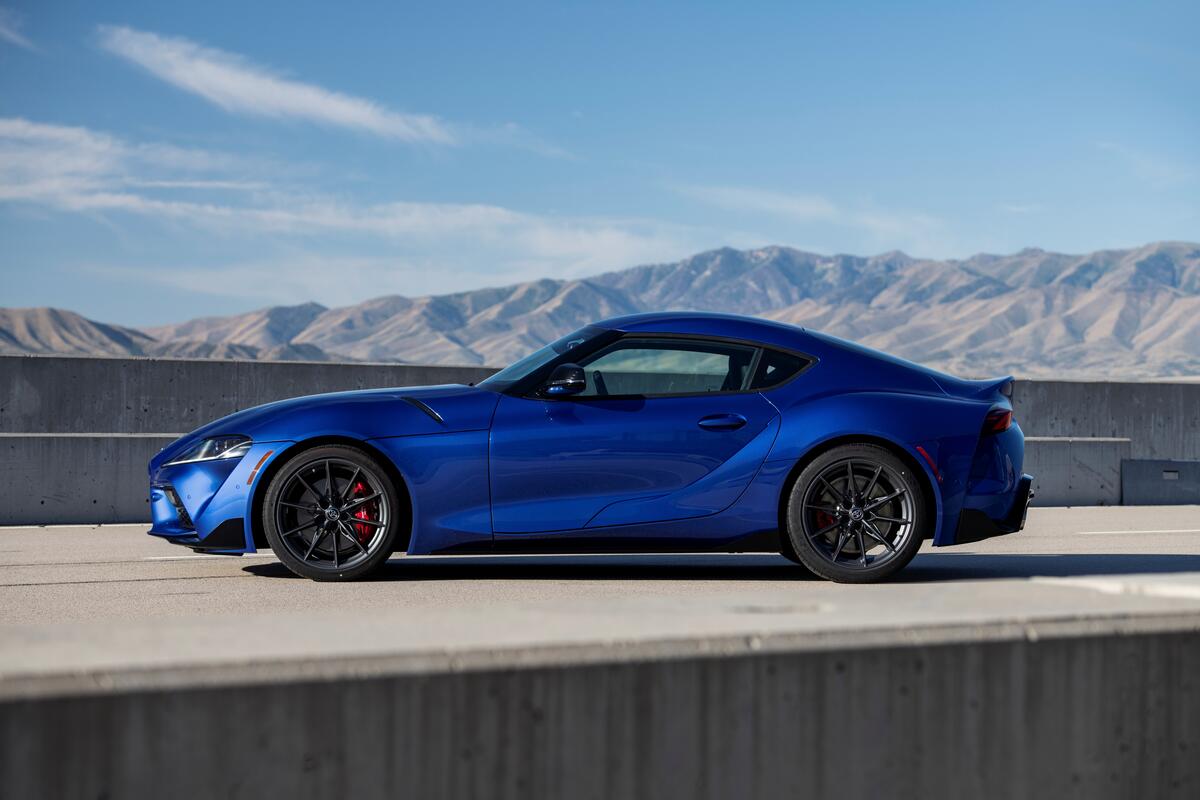
Mark IV Supra
"In 2005, a clean twin-turbo Mark IV Supra with a six-speed could be bought for under $35,000. By 2021, though, a low mileage example cleared $126,000 at auction."
The Mark IV Supra is a famous Toyota sports car. The big point here is that it went from relatively affordable to very expensive as collectors started chasing them.
The Toyota Supra “Mark IV” (the A80-generation) is known for its twin-turbo performance and strong enthusiast following. The hosts use it as an example of how JDM prices can jump dramatically over a decade, with auction results and valuation data (via Hagerty) showing steep appreciation.
six-speed
"In 2005, a clean twin-turbo Mark IV Supra with a six-speed could be bought for under $35,000."
A six-speed is a manual gearbox with six gears. More gears can make it easier to keep the engine in the right rev range.
A “six-speed” refers to a manual transmission with six forward gears, which can help keep the engine in its power band. In enthusiast circles, manual “six-speed” versions are often preferred and can affect pricing.
auction
"By 2021, though, a low mileage example cleared $126,000 at auction."
An auction is where people bid against each other to buy a car. The final price can show how much buyers want it right now.
An auction is a sales process where bids are made and the highest bidder wins, often revealing what the market is willing to pay at that moment. In this segment, auction results are used to show how quickly JDM prices have risen.

FD RX-7
"The FD RX-7 tells a similar story. Running FDs were available for $10,000 on Craigslist in 2013."
The FD RX-7 is a Mazda sports car with a special engine type. In this segment they’re saying the car got way more expensive over time.
The Mazda RX-7 “FD” is the final RX-7 generation, best known for its rotary engine (a Wankel design) and lightweight, high-revving character. The segment highlights how FD RX-7 values rose sharply from cheap Craigslist finds to six-figure auction prices.
Hagerty
"According to Hagerty, the Mark IV Supra's value rose over 300% between 2015 and 2023 alone."
Hagerty is a company that tracks classic/collector car values. The hosts are using its data to support the claim that prices rose a lot.
Hagerty is a well-known collector-car insurance and valuation company that publishes market data used by enthusiasts and buyers. Here, it’s cited as the source for the Supra’s reported value increase over time.
collector car market
"The price spike follows a pattern the collector car market has repeated with every generation."
The collector car market is where people buy cars mainly because they think they’ll be valuable or special later. The hosts say this happens in cycles as new groups discover older cars.
The “collector car market” is the part of the automotive world where cars are bought and sold primarily for long-term desirability and investment-like behavior, not just daily use. The hosts argue that price spikes follow a repeated pattern as each new generation becomes “discovered” by collectors.
drive by wire systems
"They're the last generation [1815.1s] of performance cars built before electrification and drive by wire systems fundamentally changed [1820.5s] what it feels like to be behind the wheel."
Drive-by-wire means the car doesn’t always use direct mechanical connections for things like throttle. Instead, sensors and computers translate your pedal input into commands, which can make the driving feel different.
Drive-by-wire replaces traditional mechanical linkages (like cables/rods) with electronic controls that interpret your inputs and command actuators. This can change the “feel” of driving because the car’s response is mediated by software rather than direct mechanical connection.
Big Willow
"Dude, I finally took my Civic out to Big Willow [1837.2s] a few weeks ago."
Big Willow is a race-track where people go for track days. It’s the kind of place where you can feel how fast and how stable a car is when you’re braking and turning at speed.
Big Willow is a motorsports venue used for track days and driving events, known for long straights and technical corners that let drivers test acceleration and braking repeatedly. It’s the kind of place where you can really notice differences in how a car “feels” at speed.
power steering
"it felt like being in like an escape pod [1850.2s] from the space station or something re-entering the atmosphere. Like power steering, you know,"
Power steering helps you turn the wheel with less effort. Depending on the car, it can make steering feel lighter or more assisted than you’d expect.
Power steering uses a mechanical or hydraulic/electric assist to reduce the effort needed to turn the wheels. The host mentions it because steering assist can affect how “light” or “connected” the steering feels at speed.
brake booster
"Like power steering, you know, [1855.5s] the brake booster on it is pretty powerful, but like still feels pretty good."
A brake booster helps your brakes work with less pedal pressure. So the pedal can feel easier to push while still stopping the car effectively.
A brake booster amplifies the force you apply to the brake pedal, typically using engine vacuum (or an electric assist system). That amplification changes pedal effort and can make braking feel stronger or easier than in cars without as much assist.
feel phenomenon
"This feel phenomenon is the same logic that makes vintage digital cameras desirable [1878.7s] in a world of smartphones."
The host is saying some older stuff feels better or more satisfying, even if newer options are more advanced. It’s about the experience—how it responds—more than just specs.
The “feel phenomenon” here is the idea that people value the sensory experience of older technology—how it responds and communicates—especially when newer tech is more convenient. The host compares it to vintage digital cameras and CRT TVs, arguing that the “directness” and character of analog experiences can be more desirable than modern convenience.

Toyota Ae86
"...Kaichi Succio was expressing when he took a stock AE86 to the mountain passes and figured out drifting b..."
The Toyota Corolla is a regular, everyday car made by Toyota. It’s usually chosen for reliability and low running costs. The podcast mentions a special version (AE86) that people used for drifting, showing it can be more than just a commuter car.
The Toyota Corolla is a mainstream compact car that’s known for being practical, efficient, and widely available. In the podcast context, it’s specifically tied to an AE86 Corolla used on mountain passes and in drifting, showing how an everyday model can become a motorsport platform. That’s why it’s discussed: it blends common ownership with a strong enthusiast history.
Hachi Roku
"They're feeling that first shift, drift clips leading to rabbit holes leading to names they don't have a context for yet. Hachi Roku, Godzilla, Rotary,"
“Hachi Roku” is a nickname fans use for the Toyota AE86. It’s basically another way of saying “that classic drift Toyota.”
“Hachi Roku” is a Japanese nickname for the Toyota AE86, literally “eight-six” (86). In car culture it’s shorthand for the AE86’s drifting and tuning legacy, so hearing it usually means the AE86 specifically.
Godzilla
"They're feeling that first shift, drift clips leading to rabbit holes leading to names they don't have a context for yet. Hachi Roku, Godzilla, Rotary,"
“Godzilla” is a nickname for the Nissan Skyline GT-R. Fans used it because the car had a reputation for being extremely strong and fast.
“Godzilla” is a nickname for the Nissan Skyline GT-R, especially the R34 generation. It refers to the car’s reputation for being brutally fast and durable for a street car, which helped it become a pop-culture JDM icon.

Nissan 240SX
"...for an FD, numbers that make stories of finding a 240SX for a few grand at a used car lot sound like they..."
The Nissan 240SX is a compact sports car made by Nissan. It became popular with people who like to modify cars and practice drifting. The podcast mentions it because the prices and availability of these cars can be surprising.
The Nissan 240SX is a compact sports coupe known for its popularity in drifting and modification culture. In the podcast, it’s brought up as a contrast to the cost of other cars, implying that finding one cheaply is increasingly hard. That makes it relevant: it’s an enthusiast staple, and its availability affects how people build and enjoy these cars.

Toyota MR2
"But luckily, there's hope. [2037.9s] Toyota is reviving the MR2, not as a concept, but as a production car. A mid-engine two-seater"
The Toyota MR2 is a mid-engine, two-seat sports car line known for being lightweight and driver-focused. The host is saying Toyota is reviving the MR2 as a production car, which matters because a mid-engine layout is a big part of why the MR2 is so fun to drive.
mid-engine two-seater
"Toyota is reviving the MR2, not as a concept, but as a production car. A mid-engine two-seater"
“Mid-engine” means the engine sits closer to the middle of the car, which can help it handle more smoothly. “Two-seater” just means it’s designed for two people, usually to feel more like a sports car.
A mid-engine layout places the engine near the center of the car (typically ahead of the rear axle), which helps balance weight front-to-rear. A two-seater emphasizes a compact, driver-focused setup rather than family practicality.

Toyota Celica
"with a target price below $25,000. Yeah, we'll see about that. The Celica, also absent since 2006,"
The Toyota Celica is a sporty Toyota model that used to be popular with car fans. The host is saying it’s been gone for a while, and that it might be coming back.
The Toyota Celica is a long-running Japanese coupe/fastback that became a JDM icon for its sporty styling and enthusiast-friendly driving. In this segment, the host notes it’s “absent since 2006,” implying a potential return and tying it to the broader revival of affordable sports cars.
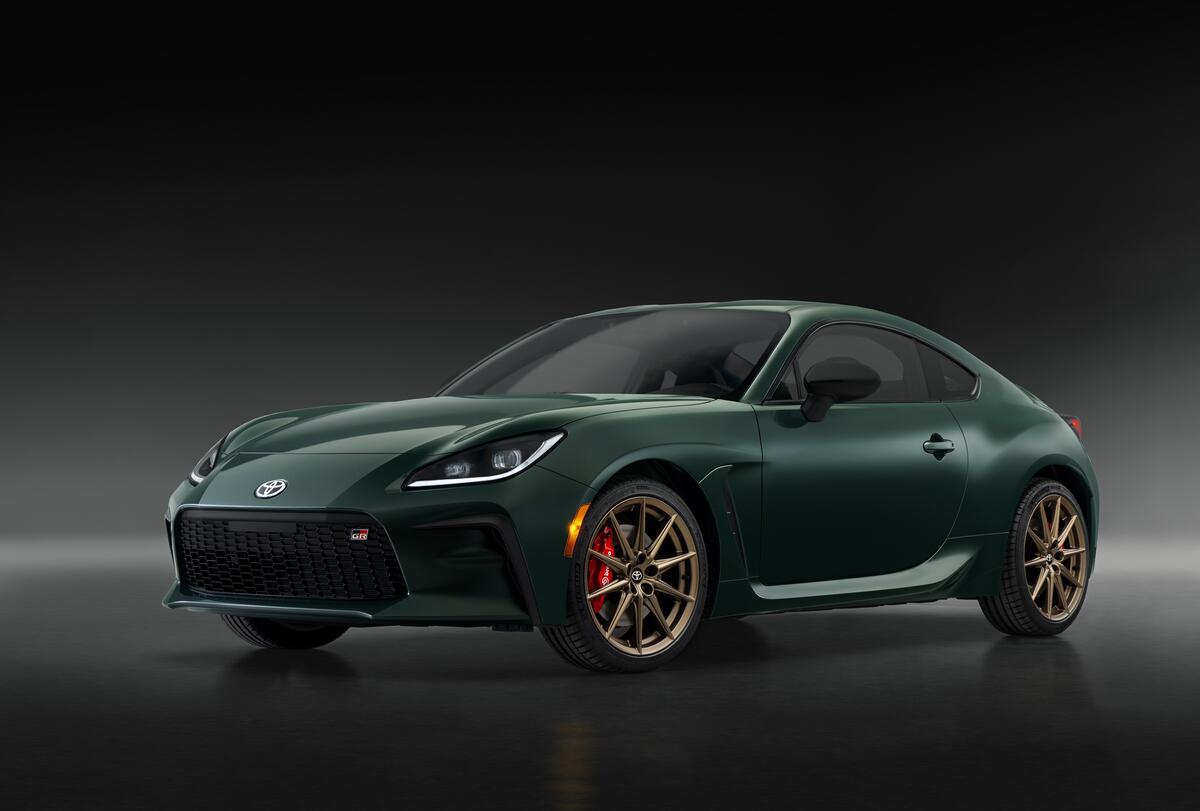
Toyota Gr86
"...rototypes already on the road. A third-generation GR86 is expected around 2027. I know GR86 is like the ..."
The Toyota GR 86 is a small sports car made for driving enjoyment. It’s meant to be light and fun, not a big, heavy luxury car. The podcast brings it up as part of a continuing series of sports coupes.
The Toyota GR 86 is a modern sports coupe designed around balanced handling and an engaging driving feel rather than raw luxury. It’s discussed because it continues the “affordable sports car” idea and has become a common entry point for enthusiasts. The podcast also references expectations for future generations, placing the GR86 in an ongoing lineup story.

Lexus Sport concept
"The Lexus Sport concept has been confirmed for production alongside a V8-powered [2077.3s] Gazoo Racing GT car. Yeah, I mean, it's not a concept anymore. It's the GR GT. It's sick as hell."
The Lexus Sport concept is a preview vehicle that Lexus has used to telegraph design and performance direction before production. Here, the host says it’s confirmed for production alongside a V8-powered Gazoo Racing GT car, implying a more serious, higher-performance Lexus than typical “daily” models.

Toyota GR GT
"...eah, I mean, it's not a concept anymore. It's the GR GT. It's sick as hell. I mean, that's going to be re..."
The Toyota GR GT is a performance-focused Toyota model that the podcast says is no longer just an idea. It’s meant to be a sporty car, and the conversation treats it as a new real release. The details in the episode are about what it will become and when it’s expected.
The Toyota GR GT is referenced in the podcast as a real, production-bound “GR” model rather than a concept, suggesting Toyota is turning that idea into an actual car. It’s discussed because it represents Toyota’s continued push into performance-focused branding and new sports-car development. The episode frames it as an exciting next step in the GR lineup.
GR Supra
"Okay. The GR Supra is also set to receive a sixth generation around 2027. That's exciting, [2095.4s] because as we learn from our I drove every Supra video, the even number generations are the best [2101.1s] cars."
The GR Supra is Toyota’s sports car that car fans really care about. The host says a new (sixth) generation is expected around 2027 and that Toyota’s been making a lot of sports cars again.
The Toyota GR Supra is a performance sports car known for its modern, driver-oriented chassis and its reputation as a “proper” enthusiast machine. The segment claims it’s set to receive a sixth generation around 2027 and argues that even-numbered generations are the best, tying it to how Toyota has been refreshing the lineup.
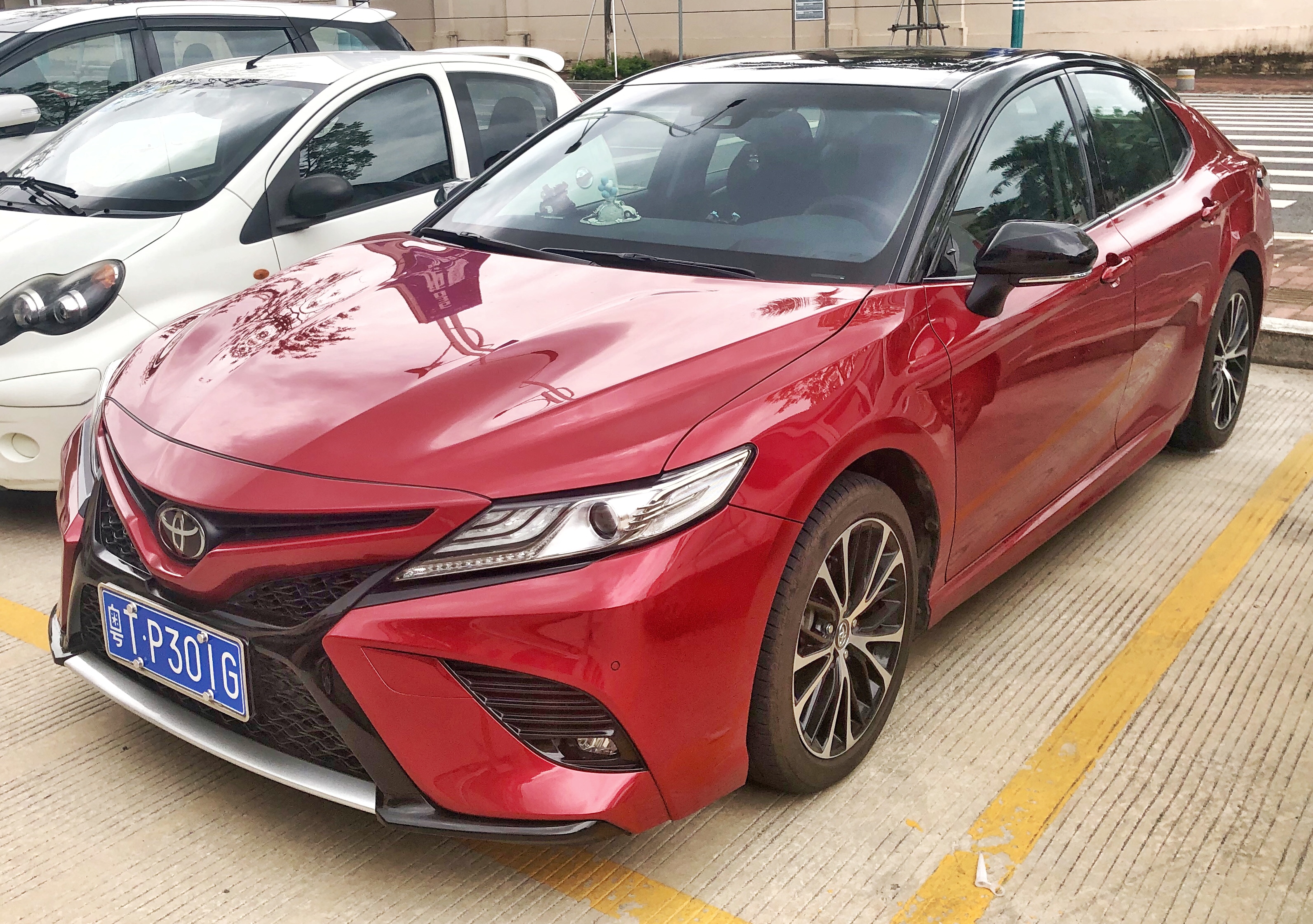
Toyota Cars Toyota
"because as we learn from our I drove every Supra video, the even number generations are the best cars. Toyota hasn't been building this many sports cars simultaneously since the late 1990s. Why? Well, despite the overall state of the industry, the demand among enthusiasts is real,"

NSX
"Honda has confirmed plans for an S2000 revival. The company that canceled the NSX and the S2000, [2128.0s] while withdrawing from Formula One in a single speech, is now building its biggest annual show [2133.1s] appearances around Honda Sports DNA."
The NSX is Honda’s well-known high-performance supercar. The host mentions it because Honda previously canceled it, and that context is part of the story about Honda changing direction.
The Honda NSX is Honda’s flagship supercar, known for blending everyday usability with high-performance engineering. In this segment it’s mentioned as a model Honda previously canceled, which the host uses to highlight how Honda’s strategy is shifting back toward sports-car priorities.

Honda Prelude
"The Civic Type R HRC concept and the Prelude HRC concept [2140.6s] both developed with Honda Racing Corporation involvement, where headline reveals at the [2145.4s] Tokyo Auto Salon in 2026."
The Prelude is an older Honda model name that fans associate with sporty coupes. The host is saying there’s an HRC concept version, which hints at a racing-influenced comeback idea.
The Honda Prelude is a classic Honda coupe nameplate associated with sporty styling and driving feel from earlier decades. The segment mentions a “Prelude HRC concept,” indicating a potential modern revival direction influenced by Honda Racing Corporation.
Civic Type R HRC concept
"The Civic Type R HRC concept and the Prelude HRC concept [2140.6s] both developed with Honda Racing Corporation involvement, where headline reveals at the [2145.4s] Tokyo Auto Salon in 2026."
The Civic Type R is Honda’s high-performance hatchback. This “HRC concept” is a show preview that suggests Honda’s racing division is influencing the idea.
The Honda Civic Type R is a performance hot hatch known for track-oriented tuning and front-wheel-drive grip. Here, the “HRC concept” version implies Honda Racing Corporation involvement, suggesting a concept-level preview of a more motorsport-flavored Type R direction.
Honda Racing Corporation
"The Civic Type R HRC concept and the Prelude HRC concept [2140.6s] both developed with Honda Racing Corporation involvement, where headline reveals at the [2145.4s] Tokyo Auto Salon in 2026."
Honda Racing Corporation (HRC) is Honda’s racing-focused team. When they’re involved, it usually means the car ideas are influenced by motorsports experience, not just regular consumer-car design.
Honda Racing Corporation (HRC) is Honda’s motorsports and performance development arm. The segment says Honda Racing Corporation involvement helped develop the Civic Type R HRC concept and the Prelude HRC concept, which signals a more race-derived approach to the styling and performance direction.
Tokyo Auto Salon
"both developed with Honda Racing Corporation involvement, where headline reveals at the [2145.4s] Tokyo Auto Salon in 2026. The Rebel founders company may be returning to its roots."
Tokyo Auto Salon is a big car show in Japan where companies reveal new concepts and performance ideas. The host is saying these Honda HRC concepts will be shown there in 2026.
Tokyo Auto Salon is a major Japanese auto show known for aftermarket culture, concept cars, and performance debuts. The host says the Civic Type R HRC concept and Prelude HRC concept will have headline reveals there in 2026.

Subaru STI
"The most affordable, serious performance Subaru in years is also on the way, [2156.6s] with the STI returning after its discontinuation in 2022. With it comes promises of a hatchback [2163.4s] body style, 300 horsepower and a manual only transmission."
STI is Subaru’s performance version, built for enthusiasts rather than just commuting. The host says STI is coming back after being discontinued in 2022, and they’re promising a hatchback, around 300 horsepower, and a manual gearbox.
The Subaru STI (Subaru Tecnica International) is the performance-focused trim of the Impreza/WRX family, historically known for rally-derived engineering and driver-focused hardware. The segment says the STI is returning after discontinuation in 2022, with promises of a hatchback body style, 300 horsepower, and a manual-only transmission.
manual only transmission
"With it comes promises of a hatchback [2163.4s] body style, 300 horsepower and a manual only transmission."
“Manual-only” means the car will only come with a stick shift. You control the gears yourself with a clutch pedal instead of relying on an automatic.
A “manual-only transmission” means the car will be offered only with a traditional clutch-and-gearshift setup, not an automatic. Enthusiasts often prefer manuals because they provide direct driver control over gear selection and engine speed.
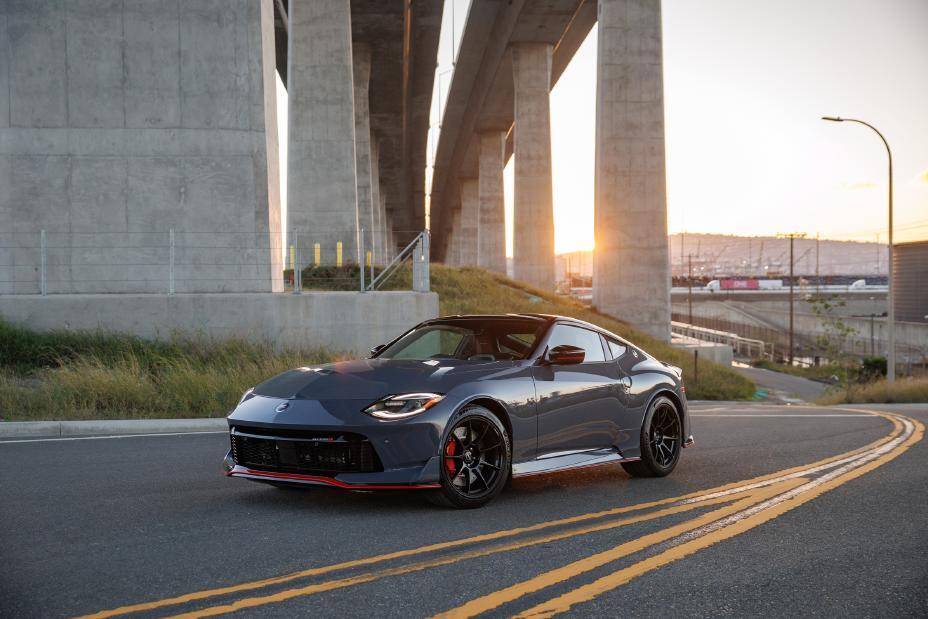
Nismo Z
"On that note, Nissan gave the [2171.2s] Nismo Z a manual option for 2026, specifically because the community asked for it loudly enough [2176.9s] that Nissan listened."
The Nissan Z is a sports car, and Nismo is Nissan’s performance package. The host says Nissan will offer a stick shift on the Nismo Z starting in 2026 because fans pushed for it.
The Nissan Z is a modern sports coupe, and “Nismo” is Nissan’s in-house performance brand that typically adds track-focused tuning and upgrades. The host says Nissan gave the Nismo Z a manual option for 2026 because the community asked for it, highlighting how enthusiast demand can directly shape production.
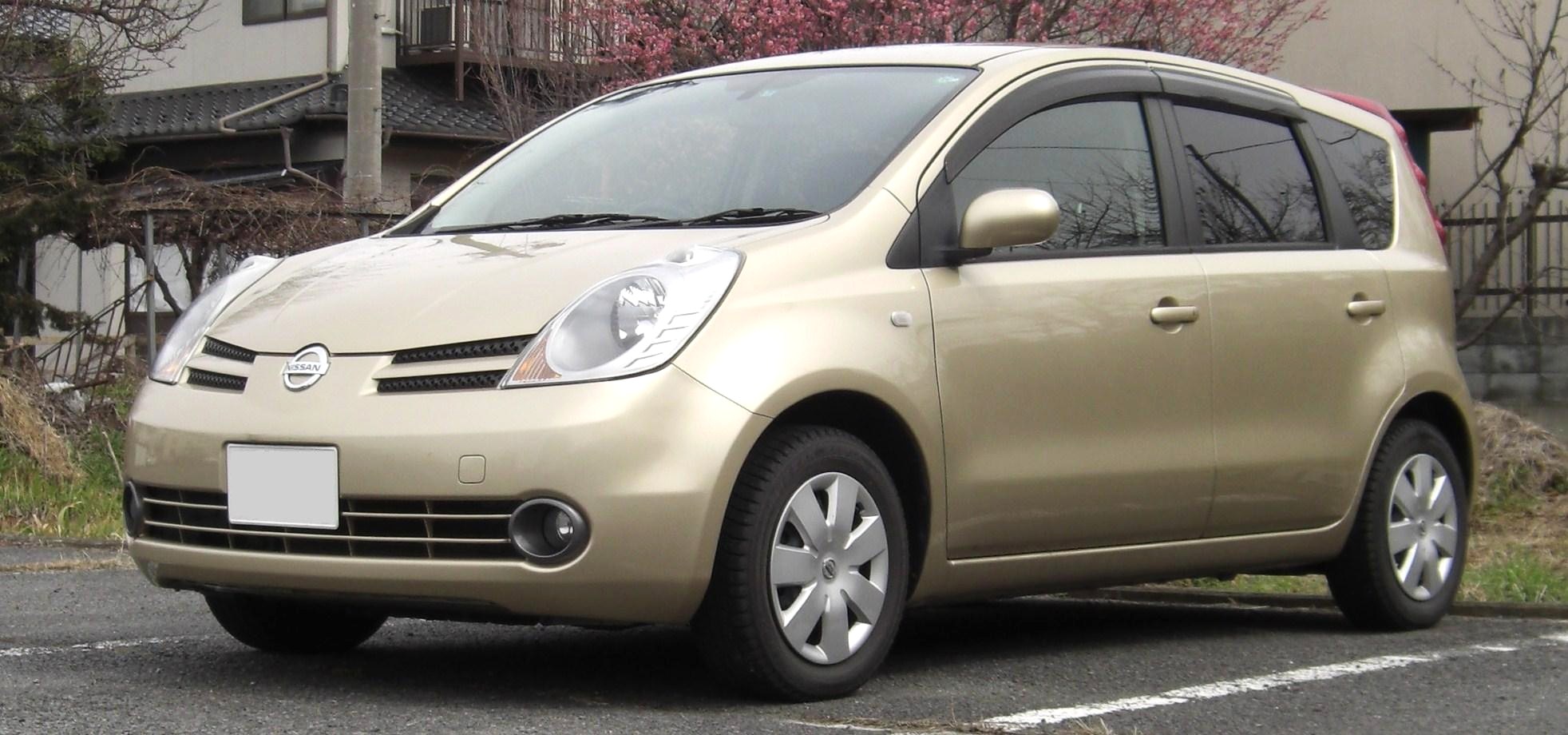
Nissan Note Nissan
"with the STI returning after its discontinuation in 2022. With it comes promises of a hatchback body style, 300 horsepower and a manual only transmission. On that note, Nissan gave the Nismo Z a manual option for 2026, specifically because the community asked for it loudly enough"
The Nissan Note is a small hatchback car. The podcast talks about a performance version that’s expected to be a hatchback and to come with a manual transmission. It’s mentioned because it’s aimed at people who want something practical but still sporty.
The Nissan Note is a compact hatchback, and the podcast references a return of the STI badge and promises of a hatchback body style with a manual-only setup. That makes it relevant because it suggests a performance-oriented version of a practical car, blending everyday usability with enthusiast features. The episode also mentions other Nismo-related context, reinforcing that this is about performance trims and drivetrain choices.
Shopify
"Shopify is the only game in town. Get started with your own design studio."
Shopify is a website service that helps people run an online store. It shows up in the segment as an advertisement.
Shopify is an e-commerce platform used to build online stores and manage selling, inventory, and shipping. It’s mentioned here only as an ad sponsor, not as part of the car discussion.
JCCA meeting
"The Japanese Classic Car Association New Year Meeting is a different kind of event than the Tokyo Auto Salon... The average owner age at a JCCA meeting hovers around 55."
The JCCA meeting is a get-together for owners of Japanese classic cars. Instead of big press events, it’s mostly enthusiasts sharing their cars and stories.
JCCA stands for the Japanese Classic Car Association, and its New Year meeting is an owner-focused gathering rather than a manufacturer show. The segment describes it as unhurried, with owners showing off cars they’ve kept alive for years.
out-of-production performance parts
"Stalls sell vintage option magazines... the same issues that documented the culture as it was being built alongside out-of-production performance parts, scale models and original brochures."
“Out-of-production performance parts” are aftermarket or enthusiast components that are no longer being manufactured. In classic JDM circles, these parts become harder to find, which can increase their cultural value and drive demand among restorers and collectors.
Toyota Automobile Museum in Nagoya
"Then there's the Toyota Automobile Museum in Nagoya, a three-story complex covering the full history of the automobile. As of October of 2025, it added a dedicated special exhibition"
This is a car museum in Nagoya, Japan run by Toyota. In this episode, they mention it added a special exhibit focused on JDM cars.
The Toyota Automobile Museum in Nagoya is a dedicated car museum that traces the history of the automobile across multiple galleries. In this segment, it’s notable because it added a special exhibition specifically about JDM cars and culture.
fender mounted mirrors
"A 1983 Toyota Sorer sold exclusively in Japan and never officially exported with Defender Mounted Mirrors that became one of the defining visual signatures of the JDM era. Dude, I should have put some fender mounted mirrors on my Mustang."
“Fender mounted mirrors” are side mirrors attached to the front fenders rather than the door or A-pillar. In this segment, they’re called out as a defining visual signature of a Japan-only 1983 Toyota model, showing how regulations and packaging can create recognizable JDM styling cues.

Ford Mustang
"...should have put some fender mounted mirrors on my Mustang. The automine kind of tight. It greets visitors b..."
The Ford Mustang is a performance car from Ford. It’s built to be fast and exciting, and many people customize them. The podcast mentions it because the speaker is talking about how the car feels and fits for driving and visibility.
The Ford Mustang is a long-running American muscle car and pony car known for its performance options and strong enthusiast following. In the podcast, it’s referenced in a personal anecdote about mirrors and visibility, which points to how owners live with the car day to day. That kind of detail is often why Mustangs come up—because they’re popular, modifiable, and widely driven.
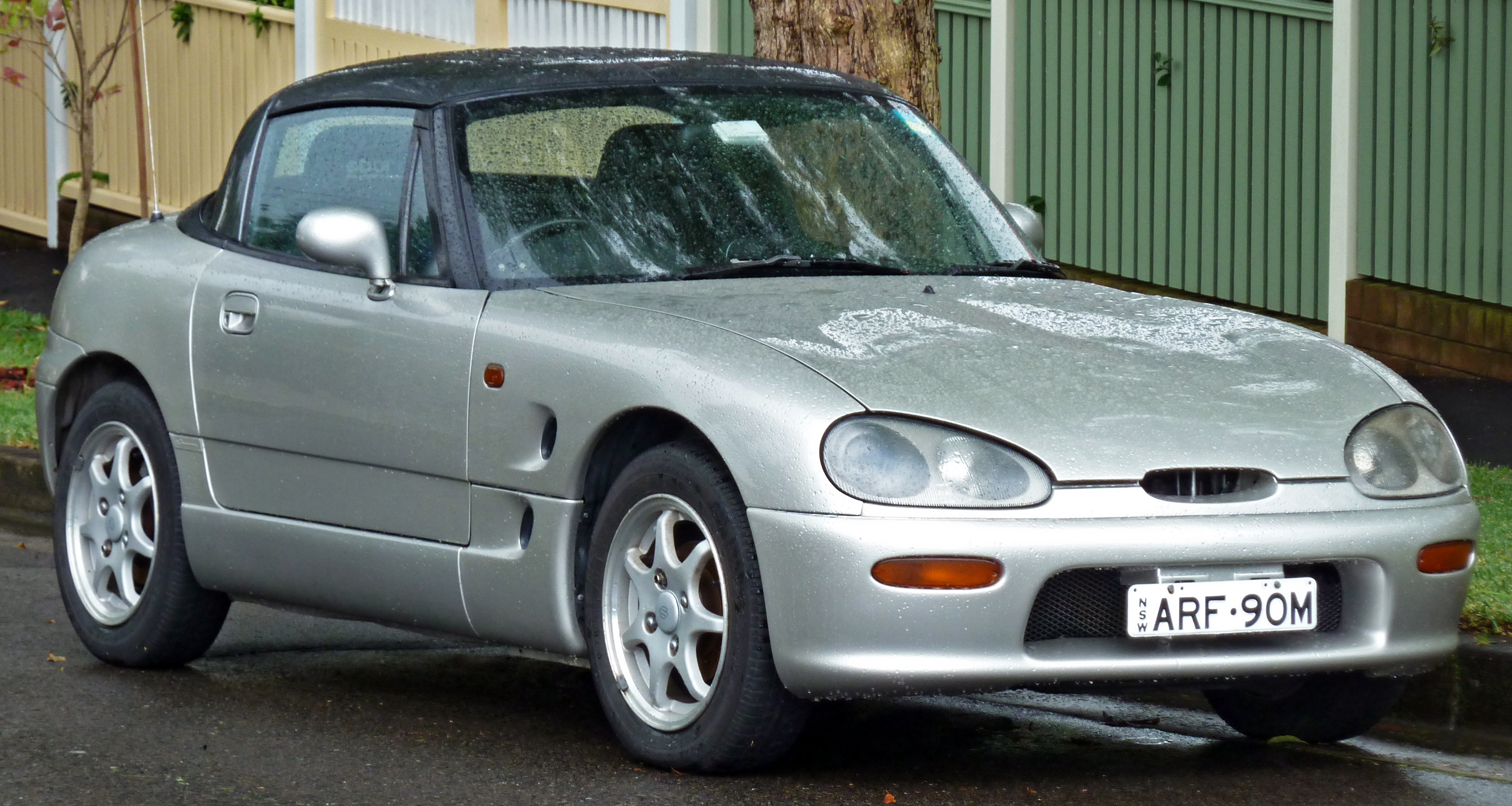
Suzuki Cappuccino
"A Suzuki Cappuccino sits alongside a Honda Beat and an AutoZam AZ1. The three Japanese K sports cars that existed in Japan while the rest of the world had no idea."
The Suzuki Cappuccino is a small Japanese sports roadster. It’s mentioned as an example of the kind of compact, fun-to-drive cars that were popular in Japan during the JDM era.
The Suzuki Cappuccino is a tiny, lightweight Japanese roadster that became a cult classic because it delivers real driving fun despite its small size. In this segment, it’s included to show how JDM “compact cars with high performance” were a major theme in the 1980s/90s.
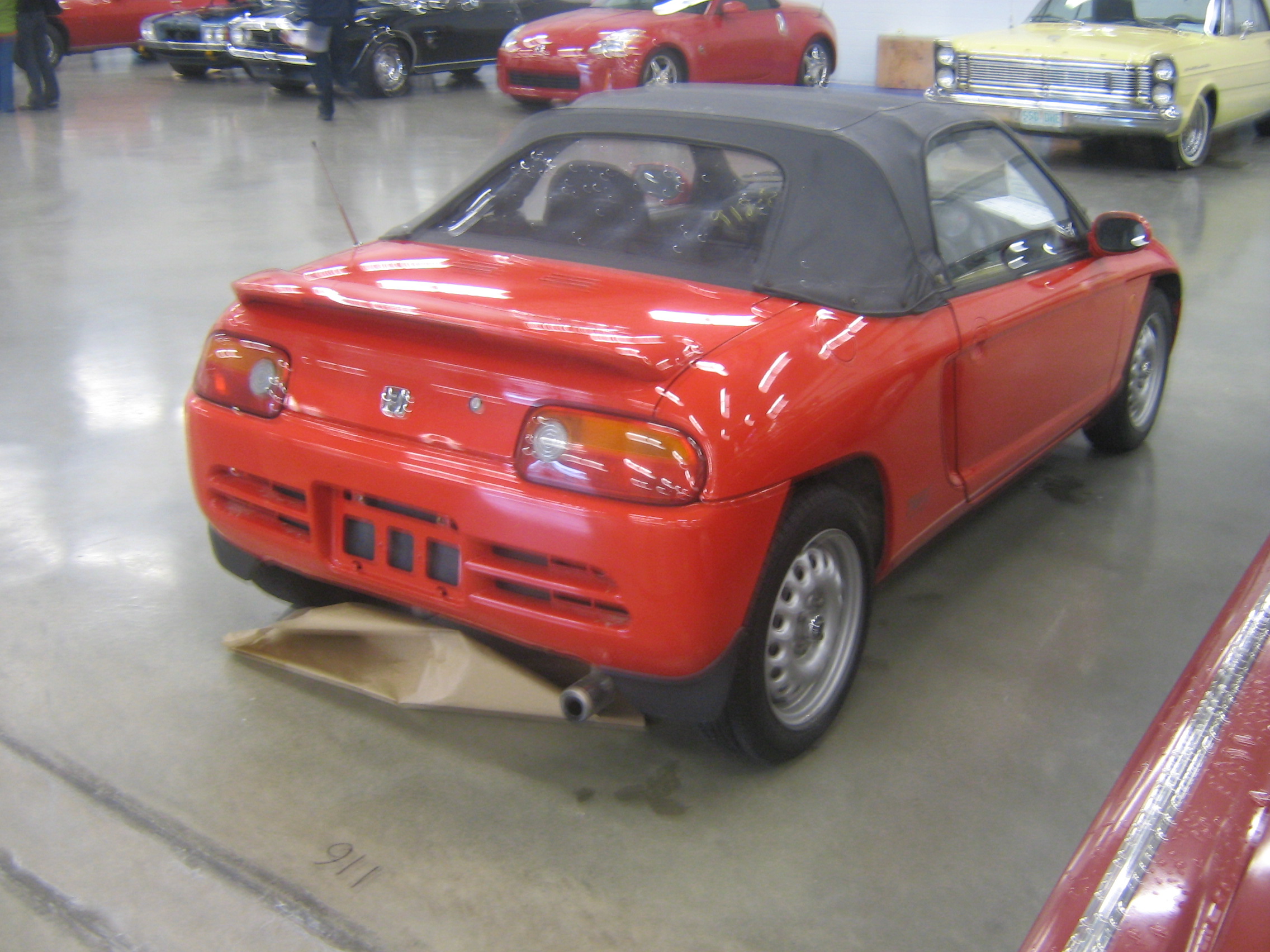
Honda Beat
"A Suzuki Cappuccino sits alongside a Honda Beat and an AutoZam AZ1. The three Japanese K sports cars that existed in Japan while the rest of the world had no idea."
The Honda Beat is a tiny Japanese sports car. It’s brought up as part of the group of small “kei” sports cars that were popular in Japan but less known elsewhere.
The Honda Beat is a kei-car-era Japanese sports roadster known for its compact dimensions and playful character. Here it’s used to illustrate the “K sports cars” idea—small cars built for Japan’s kei regulations that still aimed at driver engagement.

AutoZam AZ1
"A Suzuki Cappuccino sits alongside a Honda Beat and an AutoZam AZ1. The three Japanese K sports cars that existed in Japan while the rest of the world had no idea."
The AutoZam AZ-1 is a small Japanese sports car. It’s mentioned here as one of the kei-car “tiny sports” models that were big in Japan but not widely known overseas.
The AutoZam AZ-1 is a kei-car-era sports car associated with Mazda’s AutoZam brand, built to deliver a fun, lightweight driving experience within Japan’s kei-car rules. In this segment, it’s grouped with the Honda Beat and Suzuki Cappuccino to represent the small-but-serious JDM “K sports” scene.
Japanese classic car show
"Another event throwing the term JDM around heavily is the Japanese classic car show, which isn't in Japan, but rather across the Pacific, here in SoCal, in Long Beach, California. JCCS, great event, love going to it."
This is a big car show in the U.S. focused on classic Japanese cars. The hosts say it helped popularize the whole JDM idea for people in places like Southern California.
The Japanese classic car show is a major event for Japanese-market classic cars, described here as being held in Long Beach, California. The segment frames it as a key reason the “JDM” label spread internationally, especially among collectors outside Japan.
Marina Green Park
"with lines forming hours before the gates opened at Marina Green Park. All four major Japanese manufacturers showed up with their own booths, Honda, Mazda, Nissan, and Toyota lending institutional weight to an American show built around preserving their own heritage."
This is the park where the event happened. The host is using it to show how big and public the car show was.
Marina Green Park is the venue where the 20th-anniversary event drew large crowds and car displays. The mention matters because it frames the show as a public, community-scale gathering rather than a private collection.
Thrasher Magazine
"What happened to them is unlike what happened to Thrasher Magazine. The skateboarding publication whose logo became one of the most recognizable pieces of street wear on earth, now worn by people who have never set foot on a skateboard, aka posers doing mall grabs."
Thrasher Magazine is a skateboarding brand. The host is saying its logo became super popular in fashion, even with people who don’t skate.
Thrasher Magazine is a skateboarding publication whose logo became a mainstream streetwear icon. The host contrasts skatewear’s broad adoption with how Japanese motorsport tuning logos (like HKS) are being adopted without the original technical context.
slappy
"They've never done a slappy on a curb outside of Kmart, and I'm acting like I'm a skater. I rode longboards, I'm a poser too."
A “slappy” is a skate trick done near a curb or edge. The host is joking that some people wear skate brands without doing real skate tricks.
In skateboarding, a “slappy” is a trick where the board is popped and the rider makes a quick, controlled contact with the curb/edge area. The host uses it as a humorous benchmark for whether someone actually participates in skate culture.
blowoff valve
"Brands that spent decades building reputations in engine bays and on racetracks now have their logos functioning as cultural signifiers for people who couldn't tell you what a blowoff valve does."
A blowoff valve is a turbo part that releases extra pressure when you lift off the gas. The host’s point is that some people wear tuning logos without knowing what parts like this do.
A blowoff valve is a turbo-related pressure-release valve that vents excess boost pressure when the throttle closes. It’s a key part of many turbo setups, and the host uses it to illustrate the gap between people recognizing logos and people understanding the actual hardware.

Ford Fusion
"...riginally produced them. By the early 2010s, that fusion was fully established. Osaka and Nagoya street we..."
The Ford Fusion is a regular mid-size car made by Ford. It’s designed for everyday commuting and family use. The podcast mentions it because it became a well-established model by the early 2010s.
The Ford Fusion is a mid-size sedan that became a mainstream, widely produced model in the early 2010s. The podcast references its establishment and production history, tying it to how certain cars become common fixtures on roads and in street scenes. It’s discussed here more as a “background” model that shows up in everyday driving and local culture.
HKS
"is the same kid who eventually turns to HKS when they start modifying their first car, or maybe the second car HKS is pretty expensive."
HKS is a Japanese company that makes aftermarket performance parts for cars. Here it’s used to show when someone starts tuning their car for real, not just liking the scene.
HKS is a Japanese performance parts brand best known for turbo and engine tuning hardware, especially for Nissan and other JDM platforms. In the transcript, HKS represents the moment a fan moves from casual fandom into actual mechanical modification.
K Street
"Nismo formalized this understanding when they partnered with K Street and an automotive street wear brand for a limited edition collaboration"
K Street is mentioned as a streetwear partner in a limited-edition collab. It’s an example of how car culture and fashion started overlapping more publicly.
K Street is referenced as a partner in a limited edition collaboration with Nismo and another automotive streetwear brand. The point is the cross-over between car brands and fashion/retail channels.
Zoomies
"sold to the skateboarding and street wear chain Zoomies."
Zoomies is a store chain that sells skate and streetwear brands. The host is saying JDM brand collaborations ended up in those kinds of stores.
Zoomies is a retail chain associated with skate and streetwear culture. In the transcript, it’s used to explain how JDM-related brand collaborations reached mainstream shoppers through fashion stores.
Super GT
"This put the company that built engines worthy of Super GT in malls across America, next to Supreme and Vans."
Super GT is a major Japanese racing series where teams race modified versions of real cars. Mentioning it is a way of saying the engineering behind these parts is proven in top competition.
Super GT is Japan’s top-level grand touring racing series, featuring highly developed production-based cars. The transcript uses it to signal that the engine-building company’s credibility comes from serious motorsport, not just marketing.
Daikoku
"This brings us back to Daikoku. It was never designed to be what it became. It was designed to be a highway rest stop, a practical piece of infrastructure"
Daikoku is a rest-stop area in Japan that turned into a famous car-meet spot. Because it’s easy to enter/exit quickly and it’s quiet enough at night, car people used it as a place to gather and show off.
Daikoku is a well-known Japanese expressway rest-stop area that became a central hangout for car enthusiasts. The transcript explains how its highway access, loop-road layout, and late-night quiet made it ideal for “midnight club” staging and for the culture to gather and spread.
Request an Explanation
Heard something you'd like explained? We'll add it to this episode.
Sign in to request explanations for terms you heard.
Want to learn more?
Browse our glossary for plain-English explanations of automotive terms, jargon, and concepts.
Help improve this episode
See something that's not quite right? Our annotations are AI-generated and can sometimes miss the mark. Click the flag icon on any annotation to suggest a correction.
2 community members have helped improve this episode.