S2 Ep4: The Golden Era of JDM: Outlaw Zines Made Japan's Culture Mainstream
Past Gas
S2 Ep4: The Golden Era of JDM: Outlaw Zines Made Japan's Culture MainstreamPast Gas · Apr 21, 2026
Annotations will appear as you listen
0:00
44:32
Concept
outlaw Zines
A “zine” is a small, independent magazine. “Outlaw zines” are the ones that focus on the rebellious parts of car culture that bigger magazines usually ignore.
Motor Fan is another major Japanese car magazine. The episode uses it as an example of the mainstream outlets that covered cars before the underground scene got more attention.
Motor Magazine was a big, well-known car magazine in Japan. It mattered because it brought car culture into the mainstream by publishing regular updates.
The hosts are saying that a few major magazines basically dominated car news in Japan. That dominance is important because it shows how the scene later moved toward more underground voices.
Underground publications were smaller fan-made magazines that didn’t follow the mainstream rules. They often showed more real, everyday car culture instead of polished content.
Reader participation is a publishing model where enthusiasts submit content—photos, stories, and builds—and the magazine features them. In this segment, it’s presented as a key mechanism that connected isolated hobbyists and accelerated the growth of modified-car culture.
Sanctioned racing circuits are official tracks where racing is allowed under rules. The hosts are contrasting that with the more informal, DIY car scene that was happening outside official events.
Grassroots culture means regular fans and hobbyists doing things on their own, not through official organizations. In this case, it’s the street-level car scene that magazines helped bring to wider attention.
The 1973 oil crisis was when fuel became much more expensive and harder to deal with. The hosts are saying that this shock helped create a window for Japanese car culture to grow in a new direction.
Topic
PASCAS
PASCAS is just the name of the podcast/segment they’re using to introduce the topic.
DIY means people make things themselves instead of waiting for someone official to do it. Here, it’s about fans creating their own magazines and community.
Decentralized means there isn’t one main boss or one main place running everything. Instead, lots of small people help spread the culture in their own way.
This describes how a niche community’s interests become widely recognized and adopted by the broader public. The episode credits zines with helping car culture move from a tight subculture to a mainstream audience by sharing builds, stories, and identity.
The idea here is that car magazines weren’t just ads—they helped the whole community grow. Seeing other people’s builds made readers feel like they were part of the same scene, and it encouraged them to copy or improve what they saw.
“Grainy images” means the photos look more like older film—less perfect and more real. In this context, it’s a style choice that makes the magazine feel more like it’s showing real life in the car community.
A “late run” implies an after-hours drive—often associated with Japan’s mountain-road and street-tuner culture. The transcript’s mention of photos “snapped after” a late run suggests these magazines documented the lifestyle around the cars, not just static builds.
The hosts emphasize that readers weren’t only “consuming” car culture—they were participating by studying builds and trying to recreate what they saw. This is a key JDM-mag dynamic: media acted like a feedback loop between builders and the community.
A “suspension setup” is the specific combination of suspension components and settings—like spring rates, ride height, damping, and alignment targets—that determines how a car rides and handles. Enthusiast magazines often documented these setups so readers could copy what worked for their goals (street comfort, grip, stance, or track use).
Muscle cars are American performance cars that are famous for big engines and fast acceleration. The hosts are using them as an example of how car culture connected to youth identity in the U.S.
They’re talking about how car magazines changed over time. By the late 1970s, the style and message of enthusiast publishing had already started to shift.
This means the parts of car culture that weren’t officially approved or “safe” for mainstream media. It’s the more rebellious side—often involving risky behavior—that some writers chose to show anyway.
Option magazine is a Japanese car magazine. In this story, it’s important because it covered the modified and street-racing world more directly than “safe” mainstream publications.
“Illegal street runs” means racing on public roads without permission. It’s dangerous and against the law, but some magazines and fans treated it like a real part of car culture.
It’s basically saying there’s a limit to how much you can rebel before authorities or society react. In car culture, that can mean more enforcement or pressure once things get too visible or too extreme.
Concept
JDM scene mainstreaming
They’re talking about how JDM went from being a smaller hobby to something bigger that needed its own spotlight. Specialized magazines helped spread it beyond the original insiders.
A track day is basically a “pay to drive” event on a real race track. You’re not racing other cars for a championship—most people are there to practice, learn the car, and get seat time.
A competition license is permission from a sanctioning body to race in organized events. It typically requires meeting eligibility rules and sometimes passing tests or completing training so you can compete safely.
Mountain passes are twisty roads up and down hills. They make your car work harder in corners and braking, so people often adjust their cars to handle better, not just go fast in a straight line.
Street racing is racing on regular public roads instead of a track. It pushes people to modify their cars so they can perform consistently, even though the conditions are less controlled than a race event.
Tuning culture means people don’t just drive fast—they change their cars to go faster and then keep experimenting. It becomes a whole community habit, where you learn from what you try and compare notes with others.
“Legal gray zones” refers to activities that aren’t clearly legal or illegal—often because enforcement, regulations, or interpretations vary. In street-racing contexts, it can mean operating outside normal rules (like where and how you race) while still avoiding the most obvious violations.
Police scrutiny means law enforcement paying close attention. If people think they’ll get stopped or fined, they change their behavior—like driving at certain times or avoiding certain roads.
A fanzine is a small, fan-made magazine. It’s usually put together by enthusiasts rather than big publishers, and it often looks more homemade than official magazines.
They’re talking about a magazine called Option and how, starting in 1981, it changed how people saw modified Japanese cars. Instead of hinting at it, the magazine showed it openly.
A street racer is someone who races cars on regular public roads, not on an approved track. It’s often illegal, and people worry that evidence or even just being seen with the wrong stuff could get them in trouble.
A “99% conviction rate” describes how often courts convict defendants, which can shape how people behave and what risks they’re willing to take. In this episode’s context, it’s used to explain why Japan’s legal environment made street-racing-related media feel especially dangerous.
“Walking a narrow line” means being careful not to go too far in either direction. In this case, it’s about making content that street-culture fans want, without making it so obvious that it gets people in trouble.
An “ecosystem” here means a whole community that’s connected—people, businesses, and events that all influence each other. The host is saying the magazine worked as part of that scene, not as something separate or against it.
The Yatabe High Speed Loop was a special track used to test cars hard and prove they really could perform. It was set up for long, fast runs—more like engineering testing than normal racing.
Endurance testing means pushing a car for a long time to see if it can survive real abuse. Instead of just measuring top speed, it checks whether parts overheat or wear out.
This was a Japanese testing facility built for engineering work, not just racing. The track shape and layout were designed to keep cars under hard conditions for a long time.
A long-banked oval is a track with corners that are tilted. That tilt helps cars go faster through the turns more smoothly, which is useful for testing how the car behaves over time.
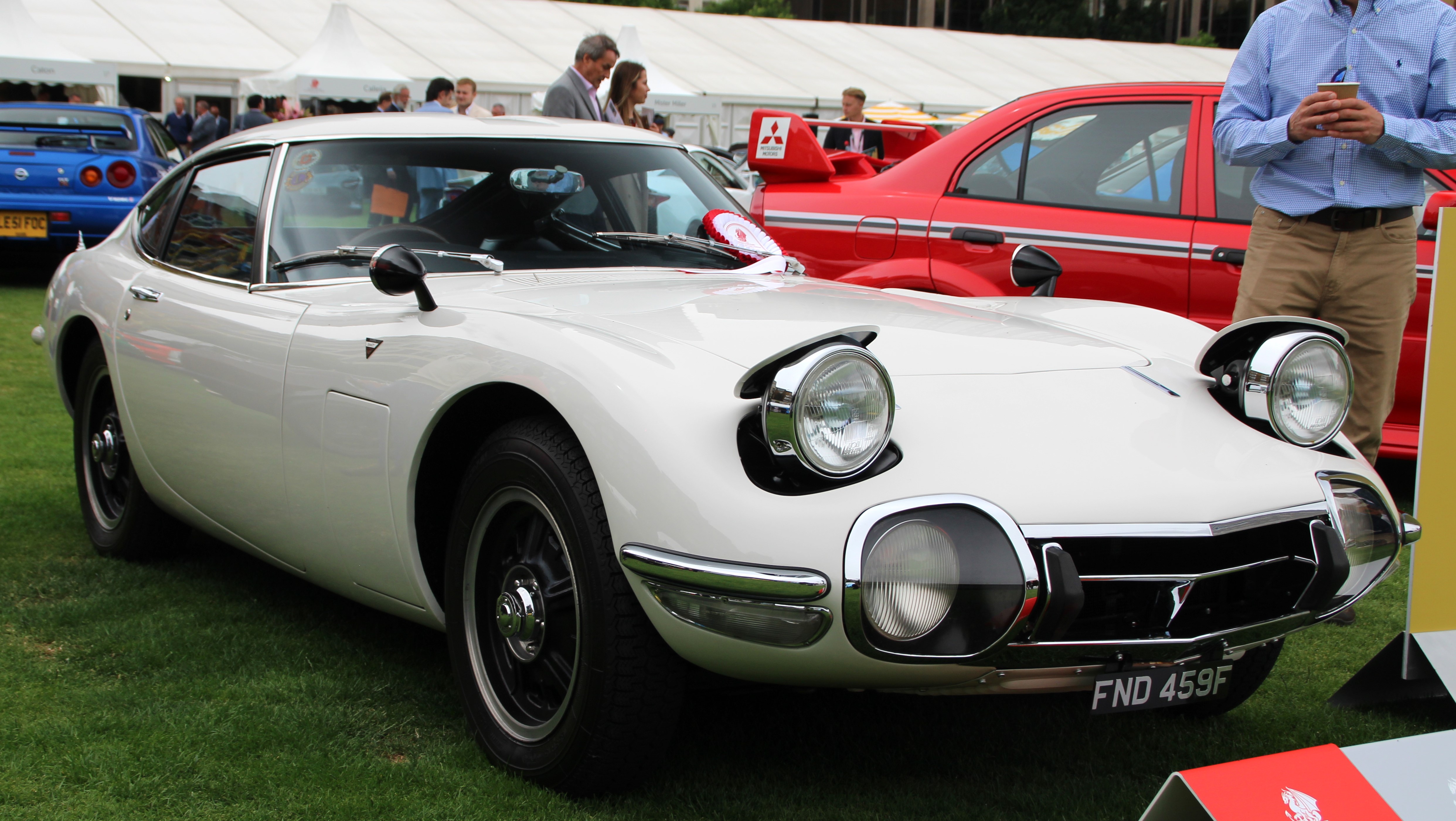
The Toyota 2000 GT is a classic Japanese sports car that helped prove Japan could build fast, high-quality cars. Here it’s mentioned because Toyota used it to set long-distance performance records.
They moved from rumors and bragging rights to actual testing. That meant people could compare cars more fairly because the runs were done in a controlled way.
Yatabe is basically a test facility where cars were evaluated more like a real event. It matters because it helped turn informal racing into something structured.
Controlled conditions means the test is set up so the results are more reliable. Instead of racing in unpredictable situations, they try to keep things consistent.
Term
Osamu Mochizuki
Osamu Mochizuki is described as a skilled test driver. Test drivers help evaluate a car safely by finding problems and limits in a controlled setting.
Kunimitsu Takahashi was a famous Japanese race driver. Mentioning him is a way of saying the cars were tested by someone skilled and careful, not just driven recklessly.
Topic
Yatabe corners
Yatabe is a famous place in Japan where cars are tested and driven hard. “Yatabe corners” just means the tricky turn sections where you really find out how a car handles.
These weren’t dedicated race cars—they were normal street cars that got modified a lot. When you push them too far, they can start behaving unpredictably, especially when you’re going very fast.
Aerodynamics is how the car’s shape interacts with air. At high speed, it can help the car stick to the road, but if it’s not working as intended, the car can start to feel weird or unstable.
At very high speed, cars can go from “almost okay” to “suddenly not controllable.” If something fails or you make a small mistake, there may not be enough time to recover.
If a tire “blows,” it can lose pressure or structure fast. That usually means the car suddenly loses traction and can be hard to steer, especially at speed.
R. E. Amemiya is a well-known Japanese tuning shop. When they’re mentioned with an RX-7, it usually means the car had serious performance parts and a racing-oriented setup.
A rotary engine is Mazda’s special engine type that doesn’t use pistons like most cars. It tends to rev fast and sound unique, but it needs the right care to stay healthy.
White smoke often means something is wrong—commonly the engine is overheating or fluids aren’t being burned normally. In this story it’s a sign the car was in trouble right before it failed.
A Pontiac Firebird Trans Am is a famous American muscle car. In this segment, it’s the car that shocked everyone by being faster than the Japanese turbo cars at the event.
Torque is what makes a car pull strongly, like a shove. If a car has a lot of torque, it tends to feel fast even without needing to rev extremely high.
The Yatabe event is referenced as a key proving ground for Japanese tuning—essentially a place where builds were tested and ranked. The hosts frame it as a cultural turning point: when an American car won, Japanese tuners were motivated to “catch up” with more serious performance results.
The Nissan S30 Fairlady Z refers to the early Z-car platform (the 240Z/260Z/280Z era), which became a cornerstone of Japanese tuning culture. In this segment it’s mentioned as the next-fastest car behind the Trans Am, highlighting how the Z’s tuning potential translated to real track performance at Yatabe.
Top speed battles are races where the goal is to go as fast as possible. To do that, cars often need more than just power—they also need the right gearing and setup to stay stable and keep running strong at high speed.
HKS is a well-known Japanese company that makes performance upgrades for cars. Here, they’re associated with building the turbo setup on the Celica that was trying to hit 300 km/h.
This is a Toyota Celica that was heavily modified by HKS with two turbochargers to chase very high speeds. The “XXM300” part is basically the project/target name for a 300 km/h-class attempt.
Hitting 300 km/h is a huge benchmark because it’s extremely fast and hard to keep stable. At that speed, the car needs to be set up to handle heat, airflow, and stress for more than just a quick burst.
The Toyota Supra is a sports car made by Toyota that’s built to be fast and fun to drive. In some earlier years, the name “Celica Supra” was used, which helped connect the Supra name to Toyota’s performance lineup. People talk about it because it became well-known for racing and performance achievements.
The Wangan is a famous highway stretch in the Tokyo area. It’s known in car culture because people used to race there late at night, and the stories around it helped build Japan’s street-racing legend.
Tokyo’s Bayshore Route is a coastal highway near Tokyo. Because it has long straight sections and less traffic at night, it became a hotspot for the kind of racing stories people still talk about.
The Midnight Club was an exclusive group connected to late-night street racing culture. Instead of being a random gang, it was more like a private club with rules and an invite-only vibe.
They’re saying the club only wanted cars that could go about 250 km/h. That’s a way of showing the cars were built for serious speed, not casual driving.
The Nissan GT-R is a fast sports car made by Nissan. It’s designed to accelerate quickly and handle well, not just look sporty. In the episode, it’s mentioned as one of the standout performance cars in the same conversation as other very quick machines.
They’re talking about the Lamborghini Countach, a super famous exotic car. The host is using it to show the scene included extremely expensive, high-performance cars.
This is a classic turbo Porsche 911, the 930 generation. It’s famous because it’s fast and has a big reputation in tuning and car stories.
Concept
Visac Research Facility
They’re saying the car was sent to Porsche’s own facility to be modified. The idea is that it wasn’t just random tuning—it was treated like a real engineering project.
Car
Nissan 280ZX
The Nissan 280ZX is an older Z-car from Nissan that tuners love. Here it’s used as a legendary rival car, showing that even classic models could be built into serious speed machines.
The Datsun 280Z is an older sports car from the 1970s that was built for driving enjoyment and performance. In the podcast, it’s brought up as a competitor to a more powerful 280ZX version. People talk about it because it’s part of the Z-car lineup’s history and reputation.
They’re saying the story of these cars got turned into a manga. That’s a big deal because it can spread car culture to people who might never see it in real life.
“Dangerous driving” means driving in a way that could seriously hurt other people. The club’s rules were basically meant to keep meets from turning into reckless chaos. So even though it was a car scene, they tried to draw a line for safety.
They’re talking about using classified ads in newspapers to secretly coordinate meetups. Instead of saying “car meet” directly, they used vague listings so police wouldn’t easily catch on. It’s basically an old-school way to keep the group organized.
“Track racing only” means they stopped doing it on public roads and focused on race tracks. Tracks are safer because they’re built for fast driving and have safety features. The hosts are using this as evidence the club cared about ethics and safety.
Yatabe is a place where cars can be tested in a more controlled way than street driving. That kind of testing helps turn “tuning stories” into measurable results.
High performance tuning means changing a car to make it faster or handle better. In this story, it became more accepted once people could test and write about what they were doing.
Modified vehicles are cars that have been changed from how they came from the factory. Sometimes those changes are for looks, sometimes for speed, and sometimes both.
A car meet is just a group of car people getting together to show their cars. In Japan’s tuning scene, these events helped the culture grow and become more visible.
Daijira Inata is the person in this story who kept pushing the idea forward. Even when police and others doubted it, he used his connections to help the scene grow.
Concept
police were immediately skeptical
The police didn’t trust the idea at first. They worried that these events would turn into trouble instead of staying a positive community thing.
The “gray area” means the line between what’s clearly legal and what’s kind of tolerated. In car culture, it often comes up when people modify cars in ways that might not pass strict rules.
Concept
Option success
“Option success” appears to refer to a successful publishing or media effort that gave Inata a network across the tuning world. In JDM culture, magazines and publishers often acted as hubs connecting tuners, shops, parts makers, and photographers.
Sanai Shobo is the publishing company behind Option, mentioned here as the organization that could provide the backing needed for the project. The segment uses it to explain how a magazine brand translates into event support.
Concept
JDM culture mainstreaming
Mainstreaming means taking something that started as a niche hobby and making it more widely known. Here, the story is about how JDM culture grew through magazines and events.
An “experimental car show” refers to events focused on unusual builds, new ideas, and non-mainstream automotive culture rather than mainstream production cars. The segment frames the timing challenge—who would attend right after New Year, when people are traveling or broke—and how winter weather could derail plans.
LIVE
What's the most sustainable way to love fashion?
It's changing the way you shop by shopping with the RealReal.
The RealReal is the world's largest
and most trusted source for authenticated luxury resale.
When you shop with the RealReal,
you'll find the luxury brands you love,
like Prada, Celine, and Lauevaix,
all for up to 90% off retail.
And when you're ready to refresh your wardrobe,
you can sell the pieces you no longer wear
to fund your next new to you finds.
Buy, sell, repeat, guilt-free.
The RealReal extends the lifecycle of luxury
by keeping coveted items in rotation.
Sell to shop, shop to sell with the RealReal.
It's better for the planet and better for your closet.
Plus, during Earth month,
you can earn $100 extra when you sell with the RealReal.
Go to therealreal.com to get started.
Earn $100 extra during the entire month of April
at therealreal.com.
That's therealreal.com.
Terms apply.
You've probably heard of Option and Carboy.
By the 1980s, magazines like these
had become prominent voices in Japanese car culture.
Widely read, widely trusted,
and nearly impossible to find a tuner
who didn't have a copy somewhere in their shop.
But to understand how those magazines got there,
you have to go back further.
Before Option, before Carboy,
before any of it, there were zines.
Independent, cheaply printed, passed around by hand.
Before the internet, in a period where car enthusiasts
were scattered across Japan
with no easy way to find each other,
these publications built a community from the ground up.
Motor Magazine, monthly private cars,
and Motor Fan dominated the market
and made a name for themselves
as the big three magazines of Japan's automotive world.
Their pages documented new car technology
and racing results during a period when driving
had become a national pastime.
But these magazines played it safe.
They barely touched what the smaller underground
publications were doing, a raw, up-close look
at what was actually happening on Japan's streets.
Things began to change in the mid-1970s
as Japanese car culture continued to grow.
Smaller, compact magazines started appearing in B5 format,
aimed at hobbyists rather than showroom customers.
Titles like Holiday Auto leaned into reader participation,
spotlighting cars that enthusiasts
were actually driving and modifying.
One of its biggest hits was a serialized feature
called Oh My Highway Racer,
built entirely on reader submissions.
It launched Holiday Auto into a level of popularity
that other magazines couldn't touch.
The publication quickly became known
as the Bible of modified cars.
This was a big shift.
Less than a decade after sanctioned racing circuits
had really started to take off,
a real bridge between the formal press
and grassroots culture was starting to form.
Last episode, we talked about how the 1973 oil crisis
handed Japan an unexpected opportunity.
In garages across the country,
a generation of young people started building a car culture
nobody had officially sanctioned.
But those kids needed a way to find each other.
Today on PASCAS, how car magazines changed Japanese culture.
Welcome back to the show, everybody.
My name is Nolan Sykes.
I am your host here on PASCAS.
We are about a quarter of the way through our journey
into the Japanese automotive industry.
If this is your first episode of this new season,
go back and listen to the first couple episodes there.
So you really get the full picture here.
Otherwise, you'll kind of be just jumping right in.
Zines, man, I remember me and my boy Chris Driesback
used to go to these shows in warehouses
in this one manufacturing district of San Luis Obispo.
And in the lobby, there was a rack with all these zines,
little self-published magazines.
It was like vegan stuff.
There was like anarchist stuff.
Zines are very important in counterculture, in subcultures.
It's decentralized.
It's DIY.
It's how the real nerds find each other.
Zines were able to help car culture break through
from a subculture into the mainstream.
And that is what we're discussing today in this episode.
Without further ado, let's get into it.
What made these magazines so powerful
wasn't just the information they carried.
It was the connection they made possible.
Young drivers and tuners scattered across Osaka, Nagoya,
and Tokyo could finally see themselves reflected
in ink and photography.
A single shot of a modified skyline under a streetlight
or a Cosmos Sport sitting in the shadows of a mountain road
was more than a picture.
It was proof that someone, somewhere,
was doing exactly what you were doing
and into the same things that you were.
Photography here was especially vital.
These weren't glossy press shots.
These editors preferred grainy images taken inside shops
or snapped after a late run on the toenail.
Each one invited scrutiny.
Readers studied every detail
and tried to replicate what they saw.
They weren't just consuming a culture.
They were participating in it.
Modified cars offered the people a way to express themselves.
And magazines were the mirror that amplified it
so anyone could see what was possible.
Distribution ran through traditional retail channels
and through word-of-mouth networks
that turned out to be surprisingly effective.
An issue bought in Kyoto might get passed to friends
in Fukuoka and then tucked under a bed
only to be rediscovered months later.
Yep, they probably had other magazines
they tucked under their beds.
Demand was high enough that large print runs were necessary.
These magazines also began giving the culture
a shared vocabulary that it didn't quite have yet.
Through another reader's submission,
you might learn the difference between suspension setups
you didn't even know were possible.
At this point, what worked and what didn't
were equally worth documenting
and magazines were where it got documented.
Magazines directly contributed to a moment
when cars became a tool of self-expression.
The 1970s were moving fast and not just in Japan.
Across the world, young people were pushing back
against whatever monoculture they'd inherited.
Back in the US, it was muscle cars and counterculture.
In the UK, it was punk and for many in Japan,
it was a wrench in your hand and a magazine under your arm.
By the late 70s, the tone of enthusiast publishing
had already shifted.
Coverage grew more confident and experimental.
Editors were less likely to hold back
from documenting the unauthorized side of car culture.
They understood what they were giving their readers.
And there was one person in particular
who really understood that assignment.
He had stepped into this world,
not just as someone with influence,
but as a genuine fan of the culture.
His name was Daijiro Inada,
and his impact was nothing short of Seismic.
Inada's option magazine launched in 1981,
and from day one,
it did something the legacy car magazines never would.
It documented illegal street runs, openly, proudly.
In a country where conformity was a social contract,
that alone was a statement.
Inada didn't come directly from the street scene.
His path ran through publishing and motorsports journalism,
a more traditional route that turned out to be crucial.
It taught him how media worked,
how editors built and framed stories,
and most importantly,
how far you could push the system
before the system pushed back.
Option took what earlier publications
had been quietly building towards
and pushed it all the way to the front.
A column here and there paired with some photos
was no longer enough.
This culture had grown too big and too hungry for that.
It needed its own platform.
Option called itself the exciting car magazine,
and it meant it.
To understand why that mattered,
you have to understand where the average car enthusiast
stood at the time.
Tracks existed, yes,
but getting on one still cost money, real money.
And even if you could afford a track day,
that was a far cry from actually racing.
That's still a reality today,
still expensive to get out there.
Competition licenses were expensive.
The circuits where serious racing happened
were mostly in rural areas,
far from where most people live.
And if you somehow cleared all that,
you were still showing up as a stranger
to a scene that had already sorted itself out.
So, people took it to the streets.
The Tome at 2 a.m.,
the mountain passes on weekends,
because the streets were free, immediate, and always open.
And once you're racing on the street,
you start thinking about how to go faster.
You tune the car, you push it further,
you find out what that thing can actually do.
That's where tuning culture really comes from.
Speed as something you could chase on your own terms,
on your own schedule, with whatever you had.
Inata saw that clearly.
He also saw that the people living in this culture
were constantly under threat,
operating in the shadows, dodging police scrutiny
and legal gray zones,
where others saw liability, he saw an opening.
As he later put it,
that illegality wasn't just a legal issue,
it was a social one.
It meant the culture had no defense,
no visibility, and no ability to explain itself.
His solution seemed almost too simple.
Make it visible.
Make it so widespread it becomes impossible to suppress.
Again, in his own words,
I thought that if everyone got into it,
it would be impossible for the police to arrest everyone
that would tinker with their car.
That's pretty sound logic.
That was a calculated bet on scale,
but visibility required trust,
and trust required professionalism.
Inata didn't want a fanzine.
He wanted a real magazine,
one that looked legitimate enough to sit on a shelf,
but was honest enough to show
what was actually happening out there.
When Option began publishing in 1981,
it entered a world that had been primed
by a decade of enthusiast magazines.
But Option felt different immediately.
Instead of talking around the underground,
it went straight into it.
Modified cars were shown without apology.
Speed wasn't being abstracted into theory anymore.
It was being documented and recorded with pride.
When it hit shelves, it wasn't just groundbreaking.
It was shocking.
Many people believed simply reading Option
could get you arrested.
Stories spread of readers hiding their copies,
afraid that being seen with it
might identify them as a street racer.
Dude, that's crazy.
But it kinda makes sense too,
considering Japan's legal system as well.
99% conviction rate as of like two years ago.
Insane.
Inata's background helped him and his team
figure out how to walk a very narrow line.
The phrasing of articles,
the way images were contextualized,
Option found a place where nothing needed
to be sensationalized to feel important.
It was already exciting.
It just needed a medium.
That balance earned it readers from every corner,
yet street racers, shop owners,
curious enthusiasts, and industry insiders
who pretended not to read it.
Option didn't position itself against manufacturers
or professional racing.
It aimed to exist as part of that same ecosystem,
filling a gap that had been left open.
By framing tuning as a response to exclusion
rather than rebellion for its own sake
and how to create a narrative that was hard to dismiss,
the people featured in Option were so passionate about cars
that they found a way to create with them
by any means necessary.
Big thank you to our sponsor, Bluechew.
The future of a rectile function is here.
Bluechew Gold is changing the way millions of men
are having sex in 2026.
The new arousal boosting formula combines passion
and performance into one tablet
that dissolves under your tongue for super fast onset.
No more waiting for a pill to kick in,
no more moments ruined by performance anxiety,
just the results you want when you want them.
Most ED meds only focus on blood flow,
but Bluechew Gold goes further
by combining two ingredients for blood flow
with two for mental arousal and connection.
So you're not just physically ready,
you're actually in the mood.
This type of innovation is why Bluechew Gold
is the number one brand in a rectile function.
The process is simple and all online,
so get started today at Bluechew.com and go for gold.
Discover your options at Bluechew.com
and we've got a special deal for our listeners.
Right now, when you buy two months of Bluechew Gold,
you get the third for free with promo code, past gas.
That's promo code, past gas.
Visit Bluechew.com for more details
and important safety information.
And we thank Bluechew for sponsoring the podcast.
What's the most sustainable way to love fashion?
It's changing the way you shop by shopping with the RealReal.
The RealReal is the world's largest and most trusted source
for authenticated luxury resale.
When you shop with the RealReal,
you'll find the luxury brands you love,
like Prada, Celine, and Lauevaix,
all for up to 90% off retail.
And when you're ready to refresh your wardrobe,
you can sell the pieces you no longer wear
to fund your next new to you funds.
Buy, sell, repeat, guilt-free.
The RealReal extends the lifecycle of luxury
by keeping coveted items in rotation.
Sell to shop, shop to sell with the RealReal.
It's better for the planet and better for your closet.
Plus, during Earth month,
you can earn $100 extra when you sell with the RealReal.
Go to therealreal.com to get started.
Earn $100 extra during the entire month of April
at therealreal.com.
That's therealreal.com.
Terms apply.
At some point, claims of greatness
can't just live as back alley rumors anymore.
They needed to be proven.
The Yatabe High Speed Loop
became the perfect place to settle those claims.
Unlike Suzuka, which had established itself
as a battleground for Japan's top manufacturers,
Yatabe wasn't a racetrack in the traditional sense.
It was the Japan Automobile Research Institute's
High Speed Test Course,
a long-banked oval near Tokyo
that had been open since 1964.
With its loop structure, multiple speed lanes,
and lighting for night runs,
it was built for endurance testing.
Long straights that could push any car to its limit.
Toyota had famously used it to set endurance records
with the 2000 GT,
which we talked about a few episodes ago.
Now, it's about to serve a very different purpose.
Up to this point,
the streets had been tuner's only proving ground.
The Tome Expressway was the scene's impromptu drag strip,
where drivers chased bragging rights at serious risk.
A handful of drivers lost their lives out there
chasing a number that was never officially recorded.
That changed, though, in the early 80s,
when Option decided to formalize speed.
Instead of hearsay about who beat who at 3 a.m.,
Option would bring tuners to Yatabe
and measured their cars under controlled conditions.
August 16, 1981 is a day that will forever live
in Japan's automotive lore.
Those who were present at the Yatabe Test Course
recall the air being thick with anticipation,
plus tire smoke and high-octane fumes
from dozens of modified cars.
It was one of Option's first major events,
and by becoming an organizer,
the magazine was becoming even more embedded
within Japanese tuner culture.
Tuning shops stood next to private owners,
each beside a car that had been refined
down to its last bolt.
To ensure the earliest tests were conducted safely,
Option brought in professional drivers.
Osamu Mochizuki, an experienced test driver,
and the legendary Kunimitsu Takahashi,
whose racing pedigree ensured these machines
would be driven with precision
rather than just reckless speed.
Each car filed out onto the track one by one,
climbing the banky Yatabe corners
before feeding onto the main street.
These were not purpose-built racing machines,
but heavily tuned streetcars.
Everything from the suspension to aerodynamics
was being pushed well beyond its original design limits.
At high speeds, these things could become
completely unpredictable.
Engines could let go without warning,
tires could blow, one mistake in a car
could be broken, and the car could be broken.
It could be gone before anyone had time to react.
One of the most aggressive entries
was R. E. Amemiya's RX-7 Turbo.
Driven hard, its rotary screamed
at speeds crept towards 230 kilometers per hour,
before the engine overheated
and left a trail of white smoke behind it.
Impressive, but ultimately a reminder
of how unforgiving these conditions were.
Then came the moment that stopped everyone cold.
A firebird, Trans Am, prepared by trust and gretty,
rolled onto the street.
An American car with a massive engine under its hood
and the kind of torque that felt foreign
and a paddock full of turbocharged Japanese machines.
It hit 261.71 kilometers per hour,
the fastest speed recorded that day,
and it wasn't particularly close.
All right, so that's 168 miles per hour.
Not bad, not bad, so this is like the early 80s.
That's pretty, that's good, that's impressive.
For all the ingenuity happening in Japanese garages,
for all the late nights and custom setups
and hard-won mechanical knowledge,
the fastest car at the first Yatabe event was American.
That stung a little, but it also lit a fire.
Japanese tuners now had a number on the wall
and a very clear message.
Catch up.
Finishing behind the Trans Am was a SS Kubo Nissan S30 Fairlady Z.
It's meticulously tuned engine pushed
into the 250 kilometer an hour range,
showing just how much potential Japanese sports cars had,
even with two fewer cylinders than the Trans Am.
Other entries range from the classic Fairlady SR211s
to turbocharged Honda Prelude builds.
Every car, regardless of final speed,
was part of a larger story,
one about ordinary people pushing past the boundaries
of what their cars were designed to do.
The event was an instant hit.
For the first time, tuners could see
what their culture looked like on a professional stage,
and the top speed battles only grew more intense from there.
Before long, 300 kilometers per hour became the target,
the big 186 miles an hour.
Milestones were chased and eventually reached
at subsequent events,
including the historic HKS Twin Turbo Celica XXM300,
the first Japanese car to break
the 300 kilometer per hour barrier in December of 1983.
If you're curious what this looks like in America,
this was called the Celica Supra.
The news of the accomplishment spread fast.
It was part of a gradual process
that helped Japanese tuners stop seeing themselves
as just hobbyists.
Anyone with a vision and the resources to see it through
was now a competitor on par
with global performance machines.
The data from Yatabe became something
you could pin on the wall and work towards.
Before option formalized things at Yatabe,
there was another stretch of road
producing its own kind of mythology, the Wangan.
Otherwise known as Tokyo's Bayshore Route,
a stretch of coastal expressway
running between the city and Yokohama,
the Wangan had long straights,
light traffic after midnight,
and no speed limit enforcement
that could keep up with what was happening out there.
Out of that scene came the Midnight Club.
Founded in 1982,
it was unlike anything else operated
on Japan's streets at the time.
It wasn't a gang.
It was closer to a private club,
invite only,
governed by a strict code of conduct,
and built around one simple requirement.
Your car had to be capable of 250 kilometers an hour
just to be considered for membership.
The cars were extremely powerful.
They were extraordinary.
Porsche 911 Turbos, Nissan Skyline GT-Rs,
Mazda RX-7s, Lamborghini Kuntasches,
all heavily modified,
many with enormous sums of money sunk into them.
The members were clearly wealthy,
but who exactly they were was impossible to know,
because the club had a strict policy
where members weren't allowed
to share personal information with one another.
The most legendary Midnight car
was a Porsche 930 Turbo, known as the Blackbird.
Reportedly sent to Porsche's own
Visac Research Facility for modification,
its rival was a 600 horsepower Nissan 280ZX
known as the Devil's Z.
You have to put dramatic emphasis on that name like that.
That's cool.
The two cars later became the basis
for the manga series, Wangan Midnight,
which sold over 17,000 units.
The cars are pretty sick,
but what made the club genuinely interesting,
and I think worth talking about in this podcast
40 years after the fact, was its ethics.
Members were banned from dangerous driving.
Anyone who posed a risk to other motorists was out.
Meeting locations were advertised as miscellaneous notices
in newspaper classifies to avoid police detection.
Yeah, that's right.
Like you would see ads for used handbags
and purses and stuff at certain like highway rest stops,
and that was code for the meeting places
and the times to meet.
New members served a full year as apprentices
required to attend every single meet.
Only around 10% made it to full membership.
The club eventually transitioned to track racing only,
but for a window of time in the 1980s and early 90s,
the Midnight Club represented the absolute ceiling
of what street tuning culture could produce.
Machines so fast that the police
couldn't do anything about them.
Also, these guys were like very well connected.
A lot of them, I mean, it's legend, of course,
like we don't have confirmation of this,
but you know, they're very high ranking like CEOs,
guys that are in the automotive aftermarket,
guys that work at some of these big OEMs
that we've talked about.
You know, if they do get caught,
you know, they can hire a lawyer.
They got the resources for that.
The era of the Midnight Club
as well as options, Yatabe testing facility
legitimized high performance tuning.
It was now a defined, documented movement
with numbers that could be charted,
cars that could be studied,
and stories that could be published.
But Daijira Inata wasn't satisfied.
He understood that printed materials
can only get you so much visibility.
If tuning was gonna survive long term,
it needed physical space, somewhere legitimate,
public, and impossible to ignore.
Just two years after launching Option,
he started thinking beyond magazines,
and that thinking led to an idea
that at the time seemed a little absurd.
What if there was a car show dedicated entirely
to modified vehicles?
A car meet full of modded rides
might not seem like a bold idea in 2026,
but in early 80s Japan,
the concept felt like a recipe for trouble.
When Daijira Inata started taking the idea
to shops he was hoping to feature,
many didn't even see the point.
The police were immediately skeptical.
They assumed it would just become a Bozouko rally.
Even people who understood his vision had doubts.
Cinex figured it would attract the wrong crowd.
Others wondered why any builder
who had just spent years operating quietly
would ever roll their car
onto a brightly lit exhibition floor.
Something about it felt like it ran against
one of the things they took pride in,
the gray area.
But Inata pushed forward.
Option success had given him a solid network to draw from.
Years of publishing had built relationships
with tuners, shop owners, parts manufacturers,
photographers, and writers.
People who understood the culture from the inside
and could help bring the show to life.
But the show needed real backing.
Even with all those people at his disposal,
Inata was still just one person.
He went to Suzuki Osami,
then president of Sanai Shobo,
the publishing company behind Option.
Suzuki quickly understood what was being proposed
and what it could mean for the culture Option
had built itself around.
Things move fast from there.
A venue was secured at the Tokyo International Trade Center
in Harumi, but availability was limited.
The only open dates were in the second week of January,
right after the New Year holiday.
But who attends an experimental car show
in the aftermath of the holiday season?
Businesses were just reopening.
People were either traveling or broke.
And on top of everything,
winter weather was the biggest wild card.
One bad day could kill the whole thing
before it had a chance.
Many advised Inata and his team to postpone by a year.
Do more planning, play it safe.
But if we've learned anything
about how the Option team operated,
playing it safe was never on the table.
This meet was happening.
Behind the scenes, the work was chaotic and uncertain.
Fumiaki Enomoto, acting as a key organizer and coordinator,
managed the outreach and handled the business side
of the event that didn't yet look much like a business.
Invitations went out to tuning shops
and aftermarket manufacturers,
many of whom declined at first,
unsure exactly what they were being asked to participate in.
What eventually persuaded enough of them to commit
was Inata's persistence and the clarity of his vision.
Why can't we bring tuning and custom cars
into the mainstream without stripping away the identity
that made it all special in the first place?
The event, titled The Tokyo Exciting Car Show,
finally opened its doors in 1983.
Expectations were cautious to say the least.
No one really knew what to expect.
Organizers were worried about turnout.
Authorities were worried about disorder.
Critics, like reporters and enthusiasts
who felt some kind of way about Option coming in
and taking over were waiting for the whole thing to collapse
into a bozazoku-sized disaster fit for the front page.
For years, the underground had survived
because it could disappear.
A bad night could be forgotten.
A rumor could fade.
But once you bring the underground
into the fluorescent lights, you can't put it back.
Failure would have been a public confirmation
that Inata and his team had overestimated
the culture's weight.
And yet, despite all that, the cars showed up.
And with them, so did the people.
Not because success was guaranteed,
but because the moment was in high demand.
Over three days, visitors moved through the halls
of the Tokyo International Trade Center.
Enthusiasts, ordinary people, young people,
hobbyists stood next to engineers
who stood next to fans who had up to that point
only been able to follow the culture from a distance.
For the first time, all of them were in one place,
experiencing it openly.
Imagine you're a young enthusiast in early 80s Japan
who had centered their dreams around a Celica XX Twin Turbo.
You've pictured its custom body kit
and quad headlights a thousand times.
Now, imagine opening your eyes
and seeing that exact car right in front of you.
It's nearly 300 horsepower or ripped out
of an option magazine.
Cars that had only existed in grainy magazine photos
were suddenly real.
They're builders, the people who had poured
everything into making them work were right there
and happy to answer any question.
Parts that had only been described in words
were now out in the open, available to inspect up close.
Ideas that had started in a reader submission column
can now travel freely from car to car, booth to booth.
Without compromising anything,
the underground had come to the surface.
Picture this, it's late at night
and you're scrolling through your feeds
and all of a sudden you see it.
That one product that you've been looking for,
you click the link, you add it to the cart,
maybe even shop around a little more
before finally hitting checkout,
then as you're filling in your address,
you realize you don't have your card anywhere near you.
That's when you see it, that purple pay button
that has all your information saved,
making checking out as easy as a simple tap of your screen.
That's Shopify, baby.
Shopify is the commerce platform
behind millions of businesses around the world
and 10% of all e-commerce in the US.
That's a crazy stat right there.
And it'll help you get started with your own design studio.
With hundreds of ready to use templates,
Shopify helps you build a beautiful online store
that matches your brand style.
Shopify can also help you get the word out
like you have a marketing team right behind you.
You can easily create email and social media campaigns
wherever your customers are scrolling or strolling.
You might be saying,
but Nolan, what if people haven't heard of my brand?
Shopify helps you find your customers
with easy to run email and social media campaigns.
See less cards go abandoned
and more sales go with Shopify and their shop pay button.
Sign up for your $1 per month trial today
at Shopify.com slash gas.
Go to Shopify.com slash gas.
That's Shopify.com slash gas.
Thank you Shopify for supporting past gas.
Honorary Chairman Haruhiko Uyabu
remembered it finally before his passing.
The finished production was even better than I imagined.
To be honest, I was surprised,
but I want to continue to cherish this way of enjoying cars
that is different from Boza Zoku.
Within just a few years,
the significance and reach of the event
had grown so much that even the name needed to evolve.
By 1987, the fifth iteration rebranded
as the Tokyo Auto Salon,
a title that presented the event
as something with real standing.
What had started as a niche gathering
had suddenly become a recognized fixture
on Japan's automotive calendar.
A show born from underground tuning,
which was still technically illegal in many respects,
had earned the industry's attention.
The Early Salon Floors
The Early Salon floors became the first real stage
where builders could put their reputations
on public display.
The roots of the scene were visible everywhere.
RE Amemia had started in the mid-70s
as a one-man shop in Chiba Prefecture doing rotary mods
before word spread that their kits
were genuinely competitive.
By the early 80s, Amemia was shipping full body kits
and turbo setups to clients across Japan.
With their RX-7s now in the salon floor,
machines that had literally grown from night runs
into polished street legal cars.
Similarly, HKS had their beginnings around the same time,
operating out of a dairy shed where Hiroyuki Hasagawa
and Goichi Kigawa tinkered with fuel systems
and custom turbo setups.
Their Celica XXM300s at the first show
didn't just demonstrate turbo potential,
they proved that dairy shed ingenuity was a real thing.
Impole, founded in 1980 by former Nissan factory racer
Kazuyoshi Hoshino, showcased a specialized Skyline GTSR
that reflected the shop's philosophy directly.
Take what is learned on circuits
and make it usable for enthusiasts.
The cars on display were the result of that pipeline,
from test track to workshop to exhibition floor.
Trust, Gretti and Mugen had their early success
tied to the salon as well.
Trust started as a small exhaust and intercooler shop
focused on high performance aftermarket parts.
Mugen began by modifying Honda motorcycles
before expanding to Honda cars,
its founder being Hiratoshi Honda, son of Soichiro Honda.
His Civic and CRX builds were an extension
of the family's legacy.
Each modification, a signature of years spent learning,
failing and refining.
As the event grew, so did the scale.
The venue moved from Hirumi to larger locations
like Tokyo Big Site in Arayaki
and eventually to the Makuhari-Mess International
Convention Complex in Chiba,
a vast space capable of holding thousands of cars,
hundreds of exhibitors and massive crowds.
By the late 80s, the salon had become a living catalog
of Japan's tuning creativity.
Custom aero kits from Ariamemia,
suspension setups from TN and Cusco,
turbocharged Celicas and Skylines,
Mugen Civics pushed to their limits.
Dreams and engineering had completely collided on a stage,
many people once thought was too absurd to even exist.
But it did and people loved every bit of it.
But for the Japanese government,
this presented a real dilemma.
On the surface, tuning culture still carried
the markers of delinquency.
Noise complaints, unsafe modifications,
lingering associations with street racing
and bozazoku gangs.
But underneath that was a fast growing
aftermarket economy populated by technically
sophisticated small businesses,
export ready products and a youth culture
that was channeling its energy directly into engineering.
I mean, this is kind of like a,
it's a exported like kind of soft power.
The whole aftermarket and the whole car culture,
probably at that point, they weren't thinking of it
as like an extension of like soft power for the nation,
but like, you know, there might have been some people
who had the foresight to realize that.
Pop culture is a forum of soft power, you know?
It's like, okay, now like people might be more willing
to buy Japanese cards if they see how cool they can be.
But Japan had face moments like this before.
The country had a tendency to not crush
subcultures outright, but to discipline and absorb them.
Thereby converting chaos into structure.
Rather than declare war on tuning culture,
regulators started asking a different question.
How do we manage all this without killing it?
One of the most important answers came in the form
of the Japanese automobile parts and accessories association.
Couldn't find a word with and at the end, huh?
Couldn't make it Japan.
It wasn't glamorous, but it would become the bureaucratic
bridge that carried tuning culture fully into the mainstream.
JAPA's certification system was designed to answer
the one fundamental concern that had been keeping government
officials and police up at night.
Are these modifications safe?
Every part distributed within the subculture now had
to be submitted for approval and issued a certification
marketing indicating whether it could be legally
installed on a street vehicle.
For tuning shops, this was transformative.
Before certification, many builders operated entirely
in a gray zone.
Their parts worked, they were in high demand,
but selling them openly carried big legal risk.
Now, because of the new regulations,
they could advertise and distribute JAPA approved parts
without fear of a sudden crackdown.
But not everyone saw this as progress.
For many who had come up through the underground
and learned through the risk of the gray zone,
the rise of certification stamps and approved parts
felt like sanitization.
The same paperwork that let shops operate openly
also defined what counted as acceptable modification.
Creativity now had limits.
If you wanted to innovate, you had to pass inspection first.
But that came the fear that the tuning world
would lose its edge, that the culture would get smoothed
into something more polite and marketable.
What would tuning culture be without the messy,
improvised energy of late night builds
and experimental setups?
Could catalog parts really replace that?
There was some truth to that concern,
but it's worth remembering.
Sanitization is not the same thing as erasure.
For Japanese tuners in the early 80s, the gray zone,
I mean, yeah, you didn't have the legality,
but then you also didn't have the oversight.
So you can just do whatever you wanted, really.
Now you do have to check boxes and make sure you're up to code.
Is the trade-off worth it?
Is the question that these guys are asking?
And for some guys, the answer is maybe not.
The legitimacy that came with the culture's growth
did change things, but many were ready to grow with it.
Shops that had started as one-person operations
in rural workshops or industrial outskirts
or like milk sheds finally had a reason to formalize.
And enthusiasts were given confidence,
not just at the thing they loved mattered,
but that they could modify as they pleased
without inviting legal trouble.
That expanded the market dramatically,
pulling in people who had admired the scene from a distance
but were previously hesitant to participate.
Not to mention what this meant for global expansion.
That's right, no story about Japan's automotive industry
would be complete without a little midi action.
The Ministry of International Trade and Industry
had been instrumental in shaping the country's
post-war manufacturing miracle.
And now they were starting to recognize
the tuning scene's export potential.
Big thank you to our sponsor, Rocket Money.
Organizing your finances can be pretty daunting.
I remember a few years ago,
I was looking at my credit card balances,
looking at my budget and saying,
hey, I'm a little overwhelmed here.
Well, that's where a tool like Rocket Money comes into play.
One component of saving money
comes down to tracking your regular expenses
and you might have subscriptions
that are costing you money that you don't even use.
So Rocket Money can help track those subscriptions
and has the ability to cancel unwanted ones
within the app with a few taps,
saving users over $880 million in canceled subscriptions.
I am part of that $880 million there.
I've done that.
It's pretty easy, you just go through the app.
It will find those subscriptions and help you cancel them.
It's very easy to do.
Rocket Money is a personal finance app
that helps find and cancel unwanted subscriptions,
monitors your spending and helps lower your bills
so you can grow your savings.
Let Rocket Money help you reach your financial goals faster.
Join at rocketmoney.com slash past gas.
That's rocketmoney.com slash past gas,
rocketmoney.com slash past gas.
Thank you so much Rocket Money for supporting the show.
It's late 80s Japan and OEM automakers
have already made their mark on the global market,
but the aftermarket, that's a different story.
Tuners were developing systems and solutions at a pace
that was sometimes ahead of the major manufacturers.
Backyard experiments had become auto salon showpieces
and it was MIDI that began directing that energy outward,
encouraging tuning companies to participate
in international trade expos and showcases.
Isn't it crazy how fast all this happened?
Less than a decade earlier,
there wasn't even a place in Japan
to legally race tuned cars.
Now it's going global.
The same culture that had once been chased off highways
was now being prepared for international distribution.
Almost overnight,
tuners were reframed not as rogue operators,
but as certified Japanese engineering firms.
With support at home and abroad,
several shops made the leap
from cult favorites to international names.
HKS, Trust, Gretti, R.E.A.Memia,
they each found their lane,
whether in electronics, chassis tuning,
or rotary specific expertise.
Together, they began transforming Japan
from just a place where tuning happened
into the place where the standards for tuning were set.
Japan had achieved something rare.
It had taken a youth driven semi illegal subculture
and brought it into the mainstream without hollowing it out.
The edge was still there.
The individuality was still there,
but now it existed within a framework.
And with global attention now focused
on what was happening on Japan's streets
and how it was being captured,
Japan was positioned for a takeover.
A takeover that would intersect perfectly
with new technology and the right moment in time.
On the next episode, we explore the boom
as Japan completely takes over
the automotive world at exactly the right time and place.
This has been PASCAS.
Thank you guys so much for listening.
If you are not subscribed already
to our podcast channel on YouTube
or the podcast platform that you're listening to
right at this exact moment, please do.
So leave us a review.
How are we doing, man?
I wanna know.
I really wanna know how you guys are feeling
about this new format.
We're a few episodes in now.
So you know what?
I'll stop making such a big deal about it.
The next one, I promise you.
And also wanna thank our writers,
Anthony Hardin, Greg Nicks,
Audrey Holden, Joe Weber here in the stew
and our editor, Mark Schroeder,
the man, the dude with the plan.
So if you like this visualizer here on YouTube as well,
that was done by Joe's sister, Katie,
and Demeter Design.
Phenomenal artwork on that.
I really love it.
Okay, have a good day.
I'll see you later.
Bye.
About this episode
The episode traces how Japan’s JDM culture went from scattered DIY zines to mainstream legitimacy. It starts with underground publications and reader-submitted photography that let tuners in Osaka, Nagoya, and Tokyo see themselves in print. Daijiro Inada’s Option magazine (1981) turns the spotlight on illegal street runs, then formalizes speed at the Yatabe High Speed Loop with measured results—highlighted by an American Trans Am beating Japanese entries. The Tokyo Exciting Car Show (1983), later the Tokyo Auto Salon, brings builders and fans together publicly, while JAPA certification helps parts companies sell legally without fully killing creativity.
Before the internet, Japan's underground car culture was built on independent, cheaply printed zines, word-of-mouth networks, and late-night highway runs. In this episode of Past Gas, we explore how car magazines transformed Japanese tuning from a hidden, unauthorized subculture into an absolute global phenomenon.
We dive into the story of visionary editor Daijiro Inada and his revolutionary publication, Option Magazine, which boldly documented illegal street racing and gave rogue tuners a shared voice and platform. From the secretive, elite 250 km/h runs of the legendary Mid Night Club on Tokyo's Wangan to the smoke-filled official top-speed battles at the Yatabe High Speed Loop. This rebellious energy birthed the Tokyo Auto Salon and forced the Japanese government to legitimize the very aftermarket engineering that would soon take over the world
Today's episode is brought to you by BlueChew. Right now, when you buy two months of BlueChew Gold, you get the third for FREE with promo code PASTGAS.
This episode is also brought to you by Shopify. Sign up for your one-dollar-per-month trial today at https://www.Shopify.com/Gas