S2 Ep4: The Golden Era of JDM: Outlaw Zines Made Japan's Culture Mainstream
About this episode
The episode traces how Japan’s JDM culture went from scattered DIY zines to mainstream legitimacy. It starts with underground publications and reader-submitted photography that let tuners in Osaka, Nagoya, and Tokyo see themselves in print. Daijiro Inada’s Option magazine (1981) turns the spotlight on illegal street runs, then formalizes speed at the Yatabe High Speed Loop with measured results—highlighted by an American Trans Am beating Japanese entries. The Tokyo Exciting Car Show (1983), later the Tokyo Auto Salon, brings builders and fans together publicly, while JAPA certification helps parts companies sell legally without fully killing creativity.
Before the internet, Japan's underground car culture was built on independent, cheaply printed zines, word-of-mouth networks, and late-night highway runs. In this episode of Past Gas, we explore how car magazines transformed Japanese tuning from a hidden, unauthorized subculture into an absolute global phenomenon.
We dive into the story of visionary editor Daijiro Inada and his revolutionary publication, Option Magazine, which boldly documented illegal street racing and gave rogue tuners a shared voice and platform. From the secretive, elite 250 km/h runs of the legendary Mid Night Club on Tokyo's Wangan to the smoke-filled official top-speed battles at the Yatabe High Speed Loop. This rebellious energy birthed the Tokyo Auto Salon and forced the Japanese government to legitimize the very aftermarket engineering that would soon take over the world
Today's episode is brought to you by BlueChew. Right now, when you buy two months of BlueChew Gold, you get the third for FREE with promo code PASTGAS.
This episode is also brought to you by Shopify. Sign up for your one-dollar-per-month trial today at https://www.Shopify.com/Gas
And thanks to Rocket Money for sponsoring this episode. Join at https://www.RocketMoney.com/PastGas
outlaw Zines
"Episode: S2 Ep4: The Golden Era of JDM: Outlaw Zines Made Japan's Culture Mainstream"
A “zine” is a small, independent magazine. “Outlaw zines” are the ones that focus on the rebellious parts of car culture that bigger magazines usually ignore.
“Zines” are small, often independent publications, and “outlaw” here implies they cover car culture that mainstream outlets wouldn’t touch. In JDM history, zines helped spread the aesthetics and stories of street racing and modified cars to a wider audience.
Before the internet
"Before the internet, in a period where car enthusiasts were scattered across Japan with no easy way to find each other, these publications built a community from the ground up."
Back then, there wasn’t an easy way to meet other car fans online. Magazines and zines helped people find each other and share what they were into.
The hosts describe how, before the internet, car enthusiasts were geographically scattered with no easy way to find each other. Print publications and zines effectively acted as a communication network, building a community around shared interests.
Motor Fan
"Motor Magazine, monthly private cars, and Motor Fan dominated the market and made a name for themselves as the big three magazines of Japan's automotive world."
Motor Fan is another major Japanese car magazine. The episode uses it as an example of the mainstream outlets that covered cars before the underground scene got more attention.
“Motor Fan” is named alongside other leading Japanese magazines as part of the “big three” that dominated automotive coverage. The hosts use it to contrast mainstream publishing with the more underground, street-level scene.
Motor Magazine
"Motor Magazine, monthly private cars, and Motor Fan dominated the market and made a name for themselves as the big three magazines of Japan's automotive world."
Motor Magazine was a big, well-known car magazine in Japan. It mattered because it brought car culture into the mainstream by publishing regular updates.
“Motor Magazine” is one of the major Japanese automotive publications the hosts mention as dominating the market. The point is that mainstream magazines helped legitimize car culture by covering technology and racing results.
big three magazines of Japan's automotive world
"Motor Magazine, monthly private cars, and Motor Fan dominated the market and made a name for themselves as the big three magazines of Japan's automotive world."
The hosts are saying that a few major magazines basically dominated car news in Japan. That dominance is important because it shows how the scene later moved toward more underground voices.
The phrase “big three magazines” frames a specific era where a small set of mainstream publications controlled automotive media in Japan. It’s used to set up the later shift toward smaller underground outlets.
underground publications
"They barely touched what the smaller underground publications were doing, a raw, up-close look at what was actually happening on Japan's streets."
Underground publications were smaller fan-made magazines that didn’t follow the mainstream rules. They often showed more real, everyday car culture instead of polished content.
“Underground publications” refers to smaller, less mainstream car magazines that showed what was really happening on the street. The hosts contrast them with mainstream magazines that “played it safe,” implying more honest coverage of builds and local culture.
B5 format
"Smaller, compact magazines started appearing in B5 format, aimed at hobbyists rather than showroom customers."
B5 is just a magazine size. The point here is that these were smaller, more casual hobby magazines instead of big, official-looking ones.
“B5 format” refers to a specific paper size used for magazines in Japan. It’s a practical detail that signals these were smaller, hobby-focused publications rather than large, showroom-oriented catalogs.
reader participation
"Titles like Holiday Auto leaned into reader participation, spotlighting cars that enthusiasts were actually driving and modifying. One of its biggest hits was a serialized feature called Oh My Highway Racer, built entirely on reader submissions."
Reader participation is a publishing model where enthusiasts submit content—photos, stories, and builds—and the magazine features them. In this segment, it’s presented as a key mechanism that connected isolated hobbyists and accelerated the growth of modified-car culture.
sanctioned racing circuits
"Less than a decade after sanctioned racing circuits had really started to take off, a real bridge between the formal press and grassroots culture was starting to form."
Sanctioned racing circuits are official tracks where racing is allowed under rules. The hosts are contrasting that with the more informal, DIY car scene that was happening outside official events.
“Sanctioned racing circuits” are officially approved tracks/events with formal rules and oversight. The segment contrasts those formal venues with grassroots culture, highlighting how magazines helped bridge the gap between organized motorsport and everyday street modification.
grassroots culture
"a real bridge between the formal press and grassroots culture was starting to form."
Grassroots culture means regular fans and hobbyists doing things on their own, not through official organizations. In this case, it’s the street-level car scene that magazines helped bring to wider attention.
Grassroots culture here means car enthusiasts building, modifying, and sharing their scene outside official institutions. The hosts describe magazines as a bridge that helped formal media and underground communities connect, making modified-car culture more visible and mainstream.
1973 oil crisis
"Last episode, we talked about how the 1973 oil crisis handed Japan an unexpected opportunity."
The 1973 oil crisis was when fuel became much more expensive and harder to deal with. The hosts are saying that this shock helped create a window for Japanese car culture to grow in a new direction.
The 1973 oil crisis is referenced as a turning point that created an “unexpected opportunity” for Japan’s car culture. Economic pressure and shifting priorities can accelerate changes in what people build, how they use cars, and which segments of the market become culturally important.
PASCAS
"Today on PASCAS, how car magazines changed Japanese culture."
PASCAS is just the name of the podcast/segment they’re using to introduce the topic.
PASCAS appears to be the show/podcast name used by the hosts as a segment label. It’s a structural reference rather than an automotive concept.
counterculture
"There was like anarchist stuff. Zines are very important in counterculture, in subcultures."
Counterculture is basically “not mainstream.” It’s groups that do things differently, and zines helped those groups share their ideas and connect.
Counterculture refers to groups and ideas that push back against mainstream norms. The episode frames zines as part of that ecosystem—giving niche communities a voice and a way to organize around shared interests like car culture.
DIY
"It's decentralized. It's DIY. It's how the real nerds find each other."
DIY means people make things themselves instead of waiting for someone official to do it. Here, it’s about fans creating their own magazines and community.
DIY (“do-it-yourself”) describes making, building, or publishing without relying on big institutions or corporate gatekeepers. In this episode, DIY is tied to how zines were produced and how enthusiasts shared information and culture.
decentralized
"Zines are very important in counterculture, in subcultures. It's decentralized. It's DIY."
Decentralized means there isn’t one main boss or one main place running everything. Instead, lots of small people help spread the culture in their own way.
Decentralized means the community isn’t controlled by a single central organization or authority. The episode uses this to explain why zines could spread car culture organically—through many small creators and distribution points rather than one mainstream channel.
subculture into the mainstream
"Zines were able to help car culture break through from a subculture into the mainstream. And that is what we're discussing today in this episode."
This describes how a niche community’s interests become widely recognized and adopted by the broader public. The episode credits zines with helping car culture move from a tight subculture to a mainstream audience by sharing builds, stories, and identity.
JDM magazines as culture amplifiers
"Photography here was especially vital. [336.3s] These weren't glossy press shots. [338.8s] These editors preferred grainy images taken inside shops [342.2s] or snapped after a late run on the toenail. [349.6s] Each one invited scrutiny."
The idea here is that car magazines weren’t just ads—they helped the whole community grow. Seeing other people’s builds made readers feel like they were part of the same scene, and it encouraged them to copy or improve what they saw.
This segment describes how Japanese car magazines functioned as a “mirror” for the tuner community—showing real cars, real shops, and real driving rather than polished press material. That made readers feel seen and helped spread specific build ideas, styles, and aspirations across cities.
grainy images
"[333.2s] Photography here was especially vital. [336.3s] These weren't glossy press shots. [338.8s] These editors preferred grainy images taken inside shops"
“Grainy images” means the photos look more like older film—less perfect and more real. In this context, it’s a style choice that makes the magazine feel more like it’s showing real life in the car community.
“Grainy images” refers to the aesthetic of older film photography—less polished, more candid, and often shot in low light. In tuner-mag culture, that look signaled authenticity and made the photos feel like they came from within the scene rather than from a PR department.
late run
"[338.8s] These editors preferred grainy images taken inside shops [342.2s] or snapped after a late run on the toenail. [349.6s] Each one invited scrutiny."
A “late run” implies an after-hours drive—often associated with Japan’s mountain-road and street-tuner culture. The transcript’s mention of photos “snapped after” a late run suggests these magazines documented the lifestyle around the cars, not just static builds.
participating in the culture
"[356.4s] They weren't just consuming a culture. [358.6s] They were participating in it. [361.5s] Modified cars offered the people a way to express themselves."
The hosts emphasize that readers weren’t only “consuming” car culture—they were participating by studying builds and trying to recreate what they saw. This is a key JDM-mag dynamic: media acted like a feedback loop between builders and the community.
suspension setups
"Through another reader's submission, you might learn the difference between suspension setups you didn't even know were possible. At this point, what worked and what didn't were equally worth documenting and magazines were where it got documented."
A “suspension setup” is the specific combination of suspension components and settings—like spring rates, ride height, damping, and alignment targets—that determines how a car rides and handles. Enthusiast magazines often documented these setups so readers could copy what worked for their goals (street comfort, grip, stance, or track use).
muscle cars
"Back in the US, it was muscle cars and counterculture. In the UK, it was punk and for many in Japan, it was a wrench in your hand and a magazine under your arm."
Muscle cars are American performance cars that are famous for big engines and fast acceleration. The hosts are using them as an example of how car culture connected to youth identity in the U.S.
Muscle cars are American performance cars known for large-displacement engines and strong acceleration, especially popular in the 1960s–1970s. In this segment, they’re used as a cultural reference point for how different countries’ youth found their own “performance identity” through cars.
enthusiast publishing shifting by the late 70s
"In the UK, it was punk and for many in Japan, it was a wrench in your hand and a magazine under your arm. By the late 70s, the tone of enthusiast publishing had already shifted."
They’re talking about how car magazines changed over time. By the late 1970s, the style and message of enthusiast publishing had already started to shift.
This segment is about how enthusiast magazines evolved in tone and focus by the late 1970s. It’s a structural moment in the episode explaining the transition from early documentation to a more mature, culture-shaping publishing approach.
unauthorized side of car culture
"from documenting the unauthorized side of car culture. They understood what they were giving their readers."
This means the parts of car culture that weren’t officially approved or “safe” for mainstream media. It’s the more rebellious side—often involving risky behavior—that some writers chose to show anyway.
This points to the “outlaw” or non-mainstream portion of car culture—things happening outside official rules, approvals, or mainstream editorial boundaries. In the JDM context, it often includes street racing, aggressive driving, and other activities that mainstream magazines avoided.
option magazine
"Inada's option magazine launched in 1981, and from day one, it did something the legacy car magazines never would."
Option magazine is a Japanese car magazine. In this story, it’s important because it covered the modified and street-racing world more directly than “safe” mainstream publications.
Option magazine is a Japanese automotive publication known for covering the modified-car and street-performance scene. The segment credits it with doing something mainstream magazines typically avoided: openly documenting illegal street runs.
illegal street runs
"it did something the legacy car magazines never would. It documented illegal street runs, openly, proudly."
“Illegal street runs” means racing on public roads without permission. It’s dangerous and against the law, but some magazines and fans treated it like a real part of car culture.
The phrase refers to unsanctioned street racing events—cars pushing hard on public roads without permission. In JDM “outlaw” culture, documenting these runs helped normalize the idea that street performance was part of the scene, even though it was illegal and risky.
how far you could push the system before the system pushed back
"It taught him how media worked, how editors built and framed stories, and most importantly, how far you could push the system before the system pushed back."
It’s basically saying there’s a limit to how much you can rebel before authorities or society react. In car culture, that can mean more enforcement or pressure once things get too visible or too extreme.
This describes the push-pull between subcultures and authority—how much people can challenge rules, norms, or enforcement before consequences increase. In car culture terms, it’s about the tension between documenting/encouraging risky behavior and the legal or social backlash that follows.
JDM scene mainstreaming
"Option took what earlier publications had been quietly building towards and pushed it all the way to the front. ... This culture had grown too big and too hungry for that. It needed its own platform."
They’re talking about how JDM went from being a smaller hobby to something bigger that needed its own spotlight. Specialized magazines helped spread it beyond the original insiders.
The segment describes how JDM culture grew large enough to need dedicated media and a wider platform. This is essentially “mainstreaming” through specialized publications—turning a niche enthusiast world into a broader cultural movement.
track day
"Tracks existed, yes, but getting on one still cost money, real money. And even if you could afford a track day, that was a far cry from actually racing."
A track day is basically a “pay to drive” event on a real race track. You’re not racing other cars for a championship—most people are there to practice, learn the car, and get seat time.
A track day is an event where regular drivers pay to drive their own cars on a race circuit under controlled conditions. It’s different from racing because the goal is usually track time and learning, not competing for points or trophies.
Competition licenses
"Competition licenses were expensive. The circuits where serious racing happened were mostly in rural areas, far from where most people live."
A competition license is permission from a sanctioning body to race in organized events. It typically requires meeting eligibility rules and sometimes passing tests or completing training so you can compete safely.
mountain passes
"The Tome at 2 a.m., the mountain passes on weekends, because the streets were free, immediate, and always open."
Mountain passes are twisty roads up and down hills. They make your car work harder in corners and braking, so people often adjust their cars to handle better, not just go fast in a straight line.
Mountain passes are winding roads with elevation changes that stress a car differently than straight-line racing. They encourage tuning for traction, braking stability, and balance through corners—because sustained cornering and repeated climbs/descents reveal weaknesses quickly.
street racing
"And once you're racing on the street, you start thinking about how to go faster. You tune the car, you push it further,"
Street racing is racing on regular public roads instead of a track. It pushes people to modify their cars so they can perform consistently, even though the conditions are less controlled than a race event.
Street racing is informal competition on public roads rather than sanctioned tracks. Because it happens in real traffic and unpredictable conditions, it changes how people think about car setup—prioritizing quick acceleration, drivability, and reliability under repeated hard use.
tuning culture
"You tune the car, you push it further, you find out what that thing can actually do. That's where tuning culture really comes from."
Tuning culture means people don’t just drive fast—they change their cars to go faster and then keep experimenting. It becomes a whole community habit, where you learn from what you try and compare notes with others.
In this context, “tuning culture” is the idea that street racing and weekend mountain-pass driving naturally lead people to modify cars to chase more speed. It’s not just about performance parts—it’s a mindset of testing limits, learning what works, and sharing that knowledge within the community.
legal gray zones
"operating in the shadows, dodging police scrutiny and legal gray zones, where others saw liability, he saw an opening."
“Legal gray zones” refers to activities that aren’t clearly legal or illegal—often because enforcement, regulations, or interpretations vary. In street-racing contexts, it can mean operating outside normal rules (like where and how you race) while still avoiding the most obvious violations.
police scrutiny
"operating in the shadows, dodging police scrutiny and legal gray zones, where others saw liability, he saw an opening."
Police scrutiny means law enforcement paying close attention. If people think they’ll get stopped or fined, they change their behavior—like driving at certain times or avoiding certain roads.
“Police scrutiny” highlights the risk side of street car culture—enforcement pressure can shape where, when, and how people drive. That pressure often pushes communities into secrecy and informal networks, which then affects how culture spreads.
fanzine
"Inata didn't want a fanzine. He wanted a real magazine, one that looked legitimate enough to sit on a shelf, but was honest enough to show what was actually happening out there."
A fanzine is a small, fan-made magazine. It’s usually put together by enthusiasts rather than big publishers, and it often looks more homemade than official magazines.
A fanzine is a self-published magazine made by fans, usually with limited distribution and a more grassroots look. In the transcript, the speaker contrasts a fanzine with a more “legitimate” magazine format that could still tell the truth about the scene.
Option began publishing in 1981
"When Option began publishing in 1981, it entered a world that had been primed by a decade of enthusiast magazines. But Option felt different immediately."
They’re talking about a magazine called Option and how, starting in 1981, it changed how people saw modified Japanese cars. Instead of hinting at it, the magazine showed it openly.
This is a discussion about the magazine Option and its early-1980s role in shaping how modified Japanese cars were presented to the public. The hosts frame it as a shift from underground talk to direct documentation of what was actually happening.
street racer
"...afraid that being seen with it might identify them as a street racer."
A street racer is someone who races cars on regular public roads, not on an approved track. It’s often illegal, and people worry that evidence or even just being seen with the wrong stuff could get them in trouble.
A “street racer” is someone who races cars on public roads rather than sanctioned tracks. In the JDM “golden era” context, being seen with certain media could be risky because it could be interpreted as involvement in illegal racing.
99% conviction rate
"Dude, that's crazy. But it kinda makes sense too, considering Japan's legal system as well. 99% conviction rate as of like two years ago."
A “99% conviction rate” describes how often courts convict defendants, which can shape how people behave and what risks they’re willing to take. In this episode’s context, it’s used to explain why Japan’s legal environment made street-racing-related media feel especially dangerous.
narrow line
"Inata's background helped him and his team figure out how to walk a very narrow line. The phrasing of articles, the way images were contextualized,"
“Walking a narrow line” means being careful not to go too far in either direction. In this case, it’s about making content that street-culture fans want, without making it so obvious that it gets people in trouble.
“Walking a very narrow line” here refers to carefully balancing content so it feels exciting and relevant without crossing into overtly illegal or incriminating territory. It’s a media strategy: staying close to street culture while avoiding sensationalism that could draw enforcement attention.
JDM ecosystem
"Option didn't position itself against manufacturers or professional racing. It aimed to exist as part of that same ecosystem, filling a gap that had been left open."
An “ecosystem” here means a whole community that’s connected—people, businesses, and events that all influence each other. The host is saying the magazine worked as part of that scene, not as something separate or against it.
The “JDM ecosystem” is the interconnected world of Japanese car culture—street racers, shops, enthusiasts, magazines/zines, and professional motorsport. The episode frames Option as fitting into that network rather than directly opposing manufacturers or racing.
Yatabe High Speed Loop
"The Yatabe High Speed Loop became the perfect place to settle those claims. Unlike Suzuka, which had established itself as a battleground for Japan's top manufacturers, Yatabe wasn't a racetrack in the traditional sense."
The Yatabe High Speed Loop was a special track used to test cars hard and prove they really could perform. It was set up for long, fast runs—more like engineering testing than normal racing.
The Yatabe High Speed Loop is described as a high-speed test facility used to validate claims about car performance and durability. Its loop structure, multiple speed lanes, and night lighting made it ideal for endurance-style evaluation rather than traditional racing.
endurance testing
"It was the Japan Automobile Research Institute's High Speed Test Course, a long-banked oval near Tokyo... it was built for endurance testing. Long straights that could push any car to its limit."
Endurance testing means pushing a car for a long time to see if it can survive real abuse. Instead of just measuring top speed, it checks whether parts overheat or wear out.
Endurance testing is when a track setup is used to stress a car over long periods, focusing on how well it holds up rather than just peak speed. Features like long straights and sustained high-speed sections help reveal overheating, brake fade, and mechanical wear.
Japan Automobile Research Institute's High Speed Test Course
"It was the Japan Automobile Research Institute's High Speed Test Course, a long-banked oval near Tokyo that had been open since 1964."
This was a Japanese testing facility built for engineering work, not just racing. The track shape and layout were designed to keep cars under hard conditions for a long time.
The Japan Automobile Research Institute (JARI) High Speed Test Course was an engineering-focused test facility rather than a typical spectator circuit. Its design—like a long-banked oval and multiple speed lanes—was meant to evaluate durability and performance under sustained loads.
long-banked oval
"...a long-banked oval near Tokyo that had been open since 1964."
A long-banked oval is a track with corners that are tilted. That tilt helps cars go faster through the turns more smoothly, which is useful for testing how the car behaves over time.
A long-banked oval uses banking (tilted corners) to help cars maintain higher speeds through turns with less lateral slip. Banking also changes tire loading and helps engineers study stability and endurance at sustained pace.
Toyota 2000 GT
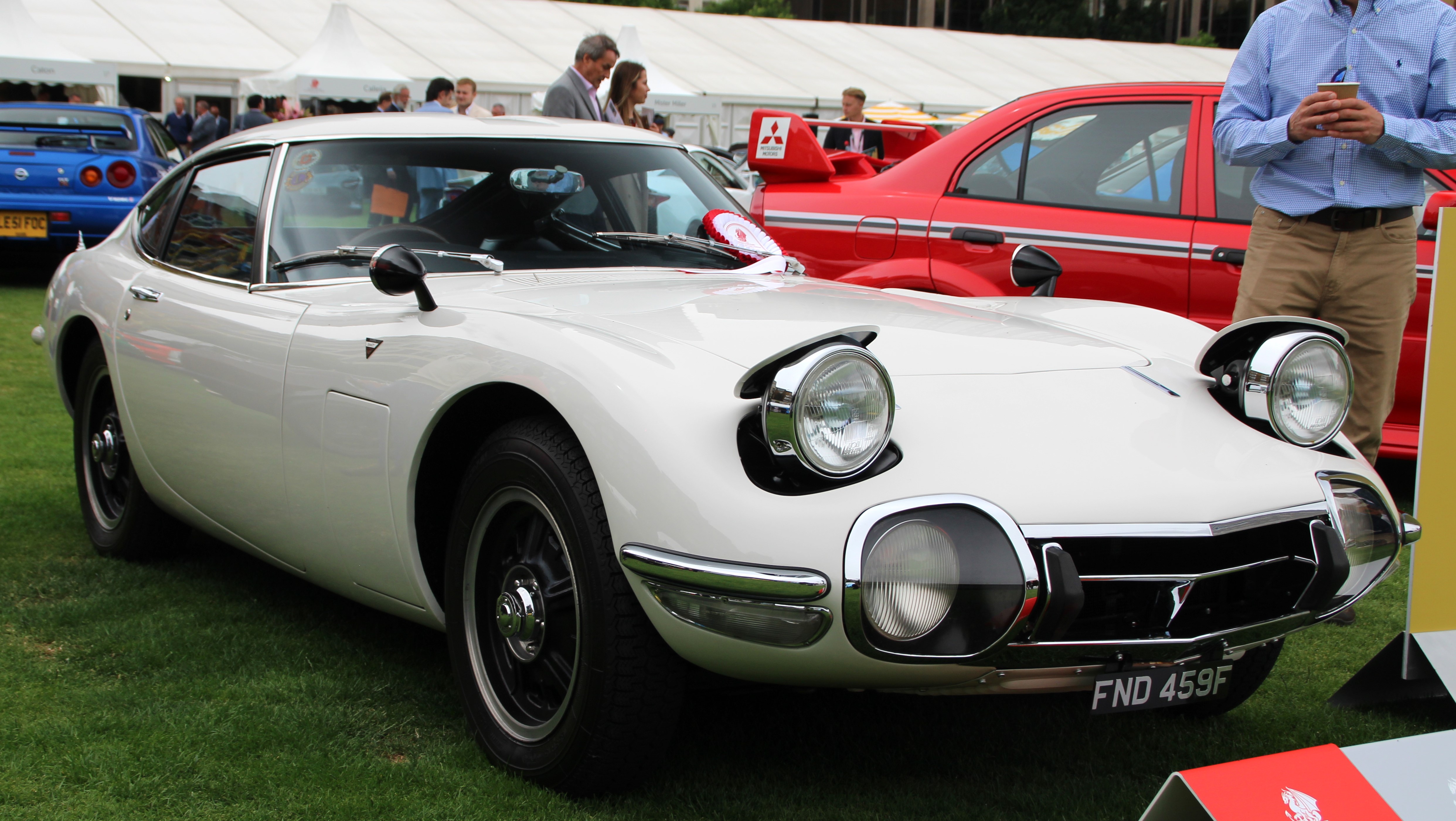
"Toyota had famously used it to set endurance records with the 2000 GT,"
The Toyota 2000 GT is a classic Japanese sports car that helped prove Japan could build fast, high-quality cars. Here it’s mentioned because Toyota used it to set long-distance performance records.
The Toyota 2000 GT is a famous late-1960s Japanese sports car that became a symbol of Japan’s ability to build world-class performance machinery. In the transcript, it’s referenced as a car Toyota used at the Yatabe High Speed Loop to set endurance records, showing how serious the testing was.
Tome Expressway
"The Tome Expressway was the scene's impromptu drag strip, where drivers chased bragging rights at serious risk. A handful of drivers lost their lives out there chasing a number that was never officially recorded."
They’re talking about a specific road where car enthusiasts raced like it was a track. The point is that it was dangerous and could get people killed.
The Tome Expressway is referenced as an early “scene” location where drivers treated public roads like a drag strip. The episode frames it as a proving ground with high risk, including fatalities.
Option decided to formalize speed
"That changed, though, in the early 80s, when Option decided to formalize speed. Instead of hearsay about who beat who at 3 a.m., Option would bring tuners to Yatabe and measured their cars under controlled conditions."
They moved from rumors and bragging rights to actual testing. That meant people could compare cars more fairly because the runs were done in a controlled way.
The magazine Option helped shift Japanese street racing culture toward measured, repeatable testing. Instead of “who beat who” stories, cars were evaluated under controlled conditions so results were more credible and comparable.
Yatabe Test Course
"Option would bring tuners to Yatabe and measured their cars under controlled conditions. August 16, 1981 is a day that will forever live in Japan's automotive lore. Those who were present at the Yatabe Test Course recall the air being thick with anticipation, plus tire smoke and high-octane fumes from dozens of modified cars."
Yatabe is basically a test facility where cars were evaluated more like a real event. It matters because it helped turn informal racing into something structured.
Yatabe Test Course is presented as the controlled venue where Option brought tuners to measure cars. It’s a key JDM-era setting because it represents the move from chaotic street racing to organized performance testing.
controlled conditions
"Option would bring tuners to Yatabe and measured their cars under controlled conditions. August 16, 1981 is a day that will forever live in Japan's automotive lore."
Controlled conditions means the test is set up so the results are more reliable. Instead of racing in unpredictable situations, they try to keep things consistent.
“Controlled conditions” means testing is done with consistent rules and environment so performance comparisons are meaningful. In motorsports, this reduces the randomness of variables like traffic, weather, and driver behavior.
Osamu Mochizuki
"To ensure the earliest tests were conducted safely, Option brought in professional drivers. Osamu Mochizuki, an experienced test driver, and the legendary Kunimitsu Takahashi,"
Osamu Mochizuki is described as a skilled test driver. Test drivers help evaluate a car safely by finding problems and limits in a controlled setting.
Osamu Mochizuki is referenced as an experienced test driver brought in to ensure early testing was conducted safely. In motorsport history, test drivers are critical because they can push cars in controlled ways to identify limits and issues before public or race use.
Kunimitsu Takahashi
"Osamu Mochizuki, an experienced test driver, and the legendary Kunimitsu Takahashi, whose racing pedigree ensured these machines would be driven with precision rather than just reckless speed."
Kunimitsu Takahashi was a famous Japanese race driver. Mentioning him is a way of saying the cars were tested by someone skilled and careful, not just driven recklessly.
Kunimitsu Takahashi was a legendary Japanese racing driver whose reputation for precision helped establish trust in early test programs. The segment uses his pedigree to underline that these machines were driven carefully to evaluate them safely, not just for spectacle.
Yatabe corners
"Each car filed out onto the track one by one, climbing the banky Yatabe corners before feeding onto the main street."
Yatabe is a famous place in Japan where cars are tested and driven hard. “Yatabe corners” just means the tricky turn sections where you really find out how a car handles.
Yatabe is a well-known Japanese test and racing venue, and “Yatabe corners” refers to the track section where cars are pushed through high-load turns. The segment uses it to set the scene for how these tuned streetcars were evaluated under demanding conditions.
heavily tuned streetcars
"These were not purpose-built racing machines, but heavily tuned streetcars. Everything from the suspension to aerodynamics was being pushed well beyond its original design limits."
These weren’t dedicated race cars—they were normal street cars that got modified a lot. When you push them too far, they can start behaving unpredictably, especially when you’re going very fast.
“Heavily tuned streetcars” refers to cars modified beyond factory specifications for performance, often using race-inspired setups. The key point here is that these were not purpose-built race cars, so pushing suspension, aerodynamics, and power systems past their original limits could make behavior unpredictable at high speed.
aerodynamics
"Everything from the suspension to aerodynamics was being pushed well beyond its original design limits. At high speeds, these things could become completely unpredictable."
Aerodynamics is how the car’s shape interacts with air. At high speed, it can help the car stick to the road, but if it’s not working as intended, the car can start to feel weird or unstable.
Aerodynamics affects downforce, drag, and stability at speed. In this context, tuning aero beyond stock design intent can increase grip, but if the car becomes aerodynamically unstable, it can feel unpredictable—especially when combined with high power and stiff suspension.
unpredictable at high speeds
"At high speeds, these things could become completely unpredictable. Engines could let go without warning, tires could blow, one mistake in a car could be broken, and the car could be broken."
At very high speed, cars can go from “almost okay” to “suddenly not controllable.” If something fails or you make a small mistake, there may not be enough time to recover.
This describes a failure mode where multiple systems—powertrain, tires, and chassis—can reach a point where the car’s behavior stops being progressive and becomes sudden. The segment emphasizes that at extreme speeds, small mistakes or component failures can cascade quickly, leaving little time to correct.
tires could blow
"Engines could let go without warning, tires could blow, one mistake in a car could be broken, and the car could be broken."
If a tire “blows,” it can lose pressure or structure fast. That usually means the car suddenly loses traction and can be hard to steer, especially at speed.
A tire blowout is a sudden loss of tire integrity that can cause immediate loss of grip and steering control. In high-speed testing, blowouts are especially dangerous because the car can become unstable before the driver can react.
R. E. Amemiya
"One of the most aggressive entries was R. E. Amemiya's RX-7 Turbo. Driven hard, its rotary screamed at speeds crept towards 230 kilometers per hour,"
R. E. Amemiya is a well-known Japanese tuning shop. When they’re mentioned with an RX-7, it usually means the car had serious performance parts and a racing-oriented setup.
R. E. Amemiya is a prominent Japanese tuner strongly associated with RX-7 development and motorsport. In this segment, the brand’s name signals that the car’s aggressive setup and rotary-focused performance were part of a known tuning lineage.
rotary
"Driven hard, its rotary screamed at speeds crept towards 230 kilometers per hour,"
A rotary engine is Mazda’s special engine type that doesn’t use pistons like most cars. It tends to rev fast and sound unique, but it needs the right care to stay healthy.
A rotary engine (used in Mazda’s RX-series) replaces the traditional piston-and-cylinder layout with a spinning rotor. It can rev extremely freely and make power efficiently, but it also has different maintenance needs than piston engines.
white smoke
"before the engine overheated and left a trail of white smoke behind it. Impressive, but ultimately a reminder of how unforgiving these conditions were."
White smoke often means something is wrong—commonly the engine is overheating or fluids aren’t being burned normally. In this story it’s a sign the car was in trouble right before it failed.
White smoke can indicate coolant burning, fuel issues, or other overheating-related problems depending on color and smell. In this context it’s tied to an engine overheating event, serving as a visual warning that the car’s condition was deteriorating quickly.

Pontiac Firebird
"Then came the moment that stopped everyone cold. A firebird, Trans Am, prepared by trust and gretty, rolled onto the street. An American car with a massive engine under its hood and the kind of torque that felt foreign"
A Pontiac Firebird Trans Am is a famous American muscle car. In this segment, it’s the car that shocked everyone by being faster than the Japanese turbo cars at the event.
The Pontiac Firebird Trans Am is a classic American performance car, and in this story it’s prepared for racing with significant engine power. The hosts use it as a benchmark because it outpaced the Japanese turbo cars at the Yatabe event, showing how strong the American muscle/torque feel was even against JDM builds.
torque
"and the kind of torque that felt foreign and a paddock full of turbocharged Japanese machines."
Torque is what makes a car pull strongly, like a shove. If a car has a lot of torque, it tends to feel fast even without needing to rev extremely high.
Torque is the twisting force an engine produces, and it strongly influences how quickly a car accelerates—especially in the midrange. The hosts describe the Trans Am’s torque as “foreign,” emphasizing the feel of American V8 power compared with the turbocharged Japanese machines.
Yatabe event
"the fastest car at the first Yatabe event was American. That stung a little, but it also lit a fire. Japanese tuners now had a number on the wall and a very clear message."
The Yatabe event is referenced as a key proving ground for Japanese tuning—essentially a place where builds were tested and ranked. The hosts frame it as a cultural turning point: when an American car won, Japanese tuners were motivated to “catch up” with more serious performance results.

Nissan Fairlady Z
"Finishing behind the Trans Am was a SS Kubo Nissan S30 Fairlady Z."
The Nissan S30 Fairlady Z refers to the early Z-car platform (the 240Z/260Z/280Z era), which became a cornerstone of Japanese tuning culture. In this segment it’s mentioned as the next-fastest car behind the Trans Am, highlighting how the Z’s tuning potential translated to real track performance at Yatabe.

Honda Prelude
"Other entries range from the classic Fairlady SR211s to turbocharged Honda Prelude builds."
The Honda Prelude is a Honda sports coupe that tuners often modify. Here it’s mentioned as a platform people turbocharge to chase performance goals.
The Honda Prelude is a Japanese coupe that became popular with tuners because it responds well to forced-induction and suspension upgrades. In this segment, it’s used as an example of how everyday enthusiasts built turbocharged cars to compete on a bigger stage.
turbocharged
"Other entries range from the classic Fairlady SR211s to turbocharged Honda Prelude builds."
Turbocharged engines use a device that compresses air before it goes into the engine. That extra air helps the engine make more power.
“Turbocharged” means the engine uses a turbocharger to force more air into the cylinders, allowing more fuel and power to be burned. It’s a common JDM tuning path because it can dramatically increase output without needing a larger engine.
top speed battles
"and the top speed battles only grew more intense from there. Before long, 300 kilometers per hour became the target, the big 186 miles an hour."
Top speed battles are races where the goal is to go as fast as possible. To do that, cars often need more than just power—they also need the right gearing and setup to stay stable and keep running strong at high speed.
“Top speed battles” are competitions focused on achieving the highest possible velocity rather than lap times or acceleration. They push tuning toward aerodynamics, gearing, cooling, and sustained power delivery—because the car must keep making power at very high speeds.
HKS
"including the historic HKS Twin Turbo Celica XXM300, the first Japanese car to break the 300 kilometer per hour barrier in December of 1983."
HKS is a well-known Japanese company that makes performance upgrades for cars. Here, they’re associated with building the turbo setup on the Celica that was trying to hit 300 km/h.
HKS is a Japanese performance company known for turbocharging and engine-tuning parts, especially for domestic sports cars. In the context of this segment, HKS is credited with building the twin-turbo Celica that chased 300 km/h.

Toyota Celica
"including the historic HKS Twin Turbo Celica XXM300, the first Japanese car to break the 300 kilometer per hour barrier in December of 1983."
This is a Toyota Celica that was heavily modified by HKS with two turbochargers to chase very high speeds. The “XXM300” part is basically the project/target name for a 300 km/h-class attempt.
The HKS Twin Turbo Celica XXM300 refers to a Toyota Celica prepared by HKS with a twin-turbo setup aimed at extreme top-speed runs. It’s notable because it helped establish Japan’s presence in high-speed, heavily modified motorsport-style tuning during the early 1980s.
300 kilometers per hour barrier
"the first Japanese car to break the 300 kilometer per hour barrier in December of 1983."
Hitting 300 km/h is a huge benchmark because it’s extremely fast and hard to keep stable. At that speed, the car needs to be set up to handle heat, airflow, and stress for more than just a quick burst.
Breaking the 300 km/h barrier is a milestone that signals a car has reached a new level of engineering for sustained high-speed operation. At those speeds, small issues—like aerodynamic drag, stability, cooling, and drivetrain durability—become major limiting factors.

Toyota Supra
"...ooks like in America, this was called the Celica Supra. The news of the accomplishment spread fast."
The Toyota Supra is a sports car made by Toyota that’s built to be fast and fun to drive. In some earlier years, the name “Celica Supra” was used, which helped connect the Supra name to Toyota’s performance lineup. People talk about it because it became well-known for racing and performance achievements.
The Toyota Supra is a performance sports car from Toyota, known for its strong engine options and reputation as a serious driver’s car. In the context you provided, the “Celica Supra” refers to an earlier naming/positioning where the Supra name was tied to the Celica line, and the car’s accomplishments helped spread its reputation quickly. It’s a common topic in automotive history because it marks how the Supra became a benchmark for Japanese performance.
Wangan
"Before option formalized things at Yatabe, there was another stretch of road producing its own kind of mythology, the Wangan. Otherwise known as Tokyo's Bayshore Route, a stretch of coastal expressway running between the city and Yokohama..."
The Wangan is a famous highway stretch in the Tokyo area. It’s known in car culture because people used to race there late at night, and the stories around it helped build Japan’s street-racing legend.
The Wangan refers to Tokyo’s Bayshore Route, a coastal expressway between the city and Yokohama. In JDM culture it became famous for high-speed runs, long straights, and the “mythology” of street racing that grew around it.
Tokyo's Bayshore Route
"Otherwise known as Tokyo's Bayshore Route, a stretch of coastal expressway running between the city and Yokohama, the Wangan had long straights, light traffic after midnight..."
Tokyo’s Bayshore Route is a coastal highway near Tokyo. Because it has long straight sections and less traffic at night, it became a hotspot for the kind of racing stories people still talk about.
Tokyo’s Bayshore Route is the coastal expressway segment commonly called the Wangan. The route’s layout—long straights and typically lighter late-night traffic—helped it become a focal point for street racing culture and the cars associated with it.
Midnight Club
"Out of that scene came the Midnight Club. Founded in 1982, it was unlike anything else operated on Japan's streets at the time... It wasn't a gang. It was closer to a private club, invite only, governed by a strict code of conduct..."
The Midnight Club was an exclusive group connected to late-night street racing culture. Instead of being a random gang, it was more like a private club with rules and an invite-only vibe.
The Midnight Club is described here as an invite-only group that emerged from the Wangan scene. It’s framed as more like a private club with a strict code of conduct than a typical street-racing gang, which helped formalize and legitimize the culture.
250 kilometers an hour requirement
"Your car had to be capable of 250 kilometers an hour just to be considered for membership."
They’re saying the club only wanted cars that could go about 250 km/h. That’s a way of showing the cars were built for serious speed, not casual driving.
The segment describes a club rule that effectively set a minimum top-speed bar for membership. In JDM “midnight” culture, these kinds of requirements signal that the cars were built for high-speed runs, not just street styling.

Nissan Gtrs
"They were extraordinary. Porsche 911 Turbos, Nissan Skyline GT-Rs, Mazda RX-7s, Lamborghini Kuntasches,"
The Nissan GT-R is a fast sports car made by Nissan. It’s designed to accelerate quickly and handle well, not just look sporty. In the episode, it’s mentioned as one of the standout performance cars in the same conversation as other very quick machines.
The Nissan GT-R is a high-performance sports car built for very fast acceleration and strong overall track capability. In the podcast context, it’s grouped with other top-tier performance cars, highlighting how it stood out as an “extraordinary” machine among serious competitors. It’s frequently discussed because it became known for delivering race-bred performance in a production car package.
Porsche 911
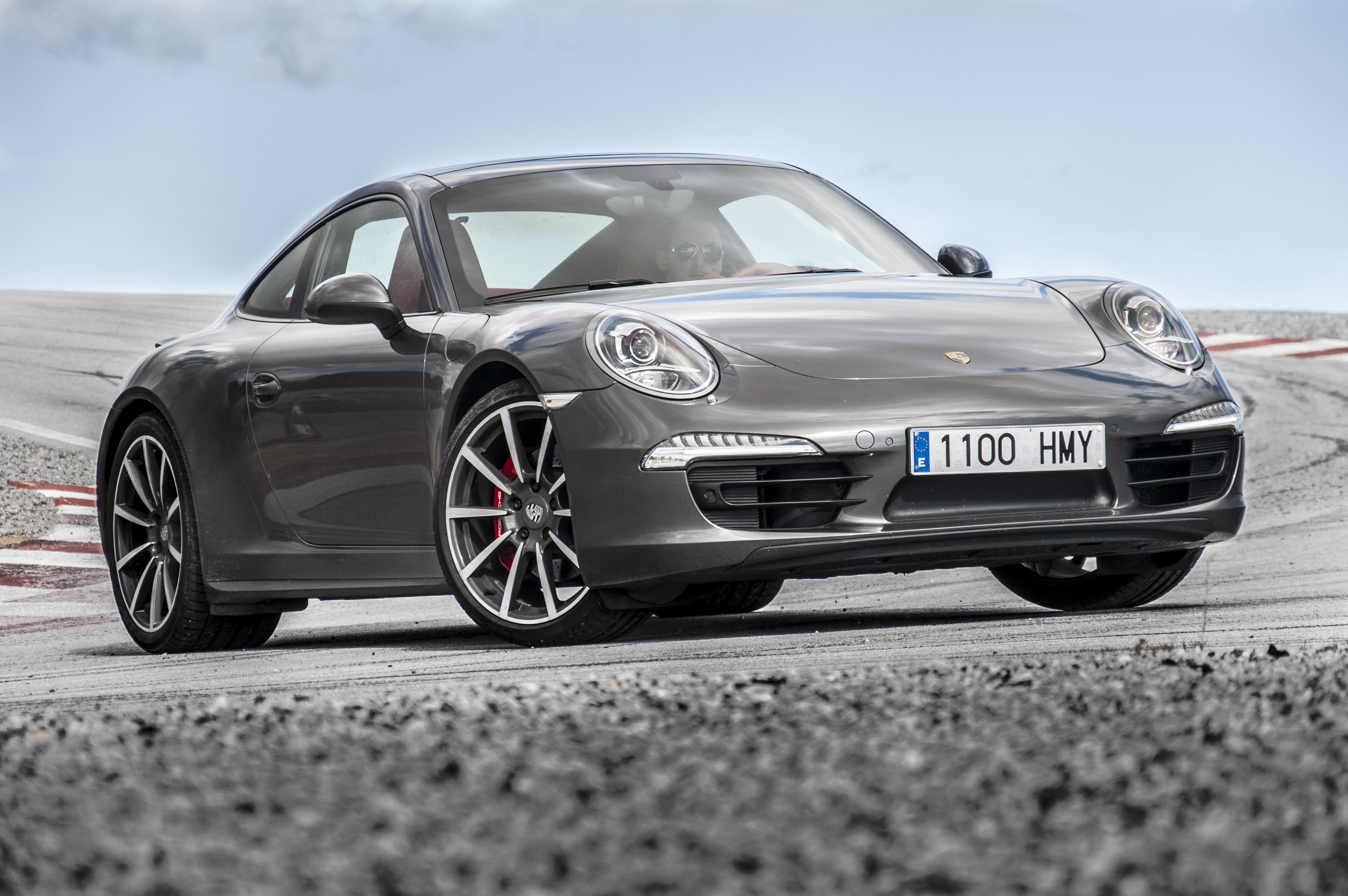
"Porsche 911 Turbos, Nissan Skyline GT-Rs, Mazda RX-7s, Lamborghini Kuntasches, all heavily modified, many with enormous sums of money sunk into them."
They’re talking about turbocharged versions of the Porsche 911. Turbo 911s are famous for being fast and for having a huge parts and tuning community.
“Porsche 911 Turbos” refers to turbocharged 911 variants, which are known for strong high-speed capability and a large aftermarket. In this context, it’s used to show how serious and heavily modified the cars were in the “midnight” scene.

Lamborghini Kuntasches
"Porsche 911 Turbos, Nissan Skyline GT-Rs, Mazda RX-7s, Lamborghini Kuntasches, all heavily modified, many with enormous sums of money sunk into them."
They’re talking about the Lamborghini Countach, a super famous exotic car. The host is using it to show the scene included extremely expensive, high-performance cars.
This appears to be a misspoken “Countach” (Lamborghini’s iconic wedge-shaped supercar). The point in the segment is that even exotic European cars were part of the heavily modified, high-status “midnight” scene.
911 Porsche 930
"The most legendary Midnight car was a Porsche 930 Turbo, known as the Blackbird. Reportedly sent to Porsche's own Visac Research Facility for modification, its rival was a 600 horsepower Nissan 280ZX known as the Devil's Z."
This is a classic turbo Porsche 911, the 930 generation. It’s famous because it’s fast and has a big reputation in tuning and car stories.
The Porsche 930 Turbo is the turbocharged 911 variant from the 1970s–1980s era (generation code “930”). It’s legendary in car culture for its strong performance potential and for being a common foundation for extreme, high-speed builds—here, it’s specifically called the “Blackbird.”
Visac Research Facility
"Reportedly sent to Porsche's own Visac Research Facility for modification, its rival was a 600 horsepower Nissan 280ZX known as the Devil's Z."
They’re saying the car was sent to Porsche’s own facility to be modified. The idea is that it wasn’t just random tuning—it was treated like a real engineering project.
The segment claims the “Blackbird” was sent to Porsche’s own research facility for modification. This is the kind of lore detail that highlights how seriously the cars were treated—almost like development projects rather than casual street builds.

Nissan 280ZX
"its rival was a 600 horsepower Nissan 280ZX known as the Devil's Z. You have to put dramatic emphasis on that name like that."
The Nissan 280ZX is an older Z-car from Nissan that tuners love. Here it’s used as a legendary rival car, showing that even classic models could be built into serious speed machines.
The Nissan 280ZX is a late-1970s/early-1980s Z-car that became a popular platform for tuning. In the segment it’s framed as “Devil’s Z,” a rival to the Porsche 930 Turbo, emphasizing how high-power builds were part of the midnight legend.
600 horsepower
"its rival was a 600 horsepower Nissan 280ZX known as the Devil's Z. You have to put dramatic emphasis on that name like that."
They’re talking about how much power the car makes—600 horsepower is extremely high. The point is that these were serious, high-performance builds.
“600 horsepower” is used as a shorthand for extreme performance in the story. It signals that these cars weren’t just modified for looks—they were built to make big power for high-speed runs and competition-style driving.

Datsun 280Zx
"...ification, its rival was a 600 horsepower Nissan 280ZX known as the Devil's Z."
The Datsun 280Z is an older sports car from the 1970s that was built for driving enjoyment and performance. In the podcast, it’s brought up as a competitor to a more powerful 280ZX version. People talk about it because it’s part of the Z-car lineup’s history and reputation.
The Datsun 280Z is a classic 1970s-era sports coupe known for its blend of style and performance. In your context, it’s mentioned as a rival to a high-horsepower Nissan 280ZX nicknamed “Devil’s Z,” which frames the 280Z as part of a competitive performance era. It’s discussed because it represents how the Z-car platform evolved and became a benchmark for affordable sports-car performance.
manga series
"The two cars later became the basis for the manga series, Wangan Midnight, which sold over 17,000 units."
They’re saying the story of these cars got turned into a manga. That’s a big deal because it can spread car culture to people who might never see it in real life.
The segment connects real-world car legends to a manga series format. This matters because manga/anime can turn niche car subcultures into mainstream pop culture by giving them recognizable characters, stories, and iconic car references.
dangerous driving
"Members were banned from dangerous driving. Anyone who posed a risk to other motorists was out. Meeting locations were advertised as miscellaneous notices in newspaper classifies to avoid police detection."
“Dangerous driving” means driving in a way that could seriously hurt other people. The club’s rules were basically meant to keep meets from turning into reckless chaos. So even though it was a car scene, they tried to draw a line for safety.
“Dangerous driving” here is used to describe behavior that puts other road users at risk, which the club explicitly tried to prevent. In car culture contexts, this often means avoiding reckless speeds, unsafe passing, and anything that could endanger bystanders. The hosts use it to highlight the club’s “ethics,” not just its performance.
newspaper classifies
"Meeting locations were advertised as miscellaneous notices in newspaper classifies to avoid police detection. Yeah, that's right. Like you would see ads for used handbags and purses and stuff at certain like highway rest stops,"
They’re talking about using classified ads in newspapers to secretly coordinate meetups. Instead of saying “car meet” directly, they used vague listings so police wouldn’t easily catch on. It’s basically an old-school way to keep the group organized.
The hosts describe using “newspaper classifies” (classified ads) as a covert way to share meeting locations and times. This is a cultural detail about how street scenes organized themselves while trying to avoid police attention. It’s less about a car part and more about the logistics of the scene.
track racing only
"The club eventually transitioned to track racing only, but for a window of time in the 1980s and early 90s, the Midnight Club represented the absolute ceiling of what street tuning culture could produce."
“Track racing only” means they stopped doing it on public roads and focused on race tracks. Tracks are safer because they’re built for fast driving and have safety features. The hosts are using this as evidence the club cared about ethics and safety.
“Track racing only” describes a shift away from public-road activity toward controlled circuits. This matters because track environments are designed for high-speed driving and have safety systems (barriers, run-off areas, marshal procedures). The hosts use this to show the club’s evolution from street culture toward safer competition.
Yatabe testing facility
"The era of the Midnight Club [1524.8s] as well as options, Yatabe testing facility [1527.3s] legitimized high performance tuning."
Yatabe is a place where cars can be tested in a more controlled way than street driving. That kind of testing helps turn “tuning stories” into measurable results.
The Yatabe testing facility (often associated with Subaru’s motorsports history and Japan’s tuning ecosystem) is a real-world venue where cars are evaluated under controlled conditions. Mentioning it here highlights how tuning moved from purely street folklore toward documented, repeatable performance.
high performance tuning
"[1527.3s] legitimized high performance tuning. [1530.3s] It was now a defined, documented movement [1532.9s] with numbers that could be charted,"
High performance tuning means changing a car to make it faster or handle better. In this story, it became more accepted once people could test and write about what they were doing.
“High performance tuning” is the process of modifying a car to improve measurable performance—often through engine, suspension, and drivetrain changes. The segment frames it as becoming “legitimized” when it was documented with data and shared through publications.
documented movement with numbers that could be charted
"It was now a defined, documented movement [1532.9s] with numbers that could be charted, [1534.9s] cars that could be studied,"
Instead of just “trust me, it’s faster,” the scene started using real measurements. That makes it easier to compare setups and improve cars over time.
This describes the shift from anecdotal car culture to data-driven tuning. When enthusiasts can chart results and study cars, it accelerates development and makes performance claims more credible.
printed materials can only get you so much visibility
"But Daijira Inata wasn't satisfied. [1542.5s] He understood that printed materials [1544.6s] can only get you so much visibility."
Reading about cars in magazines helps, but seeing them in person is a bigger deal. Real events bring the community together and attract new people.
The segment argues that magazines and zines help spread the scene, but they can’t replace real-world presence. Physical, public venues create stronger community visibility and make tuning culture harder to ignore.
modified vehicles
"to modified vehicles? A car meet full of modded rides"
Modified vehicles are cars that have been changed from how they came from the factory. Sometimes those changes are for looks, sometimes for speed, and sometimes both.
“Modified vehicles” refers to cars that have been altered from stock—commonly for appearance, performance, or both. In JDM history, the idea of showcasing modified cars publicly was controversial because it could attract scrutiny from authorities.
car meet
"A car meet full of modded rides might not seem like a bold idea in 2026,"
A car meet is just a group of car people getting together to show their cars. In Japan’s tuning scene, these events helped the culture grow and become more visible.
A car meet is an organized gathering where modified cars are displayed and discussed, often with a strong community and scene identity. In the JDM context, early car meets helped spread tuning culture beyond individual workshops and into mainstream awareness.
Daijira Inata
"When Daijira Inata started taking the idea to shops he was hoping to feature,"
Daijira Inata is the person in this story who kept pushing the idea forward. Even when police and others doubted it, he used his connections to help the scene grow.
Daijira Inata is presented here as a key figure pushing the idea of featuring modified cars in public-facing venues. The episode frames him as someone who leveraged relationships in the tuning ecosystem to make the concept stick despite skepticism.
police were immediately skeptical
"The police were immediately skeptical. They assumed it would just become a Bozouko rally."
The police didn’t trust the idea at first. They worried that these events would turn into trouble instead of staying a positive community thing.
The transcript highlights early law-enforcement skepticism toward public car-meet culture. This matters because it shows how visibility of modified cars could be treated as a public-order risk rather than a hobby.
gray area
"Something about it felt like it ran against one of the things they took pride in, the gray area."
The “gray area” means the line between what’s clearly legal and what’s kind of tolerated. In car culture, it often comes up when people modify cars in ways that might not pass strict rules.
In JDM culture, the “gray area” usually refers to the unofficial or semi-legal space where modifications may not fully comply with regulations. It’s a social and cultural concept as much as a legal one—people may accept certain risks to keep the scene alive.
Option success
"But Inata pushed forward. Option success had given him a solid network to draw from."
“Option success” appears to refer to a successful publishing or media effort that gave Inata a network across the tuning world. In JDM culture, magazines and publishers often acted as hubs connecting tuners, shops, parts makers, and photographers.
Sanai Shobo
"He went to Suzuki Osami, then president of Sanai Shobo, the publishing company behind Option."
Sanai Shobo is the publishing company behind Option, mentioned here as the organization that could provide the backing needed for the project. The segment uses it to explain how a magazine brand translates into event support.
JDM culture mainstreaming
"Suzuki quickly understood what was being proposed and what it could mean for the culture Option had built itself around."
Mainstreaming means taking something that started as a niche hobby and making it more widely known. Here, the story is about how JDM culture grew through magazines and events.
“Mainstreaming” JDM culture means moving it from a niche enthusiast scene into broader public awareness through media and events. The segment connects magazine influence (Option) to real-world backing and venue planning, showing how culture spreads beyond print.
experimental car show
"But who attends an experimental car show in the aftermath of the holiday season? Businesses were just reopening."
An “experimental car show” refers to events focused on unusual builds, new ideas, and non-mainstream automotive culture rather than mainstream production cars. The segment frames the timing challenge—who would attend right after New Year, when people are traveling or broke—and how winter weather could derail plans.
Request an Explanation
Heard something you'd like explained? We'll add it to this episode.
Sign in to request explanations for terms you heard.
Want to learn more?
Browse our glossary for plain-English explanations of automotive terms, jargon, and concepts.
Help improve this episode
See something that's not quite right? Our annotations are AI-generated and can sometimes miss the mark. Click the flag icon on any annotation to suggest a correction.