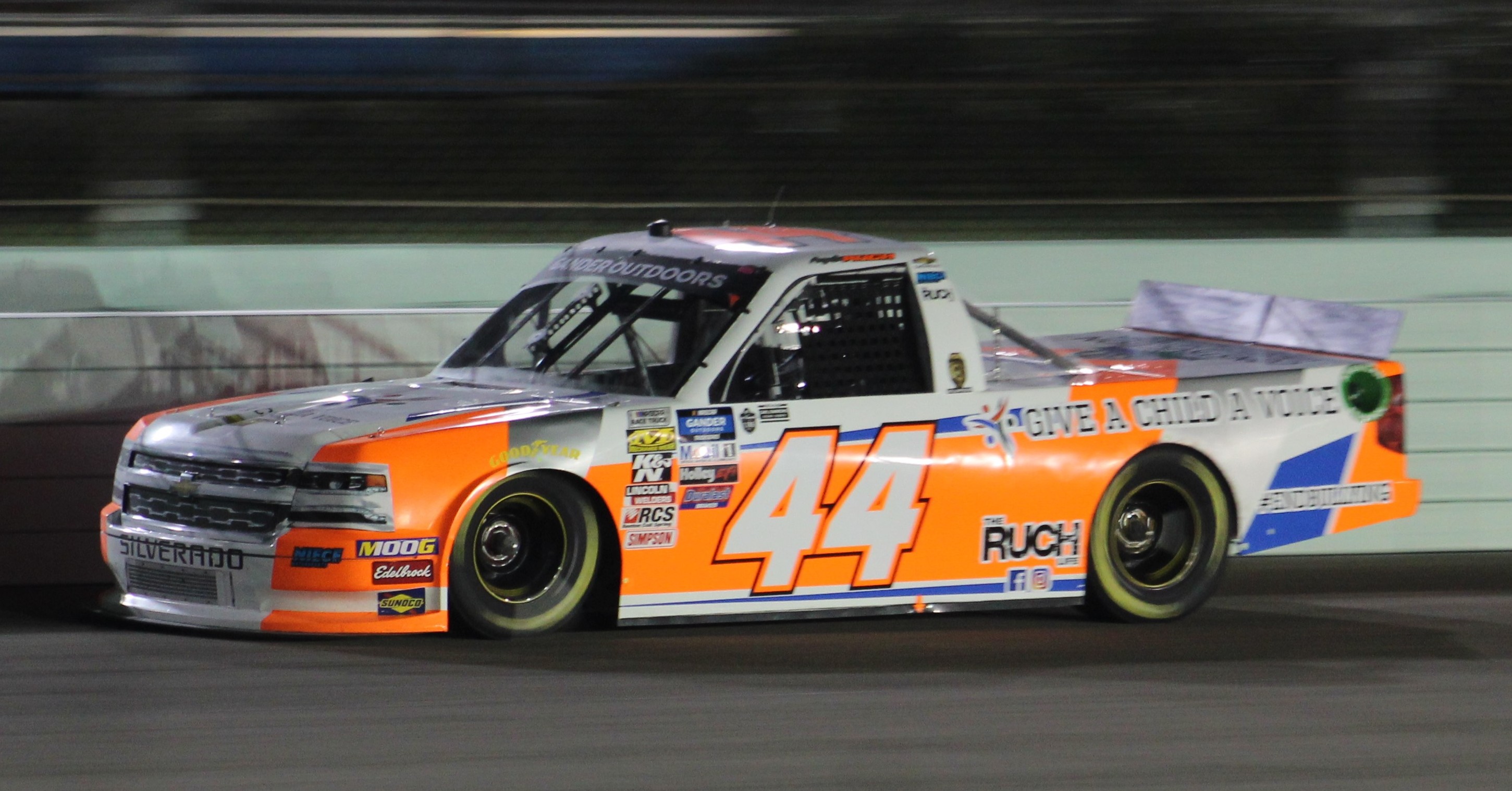
The Chevrolet Silverado is a large pickup truck made for work and everyday driving. It can be set to different driving modes to help it handle things like rain, snow, or rough roads. It’s often talked about because it’s built to tow and carry heavy loads.
The Chevrolet Silverado EV is a pickup truck that runs on electricity instead of gasoline. It’s designed to still tow and carry things like a traditional truck, while also offering strong performance. The podcast mentions it because it’s built to be capable, not just fast.
The Acura Integra is a smaller car from Acura that’s made to be fun to drive. The podcast is specifically talking about the Integra Type R, which is a higher-performance version. It’s mentioned because it’s known for racing-style performance.
The Toyota Corolla is a small, everyday car that’s known for being practical. The podcast is referencing the AE86 version, which is a specific Corolla model that became famous for racing. That’s why it shows up in stories about driving and car culture.
Torque vectoring is a way for the car to send different amounts of power to different wheels. That helps the car turn more smoothly and stay more stable when you’re cornering.
All-wheel drive means the car can send power to all four wheels. That usually helps it grip the road better, especially in slippery or tricky cornering situations.
Data logging is like the car keeping a detailed record of what’s happening while you drive. Engineers use it to figure out what the car did during a run and how to improve it.
They’re talking about how Japanese car shows changed in the 1990s. Instead of just being normal TV, they became longer videos that felt more connected to how enthusiasts actually drove and talked about cars.
Time attack is basically racing against the clock. You try to set the fastest lap time, not necessarily beat other cars directly at the same time.
Concept
battle royale
Here, “battle royale” just means a bunch of cars competing directly against each other. Even if you’re great at one kind of driving, you can still lose if others do better overall.
Front end grip means how well the front tires can stick to the road when you turn. If it’s weak, the car won’t turn in properly and feels harder to control in corners.
Twin turbocharging means the engine uses two turbochargers to make more power. More air gets forced into the engine, so it can burn more fuel and produce more horsepower.
Sustained load means you’re keeping the car working hard for a while, not just flooring it for a second. The point is that the car stays composed when you keep pushing it.
The 2JZ is the engine in the Mark IV Toyota Supra, and it’s well known for being tough. The big idea is that people could add a lot of power without immediately needing to replace the engine internals.
Sequential turbocharging controls when each turbo spools up, typically using the smaller turbo first for quicker response and then bringing in the larger turbo for more top-end power. The segment uses this to describe the Supra as engineered for both drivability and high-end performance.
Iron-blocked means the engine’s main structure is made from iron. Iron is tough, and in this story it’s part of why the engine can handle big power increases.
Telemetry overlays are extra data shown on top of the video, like timing and speed info. The host is saying that adding that kind of info made the video feel more “proven” than just impressions.
The Nissan R33 Skyline GT-R is a famous Japanese sports car. The episode talks about how it felt heavier than expected, but the stopwatch showed it could still perform well on track.
This means judging the car by how it feels to the driver, not by measurements. The episode says the driver’s gut feel wasn’t enough until the stopwatch proved what was really happening.
Concept
timing graphic
A timing graphic is the on-screen display of times from a run. The episode suggests it helped people judge driving by results instead of just how it looked or felt.
A mid-corner correction is a quick adjustment while you’re still turning. It’s what drivers do to fix the car’s line when the corner doesn’t go exactly as planned.
Hot Version is a Japanese car show/magazine brand focused on tuning and driving culture. The episode says it helped popularize the mountain-racing and modification side of the scene.
Touge racing is street-style competition on mountain roads in Japan. The idea is that the road itself tests both the driver and the car, especially through twisty downhill and uphill sections.
Concept
mountain pass
A mountain pass is a road section with sustained climbs/descents and lots of corners, which changes how cars are driven compared with flat circuits. In touge culture, it’s where braking, traction, and mid-corner balance get stressed repeatedly.
The R32 GT-R is a famous Nissan turbo car from the late 80s/early 90s. In this segment it’s used as an example of a very powerful build—more about raw power than just finesse.
Lateral acceleration is how much the car is being pushed sideways in a turn. Higher values usually mean the tires are gripping harder (or the car is sliding more, depending on context).
Tire choice means picking the right tires for the kind of driving you’re doing. The tires decide how much grip you have and how the car behaves when you push it.
Spoon is a Japanese tuning brand. They’re known for careful, precise work—especially on Honda cars—aiming to make the car feel and perform “right,” not just powerful.
Term
titer tolerances
This is about making parts fit together very precisely. When tolerances are tight, the engine and moving parts can work more consistently from one part to the next.
Blueprinting means taking an engine apart and setting it up to very exact specs. Instead of “good enough,” it’s meant to make the engine run the way it was designed to run.
RE Amemia is a company that made performance parts, especially for Mazda rotary engines. The hosts say they weren’t just selling pieces—they developed them through racing experience.
Mazda’s rotary engine is different from most engines because it spins instead of using pistons. The host is saying RE Amemia specialized in parts for that rotary setup.
The Mazda RX-7 is a sports car from Mazda that uses a rotary engine instead of a normal piston engine. The hosts mention it because RE Amemia made parts and setups specifically for cars like the RX-7.
The Mazda RX-3 is an older Mazda model that also uses a rotary engine. The point here is that RE Amemia made rotary-focused parts for cars like the RX-3.
Endurance racing is about going for a long time without falling apart. The hosts mention it to suggest the parts were tested for both speed and staying power.
Brembo makes performance brakes. The host mentions it to help you picture big-name companies showing up to the same kind of driving spots.
Concept
Plus Spy
Plus Spy is something Kaichi Tsuchiya did that helped shape how the scene was shown to people. The hosts are saying later efforts looked less impressive compared to what Plus Spy started.
I can’t confidently identify a specific Subaru car called “Uncharted” based on common model names. It may be a description or nickname used in the podcast rather than the official name of a car. If you share a little more detail from the episode, I can explain the exact vehicle.
The Nissan Z is a sports car made for driving enjoyment and speed. The podcast is pointing out that cars like the Z can reach very high speeds. It’s mentioned because it’s known as a serious performance option.
“Lo-fi” just means the video looks a bit rough or imperfect on purpose. In car videos, that can make it feel more real, like you’re seeing something that actually happened.
VHS artifacts are the “weird” visual glitches you see on old tape recordings. Think grainy picture and odd color/clarity—stuff you don’t get with modern cameras.
This is a specific part of Tokyo’s expressway system along the bay/coast. The episode is saying that, back then, people talked about fast runs there mostly as stories—until videos made it real.
A shoulder-mounted camcorder is a video camera you hold against your shoulder to steady it. The point is to keep the shot stable while the cars are moving fast.
This means the time in Japan after the big economic “bubble” burst. People’s attitudes shifted, and that vibe showed up in movies about cars and street racing.
Gear ratios are how the gearbox “gears” the engine to the wheels. They affect how quickly the car accelerates and how it feels when you’re driving hard.
Throttle inputs are how you move your gas pedal—how much and how quickly. In racing, that timing matters because it affects grip and how the car turns.
Torque distribution is about where the engine’s pulling force goes. It affects how the car hooks up and behaves when you’re accelerating, especially in turns.
The Nissan Skyline GT-R is a famous fast Nissan that uses all-wheel drive. The hosts mention it to set up a contrast: Initial D isn’t really about that kind of traction advantage.
Mitsubishi’s Lancer Evolution is a rally-inspired car that’s famous for strong grip. The episode mentions it to explain how other cars were evolving toward traction-focused performance.
Touge is Japanese mountain-pass driving—fast, twisty roads where drivers focus on how they take corners. The episode uses it to describe the underground street-racing world Initial D is based on.
Haruna Pass is a real mountain road in Japan that drivers use for touge-style practice. The episode mentions it to show the creators studied real corners, not just made things up.
Momentum conservation means trying not to slow down too much in a corner. The goal is to keep speed and then accelerate earlier when you straighten out.
Ace Combat is a video game series about flying combat. In this segment, it’s mentioned to point out connections between different game franchises and creators.
Need for Speed is a popular racing game series. In this part of the episode, it’s used as an example of a racing game that sold well even when realism was limited by the hardware.
Vehicle dynamics is basically how a car acts when you drive it hard. A game that simulates it tries to make the car handle more like a real car instead of just looking fast.
Real-time rendering means the game updates what you see instantly as you play. It has to be fast enough that the car and track feel smooth and responsive.
Mechanical differentiation is when different cars feel meaningfully different because their real-world mechanical traits are modeled—like suspension behavior, drivetrain characteristics, and tire grip. The segment argues that early games used flashy car rosters to cover for less detailed physics.
Sony Music Entertainment is part of the Sony business. The episode is saying the creator of Gran Turismo began working on games inside Sony before the racing studio became what it is today.
Simulation depth means how “real” the driving feels in a game. The more depth you add, the harder it can be to explain to people who just want something fun.
A Trojan horse plan is when you hide a serious idea inside something that seems simple or fun. They used a playful game to get the project funded for the real simulation work.
Vehicle behavior is how the car acts when you steer, brake, and accelerate. A good simulator tries to make the car feel like the real one, not just look like it.
“Roof” here sounds like it’s meant to be “RUF,” a company that makes Porsche-based cars. They’re being discussed as a brand that used video games to get more attention.
Brand
Hot Pursuit
Hot Pursuit is a racing game where you often drive fast and get chased or chase others. They mention it as where the host first learned about these opportunities.
Instant replay is when a game shows what just happened again right away. The host uses it to explain how racing games can replay your driving so you can learn from it.
Braking points are the exact places on the track where you start slowing down for a turn. Getting them right helps you carry more speed and drive more consistently.
A steering correction is when you tweak the steering during a turn to stay on the right path. If you’re correcting a lot, it can mean the car isn’t behaving as smoothly as you want.
“Fully tuned” means the car is set up for better driving, like adjusting how it handles and responds. In the game, it’s a way to experience what tuning does without buying the real car.
Initial D is an anime about racing. The interesting part is that it talks about driving details in a way that many viewers found surprisingly technical.
LIVE
Chevy Trucks have you covered when the road takes you from smooth sailing to
Chevy Colorado will eat up some of the toughest terrains with five available drive modes,
and Silverado and Silverado HD have the muscle to take you out for some series
with multiple engine options and impressive towing.
While Silverado EV is the perfect combo of performance and capability,
making it a snap to hitch up this electric truck and hit the road.
Wherever the road leads, Chevy Trucks are right there with you.
Click to learn more.
Chevrolet Together Let's Drive
Japan 1996
You're 17 years old and you just rented a VHS tape
from a shop that sells anime figurines and engine cleaner.
You pop the tape into your VCR.
There's no intro music, no voiceover,
just a bunch of men standing next to cars in a parking lot.
They bow.
They talk car specs.
One of them adjusts tire pressure.
At the moment you think, what did I just rent?
And go to turn off your TV.
You're on the wongon behind a shaky camera.
The sound of the wind drowns everything out.
There's no narrator telling you how dangerous this is,
because the video doesn't need one.
You can see the speed.
You can feel how close to disaster what you're watching really is.
Now, a Sylvia is racing an Integra Type R,
in Prezza and Nissan GTR at Sikuba.
Then you're screaming down a dark mountain pass.
Later, Max Cerrito and Caichi Succia
slide their cars around a corner in the rain.
Then they're laughing and talking shit.
It was new, exciting, and maybe even the coolest thing you'd ever seen.
And with every new tape you watch,
more of this once mysterious car culture is revealed.
This was happening in homes all across the country,
and was making this niche world more accessible than ever.
And in doing so, expanded and changed it in ways never thought possible.
What's up, everybody? Welcome back to Pass Gas.
It's episode seven of The Golden Age of JDM.
We are cooking now, and today is a heater.
We're going to be talking about a little manga slash anime with a little white AE86.
That's right, we're talking initial D later on.
And then we're going to be talking about Gran Turismo,
a little bit of the development history there, how that came to be,
and how all these elements that we're going to be talking about in today's episode,
how they all come together to help Japanese car culture reach a global audience.
We've been saying in the last couple of episodes,
it's really laying the foundation obviously, but like the culture is there, it's established.
Everything's kind of been worked out.
All the pipelines are in place.
Now it's time to export it.
And that's what we're doing today with the media that we're going to be talking about.
So I'm going to stop rambling on and let's get to the story.
And now here's me.
By 1995, something subtle had happened to performance cars in Japan.
The volatility of the bubble era was gone.
The experimentation phase, the period when manufacturers seemed almost surprised by
their own ambition, had settled into something more deliberate.
Engines assembled by small teams of master craftsmen were no longer proofs of concept.
Cutting edge electronics like torque vectoring all-wheel drive and data logging
no longer felt like futuristic add-ons.
They were expected by consumers and enthusiasts alike.
Alongside all of that, a new kind of media had emerged to meet the moment.
Programs like best motoring, hot version, and video option didn't just document the Japanese
car world, they ran parallel to it.
If you encountered best motoring for the first time in the mid-90s, it wouldn't have felt
anything like traditional television.
The series came out of the gate with long-form VHS releases designed to strip away the idea
that performance cars were merely consumer products.
By 1996, their format had become unmistakable.
A typical segment unfolded with a kind of ritualistic neutrality.
Cars were introduced, specs were acknowledged, and then the drivers went to work.
Watching it in 2026, it almost seemed sleepy when you compare it to the hypercut, super
lush production value, short attention span catered videos that are all over YouTube today,
myself included in that list.
We are certainly guilty of that sort of style, but this was the beginning of it all.
It was a camcorder on a tripod, another up in the bleachers,
a stopwatch graphic ticking in the corner of the frame,
but what was actually being captured was extraordinary.
These cars, head to head at full potential, success and failure playing out in real time,
screaming tires, actual consequences.
There was nothing abstract about any of it.
These tests gave each car a proper shot to shine in different areas.
You could have dominated a time attack, but still lost out in the battle royale.
All disciplines were called upon.
Sikuba Circuit was one of the main proving grounds.
Its compact, technical, and unforgiving layout exposed in balance quickly.
A car with insufficient front end grip has nowhere to hide.
Turbo lag reveals itself exiting tight corners.
There are no massive elevation changes or sprawling forests swallowing the action.
Cameras could capture multiple turns from a single position.
You didn't need much to make it look dynamic.
I can't tell you how many virtual laps I've logged on Sikuba Circuit over the years.
I'm sure many of you listening can probably say the same thing.
This is like, in any racing sim, if they have Sikuba Circuit, it's like,
okay, I built my car, I'm going to go test it here.
Because it doesn't take much time to do a lap, it's usually under a minute.
And yeah, for such a small track, it offers so much to tell you about the car.
It's really cool in that way.
And because of the events that we're going to talk about this episode,
it's a no-brainer that video games like Gran Turismo would include it in their library,
especially Gran Turismo, with that being a Japanese product as well.
Best motoring episodes eventually read like a syllabus of Japanese engineering confidence.
Take the twin turbocharged Mark IV Toyota Supra.
It entered as a declaration of overbuilt intent, with its composure under sustained load
proving more interesting than its advertised horsepower.
That horsepower, of course, being 276 horsepower, the agreed upon maximum horsepower between all
the big manufacturers in Japan, of course, they skirted that a lot.
But also, the 2JZ engine that powered the Mark IV Supra, incredibly overbuilt
and would prove to be a very sturdy foundation for tuners after they discovered that,
hey, we could boost this thing like 800 or 1000 horsepower on the stock engine block
without having to change anything.
This is pretty cool.
When Toyota first debuted the Supra as its own model,
it was less a supercar slayer than a well-mannered Gran Tourer.
By the mid-90s, though, it had become something else entirely, an iron-blocked,
sequentially-boosted Goliath engineered with a tolerance margin that seemed to anticipate a
future in which tuners would determine its legacy.
Best motoring's use of telemetry overlays may seem obvious now, but at the time,
it was a fairly radical choice that subtly altered the stakes of what was being captured on video.
Once a lap time appears in the corner of the screen,
the narrative begins to blend impression with verification.
A driver's subjective enthusiasm shook hands with the measurable outcome.
Viewers could rewind a super lap and compare its sector times
against a GT-R run from a previous episode.
Disagreements evolved from there, along with the reasoning behind why each driver
preferred their car.
There's a story involving Kaiichi Tsuchiya and the R33 Skyline GT-R,
where his initial skepticism about the car's added weight gave way,
lap by lap, to a reluctant respect once the stopwatch confirmed what the seat of the
pants approach couldn't.
You could watch the entire debate happen in real time on screen.
The instinctive critique, the mid-corner correction, the glance at the timing graphic,
distinctions like that reshaped enthusiast discourse permanently.
Best motoring sister program, Hot Version, took that same structural seriousness
and shifted it toward the world of mods and mountain racing.
It was the wilder side of things.
Up until the late 80s, Touge Racing had existed for decades as a semi-mythical
proving ground threaded through rural Japan.
A driver would return to the city at dawn with brake dust all over their wheels
and a story about a downhill run against a rotary-powered ghost from Gunma.
But by the mid-90s, things had changed.
As the video boom took hold, what was happening on the mountain pass
was no longer left the imagination.
There's now proof, and with that proof, a new generation of drivers looking to get in on it.
Picture cars lining up at scenic overlooks, Sylveas, Supras, Skylines,
all meticulously modified and tuned with cameraman stationed at corners like race marshals.
What made Hot Version stand out was how genuinely it gave a platform to Japan's tuning culture.
Rivalries between tuners began to grow out of this environment,
and with them came storylines that kept viewers coming back episode to episode.
Hot Version Volume 15, for example, featured a tuned AE86 against a Civic SIR2
against a 600-plus horsepower R32 GTR.
Technique segments covered fundamentals like lateral acceleration and tire choice,
and the episode featured appearances from professional drivers,
including Motuharu Kurosawa, Naoki Hatori, Akira Lita, and the Drift King himself, Kairi Tsuchiya.
Hot Version edited these encounters with just enough narrative tension to suggest real stakes
without manufacturing melodrama.
And through each episode, tuning shops got a chance to put their philosophy on display,
with viewers naturally gravitating towards whomever matched their own instincts
about how fast a car should be built.
If the Spoon videos spoke to you, you were drawn to precision.
Founded by Tatsura Ichishima in the late 1980s, Spoon built their identity around the idea that
speed was something extracted through refinement rather than addition.
They worked almost exclusively on Honda platforms.
Their approach was meticulous to the point of obsession.
Titer tolerances, careful balancing of rotating components,
blueprinting engines so that every part performed exactly as designed,
rather than just within acceptable range.
The goal wasn't to overwhelm a car, it was to perfect it.
If the HKS videos were more your speed, you weren't interested in subtlety.
HKS built their reputation around turbocharging and outright power.
The philosophy being that the most direct path to performance was force,
and the most direct path to force was boost.
Founders Hiroyuki Hasagawa and Goichi Kirigawa understood that their success depended on
whether their bolt-on turbo kits could deliver serious, repeatable power gains.
So, they leaned into it hard.
And then there was RE Amemia, which operated under a different axis entirely.
Isami Amemia had essentially turned his back on conventional engines and committed himself
completely to Mazda's rotary. If you owned an RX-7 or an RX-3, RE Amemia was your one-stop shop.
these imperfections made it feel human. The footage felt discovered, not produced.
Specific moments became canonical. Tapes were rewound and passed between friends.
A single high-speed pull on the Wangan was no longer left to whispers and second-hand accounts.
There is now proof, and that proof created friction as events and legends came into sharper focus.
In the 1980s, high-speed runs along the Shuto Expressway's Bayshore route existed
primarily as rumor and reputation. Groups like the Midnight Club operated under a
self-imposed code of secrecy. Speeds were discussed in approximations. Details were
deliberately obscured. If you weren't there, you accepted the mythology as it was told to you.
Bringing a camera into that environment altered the social contract forever.
Filming the Wangan required logistics that bordered on tactical planning.
A second vehicle would pace alongside the target car, its passenger bracing a shoulder-mounted
camcorder against the dashboard to stabilize the shot. Driving through the largest city in the world
at up to 300 kilometers per hour, there were no retakes. If the camera was handed to you,
it was your job to get the shot.
Video was capturing Japanese car culture and elevating it in ways few could have imagined.
And while print couldn't capture speed or the sound of an engine,
it was doing its part to move the culture forward too.
There was a quiet significance to Drift Tengoku, which had launched as a dedicated offshoot of the
option ecosystem. At its editorial core was Ryosuke Kawasaki, known affectionately in the
community as Doroten Kawasaki, which is literally short for Drift Tengoku. As editor-in-chief and
one of the earliest advocates for treating drift culture as a legitimate subject matter,
Kawasaki's role was more than managerial. He was documenting a culture he was living in himself.
Drift Tengoku was first published as a quarterly special edition within Option 2 in April of 1996,
before moving to a bi-monthly schedule, then monthly by 1999.
Among the drivers and figures featured early on were names like Ken Nomican of Fukuoka's
top drift crew, and Nobuteru Taniguchi, who at the time were both still enthusiasts. They would
later become defining figures of Japan's drifting scene, helping bridge the gap between
outlaw street credibility and fully sanctioned professional competition.
In the early days, the Drift Tengoku team wondered whether there would even be enough
content to sustain a magazine devoted exclusively to rear-wheel-drive drift cars.
Other publications drew on everything from drag racing to rally to sports compact tech,
while Doroten's magazine had to find meaning in a much narrower slice of the culture.
Thankfully, the scene kept generating itself. Enthusiasm grew through events, stories, styles,
and personalities. All of it producing material faster than the magazine could publish.
I don't know, that sentence right there just got me thinking like I'd had a flash,
a thought, of like these days I feel like it's so much more expensive to do any sort of hobby,
to be part of any sort of scene. And now it feels, at least in the US, at least in LA,
let's be real. It feels like scenes are just like aesthetics, almost, that people just kind of adopt
and make, you know, build their personalities around. I feel really bad for a lot of the younger
kids who might not have jobs that can fund expensive hobbies, especially the car scene, dude.
This is an expensive scene to be in, and it's really only going to get more expensive as time
goes on. If I was going to start my own YouTube channel, or when people have asked advice about
starting a YouTube channel, like honestly doing car stuff, having space, and having cars to work
it's just so expensive. I wouldn't even tell them to do that. It really sucks that it's so expensive
because, one, it didn't used to be like that. You think of the glory days of like in the 70s
and 80s, like it wasn't that expensive. People made more money and cars weren't as pricey, but
one of my greatest passions is to go to the racetrack and drive cars, but even that's
expensive. Even the entry fee is expensive now. So yeah. Now, if you were to put down your issue
of Drift Tengoku and look up at the silver screen because he brought your magazine to the movie
theater for some reason, you'd find something else was happening. Something that felt, in a way,
very counterproductive to everything being built within the actual Japanese car scene.
Video was doing something extraordinary for Japanese car culture, but not all of it was coming
from enthusiasts. The post-bubble era had a particular mood, and Japanese cinema was soaking it up.
Films of this period leaned into themes of alienation, youth rebellion, and urban unease.
Street racing fit that template very nicely. Films like the Shudo Kosoku trial series
used the expressway as a backdrop for exactly that kind of story.
Cars weren't machines with philosophies behind them, they were props. Speed was shorthand for
defiance. The mechanical specifics like gear ratios, brake bias, and turbo spool characteristics
were way beside the point. And as a result, enthusiasts hated it.
Here was a skyline being reduced to a visual cliche, and the people behind the wheel were
painted as wacky rebels or directionless thrill seekers. On VHS, that same car was being dissected
corner by corner at Sekuba. In print, throttle inputs were being annotated and broken down.
Cinema couldn't be bothered with any of that. And the people who actually lived this culture
felt like it made a mockery of everything they cared about.
Has there ever been anyone in a subculture who liked a movie that was made about them?
I don't know. I don't think so.
Part of that was structural. A mainstream theatrical release had to justify its budget
by appealing beyond a technically literate subculture. Discussions of torque distribution
or suspension geometry weren't going to keep a general audience in their seats.
That's true. It's business, baby. You gotta keep the butts in the seats,
otherwise they're going to ask for that muddy back.
Filmmakers were also working from a different tradition,
one more concerned with character psychology and social critique. To them, the car was
expressive, not analytical. And practically speaking, to capture the culture authentically,
you'd need multiple tuned variants, access to mountain passes, and a camera small enough to
mountain in a cockpit. Those big 35mm rigs weren't designed to rest against the dashboard.
It was far easier to imply velocity through editing than to actually document it.
When you're tired of seeing your subculture mishandled by the mainstream,
sometimes you take matters into your own hands. That's exactly what Shuichi Shigenu did.
In 1995, his manga began to run in Weekly Young Magazine. Its panels treated mountain roads with
a level of seriousness typically reserved for drama. That manga was called Initial D.
What Initial D did was translate a subculture into a fictional framework that respected its
internal logic and the history that had been slowly forming around it for decades.
Shigenu didn't arrive out of nowhere. From a young age, he created and self-published
amateur manga works centered on motorcycles, which had been an obsession of his since childhood.
He broke through with the Bari Bari Densetsu in 1983, a motorcycle racing manga that immersed
readers in the emotional rhythms of competitive riding. But he had proven his understanding
of how to serialize speed and was rewarded for it with the Konodasha Manga Award.
After ending that series, Shigenu moved through other genres.
None of them gripped him the way he wanted, though. His heart belonged to cars,
and he had never really put them front and center. This became his light bulb moment.
He chose the Toyota AE86 as the flagship vehicle of Initial D because it was his personal car.
While Shigenu was in development, Japan's performance hierarchy was being dominated by
turbocharged, electronically managed machines. The Skyline GT-R had established all-wheel-drive
intelligence as the benchmark. Mitsubishi's evolution models were compressing rally-bred
traction into compact sedans. The Mazda FDRX7 embodied high-reving twin-turbo modernity.
Against that backdrop, the AE86, a dated, lightweight, rear-wheel-drive hatchback made
famous by Kaichi Suchiya and the plus-by-tapes, had become the perfect, if-you-know hero car
for a subculture still being marginalized by mainstream pop culture.
To prepare, Shigenu fully re-immersed himself in that world. He read tuning magazines,
studied mountain pass driving techniques, and spent nights practicing on actual toge routes,
like Haruna Pass in Gunma. He also brought in Kaichi Suchiya himself as a technical consultant,
an editorial supervisor, working with Shigenu on translating driving techniques, exhaust noises,
and vehicle dynamics into the series. The Drift King's fingerprints are all over the thing,
and it shows. A lot of you guys probably know the plot of Initial D already, but if you don't,
here it is. The story centers on Takami Fujiwara, an unassuming high school student in
Gunma Prefecture who works part-time delivering tofu for his father's shop in an AE86 Truno.
Countless drives up and down Mount Akina have quietly trained him to be an instinctive driver,
a fact that local street racers eventually discover pulling him into the underground toge scene.
Takami's AE86 forced the narrative away from horsepower escalation and toward
driver technique. It created space for conversations about balance, throttle modulation,
and momentum conservation. In the early issues, when Takami is delivering tofu,
he isn't chasing glory or building a reputation. The initial discipline he must master
is not spilling the tofu in the back of the car. It was all intentional.
Even the choice to make him a tofu delivery driver rather than some young hot shot racing
protégé like Ryosuke Takahashi was deliberate. Readers were far more likely to see themselves
as a Takami Fujiwara type, a normal kid with a seemingly normal life and a quiet desire to
explore what was possible. The manga promised that if you perfected technique, you didn't need
an expensive car. You could be just like Takami. It was a fantastic entry point for all kinds of
readers. Whatever your background, chances are that you felt a similar desire to pull back the
curtain of daily life and discover there's a whole other world out there invisible to most.
It also served as commentary on the moment. Takami embodied what many were calling post-bubble
realism. He was proof that value could be extracted from what you already had.
Shigeyu's enthusiast background is also the reason we get panels devoted to explaining how
braking before turning loads the front tires, how a slight weight shift can rotate the chassis
mid-corner. These were exchanges that resembled the annotated diagrams in something like Drift and
Goku. Credibility built quickly. Enthusiasts saw their world reflected with care not normally seen
in the media of this mainstream. The mountain passes felt geographically plausible. Rival teams
resembled actual shop-based dynamics. The pacing of the races mirrored the cadence of VHS documentation,
becoming a bridge between the empirical and the imaginative.
Initial D was an immediate hit. It brought in car enthusiasts through its authenticity,
casual readers through its racing rivalries, and young adults who connected with Takami.
It also expanded what a racing story could be. Rather than glamorizing delinquency,
it intellectualized it, grounding events in genuine human emotion. With that kind of momentum,
an adaptation was inevitable. In 1998, the first anime season of Initial D was produced
and was defined by two huge choices.
The first was the soundtrack. High BPM European dance tracks underscored the races,
giving them a propulsive rhythm and an emotional crescendo.
What could have been dry technical duels on paper became operatic confrontations on screen.
Downhill Racing was reframed as a ritual combat.
The second choice was more controversial, but it also turned out to be transformative.
Use of CGI for the racing sequences. At the time, CGI and television anime was still developing.
The car models were polygonal and noticeably distinct from the hand-drawn character animation.
Initial reactions were mixed. Some viewers found the CG jarring.
Others appreciated the clarity it brought to complex downhill battles.
In the end, the choice proved to be the right one. It allowed for dynamic camera angles and
realistic vehicle rotation, and it helped animators stage high-speed drifting scenes
repeatedly without collapsing the production schedule.
By the late 1990s,
cars had worked their way into nearly every corner of Japanese culture.
But a new arena was emerging, one that allowed for participation without geography, risk,
or even mechanical ownership. I'm talking about the rise of video games.
This was game-changing, especially for a generation growing up during Japan's
latest economic slowdown. Owning a tuned RX-7 was becoming increasingly unrealistic
for most teenagers, but mastering a digital equivalent was accessible.
A console could democratize aspiration, and it was doing exactly that.
In Japan, Ridge Racer dominated arcades and early home consoles. It was exuberant,
brightly colored, and deliberately exaggerated. Cars drifted through corners with improbable grace.
The sensation of speed was heightened through motion blur and responsive controls that were
awarded instinct. Ridge Racer asked players to commit to a line and hold it. The handling was
tuned for peer satisfaction. In North America, the original need for speed took a different
approach, positioning itself as an interactive showroom. You selected a Ferrari or Lamborghini,
accelerated down scenic highways, and experienced a stylized approximation of speed that felt vaguely
illicit in a consumerist way. These were cars most players would never encounter in real life,
presented as digital trophies. The physics were credible enough to avoid absurdity,
but the deeper mechanical behavior of these cars remained mostly out of reach.
Hell yeah, need for speed too hot pursuit is like one of the sickest games ever made. I actually feel
bad for the kids who didn't grow up playing that. The perfect mix of running from the cops,
cool cars, and like Uncle Cracker on the soundtrack.
No, but there's some good songs on there too. The soundtrack is sick. It's got Bush. There's a song
Build Your Cages by Pulse Ultra that I still listen to today. It's got a sick riff on there.
Great, great, great game. Oh my god, one of my favorites. I haven't played much Ridge Racer at
all, to be honest. I have played a shit ton of Ace Combat though, which is made by the same people,
and also K Nagase in Ace Combat is related to a character in Ridge Racer. It's her sister,
so that's kind of cool. Anyway, I could go on about Ace Combat forever, but I won't.
Whether you are into Ridge Racer or need for speed, both approaches were commercially successful
because they aligned with hardware realities. Consoles at the time still faced processing
limitations. Rendering detailed vehicle dynamics in real time was computationally expensive.
Memory constraints restricted track complexity and car modeling. Developers prioritized frame rate
and immediacy. In that environment, exotic car rosters masked the absence of nuanced
mechanical differentiation. When every vehicle featured in the game is rare and looks awesome,
who cares that the handling isn't realistic? The global gaming market of the mid-1990s wasn't
demanding technical realism just yet, but in Japan, the cultural groundwork for something
more exacting had already been laid, which is why, when Gran Turismo arrived in 1997,
it didn't feel like a novelty. To many, it filled an obvious void.
Creator Kazunori Kazuyamauchi was, by most accounts, a car obsessive who approached
accuracy in vehicle dynamics as a kind of moral responsibility. As a game designer,
he also wanted to figure out what it meant digitally for the weight of a car to move.
That line of questioning shaped the entire development, but it wasn't Kaz's first time
building a racing game. In 1993, he was working as a producer inside Sony Music Entertainment's
small internal game development group, a unit that would eventually evolve into polyphony digital.
Shuhei Yoshida, then a young business figure newly connected to the PlayStation Development
project, recalls being struck by Kaz's relentless drive. Kaz wanted to build a racing game around
realism, but pitching realism was difficult. Executives understood arcade fun. They didn't
immediately respond to the concept of simulation depth. So rather than pitch full realism,
Kaz proposed a Trojan horse. It was called Motortune Grand Prix, a cartoonish Mario
Kart style racer powered by cutting-edge 3D graphics. On the surface, it was purely playful,
but underneath, Kaz's team was quietly experimenting with real-time rendering pipelines and vehicle
behavior. As Motortune became a cult hit, they secured the trust of executives who gave them
the financing needed to build a serious automotive simulator. Development on Gran Turismo took five
years, an unheard of cycle for the time. Picture a college club room where everyone's
cracking jokes, staying up all night, falling asleep wherever. During his process, Kaz realized
that if he wanted to simulate racing authentically, he would need to learn how to actually drive race
cars. So he directly contacted every automaker willing to pick up the phone, hoping to discuss
featuring their vehicles in the game.
That licensing was crucial. Securing real vehicles from manufacturers like Nissan, Toyota, Honda,
and Mitsubishi transformed the game into a juggernaut. Players could select EG Civics,
an FDRX7, or a Mark IV Supra and expect the experience to reflect what they saw on hot
version or best motoring. Speaking of licenses, Porsche was infamous for decades not being willing
to put their cars in video games. And the people over at Roof saw this. It was actually a Stonia
Roof, Aloys' wife, who saw this opportunity and said, hey, we could get our cars, our Roof cars,
which look very much like Porsches, their white body Porsches before they get built.
We can use video games to get our cars out in front of a global audience if we just license
our cars with games like Gran Turismo. And I mean, that's probably the reason I know Roof in the
first place, and probably a lot of you guys out there. I mean, Roof was in need for speed.
That's how I discovered Roof, playing Hot Pursuit too. Gotta find those opportunities.
The final car roster resembled an index of the 1990s Japanese automotive archive.
Even the game's structure reinforced that archival thinking. The garage was a collection where the
best accumulated. You could revisit cars and compare their specs and histories. Winning a race didn't
erase prior data. The player was invited to build their own personal version of the
then there's the replay function. This was an NHL 94's instant replay, which gave you a few
seconds of Wayne Gretzky. Now, after competing a race, you could watch your entire performance
again from multiple camera angles. You could analyze braking points, observe how your line
evolved over successive laps. This mirrored the habit of rewinding a best motoring tape to examine
a sector time or pick apart a driver's steering correction. Gran Turismo had found a way to take
the VHS ethos and make it interactive. And the world took notice. Gran Turismo and its sequel
became two of the best selling games in PlayStation history. Not just racing games, but games full
stop. And that reach mattered because what the series offered more than anything else was proximity.
Think about everything we've covered. VHS tapes, the mountain passes, the tuning shops, the manga,
for most people outside Japan, and for plenty inside it, all of that existed at a distance.
Gran Turismo closed that gap. It was the closest most people would ever get to actually living it.
You couldn't afford a car, you couldn't get to the track, but you could spend a Sunday morning at
Tsukuba in a fully tuned digital Supra and learn what the fuss is all about. That experience left
a mark. Nearly every serious racing simulator that followed owes something to what Gran Turismo
established. The licensing model, the garage concept, the obsessive attention to vehicle feel,
it set a standard that the genre is still measured against today.
As the 21st century crept closer, one thing was made clear. The period often described as Japan's
lost decade hadn't stopped the country from producing culture. Anime, which had long thrived
domestically, began circulating internationally with a different kind of velocity. Initial D did
not immediately dominate Western television, but it traveled. It made its way through specialty shops,
through VHS trades, through early fan networks that operated with missionary zeal. The idea that a
cartoon could revolve around drivetrain layout and downhill braking technique was to many non-Japanese
viewers unexpectedly specific, and that specificity became the appeal.
Manga followed a similar trajectory. Bookstores that had once relegated Japanese comics to obscure
shelves began devoting entire sections to them. Readers outside Japan encountered stories that
assumed a certain level of technical competence. A character driving an AE86 didn't require
explanatory footnotes, it was just cool, and people began to catch on.
At the same time, Sony's PlayStation became a fixture in living rooms,
not just in Japan, but in Europe and North America. When Gran Turismo launched, it did so into a
global distribution network. Racing videos also migrated. Tapes found their way into shops in
California, Australia, and the United Kingdom. They were copied and shared. Grainy footage of
Sikuba laps or Toge battles passed hand-to-hand across three continents. Japanese car culture,
once geographically contained and linguistically insulated, had crossed borders previously
unimaginable. The cars, the manga, the games, the tapes, they were no longer isolated artifacts from
a distant scene. They were filling specialty shops and cities that couldn't find Sikuba on a map
10 years earlier. The hobby was exploding, the interest was real, and it was global,
and it showed no signs of slowing down. And then, just when it seemed like there was nowhere left to go.
Guys, thank you so much for listening to Pass Gas. Big thank you to our writers, Anthony Hardin,
Greg Nix, Audrey Holden, producer Joe Sinacros for me, and our editor, Mark Schroeder.
Big thank you to Demeter Designs for our visuals over on YouTube. If you listen to the show on
YouTube, you see our cool dashboard visuals that's done by Demeter Designs. Big thanks to Randy for
doing our cover art. And thank you once again for listening. We'll see you next time on Pass Gas.
About this episode
“The Golden Age of JDM” episode seven traces how Japanese car culture became global through media—VHS tapes, magazines, anime, and games. The hosts connect touge and Wangan coverage to how timing data, telemetry, and even grainy footage changed what people believed. They zoom in on Initial D: Shuichi Shigeno picked the AE86 as his flagship, and the series created space for “balance, throttle modulation, and momentum conservation.”
Initial D exploded beyond the confines of car culture to a global phenomenon and broke a lot of rules along the way. In the seventh installment of our 12-part series, we explore the origins of the Initial D series, how drifting went global, and how Keiichi Tsuchiya, The Drift King himself, helped every step of the way.