Quarter-mile times measure how fast a car can go over a short drag-racing distance. It’s one of the main numbers people talk about for straight-line speed.
Carburetors are older-style parts that help an engine get the right mix of air and fuel. The episode mentions them to explain what older car culture focused on.
Cubic inches is a way to measure engine size. The episode points out that older car magazines used engine size as a big part of how they talked about power.
The Toyota Celica is a Japanese car that many enthusiasts liked to work on. The episode mentions it to show that younger people were choosing Japanese cars instead of older American ones.
“Rice burners” is a slang insult some people used for certain import cars. In the episode, it’s mentioned as the kind of mocking that helped build a counterculture of import fans.
The Mazda RX-3 is a classic Mazda that uses a rotary engine, which is different from the normal piston engines most cars use. In the episode, it’s also described as running nitrous to make more power for drag-style racing.
“Nitrous-fed” means the car uses a nitrous system to get a temporary power boost. It’s like a short burst of extra oomph that helps with fast acceleration.
A drag strip is a track for straight-line racing where cars race to a finish line as fast as possible. It’s mostly about how quickly the car can accelerate.
The Eagle Talon is another version of the same basic DSM car family. Here it’s important because these cars were sold with turbo power and all-wheel drive.
The Mitsubishi 3000 GT is a sporty “grand touring” car with a twin-turbo V6. The episode points out that it’s tough to repair because the engine has to fit in a small space, and parts can be harder to find.
The Dodge Stealth is a sporty grand touring car with a twin-turbo V6. The episode says it can be a pain to work on because the engine is squeezed into a small space, and parts may be harder to find.
The Diamond Star Motors (DSM) collaboration was a joint venture that produced shared designs and platforms between Mitsubishi and Chrysler/Dodge. In the segment, it’s used to explain why the Dodge Stealth and Mitsubishi 3000 GT are closely related and why they share similar “packaging” challenges like a tight engine bay.
The Honda Civic is a popular compact car that became a favorite for modifying in the import scene. In this segment, it’s the star of the duct-tape-inspired builds and shows up everywhere at SEMA.
SEMA is a big trade show where companies and builders show off modified cars and aftermarket parts. In this segment, it’s the moment the hosts say the tuning scene became too large to ignore.
A drift community is a group of enthusiasts focused on drifting, a driving style where the car is intentionally kept at an angle while the driver maintains control through throttle and steering. In the U.S., forums and events helped turn specific cars—like the 240SX—into go-to platforms for learning and building drift cars.
Horsepower is a number that describes how much power the engine makes. Higher horsepower usually means the car can accelerate more strongly, though other factors matter too.
GT-R is Nissan’s name for its top performance version of certain cars. Here, it’s basically the Skyline’s “serious performance” identity that the R32 helped bring back.
The RB26 is the well-known engine used in the Skyline GT-R. It’s a turbocharged inline-six, and combined with all-wheel drive it helps the car accelerate hard and stick to the road.
Twin turbocharging means the engine uses two turbochargers to push more air in. More air usually means more power, which is a big reason these cars feel so quick.
Motor X is the company the hosts mention that tried to get Skylines into the US legally. They used a legal process that involved testing and approvals so the cars could be sold and driven.
Federalization is how an imported car gets made legal for US roads. It usually means changing the car to meet US safety rules and then proving it through testing and paperwork.
DOT is the US government agency involved in vehicle rules and safety approvals. The episode says DOT clearance was part of what made these cars legal to sell and drive.
JK Technologies is mentioned as the group that did crash testing for these imported Skylines. Crash testing is part of proving the car is safe enough to be legal in the US.
The Nissan GT-R (R32) is an early, legendary version of the GT-R. It’s known for being a serious turbo sports car, and this particular one was notable because it was one of the first R32s people had seen in the U.S.
Term
approval process full of paperwork
When importing cars, governments require a lot of forms and documents to prove the vehicle meets rules. In this story, the paperwork is important because it’s what allowed the questionable import plan to slip through.
This is a rule regulators use where one car can be approved by saying it’s basically like another car that already has the right testing. Here, the company tried to use that idea to get approvals for cars that weren’t actually supported by the same crash-test evidence.
Crash testing is how cars are tested in controlled crashes to check how safe they are. The story points out that only one of the Skyline generations had that testing, so the others shouldn’t have been treated as equivalent.
Concept
time bomb got buried under the whole operation
This is basically saying the problems weren’t obvious at first, but they eventually caught up. The episode is describing how something that slipped through paperwork later turned into a real investigation.
“Certification was pulled” means the government took away approval for those cars. In this case, it happened after regulators decided the cars weren’t actually the same as what had been tested.
A “loophole” means people found a way around the rules. In this story, regulators shut it down after they realized the cars being sold weren’t actually the same as the ones that were tested.
The Nissan 300ZX is a sports car from Nissan that’s known for being quick and good-looking. The podcast mentions it in a scene where cars lined up together, which shows it was part of that racing culture. It’s brought up because it was a well-known car people wanted to see and compare.
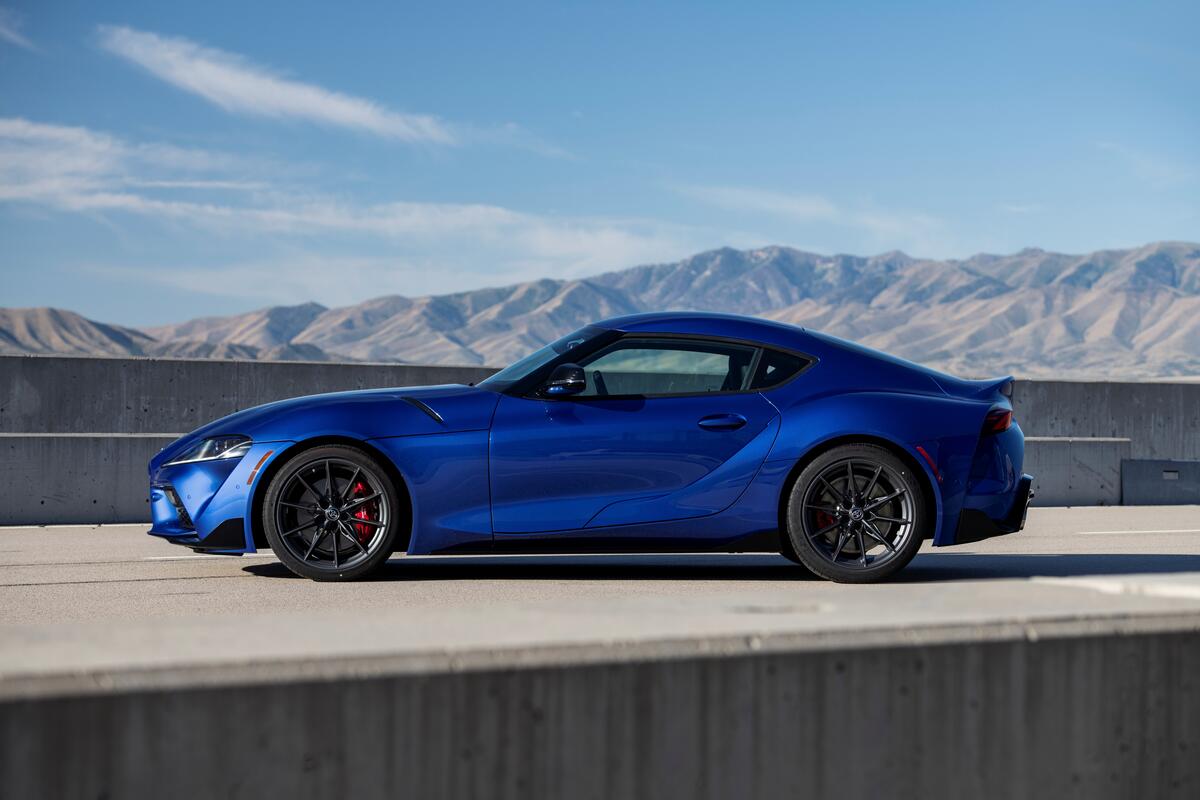
The Toyota Supra is a famous Japanese sports car that became a big deal with car tuners. Here, they’re talking about a heavily modified Supra meant to make more power from its turbo engine.
The Ford Mustang GTD is a high-performance version of the Mustang. The podcast mentions it in a story about racing and trying to match or beat another fast car. It’s included because it represents a more serious, performance-oriented Mustang.
HKS is a company that sells performance parts for cars, especially turbo models. When someone says “HKS upgrades,” they usually mean real hardware and tuning aimed at making the car faster.
Term
Rod Millen wing
A “Rod Millen wing” is a spoiler style linked to Rod Millen, who’s a well-known racing and tuner personality. Spoilers like this are common on modified cars for looks and to help with airflow.
The 2JZ is the engine family from the Toyota Supra that tuners love. It’s built in a way that makes it easier to add parts and tuning to get more power.
The 1995 Mitsubishi Eclipse is a popular 1990s import that tuners liked because it was mod-friendly. In this episode, it’s described as the kind of car that introduces people to that tuner culture.
The Mazda RX-7 is a famous tuner car, and it’s special because it uses a rotary engine instead of the usual piston engine. In the story, it’s used to represent something more serious or different than the beginner cars.
The Acura Integra is a well-known Japanese compact performance car. Here it’s mentioned as part of the real-world lineup of cars people were showing off locally.
Stunt replicas are fake versions of a real car made for movie stunts. They’re built to take damage and get beat up on set, while the real-looking cars are saved for safer shots.
The Nissan Skyline R34 is a particular generation of the Skyline that became super popular with tuners. The hosts say Paul Walker bought an R34, and the movie’s famous Bayside Blue car is a mix of a real R34 and stunt replicas built from Skyline GT-T underpinnings.
Tuner culture is the scene of car enthusiasts who customize cars—like upgrades for speed, handling, and looks. The hosts say the movie made that world more mainstream, so more people wanted to learn about import tuning.
Fast and the Furious is a movie franchise about cars and car culture. This segment argues it also helped spread Japanese-style tuning to a wider audience.
“Japanese imports” means cars made in Japan that get sold in other countries. Enthusiasts often seek them out because they want the specific models and the parts that go with them.
Aftermarket parts are upgrades made by other companies, not the car’s original manufacturer. People use them to improve or customize their cars beyond stock parts.
Tuning culture is the scene of car fans who modify their cars. It’s not just about buying parts—it’s also about meeting other enthusiasts and sharing ideas.
LIVE
By the early 1990s, Japanese car culture was no longer a secret.
Around the world, it stopped being something you heard about, and became something you
could see.
In parking lots, at drag strips, in the pages of magazines, kids in America were building
cars that looked like they came straight out of Osaka.
The philosophy, the obsession with precision, the willingness to strip a car down to nothing
in pursuit of speed, all of it had traveled.
In the last episode, we talked about how Japanese media began to find its way out into the wider
world.
But that was just a seed.
And what grew from it didn't just survive.
It mutated into something new, with the help of a little thing called the World Wide Web.
Hey everybody, welcome back to PASCAS.
My name is Nolan Sykes.
I've got some mail for ya.
Golden Age of JDM.
It's episode 8.
We're talking about the effects of the internet on car culture at large, through the lens
of the Japanese car industry in this episode.
We're going to talk about the early days.
A more humble internet.
A more simpler time on the internet.
Now, the internet is so ingrained into every part of our lives, it sounds strange to even
call it the World Wide Web because of Wi-Fi and cell towers and all that kind.
You have constant internet access.
You have constant notifications because of the internet.
It's almost hard to think of it as something separate from real life at this point.
And that's a bit of a cliche, I will admit.
But it's true.
And in this episode, we're going to talk about those earlier days.
What it used to be like.
If you've been listening to this new season from the beginning, I'd really like to give
you a big thank you.
This season has been a lot of work, but it's really meant a lot to us.
And it's been a lot of fun recording every single one of these episodes.
If you would like to listen on other platforms, besides the one you're on right now, we have
a YouTube channel.
Go ahead and subscribe to that, Donut Podcast.
If you're on YouTube right now, we are also on every big podcast platform out there.
And please give us a review on your platform of choice.
I would really like to hear what you guys think of this new format.
Just tell us how we're doing.
All right, so let's get into the show and maybe you'll see what I'm talking about.
The early internet ran on message boards.
Simple websites where people gathered in threads with names like SR20 Swap Wiring Help or
Best Turbo for B Series.
Every conversation started with a single question.
Most posts ended with a small block of text listing the poster's car and mods, basically
a resume made out of parts was called a signature, and they usually went something like this.
These forums were full of sub-forums devoted to things like engine builds, suspension,
or general troubleshooting.
Sometimes there'd be off-topic threads for relationship help.
These were real communities where you could hang out from your bedroom instead of having
to go out into the real world.
There are also regional sections where people from the same city could organize meets.
Basically, it was like Reddit with fewer trolls.
This was before the centralization of the internet, you know?
How many forums do you visit these days that aren't Reddit-centric, you know?
That's what's kind of sad and kind of depressing about Reddit.
It's a great resource, but also it's kind of caused the death of so many forums across
the internet and the loss of so much valuable information, so many decades-old forum posts
now gone, I think because of Reddit.
What made the whole system work was the way information built up over time.
Say you wanted to swap a B18C into your Civic.
Well, you'd start a thread, ask the question, and wait.
A few replies would trickle in.
One person gives you a quick answer, days pass, more replies show up.
Over time, these threads would become complete working guides built by complete strangers.
The crazy thing was that most of these people had never been to Japan.
Many had never even seen the cars that inspired them in person.
And yet, the influence was obvious.
To understand how deep that influence went, you have to go back to where the American
import scene started.
In the late 80s and early 90s, American performance culture was still built around the muscle
car.
V8s, quarter-mile times, and a culture centered on displacement and straight-line speed.
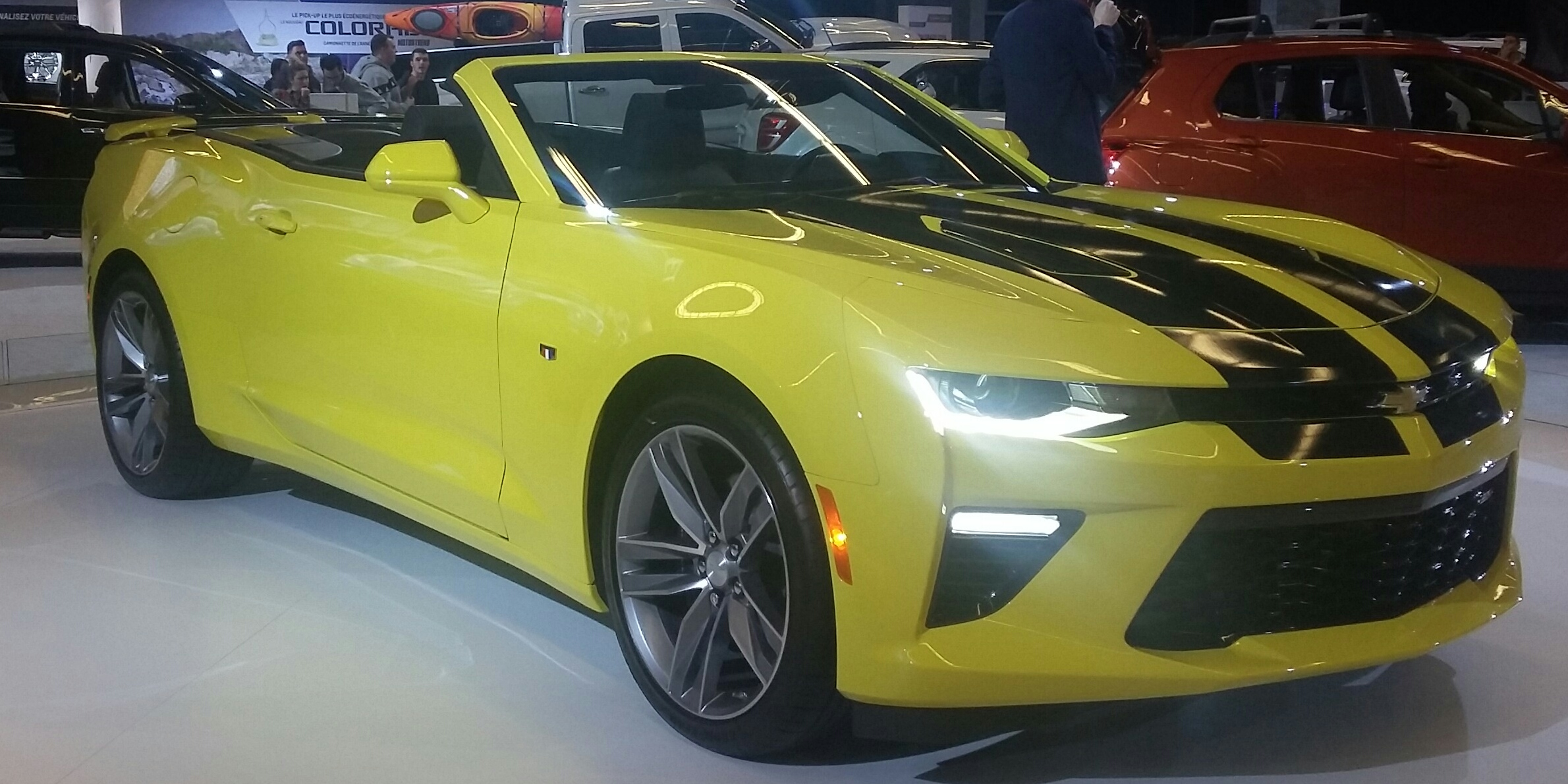
Car shows featured Camaros, Mustangs, and Chevelles.
Magazines spoke the language of cubic inches and carburetors.
But for a generation that grew up after the gas crisis, that formula was getting old.
These were kids who grew up with Honda and Mazda as household names, whose older siblings
were wrenching on Celicas instead of Plymouths.
Naturally, the old guard hated this.
Import cars got mocked constantly.
They were called rice burners, and written off as flimsy economy cars.
But that mockery only helped build a counterculture.
And every counterculture needs a champion.
One of the most important was Frank Choi.
Choi was a Korean American car enthusiast who became a SoCal promoter out of pure necessity.
He spent the end of the 80s building up a nitrous-fed Mazda RX3.
And finally brought it out to the L.A. County Raceway in Palmdale.
Rest in peace.
He was turned away, told the track was for scheduled sessions only.
He called back weeks later to book a session properly and got the run around again.
Choi figured out what was actually going on.
It wasn't a scheduling problem.
It was that his car and the people he ran with didn't look like the racers the staff was used to dealing with.
So he stopped trying to go through the front door.
He went directly to the track owner, made his case in person, and walked out with a rental agreement.
He wanted an event where imports and only imports would get their shot.
And now he had the venue to make it happen.
In 1990 he put together the first battle of the imports.
He promoted it the only way he could at the time.
A photocopier and flyers, which he handed out at street races.
Word traveled the same way the cars did, by word of mouth and highway miles.
After a modest first event, Frank Choi's brainchild grew steadily through the decade.
And then, just as the battle of the imports was hitting its peak, the internet suddenly amplified it.
Message boards and forums let enthusiasts share builds and race results in real time.
Fourth and fifth generation Honda Civic hatchbacks had become the scene's weapon of choice.
Influenced by the Kanjo racers of Osaka.
Named for the urban expressway loop they used as their unofficial racetrack,
these were drivers who had made the Civic into something close to a religion.
Strip the interior to nothing, tune the engine, push the car to its limits in tight and dangerous spaces.
American racers picked up that philosophy and ran with it.
Civics were cheap, light, and easy to modify.
For young guys working on tight budgets, they were the perfect starting point.
Everything that wasn't necessary got removed.
Interior stripped down to a single racing seat, a steering wheel, and a bare dashboard.
Sound systems, carpeting, rear seats, door panels, gone.
You know, what's really interesting though about the Civic is that in Japan,
that was actually the car that the wealthier guys built.
It's so backwards here in the US where the Civic is the cheap car,
but in Japan, there was actually a lottery system in order to buy one of these things.
It was a more expensive car over there, which seems so strange,
but we had our friend Jun Takahashi and Kai Mira at the office owner of Rocket Bunny over in Japan.
They were here visiting the office a couple weeks ago.
It's just really interesting.
What we consider a cheap car is actually in Japan a more expensive build and vice versa.
The rear-wheel drive cars over in Japan were the ones that were more budget-friendly compared to here.
Very, very interesting.
Needless to say, my flavours were gassed.
So from there, things got even more extreme.
Racers started pulling off the entire hatch in rear bumper assembly and replacing them with trash bags.
Stretched across the rear opening and taped down tight, they created what the community started calling trash bag hatch bags.
I've never seen this.
That sounds insane.
It looked ridiculous, but the idea was weight reduction, which at the drag strip is everything.
Tape became a serious tool.
Strips were pressed into gaps between the front bumper, hood, and fenders,
on the theory that it would smooth out the airflow and reduce drag.
The philosophy was simple.
If it might make the car faster, it was worth a shot.
A lot of this experimentation got documented and debated on internet forums like HondaTech.
Thousands of enthusiasts shared results, compared setups, and built on each other's ideas.
It was like a decentralized engineering lab, where enough collective trial and error could turn a duct tape experiment into standard practice.
But not everyone was impressed, and many of the loudest critics weren't even from the V8 crowd.
Honda racers quickly developed a new rival inside the import world.
The Mitsubishi Eclipse and the Eagle Talon, known together as DSMs, short for Diamond Star Motors, were built through a joint venture between Mitsubishi and Chrysler.
Engineered by Mitsubishi, designed by Chrysler, and assembled in Illinois.
This meant that the import scene's biggest internal rivalry was between two groups driving Japanese-influenced machines.
The difference was that DSMs came from the factory with turbocharged engines and all-wheel drive, which gave them a big head start in power and traction.
Dude, these freaking DSMs still are just nasty cars, man.
They're not as common because a lot of them I think have been scrapped or whatever, but when you see a nice Mitsubishi, just know that the owner is really about that life.
You can't casually get into Mitsubishi's. It is a legit lifestyle.
It takes so much dedication and research to get these cars to be healthy in the first place.
So when you see one that's nice and running, that deserves props for sure.
Another product of the DSM Diamond Star Motors collaboration was the Dodge Stealth slash Mitsubishi 3000 GT twin-turbo V6, like grand touring car.
Notoriously difficult to work on because they put a big engine into a small engine bay, hard to find parts for as well.
I think Justin actually had one. Him and his brothers, I think, had a Stealth at one point. Anyway.
The contrast between the Honda and Mitsubishi camps was easy to see.
Honda racers were chasing performance through weight reduction and DIY engineering, whereas DSM owners valued polish and factory muscle.
Things came to a head at a Diamond Star shootout, one of the biggest DSM gatherings in the country.
Tuning legend Dave Moucher set up a table and started selling rolls of duct tape labeled Honda race tape.
Photos quickly circulated through the import media world, most notably in Turbo magazine.
But what could have been a full embarrassment turned into a turning point.
The mockery pushed Honda builders to care more about how their cars looked, not just how they performed.
Cleaner engine bays, tighter body panels, more refined builds overall.
The internet and the growing network of tuning magazines helped those ideas move quickly.
Pushed by the rivalry with the DSM crowd, the scene started growing up.
The backyard experimentation phase was giving way to something more serious, and Honda itself took notice.
According to their head of public relations, Kurt Antonius, the duct tape movement and the civics rise in general weren't things Honda had planned for or seen coming.
It caught them off guard. It wasn't until Honda started showing up at the annual SEMA show in Las Vegas that the scale of it became clear.
Everyone had a Civic, and nearly every aftermarket company on the floor had one on display.
The culture of events like SEMA kept growing in ways nobody expected.
Modified imports filled convention centers and parking lots.
Judges walked rows of builds.
But the atmosphere was nothing like a traditional car show. Several worlds had collided at once.
So the SEMA show was started back in 1963. It's an aftermarket trade show.
It's the special to the Equipment Manufacturers Association.
It is a car show, ostensibly, because there are thousands of cars in attendance.
But it really is a networking event. Lots of industry leaders there.
A lot of manufacturers, a lot of both aftermarket and OEM show up.
From the beginning, it was really mostly focused on American aftermarket manufacturers.
But up until this exact point in history, it was really just focused on hot rods and muscle cars and American manufacturers.
But now, with the rise of Japanese cars getting so popular on the market, they're going to start trickling in.
Today, it's just a beautiful mix of all kinds of cars from all over the world.
At this point, though, is part trade show, part drag race, part nightclub.
This didn't happen by accident.
Promoter Ken Miyoshi saw early on that import culture had everything it needed to be a real spectacle.
Starting in the late 1990s and growing fast into the early 2000s, his hot import night's events combined car shows with pure energy.
DJs, massive sound systems, neon lit cars under colored lights, models posing next to heavily modified Integra-type Rs, and A80 Supras.
Everything about it was youth-driven.
The quiet rows of restored classics had been replaced by a scene built around speed, music, fashion, and spectacle, which made for an interesting contrast with where all this had started.
In Japan, tuning culture was almost entirely about performance.
Cars were built for a specific goal, like lower lap times, better balance, harder engineering. Mechanical precision was the point.
In the United States, the focus got wider. Performance still mattered, but so did how the car looked.
Builders started experimenting with wild body kits, bright paint, vinyl graphics, and custom lighting.
Cars became a way to express something personal, and the tuner scene grew up alongside hip-hop, club culture, and urban nightlife.
The cars became part of that same visual world.
So much of what was happening came down to a simple idea. The car is an extension of who you are.
But while most American enthusiasts were working on their civics in driveways, there was another car out there that lived almost entirely as a rumor.
A car everyone wanted, and almost no one could have, until they could.
Rocket Money can track subscriptions and has the ability to cancel unwanted ones from within the apps with a few taps, saving users over $800 million in canceled subscriptions.
You know who's part of that $880 million? Me, your boy. I've used Rocket Money in the past to cancel some stuff.
Over the years, you just sign up for trials and whatever services that you maybe forgot about.
It ends up just, you look at your credit card and you're like, why am I spending so much money? I haven't even used my credit card this month. What's going on?
Well, you might have subscriptions that you are still using even if you're not actually using. You're paying for them, but you're not using them.
There's a point there when I was like, oh my god, I've got a pretty good amount of credit card debt here, and it felt very overwhelming.
Luckily, thanks to services like Rocket Money and just, you know, being smarter with your money, not making impulse purchases. I was able to get out of that.
And now I'm very much on top of my finances.
Rocket Money is a personal finance app that helps find and cancel unwanted subscriptions, monitors your spending, and helps lower your bills so you can grow your savings.
Let Rocket Money help reach your financial goals faster. Join at rocketmoney.com slash past gas. That's rocketmoney.com slash past gas. Thank you so much, Rocket Money.
Big thank you to Loomi Labs for sponsoring this episode. Consistent, mellow, and super delicious, Loomi Gummies are specifically designed to make you feel good, not stoned.
Whether you're looking for an end of the day de-stressor, a midday mood boost, or help getting the best sleep ever, Loomi Gummies has a strain that's right for you.
They also come in one milligram or five milligram gummies, so you can get the exact dose you're looking for.
Dude, I'm gonna need to get my hands on some of these. They got a pretty stressful job, dude. And honestly, it's been affecting my sleep a little bit. I need to get some of these.
So, whether you need some help relaxing or help sleeping, Loomi's got a gummy for you. They got their hybrid strawberry cookies gummy.
They've also got their sativa orange cream cookie gummy to help lock in. Loomi Gummies are available nationwide. Go to loomigummies.com. That's L-U-M-I.
Gummies and use code PASSGAS for 30% off your order. That's L-U-M-I gummies.com code PASSGAS. Loomigummies.com code PASSGAS. Thank you so much, Loomi Gummies.
Okay, you're back in your family's computer room. The computer has its own room. You've already yelled at your sister for picking up the phone, interrupting your Quake 3 match that you were in.
Every photo you have is downloaded line by line. You've got 56K. Your mom buys like fruit snacks from the grocery store. Things are good.
You close out of the Honda message boards and head on over to the Nissan side of the internet.
Fresh Alloy had become a serious hub for the discerning Nissan enthusiast. It was one of the first English language forums where Americans were having real conversations about the SR20DET engine.
Zilvia was built around the 240SX and had become the home base of the early American drift community.
And across the Pacific, Skyline's Australia held a unique spot. Because of Australia's more lenient import laws, enthusiasts there could legally own cars that American fans could only imagine. Cars like the Nissan Skyline GT-R.
It showed up in forum threads, magazine features, racing videos, and late night parking lot conversations. People debated its horsepower, its technology, and what was actually happening under the hood.
There was the R32, known as Godzilla, the car that brought the GT-R name back to life. It was developed under chief engineer Nagonori Itu, the man Shinichiro Sakurai had spent decades training to carry the Skyline forward.
Then came the R33, bigger, more refined, and built for stability at high speed. It took what the R32 started and pushed it further.
And the sexiest Mac Daddy of them all, the R34, the one that made everyone stop talking. Compact, aggressive, sharper than anything that came before it.
Of all three of those, I actually had the best time driving the R33. It's kind of slept on, but also, I don't know, something about it. Maybe it's because I wasn't as stressed driving that one.
Driving an R34 is stressful because that car was worth a lot of money, and I was scared to scratch it. So maybe that's why I didn't have as good a time. All amazing cars.
Every generation of the Skyline carried the same reputation, technologically sophisticated and brutally fast.
At the core of that was Nissan's RB26 engine, a twin turbocharged, straight six paired with an all-wheel drive system that gave the car grip and acceleration that felt almost unfair.
Most people got their first look at the Skyline in the early 90s, when the R32 entered international touring car competition and was so dominant and fearsome that Australians nicknamed it Godzilla.
The name stuck, and so did the legend.
We talked about that whole story in episode 6, if for some reason this is the first episode that you're listening to in the series, definitely go back and get the context, or just keep listening to this. I'm not your dad, I don't care.
Anyway, there was just one problem. You couldn't buy one in the US.
Every car sold in the United States has to meet federal safety and emission standards.
Nissan had built the Skyline GT-R for the Japanese market and never certified it for America. They didn't think it made financial sense.
Without going through the certification process, the car couldn't be imported, registered, or driven legally on US roads.
For a while, the Skyline seemed destined to remain a fantasy for American drivers.
Then, a small Californian company found a loophole. They were called Motor X.
Motor X was founded by Hiroaki Nanahoshi, who believed the Skyline could be brought to America legally through a process called federalization.
The idea was that an independent importer could modify a foreign car to meet US safety standards, and if it passed, it could be registered and driven on public roads, in theory.
In practice, federalization was a brutal process. It involved crash tests, structural modifications, thick stacks of paperwork. It was a black hole.
You'd submit everything, wait months, and then get back a new list of requirements. It was the kind of process designed to make you impatient.
Motor X got impatient.
Nanahoshi was under financial pressure. His startup money, around a million dollars from a Japanese dealership investor, came with expectations.
So, Motor X focused on R33 Skylines, which they could import in larger numbers at a lower cost.
Those cars got crash tested by JK Technologies, and cleared by the DOT, then put up for sale.
At this point, business looked great.
The now famous McNasty GT-R made its public debut on November 15, 1999.
It was a silver R32 GT-R. It had never been seen on American roads before. To show it off, Motor X launched a website and hit the road on a tour around the country.
Borders started coming in. More Skylines started shipping over from Japan, and Hiroaki Nanahoshi was living large.
You started spending his nights not at the office, but at Japanese Hostess Bars running through the company's money.
Now, if you've never been to a Japanese Hostess Bar, it's where you basically pay women to be impressed with you, and to pretend you're the man.
Even though this guy was doing well and had a cool job, he's still paying women to pay attention to him, which I think is uniquely lame.
And this dude would spend like 15 grand a night, some nights.
As luck would have it, Motor X wasn't in a position to support that lifestyle.
They were still a small operation selling cars that most enthusiasts couldn't afford, which ran around $80,000 each, and that's a $99 money, so like now that's like $160 grand probably.
But Nanahoshi was riding high, partly because Motor X had just gotten a big boost from a film franchise that was about to blow up.
But more on that a little later.
They had also built a real reputation in import circles, as the company that did what no one else could, and when they suddenly started bringing in R34 Skylines, it seemed like they had pulled off the impossible.
It turned out, it was impossible.
Remember that approval process full of paperwork, the really thick stack?
While Motor X noticed their application had a clause allowing quote unquote substantially similar vehicles to be added to the same certification.
They used that language to claim the R32 and R34 were close enough to the R33 to qualify.
Um, they weren't.
Only the R33 had been crash tested.
Federal regulators had access to the specs for all three cars, and if they had looked carefully, they would have caught it right away.
But they didn't.
The application went through, and a time bomb got buried under the whole operation.
Making things worse, Nanahoshi had become impossible to rely on.
He'd disappear for days at a time.
Customers would be told their cars were ready before the cars had even left Japan, and he was allegedly setting up private Skyline sales on the side and keeping the money.
Then in 2005, the LA County Sheriff's Department opened an investigation after a neighboring performance shop called Blast Racing reported that two customer cars had been stolen.
The case took a sharp turn when one of Blast's tuners was attacked with a stun gun.
He told police that Nanahoshi himself was behind it.
When investigators searched Nanahoshi's apartment, they found packaging that matched the taser.
Nanahoshi was arrested and bond was set at 1000000 dollars.
By the time police had searched Motor X's garage, it had already been picked clean.
Word about the bust had spread fast enough that thieves had broken in and driven off every Skyline they could find.
The final blow to Motor X came from regulators.
They had finally noticed that the R32's and R34's they had been selling were not substantially similar to the R33 that had actually been crash tested.
Certification was pulled, cars were confiscated from customers, some were destroyed.
By 2006, Motor X was finished and the Skyline loophole closed with it.
The car itself lived on.
You could find the Skyline GT-R in Gran Turismo.
You could find grainy photos on fresh alloy.
If that wasn't enough, Hollywood had been watching the whole time.
Big thank you to our sponsor this week, Blue Choo.
The future of a rectile function is here.
Blue Choo Gold is changing the way millions of men are having sex in 2026.
The new arousal boosting formula combines passion and performance into one tablet that dissolves under your tongue for super fast onset.
No more waiting for a pill to kick in, no more moments ruined by performance anxiety, just the results you want when you want them.
Most ED beds only focus on blood flow, but Blue Choo Gold goes further by combining two ingredients for blood flow with two for mental arousal and connections.
So you're not just physically ready, you're actually in the mood.
This type of innovation is why Blue Choo Gold is the number one brand in a rectile function.
Process is simple and all online.
Get started today at BlueChoo.com and go for gold.
Discover your options at BlueChoo.com.
And we've got a special deal for our listeners right now.
When you buy two months of Blue Choo Gold, you get the third for free with promo code past gas.
That's promo code past gas.
Visit BlueChoo.com for more details and important safety information.
And we thank Blue Choo for sponsoring this podcast.
Big thank you to our sponsor this week, long time sponsor of our podcast here at Dona Media.
It's Shopify.
If you have an online business and you want to take your e-commerce to the next level, you already know that Shopify is the way to go.
But if you don't know, well, let me tell you why that is.
Shopify is the e-commerce platform behind millions of businesses around the world and 10% of all e-commerce in the U.S.
From household names like Jim Shark, Allbirds, Chubby's, Heinz and Mattel to startup businesses just like yours, they do it all.
Shopify makes it super easy to get started with your own design studio with hundreds of ready to use templates.
Shopify helps you build a beautiful online store that matches your brand style.
They'll help you accelerate your efficiency, whether you're uploading new products or trying to improve existing ones.
Shopify is packed with helpful tools that write product descriptions, page headlines and even enhance your product photography.
Best yet, Shopify is your e-commerce expert with world-class expertise in everything from managing inventory to international shipping to processing returns and beyond.
It's time to turn those what-ifs into with Shopify today.
Sign up for your $1 per month trial today at Shopify.com slash gas.
Go to Shopify.com slash gas.
Again, that's Shopify.com slash gas.
Thanks Shopify.
By 2001, Japanese tuner culture had grown into something enormous.
It had moved from parking lots and mountain passes into magazines, VHS tapes, video games and message boards.
It had traveled from Osaka to Orange County.
It had outgrown the underground and then Hollywood dropped a match on it.
The Fast and Furious traces back to a magazine article.
In 1998, journalist Kenneth Lee published a piece in Vibe magazine called Racer X.
It put readers directly inside the world of illegal street racing in New York City.
A swarm of modified imports taking over Manhattan's Hudson Parkway.
A black Nissan 300ZX and a white Mitsubishi Staryon lined up for a mile-long run with traffic standing up behind them.
In under a minute, one driver walked away with 7,500 bucks.
Lee's piece captured the feel of the underground.
Nightcruise shutting down highways.
Cars chasing speed like it was an addiction.
A multicultural scene running across a whole city.
It's a really great article.
You can still find it.
I've read it a couple times just researching different videos here at Donut.
Definitely worth tracking down.
It still holds up.
Universal Pictures bought the rights to the article.
They even offered Lee a chance to write the screenplay.
He hung up on them mid-call, so a script got written without him.
I wonder how that happened.
Someone was probably gaming on the PC, man.
They were playing Quake.
I miss computer rooms.
But the filmmakers ran into a problem quickly.
None of them actually knew car culture.
If they're going to make this work, they needed someone who did.
That someone was Craig Lieberman.
Lieberman had gotten into Supras after losing a stoplight race to one in his Mustang GT.
Guess if you can't beat him, join him.
It's like Blake Snell.
He bought a Supra, painted it candy yellow, and loaded it with parts.
It had a still-in-body kit, a Rod Millen wing, upgraded brakes, and a full suite of HKS performance upgrades.
Including bigger intercoolers, exhaust system, and tuning components aimed at getting more out of that 2JZ engine.
The car became a regular at SoCal shows.
It took first place at a sports-compact car competition.
Not long after that, Lieberman brought it to an import show near Manhattan Beach,
and a Hollywood production manager walked up and started asking questions.
A few days later at lunch, the production manager handed Lieberman the screenplay with a $100 bill clipped to the front.
He wanted Lieberman to read it and to make sure they were doing right by the culture.
Lieberman read it and laughed.
The car lingo was off.
The hierarchy made no sense, and one early draft Paul Walker's character started with a Toyota Supra and later upgraded, quote-unquote, to a Mitsubishi Eclipse.
It was obvious they needed him.
Lieberman helped the filmmakers understand how the tuner world actually worked.
Then Universal asked him to find real cars for the production.
He put out calls on the internet for weeks, asking if anyone with the right build wanted to be in the film.
Whoever showed up, he brought to Universal.
The cars they assembled became one of the most recognizable line-ups ever put together for a movie.
Brian O'Connor's bright green 1995 Mitsubishi Eclipse was the entry point of the tuner world.
Affordable, moddable, and already everywhere at street races.
Dom Toretto's Mazda RX-7 represented something different.
Lightweight, twin-turbo rotary, a staple of import magazines and Gran Turismo.
Low, sculpted, and unmistakably Japanese.
Around them were the cars you'd actually see at a SoCal Meet, the Honda Civic, Nissan 240SX, Honda S2000, and the Acura Integra.
And then there was the Skyline.
Lieberman had been in touch with Motor X and wanted the GT-R to be Paul Walker's car.
But he could only get the Skylines on loan, which made building stunt replicas too expensive.
A lot of these cars you have your hero car, which is built really nice, like that's something you could take to a show and like all the details are very accurate, the car looks amazing.
Those are just like for stationary shots where the character is getting in and out of the car.
And then you have stunt cars, which are usually way more rudimentary.
They look good from like 20 feet, but then you get closer like, oh, it's not a show car.
It's meant to be driven hard, jumped over stuff, and bashed around on set.
And it's hard to build Skyline stunt cars when you can't get the Skyline in the US.
So the GT-R got pushed to the side in the first film, driven by a supporting character and shown only briefly.
Road's closed pizza boy, find another way home.
Paul Walker couldn't let the car go though.
He used part of his paycheck from the first film to buy an R34 from Motor X, this is what I would do too, man.
The Bayside Blue R34 that shows up in Too Fast, Too Furious is a combination of that real car and purpose built stunt replicas made on Skyline GT-T platforms for the production.
So it's a Skyline, just not all-wheel drive.
The Fast and the Furious opened in June of 2001 and landed at exactly the right moment.
It made 40 million dollars in its opening weekend, not bad, and finished with over 207 million worldwide on a budget of just 38 mil.
It broke even opening weekend, can't ask for more than that, that's awesome.
For Hollywood, the point was clear.
Tuner culture was now mainstream entertainment.
And inside the car community, the reaction was immediate.
People who had only cared about American muscle suddenly wanted to know everything about import tuning.
Exhaust shops got slammed with orders.
Teenagers started figuring out how to afford a Supra.
Spoiler alert, they couldn't.
Not everybody was happy about it.
A lot of people inside the actual scene worried the film would hollow things out.
That the culture they had spent years building would get flattened into something unrecognizable.
That the mainstream version would become the only version.
And maybe they weren't wrong.
But one thing about the film was surprisingly authentic.
It's diversity.
Long before Hollywood started talking openly about representation,
the world in the Fast and the Furious looked a lot like the actual SoCal tuner scene.
Late night meets in Los Angeles had always brought together people from different backgrounds.
The parking lot, much like Japan's Daikoku, was a place to bring people together through their shared love of tuning.
Even the cars themselves represented that blend of influences.
Tom Toretto's Dodge Charger could sit beside an icon like the Supra or RX-7 and no one found the combination strange.
If anything, the mix was the point.
For Japanese enthusiasts, the Fast and the Furious must have been a strange thing to watch.
The cars were familiar, but the stories attached to them were not.
Whole new identities were being built around machines that had already had deep histories in Japan by people who hadn't been there for any of it.
And on top of that, the demand for Japanese imports, aftermarket parts, and tuning culture was now spiking globally,
driven by fans who wanted to build what they had seen on screen.
It raised a question.
If the US could take Japanese car culture and turn it into a worldwide phenomenon, what would happen when Japan responded?
That's next time on Past Gas.
Go check out our other podcasts we have here on the Donut Media Podcast Network.
We've got Talk Talk Nation, Joe Weber interviews awesome guests from all over car culture, and then we have Jimmy Eats Cars.
It's Jimmy Hilton's bi-weekly auto news show.
Thank you guys so much. We'll see you next week. Bye.
About this episode
Golden Age of JDM frames how the World Wide Web reshaped Japanese car culture and helped it mutate into something new. The hosts walk through early message boards where threads like “SR20 Swap Wiring Help” turned into evolving guides, then connect that online knowledge to the import-battle era—Civic hatchbacks, DSMs, and even drag-strip aero experiments. They also cover Skyline federalization loopholes and how tuner culture went mainstream via SEMA, Hot Import Nights, and Fast & Furious.
This episode is brought to you by Rocket Money! Let Rocket Money help you reach your financial goals faster. Join at https://www.RocketMoney.com/PastGas
Also thanks to Lumi Gummies for sponsoring this podcast! Go to https://www.LumiGummies.com and use code PASTGAS for 30% off your order.
This podcast is also sponsored by BlueChew! Right now, when you buy two months of BlueChew Gold, you get the third for FREE with promo code PASTGAS!
And also thanks to Shopify for sponsoring this episode!