About this episode
Golden Age of JDM frames how the World Wide Web reshaped Japanese car culture and helped it mutate into something new. The hosts walk through early message boards where threads like “SR20 Swap Wiring Help” turned into evolving guides, then connect that online knowledge to the import-battle era—Civic hatchbacks, DSMs, and even drag-strip aero experiments. They also cover Skyline federalization loopholes and how tuner culture went mainstream via SEMA, Hot Import Nights, and Fast & Furious.
TEMP DESCRIPTION
This episode is brought to you by Rocket Money! Let Rocket Money help you reach your financial goals faster. Join at https://www.RocketMoney.com/PastGas
Also thanks to Lumi Gummies for sponsoring this podcast! Go to https://www.LumiGummies.com and use code PASTGAS for 30% off your order.
This podcast is also sponsored by BlueChew! Right now, when you buy two months of BlueChew Gold, you get the third for FREE with promo code PASTGAS!
And also thanks to Shopify for sponsoring this episode!
quarter-mile times
"V8s, quarter-mile times, and a culture centered on displacement and straight-line speed. Car shows featured Camaros, Mustangs, and Chevelles."
Quarter-mile times measure how fast a car can go over a short drag-racing distance. It’s one of the main numbers people talk about for straight-line speed.
Quarter-mile times are how quickly a car accelerates over a distance of one quarter mile (about 402 meters), typically measured at a drag strip. It’s a core metric in straight-line racing culture because it reflects launch and acceleration more than top speed.
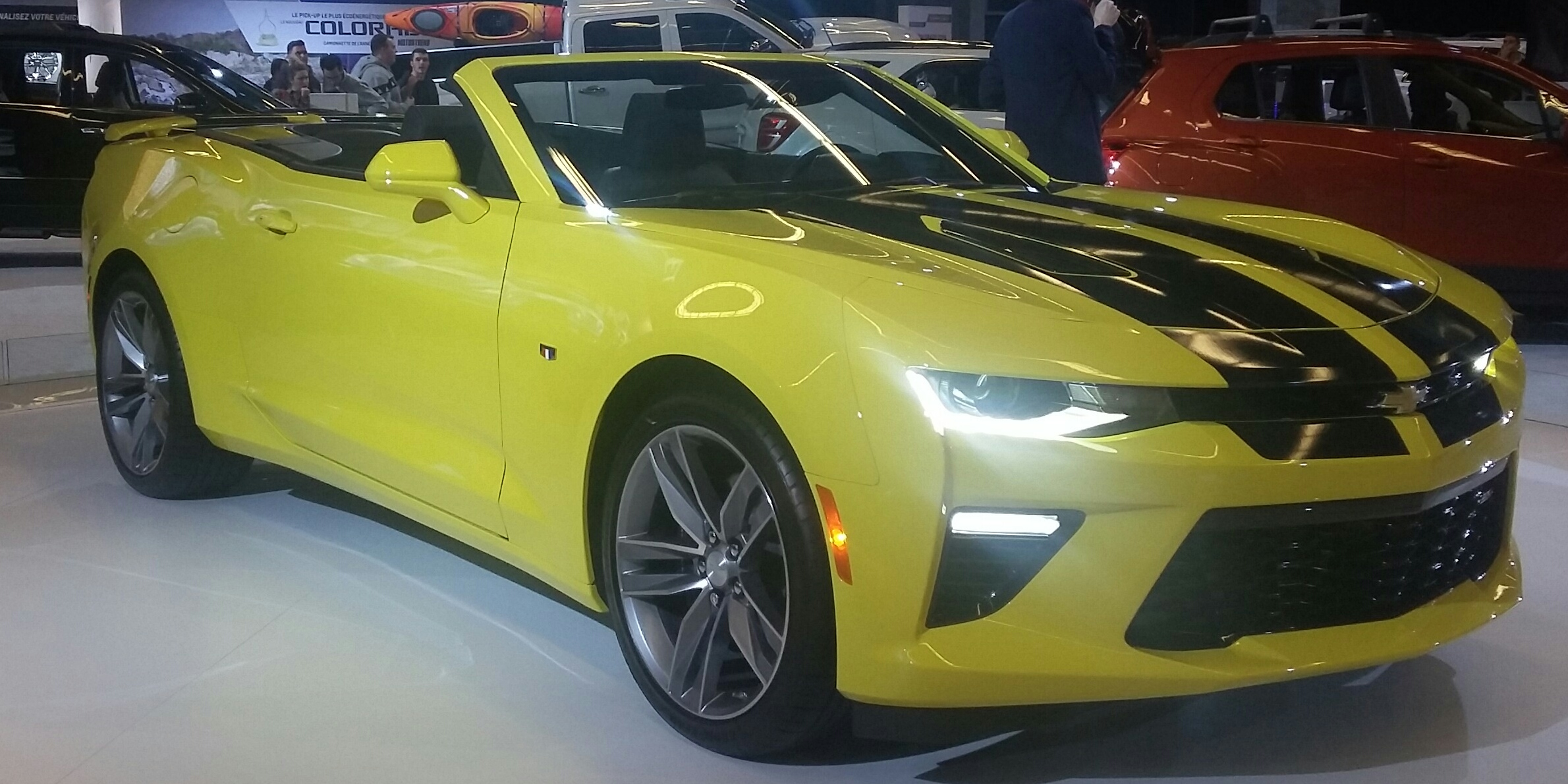
Chevrolet Camaro
"Car shows featured Camaros, Mustangs, and Chevelles. Magazines spoke the language of cubic inches and carburetors."
Camaro is a Chevrolet muscle car. The episode brings it up as one of the classic American cars people showed off at car shows.
Camaro refers to the Chevrolet Camaro muscle car, a long-running model associated with American V8 culture and drag-strip popularity. Here it’s used as an example of the domestic cars that dominated car shows.

Ford Mustang
"Car shows featured Camaros, Mustangs, and Chevelles. Magazines spoke the language of cubic inches and carburetors."
Mustang is a Ford muscle car. The episode lists it as one of the big American cars that were common at car shows.
Mustang refers to the Ford Mustang muscle car, another iconic American model tied to straight-line speed culture. In this episode, it’s grouped with other domestics to show what car shows were typically featuring.

Chevrolet Chevelle
"Car shows featured Camaros, Mustangs, and Chevelles. Magazines spoke the language of cubic inches and carburetors."
Chevelle is a Chevrolet muscle car. The episode mentions it as one of the common “big American” cars you’d see at car shows.
Chevelle refers to the Chevrolet Chevelle muscle car line, which became a staple in American straight-line racing culture. In the episode, it’s mentioned alongside Camaros and Mustangs as part of the classic domestic-car show lineup.
carburetors
"Magazines spoke the language of cubic inches and carburetors. But for a generation that grew up after the gas crisis, that formula was getting old."
Carburetors are older-style parts that help an engine get the right mix of air and fuel. The episode mentions them to explain what older car culture focused on.
Carburetors are fuel-delivery devices that mix air and fuel before it enters the engine, using airflow and a metering system rather than electronic fuel injection. The episode mentions them to describe how older performance magazines “spoke the language” of classic engine hardware.
cubic inches
"Magazines spoke the language of cubic inches and carburetors. But for a generation that grew up after the gas crisis, that formula was getting old."
Cubic inches is a way to measure engine size. The episode points out that older car magazines used engine size as a big part of how they talked about power.
Cubic inches is a displacement measurement used for engine size (how much volume the engine’s cylinders can move). In older American performance culture, bigger displacement in cubic inches was often treated as a proxy for potential power and “muscle.”

Celicas
"These were kids who grew up with Honda and Mazda as household names, whose older siblings were wrenching on Celicas instead of Plymouths."
The Toyota Celica is a Japanese car that many enthusiasts liked to work on. The episode mentions it to show that younger people were choosing Japanese cars instead of older American ones.
The Toyota Celica is a popular Japanese coupe that became a favorite among enthusiasts for wrenching and modification. The episode contrasts it with “Plymouths” to highlight how some younger gearheads were gravitating toward imports.
rice burners
"Import cars got mocked constantly. They were called rice burners, and written off as flimsy economy cars."
“Rice burners” is a slang insult some people used for certain import cars. In the episode, it’s mentioned as the kind of mocking that helped build a counterculture of import fans.
“Rice burners” is a derogatory slang term used by some enthusiasts to mock certain import cars—especially Japanese models—by implying they’re only good for “cheap” speed rather than real performance. The episode frames it as part of the old guard’s attitude toward imports.

Mazda RX3
"He spent the end of the 80s building up a nitrous-fed Mazda RX3. And finally brought it out to the L.A. County Raceway in Palmdale."
The Mazda RX-3 is a classic Mazda that uses a rotary engine, which is different from the normal piston engines most cars use. In the episode, it’s also described as running nitrous to make more power for drag-style racing.
The Mazda RX-3 is a classic Japanese coupe best known for using Mazda’s rotary engine (the Wankel design), which spins rather than reciprocates like a typical piston engine. In this story, it’s specifically described as being nitrous-fed, which is a common straight-line performance upgrade for rotary cars.
nitrous-fed
"He spent the end of the 80s building up a nitrous-fed Mazda RX3. And finally brought it out to the L.A. County Raceway in Palmdale."
“Nitrous-fed” means the car uses a nitrous system to get a temporary power boost. It’s like a short burst of extra oomph that helps with fast acceleration.
“Nitrous-fed” means the car is using nitrous oxide (often called “nitrous”) injected into the engine to temporarily increase power. Nitrous adds extra oxygen, allowing more fuel to be burned for a short burst—great for quarter-mile and drag-style runs.
weight reduction
"It looked ridiculous, but the idea was weight reduction, which at the drag strip is everything."
Weight reduction is just making the car lighter. On a drag strip, being lighter usually helps it get up to speed faster.
Weight reduction means removing mass from the car to improve acceleration and overall speed. In drag racing specifically, less weight helps the car launch harder and reach higher speeds more easily.
drag strip
"It looked ridiculous, but the idea was weight reduction, which at the drag strip is everything. Tape became a serious tool."
A drag strip is a track for straight-line racing where cars race to a finish line as fast as possible. It’s mostly about how quickly the car can accelerate.
A drag strip is a straight, timed race track where cars compete over a short distance (typically a quarter-mile or similar). Aerodynamics and traction matter, but acceleration is usually the deciding factor.
airflow
"Strips were pressed into gaps between the front bumper, hood, and fenders, on the theory that it would smooth out the airflow and reduce drag."
Airflow is how air flows around the car as it moves. If you can make it flow more smoothly, the car can face less “wind resistance.”
Airflow refers to how air moves around the car’s body while driving. Smoothing airflow can reduce aerodynamic drag, which helps the car maintain speed more efficiently.
DSM
"The Mitsubishi Eclipse and the Eagle Talon, known together as DSMs, short for Diamond Star Motors, were built through a joint venture between Mitsubishi and Chrysler."
DSM is a nickname for a specific group of cars—the Mitsubishi Eclipse and the Eagle Talon. People use it like one label for that whole family.
DSM stands for Diamond Star Motors, the joint venture name behind the Mitsubishi Eclipse and the Eagle Talon. Enthusiasts use “DSM” as shorthand for that whole platform family.

Eagle Talon
"The Mitsubishi Eclipse and the Eagle Talon, known together as DSMs, short for Diamond Star Motors, were built through a joint venture between Mitsubishi and Chrysler."
The Eagle Talon is another version of the same basic DSM car family. Here it’s important because these cars were sold with turbo power and all-wheel drive.
The Eagle Talon is the Chrysler-era badge for the DSM platform, paired with the Mitsubishi Eclipse. In this episode, it’s mentioned as part of the DSM lineup that came factory-equipped with turbocharged engines and all-wheel drive.
turbocharged engines
"The difference was that DSMs came from the factory with turbocharged engines and all-wheel drive, which gave them a big head start in power and traction."
A turbocharged engine uses a device that pushes extra air into the engine. That usually makes the engine produce more power, which helps acceleration.
A turbocharged engine uses a turbocharger to force more air into the engine, which allows it to make more power than a naturally aspirated engine of the same size. In the episode, turbocharged engines are credited with giving DSM cars a head start in power.
all-wheel drive
"The difference was that DSMs came from the factory with turbocharged engines and all-wheel drive, which gave them a big head start in power and traction."
All-wheel drive means power goes to all four wheels. That helps the tires grip the road better, so the car can launch and accelerate more confidently.
All-wheel drive (AWD) sends power to more than just the rear or front wheels, improving grip. The episode connects AWD to better traction, which helps cars accelerate more effectively, especially in less-than-ideal conditions.

Mitsubishi 3000 GT
"Another product of the DSM Diamond Star Motors collaboration was the Dodge Stealth slash Mitsubishi 3000 GT twin-turbo V6, like grand touring car. Notoriously difficult to work on because they put a big engine into a small engine bay, hard to find parts for as well."
The Mitsubishi 3000 GT is a sporty “grand touring” car with a twin-turbo V6. The episode points out that it’s tough to repair because the engine has to fit in a small space, and parts can be harder to find.
The Mitsubishi 3000 GT is a Japanese grand touring car known for its twin-turbo V6 and advanced factory tech. In this segment it’s discussed as part of the Diamond Star Motors collaboration, and the hosts highlight how the tight engine bay makes it notoriously difficult to work on and harder to source parts for.

Dodge Stealth
"Another product of the DSM Diamond Star Motors collaboration was the Dodge Stealth slash Mitsubishi 3000 GT twin-turbo V6, like grand touring car. Notoriously difficult to work on because they put a big engine into a small engine bay, hard to find parts for as well."
The Dodge Stealth is a sporty grand touring car with a twin-turbo V6. The episode says it can be a pain to work on because the engine is squeezed into a small space, and parts may be harder to find.
The Dodge Stealth is a twin-turbo V6 grand touring car that shares roots with the Mitsubishi 3000 GT through the Diamond Star Motors (DSM) collaboration. The hosts call out that its compact engine bay packaging makes it notoriously difficult to work on and can mean parts are harder to source.
Diamond Star Motors collaboration
"Another product of the DSM Diamond Star Motors collaboration was the Dodge Stealth slash Mitsubishi 3000 GT twin-turbo V6, like grand touring car. Notoriously difficult to work on because they put a big engine into a small engine bay, hard to find parts for as well."
The Diamond Star Motors (DSM) collaboration was a joint venture that produced shared designs and platforms between Mitsubishi and Chrysler/Dodge. In the segment, it’s used to explain why the Dodge Stealth and Mitsubishi 3000 GT are closely related and why they share similar “packaging” challenges like a tight engine bay.

Honda Civic
"According to their head of public relations, Kurt Antonius, the duct tape movement and the civics rise in general weren't things Honda had planned for or seen coming. It caught them off guard. It wasn't until Honda started showing up at the annual SEMA show in Las Vegas that the scale of it became clear."
The Honda Civic is a popular compact car that became a favorite for modifying in the import scene. In this segment, it’s the star of the duct-tape-inspired builds and shows up everywhere at SEMA.
The Honda Civic is a compact car that became a centerpiece of the U.S. import-tuning scene, especially in the “civics” and “backyard” era the hosts describe. Here it’s tied to the duct-tape “Honda race tape” movement and later to SEMA, where nearly every aftermarket company had a Civic on display.
SEMA show in Las Vegas
"It caught them off guard. It wasn't until Honda started showing up at the annual SEMA show in Las Vegas that the scale of it became clear. Everyone had a Civic, and nearly every aftermarket company on the floor had one on display."
SEMA is a big trade show where companies and builders show off modified cars and aftermarket parts. In this segment, it’s the moment the hosts say the tuning scene became too large to ignore.
SEMA (Specialty Equipment Market Association) is a major U.S. trade show focused on aftermarket parts and modified vehicles. The hosts use it to show how a grassroots tuning culture (Civics, duct-tape “race tape,” and other builds) grew into something big enough that even Honda had to pay attention.
SR20DET engine
"Fresh Alloy had become a serious hub for the discerning Nissan enthusiast. It was one of the first English language forums where Americans were having real conversations about the SR20DET engine."
The SR20DET is a Nissan engine that’s turbocharged. It became popular with car people because it responds well to modifications.
The SR20DET is a turbocharged 2.0-liter inline-four engine from Nissan. The “DET” designation is commonly used by enthusiasts to refer to the engine’s turbo + electronic fuel injection setup, which is why it became a popular platform for tuning and swaps.

Nissan 240SX
"Zilvia was built around the 240SX and had become the home base of the early American drift community."
The Nissan 240SX is a popular Nissan sports car that a lot of people used for drifting. It had a big community and lots of parts available.
The Nissan 240SX is a compact sports coupe/sedan platform that became a cornerstone of early American drift culture. Its popularity came from how it was used as a drift-ready base—light enough and supported by a huge aftermarket—so communities formed around it.
drift community
"Zilvia was built around the 240SX and had become the home base of the early American drift community."
A drift community is a group of enthusiasts focused on drifting, a driving style where the car is intentionally kept at an angle while the driver maintains control through throttle and steering. In the U.S., forums and events helped turn specific cars—like the 240SX—into go-to platforms for learning and building drift cars.
horsepower
"People debated its horsepower, its technology, and what was actually happening under the hood."
Horsepower is a number that describes how much power the engine makes. Higher horsepower usually means the car can accelerate more strongly, though other factors matter too.
Horsepower is a measure of engine power—how much work the engine can do over time. When people debate “horsepower” for a car like the Nissan Skyline GT-R, they’re usually arguing about how strong the engine output is and how it translates to real-world acceleration.
GT-R
"There was the R32, known as Godzilla, the car that brought the GT-R name back to life."
GT-R is Nissan’s name for its top performance version of certain cars. Here, it’s basically the Skyline’s “serious performance” identity that the R32 helped bring back.
GT-R is Nissan’s performance badge for its high-output, track-capable models. In this episode, the hosts use it as a shorthand for the Skyline’s top-tier identity and the reputation that the R32 helped revive.
RB26 engine
"At the core of that was Nissan's RB26 engine, a twin turbocharged, straight six paired with an all-wheel drive system that gave the car grip and acceleration that felt almost unfair."
The RB26 is the well-known engine used in the Skyline GT-R. It’s a turbocharged inline-six, and combined with all-wheel drive it helps the car accelerate hard and stick to the road.
The Nissan RB26 engine is a famous inline-six used in the Skyline GT-R. In this episode it’s described as a twin-turbocharged straight six paired with all-wheel drive, which is why the car can feel brutally fast and very grippy.
twin turbocharged
"At the core of that was Nissan's RB26 engine, a twin turbocharged, straight six paired with an all-wheel drive system that gave the car grip and acceleration that felt almost unfair."
Twin turbocharging means the engine uses two turbochargers to push more air in. More air usually means more power, which is a big reason these cars feel so quick.
Twin turbocharging uses two turbochargers to force more air into the engine, allowing higher power output than a single-turbo setup. On the RB26 described here, it’s part of what makes the Skyline GT-R feel “brutally fast.”
Motor X
"Then, a small Californian company found a loophole. They were called Motor X. Motor X was founded by Hiroaki Nanahoshi, who believed the Skyline could be brought to America legally through a process called federalization."
Motor X is the company the hosts mention that tried to get Skylines into the US legally. They used a legal process that involved testing and approvals so the cars could be sold and driven.
Motor X is the small Californian company discussed as finding a path to bring Skyline GT-Rs to the US legally. The episode says they focused on R33 Skylines and worked through crash testing and DOT clearance as part of the federalization approach.
federalization
"Motor X was founded by Hiroaki Nanahoshi, who believed the Skyline could be brought to America legally through a process called federalization. The idea was that an independent importer could modify a foreign car to meet US safety standards, and if it passed, it could be registered and driven on public roads, in theory."
Federalization is how an imported car gets made legal for US roads. It usually means changing the car to meet US safety rules and then proving it through testing and paperwork.
Federalization is the process of modifying and certifying an imported vehicle so it can legally be registered and driven in the United States. In the episode, Motor X uses federalization to make a Japanese-market Skyline GT-R meet US safety requirements, but it’s described as paperwork-heavy and crash-test intensive.
DOT
"Those cars got crash tested by JK Technologies, and cleared by the DOT, then put up for sale."
DOT is the US government agency involved in vehicle rules and safety approvals. The episode says DOT clearance was part of what made these cars legal to sell and drive.
DOT refers to the US Department of Transportation, which plays a role in vehicle safety and regulatory approvals. In the episode, DOT clearance is described as the step that allows the federalized cars to be sold and driven legally.
JK Technologies
"Those cars got crash tested by JK Technologies, and cleared by the DOT, then put up for sale."
JK Technologies is mentioned as the group that did crash testing for these imported Skylines. Crash testing is part of proving the car is safe enough to be legal in the US.
JK Technologies is named as the company that performed crash testing for the federalization effort described in the episode. That crash testing is a key step because US certification requires evidence the vehicle meets safety standards.

R32 GT-R
"It was a silver R32 GT-R. It had never been seen on American roads before."
The Nissan GT-R (R32) is an early, legendary version of the GT-R. It’s known for being a serious turbo sports car, and this particular one was notable because it was one of the first R32s people had seen in the U.S.
The Nissan GT-R (R32) is the second generation of the iconic GT-R line and is especially famous for its turbocharged inline-six and all-wheel-drive system. This episode highlights an R32 GT-R that had never been seen on American roads before, making it a big deal for enthusiasts and import culture.
approval process full of paperwork
"Remember that approval process full of paperwork, the really thick stack? While Motor X noticed their application had a clause allowing quote unquote substantially similar vehicles to be added to the same certification."
When importing cars, governments require a lot of forms and documents to prove the vehicle meets rules. In this story, the paperwork is important because it’s what allowed the questionable import plan to slip through.
This refers to the regulatory approval steps required to import vehicles into the U.S., which typically involve submitting documentation to show the car meets safety and emissions requirements. The “paperwork stack” is central to the episode because the story hinges on how an application was processed despite missing or mismatched safety evidence.
substantially similar vehicles
"Motor X noticed their application had a clause allowing quote unquote substantially similar vehicles to be added to the same certification. They used that language to claim the R32 and R34 were close enough to the R33 to qualify."
This is a rule regulators use where one car can be approved by saying it’s basically like another car that already has the right testing. Here, the company tried to use that idea to get approvals for cars that weren’t actually supported by the same crash-test evidence.
“Substantially similar vehicles” is a regulatory concept where one vehicle can be certified based on similarity to another, instead of repeating every test from scratch. In this episode, Motor X used that language to argue that the R32 and R34 were close enough to the R33 to qualify—despite the fact that only the R33 had been crash tested.
crash tested
"Um, they weren't. Only the R33 had been crash tested. Federal regulators had access to the specs for all three cars, and if they had looked carefully, they would have caught it right away."
Crash testing is how cars are tested in controlled crashes to check how safe they are. The story points out that only one of the Skyline generations had that testing, so the others shouldn’t have been treated as equivalent.
Crash testing is when vehicles are evaluated in controlled impacts to measure safety performance. The episode emphasizes that only the R33 had been crash tested, which is why the “substantially similar” argument for the R32 and R34 was not actually valid.
time bomb got buried under the whole operation
"The application went through, and a time bomb got buried under the whole operation. Making things worse, Nanahoshi had become impossible to rely on."
This is basically saying the problems weren’t obvious at first, but they eventually caught up. The episode is describing how something that slipped through paperwork later turned into a real investigation.
This is a metaphor for delayed consequences: the episode describes how an initially approved import process concealed a compliance problem that later led to investigation. The “time bomb” framing is used to show that regulatory and legal issues can surface years after the paperwork clears.
certification was pulled
"Certification was pulled, cars were confiscated from customers, some were destroyed."
“Certification was pulled” means the government took away approval for those cars. In this case, it happened after regulators decided the cars weren’t actually the same as what had been tested.
When “certification was pulled,” it means the cars lost legal approval to be sold or used on public roads because they no longer met the required safety/approval basis. Here, it follows the finding that the sold R32/R34 cars weren’t substantially similar to the crash-tested R33.
Skyline loophole
"By 2006, Motor X was finished and the Skyline loophole closed with it."
A “loophole” means people found a way around the rules. In this story, regulators shut it down after they realized the cars being sold weren’t actually the same as the ones that were tested.
A “loophole” here refers to a gap in the rules that allowed certain Nissan Skylines to be sold or certified using a comparison to a different crash-tested model. Regulators closed it by pulling certification and confiscating cars once they found the sold versions weren’t substantially similar.

Nissan 300Zx
"...g over Manhattan's Hudson Parkway. A black Nissan 300ZX and a white Mitsubishi Staryon lined up for a mil..."
The Nissan 300ZX is a sports car from Nissan that’s known for being quick and good-looking. The podcast mentions it in a scene where cars lined up together, which shows it was part of that racing culture. It’s brought up because it was a well-known car people wanted to see and compare.
The Nissan 300ZX is a classic Japanese sports car known for its styling and performance heritage. In the podcast, it’s used in a lineup-style scene—paired with a Mitsubishi Starion—showing how it fit into the era’s street-racing and meet-up culture. It’s mentioned because the 300ZX was a recognizable, desirable car that people compared and talked about.
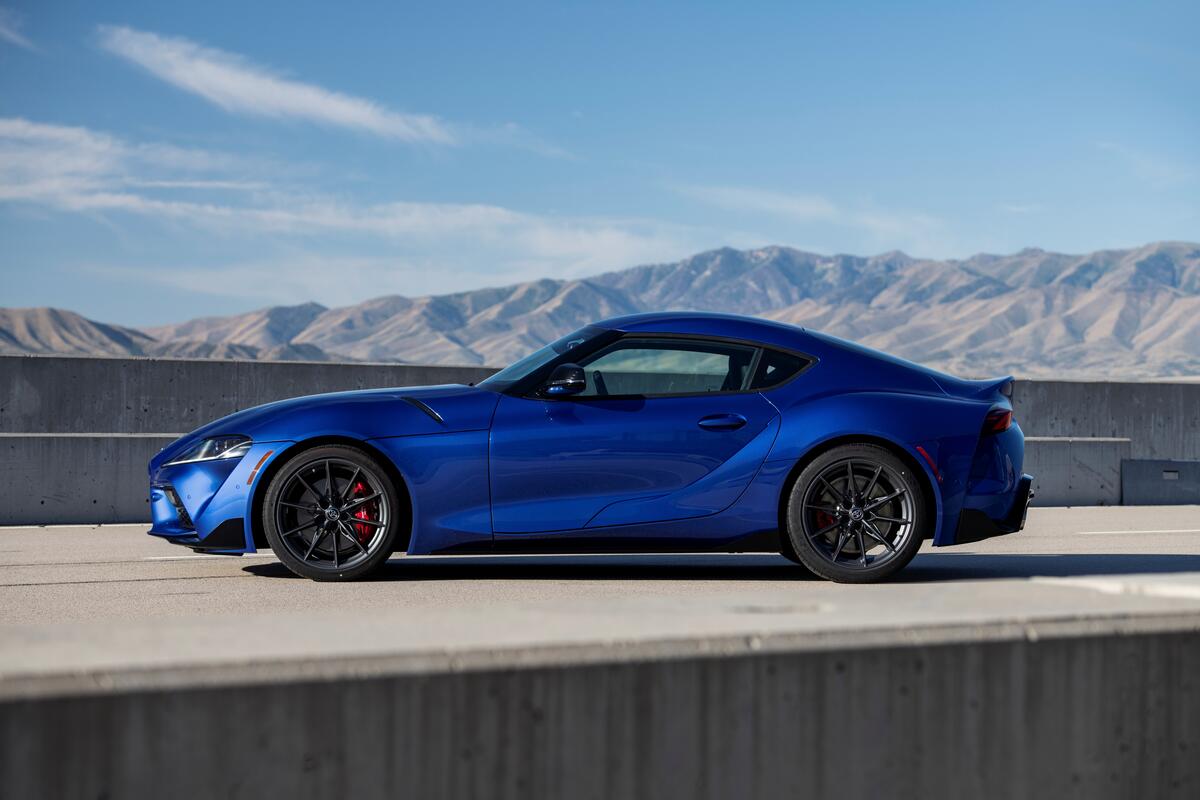
Toyota Supra
"Lieberman had gotten into Supras after losing a stoplight race to one in his Mustang GT. Guess if you can't beat him, join him. It's like Blake Snell. He bought a Supra, painted it candy yellow, and loaded it with parts."
The Toyota Supra is a famous Japanese sports car that became a big deal with car tuners. Here, they’re talking about a heavily modified Supra meant to make more power from its turbo engine.
The Toyota Supra is a legendary Japanese sports car, especially in the tuner scene. In this story, Lieberman’s Supra is built around the 2JZ engine and gets intercoolers, exhaust, and HKS performance upgrades to make it more competitive.

Ford Mustang GTD
"...upras after losing a stoplight race to one in his Mustang GT. Guess if you can't beat him, join him."
The Ford Mustang GTD is a high-performance version of the Mustang. The podcast mentions it in a story about racing and trying to match or beat another fast car. It’s included because it represents a more serious, performance-oriented Mustang.
The Ford Mustang GTD is a performance-focused Mustang variant referenced in the podcast as part of a street-racing “beat him or join him” narrative. It’s brought up to show how the Mustang lineup could be used to chase performance credibility after a loss to a different icon. The significance here is the Mustang’s role as a tuning and racing platform in that culture.
HKS performance upgrades
"It had a still-in-body kit, a Rod Millen wing, upgraded brakes, and a full suite of HKS performance upgrades. Including bigger intercoolers, exhaust system, and tuning components aimed at getting more out of that 2JZ engine."
HKS is a company that sells performance parts for cars, especially turbo models. When someone says “HKS upgrades,” they usually mean real hardware and tuning aimed at making the car faster.
HKS is a well-known Japanese aftermarket performance brand that makes parts for turbo cars, including exhausts, intercooler-related components, and engine tuning products. In this segment, “HKS performance upgrades” signals a full tuner-style build rather than a few cosmetic changes.
Rod Millen wing
"It had a still-in-body kit, a Rod Millen wing, upgraded brakes, and a full suite of HKS performance upgrades. Including bigger intercoolers, exhaust system, and tuning components aimed at getting more out of that 2JZ engine."
A “Rod Millen wing” is a spoiler style linked to Rod Millen, who’s a well-known racing and tuner personality. Spoilers like this are common on modified cars for looks and to help with airflow.
A “Rod Millen wing” refers to a rear spoiler associated with Rod Millen, a famous motorsports figure known for competing and promoting Japanese performance cars. In tuner builds, wings are often chosen for both styling and aerodynamic effect.
2JZ engine
"Including bigger intercoolers, exhaust system, and tuning components aimed at getting more out of that 2JZ engine. The car became a regular at SoCal shows."
The 2JZ is the engine family from the Toyota Supra that tuners love. It’s built in a way that makes it easier to add parts and tuning to get more power.
The 2JZ engine refers to Toyota’s famous inline-six used in the Supra. It’s especially popular with tuners because it responds well to upgrades like bigger intercoolers, exhaust, and engine tuning to support higher boost and power.
intercoolers
"Including bigger intercoolers, exhaust system, and tuning components aimed at getting more out of that 2JZ engine. The car became a regular at SoCal shows."
An intercooler cools the hot air coming from the turbo. Cooler air helps the engine make more power safely, especially when you’re pushing boost.
Intercoolers cool the compressed air from a turbocharger before it enters the engine. Cooler intake air is denser and helps improve performance and reduce the risk of knock when running more boost.

1995 Mitsubishi Eclipse
"Brian O'Connor's bright green 1995 Mitsubishi Eclipse was the entry point of the tuner world. Affordable, moddable, and already everywhere at street races."
The 1995 Mitsubishi Eclipse is a popular 1990s import that tuners liked because it was mod-friendly. In this episode, it’s described as the kind of car that introduces people to that tuner culture.
The 1995 Mitsubishi Eclipse is a mid-1990s import coupe that became a tuner favorite because it’s relatively affordable and easy to modify. In the Fast & Furious context described here, it’s used as the “entry point” car for the movie’s tuner world.

Mazda Rx7
"Affordable, moddable, and already everywhere at street races. Dom Toretto's Mazda RX-7 represented something different."
The Mazda RX-7 is a famous tuner car, and it’s special because it uses a rotary engine instead of the usual piston engine. In the story, it’s used to represent something more serious or different than the beginner cars.
The Mazda RX-7 is known for its rotary engine (Wankel design), which helps it deliver a distinctive driving feel and made it a tuner icon. Here, Dom Toretto’s RX-7 is framed as representing a different “tier” or vibe than the more entry-level tuner cars.

Honda S2000
"Around them were the cars you'd actually see at a SoCal Meet, the Honda Civic, Nissan 240SX, Honda S2000, and the Acura Integra."
The Honda S2000 is a popular Japanese roadster. In the episode, it’s mentioned as an example of the cars that were common at local meets.
The Honda S2000 is a Japanese roadster known for its high-revving engine and driver-focused feel. It’s name-dropped here as part of the kind of cars people actually saw at a SoCal meet.

Acura Integra
"Around them were the cars you'd actually see at a SoCal Meet, the Honda Civic, Nissan 240SX, Honda S2000, and the Acura Integra."
The Acura Integra is a well-known Japanese compact performance car. Here it’s mentioned as part of the real-world lineup of cars people were showing off locally.
The Acura Integra is a compact Japanese performance car line that became a staple of tuner culture. It’s included in the list of cars the hosts say you’d actually see at a SoCal meet.
stunt replicas
"But he could only get the Skylines on loan, which made building stunt replicas too expensive. [2249.5s] A lot of these cars you have your hero car, which is built really nice, like that's something you could take to a show and like all the details are very accurate, the car looks amazing. [2266.5s] They look good from like 20 feet, but then you get closer like, oh, it's not a show car."
Stunt replicas are fake versions of a real car made for movie stunts. They’re built to take damage and get beat up on set, while the real-looking cars are saved for safer shots.
Stunt replicas are purpose-built copies of a real car designed to survive filming abuse—like hard driving, jumps, and impacts—without risking the valuable original. This segment contrasts them with “hero” cars that look accurate for close-up and stationary shots.
hero car
"A lot of these cars you have your hero car, which is built really nice, like that's something you could take to a show and like all the details are very accurate, the car looks amazing. [2256.9s] Those are just like for stationary shots where the character is getting in and out of the car."
A hero car is the “best-looking” car used for filming. It’s meant to look right up close, while other cars are built mainly to survive stunts.
A “hero car” is the most visually accurate vehicle used for filming—often the one with the best fit, finish, and details—so it can be shown in close-ups and at car-show angles. In this segment, the host contrasts hero cars with stunt cars that are optimized for durability rather than perfect appearance.

Nissan Skyline R34
"Paul Walker couldn't let the car go though. [2295.5s] He used part of his paycheck from the first film to buy an R34 from Motor X, this is what I would do too, man. [2300.9s] The Bayside Blue R34 that shows up in Too Fast, Too Furious is a combination of that real car and purpose built stunt replicas made on Skyline GT-T platforms for the production."
The Nissan Skyline R34 is a particular generation of the Skyline that became super popular with tuners. The hosts say Paul Walker bought an R34, and the movie’s famous Bayside Blue car is a mix of a real R34 and stunt replicas built from Skyline GT-T underpinnings.
The Nissan Skyline R34 (the 1999–2002 generation) is the specific late-’90s/early-2000s Skyline that became a tuner legend, especially in GT-R and GT-T forms. Here, the segment explains that Paul Walker used part of his paycheck to buy an R34, and that the “Bayside Blue R34” seen in Too Fast, Too Furious blends a real car with purpose-built stunt replicas based on Skyline GT-T platforms.
tuner culture
"For Hollywood, the point was clear. [2340.7s] Tuner culture was now mainstream entertainment. [2343.7s] And inside the car community, the reaction was immediate."
Tuner culture is the scene of car enthusiasts who customize cars—like upgrades for speed, handling, and looks. The hosts say the movie made that world more mainstream, so more people wanted to learn about import tuning.
Tuner culture refers to the community of enthusiasts who modify cars for better performance, handling, and aesthetics—often with specific “build” styles. The segment argues that The Fast and the Furious helped bring tuner culture into mainstream entertainment, changing what the broader public wanted to learn about.
Fast and the Furious
"Long before Hollywood started talking openly about representation, the world in the Fast and the Furious looked a lot like the actual SoCal tuner scene."
Fast and the Furious is a movie franchise about cars and car culture. This segment argues it also helped spread Japanese-style tuning to a wider audience.
Fast and the Furious is a film franchise that helped mainstream a lot of Japanese tuner imagery and car-mod culture in the U.S. The episode frames it as reflecting real Southern California tuner scenes, while also spreading that style globally.
Daikoku
"The parking lot, much like Japan's Daikoku, was a place to bring people together through their shared love of tuning. Even the cars themselves represented that blend of influences."
Daikoku is a well-known car meet spot in Japan. People go there to hang out with other car fans and show off their cars.
Daikoku is a famous Japanese car-meet location (often referenced in tuner media) where enthusiasts gather to show cars and socialize. The transcript compares the Fast and the Furious parking-lot vibe to Daikoku to emphasize how the movie mirrored real-world tuner meet culture.
Japanese imports
"And on top of that, the demand for Japanese imports, aftermarket parts, and tuning culture was now spiking globally, driven by fans who wanted to build what they had seen on screen."
“Japanese imports” means cars made in Japan that get sold in other countries. Enthusiasts often seek them out because they want the specific models and the parts that go with them.
“Japanese imports” refers to vehicles built in Japan that are brought into other markets, often because enthusiasts want specific models or trim levels. In tuner culture, imported cars can also drive demand for parts and tuning support tailored to those platforms.
aftermarket parts
"And on top of that, the demand for Japanese imports, aftermarket parts, and tuning culture was now spiking globally, driven by fans who wanted to build what they had seen on screen."
Aftermarket parts are upgrades made by other companies, not the car’s original manufacturer. People use them to improve or customize their cars beyond stock parts.
Aftermarket parts are components made by companies other than the original automaker, designed to replace or upgrade factory equipment. In tuning culture, aftermarket parts are how owners change performance, fitment, and appearance beyond what the car came with from the factory.
tuning culture
"And on top of that, the demand for Japanese imports, aftermarket parts, and tuning culture was now spiking globally, driven by fans who wanted to build what they had seen on screen."
Tuning culture is the scene of car fans who modify their cars. It’s not just about buying parts—it’s also about meeting other enthusiasts and sharing ideas.
Tuning culture is the community of enthusiasts who modify cars for performance, handling, sound, and style. It often includes meetups, shared knowledge, and a parts-and-tech ecosystem that grows around specific car models.
Request an Explanation
Heard something you'd like explained? We'll add it to this episode.
Sign in to request explanations for terms you heard.
Want to learn more?
Browse our glossary for plain-English explanations of automotive terms, jargon, and concepts.
Help improve this episode
See something that's not quite right? Our annotations are AI-generated and can sometimes miss the mark. Click the flag icon on any annotation to suggest a correction.