They’re talking about how the Fast and Furious movie showed up in Japan and what Japanese car fans thought about it. The point is how the movie changed the way people viewed Japanese street racing and car culture.
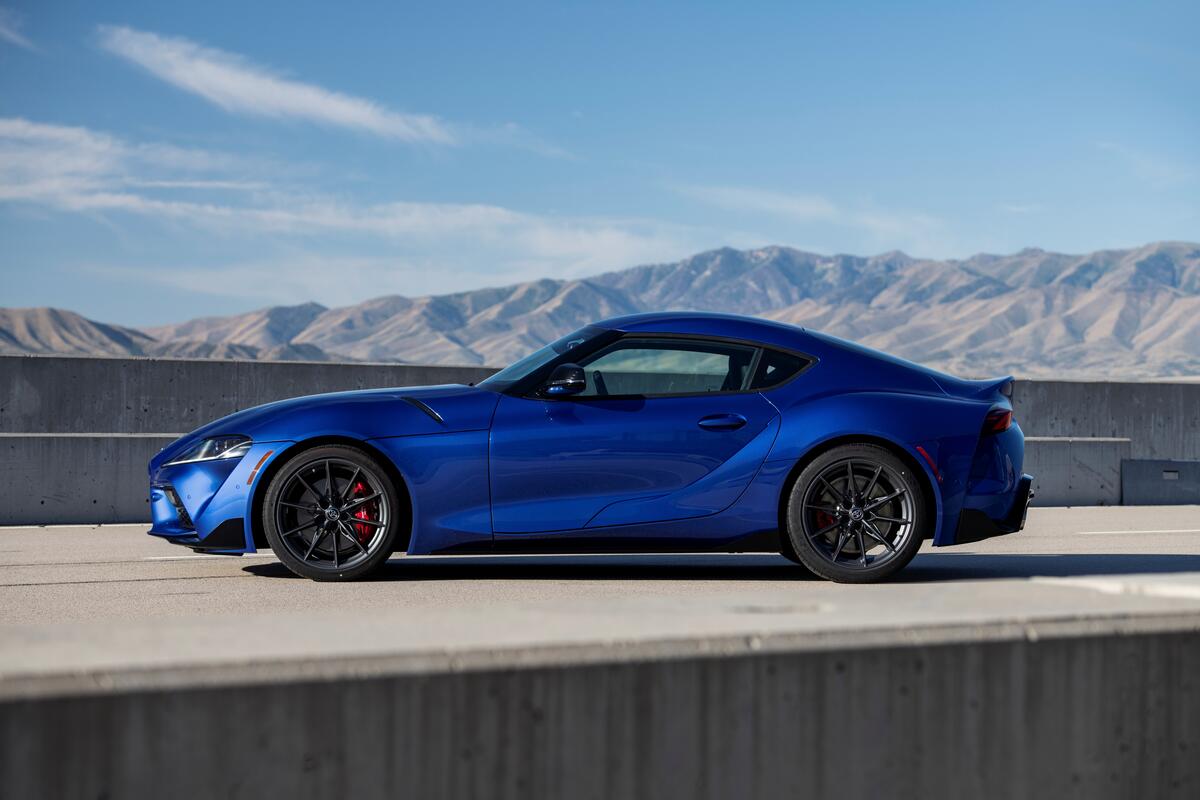
The Toyota Supra is a sports car made by Toyota. It’s famous because it’s been around for a long time and has a strong reputation for performance. People mention it because it has a big history and lots of fans.
The Nissan Skyline is a well-known Japanese performance car. It has a long history in racing and has been a favorite for enthusiasts who like modifying cars. That’s why it’s such a big part of JDM culture.
The Mazda RX-7 is a Japanese sports car. What makes it special is that it uses a rotary engine, not the usual piston engine. Enthusiasts love it because it’s been a big part of Japan’s performance-car scene.
“Toge” means mountain roads with lots of curves. In Japan, people treat these drives like a driving skill challenge, not just a drag race. It’s a big part of the country’s street-driving culture.
Tokyo Pop is a company that publishes Japanese comics and anime for the U.S. audience. Here, they’re the ones who adapted initial D for American viewers and changed parts of it.
Eurobeat is a fast, energetic type of music that’s common in Japanese racing-themed media. The hosts say the show’s music got replaced with rap for the U.S., and that upset a lot of fans.
The Toyota Corolla is a small, everyday car. It’s known for being dependable and easy to live with. It often shows up in stories about real people driving real cars, not just show cars.
Die-cast cars are small toy models made from metal, usually with a lot of detail. The episode says kids could buy a tiny AE86 and related toys as official merchandise.
Dajiro Onada is a real person who helped shape the Japanese car-tuning scene through a major car magazine. In this story, he doesn’t just write about cars—he also shows up and competes.
Hot Import Nights is a car event centered on imported cars. The episode mentions it as one of the places where Japanese car culture was being showcased in the US.
Term
tuner meat
“Tuner meat” is slang in this context for the traditional “real” tuning-scene vibe. The hosts are saying the US events didn’t look like the original Japanese tuner scene.
Option Magazine is a Japanese magazine focused on car tuning. The hosts use it to show how one publication helped shape what people in Japan wanted to build and modify.
Nevada is where the story’s racing trip takes place. The episode explains that the area is open desert with long stretches of road and limited obstacles.
The Silver State Classic is a yearly racing event. In the episode, it’s described as a road-closure weekend where a highway is turned into a long race course.
This event is organized around a specific speed goal for each group of cars. The winner is the one who stays closest to the planned speed, not necessarily the one that goes fastest.
“Throttle down” means pressing the gas pedal harder to get more power. At very high speeds, drivers may hold it down for a long time to keep the car moving at the speed they’re aiming for.
This is a special Japanese version of the Nissan 350Z (the Z33 generation). It was set up like a serious show-and-race car for a straight-line speed competition in Nevada.
The Tokyo Auto Salon is a big car show in Japan where people bring modified and special cars. Here, they shipped the wrecked car back to show it to crowds in person.
Veilside is a company that makes aftermarket parts and body kits for Japanese cars. In this story, they’re used as an example of an early tuner that helped popularize the “widebody” look.
Bomex is a company that makes aftermarket styling parts like body kits. The segment uses them to show how quickly Japanese tuners were tying their builds into pop-culture trends like Fast and the Furious.
SEMA is a big U.S. show for aftermarket car parts—things like body kits, wheels, and performance accessories. The host is using it to show that Japanese tuners were getting recognized in the American parts world too.
The Acura Integra is a compact car, and the Type R is the high-performance version. The podcast is referring to a mid-1990s Type R that became famous for being a serious performance model. People bring it up because it has a strong reputation among car fans.
This is a Honda Integra Type R from the DC2 generation. It’s famous because it was built to feel like a race car—lightweight, focused on driving feel, and powered by a special high-rev engine.
“Blueprinted” means the engine was built with extra precision. Instead of just assembling parts normally, they check and match things so every engine comes out more consistent.
Compression ratio is how tightly the engine squeezes the air-fuel mixture. Changing it can affect how much power the engine makes and what kind of fuel it needs to run safely.
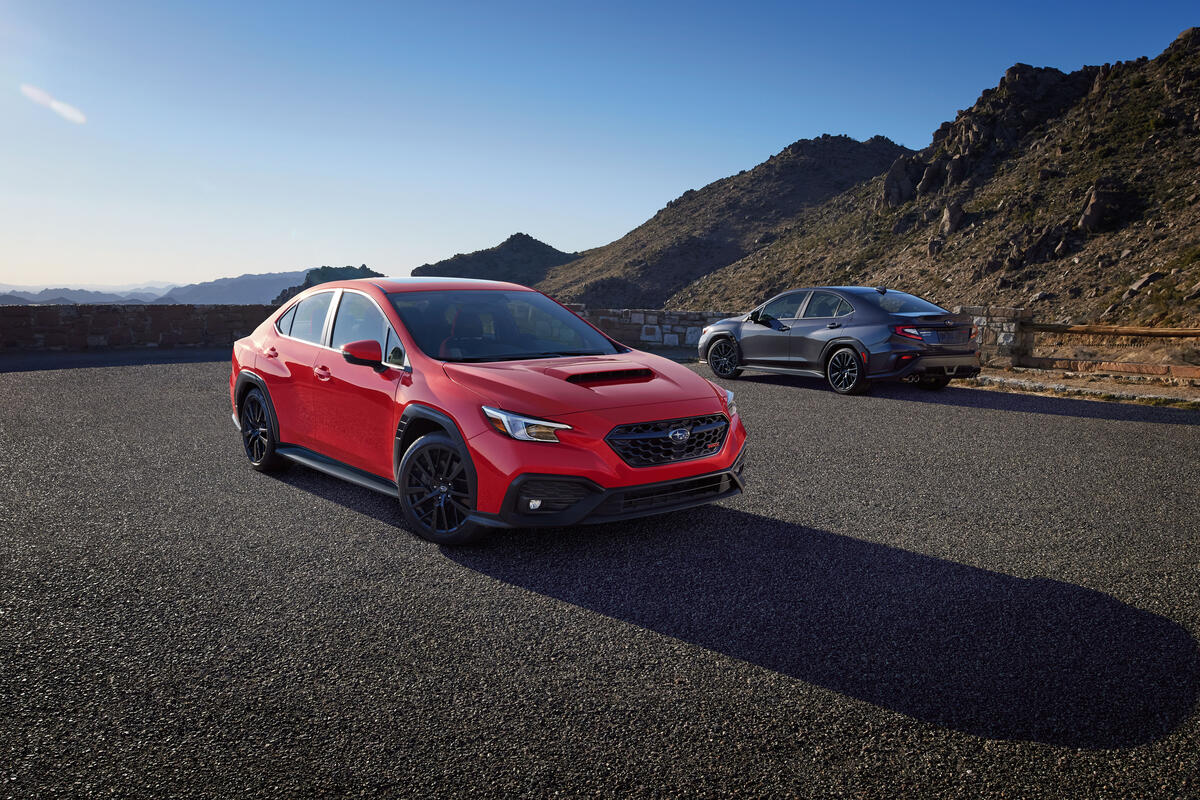
The Subaru WRX is a rally-inspired performance car with a turbo engine and all-wheel drive. The hosts are saying that because it was built for rally-style traction and control, it also became a popular “modding” car in the US.
The World Rally Championship is a major global rally racing series. The hosts are saying Subaru’s rally success helped make the WRX famous and trustworthy to fans worldwide.
Colin McRae was a famous rally race driver from Scotland. The hosts are using his name to describe the intense, high-skill style of driving people watched in rally races.
Gran Turismo is a long-running racing video game series that helped popularize certain Japanese performance cars with a wide audience. Here, the hosts credit the game with putting the WRX (and other JDM icons) in front of people who might never read automotive magazines.
The Subaru WRX STI is a rally-style Subaru that’s built for grip and quick driving thanks to all-wheel drive. In this segment, it’s the main competitor to the Mitsubishi Evo.
The Mitsubishi Lancer Evolution is a rally-inspired Mitsubishi that became famous in the U.S. for being fast and for using all-wheel drive. The episode is talking about when it finally showed up in America and started competing with the Subaru WRX STI.
WRC is the World Rally Championship, where manufacturers race cars in rally events worldwide. If a car wins a bunch of WRC championships in a row, it means it’s been proven against the best competition.
A “gentlemen’s agreement” is a promise companies make that isn’t backed by strict laws or government enforcement. In this story, it affected how Japanese automakers handled rules around performance cars before it ended.
Term
180 miles per hour
They’re also mentioning a speed limit that cars were effectively capped at. The goal was to make the cars less dangerous on public roads.
Term
276 horsepower
The speaker is talking about a horsepower limit that Japanese rules effectively encouraged automakers to follow. It was meant to keep cars from being too powerful for everyday driving.
This is about an informal deal between automakers to keep performance cars from being too extreme. Even if some companies bent the rules, the overall cap influenced what people could buy for years.
This is an aftermarket part that changes how air gets into the engine. The “short ram” style is a compact intake meant to help the car breathe better and often changes the sound too.
Term
Grety boost controller
A boost controller helps control how hard a turbo pushes air into the engine. The brand mentioned (Grety/GReddy) makes parts that let people adjust boost more precisely than factory settings.
An engine swap means replacing the engine with a different one. Here it’s specifically about using Japanese-market engines, which enthusiasts choose because they’re popular and have lots of upgrade parts.
The 1JZ is a Toyota engine that a lot of people swap into other cars. It’s popular with enthusiasts because there are many performance parts available for it.
“Gray market” means parts are imported through unofficial routes instead of the normal approved system. Here it’s about getting JDM engines into the US for swaps.
A blow-off valve releases extra pressure when you lift off the throttle. It helps the turbo stay happy and it’s also the source of that loud “whoosh/pssh” sound people associate with turbo cars.
Donut Media is a car-video media brand. The host mentions it here just to explain the joke they made.
Company
California presence in 1994
The speaker says a company opened a base in California in 1994. California was a big center for car imports and enthusiasts, so being there helped them sell to the right customers.
A bolt-on turbo kit is a turbo upgrade you can install without completely rebuilding the engine. It’s designed to fit the car pretty directly, and here it was made to work with the Civic’s factory setup and US rules.
The Honda Civic is a popular Honda model that a lot of car tuners like because it has a huge aftermarket. Here, it’s important because Greddy made a turbo kit for it that was designed to work in the US and pass emissions rules.
That phrase means the parts were approved to meet US emissions rules, so you can use them legally in every state. Turbo upgrades can be tricky with emissions, so certification is a major hurdle.
The Mitsubishi Eclipse is a Mitsubishi model that became famous in the US for import tuning. Here it’s mentioned because Paul Walker’s car in Fast and the Furious used Greddy exhaust parts, linking the movie to real aftermarket culture.
“Spoon engines” is a reference to a real Japanese performance shop/brand that makes Honda parts. The point is that the movie is referencing something real that car nerds would recognize.
Gretti is described like a parts company for car enthusiasts. The point is that their parts are meant to be added in a planned order, so one upgrade makes the next one make sense.
“Bolt-on” means the parts are designed to fit without major custom work. The idea is that it’s easier for regular enthusiasts to install upgrades themselves.
Place
Sekuba Circuit
Sekuba Circuit is a race track in Japan. It’s the kind of place where teams go to prove how fast a tuned car can be on a timed run.
The Lancer Evolution is a performance car from Mitsubishi. In the podcast, they’re talking about a special time-attack version built from an Evo 8 to try to set very fast lap times. It’s mentioned because it shows how the car can be turned into a track-focused machine.
Time-attack is when cars are timed on a track to see who can go fastest. It’s not about racing door-to-door; it’s about making the car grip well and run consistent fast laps. Tuning parts matter a lot because they directly affect lap time.
Button Willow Raceway is a race track in California. The hosts mention it because it’s where a Japanese time-attack car went to compete in a U.S. event. Tracks like this are where teams prove their cars are fast and consistent.
Super Lap Battle Finals is a race event where cars try to set the fastest time around a track. Instead of racing side-by-side, it’s more about how quickly and consistently the car can complete laps. It’s a big deal for showing what a tuning setup can really do.
An intake is the part that helps your engine get air. Upgrading it can make the engine breathe better, which can improve how it responds and sometimes how it performs. The hosts mention HKS intakes as a popular first upgrade.
Knockoff products are fake or copycat car parts sold to look like the real performance stuff. They may look similar on the outside, but they often aren’t made with the same engineering quality. That can mean worse performance and more risk of problems later.
“Drift King” is a nickname used in Japanese motorsport culture for a top-level drifter known for mastering sustained oversteer and controlling the car while sliding. In this segment, it’s referenced as the person the filmmakers bring in to make the movie’s drifting feel authentic. The term matters because drifting is a specific driving technique, not just “going fast.”
LIVE
When the Fast and Furious opened in Japan just a few months after its U.S. release,
the Japanese enthusiasts who went to see it walked out with a feeling that was hard to describe.
Because the cars were right, the RX-7, the Supra, the Skyline, real machines with real
histories and reputation earned over years of development, racing and refinement,
but the world around them was something else entirely.
We've spent eight episodes talking about where Japanese car culture came from.
The mountain passes, the midnight highway runs, the idea that a car is something you work at,
something you understand from the inside out. That culture was built over decades in parking
and on toge roads by people who treated driving as a craft.
So when those same drivers sat down in movie theaters in 2001, they weren't just watching
cars on the screen, they were watching something they recognized get repackaged into something
different, something very, very American. Down to Redo's RX-7 wasn't threading a canyon in the
dark, it was sitting under neon lights in a Los Angeles parking lot, bumping the jaw rule in a
shanty. The cars had been lifted out of their context and dropped into a different story.
Many felt the movie was a caricature of real street racing, but it was also popular.
It showed that the rest of the world wanted in on Japanese car culture. The cars were famous now,
and they were only getting more popular.
Today on Pass Gas, how Japanese car culture responded to the world's attention.
What's up everybody? Welcome back to Pass Gas. I am your host, Nolan Sykes. Thank you so much for
being here. Wow. Episode nine. This is uh, this is it guys. We got four more episodes. I mean that's
we still got a ways to go here, but uh, I really appreciate you guys listening in. Um, and just
sticking with us as we take this amazing journey. This has been a lot of fun. And today, uh, yeah,
thinking about the, the, the recontextualization is so interesting. It's like, yeah, like we Americans
didn't know that that wasn't necessarily proper the way that these cars were presented, but like
we still want it. Oh, it's interesting to think about. And we're going to think about it and
talk about it a lot more in today's episode. So let's just get into it. While the Fast and Furious
was still in theaters, a publishing company called Tokyo Pop decided to pounce. Best known for
introducing America to some strange looking little books called manga in October of 2001,
Tokyo Pop acquired the rights to translate and distribute the massively popular initial D anime
into U.S. Tokyo Pop's ambitions were enormous. They wanted to franchise and most fans assumed
that after the success of Dom Toretto and friends, initial D would hit it big in the same way that
Pokemon and Dragon Ball Z had. They were hilariously incorrect. The adaptation process was strange
from the start. Tokyo Pop took initial D to trade shows and pitched it to American television networks,
hoping to land a broadcast deal. Nothing came together. Along the way, the Eurobeat soundtrack
got swapped out for rap songs recorded by Tokyo Pop's own founder under the alias DJ Milky.
DJ Milky, man. That's hilarious. Character names were changed across the board. Enough stories
like this leaked out that Tokyo Pop had to publish an open letter just to address the backlash. This
eventually, the series was released straight to DVD. The anime community was furious with the
results, but car enthusiasts saw it differently. Underneath some surface failures, initial D
actually succeeded at bringing a real glimpse of Japanese car culture into American living rooms.
Whatever its flaws, it put a teenage kid in a beat-up AE86 running a rural mountain road
in the middle of the night, delivering tofu, going faster than anyone believed he should be going,
and that image landed. AutoWeek ran a brief feature that helped give the series some credibility
with the car crowd. Tokyo Pop struck a deal with Jada Toys to produce a licensed merchandise line
with die-cast cars and action figures. Kids could pick up a miniature AE86 at Radio Shack.
Dude, shout out Radio Shack. Some of them had no idea a show even existed,
but they knew a cool car when they saw one. I had a shirt. It wasn't, I must have an influence
about this. When I was like eight or nine, I had a shirt on the front that said like speed sport,
English font that it clearly was trying to look like Japanese characters. And then in the back,
it had like this anime character with like some blue car or whatever. That was my favorite shirt,
bro. And I don't think there's a speed sport anime or anything like that. I think it was just
kind of like ripping off initial D. I would give anything to get that shirt back, by the way.
So this point, America was still taking Japanese culture and repackaging it,
but American music, film, and fashion had been absorbed and reworked by Japanese teenagers
since the post-war decades. For some in Japan, it was nice to see the tables turn.
Japan was becoming a taste maker, not just an engineering, but an entertainment.
And nobody understood that better than Dajiro Onada.
Dajiro Onada had spent more than 15 years building option from a single publication
into the central nervous system of Japanese car culture. He understood what Japanese tuning was,
what it valued. So when he saw Japanese imitators and enthusiasts popping up on the other side of
the Pacific, he paid close attention. Onada dispatched his riders to American events,
import shows, drag strips, parking lots where the scene was being built in real time by people who
had learned everything they knew about Japanese cars from secondhand sources, features on hot
import nights and extreme autofest starting appearing in option, depicting events that
looked nothing like the traditional Japanese tuner meat. We talked about Option Magazine in
Episode 4. Yeah, I mean, he really just grew an empire through, I think, just raw and real reporting
on what was going on in that scene. If you want to know more, check out that episode.
And if you've already listened to it, well, we'll just keep going here.
But Onada wasn't just an interested party. He was a competitor. In 1999, while motorx was still
fighting to get skylines on US soil, Daigiro Onada loaded himself into a Blitz modified R34 and headed
to Nevada. The Silver State Classic is held on Route 318, a two-lane highway that cuts across
the high desert of eastern Nevada. There are no trees, no guardrails, limited corners,
just open land in every direction and a straight ribbon of pavement running all the way to the
horizon. One weekend per year, the road is closed to traffic and turns into a 90-mile race course.
There are no average speed requirements handed down by the organizer. Competitors choose their own
target speed class before the race and then spend the entire 93 miles trying to hold it as precisely
as possible. The winner is whoever matches their target most accurately, not whoever gets there
first. For Onada, the appeal was obvious. Here was an American event built entirely around one
question. How fast can you go in a straight line? And he wanted to find out what a Japanese car built
for mountain roads could do when you pointed it at the Nevada desert and held the throttle down.
Video option cameras were rolling. The footage that came back to Japan showed something Japanese
enthusiasts had never quite seen before. Onada behind the wheel of a skyline on an American
highway, pushing a car built for another world across a flat desert road built for a muscle car.
He would return to the Silver State over the years that followed, drawn by the same question.
In 2003, he came back with something new. The Stream Z, option Z33 350Z built by Jun Auto,
a full factory-backed show car built to compete at this event.
The car drew huge crowds at the pre-race street party in Eli, Nevada.
People wanted to look while they could because once they hit Route 318, all they would see was a blur.
But deep into Anada's run, somewhere around 200 miles per hour,
a tire let go.
Dajiro backed off the throttle and tried to slow the car down, but at that speed and that condition,
he couldn't hold it.
The Stream Z left the highway and rolled seven times across the Nevada desert.
By the time it stopped, it was scrap. The last anyone saw of Anada that day,
he was leaving the hospital in a wheelchair, shaking his fist at the sky,
already talking about coming back next September.
Once the dust settled, Anada did something surprising.
He shipped the REC Stream Z back to Japan and put it on display at the Tokyo Auto Salon in
January of 2004. Crowds stacked three deep just to get a look at what was left of it.
It was his way of saying, this is what our exchange with America looks like up close.
Keep pushing.
The rest of the show floor told the same story.
Chrome drenched builds in full fast and furious spec sat next to Widebody RX7s with
overfenders that would have raised eyebrows at TAS just a few years earlier.
But by 2004, they were a staple.
Veilside had been doing this since their 1994 Combat Body Kit for the Supra,
which many point to as the moment big body kits became serious business at Tokyo Auto Salon.
Bomex had been equally forward thinking. At the 2001 show, they were playing the
Fast and the Furious trailer at their stand six months before the film had even opened in Japan.
The show Anada had built from NADA in 1983 was becoming something new, and he knew it.
He didn't love all the changes, of course, but Japanese builders were now receiving invitations
to SEMA and hot import nights. The exchange was now running in both directions.
And underneath all of it, Anada recognized something familiar in the American enthusiasm.
The willingness to spend every available dollar on a car most sensible people would tell you
didn't need to be touched. The way they expressed it was different, but the root of it was the same.
Big thank you to our sponsor this week, Quo. If you own a business, you probably know that missed
calls and slow follow ups are silent killers. That's how businesses leave money on the table
without ever even realizing it. And that's why today's episode is brought to you by Quo,
spelled Q-U-O, the business communication system built so you never miss a call.
With Quo, your entire team can handle calls and texts from one shared phone number. So,
no more missed messages or dropped conversations. Everyone sees the full thread, that's cool,
and customers actually feel taken care of. And it's easy. Calls, texts, voicemails, transcripts,
and contact details are all in one clean view. So your team always has the full picture and can
show up for every customer conversation, ensuring a seamless and more personalized experience.
Money is on the line. Always say hello with Quo. Try Quo for free, plus get 20% off your first
six months when you go to Quo.com slash past gas. That's Q-U-O.com slash past gas.
Thank you, Quo, for supporting the show. Hey, that rhymed.
Like we talked about last episode with Motor X, American enthusiasts were willing to do whatever
it took to get their hands on a Japanese performance car. Even when the mechanisms
for doing so were informal, complicated, and expensive. The demand was real. People were
spending their money whether Japan showed up officially or not. So the question was,
how long were manufacturers going to make enthusiasts wait? Honda's answer came quietly.
The DC2 Integra Type R launched in Japan in the mid 90s as something explicitly not meant
for the mass market. It was what happens when Honda's engineers are given permission to build a no
compromise, race-bred, front-wheel-drive car without the usual concessions of comfort, cost,
or broad appeal. Weight was addressed obsessively via a stripped interior and thinned glass.
The B18C engine had been assembled by hand, with each unit blueprinted and balanced before
leaving the factory. The whole car was calibrated around a very specific idea of what driving should
feel like. Honda had no intention of exporting it, but that idea lasted about as long as it took an
American enthusiast to find out the car existed. Online forums started tracking the Type R before
it even launched. By the time it was on Japanese roads, American builders were already hotly debating
a car they couldn't legally buy. This was also around the time Honda clocked American enthusiasm
for the Civic. America's youth-driven modification scene had caught the company off-guard,
but it quickly became clear what they should do. Give the people what they want.
For the 1997 model year, Honda brought the Integra Type R to the United States under its luxury
Acro badge, aka the name it used when it wanted to signal that something was serious.
There was only one color available, championship white. The US spec car had been adjusted, of
course. The compression ratio came down slightly, the VTEC crossover point was recalibrated,
small changes here and there, subtle enough that you needed to know what to look for,
but deliberate. Engineers looked at American roads and regulations and decided on these
specific tweaks. What arrived in American showrooms was the car that enthusiasts had been
reading about, stripped out, track focused, an outlier in a showroom full of family sedans and
luxury concepts, but just 320 units were sent. It was almost like Honda wanted to see what happened
before committing to anything larger. And once you know it, they sold out.
If Honda's entry into the American performance market was careful and measured, Subaru's was
a little different. The WRX had an entire mythology by the time it officially arrived stateside.
As we discussed in episode six, Japan dominated rally racing throughout the 1990s.
Subaru's World Rally Championship campaign put the WRX in front of a worldwide audience
in the most compelling way imaginable.
Sliding two forests, tacking gravel stages, driven by people like Colin McRae,
with a commitment to the edge of control that made watching it almost uncomfortable.
Meanwhile, in Gran Turismo, the WRX sat alongside the Skyline,
the Supra, and the RX-7, available to anyone with a controller and a television,
with its best qualities on display in a way no magazine could match.
Subaru's next move was obvious. By the early 2000s, the decision to expand to the US had
already been made, and it immediately paid off. Subaru expected to sell 10,000 units in the first
year. They sold over 35,000. American buyers had been primed for the better part of a decade,
and the car itself hit the notes. Turbocharged, all-wheel drive, significantly cheaper than
Audi's performance models, and more sophisticated than an entry-level sports compact. Its architecture
made it a natural platform for modification and a gateway into mechanical experimentation.
Subaru had it hit.
While all of this was happening, Mitsubishi was watching from the wings. Their Lancer Evolution
had existed since 1992 as a machine built around one unambiguous purpose, winning rally races.
The turbocharged four-cylinder engine, the advanced all-wheel drive system,
suspension that had been tuned and retuned through seven generations of competition development.
For years, the Evo had existed in America in the same way the Type R had before 1997
and the WRX before 2002, as a rumor. A car people knew intimately without having ever sat in one.
Specifications had been debated across forums by people who treated the technical differences
between each generation with the same seriousness others applied to philosophy.
Great market data confirmed with the success of Honda and Subaru suggested. The Lancer Evolution
had to come to the U.S. for the 2003 model year. Pierre Gagnon of Mitsubishi Motors North America
made the case plainly. If the WRX could do those numbers, the Evo, with Tommy Mackinnon's four
consecutive WRC championships behind it, could compete. What followed was something the American
performance car market hadn't seen before. Two Japanese manufacturers, arriving within a year
of each other, both carrying decades of rally pedigree and years of forum mythology, going head
on American roads. The car meat at Ralph's would never be the same.
Evo versus the STI, all-wheel drive versus all-wheel drive, turbo four banger versus turbo
four banger. The rivalry took shape at the street level, but neither car could have existed in
that context without everything that had come before. I feel like I've seen a lot more WRX's
than Evo's. It might have to do with the build quality of the car, but even then, I just feel
like they're just a more expensive car. We had one kid at our high school who, when the 10th gen
evolution or Lancer came out, I don't know if he had an Evo necessarily, but he did have,
it was like maybe like a rally art package or something. It definitely looked lower,
it was in that really nice red that Mitsubishi does, that metallic crimson red. I think his
name was Jack. Anyway, we all hated him. No, I'm kidding. We didn't hate him, but I was jealous of
his car. 2004 is one of those years where several story lines converge all at once.
The Evo and the STI were going head to head on American roads. Tokyo Auto Salon had just put
the WRX Stream Z on display, and quietly in Japan, a 15 year old agreement was coming to an end.
Back in 1998, Japan's major auto manufacturers had reached a voluntary agreement known as the
gentlemen's agreement. No legislation enforced it, no regulatory body oversaw it, but there was
a mutual understanding that Japanese manufacturers would limit their domestic performance cars
to 276 horsepower and cap top speeds at 180 miles per hour out of sense of a social responsibility
towards the consequences of too much power in too many hands. It's worth noting that everyone in
the industry sidestepped the regulation to some degree, but the agreement held as a public position
for 15 years. In 2004, it ended. The timing sits almost too neatly inside everything else going on.
Japan had spent 15 years building the most exciting machinery it could within an artificial
ceiling. Now that ceiling was gone. The cars that followed would be billed for a world that took
their capabilities seriously. Now, pair that with how seriously American enthusiasts were
taking their Japanese cars. There was a sequence to building a car correctly.
Not correct in a factory sense, but the enthusiast community had collectively agreed on an order
of operations. The build list was the document that proved you understood the difference.
Certain names appeared on these lists consistently.
An AEM short ram intake, an HKS high power exhaust, iBox springs paired with Kony yellows,
a Grety boost controller. From more ambitious builders, the list went deeper. A JDM engine
swap is the foundation, with the 1JZ or an RB25 sourced through gray market channels that had
been moving engines stateside for years. An upgraded Garrett turbocharger,
HKS blow off valves that had been giving drivers whiplash for years as they crane their necks
trying to spot what was blowing past them. The names behind those products were paying
very close attention to where those parts ended up. Of all the Japanese aftermarket brands that
suddenly found themselves famous in America, Grety was most ready to take advantage.
And I'm sorry that rhymed there, we did not mean to do that. You know we have a very strict no
rhyming statue here at Donut Media, and I'm sorry that that one slipped through. The company,
operating under its parent trust in Japan, set up a California presence in 1994. Based on the
way the import scene had developed through the early 90s, it was clear that if anything was
going to break wide open, it would happen there. The goal from the beginning, as described by
company president Kenji Sumino, was to genuinely support the US market, not simply export to it,
not to treat America as a secondary destination for parts designed around Japanese roads and
Japanese cars, but to understand it, engineer for it, and build products that worked within
its specific conditions. American roads were different, built for distance and volume,
not the tight mountain passes of Japan. Emissions regulations added another layer of complexity,
and a right hand drive JDM Civic did not automatically translate to a left hand drive
USDM one. Grety understood all of this while building their American operation.
The clearest early proof of that approach came at the 1996 SEMA show in Las Vegas.
Grety entered a bolt-on turbo kit for the Honda Civic, engineered specifically for the American
market, built around stock engines, and certified for all 50 states. It won best new product in
the street performance category. The kit really put Grety on the map in the US. They had looked
at the American enthusiast, someone working with a real budget, driving a car they dependent on
daily and engineered directly for that buyer. It was a decision that paid off in a significant way.
When the Fast and the Furious opened, the Grety exhaust on Paul Walker's Mitsubishi Eclipse
was not a coincidence. The movie used Grety parts because the scene did too. And when audiences
walked out of theaters wanting everything they had just seen, Grety was already in California
with a catalog full of products engineered for the exact cars those audiences were about to modify.
After the Fast and Furious released, Grety sales spiked over 1000%.
Seven years of groundwork had come together in a single summer.
This is obvious, but I mean Fast and Furious was really about that, especially in those
early movies, like, oh, Hector's going to be there running three civics with spoon engines.
And I'm sure that 90% of people watching had no idea what a spoon engine was. But if you were
a big nerd at that time, you're like, wait, that's real. That's a very specific reference.
And a spoon, especially at the top of their game, that's cool. What was Hector up to,
by the way? He was probably a nepo baby. I think he had some generational wealth
going there to afford the three spoon engines and like the race shop and all that stuff,
like he puts on like the working class, maybe his self made. I don't know, maybe times are
different in the late 90s. Hector, by the way, the actor, he's credited as Hector in like 15 movies.
But his name is Noel.
Imagine being a 20-something from San Bernardino, who just bought a used Mitsubishi Lancer from
a friend with a garage near Manhattan Beach. You're ecstatic. It may not be new or perfect,
but it's yours. A car you've been reading about for years is finally in your driveway.
The question of what to do with it has been replaced by the more pressing and specific
question of what to do first. You have 800 bucks and the Gretti catalog
propped open on the workbench with some time and sweat that $800 project becomes a $1,200
project and then a $2,000 project. Each modification creates the conditions for the next one.
More power requires better cooling. More cooling enables more boost. More boost reveals the limit
of the next component in the chain and so it goes. Gretti had a product for each of those moments.
They had engineered the whole sequence, becoming a machine underneath the machine until a customer
could step back and look at what happened when Japanese engineering met American ambition.
Where Gretti had gone broad with left-hand engineering, bolt-on accessibility, and a
catalog designed to meet the enthusiasts wherever they were, HKS went the opposite direction.
They went deeper, more demanding, further from the casual buyer and closer to the kind
of performance that couldn't be faked or replicated by a cheaper competitor.
Then that's not to say that Gretti's cheap, okay? Just saying. Don't take that the wrong way.
This was consistent with everything HKS had ever done, going back to their roots as the
small tuning shop operating out of a dairy shed at the foot of Mount Fuji. For 30 years,
they had built a reputation entirely on merit. When the global market opened up,
what was being asked of them wasn't new. HKS went racing. In 2003, they developed the TRB02,
a time-attack Lancer Evo 8, built to claim the fastest possible time at the Sekuba Circuit.
And it did. Records were set, words spread through the community.
Then in 2006, another Evo appeared, known as the racing performer CT230R.
A trip to America was inevitable at this point. The CT230R was loaded onto a ship and sent to
California to compete in the Super Lap Battle Finals, a time-attack event held at Button Willow
Raceway near Bakersfield. The event had been founded in 2004, sponsored by Sports Compact Car
and Super Street, the same magazines that had spent years documenting the import scene.
America had essentially built a replica of Japan's most prestigious time-attack competition
on its own soil. HKS had landed. American enthusiasts who had grown up seeing the company's name on
stickers made HKS intakes their first serious purchase. The enthusiast community agreed that
HKS was worth the premium price.
By 2006, the aftermarket had gone global. With rapid expansion came cheap imitations.
Knockoff products appeared carrying the visual language of Japanese performance,
matching the fonts on the packaging, the category names, the catalog positioning,
but missing the decades of development underneath. The gap between a serious modification
and a cheap approximation became harder and harder to see.
But even this was a compliment. Japan had established a reference point.
The country had defined what car enthusiasts wanted, and as the market shifted, its car
culture continued to evolve. They embraced the world's attention, listening to what foreign
markets had to say, and innovated on top of it all. And then Hollywood came back. Only this time,
they didn't just borrow some cool cars, they built a movie around Japanese car culture from the ground
up. Practically speaking, much of the fast and the furious Tokyo drift was shot in LA,
but the world of the film was Japan. The street culture needed to feel authentically Japanese,
and to pull that off convincingly, the filmmakers wanted someone who had actually lived it.
Someone who knew how the culture moved, where it came from, and what it sounded like when a car
went beyond the limits of grip and held it there. They called in the Drift King. That's next time on
past gas. Guys, thank you so much for listening to this episode. Thanks for sticking with us
through this golden age of JDM. This has been so much fun reading through this and learning with
you guys and celebrating this entire movement. I hope you guys are enjoying. Please leave us a
review on the platform of your choice. We're available on any podcast platform out there,
as well as YouTube, if you prefer that. Big thanks to our writers, Greg Nix, Anthony Hardin,
Audrey Holden. We got producer Joe sitting across from me right now. Big thanks to Mark for
cutting this together. And once again, thanks to you for listening. We'll see you next week. It's past gas.
About this episode
Japanese car culture’s “golden era” is traced through media, regulation, and aftermarket momentum. The hosts describe how Fast and Furious got key cars right but felt like a caricature to enthusiasts, while Initial D’s U.S. localization (including music swaps) helped spark interest—plus Tokyo Pop’s merchandise push. They connect Option Magazine and Dajiro Onada’s Nevada speed runs to the rise of HKS and broader Japan-to-U.S. exchange, then explain how power limits, build lists, and engine swaps shaped the JDM build culture.
When The Fast and the Furious hit theaters in 2001, it lifted Japanese car culture out of the mountain passes and dropped it straight into the American mainstream.
In this episode of Past Gas, we explore how Japan responded to the world's newfound obsession with its vehicles. We break down Daijiro Inada's terrifying 200 mph rollover crash in the Nevada desert, the intense enthusiast demand that finally forced legendary cars like the Subaru WRX and Mitsubishi Lancer Evolution stateside, and the historic end to Japan's 15-year 276-horsepower "gentlemen's agreement". Finally, discover how iconic aftermarket brands like GReddy and HKS engineered specifically for the West and turned American ambition into a global tuning empire.
Thanks to QUO for sponsoring this episode! Try QUO for free PLUS get 20% off your first 6 months when you go to https://www.Quo.com/PastGas